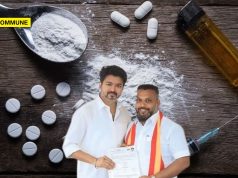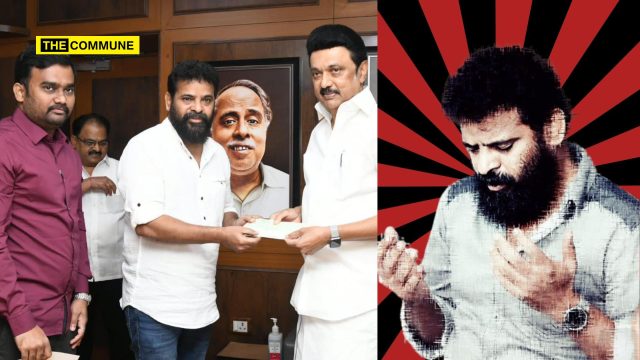
A few days ago, DMK-linked director and drug case accused Ameer Sultan sparked controversy after arguing that ministerial representation should reflect population strength, while questioning why Muslims, whom he claimed constituted 13% of Tamil Nadu’s population, were not given even a single ministerial berth in the new government. His remarks, made while speaking about “social justice” and political change under the TVK-led coalition government, have drawn attention for openly advocating representation based on community numbers and identity politics.
When asked if he believed whether Vijay could deliver a change that the Dravidian parties could not provide in 80 years, Ameer replied, “The people who voted have very high expectations. When people say they want ‘change,’ I always have this question — what exactly is the change they are referring to? Is it merely a change in government? A change in Chief Minister? I had raised this same question even when I cast my vote and gave interviews earlier. Change from what exactly? Is it a change in ideology? A fundamental transformation? A basic change in people’s livelihoods? There are many questions. A mere transfer of power, a reshuffling of individuals, or a change in political parties alone does not amount to real change. Therefore, people who voted expecting change naturally have huge expectations. The government that is now in power came to office after making many promises and securing a large number of votes. Fulfilling those promises and balancing everything together is a very difficult task. So I do not think it is fair to immediately criticise this government right away. We must wait and observe. How is this government functioning? Who is actually operating behind the government? Is the government functioning independently? Or are the leaders of the alliance parties influencing and directing it? Earlier, when the Union government introduced a scheme, Tamil Nadu usually had either the DMK or the AIADMK in power. AIADMK would implement it, while the DMK would oppose it. Now, because this is a coalition government, there is greater possibility for debate and discussion. Only after observing these functioning patterns can, we place our criticisms properly. If Brahmins have been given two ministerial positions after 40 years, I do not think that alone should be viewed with suspicion. They too are part of this society. There is nothing wrong in giving them two minister posts. But my question is this: if Muslims constitute 13% of the population, why were they given only one ministerial position? I think that is a fair question to raise. At the same time, if the Hindu Religious and Charitable Endowments Department had been given to a Dalit minister, it would have been an even greater example of social justice for not just Tamil Nadu, but the whole of India. That is my wish and my opinion.”
Subscribe to our channels on WhatsApp, Telegram, Instagram and YouTube to get the best stories of the day delivered to you personally.