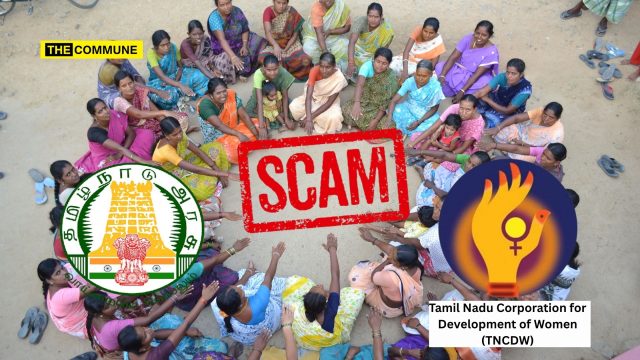
A special audit of the financial records of Block-Level Federations (BLFs) functioning under the Tamil Nadu Corporation for Development of Women (TNCDW) has detected financial irregularities amounting to ₹107.94 crore across 186 blocks, according to information obtained through the Right to Information Act, as reported in The New Indian Express.
The audit reportedly found irregular fund transfers, manipulated bills, payments without supporting documents, missing records and other lapses in the utilisation of funds.
The special audit was ordered after the TNCDW Financial Adviser noticed irregularities during inspections of certain blocks. The corporation’s internal auditor had also flagged deficiencies in fund utilisation, while anonymous complaints were received alleging irregularities in the implementation of welfare schemes.
A Special Audit Team headed by the Financial Adviser was constituted following a recommendation of the 15th Audit Committee and approval from the TNCDW Board on March 6.
Funds Transferred To Officials, Relatives
According to the audit report, ₹1.43 crore has so far been recovered from Block Mission Managers (BMMs) who allegedly transferred funds irregularly to their own accounts and those of relatives. The recovered amount has been kept in a separate account maintained by the TNCDW.
The audit found that government and training funds intended for beneficiaries were, in some cases, transferred to BMMs, Block Coordinators or their relatives. Auditors also found instances where bills were allegedly altered or supported by photocopies and blank bills.
Among the financial lapses identified were cash books that merely reproduced bank statements, missing bank reconciliations, incomplete payment records and questionable fund transfers.
Mayiladuthurai district was among those where major irregularities were detected. In Sembanar Koil block, ₹42 lakh meant for 42 Panchayat-Level Federations (PLFs) was reportedly transferred to individuals instead.
The audit also detected diversion of ₹17.88 lakh and ₹15.20 lakh in training funds in the Kollidam and Sirkazhi blocks respectively. Of these amounts, ₹5.90 lakh and ₹5.50 lakh were subsequently recovered.
Similar financial irregularities were reported in Tiruvarur and Villupuram districts.
₹3.60 Crore Recovered From Inactive Accounts
The audit further found ₹3.60 crore lying unused in inactive accounts. The amount has since been recovered and returned to the government.
Another ₹3.58 crore earned as interest on government funds was also collected following the audit.
Officials reportedly involved in the irregularities in Mayiladuthurai were dismissed and an FIR was registered, while action was also initiated in other districts, including Tiruvarur.
The audit team has recommended tighter financial controls, regular verification of accounts, staff training, direct transfer of funds to beneficiaries and closer monitoring of BLF accounts.
RTI activist A Ramakrishnan, who sought details of the Special Audit Team’s findings, reportedly pointed out that several officials involved in the violations were temporary staff. He suggested that permanent personnel be appointed through the Employment Exchange to strengthen accountability.
TNCDW Managing Director Dr M Aarthi said the corporation had initiated recovery based on the audit findings but indicated that recovery alone would not address the underlying weaknesses in the system.
She said the TNCDW was working with the National Informatics Centre (NIC) to ensure proper accounting of funds and that the process could take another eight months. She also said the government was supporting the measures being taken.
The corporation is planning to move towards digital transactions and has already presented the proposal to the Chief Minister, according to the Managing Director.
She further said action-taken reports had been sought from Project Directors in several districts and that action had been taken against those responsible in Mayiladuthurai and Tiruvarur, with FIRs also registered.
The TNCDW is also preparing to conduct a professional audit of the scheme and formulate a Standard Operating Procedure for audits at the block, panchayat and Self-Help Group levels.
Subscribe to our channels on WhatsApp, Telegram, Instagram and YouTube to get the best stories of the day delivered to you personally.