Home Blog Page 975

The Untold Story Of Muisca: How An Ancient Religion Was Destroyed And Transmogrified By European Colonosiers
Muisca were the indigenous people who lived in the Cundiboyacense plateau of today’s Colombia, between the eastern and the western Andes covering an area of roughly 30,000 square kilometres. The Muisca tribe was a loose confederation of states that cannot be considered an empire as there was no central authority or emperor. For the autonomy the local chiefs enjoyed, they are considered one of the best-organised tribes in the Americas. 

The Caciques

The tribes were organised into groups headed by their own chief, each of whom was ruled by a Cacique. The Caciques were generally referred to as Zipa and Zaque depending on the territory that they ruled over. 
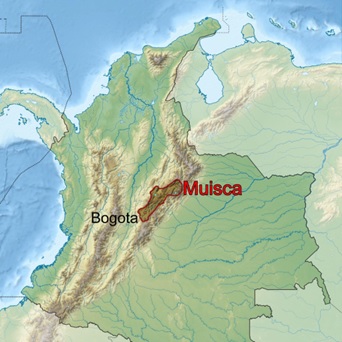
By Nwbeeson – Own work, CC BY-SA 4.0, https://commons.wikimedia.org/w/index.php?curid=69397463

The territories of Zipa and Zaque are further subdivided into quiras that roughly fall under 8 major chiefs.

Zipa – Bacatá, Fusagasugá, Ubaté and Guatavita

Zaque – Hunza, Tundama, Sugamuxi, and certain autonomous chieftains
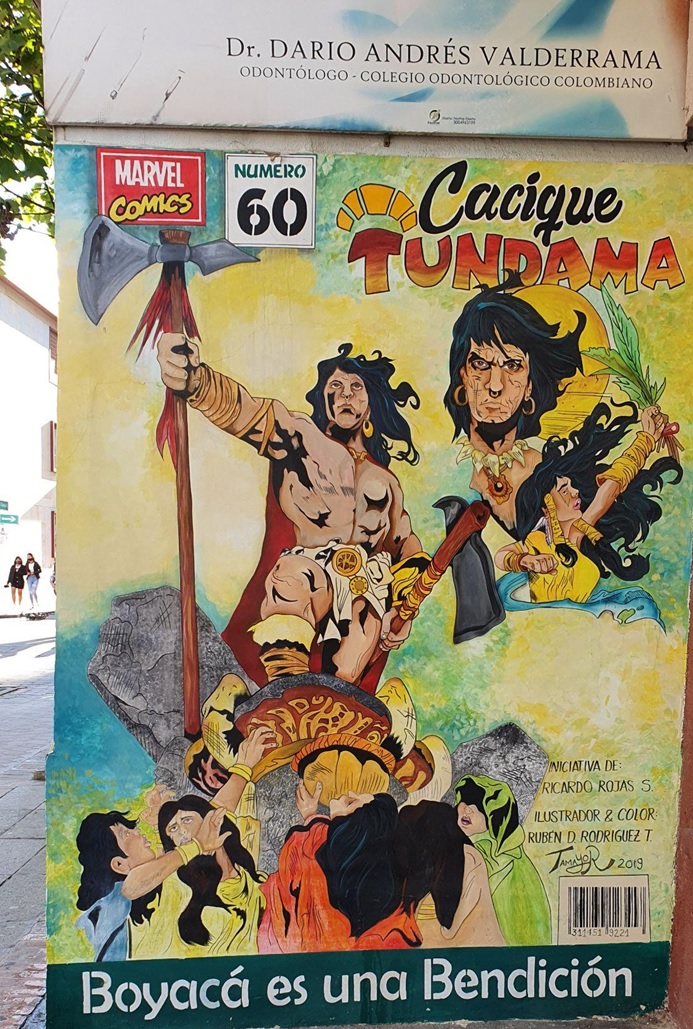
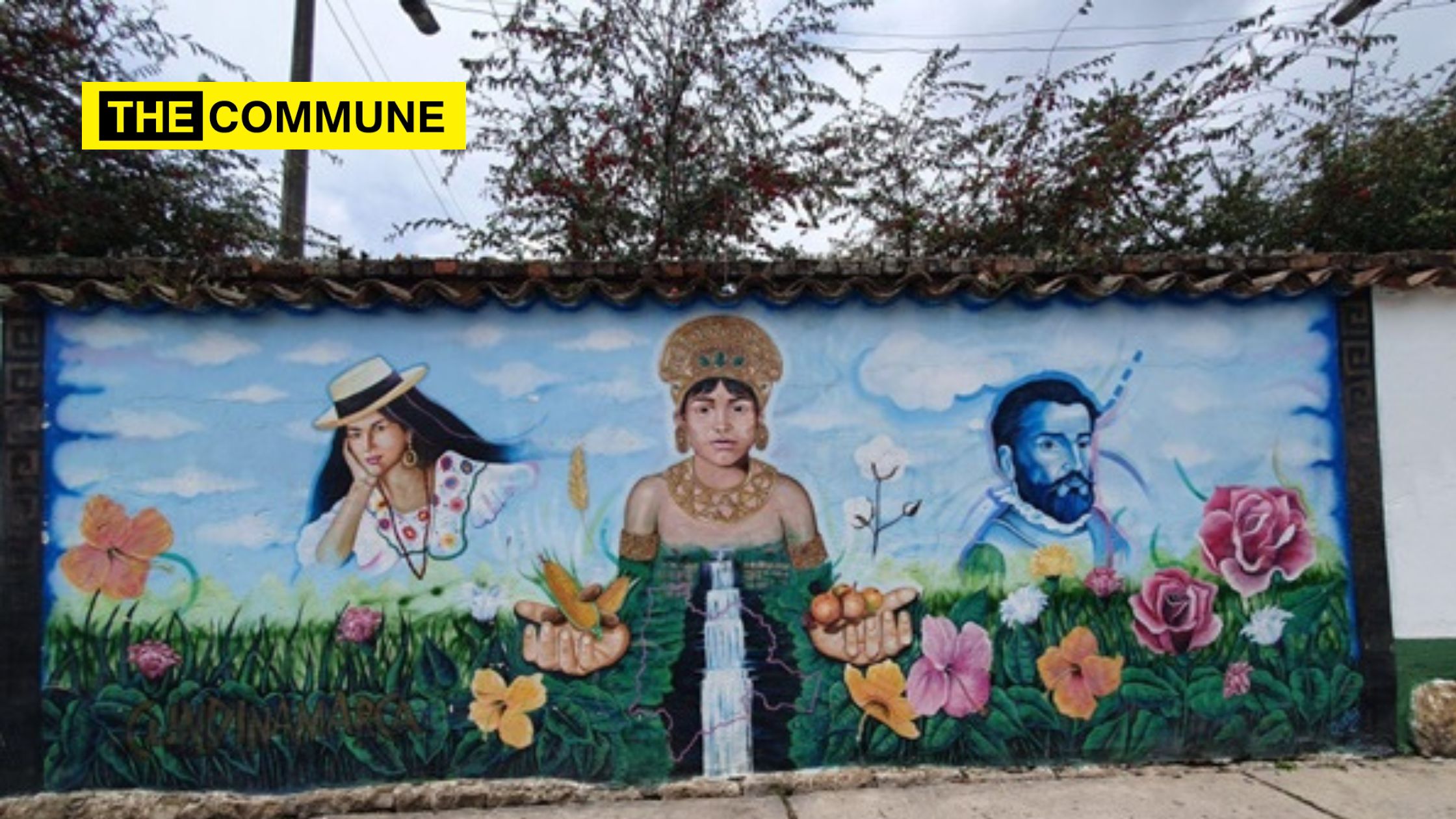
Cacique of Tundama in a mural, in today’s Duitama

The territory around today’s Bogotá was ruled by a Zipa and was called Bacatá in those days. The language of the Muisca was called Chibcha and the influence of Muiscas can be felt over names of the towns and villages even today as most of these are Spanished versions of the existing Chibcha names such as Zipaquirá, Chía, Guachetá, Duitama, etc.

Muisca Society

The society was consuetudinary, in legal terms, this is defined as the existence of customary law or consuetudinary law where: A certain legal practice is observed and is considered a necessity. 

The caciques did not exercise absolute power or rigid or strict control over those to whom they owed their power so that they could be considered rulers in the most nominal form of our understanding of the Muisca society. The position of the ruler was inherited, but the line of succession was not patrilineal. Instead, the king was succeeded by his nephew, the oldest son of his oldest sister. 

They could be considered one of the first socialist premodern societies where woods, lakes, forests, and rivers could not be owned by someone other than the society. Women played an important role in Muisca society and are given as much importance as men. The women formed the central part of the family, community, arts, mythology, and in heritage. The laws prevented domestic violence, physical violence against women, and state support was provided for pregnant women, widows, etc. When the wife of a cacique died, the cacique was expected to abstain from sex from one to five years in memory of his wife.
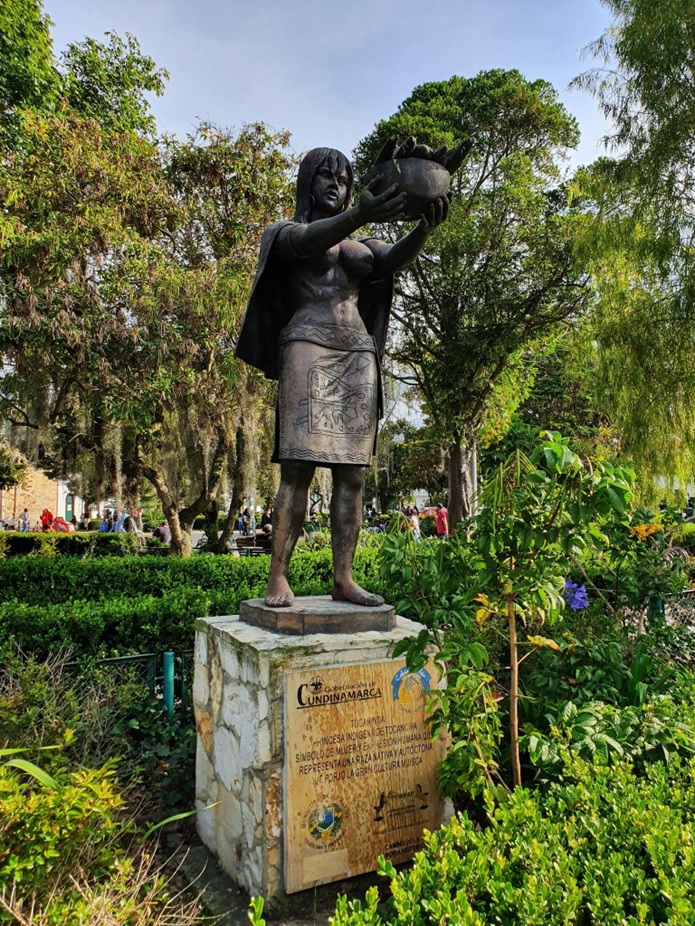
Here is a statue of an indigenous princess from Tocancipá.

Pantheon Of Muisca Religion

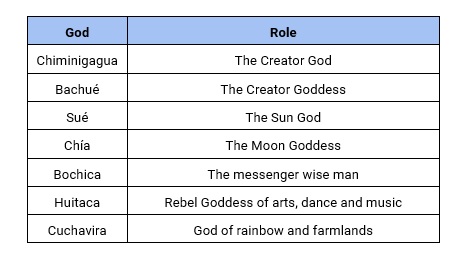
Muisca was a polytheistic society just like most civilizations around the world then. They believed in the legends of creation and the Goddess were considered equal in the Pantheon of the Muisca religion. 

The main creator God was Chimigagua and his female counterpart Bachué whom the Muiscas believed that they descended from. In fact, they believed themselves to be the children of Bachué. Though the list of Gods is long, we will only focus on the 7 main ones for now.  
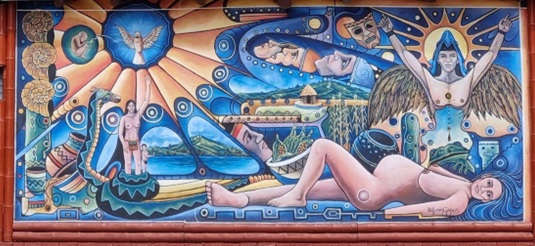
Here is a mural depicting the creation of the Muiscas by Bachué and Chiminigagua.

Sacred Sites Of Muisca

The territory of the Muisca was filled with sacred sites, temples, and lakes that were considered important and holy for the Muisca, honouring their Gods and rulers.

One of the more popular ones here is the Guatavita Lake, famous for the legend of El Dorado (The Golden Man). This lake is located roughly over 3000 metres above sea level and is believed to be the place where the cacique of Bacatá covered himself with gold powder and jumped inside the lake to prove his worthiness to his people. The Spaniards were so involved in the story that they even attempted to drain this lake to find gold, which proved impossible. It was also believed that the Muiscas created this legend to divert the attention of the Spaniards and to let them live alone in peace.
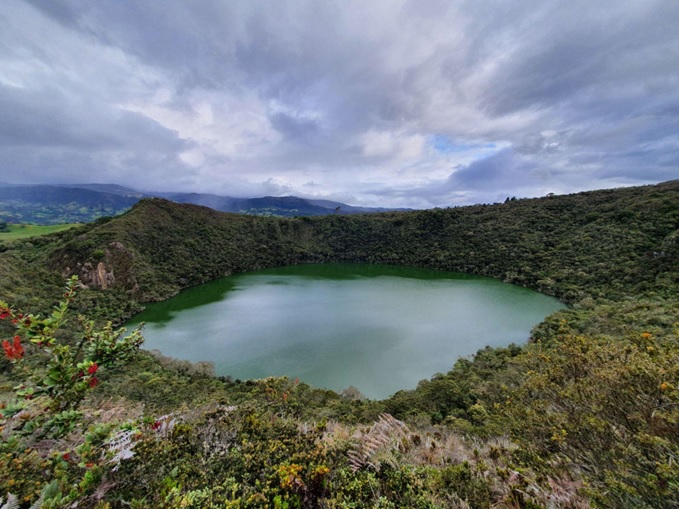
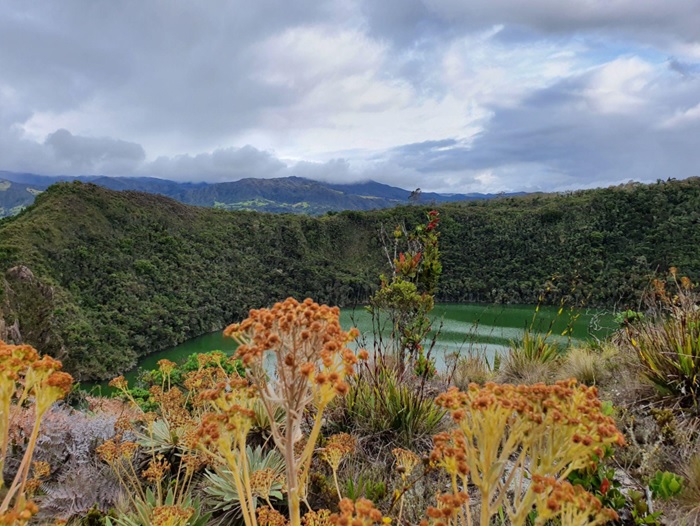
 

Here is another view of the lake with the lovely frailejónes in the foreground. These are endemic to the Colombian Andes and are considered an important part of the Andean ecosystem as they capture the moisture in the air and send them to the soil thereby giving birth to the rivers of the Andes, including the biggest river in Colombia, the mighty Magdalena.

Another one of the popular sacred Muisca sites is Tota lake, which is considered to be the largest freshwater lake in Colombia and the second biggest in South America next only to Titicaca. Tota lake is about 3015 metres above sea level. 

Here is a view of Tota with Cuchavira making an appearance.

Muisca Architecture

The Muisca were not huge stone builders and hence did not leave us with monumental ruins, unlike Mayas, Aztecs, or Incas. Almost all of the architecture was destroyed by the Spaniards during the time of the conquests. The houses of the Muisca, called bohíos, were circular structures made of poles of wood and walls of clay, with a conical roof. The house of the cacique was ceramic floored, while in normal houses, it was a straw mat. In a typical Muisca village, the biggest of these houses was always the temple while the cacique’s was generally the second biggest. 

The most important temple in modern memory of the Muisca is the Sun temple at Sogamoso, in the Boyacá department (state). This temple is believed to have housed Sué. People from all over the Muisca territory and beyond are believed to have visited this temple to perform pilgrimage and offer their produce from their farms. Though Spanish accounts claim that there were children sacrificed to the Gods, I was not able to find any direct evidence to suggest that this practice existed. 

This temple was considered to be of astronomical significance as well denoting the passage of the sun each month and the design was meant to be in such a way that on the days of the solstice in June and December, rays fell directly over the central pillar of the temple.
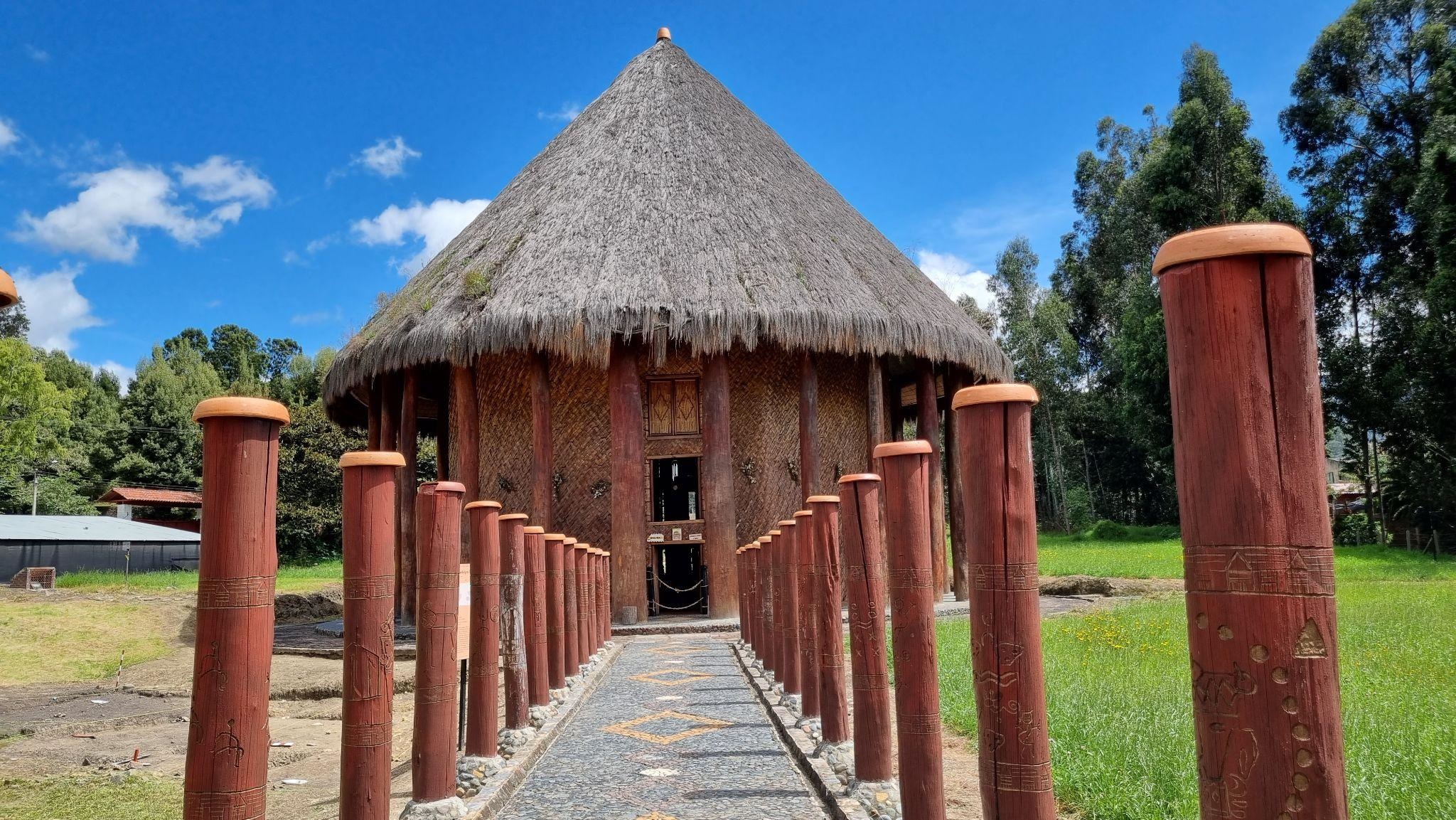
This is a reconstructed model of the Sun temple in Sogamoso.

The temples were also believed to hold the mummies of the dead caciques and are on display in the museum nearby.

Having spent time understanding the civilization of the Muisca, we will have to look at how this civilization fell against the might of the Spanish. Instead of focusing on the conquest per se, our interest will be to look at how the religion of the Muisca was destroyed.

Conquistadores 

The conquistadores (conquerors) were originally approved to be a religious force or crusaders by the orders of Queen Isabella. Hence the motivation for all the conquest in the Americas though was primarily to conquer and steal the wealth of the region, it was all done in the guise of propagating the one true religion.

The first encounter of the Muisca with the Spaniards occurred in the 1530s and the conquest of the Muisca by the Spanish happened between the years 1537-40.

Tairona, along the mountains of the Sierra Nevada de Santa Marta, was the first tribe to surrender to the Spaniards. The Sierra Nevada de Santa Marta is a coastal mountain range that runs parallel to the Atlantic coast in Colombia. By 1536, the conquistadores led by Gonzalo Jiménez de Quesada were led by 700 soldiers and 80 horses travelled along the Magdalena river towards the interior lands. Their motivation was the story of El Dorado, whose mythical capital was a city of gold high up in the inner highlands. 

Conquest Of The Muisca

Even though the Muisca formed alliances with one another, they did not stand a chance against three factors:

Smallpox – America was closed and the natives did not have immunity against Eurasian diseases. The Spaniards carried smallpox with them and this spread like the plague of late antiquity and the middle ages to which the natives did not have any immunity at all.

Horses – Cavalry was used effectively on the mountains against the Muisca who had not seen such animals in their life.

Superior weapons – The stone age weapons of wooden clubs, darts, stone spears, and slings did not stand a chance against the superior iron weapons and shields of the Spanish

Conversion Through Terror

Now after defeat, the caciques were offered a choice to accept the one true religion or God. This concept was new to the Muisca that were unable to apprehend how their Gods were called false Gods or worse, created to be used and exploited for the use of man. Some of the caciques were burnt at the stake which terrorised the local population. For them, the cacique was a ruler, a priest in short the representative of Chiminigagua, Bachué, Sué, and Chía. I can only imagine the confusion, the fear it caused the local population that witnessed the burning of the cacique.

Destruction Of Temples

Next, to prove their invincibility, the Spaniards went to destroy the sacred temples of Muisca, including the burning and destruction of the Sun and Moon temples. This left the local population nowhere to seek theological refuge. 

If you know the history of the Christianisation of the Roman Empire, you will know how the worship of the Sol Invictus or the Invincible Sun had grown popular in the 3rd century, propagated by Diocletian. The Sol Invictus effectively was transmogrified into Jesus, the Son of God by Constantine after he converted to Christianity.

Crescent Moon And Maria

Let us deviate a bit to understand the connection between the crescent moon and Maria. Moon as a deity or Goddess was common across most cultures across the world, from Marama in Polynesia to Kuu of Finnish, from Mawu in Dahomean to Chía in Muiscan culture. The emblem of ancient Byzantine was a crescent and star. Here is one of the earliest representations of the crescent moon in a coin from Byzantium, roughly from 150 BCE.
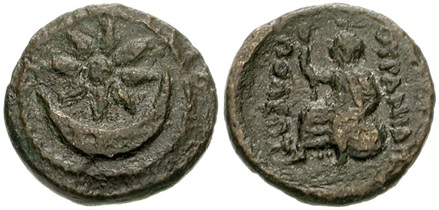
By Classical Numismatic Group, Inc. http://www.cngcoins.com, CC BY-SA 2.5, https://commons.wikimedia.org/w/index.php?curid=45453907

When Constantine rebuilt the city to make it the capital of the empire around 330 CE, the symbol was transferred to the Christian empire, which lasted for over 1100 years. When in 1453, Constantinople was conquered by the Ottomans, the crescent moon and star were adopted by them to be in their flag and eventually to Islam itself. 

Now when Constantine became Christian, he made efforts to adopt the existing Pantheon of Roman Gods into the Christian fold. This included Luna, the Roman Goddess of the moon, and hunting to be given a new identity in the Christian world. She was made to be a slave of Maria and became subservient to artistic representation.
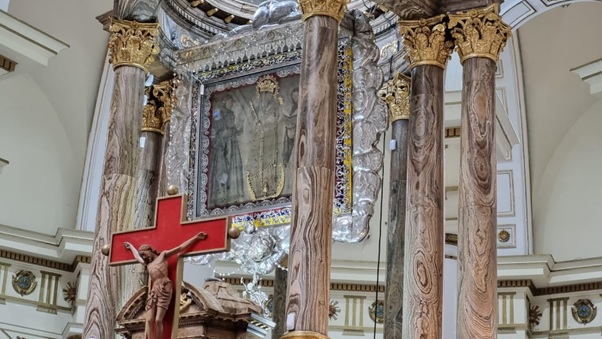
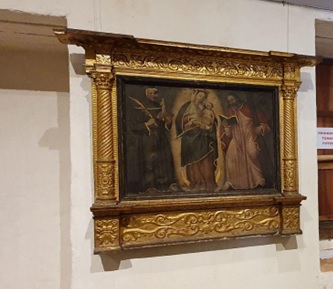
Notice the golden moon below Maria – Iglesia de Nuestra Señora del Rosario, Chiquinquirá
Painting from museum of Franciscanos, again moon below Maria, Monguí

In short, it may be said that the Catholic Jesus became the new age Sol Invictus (Invincible Sun) while Catholic Maria became the master of Luna, the Roman Moon Goddess.

Chía And Maria

Now back to the Muisca territory, the Spaniards effectively demonstrated to the local population that they could not only destroy their priest and king but also enslave their Gods. The image of Maria with the moon underneath her was repeatedly propagated to coerce the natives who had nowhere to go and seek clarity. When they saw that their Gods could be enslaved, they knew the time had come. Add to this the mysterious appearances of Maria to native women, only to natives and never the Spaniards, and the destruction of the Muisca religion was complete. Saints were invented to civilise the native population. Today, all churches that stand in the town centres of erstwhile Muisca territories, were built over destroyed temples of the Muisca.

The population was absorbed and either made slaves of the Spanish, and women were raped and or forcefully married to the Spaniards, thereby creating Mestisos, the mixed race. Today along with white Europeans they are about 87% of the total population as per the census 2018.

Transmogrification Of Muisca Religion

Bochicha, the messenger God was made to look like Jesus himself.

Sué became subservient to the Abrahamic God while Chía was made to look like a slave of Maria. 
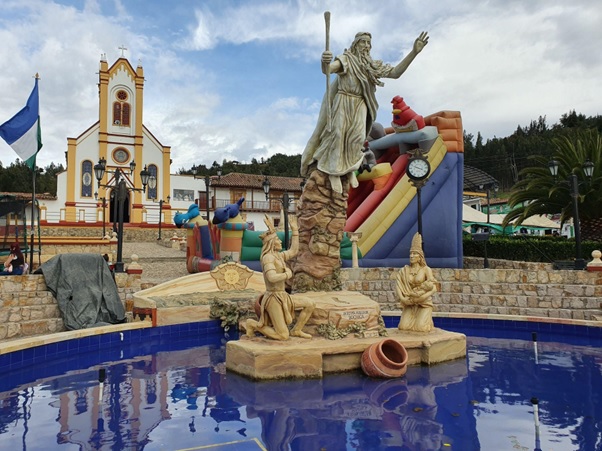
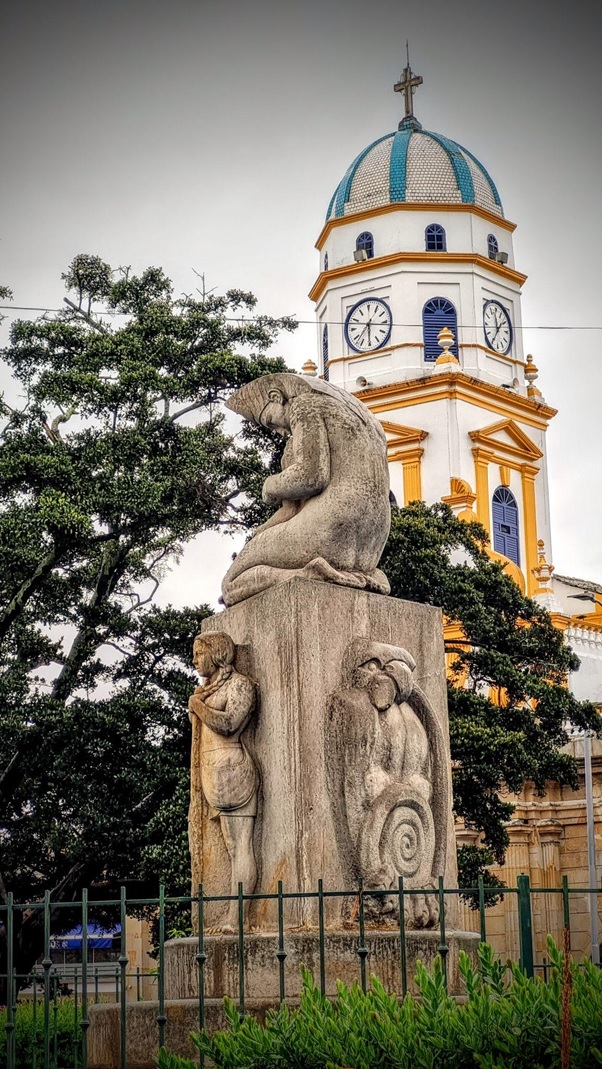
Today Chía is a small town about 30 minutes away from Bogotá. Just as in any Spanish town, the centre is dominated by the church and the plaza. There is a monument to the Goddess Chía in the plaza. While I was collecting materials for this article, I had the opportunity to visit this town. I was struck by the symbolism of Chía the moon Goddess all over the historical centre. 
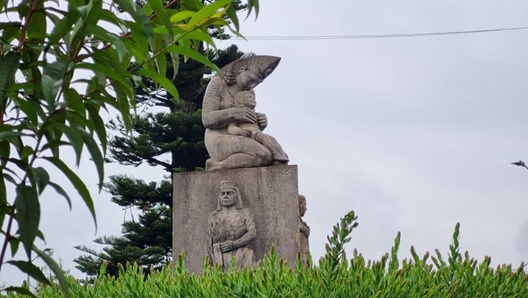


As a student of history and theology, I am supposed to report and write without emotions. Yet I became emotional after seeing this image. Notice how Chía is made to bow before the might of the Catholic church.

Today the Muisca religion exists in all but memory, murals, statues, and in museums. The Musica temples either no longer exist, are churches, or are mere reconstructed models. 
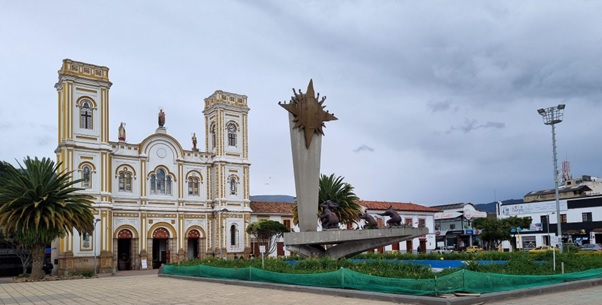
Here is a monument to the Sun in Sogamoso. Again, the Sun is subservient and the native is shown to bow and kneel before the Sun which is smaller than the Church behind.
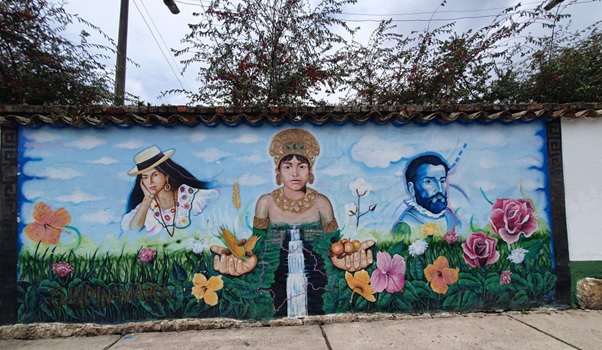
Yet, the spirit of Muisca spirit lives on. In almost all the small towns and villages I have visited in this region, there is some reference to the Muisca, the ancestors that were the children of Bachué. The children who existed before Catholic Jesus was born.

Click here to subscribe to The Commune on Telegram and get the best stories of the day delivered to you personally.
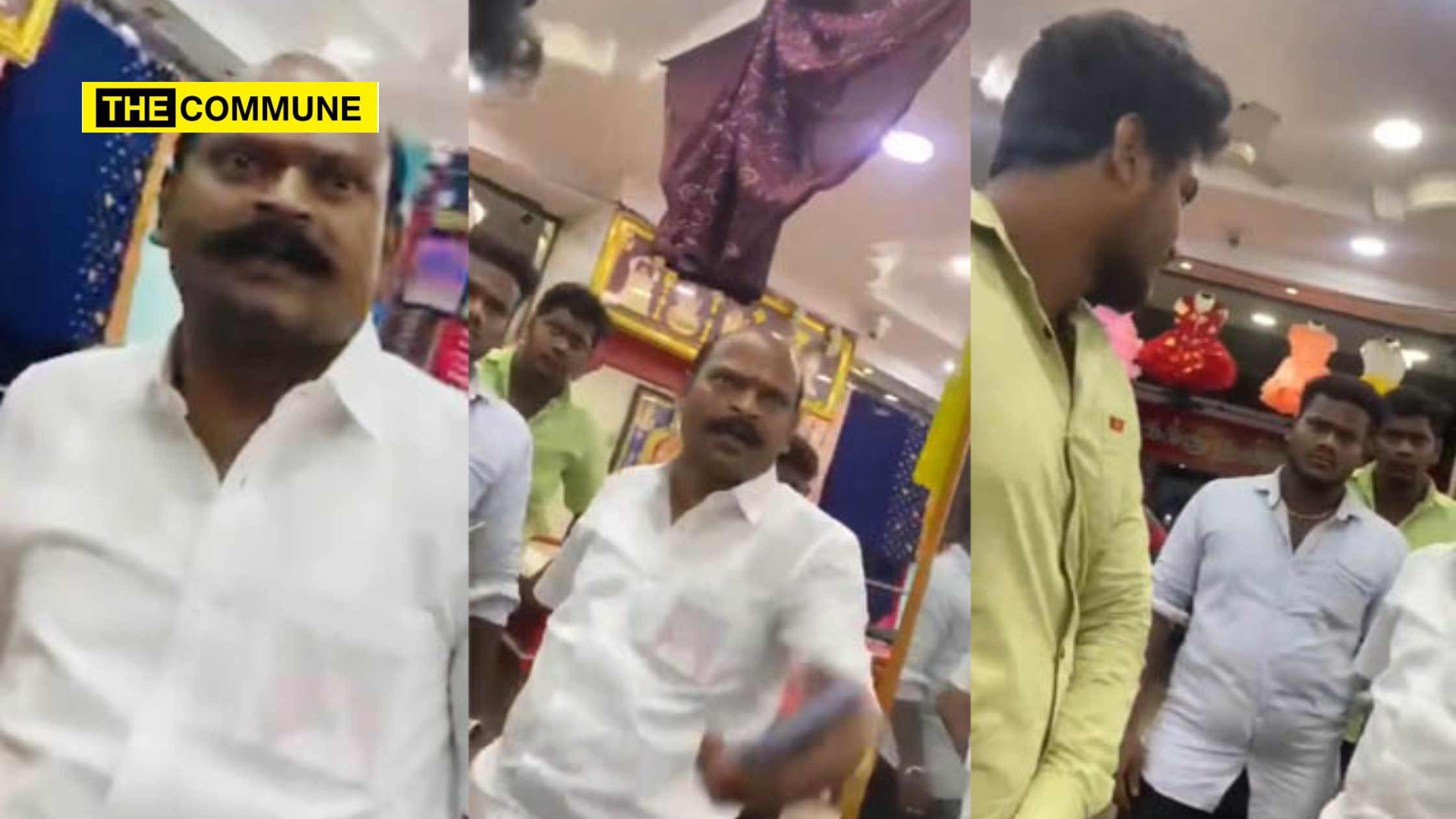
DMK Union Secretary And His Goons Allegedly Attack Two Businessmen For Demanding Payment For Materials

A video of the DMK union secretary along with his goons allegedly assaulting a collection agent who was trying to collect payment for materials that were given to him has gone viral on social media.

Adilam Anbazhagan, who owns a textile shop, is the DMK’s union secretary in Kaariamangalam, Dharmapuri district. He is said to be a staunch supporter of DMK Minister for Agriculture and Farmers’ Welfare. He purchases textiles for his shop from Pothys Silks and traders in Maattalampatti. According to reports, he owes Pothys alone payment of Rs 10 lakhs and several lakhs to the Maattalampatti traders for the materials bought.

It is said that, after DMK came to power, union secretary Adilam Anbhazhagan has been defaulting on the payments for the materials delivered to him. Also, because he has the minister’s support, he is threatening those who come to him for money, saying that he cannot give them the money and telling them to do whatever they want.

In this situation, a Maattalampatti businessman who demanded payment for the materials provided was allegedly attacked by Adalam Anbazhagan and his DMK goons. This video is currently going viral on social media.

In the alleged video, Adilam Anbazhagan can be heard saying,” Now you take video… Paradesi Thay**i.. Are you eating food or shit? You record me Kandaro**li Paiya” Many people on social media have criticized the behavior of the DMK Union Secretary and his goons and are calling for their arrest.

(With inputs from Mediyaan)

Click here to subscribe to The Commune on Telegram and get the best stories of the day delivered to you personally.
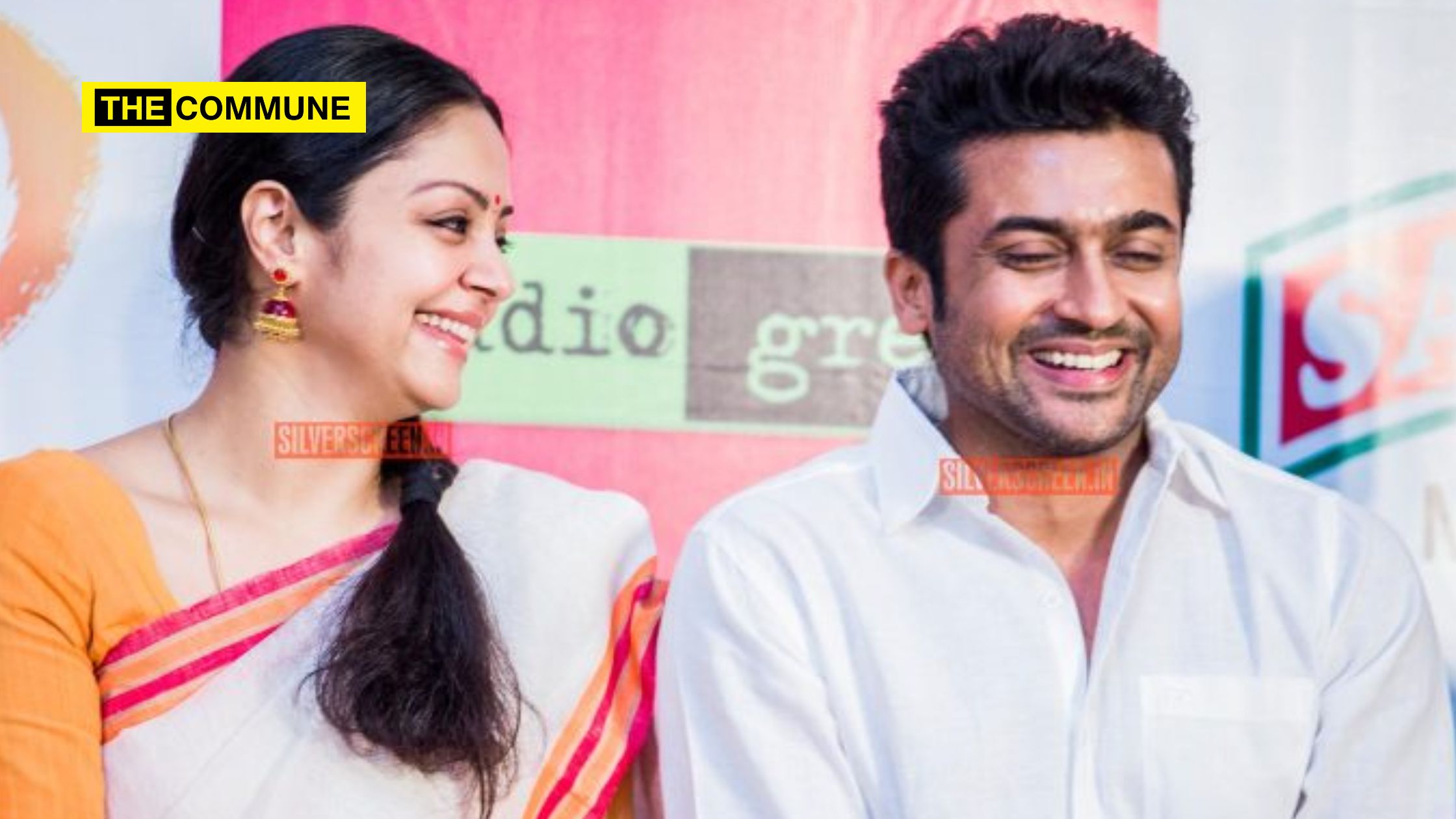
Actor Suriya Shifts To ₹70 Crore Home In Mumbai With Family

Kollywood actor Suriya recently bought a luxurious apartment worth around ₹70 crores in Mumbai’s gated community, joining the ranks of other film stars in the area. This purchase is in stark contrast to the public statements made by his wife, Jyothika, who preached at an awards ceremony about the importance of donating to schools and hospitals rather than temples.

In her speech at the awards ceremony in 2020, Jyothika recounted that the Brihadeeshwara temple with all its grandeur reminded her of the palaces in Udaipur. As a part of her shooting, she had to visit a hospital that she found was poorly maintained. She used the awards ceremony as a platform to make a public request that people donate money to schools and hospitals instead of putting money in temple hundis. She went on to say that schools and hospitals are just as important, if not more so, and that they deserve more support from the public.

Furthermore, Suriya runs a “non-profit” organization called the Agaram Foundation and has resorted to virtue-signalling by being vocal for causes espoused by the ruling DMK. He is known for anti-NEET stance equating saying it filters away those aspiring to study medicine but Suriya’s hypocrisy shines through his teeth when one looks at the selection process for students seeking financial help for higher education through Agaram Foundation run by the actor. According to the Agaram Foundation’s website, they have a rigorous scoring system in place to identify ‘deserving’ students. This requirement seems to contradict the foundation’s stated mission of promoting education and social equality.

While their purchase of a new apartment is a personal matter, their public statements about the importance of supporting charitable causes ring hollow in light of this purchase.

Click here to subscribe to The Commune on Telegram and get the best stories of the day delivered to you personally.
What Has The YSRCP And BRS Worried?

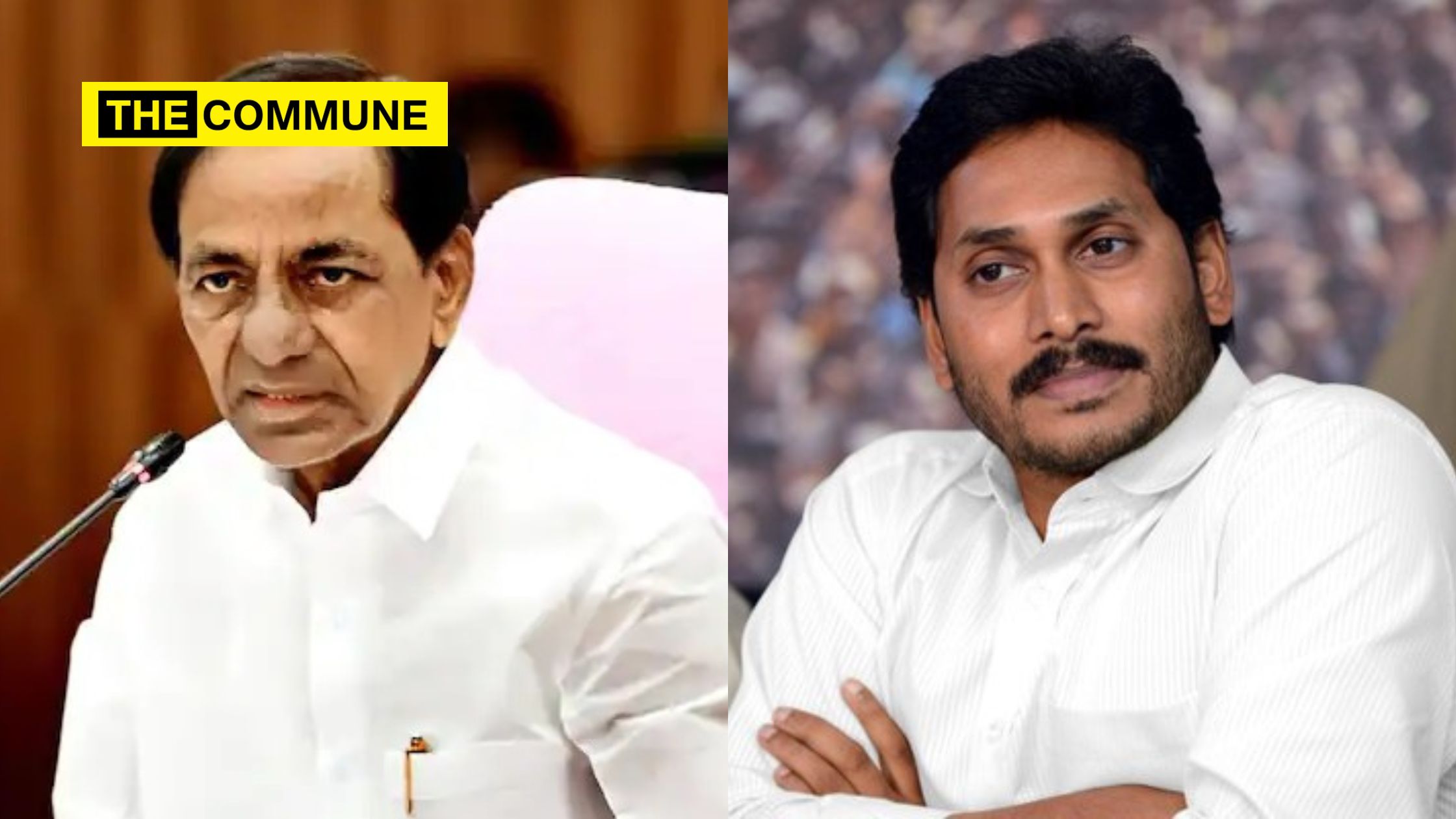
The recent Member of Legislative Council (MLC) elections in the two Telugu states are a cause of worry for the incumbent parties in both states – Jagan Reddy’s YSRCP in Andhra Pradesh and K Chandrasekhar Rao’s BRS party in Telangana. For the first time since the last state assembly elections in both states, the results of the recent MLC elections appear ominous for the current ruling parties.

By Saturday, March 18th, Andhra Pradesh’s MLC election results were declared confirmed after a few days of counting and re-counting amidst rumours and speculations. The Telugu Desam Party (TDP), Andhra Pradesh’s principal opposition party, made a comeback in the MLC elections, notably in the Graduates’ Constituencies in North Coastal AP (Visakhapatnam, Vizianagaram, Srikakulam), East Rayalaseema districts (Chittoor, Nellore, and Prakasam) and West Rayalaseema comprising of Kadapa, Anantapur and Kurnool districts, which are all considered the ruling YSR Congress Party’s strongholds.

North-coastal Andhra constituency’s TDP candidate Vepada Chiranjeevi Rao won over the YSRCP candidate, Sithamraju Sudhakar. East Rayalaseema’s TDP candidate Kancharla Srikanth Chowdary won over YSRCP candidate Pernati Syam Prasada Reddy. West Rayalaseema TDP’s Bhumireddy Ramgopal Reddy won over YSRCP’s Vennapusa Ravindra Reddy.

Former Chief Minister and TDP President, N. Chandrababu Naidu thanked the voters for TDP’s victory in all three graduates’ constituencies, stating that it is a clear indication of educated people’s far-sighted understanding of the YSRCP’s unsustainable policies and rejection of Jagan Reddy’s corruption, lack of law and order, fiscal irregularities and economic policies leading to AP’s critical financial situation.

Earlier last week, the TDP leader had requested the chief electoral officer, MK Meena, and district electoral officers in Visakhapatnam and Tirupati to ensure transparency and fairness in the counting of votes. TDP state president K Atchan Naidu said that people have rejected YSRCP’s “three-capital cities” proposal as well as his party’s large land-grabbing/other illegal activities around the greater Visakhapatnam area under the pretence of “development” and expansion.

The YSRCP won 4 seats from local bodies’ constituencies and 2 seats from Teachers’ constituencies. Local news reports speculated that the 2 Teachers’ constituency seats may have been won under the YSRCP party’s pressure tactics/threats to local teacher’s unions, considering that the YSRCP is not viewed favourably by this segment of the population. Non-payment/late payment of salaries and allowances to teaching staff and other government employees in the cash-strapped state as well as high levels of political interference and intimidation has earned the ruling YSRCP, an unfavorable reputation among a majority of Andhra Pradesh’s government employees.

In Telangana, the BJP tasted its maiden victory in the MLC elections. BJP-backed candidate, A Venkat Narayana Reddy won the MLC election from the Mahabunagar-Ranga Reddy-Hyderabad teachers’ constituency over his nearest rival G Chennakeshava Reddy of Panchayat Raj Teachers’ Union (PRTU), who was supported by the ruling Bharat Rashtra Samithi (BRS) party.

Telangana State BJP president Bandi Sanjay expressed his joy and declared “this is the first time in the new state of Telangana that the BJP has won an MLC seat in the Teachers’ constituency. This election proves strong anti-incumbency against the BRS, especially among government employees and the educated sections.

Against the backdrop of the Opposition’s victory in both states:

– Telangana’s BRS party is embroiled in the Delhi Liquorgate scam, its leader K Chandrasekhar Rao tried to rally a section of non-Congress, Non-BJP parties to form a struggling “third-front” alternative exposing his national ambitions and his incumbent BRS party does appear to be fighting an anti-incumbency wave after almost 10 years in power. The BJP appears to be gaining ground among certain sections of Hindus amidst complaints about the BRS party’s minority appeasement policies.

– Andhra’s ruling YSRCP members and ‘advisors’ are also embroiled in the Delhi Liquorgate scandal and the Andhra Pradesh chief minister is desperately knocking on the doors of the Prime Minister’s Office (PMO) for help in reversing the state’s significant negative economic trends. Reddy and his YSRCP have bankrupted AP’s exchequer with unreasonable, non-feasible “welfare” schemes and are desperate for the release of additional funds to the state government, the granting of a promised “special status” for Andhra Pradesh (tabled in Parliament, after the larger state’s bifurcation in 2014) and approval for a much-needed expansion of Visakhapatnam’s airport.

Telangana goes to polls before the end of this year and Andhra has about a year before its next state elections. The results of the recent MLC elections in both states are a wake-up call to Telangana’s BRS party and AP’s YSRCP.

Click here to subscribe to The Commune on Telegram and get the best stories of the day delivered to you personally.
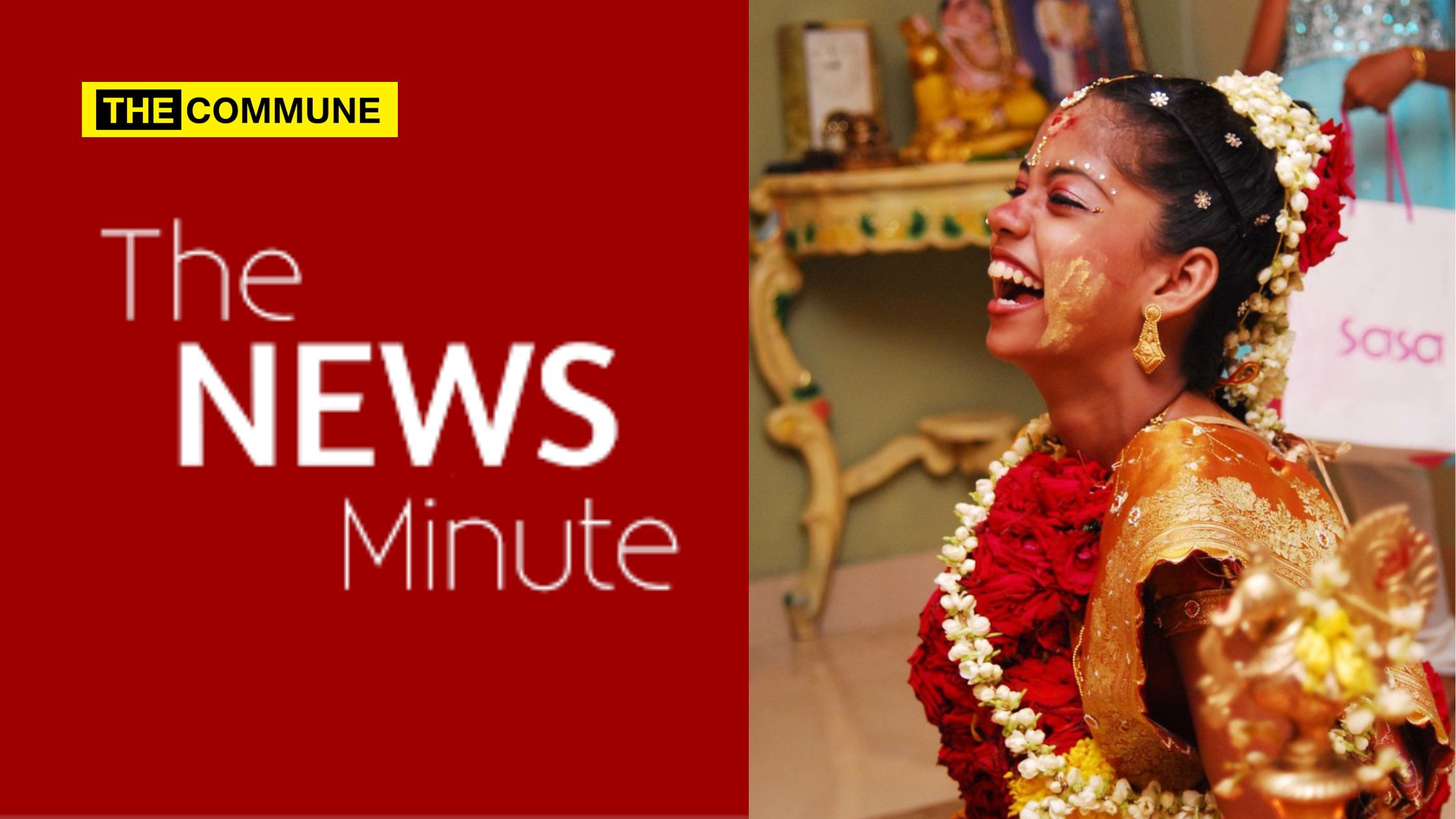
Menarche Matters: Dear Feminists At TNM, Please Confine Your Woke Nonsense To Your Private Spaces

A recent article by The News Minute has sparked a conversation about the celebration of menarche in Tamil society. The article that suggests that such puberty ceremonies can be ‘traumatic’ for young Tamil girls. There are so many points the author of the article failed to take note of despite being a “journalist”. 

First of all, this ceremony or celebration of menarche is not limited to Tamil society. All Hindus celebrate the onset of periods in different ways, ranging from grand celebrations to simple family functions.

The New Minute loves controversy and this time it has used this topic to stir one. The journalist claims that puberty ceremonies are traumatic for young girls and apparently many women shared similar experiences. The publication’s history of criticising Hindu rituals and culture has led to people questioning their intent on Hinduism. While there are scientific reasons behind the practice, such as isolation and dietary changes, it is worth noting that celebrations of menarche are not exclusive to Tamil culture. Other countries and cultures also honour this milestone, albeit in varying ways. Let’s have a look at a few: 

Brazil

In the Amazonian Tikuna tribe of Brazil, girls who have their first period spend between three months to a year living in private rooms in their family homes. This is known as the “pelazon” and serves as a rite of passage into womanhood. During this time, girls learn about their tribe’s history, music, and beliefs before being welcomed back into the community with a celebration.

Japan

When a girl in certain regions of Japan experiences her first menstrual period, her family marks the occasion by partaking in a traditional dish known as sekihan. This dish is made with sticky rice and adzuki beans, with its red color symbolizing happiness and joy for the celebratory event.

Native Americans

 The Native American tribes in North America honor girls who reach puberty through a ceremonial event called The Sunrise Ceremony. This celebration involves various rituals and gift-giving, with the girls donning symbolic attire and enjoying a feast. In Native American culture, the transition from childhood to adulthood holds great significance, and they hold various rites of passage to affirm their community values and traditions.

The Navajo people still practice their puberty ritual for girls, called kinaalda. The ceremony takes place over four days and includes running towards the rising sun and learning tribal wisdom. The girl is expected to take on new levels of responsibility for herself and others. The emphasis of the ritual is on physical strength and character. Throughout these traditions, the celebration of a girl’s transition into womanhood is recognized as an important and meaningful event in her life.

Canada

The Nootka people of Canada have a party for girls after their first period. After the party, the girl undergoes an endurance ritual where she is left to swim back to land. Upon arrival, she is recognized as a woman who has demonstrated patience and perseverance.

West Africa

Among the Dagara people of West Africa, initiation ceremonies are held once a year for girls who have started menstruating in the past year. The ceremony includes mentoring on topics such as sex, intimacy, and the healing powers of menstruation.

It seems that the journalist in question may not have done her due diligence before writing her article. In fact, a simple Google search will show that puberty parties and ceremonies are celebrated across the globe in a variety of ways and The News Minute journo overlooked the cultural significance of these ceremonies.

 The Hindu archives show how Puberty Parties are a thing among the rich and famous. This article says that in the US, Sweet Sixteen parties are a beloved tradition in the U.S., serving as a way to mark a significant milestone in a teen’s life. No, it is not of Indian origin, but this coming-of-age event is still celebrated with great enthusiasm. Sweet Sixteens are thought to have been inspired by the Mexican quinceañera, which celebrates a girl’s 15th birthday.

The West’s rites of passage are pretty lacklustre. Getting a driver’s license, being able to vote, or drinking legally just don’t have the same significance as marking puberty, and they don’t involve the support of your whole community. Even though the children might be excited for them, these events don’t really honour the power that comes with the physical and emotional changes of puberty. Without meaningful coming-of-age ceremonies or opportunities to prove themselves, a lot of teenagers turn to drugs, alcohol, or other risky behaviours.

In the West nowadays, daughters ask their parents for a period party because everyone else is having one. Some parents go to great lengths to do this for their daughters. This tweet was shared by a mom a few years back on Twitter. So is this type of celebration okay for the journalist? 

The concept of period parties has been making waves across the internet for quite some time, with various accounts of young girls celebrating their first period with themed cakes and decorations. 

The cakes and cookies, often red or blood-themed – isn’t this insensitive and demeaning to the girl’s experience. Isn’t the use of explicit language such as “you’re on your period” on the cake insensitive and trivializing a natural biological process? 

‘Feminists’ speak of respecting women and celebrating women, so why not celebrate womanhood? Isn’t menarche an indication of the onset of womanhood? So, shouldn’t it be celebrated? But some ‘feminists’ seem to think otherwise. She wrote about how traumatic puberty ceremonies are for Tamil girls, and how they’re paraded as ‘ready for marriage’. But really, is that what these celebrations are all about? She also writes about women having to hide their period pads – would they prefer to wear their pads on their foreheads instead? 

Puberty & Islam

A little search about puberty and Islam led me to this video where Assim al Hakeem, an Islamic scholar, explains that celebrating a girl’s reaching puberty with rituals and feasting is not from the Sunnah (teachings of Prophet Muhammad) and is an innovation that has been adopted from Hindu culture in India and Pakistan (read adopted from Kaffirs).

He says Muslims should prioritize their religion over culture and customs and not blindly follow the practices of non-Muslims. He also goes on to say it is the work of Shaitaan and warns against extreme behaviour in both celebrating and concealing menstruation and emphasizes the importance of submission to Allah’s teachings. Celebrating in such a way is considered haram and punishable by Allah. Oh well, now we can understand why journos don’t like such celebrations. 

It is interesting how we’ve become a society that loves to celebrate every little thing – from the first birthday of a child to the proposal anniversary, engagement anniversary, wedding anniversary, and the list goes on. We don’t hesitate to spend a lot of money on these celebrations either. But when it comes to celebrating a girl’s transition into womanhood, suddenly it becomes cringe-worthy and traumatic, according to some people. It’s almost like we have our priorities messed up. Why is it that we can celebrate weddings, photo shoots, and honeymoons, but not something as natural and significant as menarche?

In summary, menarche happens only once in a girl’s life. So, it’s a big deal and it’s something that should be celebrated according to cultural and traditional rituals. Some feminists and journalists from TNM might find it “traumatic” but when you make the girl understand the significance and beauty of it, their argument doesn’t really hold up. Sure, putting up banners and stuff might be a bit cringe, especially in Tamil Nadu where it’s a big thing, but overall, it’s a good thing to celebrate menstruation. 

Feminists talk about how we should be more open about talking about periods and sexual health, but they don’t seem to like ceremonies like this which exactly do that. In a world where we celebrate everything from our pets’ birthdays to gender-reveal parties, acknowledging something as important and empowering as menstruation seems only like a positive thing. So, why not celebrate it?

Feminists ask for periods and sexual health to not be taboo but they find this ceremony which does exactly that to be regressive. In a world where we mark everything from gender-reveal parties to our pets’ birthdays, recognizing something as significant and empowering as menstruation is truly a positive thing. So why not?

Click here to subscribe to The Commune on Telegram and get the best stories of the day delivered to you personally.
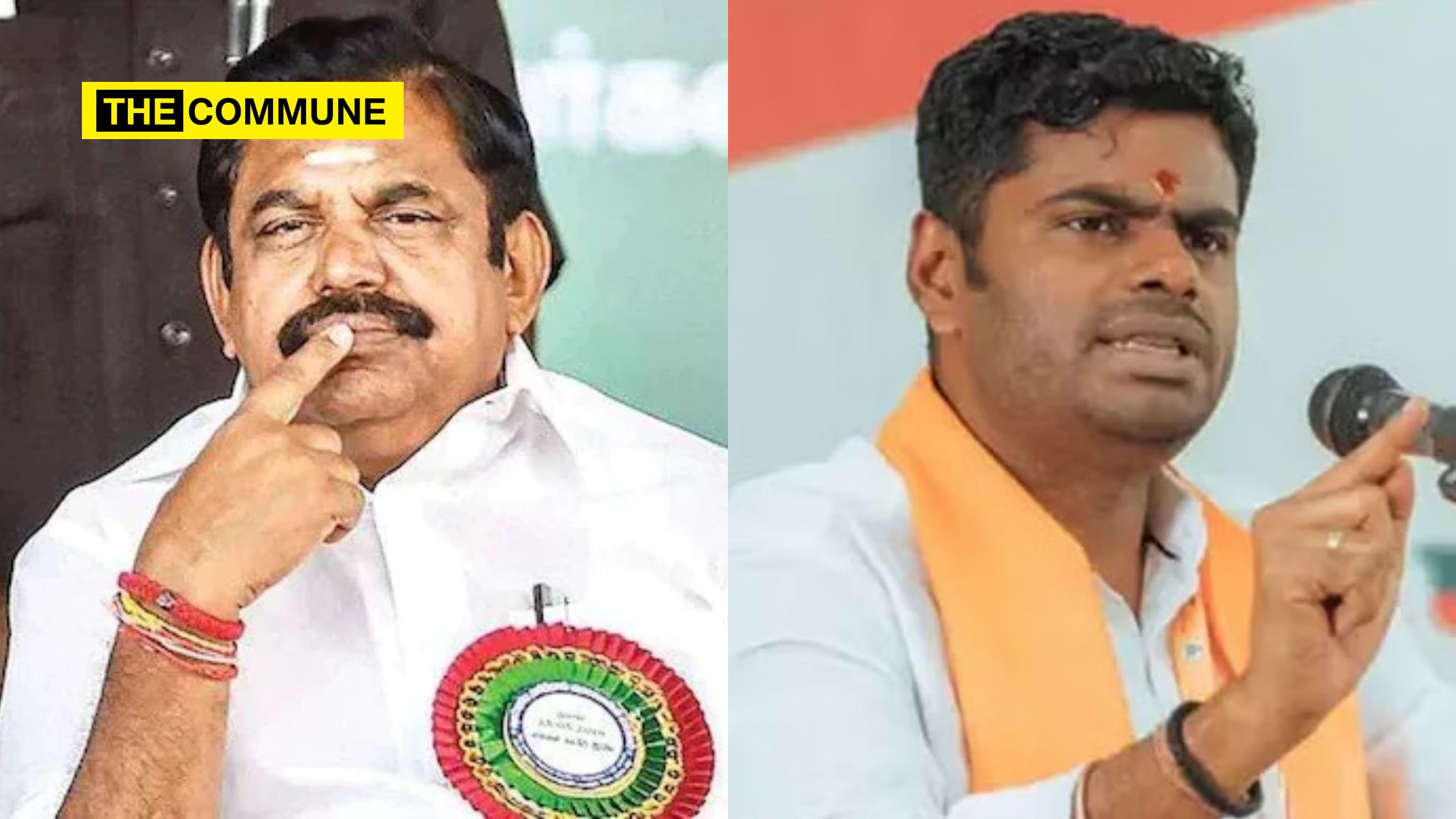
Nothing To Lose, Everything To Gain: Why BJP Must Go Solo In TN For 2024 Lok Sabha Elections

BJP and AIADMK relationships have been going through turbulence for a few months. They have been in the news for all the war of words going on between them. JP Nadda’s visit to Tamil Nadu on 10 March 2023 gave everyone an impression that the matter was settled. Social media has been abuzz with the news that Mr. Nadda had advised some key leaders in Tamil Nadu BJP to refrain themselves from any public spat with AIADMK. It looked like he had put the tension to rest by asserting that AIADMK will be the big brother party in Tamil Nadu and BJP will continue to work closely with them. To put it in fewer words, BJP – AIADMK alliance is there to stay. No confusion. 

However, social media again was ripe with news in the last couple of days that Annamalai had spoken in a BJP internal meeting that his view as the on-ground leader of Tamil Nadu BJP is that BJP should go solo and if that doesn’t happen for any reason, he will be very happy to work as a normal karyakarta for the party. This made me sit up. A natural question came to my mind. Is everything okay between the top BJP leadership and Annamalai? However, I stopped my mind from wandering further by assuring it that K. Annamalai is doing something on the same lines like what Mr. Narendra Modi did in Gujarat in his earlier days and Mr. Modi will totally understand and appreciate Annamalai’s point of view. This is just some different views being aired within a democratic party.

Although I was not sure why Annamalai had to air his view openly in front of the karyakartas instead of talking to the top leadership and private and get them to agree to his views, I strongly believe that his opinion that BJP should go solo in TN for 2024 is absolutely correct. It’s time for BJP to try out something different now and break the status quo. We know that BJP has tried going solo earlier as well as going with various alliances but nothing big happened. However, taking the risk of going solo this time will pay great dividends as they have Annamalai this time leading from the front which was not the case earlier. BJP has to use the rising popularity of Annamalai to its best advantage and the time is RIGHT NOW. If it goes solo, BJP has a good chance to win atleast 5 to 6 seats in 2024 which they will get from the alliance with AIADMK as Edappadi K. Palaniswami is not going to give BJP more seats to contest anyways. Going solo has much more advantages. BJP can test themselves out in 2024 and expand their voter base in the state. They will look as a force to reckon with. Tamil Makkal like personalities that take up a challenge like the famous heroes in the movies. Annamalai has everything in him to deliver. This way, BJP can invite other smaller parties that are willing to fight under their leadership and will not be constrained by the alliance dharma. 2024 effort will give a great chance for BJP to grow exponentially and form a government in the near future. Annamalai is here to make a difference and if the party wants to be cautious and go with status quo, they don’t need an Annamalai to lead the effort. 

Knowing Narendra Modi’s style, I am sure the BJP top brass has and will stand behind Annamalai 100% and give him a total free hand to run the party. If this is done, I am sure Annamalai will do to Tamil Nadu what Narendra Modi did to Gujarat. It will be just a matter of time. This will also send a strong message to those in Tamil Nadu BJP who are pulling in different directions to fall in line with Annamalai, the leader.  I am sure Annamalai, given his IPS training, will also not take undue advantage of his popularity and be disloyal to the party leadership at any point in time. Tamil Nadu is ready for change and it’s now or never for BJP!

Click here to subscribe to The Commune on Telegram and get the best stories of the day delivered to you personally.
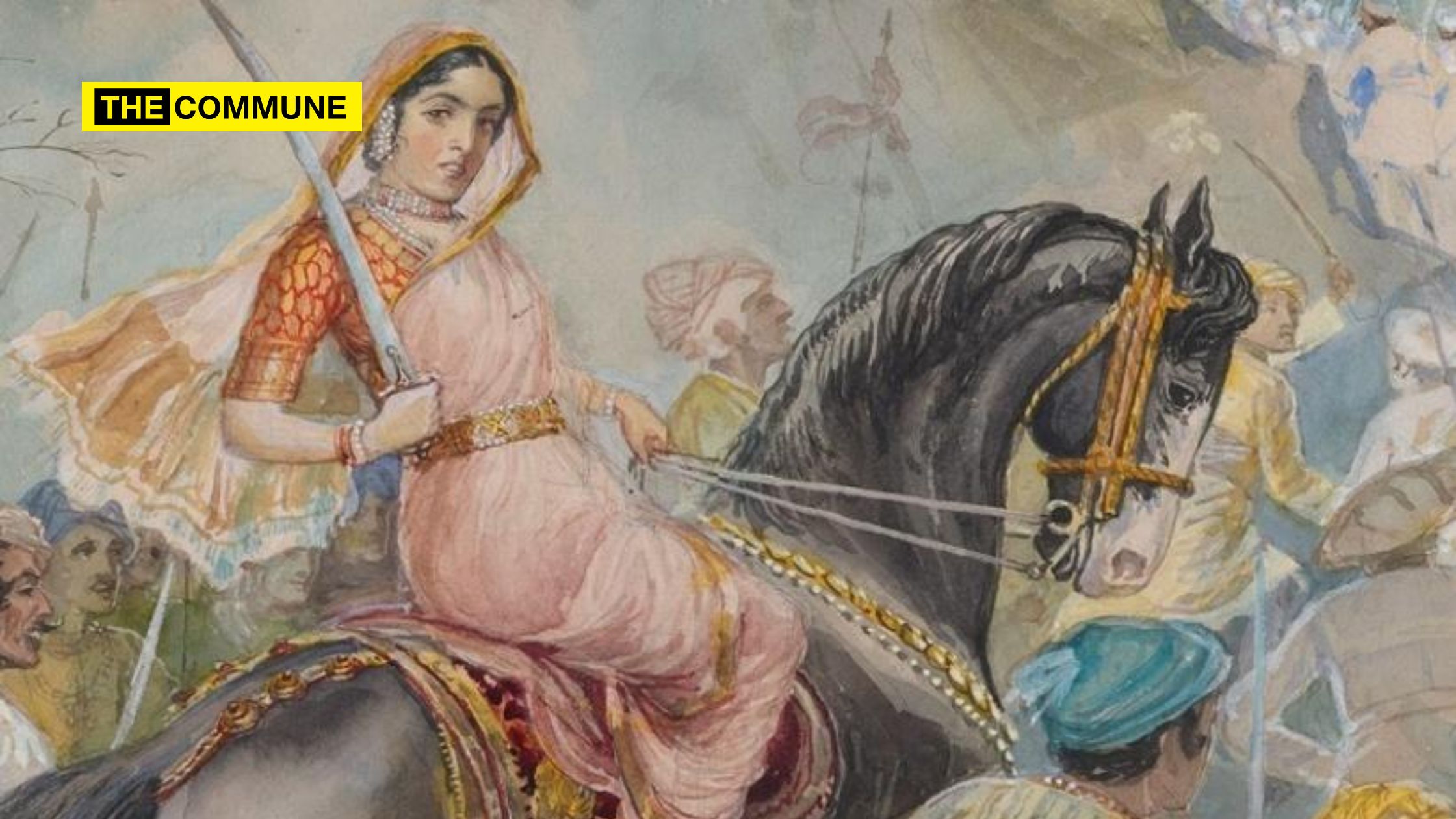
Rani Tarabai: The Mighty Maratha Woman Warrior Whom Mughal Tyrant Aurangzeb Could Never Defeat

Prologue

A nation grows, reaches pride of place among the comity of nations, commands recognition and respect from everyone, not due to its natural wealth, physical size, population density but, on the quality and calibre of its citizens, their patriotic spirit, eagerness and enthusiasm to excel in every field, ability, acumen, probity and purity, virtues and veracity of its nonpareil leaders. To boost the morale and bolster the vitality of the people, to make them feel that they belong to a holy, honoured, hallowed heritage, they should be amply and adequately exposed to the history of the heroic deeds, conquests, exploits, triumphs of their past heroes like kings, monarchs, emperors, warriors etc.

Let us know a little about one such dashing and daring, gutsy and gallant warrior Maratha queen, Tara Bai.

Early Years

Tara Bai was born in 1675 as the daughter of Hambir Rao Mohite, commander-in-chief in the army of Chatrapati Shivaji Maharaj. She lost her mother when she was just three years old and she grew up under the exclusive care of her father in the battle environment. At the tender age of eight itself she learnt horse riding, at ten, archery and at twelve, fencing and pistol shooting. Fiercely independent as a young girl and with the tutelage of her father, she was well-trained in sword fighting, archery, cavalry, military strategy, diplomacy and all other subjects of statecraft.

At the age of eight she was married to Shivaji’s younger son Rajaram.

The Scenario

After Chatrapati Shivaji, his eldest son Sambhaji ascended the throne in 1680. Unfortunately, he was betrayed by his own kinsmen, tortured and killed by Aurangzeb. His younger brother, Rajaram Maharaj became the king but he also died due to ill health in 1700.

The Maratha empire was orphaned and the moghul sultans of Delhi, Bijapur, Golconda, Bahmani, Ahmednagar gleefully joined together and on the third day of the demise of Rajaram Maharaj, they threatened the marathas to surrender.

Instead of surrendering thus, young widow Tara Bai made an announcement on the seventh day, inviting leaders to take over charge of the kingdom and protect it from the sultanates. None came forward. At that moment, without wasting time on tears, she herself volunteered forthwith and took charge of the regime.

Her Glorious Period

Agile, alert, active, astute that she was, she started taking aggressive and assiduous action against the enemy forces with such rapidity that, taken by complete surprise, they were flabbergasted and floored to failure in just three days!

An intelligent woman, Tara Bai had earned a reputation during her husband’s lifetime itself for her civil, diplomatic and military skills. She thus led from the front, travelling between forts, forging crucial partnerships, mobilizing resources and men. A skilled cavalry warrior herself, she motivated her commanders and soldiers by personally leading aggressive attacks on the enemy. She lived in the camps along with her soldiers, eschewing all the royal privileges.

She mastered the art of bribing the enemy commanders so that she could penetrate into the enemy’s camp to sabotage and subvert their strategies at their embryonic stage. While she was ruthless and relentless towards her foes, she was extremely affable and amiable towards her own subjects, as a result of which lot of youth volunteered to join her army.

Tara Bai, herself being a savvy, sharp, skilled warrior and a supreme strategist, accompanied the soldiers personally on the missions from the front. Some of her major military campaigns were:

In 1700, she sent a forces of 50000 soldiers in the region of west Chanderi (present day Madhya Pradesh)

In 1702 she invaded Khadesh (region of northwestern Maharashtra), Berar and Telangana.

In 1703, she attacked urban centers in Khandesh.

In 1705, the Marathas under Tarabai again attacked Gujarat and Khandesh. By extending war to Gujarat and Malwa, which the Mughal army had not anticipated, she gave a clear message to Aurangzeb that Marathas are equally determined for the fight to finish.

Thus the mighty Aurangzeb died in 1707, a defeated emperor by her at the age of 82.

She died at the age of 86 in 1761 after third battle of Panipat. To sum up her life, she was an extraordinary and inspirational figure. She led the Maratha Empire, in its existential crisis, from the front. By the time of her death in 1761, she witnessed the transformation of a nascent Maratha state in a Pan-India Empire.

Her courageous efforts alone saved the Maratha Empire from the wrath of Aurangzeb and the Marathas dream of Swaraj survived. Had she not taken charge of the Maratha Empire at the time she did, it would not have survived to reach the glory it did and Aurangzeb would have snuffed out Maratha rule, and the history of India would have been very different.

Why Indian History Needs To Be Re-Written

The above narration is a skeletal account of just one extraordinary warrior queen. If one pores through the hidden pages of history, one can discover hundreds and hundreds of such personages spread all over our motherland during different periods of history.

Now, a point for deep deliberation and necessary emendation.

While the foreign historians cannot be expected to sing paeans on efforts, enterprises and exploits of our heroes, yet, at the dawn of freedom, when the nation should have started feeling justifiably proud of such adventures of daring warriors like Tara Bai and consequently should have prominently highlighted their episodes in all history books so that the spirit of patriotism is sown and grown in the nascent hearts of the children so that they face the world with courage, confidence, composure, why did the pseudo historians of free India continue to repeat parrot-like for seven long decades, the false narration of the foreigner, glorifying their fake victories and never bothering to rewrite real history, presenting it in the proper perspective? What was their detestable, demoniac, damnable, diabolical intention in concealing and censoring the achievements and accomplishments of our own heroes and heroines? Did they, propelled by mordacity and malice, aim to continue to keep the mood and mindset of the masses in eternal mope and morbidity, with a permanent inferiority complex penetrating their psyche and pervading in all their transactions with the rest of the world?

The time has come to make amends. Let us start before it is too late; in fact, it is already late.

References:

Sudesi magazine August 2022.

https://www.esamskriti.com/e/History/Indian-History/Life-of-TARABAI,-the-Maratha-Warrior-Queen–1.aspx

https://www.thefamouspeople.com/profiles/tarabai-13313.php

https://dharmayudh.com/tarabai-bhosale-maratha-queen-empire-aurangzeb/

Rani Tarabai – A Formidable Maratha Warrior | #IndianWomenInHistory


https://www.thebetterindia.com/121097/rani-tarabai-warrior-queen-maratha-shivaji-aurangzeb-inspiring-woman/


Chennai Lit Fest Is Back With Its Third Edition

The Chennai Lit Fest which had made its debut in 2021 is back with its third edition this year featuring personalities from the literary and journalistic world of Tamil Nadu.

The lit fest is anchored around the theme of Indian revolutionary poet from Tamil Nadu Subramania Bharati, highlighting his contributions to the Indian freedom struggle.

The fest is being held from April 1 – 2, 2023.

The list of eminent speakers include Kizhakku Pathipagam publisher Badri Seshadri, senior journalist and CEO of Chanakyaa TV Rangaraj Pandey, Rajavel Nagarajan of Pesu Tamizha Pesu, author and columnist Jataayu, political commentator Sundarraja Cholan to name a few.

Chairman of National Commission for Safai Karamcharis Ma. Venkatesan, Sahitya Academy Award winner Joe D’ Cruz and epigraphist ‘Kalvettu’ Ramachandran too will address the fest.

The lit fest is organized by Indoi Analytics, a knowledge movement that seeks to unite persons striving towards Indian interests, in partnership with Coromandel Future Positive and Samachar Manyata Association for Research and Training (SMART)

Media partners for the event are Dinamalar, Chanakyaa, Swarajya, Organiser, The Commune, Pesu Tamizha Pesu and Win News.

In March 2021, Indoi Analytics had launched the Chennai Lit Fest featuring speakers outstanding Tamil literary personality Mrs Sivashankari, ‘Dravida Maya’ Subbu, Charu Nivedita, carnatic vocalist ‘Neyveli Santhanagopalan’, Editor of Organiser magazine Prafulla Ketkar, author Sandeep Balakrishna, among others.

In its second edition held in March 2022, the lit fest celebrated ‘75 years of Indian independence’, in order to highlight the contributions of the Tamil region in the Indian freedom struggle. This event was held simultaneously in both Tamil and English with separate speakers for both the segments. BJP Tamil Nadu President K. Annamalai had delivered the inaugural address during the second edition.

Click here to subscribe to The Commune on Telegram and get the best stories of the day delivered to you personally.
BJP To Break Alliance With AIADMK?: This Is What Annamalai Said

Major Tamil Nadu news outlets reported a speech given by Tamil Nadu BJP president Annamalai in a closed-door meeting in which he stated that if the BJP forms an alliance with the AIADMK, he will step down.

A consultative meeting of BJP state executive members and state leaders was held at a private wedding hall in Amainthakarai, Chennai. In this meeting, organization general secretary Kesava Vinayakam spoke about setting up booth committees for elections and preparing for the 2024 Lol Sabha elections. BJP President K. Annamalai participated and addressed the cadres. Many in the meeting were surprised and quite enthused by State President Annamalai’s speech.

In his speech, Annamalai said, “We can grow the party only if we stand alone in Tamil Nadu. If the BJP decides to form an alliance with ADMK, I will resign as president and be as a mere party worker. I’ve requested a meeting with Prime Minister Modi. He stated that he will be “busy” with party work until the Karnataka assembly elections on May 10th.”

Annamalai also reportedly stated “Won’t stand with folded hands for the sake of alliance. Will announce decision about alliance in May.”

The announcements of state president Annamalai were reportedly took some senior leaders by surprise according to news reports. Vice President Narayanan Thirupathy, who was shocked to hear Annamalai’s speech, said that his intention (speech) is not clear and therefore needs further explanation, according to newspaper reports.

Although there was reportedly some opposition to Annamalai’s speech within the party, there was also said to be a section that supported Annamalai’s speech.

It was also reported that BJP MLA and National Mahila Morcha president Vanathi Srinivasan stated that there was no need for raising alliance talks now and that alliance would be decided by the party’s central parliamentary board.

The incident occurred in a closed-door meeting, so the news cannot be independently verified. However, the response of the Tamil Nadu BJP leaders in public demonstrates that the reports about Annamalai’s speech of breaking alliance with the ADMK are accurate.

Reacting to Annamalai’s speech in public, BJP state vice president and MLA Nainar Nagendran said that only the central leadership will decide on the electoral alliance and that what Annamalai spoke was his personal opinion.

Former ADMK Minister D Jaya Kumar responded to Annamalai’s speech by saying that it would be improper to comment on something the party leader Annamalai said in a meeting held closed doors with party members. He also added that he cannot go by what was reported in news and that the party leadedship (AIADMK) will decide on the matter.

Former AIADMK Minister OS Maninan said, “AIADMK will decide the alliance in Tamilnadu and will lead the alliance. Only ADMK will decide with whom to form an alliance and how many tickets will be given to allies.”

Click here to subscribe to The Commune on Telegram and get the best stories of the day delivered to you personally.
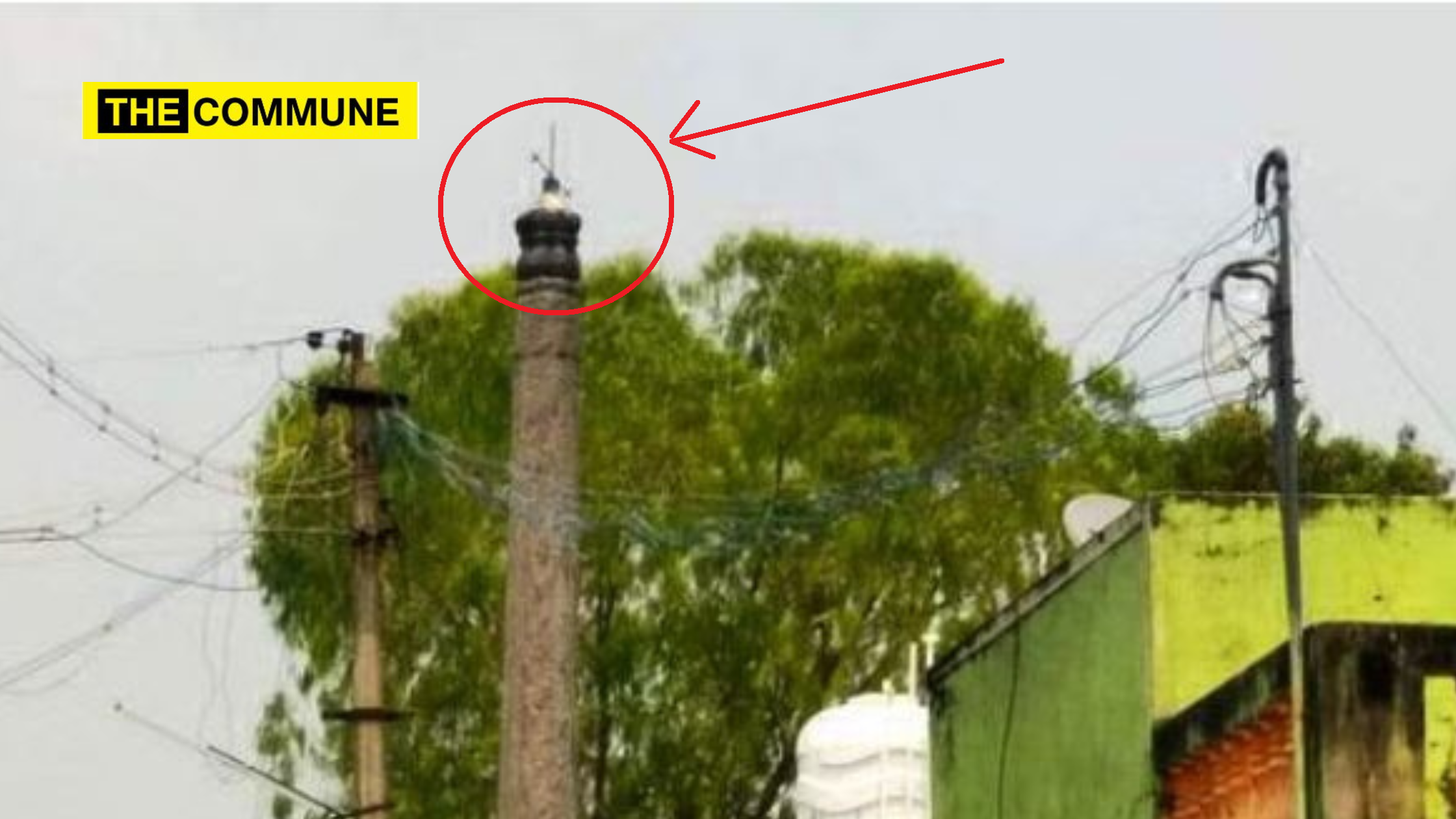
Miscreants Allegedly Erect Holy Cross On Garudaazhwar Temple Flagstaff In Vizhupuram

In a shocking incident, miscreants erected a Christian holy cross on a stone flagstaff of a Hindu temple in Vizhupuram.

The alleged incident occurred at the Garudaazhwar temple in Gingee, near Vizhupuram district. The images of the temple’s flagpost with the Christian holy cross are now going viral on social media, with many calling for the arrest of those involved in this disgusting activity.

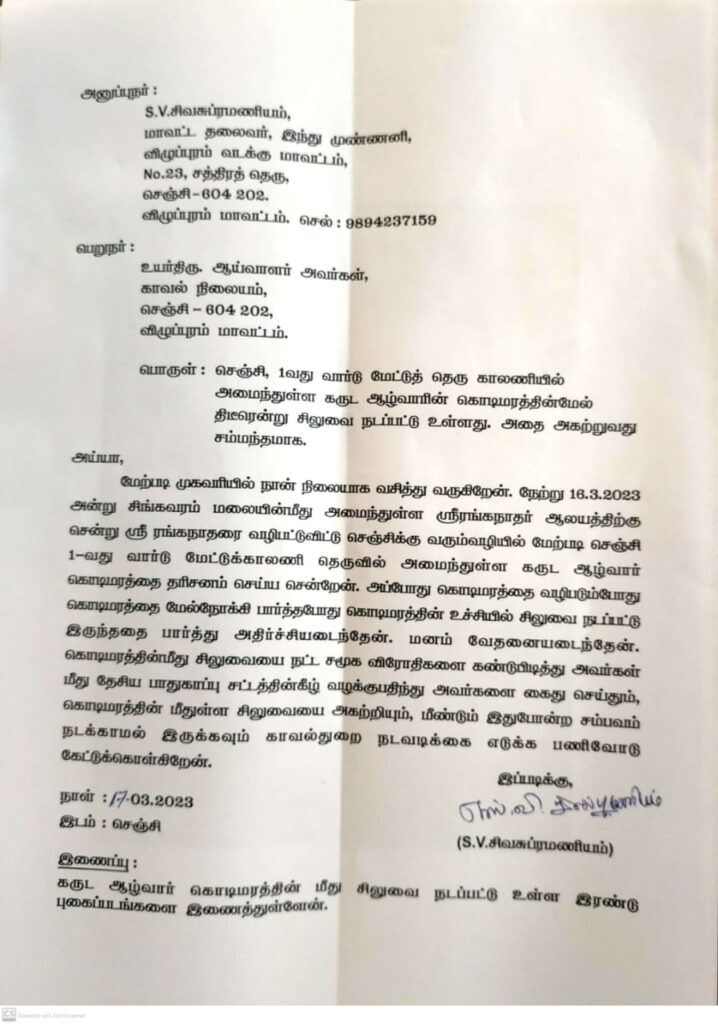
In this situation, the Hindu Munnani district president of Vizhupuram SV Subramani has filed a complaint with the Inspector of Police, Gingee police station, requesting that action be taken to remove the holy cross on the flagstaff erected by miscreants.

In his complaint letter, district president SV Subramani said, “On Thursday (16 March 2023), I was coming back after worshiping Sri Ranganatha at the Sri Ranganatha Temple located on the Singhavaram hill. On my way back to Gingee, I stopped by the Garudazhvar flagstaff, which is located in the first ward of Mettukaalani in Gingee. I was shocked to see a holy cross erected on top of the flagstaff when I turned to worship it. I was devastated. I humbly request the police to find the antisocial elements who placed the cross on the flagstaff and detain them under the National Security Act. We request you to remove the holy cross placed on the flagstaff and prevent such incidents from happening again.”

SV Subramani has also attached the image of the Karudaazhwar flagstaff with the holy cross, along with the complaint.

Dwajasthambam or Flagstaff is an important feature of Hindu temples in South India. Locally known as ‘Kodimaram’ the flagstaff combined of Balipitha (altar for offerings) and the Vahana (vehicle) of the deity to which the temple is dedicated.

(With inputs from Dinamalar)

Click here to subscribe to The Commune on Telegram and get the best stories of the day delivered to you personally.