Home Blog Page 898

Congresswoman Ilhan Omar Accused Of Anti-Semitism And Having Links To Terror Outfits Wants US To Investigate Khalistan Terrorist Niijar’s Killing

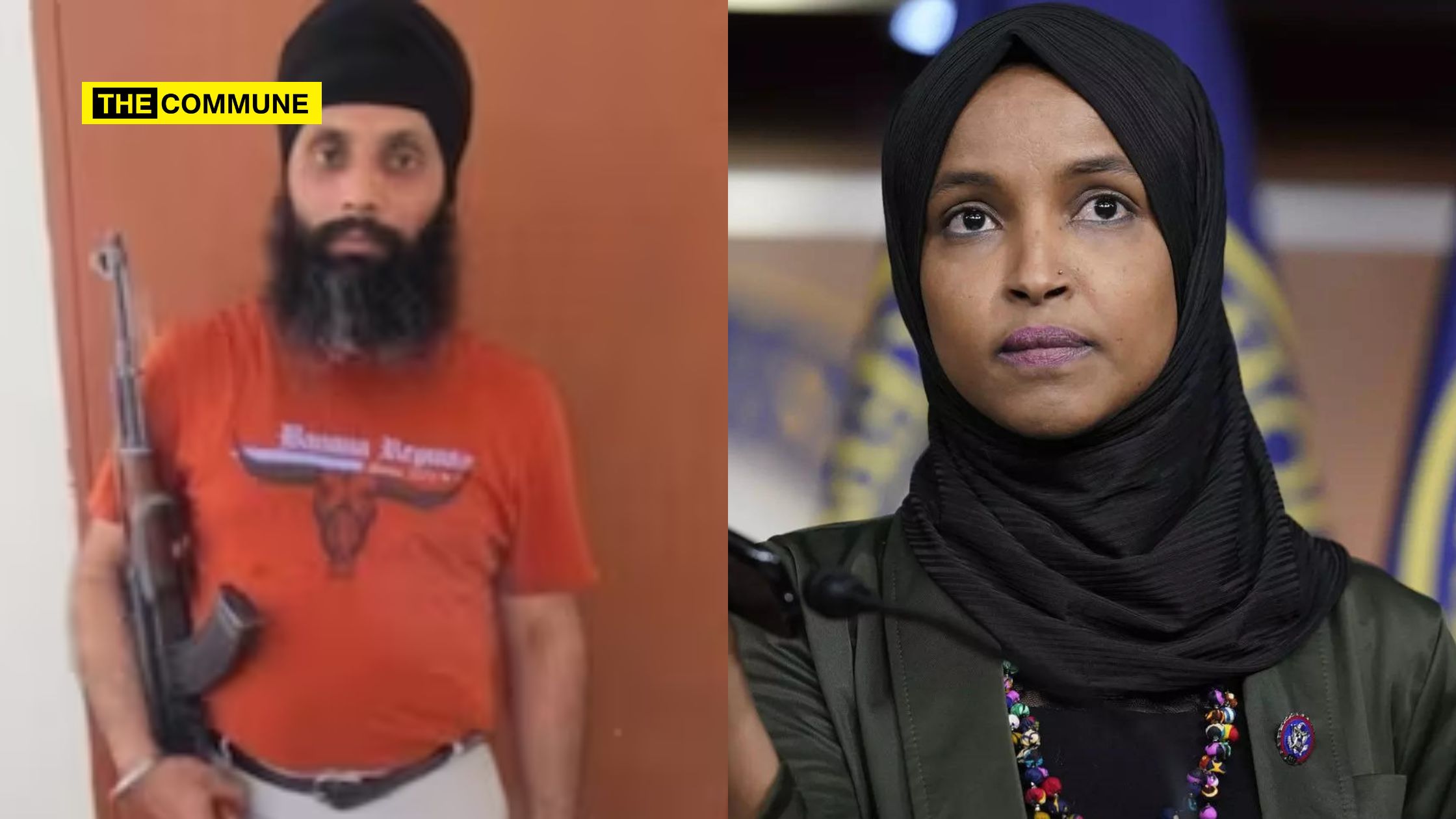
Somali refugee turned Muslim lawmaker in the US, Ilhan Omar on Wednesday (27 September 2023) poked her nose into the killing of the Khalistani terrorist Hardeep Singh Nijjar.

She expressed her support for Canada’s unfounded claim that the Indian government was involved in the assassination of Canadian citizen Hardeep Singh Niijar.

Nijjar was into subversive activities and had even traveled to Pakistan just like Ilhan Omar. He had connections to Ripudaman Singh Malik, the accused in 1985 Air India bombing in which 268 Canadians died.

Ilhan Omar posted, “The allegations that Canadian citizen Hardeep Singh Niijar was assassinated by the Indian government are deeply concerning. The US must fully support the Canadian investigation. We are also requesting a briefing on whether there are similar operations in the United States.

Rep Ilhan Omar one of the staunch supporters of the Islamic State of Pakistan also wanted an investigation into whether India had conducted similar operations in the USA too. It must be noted that Nijjar entered Canada with a fake passport and under the guise of being a plumber. While Ilhan Omar entered the US as a refugee, Nijjar entered moved to Canada in 1997 using a fake identit and his refugee claim was reject in Canada as his documents were found to be fake. He later married a woman who sponsored his immigration but Canadian officials rejected his application citing it was ‘marriage of convenience’.

Incidentally, just like Nijjar, there are allegations that Omar indulged in fraudulent means to quicken her immigration to the US. It is said that she her biological brother to quicken her US immigration but these have been denied by her. Former President Donald Trump had asked the Justice Department to investigate Ilhan Omar’s marriage to her brother and to investigate her migration to the US.

Reportedly, Omar is believed to be associated with the Muslim Brotherhood and Qatar’s leadership. She also has connections to extremist Islamic groups, including Islamic Relief and Helping Hand for Relief and Development (HHRD), which is affiliated with the Islamic Circle of North America (ICNA), a Western counterpart of the Jamaat-e-Islami, a banned terrorist organization in India. Additionally, HHRD has alleged ties to Islamic militant groups like Lashkar-e-Taiba in Pakistan.

It must also be noted that Ilhan Omar who is one of the US House of Representatives from Minnesota boycotted Indian Prime Minister Narendra Modi when he was on a state visit to the US recently. She even tried to lobby President Joe Biden to attack PM Modi and has failed.

When it comes to the Kashmir issue Ilhan Omar has been leading the charge in the US House of Representatives with her pro-Pakistan stand demanding US intervene in the matter. According to Omar minorities in India are not safe, there are issues of human rights, and freedom of speech in India, and Muslims in India are facing discrimination at the hands of Hindus.

Click here to subscribe to The Commune on Telegram and get the best stories of the day delivered to you personally.

Who Will be No. 2? Annamalai Or Anna DMK? Potential Political Scenarios For The Upcoming 2024 Elections

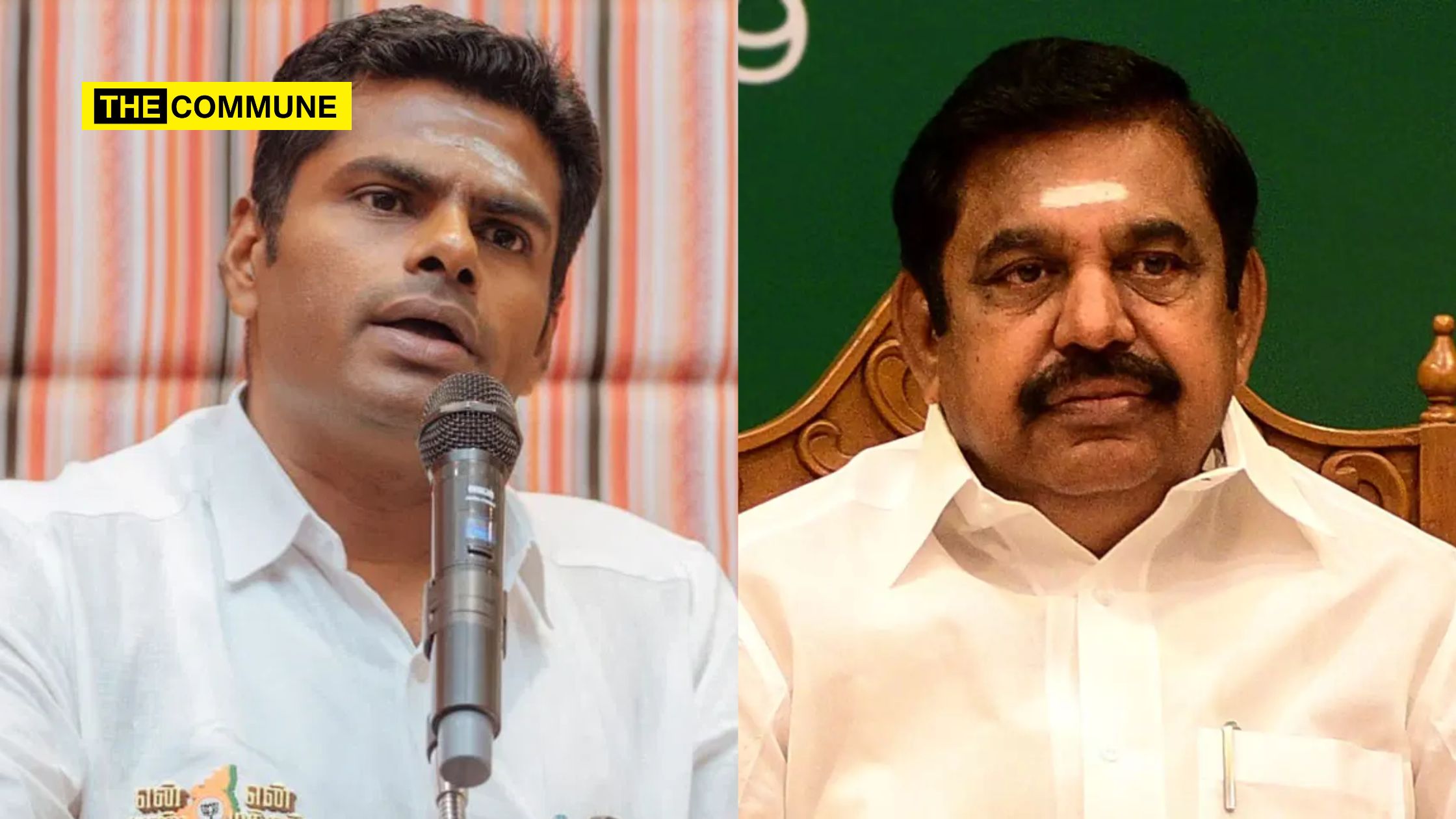
With the political landscape in Tamil Nadu witnessing significant shifts, the upcoming Lok Sabha elections promise to be both intriguing and crucial. The recent split between the Edappadi K. Palaniswami-led All India Anna Dravida Munnetra Kazhagam (AIADMK) and the Bharatiya Janata Party (BJP) has created a ripple effect, leaving the field open for various political alliances and new contenders. While the dominance of the Dravida Munnetra Kazhagam (DMK) in these elections seems almost certain, the real battle appears to be for the second position, with potential candidates being EPS and Annamalai.

What Will The Be Possible Scenarios?

The 2021 assembly polls witnessed a notable 5% difference in vote share between the AIADMK and DMK alliances. The DMK alliance secured 45%, while the AIADMK alliance garnered close to 40% of the vote share. However, circumstances have evolved significantly since then, with shifting alliances and changing voter sentiments.

The 2022 local body polls revealed BJP’s growing influence, as it secured 5.4% of the vote share, while the AIADMK managed 26%. Additionally, with O. Paneerselvam’s expulsion from the AIADMK, the party has weakened in southern Tamil Nadu, and the Mukkulathor community’s support for the OPS-TTV Dhinakaran duo appears strong, potentially contributing 4-6% of the vote share.

Scenario 1: DMK Alliance vs. BJP-OPS-TTV Alliance vs. AIADMK-PMK-PT Alliance

In this scenario, the DMK retains its 2021 winning alliance, the BJP aligns with OPS-TTV, and EPS manages to maintain the support of the PMK, PT, and other smaller parties.

The DMK alliance is expected to sweep all 39 seats with a vote share ranging from 40-45%. Meanwhile, the BJP-OPS-TTV alliance may secure 15-18% of the vote, potentially regaining the NDA’s 2014 vote share of 19%. The AIADMK-PMK-PT alliance could finish second with a vote share between 20-24%.

Scenario 2: DMK Alliance vs. BJP-OPS-TTV-PT-PMK Alliance vs. Solo EPS-led AIADMK

In this scenario, the DMK retains its 2021 winning alliance, the BJP aligns with OPS-TTV, PT, and PMK, while EPS goes solo.

The DMK alliance is still anticipated to win all 39 seats with a vote share ranging from 40-45%. Annamalai-led NDA may secure 22-25% of the vote, surpassing the EPS-led AIADMK, which could drop to less than 20% and potentially finish third.

Crucial Factors

The absence of a prominent Prime Ministerial (PM) face has historically affected political outcomes in Tamil Nadu. In 2014, the lack of a strong PM face resulted in the DMK finishing third in many seats behind the NDA. The AIADMK may face a similar fate without a PM face in the upcoming elections.

Additionally, the alliance between the DMK and Congress appears unlikely to be disrupted, given their strong rapport. Any parties defecting from the DMK to the AIADMK are expected to have minimal impact, possibly adding no more than one percent to the AIADMK’s vote share.

Conclusion

As Tamil Nadu’s political landscape continues to evolve, two possible scenarios for the upcoming Lok Sabha elections stand out. While the DMK alliance remains the frontrunner, the battle for the second position intensifies, with potential contenders including the BJP-OPS-TTV alliance and the AIADMK-PMK-PT alliance.

The influence of the Anti-Modi wave has diminished, O. Paneerselvam’s expulsion from the AIADMK has weakened the party in southern Tamil Nadu, and the emergence of Annamalai as a formidable leader may impact the electoral landscape. It would not be surprising if Annamalai-led NDA surpasses its 2014 vote share of 19%, potentially edging past the AIADMK and establishing a credible second position.

This could mark the beginning of a new era in Tamil Nadu politics—the Annamalai Era. Regardless of the outcome, the second-place finisher in these elections is likely to emerge as the primary challenger to the DMK in the 2026 elections, setting the stage for a dynamic and evolving political landscape in the state.

Subash is a finance professional and a portfolio manager based out of Chennai.

Click here to subscribe to The Commune on Telegram and get the best stories of the day delivered to you personally.
Political Pressure Or Safety Issue? Audio Launch Of Vijay Starrer ‘Leo’ Cancelled, Netizens Trend #DMKFearsThalapathyVIJAY 

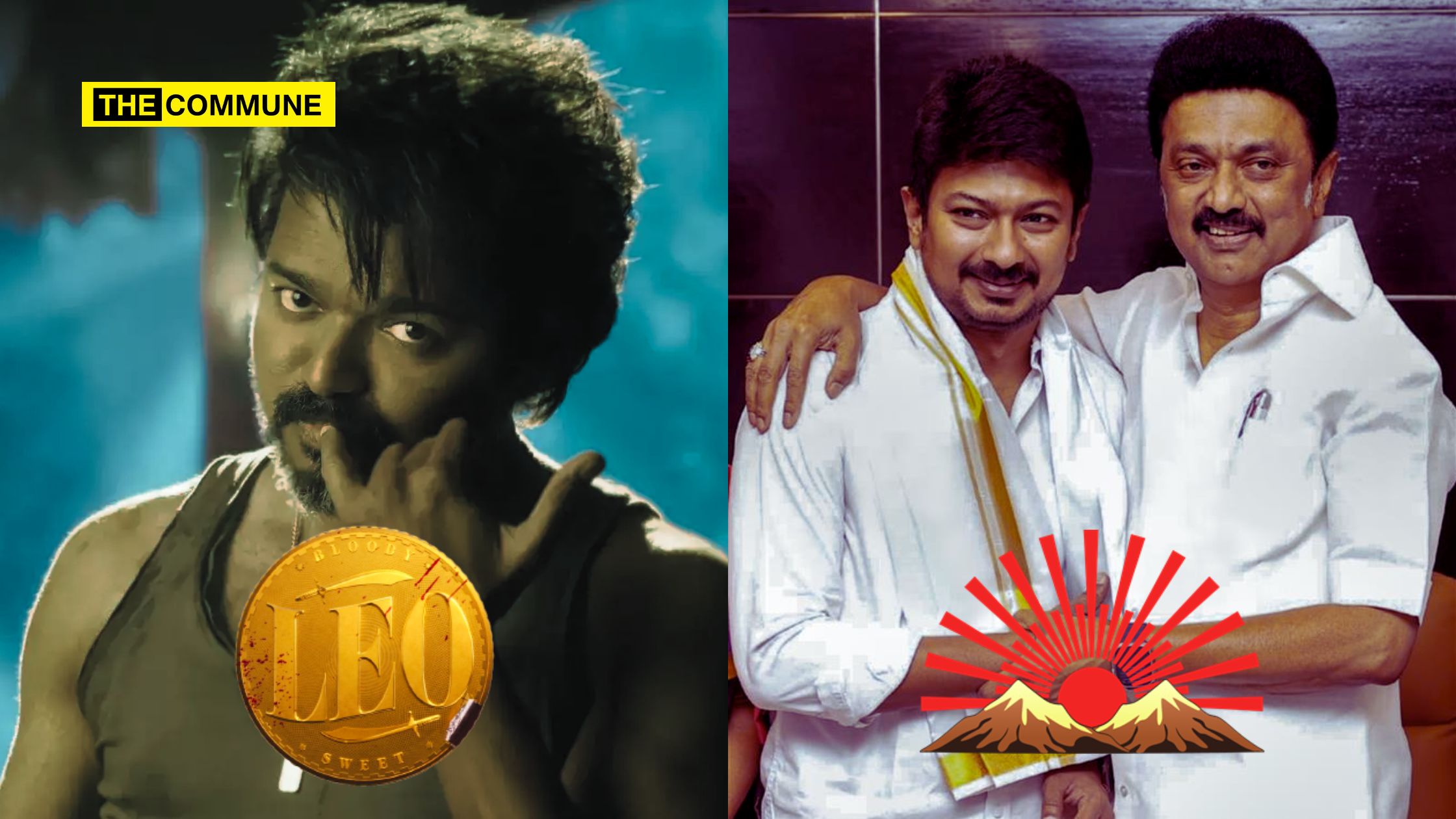
In an unexpected turn of events, the audio launch of the much-awaited film ‘Leo,’ starring actor Vijay, which was scheduled to take place on 30 September 2023 at Nehru Indoor Stadium, Chennai, has been called off. Seven Studio, the production company behind the film, announced the cancellation and said that it was due to concerns over safety and an overwhelming demand for passes. 

The cancel of the audio launch follows the much-criticised AR Rahman’s Marakkuma Nenjam concert at Chennai which saw an overselling of tickets and excessive crowd attendance and extremely poor event organising that led to a near-stampede situation, children going missing, groping/molestation of women, etc. The organiser has been booked for mismanagement

They wrote, “Considering overflowing passes’ requests & safety constraints, we have decided not to conduct the Leo Audio Launch. In respect of the fans’ wishes, we will keep you engaged with frequent updates. P.S. As many would imagine, this is not due to political pressure or any other reasons.”

Netizens Trend #DMKFearsThalapathyVIJAY

Despite the production company’s clarification that the cancellation was not due to political pressure, some fans of Thalapathy Vijay have raised doubts. There are allegations that permission for the audio launch was not granted by the government and hence the hashtag trend on Twitter(X) began.

As per this tweet, it is alleged that Red Giant Movies is arm-twisting the producer of the film to hand over distribution rights for certain districts in the state. It is to be noted that only 23 films were distributed by Red Giant Movies from 2011-2020 – when the DMK was not in power whereas in just 2 years of coming to power, about 33 films were distributed by the firm from 2021-2023. 

Some other fan reactions include:

https://twitter.com/Vijay96736247/status/1706846009878524200

NTK Seeman Voices Support

Seeman, head of the Naam Tamilar Katchi spoke to news persons and had this to say about the audio launch controversy:

“For Vijay’s movie Leo, he gets the permissions needed for the audio launch programme. So far, he has done these programmes for all the movies he has acted in. Why didn’t you (TN government) give permission this time for his film’s audio launch? Why are you stopping what was supposed to happen today? If we ask you this, you point to the AR Rahman issue. If you ask your conscience, brother Rahman is not the one to be blamed for that fiasco. When an event is supposed to take place, we ask for permission from the government. Who permitted it in the first place? The police. They have to assess the situation beforehand. They should have told that there is a possibility of congestion, a traffic jam, we will help you redirect the vehicles, etc. That is a proper approach to the situation. Or you should have told them to find a different location depending on the crowd that was going to gather. Or you should have provided the necessary security and helped them conduct it properly. That is the duty of the government and the departments. To say don’t conduct the event, we cannot provide security, why do we need a government or a police force? To say, if you step out of the house you will die, you stay inside the house locking yourself, we don’t need a police force. To provide security and support is what a government and police must do. Am I right? Why did you prevent this audio launch from happening? You have restrictions in place for these events but when you conduct political rallies, don’t lakhs and lakhs of people gather?”

https://twitter.com/ram_ramchandran/status/1706948037606518897

Nevertheless, the decision to cancel the audio launch event has disappointed many who were eager to hear the lead actor speak.

The film ‘Leo,’ directed by Lokesh Kanagaraj and featuring a stellar cast including Trisha, Sanjay Dutt, and Arjun, is generating substantial buzz. The film is set to release in theaters on 19 October 2023, promising an exciting cinematic experience for fans and moviegoers alike.

Click here to subscribe to The Commune on Telegram and get the best stories of the day delivered to you personally.
9 Lakh MSMEs Down Shutters To Protest Against DMK Govt’s Power Tariff Hike, 80 Lakh Workers Affected

More than 900,000 MSME (Micro, Small, and Medium Enterprises) units in Tamil Nadu participated in a strike to protest against the state’s electricity tariff hike. The industries are dissatisfied with the government’s response to their demands and plan to escalate their protests. This includes wearing black badges and submitting memoranda to district collectors on October 9, as well as staging a hunger strike in Chennai on October 16.

The conflict between industries, particularly MSMEs, and the state government arose after the government increased electricity tariffs last year. Industry representatives have been urging the government to reconsider this tariff hike, but no action has been taken so far. The one-day strike aimed to draw the attention of the chief minister for intervention.

According to J James, coordinator of the Federation of Coimbatore Industries Associations (FOCIA), and president of the Tamil Nadu Association of Cottage and Micro/Tiny Entrepreneurs (TACT), the strike resulted in a production loss of approximately ₹9,000 crore and a revenue loss of ₹2500 crore.

Around 50,000 MSME units in Coimbatore district alone participated in the strike and have decided to continue protesting until their demands are met.

Regarding electricity charges, Chief Minister MK Stalin has directed officials to adjust MSMEs’ electricity loads without charges four times a year, according to a senior TANGEDCO official. But there has been no official order on this yet. Addressing other demands of MSMEs requires approval from the Tamil Nadu Electricity Regulation Commission.

V Govindappan, vice president of the South India Hosiery Manufacturers Association (SIHMA), expressed concern about the new EB charges, particularly their impact on small MSME units, causing financial challenges during nighttime shifts. As a protest, approximately 7,000 commercial units in various categories such as knitting, compacting, bleaching, dyeing, screen printing, and stitching closed their operations for the day in Tiruppur.

Furthermore, around 60,000 small units in Chennai and northern districts, including Kancheepuram, Chengalpattu, Tiruvallur, Ranipet, and Vellore, participated in the strike. R Ganesan, president of the Tamil Nadu Micro and Small Garments Manufacturers Association, reported that about 1,700 garment units have closed in recent years due to various issues, including high power costs, labor shortages, and reduced orders. In Madurai, all industries associated with the MADITSSIA (Madurai District Tiny & Small Scale Industries’ Association) held a hunger strike on Monday at Palanganatham.

Not just for commercial establishments, even residents have been shocked with exorbitant electricity bills.

(With inputs from The New Indian Express)

Click here to subscribe to The Commune on Telegram and get the best stories of the day delivered to you personally.
The Cauvery Water Dispute: How The Congress And DMK Played Politics Without Arriving At A Solution

The Cauvery River, flowing through the southern states of Karnataka and Tamil Nadu, has long been a source of contention and conflict over water-sharing. Actors and political parties from both these states would often stage protest. Sometimes the fringe groups indulged in violence in arson. But for the past 4-5 years, the Cauvery was not at all issue between the two states after the constitution of Cauvery Water Management Authority (CWMA). Karnataka would release the mandated cusecs of water to Tamil Nadu as per the Supreme Court orders. Things were smooth when the BJP ruled Karnataka and the Edappadi K. Palaniswami of the AIADMK was in power in Tamil Nadu. But, the Cauvery issue is once again rearing its ugly head. This contentious issue often takes centre stage when the Congress is in power in Karnataka and the Dravida Munnetra Kazhagam (DMK) in Tamil Nadu. The most recent flare-up of the Cauvery dispute is attributed to being sparked by deficient rainfall in the Cauvery basin. But there’s more to it than that meets the eye.

Historical Background

The roots of the Cauvery water dispute can be traced back to the colonial era when the British established a compromise between the princely state of Mysore (now Karnataka) and the presidency of Madras (now Tamil Nadu) in 1924. This agreement allowed Mysore to construct a dam in Kannambadi village to store Cauvery water, with a review scheduled for 50 years later. However, after India gained independence, both states brought the dispute to the Supreme Court multiple times, without achieving a resolution.

The dispute over Cauvery resurfaced before 1974, with Karnataka arguing that under clause XIV of the 1924 agreement, if the Tamil Nadu government built reservoirs on the Cauvery tributaries, Karnataka would be entitled to construct offset storage reservoirs within its jurisdiction. Tamil Nadu had already constructed reservoirs on the Amaravathi and Bhavani. The Hemavathi reservoir’s potential was estimated to be 34 TMCF, and some Mysore leaders argued that if every TMCF of water up to 45 TMCF was not impounded before 1974, Mysore’s control of the water would be permanently lost. The 1892 and 1924 agreements also remained in force, binding Tamil Nadu and Karnataka as successor states to the old Madras Presidency and Mysore state.

What Karunanidhi Did

In the lead-up to the expiration of the agreement, the Tamil Nadu government, led by Karunanidhi, approached the Central government, led by Indira Gandhi, requesting the establishment of a tribunal under the Inter-State River Water Disputes Act, 1956. Despite Karunanidhi’s repeated appeals, Indira Gandhi deferred action until after the Lok Sabha election in March 1971. When no response was received, Tamil Nadu turned to the Supreme Court to request the tribunal’s establishment. Concurrently, the state sought to halt Karnataka’s irrigation projects through a separate petition, which the apex court dismissed. While a fact-finding committee was established by the central government to seek a solution, an all-party meeting in June 1972 led to Karunanidhi government withdrawing its Supreme Court petition in the hopes of an amicable settlement.

However, negotiations became contentious after October 1973, with central government officials appearing more interested in reducing Tamil Nadu’s water allocation. During a meeting in November 1974, Karunanidhi, initially suggesting Tamil Nadu would relinquish 60-80 TMC feet of water, was pressured by the water resources minister to agree to giving up 100 TMC feet, causing shock among Tamil Nadu engineers.

Despite drafting an agreement and convening a meeting in February 1975, the states remained divided. Karunanidhi then called for an all-party meeting and requested the Centre to establish a tribunal. DMK members of Parliament attempted to engage with Indira Gandhi and the president, Fakruddin Ali Ahmed, but were unsuccessful. Karnataka, on the other hand, was unwilling to agree if its irrigation projects were halted.

The dispute continued until 1990 when a group of farmers led by S Rangarajan moved the Supreme Court. The court, in 1990, ordered the establishment of a tribunal led by Justice Chittatosh Mukherjee. In June 1991, the tribunal issued an interim order awarding 205 TMC feet of water to Tamil Nadu.

It’s worth noting that when in power, Karunanidhi managed to release water informally during emergencies and attempted to negotiate with Karnataka’s chief minister in 1997, but no agreement was reached.

Hemavathi Dam Construction

Former Chief Minister M. Karunanidhi faced accusations of betraying Tamil Nadu’s interests on the Cauvery issue due to withdrawing a Supreme Court petition in 1972. The state initially filed the suit in 1971 but withdrew it a year later based on Prime Minister Indira Gandhi’s assurance of resolving the dispute through negotiations.

Karunanidhi endured criticism for compromising the state’s rights, with the suit withdrawal cited as the reason for Tamil Nadu’s water-sharing woes with Karnataka. However, S. Ranganathan, whose 1983 petition led to the Cauvery Water Disputes Tribunal (CWDT), asserts that Karunanidhi did not abandon the state. The decision to withdraw the suit included reserving the right to return to court if necessary.

Ranganathan conveyed this to Karunanidhi’s rival, Jayalalithaa, who had criticized the move. Nevertheless, Ranganathan noted that the DMK government under Karunanidhi from 2006-11 was sluggish in publishing the CWDT’s final order in the Central government gazette. Jayalalithaa ultimately got this done. 

Before the agreement could expire, the Tamil Nadu government, then led by Karunanidhi, approached the central government headed by Indira Gandhi, requesting the establishment of a tribunal under the Inter-State River Water Disputes Act of 1956. In December 1970, Karunanidhi wrote to Gandhi, expressing the state’s need for a tribunal due to recurring water-sharing disputes. Gandhi responded, indicating that no action would be taken until after the Lok Sabha elections in March 1971. After the parliamentary elections, Karunanidhi sent two reminders. However, during this period, he informed the state assembly that his government had no objections to Karnataka’s construction of the Hemavathi dam.

Jayalalithaa Enlists 4 Betrayals Of Karunanidhi

Restating her stand on the Cauvery water dispute, the then AIADMK general secretary J Jayalalithaa asserted (in 2010) that she advocated for the establishment of a Cauvery Water Authority consisting of officials. She also accused Chief Minister M. Karunanidhi of acting against the best interests of Tamil Nadu. She enlisted 4 betrayals of Karunanidhi.

  • First Betrayal: Karunanidhi initially claimed to have written to the Centre for a tribunal in 1970, but later stated in the Assembly that Tamil Nadu had no objection to a dam across Hemavathi.
  • Second Betrayal: Karnataka began constructing dams on other Cauvery tributaries (Kabini, Harangi, and Sornavathi) without proper approvals. Karunanidhi remained silent, marking a second betrayal.
  • Third Betrayal: Karunanidhi withdrew a case filed by the State government in the Supreme Court under political pressure. This move was seen as the third betrayal.
  • Fourth Betrayal: Failure to revive the 1974 agreement between the Madras Presidency and Mysore Samathan, despite being in power, constituted the fourth betrayal. The agreement, originally signed in 1892 and reaffirmed in 1924, should have been reinstated in 1974 during the DMK’s tenure.

What The Congress Did

Throughout the years, Congress leaders, both at the national and state levels, have consistently failed to resolve the Cauvery River water dispute. This includes prominent figures like Indira Gandhi, P V Narasimha Rao, Manmohan Singh, as well as chief ministers such as Veerendra Patil, Devraj Urs, and Siddaramaiah. They have all favored discussions over tribunals but have not been successful in settling the dispute.

In 1991, when the Cauvery Water Tribunal issued its interim award, Karnataka’s chief ministers at the time, S Bangarappa and Veerappa Moily, failed to implement it. Despite Jayalalithaa’s indefinite fast in 1993 demanding its implementation, the Congress-led central government, under Prime Minister Rao, did not ensure compliance.

The dispute resurfaced in 1995 due to monsoon failures, with Tamil Nadu seeking 30 TMC of water, but the tribunal recommended only 11 TMC. Once again, the Congress let down Tamil Nadu, with Rao’s government urging Karnataka to release only 6 TMC of water. It took significant effort from Rao to persuade Karnataka to release this amount.

In 2002, tensions escalated when Karnataka refused to release water to Tamil Nadu due to rainfall shortages. Jayalalithaa approached the Supreme Court, and then Karnataka Chief Minister S M Krishna had to take a peace walk to ease tensions.

In 2007, the Cauvery Water Dispute Tribunal announced its final award, but both Tamil Nadu and Karnataka rejected it.

In 2013, the Manmohan Singh government notified the final award but did not establish the Cauvery Water Board as mandated by the Supreme Court. The Congress government in Karnataka, led by Siddaramaiah, refused to release water to Tamil Nadu despite a Supreme Court order, leading to riots and conflicts.

The Congress government also failed to establish a permanent Cauvery Management Board and opposed the setting up of a tribunal when the Supreme Court issued its final ruling in 2018, allocating additional water to Karnataka for drinking purposes.

Today, the Congress government in Karnataka is politicking with the Cauvery issue. Why can’t Siddaramaiah convince his ally MK Stalin to understand the grim situation in Karnataka due to less rains in the catchment areas?

The Cauvery Water Disputes Tribunal (CWDT)

In 1990, recognizing the need for a more structured approach to resolving the ongoing conflict, the Indian government led by VP Singh established the Cauvery Water Disputes Tribunal (CWDT) as directed by the Supreme Court. The tribunal’s purpose was to adjudicate disputes related to the sharing of Cauvery River water among Karnataka, Tamil Nadu, Kerala, and Puducherry.

The CWDT issued temporary directives, mandating Karnataka to release a specific volume of water to Tamil Nadu on a monthly or weekly basis. These directives were intended to address the immediate needs of both states but did not provide a comprehensive solution.

The 2018 Supreme Court Verdict

The Cauvery dispute reached a significant milestone in 2018 when the Supreme Court issued a verdict that aimed to provide a final resolution to the long-standing conflict. The court granted an additional water share to Karnataka for drinking water purposes in south Karnataka while reducing Tamil Nadu’s share by the same amount. This verdict was welcomed as a step towards ending the protracted dispute.

The Current Crisis

The recent resurgence of the Cauvery dispute can be attributed to a combination of factors, primarily deficient rainfall in the Cauvery basin. The monsoon season in Karnataka has been marked by exceptionally low rainfall, leading to a water scarcity crisis. As a result, the four major reservoirs in the Cauvery basin—Krishna Raja Sagar, Kabini, Hemavathy, and Harangi—have seen their storage levels drop significantly.

Under the 2018 Supreme Court order, Karnataka is obligated to release a specific volume of water to Tamil Nadu between June and September. However, the crisis brought about by the monsoon deficiency has complicated matters. Karnataka has argued that releasing water to Tamil Nadu during a water scarcity crisis would be detrimental to its interests.

The Cauvery Water Management Authority (CWMA)

The Cauvery Water Management Authority (CWMA) was established to oversee the implementation of the 2018 Supreme Court orders and monitor the sharing of Cauvery River water between the two states. The CWMA’s primary responsibility is to ensure compliance with the court’s directives and address any disputes that may arise.

In August 2021, the CWMA issued a directive instructing Karnataka to release 5,000 cusecs of water to Tamil Nadu for 15 days. This directive was met with resistance from Karnataka, which contested the decision. However, the Supreme Court upheld the CWMA’s directive, ordering Karnataka to comply with the release of water.

The Dravidian Parties Are To Blame For The Cauvery Crisis

The unlawful extraction of river sand has led to a decline in groundwater levels within the state, resulting in the drying up of wells throughout the Cauvery delta region. Widespread sand mining, primarily driven by the real estate sector, has caused the water table to drop below 100 meters in many areas. Interestingly, this has had a more adverse impact on agriculture than the actual reduction in water availability during periods of drought.

It is worth noting that since 1967, when the DMK came to power in Tamil Nadu, the state has only undertaken a limited number of water storage projects. In contrast, Karnataka has constructed 26 reservoirs along the Cauvery river during the same period, while Tamil Nadu has completed only 13. This raises the question of why Tamil Nadu, which heavily relies on Karnataka for its agricultural water needs, has not invested in more check dams or smaller reservoirs, especially when neighboring Andhra Pradesh has successfully constructed 25 check dams spanning 45 kilometers along the Palar river, which also feeds into Tamil Nadu.

This situation reflects a significant failure on the part of both the AIADMK and DMK governments, as they have failed to take proactive measures to preserve and manage water resources effectively.

The Bengaluru Bandh And Protests

The contentious release of Cauvery River water to Tamil Nadu has triggered protests and unrest in Karnataka. Several pro-Kannada organisations, farmer groups, and labour unions, with the support of the opposition Bharatiya Janata Party (BJP) and Janata Dal-Secular (JDS), called for a bandh (shutdown) in Bengaluru. The protesters are demanding that the Karnataka government cease the release of Cauvery reservoir waters to Tamil Nadu until the CWMA reviews the situation.

This protest movement highlights the emotive nature of the Cauvery dispute and its ability to mobilize political forces in Karnataka. In the past, the issue has resulted in violence, with mainstream political parties trying to gain support by taking chauvinistic positions. However, recent years have seen politicians in Karnataka adopt a more conciliatory approach, recognizing the evolving demographics of the state and shifting priorities away from agriculture.

Owing to lack of Cauvery water in Tamil Nadu, crops are dying. A farmer in Nagapattinam also died allegedly of a heart attack as he had taken loans and the crop failure.

The Cauvery water dispute is a recurring challenge in the southern states of Karnataka and Tamil Nadu, often exacerbated by political dynamics, climate variability, and differing perspectives on equitable water allocation. With the SC refusing to intervene, the onus is on the ruling governments in both the states who are also part of the I.N.D.I. Alliance to sort out the matter amicably. It’s worth noting that when the BJP governed Karnataka, negotiations were relatively smooth and peaceful. Therefore, calling for the centre to intervene when there is a Supreme Court order in place and when it is the alliance partners who are in charge is ludicrous. 

Click here to subscribe to The Commune on Telegram and get the best stories of the day delivered to you personally.
Supreme Court Orders Status Quo On Archaka Appointments In Tamil Nadu Temples With Agamic Traditions

On 25 September 2023, the Supreme Court issued a notice in a Special Leave Petition challenging a Madras High Court judgment and ordered a status quo on the appointment of Archakas/Poojari in Tamil Nadu temples governed by Agamas. The petitioner association argues that the Madras High Court’s judgment on 22 August 2022, erroneously decided on the transfer of Archakas from one Agamic Temple to another Agamic Temple, stating that such appointments should be governed by the Agamas and not by Rules 7 and 9 of the Tamil Nadu Hindu Religious Institutions Employees (Conditions of Service) Rules, 2020.

The plea also challenges two government orders: one dated July 27, 2023, which directed Archakas from different denominations to undergo one year of training under Senior Archakas, and another dated August 28, 2023, which mandated training in the performance of Poojas and Rituals in Agamic Temples. On September 9, 2023, the State issued an Advertisement to fill Archakas’ positions in Agamic Temples.

A bench comprising Justice A.S. Bopanna and Justice M.M. Sundresh issued a notice in the matter and ordered that ‘the status quo relating to the Archakaship in the Agamic Temples in question shall be continued until further orders are made herein.’

The petitioners, represented by Senior Advocates Guru Krishna Kumar and P. Valliappan, argued that the Rules of 2020 were framed without considering the rituals and customs specified in the Agamas. They emphasized that the qualifications under the Rules of 2020 cannot apply to the appointment of Archaka/Poojari in temples where construction, idol installation, and deity worship follow the Agamas. The petitioners raised several key points:

  1. Ancient Saivite and Vaishnavite Temples in Tamil Nadu are governed by the Agamas.
  2. The Agamas mandate that only individuals from specific Sects/Denominations can be appointed as Archakas to perform prescribed Poojas/Rituals/Ceremonies.
  3. The performance of Poojas in Tamil Nadu’s ancient Temples differs from the rest of India, with strict adherence to Agamic practices.
  4. Only around 3,600 out of approximately 38,000 Temples in Tamil Nadu strictly follow the Agamas, while the rest do not allow denominations other than their own to perform Poojas.
  5. The requirement of a one-year certificate course for Archaka/Poojari is seen as an infringement on the rights of the Sivachariyars.
  6. The provision allowing the appointment of Archaka/Poojari by a ‘Fit Person’ is contested, as the petitioners argue that appointments should be made by trustees.

Previously, the Madras High Court had directed the State Government to constitute a Five-Member Committee, including Justice M. Chockalingam (Retired Judge of the Madras High Court) and N. Gopalaswami (Head of the Madras Sanskrit College’s Executive Committee), to identify temples constructed according to the Agamas. The High Court also noted that if any Archaka appointment violates the Agamas, the aggrieved individual can challenge it in the High Court. However, the Court clarified that the appointment of Archakas should be made by trustees or a fit person, not by the HR & CE Department.

The judgment further stated that Archakas could only be transferred from one temple governed by a specific Agama to another temple governed by the same Agama.

The High Court dealt with a batch of writ petitions challenging the Tamil Nadu Hindu Religious Institutions Employees (Conditions of Service) Rules, 2020 introduced by the state government. The High Court found that the definition of ‘appointing authority’ in these rules did not violate constitutional provisions or the Act of 1959, recognizing that in the absence of trustees, a fit person may be appointed to oversee temple affairs.”

(With inputs from Verdictum)

Click here to subscribe to The Commune on Telegram and get the best stories of the day delivered to you personally.
Professor Of Trichy St. Joseph College Suspended Allegedly For Raping A Student, Survivor Undergoes Abortion And Attempts Suicide 

In Tamil Nadu, a Christian college professor named Leo Standly who has been sexually abusing a female student and harassing her mother as well has been ‘suspended’. As per Tamil media reports the girl had to undergo an abortion due to repeated sexual abuse.

The student in question has alleged that there was a serious lack of action from the church-run college management. However, what is even more shocking is that many other girls have also fallen victim to sexual harassment. It has come to light that the professor has alleged support from a political party that is helping suppress the incident and ensure he escapes punishment.

Leo Standly is an Assistant Professor of the Chemistry department at St. Joseph’s College in Trichy and was suspended by the college only after his victim attempted suicide. Standly had used his influence to get close to this girl an undergraduate student of the Chemistry department on the pretext of helping her.

There are reports wherein it has been suggested that the victim’s family was undergoing personal issues and during this trying time, the professor saw it as an opportunity to take advantage. As per an investigative report published in Tamilaga Arasiyal, the professor raped her and then threatened the victim by revealing details and used it as leverage to further sexually abuse her.

It did not end there, he also saw an opportunity to harass her mother as well. Excerpts from the report published in Tamilaga Arasiyal in English reads….

“You look like a heroine, dear. I like you very much. I love you de chellam (Dear in Tamil). Call me when your grandma is away”, he told the victim. When she refused to submit to his demands, he threatened her with marks as well. Looks like you have become emboldened. I have your papers with me. I know how to suppress it (boldness)”.

As per reports, the girl’s parents had separated, and the professor saw that as an opportunity to fill the vacuum to project himself as a ‘fatherly’ figure and saw it fit best to emotionally manipulate her.

From reports published, it is clear that Leo Standly is a typical sociopath who used his office to manipulate and trap one of his students and sexually abuse her. He also saw the mother as being vulnerable and targeted her by assuring her of employment and monetary help.

One of the extracts translated from Tamil to English states, that Leo Standly on one occasion, forcibly grabbed the hands of the victim’s mother even though she folded them in response. She said, “He told me, ‘I have arranged for a job for you. You’ll definitely get it. Give me your hand’ and grabbed my hands despite my resistance and didn’t drop it for 5 minutes. I understood that he acted that way, knowing that I’m separated from my husband. He made sexual innuendos saying, “I’ll come to your house. Do you need money? I’ll give you. How many lakhs do you need? I am alone. You get it right?”.

Leo Standly also built an aura as a social activist and spoke on behalf of women’s rights and said that female students were his sisters and even held protests for what was happening in Manipur.

After some time, the victim could not take it anymore and filed a complaint with the college administration. However, the college administration which is run by Catholic priests did not take any action. sat on it. It was only after the victim reportedly attempted suicide and was admitted to the hospital, the action was taken.

It has also now emerged that Leo Standly sought help from Viduthalai Chiruthaigal Katchi, a ‘Dalit’ political party and ally of DMK to escape punishment, and try to put pressure on the victim and the college administration. If that was not enough, his wife filed a complaint under the SC ST Prevention of Atrocities Act claiming that he was being discriminated against based on his caste.

However, after an investigation, the Vishaka committee found the professor guilty and that led to his suspension for only six months. 

(With inputs from HinduPost and Kamadhenu)

Click here to subscribe to The Commune on Telegram and get the best stories of the day delivered to you personally.
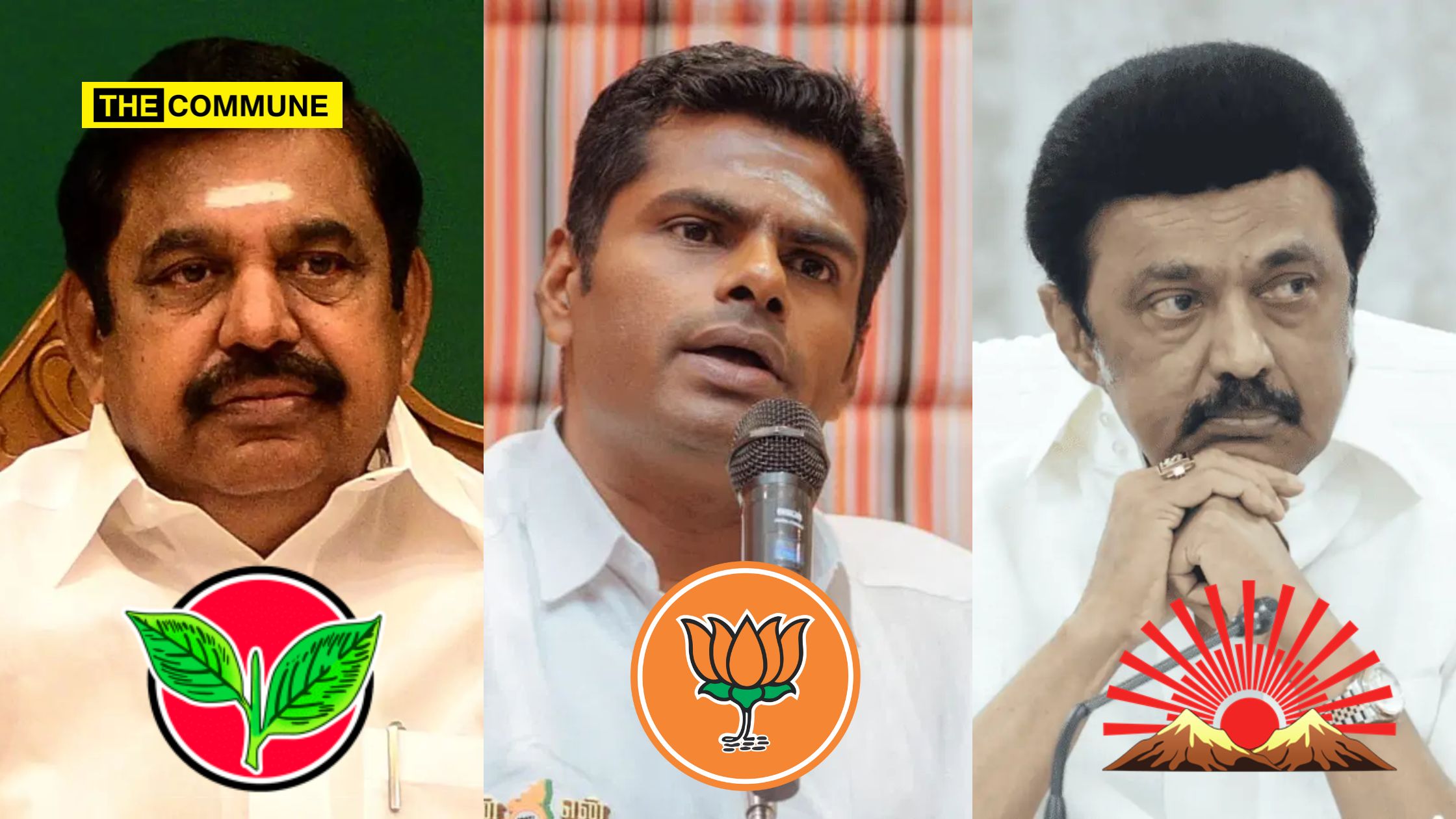
AIADMK-BJP Breakup: What Next? Who Will Benefit? Understanding The Calculations And Strategies Behind The Move

The Edappadi K. Palaniswami led AIADMK has officially left the BJP-led National Democratic Alliance (NDA), citing the recent remarks by BJP Tamil Nadu President K. Annamalai as the reason, albeit without naming him.

The party had held a consultative meeting with senior leaders, district secretaries, former MPs and MLAs on 25 September 2023 and passed a resolution to exit from the NDA.

In its press release, the AIADMK said that the state leadership of the BJP has been deliberately defaming the AIADMK, its leaders Annadurai and Jayalalithaa with ulterior motives.

It further added that the state leadership (Annamalai) has been belittling the massive public meeting that happened in Madurai on 20 August 2023 and defaming Edappadi K. Palaniswami.

Valuing the thoughts, wishes and sentiments of the 2 crore cadres, the AIADMK from today, has unanimously decided to withdraw itself from the National Democratic Alliance and the BJP.“, said the press release.

It is noteworthy to mention that just days ago before the announcement AIADMK leader Palaniswami met Union Minister Amit Shah. Though the meeting was termed as a ‘routine’ and a ‘courtesy call’, it is speculated that alliance matters for the Lok Sabha polls were discussed during the meeting.

The Events Leading To The Breakup

The move of the AIADMK to exit the NDA comes following the announcement by AIADMK leader D Jayakumar on 18 September 2023 who categorically stated that there is no alliance between his party, led by K. Palaniswami, and the BJP in Tamil Nadu after Annamalai mentioned a historical incident involving Dravidian leader Annadurai in his speech.

The BJP leader had recently stated that freedom fighter Pasumpon Muthuramalinga Thevar had lambasted CN Annadurai (founder of DMK) for ridiculing Hinduism and that Annadurai who was kept in hiding in Madurai only managed to escape after issuing an apology. This comment elicited a strong objection from the AIADMK not immediately but days after the comment was made, with the second rung leaders of the party condemning Annamalai that they will not tolerate disrespect of their leader after whom the party is named and walks on the path laid by him.

This episode had fanned the flames between the two parties where the relationship was already smoking with frequent flare-ups.

Earlier in an interview to Times of India, Annamalai (knowingly?) had mentioned that former Chief Ministers have been convicted by a court of law, an indirect reference to Jayalalithaa, when asked for his agreement on whether the period between 1991-96, when Jayalalithaa’s AIADMK was in power, was one of the worst periods in terms of corruption. Though it is a matter of fact that the late AIADMK supremo was convicted in the disproportionate assetscase, it left the AIADMK in fumes with the party even passing a resolution against Annamalai for his comments in June 2023.

But these two instances weren’t the only time that the BJP state chief had provoked the AIADMK. In fact, Annamalai had been signaling his intention to sever ties with the AIADMK for quite some time.

Earlier in March 2023, reports of a closed-door meeting of the BJP Tamil Nadu unit emerged (intentionally leaked?) where Annamalai had apparently conveyed to cadres his intentions to go it alone for the 2024 Lok Sabha elections.

In his speech, Annamalai reportedly said, “We can grow the party only if we contest alone in Tamil Nadu. If the BJP decides to form an alliance with ADMK, I will resign as president and be as a mere party worker.

Annamalai also reportedly stated that he won’t stand with folded hands for the sake of alliance and a decision would be made in May 2023.

This is where it all started from the BJP’s end, with split opinions emerging within the state unit. One group preferred going it alone while a few others were comfortable and wanted an alliance with the AIADMK. Even the central high command of the BJP reportedly tried to douse the flames that Annamalai had ignited with the BJP National President JP Nadda making it clear that the alliance with AIADMK was intact and should continue for the Lok Sabha polls. Since then, supporters of Annamalai have been indulging in a war of words with AIADMK supporters on social media often targeting the AIADMK leadership.

At the outset, it may seem like the AIADMK’s fallout with the BJP was Annamalai’s doing, whereas it is not. It is the AIADMK which had started attacking the BJP first. Immediately after the 2021 Assembly Elections, former Minister CV Shanmugam blamed the BJP for AIADMK’s defeat saying that the Dravidian party lost the votes of minority community because of BJP. Even before the Assembly elections, senior leaders close to Palaniswami like KP Munusamy commented that “national parties are trying to destabilize Dravidian parties“.

But what made things worse was how an internal turmoil within the BJP was exploited by the AIADMK. Edappadi K. Palaniswami, the shrewd politician that he is, played power politics on his part by inducting CTR Nirmal Kumar, the former BJP Tamil Nadu Social Media Wing head who quit the party due to his differences with Annamalai. Nirmal Kumar had personally attacked Annamalai in his resignation letter which he made public and moments later he was in the AIADMK. The battle lines were drawn after this episode.

Annamalai started doing power politics by tacitly backing O. Paneerselvam who went to the extent of backing the BJP if the party were to field a candidate for the Erode East by-polls. Till the last moment, the BJP kept AIADMK on tenterhooks and extended support only at the last moment. Even then, the chemistry between the alliance was nowhere to be seen with the AIADMK deliberately avoiding BJP flags and leaders during campaign. Another indication of a cleaving alliance came when the AIADMK chose to contest against the BJP in Karnataka elections, the erstwhile karma bhoomi of Annamalai.

After the Erode East by-polls, Annamalai only began asserting himself stating that he is not a mere ‘Project Manager’ but a leader in his own right. While the AIADMK wanted to deal only with ‘Delhi’, Annamalai made it clear that he would be nice to the AIADMK only if they treated him as an equal.

From then on, Annamalai kept hinting that it was only a matter of time that the alliance would end. Even when he released his DMK Files, Annamalai took the occasion to hit at the AIADMK saying he would not stop at exposing the corruption of just the DMK but would target corrupt leaders in every political party that has ruled Tamil Nadu, obviously hinting at the AIADMK.

Until the AIADMK broke the alliance, the frequent barbs between the AIADMK and BJP had already estranged the cadres of both the parties on the ground. So, if one were to ask if Annamalai is the main reason for the AIADMK-BJP split, the answer is Yes and No.

What Next? 

The BJP has never ousted an ally on its own. But given that the AIADMK has exited itself, it is doubtful whether the Central BJP leadership would make any attempts for a truce. The bridge has been burnt.

The 2024 Lok Sabha election isn’t the AIADMK’s election, per se. Ten years back, Jayalalithaa had the audacity and the calibre to position herself as a prime ministerial candidate and had enthralled her voters with the slogan “Modi or the Lady?“. But Mr. Palaniswami is no Jayalalithaa and he knows that. He is not contending to be a Prime Minister. But, he will try to stay in the good books of the Central BJP just like the BJD in Odisha and the YSRCP in Andhra Pradesh. He will definitely not make acerbic attacks on the BJP during the campaign for Lok Sabha polls. He may at best canvass on the point that the AIADMK will be in good relations with any government at the Centre (hinting at BJP) for the welfare of Tamil Nadu people. After the polls, if the AIADMK manages to win 10-12 seats, they would extend outside support to the Modi government. The BJP too will probably extend the courtesy of not attacking the AIADMK during the campaign and will focus its energy in attacking the DMK.

But to the likes of ‘Savukku’ Shankar who are fantasizing about the prospect of AIADMK allying with Congress, and courting minority voters for support, their hopes are likely to be dashed. The last thing that Palaniswami would want is a two-front war with the BJP at the Centre and the DMK in the State until 2026. If God forbid, the AIADMK myopically chooses to ally with the Congress they will be made to bite dust.

So, will there be a tacit understanding between the AIADMK and the BJP even without an alliance to defeat the common enemy in the Lok Sabha polls? Only the results will tell.

On the other hand, the break-up of BJP-AIADMK is both good and bad news for the DMK. The DMK which is already facing heavy anti-incumbency in just 3 years, will be rejoiced at the prospect of the anti-DMK votes getting split between the AIADMK and the BJP-led alliance. However, the AIADMK has opened a Pandora’s box with its latest move. If one were to closely observe, the DMK’s reactions to the split have been muted. That is because, it has given a trump card for the smaller parties in the DMK alliance to negotiate a better deal for them. They might start flexing their muscles for more seats as some of those parties who feel suffocated to be in the DMK alliance will be tempted by a breath of fresh air with AIADMK throwing its doors open.

The VCK had already evinced interest in joining hands with the AIADMK. Thol Thirumavalavan had ‘requested’ AIADMK to break away from ‘Sanatan forces’ and has been consistently asking the AIADMK to sever ties with the BJP indicating that he wouldn’t hesitate to jump ship.

Very recently in July 2023, AIADMK’s mouthpiece D Jayakumar had indicated (invited?) that many from the DMK alliance (Thirumavalavan?) would join the AIADMK alliance in the coming months. But him joining the AIADMK alliance is determinant on the PMK. If the PMK chooses to go ahead with the DMK, Thirumavalavan will shift camp to AIADMK alliance. He might be able to convince the two Communist parties which had hitchhiked on the DMK’s strength to jump ship if they don’t get atleast 2 seats from the DMK.

So, the AIADMK-BJP split is not that much of a problem for both these parties but is sure to give a migraine to the DMK in the lead up to the elections. Mr. Stalin may have to concede the same number of seats as last time if not more.

But going by the sharp and polarized state of politics today, it is highly doubtful if the VCK would part ways with the DMK. The ideological baggage that VCK carries is too heavy for the AIADMK to handle given the VCK’s position on the entire Sanatana Dharma controversy. The AIADMK risks to lose Hindu votes if it accommodates VCK in the hope of getting votes of minority communities. While Thirumavalavan would be able to sway Dalit votes in the Kanchipuram, Tiruvallur, Chennai, Chengalpattu regions, his community (Paraiyar) is sparsely populated down south and his party’s strength isn’t strong below Madurai. Given that the AIADMK already has the bitter experience of being cut to size by TTV Dhinakaran’s AMMK in southern Tamil Nadu during the 2021 Assembly elections, it would be a huge gamble for the AIADMK to ally with VCK. Also, the Arunthathiyar community is concentrated in the western and southern parts of Tamil Nadu. They’ve traditionally voted for AIADMK, thanks to MGR and Jayalalithaa’s outreach. The AIADMK won’t risk muddying that pool by bringing in Thirumavalavan as it may not go well with the Arunthathiyar community.

Thirumavalavan can neither swing the minority votes away from the DMK. It is a myth that the AIADMK lost support of minorities due to BJP. The truth is that minorities were never a considerable votebank for the AIADMK. They have stood and will continue to stand rock-solid behind the DMK (at state-level) and Congress (at Centre).

The Possible Political Formations

Based on the ongoing political developments, Tamil Nadu is poised for a three-way contest.

A DMK-led alliance comprising of DMK, Congress, VCK, CPI, CPI-M, MDMK, IUML, MMK, will remain intact with Kamal Haasan’s Makkal Needhi Maiam (MNM) being a possible addition. But the allies now have a bargaining chip to negotiate more seats for themselves. Note that the term I.N.D.I alliance has been deliberately omitted because it really doesn’t matter.

Possible seat sharing: DMK – 21, Congress – 9+1 (Puducherry), CPI – 2, CPI(M) – 2, VCK – 2, IUML – 1, MMK – 1, MNM – 1

The BJP-led rainbow alliance would comprise PMK, AMMK (TTV Dhinakaran has already evinced interest in allying with the BJP), DMDK, Tamil Maanila Congress, Dr. Krishnasamy’s Puthiya Tamizhagam, Parviendhar’s Indhia Jananayaga Katchi (IJK), and AC Shanmugam’ New Justice Party.

Possible seat sharing:  BJP – 14+1 (Puducherry), PMK – 8, AMMK – 8 (including OPS), DMDK – 5, IJK – 1, NJP – 1, PT – 1, TMC – 1

The AIADMK might contest alone or at the maximum may accommodate the Communists if they choose to leave the DMK alliance.

Since, Seeman’s Naam Tamilar Katchi has no stakes in the Parliament elections, they may not contest the elections (like 2014) and extend tacit support to the AIADMK or contest for namesake just to keep his party machinery running.

Who Will Gain?

In the case of a three-way contest, the anti-incumbency votes will get split benefitting the DMK alliance which will get a major portion of the 39 seats. So, it is a win for the DMK and the party will probably return the courtesy by extending support for crucial bills in the next term.

The NDA had managed to poll 18.8% votes in 2014 (5.5% for the BJP), despite being shadowed by Jayalalithaa, under whose leadership the AIADMK managed to sweep 38 out of 39 seats.

At the very least, the BJP will have to replicate its 2014 performance. The BJP has definitely gained a new energy under the charismatic leadership of Annamalai but it remains to be seen if this new energy will crystallize into votes.

While it’s not entirely accurate to equate local body poll results with Lok Sabha elections, for the purpose of estimating the BJP’s minimum strength, let’s consider the percentage of votes it garnered in the 2022 local body polls. This election marked the first time since 2014 that the party contested independently. The BJP won 9.26 lakh votes — 5.4 per cent of the total vote share. 9.26 lakh votes from just contesting in 5400 seats (42% of the total 12838 seats). For arithmetic convenience, let’s consider hypothetically that BJP fielded candidates in all seats. Then the votes polled by the party would be:

926000 x 12838 divided by 5400 = 2201479 or 22 lakh votes

which is roughly the same it had polled in the 2014 Lok Sabha polls (2258496 – 5.56% of total 4,06,20,440 votes polled).

So, as on date, we can consider that the BJP has a vote share of 5.5% in the state. So, Annamalai’s BJP should take efforts to atleast make this 5.5% into an 8-10% by capitalizing on the heavy anti-incumbency against the DMK and secure 2-3 MPs. Win or lose, if Annamalai manages to increase BJP’s vote share to 8% with the other alliance parties together polling at least 10%, Annamalai will cement his position as the indisputable leader of the Tamil Nadu BJP.

If the BJP had stayed in alliance with the AIADMK, it would’ve been cut to size. The 2019 Parliament and 2021 Assembly elections are proof that vote transfer from the AIADMK to BJP is insignificant even if the both parties were to be in alliance. In the 20 seats that the BJP contested in the 2021 Assembly elections, the party managed to win only 4 of which 2 seats had a victory margin of a mere 1.1% (Coimbatore South – Vanathi Srinivasan won by jut 1728 votes), and 0.2% (Modakurichi – C. Saraswathi won by just 281 votes).

The 2024 Lok Sabha elections presents a unique opportunity for the BJP in the state to test its strength. So, the AIADMK-BJP split will be a gain for the BJP and in particular Annamalai.

The AIADMK too has something to gain from the split. They no more have to consider the BJP to be a burden. It will also be a litmus test for Edappadi K. Palaniswami’s acceptance in the region below Madurai. The AIADMK recently held a mega public meeting at Madurai, which established EPS as a force to be reckoned with. The place of this meeting is significant because the region is said to be a stronghold of the Thevar community. If the AIADMK manages to secure at least 10-12 MPs and a couple more from the Mukkulathor stronghold regions, EPS would further rise in stature.

The real battle between the BJP and AIADMK will therefore manifest in Madurai. Annamalai has already taken the lead over the political chessboard here by pitting Annadurai against the freedom fighter and Thevar icon Pasumpon Muthuramalinga Thevar just weeks before Thevar Jayanthi (30 October). The AIADMK now finds itself in a catch-22 situation. In a way, the AIADMK has straight away walked into Annamalai’s trap and the upcoming Thevar Jeyanthi event at Pasumpon will be closely watched. Incidentally, Annamalai’s En Mann En Makkal yatra has also been concentrating its efforts in south Tamil Nadu mobilizing and galvanizing people. Annamalai’s game plan seems to be to and try sabotage AIADMK’s chances in this region with the help of AMMK, OPS, and the backing of the Thevar community.

But we would be making a mistake if we underestimate EPS. He is no ordinary politician. He has risen through the ranks to reach where he is now and has established himself as the indisputable leader of the AIADMK after a legal and political struggle. The mega rally at Madurai is a testimony that the AIADMK is a sleeping lion and will go for the kill when it wants. The fact that Palaniswami was seated right next to Prime Minister Narendra Modi during the NDA meeting highlights the camarederie and the goodwill he commands from the BJP national leadership which cannot be wished away.

Politics that happens on the outside where parties play to the gallery is completely different from what happens behind the screen.

But in this entire episode, there is one large picture that is hidden in plain sight. The BJP national leadership seems to have no problem in letting the AIADMK go, a trusted ally from a state that contributes 39 seats. That can only mean one thing – the BJP is confident of securing a historic win with a thumping majority with or without MPs from Tamil Nadu.

In short, the BJP-AIADMK split is a win-win-win for BJP, AIADMK and the DMK.

Kaushik is a political writer and communications consultant. 

Click here to subscribe to The Commune on Telegram and get the best stories of the day delivered to you personally.
Farmer Dies Amidst Crop Failure Owing To Cauvery Water Shortage In TN, DMK Min Says Can Manage Kuruvai Crop With Current Inflow

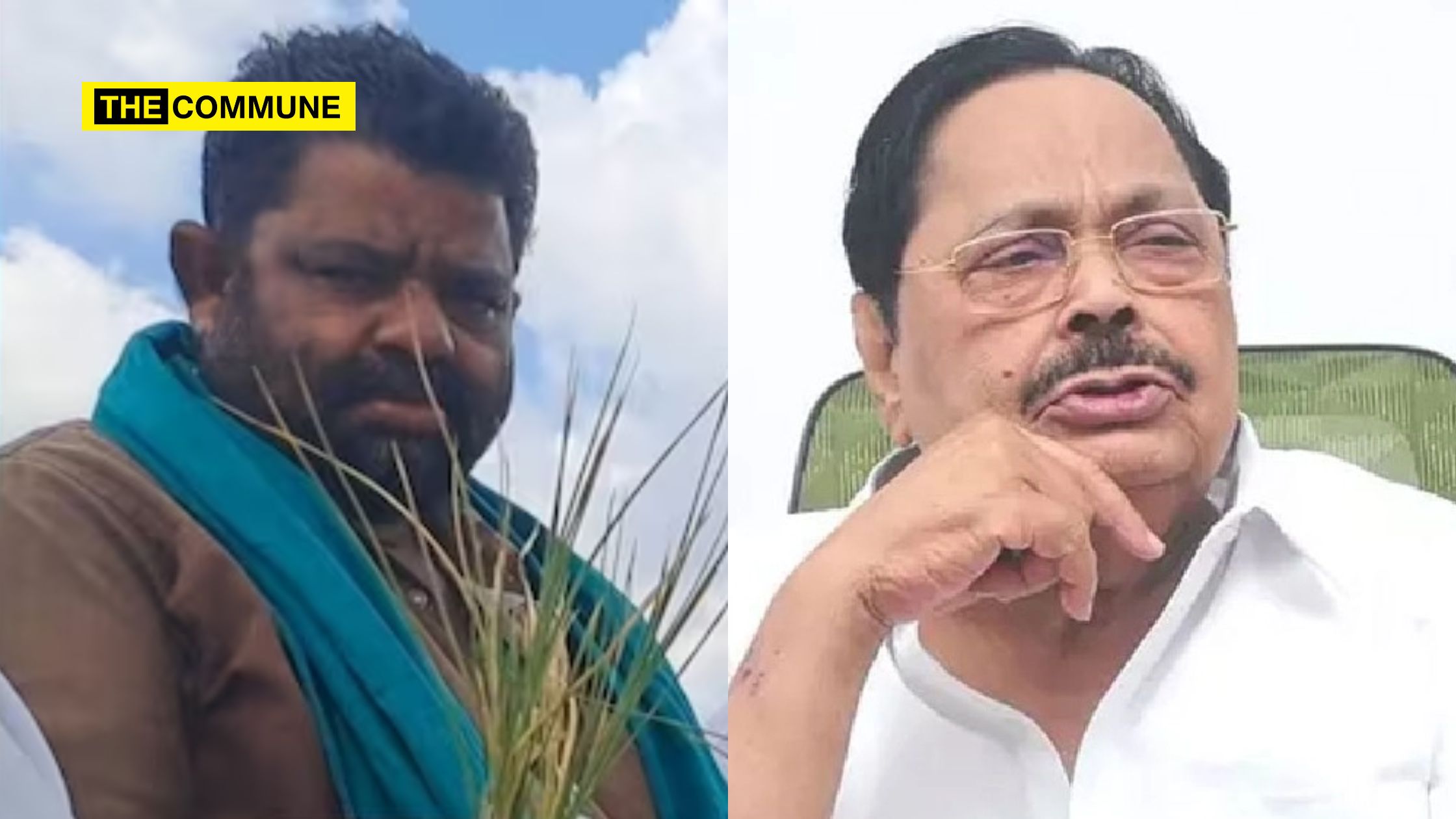
Tragedy struck as a 47-year-old farmer, Rajkumar, from Thiruvaimur village in Nagapattinam district of Tamil Nadu, passed away due to a heart attack. His family has attributed the distressing incident to Rajkumar’s overwhelming mental anguish caused by the failure of his crops due to a lack of water supply from the Cauvery River.

The allocation of Cauvery River water has long been a contentious issue, sparking conflicts between Tamil Nadu and Karnataka, both vying for their perceived rightful share.

According to Rajkumar’s family, he had planted Kuruvai paddy using a direct seeding method on his land following the release of water from the Mettur Dam on June 12. The Kuruvai crops necessitate a continuous water supply for germination and maturation. Regrettably, Rajkumar’s farmland faced a shortage of water when the anticipated Cauvery water release did not materialise. In a desperate bid to nurture his crops, Rajkumar, along with fellow farmers, employed water pumps to transport water from several kilometers away. However, these efforts proved insufficient, and his farmland developed fissures just as the crops were reaching maturity.

Faced with the grim reality of crop failure, Rajkumar made the heart-wrenching decision to abandon his crops and prepare the land for the Samba cycle of cultivation, a long-term crop. This choice would necessitate further loans, which he was already struggling to repay.
Rajkumar had borrowed approximately ₹4 lakh from banks and an additional ₹3.5 lakh from alternate sources. Additionally, he had pawned his wife’s jewelry to secure financial support. “He was very depressed to see the dried crops and that was what led to his death,” lamented his family.

In response to the tragic incident, the Leader of the Opposition in Tamil Nadu, AIADMK leader Edappadi K Palaniswami, conveyed his condolences to Rajkumar’s family and criticised Chief Minister MK Stalin for his perceived failure to secure adequate Cauvery water. He demanded that the government provide ₹25 lakh as ex-gratia compensation to Rajkumar’s bereaved family.

BJP leader Annamalai also urged the Tamil Nadu Chief Minister to demand the Karnataka Congress government to release Tamil Nadu’s rightful share of Cauvery water.

Meanwhile, the Tamil Nadu government has expressed hopes of salvaging the standing Kuruvai paddy crops across the state by utilising Cauvery water released from Karnataka. As per a Supreme Court order, the Karnataka government is expected to release 5,000 cusecs of water per day until 27 September 2023.

DK Shivakumar, a Karnataka politician, asserted that the lives of Karnataka farmers were of utmost importance and raised concerns about releasing the entire 5,000 TMC water, suggesting that only 3,000 TMC could be released.

Meanwhile, DMK Water Resources Minister Duraimurugan told reporters that since there is water coming in Cauvery now, the Kuruvai crops can be ‘managed‘. On Karnataka not adhering to the order of Cavery Water Management Authority (CWMA) and the Supreme Court, the DMK Minister said that obeying the Supreme Court order is ethical and it is upto the Karnataka government whether they want to obey it or not.

Click here to subscribe to The Commune on Telegram and get the best stories of the day delivered to you personally.
Sri Lanka Slams Canada And Supports India, LTTE Elements Still Receive Support In Canada

On 25 September 2023, the Canadian Government of Justin Trudeau suffered yet another major diplomatic reversal when India’s Southern neighbor Sri Lanka extended its support to India while slamming Canada for felicitating a Nazi soldier.

The Sri Lankan Foreign Minister Ali Sabry said “Some of the terrorists have found safe haven in Canada. The Canadian PM has this way of just coming out with some outrageous allegations without any supporting proof. The same thing they did for Sri Lanka, a terrible, total lie about saying that Sri Lanka had a genocide. Everybody knows there was no genocide in our country. I saw yesterday he had gone and given a rousing welcome to somebody who have associated with the Nazis in the past during the Second World War. So this is questionable and we have dealt with it in the past. I am not surprised that sometime PM Trudeau comes out with outrageous and substantiated allegations.”

Sri Lankan High Commissioner to India, Milinda Moragoda stated Colombo has zero tolerance for terrorism and gave his country’s support to India on the Khalistan issue. The Sri Lankan ambassador was addressing at the Foreign Correspondents’ Club (FCC) South Asia, and said, “India’s response is firm and direct, we support India. Sri Lanka has suffered from various forms of terrorism in the last four decades and therefore we have zero tolerance for terrorism.”

Moragoda further talked about how India played such a vital role in helping Sri Lanka when it was going through its worst economic period and thanked India for stabilizing the island nation. Also, the ambassador announced that in March next year, India and Sri Lanka could develop an understanding and sign a trade pact.

Also, one other major issue Sri Lanka still has with Canada which India has called a safe haven for terrorists is its support for the Liberation Tigers of Tamil Eelam (LTTE).

MEA spokesperson Arindham Bagchi said, “If you’re talking about reputational issues and reputational damage, if there’s any country that needs to look at this, I think it is Canada and its growing reputation as a place, as a safe haven for terrorists, for extremists, and for organised crime.” 

As per a report by Humans Right Watch, “many Tamils willingly contribute money to the LTTE, many others do so because they feel they have little choice. The same fear that silences critics of the LTTE prompts many members of the diaspora to provide financial support for the LTTE, regardless of whether they support the LTTE’s cause.

Ninety percent of people, even if they don’t support the LTTE, they are scared. The killing doesn’t just happen back home in Sri Lanka. It happens in Paris, in Canada. They burned the library,1 they broke the legs of DBS Jeyaraj. They tried to stop the CTBC radio from organizing. A journalist was killed in Paris. The threat is not only in Sri Lanka. It’s everywhere, all over the world.
—Tamil community activist, Toronto, January 2006

India in an unprecedented move issued an advisory asking Indian nationals and students living in Canada to exercise caution and also asked Indian nationals to avoid traveling to Canada in the wake of “politically condoned” hate crimes against patriotic Indians. 

The diplomatic war between India and Canada is getting intensified wherein the latter accused New Delhi of being involved in the killing of Khalistani terrorists Hardeep Singh Nijjar on Canadian soil. 

Click here to subscribe to The Commune on Telegram and get the best stories of the day delivered to you personally.