Home Blog Page 867

Hindu Munnani Defies DMK Govt To Protest Against Alleged Mismanagement Of Temples, Condemns Illegal Arrest Of Its Cadres

Hindu Munnani, Sekar Babu and MK Stalin
Hindu Munnani protestors harassed by TN Police as they criticized DMK-led regime for mismanaging Hindu Temples

Hindu Munnani leader Kadeswara Subramaniam strongly criticized the DMK government in Tamil Nadu, accusing it of fostering a dictatorial regime through undemocratic actions. His condemnation comes in response to the government’s interference with a planned statewide protest on 21 July 2024, organized by Hindu Munnani to protest the government’s mismanagement of temples.

Despite announcing the protest two weeks in advance, the police denied permission at the last minute, leaving no time for legal recourse. Undeterred, Hindu Munnani proceeded with the demonstration, targeting the Hindu Religious and Charitable Endowments Department and the DMK government. The protesters were met with arrests, mistreatment, and demands for identification.

In an official statement, Kadeswara Subramaniam declared, “Government that destroys only temples! Get out of the temple!!” On 21-7-24 (Sunday) on 21-7-24 (Sunday) massive protest demonstrations were planned and made on behalf of the Hindu Munnani across Tamil Nadu to condemn the anti-Hindu activities of the DMK government ruling Tamil Nadu and to demand that the Tamil Nadu government, which claims to be a secular government, should leave Hindu temples.” 

“In order to inform the police about these demonstrations, permission petitions were given to the concerned police stations to keep loudspeakers (mic sets) by the officials in the respective areas before last 15 days. The officials of the respective police stations who received the petitions issued a copy of the letter stating that the protest was not allowed on the midnight of 20th and early morning on the date of the protest on the 21st. No consideration has been given to the fundamental rights of every citizen under the Constitution of India to express their views, to protest against the government and to assemble at a place for that purpose,” the statement read.

“The Tamil Nadu Police, acting as a proxy department in the DMK’s regime with their autocracy and giving an illegal order, disrupted the demonstration that was to be held in a democratic way across Tamil Nadu yesterday (21-7-24). The unconstitutional and anti-democratic act of the Tamil Nadu Police is strongly condemned. The police do not have any powers to ban protests and demonstrations by the public, without legal reasons, and to prevent them from favoring the authoritarian ruling party. It seems that the Tamil Nadu DMK government, which is acting with the intention of taking away even these basic rights, wants to bury the democratic rights and stabilize its dictatorial rule,” the statement further read.

“It is well known that Tamil Nadu’s Hindu Religious and Charitable Endowments Department and Sekar Babu its minister showcase themselves to be some kind of human saints and act as if they are implementing welfare programs targeting only the temples that can generate more income. In thousands of temples in Tamil Nadu, there is not even a pooja being held, and there is a situation they can’t even light for the idols of God that housed in the temple. But at the same time, the Hindu Religious and Charitable Endowments (HR&CE) Department of the Tamil Nadu Government has taken into account only the income that can come from the thousands of temples in Tamil Nadu. This government has not taken any effort to maintain unworshipped temples without lighting. Similarly, the HR&CE Minister did not take any effort to protect the temples and spread the fame and growth of Hindu religion,” the statement added.

“Hindu devotees are forced to pay darshan in every temple to visit the deity. Starting from leaving sandals outside the temple, the charge for ordination, the charge for shaving the hair, the charge for lighting the lamp, wherever you turn inside the temple the bills placed on behalf of the HR&CE department, the three tiers, four types of charges for visiting God like in a cinema theater. When you look at all these, it is obvious that the HR&CE department’s intention is to rob the pilgrims by taking money from their shirt pockets than protecting the temples. The activities of the Hindu Religious and Charitable Endowments Department are such as to create a situation where no Hindu should come to worship the god in temple,” the statement further added.

“The DMK government and the Minister of HR&CE Sekar Babu have abused their powers and forced the police under them to ban the demonstration of Hindu Munnani that aimed to condemn these dire conditions, by giving orders to strangle the voice of democracy. The protestors arrested by the police were not escorted properly and were pushed into crowded buses. Also, the basic facilities for natural causes in the sheltered areas were not maintained. Also arrangements for drinking water, food etc. were neglected. They have forcefully arrested undemocratically to get Aadhaar card, finger print details, etc. This is a fascist trend of DMK. When asked about such intimidation they diverted saying it was under the new criminal law. While the DMK government is opposing the new criminal law, the drama is playing out that the police will implement it. Further, it also shows that the police have misunderstood the new criminal law. Who is the criminal? Depicting those who fight democratically for the welfare of society as criminals seems to be a mental illness of the police. This is a blatant abuse of power,” the statement further further added.

“The Hindu Munnani strongly condemns the illegal arrest and the police who refused permission to the public demonstration and Tamil Nadu DMK government and the Minister of Hindu Religious and Charitable Endowments Department Sekar Babu for forced them.” 

Some of the Protests across the State


Subscribe to our channels on TelegramWhatsApp, and Instagram and get the best stories of the day delivered to you personally.
Telangana Police Files FIR Against ‘String’ Vinod Based On Complaint By AIMIM MLA Mohammed Majid Hussain For Circulating Controversial Video

Mr Sinha, String Reveals, targetted by Zubair and Majid Hussain
Mr Sinha, String Reveals, were targetted by Zubair and AIMIM Nampally MLA over a prank video.

All India Majlis-e-Ittehadul Muslimeen (AIMIM) Nampally MLA Majid Hussain has initiated legal action by filing a “cyber crime” complaint against social media influencer “String Reveals” and “Mr. Sinha”. They have been accused of circulating a misleading video on social media platform X, which allegedly targets the Muslim community in Telangana.

Amid the ongoing debate over the Uttar Pradesh government’s directive for hawkers and shopkeepers along the Kanwar Yatra route to display their names on signboards, a controversial video has emerged on social media, triggering widespread outrage. The video allegedly shows a man urinating into a container of sweets. This video has been extensively circulated and has led to questions directed at public figures such as actor Sonu Sood and journalist Rajdeep Sardesai, who have criticized the Uttar Pradesh government’s decision.

Although many shared the video without realizing it was a prank, the alleged fact-checker Muhammad Zubair deliberately propagated the narrative that influencers like “The String” and “Mr. Sinha” were responsible for the viral video. Zubair specifically alleged that the video had a communal undertone targeting the Muslim community in Telangana.


This assertion quickly gained traction, prompting AIMIM (All India Majlis-e-Ittehadul Muslimeen) Nampally MLA Majid Hussain to file an FIR with the Hyderabad Police, based on information provided by Zubair.

Majid Hussain made this announcement via his official social media account, stating, “On the Instructions of AIMIM President @asadowaisi Sahab In Connection with the Viral Video being falsely shared on X with a communal spin targeting Muslims Community in Telangana. Today 19.07.2024 Complaint is lodged by Majid Hussain at 21:00 Hrs and FIR is being registered in Cr.No. 1764/2024, U/s 66 (C), 66(D) IT Act U/Sec 196(1), 299, 336(4) BNS by Cyber Crime Police Hyderabad City Police”


The justification given here is that it is a prank video. While it may be the case, there have been instances where few Islamist miscreants have been found spitting on food. The tweets by String Reveals and Mr. Sinha came in light of the Uttar Pradesh and Uttarakhand governments mandating shopkeepers to reveal the owner’s name on the name board so that customers can have a choice as many hotels run by Islamic community cook using Halal method.

Fabricating false stories, distorting others’ statements to stir up controversy, and deriving satisfaction from it is not new for self-proclaimed fact-checker Mohammed Zubair. Previously, he concocted a narrative attributed to Anand Ranganathan, a professor from JNU, which was never actually spoken by him.

Zubair distorted Ranganathan’s proposal to combat terrorism in the region and initiate the rehabilitation of Kashmiri Pandits with his trademark spin. He concocted his own narrative, falsely claiming that Ranganathan openly advocated for the genocide of Kashmiris and consistently spread hatred against Muslims. Mohammed Zubair stated, “You need an Israel-like solution to Kashmir” says A Ranganathan. Isn’t this an open call for genocide of Kashmiris? This English speaking Yati Naraginghanand regularly gets platforms on multiple news channels to spew venom against Muslims.

Before that, Zubair carried out the same methodology to fuel communal tensions and call for the arrest of Nupur Sharma through his unfounded and provocative propaganda. This alleged fact-checker, known for spreading hatred and sowing division in society, masquerades as a supporter of Muslims and the Congress, persistently advancing their narrative without restraint.

Subscribe to our channels on TelegramWhatsApp, and Instagram and get the best stories of the day delivered to you personally.
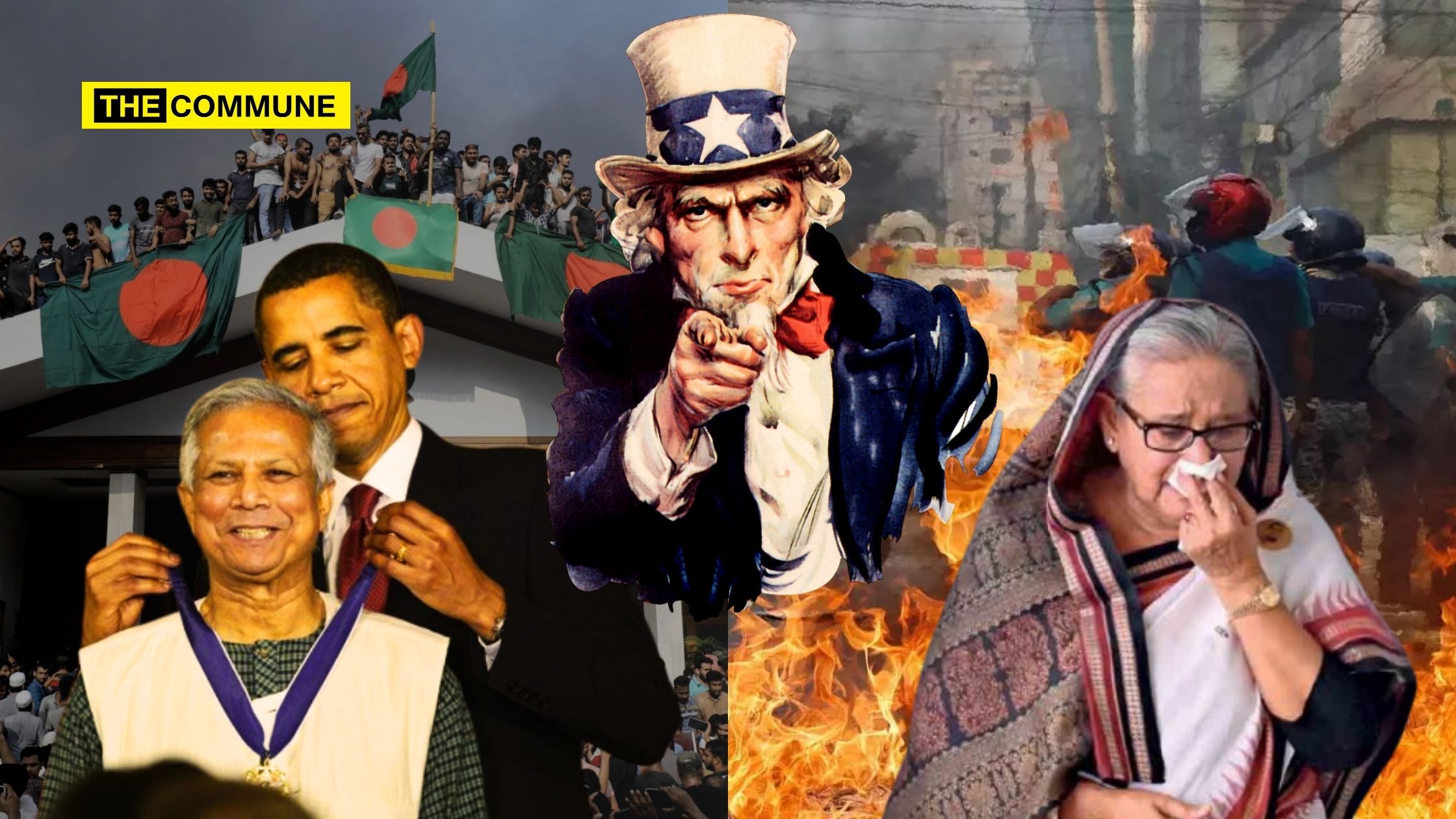
DMK MP Kanimozhi Says “Periyar Vision” OTT Channel Was Started To Spread Love, Here’s How It Spreads Hate Against Hindus Particularly Brahmins

OTT platform Periyar Vision and DMK Kanimozhi
DMK launched an OTT platform called "Periyar Vision". Content peddles anti-Brahmin, Hinduphobic propaganda normalized by Dravidianist stock.

The DMK’s parent organisation, the Dravidar Kazhagam (DK), launched “Periyar Vision”. It is an OTT platform “dedicated to promoting social justice and rationalism” in Chennai on 21 July 2023. DMK MP Kanimozhi inaugurated the platform in the presence of DK president K. Veeramani, actor Sathyaraj, and several other Dravidian ideologues.

Speaking to reporters after the event, Kanimozhi said, “It’s the need of the hour. Everybody uses the technology to talk about important things. Some use that to spread hate. We have launched this OTT platform to spread love, that is what Periyar’s life was. It was about loving people. He was the greatest humanist. This platform is to reach out to people. It is to bring people together.”

Chief Minister M.K. Stalin praised the initiative in a video message, emphasizing that Periyar Vision OTT, with the tagline “Everything for everyone,” is the world’s first-of-its-kind platform dedicated to an ideology. The platform aims to stream content, including current affairs programs, political commentaries, interviews, and films, all centered around the ideals of social justice and rationalism propagated by Periyar E.V. Ramasamy.

Here is where there is a problem. Upon scanning the app available on PlayStore, we found different categories of video material available on the platform. Among them were anti-Hindu and especially anti-Brahmin propaganda material. Here are some screenshots of the anti-Brahmin content.

Anti-Hindu Content

It is a well-known fact that Dravidianists give their own twist to our itihasas and Puranas. This OTT becomes a platform to mainstream those lies further. Here are some examples of the titles that are available on the platform that are anti-Hindu.

The titles are translated as:


On Atheism, the titles available are as below:

  • The media that fosters superstition is an incomprehensible puzzle
  • Why did the seers not object to Agnihotram Tathachariar?
  • Is Rama who cut off the nose and chest a good person?
  • Pillaiyar who kept allowing stealing
  • Pandavas who betrayed Duryodhana

Titles available on Ramayana include:

  • Is Ravana Vidyadharan?
  • Ramayana parts that are missing if Periyar criticizes
  • Ramayana is a clash of two cultures
  • Kambaramayanam is the dependent text
  • Sita who was safe with Ravana
  • Dasarathan who gave up truth
  • Valmiki’s Raman, Sita is different! Kamban’s Raman, Sita is different!!
  • Let’s Eat American Gomata
  • Lie told by Hanuman
  • Raman is enthusiastic about eating food – Valmiki
  • Kosala is mesmerized by the news of Raman going to the forest
  • Carnivorous flavors tasted by Valmiki
  • My father is worse than the uneducated – Raman’s Lament

Content on OTT Platform "Periyar Vision"

While one might think the content on women will be on the lines of women empowerment, it blatantly follows the anti-Hindu line. Here are the titles:

  • Dharma is sexual brutalizing woman
  • God is also chaste for women
  • Is menstruation worse than stools? – Periyar
  • Women who dress sexy aren’t sexually harassed?
  • Love + Pettiness = Marriage, By Periyar
  • What is the difference between prostitution and dowry?

Anti-Brahmin Content

As expected, the platform peddles the anti-Brahmin propaganda to the hilt. Some of the content that could not have been disseminated in the public domain so well seems to have a new lease of life. Check out the categories and the kinds of titles available.

Under the category titled Brahminism, this is the kind of content available on “Periyar Vision”:

  • Why did the seers not object to Agnihotram Tathachari?
    Valluvar’s enemies are barbarians? (while the topic is about Valluvar, the image here is that of Mahaperiyava Chandrasekharendra Saraswati Swamigal of the Kanchi Math)
  • Nagaswamy who made Tiruvalluvar, a slave of Brahmins
  • The Brahmins who studied with our tax money are now settled in the US
  • Brahmins do not have the right to say they are the masters of Sanskrit
  • Those who embrace Brahmins are Tamilians, those who exclude them are Dravidians
  • Is it pure if Brahminism is killed
  • The freedom struggle was a viewpoint of Brahmins
  • The reason why Kshatriyas held Brahmins in high esteem
  • Let the Brahmins try to spread the word about not eating non-veg

Content on "Periyar Vision"

The other titles in “Periyar Vision” include:

  • Manu Dharma which belittles/denigrates the Brahmin women – Ambedkar
  • Alcohol is not the only culprit in caste matters
  • 10 Brahmins are equivalent to poison – Who does Periyar refer to?
  • Aryanism–>Brahminism–>Hindi–>Sanskrit – Periyar
  • What is the Aryan’s blood group?
  • The RSS is blaspheming Lord Rama by taking the gun
  • Aiyar is a family child Thiruvalluvar?

Under the category titled “Shudra“, the titles include:

  • The reason why Shudra held Brahmins in high esteem
  • Shudras should not build houses with bricks
  • Who is lower caste?
  • Vedas for Brahmins, Puranas for Shudras

Under the category of caste, the titles are as below:

  • Why does a Kshatriya become a Shudra?
  • A parliament filled with upper castes
  • Only upper castes are Hindus

While the category states “Vedas and Religion“, the material inside is purely anti-Brahmin content with just one or two titles on Christianity and Islam – notably the content on Islam is very pro-Islamic in nature. Here is a look at the titles:

  • 295A Great weapon of the religious fanatics
  • Is it pure if Brahminism is killed?
  • Leelas of Jayendrar exposed by Anuradha Ramanan
  • Beef – anti-vedic symbol
  • Brahmins trade beef using the name of Muslims
  • Brahmins who recited prayers and worked at the mosque
  • Muslims can eat in peace only in Tamil Nadu
  • Adultery endorsed by Silappadikaram
  • Is India the land of Vedas?
  • Today’s Modi is yesterday’s Rama and Krishna


There are sections specifically on the topics of Godse, Hindutva, ManuDharma, Modi, RSS, Savarkar, education, caste, reservation, politics, atheism, Dravidianism, apart from Gandhi, Anna, Karunanidhi, etc.

The use of unconnected images by the Dravidianists to peddle an imagery and propaganda against Hinduism and Brahmins in particular has been documented by The Commune. It is a technique used by the Nazis against the Jews called Picture Superiority Effect – a phenomenon in which imagery/pictures are remembered more than text or words.

Whether or not this platform spreads love, it surely peddles hate among the general public. With pop culture being used as a medium to peddle falsehoods and induce hate among the Tamilians against Brahmins and ultimately, make Tamil Hindus ashamed of their own culture and tradition, the Dravidianist ideology has once again proved that its main agenda is to eradicate Sanatana Dharma and destroy Brahmins.

Subscribe to our channels on TelegramWhatsApp, and Instagram and get the best stories of the day delivered to you personally.
RSS Chief Mohan Bhagwat Affirms National Commitment At Guru Purnima Celebrations In Chennai

Mohan Bhagwat, RSS Volunteers
RSS Chief Mohan Bhagwat Affirms National Commitment at Guru Purnima Celebrations in Chennai.

Rashtriya Swayamsevak Sangh (RSS) Chief Mohan Bhagwat attended the Guru Purnima celebrations at the Ramachandra Convention Center in Thiruvanmiyur, Chennai. He emphasized the significance of the nation for the RSS, stating that the Sangh’s volunteers are committed to protecting the country whenever its culture and dharma are threatened.

During the event, Mohan Bhagwat participated in various rituals and pujas as part of the Guru Purnima observance. Numerous RSS volunteers attended the ceremony, including BJP State President K Annamalai, senior leader Tamilisai Soundararajan, and retired Madras High Court judge PN Prakash.

Addressing the gathering, Mohan Bhagwat highlighted, “Since 1928, the RSS has annually celebrated the Guru Puja festival. This event is where RSS volunteers pledge their dedication under the saffron flag. Saffron symbolizes Indian culture, tradition, sacrifice, and dharma. It represents the ideology that guides RSS volunteers.

He further said, “Guru Puja is not about fundraising; it is about dedicating oneself to the nation and dharma. The RSS instils a sense of selfless service towards the country. Whenever our culture and dharma face threats, RSS volunteers stand ready to protect the nation.

Guru Purnima is among the six festivals officially celebrated by the RSS, which was founded in 1925 by Hindu revolutionary and reformer Dr. Keshav Baliram Hedgewar. It is a day when every RSS Shakha organizes Guru Dakshina (Offering to the Guru). Later in the day, Mohan Bhagwat also participated in a youth meet organized by Chinmaya Mission at Chinmaya Heritage Center in Chetpet.

The RSS celebrates six festivals yearly: Varsha Pratipada, Vijayadashami, Makar Sankranti, Hindu Samrajya divas, Guru Purnima, and Raksha Bandhan. These festivals are celebrated in all their shakhas, spread across India and abroad.

Subscribe to our channels on TelegramWhatsApp, and Instagram and get the best stories of the day delivered to you personally.
Modi Govt Lifts 58-Yr Ban On Civil Servants Joining RSS, Oppn Parties Cry Foul

RSS ban opposed by Jairam Ramesh and Owaisi
Centre lifts ban on government employees participating in RSS activities

The central government led by the Bharatiya Janata Party has lifted a decades-old ban on government employees participating in activities of the Rashtriya Swayamsevak Sangh (RSS), sparking a political controversy.

The order shared by many political leaders from all political parties read, “The undersigned is directed to refer to the OM (office memorandum)..dated 30.11.1966, OM No. 7/4/70-Est.(B) dated 25.07.1970 and OM No. 15014/3(S)/80- Estt. (B) dated 28.10.1980 on the above subject. 2. The aforesaid instructions have been reviewed and it has been decided to remove the mention of Rashtriya Swayam Sewak Sangh (R.S.S.S) from the impugned OMs dated 30.11.1966, 25.07.1970, and 28.10.1980.”

Congress member Jairam Ramesh wrote, “Sardar Patel had banned the RSS in February 1948 following Gandhiji’s assassination. Subsequently, the ban was withdrawn on assurances of good behaviour. Even after this the RSS never flew the Tiranga in Nagpur. In 1966, a ban was imposed – and rightly so – on government employees taking part in RSS activities. After June 4th, 2024, relations between the self-anointed non-biological PM and the RSS have nosedived. On July 9, 2024, the 58-year ban that was in force even during Mr. Vajpayee’s tenure as PM was removed. The bureaucracy can now come in knickers too I suppose.”

The decision, formalized in a 9 July 2024 order by the Ministry of Personnel, has been confirmed by BJP leader Amit Malviya, who called the original ban “unconstitutional.” Malviya explained why the 1966 ban was imposed in the first place. He wrote on his official X account, “The unconstitutional order issued 58 years ago, in 1966, imposing a ban on Govt employees taking part in the activities of the Rashtriya Swayamsevak Sangh has been withdrawn by the Modi Govt. The original order shouldn’t have been passed in the first place. The ban was imposed because, on 7 Nov 1966, there was a massive anti-cow-slaughter protest at the Parliament. RSS-Jana Sangh mobilised support in lakhs. Many died in police firing. On 30 Nov 1966, shaken by the RSS-Jana Sangh clout, Indira Gandhi banned Govt staff from joining the RSS.”

AIMIM chief Asaduddin Owaisi cried foul and wrote on his X handle, “This office memo purportedly shows that the govt has lifted the ban on govt employees participating in RSS activities. If true, this is against India’s integrity and unity. The ban on RSS exists because it had originally refused to accept the constitution, the national flag & the national anthem. Every RSS member takes an oath that puts Hindutva above the nation. No civil servant can be loyal to the nation if he is a member of RSS.”

The RSS welcomed the decision, describing the original ban as baseless and politically driven. The Print reported that Sunil Ambekar, Akhil Bhartiya Prachar Pramukh, RSS stated, “Due to its political interests, the then (1966) government had baselessly banned government employees from participating in the activities of a constructive organisation like the Sangh. The present decision of the government is appropriate and is going to strengthen the democratic system of India.”

Subscribe to our channels on TelegramWhatsApp, and Instagram and get the best stories of the day delivered to you personally.
DMK Minister Raghupathi Asserts “Lord Ram Is Precursor To Dravidian Model Of Governance”

Raghupathi, DMK and Lord Ram
TN Law Minister Raghupathi claims that Lord Ram is Precursor to Dravidian Model of Governance.

Tamil Nadu Law Minister Raghupathi has asserted that Lord Ram represents the precursor to the Dravidian governance model. His remarks, praising Lord Ram for advocating social justice even before leaders like EVR and Ambedkar, have sparked debate on social media.

Speaking at the Kamban Vizha in Puducherry organised by Kamban Kazhagam, Tamil Nadu Minister of Law Raghupathi praised the Hindu epic “The Ramayana” aimed at creating a society devoid of disparities in the future and in that perspective. DMK Minister Raghupathi said, “We do not see in which clan Rama was born, we only see that Rama is common to all. We have to keep in mind, as if we say, Rama has accepted Vibheeshana, Guhan and Sugreeva as Dasharatha’s son then the Rama Kavya (Ramayana)/Kambaramayana is an epic created to create a society without disparities in the future.”

The Minister added that we should appreciate its virtues and take the good aspects from it. He further asserted that we consider Lord Ram to be the pioneer of today’s Dravidian model of governance. Miniter Raghupathi stated that the current DMK government in Tamil Nadu, continuing the legacy of social justice and egalitarian principles, extends Lord Ram’s rule.

DMK Minister Raghupathi said, “It is only when we look at it from a different perspective that it suits our Dravidian model and we bring Raman today as the precursor of the Dravidian model of rule. Before Periyar (EV Ramasamy Naickar), before Anna (Annadurai), before Ambedkar, before Karunanidhi, before Thalapathy (Stalin), the guardian of social justice who took this Dravidian model government forward, who taught equality and social justice to the world, who said that everyone is equal is Rama.”

His comparison of Lord Ram with the Dravidian model government has drawn attention, especially amid ongoing criticisms of the Ramayana by proponents of the Dravidian movement. Minister Raghupathi elaborated, “Kamban’s Ramavataram profoundly influenced the Dravidian model policies, emphasizing equality and social justice for all.” Later, Minister Raghupathi explained that Lord Ram’s acceptance of all as equals, depicted in the Ramayana, aligns with the Dravidian governance model’s core principles, which advocate for universal welfare and inclusivity.

Subscribe to our channels on TelegramWhatsApp, and Instagram and get the best stories of the day delivered to you personally.
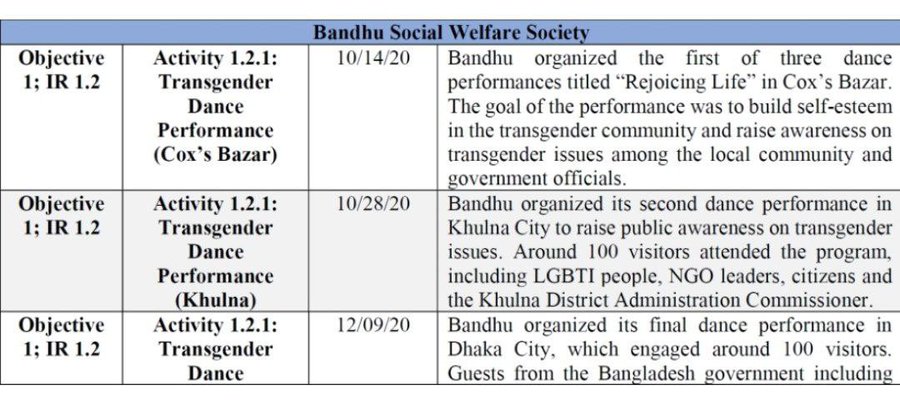
YouTuber Ajeet Bharti Faces Action From TN Police After KA Police Knocked On His Doors For Alleged Comment Against Rahul Gandhi

Ajeet Bharti and Rahul Gandhi

In June 2024, following the election results, YouTuber and journalist Ajeet Bharti referred to an interview with actor Naseeruddin Shah during a live session on his channel. Bharti recounted Shah’s experiences of being targeted for his Muslim identity and how he also targeted others in return. Shah suggested that such undercurrents of religious tension existed long before Modi’s tenure, but Modi capitalized on them.

Bharti argued that while Modi never explicitly made incendiary statements against specific communities, such comments were made by leaders of other parties. Bharti claimed that Congress party chief Rahul Gandhi intended to overturn the Ram Mandir verdict to restore Babri. He made this claim following a statement by former Congress leader Acharya Pramod Krishnam a month earlier. On 6 May 2024, Krishnam reported that Gandhi discussed overturning the Ram Mandir decision in a meeting with close aides.

Bharti clarified that he based his statements on Krishnam’s claims and was not making direct accusations against Rahul Gandhi. This context is essential to understanding Bharti’s commentary during the live session.

Following this, the Karnataka Congress filed an F.I.R. on Ajeet Bharti, and the Karnataka Police arrived at his residence. However, the High Court rebuked this move with a stay order. 

On 20 July 2024, it came to light that the Tamil Nadu Congress also decided to file a case, and the T.N. Police arrived at his doors. He wrote to social media platform X, After Karnataka Congress’ and F.I.R., now Tamil Nadu Congress is misusing @tnpoliceoffl. What does filing a case in another state after the alleged incident and stay on the case in which Karnataka High Court has given a stay order indicate? Send the police, I will meet you there.”

In “the post, Bharti shared a notice dated 15 July 2024 in which the Chennai police were seen soliciting information from X about his account details and IP address.

M. Samuel Diraviam MC, a Tamil Nadu Congress party member, lodged the complaint against Bharti. The complaint alleged that Bharti madefalse ‘claims’ about Rahul Gandhi in a video shared on the social media X.

In response to this complaint, the Tamil Nadu police registered a case against Bharti under the Indian Penal Code (I.P.C.) Sections 153A and 505 (1)(B). These sections typically deal with promoting enmity between different groups and making statements conducive to public mischief, respectively.

Furthermore, the police are seen to have taken additional steps by requesting X corporation provide detailed information about Ajeet BhaBharti’s account. This includes login and logout details, associated phone number, email ID, details of last activity, and I.P. address.

Notably, Ajeet Bharti only paraphrased a statement attributed to former Congress member Acharya Pramod. According to him, Rahul Gandhi allegedly told his close aides that if Congress formed the government, they would establish a superpower commission to overturn the Ram Mandir decision, drawing parallels to his father and former Prime Minister Rajiv Gandhi’s dismissal of the Shah Bano case ruling.

The former Congress member claimed he spent over 32 years serving the party and was present when Gandhi made that statement.

Following the repetition of these claims, Bharti is now facing legal action in Karnataka, a state currently under Congress rule. It is worth noting that Tamil Nadu, another state where Bharti might face consequences, is governed by the D.M.K., an ally of the Congress in the I.N.D.I. Alliance.

In 2023, after D.M.K. Minister Udhayanidhi Stalin made the infamous “eradicate Sanatana Dharma” “remarks, T.N. Police went to great lengths to reach the workplace of journalist Abhijit Majumder. The law enforcement authorities went as far as reaching out to a media house in Noida, actively seeking Abhijit without the issuance of any prior summons. In an X post on 20 December 2023, Abhijit updated that he had been summoned by the Tamil Nadu police for the second time to Chennai, having already attended the first summons. Notably, this action came after an F.I.R. was filed in September and four Tamil Nadu police officers were dispatched to Noida in search of him.

(with inputs from OpIndia)

Subscribe to our channels on TelegramWhatsApp, and Instagram and get the best stories of the day delivered to you personally.
BJP Leader Dr SG Suryah Summoned By Tamil Nadu CB-CID For Sharing News Article About Kallakurichi Hooch Tragedy

SG Suryah
TN BJP leader Dr SG Suryah summoned over news article on Kallakurichi hooch tragedy

On 23 June 2024, Tamil Nadu BJP State Secretary Dr SG Suryah brought attention to a news article that accused the Tamil Nadu police of attempting to fabricate a story, only to be thwarted by the Puducherry police.

The news article describes a situation where the Tamil Nadu police attempted to fabricate a story, but the Puducherry police intervened in the Kallakurichi hooch tragedy. According to the report, the Tamil Nadu government claimed that methanol for producing illegal liquor was sourced from Puducherry. After seizing the remaining methanol, the Tamil Nadu police allegedly headed to the house of a suspect’s grandmother in Madukarai.

However, before they arrived, the Puducherry police had already started their investigation at the exact location, ensuring all CCTV cameras were directed at the house. When the Tamil Nadu police arrived with methanol cans, they were reportedly required to conduct their investigation under Puducherry police supervision. The article claimed that the Puducherry police presence thwarted Tamil Nadu police’s alleged plan to stage a discovery of methanol at the scene. Furthermore, the Puducherry police reportedly instructed the Tamil Nadu team to clarify the true source of the methanol and warned against falsely implicating Puducherry based on the Tamil Nadu government’s claims. The Puducherry police are also monitoring the CCTV footage around the suspect’s grandmother’s house.

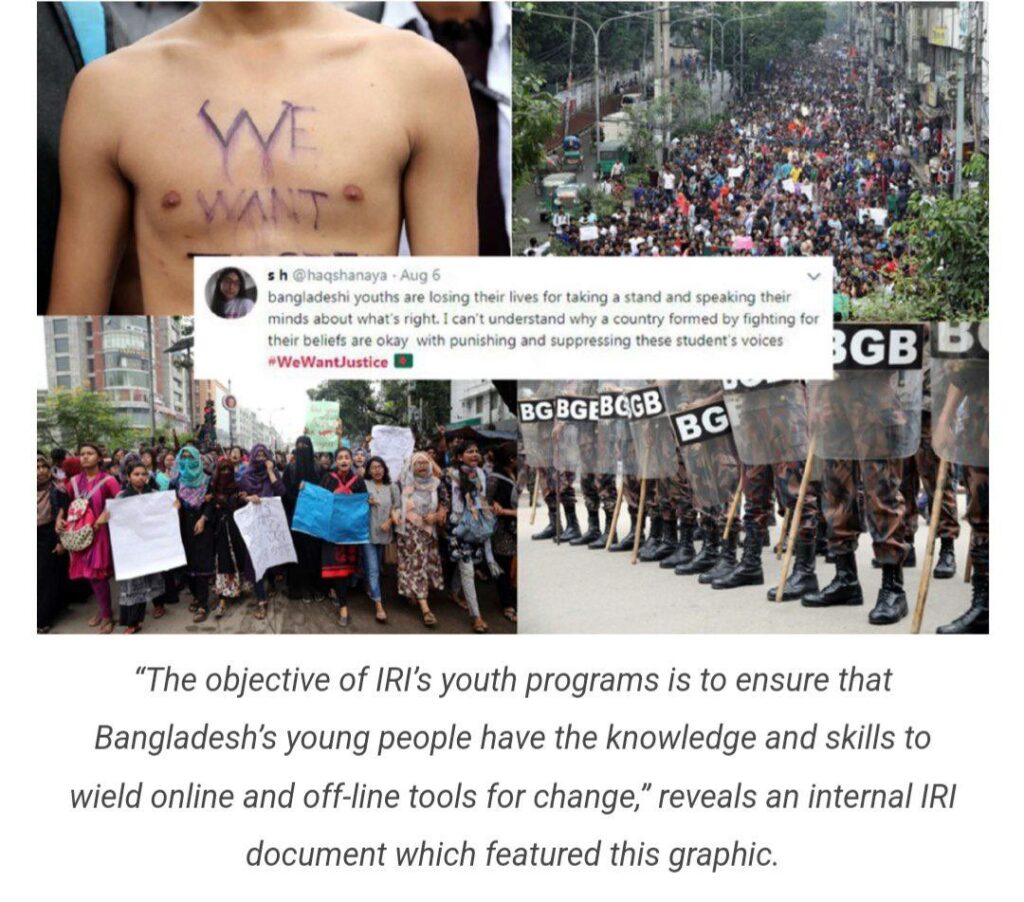
SG Suryah shared this article and posted on X saying, “According to this news, Tamil Nadu police took methanol cans to a suspect’s house in Puducherry to shift blame on Kallakurichi hooch tragedy to Pondicherry state but vigilant Puducherry police broke DMK government’s cunning plan. Right time for Home Minister Amit Shah to intervene.”

For sharing this post on X, the CB-CID wing of Tamil Nadu police in Vizhuppuram sent summons to the BJP leader asking him to present himself on 20 July 2014 at the Vizhuppuram CB-CID office.

This is not the first time SG Suryah has been summoned by the Tamil Nadu police for his posts on social media platform X.

Earlier, he was arrested for an X post against Communist MP Su. Venkatesan in which he chastised the Communist party and the MP for turning a blind eye to the death of hygiene worker who was made to clean a sewer allegedly by a Communist councillor. While the incident happened in Cuddalore, Suryah had inadvertently shared it as Madurai which he later corrected.

The police had also summoned SG Suryah in another case involving The Commune’s report on the standoff between HR&CE officials and the Deekshitars of the Chidambaram Temple.

With this latest summons, Suryah has alleged that the DMK government under MK Stalin is attempting to harass him by foisting cases against him for social media posts.

“Instead of catching the real culprits, the CB-CID officials are investigating those who criticize the DMK and the Tamil Nadu government in an attempt to intimidate the opposition parties.”, he said.

He further said in an X post about how the officials were waiting for him at his home to serve summons, just when he returned from his recent trip to the USA.

“No matter how hard they try to target me, the DMK government cannot do anything to me. My organization has prepared me to face any false cases and political vendetta.”, he wrote.

Subscribe to our channels on TelegramWhatsApp, and Instagram and get the best stories of the day delivered to you personally.
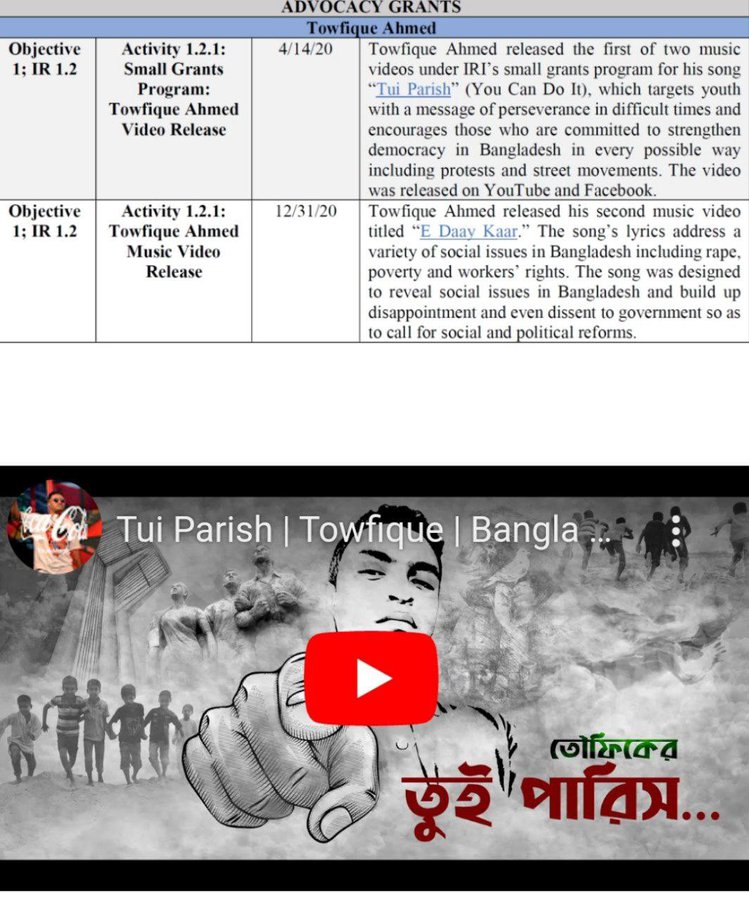
DMK Minister Mano Thangaraj Hails Christian Missionaries, Glorifies British Rule, Asks Christians To Unite At All-India Federation Of Christian Churches Conference

The ruling DMK in Tamil Nadu consistently carries out its efforts to court the minority communities in the state. The ministers (including the HR&CE Minister) actively participate in meetings with minority groups to solidify their vote bank, a strategy that is well-known to the citizens of Tamil Nadu. For example, immediately after their victory in the 2024 Lok Sabha elections, DMK MPs, especially those from the party’s first families, met with George Antonysamy, the controversial Archbishop of the Archdiocese of Madras-Mylapore, who had written an article to influence voters using religious sentiments advocating Christian support for the DMK in the recent Lok Sabha elections.

Against this backdrop, on 16 July 2024, DMK Minister for Milk & Dairy Development, Mano Thangaraj, attended the All-India Federation of Christian Churches’ Second Conference of Pastors as the chief guest. The conference, held at the Jesus Calls Prayer House in Vanagaram, Chennai, reaffirmed the Dravidian agenda of glorifying British colonial rule and the role of Christian missionaries during the Indian freedom struggle.

DMK Minister Mano Thangaraj began his speech at the conference by expressing gratitude to the pastors present, quoting a Bible verse: “For Kings and All Those in Authority, That We May Live Peaceful and Quiet Lives.” He thanked them for their prayers and then shifted focus to his main agenda, extolling the contributions of Christian missionaries.

He urged the Christian community to understand and teach the history of how Christianity arrived in the Indian subcontinent and the impact it had. Thangaraj then recounted the pre-independence era of India, highlighting the caste-based discrimination that existed. He specifically spoke about the Thol Seelai Porattam (Upper Cloth Revolt), a significant cultural movement led by women of the Nadar community fighting for their right to cover their breasts. He shamefully credited Reverend Mede with championing this cause, claiming that the Christian missionary’s support was instrumental in opposing Brahmanical supremacy in the Travancore state.

Continuing to spread historical half-truths, DMK Minister Thangaraj falsely credited the abolition of the practice of Sati to Christian missionary Governor-General of British India, Lord William Bentinck, contradicting historical facts. Sati was a ritual where a widow immolated herself on her husband’s funeral pyre. Thangaraj also attributed the progress in widow remarriage to another missionary, John Baptiste Trincal, a French Jesuit.

Thangaraj emphasized that all Christians should understand this history, acknowledging the suffering endured to create a more equitable India. The he advised the community to embrace unity and avoid caste discrimination within them, calling it a shame and stating that such issues are not addressed in the Bible. Thangaraj said, “It is my humble request that if we come as Christians we should learn to be together. If it comes to a Christian, you should not talk about the caste structure, it is an ugliness and a shame. Nowhere in the Bible is it taught.” He also urged pastors to stay informed about politics, Subtly suggesting DMK’s political activities said, “I will not say that you (pastors) should take part in politics, but it is my opinion that you should be aware of it. Apart from that, the congregation should also keep the people informed.”

He concluded his speech by contrasting the freedom of worship in the USA with the situation in India, sharing a story about a Catholic pastor who recounted the freedoms of religion in the USA during a flight with Minister Mano Thangaraj. Thangaraj said, “The Hindus living there (USA) are one percent. All of them went from India. They have the right to build temples wherever they want, the number of Muslims who can be there is very small. We all know the Twin Towers, when the Twin Towers were destroyed by Islamic terrorists, there were so many deaths. But after that, the government allowed a big mosque to be built near it, because there is freedom of religion, secularism prevails there.”

He then went on to mock Rishi Sunak, the former Prime Minister of the United Kingdom, for following the Indian cultural tradition of bowing to elders for blessings. This part of his speech was widely condemned by netizens on the internet.

Although the DMK’s strategy to win the minority vote is quite transparent, spreading falsehoods to support this agenda is quite unethical. For example, they falsely attribute the struggle for Nadar women’s liberation in the Thol Seelai Porattam and the abolition of Sati to Christian missionary.

Contrary to the minister’s agenda the true historical account says it otherwise that it was the Nadar women who started the protest, which began with the Nadar women’s courageous act of defiance against the breast tax imposed by the authorities in Travancore province. It is to be noted that Nangeli, a brave Nadar woman who cut off her breasts to protest the tax, has become a legendary figure in this struggle. The Mulachiparambu area, associated with this historic protest, is now a revered site of worship.

Likewise, the abolition of Sati is properly credited to Indian Hindu reformers such as Ram Mohan Roy. Similarly, throughout the Indian freedom struggle, there were many Hindu reformers who worked to end discriminatory practices and bring about social reform. It is a well-established fact that Christian missionaries and the British Empire were more interested in conversions rather than genuine community reform. This is underscored by the 1858 proclamation by Lord Canning at the Durbar in Allahabad, where he declared that the British would not interfere with Indian customs and traditions, primarily to maintain their rule.

Other Instances Of DMK Leaders Glorifying Christian Missionaries And British Rule

DMK MLA Appavu

DMK MLA and Tamil Nadu Assembly Speaker M. Appavu had declared that the MK Stalin-led government in the state was formed by Christians and for Christians.

Appavu openly admitted that the DMK came to power because of the ‘fasting’ and support of Roman Catholic Christians and that Chief Minister MK Stalin acknowledges that the DMK government was installed with the help of Christians.

“I frequently tell this. This is ‘your’ government. A government that has been formed by ‘you’. A government that has been formed because of your ‘fasting’. A government that has been brought by your prayers and wishes to the Lord. This is a government for ‘you’.” the DMK MLA said while addressing a gathering of Catholic Christians on the occasion of St. Paul’s Seminary held in Trichy on June 29, 2022.

He further added that Christianity and Christian priests were the root causes for the formation of the DMK government which talks about ‘social justice’ and ‘Dravida Model’.

DMK Minister PTR Palanivel Thiagarajan

Tamil Nadu Finance Minister PTR Palanivel Thiagarajan hailed Christian Missionaries as torchbearers of social justice who had contributed to the development of the region.

“Be it in India or Tamil Nadu or even Madurai, the contribution of American missionaries is not always talked about much. The link between Madurai and American missionaries goes back to 1881 or even beyond. They contributed to the overall development of the region by providing educational and medical facilities, though they were not the colonising power here,” Palanivel Thiagarajan was quoted saying in The Hindu.

Palanivel Thiagarajan also said that the work of American Christian missionaries across the world championed the cause of people’s welfare, be it the civil rights movement in the USA or the Dravidian movement in Tamil Nadu.

MK Stalin

CM Stalin himself had said that his government was formed because of Christians while participating in the platinum jubilee celebrations of the Church of South India in September 2021.

“The government that is there in Tamil Nadu today is one that has been created by you. I won’t call it as my government. This is our government.”, CM Stalin said.

Subscribe to our channels on TelegramWhatsApp, and Instagram and get the best stories of the day delivered to you personally.
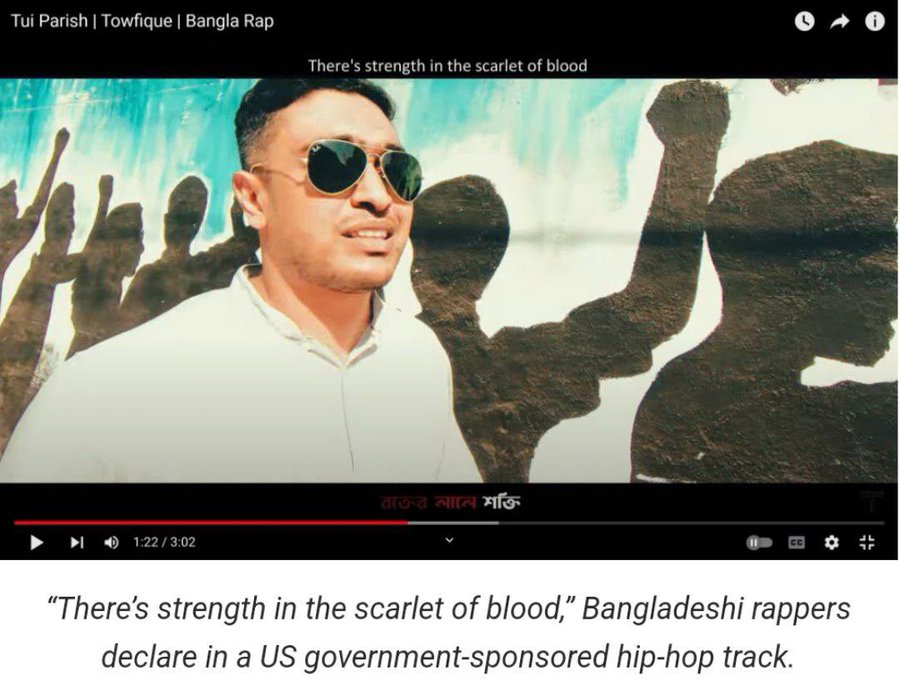
‘Rāmāyaṇaṁ’ by Dushyanth Sridhar – A Critical Review

Cover page of Dushyanth Sridhar's Rāmāyaṇaṁ
Reviewing Rāmāyaṇaṁ, the much-awaited retelling by Dushyanth Sridhar.

As a believer in the timeless wisdom of the Ramayana, I recently had the pleasure of getting a copy of ‘Rāmāyaṇaṁ – Volume 1’, the latest literary endeavour by celebrated speaker Dushyanth Sridhar. This much-anticipated book has generated significant buzz since its announcement, and I was eager to delve into its pages and share my thoughts on this insightful work.

Bharatha, the land of Sanatana Dharma, worships the itihasas equal to the Paramatma, for it provides the path towards Dharma. From time immemorial, the Ramayana, or Rāmāyaṇaṁ as it is called in some languages, has held a very high place in the hearts and temples of this divine land. The legendary life of Sri Rama inspires generations even today with lessons on life, Satya, and Dharma. Sri Rama’s Prāṇa Pratiṣṭhā has reinvigorated this blessed land and infused new energy into the general populace.

In the preface of Dushyanth Sridhar’s ‘Rāmāyaṇaṁ’, the author quotes multiple references like Adhyatama, Adbhuta, Ananda Ramayana, various Puranas, and commentaries from various Acharyas. The list cited in the preface is quite exhaustive and overwhelming. However, the author does make a specific claim. Quoting from the book, “Interesting aspects of the above works have been incorporated in this book in a way that there is no digression from Valmiki’s text”. This review will be based on this tenet, i.e. what is the augmented information compared to the original Valmiki Ramayana, and how does it aid the overall reading experience, especially of an English reader with no background on Itihasas and Puranas?

‘Rāmāyaṇaṁ’ starts from the Uttara Kanda, where Sita is enjoying her pregnancy with Sri Rama just before the catastrophe occurs in the form of her exile into the woods. Valmiki’s background story is also provided to set the context for the following narrative. Ramayana is shown to be composed by Valmiki in consultation or discussion with Narada. The dialogue between Valmiki and Narada is a recurring feature of this book. Many portions of the book are explained in dialogues. The book describes the events leading up to the birth of Sri Rama and his illustrious brothers, along with a background story of Shanta & Rishyashringa. The feats of Sri Rama and Lakshmana during his time with Vishwamitra, followed by Sita – Sri Rama vivaha, form the book’s next part. The book captures the events leading up to his exile, Dasaratha’s death, and ends with Bharatha carrying ‘padukas’ back to Ayodhya. From a classical point of view, it captures the complete essence of Bala Kanda and Ayodhya Kanda, along with a backdrop story from Uttara Kanda.

In the following few sections, I try to capture the book’s standout features and underwhelming aspects.

Standout Features in Rāmāyaṇaṁ

From the onset, there are some standout features of the book. The author has consciously utilised Samskruta words like Rakṣaka, Candra, Candana, etc. This makes the reading much more authentic, though it may differ slightly for those unfamiliar with IAST terminologies. However, it should be noted that many terminologies are quoted without a translation or meaning, leaving the reader in a conundrum. For example, the word “prappati” is used extensively throughout the book. However, the meaning or definition of this word isn’t explained for the reader to comprehend the overall significance or establish the context.

While the use of Samskruta words is excellent, the proximity of a few words like rakṣaka and rākṣasa could easily be missed, if not read closely. Perhaps the anglicised version or the meanings may have helped better in these situations.

The illustrations by Keshav are masterful and a delight to look at. In fact, they are one of the better parts of this book. The inscriptions and illustrations of carvings from temples are yet other standouts. This department’s research depth is exemplary and needs to be lauded. The reading experience could have been augmented by translating the Samskruta verses from these inscriptions. The missing translations could be a put-off to those not familiar with Samskruta.

Shortcomings in Rāmāyaṇaṁ

I had very high expectations about this book, but unfortunately, there were a few shortcomings. Initially, I had planned to provide a detailed explanation for each of the specific instances. Still, I fear that the same would make this review a very lengthy one and perhaps deter the reader from reading. Possibly, it merits a separate specific discussion where the focus would primarily be on the reviewer’s differences with the author’s version. However, I will capture the most critical, underwhelming aspects of the book.

Ramayana Dates

There has been a fair bit of controversy in the social media world about the dates of Ramayana being set around 5100 BC. Skanda Purana – Prabhasa Kanda clearly outlines that Sri Rama was born in the 24th Chatur Yuga, which would put the time quite a long way back and not anywhere close to 5100 BC.

caturvinśē yugē rāmō vasiṣṭhēna purōdhasā
saptamō rāvaṇasyārthē jajñē daśarathātmajaḥ

I feel the book’s divinity wouldn’t have been lost if the dates were not included. However, by introducing the dates, unnecessary confusion and diversion of attention are created in the readers’ minds, which certainly should have been avoided.

Divergences From Valmiki Ramayana

The author has introduced many stories and anecdotes from Srimad Bhagavatha Purana as part of the narrative/dialogue between various epic characters in Rāmāyaṇaṁ. These stories are not part of the traditional telling of Valmiki Ramayana, and hence, the book would have benefitted from references that inspired these additions to the flow. Many stories of the original Valmiki Ramayana are condensed into the flow while making space for additions from other sources like Bhagavatham.

In one of the earlier chapters, it is quoted that Sri Rama implored Brahma to capture his biography to be written in verse. I presume this could be coming from Adhyatma Ramayana, but the author doesn’t clarify the source of such differences. Such instances leave the reader in a state of confusion, which I believe is a downfall of this book.

In the chapter on “Vishwamitra’s tutelage”, the author quotes Vishwamitra waking up Sri Rama by saying that Kausalya is fortunate to have a son as illustrious as Rama and ordains him to perform the daily duties. However, a very critical point was missed in this context. The verse from Bala Kanda, sarga 23 is as below:

कौसल्या सुप्रजा राम पूर्वा संध्या प्रवर्तते |
उत्तिष्ठ नरशार्दूल कर्तव्यं दैवमाह्निकम् ||

This verse is the opening line of the very famous Sri Venkateshwara Suprabhatham, a common morning prayer in Hindu households. I am quite surprised and shocked that the author missed adding this reference.

Sampradaya Views

In the narrative, there are many references where the author tries to promulgate the views of a specific sampradaya, with deft statements like Shiva, a Bhakta of Narayana, or Shiva realising Narayana through his inner eye. When the author claimed that this version of Ramayana is close to the original, it should have been written equanimous with no biases or specific views of a particular sampradaya. If this was the objective, the author should have called out the same. By introducing these nuanced references, the author may diverge from his stated goals. One shouldn’t forget the timeless wisdom of Yajurveda, i.e. Shiva and Vishnu are the same, and those who try to find differences don’t truly understand them.

शिवाय विष्णु रूपाय शिव रूपाय विष्णवे |
शिवस्य हृदयं विष्णुं विष्णोश्च हृदयं शिवः ||
यथा शिवमयो विष्णुरेवं विष्णुमयः शिवः |
यथाsन्तरम् न पश्यामि तथा में स्वस्तिरायुषि|
यथाsन्तरं न भेदा: स्यु: शिवराघवयोस्तथा||

Language of Rāmāyaṇaṁ

Our itihasas often describe unconventional births and procreation methods among kings and Rsis. These practices of yore require delicate phrasing to maintain their dignity. Unfortunately, the author’s choice of words in certain instances is less than ideal.

For example, when describing Kalmashapada’s inability to have a son and his request to Vasishta, the author uses rather a blunt language, stating, “Vasishta impregnated Madayanti”. This story could have been dealt with better narration when compared with other books on the same topic. This can significantly affect the reader’s experience.

The author’s tendency to explicitly describe intimate acts is also somewhat surprising. Although coitus is undeniably an integral part of human evolution, using overly direct terminology such as “ejaculation of retas” can be off-putting to some readers. A more nuanced approach would have been more appropriate for discussing these sensitive topics.

Ambiguous References

Throughout the book, there are many instances where Rama and Sita are made self-aware or identified with Narayana and Lakshmi. This is extended to the brothers of Rama, who are identified with Sudarshana, Adi Sesha, and Shanku. I presume these references are mainly derived from Adhyatama Ramayana, where Sri Rama’s divinity is established, and Sri Rama is self-aware.

Towards the end of the book, i.e. culminating parts of Ayodhya Kanda where Rama counters the philosophical tenets of Jabali, the author introduces the reader to Buddha and Baudhas. In Ayodhya Kanda, Sarga 109, various instances of the terms “Buddhyaya” or “Buddhim” are present, which pertain to intelligence or somewhat misleading aspects of the same. However, it was a bit shocking to read the concept of Buddha in the flow of Ramayana. Perhaps the author could have included references from where these sections are derived.

Possible Political Inclinations?

If one looks at the overall construct of the book, one can’t help but observe a recurring pattern throughout the book. Most of the inscriptions quoted are from Tamil Nadu. The verses quoted from inscriptions are also from Tamil Nadu. There are multiple references to Dravida desha or Dravidian women throughout the book. The pinnacle of this undercurrent comes in the context of Gajendra Moksha, where the author establishes the story of Rsi Agastya but extends the same to the establishment of Tamil language, Dravida desha being called Tamilakam and the grammatical treatise, Agattiyam.

While the author can establish their views and extend the narrative as deemed fit, the above doesn’t augur in the context of the stated objective of being an amplified version of Valmiki Ramayana. These casual references inserted into the narrative reeks of a more political motive of establishing the deep connection of Tamil Nadu with Ramayanam. While this is a noble objective, the same should have been stated clearly in the preface rather than the nuanced positioning within the epic.

Conclusion

Rāmāyaṇaṁ had set very high expectations based on the high-profile launch and the author’s celebrity status. The divergences could have been explained better with adequate and informative references.

References:
Srimad Valmiki Ramayana – Gita Press
The Valmiki Ramayana (Critical Edition) – Bibek Debroy
http://valmikiramayan.pcriot.com/
Srimad Bhagwatham – Gita Press
Sanskrit Ramayana other than Valmiki’s – Dr. V. Raghavan
The Ramayana in Classical Sanskrit & Prakrt Mahakavya Literature – Dr. V. Raghavan
Skanda Purana – Sri Jayachamarajendra Grantaratnamala series

Gee Vee is an engineer and avid fan of itihasas, puranas and books.

Response to the review from Dushyanth Sridhar is as below:

On Ramayana Dates

The paragraph about the Ramayana dates that the reviewer has written. As such, I have not discussed anything about the yugas, the duration of every yuga, Chaturyuga, etc in the text of my book, nowhere it has been discussed. Nor have I criticized the version of the Puranas or the Itihasas and upheld the research Jayashree Saranathan has done research which is much better than the Puranas. I have quoted Jayashree’s name stating she is the one who has given the dates. Her dates have been mentioned in the footnotes, that’s all. The concept of a Chaturyuga especially the number of years 43 lakh 20,000 years being the Chaturyuga, the 24th Chaturyuga where the Ramayana happened is different.

All this is not found in Valmiki Ramayanam itself. From Bala Kandam to Uttara Kandam, there is no mention of it. It is found in a Purana and between itihasas and Puranas, itihasas are given more respect than the Puranas. When I say more respect, more authentic because they are regarded as direct history or recording. So nowhere in the Ramayanam itself, there is a discussion of the 24th Chaturyuga, where the Chatur Yuga being 43 lakh 20,000 years, nothing of that sort, it comes only in the Purana. I have not analyzed the dates or anything of that sort. In fact, in one of the paragraphs within the text of the book, I mentioned that I think it’s Lakshmana vakyam towards Rama, Rama now we are living in the times of Treta, but your administration makes me feel that there is more than Dharma in it like the Krita Yuga. So I’ve clearly mentioned this as Treta, this as Krita, and all of that in the text. Because I’ve mentioned clearly that we are living during the times of Treta Yuga, Rama, but you make us feel as if we are living in the times of Krita Yoga, because this has been extracted from a line of Vedanta Deshika’s Raghuveera Gadyam which says “Tretayuga pravarthitha Karta yuga vritthantha.”

On Venkatesa Suprabhatam verse

With respect to the verse “Kausalya Supraja Ramapurava Sandhya Pravathathe”, this is a verse from Valmiki Ramayana where Vishwamitra wakes up Rama in the early hours of the morning. So the reviewer asks why didn’t I make reference to Venkatesha Suprabhatam. There is no need. The Venkatesha Suprabhatam of the 14th century where Prativaadhi Bhayangara Mannan imports the verse from Valmiki Ramayana – Kausalya Supraja Rama and from the next verse only he starts composing which is “Uttishtottiṣṭha gōvinda uttiṣṭha garuḍadhvaja”. So, I don’t think there is any need to add the reference of Venkatesha Suprabhatam anywhere in the book, because I don’t pick up any verse from Venkatesha Suprabhatam. This verse is from Valmiki Ramayana. And the comment whatever I’ve written is explaining those lines is from the commentator Periyavachan Pillai’s commentary of the 13th century and Govinda Raja’s commentary of the Bhushana.

Rama and Sita as Narayana and Mahalakshmi

The original Valmiki Ramayanam has six commentaries and one of the largest of the six and probably the grandest is Govinda Raja’s commentary called Bhushana. Nagesha Bhatta’s commentary Thilaka is good but it is not as big and as deep as Govinda Raja’s. So there, Govinda Raja makes very clear references to Rama as the avatar of Narayana. Narayana akhilaheya pratyaneekatharaha samastha kalyana gunatmakaha, jagatchakshuhu, So he calls him the one who controls all the functions of the world, the one who is the Antaryami or all Devatas. So I’ve used that particular line stating that Narayana who is the Antaryami of all, thereby even when Shiva’s made reference, I have used that. So it is conforming to the commentary of Govinda Raja.

Within Valmiki’s original Ramayanam itself (Yuddha Kandam), there are multiple open and hidden references to Rama and Sita as Lakshmi and Narayana. When Mandodari praises Rama,

व्यक्तमेष महायोगी परमात्मा सनातनः |

अनादिमध्यनिधनो महतः परमो महान् ||

तमसः परमो धाता शङ्खचक्रगदाधरः |

श्रीवत्सवक्षा नित्यश्रीरजय्यः शाश्वतो ध्रुवः ||

She says that I see you as Paramatma holding Shanka Chakra as Narayana who has got Mahalakshmi on his chest. And when looking at Jatayu, he says “Gachcha lokaanuktamaan”. I grant you Moksham, go to that place from which there is no return Jatayu, which is Mokshapradattvam. So, all these have been taken into verses by Kuresha in the 11th century in his work called Atimaanushasthavam where he says,

He clearly talks about the Moksha granting status and calls Rama as Narayana. So Valmiki in many instances, has given subtle references to their Parathvam.

Valmiki Ramayana inspiration

I have mentioned in the book flap in the front blurb as well as in the preface that I have completely been inspired by Valmiki his commentators, and many other works, and I had to use that little right of being the author of this book, to use some creativity to stitch those ends. 

Dravida/Tamil

Coming to the word Dravida Draavida, please note that in Ayodhya Kandam, Aranya Kandam also, when Lakshmana sees a branch full of flowers, Rama refers to them and states these are carrying so many flowers, like the women from the south of India (Dakshinayaam), who have flowers on their heads. So, there is a clear reference to the South Indian culture.

Gajendra Moksham Reference

This instance involves Agastya who was in the south of India, and Bhagavatham, we have a clear reference that it happened by the banks of river Tamirabharani. The word Dravida comes in Bhagavatham as well (Utpanna dravidesaaham) and Vedanta Desika has written Dramidopanishad Tat Parya Ratnavali. So Dravida Shishu says Adishankara. So the word Dravida Dramila Draavida has been in vogue in the Samskruta literature.

Even in Ramayanam, Sindhudouveeraaha Draavidaha, I remember this verse where the word Draavida comes. So, this word has been there. The word Tamizh may not explicitly occur in any of the granthas because that is the name given locally to this language. But I had to introduce that because in Sundarakandam when Hanuman says, “Instead of Samskrutham, I will talk to her in a Madura Basha”, many of the Acharyas in the south of India interpret that to be Tamizh. So, Tamizh must have existed then. And also Tamizh must have been a language completely soaked in Bhakti. Because Bhagavatam says “Utpanna dravidesaaham”, Bhakti grew and was born in the state of Dravida, which means where Tamizh is spoken and around that period Tamizh must have also come up.

Subscribe to our channels on TelegramWhatsApp, and Instagram and get the best stories of the day delivered to you personally.
Subscribe to our channels on TelegramWhatsApp, and Instagram and get the best stories of the day delivered to you personally.