Home Blog Page 866

A Century Of Change: Andhra Pradesh Had Challenging Journey Through Five Capitals And Its Enduring Resilience

Andhra Pradesh, a state renowned for its vibrant culture, thriving business sectors, and rich agricultural heritage, has experienced significant changes over the past century, marked by establishing five different capitals. Each transition has presented unique challenges, impacting governance, development, and the socio-economic landscape.

Historical Background

The state’s capital shifts began in the early 20th century. Initially part of the Madras Presidency under British rule, Andhra Pradesh’s quest for its identity has been marked by political and administrative reconfigurations.

Capital Transitions

1. Madras (Pre-1953)
Madras served as the administrative hub for the Andhra region within the more significant Madras Presidency. The challenge here was a lack of regional autonomy, as the presidency often overshadowed the area’s needs.

2. Kurnool (1953-1956)
The first capital of the newly formed Andhra State, Kurnool, was chosen to address the region’s desire for self-governance. However, the infrastructure was insufficient to support a burgeoning state, creating logistical and administrative difficulties.

3. Hyderabad (1956-2014)
Hyderabad’s elevation to the capital of the unified Andhra Pradesh brought economic growth and cultural integration. Yet, the centralized governance model led to regional disparities, particularly affecting coastal and Rayalaseema regions.

4. Amaravati (2015-Present)
Amaravati was envisioned as a modern, well-planned city. However, its development faced delays, political opposition, and resource allocation issues, causing uncertainties and slowing anticipated progress.

5. Visakhapatnam (2020 Onwards)
Designated as the executive capital, Visakhapatnam aims to decentralize administration. Despite its industrial significance, the city faces challenges in building the necessary infrastructure to accommodate governmental functions effectively.

Challenges Faced

Economic Strain
Frequent capital changes have strained financial resources, with substantial investments required for infrastructure, administrative buildings, and urban planning each time.

Social Impact
Capital transitions have led to demographic shifts, affecting local economies and social structures. Each change prompted migrations, altering the socio-economic fabric of the regions involved.

Administrative Overheads
Repeated relocations disrupted continuity in governance, affecting policy implementation and long-term planning. Bureaucratic restructuring during each transition slowed administrative efficiency.

Cultural Integration
While Andhra Pradesh is culturally rich, integrating diverse regional identities under varying capitals posed challenges. Balancing regional aspirations with a unified state identity required careful navigation.

Thriving Despite Challenges

Despite these hurdles, Andhra Pradesh has continued to flourish. The state’s robust business environment, driven by IT, biotechnology, and pharmaceutical industries, remains resilient. Its agricultural sector, a backbone of the state’s economy, consistently contributes to India’s food security, supported by fertile lands and innovative farming practices.

Culturally, Andhra Pradesh boasts a rich panorama of traditions, languages, and arts. It preserves its heritage while embracing modernization. Festivals, classical arts, and cinema are vital in maintaining cultural vibrancy.

The journey of Andhra Pradesh through five capitals is a testament to its resilience and adaptability. While the challenges are significant, the state’s ability to navigate these transitions and continue its upward trajectory highlights its enduring spirit and potential for future growth. Addressing the ongoing challenges through strategic planning and inclusive governance will be key to sustaining this progress.

Ganesh Kumar is a geo-political analyst.

Subscribe to our channels on TelegramWhatsApp, and Instagram and get the best stories of the day delivered to you personally.
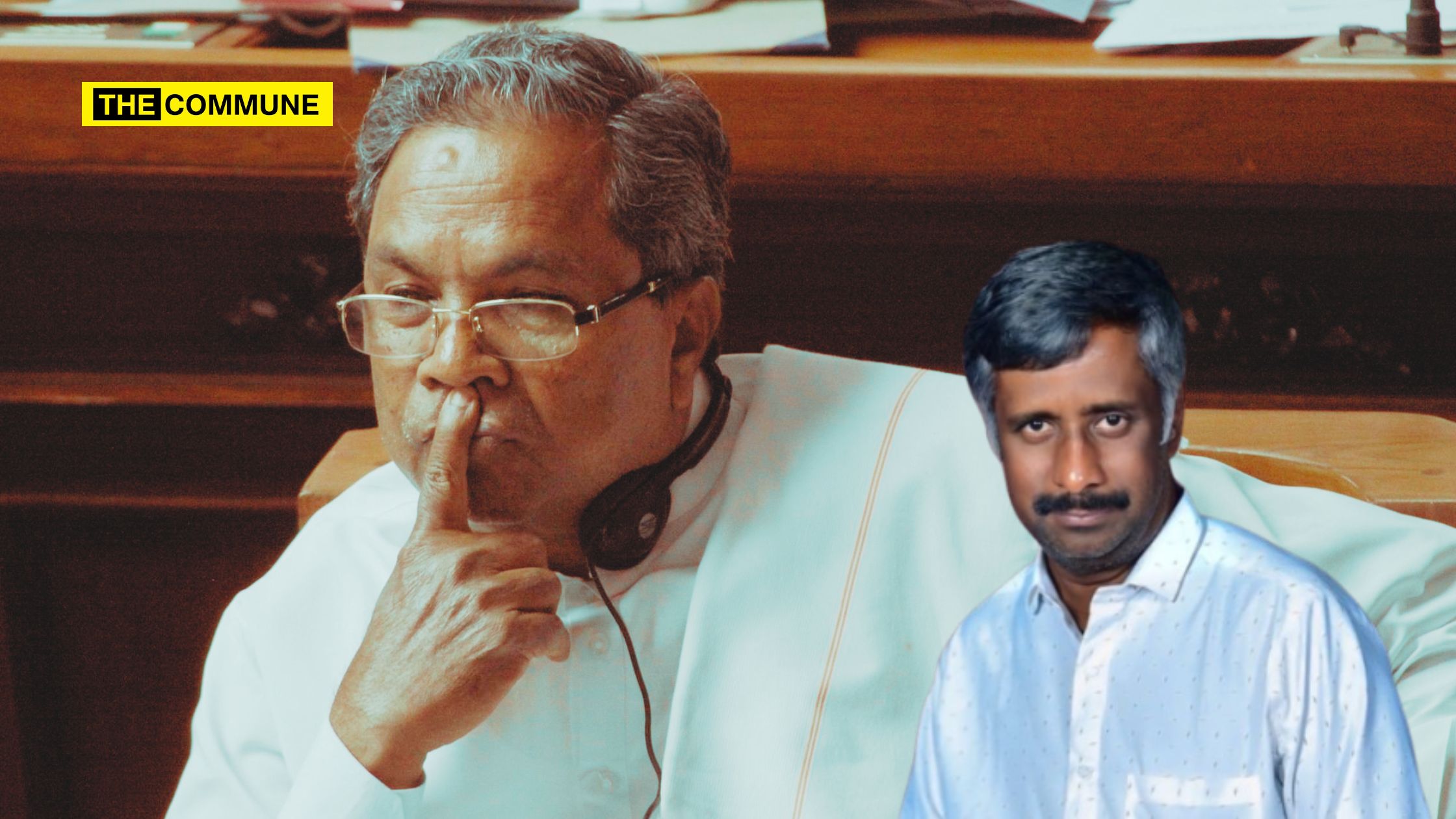
“I Don’t Know Who He Is”, DMK Minister Sekar Babu When Reporters Asked Him About Director Pa. Ranjith’s Criticism Over DMK On Armstrong’s Murder

Pa Ranjith, Armstrong, Sekar Babu
Minister P.K. Sekar Babu said he didn't know who Ranjith is.

The verbal exchanges between the members of the DMK and Kollywood director Pa. Ranjith, known for his advocacy of Dravidian ideology, have intensified amid growing tensions, especially in light of the recent murder of Bahujan Samaj Party leader K Armstrong. Pa. Ranjith has sharply criticized the DMK for failing to protect marginalized communities, particularly Scheduled Castes, and has called for a CBI investigation due to perceived delays in the state government’s efforts to apprehend the main perpetrators. Minister P.K. Sekar Babu, responding to Ranjith’s criticism, dismissed it by stating he doesn’t know who Ranjith is, brushing aside the filmmaker’s concerns.

The murder of Armstrong, the BSP state president, has sparked significant political unrest in Tamil Nadu, where there have been several recent political killings. Against this backdrop, on 20 July 2024, the Neelam Cultural Centre orchestrated the #MarchforJustice Rally, commencing from the Ramada Hotel to Rajarathinam Stadium and concluding at the Neelam Cultural Centre. The rally aimed to draw attention to the murder of BSP State President Armstrong and put forth the following decisive demands:

  1. Conduct a fair investigation into the murder of BSP State President Armstrong and punish the real culprits. If the investigation is not proceeding correctly, establish a special commission chaired by a sitting High Court judge.
  2. Investigate the background of the Arudra company fraud to expose the involvement of various members in the murder and uncover the truth, as recent investigations indicate significant financial transactions.
  3. Provide adequate protection to Dalit leaders and activists in Tamil Nadu, given the dire need highlighted by the attack on a political figure of great stature, the state president of a national party, and a leader admired by the masses.
  4. Prevent the police from conducting extrajudicial encounters with accused individuals who have been arrested or have surrendered, as seen in the case of Thiruvengadam. Trace the chain of command involved in the murder of Bahujan Samaj Party State President Armstrong and ensure that all perpetrators are brought to justice without prejudice.
  5. Take appropriate legal action against individuals and groups producing defamatory content against Armstrong on social media and media platforms following his successful defamation case before his death.
  6. Establish a committee of Dalit representatives and intellectuals to investigate the recent violence against Dalits in Tamil Nadu and take appropriate action based on the committee’s report.
  7. The Union Government should immediately set up a parliamentary committee to investigate the ongoing violence against Dalits in Tamil Nadu.
  8. Address the lack of notable progress in trials of caste atrocity cases despite the creation of the Tamil Nadu Adi Dravidian and Tribal Commission by the Dravida Munnetra Kazhagam government. Ensure the commission’s activities are conducted firmly and promptly.

These demands largely critique the perceived inefficiencies of the DMK government and underscore concerns over the propagation of Dravidianist ideologies against Armstrong.

Also, Pa. Ranjith, speaking at the March for Justice Rally, openly derided DMK ministers as subservient and questioned scheduled caste representatives for their absence at the funeral of another marginalized leader. He challenged whether their reluctance stemmed from fear of losing their positions, emphasizing that the scheduled caste population in Chennai constitutes 40%, asserting their pivotal role in determining electoral outcomes.

Pa. Ranjith said, “You can scare us all you want. We are not slaves who joined the party as cadres and won MLA. There are women here, ‘You’re not Mayor because you are in DMK. You’ve been made Mayor because there is a word called Reservation. Kayalvizhi Selvaraj should understand why she was appointed Minister for Adi Dravidar Welfare because of reservation. The reservation that was bought by Ambedkar you’ve all earned it, How many MPs, MLAs are there, can you not visit Armstrong’s funeral, what are you afraid of? Can’t you all get together? When will you get rid of this fear? Is your party controlling you? If you don’t speak or fight for the Dalits, then why should you stand in reservation and win.”

 Previously, Kollywood director Pa. Ranjith criticized the DMK through his official X account, stating, “We buried the body of brother Mr Armstrong, the state president of Bahujan Samaj Party, who was the victim of a cowardly and brutal murder, without any fuss or tension nor causing any law and order problem. In this life after him, we will carry out the politics of Babasaheb Dr Ambedkar with more determination, even in his brother’s absence. That will be our debt of gratitude to our brother, Mr. Armstrong. Jai Bhim!”Here are a few questions regarding this for the DMK-led Tamil Nadu government and those who are spreading hatred on social media:

  1. The murder took place very close to Sembiyam Police Station in Chennai. With this, we can understand the fear of the killers about the law and order in Tamil Nadu. So, what action plan will you create to restore law and order and prevent such an incident from happening again?
  2. The police department has announced that they have done this to avenge the murder of Arcot Suresh based on the confessions given by the assailants who confessed to the murder and surrendered. The police are only interested in closing the case based on what the surrenderers say. Who planned this? Who directed them? Has the police department concluded that there is no other background for this? What is the police’s position regarding Arudra being behind this? Why are you so indifferent by allowing to surf so many news stories that you don’t know what’s true and what’s false? Why does the media refuse to question this?
  3. When will the government address the recent threat to Dalit people and Dalit leaders? How will their safety be ensured? If this government has created an environment where it is effortless to kill the great leader who was the bulwark of the Dalit people in the capital, it is scary to think of other rural towns in Tamil Nadu. The Tamil Nadu government should let us know its plans to eliminate this tension and threat.
  4. It seems that it was deliberately prevented from burying our brother’s body in Perambur. At the end of the almost two-day drama, we were unwillingly forced to bury him in Pottur, a suburban village outside Chennai. Even though the DMK government has the power, it has resorted to the court and said that this area is not included in the law and order system. Still, this government is doing a massive act of deceit by not allowing him to bury his body in Perampur, where he lived. Undoubtedly, the question of whether this government cares about Dalit people and Dalit leaders will arise.
  5. The most important reason for the DMK government to come to power was the votes of the substantial Dalit population, which is history.  Aren’t you aware that Dalits are the biggest supporters of your regime? Or are you knowingly indifferent? I cast my vote to put you in power. It is with that in mind that I pose these questions. Is social justice just for votes?
  6. The social justice guards and some media were creating an alternative story on the websites, not knowing how to deal with the law and order problem that arose due to our brother’s murder, writing judgments on the person that ‘He is a rowdy’, ‘how can killing a rowdy be seen as a law and order problem’, a doer of extortion’, ‘involved in many criminal cases’. What or Who is behind speaking such conjectures before the horror of the murder subsides?
  7. Dominant class! You call rowdyism when we rise for the sake of our self-respect. You can satisfy yourself by creating such stories against the one who gave away lakhs of books to all comers, who himself would bring liberation to human society, and who promoted Buddhism in the Babasaheb way. However, as each of us knows, words cannot describe the upsurge we have received from those who rise against oppression like Brother Armstrong.

In conclusion, I have been fascinated by the love of my brother since my childhood. After I came to the screen, he was always concerned about my growth and safety, keeping me in the safety loop. He devoted himself uncompromisingly to the political path of Babasaheb Ambedkar. I consider losing my brother as the most significant setback in my life. His words and thoughts will guide me (us) to fix this. Jay bhim!”

Following this, Minister Sekar Babu addressed the press after conducting a field survey near the Stanley Hospital flyover, where he was questioned about comments made by Director Pa. Ranjith regarding support for the DMK. When reporters asked about Ranjith’s remarks, Mayor Priya intervened to clarify the question. In response, Sekar Babu stated that he did not recognize the name “Ranjith” as a director and suggested that he might know him if he were a politician. Minister Sekar Babu said, “I don’t know who he is. I may know him if he were a politician.” This remark has sparked criticism on social media platforms.

Subscribe to our channels on TelegramWhatsApp, and Instagram and get the best stories of the day delivered to you personally.
“No Proposal From Tamil Nadu For Hosur Airport”, Says Civil Aviation Min Ram Mohan Naidu

Tamil Nadu Chief Minister MK Stalin and proposed greenfield airport
TN has not even send a proposal to the Centre for the Hosur airport

Tamil Nadu Chief Minister M.K. Stalin announced on 27 June 2024 his ambitious plans to establish an international airport in Hosur.

He emphasized the project’s economic and social importance, citing its potential to handle around three crore passengers annually and its role in supporting the economic development of Hosur, Krishnagiri, and Dharmapuri.

It later came to light that this plan can face significant hurdles due to existing guidelines prohibiting the operation of new airports within a 150-kilometer radius of Bengaluru’s Kempegowda International Airport (KIA) until 2033.

At the Parliament, ADMK MP CV Shanmugam asked about the greenfield airport at Hosur. He said, “Chairman sir, I would like to know if the Government of India would consider setting up a greenfield airport at Hosur”. Responding to this, Civil Aviation Minister Ram Mohan Naidu Kinjarapu said, “Regarding the Hosur Airport, whenever a greenfield airport has to be constructed, the proposal comes from the State itself. We have also mentioned in the answer that no proposal has been received from the state government.”

Despite all the noise the DMK government has made regarding the greenfield airport, they have not even sent the proposal to the Civil Aviation Ministry.

Why Is The Hosur Airport Not Feasible?

The agreement between the Ministry of Civil Aviation and Bangalore International Airport Limited (BIAL), signed on 5 July 2004, explicitly restricts developing, improving, or upgrading new or existing airports within 150 kilometres of KIA. This restriction remains in place until the 25th anniversary of KIA, which began operations in May 2008. The agreement grants BIAL exclusive rights to handle domestic flights, with exceptions made only for Mysuru and Hassan airports.

The agreement states: “No new or existing airport shall be permitted by GoI to be developed as, or improved or upgraded into, an international airport within an aerial distance of 150 kilometres of the airport before the twenty-fifth anniversary of the airport opening date.”

The proposed airport at Hosur, located just 74 kilometres from KIA, clearly falls within the restricted radius. Consequently, any attempt to develop a commercial airport in Hosur would require a No Objection Certificate (NOC) from BIAL, which has a track record of refusing such permissions. BIAL has previously denied permission for commercial flights to operate from HAL Airport on Old Airport Road in Bengaluru, citing the same agreement. Aviation experts have criticized the viability of the Hosur airport, pointing out that poor infrastructure, in terms of road and rail connectivity, would deter airlines from operating there. It is argued that investing in such a project would be imprudent without proper planning and accountability.

Subscribe to our channels on TelegramWhatsApp, and Instagram and get the best stories of the day delivered to you personally.

Dravidian Model: DMK MP Kalanidhi Veerasamy Takes Pride In Belonging To Kamma Caste

DMK MP Veerasamy and TN CM MK Stalin
Is the Dravidian model not applicable to DMK MP Veerasamy who gloated about his Kamma caste identity?

DMK MP Kalanidhi Veerasamy, representing North Chennai, has ignited a controversy in Tamil Nadu regarding the influence of Telugu people in the state’s political sphere. His statements sparked debates on social media, questioning the DMK’s stance on social justice regarding caste, juxtaposed with its involvement in what appears to be caste-driven political dynamics.

An international convention of the Kamma community, organized by the Kamma Global Federation (KGF), commenced on 20 July 2024 at the Hyderabad International Convention Centre and lasted two days. It aimed to unite Kammas, a dominant caste from Telugu-speaking states. The event also sought to engage them in constructive dialogue and work towards the community’s upliftment within Telugu states and globally.

The event drew participation from various politicians and celebrities from states such as Karnataka and Tamil Nadu, the US, and other countries. Notably, DMK MP Kalanidhi Veerasamy’s attendance at the convention raised eyebrows, highlighting a perceived inconsistency, given the DMK’s and its ideological parent, the Dravidar Kazhagam’s staunch opposition to the caste system.

Veerasamy began his speech by expressing gratitude to all the distinguished participants at the conference. Notable guests included Telangana Chief Minister Revanth Reddy, Telangana Roads & Buildings Minister Komatireddy Venkat Reddy, and KGF president Jetti Kusuma Kumar. He then wryly recounted a conversation with Revanth Reddy, where the latter questioned the relevance of caste, given the DMK’s avowed stance against it.

He recounted, “When I was invited to the event, upon my arrival, Revanth Reddy asked me, ‘You’ve come from Tamil Nadu, where is your caste? You all claim there is no caste, right?’ like that. Indeed, there are significant numbers of Kammas and Telugu people. The Telugu community forms a robust 40% of the population. For instance, we have the renowned scientist GD Naidu in Coimbatore, whose developments have transformed the area into an industrial hub. As our elders here have emphasized, the Kamma community in Tamil Nadu supports its members and contributes to society at large. For example, Genguswamy Naidu has established numerous schools and colleges, benefiting students across the region.

Afterwards, he discussed the DMK government’s initiatives that have benefited ordinary citizens in Tamil Nadu. Kalanidhi Veerasamy then expressed pride in the fact that Tamil Nadu hosted the largest Kamma community in India. He also commended the dance performers for showcasing the Andal dance on stage.

The DMK MP’s participation in a caste-related event has sparked substantial criticism since the party professes to be non-casteist in its politics. Yet, its leaders exhibit caste pride at such gatherings.

Subscribe to our TelegramWhatsApp, and Instagram channels and get the best stories of the day delivered to you personally.
How Foreign Bots And Propaganda Channels Are Fuelling Violent Protests In Bangladesh Over Job Quota System

Violent protests in Bangladesh

For the last couple of weeks, violent protests erupted across #Bangladesh against quotas for jobs in the country. Foreign propaganda accounts and bots are taking control to set their narrative on social media platforms. 

The protest started last month after the High Court reinstated a quota system (30% of jobs reserved for family members of freedom fighters in 1971) for government jobs, overturning a 2018 decision by Prime Minister Sheikh Hasina’s government to scrap it. 

Several bot accounts are making posts with the same video and statement, using the same hashtags related to student protests in Bangladesh to establish their narrative online. 

Bot accounts are uploading several pornographic videos and using all the hashtags related to ongoing unrest in Bangladesh to promote and trend the narrative worldwide. 

UK-based Al Jazeera Journalist Zulkarnain Saer, known as a BNP sympathizer, circulated a fake and self-invented statement claiming Junior officers of the Bangladesh Army are forced to fire bullets at the ordinary people of the country. 

As internet service in the country remains banned, several accounts based in different countries are setting up propaganda about the ongoing student protests there. 

DOAM, Fiona Lali, Zulkarnain Saer, Pinaki Bhattacharya, Zubaida Rahman, pro-BNP or extremist accounts take complete control and set a narrative targeting Bangladesh PM Sheikh Hasina and law enforcement. 

Bangladesh-based propaganda accounts, in collaboration with Pakistanis, are establishing their narrative against the Indian Army by sharing old videos from different locations and incidents. 

Qatar government-funded Doha-based media Al Jazeera, known for its selective media coverage, made headlines in support of the violent protests. They did not do the same with PTI protesters in Pakistan. 

Several Bangladeshi accounts circulated false and misleading claims about the death of the few protesting students to create panic and unrest, some of which have already been debunked by other users

A couple of days ago, sympathizers and glorifiers of Bangladeshi violent protesters based in the UK tried to create unrest on the streets of London and used various fake news to incite violence there. 

India-based left-wing student organizations such as the All-India Democratic Students’ Organisation (AIDSO) and the All-India Students’ Federation (AISF) Organized a rally in Kolkata to show solidarity with Bangladesh’s anti-quota protesters. 

The violence has killed more than a hundred people in Bangladesh, but the situation is calm for now as Bangladesh student group suspends protests over the death toll. As more propaganda is expected, be careful not to spread such content.

(This article is based on an X thread by D-Intent Data)

Subscribe to our channels on TelegramWhatsApp, and Instagram and get the best stories of the day delivered to you personally.
Unacademy Describes Martand Sun Temple As ‘Shaitan Ki Gufa’ In Study Material, Silently Deletes Reference After Netizen Outrage, No Apology Whatsoever So Far

Surya Martand Temple and Unacademy platform
Unacademy demonizes Kashmir's Martand sun temple as "Shaitan ki Gufa"

Unacademy, an online learning platform, is in the news for posting fictional and incorrect information on its website regarding the Martand Sun Temple in Kashmir.

This Temple in Anantnag district is dedicated to the Sun god. Built in the 8th century, it was destroyed by Islamic invaders. The temple is an ASI-protected monument and is believed to have been destroyed on the orders of Sultan Sikandar Shah Miri. The temple’s origins trace back to King Lalitaditya of the Karkota dynasty, which ruled Kashmir in the seventh century. The epic Rajatarangini, which details the history of Jammu and Kashmir, also mentions the influential Karkota dynasty.

What Did Unacademy State About Martand Sun Temple?

On their website, in the study material about the temple, Unacademy said that the Sun temple is also called “Shaitan ki Gufa“.

This temple was popularised as Shaitan ki Gufa or Satan’s cave/Devil’s cave in the Hindi film Haider. Director Vishal Bharadwaj shot the song Bismil here with the lead actor Shahid Kapur wearing scary costumes.

Travel blogger Anuradha Goyal and a few other nationalistic handles posted about this inaccuracy on social media platform X. They questioned Unacademy about whether the organisation was taking lessons from Bollywood.

Upon checking the study material on their website, it became apparent that Unacademy had silently changed the text, removing the reference to “Shaitan ki Gufa”.

However, neither their founder, Gaurav Munjal, nor the official handle of Unacademy, has posted anything in connection with this, and neither have they apologised so far. 

It is noteworthy that the J&K government has initiated efforts to restore the temple and attempt to bring it back to its original glory.

Normalising Falsehoods Through Pop Culture

A grave falsehood such as describing a sacred temple as “Shaitan ki Gufa” is normalised through films and mainstream media. Our school textbooks are perfect example of how false propaganda of the leftists was peddled a few decades ago. Be it portraying Ashoka as a humane being or Akbar as someone who “planted trees on either side of the road for travellers to rest in its shade”. There is no proof that such things existed, and children and adults alike have been fed lies in the name of history.

This propaganda can be seen in Dravidian pop culture – literature and films. Tamil films depict the Brahmin as evil person and also ably enable the peddling of the Dravidianist ideology.

Subscribe to our channels on TelegramWhatsApp, and Instagram and get the best stories of the day delivered to you personally.
TN BJP President Annamalai Slams DMK Govt Over Unfulfilled Promises On Electricity Rates And Unemployment

K Annamalai and MK Stalin
Annamalai fires DMK for misleading the public on electricity rates and the unemployment situation in Tamil Nadu.

Tamil Nadu Bharatiya Janata Party President Annamalai, criticized the DMK in Tamil Nadu for misleading the public by falsely comparing electricity rates with other states and misrepresenting the youth unemployment rate in Tamil Nadu.

Regarding this issue, Annamalai criticized the Tamil Nadu government for misleading the public by comparing electricity rates with other states. He highlighted that the DMK, in its election manifesto, promised a monthly electricity bill collection system as its 221st commitment, which he urged the government to fulfill. According to Annamalai, implementing this system would significantly reduce electricity costs for households.

Annamalai said, “What DMK said in its election manifesto promise number ‘221’ is that it is enough to pay electricity once a month. Neighboring states pay electricity bill once a month. Look at the problems if you don’t pay electricity once a month. For example, I use 200 units of electricity in Coimbatore, if I pay electricity bill once a month it is ₹450, if I pay it for two months i.e. this month 200-unit next month 200 unit, when I pay electricity bill once in two months it is ₹1440 for 400 units. If you pay this once a month then this month 450 next month 450 total ₹900 for 200 units. But if you calculate it as 400-unit slab for two months, you have to pay 1440 rupees. 540 as a loss for using just 200 units. Let’s talk about 300 units now, the electricity bill for me is 705 rupees, which is 300 unit this month and 300 unit next month in DMK’s bi-monthly electricity tariff, if you pay for 600 unit means it is ₹2940. So, where is ₹1410 and where is ₹2940 rupees, in this we pay ₹1400 more.

Annamalai, further revealed that 17.5% of young people aged 15 to 29 in the state are unemployed. He emphasized the high rate of unemployment among graduates in Tamil Nadu, comparing it unfavorably to states like Gujarat (6.1%), Karnataka, and Maharashtra (7-8%). Annamalai called on the DMK government to acknowledge the unemployment crisis affecting 17.5 percent of Tamil Nadu’s population.

Annamalai also discussed the BJP’s growth in Tamil Nadu, likening it to nurturing a Chinese bamboo plant. He stressed the importance of patience and persistence in strengthening the BJP’s presence, despite challenges. He mentioned that despite setbacks, the BJP had secured the top position in 8000 booths during the last election, which he interpreted as a sign of growing support and influence in the state.

Subscribe to our channels on TelegramWhatsApp, and Instagram and get the best stories of the day delivered to you personally.
A Few Comments On My Book ‘Rāmāyaṇaṁ’– Volume 1

Dushyanth Sridhar and his book Rāmāyaṇaṁ’– Volume 1
Dushyanth Sridhar clarifies reviewer's doubts on Rāmāyaṇaṁ’– Volume 1

The Commune had published a review of my book by Vedic Speaker ‘Rāmāyaṇaṁ’– Volume 1. The reviewer came up with a few questions and doubts in the review. Here are the responses to some of those queries.

On Ramayana Dates

The paragraph about the Ramayana dates that the reviewer has written. As such, I have not discussed anything about the yugas, the duration of every yuga, Chaturyuga, etc in the text of my book, nowhere it has been discussed. Nor have I criticized the version of the Puranas or the Itihasas and upheld the research Jayashree Saranathan has done research which is much better than the Puranas. I have quoted Jayashree’s name stating she is the one who has given the dates. Her dates have been mentioned in the footnotes, that’s all. The concept of a Chaturyuga especially the number of years 43 lakh 20,000 years being the Chaturyuga, the 24th Chaturyuga where the Ramayana happened is different.

All this is not found in Valmiki Ramayanam itself. From Bala Kandam to Uttara Kandam, there is no mention of it. It is found in a Purana and between itihasas and Puranas, itihasas are given more respect than the Puranas. When I say more respect, more authentic because they are regarded as direct history or recording. So nowhere in the Ramayanam itself, there is a discussion of the 24th Chaturyuga, where the Chatur Yuga being 43 lakh 20,000 years, nothing of that sort, it comes only in the Purana. I have not analyzed the dates or anything of that sort. In fact, in one of the paragraphs within the text of the book, I mentioned that I think it’s Lakshmana vakyam towards Rama, Rama now we are living in the times of Treta, but your administration makes me feel that there is more than Dharma in it like the Krita Yuga. So I’ve clearly mentioned this as Treta, this as Krita, and all of that in the text. Because I’ve mentioned clearly that we are living during the times of Treta Yuga, Rama, but you make us feel as if we are living in the times of Krita Yoga, because this has been extracted from a line of Vedanta Deshika’s Raghuveera Gadyam which says “Tretayuga pravarthitha Karta yuga vritthantha.

On Venkatesa Suprabhatam verse

With respect to the verse “Kausalya Supraja Ramapurava Sandhya Pravathathe”, this is a verse from Valmiki Ramayana where Vishwamitra wakes up Rama in the early hours of the morning. So the reviewer asks why didn’t I make reference to Venkatesha Suprabhatam. There is no need. The Venkatesha Suprabhatam of the 14th century where Prativaadhi Bhayangara Mannan imports the verse from Valmiki Ramayana – Kausalya Supraja Rama and from the next verse only he starts composing which is “Uttishtottiṣṭha gōvinda uttiṣṭha garuḍadhvaja”. So, I don’t think there is any need to add the reference of Venkatesha Suprabhatam anywhere in the book, because I don’t pick up any verse from Venkatesha Suprabhatam. This verse is from Valmiki Ramayana. And the comment whatever I’ve written is explaining those lines is from the commentator Periyavachan Pillai’s commentary of the 13th century and Govinda Raja’s commentary of the Bhushana.

Rama and Sita as Narayana and Mahalakshmi

The original Valmiki Ramayanam has six commentaries and one of the largest of the six and probably the grandest is Govinda Raja’s commentary called Bhushana. Nagesha Bhatta’s commentary Thilaka is good but it is not as big and as deep as Govinda Raja’s. So there, Govinda Raja makes very clear references to Rama as the avatar of Narayana. Narayana akhilaheya pratyaneekatharaha samastha kalyana gunatmakaha, jagatchakshuhu, So he calls him the one who controls all the functions of the world, the one who is the Antaryami or all Devatas. So I’ve used that particular line stating that Narayana who is the Antaryami of all, thereby even when Shiva’s made reference, I have used that. So it is conforming to the commentary of Govinda Raja.

Within Valmiki’s original Ramayanam itself (Yuddha Kandam), there are multiple open and hidden references to Rama and Sita as Lakshmi and Narayana. When Mandodari praises Rama,

व्यक्तमेष महायोगी परमात्मा सनातनः |

अनादिमध्यनिधनो महतः परमो महान् ||

तमसः परमो धाता शङ्खचक्रगदाधरः |

श्रीवत्सवक्षा नित्यश्रीरजय्यः शाश्वतो ध्रुवः ||

She says that I see you as Paramatma holding Shanka Chakra as Narayana who has got Mahalakshmi on his chest. And when looking at Jatayu, he says “Gachcha lokaanuktamaan”. I grant you Moksham, go to that place from which there is no return Jatayu, which is Mokshapradattvam. So, all these have been taken into verses by Kuresha in the 11th century in his work called Atimaanushasthavam where he says,

He clearly talks about the Moksha granting status and calls Rama as Narayana. So Valmiki in many instances, has given subtle references to their Parathvam.

Valmiki Ramayana inspiration

I have mentioned in the Rāmāyaṇaṁ’– Volume 1 book flap in the front blurb as well as in the preface that I have completely been inspired by Valmiki his commentators, and many other works, and I had to use that little right of being the author of this book, to use some creativity to stitch those ends. 

Dravida/Tamil

Coming to the word Dravida Draavida, please note that in Ayodhya Kandam, Aranya Kandam also, when Lakshmana sees a branch full of flowers, Rama refers to them and states these are carrying so many flowers, like the women from the south of India (Dakshinayaam), who have flowers on their heads. So, there is a clear reference to the South Indian culture.

Gajendra Moksham Reference

This instance involves Agastya who was in the south of India, and Bhagavatham, we have a clear reference that it happened by the banks of river Tamirabharani. The word Dravida comes in Bhagavatham as well (Utpanna dravidesaaham) and Vedanta Desika has written Dramidopanishad Tat Parya Ratnavali. So Dravida Shishu says Adishankara. So the word Dravida Dramila Draavida has been in vogue in the Samskruta literature.

Even in Ramayanam, Sindhudouveeraaha Draavidaha, I remember this verse where the word Draavida comes. So, this word has been there. The word Tamizh may not explicitly occur in any of the granthas because that is the name given locally to this language. But I had to introduce that because in Sundarakandam when Hanuman says, “Instead of Samskrutham, I will talk to her in a Madura Basha”, many of the Acharyas in the south of India interpret that to be Tamizh. So, Tamizh must have existed then. And also Tamizh must have been a language completely soaked in Bhakti. Because Bhagavatam says “Utpanna dravidesaaham”, Bhakti grew and was born in the state of Dravida, which means where Tamizh is spoken and around that period Tamizh must have also come up.

Dushyant Sridhar is a Hindu, Vedic Speaker and the author of ‘Rāmāyaṇaṁ’– Volume 1

Subscribe to our channels on TelegramWhatsApp, and Instagram and get the best stories of the day delivered to you personally.
The Real Face Of Dravidianist Suki Sivam That Very Few People Know

Suki Sivam
Although Suki Sivam claims to be a practicing Hindu, he is another Dravidianist.

Suki Sivam, the self-proclaimed scholar who occasionally uses his eye-opening research on Hindu gods to subtly interweave Dravidianist ideology into his spiritual talks, displays a level of arrogance that seems boundless. In Indian philosophy, Hindu teachings assert that choosing a spiritual path should transcend the inherent arrogance of human nature—a quality considered essential for the human experience, except in Charvaka philosophy. However, Suki Sivam stands as an exception to this notion. Despite presenting himself as a devoted Hindu follower and spiritualist, his arrogance persists, embodied in his unyielding sense of self.

In a recent interview, Suki Sivam expressed his grievances towards Hinduism with a remarkable degree of arrogance, claiming, “A group that should have followed and respected me disregarded me and created unnecessary animosity due to my caste. They were unwilling to accept my leadership.” This statement underscores a troubling contradiction; while he professes to uphold Hindu values, his own behavior reflects the very arrogance that spiritual paths are meant to overcome.

Suki Sivam, didn’t stop there, he went so far as to assert that the Hindu god Murugan at the Palani Temple is not a deity but a Tamil Siddha named Bohar. In Tamil Nadu, there are two distinct types of individuals when it comes to attitudes towards religion: one group rejects the idea of deities altogether, often ridiculing Hindu gods and practices, while another group, disguised as spiritual gurus, claims to be devout followers of Hinduism while covertly disparaging its traditions in the name of historical research. Both groups are dangerous, but the latter—epitomized by figures like Suki Sivam—poses a greater threat. This kind of ideology can be traced back to EV Ramasamy Naicker, who played a pivotal role in shaping such attitudes in Tamil Nadu.

Suki Sivam’s tendency to demand respect for his supposed authority is not new. To illustrate this, we can look at the experiences of Sengottai Shriram, a former editor at Sakthi Vikatan (devotional magazine published by Vikatan group) and later a content writer for the exclusive Sakthi Vikatan. In 2023, Shriram recounted two instances of mistreatment by Suki Sivam, highlighting his arrogance and condescension.

Shriram describes an incident from 2007 when he was the editor of Sakthi Vikatan of Vikatan Publications. At that time, Chennai’s Kamban Kazhagam, Krishna Sweets, and Alwarpet Asthika Samaj organized a program titled “How Many Raman in Kamban’s Raman!” The event aimed to explore eight different aspects of the character Raman from Kampan’s work. Eight scholars, including Suki Sivam, delivered speeches on these topics, which were later compiled into a book entitled “Kambanil Raman Ethanai Raman”.

Shriram, responsible for getting consent from the scholars for a monetary gift as compensation, approached Suki Sivam for approval. Suki Sivam responded with indignation, questioning why a celebrated speaker like himself should be honored in such a manner. He said, “I am a popular speaker; For my stature, is this the kind of petty amount you will pay me? I refuse to give you the rights to publish my speech, and also to give it out in CD format. I can sell my own CDs for a price deserving of my stature” causing Shriram great distress. Despite this insult, Shriram managed to calm himself by focusing on the fact that the work was on behalf of Vikatan Publications, not a personal affront.

However, other respected Tamil scholars such as Sudha Seshayan, Gnanasambandhan, Lakshminarayanan, Gnanasundaram, Sathyaseelan, Arivozhi, and Selvaganapathi, who were held in higher esteem than Suki Sivam, recognized the importance of preserving the legacy of the Tamil poet Kamban and his Ramayanam for future generations. They allowed Vikatan to publish the works with the understanding that the preservation of this cultural heritage was more important than immediate financial gain.

In another instance, while Shriram was overseeing Sakthi Vikatan, he found himself compelled to edit Suki Sivam’s writings due to their problematic content. When he made edits to remove derogatory comments about sages and other issues, Suki Sivam reacted with scorn, asking, “Who is so intelligent enough in the Sakthi Vikatan to edit my writing?.”

Contrary to Suki Sivam’s previous claim that he was not recognized, it is a blatant lie to say that the people of Tamil Nadu do not acknowledge the talent of Tamil scholars, regardless of their class, creed, religion, or gender. In Tamil Nadu, the contributions of spiritual scholars are celebrated and revered almost as if they were prophets. However, Tamil society also has a tendency to shun arrogance, which is considered uncharacteristic of true scholarship. In this case, Suki Sivam, who was once respected and admired for his Tamil expertise, displayed arrogance and mistreated others. As a result, he was eventually expelled from the scholarly community and has now become a mouthpiece of Dravidian ideology. His fall from grace was a consequence of his arrogance, not a reflection of any shortcomings in recognizing talent, as illustrated by these two incidents.

(With Inputs From Tamil Labs 2.0)

Subscribe to our channels on TelegramWhatsApp, and Instagram and get the best stories of the day delivered to you personally.
Cricket Jihad: Why India Must Boycott The Radicalized Pakistan Cricket Team

Inzamam-Ul-Haq radicalizing cricket, Amar Jawan Jyoti

I wholeheartedly endorse BCCI’s refusal to tour Pakistan for the upcoming Champion’s Trophy, which will be held there in 2025. I will go a step further and urge a complete boycott of Pakistan Cricket.

Let me break it down for those still wondering what is wrong with India going to Pakistan to play in the Champion’s Trophy. It is no longer a secret that cricket stopped being a gentleman’s game in Pakistan, especially in the last two decades. Under the influence of the Tablighi Jamaat (TJ), the game has become a medium to promote radical religious ideologies. Pakistan Cricket team players see the sport as a way to influence non-Muslims to convert to Islam and establish the nation’s image as an Islamic power. 

Most importantly, Pakistan Cricket players see the game as a way of waging “Jihad” against India and establishing the “victory of Muslims all over the world over Hindus”.

The Jamaat’s grip on the “Shaheens” has been well-known for some time. They made mandatory the display of Islamic symbols in the dressing rooms, namaz for players, and starting every response in front of cameras with “Thanks to Allah almighty”. Cricketers like Danish Kaneria, who didn’t follow the mandate, were conveniently sidelined, and those who bent to the diktat, like Yousuf Yohanna, were allowed to keep their place. 

How did this radicalisation begin in Pakistan Cricket?

It isn’t as if religious bigotry among Pakistani cricket players was uncommon before the 2000s.

In a 2009 article titled ‘Of Cricket and Other Demons’ in the Pakistani daily Dawn, Nadeem F. Paracha writes that the indoctrination process was set relatively early in society. He argues that the sixth president of Pakistan, Muhammad Zia-Ul-Haq, decided to radicalise the society so that he could efficiently recruit cheap cannon fodder for the ‘jihad’ in Afghanistan. Paracha writes:

With the ‘Afghan jihad’ raging against the former Soviet Union, Zia (ul-Haq), his intelligence agencies, and parties like Jamat-i-Islami and Jamiat Ulema-i-Islam started embracing a narrow and highly political version of Islam… Most Pakistanis were historically related to the mazaar and Sufi traditions of the subcontinent and, thus, were least suitable to fight a ‘jihad’ that Zia was planning to peddle in Afghanistan. 

Their beliefs were incompatible with Zia or, for that matter, with the late Abul Ala Maududi and Syed Qutb’s versions of Political Islam. To compensate for this ideological ‘deficiency’, the Zia regime sprang up indoctrination centres in the shape of thousands of madrassas. Almost all of them were handed over to radical puritans. These were preachers and ‘scholars’ who had become critical of the strains of faith most Pakistanis adhered to. Accusing these strains of being ‘adulterated’, they fell instead for the assertive charms of the Political Islam. 

Even though the stars of Pakistani cricket back then didn’t display their religion publicly, they were the generation bred on Zia’s radical notions. They were just as zealous in their views about ‘jihad’ for Kashmir or the indoctrination of non-muslims.

The former Indian High Commissioner to Pakistan, G Parthasarathy, recalled meeting Imran Khan when he was the captain of the Pakistan cricket team.

“I first met Imran Khan in 1982 during the tour of the Indian team led by Sunil Gavaskar to Pakistan. We lost the series badly. A Pakistani journalist told me that when he asked Imran how he bowls such fire against India, he said, ‘Whenever I play against India, I don’t treat it as a game. I think of Kashmir and treat it as a jihad’,” he wrote.

In 1978, after his team’s victory against India in a test series, the then Pakistani captain Mushtaq Mohammed went on record saying it was the “victory of Muslims all over the world over Hindus.”

Things took a real turn for the worse in 2001 when the Pakistan Cricket team’s opening batsman, Saeed Anwar, lost his three-year-old daughter, Bismah, after a prolonged illness. He sought solace in religion.

That is when the volunteers of the Tablighi Jamaat took his hand. They consoled him, guiding him towards the Quran to seek solace in its verses and read up on the companions of the Prophet who had to endure untold hardships. Over time, Anwar came to terms with his grief, finding succour in Surah Al-Imran’s verse 185: ‘He who has taken a breath shall taste death too.’ He was a changed man. Gone was the swagger and worldly attitude. He grew a beard, began to pray five times a day and took it upon himself to explain life’s larger purpose to his teammates. He became a regular at Tablighi Jamaat gatherings, becoming a powerful speaker. When he spoke, people listened in rapt attention. Soon, he came to be seen as the Tabligh’s most important ‘face’ in the country.

These are excerpts from ‘Inside the Tablighi Jamaat’ by Ziya Us Salam as he provides an inside view of the organisation and its various aspects, especially in the sub-continent.

What is Tablighi Jamaat?

Tablighi Jamaat (The Society of Preachers) is a supremacist Deobandi Islamic missionary group with footprints in over 150 countries. It shares the same goals as the Salafis, Wahhabis and other Islamist movements, i.e., Dar al Islam and establishing a global Caliphate.

TJ focuses on encouraging Muslims to return to practising their religion as it was during the time of their Prophet and give dawah (invitation to convert) to non-Muslims. Members consider music haram, and women observe strict purdah. 

Not too long ago, Aamir Khan posed happily with Tariq Jameel, easily the most recognisable face of the organisation headquartered in New Delhi. The organisation takes converts as far as possible from their native non-Muslim roots in the name of “Islamic revivalism.” Even the most elite members of the community in India support it.

They like to work quietly and were primarily unheard of by many Indians until 2020, when a TJ congregation in Delhi’s Nizamuddin Markaz Mosque became a COVID-19 super-spreader event. There were more than 4,000 confirmed cases and at least 27 deaths linked to the event reported across the country.

Consequences of Tablighi Jamaat Influence

Once Anwar began preaching, he became a mouthpiece of Tablighi Jamaat’s ideals. Once, he even said, “All 6 Billion non-Muslims will burn in hell. Let’s save them by converting them to Islam.”

He could significantly influence other players, especially Inzamam-ul-Haq, who admired his captain’s batting skills. Haq, otherwise known to be a mild-mannered and pleasant person, used to get agitated if anyone criticised Tablighi Jamaat. His ideas trickled down to other members when he took over the captaincy in 2004. 

Soon enough, bowlers Mushtaq Ahmed and Saqlain Mushtaq were seen sporting Tablighi Jamaat-mandated beards and started sharing things of faith with others. Fast bowler Shoaib Akhtar followed in their footsteps and joined the organisation. He was even seen sermonising, though, without the mandatory beard.

The Islamization of the ‘Men in Green’ became apparent on the field and off-the-field media interactions, too. Haq started using “Bismillah (In the name of Allah)” before all his soundbites and speeches. Players would often pray on the ground before the match. There would be reports of batsmen cramping up because of Ramzan fasting during games.

The dressing room soon became a hub for a conversion racket led by Haq. Check out posts by ‘Pakistan Untold’, where he brags about his attempts at converting other professional players.

While touring in a plane between cities during the 2007 World Cup, Haq reportedly ordered all the players to stand up and say their prayers in the jet’s aisle, even when asked by the cabin crew to remain seated.

In an interview, he proudly shared that batsman Yusuf had even tried to convert Brian Lara to Islam during the Karachi Test match after inviting him for a ‘da’wa’.

Being a Non-Muslim in Pakistan Cricket

This muggy control wielded by Tablighi Jamaat had crushing effects on the non-Muslim team members. 

Anwar’s ideas prompted Yousuf Youhana, the only Christian member of the team, to convert to Islam in 2005 and be known as Mohammad Yousuf. Much like other neo-converts, Yousuf was staunch in his beliefs. He reportedly talked about the genocide of non-muslims in Pakistan. 

Yousuf said, “If Pakistani Muslims start living as per Islam, there will be no non-Muslims left in Pakistan.” 

He had also said, “No non-Muslim can enter Jannat ever. But Allah will send even the worst criminal Muslim to Jannat.”

Instead of calling out his bigotry, his team members encouraged him further. Off-spinner Saqlain Mushtaq claimed that Yousuf’s average doubled because he started following Islam.

On the other hand, Danish Kaneria, the only Hindu player in the team, resisted these ideas and faced the consequences. In a candid admission of Hinduphobia within the team, Shoaib Akhtar spoke about how his teammates maltreated Kaneria over religion.

Without naming the captain, Akhtar also said that Kaneria wasn’t even allowed to pick up food from the same table as others because of his faith.

“Captain would raise eyebrows about him eating with us or taking the food from the same table. I told him you could be the captain, but your conduct is despicable. This guy (Kaneria) is chalking up so many wickets to win matches for us, and you’re treating him like this,” Shoaib Akhtar spoke on a cricket show titled ‘Game on Hai’ on PTV.

The treatment of minorities in the Pakistan team wasn’t a widely reported issue in the local or international press. However, one tragic incident in 2007 opened many cans of worms over TJ’s influence over the team. 

Many eyebrows were raised when the team’s coach, Bob Woolmer, was found dead in his room after Pakistan’s embarrassing performance in the 2007 World Cup. The India-born Woolmer was worried about the players’ decline in performance. He attributed this descent to TJ’s growing influence on some cricketers and their consequent indifference to training.

By then, Woolmer and Haq had professional differences in coaching and training methods. Haq led his team to believe that they could win simply by praying. TJ preachers would be allowed to meet players in the hotels during tours, and during such visits, Haq and his men would entirely ignore Woolmer and his instructions.

More than the team’s show of religious affinity, what bothered Woolmer was how Haq gained discipline and submission from the players. This obedience was not on adherence to a professional order but on a follow-or-perish-in-hell code of conduct based on TJ ideals.

On 18 March 2007, Woolmer died suddenly in Jamaica, just a few hours after the Pakistan team’s unexpected elimination at the hands of Ireland in the World Cup. Shortly afterwards, Jamaican police announced that they opened a murder investigation into the case. In November, a jury in Jamaica recorded an open verdict on his death.

The Aftermath

Pakistan Cricket team continues to be a highly radicalised organisation using a radicalised version of the faith to indoctrinate others. 

Sporting wins against Team India are now seen as a form of jihad by not just the team but also by Pakistani media and political leaders.

After the team won a T20I match by ten wickets for the first time, Pakistan’s Interior Minister Sheikh Rasheed claimed that all Muslims worldwide, including Indian Muslims, had supported Pakistan during the match. “Pakistan’s triumph against India is a victory of Islam. All Muslims worldwide are rejoicing,” he said in a video on Twitter.

He refused to make such boisterous claims when the New Zealand cricket team called off its Pakistan tour minutes before the first match was due to begin in Rawalpindi, citing security concerns.

Spewing rabid hatred against the Hindus continues to be applauded in the Pakistani media. Former captain and pacer Waqar Younis even said his favourite moment of the match was when Mohammed Rizwan offered namaz on the ground in front of Hindus.

Shahid Afridi boasted about breaking a TV set at home after he saw his young daughter imitate aarti after watching a Star Plus soap. The audience clapped for Afridi’s parenting choices. 

In another interview, he said, “They (Hindus in India) can never have large or pure hearts like what Allah has given to us Muslims”.

In an interview, Shoaib Akhtar casually talked about Ghazwa-e-Hind, attacking Kashmir and the rest of India to establish an empire from Attock to Cuttack. The interviewer kept smiling at those comments.

Pakistani cricketers weren’t allowed to participate in the 2010 IPL auction over their government’s inaction over the 26/11 Mumbai terror accused. On a TV show discussion on this BCCI decision, batsman Sohail Tanvir announced, “Hinduon ki zahaniyat hi aisi hai” (Hindus have such nature (back stabbers)’ The hostess responded with “muh mein Ram, bagal mein churi” (Hindus will stab anyone’s back with a knife while chanting the name of Ram). They received good applause from the audience.

Derisively labelling anyone practising Sanatan Dharma as “Hindu Banya” is a common practice in Pakistan. To them, the Hindu is a cunning businessman, unlike the Pakistani Muslim. How this stereotype percolated across the border into Bollywood is, perhaps, a subject for another day.

Pakistani cricketers are so obsessed with spreading Islam that they even support the Taliban and ISIS. When the Taliban took over Afghanistan, they slaughtered many Afghans. To this barbaric act, Afridi took a proud stand, saying, “Taliban love cricket. The Taliban has brought positivity to the world. Taliban are women rights champions.”

Perhaps the Pakistan team will always walk into the ground to wage ‘cricket jihad’ instead of playing professional cricket. In that case, it may be high time for the ICC and BCCI to decide if the team should be allowed to play any future games with other professional bodies.

In Conclusion

Lastly, I am not naive enough to believe that this plague of radicalisation is limited to the Pakistan cricket team alone.

We would be wise to remember that Pakistani cricket’s radicalisation is just a microcosm of its wider society. There is no reason to believe that its tennis, kabaddi, athletic, or hockey teams do not breed such radical elements. In the best interest of all national sporting talents, the government should boycott all interactions with any Pakistani sports body. 

Jayasri Viswanathan is a journalist and columnist. 

(Subscribe to our channels on TelegramWhatsApp, and Instagram to receive the best stories of the day personally.)