Home Blog Page 863

Train Accident Averted By Alert Loco Pilot In UP’s Raebareli

Train Accident Averted By Alert Loco Pilot In UP's Raebareli

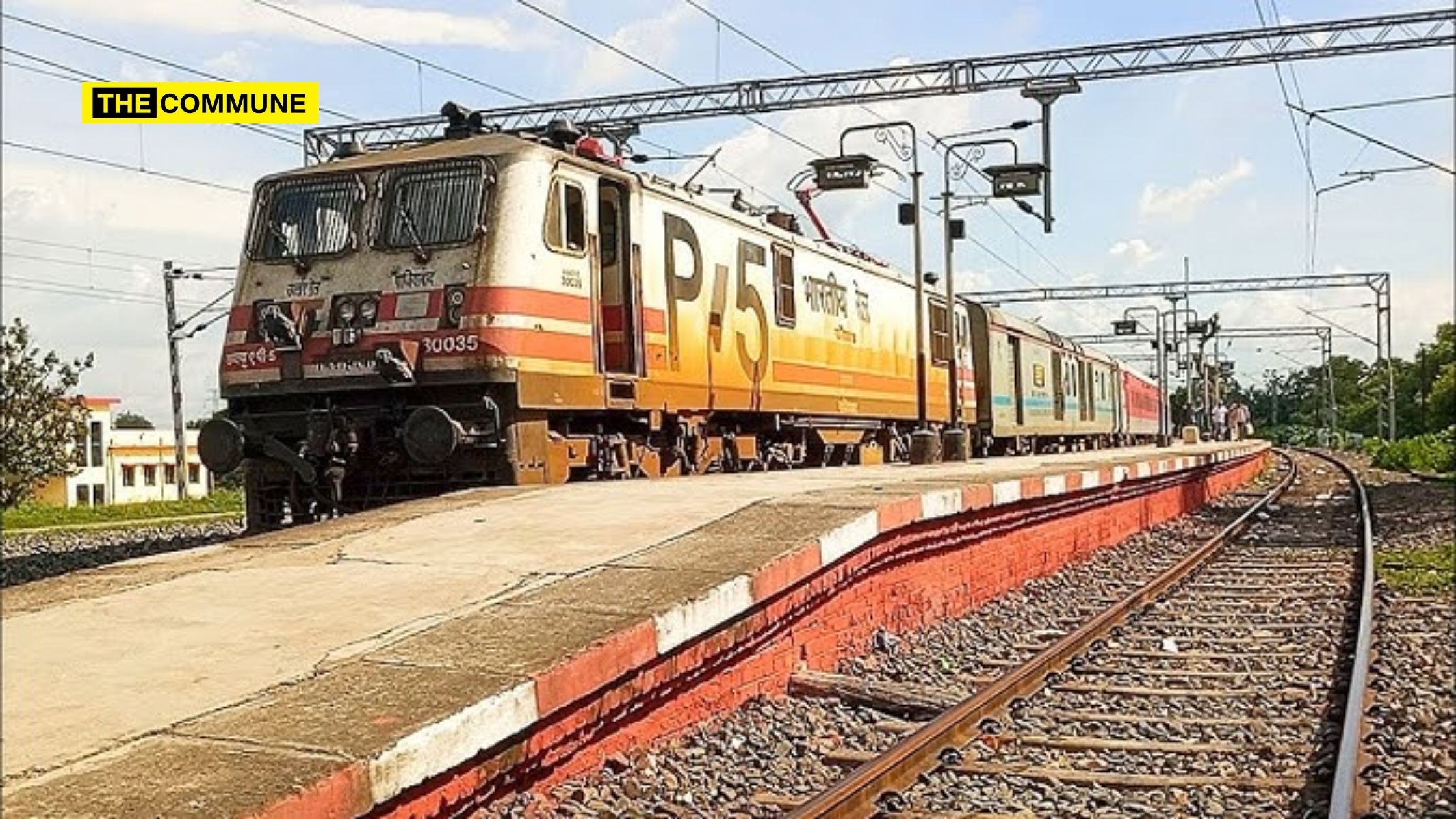
A major accident was averted in Uttar Pradesh by an alert loco pilot of the Rae Bareli-Raghuraj Singh Passenger Train who managed to bring it to a screeching halt after finding sand dumped on the tracks.

The pilot pressed the emergency brakes of train No. 05251 on Sunday evening to prevent it from derailing.

According to the reports, an unknown dumper left sand on the railway track at the Raghurajpur railway crossing in Raebareli around 7:55 p.m.

According to eyewitnesses, earth-filling work was taking place on the Ganga Expressway, and a dumper engaged in the same work dumped sand on the track and ran away.

Soon after, Raghuraj Singh shuttle train number 05251 arrived from Raebareli at a low speed. Due to the low speed of the train, the loco pilot managed to bring the train to a sudden halt, preventing the accident.

Eyewitnesses said that if the train had been traveling at a higher speed, it could have derailed. The police are investigating the case, and a hunt has been launched for the dumper driver.

Later, the sand was removed from the track, and rail traffic was resumed on the route, officials said. On October 5, a major tragedy was averted when a Lucknow-bound train was stopped in time after a car was found moving on the tracks.

The incident occurred near the Gonda-Lucknow rail section when the driver of the Gorakhpur-Lucknow Intercity Superfast Express spotted a car on the tracks. Acting quickly, the driver immediately applied the emergency brakes and stopped the train. Earlier, the Indian Railways said that there have been 18 attempts to derail trains across the country since August.

From June 2023 till date, there have been 24 such incidents, the officials have said. The authorities found various kinds of objects placed on rail tracks, including LPG cylinders, bicycles, iron rods and cement blocks giving rise to speculations that some conspiracies may be involved.

–IANS

Subscribe to our TelegramWhatsApp, and Instagram channels and get the best stories of the day delivered to you personally.

Dravidian Model Crowd Management: The Colossal Mess At Chennai Air Show That Led To 5 Deaths And 90+ Hospitalizations

Thirsty Crowds Drank From Fire Engines at Chennai Air Show

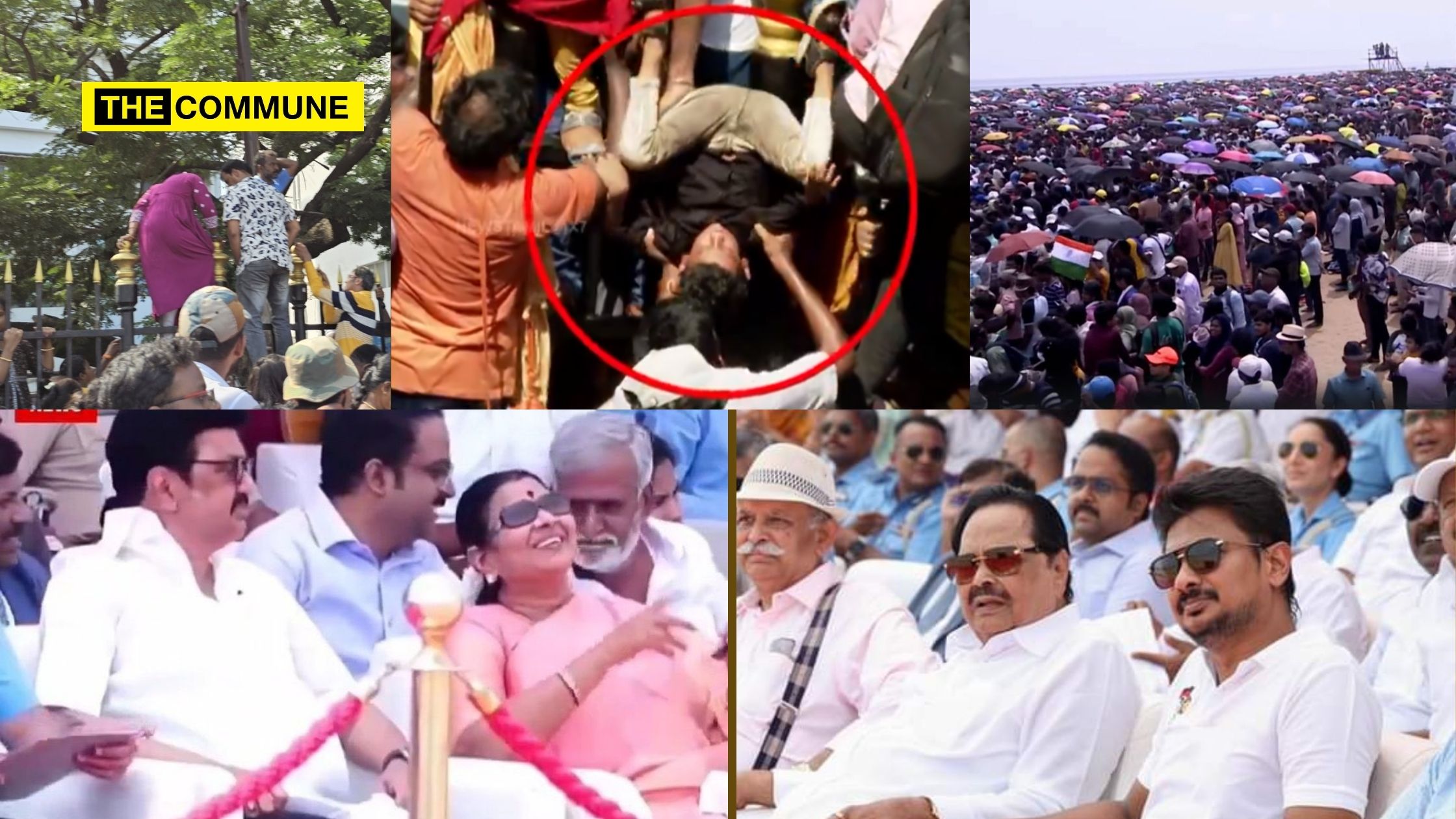
The much-anticipated Air Show at Chennai’s Marina Beach, intended to be a memorable event for millions, turned into a nightmare due to the negligence of the DMK government in Tamil Nadu. While the Indian Air Force delivered a flawless performance, the mismanagement before and after the show caused widespread disorder. As of 11:30 PM, five lives were lost, and over 90 people were hospitalized.

Despite knowing that over 1.5 million people would attend the October 6 event, the Chennai City and Traffic Police failed to prepare for the large turnout, with inadequate crowd management for smooth entry and exit. The public was encouraged to use public transport, but the Metro and Mass Rapid Transit System (MRTS), operated by Indian Railways, didn’t run trains frequently enough to accommodate the crowd. Viral videos showed overcrowded stations with people struggling to cope.

City buses also faced similar issues, leaving many to walk long distances in extreme heat. The situation worsened after the Air Show, as thousands flooded the main road near Marina Beach, where local authorities failed to implement crowd control measures. The crowd, composed mainly of families and children, had already endured hours of heat and humidity, and the lack of transportation options forced them to walk kilometers in unbearable conditions.

VIP vehicles clogged the roads, making it impossible for the public to navigate, while ambulances struggled to reach those suffering from dehydration and exhaustion.

Thousands sat along footpaths, too exhausted to continue, as it took more than three hours to clear the roads. This massive mismanagement caused significant public distress, leading to widespread criticism from Chennai residents.

Here are some snapshots of the colossal failure of the DMK government in handling the crowd.

This is not the first time that the Chennai Police have failed to control the crowd and make proper arrangements.

Film music composer AR Rahman’s Marakkuma Nenjam (Will the heart forget?) concert at Paniyur, outside of Chennai, on 10 September 2023 turned out to be a nightmare for the fans. The concert was scheduled to begin at 7 PM. Many of them were said to have been caught in traffic jams for more than 4 hours. Despite indications of traffic buildup, the police appeared unresponsive to the situation, leading to severe traffic congestion.

There was no proper parking at the venue and many were found returning home after the arduous 4-5 hour journey to the concert venue. Several attendees told news media that they parked their cars on the way and walked nearly 3km to reach the venue because of the traffic and no parking availability at the premises.

Inside the venue, attendees faced life-threatening situations due to the lack of crowd control. Many who managed to enter were met with suffocation and cramped spaces, causing them to exit immediately. However, the congestion continued outside, and the police and event managers remained uninvolved.

Subscribe to our TelegramWhatsApp, and Instagram channels and get the best stories of the day delivered to you personally.
UN Like An Old Company, Occupying Space In Market: EAM Jaishankar

UN Like An Old Company, Occupying Space In Market: EAM Jaishankar

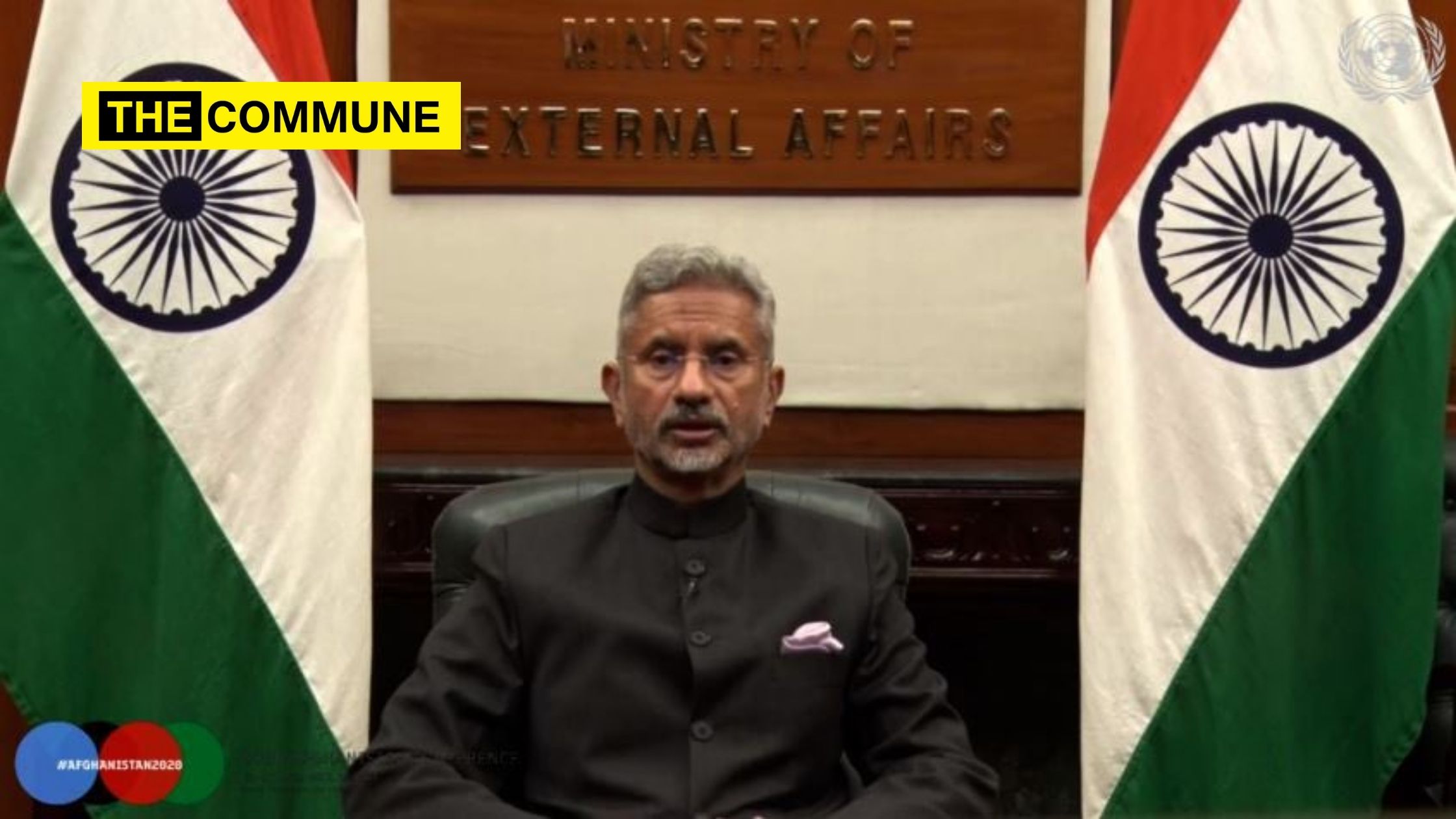
External Affairs Minister (EAM) S Jaishankar on Sunday stated that the United Nations (UN) is like an “old company” that is “occupying space in the market” without adapting to the changing global landscape.

Speaking at the Kautilya Economic Conclave, Jaishankar stressed that the UN has failed to keep pace with the world, forcing countries to find alternative ways to address pressing global challenges.

“Since this is an economic conclave, let me give you a businesslike answer. The UN, in a way, is like an old company, not entirely keeping up with the market but occupying the space. And, when it’s behind times in this world, you have startups and innovation. So, different people start doing their own things,” Jaishankar said.

He explained that while countries would prefer the UN to lead global initiatives when it fails to address key issues, they are left to create their own mechanisms.

“There is a UN at the end of the day; however, suboptimal it is in functioning, it’s still the only multilateral game in town. But when it doesn’t step up on key issues, countries figure out their own ways of doing it,” Jaishankar added.

Reflecting on the UN’s role during the COVID-19 pandemic, EAM Jaishankar highlighted its limited contribution, stating, “Probably the biggest thing that happened in our life was COVID. Think about what the UN did on COVID-19, and I think the answer is not very much.”

He also addressed the UN’s inaction on major global conflicts, specifically the Russia-Ukraine war and the ongoing Middle East crisis.

“Two very serious conflicts are going on in the world. Where is the UN on them? Essentially a bystander. So what is happening is that as you saw even during Covid, countries either did their own thing or you had an initiative like Covax, which a group of countries did,” Jaishankar remarked.

“When it comes to the big issues of the day, increasingly, you’ll find combinations of countries who come together and say, let’s agree on this and let’s go and do it,” he added.

Jaishankar highlighted recent examples like the connectivity initiative involving India, Middle Eastern countries, European countries, and the US, as well as other alliances like the QUAD and the Coalition for Disaster Resilient Infrastructure, which operate independently.

“The UN will continue, but increasingly there’s a non-UN space, which is the active space,” he concluded. India has long been batting for expansion of the United Nations Security Council (UNSC) in both permanent and non-permanent categories, as well as reform in its working methods.

The government led by Prime Minister Narendra Modi has been, according to the highest priority, to obtain a permanent membership for India in an expanded UNSC.

The process of UNSC Reforms is being presently discussed under the Inter-Governmental Negotiation (IGN) framework of the UN General Assembly. According to the Ministry of External Affairs (MEA), India is also working alongside other reform-oriented countries through its membership in G-4 (India, Japan, Brazil and Germany) and the L.69 Group (a cross-regional group of countries from Asia, Africa and Latin America) for building support among the UN Member States for expansion in both permanent and non-permanent categories.

–IANS

Subscribe to our TelegramWhatsApp, and Instagram channels and get the best stories of the day delivered to you personally.
Assam CM Launches Financial Support Scheme To End Child Marriage

Bangladeshi Muslims Infiltrating Tamil Nadu For Jobs, Alleges Assam CM Himanta Biswa Sarma

Assam Chief Minister Himanta Biswa Sarma on Sunday asserted that the government has taken a big leap towards eradicating child marriage with the launch of a financial support initiative—the Nijut Moina scheme—to help the education of girl students in the state.

The latest government initiative aims to cover 10 lakh female students with an outlay of Rs 1,500 crore. In the first year, more than 1.6 lakh girls will receive Rs 240 crore.

Chief Minister Sarma said, “Assam has started a big initiative today by launching Nijut Moina. Under this scheme, female students who study at the graduation level will receive a monthly scholarship of more than Rs 1,000, and those who pursue post-graduation will get Rs 2,500 per month to bear the education expenditure. In this way, we want female students to not depend on their parents to continue higher education.”

The Chief Minister noted that with the launch of this scheme, the child marriage cases will come down in Assam. “We are anticipating that Nijut Moina will able to eradicate the evil of child marriage from the state,” he said.

CM Sarma also added that one of the primary conditions for availing of this scheme is that female students remain unmarried until they reach the post-graduation level.

“As the aim of this initiative is to eradicate child marriage, the female students studying at the graduation level must remain unmarried till they finish their undergraduate curriculum. Once they reach the post-graduation level, there is no bar to remaining unmarried to avail of the Nijut Moina scheme. At that point, they will reach their minimum age of marriage and we also desire that the girls get married in a specific period and lead a happy life,” he said.

The Chief Minister also stipulated that no daughter of an MP, MLA, or Minister can benefit from this financial support initiative.

He also mentioned that female students will attend regular classes in colleges and universities and will achieve good results in the examinations.

Taking to his X account, CM Sarma wrote, “I believe this initiative will be a game changer in fighting child marriage. #NijutMoina is unique as it incentivises positive social outcomes, funds higher education, reduces family expenses, and bars child marriage by encouraging girls to remain in college.”

“Overwhelming evidence of our past efforts has pointed us in today’s direction. Studies have demonstrated how Assam’s crackdown on child marriage has arrested maternal and infant mortality rates. With #NijutMoina, this social evil will get a final nail in the coffin,” he added.

Under the Nijut Moina scheme, each eligible female student enrolled in Class 11 will receive an incentive of Rs 1,000 per month for a maximum of 10 months, for a total of Rs. 10,000 per year. An incentive of Rs 1,250 per month for a maximum of 10 months, resulting in a total of Rs 12,500 per year will be paid to each of the eligible female students enrolled in graduation in the first year.

Meanwhile, each eligible female student enrolled in the post-graduation first year will receive an incentive of Rs 2,500 per month for a maximum of 10 months, resulting in a total of Rs 25,000 per year.

–IANS

Subscribe to our TelegramWhatsApp, and Instagram channels and get the best stories of the day delivered to you personally.
DMK Not To Accept Kerala MLA PV Anvar In Its Fold

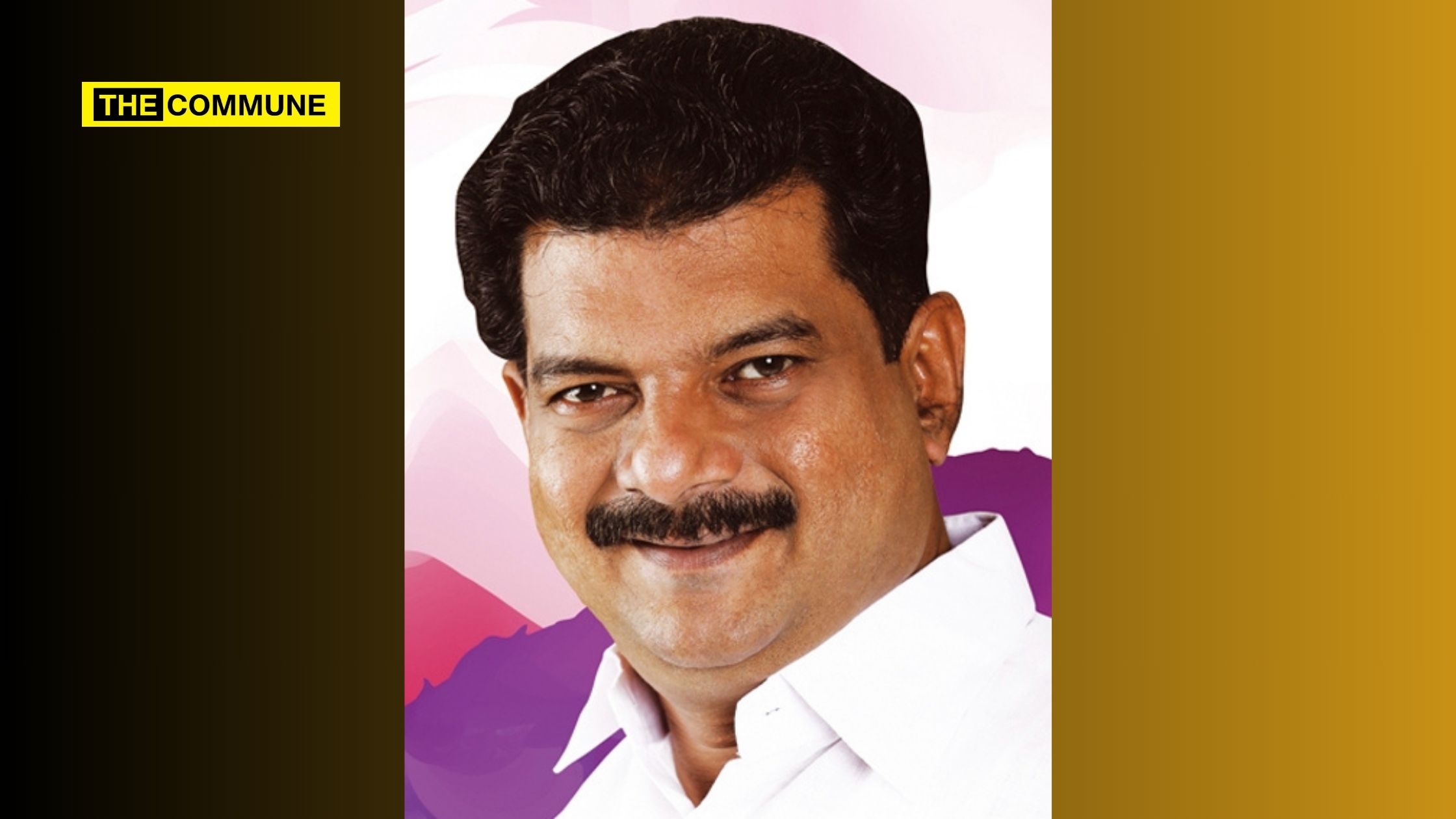
Kerala MLA PV Anvar

The Dravida Munnetra Kazhagam (DMK), which is in alliance with the CPI-M in Tamil Nadu, has categorically stated that the party would not accept PV Anvar, an Independent MLA from Kerala who won on Left support.

Anvar recently raised allegations against Kerala Chief Minister Pinarayi Vijayan and was promptly expelled from the CPI-M parliamentary party he belonged to.

The estranged MLA, who has announced that he will float a new political party, was in Chennai on Saturday and met with a few DMK leaders, including minister Senthil Balaji. There were rumours that Anvar would become part of the DMK.

The Kerala DMK unit also proposed to the top leadership to include Anvar in the party. DMK leader and party spokesperson TKS Elangovan told media persons that the party would not include Anvar as he was expelled from the CPI-M parliamentary party.

Elangovan also said that Anvar has regularly criticised CPI-M leader and Kerala Chief Minister Pinarayi Vijayan. This will be a major setback for PV Anvar, who was trying to join the DMK, but the party’s political stand has thrown a spanner in his move.

However, Anvar has also met Electricity Minister Senthil Balaji, a powerful DMK leader in Western Tamil Nadu who is very close to Chief Minister MK Stalin.

It remains to be seen whether Balaji will pressure Stalin for Anvar’s entry into the DMK. Sources in the DMK told IANS that the party would not include Anvar as the DMK has excellent rapport with the CPI-M leadership. K.R. Ramanandan, a retired professor of political science and social activist from Chennai, while speaking to IANS, said, “DMK is a political party which gives undue leverage to its allies and will never include a person like Anvar who has been vehemently criticising Kerala Chief Minister Pinarayi Vijayan.”

–IANS

Subscribe to our TelegramWhatsApp, and Instagram channels and get the best stories of the day delivered to you personally.
CM Adityanath Announces Complete Ban On Meat & Alcohol During Mahakumbh In Prayagraj

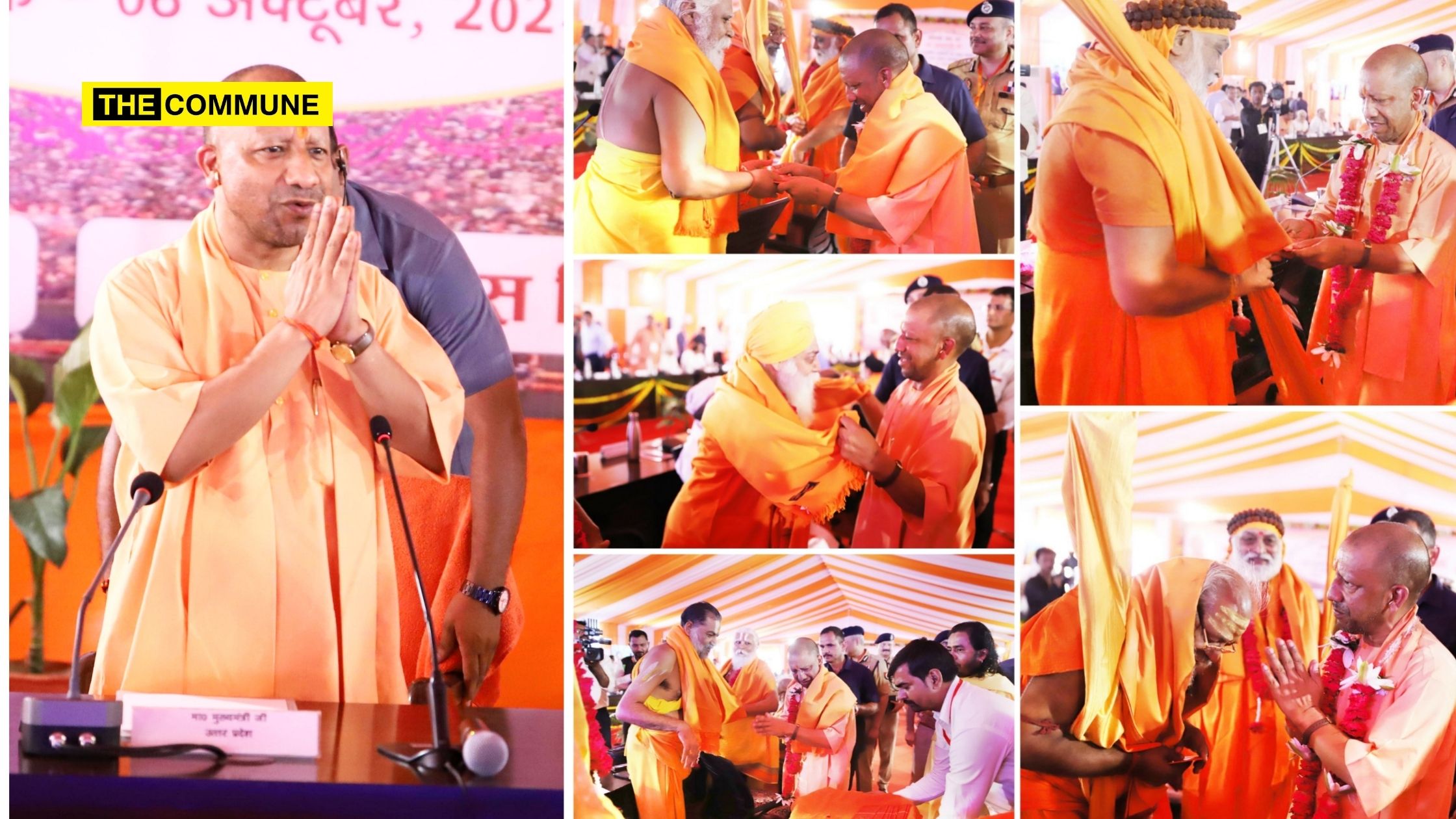
During the Mahakumbh 2025, the sale of meat and alcohol will be prohibited within Prayagraj. Chief Minister Yogi Adityanath announced this on Sunday in the presence of representatives from all 13 akharas.

He stated that the Mahakumbh is organized between January 14 and February 16 under the guidance of the akharas, which are the flag bearers of Sanatan Dharma, with the state government providing support.

The Chief Minister said pilgrims worldwide would experience Sanatan culture during the Mahakumbh and that the government is dedicated to respecting this tradition.

While addressing the saint community at the Mahakumbh site, Chief Minister Adityanath underlined that every saint and devotee coming to bathe in the holy Triveni Sangam would witness the continuous and pure flow of the Ganga and Yamuna rivers.

He assured that efforts are being made to ensure the cleanliness of these sacred rivers, but also stressed the need for cooperation from the saint community.

The Chief Minister announced that land would soon be reserved in Prayagraj for the ‘samadhi’ of saints who pass away during the Mahakumbh.

He stressed that the progress of Sanatan society is possible under saints’ guidance and called for everyone to contribute to making Mahakumbh 2025 even grander than the previous one in 2019.

The Chief Minister mentioned the late Narendra Giri Maharaj and said that construction of a corridor near the Hanuman temple is being carried out.

He urged all saints to join the campaign for a clean Mahakumbh, asserting that avoiding the use of prohibited plastic would be appropriate. In response to the saint community’s demand for a ban on cow slaughter, the Chief Minister stated that cow slaughter is a crime in Uttar Pradesh, with penalties of up to life imprisonment.

The state government operates over 7,000 cow shelters, housing over 1.4 million cattle. He called for the support of the saint community in promoting cow conservation and suggested that every ashram develop cow protection facilities and engage in cow service. Prioritising security during the Mahakumbh, the Chief Minister urged all saints to verify the identity of anyone staying in their ashrams before granting permission.

Earlier, amidst Vedic chants and slogans praising Sanatan Dharma, the Chief Minister honoured each revered saint and Acharya with traditional shawls.

A short film regarding the management and arrangements for Mahakumbh 2025 was also presented to the saints. During this dialogue session with akhadas and saints, the representatives expressed that Chief Minister Yogi Adityanath protects Sanatan Dharma, under whom the community feels honoured.

They noted that he is the first Chief Minister to directly engage with saints regarding the Mahakumbh, listening to their concerns and suggestions. The saints expressed satisfaction with the preparations for Mahakumbh 2025 and affirmed that it would be grander and more divine than previous events.

They collectively thanked Chief Minister Yogi, highlighting the prevalent global tensions and the potential of Mahakumbh 2025 to convey a message of peace to the world.

–IANS

Subscribe to our TelegramWhatsApp, and Instagram channels and get the best stories of the day delivered to you personally.
Hon’ble Judges’ Burden: Judicial Overreach And The Erosion Of Personal Liberty In Isha Sadhguru Case

Judicial Overreach And The Erosion Of Personal Liberty In Isha Sadhguru Case

When I was in the 8th grade, our school administration mandated that we all speak English within the school premises. A friend jokingly remarked, “Angrez gaye par Angreziyat rah gayi hai” (The colonialists have gone but the colonialism remains). We all laughed at the time, and like every fleeting moment of innocence that one, too, faded into the past.

Earlier today, someone in a WhatsApp group shared a news clipping from a leading English newspaper titled, “When Jaggi Vasudev’s daughter is married, why is he telling others to be hermit?” The headline left me stunned. I reread it, hoping it was merely a journalist’s creative liberty, but it wasn’t. Instantly, I recalled the remark, “Angreziyat rah gayi hai” Such uninformed and casual commentary from those entrusted with the duty of delivering justice is deeply concerning.

Let’s first understand the context in which the Hon’ble Judges made these remarks. One S Kamaraj filed a habeas corpus petition under Article 225 of the Constitution of India, seeking ‘an order or direction more particularly in the nature of a writ of habeas corpus directing the respondent to produce the corpus or body of the petitioner’s daughters, Geetha Kamaraj alias Maa Mathi, aged 42, and Latha Kamaraj alias Maa Maayu, aged 39, daughters of Dr. Kamaraj, who are held captive inside Isha Foundation, Coimbatore, before this court and set them at liberty.

The Hon’ble High Court, during the adjudication of the matter, examined Maa Mathi and Maa Maayu, both of whom clearly stated that they had voluntarily taken Sanyas of their own free will. Yet, despite this, the Hon’ble Court, in its order dated 30.09.2024, stated:

…In view of the serious nature of the allegations raised against the institution and the way and the manner in which the detenues have spoken before us, we could form an opinion that some more deliberations are required to understand the truth behind the allegations. Therefore, the petitioner shall produce the details of criminal cases registered against the institution and the learned Additional Public Prosecutor also shall collect all those case details and place before us for further consideration.

What’s particularly intriguing here is that the petitioner, Mr. S Kamaraj, had earlier appeared in a habeas corpus petition filed by his wife, Mrs K Sathiajothi, in 2016, making similar allegations and seeking similar relief. In HCP No. 1656/2016 titled Mrs. K. Sathiajothi v. State of Tamil Nadu & Ors, the Hon’ble Division Bench directed the Principal District and Sessions Judge, Coimbatore, to visit the Isha Yoga Centre, interact with the family, and file a detailed report. Following the judge’s visit and interaction, the Hon’ble High Court dismissed the petition on 12.08.2016. The relevant portion of that order reads:

17. Having gone through the report of the learned Principal District Judge and having gone through the statements of Ms. Geetha Kamaraj and Ms. Latha Kamaraj, and having heard the statements of Dr. Kamaraj, the husband of the petitioner, and the learned counsel for the fifth respondent/Isha Foundation, and the learned Additional Public Prosecutor appearing for the State, we are of the view that as of now, there is no material on record even to remotely infer that Ms. Geetha Kamaraj & Ms. Latha Kamaraj are illegally detained by the Isha Foundation. Prima facie, we are satisfied that the detenues are staying in the Isha Foundation on their own volition, following a path of Sanyasin which they like. Therefore, no relief as prayed for in this petition can be granted.

18. In the result, this Habeas Corpus Petition is dismissed…

Despite the dismissal of a similar petition with the same prayers, the petitioner once again approached the Hon’ble High Court in the present matter. What concerns me is the lack of mindfulness in the remarks made by the Hon’ble Judges.

Regarding the legal framework for habeas corpus petitions, a three-judge bench of the Hon’ble Supreme Court, consisting of then Chief Justice Dipak Mishra, Justice AM Khanwilkar, and Justice DY Chandrachud, clarified the ambit of habeas corpus in the Shafin Jahan v. Asokan K.M. & Ors case, commonly known as the Hadiya case. While the bench reached the same conclusion, Justice Chandrachud wrote a concurrent judgment on the issue. The key observations from the judgment authored by the Hon’ble CJI for himself and Justice Khanwilkar are as follows:

“The ambit of a habeas corpus petition is to trace an individual who is stated to be missing. Once the individual appears before the court and asserts that as a major, she or he is not under illegal confinement, which the court finds to be a free expression of will, that would conclude the exercise of the jurisdiction…

The schism between Hadiya and her father may be unfortunate. But it was no part of the jurisdiction of the High Court to decide what it considered to be a ‘just’ way of life or ‘correct’ course of living for Hadiya. She has absolute autonomy over her person. Hadiya appeared before the High Court and stated that she was not under illegal confinement. There was no warrant for the High Court to proceed further in the exercise of its jurisdiction under Article 226.

The purpose of the habeas corpus petition ended. It had to be closed as the earlier Bench had done. The High Court has entered into a domain which is alien to its jurisdiction in a habeas corpus petition…

The duty of the Court is to uphold the right and not to abridge the sphere of the right unless there is a valid authority of law.

Justice Chandrachud, in his concurring judgment, added:

1…. The High Court of Kerala has committed an error of jurisdiction. But what to my mind, is disconcerting, is the manner in which the liberty and dignity of a citizen have been subjected to judicial affront… The reason for this concurring judgment is that it is the duty of this Court, in the exercise of its constitutional functions, to formulate principles in order to ensure that the valued rights of citizens are not subjugated at the altar of a paternalistic social structure….

23. The High Court, in the present case, has treaded on an area which must be out of bounds for a constitutional court. The views of the High Court have encroached into a private space reserved for women and men in which neither law nor the judges can intrude. The High Court was of the view that at twenty four, Hadiya “is weak and vulnerable, capable of being exploited in many ways”. The High Court has lost sight of the fact that she is a major, capable of taking her own decisions and is entitled to the right recognised by the Constitution to lead her life exactly as she pleases….

Thus, the legal position on habeas corpus is clear.  The Sanyasins appeared before the court and confirmed that they had taken Sanyas of their own free will. The matter should have been settled then and there. With the same issue already settled by the Hon’ble High Court in 2016, reopening it and subjecting two adult individuals—one aged 39 and the other 42—to further scrutiny is a clear violation of their constitutional rights. Do they not have the right to autonomy over their own lives? Is this not a repeat affront to their liberty and dignity at the hands of the judiciary?

What exactly is Sanyas? Can anyone force someone to take Sanyas? There are millions of people worldwide associated with Isha Yoga Centre, but are all of them Sanyasins? Certainly not. Only a select few have embraced the path of Sanyas, and they did so not because Sadhguru compelled them, but because Sanyas comes from within. Thousands of years ago, Prince Siddhartha renounced his kingdom and became a Sanyasi, known today as Gautam Buddha. Countless devotees of his have renounced worldly life, and many continue to do so each year. Similarly, Jain monks follow this path, with entire families—sometimes including minors—embracing Sanyas. In Hinduism, since time immemorial, people have taken up Sanyas, severing all worldly ties, sometimes even performing ‘Shradh’ for their living parents. Despite attempts by various foreign powers, from the Greeks to the British, to dismantle this institution of Sanyas, they all failed.

In independent India, many attempts have been made to discredit Gurus and Mathas, deterring people from associating with them. The attack on Sadhguru is just the latest in this ongoing effort. What’s troubling is the judiciary’s involvement. Are we now suggesting that courts must approve Sanyas? Sanyas often faces opposition from family members, and if courts start scrutinizing every case, it could undermine the institution and provide a tool for those seeking to erode our cultural heritage.

The unnecessary oral remarks by the Hon’ble Judges reveal how certain elements in our legal system still echo the approach of British judges before 1947. Much like how British judges, with little understanding of Indian culture and traditions, used to view matters through a Western lens, the oral observations made by the Hon’ble Judges regarding ‘Sanyas’ demonstrate that even after 75 years of independence, we continue to approach such issues with the same colonial mindset. While our country has attained sovereignty, ‘sovereignty of thought’ remains elusive.

This entire situation reveals the colonial mindset of some in the judiciary, who still view Dharma through the same lenses as the British did. It’s a complete disregard for our cultural heritage and traditions. What was once the “White Man’s Burden” seems to have transformed into the “Hon’ble Judges’ Burden.”

Shivam Raghuwanshi is an Advocate at Supreme Court of India and author of book ‘Ballot, Bullet and Blood’.

Subscribe to our TelegramWhatsApp, and Instagram channels and get the best stories of the day delivered to you personally.
AI Can Be As Dangerous For World As Nuclear Weapons: EAM Jaishankar

Jaishankar on AI

External Affairs Minister Dr S. Jaishankar on Sunday said that artificial intelligence (AI) will be a profound factor for the world, after nuclear weapons.

Participating in the third edition of the Kautilya Economic Conclave, organised by the Institute of Economic Growth and the Finance Ministry, on its third and final day, Jaishankar said that AI is going to be the next big thing and that countries should be prepared to deal with its after-effects. He further said that AI is also going to become a profound factor in the global ecosystem.

“AI will be as dangerous for the world as nuclear bombs once were,” he observed. Minister Jaishankar also said that demographics, connectivity, and AI will change the global order.

“Globalisation can be weaponised in the next decade and the world must be cautious about it. Many people worldwide blame it for the large number of job losses and other negative effects of the revolution.

This issue will remain as long as there is change (globalisation),” he said, noting that the social and political reaction to globalisation has gained momentum in the last decade. The realities of globalisation inevitably collide with protectionism, he said.

The External Affairs Minister also said that in today’s era, the United Nations’s role has become only that of a spectator. Comparing the United Nations to the business world, he said that it is an old business that is taking up a lot of space but is not changing according to the world.

On the ongoing Middle East conflict, he said that today the fight is taking place only for economic corridors, land and sea, but in the future, there will be fights over climate change also. He further highlighted that the Global South feels these geopolitical tensions’ impacts more acutely than others, raising concerns about the region’s stability.

–IANS

Subscribe to our TelegramWhatsApp, and Instagram channels and get the best stories of the day delivered to you personally.
Questioning Reliability Of Exit Polls: A Closer Look At Their History Of Inaccuracy In Elections

Questioning Reliability Of Exit Polls

As the Haryana and J&K Assembly elections draw to a close, survey agencies are back in action with their Exit Polls.

However, one must question why these pollsters should be trusted, especially given the numerous instances of significant inaccuracies in their projections in the past.

While Exit Polls claim to offer insights into voter sentiment, a closer look at past elections – Lok Sabha and Assembly – reveals a troubling trend: pollsters frequently misjudge actual outcomes.

The consistent failures of Exit Polls to align with reality raise serious doubts about their reliability. Based on some data related to past predictions, IANS has made an assessment of the history of overestimations by the Exit Polls.

2014 Lok Sabha elections In the 2014 parliamentary elections, pollsters predicted a substantial win for the BJP-led National Democratic Alliance (NDA), with an average prediction of 283 seats.

But the actual result was a massive 336 seats for the NDA. The BJP alone secured 282 seats. This suggests that the polls could not gauge the scale of the win. This underlined the disconnect between the data and voter mood.

2019 Lok Sabha elections The prediction in 2019 polls was that the NDA would secure around 306 seats. On the contrary, the NDA bagged 353 seats. The BJP alone got 303. Once again, the Exit Polls failed to judge the mood of the electorate.

Voters favoured the NDA by a larger margin than what was predicted. 2024 Lok Sabha elections Exit Polls projected a massive victory for the NDA in 2024 parliamentary polls, with estimates ranging from 361 to 401 seats.

However, the actual results were far more modest, with the NDA ending up with just 293 seats and the BJP alone winning 240. This was a loss of 63 seats from their previous tally. This marked a significant blunder in Exit Poll predictions.

The 2004 Lok Sabha elections were interesting in this context. The pollsters overestimated the BJP-led NDA’s chances. They had predicted a comfortable majority with seats ranging from 240 to 275 seats.

The outcome, however, was a shock, with the NDA securing only 187 seats, whereas Congress and its allies emerged victorious with 216 seats. Discrepancies in state polls These inaccuracies extend beyond national elections to state assemblies as well.

For example, in the 2019 Haryana Assembly elections, Exit Polls suggested that the BJP would secure around 61 seats, with some estimates soaring as high as 75-80 seats. The reality was completely different: the BJP won only 40 seats, while Congress managed to capture 31, contradicting the Exit Polls’ indications about a clear BJP majority.

In this Haryana polls, C Voter had predicted 72 seats for BJP which turned out to be only 40. Similarly, Exit Polls predicted a competitive fight in Chhattisgarh Assembly polls in 2023 but were again off the mark.

The BJP won 54 seats compared to expectations of 34-42. The 2023 Madhya Pradesh Assembly elections saw pollsters predicting a BJP majority, with estimates ranging from 140 to 162 seats.

Ultimately, the BJP won 163 seats, which, while close, still reflected the unpredictability of voter behaviour. In the 2021 Bengal Assembly elections, predictions of an overwhelming BJP victory (with estimates ranging from 138 to 185 seats) were smashed as the Trinamool Congress (TMC) emerged winner with 215 seats, leaving the BJP with just 77.

–IANS

Subscribe to our TelegramWhatsApp, and Instagram channels and get the best stories of the day delivered to you personally.
Beautician YouTuber-Turned, MNM Functionary-Turned, DMK IT Wing Functionary Peddles Fake News About PM Vishwakarma Scheme, Here Are The Facts

Beautician YouTuber-Turned DMK Functionary Peddles Fake News About PM Vishwakarma Scheme

Padma Priya, a YouTube beautician who gained attention through her so-called ‘environmental activism’ video and later transitioned into politics by joining Kamal Haasan’s Makkal Needhi Maiam before becoming a DMK IT Wing functionary, has spread blatantly false information about the Prime Minister Vishwakarma Scheme in an attempt to target the Narendra Modi government.

In a video titled “Hereditary Education Scheme 2.0, The Scheme That Was Abolished Is Being Brought Again By Modi” in Tamil, DMK IT Wing State Deputy Secretary Padma Priya goes on to say “Kids of those who stitch slippers have to do only stitching slippers. A barber’s son should become only a barber. Those who make garlands, nets, pots, and washermen – all their children have to do only their hereditary jobs. Students who have completed 18 years of age, instead of going to college to become doctors, engineers, scientists, and government officials, if they’re ready to learn their hereditary jobs, the Union BJP government is giving an incentive of ₹500 and promoting their hereditary jobs. This scheme, which on hearing makes us frown, is called Vishwakarma Yojana.

She further goes on to say “Teaching students of 18 years and above a vocational skill is not wrong but this scheme incentivizes only children of specific communities and this Vishwakarma scheme has been introduced to promote only these 18 professions.

She claims that the PM Vishwakarma Scheme has been brought in only to incentivize professions done by communities who are socially and economically backward.

She also peddles false information that unemployment rate has been rising in India when infact it has been the opposite. In April to June 2024, India’s unemployment rate was 6.6%. This is a slight decrease from the previous quarter, when the rate was 6.7%.

PM Amit Shah.. Sorry.. PM Modi instead of taking forward, you know where he is taking India by now.“, she says.

The Truth About PM Vishwakarma Scheme

The PM Vishwakarma Scheme, launched by Prime Minister Narendra Modi in September 2023, is a government initiative aimed at supporting traditional artisans and craftspeople across India. The scheme is named after Vishwakarma, the Hindu deity associated with craftsmanship, and is designed to empower those involved in traditional skills that are often passed down through generations. It is a Central Sector Scheme which means that it is fully funded by the Central Government.

1. Target Beneficiaries: The scheme focuses on artisans and craftsmen like carpenters, blacksmiths, goldsmiths, potters, tailors, weavers, and other traditional workers who rely on their manual skills for livelihood.

2. Objectives:

  • To enhance the skills of these workers.
  • To provide financial support for upgrading tools and technology.
  • To preserve and promote traditional crafts that are often at risk of being overshadowed by modern industries.
  • To improve the market access and overall economic stability of the beneficiaries.

3. Financial Assistance: The scheme offers easy access to credit through micro-loans. Under the scheme, artisans can avail loans of up to ₹1 lakh in the first tranche and up to ₹2 lakh in the second tranche. These loans come with a concessional interest rate of 5%, helping reduce the financial burden on the workers.

4. Training and Skill Development: In addition to financial aid, the scheme provides comprehensive skill training to improve the quality of traditional crafts. This includes upskilling programs to modernise their craft techniques while retaining their traditional essence.

5. Market Linkage: The PM Vishwakarma Scheme aims to connect artisans with larger markets, enabling them to sell their products more widely and effectively, both domestically and internationally.

6. Subsidies for Tools and Equipment: Beneficiaries receive financial assistance for purchasing modern tools and equipment to help enhance their productivity and the quality of their products.

7. Social Security and Recognition: The scheme also aims to provide better social security coverage for these workers and recognize their contribution to the economy by promoting their skills and craftsmanship nationally.

The PM Vishwakarma Scheme is an effort to protect and revitalize India’s rich tradition of craftsmanship while empowering skilled artisans to become financially self-reliant and competitive in a modern marketplace. The initiative also aligns with the government’s larger vision of promoting “vocal for local” and supporting the MSME sector.

Busting The Myths Of PM Vishwakarma Scheme

Myth: The scheme promotes caste-based professions.

Fact: No, caste is not an eligibility criterion for the PM Vishwakarma Scheme. The scheme focuses on providing support to individuals engaged in traditional craftsmanship and artisanal professions, such as carpenters, blacksmiths, goldsmiths, potters, tailors, and other similar trades, regardless of their caste background. The eligibility is based on the type of profession, not caste, with the goal of helping traditional artisans and craftsmen, many of whom may come from historically marginalized communities, but caste itself is not a determining factor.

The emphasis is on promoting and supporting traditional skills, enhancing livelihoods, and providing financial assistance, training, and market access to those already involved in these professions.The goal is to empower artisans, not to reinforce caste-based roles.

Myth: The scheme encourages students to leave their education for traditional professions.

Fact: The scheme is NOT intended for students to abandon their studies and pursue traditional professions. It is designed for individuals who are ALREADY employed or self-employed in one of the 18 traditional professions, offering them support such as technology assistance, loans, insurance, and more. If you are currently a goldsmith, carpenter, mason, or involved in any of these trades, you are eligible to register. It provides financial aid, skill development, and technological assistance to enhance their livelihoods, not to draw new entrants away from education.

Myth: The scheme is only for people practicing hereditary occupations.

Fact: While the scheme supports traditional professions, it does not limit eligibility to those who have inherited these skills from their families. Anyone currently working in the listed professions can apply for benefits under the scheme. For example, a father might be a mason, while the son is free to pursue any career, such as becoming an engineer or a doctor. However, suppose the son has already become a goldsmith or chosen any of the 18 listed professions (which doesn’t have to match the father’s occupation). In that case, he is still eligible to benefit from the scheme.

Subscribe to our TelegramWhatsApp, and Instagram channels and get the best stories of the day delivered to you personally.