
‘Activist’ To Anarchist Sonam Wangchuk: A Chronicle Of Controversies, Allegations, And Arrest
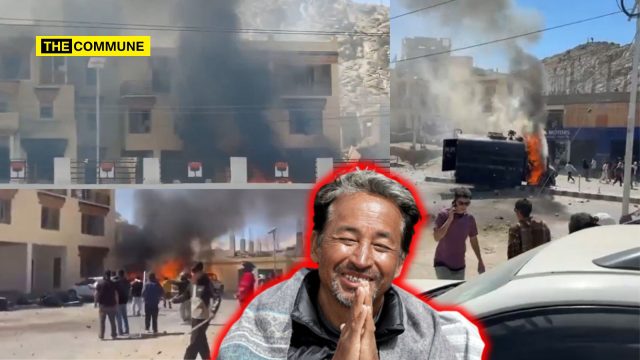
Sonam Wangchuk – the name of the Ladhaki ‘activist’ has been in the news for some time now, especially after he was arrested under NSA after the Leh protests turned violent.
We had earlier profiled Wangchuk and his background, you can read that here.
In this report, we compile various controversies and allegations concerning activist Sonam Wangchuk, culminating in his arrest in September 2025. It details a pattern of actions and associations that have drawn scrutiny from Indian authorities. The allegations range from violations of financial regulations to connections with organizations and entities perceived as having anti-India agendas.
The report is structured into three parts: specific controversial incidents, funding sources for his non-profits, and his political associations as evidenced by photographs. This compilation presents the case built by authorities and media reports against his activities.
#1 Alleged Links to Pakistani Intelligence
On 27 September 2025, Ladakh’s Director General of Police, Dr. S.D. Jamwal, stated that an investigation had revealed Sonam Wangchuk was in contact with a recently arrested Pakistan Intelligence Operative (PIO). The operative was allegedly relaying information to Pakistan. This serious allegation of a connection with a foreign intelligence agency forms a core part of the case against the activist, suggesting his activities extended beyond environmental and constitutional advocacy and into the realm of national security, leading to a stringent police probe following his arrest.
#2 FCRA Licence Revocation for SECMOL
The Ministry of Home Affairs (MHA) revoked the Foreign Contribution Regulation Act (FCRA) licence of Wangchuk’s non-profit, SECMOL, on 25 September 2025. The cancellation was due to repeated violations of India’s foreign funding laws governing NGOs. This action effectively severed the organization’s legal ability to receive financial contributions from abroad, crippling a major funding channel. The government’s move was based on alleged non-compliance with regulatory frameworks designed to monitor and control foreign donations, marking a significant escalation in the legal pressure on Wangchuk’s institutional work.
#3 Participation in ‘Breathe Pakistan’ Conference
On 6 February 2025, Sonam Wangchuk participated in the ‘Breathe Pakistan’ conference held in Islamabad, organized by Dawn Media. During his address, he praised the Pakistani media house, stating, “In Pakistan, I see Dawn Media is taking that responsibility as a champion of environment. I wish all countries and in my country and media house really take this responsibility like here.” His physical presence in Pakistan and public appreciation for a Pakistani entity amidst ongoing geopolitical tensions with India was viewed with suspicion by Indian authorities and security agencies.
#4 Historical Allegations from the UPA Era
As far back as 28 February 2007, the then-Congress-led UPA government formally accused Sonam Wangchuk of several violations. These included misusing funds received under the FCRA, illegally occupying 200 kanals of land without paying dues, and having alleged anti-national links with China and other foreign entities. The government also accused him of attempting to disturb the social harmony of Ladakh.
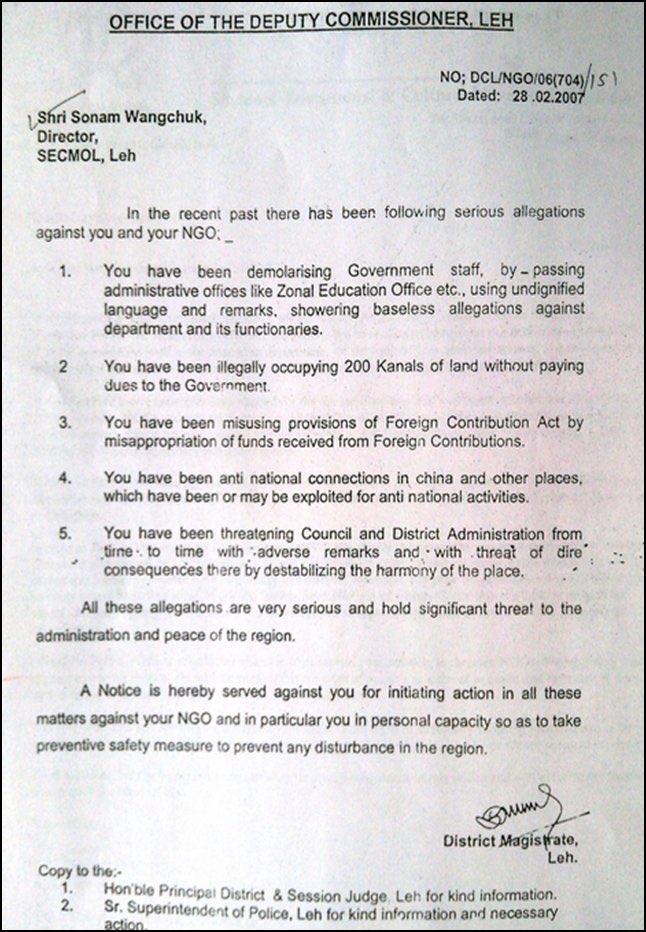
These historical charges indicate that concerns over his activities and funding are not new and have been persistent across different political administrations at the national level.
#5 Land Allotment Revoked for HIAL
On 21 August 2025, the Ladakh administration revoked the lease of 1,076 kanals of land in Phywang village that had been granted in 2018 to Wangchuk’s Himalayan Institute of Alternative Learning (HIAL). Deputy Commissioner Leh, Santosh Sukhdeve, cancelled the allotment, stating the land was not utilized for its intended purpose. The primary condition was the establishment of a legally recognized university, which authorities stated had not been created on the site, leading to the cancellation of the long-term lease for non-fulfillment of project commitments.
#6 Controversial Remarks on Goddess Sita
During an interview on 18 March 2024, Sonam Wangchuk made remarks that sparked widespread outrage. He stated that the “Modi government has turned out to be such a Ram who rescued Sita from Ravan but sold her on the open market after that.” The analogy, which used the revered Hindu deities from the Ramayana to critique government policies on Ladakh, was condemned as highly objectionable and disrespectful by many.
Ravan came in disguise of Ravan but modern day Ravans come disguised as environmentalists, journalists, activists etc
This is Sonam Wangchuk whose only agenda is to talk against the Modi Government. This hatred has become so much that now he’s talking shit about Bhagwan Ram pic.twitter.com/hUtRB36BdX
— SUDHIR (@seriousfunnyguy) March 19, 2024
#7 Support from Pakistani Social Media
In March 2024, following the Ladakh administration’s decision to revoke the land allotted to his HIAL project, a coordinated campaign emerged on Pakistani social media platforms. Multiple accounts amplified a narrative portraying Wangchuk as a victim of the Indian government, expressing solidarity with his cause. This support from across the border was cited by critics as evidence that his activism was being leveraged for anti-India propaganda, attempting to internationalize the issue and create a false equivalence between his legal troubles and perceived persecution.
#8 Endorsement of Dan Church Aid
On 26 August 2023, Sonam Wangchuk referred to Dan Church Aid as a “reputed organisation” while alleging that the MHA was leaking his NGO’s details. This endorsement was controversial as Dan Church Aid has been under scrutiny by the Indian government. The Karnataka High Court, in a separate case, had noted that a 2013 MHA communication led the RBI to instruct banks to report any fund transfers from this Denmark-based NGO for clearance before processing, indicating official concerns about its activities in India.
👉 Sonam Wangchuk terms Dan Church Aid, a ‘reputed organisation’
👉 Dan Church Aid is funded by George Soros
👉 Alleges MHA leaking his NGO’s details@Yashfacts28 Educates Phunsukh Wangdu pic.twitter.com/bg3yiznALl— The Pamphlet (@Pamphlet_in) April 27, 2024
#9 Background and Family Lineage
Contrary to the portrayal of his cinematic analogue “Rancho” in the film 3 Idiots as the son of a poor gardener, Sonam Wangchuk hails from an influential political family. His father, Sonam Wangyal, was a prominent Congress leader who served as a minister in the Jammu and Kashmir government. This disparity between his public image as a grassroots everyman and his actual background as part of the political elite has been used by critics to question the authenticity of his narrative and suggest a calculated projection.
#10 Marriage and Spousal Affiliations
Sonam Wangchuk married American Rebecca Norman in 1996. Norman is an academic affiliated with institutions like the School for International Training (SIT), which has ties to the U.S. State Department and receives funding from the Ford Foundation and Open Society Foundations. She is also a known supporter of U.S. President Joe Biden and a critic of Donald Trump. Critics point to this marriage as a direct personal link to organizations and political circles that are often viewed with suspicion by Indian national security agencies.
In May 2017, Gitanjali, who, according to publicly available information, is now his wife—joined Sonam Wangchuk’s Himalayan Institute of Alternatives, Ladakh (HIAL), relocating to Ladakh to support its establishment.
Funding From Anti-India Organizations
Now let us take a look at who funds his activism.
#1 Funding via Club of Rome-Linked Network
SECMOL, founded by Wangchuk, receives funding through FutureEarth Networks. The founder of FutureEarth, Paul Shrivastava, serves as Co-President of The Club of Rome. This global think tank, established with Rockefeller support, is famously known for its 1971 report “Limits to Growth,” which initiated global debates on climate and overpopulation.
Club of Rome (Thread)
Today we are going to tell you about one of most important think tank of Deep State
We will tell you How agenda of Depopulation arrived
And we will exposed a very prominent Indian who was always the member of The Club and his name will shock you
1/22 pic.twitter.com/IquF39GGY1
— The Chronology (@TheChronology__) December 23, 2024
This connection places Wangchuk’s environmental activism within a network associated with globalist agendas that are often critiqued by nationalist voices for potentially undermining the economic sovereignty of developing nations like India.
#2 Partnership with Ford Foundation-Linked NGO
A partner organization of Wangchuk’s SECMOL is Karuna.org. The US chapter of the Karuna Foundation has direct links to the Ford Foundation. Evonne Chen, the Director of Karuna USA, also concurrently leads the Ford Foundation’s BUILD program. This creates a direct organizational and personnel link between Wangchuk’s operations and the Ford Foundation, an organization that has historically been a subject of scrutiny regarding its influence and funding patterns within India, raising questions about the ultimate objectives of the projects being funded.
#3 Chinese Communist Party Funders
The primary funder of Wangchuk’s initiatives, Future Earth networks, operates a China Hub that is hosted and funded entirely by institutes controlled by the Chinese Communist Party (CPC). These include the China Association for Science and Technology, Sun Yat-sen University, and the Southern Marine Science and Engineering Guangdong Laboratory. This funding pipeline directly links the financial support for his work to official organs of the Chinese state, a country with which India has a contentious border dispute, including in the Ladakh region.
#4 Rockefeller-Funded Ashoka Fellowship
In 2002, Sonam Wangchuk received an Ashoka Fellowship, a prestigious award for social entrepreneurs. The fellowship program is funded by a consortium of organizations that includes the Skoll Foundation, Schwab Foundation, and the Rockefeller Foundation. This early career endorsement and funding from powerful, Western-backed philanthropic institutions integrated him into a global network of activists and provided him with initial legitimacy and resources, while also creating a record of acceptance of foreign funding that would later be scrutinized.
#5 Political Appointments Under UPA
Following Manmohan Singh becoming Prime Minister in 2004, Sonam Wangchuk was appointed to significant policy-making bodies. He was included in the Drafting Committee of the Ladakh Hill Council Vision Document, Ladakh 2025, and was also made a member of the National Governing Council for Elementary Education under the Ministry of Human Resource Development. These appointments during the Congress-led UPA government demonstrate his established influence and close ties with the political establishment that was in power at the time.
#6 Awards and Ties to International NGOs
Wangchuk has received several international awards with funding ties to major foundations. These include:
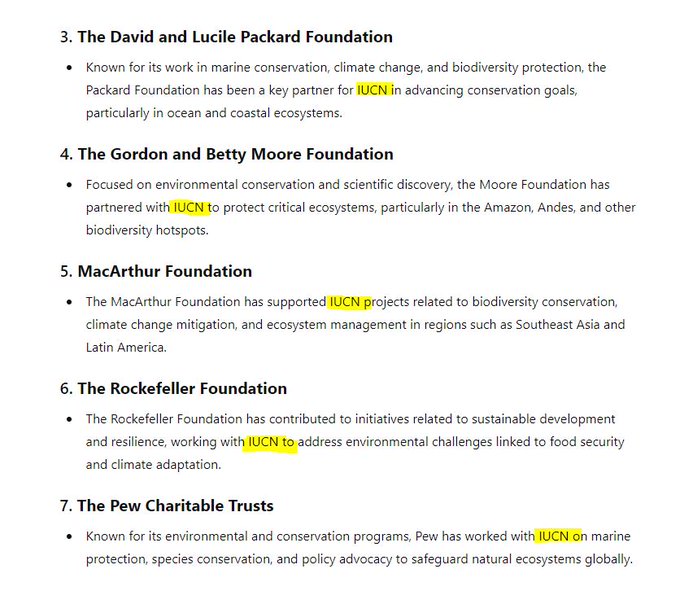
- 2016 Fred M. Packard Award (funded by Rockefeller, Pew, and Packard Foundations)
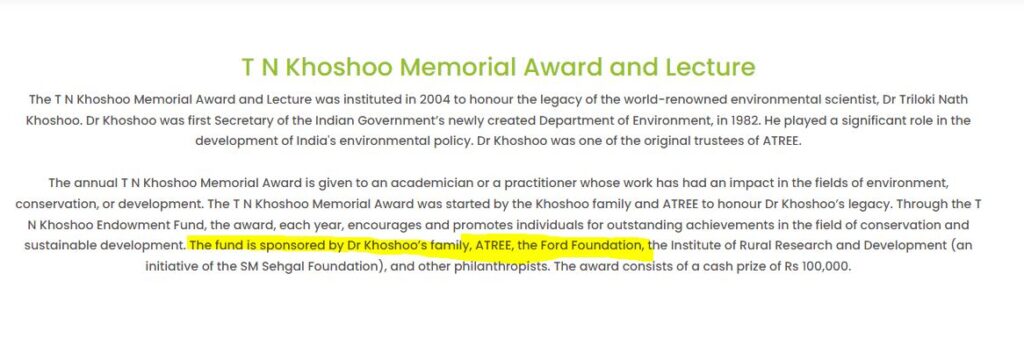
- 2017 TN Khoshoo Memorial Award (Ford Foundation)
- 2018 Ramon Magsaysay Award, which critics often associate with networks linked to the CIA and Ford Foundation.
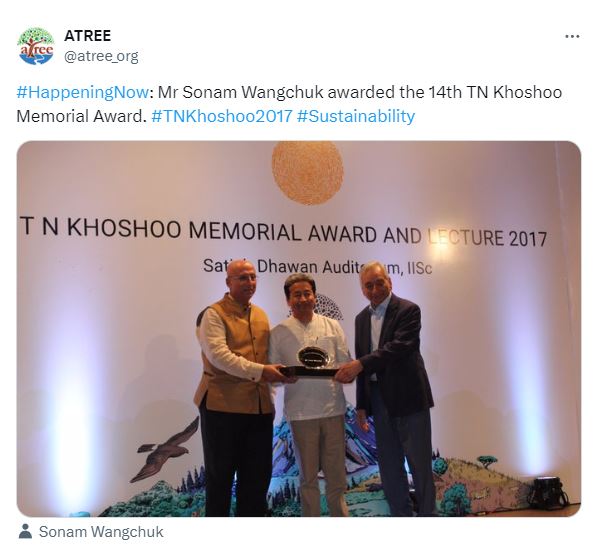 His affiliations also extend to LEAD India and the International Association for Ladakh Studies, both of which have received funding from the Ford and Rockefeller foundations, illustrating a deep, long-standing financial ecosystem.
Controversial Connections
Let us now take a look at his controversial connections – Urban Naxal connections.
#1 Association with Anti-national Actor Prakash Raj
On 26 March 2024, actor and vocal government critic Prakash Raj met Wangchuk in Leh to support his hunger strike for Ladakh’s statehood and inclusion in the Sixth Schedule. Later, on September 27, 2025, Raj protested Wangchuk’s arrest, posting their photo with the caption, “You can cage a bird, but you can’t stop it from singing.”
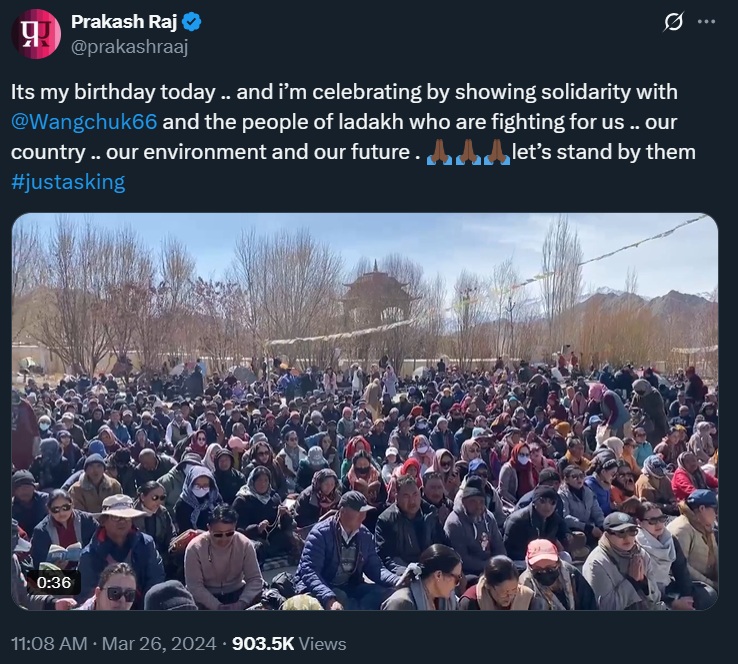
This association highlights Wangchuk’s alignment with prominent urban naxals who are known for their strong opposition to the ruling central government and its policies, further politicizing his activism.
#2 Meeting with AAP MP Sanjay Singh
In October 2024, during a protest at Ladakh Bhavan in Delhi, Wangchuk was met by Aam Aadmi Party (AAP) Rajya Sabha MP Sanjay Singh. The meeting occurred as Wangchuk and his volunteers were protesting after being denied permission to demonstrate at Jantar Mantar. This public show of solidarity from a senior leader of a key opposition party directly linked Wangchuk’s Ladakhi demands to the broader political struggle against the ruling BJP, framing his local movement within the context of national opposition politics.
#3 Support from AAP Leaders
On 7 May 2024, Wangchuk received a delegation of Aam Aadmi Party (AAP) leaders, including Abhinandita Dayal Mathur and the party’s Ladakh convener Tsering Phuntsog.
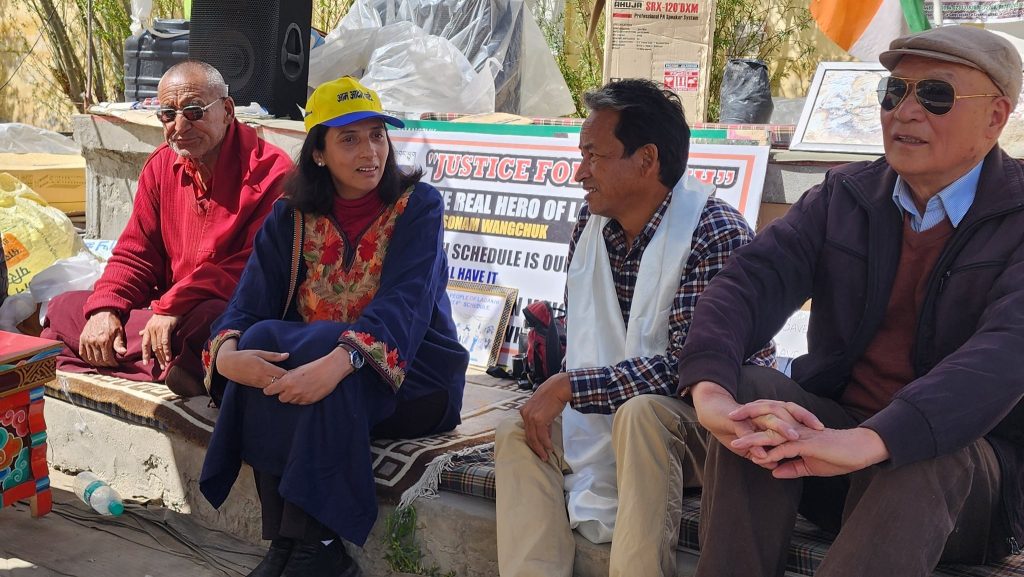
The AAP leaders expressed their support for the four-point constitutional demand for Ladakh that Wangchuk was advocating. This meeting further cemented his connections with the AAP, a party in direct political contest with the BJP, and demonstrated a coordinated effort to gain opposition backing for his cause, amplifying its reach and political significance beyond the Ladakh region.
#4 Photo with Muhammad Yunus
On 8 February 2020, Sonam Wangchuk was photographed with Muhammad Yunus, the Bangladeshi microfinance pioneer and Chief Advisor of Bangladesh, at an event at the British High Commission in Dhaka.
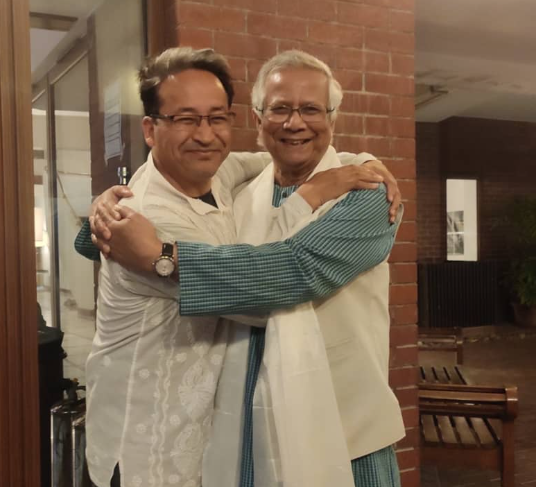
Associations with international figures like Yunus, while part of a global activist network, are often scrutinized by security agencies who assess the nature of these connections and the potential for his local movement in Ladakh to be leveraged by international actors for broader geopolitical narratives concerning the South Asian region.
#5 Meeting with Michelle Bachelet and Controversial Comment
In January 2018, Wangchuk met former Chilean President Michelle Bachelet in Santiago. While posting a photo from the event, he made a controversial comparison, noting that a stronger earthquake in Chile killed far fewer people than a weaker one in Haiti, attributing it to better preparedness.
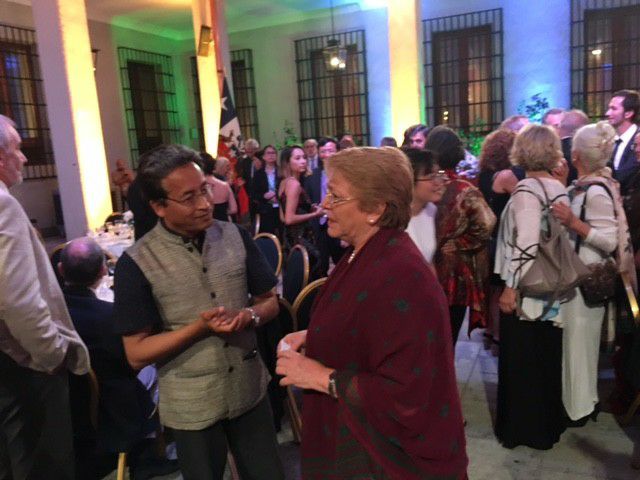 The comment, while seemingly about disaster management, was perceived by some as an indirect critique of India’s development status compared to other nations, using a natural disaster analogy to make a political point about governance and preparedness on an international platform.
Subscribe to our channels on Telegram, WhatsApp, and Instagram and get the best stories of the day delivered to you personally.

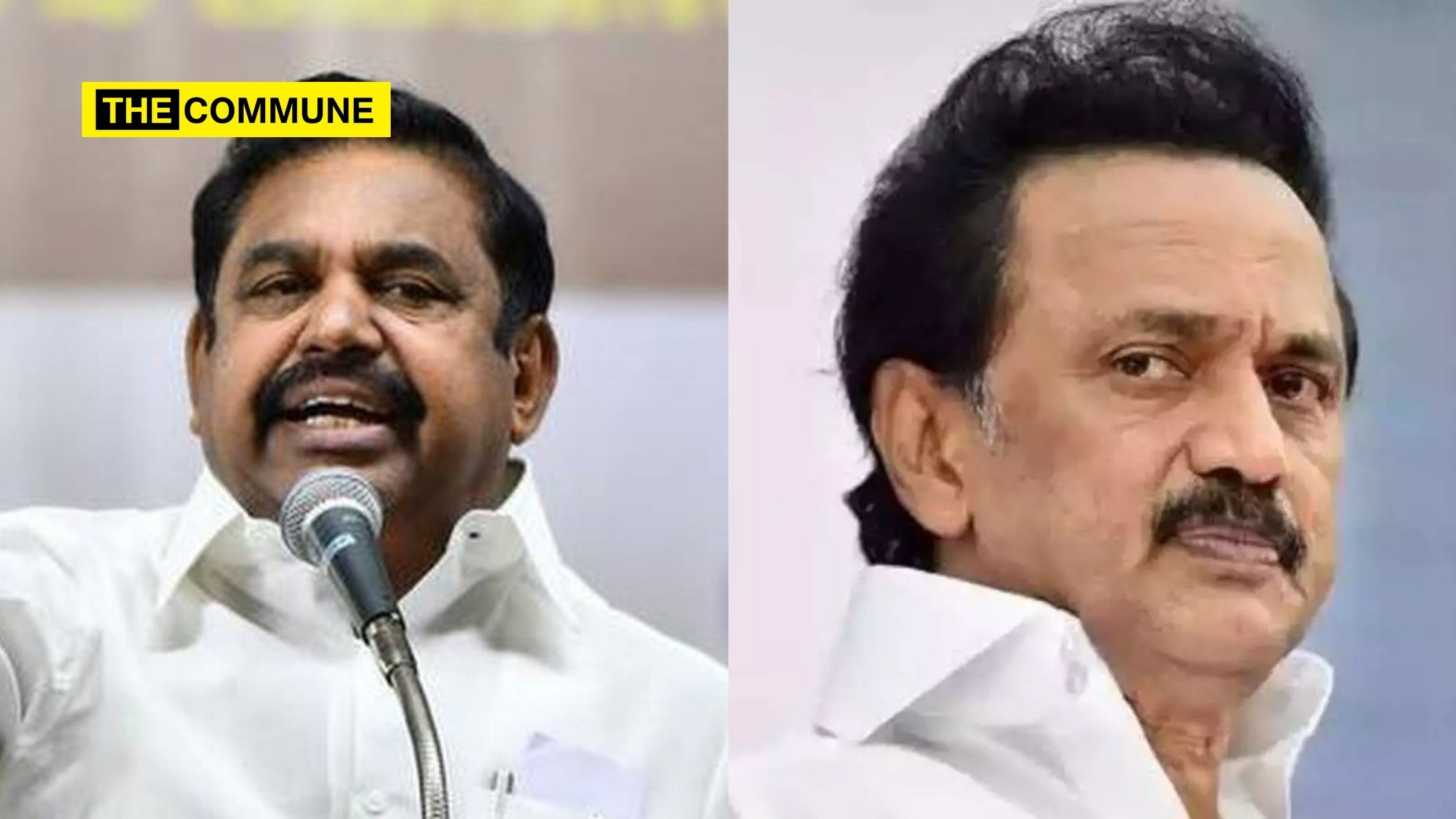

Congress May Ditch DMK And Join Hands With TVK For 2026: Reports
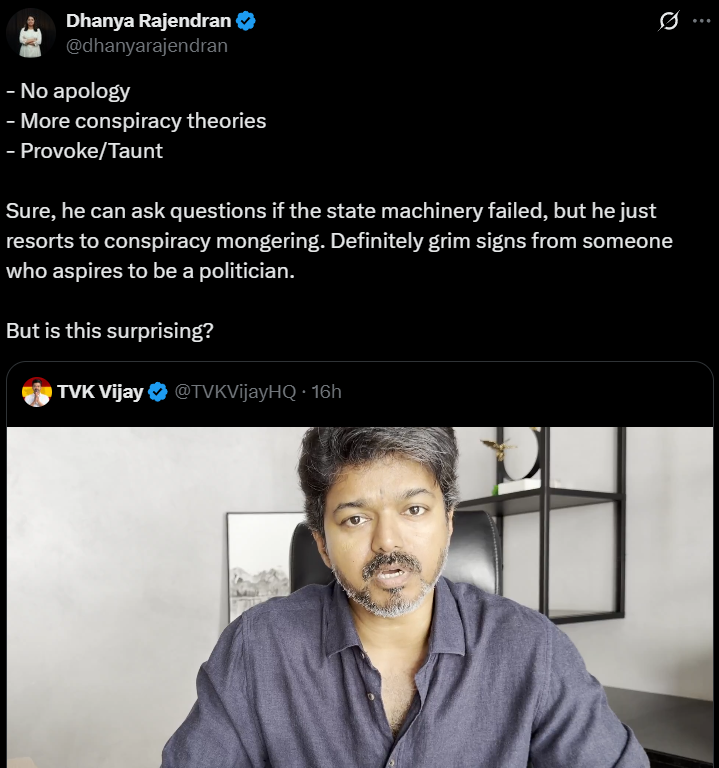
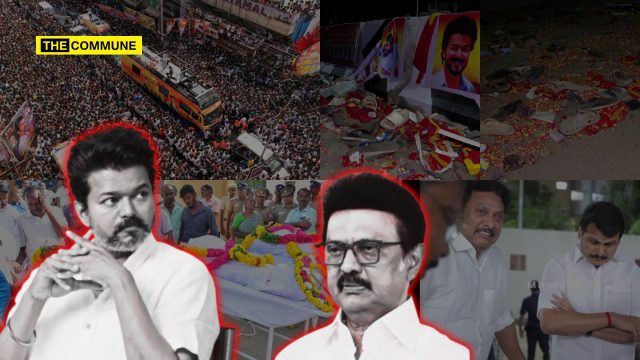
Speculation is mounting that the Indian National Congress may be considering a dramatic political realignment in Tamil Nadu, potentially abandoning its long-standing alliance with the Dravida Munnetra Kazhagam (DMK) in favor of a new partnership with actor-politician Vijay’s Tamilaga Vettri Kazhagam (TVK) for the 2026 state elections. This potential shift comes amid growing tensions between the Congress and DMK, with multiple Congress leaders publicly demanding a greater share of power and seats, while TVK positions itself as a viable alternative to established Dravidian parties.
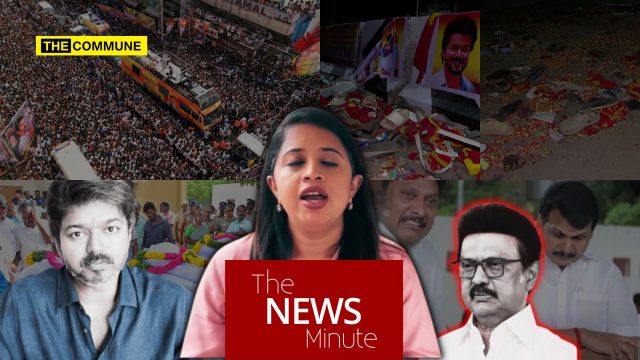
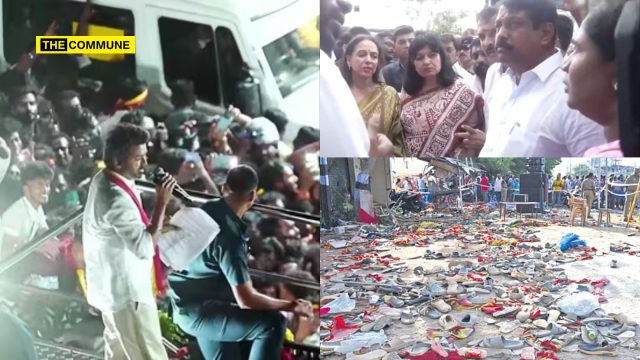
The political temperature in Tamil Nadu has risen significantly following the tragic Karur stampede at a TVK rally that claimed 41 lives, which unexpectedly opened new channels of communication between national opposition leader Rahul Gandhi and fledgling politician Vijay. As traditional alliances show signs of strain and new players emerge, Tamil Nadu’s political landscape appears poised for potentially significant transformation ahead of the crucial 2026 assembly elections.
Growing Strains in the DMK-Congress Alliance
The tensions between the Congress and DMK in Tamil Nadu have always been pretty visible. Former Tamil Nadu Congress Committee (TNCC) chief KS Alagiri has been vocal about Congress’s “legitimate right” to demand more Assembly seats and a substantial share in governance, arguing that the party’s significant vote bank warrants proportional representation.
The friction escalated when Congress’s Tamil Nadu in-charge Girish Chodankar reportedly made a bold “fifty-fifty demand” at a party meeting in Tirunelveli, seeking 117 Assembly seats out of Tamil Nadu’s 234 constituencies and pushing for a coalition government arrangement. This demand represents more than double the 25 seats Congress contested in the 2021 elections, signaling an unprecedented power grab within the alliance.
Congress Legislature Party Leader S Rajeshkumar further intensified the standoff by expressing doubts about DMK’s electoral prospects and demanding that Congress MLAs be given ministerial berths in any future government. “If the Congress has to grow in Tamil Nadu, we need to be a part of the government, so that we can make a difference in the lives of the people directly,” Rajeshkumar declared.
As regards the Karur stampede, Congress MP Chidambaram’s public criticism of the government’s handling of the stampede has been seen by political observers as particularly significant. “There is fault from all sides. Every party should rectify their fault in the upcoming events,” Chidambaram stated, effectively distancing Congress from the DMK government’s administrative lapses.
His son Congress MP Karti Chidambaram also laid the blame on the government machinery for the tragedy.
Internal party sentiment reflects frustration with being kept “at an arm’s length” by the DMK government, with some Congress functionaries noting the stark contrast with the accessibility enjoyed during former Chief Minister M. Karunanidhi’s tenure.
Historical Context of Seat-Sharing Tensions
The current tensions around seat-sharing arrangements are not entirely new but appear to be intensifying as elections approach.
In the 2024 Lok Sabha elections, the Congress was allocated only 10 seats (9 in Tamil Nadu and 1 in Puducherry) under the DMK alliance, the same number it contested in 2019.
Congress leaders have pointed to historical precedents, noting the party contested 48 seats in 2006, 63 in 2011, and 41 in 2016, making the current allocation of 25 seats in the 2021 Assembly elections seem comparatively limited.
The public sparring between allies has become increasingly visible, exemplified by the confrontation between Congress MP Jothimani and DMK leader V. Senthil Balaji over alleged defection engineering, with Jothimani warning that the Congress would “never accept such disrespect” in the name of coalition.
The Karur Stampede and Rahul Gandhi’s Phone Call – More Than Condolences?
The tragic stampede at a TVK event in Karur unexpectedly created an opening for political engagement between the Congress and TVK. In a notable development following the Karur tragedy, Congress leader Rahul Gandhi reached out to TVK chief Vijay. While the call to Stalin appeared routine, Gandhi’s direct conversation with Vijay has sparked intense speculation about deeper political consultations.
Sources within Congress circles suggest that the call went beyond mere condolences, with Gandhi reportedly discussing the broader political situation in Tamil Nadu and expressing concern about the administrative failures that led to the tragedy. The timing of this outreach, when Vijay was facing his first major political crisis, is being interpreted as a strategic move to build bridges with the TVK leadership.
Rahul Gandhi’s personal call to TVK chief Vijay to express condolences over the stampede casualties, while also speaking to CM Stalin about the same incident, has been interpreted by political observers as a significant gesture.
The timing of this communication is particularly notable given the existing strains in the DMK-Congress relationship and Congress’s simultaneous demands for a greater political share.
Strategic Calculations for Both Parties
A potential Congress-TVK alliance would offer strategic advantages to both parties.
For Congress, partnership with TVK could provide the opportunity for more substantial seat allocation and potentially greater influence in governance, addressing the party’s current grievances with the DMK arrangement. The fact that over 25,000 people gathered for his rally, more than double the permitted crowd, showcased his mass following, while the administrative failures highlighted the need for experienced political partners.
Congress leaders reportedly see this as an opportunity. Sources suggest that Congress could offer TVK the administrative expertise and national political connections that the fledgling party lacks, while TVK provides the mass base and electoral appeal that Congress desperately needs in Tamil Nadu
For TVK, an alliance with Congress could provide organizational support and access to a statewide network, potentially compensating for the party’s newcomer status in electoral politics.
AICC General Secretary KC Venugopal, who has been handling Tamil Nadu affairs, is reportedly among those advocating for exploring alternatives to the DMK alliance. Sources indicate that Venugopal believes the Congress-DMK relationship has reached a saturation point where further growth is impossible.
The speculation gained further traction when unverified social media reports claimed that “Congress finalises alliance with TVK, 62 seats offered” with “KC Venugopal guided by Rahul led the discussions”. While these reports remain unconfirmed, the timing coincides with increased political activity following the Karur tragedy.
Some analysts suggest that Congress may be using the potential TVK alliance as leverage in negotiations with DMK, with one noting “they will make noises like this to use it as a bargaining chip to get more seats, but they won’t leave”.
The Complex Road Ahead – Navigating Existing Alliances and Commitments
Any potential realignment would require careful navigation of existing political arrangements. The Congress-DMK alliance operates within the broader I.N.D.I bloc framework at the national level, complicating any outright separation in Tamil Nadu.
DMK has been the linchpin of opposition alliances in Tamil Nadu for decades, making a complete Congress departure a significant strategic shift with potential ramifications beyond state politics.
Timing and Strategic Considerations
With elections approaching, all parties face critical strategic decisions. For the Congress, the calculation involves balancing the desire for greater influence in Tamil Nadu against the potential risks of abandoning an established, successful alliance for an untested partnership.
For TVK, the decision involves whether maintaining its stance as an independent alternative outweighs the potential benefits of alliance with a national party.
The coming months will be crucial, with Congress leader Manickam Tagore noting that seat negotiations would typically take place in “January-February” ahead of the elections.
A Political Gambit in the Making
The Karur tragedy has irrevocably shifted the tectonic plates of Tamil Nadu politics. For the Congress, long stifled within the DMK alliance, the crisis presented a stark choice: remain a junior partner in a dwindling arrangement or gamble on a new force with palpable public momentum. The calculated phone call from Rahul Gandhi to Vijay was less a condolence and more a political signal, opening a backchannel that bypasses the DMK entirely.
While public commitments to the I.N.D.I. bloc persist, the underlying logic has fractured. The Congress’s vocal demands for a greater share of power are no longer just bargaining chips; they are the prerequisites for survival, and the DMK appears unwilling to meet them. TVK, meanwhile, offers untapped potential and the promise of a partnership where the Congress could wield real influence.
The established DMK-Congress alliance, once a constant of the state’s politics, is now a vessel cracking under pressure. The events in Karur exposed its structural weaknesses, creating an opening that both the Congress and TVK seem compelled to explore. Whether this realignment culminates in a formal pact or remains a powerful tool of negotiation, one truth is now inescapable: the road to 2026 no longer runs through a stable two-party alliance, but through the uncertain and opportunistic terrain shaped by tragedy and ambition. The old marriage is, if not over, then openly and profoundly broken.
Subscribe to our channels on Telegram, WhatsApp, and Instagram and get the best stories of the day delivered to you personally.