Home Blog Page 8

‘‘Hindu Is A Persian Insult, Hinduism Was Created by Brahmins To Enslave Us‘‘, Says Former Bombay High Court Judge Kolse Patil

‘‘'Hindu' Is A Persian Insult, Hinduism Was Created by Brahmins To Enslave Us‘‘, Says Former Bombay High Court Judge Kolse Patil

Retired Mumbai High Court judge Justice BG Kolse Patil triggered a major controversy on Sunday (7 November 2025) evening after making sharply critical remarks about Hinduism, Brahmins, and the Rashtriya Swayamsevak Sangh (RSS) at a Sufi saints’ conference in Basavakalyan, Bidar district. The event was organised by MLC Salim Ahmed and inaugurated by Karnataka Environment Minister Eshwar Khandre.

Addressing the gathering, Justice Patil claimed that Hinduism was not originally a religion, asserting that the term itself was of Persian origin and later shaped by Brahmins to consolidate power. He said Hinduism “was created by Brahmins to enslave people” and argued that the word “Hindu” carried a derogatory meaning.

He also alleged that the RSS was behind several communal riots in India, including the 1984 anti-Sikh riots, and said that many people were hesitant to criticise the organisation. According to him, the role of the RSS in such incidents had been obscured over time.

Expanding on his claims, Justice Patil said, “It not the Hindu religion, it is the Brahmin religion. Until 1900, and even before that, Brahmins themselves used to follow a different faith, that the term Hindu is an insult given by the Persians. We the people, do not understand the slur/insult. There was never a religion called Hinduism, there was only Brahmin religion. But Brahmins, using their intellect, enslaved us, divided us and made everyone lose their identity – all this to keep Hindus fragmented and weak. This is wrong, but who will understand this truth? All these so-called saints, masters, and Maulvis are part of the same system. Their job is to keep us divided. Better late but let us start. The poisonous people are so less, they are not even 1% of the entire population. So, if the 99% of us unite, how will we lose? Later, when you see all the riots, the masterminds and instigators of all riots are RSS people. Even the 1984 anti-Sikh riots was started by the RSS people. There was one leader, he called Indira Gandhi as Durga. It was the RSS people who started the riots there. Later, the Congress people went there. But they told the Sikhs that it was the Congress who killed the Sikhs. It is wrong. The first spark came from the RSS side.”

Justice Patil reiterated that neither the RSS nor Brahmins should be feared because they constituted a small fraction of the population. He urged religious figures and community leaders to speak openly about historical injustices.

The event, attended by several Sufi saints and community representatives, took place in Basavakalyan, a town known for its syncretic traditions.

Previous Statements By Retd Justice Patil

This is not the first time that formed judge Patil is letting his tongue loose on Hindus and the RSS.

In this video, he claims the RSS carried out 18 blasts! He says, “There are about 18 bomb blasts which have been committed either by the RSS or by institutions associated with the RSS. The accused involved are office-bearers at the district level or state level of the RSS, Sangh pracharaks. In all these cases, one Raghuvanshi, who was then ATS chief of Maharashtra, involved only Muslim boys in those cases and did not touch the Hindu people, the Hindu accused.​ It is only Karkare, who was a very upright officer and who performed a miracle, who found that the cases in which Muslim boys were involved were false. In fact, Colonel Purohit, Pragya Thakur Sharma and others, even one Asimanand — you are not bound to give a confession. Even thereafter, Asimanand confessed that he could not bear the torture that these Muslim boys were going through. Therefore, he gave a statement, and he said: “When Vajpayee or Advani do not dare to tell me anything, why should I give false evidence against these Muslim boys?” So, he gave evidence against all these accused, and that confession, though he was warned that he was not bound to give it, he still gave. Now they say that confession was taken under pressure.​ If you see the record of the confession, he was given an opportunity three times to rethink, and thereafter he gave the confession, saying that even Advani and Vajpayee cannot stop him, so why should a magistrate stop him. So they were involved, there is no doubt. But all criminals have come to power. You know that the Chief Justice of India said: “If an opportunity is given, I will hang Modi.”

In this video from 3 years ago, he claims he suffered in childhood because of the “caste system” and goes on to blame the Brahmins.

He says, “I was born in a hut. From there, my journey as a migrant began, we had two goats and a few hens, and that’s how we lived. I am an example, the son of a laborer. Since childhood, I have seen how Brahmins looked down upon us, how they treated us as inferior. I experienced all of this firsthand. I too worked as a laborer. For four years, I left school and did manual work. After those four years, when I returned to school, the other children were about 14 years old, while I was already 18. The Brahmin boys there — their fathers were educated and came from Udaipur — it was then that I realized that people like us were not even expected to study. From that time, I began to study and analyze Brahmanwad (Brahminism) — its structure and mentality.”

He goes on to criticise the RSS for all things sundry. He says, “I am talking about 1976. That was when I gave my first public speech at a sarvajanik sabha (public gathering). It was about RSS Mukt Bharat – an “RSS-free India.” I said then, and I continue to say now, that the poisonous ideology of the RSS is at the root of all our sufferings. Just as in every religion, there are maulvis in Islam, fathers and priests in Christianity — who hold their own followers tightly in their grip, this too is a toxic ideology. But RSS ideology is especially venomous. That’s why, since 1976, I have been warning about it. And today, it has been proven true.

You can see how the country has been ruined in the eight years of Modi’s rule. When Modi came to power in 2015 and was at the peak of his popularity, I organized a large public meeting in Pune, at Shaniwarwada, the stronghold of the RSS, to announce the RSS Mukt Bharat Abhiyan formally. We declared then that we would stand against the RSS and its ideology. Even at that time, as well as today, people across all castes and religions were so afraid that many did not even dare to attend the meeting. That was the level of fear. What inspired us? It was the poverty and humiliation we had seen since childhood. We were treated like dirt. Even if we stayed quiet at home, we were beaten. But when we learned their “computer language,” when we became their competitors, that threatened them.”

He goes on to say that Sant Tukaram whose abhangs are sung to this day, especially by Brahmins, was “murdered” and was “disguised” as a ‘samadhi’. He says, “Sadly, our people often prefer to live in an imaginary world – of heaven and hell. Even today, in places like Dehu, if we say that Sant Tukaram was murdered – that his disappearance wasn’t divine ‘samadhi’ but a killing – our own community members will attack us. Such is the power of mental conditioning and religious control. We have seen this with our own eyes and felt it in our lives. That is why we continue to work together every day — against the poisonous mentality present in every religion. We work for humanity. If people truly walked the path of truth, of compassion that saints and prophets talked about, the world would shake. But people do not want to do that. The biggest problem within Hinduism is caste. We are trapped in these divisions. To move forward, we must rise above this caste-based discrimination. Only then can we progress as true human beings.”

In July 2025, when the 2008 Malegaon blast case verdict came out acquitting the accused, he called it “death of justice” and “a blow to India’s democracy and secularism”. Reacting minutes after the judgment was delivered, he said he was “shocked” by the outcome.

Speaking to The Indian Express, Kolse Patil said, “I found it extremely difficult to believe that six people died in the Malegaon bomb blast, 100 were injured, and no one has been found guilty in the last 17 years. If no one is guilty, did the blast take place on its own? The ownership of the motorcycle which was used for the blast was proved. There were four meetings between the accused before the blasts. One meeting was held in Bhopal, two in Indore and one in Ujjain. They had recorded the meetings. When they were asked by ATS as to why the meetings were recorded, they said it was done to ensure that no one who attended it betrays them.”

The retired judge said the Anti-Terrorism Squad (ATS), then led by Hemant Karkare, had conducted a detailed investigation and filed the chargesheet after Karkare’s death. According to him, the chargesheet itself laid out the gravity of the alleged conspiracy and the material gathered by investigators. He noted that the ATS had recovered several audio clips of meetings between the accused, explaining that only a portion could be transcribed and therefore the laptop seized from the accused was submitted to the court along with the chargesheet.

He pointed out that the ATS had stated in the chargesheet that “it was a big conspiracy to topple the central government, deny the existence of the Indian Constitution and bring in Manusmriti”.

Kolse Patil further added, “It was also mentioned in the chargesheet that the accused had tried to take the help of Israel and Nepal.”

He said the acquittals would be understandable only if the prosecution had failed to place material evidence before the court. “But if adequate evidence has been produced by the prosecution and still the accused have been acquitted, then I will call it death of justice and a blow to India’s democracy and secularism,” he said.

Subscribe to our channels on WhatsAppTelegram, Instagram and YouTube to get the best stories of the day delivered to you personally.

HR&CE Can Intervene In Temple Mismanagement, Cannot Touch Rituals, Rules Madras High Court

thakkolam temple madras high court restoration hr&ce audit temple

The Madras High Court has held that the Hindu Religious and Charitable Endowment (HR&CE) Department is empowered to inquire into allegations of maladministration in a temple when public donations are involved, even if the temple has not been formally notified as a public religious institution.

A division bench of Justice SM Subramaniam and Justice P Dhanabal delivered the ruling while hearing a writ appeal connected to Arulmigu Vembiamman Thirukovil. The matter arose from a plea filed by the hereditary trustee seeking a direction to the District Collector to consider his representation and restrain private parties, now the appellants, from interfering in the temple’s administration.

While disposing of that petition earlier, the single judge had instructed the appellants not to interfere with the temple’s administration and had also directed the HR&CE Department to examine issues raised and take appropriate action after hearing all sides. The appellants challenged the maintainability of the original writ petition and argued that the single judge travelled beyond the scope of the prayer by issuing directions to the department.

In its judgment, the division bench held that the nature of the temple and its funding placed it within the State’s regulatory ambit. It observed, “When public contributions/donations have been accepted, temple assumes the character of a public institution. If public contributions are involved, State can intervene in case of maladministration or misappropriation of funds, following the procedure as outlined in the Act and Rules, and take necessary actions. Right to administer the temple would not include maladministration. Therefore, power of State is not confined only in respect of notified public religious institutions, since the definition of temple would include temple used as a place of public religious worship and dedicated to, and Joint Commissioner and Deputy Commissioner is empowered to decide issues relating to characteristic of a religious institution.”

The bench noted that the temple stood on Grama Natham land, belonged historically to the villagers, and that the entire village community worshipped the deity and contributed to daily poojas, festivals, and temple functions. This collective participation, the court said, affirmed the temple’s public character.

At the same time, the bench drew a clear line between administrative oversight and religious autonomy. It clarified that while the HR&CE Department can proceed against illegalities, it cannot meddle with rituals or customs, “Therefore, in the event of maladministration, illegality or irregularity in dealing with the properties of the temple, the HR & CE department is bound to step in and initiate all appropriate actions. However, department has no power to interfere with the religious practices or performance of poojas in the temple, which is to be done as per the custom and practice prevailing amongst the villagers and adopted in the temple.”

Responding to the argument that the writ court exceeded its scope, the bench held that Article 226 gives High Courts wide discretion to mould relief depending on circumstances.

The judges observed that the power of judicial review “does not confine itself to the relief sought for” and that courts are empowered to expand the scope of the petition when necessary to address the underlying issues.

Finding no reason to interfere with the earlier order, the bench dismissed the appeal and upheld the directions issued by the single judge, thereby confirming HR&CE’s authority to inquire into maladministration while protecting religious practices from State interference.

Source: LiveLaw

Subscribe to our channels on WhatsAppTelegram, Instagram and YouTube to get the best stories of the day delivered to you personally.

Grounded Flights, Heightened Anxiety: The Psychological Toll Of India’s Airline Disruptions

Grounded Flights, Heightened Anxiety: The Psychological Toll Of India’s Airline Disruptions

The recent wave of airline cancellations in India, particularly involving a private airline, has left thousands of passengers stranded, frustrated, and emotionally drained. While operational challenges and regulatory compliance were the root causes, the psychological toll on passengers is an equally critical issue, one that often goes unnoticed.

Emotional Fallout

Air travel is inherently stressful. It involves planning, financial investment, and emotional anticipation. When cancellations occur suddenly, passengers experience a loss of control, which is a primary trigger for anxiety.

Many reported symptoms such as:

  • Acute stress including Racing thoughts, irritability, and physical tension,
  • Anxiety attacks due fear of missing crucial events – job interviews, weddings, medical appointments,
  • Depressive feelings like helplessness and hopelessness during prolonged delays,
  • Anger and aggression leading to escalating conflicts at airports due to poor communication.

These reactions are not mere inconveniences; they can have lasting effects. For frequent travelers, repeated disruptions may lead to travel-related PTSD (Post Traumatic Stress Disorder), making future journeys emotionally taxing.

Psychologically, uncertainty is one of the hardest states for the human mind to endure. When passengers receive inconsistent or no information, their stress amplifies. The crowded, chaotic environment of airports during such crises further compounds the problem, creating a perfect storm for emotional breakdowns.

Recommendations for Airlines

As a psychologist, I believe airlines can, and should, play a proactive role in mitigating mental health risks during disruptions. Here’s how:

There should be a transparent communication by providing real-time updates through SMS, apps, and public announcements. Use empathetic language – acknowledge inconvenience and offer reassurance.

As a part of emotional support systems, deploy trained staff in psychological first aid at airports. Create quiet zones with comfortable seating, hydration, and Wi-Fi for stranded passengers. Offer mental health helplines for those experiencing acute distress.

Key aspect is having well trained staffs in terms of equipping frontline employees with stress management and de-escalation skills. Encouraging active listening and empathy in passenger interactions.

Airlines must work on methodology as compensation with care – beyond refunds, provide wellness vouchers for food, hotel stays, or lounge access. Communicate these benefits clearly to reduce feelings of helplessness.

As a long-term strategy they should collaborate with mental health professionals to design crisis response protocols. Conduct post-crisis surveys to understand psychological impact and improve systems.

Closing Thoughts

Airlines often focus on operational recovery during disruptions, but mental health recovery is equally vital. A passenger who feels cared for, even in crisis, is more likely to remain loyal. In an era where customer experience defines brand reputation, integrating psychological well-being into crisis management is not just compassionate, it’s strategic.

Dr K Janakiraman is a psychologist & behavioral scientist.

Subscribe to our channels on WhatsApp, Telegram, Instagram and YouTube to get the best stories of the day delivered to you personally.

Dharmapuri: TVK Cadre Bites Police Constable At Protest Against Liquor Shop, Arrested

A protest by the Tamilaga Vettri Kazhagam (TVK) over an alleged illegal liquor bar inside a recreation centre in Dharmapuri district escalated into a tense confrontation on Sunday, 7 December 2025, after party cadres attempted to force their way into the premises.

TVK functionary Siva said the party had been seeking permission for the demonstration for 15 days. He alleged that the recreation centre was being misused and claimed that illegal activities were taking place in the area, particularly with a TASMAC outlet located nearby. He also accused police of not responding to the party’s enquiries about those involved, stating that the protest was intended to push for a permanent solution.

The situation escalated when protesters tried to storm the property, prompting police to block their entry. Visuals from the spot showed a heated standoff, with cadres shouting slogans and attempting to push past barricades.

During the commotion, one TVK cadre was caught on video attempting to bite a police officer’s hand. The officer withdrew his arm before injury could occur, but the footage quickly went viral.

Police said on Monday, 8 December 2025, that the cadre, identified as Gemini, was arrested for allegedly grabbing the officer’s hand and biting him during the 7 December 2025 protest near Palacode against the recently opened liquor shop. Four other TVK members were also arrested for defying police orders during the confrontation, officials added.

Source: The New Indian Express

Subscribe to our channels on WhatsAppTelegram, Instagram and YouTube to get the best stories of the day delivered to you personally.
Rabid India/Hindu-Hater, Casteist Genocide Monger And Dravidian Model Propagandist Nilakantan Aka Puram Calls Mahabharata A “Shitty Epic”

Congress MP Shashi Tharoor on Monday supported Prime Minister Narendra Modi’s gesture of gifting a Russian-language Bhagavad Gita to President Vladimir Putin, calling it an appropriate cultural exchange rooted in India’s civilisational heritage. Tharoor also backed Union Minister H.D. Kumaraswamy’s remarks on introducing India’s epics into school education, saying that studying the Mahabharata, Ramayana and the Gita enriches a child’s understanding of Indian civilisation.

“Speaking in Bengaluru, Tharoor framed the issue as one of cultural and educational enrichment, not religious imposition. He recounted his own literary engagement with the epics, stating, “When I published The Great Indian Novel in 1989, which was a satirical retelling of the Mahabharata, I already made the point that because we’re studying in English medium doesn’t mean we should not know our epics.”

Addressing the specific controversies, he clarified, “I think there’s no problem in reading, in our school days the Mahabharata, the Ramayana and so on, and the Gita is very much a part of our ancient civilisation and history.”

On the PM’s gift to Putin, Tharoor said, “To give it in Russian means conveying to another culture some of the essential lessons that we have learned… It’s not an attempt to convert Mr Putin to Hinduism. It’s a way of just showing him something that he can understand in his language. It’s a fine gesture because it reflects what we are.”

However, while Tharoor openly defended the value of the Gita and India’s epics, one of DMK’s most-amplified commentators provoked widespread anger on social media.

R.S. Nilakantan, better known by his online alias Puram, responded to the same development by posting: “The Mahabharata is a shitty epic. The Russians are probably laughing at its lack of sophistication.”

His remark has reignited debate about the ideological ecosystem surrounding the DMK, where several figures have routinely mocked Hindu scriptures and symbols despite holding influence in political discourse and state-aligned media spaces.

Who Is Nilakantan RS (‘Puram’)?

Nilakantan RS is a polarizing figure whose rhetoric frequently targets Indian national symbols, communities, and leadership. His commentary includes:

Caste Hatred: In 2015, he called for violence against upper castes, tweeting, “If everyone picked up a gun and shot the nearest upper caste person, they’d be doing society a favor.”

Anti-National Sentiments: He has advocated for India’s military defeat by China to cure “ugly jingoism” and made derogatory remarks about the Indian Army.

Extreme Rhetoric: His posts have included calls for the assassination of Prime Minister Narendra Modi and the bombing of North Indians.

Misogyny: In a previous online avatar as ‘Nilu’, he was associated with deeply misogynistic and perverse blog posts.

Despite this record, Nilakantan has been courted by sections of the political and media establishment. He has written for outlets like The Wire and The Caravan, been hosted on podcasts by The News Minute’s Dhanya Rajendran, and was publicly endorsed by DMK leader and former Tamil Nadu Finance Minister PTR Palanivel Thiagarajan, who promoted his book South Vs North: India’s Great Divide.

Subscribe to our channels on WhatsAppTelegram, Instagram and YouTube to get the best stories of the day delivered to you personally.
‘Pathaan Spreads Love, Dhurandhar Is A Troll’: How Leftist Rag The Wire Twists Itself To Shield Terror State Pakistan

‘Pathaan Spreads Love, Dhurandhar Is A Troll’ - How Leftist Rag The Wire Twists Itself To Shield Pakistan And Mock 2611 Truths

Leftist rag The Wire has crossed all levels of hypocrisy with its latest article – a review of Aditya Dhar’s Dhurandhar, that seems to have left the leftists/Congress supporters sleepless.

The entire leftist ecosystem is breaking bangles over the success and the truthful nature of Dhurandhar. The Wire, especially, has gone overboard. Let us take a look at its review of the latest release and Shah Rukh Khan starrer Pathaan, allegedly a spy-thriller.

Pathaan: When Fiction is Framed as Progressive Politics

On 12 February 2023, The Wire published an article by Shahrukh Alam titled “Does Love Conquer All? Pathaan, Bharat Jodo Yatra and Representation.”

The review framed Pathaan, in which Shah Rukh Khan’s character is pointedly described as “born without a religion”, as a work of “affective politics” that promotes “love” and inclusive nationalism. Writer Shahrukh Alam connected the film’s messaging to Rahul Gandhi’s Bharat Jodo Yatra, arguing that both operate in “the realm of the affective” and quietly project “solidarity.” Critically, the review sidestepped the film’s highly fictionalized, even naïve, portrayal of cross-border espionage, instead celebrating its “clever subversion” and calling it a “plea to all good people to not withdraw from civil spaces.”

Dhurandhar: When Fact is Framed as Propaganda

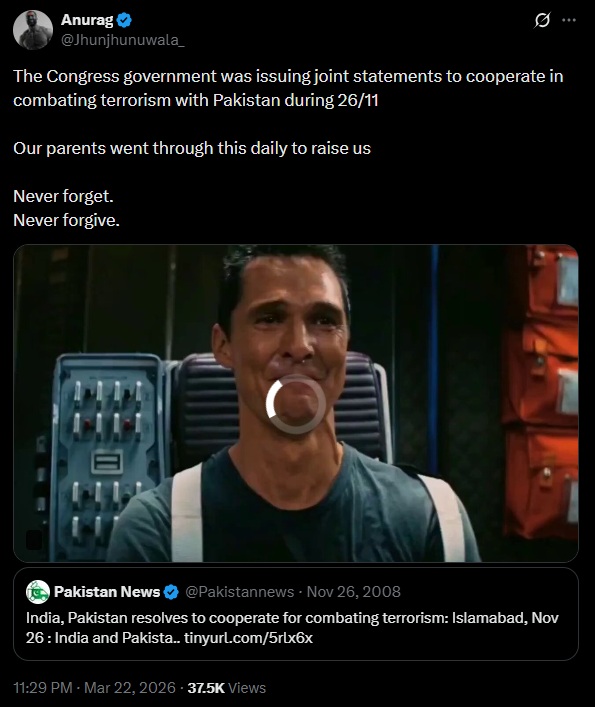
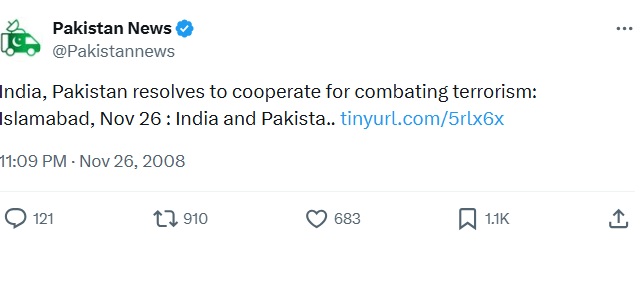
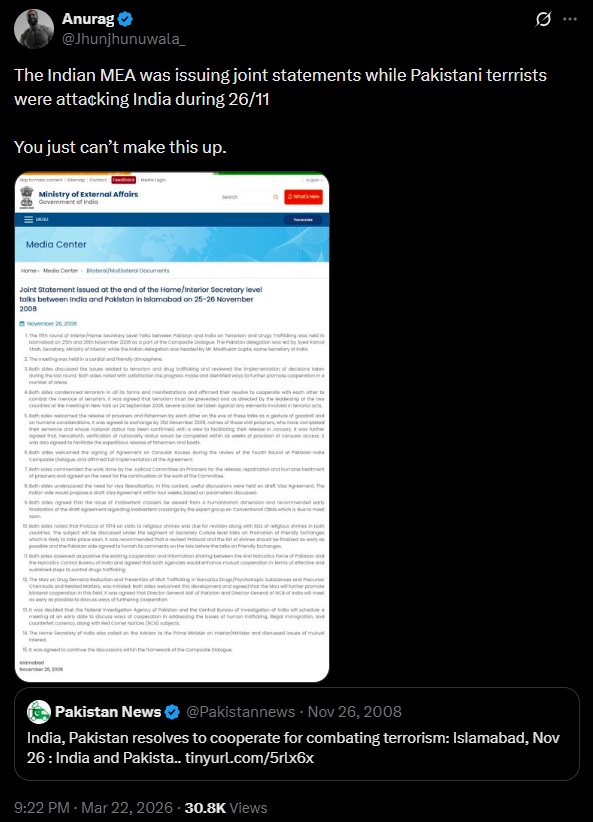
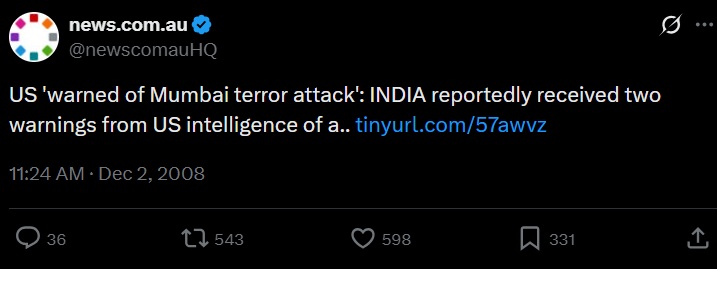
Contrast this with The Wire’s treatment of the recently announced film Dhurandhar, directed by Aditya Dhar (Uri: The Surgical Strike). In a review published just soon after the film was released, author Tatsam Mukherjee dismisses the project with the headline: “‘Dhurandhar’: Aditya Dhar’s Saga Is as Subtle as a Troll.” The review accuses the film of “rage-bait,” “venom,” and “strategically spilled… selective truths.” The author takes particular issue with the film’s use of actual 26/11 attack transcripts, where terrorists and their handlers discuss killing kaafirs, calling the inclusion “insidiously crafty” and meant to “incite anger.” The review further criticizes the film for showing “Pakistani characters mock their Indian counterparts” and for depicting a “butcher aesthetic” in Karachi. While Pathaan’s romanticized ISI agent was seen as a bridge for love, Dhurandhar’s incorporation of real terrorist evidence is framed as “hyper-nationalistic” and “propaganda.”

The core difference that appears to trigger The Wire’s shift in tone is the source material. Critics ask: Why is a film that uses fictionalized romance to bridge the India-Pakistan divide praised for its “politics of love,” while a film that uses actual evidence of Pakistani state-sponsored terrorism against Indian civilians is immediately labeled a “troll” and “hyper-nationalistic”?

Image Source: Anshul Saxena X handle
A Clear Editorial Double Standard

This is not merely a difference in cinematic taste. It is a revealing case of ideological gatekeeping. The Wire’s criticism pivots not on filmmaking craft but on political alignment:

When a film erases history and sells fantasy (Pathaan), it is “clever,” “subversive,” and part of a “politics of love.”

When a film engages with documented history and national trauma (Dhurandhar), it is a “troll,” “cynical,” and “mean-spirited.”

The outlet praised Pathaan for avoiding “overt progressive politics” while simultaneously expecting “good politics” from it – a contradiction in terms. Yet, Dhurandhar is condemned precisely for having a clear political perspective, one that dares to foreground Pakistani state sponsorship of terrorism rather than gloss over it with romance.

The Underlying Bias: Which Narratives Are Legitimate?

The Wire’s reviews make its editorial priorities clear: narratives that downplay Pakistani terrorism and emphasize abstract “love” are worthy of intellectualization and linkage to opposition political campaigns. Narratives that foreground the violent reality of cross-border jihad, using actual evidence, are delegitimized as jingoistic, “right-wing propaganda,” and unworthy of serious engagement beyond contempt.

For The Wire, the only “correct” representation of India-Pakistan relations is one where India’s pain is downplayed, its enemies are romanticized, and its legitimate security concerns are dismissed as bigotry. Any departure from this script is met not with critique, but with contempt. This is a betrayal of journalistic integrity in service of a political project. Any assertive, evidence-based recounting of threats to national security is dismissed not on factual grounds, but as “trolling.” For countless Indians who lived through the 26/11 attacks, the “chilling words” in Dhurandhar are not creative embellishment, they are historical fact.

Subscribe to our channels on WhatsAppTelegram, Instagram and YouTube to get the best stories of the day delivered to you personally.

Dravidian Model: Funeral Procession Of Convicted Terrorist Is Allowed, Lighting Karthigai Deepam At Thirupparankundram Deepathoon Despite Court Order Is Blocked

The DMK government has refused to permit devout Hindus from lighting the Karthigai Deepam at the Deepathoon on Thirupparankundram Hill near Madurai.

The DMK government has violated the Madras High Court order by preventing Hindus from lighting the lamp at the Thirupparankundram Hill’s traditional spot.

However, this very DMK government had allowed Islamists to carry out a funeral procession of a convicted terrorist who masterminded the 1998 Coimbatore blast that killed 58 people.

Deepam Blocked Despite Court Order

A Madras High Court division bench had permitted the Karthigai Deepam to be lit at the Deepathoon, a stone formation documented in earlier government publications and historically associated with Deepam lighting. The bench explicitly dismissed the State’s claim that allowing the lamp could trigger communal tension, holding that lawful religious practice cannot be restricted on vague apprehensions.

However, on the day of the festival, police erected barricades, issued last-minute restrictions, and prevented devotees including the petitioners who secured the order from reaching the spot. HR&CE officials argued in court that the pillar was merely a “survey stone,” contradicting archival descriptions from the department itself.

The government moved an urgent appeal but continued to enforce restrictions even after the bench’s directive. This resulted in the Deepam remaining unlit at the sanctioned location.

Despite a second order asking for the Karthigai Deepam to be lit the next evening, the government refused to permit devotees on to the hill.

Contrast With Funeral Of Terror Bomb Blast Convict

SA Basha, is a name synonymous with terrorism and fear in Tamil Nadu during the 1980s and 1990s.

Following the murderous attack on former BJP National President Jana Krishnamurthi and Tirukovilur Sundaram, Syed Ahmad Basha tried to assassinate Ramagopalan at the Madurai Railway Station in 1987. He was attacked with a billhook that cut off a portion of his skull.

The Coimbatore serial bomb blasts unfolded across 11 different locations within a 12-kilometer radius. The intended target, L.K. Advani, narrowly escaped the tragedy due to a delayed flight. Many of the survivors continue to grapple with the long-lasting effects of the shrapnel and other injuries caused by the devastating explosions.

SA Basha, openly threatened to kill the then Gujarat Chief Minister Narendra Modi if he visited Coimbatore in July 2003. This threat was made by Basha and eight others while speaking to journalists in the Coimbatore court premises after their conviction and life imprisonment in a case related to the murder of a Hindu Munnani leader.

When the convicted terrorist died, Tamil Nadu witnessed an entirely different administrative posture, After his death in prison, his body was brought to Coimbatore, where large crowds, long processions and coordinated mobilisation by Islamist organisations were seen.

Police presence focused on traffic and crowd management. No restrictions were placed on the scale of the gathering, and the State issued no public advisory discouraging the large procession for a convicted terrorist.

DMK critics now argue that the State adopted a lenient approach to a mass mobilisation for a terror convict while taking a prohibitive approach toward a court-permitted Hindu festival practice – that would not have harmed anyone.

Subscribe to our channels on WhatsAppTelegram, Instagram and YouTube to get the best stories of the day delivered to you personally.
Class 12 Student Dies After Assault By Schoolmates In Dravidian Model Tamil Nadu; 15 Juniors Detained

Thanjavur: Class 12 Student Dies After Assault By Schoolmates; 15 Juniors Detained

A Class 12 student of Arignar Anna Model Higher Secondary School near Thanjavur died on 7 December 2025 after suffering severe head injuries in an alleged assault by a group of Class 11 students in Pattiswaram. Police have detained 15 students in connection with the incident and lodged them at the Juvenile Observation Home in Thanjavur.

According to police, the attack took place on 4 December 2025 at Therodum Keelvidhi (East Car Street), close to the Durga Maa shrine. The victim was reportedly confronted by a group of juniors while walking with friends. The altercation escalated, and he was allegedly beaten with wooden clubs, leaving him critically injured.

The confrontation is believed to be an extension of a quarrel that began on 3 December 2025 during the school lunch break and traces back to tensions between the same groups three months earlier. After the attack, the assailants fled as the victim collapsed unconscious.

Classmates first took the injured student to the Pattiswaram Primary Health Centre before he was shifted to a private hospital in Thanjavur. Doctors declared him “brain dead” on 5 December 2025. Despite intensive care at Thanjavur Medical College Hospital, he died around 2:30 am on 7 December 2025.

Police said the initial FIR registered under attempt-to-murder provisions will be altered to murder following completion of the post-mortem.

Following a complaint from the boy’s parents, Kumbakonam Taluk Police detained 15 Class 11 students allegedly involved in the assault. They were produced before juvenile authorities and placed in the observation home on 5 December 2025.

Additional police security has been deployed around the victim’s residence, the school, and nearby localities to prevent any escalation.

Officials confirmed that a similar scuffle had occurred between Class 11 and 12 students in September 2025, though the matter was resolved with parental intervention at the time.

Rising Concerns Over Campus Violence

The government school has nearly 1,000 students, and the incident has renewed concerns about student safety, supervision, and conflict management in educational institutions.

This case comes amid a series of violent incidents involving students across Tamil Nadu in recent months:

In November 2025, a Class 7 student at a Social Justice Hostel in Ramanathapuram was assaulted by four seniors.

In March, a Class 11 Dalit boy in Thoothukudi had three fingers severed in an attack allegedly linked to caste tensions after a kabaddi match.

Several cases involving students carrying weapons and physical assaults, both among peers and involving teachers, have been reported from schools and colleges.

Observers note that increasing aggression among adolescents, peer conflicts escalating into violence, and exposure to violent content in media may be contributing factors.

Source: Organiser

Subscribe to our channels on WhatsAppTelegram, Instagram and YouTube to get the best stories of the day delivered to you personally.
CPI(M) MP John Brittas Wants Lower Age Of Consent While Admitting Children Don’t Recognise Abuse – Logic Collapses In Parliament

CPI(M) MP John Brittas Wants Lower Age Of Consent While Admitting Children Don’t Recognise Abuse - Logic Collapses In Parliament

During a debate on amendments to the POCSO Act, CPI(M) Rajya Sabha MP John Brittas argued that the age of consent should be revisited and possibly lowered from 18 to 16, citing court observations about consensual adolescent relationships. He simultaneously stressed the need for children to receive early awareness about sexual abuse.

Brittas said that courts, including the Supreme Court, had faced difficulties when dealing with cases involving teenage boys and girls, remarking: “The age of consent under POCSO which is at present 18 years poses difficult questions… The MP High Court said the age should be reduced to 16.”

He argued that children and parents should be given structured awareness through schools, saying, “Proper awareness should be imparted… Many children do not know whether it is abuse or not.”

Brittas’ Speech Contradicts Himself

However, his own speech revealed a contradiction that has long surrounded the age-of-consent debate – If the core problem is that “children don’t know what abuse is,” then lowering the age at which the law recognises them as able to “consent” does not solve that problem – it deepens it.

POCSO is built on the premise that minors cannot meaningfully consent because they often cannot distinguish affection, pressure, fear or manipulation from consent. Brittas himself described how 70–80% of children remain silent out of fear, how abuse is often not recognised until adulthood, and how many victims are unable to articulate what has happened to them.

These descriptions directly underline the legal rationale for keeping the age of consent at 18: children who do not recognise abuse cannot simultaneously be treated as capable of informed consent.

Brittas also repeatedly emphasised that children are unaware of abuse, do not understand boundaries, cannot articulate violations, remain silent due to fear, and realise the nature of abuse only much later in life.

These points highlight a gap in awareness and education – not a gap in the legal age of consent.

Legally and logically, awareness is provided through curriculum and schooling; consent is a legal safeguard. One does not require altering the other. The law presumes minors need protection precisely because of the vulnerabilities Brittas described in detail.

POCSO’s current structure, upheld across multiple judgments treats the age of consent as a protective threshold, not an educational tool. Lowering it does not create awareness; it simply narrows the ambit of protection.

Brittas ended by urging a “victim-centric” reform of the law. But his argument raised its own unresolved question: If children need more education to recognise abuse, how does reducing their legal protection help them recognise it earlier?

Subscribe to our channels on WhatsAppTelegram, Instagram and YouTube to get the best stories of the day delivered to you personally.

Andhra Govt Signs MoU With Google While DMK Govt Signs MoU With Junior Kuppanna

Andhra Govt Signs MoU With Google While DMK Govt Signs MoU With Junior Kuppanna

Andhra Pradesh and Tamil Nadu are both signing MoUs and talking about “investment” and “jobs” – but the scale, sector, and strategic vision could not be more different. One government is tying up with Google to build a multi‑billion‑dollar AI and data infrastructure hub; the other is proudly advertising an MoU with a biryani chain as if it were an economic game‑changer.

What Andhra Is Doing With Google

In October 2025, the Andhra Pradesh government signed a landmark MoU with Google in New Delhi for a 1 GW hyperscale AI‑driven data centre in Visakhapatnam. The investment figure being talked about is around ₹87,000–88,000 crore (roughly 10–15 billion USD) over five years, making it one of Google’s largest projects in Asia and its biggest in India.

This single MoU is not just another ribbon‑cutting:

It anchors an “AI City” vision in Vizag, backed by subsea cable connectivity linking India to multiple countries and strengthening digital resilience.​

It is projected to create tens of thousands to nearly 1.8 lakh direct and indirect jobs, while embedding AI skilling programmes for youth in the state.​

Whatever one’s politics, this is strategic: it bets on data, cloud, AI, digital infrastructure and high‑skill employment – sectors that drive long‑term competitiveness, tax revenue and ecosystem effects.

What Tamil Nadu Is Doing With Junior Kuppanna

Around the same time, Tamil Nadu’s official handles and allied promotional pages proudly highlighted an MoU with Junior Kuppanna Kitchens – a well‑known regional restaurant brand – for a ₹100 crore investment and about 300 jobs. On its own terms, this is a perfectly fine, mid‑sized F&B expansion: food processing, industrial kitchens, some export potential, and employment in the services sector.​

The issue is not that the state supports an F&B player; it is that the government’s propaganda machine projects this as a flagship “big push” comparable to serious industrial or technology investments. When you juxtapose a ₹100 crore MoU creating 300 jobs with a neighbour announcing a ₹87,000+ crore AI data hub creating thousands upon thousands of skilled jobs, the contrast in ambition is glaring.

Similar MoUs With “Homegrown” Businesses

We saw this at the “TN Rising” / Coimbatore F&B event, the state announced MoUs with Sri Krishna Sweets, Annapoorna, and Hatsun Agro Products, described as iconic Tamil Nadu brands.​

Indicative commitments reported:

  • Sri Krishna Sweets – about ₹100 crore for an export‑oriented sweets unit.
  • Annapoorna – about ₹300 crore for a centralised / industrial kitchen network.
  • Hatsun – about ₹860 crore to expand dairy processing and allied facilities.​

Aim: build export‑ready industrial kitchens, modern processing units, and R&D so these brands can be positioned like “Tamil Nadu’s answer to MTR/Haldiram’s”.​

The same cluster of announcements mentions E Star Foods and Podaran Foods signing MoUs for new or expanded manufacturing facilities in Tamil Nadu, again framed as taking regional packaged‑food brands to national and export markets.​

How the government frames this

Industries officials and social‑media campaigns frame these MoUs as a “big boost” to Tamil Nadu’s food & beverage sector, with industrial kitchens, export units and modernisation of traditional brands. and that it is helping local brands to be nurtured alongside large external investors, with Coimbatore and other cities positioned as hubs for scaling such companies.​

In substance, these MoUs are modest to mid‑sized (hundreds of crores, hundreds to low thousands of jobs) compared to mega industrial MoUs signed at GIM 2024 (EV, steel, electronics, green energy etc.). and are concentrated in F&B and FMCG rather than high‑tech, but do involve some upstream manufacturing, export orientation and brand‑building.

Scale, Vision And The Message To Investors

MoUs are not everything – many never fully materialise – but they reveal each government’s pitch to the world. Andhra Pradesh is positioning itself as a core node in India’s AI and cloud strategy:

Data centre + subsea cable + clean energy + global partners (Google, AdaniConneX, Airtel) signal confidence to other tech and infra investors.​

The presence of Union ministers and top Google leadership at the signing underlines that this is integrated into national‑level digital and AI missions.​​

Tamil Nadu, by contrast, already has a strong industrial base (automobiles, electronics, textiles, MSMEs), but the state’s recent publicised MoUs in this context are dominated by relatively modest F&B and retail plays like Junior Kuppanna or an Annapoorna & Sri Krishna Sweets. That sends a very different message: the government is more comfortable celebrating politically connected, culturally resonant brands than aggressively chasing frontier‑technology anchors.​

Opportunity Cost For Tamil Nadu’s Youth

For a state with lakhs of engineering graduates, IT workers and a significant diaspora in tech, this signalling matters. Andhra’s Google deal explicitly references AI skilling, startup ecosystems, digital transformation of governance, and allied investments from big industry. These are exactly the spaces where high‑end jobs, innovation and exports will grow over the next decade.​

Tamil Nadu’s MoU with Junior Kuppanna, even if genuine and useful within F&B, offers:

  • Mostly low‑wage, low‑skill roles in kitchens, outlets and logistics.
  • Limited technology transfer or ecosystem spill‑overs beyond food processing and branding.​

Again, the comparison is not to trash a restaurant chain; it is to ask why a government that once boasted of attracting global auto, IT and electronics majors, now chooses to highlight a biryani MoU while another state showcases a Google AI data city.

The Political Optics

There is also a deeper political contrast. In Andhra, the Google MoU is being used to project the state as reform‑oriented, investor‑friendly and future‑facing – whatever the internal debates on land, subsidies or transparency. In Tamil Nadu, the Junior Kuppanna MoU fits into a pattern where the ruling establishment is seen as increasingly focused on symbolism, friendly business groups, and social‑engineering narratives, while being relatively muted on big‑ticket tech or manufacturing anchors.​

Critics are therefore not wrong to pose the question in exactly this sharp way: when one government is signing an MoU with Google to build India’s largest AI data hub, and another is celebrating an MoU with a biryani franchise, what does that tell us about comparative priorities, seriousness, and the kind of future each state is building for its youth?

Subscribe to our channels on WhatsAppTelegram, Instagram and YouTube to get the best stories of the day delivered to you personally.