Home Blog Page 761

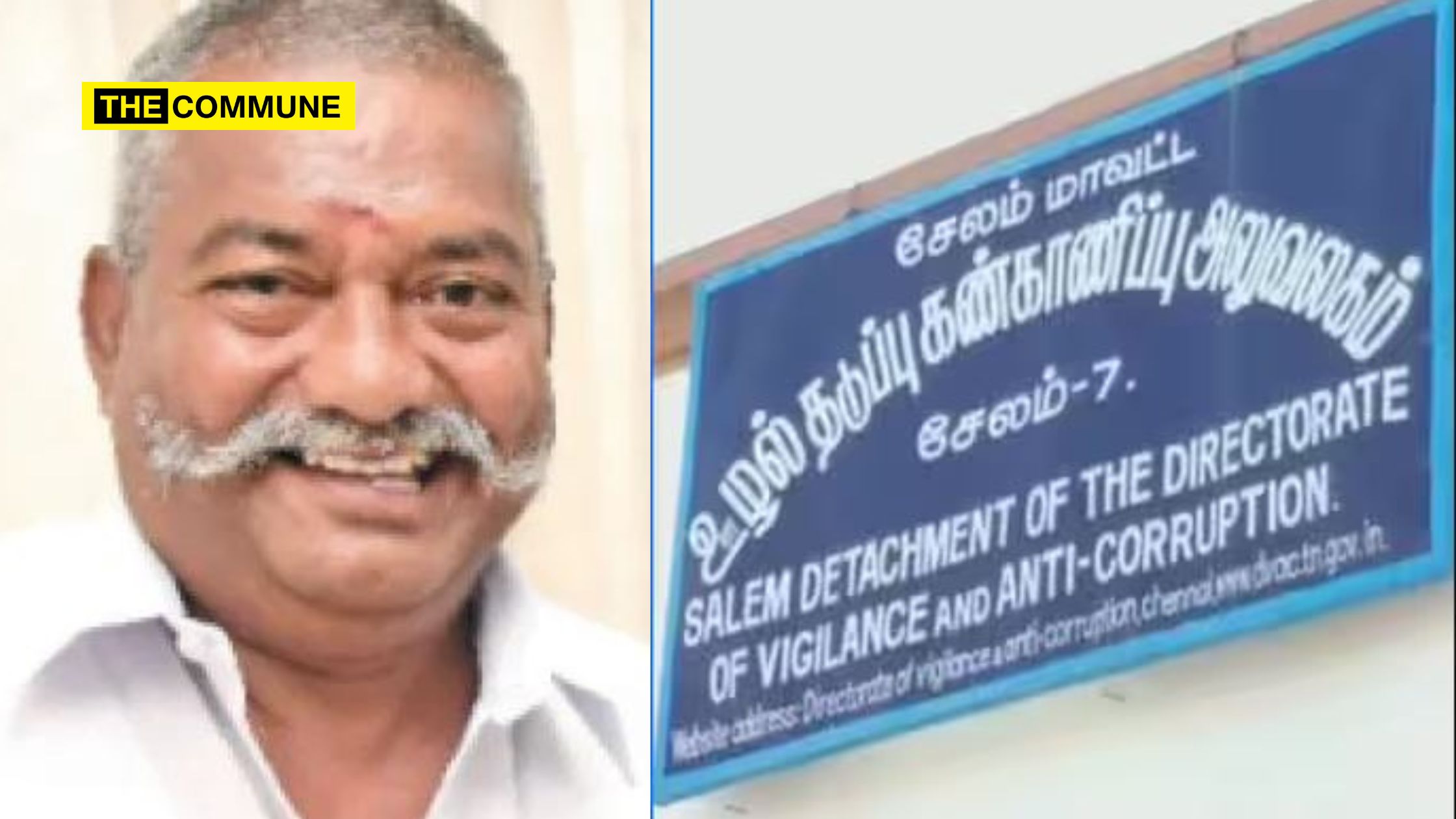
Salem AIADMK Functionary Under Probe For 1,188% Wealth Surge, Assets Allegedly Linked To Father’s Corruption

Salem AIADMK Functionary Under Probe For 1,188% Wealth Surge, Assets Allegedly Linked To Father's Corruption

A senior AIADMK functionary’s son, Bhoopalan, is under investigation for allegedly amassing assets through bribery, with properties purchased by his father, Chennakrishnan, a former Salem Transport Corporation conductor.

The Salem DVAC has filed a case and is probing the matter. Bhoopalan, a 36-year-old man from Navalpatti near Mettur in Salem district, serves as an assistant at the office of the Assistant Commissioner of Labor Welfare in Erode. His father, Chennakrishnan, previously worked as a conductor for the Salem State Transport Corporation and was also the secretary of the Anna Trade Union during the AIADMK’s previous tenure.

The Salem Anti-Corruption Police have investigated Bhoopalan for acquiring assets far beyond his known income. Disturbing details have surfaced in the inquiry. Bhoopalan joined the government service in 2017 as an Assistant (OA), earning a monthly salary of ₹30,000. However, an asset review up to 2022 revealed that his wealth had grown by an astonishing 1,188%, amounting to over ₹1 crore 9 lakh. Over the six years since his employment, his total salary amounted to only ₹9.22 lakh, yet he owns several properties in Mettur and Karuppur.

New information has come to light regarding how Bhoopalan accumulated such wealth. His father, Chennakrishnan, had served as a conductor in the Salem Transport Corporation before being appointed Secretary of the Salem Zone Anna Transport Corporation during the AIADMK’s previous regime. In that role, he is said to have amassed considerable sums of money, reportedly from transfers of employees such as branch managers, engineers, conductors, and drivers, as well as from transport route deals.

Following a complaint about illicit asset accumulation, the Anti-Corruption Police began investigating Chennakrishnan two years ago. During that investigation, it was discovered that Chennakrishnan had purchased multiple properties under his son’s name, Bhoopalan. As a result, a case has now been filed against Bhoopalan, and the investigation into Chennakrishnan continues, with a charge sheet almost ready. Chennakrishnan retired from service last year but has not received any retirement benefits due to the ongoing case. Notably, Bhoopalan’s current involvement in a bribery investigation stems from actions linked to his father’s illicit activities.

(With inputs from Dinakaran)

Subscribe to our channels on TelegramWhatsApp, and Instagram and get the best stories of the day delivered to you personally.

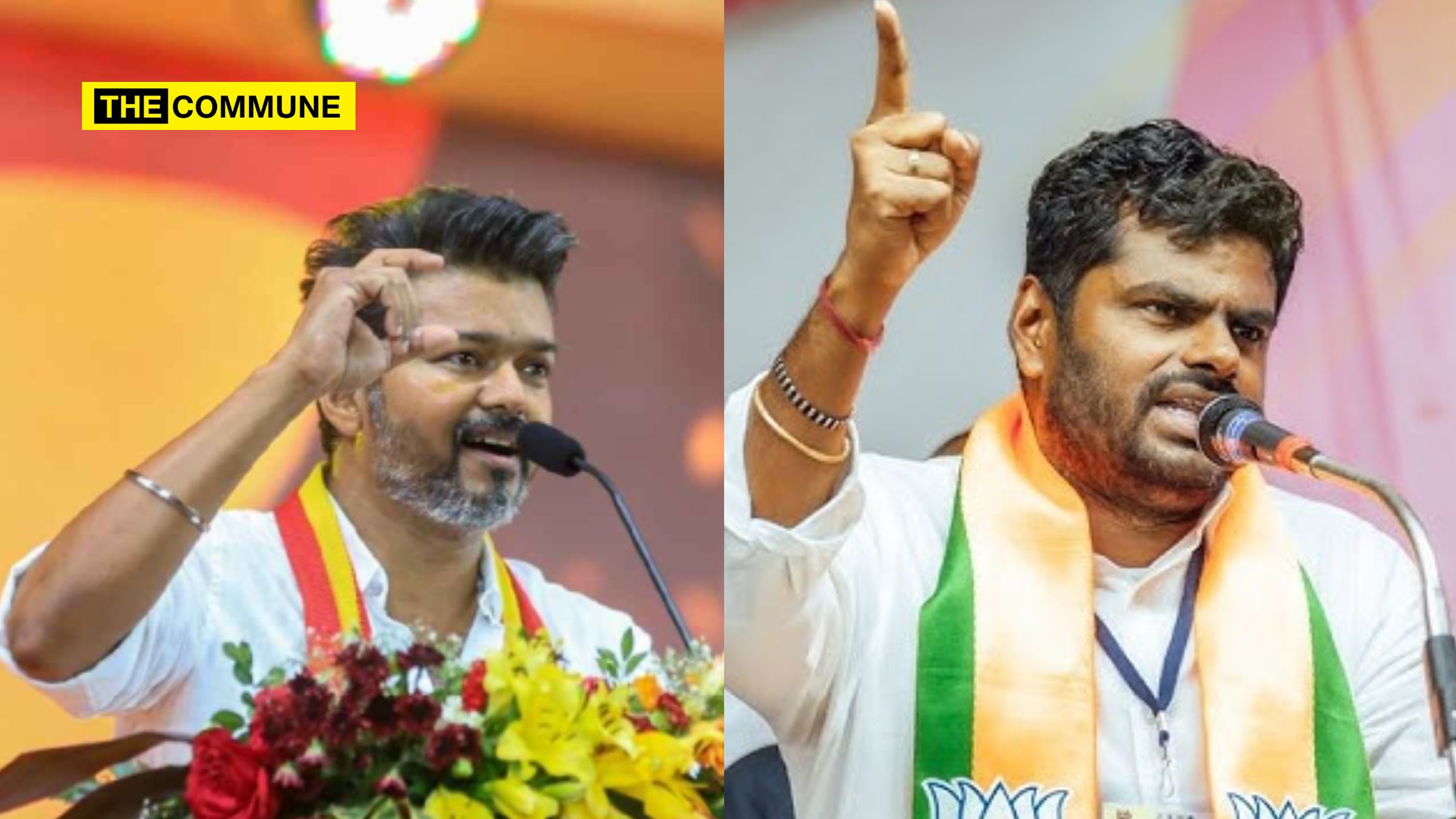
“People Don’t Eat Rasam, Sambhar, And Curd Rice Mixed Together”: Annamalai Takes Jibes At Vijay Party TVK’s Ideology

'Develop Common Sense Before Commenting On Manipur', BJP TN Chief Annamalai Slams TVK Vijay

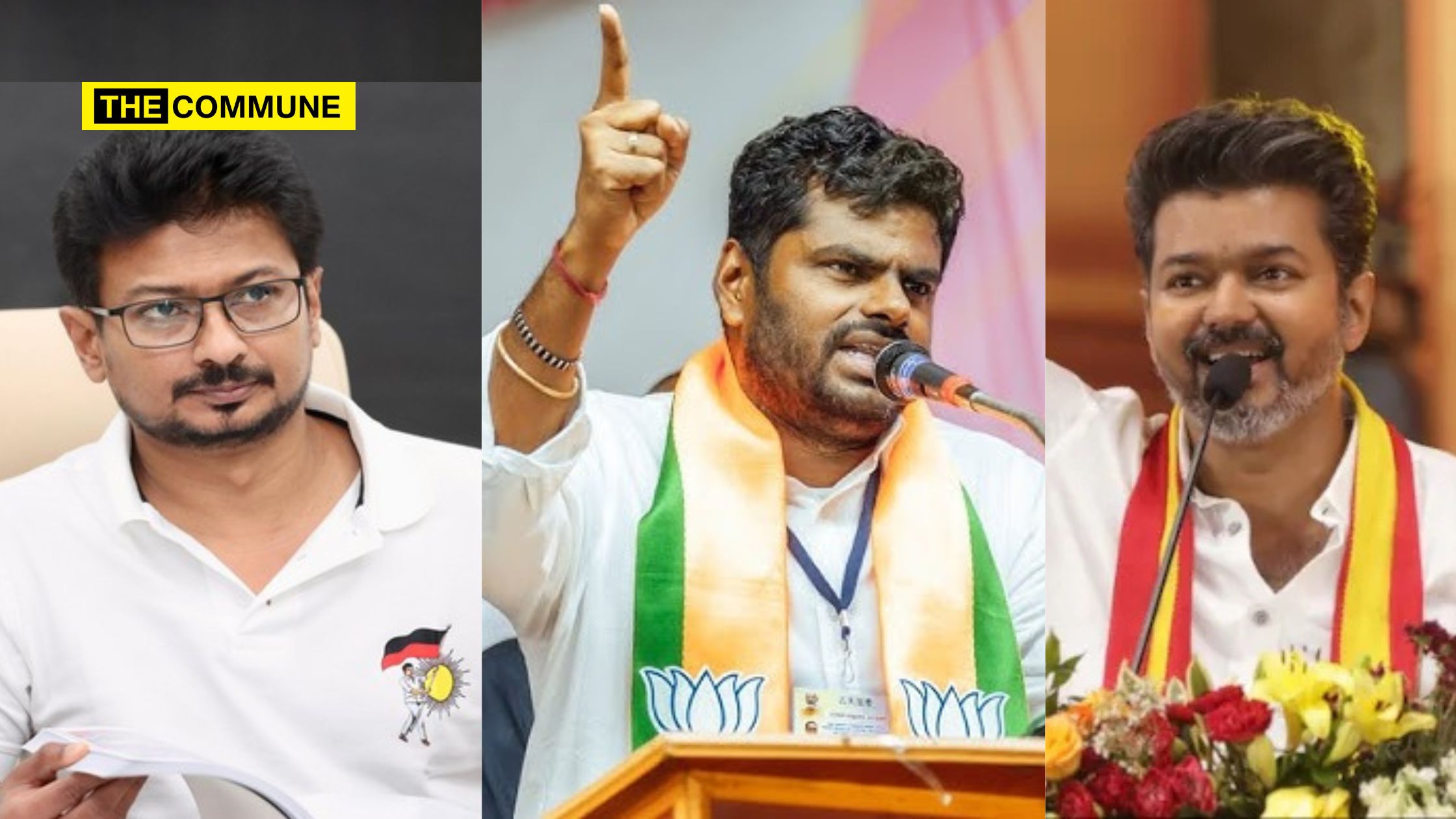
K Annamalai, the Tamil Nadu president of the Bharatiya Janata Party (BJP), returned from the United Kingdom after completing the three-month Chevening Gurukul Fellowship for Leadership and Excellence at Oxford University, the political scene in the state was set ablaze. Upon his return, Annamalai wasted no time in delivering a series of sharp jabs at DMK scion and Tamil Nadu Deputy Chief Minister Udhayanidhi Stalin or actor turned politician TVK Vijay.

On 1 December 2024, in Coimbatore, after A3, a two-day conference organized by Voice of Covai, Annamalai dismissed TVK’s political ideology as “khichdi politics,” referring to the party’s attempt to combine multiple, often contradictory, political ideologies.

Annamalai indirectly mocked Tamilaga Vettri Kazhagam (TVK) chief Vijay for avoiding a clear stance on right-wing or left-wing politics, instead opting for a centrist approach. He commented, saying., “There are a few today who are playing around the centre without talking about both (right/left). Today there is new kind of politics—khichdi politics. As Vadivelu would say, “One vote for the coconut tree, and another for the palm tree.” Picking a bit of ideology from here, some from there, putting up one leader’s photo here and another’s there, display ten photos in total so no one will criticise. Such political parties have emerged as well. Please call them and ask, ‘How will they eat if you mix rasam rice, curd rice, and sambhar rice and call it a new dish? Either call it rasam rice, curd rice, or sambhar rice. If you ask people will eat all three together, they won’t. This kind of politics has never succeeded anywhere in the world,” eliciting laughter from the audience.

Annamalai’s remarks come in the wake of Vijay’s first state-level conference, where he outlined TVK’s ideological pillars, mentioning leaders such as Periyar, Ambedkar, Kamaraj, Velu Nachiyar, and Anjalai Ammal. The conference drew significant attention, with many interpreting it as Vijay’s attempt to carve a new political space in Tamil Nadu.

Despite his criticism, Annamalai struck a somewhat conciliatory tone, acknowledging Vijay’s popularity. “We have always said that we welcome anyone who enters politics. Vijay is a famous actor at the peak of his career. There is nothing wrong with him wanting to join politics,” he remarked.

Looking ahead to the 2026 Tamil Nadu Assembly elections, Annamalai predicted a shift in the state’s political dynamics. “This is a new era in Tamil Nadu politics. The 2026 elections will not see one dominant party coming to power as it has in the past. Instead, we will witness a coalition era. This is what we have been saying for some time, and Vijay is also voicing similar views. At the same time, we are seeing a decline in the strength of the Dravidian parties,” he noted.

Reflecting on the BJP’s recent successes, Annamalai pointed to the party’s strong performance in Maharashtra and Haryana. “After the Lok Sabha elections, the BJP secured historic victories. In Maharashtra, we made history, and in Haryana, we overcame the anti-incumbency factor. This shows that in every region—North India, Maharashtra, and even the South—people are increasingly bringing the BJP back with record-breaking wins,” he said.

Subscribe to our TelegramWhatsApp, and Instagram channels and get the best stories of the day delivered to you personally.
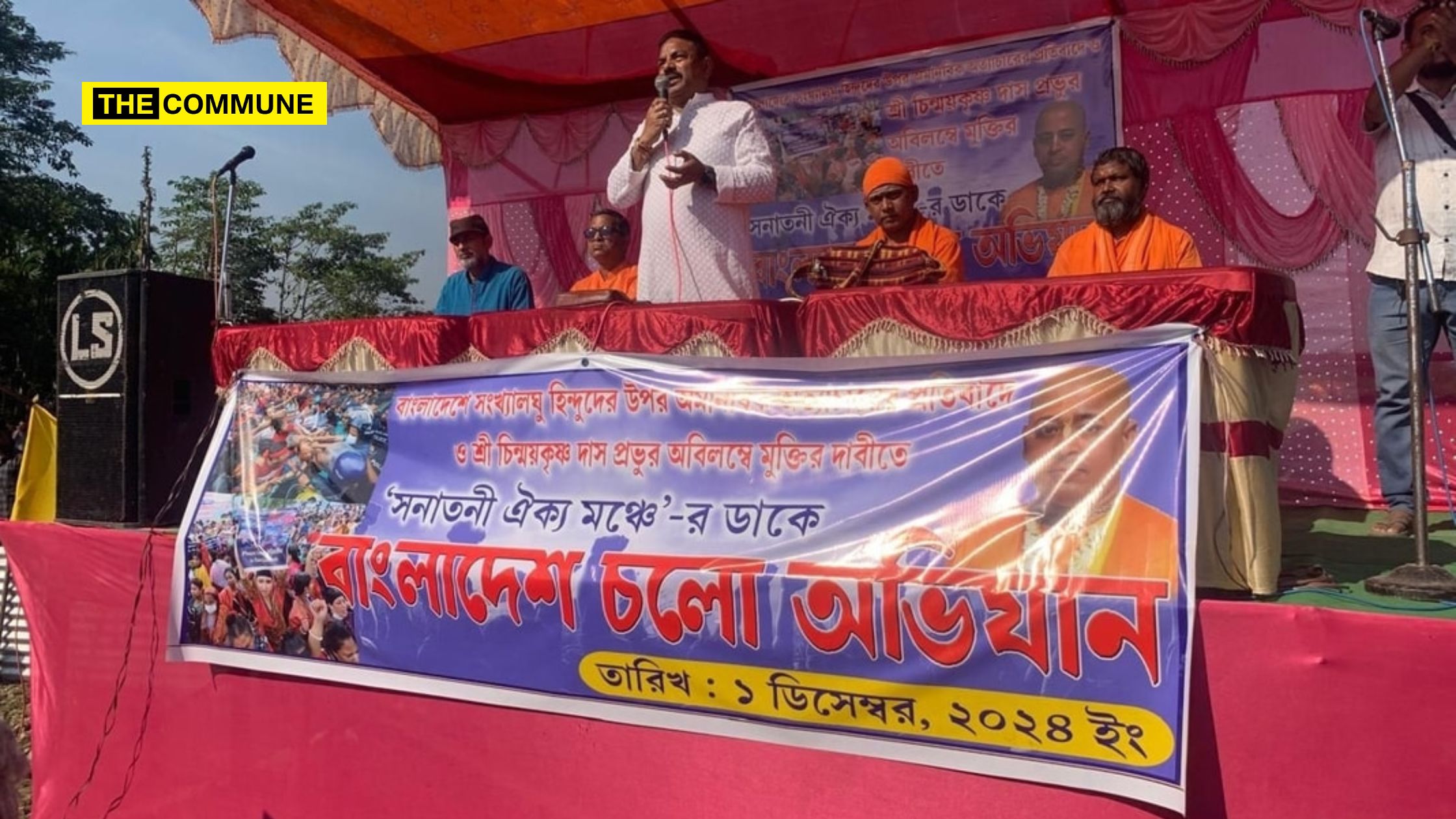
“Cholo Bangladesh” Movement Seeks Justice For Hindus And Demands Release Of Chinmoy Prabhu

"Cholo Bangladesh" Movement Seeks Justice For Hindus And Demands Release Of Chinmoy Prabhu

Thousands gathered in Karimganj on Saturday for the historic “Cholo Bangladesh” movement, a large-scale protest organized by Sanatani Oikyomanch. The movement, aimed at securing the unconditional release of Chinmoy Prabhu and protesting the persecution of Hindus in Bangladesh, marked a significant milestone in the ongoing fight for justice and religious rights.

The protest began with a massive bike rally at 10:30 AM from the Karimganj College premises, featuring over 2,000 participants. The rally proceeded toward the Sutarkandi border, where by noon, the crowd had swelled to more than 60,000 people. Leading figures from various organizations addressed the gathering, including Shantanu Naik, Coordinator of Sanatani Oikyomanch, Ashit Chakraborty, Chief of Silchar Shankar Math and Mission, Bigananda Maharaj of Bolagiri Ashram, Baikananta Maharaj, and Shibabrarta Saha of RSS.

The primary focus of the protest was twofold: the unconditional release of Chinmoy Prabhu, who is currently imprisoned, and the condemnation of ongoing atrocities against Hindu minorities in Bangladesh. Protestors argued that Prabhu’s imprisonment was a serious violation of human rights and called for his immediate release. In addition, they demanded that the Bangladeshi government take swift action to stop the violence, including looting, killings, and displacement, which have targeted the Hindu community in the country.

At 1:30 PM, the protestors continued their march towards the border, but their progress was halted by personnel from the Border Security Force (BSF) and Assam Police, who stopped the group about half a kilometer from the border. Despite the blockade, the protesters remained resolute, with their calls for justice and religious freedom echoing in the area.

The Sanatani Oikyomanch, which organized the movement, used the occasion to raise awareness of the persistent violations of religious rights in Bangladesh, including the destruction of temples and the persecution of Hindus. The group has vowed to bring these issues to the international stage, urging global attention and action to protect the rights and safety of Hindus in Bangladesh.

The protest concluded with a call for unity across the world to fight against ethnic, religious, and social persecution. Sanatani Oikyomanch has pledged to continue its advocacy until the rights and dignity of Hindus in Bangladesh are fully restored.

Subscribe to our channels on TelegramWhatsApp, and Instagram and get the best stories of the day delivered to you personally.

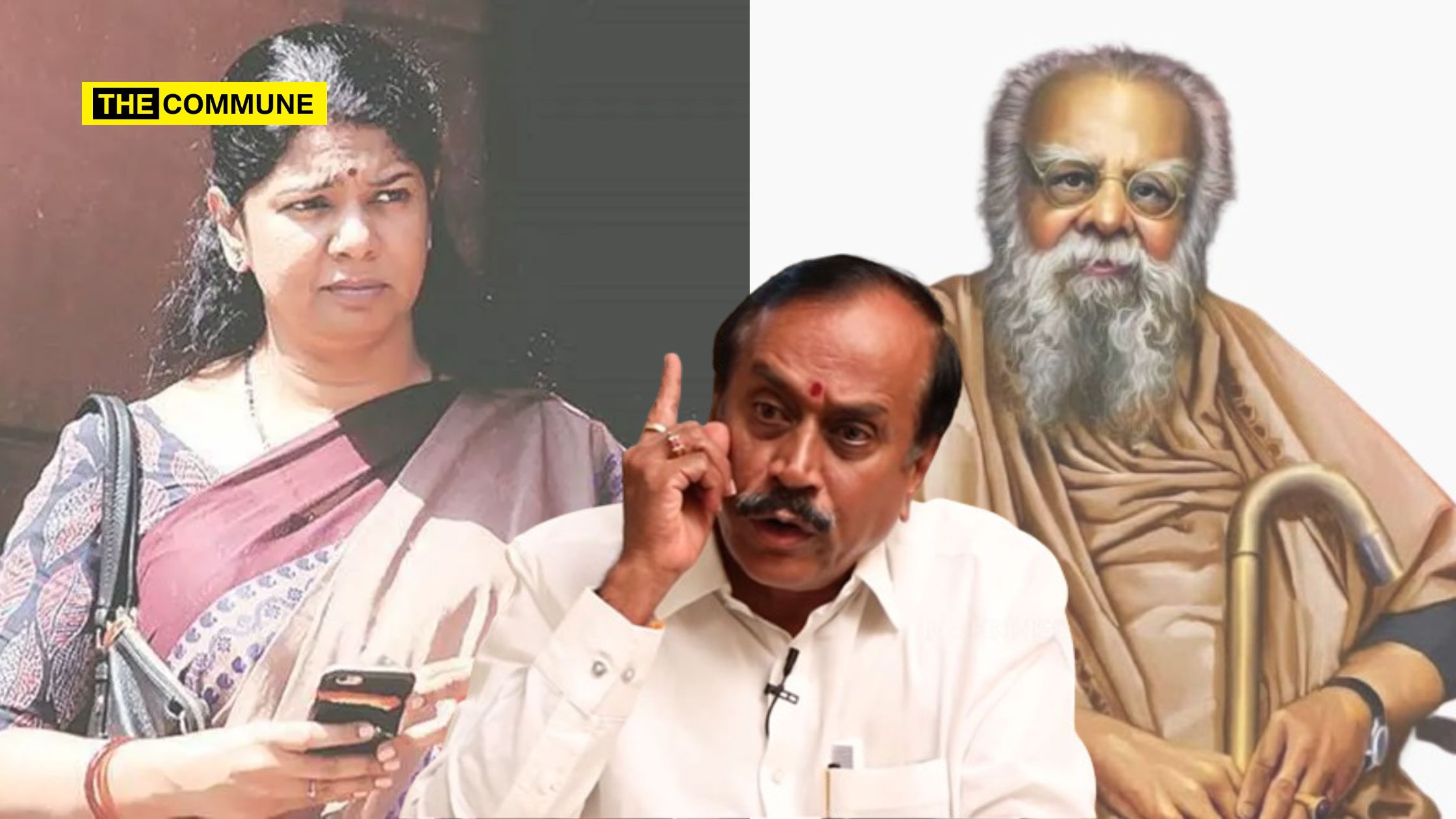
Special Court Suspends BJP Leader H Raja’s Sentence Pending Appeal In Remarks Against EVR And DMK MP Kanimozhi Case

6-Month Sentence For BJP Leader H Raja Suspended By Madras High Court

In a significant ruling, a special court in Chennai convicted BJP Tamil Nadu Coordination Committee President H Raja in two defamation cases stemming from controversial remarks against DMK MP Kanimozhi and EVR made in 2018. The court sentenced Raja to six months imprisonment for each case and imposed fines of ₹2,000 and ₹3,000 respectively. However, in a key decision, the court suspended the sentence for one month, allowing Raja time to file an appeal in a higher court.

The cases were initiated after Raja’s remarks on social media, where he allegedly threatened to destroy the statue of Dravidian leader EV Ramasamy and made derogatory comments about DMK MP Kanimozhi. These statements sparked protests and led to complaints filed by representatives of the DMK and Congress at Erode Nagar and Karungalpalayam police stations.

Raja’s petition to quash the cases was dismissed by the Madras High Court, which directed the special court to expedite the trial. Special Court Judge G Jayavel found Raja guilty, ruling that the prosecution had proven that the contentious posts originated from Raja’s social media accounts. The court deemed the remarks inflammatory and defamatory rather than merely political.

The sentences were handed down separately for each case: six months imprisonment and a ₹2,000 fine in one case, and six months imprisonment and a ₹3,000 fine in the other. Raja’s legal team requested time to file an appeal, which the court granted, suspending the sentence for one month. Failure to appeal within this period will result in the sentence being enforced.

The incidents date back to 2018, when Raja allegedly referred to Kanimozhi as the “illegitimate child” of DMK patriarch M. Karunanidhi, sparking outrage and protests by DMK supporters. He also allegedly posted inflammatory remarks about Periyar, referencing the demolition of Lenin’s statue in Tripura as a precedent. Although Raja later claimed that a Facebook admin uploaded the EVM post without his consent, he faced widespread backlash.

Following the court’s decision, Raja maintained his innocence, describing the judgment as politically motivated. “I will file my appeal soon. This is a political vendetta. My fight for my ideology remains steadfast,” he told reporters.

Subscribe to our TelegramWhatsApp, and Instagram channels and get the best stories of the day delivered to you personally.
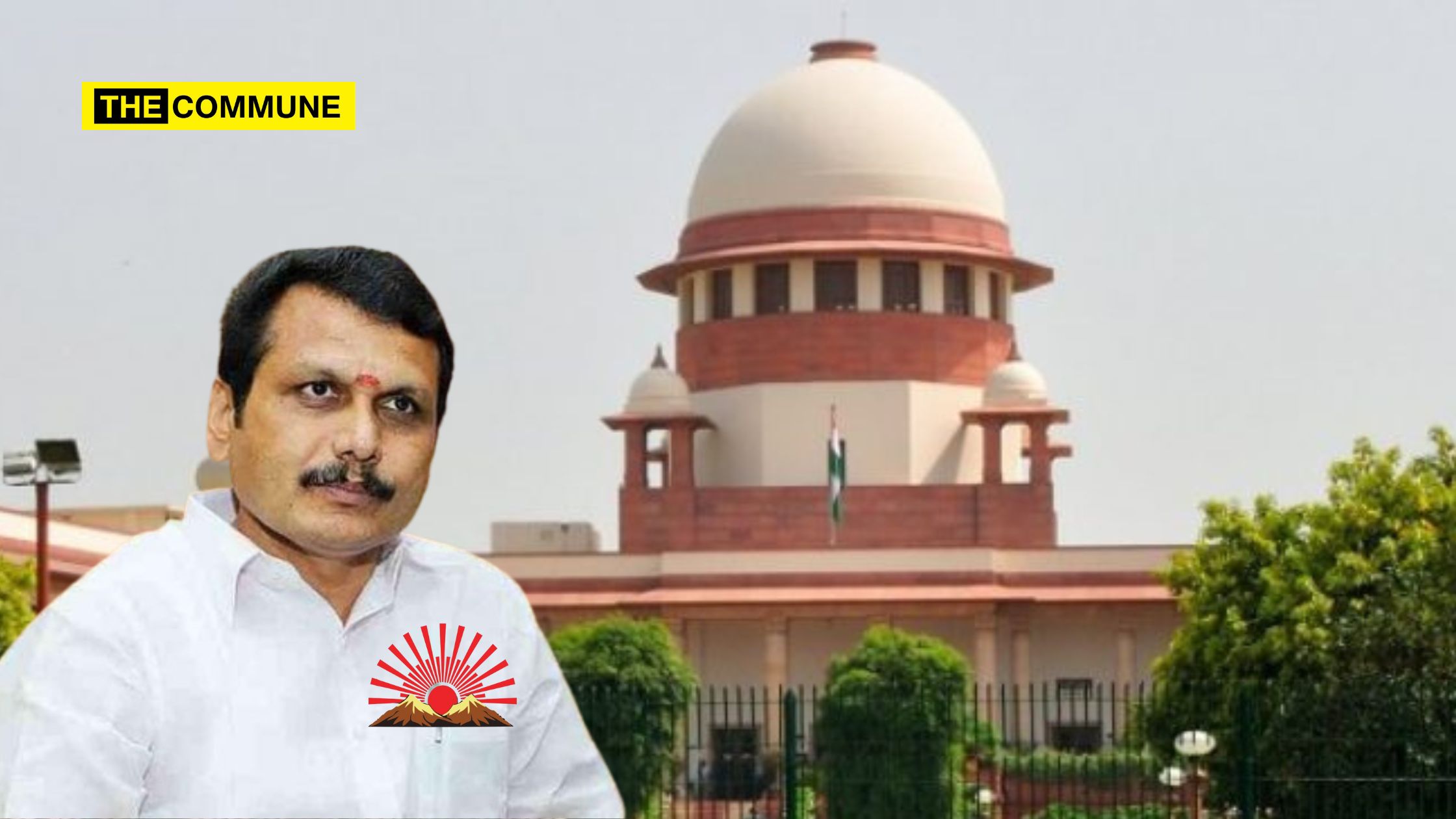
“We Grant Bail, The Very Next Day, He Becomes Minister! What’s Going On Here?” SC Expresses Concern Over Senthil Balaji’s Appointment As Minister Immediately After Bail In Money Laundering Case

supreme court senthil balaji dmk

On 2 December 2024, the Supreme Court expressed surprise over the decision to appoint Senthil Balaji as a Minister in Tamil Nadu just after he was granted bail in connection with a money laundering case linked to the cash-for-jobs scam.

A bench consisting of Justice Abhay S. Oka and Justice Augustine George Masih was hearing a petition to revisit the bail decision. The petitioners argued that Balaji’s appointment as a Minister after his release could put witnesses at risk of pressure, given his influential position.

During the hearing, Justice Oka remarked, “We grant bail, and the very next day, he becomes a Minister! Anyone would be inclined to think that, with his new position as a senior Cabinet Minister, witnesses could be intimidated. What is going on here?”

Despite these concerns, the bench clarified that it would not revisit the bail order, noting that the judgment had established legal principles that were beneficial to other individuals in similar cases. However, the bench acknowledged the need to look into whether the witnesses in Balaji’s case could be under undue pressure due to his appointment. It asked Balaji’s counsel to seek instructions and posted the matter for further hearing on 13 December 2024.

The bench stated, “While we affirm the law laid out in the September 26 decision, this application raises concerns that, following Balaji’s bail on September 26, 2024, he was appointed as a Cabinet Minister. Given the seriousness of the allegations against him, there is a real fear that witnesses may be reluctant to testify. This is the only issue we are considering at this stage, and we will not revisit the merits of the bail order. For now, we are not issuing a notice. The counsel for the second respondent (Balaji) has requested time to seek instructions. The matter will be listed again on 13 December.”

In its September 26 judgment, the Supreme Court granted bail to Senthil despite finding a prima facie case against him. The Court justified its decision by citing his prolonged detention (since June 2023) and the improbability of the trial commencing soon. It also emphasized that the right to a speedy trial should be considered a condition under special statutes that impose strict bail conditions.

On 29 September, just days after being granted bail, Balaji took the oath of office as a Minister in Chief Minister MK Stalin’s Cabinet, assuming responsibility for the portfolios of electricity, non-conventional energy development, and prohibition & excise.

(With Inputs From Live Law)

Subscribe to our channels on TelegramWhatsApp, and Instagram and get the best stories of the day delivered to you personally.

Doctor Refuses CT Scan At Govt Hospital In Kovilpatti For Injured Child Citing ‘Meeting,’ Sparks Public Confrontation

Doctor Refuses CT Scan At Govt Hospital In Kovilpatti For Injured Child Citing 'Meeting,' Sparks Public Confrontation

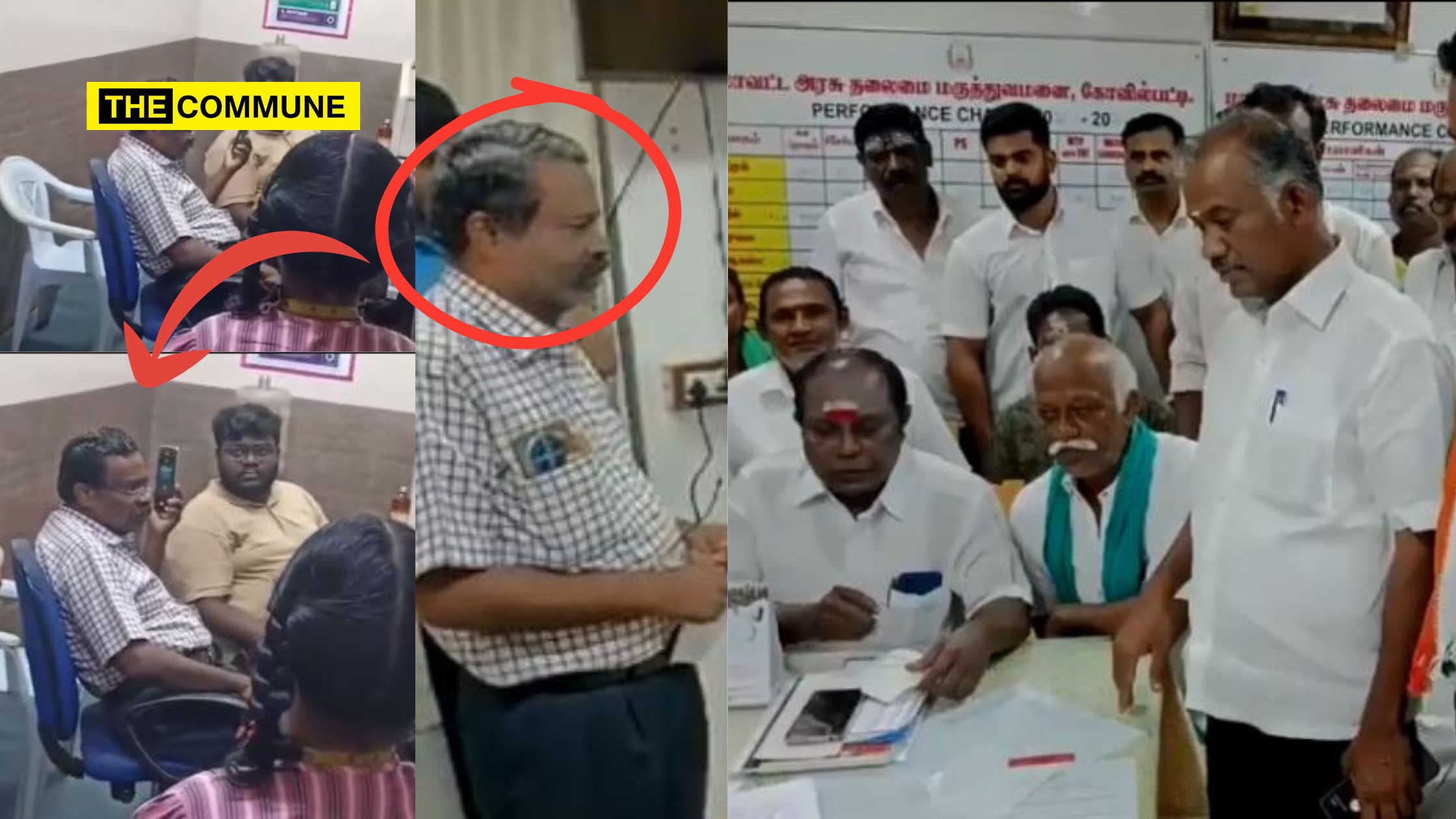
A severe commotion broke out at the Government Headquarters Hospital in Kovilpatti, Thoothukudi District, following a case of medical negligence involving the refusal of a CT scan for a young girl with a head injury.

The incident began when an 8-year-old schoolgirl was brought to the hospital after sustaining a head injury. The attending doctor recommended a CT scan to assess the extent of the injury. However, when the parents took the child to the CT scan room, they were met with indifference from the medical staff.

The medical professional, who was reportedly attending a meeting at the time, ignored the situation’s urgency and refused to facilitate the scan. The parents pleaded for immediate attention, but the doctor, in a casual tone, dismissed their concerns, stating he was “in a meeting” and questioned who had prescribed the CT scan, further downplaying the seriousness of the child’s condition.

In frustration, the parents recorded the entire interaction on video. The matter escalated when local politicians became involved, raising the issue with the chief doctor on site, leading to a public confrontation. The parents and politicians criticized the doctor for his apparent neglect of the child’s health.

This incident shocked the local community, with many questioning the lack of accountability and professionalism the of hospital staff. The situation has sparked outrage, as citizens wonder how such negligence can occur in a public healthcare setting.

Subscribe to our channels on TelegramWhatsApp, and Instagram and get the best stories of the day delivered to you personally.

“Special Court” Sentences BJP Leader H Raja To Jail For Remarks Against EVR And Political Jabs At DMK MP Kanimozhi

6-Month Sentence For BJP Leader H Raja Suspended By Madras High Court

In a surprising ruling, a special court in Chennai has convicted H Raja, the President of the BJP Tamil Nadu Coordination Committee, for his remarks regarding the EVR statue and DMK MP Kanimozhi. The court sentenced Raja to six months in prison and imposed a fine of ₹5,000 in each case.

The complaints against Raja stemmed from his 2018 Twitter post in which he allegedly threatened to destroy the EVR statue and made derogatory comments about Kanimozhi. These posts sparked widespread condemnation from political parties, including the DMK, Congress, and the Popular Front of India. Subsequently, complaints were filed at several police stations, including Erode Nagar Police and Karungalpalayam Police Station.

Raja had petitioned the Madras High Court to quash the case, arguing that the comments were political, and that evidence for his threats against the Periyar statue had not been properly collected. He further contended that a third party filed the case without his knowledge or consent. Despite these claims, the court directed the special court to complete the trial within three months, and after hearing arguments from both sides, Judge G. Jayavel delivered the verdict.

The court found that the police had sufficiently proven that Raja made the posts from his social media account, which led to the conviction. Raja’s statements were deemed inflammatory, with the court ruling that the remarks against the statue and Kanimozhi were not just political but also defamatory.

Raja’s legal team had maintained that the remarks were taken out of context and were meant as political commentary.

What H Raja Said In 2018

In 2018, the then BJP National Secretary Raja had allegedly made derogatory remarks about DMK MP Kanimozhi, calling her the “illegitimate child” of DMK President M Karunanidhi. This statement sparked protests from DMK supporters, with a large demonstration and effigy burning in Coimbatore. Kanimozhi responded, saying she wouldn’t “stoop low” to retort to Raja’s tweet but was awaiting a response from the BJP regarding his comments.

Raja had also faced backlash for his controversial Facebook post about Dravidian ideologue E.V. Ramasamy “Periyar,” in which he allegedly threatened to destroy Periyar’s statues, similar to the demolition of Lenin’s statue in Tripura. Raja later claimed the post was made by his Facebook admin without his consent and deleted it, expressing regret.

(With inputs from OneIndia Tamil)

Subscribe to our TelegramWhatsApp, and Instagram channels and get the best stories of the day delivered to you personally.
“Successful Actor Enters Politics, Failed Actor Becomes Deputy CM”: BJP Leader Annamalai Says

"Successful Actor Enters Politics, Failed Actor Becomes Deputy CM": BJP Leader Annamalai Says

As soon as K Annamalai, the Tamil Nadu president of the Bharatiya Janata Party (BJP), returned from the United Kingdom after completing the three-month Chevening Gurukul Fellowship for Leadership and Excellence at Oxford University, the political scene in the state was set ablaze. Upon his return, Annamalai wasted no time in delivering a series of sharp jabs at DMK scion and Tamil Nadu Deputy Chief Minister Udhayanidhi Stalin.

Upon his arrival from London, while addressing the press at Chennai airport, Annamalai stated that the 2026 Assembly elections would be a “crucial and historic” event, with numerous parties vying for influence. He highlighted the participation of actor-turned-politician Vijay’s TVK, Seeman’s NTK, the BJP, along with the two major Dravidian parties, the DMK.

Later, on 1 December 2024, in Coimbatore, at the conclusion of A3, a two-day conference organized by Voice of Covai, Annamalai pointed out that in the past three months, a successful actor had entered politics, while a “failed actor” had been appointed as Tamil Nadu’s Deputy Chief Minister. He emphasized the need for political discussions to benefit the public and promote constructive politics.

Annamalai said, “If you’ve noticed over the past three months while I was away studying, ‘a successful actor have come to politics, while a failed actor became the Deputy Chief Minister. If you see today,the question asked by our journalists friends revolves around cinema. The first question asked by our beloved journalists at Chennai and Coimbatore airports was about, How you view his politics? How you view his elevation? But you and I know, if the common man stand to gain a penny from this, the answer would be a definitely ‘no.’ Have they introduced any revolutionary politics for a common man? No. I’m not accusing anyone; I’m not accusing anybody, I’m welcoming actor Vijay’s entry into politics. He should come.”

He urged that the common man must actively question the system and advocate for a political environment based on accountability, merit, and performance, geared towards social justice. He asserted that the power to transform Tamil Nadu’s politics lies in the hands of the common man. Without this, he warned, even intellectuals in politics could end up subjugated by the current political climate.

Annamalai encouraged the attendees to strive for a country built on knowledge. “You have the power to change Tamil Nadu’s politics,” he asserted, stressing that the public should not just vote but actively question and compel political parties to work toward their progress.

He also highlighted that cities like Coimbatore have untapped potential, mentioning that the city will soon have a model railway station and that the Tamil Nadu BJP is working to introduce a metro rail system as well.

Additionally, Annamalai called on the youth to contribute to the revival of Indian culture and heritage. He noted that since 2015, Prime Minister Narendra Modi had successfully brought back 640 artifacts from foreign countries, compared to just four that were repatriated between 1970 and 2015.

Subscribe to our TelegramWhatsApp, and Instagram channels and get the best stories of the day delivered to you personally.
Scamster With Connections To Congress Leaders Booked For False Claims About EVM Hacking, Congress Supporters Share His Video To Claim MH Elections Was Rigged

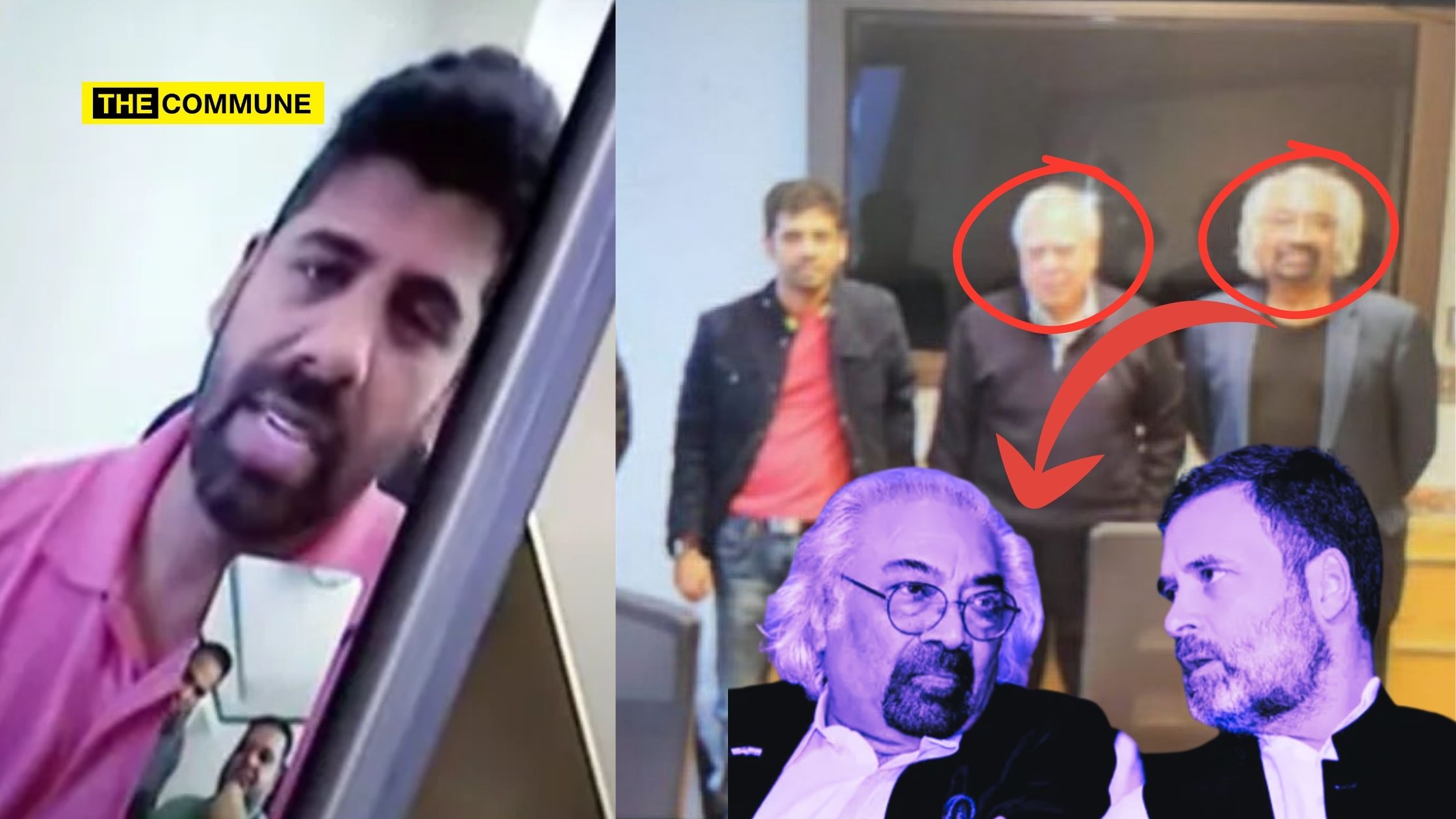
After the Maha Vikas Aghadi (MVA) suffered a crushing defeat in the Maharashtra elections, a fresh controversy has emerged, with Congress supporters amplifying a video claiming EVM tampering by BJP-led Mahayuti. The video features Syed Shuja, a self-proclaimed cyber expert, who alleges he can manipulate votes in 281 of 288 Maharashtra Assembly seats using “frequency isolation” and mobile applications to alter EVM signals and pre-program machines to favor specific parties.

As part of this effort, Congress-friendly activists, journalists, and YouTubers have circulated the video featuring Syed Shuja, a self-proclaimed “cyber expert,” making dubious claims about manipulating EVMs in 281 out of 288 seats. Shuja alleges he can alter election outcomes through “frequency isolation” and specialized apps, demanding ₹52-53 crore to secure victories in 63 constituencies, despite EVMs being incapable of wireless communication.

The video, watermarked with Mumbai Tak’s logo, was shared on their X account on November 15 as part of a sting operation by India Today journalists. Posing as representatives of a political leader, they contacted Shuja to uncover his alleged methods of EVM manipulation. Despite detailing his so-called techniques, Shuja failed to provide concrete evidence.

Who Is Syed Shuja?

Shuja claims to have worked with the Electronics Corporation of India Limited (ECIL) from 2009 to 2014 on EVM development. ECIL, alongside Bharat Electronics Limited, manufactures EVMs and VVPATs for the Election Commission of India (ECI). However, ECIL has categorically refuted his employment claims. Shuja also professes to hold a PhD in Mathematics from Jawaharlal Nehru Technological University and a BTech in Computer Science from Shadan College, Hyderabad—claims that remain unverified as no records exist of his education at these institutions.

In the video, Shuja alleges he was granted asylum in the US in 2018 after surviving an attack linked to his discovery of EVM tampering. However, there is no independent verification of these claims, his asylum status, or his current employment.

This is not the first time Shuja has made such claims. In January 2019, he participated in a press conference via Skype from London, attended by senior Congress leader Kapil Sibal, where he asserted that the 2014 elections were rigged in favor of the BJP. The Election Commission dismissed these allegations as baseless, lodging an FIR against him with the Delhi Police for spreading misinformation. ECIL also debunked his assertions, reiterating that EVMs are tamper-proof and cannot be wirelessly manipulated.

Despite being unable to present any credible evidence, Shuja’s resurfacing has provided Congress supporters with what they claim is “proof” of EVM tampering. However, it is evident that his false claims are designed to sow distrust in India’s electoral system. Shuja’s association with prominent Congress leaders further fuels suspicions about the political motivations behind these allegations.

Thus, Syed Shuja’s claims appear to be an elaborate hoax, aimed at undermining public confidence in the electoral process, with Congress supporters seizing the narrative to explain their electoral defeat in Maharashtra.

(With inputs from India Today and OpIndia)


Secularism Or Selective Secularism? A Deep Dive Into The Supreme Court Verdict And Its Impact On Hindus

Secularism Or Selective Secularism? A Deep Dive Into The Supreme Court Verdict And Its Impact On Hindus

The Supreme Court’s recent validation of the Emergency-era insertion of the word ‘secular’ into the Constitution reignited a contentious debate: is secularism in India a shield of equality or a sword of appeasement wielded selectively against Hindus? Under the guise of secularism, Hindu temples are plundered under government control, religious autonomy is granted selectively, and minority appeasement thrives unabated.

When “fraternity” becomes fractured, “equality” becomes skewed, and “liberty” becomes a privilege of the few, it is imperative to question whether secularism has lost its way, becoming an albatross strangling the very ideals it was meant to uphold.

The Supreme Court (SC) pronounced its verdict on 25 November 2024 on a July 2020 petition challenging the insertion of the words ‘secular’ and ‘socialist’ during the Emergency period by upholding the insertions as valid.

Since ‘socialism’ is a politico-economic ideology, let us set it aside for this discussion and instead delve into the dissonance within this verdict and its implications.

It’s notable that that many of the amendments during the Emergency era, including clauses 4 & 5 of the 42nd Amendment, were repealed by the SC, the landmark one being Minerva Mills Ltd. and Ors. v. Union Of India and Ors. (case number: Writ Petition (Civil) 356 of 1977. 

The verdict restored the constitutional validity of the courts/judiciary, reaffirming that Parliament does not hold absolute power, particularly in matters concerning fundamental rights.

With due respects to the Supreme Court and its eminent lordships in the highest regard, it is troubling to note that amendments made during the Emergency era concerning the judiciary are deemed highly relevant, whereas those addressing the concerns of the general public and victims of ‘secularism’ are often sidelined, citing the timing of such pleas.

From the political viewpoint, it is a not a clandestine affair that the word ‘secular’ encompasses not compassion for minorities of the country but sheer appeasement, right from the time of independence. 

On 17th October 1949, Shri Brajeshwar Prasad, a senior congress leader from Bihar, during discussions in the constituent assembly on the Preamble and Constitution said:

‘this word, ‘secular’ was dear to India’s national leaders and its inclusion in the preamble would tone up the morale of minorities as well as prevent disorderly activities’

Although the word ‘secular’ was not part of the original Constitution, it is now frequently invoked to benefit minority communities, often to the detriment of the majority Hindu community and its practices.

The Hon’ble Lordships have observed that the term ‘secular’ is “considered imprecise,” noting that some scholars interpret secularism as being opposed to religion. This ambiguity becomes more evident in states like Tamil Nadu and Andhra Pradesh, where the Hindu community faces neglect and, at times, disdain from the state and its rulers.

Hon’ble Lordship goes on to say: “India has developed its own interpretation of secularism, wherein the State neither supports any religion nor penalises the profession and practice of any faith”. The ideals espoused in the Preamble — fraternity, equality, individual dignity and liberty among others — “reflect this secular ethos”,

Let us corroborate these golden words with reality:

Fraternity

The contempt that the current ruling party in Tamil Nadu – the DMK, and the former ruling party in Andhra Pradesh – YSRCP, display toward Hinduism and its practices needs little explanation. Whether it is Udhayanidhi Stalin, a self-proclaimed atheist/pro-Christianity, wanting to eradicate Sanatana Dharma (Hinduism), or the Andhra Pradesh government’s alleged involvement in the adulteration of the Tirumala Laddoo, their actions consistently undermine social fabric of the country. This is how the state expresses its commitment to ‘fraternity.’

It is worth highlighting MK Stalin’s speech, where he disparaged Hindu marriage rituals while praising similar practices in other religions. Ironically, in a bid to secure votes, he later declared that 90% of his party’s members are Hindus.

Not to forget their skullcap fantasies during nights of crescent sky and penchant for cakes on starry December nights. 

Equality

The condition of temples under Tamil Nadu’s HR&CE Department offers a striking example of the government’s skewed interpretation of ‘equality’ within the Dravidian Model, especially when compared to the autonomy enjoyed by other religious institutions. The ruling dispensation routinely exploits temple funds as if they were its own, and, on occasion, unlawfully appoints non-Hindu personnel to key temple positions, undermining both tradition and legality.

Individual Dignity

DK the parent dupery and inspiration of ruling DMK take pride in cutting the sacred threads of the Brahmins in early 1970s. So much for ‘individual dignity’, the cowardly act still continues to this day when a 24-year-old Brahmin boy from Palayamkottai, Thirunelveli faced the wrath of these rogues in September 2024 was however denied by police.

Liberty

The list of arrests by the DMK government in Tamil Nadu after their election to power in 2021 is long and still extending. Actor Kasthuri faced a brief jail term for her dinky comment in a stage protest, arrested by a battalion of police.

While Mubin, accused of Coimbatore blast is a Voldemort whose name should not be spelled out. The Dravidian Model government still calls it a cylinder blast!

People who make insignificant comments on the government policies or criticize rightfully are facing gallows, resembling medieval United Kingdom under fascist King Charles III. 

The torchbearers of liberty in Tamil Nadu cannot even protect the downtrodden people like in Vengaivayal, who are still waiting justice for an insensate act against them, while the perpetrators are still at large.

We would like to humbly request the judiciary, where the so-called fraternity, equality, individual dignity and liberty are in practice, let alone other words that echoes fundamental rights.

The judiciary must carefully consider the nature of the faiths with which they expect the Hindu community to coexist harmoniously. Temples and places of worship have faced challenges from multiple fronts. On one hand, there are faiths that oppose idolatry—the very essence of Sanatana Dharma—as illustrated by this passage:

“All who fashion idols are nothing, and the things they delight in do not profit. Their witnesses neither see nor know, that they may be put to shame. Who fashions a god or casts an idol that is profitable for nothing? Behold, all his companions shall be put to shame, and the craftsmen are only human. Let them all assemble, let them stand forth. They shall be terrified; they shall be put to shame together.” (Isaiah 44:9–20)

On the other hand, we have another faith, who doesn’t need to enter Hindu administrations but can claim a 1,500-year-old temple in Trichy, Tamil Nadu as their own. In fact, they had the liberty of claiming any land they like, thanks to the Waqf Amendment Bill 1995 brought by Congress government. Their faith enclosed in a single book, God and messenger calls for violence against idol worshippers. (Surah At-Tawbah (9:5)

The word “secular” has, over time, increasingly become a redundant and burdensome concept within the Indian Constitution, with its application disproportionately falling upon the Hindu community. While the Constitution enshrines the right to freely profess, practice, and propagate religion under Article 25, this provision seems to shine brightly for certain religious groups, who are allowed to exercise their faith without undue hindrance. In contrast, the Hindu community often finds itself trapped in the paradox of “secularism,” where their religious practices are subject to scrutiny, regulation, and marginalization. This uneven application of secular principles has led many to question whether the secular ideal, as envisioned, is being implemented in a truly equal manner.

Barath Seshadri is a professional from Tanzania.

Subscribe to our TelegramWhatsApp, and Instagram channels and get the best stories of the day delivered to you personally.