Home Blog Page 75

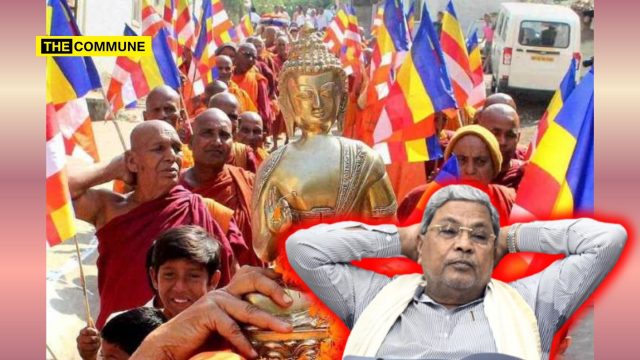
Karnataka Congress Govt Allows Dalits Who Convert To Buddhism To Retain Scheduled Caste Certificates

Karnataka Congress Govt Allows Dalits Who Convert To Buddhism To Retain Scheduled Caste Certificates

The Karnataka Congress government has ordered that Dalits who convert to Buddhism will continue to be eligible for Scheduled Caste (SC) certificates for purposes of employment and education. The social welfare department said the order applies to individuals from any of the 101 Scheduled Castes who choose to adopt Buddhism.

According to the department, SC individuals converting to Buddhism should be permitted to indicate their religion as “Buddhism” when applying for caste certificates. Similarly, those who become Buddhists may list their religion as “Buddhism” in school and college academic records.

The department noted that the Union government had allowed Dalits converting to Buddhism to obtain SC certificates as far back as 1990. Based on this directive, the Karnataka government had issued a circular in 2013. In 2016, the Union government had instructed chief secretaries of all states to ensure that Dalits adopting Buddhism are granted SC certificates.

The social welfare department said that despite these circulars, several organisations had petitioned the government seeking clarity and an appropriate order on the matter. The latest directive addresses these concerns.

The order comes at a time when Karnataka Congress government is conducting a Social & Educational Survey, also known as a caste census. The state had recently carried out a separate survey covering Scheduled Castes for the purpose of sub-classification or internal reservation.

Buddhists are recognised as a religious minority in Karnataka, alongside Muslims, Christians, Sikhs, Zoroastrians (Parsis), and Jains. According to the 2011 Census, the state had around 95,000 Buddhists.

The Congress government clarified that in Karnataka, Buddhists fall under OBC Category-2A with a 15 per cent reservation. Christians and Jains are classified under Category-3B with a 5 per cent reservation, while Muslims are included in Category-2B with a 4 per cent reservation.

The department’s order therefore formalises the rights of SC Dalits converting to Buddhism, ensuring their continued access to the benefits associated with Scheduled Caste status.

(With inputs from Deccan Herald)

Subscribe to our channels on Telegram, WhatsApp, and Instagram and get the best stories of the day delivered to you personally.

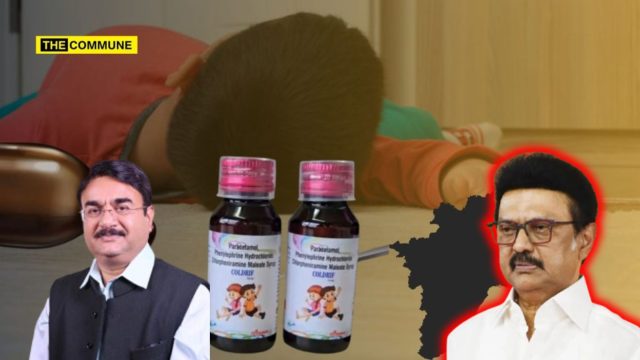
Madhya Pradesh Minister Blames TN Govt For Deaths Of 20 Children Due To Contaminated Cough Syrup

Madhya Pradesh Minister Blames Tamil Nadu Government for Deaths Of 20 Children Due To Contaminated Cough Syrup

Madhya Pradesh Minister of State for Public Health and Family Welfare Narendra Shivaji Patel on 8 October 2025 held the Tamil Nadu government responsible for the deaths of 20 children in his state due to kidney infections caused by consumption of an allegedly contaminated cough syrup.

Addressing PTI Videos, Patel said the southern state showed “grave negligence” as it was responsible for inspecting medicines manufactured and dispatched from Tamil Nadu. He added that while the MP government randomly inspects medicines entering the state, it was “by chance” that this particular stock of cough syrup went untested.

The Tamil Nadu government banned the sale of the cough syrup ‘Coldrif’ from 1 October 2025 and ordered removal of stocks from the market. The syrup, linked to the deaths, was manufactured by a company based in Kancheepuram, Tamil Nadu. On 4 October 2025, the Tamil Nadu Food Safety and Drug Administration department declared that samples collected from the manufacturing facility in Sunguvarchatram, Kancheepuram, were “adulterated,” and instructed the company to halt production immediately.

Patel emphasised the responsibility of Tamil Nadu authorities in issuing licences and inspecting medicines. “A Certificate of Analysis (COA) certificate is required to be issued for every batch of medicine produced. Where did the Tamil Nadu government go wrong? Whether a COA certificate was issued or not? Which official made the mistake is a matter of investigation. The Tamil Nadu government has shown grave negligence in how such medicines came out of their state,” he said.

“We randomly inspect medicines that come into our state. By chance, these medicines were not tested. We seriously inspect medicines manufactured here,” Patel added.

He further stated that the Tamil Nadu government’s negligence directly contributed to the deaths of children in Madhya Pradesh. “We are writing to the central government and the state (Tamil Nadu) government to take strict action against the culprits,” he said. Patel also confirmed that the MP government had taken action against the pharmaceutical factory owner and that the state police had visited Tamil Nadu as part of the investigation.

Speaking about preventive measures, Patel said the state is increasing the number of testing laboratories and will also conduct tests in private labs to speed up the process. Commenting on another substandard medicine originating from a factory in Gujarat, he said, “We are also writing letters to the governments in the states from where the substandard medicines came.”

On Congress leader Rahul Gandhi’s likely visit to Chhindwara to meet the families of deceased children, Patel alleged, “The government in Tamil Nadu is running with the support of the Congress. Rahul Gandhi should question his party’s alliance partner as to why this (tragedy) happened. I smell a conspiracy in this if the Congress is politicising this issue.”

Meanwhile, Madhya Pradesh Deputy Chief Minister Rajendra Shukla, who oversees the health portfolio, said 20 children have died following consumption of the cough syrup, while five others remain in critical condition.

Reacting to Patel’s statement, Congress leader Digvijaya Singh blamed the food and drug department for “poor administration,” claiming it led to the children’s deaths. “Firstly, drug controllers and inspectors are responsible for conducting sample surveys every month, but this was not done. Diethylene glycol should not exceed 0.1 per cent in the drug, but it was 48.6 per cent in the syrup. What were the drug inspectors and controllers doing here?” he asked.

Singh also criticised Deputy CM Shukla for allegedly giving the Tamil Nadu-based pharmaceutical company a “clean chit” even before the investigation concluded. “Besides, when information about the incident came to light, how did the Deputy Chief Minister (Rajendra Shukla) give a clean chit on the first day? On what basis did he give the clean chit? This is the biggest mistake. Had the drug inspectors and controllers performed their duties properly and conducted investigations, this incident would not have occurred,” Singh said.

On the MP minister blaming Tamil Nadu, Singh said, “I am not aware of the Tamil Nadu government. I have been told that permission has to be obtained from the Central government.”

When asked about CM Mohan Yadav’s statement that the Opposition should not politicise the issue and instead provide constructive suggestions, Singh responded, “We are not playing any politics. Take action against the culprits. How did the deputy CM give a clean chit? Accept his resignation. If the mistake was committed, what action did you take?”

(With inputs from The Week)

Subscribe to our channels on TelegramWhatsApp, and Instagram and get the best stories of the day delivered to you personally.

Dravidian Model: Life-Saving Medicines Allegedly Delivered In Garbage Truck In Chennai

Dravidian Model: Life-Saving Medicines Allegedly Delivered In Garbage Truck In Chennai

A shocking lapse in the delivery of essential medicines has drawn sharp criticism of the Tamil Nadu government. Life-saving medicines meant for pregnant women and children were reportedly transported in a garbage truck to an urban primary health centre in Kodungaiyur, Chennai, raising serious concerns about public health governance.

The incident was highlighted on social media by BJP leader Annamalai, who described it as “a disgraceful act” and criticized the patchwork model of administration under the DMK government, accusing officials of showing “utter disregard for the well-being of the people of Tamil Nadu.”

“The disgraceful act of carrying life-saving medicines meant for pregnant women & children in a garbage truck to an urban primary health centre in Chennai’s Kodungaiyur speaks volumes about the patchwork model DMK govt’s utter disregard for the well-being of the people of TN. Such glaring incompetence has turned governance into a mockery. Even after the tragic loss of 21 infants to toxic cough syrup manufactured in TN, which was a direct result of years of neglect and apathy in Tamil Nadu’s drug control system, the State Health Department continues to fail in upholding the most basic standards,” Annamalai posted on his social media.

The medicines were intended to serve vulnerable populations, including pregnant women and children, highlighting the potential risks posed by mishandling essential drugs. Public health experts warned that improper transport and storage could compromise the efficacy of the medicines, posing further risks to patients.

Officials from the Tamil Nadu Health Department have yet to comment on the incident, though social media posts have prompted widespread outrage and calls for accountability.

This latest incident adds to ongoing scrutiny of the State’s health and drug regulatory systems, which came under national attention after multiple infants died from consumption of toxic cough syrup manufactured in Tamil Nadu. Critics argue that repeated lapses reflect systemic failures that endanger public safety and erode trust in government institutions.

Subscribe to our channels on TelegramWhatsApp, and Instagram and get the best stories of the day delivered to you personally.

“We Don’t Need The Central Govt’s Charity”, Says Kerala High Court On Wayanad Landslide Loan Waivers

No Criminal Charges For Pre-2013 Waqf Property Occupation: Kerala High court wayanad

The Kerala High Court on Wednesday delivered a sharp rebuke to the Union government for its refusal to grant loan waivers to victims of the 2024 Wayanad landslides, stating that the Centre has “virtually failed” the people of Kerala.

A Division Bench comprising Justices A.K. Jayasankaran Nambiar and Jobin Sebastian said the Union government’s stance reflects an “unwillingness” to act despite having the constitutional authority.

“Please tell the Union Government it has failed the people of Kerala. We had made it very clear that it is not a situation where the Union is powerless to act. By this affidavit, you’ve clearly shown again, that you are hiding behind this power argument, you’re saying you are powerless to act. Why is that being done?” the Bench observed.

The court termed the Centre’s refusal as “bureaucratic babble” and questioned its willingness to act: “Enough is enough. We don’t need the central government’s charity. This is just bureaucratic babble. It’s not about whether the central government can act, but whether they are willing to act. If you are unwilling to act, we (the Bench) dare to say it. Who are you trying to fool?”

The remarks came during a hearing in which the central government submitted that there is no provision for granting loan waivers in cases of natural disasters, and that the Ministry of Home Affairs’ involvement is limited due to Reserve Bank of India (RBI) guidelines governing banks’ commercial transactions.

“The Union of India has limitations because of an RBI circular? In relation to the Union of India, what is the Reserve Bank? Affidavits filed by bureaucrats often fail to grasp the legal significance of what transpires within Constitutional institutions,” the Bench said. “We have made it very clear—this is not a case where the Union is powerless to act; it is a matter of whether the Union is willing to act. Through this affidavit, you have again demonstrated that by hiding behind the argument of powerlessness, you are essentially saying that you choose not to act. Why is that being done?”

The court also highlighted disparities in central relief funding for other states. Citing newspaper reports, it noted that Rs 707.97 crore had been approved for Assam and Gujarat, which experienced floods and landslides in 2024, while Rs 903.67 crore was allocated to Haryana, Madhya Pradesh, and Rajasthan for fire service expansion and modernisation. The Bench observed that neither of these disasters were classified as severe, and yet substantial funds were released.

“One could understand if the Union Executive did not have the funds. Let us hope we don’t reach that stage — where the Union of India is helpless and in penury, unable to assist any particular State,” the court said.

The Bench stressed that the federal principle does not allow differential treatment of citizens based on state or party politics and highlighted the constitutional guarantee of the fundamental right to life, “Party politics cannot negate the constitutional guarantee of protection of the fundamental rights of the people in a democratic republic. In the instant case, what is at stake is the fundamental right of the landslide victims of Wayanad to a life with dignity.”

The Bench expressed dismay over the recovery actions of banks against landslide victims, calling them “Shylockian methods.” It suo motu impleaded 12 banks, including SBI, Canara Bank, Central Bank of India, Punjab National Bank, and Bank of Baroda, and directed that any recovery action against the victims be kept in abeyance until the final disposal of the writ petition.

The court further directed the banks to file affidavits stating whether they were willing to waive, wholly or partially, the loans availed by the landslide victims. If not, the banks must provide justification with reference to the terms of loan agreements, including interest, for seeking repayment during the pendency of the case.

The Bench noted that while it is constrained by the principle of separation of powers and cannot direct the Centre on economic policy, it cannot remain a “mute spectator” when banks pursue loan recovery against victims struggling to rebuild their lives.

“Our sense of Constitutional morality requires us to respect the principle of separation of powers, and therefore, we will not issue directions to the Union Government. That is not due to any lack of authority, but because of our magnanimity—as a Constitutional body and integral part of the State that respects the Constitution. Enough is enough. We do not need the Union’s charity,” the court remarked.

The Wayanad landslide struck the Mundakkai and Chooralmala regions on 30 July 2024, causing over 200 deaths, hundreds of injuries, and leaving 32 persons missing. The destruction of property, including agricultural land offered as loan collateral, left victims unable to repay loans, further exacerbating their plight.

The Bench concluded that the refusal to exercise powers that exist and allow relief is “nothing short of an affront to their dignity,” adding that the Centre has virtually failed the victims of Wayanad. The matter has been listed for further hearing on October 29, 2025.

(With inputs from The New Indian Express)

Subscribe to our channels on Telegram, WhatsApp, and Instagram and get the best stories of the day delivered to you personally.
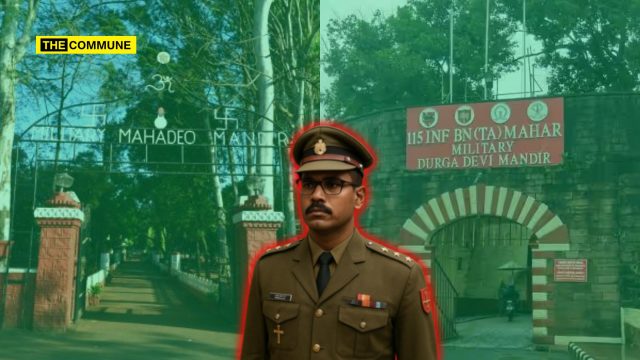
Christian Army Officer’s Refusal To Enter Temple Sanctum Could Create Dangerous Opening For Selective Obedience In Military

"You Have Hurt The Feelings Of The Soldiers" - Supreme Court Upholds Dismissal Of Christian Army Officer Who Refused to Enter Regiment’s Temple, Gurdwara

The Supreme Court is examining whether a Christian Army officer’s refusal to perform a temple ritual constitutes legitimate religious expression or an unforgivable breach of military protocol that warrants termination.

The case concerns Lieutenant Samuel Kamalesan, who was dismissed from service after he declined to enter the inner sanctum of his regiment’s temple to perform aarti during a ceremonial duty. The officer, attached to the 3rd Cavalry Regiment, argued that participating in the ritual would violate his monotheistic Christian faith.

The Troubling Precedent of Personal Belief Over Military Order

What makes this case particularly consequential is the challenge it poses to the fundamental principle of military hierarchy. The Delhi High Court, while upholding Kamalesan’s termination, delivered a stark warning: “Keeping one’s religion above a lawful command from a superior officer is an act of indiscipline.”

The military’s position is unambiguous – the Army cannot function as a democracy where soldiers pick and choose which orders to follow based on personal belief. Regimental rituals, whether religious or ceremonial, serve the crucial purpose of building unit cohesion and morale. When an officer distances himself from these practices, he risks alienating himself from the troops he must lead into battle.

Why This Case Should Concern Every Indian

This legal battle raises troubling questions about the future of military discipline in an increasingly individualistic society. The Armed Forces have historically operated on the principle that personal beliefs must yield to institutional requirements when national security is at stake.

The case reveals several alarming implications:

The Erosion of Command Authority: If soldiers can refuse orders based on religious grounds, it sets a dangerous precedent that could compromise operational effectiveness. As the High Court noted, hesitation in peace could become fatal hesitation in war.

Selective Obedience: The military functions on absolute obedience, not negotiated compliance. Today it’s a temple ritual; tomorrow it could be a soldier refusing to fire because his religion prohibits killing, or another refusing to handle certain equipment due to dietary restrictions.

Undermining Regimental Culture: Army regiments often draw strength from shared traditions and rituals. The 3rd Cavalry maintains both a temple and gurdwara, reflecting its composition of Sikh, Jat, and Rajput troops. Allowing individual exceptions could fragment this carefully maintained unity.

The Constitutional Dilemma

The Supreme Court, led by Justice Surya Kant, must balance Article 25’s guarantee of religious freedom against Article 33, which specifically allows Parliament to restrict fundamental rights of Armed Forces personnel to ensure proper discharge of duties and maintenance of discipline.

This isn’t merely about religious rights; it’s about whether any personal belief can override the military’s operational requirements. The Army’s argument is compelling: in uniform, the only deity is duty, and the only religion is service to the nation.

A Warning from Recent History

The timing of this case is particularly significant given the Indian military’s recent operational successes, including the spectacular triumph during Operation Sindoor. These victories were achieved precisely because of the unquestioning discipline and unity that characterizes our Armed Forces.

If the Supreme Court rules in favor of individual religious exceptions, it could fundamentally alter the character of the world’s second-largest standing army. The military’s strength has always lain in its ability to transcend individual differences in service of a common national purpose.

(With inputs from OpIndia)

Subscribe to our channels on TelegramWhatsApp, and Instagram and get the best stories of the day delivered to you personally.

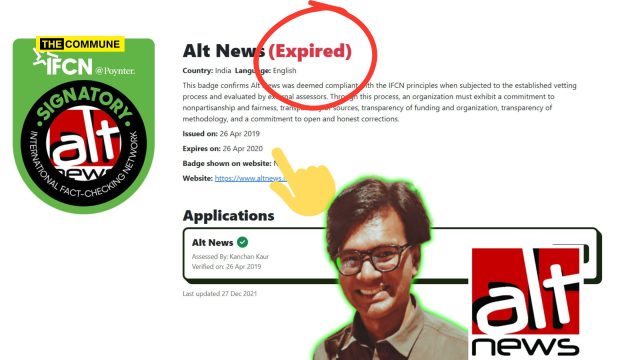
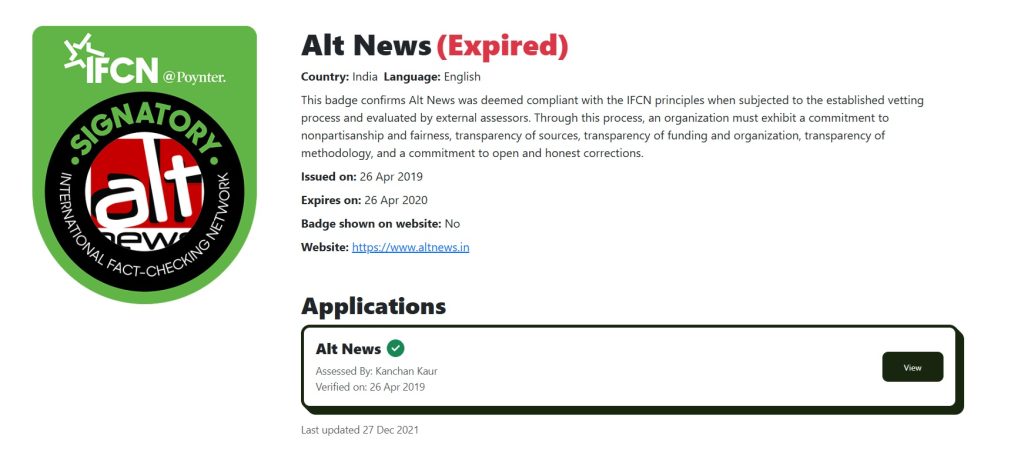
Alt News’ IFCN Certification Expired In 2020, Yet Islamo-Leftist Mohammed Zubair Masquerades As A Fact-Checker

Alleged Fact-Checker Zubair’s Alt News’ IFCN Certification Expired In 2020, Yet They Continue Claiming Fact-Checker Authority

Alt News, widely cited among left-leaning circles as a “fact-checking” portal, has not renewed its International Fact-Checking Network (IFCN) certification, which expired on 26 April 2020. Despite this, the website continues to present itself as a credible authority on misinformation, publishing content under the banner of “fact verification” while selectively targeting certain issues.

The IFCN certification, which Alt News held for just one year from 26 April 2019 to 26 April 2020, is intended to signal compliance with strict principles of nonpartisanship, transparency, and methodological rigor. Organizations must demonstrate fair sourcing, openness about funding, transparency in methodology, and a commitment to correcting errors. With its certification expired for over five years, Alt News can no longer claim independent validation of these standards.

Even though the IFCN comes under the Poynter Institute, an organization linked to Pierre Omidyar’s Omidyar Network and George Soros’s Open Society Foundation, AltNews has failed to renew their “badge”.

Yet the portal continues to operate as if nothing has changed. Its fact-checks often appear to cherrypick topics and narratives, disproportionately scrutinizing political opponents or particular social groups, while leaving other claims unexamined. Critics argue that this selective coverage allows Alt News to wield the authority of “fact-checking” as a shield, lending weight to its editorial choices while potentially spreading misleading narratives under the guise of verification.

A particularly concerning pattern has emerged: Alt News has consistently pushed narratives aligned with the leftist ecosystem, often branding Hindus collectively as wrongdoers or oppressors. Through subtle framing and repeated emphasis, the portal appears to dogwhistle and demonize Hindus, amplifying ideological biases while hiding behind the credibility of its “fact-checking” brand.

The expired certification also carries practical implications. Many social media platforms and aggregators prioritize content from IFCN-certified fact-checkers to label or suppress misinformation. By continuing operations without a valid badge, Alt News is effectively leveraging past credibility while bypassing ongoing external scrutiny.

Observers note that in the absence of active auditing, the line between genuine fact-checking and editorial advocacy becomes increasingly blurred. Alt News’ claim to “fact-checking authority” is now flawed, yet it continues to influence public discourse, selectively amplifying narratives that serve a particular ideological agenda rather than maintaining impartiality.

Subscribe to our channels on TelegramWhatsApp, and Instagram and get the best stories of the day delivered to you personally.
After Stalin, Udhayanidhi Failed In Acting, Fourth-Gen Karunanidhi Heir Inban Udhayanidhi To Debut As Actor In Film Directed By This Director, Currently Undergoing Training At Acting School

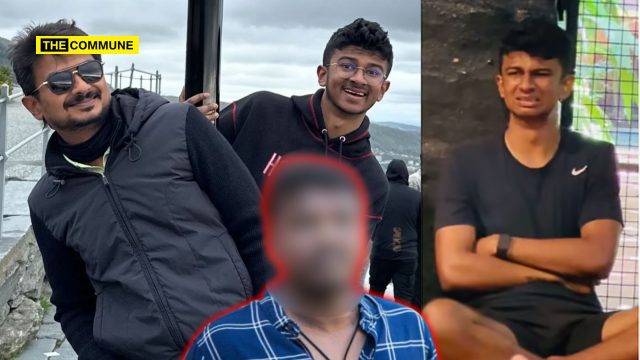
The political and cinematic legacy of the Karunanidhi family is preparing for its next chapter, this time with Inban Udhayanidhi, the 21-year-old son of Tamil Nadu Deputy Chief Minister Udhayanidhi Stalin and grandson of Chief Minister M.K. Stalin. Reports suggest that Inban is set to make his acting debut in a film directed by Mari Selvaraj, the same filmmaker who helmed Maamannan (2023), Udhayanidhi Stalin’s last film before he went full-time into politics. Videos of Inban undergoing ‘acting’ training have already gone viral.

This marks the fourth generation of the Karunanidhi family to engage directly with Tamil cinema. Former Chief Minister and dialogue writer M. Karunanidhi used films like Parasakthi to spread social and political ideas.

His son, M.K. Stalin, also appeared in films such as Ore Raththam (1987) and Makkal Aanaiyittal (1988) but failed to make an impact as an actor.

Udhayanidhi Stalin followed, starting as a producer with Red Giant Movies, then making his acting debut in 2012 with Oru Kal Oru Kannadi, and later transitioning fully into politics after the film Maamannan. He too failed as an actor with more than 10 flop in his filmography.

Inban’s rise mirrors his father’s path but appears to be accelerated. In June 2025, coinciding with DMK patriarch Karunanidhi’s birthday, Inban formally took up responsibilities at Kalaignar TV, working closely with executives like CFO Karthikeyan. Reports indicated that he managed daily financial operations reflecting an early immersion into media management much similar to his father Udhayanidhi Stalin. Shortly afterward in September, Inban was seen to have taken over Red Giant Movies, securing distribution rights for Dhanush’s Idli Kadai, further cementing his position in the film industry before even formally debuting as an actor.

It is impossible to ignore the role of nepotism and political grooming. Inban’s rumoured entry into acting, combined with his immediate control over major media and production enterprises, suggests a carefully orchestrated strategy: first managing finances and operations, then producing and distributing films, and finally stepping into acting – all before establishing an independent reputation. Comparatively, Udhayanidhi Stalin took nearly a decade to solidify his cinematic career before moving into politics; Inban’s timeline is much more compressed.

Critics argue that Inban is being prepped not just for a career in Kollywood, but also for future leadership within the DMK, following the same blueprint his father did – from media to cinema to political office.

(With inputs from Times of India)

Subscribe to our channels on TelegramWhatsApp, and Instagram and get the best stories of the day delivered to you personally.
Congress-DMK Ally VCK MP Thirumavalavan Hails Terror Organization Hamas As “Bulwark Of Protection For Palestinians”

Viduthalai Chiruthaigal Katchi (VCK) chief Thol. Thirumavalavan on 8 October 2025 defended Hamas during an all-party protest in Chennai organised by the Communist Party of India (Marxist) to condemn what the organisers described as the “genocide” in Gaza.

The CPI(M) had earlier urged the Indian government to suspend all trade agreements with Israel in response to the ongoing military actions in Gaza.

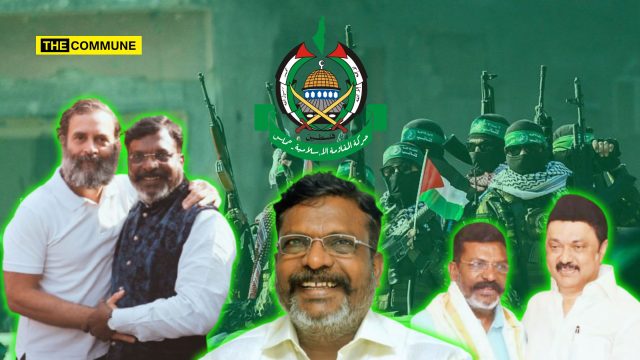
Speaking at the gathering, Thirumavalavan said, “Israel is repeatedly engaging in war and attacking Palestine by giving the excuse of Hamas. Why was Hamas formed? They are a bulwark of protection for the Palestinians. They are not just war fanatics. They are Not those who place their trust only in weapons, they are not those who say that terrorism is the solution, they prioritise protection for Palestinians. They demand recognition of Palestine. They have taken up arms to protect themselves. But Israel is calling Hamas a terrorist organization and is committing genocide against the Palestinians today in the name of destroying and eradicating them with the help of America and other countries.”

It is noteworthy that CM Stalin also participated in the event. Stalin further noted that a resolution condemning the Israeli attacks and calling for an immediate ceasefire will be introduced in the upcoming Tamil Nadu Assembly session, reflecting the sentiments of the state’s people.

Subscribe to our channels on TelegramWhatsApp, and Instagram and get the best stories of the day delivered to you personally.
DMK Crown Prince Udhayanidhi Stalin Indirectly Refers To Vijay As Slave, Attacks Governor, Calls Centre Fascist While His Father Jails Critics For Social Media Posts

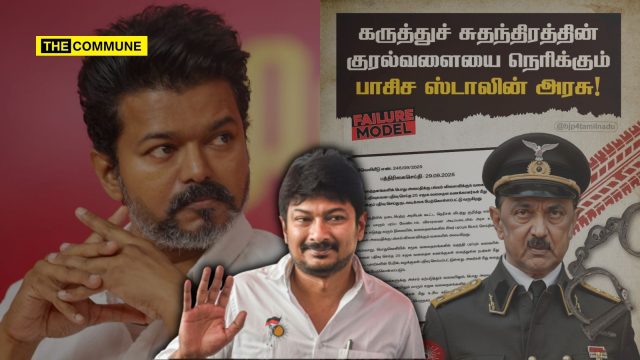
Tamil Nadu Deputy Chief Minister and DMK Youth Wing Secretary Udhayanidhi Stalin on 8 October 2025 indirectly referred to actor Vijay’s political outfit, the Tamilaga Vettri Kazhagam (TVK), as the BJP’s “new slave” in Tamil Nadu, while also launching a fierce attack on Governor RN Ravi and the Union government, labelling them as “fascist forces.”

Speaking at a DMK functionaries’ meeting for the Srirangam constituency at Kalaignar Arivalayam, Trichy, Udhayanidhi said, “The BJP-led Union Government is conspiring with AIADMK and new slaves to capture Tamil Nadu.”

He claimed that the state had been “fighting” against Governor R.N. Ravi for the past four years and would continue until “victory is achieved.” He asserted, “No matter how many such conspiracies arise, DMK cadres will ensure the state remains untouched by fascist forces.”

Criticising Governor R.N. Ravi, he added, “Two days ago, the Governor started his election campaign. He asks who Tamil Nadu is fighting against. For four years, Tamil Nadu has been fighting against him. We will continue to fight and win. As long as the last DMK cadre stands, the state will resist fascism.”

Taking aim at the opposition, he remarked, “While AIADMK leaders claim they are the main opposition, the real competition within AIADMK is for second place, with Modi and Amit Shah holding the top spots.”

Udhayanidhi also highlighted the DMK government’s welfare programmes, stating that free laptops for students would soon be distributed, and urged booth committee members to strengthen public engagement ahead of the next Assembly elections.

Calling the next five months “crucial,” he appealed to DMK cadres to intensify election work to ensure the party secures over 200 seats.

On the party’s strength, he declared, “Trichy is not just central on the map but also politically central to Tamil Nadu — his fort. The DMK’s strength lies in its grassroots cadre, who have kept the party vibrant for 75 years despite slander and propaganda. The Dravidian Model government has implemented several welfare schemes, including many not listed in the election manifesto, making Tamil Nadu a role model for other states.”

Continuing his attack on the BJP, Udhayanidhi said, “BJP is trying to impose Sanskrit and caste-based education through the New Education Policy, but Tamil Nadu will firmly resist it. AIADMK leader Edappadi Palaniswami is inconsistent in his stance, having ‘fallen at the feet’ of multiple leaders and now fully surrendered to Prime Minister Modi.”

He added, “The BJP has come to capture Tamil Nadu at any cost with the support of its old slave, the AIADMK. Now, they are searching for new slaves as well. You all very well know whom I am referring to,” indirectly targeting TVK Chief and actor Vijay.

Udhayanidhi’s remarks come amid mounting criticism of the DMK government’s tightening control over online dissent, with police arrests of social media users and political critics, even as he accuses the Union government of “fascism” and “slavery.”

(With inputs from ANI)

Subscribe to our channels on TelegramWhatsApp, and Instagram and get the best stories of the day delivered to you personally.
DMK Govt Omits Names Of Great Tamil Kings, Tall Dalit Leaders In Statewide Drive To Rename Streets, Includes Karunandhi’s And Anti-Hindu EVR Name

In a sweeping directive, the Tamil Nadu government has mandated the removal of all caste-based names from streets, localities, and waterbodies across the state by 19 November 2025. The order, however, has ignited immediate controversy for allegedly sidelining prominent Dalit icons, with opposition parties accusing the ruling DMK of a selective and politically motivated approach to social justice.

The directive was issued on 6 October 2025 by Chief Secretary N. Muruganandam. District collectors have been instructed to replace existing caste-derived names with those of Tamil literary figures, leaders, or flowers.

According to the government order, roads bearing caste references are to be renamed after a list of 16 figures, which includes Tamil literary giants like Tiruvalluvar and Avvaiyar, as well as leaders such as Periyar E.V. Ramasamy, and former chief ministers C.N. Annadurai and M. Karunanidhi. For waterbodies, the government has proposed 15 flower names, including Roja, Malli, and Sembarathi.

This initiative follows an announcement made by Chief Minister M.K. Stalin on 29 April 2025 to eliminate the term “colony” from government records and public discourse. Consequently, names such as Adi Dravidar Colony, Harijan Colony, Paraiyar Theru, and Sakkiliyar Salai are set to be replaced with what the government describes as “neutral, casteless names.”

The state administration has set a tight deadline for the process. District administrations are required to identify all such places by 14 October 2025, hold public consultations and receive petitions by 17 October 2025, and notify the changes by 24 October 2025. The final list must be submitted to the government by 14 November 2025, with all renaming to be officially completed by 19 November 2025. Following this, district collectors have been directed to facilitate the updating of all relevant records, including Aadhaar, community certificates, family cards, and land documents for affected residents.

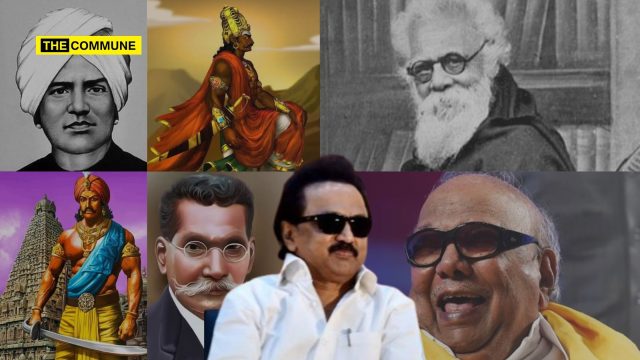
The move, while ambitious, has drawn sharp criticism for its perceived exclusions. The provided list of new names has been notably criticised for omitting key Dalit leaders from the Dravidian and Tamil social justice movements such as Rettaimalai Srinivasan and Ayothidasa Pandithar.

The names of Tamil Nadu’s greatest rulers — Rajaraja Chola, Rajendra Chola — or even the illustrious dynasties of the Cheras, Cholas, Pandyas, and Pallavas have been conspicuously excluded.

BJP state president K. Annamalai strongly criticized the move. He stated, “If the government is naming after former chief ministers, where is M G Ramachandran?” He demanded that the order be revoked and reissued to include leaders such as Dr. B.R. Ambedkar, Rettamalai Srinivasan, Rani Velu Nachiyar, and V.O. Chidambaranar.

Echoing similar sentiments, former AIADMK MP J. Jayavardhan pointed out that the names of former chief ministers MGR and J. Jayalalithaa were also missing. He alleged, “DMK is in power, so they have included their leader,” implying political bias in the selection.

When questioned about the exclusions, DMK MLA N. Ezhilan defended the government’s approach. He stated that the inclusion of names like Periyar, Anna (C.N. Annadurai), and Kalaignar (M. Karunanidhi) should not be viewed politically. “The government is taking systemic steps to eliminate caste. Teaching scientific temper and rational thinking is key to ending caste discrimination,” Ezhilan said.

Despite this defence, the absence of foundational Dalit figures like Rettamalai Srinivasan and Ayothidasa Pandithar from the list has led to questions about the DMK’s “Dravidian Model” involving abbreviating Tamil history in a manner that overlooks crucial anti-caste crusaders from the Dalit community.

(With inputs for Times of India)

Subscribe to our channels on Telegram, WhatsApp, and Instagram and get the best stories of the day delivered to you personally.