Home Blog Page 738

Netizens Trend #HBDFatherOfCorruption On Karunanidhi Birth Anniversary, DMK Tries To Counter With #கலைஞர்100‌

#HBDFatherOfCorruption Karunanidhi

The annual hashtag war between the supporters and rivals of the DMK once again played out June 3, the birth anniversary of late DMK patriarch Karunanidhi.

The hashtag “#HBDFatherOfCorruption” started trending from the evening of June 2 and had been a top trend on June 3.

From the DMK’s side the hashtag “#கலைஞர்100‌ (#Kalaignar100)” was being used to commemorate the late leader’s birth anniversary.

Netizens unleashed their creativity through vivid content targeting Karunanidhi.

An old video taking jibes at Karunanidhi was shared by netizens on social media which goes like this “Attention Tamils! As a non-Tamil gang after learning Tamil is entering Tamil Nadu to loot, please be careful.”   The video then goes on to show one Dakshinamurthy (Karunanidhi’s original name) doing chit-chat in chaste Tamil at a tea shop inside the railway station and then tries to leave taking the luggage of the stranger with whom he was having the conversation.

Mr. Dakshinamurthy, that bag is mine“, ends the video with the hashtag #HBDFatherOfCorruption.

An X user shared the Karunanidhi version of Athichudi (single line quotes of Tamil poet Avvaiyaar) which was recited by ADMK MLA Vetrivel. The serious lady that Jayalalithaa was, Vetrivel’s recitation of Karunanidhi Athichudi had her in splits.

Another netizen shared a snippet of late DMDK leader Vijayakanth who lambasted Karunanidhi in an interview in which he says ““Ah Kalaignar has done this, Kalaignar has done that. What Kalaignar? What did he do? I am giving him respect and calling him Kalaignar. What did he do? He pawned the state of Tamil Nadu. Even now, he keeps saying race, race. They have killed the same race in Ceylon and he is talking about race? A regime where nothing was done, what a shameful regime. People must teach a lesson to these two parties, the DMK and the Congress, this is my wish. I already said he is the pinnacle of lies. If I listen, I get angry. He lies through his teeth. The example of what a big traitor he is is that he gave you free television but he took all the connection charges. This is the truth. Who has the connections (cable TV)? Tell me. Is it with the common man? It is all there with his party people, with him, with his grandchildren, and his son. This is the truth.”

The DMK under Karunanidhi is guilty of several other corruption charges and failures. The party was part of the biggest ever corruption case in the history of India – 2G spectrum case. Karunanidhi in order to save his seat, went soft on the UPA government headed by its alliance partner Congress, by organizing lip service protests while thousands of Tamils in Sri Lanka were killed in the civil war in Sri Lanka. He is said to have undertaken the ‘fastest fast’ by starting the fast after breakfast and ending it before lunch.

Subscribe to our channels on TelegramWhatsApp, and Instagram and get the best stories of the day delivered to you personally.

Comedian-Turned-Politician Karunas Detained With 40 Live Bullets In Chennai Airport, Released Later

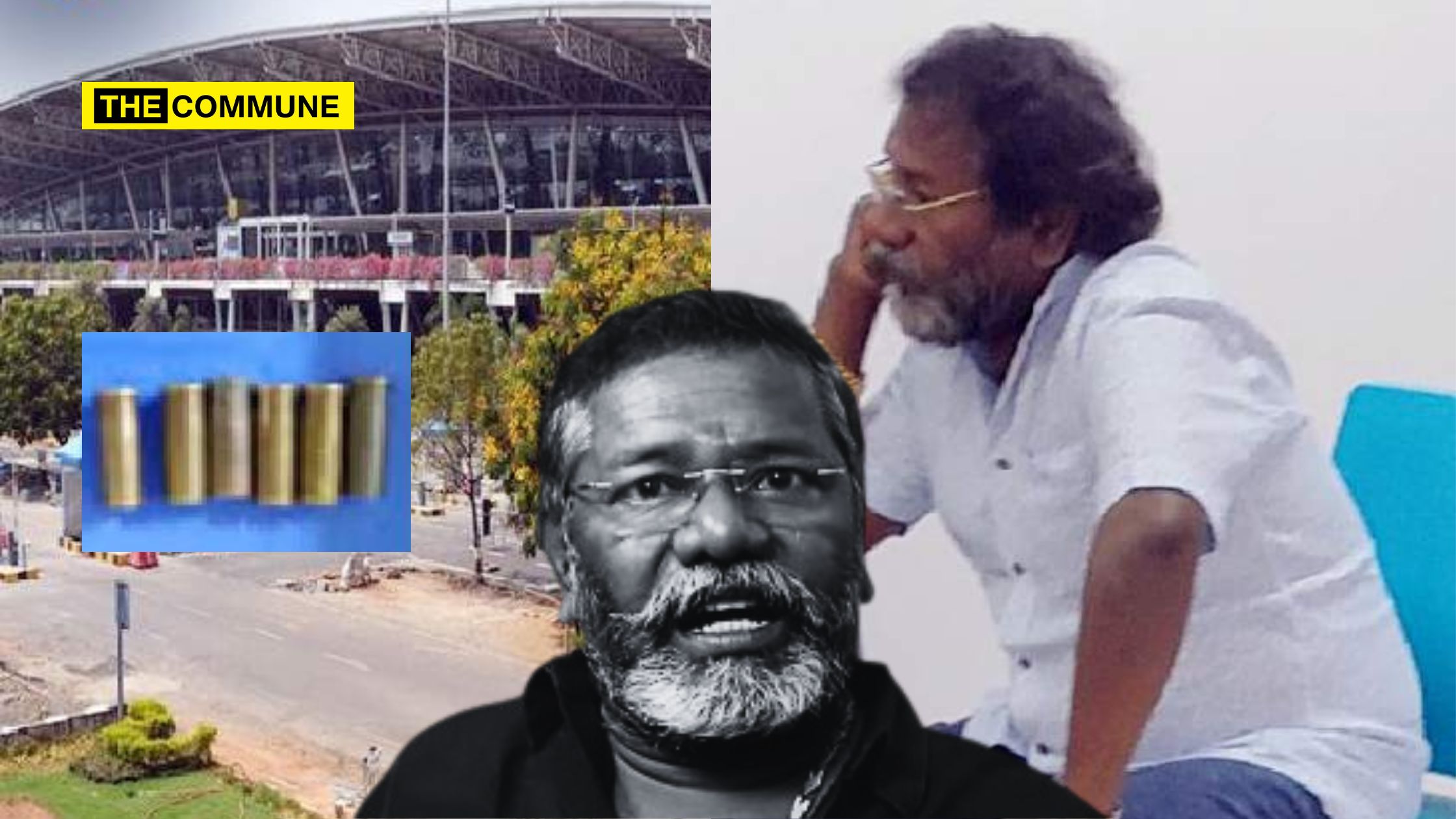
Tamil actor turned politician Karunas faced detention at Chennai Airport after security personnel purportedly discovered bullets in his bag as he was preparing to board a flight to Trichy.

According to sources within the police, a security scan of Karunas’s hand luggage revealed the presence of an explosive substance, leading to a thorough inspection which uncovered 40 live bullets.

Upon questioning, Karunas asserted he possessed a valid firearm license and presented the requisite paperwork. He explained that due to rushing out of his home, he hadn’t thoroughly checked his bag, inadvertently bringing along the bullets. Following an interrogation, Karunas was released, although he opted not to proceed with his scheduled flight. Law enforcement clarified that no formal case was filed, as it was determined that Karunas held a legitimate firearm license and the bullets were mistakenly packed.

Karunas further mentioned that he had surrendered his firearm to the Dindigul police in adherence to election regulations. Despite the interrogation and the brief detention, no charges were pressed, and Karunas was eventually allowed to leave.

Opportunist Karunas

Karunas, the founder of Mukkulathor Pulipadai, a political group representing the Thevar community, ran for the Tamil Nadu State Legislative Assembly from Thiruvadanai in the 2016 Tamil Nadu Legislative Assembly election. He used the Two Leaves symbol of AIADMK and emerged victorious. During J Jayalalitha’s lifetime, he was a staunch supporter of AIADMK. However, following her death, he, like many others in AIADMK, shifted his allegiance to VK Sasikala, a close associate of J Jayalalitha, to maintain his position in AIADMK. While this move worked out for others, it backfired for Karunas. For instance, on 25 February 2017, an unknown individual hurled footwear at Karunas’ car while he was on his way to pay tribute to freedom fighter Muthuramalingam Thevar. This incident is believed to be linked to his support for AIADMK leader VK Sasikala.

On 23 September 2018, Karunas stirred up controversy by publicly criticizing AIADMK Chief Minister Edappadi K Palaniswami (EPS), claiming that the CM was intimidated by him. This incident, which occurred while he was still a member of AIADMK, led to a case being filed against him after his speech went viral on social media. During his address to members of Mukkulathor Puli Padai at Valluvar Kottam, Karunas challenged a police officer present there to remove his uniform and fight him. In the video, Karunas can also be heard encouraging his supporters to commit murder, but only after informing him and ensuring there is a valid reason for the act. He also advised his followers to reveal their identities if they intended to throw stones at opponents. Despite being a member of the Mukkulathors community, also known as Thevars, Karunas claimed his loyalty was with the Sasikala faction, even though many “disloyal” members of his community had joined the EPS faction.

Following these incidents, Karunas was ostracized within the AIADMK. He later aligned himself with the DMK, adopting their ideology, and extended his support to the DMK in 2021. As of the 2024 Lok Sabha election, he is supporting the I.N.D.I bloc.

Against Sanatana Dharama

In 2024, Karunas, the founder of Mukkulathor Pulipadai, declared support for the DMK, stating, “The Mukkulathor Pulipadai backs DMK in 2024 parliamentary elections for social justice, defeating Santana (Hindu)”

Raja Raja Cholan Not a Hindu

In the midst of a debate sparked by Dravidian director Vetrimaaran’s assertion that Raja Raja Cholan was not a Hindu king, Karunas fervently endorsed and defended his viewpoint on the monarch’s religious affiliation.

Vetrimaaran expressed his concern, “Our symbols are being persistently taken away from us. The act of saffronising Valluvar or labelling Raja Raja Cholan as a Hindu King is a recurring phenomenon.”

Karunas, who backed Vetrimaaran’s stance on Hinduism, stated that the Tamil community would not tolerate identity misrepresentation. He argued that designating Raja Raja Chola as a Hindu king contradicts Tamil ethics. He questioned the existence of Hinduism during Raja Raja Chola’s reign and the origin of the term ‘India’, which he claimed was coined by the British for commercial purposes. He further stated that Hinduism was also a creation of the British, and hence, India is not a single nation but a union of multiple nations.

He pointed out that it’s natural for the Indian Union, home to diverse nationalities, to have various religions, embodying unity in diversity. Issues arise when one religion attempts to dominate and engulf everything else. He emphasized that during Raja Raja Chola’s time, there was no Hindu religion, but several religions like Saivism, Vaishnavism, and Ashivakam existed. He found it absurd to label or replace Raja Raja Chola and Rajendra Chola as Hindu kings.

It’s worth noting that amidst this controversy, Karunas was appointed as an assistant director by Vetrimaaran for his film ‘Vaadi Vaasal’ just six months ago.

CDN media

Reason To Eliminate Sanatana Dharma

In 2024, Karunas actively campaigned for the ‘I.N.D.I’ Alliance Party’s candidate, Manickam Tagore, in Sattur, located in the Virudhunagar district. During his campaign, Karunas made a controversial statement. He criticized the central BJP government for promoting the Sanatana policy. He pointed out that in the past, only members of the Pandaram caste rang the bells in the Murugan temple. However, currently, individuals wearing the poonool (sacred thread) are performing this ritual. He identified this change as a manifestation of the Sanatana policy and called for its elimination. This statement creating controversy goes against both Sanatana Dharma and ridiculing the Brahmins.

(With Inputs From The Hindu)

Subscribe to our channels on TelegramWhatsApp, and Instagram and get the best stories of the day delivered to you personally.


NOTA Polls 3X More Votes Than Congress In Sikkim Assembly Elections, Cong Gets A Disastrous 0.32% Vote Share

The Congress party experienced significant setbacks in the recently announced results of the Arunachal Pradesh and Sikkim assembly elections. In Arunachal Pradesh, the Congress secured only one seat, while in Sikkim, the party failed to open its account, marking a substantial disappointment.

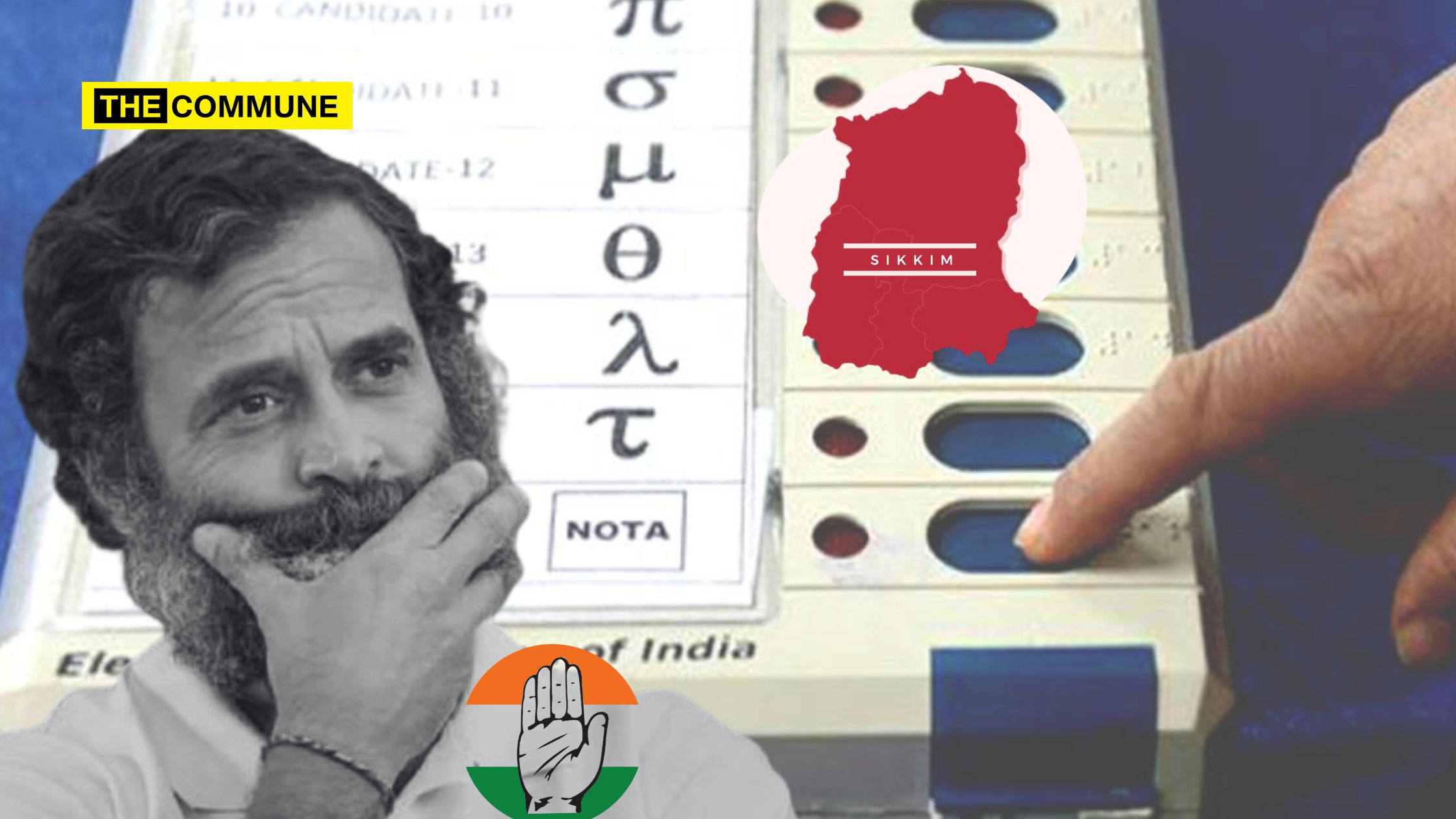
In Sikkim, Congress’s performance was particularly abysmal, receiving much fewer votes than the None of the Above (NOTA) option. NOTA garnered 0.99% of the votes, surpassing Congress’s 0.32%. This represented a decline from the previous state assembly elections in 2019, where Congress had achieved a vote share of 0.77%.

The Sikkim Assembly elections, comprising 32 seats, saw the Sikkim Krantikari Morcha (SKM) win decisively with 31 seats, leaving only one seat for the Sikkim Democratic Front (SDF). In contrast, the Congress did not manage to secure any seats in Sikkim. The BJP, however, captured 5.18% of the total votes polled.

In Arunachal Pradesh, the BJP dominated the elections, winning 46 out of 60 assembly seats. Other parties such as the National People’s Party (NPP) won five seats, the Nationalist Congress Party (NCP) secured three, the People’s Party of Arunachal (PPA) took two, and independents claimed three seats. Congress managed to secure only the Bameng assembly seat, where its candidate, Kumar Y, won by a margin of 635 votes.

Netizens had a field day trolling the Congress for its terrible performance in the state.

Subscribe to our channels on TelegramWhatsApp, and Instagram and get the best stories of the day delivered to you personally.

Telangana Congress CM Revanth Reddy Hails BJP Leader Sushma Swaraj During State Formation Celebration

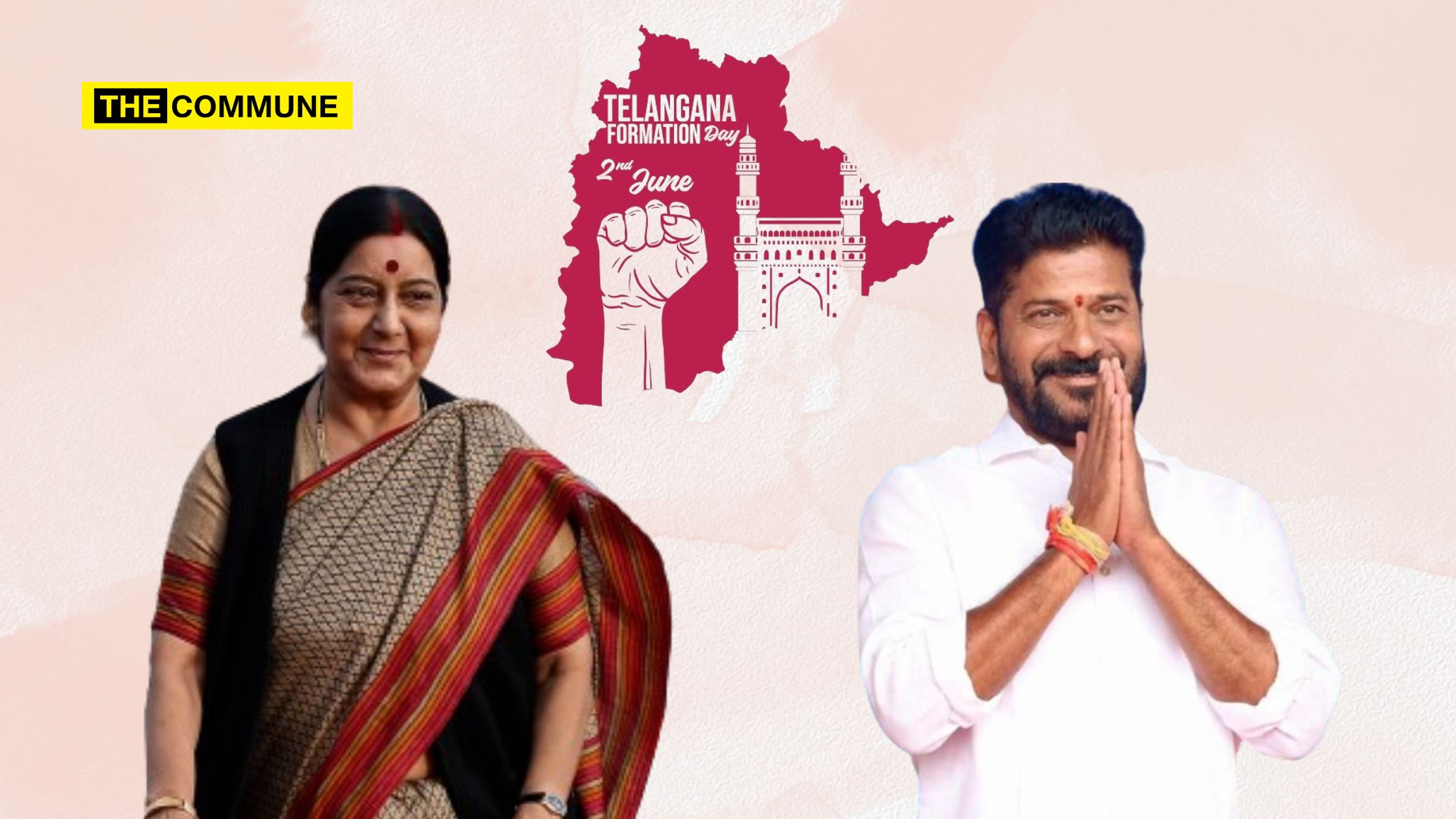
During the decennial celebrations of Telangana state formation at Parade Ground in Secunderabad, Chief Minister Revanth Reddy emphasized the pivotal roles played by Sonia Gandhi, former Lok Sabha Speaker Meira Kumar, and the late Sushma Swaraj in the creation of Telangana. Reddy, who leads the Congress government in Telangana, used this occasion to highlight the achievements of his administration and counter the criticism from the BRS and BJP.

Revanth Reddy criticized the BRS regime, claiming that the ten years under their rule equated to a century of destruction for Telangana. He accused the BRS of not only causing physical damage but also assaulting fundamental freedoms and denying social justice. He alleged that the wealth of the state had been concentrated in the hands of a few, to the detriment of the broader population.

During the event, Reddy took the opportunity to remember Sushma Swaraj, who was the Leader of the Opposition in the Lok Sabha during the passage of the Telangana bill. He acknowledged her cooperation and support for the bill, which was crucial for the creation of Telangana.

He said, “On this occasion, on this stage, in the history of the government, a great change, a great decision was made that day in Lok Sabha that the Telangana state would be established. That day, the leaders of the Bharatiya Janata Party and the leaders of every party, Sushma Swaraj, that day in Lok Sabha along with the leaders of every party gave full support to the Telangana state, granting the Telangana Bill and the government’s arrangements, she too completely supported. On behalf of the 4 crore citizens of the Telangana state, I express my gratitude to Sushma Swaraj. I take this opportunity to thank all of you for your sacrifice and great decisions in Telangana’s history. Jay Telangana.”

Subscribe to our channels on TelegramWhatsApp, and Instagram and get the best stories of the day delivered to you personally.

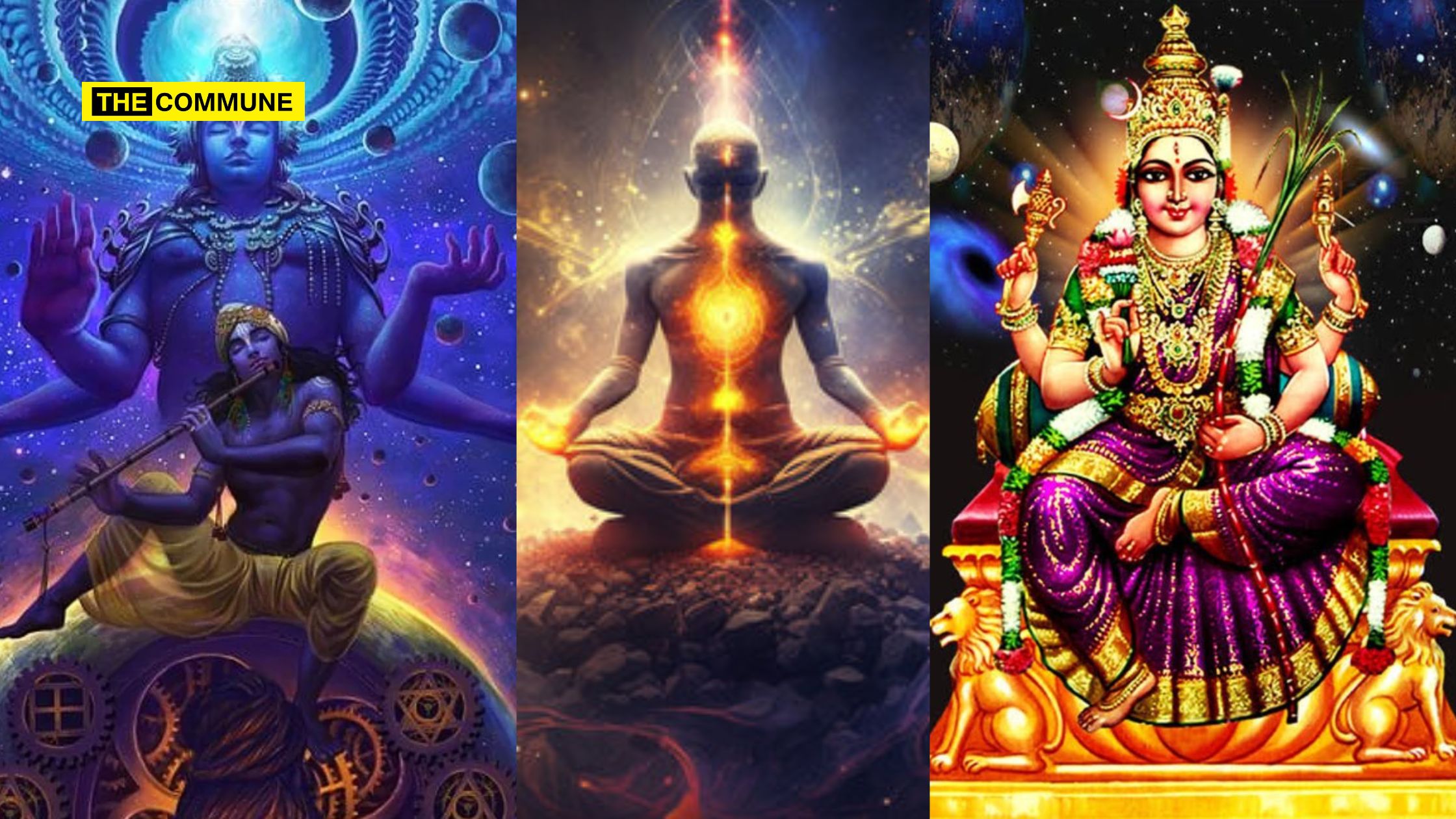
Varna System Decoded Using Bhagavad Gita, Lalitha Sahasranamam, And Mundaka Upanishad

The spiritual dimension of Sanatana Dharma has faced significant distortion and misinterpretation over millennia, partly due to internal conflicts within the country and interference from foreign invaders. A notable example of this is the Varna system, often misconstrued as a form of social class discrimination. However, this interpretation overlooks the deeper essence of the ancient scriptures, with only a select few psychologists and scientists from France, Germany, and America grasping the true essence of Sanatana Dharma.

The term “Varna” itself translates to ‘color’. References to Varna appear in ancient texts such as the Rig Veda (10.90.12), Atharva Veda (19.62), as well as in various Brahmanas including the Satapata Brahmana. Additionally, the Bhagavad Gita features mentions of Varna in several places, including Chapter 4, Verse 13 and Chapter 18, Verse 41. Furthermore, Varna is referenced in the Lalitha Sahasarnamam, a well-known Sanskrit hymn from the Brahmanda Purana.

The focus here is on the Bhagavad Gita and Lalitha Sahasranamam because these verses are indicative of Kundalini Yoga.

Glimpses From Gita

Gita Verse 4:13

चातुर्वर्ण्यं मया सृष्टं गुणकर्मविभागश: |
तस्य कर्तारमपि मां विद्ध्यकर्तारमव्ययम् || 13||

chātur-varya mayā siha gua-karma-vibhāgaśha
tasya kart
āram api mā viddhyakartāram avyayam

 Meaning:

“The four categories of Varna were created by Me according to people’s qualities and activities. Although I am the Creator of this system, know Me to be the Non-doer and Eternal.”

Commentary:

The Vedic philosophy offers a structured explanation for this diversity, viewing material energy as comprised of three fundamental qualities known as “guṇas”: sattva guṇa (mode of goodness), rajo guṇa (mode of passion), and tamo guṇa (mode of ignorance). In this framework, individuals are categorized based on their predominant qualities and actions: Shudra embodies ignorance, Vaishyas exhibit passion mixed with ignorance, Kshatriyas demonstrate passion mixed with Godliness, and Brahmanas represent pure Godliness.

The classification within the Varṇāśhram system aligns with people’s inherent qualities and behaviors.

While God is acknowledged as the creator of the world’s structure, the philosophy also emphasizes the concept of non-doership. This analogy likens God’s role to that of rain, which falls uniformly but leads to varied outcomes depending on the seeds it nourishes. Similarly, while God endows souls with the energy to act, individuals possess free will in determining their actions, with God not being held accountable for their choices.

Gita Verse 18:41

ब्राह्मणक्षत्रियविशां शूद्राणां परन्तप |
कर्माणि प्रविभक्तानि स्वभावप्रभवैर्गुणै: || 41||

brāhmaa-khatriya-viśhā śhūdrāā cha parantapa
karm
āi pravibhaktāni svabhāva-prabhavair guai

Meaning:

“The duties of the Brahmana, Kshatriya, Vaishya, and Shudra—are distributed according to their qualities, in accordance with their guṇas (and not by birth).”

Commentary:

In this context, Lord Krishna elucidates that individuals possess diverse inherent natures, shaped by the fundamental qualities known as “guṇas” that comprise their personalities. Accordingly, different professional roles are suited to these varied dispositions.

Within the varṇa system, there existed no inherent hierarchy among the categories. With God at the core of society, individuals engaged in occupations aligned with their intrinsic qualities, contributing to the sustenance of both themselves and the community. Success was measured by one’s progress towards realizing God, fostering a sense of unity amid diversity. Diversity, akin to the multifunctionality of limbs in the body, was regarded as natural and indispensable.

Over time, however, the varṇa system underwent deterioration, shifting from a nature-based classification to one based on birth. Brahmin children began identifying as Brahmins irrespective of their inherent qualities, perpetuating the emergence of hierarchical notions and the marginalization of lower castes. As the system became rigid and birth-oriented, it lost functionality, deviating from its original purpose. This social distortion was a consequence of temporal influences and strayed from the intended essence of the varṇa system.

 Gita Verse: 13.2

इदं शरीरं कौन्तेय क्षेत्रमित्यभिधीयते |
एतद्यो वेत्ति तं प्राहु: क्षेत्रज्ञ इति तद्विद: || 2||

śhrī-bhagavān uvācha
ida
śharīra kaunteya khetram ity abhidhīyate
etad yo vetti ta
prāhu khetra-jña iti tad-vida

Meaning:

“O Arjun, this body is termed as kṣhetra (the field of activities), and the one who knows this body is called kṣhetrajña (the knower of the field) by the sages who discern the truth about both.”
Commentary:

In Bhagavad Gita 13.2, Lord Krishna compares the body to a “kṣhetra” or field of activities, while the conscious self is termed “kṣhetrajña,” the knower of the field. This analogy highlights the transient nature of the body and the eternal essence of the self. Understanding oneself as the observer of the body fosters detachment from worldly affairs and cultivates a deeper connection with the eternal soul. Lord Krishna emphasizes the wisdom of sages who discern the truth about the body and the self, guiding seekers toward self-realization. This verse underscores the importance of self-awareness and spiritual insight in transcending the limitations of the material world and realizing one’s true nature.

Gita Verse 4.29-30

अपाने जुह्वति प्राणं प्राणेऽपानं तथापरे |
प्राणापानगती रुद्ध्वा प्राणायामपरायणा: || 29||
अपरे नियताहारा: प्राणान्प्राणेषु जुह्वति |
सर्वेऽप्येते यज्ञविदो यज्ञक्षपितकल्मषा: || 30||

apāne juhvati prāa prāe pāna tathāpare
pr
āāpāna-gatī ruddhvā prāāyāma-parāyaā
apare niyat
āhārā prāān prāehu juhvati
sarve
pyete yajña-vido yajña-khapita-kalmahā

Meaning:

“Still others offer as sacrifice the outgoing breath in the incoming breath, while some offer the incoming breath into the outgoing breath. Some arduously practice prāāyām and restrain the incoming and outgoing breaths, purely absorbed in the regulation of the life-energy. Yet others curtail their food intake and offer the breath into the life-energy as sacrifice. All these knowers of sacrifice are cleansed of their impurities as a result of such performances.”

Commentary:

Some individuals are attracted to the practice of prāṇāyām, which involves various techniques for controlling the breath. These techniques include Pūrak, the inhalation process, Rechak, exhalation, Antar kumbhak, holding the breath after inhalation, and Bāhya kumbhak, holding the breath after exhalation. These practices require guidance from qualified teachers to prevent potential harm. Yogis who engage in prāṇāyām aim to regulate their senses and concentrate their minds. They offer their disciplined minds as a spiritual sacrifice, known as yajña, to the Supreme Being.

Prāṇa, often translated as breath, is actually a subtle life force energy present in all living and non-living entities. Vedic scriptures describe ten types of prāṇas, known as Dasha Vayus, including Prāṇan, Apānan, Vyānan, Samānan, Udānan, Kūrman, Nāgan, Krikaraṇ, Devadathan, and Dhananjayan. The term ‘Apaanan’ is found in this context. ‘Yajna’ refers to sacrifice, not necessarily involving harm to living beings. People undertake these practices to purify themselves, aiming to overcome desires for sensory and material gratification. Such sacrifices lead to the purification of the heart, symbolizing the inner workings of the mind and intellect.

Glimpses from Lalitha Sahasranamam

  • आब्रह्मकीटजननी – AabrahmaKeeta Janani: She is the mother of everything from Brahma to the tiniest insect.
  • वर्णाश्रमविधायिनि – Varnashrama Vidhayini: She established the Varnashramam.
  • निजाज्ञारूपनिगमा – Her commands take the form of the Vedas.

In Lalitha Sahasranamam, the presence of the term “Varnashrama” might surprise you. This hymn praises Devi Shakthi in 1000 verses, representing the awakened Kundalini Shakti within all beings.

  • मूलाधारैकनिलया – Mooladharaikani Layaa: She dwells in the Muladhara chakra.
  • ब्रह्मग्रन्थिविभेदिनी – Brahmagranthivibhedini: She unravels the knot of Brahma.
  • मणिपूरान्तरुदिता – Manipurantaruditaa: She emerges in the Manipura chakra.
  • विष्णुग्रन्थिविभेदिनी – Vishnugranthivibhedini: She unties the knot of Vishnu.
  • आज्ञाचक्रान्तरालस्था – Ajnachakrantarastha: She resides at the center of the Ajna chakra.
  • रुद्रग्रन्थिविभेदिनी – Rudragranthivibhedini: She releases the knot of Shiva.
  • सहस्राराम्बुजारूढा – Sahasrararudha: She ascends to the thousand-petaled lotus.
  • सुधासाराभिवर्षिणी – Sudhasarabhi Varshini: She showers streams of ambrosia.
  • तडिल्लतासमरुचिः – Tadillatasamaruchih: She shines like a flash of lightning.
  • षट्चक्रोपरिसंस्थिता – Shatchakroparisamsthita: She sits above the six chakras.
  • महासक्तिः – Mahasaktih: She is deeply attached to the divine union of Shiva and Shakti.
  • कुण्डलिनी – Kundalini: She manifests in the form of a coil.

These terms, such as Mooladhara, Manipura, and Ajna chakras, and Brahma Granthi, Vishnu Granthi, Rudra Granthi, are integral to Kundalini techniques.
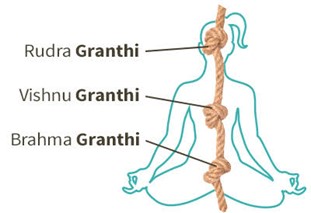
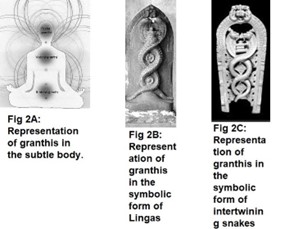
Why do these texts discussing Kundalini techniques emphasize the term ‘Varna’?

Varna does not refer to a caste-based hierarchy.

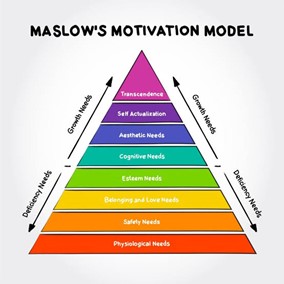
When a person’s life revolves around basic needs like food and sex, their energy is dormant. Overcoming these needs activates the ‘Mooladhara’ chakra, identifying the person as a ‘SHUDRA’. When the person develops a strong heart and universal love, overcoming all forms of fear, the ‘Anahattha’ chakra is activated, making them a ‘KSHATRIYA’. When the person transcends individuality and realizes pure consciousness, the ‘Sahasrara’ chakra is activated, making them ‘BRAHMANA/BRAHMAN’. The term ‘Brahmin’ is a corrupted version of the original word ‘BRAHMAN’. Anyone who comprehends Brahma Vidya (Knowledge of Brahman) is called a Brahman.

These distinctions of Varnas originally signified spiritual progress, but over thousands of years, they were corrupted by some unenlightened Indian rulers and further misinterpreted by foreign invaders (Mughals and British).

Misinterpreting Varna as caste, hierarchy, or discrimination stems from a lack of understanding of the metaphors and allegories used in the Vedas, Upanishads, and other spiritual texts.
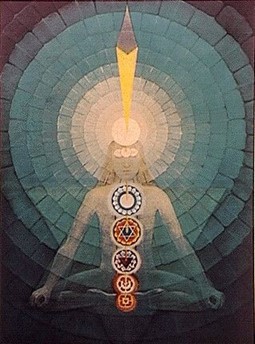
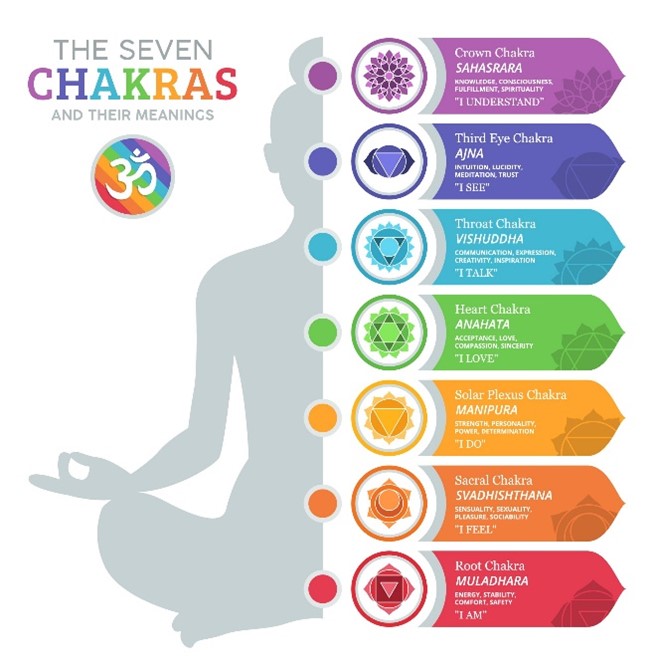
Varna can be understood by correlating it with the Maslow’s hierarchy of needs, a motivational theory in psychology proposed by Abraham Maslow in 1943.

Glimpses From Mundaka Upanishad

स यो ह वै तत् परमं ब्रह्म वेद ब्रह्मैव भवति नास्याब्रह्मवित्कुले भवति । तरति शोकं तरति पाप्मानं गुहाग्रन्थिभ्यो विमुक्तोऽमृतो भवति ॥९॥”

III-ii-9: Whoever knows the supreme Brahman becomes Brahman themselves. In their lineage, no one ignorant of Brahman is born. They transcend grief and sins; freed from the knots of the heart, they attain immortality.

Sri Skanda Purana Vol.18 Book VI, Nagar Kanda, Chapter 239

जन्मना जायते शूद्रः संस्कारात् द्विज उच्यते। वेदाभ्यास भवति विप्र ब्रह्मम जानति ब्राह्मणः||

A person is born a Shudra, but becomes a Brahman through rituals and penance. By studying the Vedas, they gain wisdom, and by knowing Brahman, they become Brahman.

This means that everyone is born a Shudra but can achieve enlightenment through purification, enrichment, and education.

“Dwija” means “twice-born” and typically refers to a Brahman.

“A Shudra is someone without knowledge, and this term should not be linked to any caste.”

For example, Ratnakara, a dacoit and ignorant Shudra, became a Brahman and composed the Ramayana through Brahma Vidya (knowledge of Brahman).

Dark Knight is a writer trying to bring out metaphors, allegories and the hidden essence of Sanatana Dharma.

References:

  1. https://www.holy-bhagavad-gita.org/chapter/4/verse/13
  2. https://www.holy-bhagavad-gita.org/chapter/18/verse/41
  3. https://www.holy-bhagavad-gita.org/chapter/13/verse/2
  4. https://www.holy-bhagavad-gita.org/chapter/4/verse/29-30
  5. https://hinduism.stackexchange.com/questions/54610/where-is-the-shloka-bramha-janati-iti-brahmanaha-found
  6. https://sanskritdocuments.org/doc_devii/lalita1000.html
  7. https://www.indica.today/long-reads/varna-vyavastha-as-a-conceptual-social-order-that-facilitates-self-actualization/
  8. https://www.telegraphindia.com/india/banaras-hindu-university-researches-manusmriti-applicability/cid/1919602

Congress Targets EaseMyTrip Over Opening Flight Bookings To Maldives

The X handle of Kerala Congress recently stirred controversy by questioning travel aggregator Ease My Trip over the “resumptionof booking to the Maldives.

The post said,Couple of months ago online travel aggregator @EaseMyTrip made a nationalistic move by removing Maldives as a destination from their flight and hotel booking platform to support Modi. Now they have quietly resumed booking to Maldives. We are wondering what happened. Is it a sign of something? Is money more important than Modi? Money will come and go, so is Modi!”

Following the diplomatic issue that arose overoffensivesocial media posts by three Maldivian deputy ministers between India and the Maldives in January this year, EaseMyTrip decided to suspend bookings to the Maldives after Prime Minister Narendra Modi visited Lakshadweep. Relations between the two countries have been at an all-time low under the presidency of Mohamed Muizzu, the current Maldivian President, who is widely viewed in New Delhi as apro-Chinafigure.

In response to Kerala Congress’s post, EaseMyTrip’s CEO Nishant Pitti replied, Dear @INCIndia, thank you for your concern. @EaseMyTrip has halted Maldives bookings from January 8th until today. Some bookings did occur between May 16th26th, but we took immediate action and got them removed. Why focus only on us? Are you not aware of other Chinese-owned travel portals that never stopped promoting Maldives in the first place? We’ve been serving for the last 16 years without any foreign investments. Yes, you’re right, nothing is permanent—the money will come and go. But our nationalistic approach will never change. By the way, we are here for the long haul, and it’s not easy for us to go. Hope you understand

The decision to suspend flight bookings to the Maldives in solidarity with the government affected 240,000 annual bookings on EaseMyTrip’s platform. Co-founder Prashant Pitti mentioned that bookings had seen a notable 40% increase last year compared to the previous year.

Despite the boycott, EaseMyTrip recently announced its highest-ever EBITDA for the fiscal year 2024, totalling ₹2,282 million, which represents a 19% growth year-on-year.

Subscribe to our channels on TelegramWhatsApp, and Instagram and get the best stories of the day delivered to you personally.

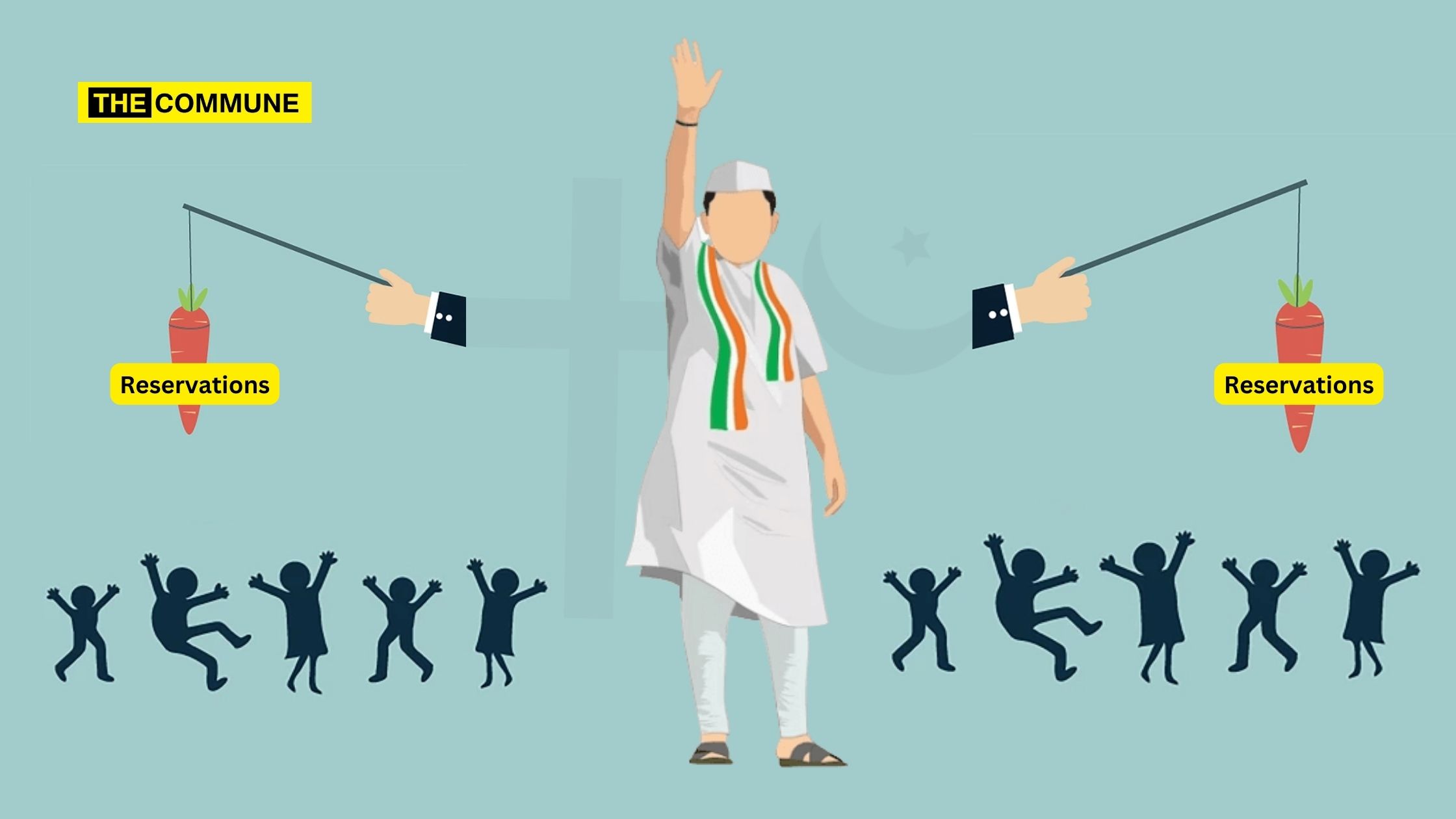
Reservations On Religious Grounds: An Incentive For Conversion And A Threat To Social Fabric Of The Country

In this 2024 election year, the subject of religion-based reservations and special benefits, came to the spot light in both national and regional news.

Recently, the BJP was in the news on the subject of religion-based reservations, when its regional alliance partner, Andhra’s TDP party (Telugu Desam Party) almost succumbed to pressure from the state’s YSRCP party (a break-away Congress party unit) in offering an attractive religion-based reservation to Muslims. Pradesh polled for a 175-seat state assembly election as well as a 25-seat parliament(Lok Sabha)election on May 13 with the final counting exercise to be conducted on June 4th.

Chandrababu Naidu’s TDP party proposed a Muslim-reservation electoral promise, in an attempt to compete with Jagan Reddy-led YRSCP party’s announcement of continued religion-based reservation for Andhra’s Muslims, with many speculating that it could eventually result in a similar benefit for converted Christians. In further consultations with its national partner, the BJP, the TDP did not go ahead with the proposed religion-based special benefits for Muslims or Christians. The BJP has made it clear to its alliance partners that it is firmly against religion-based reservations, as promised in its national manifesto. The BJP’s stance on this subject is well aligned with the intentional omission for religion-based reservations in the Constitution of India.

It is important to note that Jagan Reddy and his Christian family including his late father, Y S Rajasekhar Reddy, the Christian, Congress party chief minister of the larger undivided state of Andhra Pradesh, have often been accused as among the first to propose a separate reservation for Muslims in the country. This family, true to its pseudo-secular, policies, reminiscent of their deep roots in the Congress party, have also been openly challenged on the allegation of being the master minds and facilitators behind the burgeoning number of unchecked Christian conversions through fraudulent means including state-sponsored financial incentives in Andhra and Telangana, monthly stipends for church pastors and encouraging money-laundering Christian NGOs (non governmental organizations) of dubious intent, supposedly involved in the business of charity.

The Reddy family with its die-hard Congress party roots and links, holds the unsavoury record of being the first state in the country, to introduce a pilgrimage subsidy for Christians, to pilgrimage sites in Israel. All of the above were in addition to the Congress party’s other minority-appeasement policies, including a decades-old free or subsidized pilgrimage for Muslims. Such prejudiced, unwarranted state-sponsored schemes, come at a massive, damaging cost to the native Indic faiths, culture, heritage and true secularism. What place do such biased offerings based on religion, hold in the Constitution of India? Can they be challenged in the top courts?

The Indian Constitution does not provide for reservations and special government-sponsored benefits, based on Religion. The main architects of the Constitution, in their wisdom, envisioned a reservation for a limited period of time, only for certain historically disadvantaged communities based on the practice of caste within the native culture. The temporary reservations recommended in the Indian Constitution was meant to be implemented in good faith, only among certain communities within the purview of the native faiths.

Why did the visionaries of the Constitution not advocate religion-based reservations? This was with good reason, based on the history of our country, along with several historical precedents, which actually indicate the reverse – that both Islam and Christianity do not need protection! In fact, if recorded and verified Indian history is the base for it, it is the native religions that need to be aided with protective measures :

– so that, the Indigenous beliefs and culture may withstand the aggressive preaching and proselytizing practices of Islam and Christianity.
– so that the native faiths, culture and heritage may be preserved for future generations.

Both Christianity and Islam are highly organised, centralized, hierarchical, “self” driven religions, whose goals of self-preservation, self-promotion and increasing their numbers globally, far surpass the unorganized, non-centralized, non-proselytizing native, Indic religions (Hindu and other native faiths), that are far more accommodating, tolerant and assimilative.

The supreme zeal and drive of Islam and Christianity for self-preservation, self-promotion protection and defence as witnessed through the lens of human history, makes it clear that they do not require protection or special state-benefits of any sort. B R Ambedkar and a majority of India’s leaders of the time, including leaders who collaborated with Dr Ambedkar on framing and finalizing the Constitution, were wise enough to understand the ground reality of these two religions aside from what their scriptures promote.

It was with good reason that the stalwarts of the era ignored religion-based reservations while whole-heartedly agreeing to caste-based reservations within the larger Hindu/ native Indic communities, for a limited period of time. The majority of the leaders of the time also prudently chose to omit the word “secular” with its foreign interpretation. Avoiding the term “secular” in the Indian Constitution implied that the native way of life based on the Hindu principles of universal values, acceptance and tolerance, which had survived numerous foreign invasions, would hold steady in its native land of birth – an India that was, is and will continue to be “Bharat” at its core.

Unfortunately, the word “secular” was steathily added in the Constitution by Indira Gandhi during her imposed Emergency period without proper legal procedure or parliamentary consent. In any case, what space does religion-based reservations have in a “secular” country which promises equal treatment of all religions? Aren’t such reservations against the core principles of the Constitution ?

Not a single nation joins “secular” India in the foolish practice of a government-sponsored special status, religion-based reservations and other benefits for their country’s minorities! Going by the historical context of both Islam and Christianity with their aggressive proselytizing agenda of gaining maximum converts to their respective religions, it is Hinduism and the Indic faiths that need protection. Not the world’s largest two religions, that are still growing at the expense of all other, pluralistic, Indigenous traditions!

Throughout the rule of India-Bharat by the various Muslim groups or the Christian British, it was the Indic native religions that were discriminated against in various forms! Ironically, it is Hinduism and the other native faiths, culture and way of life that require protection, in the very nation they were born and thrived before Islamic and Christian dominance.

The Congress and its pseudo-secular, crony political friends are responsible for a mis-guided, mis-placed sense of a silly ‘perceived’ sense of a higher moral high ground, when they call themselves “protectors” of the minorities!! Who are these politicians protecting the minorities from? Do these minorities need protection from the largely peaceful and accommodating, accepting-of-all-faiths, Hindu majority that has suffered at the hands of these very “minorities” at various points in history?

Is it morally or logically right for such political parties to continue with state-sponsored discrimination against the majority in our nation? Reservations based on Religion goes against the principles of these important tenets:

– It goes against true secularism which advocates, either ignoring all faiths equally or treating all faiths with equal favour.

– It goes against the principle of separation of “State and Church”, an attempt to separate governance from religion followed in most modern, progressive Western nations which India seeks to emulate.

– It eats into the share of those truly deserving of reservations based on centuries of community discrimination – the SCs and STs (Scheduled Castes and Tribes) as well as certain backward communities.

– It also impacts the share of reservations rightfully deserved by social groups such as people with various disabilities as well as families falling into the EWS category (Economically Weaker Sections).

– It goes against the intentional omission of religion-based discrimination in the Constitution of India

– Lastly, it’s a incentive to conversion and a threat to the social fabric of the country

Shivani is a freelance writer from Vijayawada.

Subscribe to our channels on TelegramWhatsApp, and Instagram and get the best stories of the day delivered to you personally.

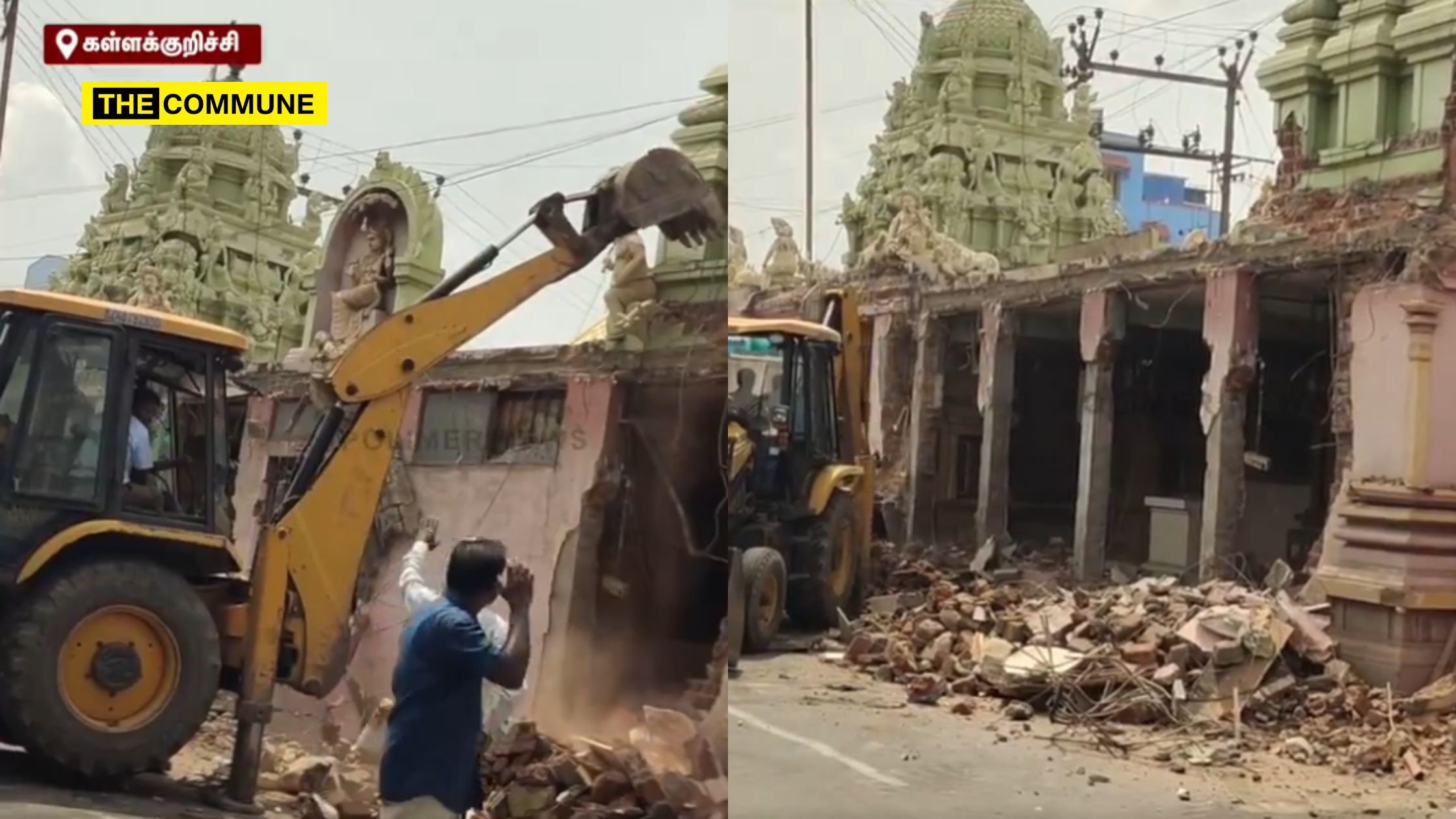
2 Temples In Kallakurichi “Encroaching” Irrigation Channel Demolished Citing Court Order

A Pillaiyar (Vinayaka) Temple located in Gandhi Road in Kallakurichi was demolished by authorities with heavy police presence despite opposition from the local community.

A few months ago the Madras High Court had ordered the removal of 36 encroachments including several buildings and temples located along the canal.

The Vinayak Temple, located in the Kallakurichi Municipality area, had encroached upon the irrigation channel, leading to a demolition notice being issued for both the Vinayagar Temple and the Sri Dharmasaastha Temple. According to Dinamalar, the Vinayagar Temple comes under the ambit of Hindu Religious & Charitable Endowments Department. Officials arrived on-site to carry out the demolition, encountering resistance from local devotees.

The temple, was allegedly constructed on a water pathway, was demolished by officials from the Water Resources Department, Public Works Department, and Revenue Department.

Residents and worshippers in the area staged protests and engaged in heated arguments with the authorities, expressing their discontent with the decision to demolish the temple

The work of demolishing the temples started at 9:00 am yesterday. The ADMK, city secretary Babu and the temple management asked for time to remove the idols of Swami and also to negotiate with the District Collector. They said they will not go out till then and sat inside the temple. After the officials refused to give time, the police forcefully evicted the people sitting inside the temple.

Authorities removed 9 Swami idols (stone-6, metal-3) from the Shakti Vinayagar temple. The officials of the charity department checked the height, width and weight of the idols and loaded them in a mini tempo and took them to the old Mariamman temple near the bus stand. The equipments including silver armors, bells, etc. were handed over to the temple management.

Similarly, the idols of Swamy in the Dharmashastha temple were removed and taken away by the temple authorities. According to Dinamalar, RTO Lourdesamy, Tahsildar Prabhakaran, Assistant Commissioner of HR&CE Department (in-charge) Nagaraj, Assistant Executive Engineer of Water Resources Department Mohan, Municipal Commissioner Maheshwari, Assistant Engineers of Water Resources Department Vijayakumar, Prasad, Madhavan and others were present. The police under the leadership of DSP, Devaraj were engaged in security.

The Hindu Munnani, BJP, and the general public staged a demonstration following which the police pacified them and made them disperse.

Subscribe to our channels on TelegramWhatsApp, and Instagram and get the best stories of the day delivered to you personally.


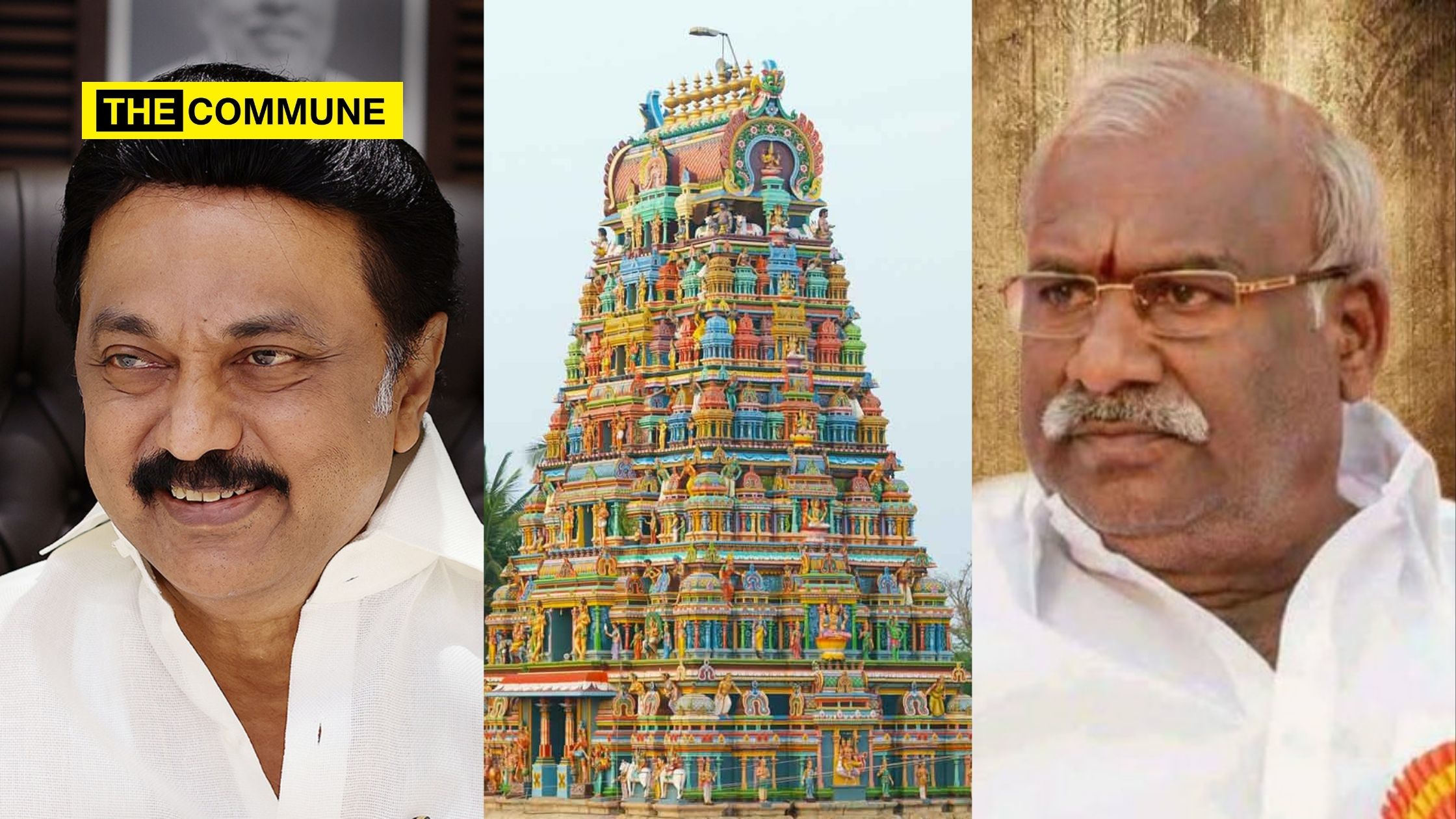
Hindu Munnani Demands Tamil Nadu Government To Release Comprehensive White Paper On Idol Smuggling Cases

The Hindu Munnani, has called on the DMK government in Tamil Nadu to release a comprehensive white paper detailing the progress and current status of all idol smuggling cases in the state. This demand follows concerns over the handling of these cases under the current administration.

In a strongly worded statement, Hindu Munnani said, “During the previous administration, under the directives of the Madras High Court, the Idol Smuggling Wing, led by Ponn Manickavel, successfully recovered many stolen idols. Several officers involved in these crimes were arrested, and these cases are now pending in court. However, the situation changed with the new government. Unfortunately, the anti-Hindu DMK government took power. Once the DMK assumed control, actions against the accused officials in the Hindu Religious and Charitable Endowments (HR&CE) Department were halted. Those officials, previously accused of misconduct, grew close to the current rulers and the HR&CE Minister, raising questions about the status of their cases.

It added, “What is the current status of the recovery efforts for the stolen idols? Retired DGP Ponn Manickavel has stated that over 2,000 rare idols from Tamil Nadu still need to be retrieved from abroad. What steps have the HR&CE Department and the Idol Prevention Wing taken to recover them? How many idols are currently missing, and what cases have been filed by the Idol Prevention Wing? Specifically, what has been done regarding the missing emerald lingam, valued at thousands of crores? Why has no action been taken to expedite the pending court cases? What measures are being taken against the officials involved in the idol thefts? For instance, the investigation into the missing peacock idol from the Kapaleeswarar Temple in Chennai was dropped, and the subsequent search in the temple tank yielded no results. What is the current status of that search?

The Hindu Munnnani accused the DMK government misleading the court in many such cases.

The saying goes, ‘Arasan andre kolvaan, Deivam nindru kollum’, (The king kills on that day, the god waits and kills). The DMK government should not think they can protect officials who destroy temples. God is our protector, and it is the responsibility of Hindu devotees to safeguard the temples.” said Hindu munnani.

Hindu Munnani said, “Therefore, we urge the ruling DMK government to publish a comprehensive white paper on the actions taken so far. On behalf of Hindu Munnani, we call on the Tamil Nadu government to immediately release a detailed white paper on this matter. If the DMK government remains silent, Hindu Munnani will pursue democratic means, with the support of devotees, to ensure accountability.

Subscribe to our channels on TelegramWhatsApp, and Instagram and get the best stories of the day delivered to you personally.


Good News For BJP, Moye Moye For ADMK, DMK Goes Downhill: Axis My India, ABP- CVoter & News18 Exit Polls

The India Today-Axis My India Exit Poll 2024 forecasts that the incumbent DMK is poised to secure 20-22 of the 39 available Lok Sabha seats in the southern state. Its coalition partner, Congress, is expected to win 6-8 seats. Meanwhile, the BJP, which contested independently, is anticipated to capture 1-3 seats. BJP alone in Tamil Nadu will make 14% vote share.

According to ABP- CVoter, this is Exit Poll 2024 for Tamil Nadu: NDA – 19 %, INDI- 46%, AIADMK – 21%.

News18 exit polls projected that the BJP is likely to win 1-3 seats in Tamil Nadu, with the NDA securing 1-3 seats. The INC will secure 8-11 seats, INDIA bloc 36-39 and others 0-2 seats.

Subscribe to our channels on TelegramWhatsApp, and Instagram and get the best stories of the day delivered to you personally.