Home Blog Page 718

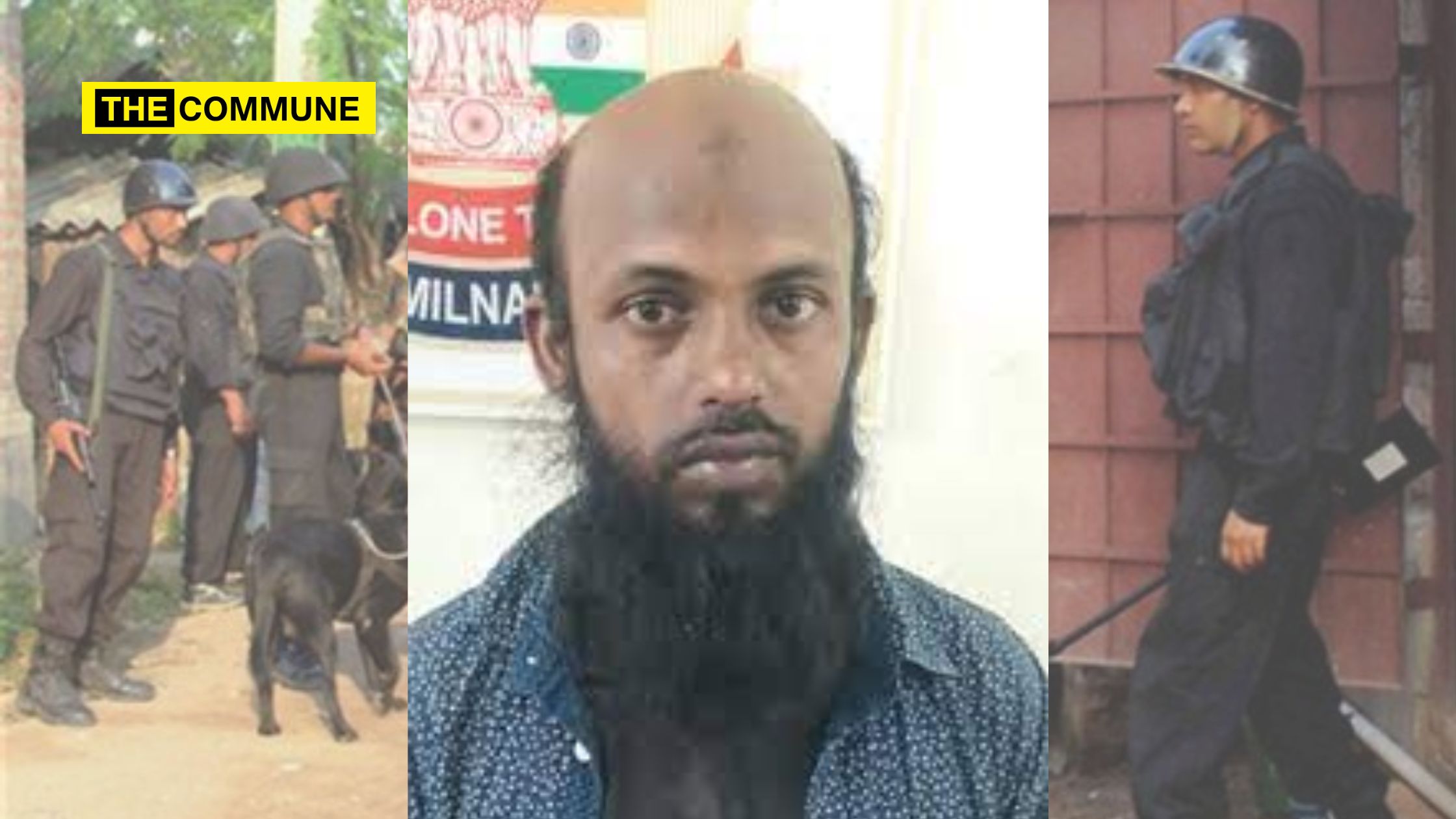
West Bengal Terror Suspect Arrested In Chennai For Alleged Links To Terror Outfit Al-Islam

A West Bengal native, Anwar Sheikh, has been arrested by the Special Task Force (STF) of the West Bengal police for his alleged association with the terrorist organization Al-Islam. The arrest took place in Virugambakkam, Chennai, with the assistance of the Koyambedu Police.

The police acted on information provided by Habibullah, another terror suspect arrested last year. A case against Habibullah has been registered at the Kanksha police station in West Bengal.

Anwar was allegedly involved in a terrorist attack (bomb blast) that happened in Burdwan, West Bengal in October 2014.  According to police sources, Anwar is a supporter of religious fundamentalist movements and has connections with a terrorist organization in Bangladesh. He faces charges under the Unlawful Activities Prevention Act (UAPA).

Anwar’s association with Al-Islam, a group supporting Al-Qaeda, led to his arrest. The West Bengal Police have been conducting raids at his place of stay in Chennai as part of the investigation. This arrest is part of a broader effort to dismantle terror networks operating in India, especially those with links to Bangladesh-based organizations.

The investigation has revealed that Anwar had been hiding in Chennai, working as part of the laundry staff at a three-star hotel in Koyambedu for the past few months to avoid detection, as reported in Times Of India. His arrest follows the earlier detention of Habibullah, whose information proved crucial. Anwar faces charges under various sections, including engaging in illegal activities against the government.

The West Bengal Police are completing the necessary procedures to transfer Anwar to Kolkata, where he will face further legal action. This development underscores the ongoing efforts by Indian law enforcement to combat terrorism and ensure national security.

Subscribe to our channels on TelegramWhatsApp, and Instagram and get the best stories of the day delivered to you personally.

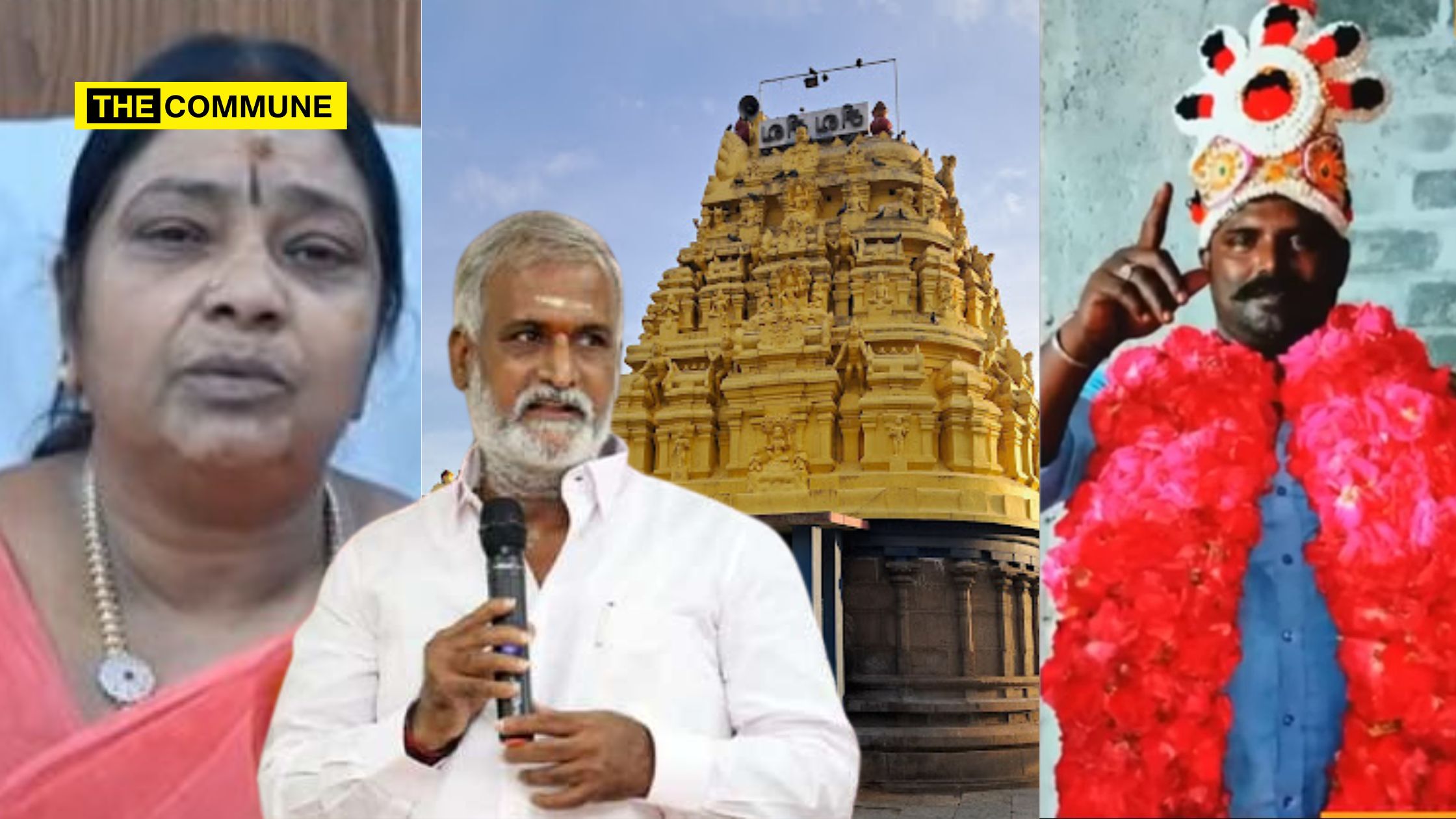
DMK Councillor And Goons Attempt To Oust Agastheeswar Temple’s Hereditary Trustee Allegedly At The Behest Of Sekarbabu

The Sri Agastheeswarar Temple in Pozhichalur, Chennai, is at the center of a heated controversy involving allegations of expropriation attempts by local DMK goons.

Reports suggest that Vanaja Dayalan, the DMK President of the Pozhichalur Panchayat Council, is a key player in the efforts to replace the temple’s hereditary trustee with a Dravidian Model government loyalist. This move is allegedly done at the directives of PK Sekar Babu, the Minister of Hindu Religious and Charitable Endowments (HR&CE) department.

An audio recording of Vanaja’s conversation with the temple’s hereditary trustee has circulated widely, revealing her aggressive approach. She is heard urging the trustee to meet urgently to resolve the matter, warning of potential unrest if a decision is not made promptly. Vanaja allegedly used intimidation tactics, including the involvement of goons, to coerce the trustee.

Vanaja Dayalan informs the hereditary trustee that they are coming to see him. The trustee responded that he would come to the office downstairs at 5 o’clock. When Dayalan sought clarification about the location, the trustee reiterated that he meant the office downstairs.

Vanaja Dayalan then explained that a decision needed to be made that day, as per Sekar Babu’s instructions. She mentioned that they had come without informing anyone else. She recalled their earlier attempt to meet in the morning, which was unsuccessful due to a death-related absence. Vanaja grew impatient and can be hear stating, “Now we have come, we should speak and take a decision, now you should take the decision what it is.” 

When the trustee asked about the nature of the decision, Vanaja insisted that they needed to discuss it in person. The trustee claimed he wouldn’t know unless told, to which Vanaja responded that speaking over the phone wouldn’t suffice and that they needed to meet in person to discuss the problem directly.

The trustee then inquired about the connection between them, Sekar Babu, and the problem at hand. Vanaja replied that they would discuss this in the evening. She then made a significant statement saying, “It has been one and a quarter year since we have come  to power. Is it our duty to only clean, and lay roads and install lights? Are we brokers? By evening 5 PM, everything should be settled for us or else there will be riots, mind it.”

After these threats, the temple’s hereditary trustee apparently filed a complaint against the goons, which was reportedly ignored. In contrast, complaints from individuals opposing the trustee were acknowledged by the police. There were also claims that goons associated with Vanaja were seen removing CCTV cameras within the temple premises to prevent the collection of evidence.

It is to be noted that, a no-confidence motion was passed in May 2023 by 13 councilors, including members of the DMK, against Vanaja Dayalan. The motion cited her involvement in serial malpractices within the Pozhichalur Panchayat Council, particularly concerning tax matters. Despite these allegations and the support from various councilors, Vanaja continued to hold her position.

Another interesting character who was present at Agastheeswarar Temple along with Vanaja was Karunakaran, who earlier involved in another temple related issue in the same locality. He is a DMK cadre who was earlier jailed for possessing ganja. But he claimed to be the manager of a Saibaba temple built by an orphaned woman who had mysteriously died. He was instrumental in getting her body cremated. Investigations indicated that her death may have been exploited to unlawfully seize her property, particularly due to her unmarried status and absence of immediate heirs.

Adding to the complexity of the Agastheeswarar temple issue, the DMK-affiliated newspaper Dinakaran published a report on 20 March 2024 suggesting that the temple’s recent expropriation was conducted under a Madras High Court order. The report claimed that the temple had been privately managed for 30 years, prompting local residents and devotees to call for government intervention. The court allegedly ordered the temple’s transfer to the Hindu Religious Charities Department.

Following this alleged court order, the temple was taken over by the Charity Department. Officials, including Charity Commissioner Muralitharan, Kanchipuram District Joint Commissioner Vanmathi, and Chengalpattu District Assistant Commissioner Letsumikanthan Bharathidasan, led the takeover. The temple’s funds were sealed, and banners announcing the Charity Department’s control were displayed.

(With inputs from Maridhas)

Subscribe to our channels on TelegramWhatsApp, and Instagram and get the best stories of the day delivered to you personally.
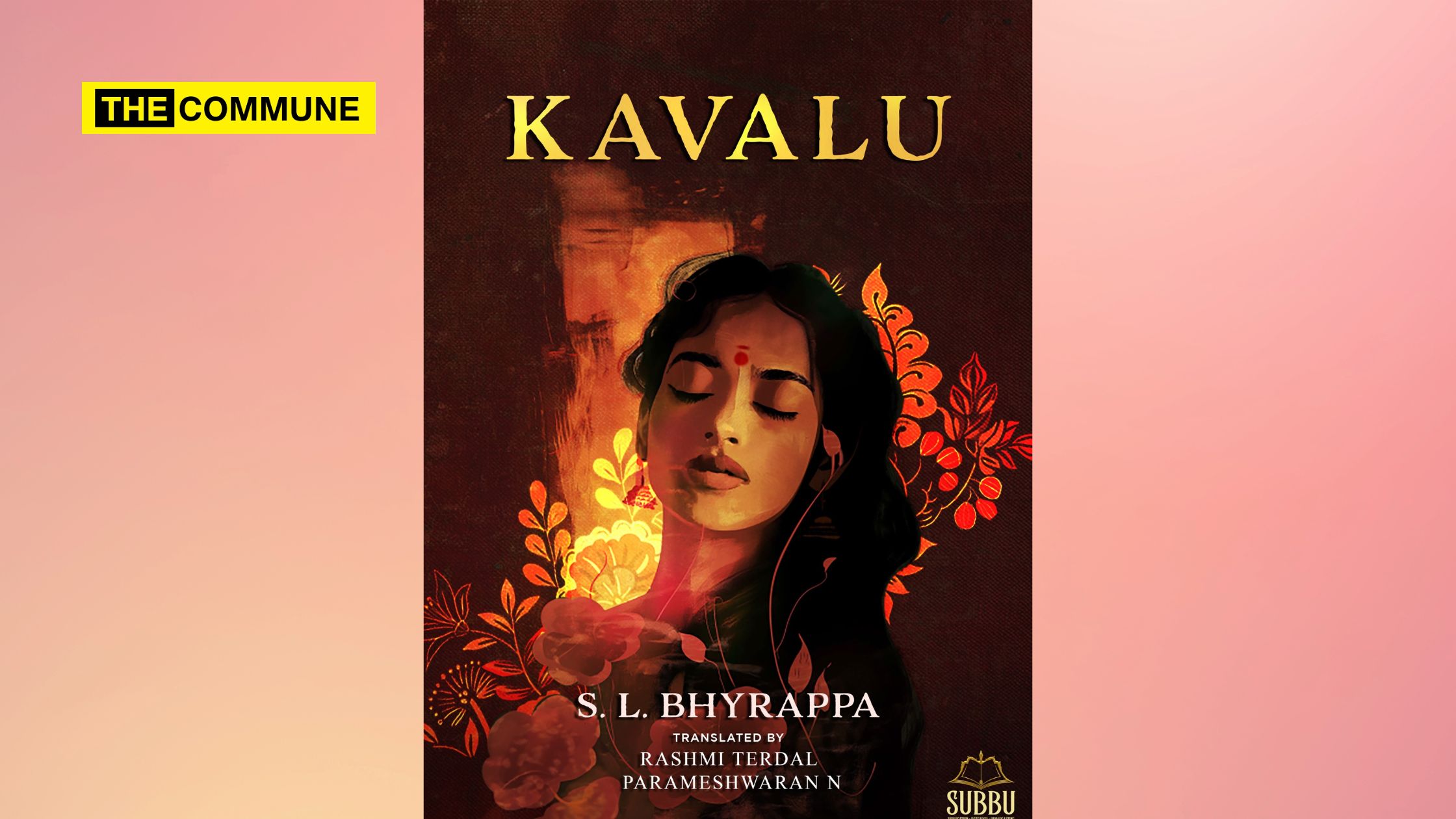
Book Review: Kavalu By S.L. Bhyrappa – Unmasking Modern India: Marriage, Morality, And The Mirage Of Liberation

Kavalu or Divergent Paths as captured in the title of the English version, translated by Rashmi Terdal and Parameshwaran N, is a very poignant tale of modern society, reflecting on some of the most common issues pertinent to the times we live in. The original book was released in Kannada and had sold out like hotcakes in a matter of hours. Rated as one of the top 10 books of 2010, it shouldn’t be a surprise that this poignant tale by the master writer is highly sought after even now. The English version of the book is well done, taking S. L. Bhyrappa’s works to a wider audience.

Kavalu narrates multiple tales with overlapping storylines dealing with multiple facets of modern society, especially related to marriages, divorces, women’s liberation, and the legal intricacies thereof. The happenings are narrated by one of the central characters in each chapter, essentially presenting their perspectives.

Broadly, there are 4 major characters Jayakumar – Mangala and Vinay – Ila. The story captures their journey through the plots of life, as each one of them armed with their own preferences and self-convictions, make choices that have far-reaching and perhaps, life-altering ramifications. This is not limited to only these central characters, but also to some of the adjoining characters in the narrative.

This book is perhaps one of the boldest books from the revered author that I have read in some time. Set in the post-liberalisation Indian period with an affluent middle class with perhaps modern/foreign education, the author presents an interesting slice of reality as he describes the potential weaponisation of sex or physical intimacy to achieve one’s materialistic goals, as a psychological weapon to demoralise or demonise a man, as a justification or rather a true representation of women’s liberalisation. Weaving these complex concepts into the narratives that run parallel to each other, the author’s genius needs to be understood in the underlying message.

Taking a critical view of some of the ills of modern society where liberalisation is used as a garb by some, the author leaves no room for confusion and leaves the reader to interpret the harsh reality at its face value. The book also addresses some of the other common challenges of a society grappling with change, like Dowry. However, even though the metaphysical concepts are not highlighted in bold, their presence is undeniable.

Dowry as a concept links 2 characters linked to Jayakumar and in an interesting twist of fate, acts as a rejoinder of Karma theory. One can’t escape from the fruits of Karma over the life.

I will not delve into the story but would like to highlight some of the key messages from the narrative. In the first 100 pages of the book, the author exposes the user to the world of women’s liberalisation, Sigmund Freud as a sign of modernity, lesbian relationships, sex as a control tool, etc. Early on in the 2nd chapter, one of the statements shakes the inners of readers where a father is accused of satisfying his pervert desires, just because he hugs his differently-abled daughter. It definitely makes one think about the way relationships have evolved in the modern context. When a daughter transitions from a young girl to a wonderful woman, does the father lose all his rights over her? Can’t he express his love by hugging his daughter? Should society view everything through the lens of perversion? Quite serious, probing questions!!

One of the other standout phrases from the book serves as a reminder of the deep influence of modernity on some of the most core areas of life.

“Is your desire to have a child borne out of your love for the child, or do you want to be a social revolutionary?”. This concept of social reformers being the ones to go against every norm of the centuries-old society is a recurring theme throughout the book. While the author doesn’t preach any specific angle, the book does make the readers introspect deeply on the true meanings of modernity / modern outlook, the pros and perhaps limitations in life.

Hypocrisy is another undercurrent that is on ample display throughout the book. Arguments are made to establish gender equality at one’s own convenience. A case in point is the statements by Mangala justifying her mother’s stay at her home while blaming her spouse for being a male chauvinist.

The same hypocrisy is on ample display during the interactions between Ila and Doreraja, where the latter questions the objectives of Ila when she tries to pressure him to legitimise their relationship. While these are straightforward instances, there are many subtle examples where the reader could feel shocked by the behaviour of a few characters. For example, the use of activism to pressurise the industrialist to a marriage with the sole intention of the same being a true feminist accomplishment is interesting. All along the book, the esteemed lawyers have their own views and use every opportunity to further their own agenda, while never considering the other perspectives. The harsh reality of life!!!

The characters are etched out with great detail and a strong internal framework. They do get introspective about their actions at various junctures. For example, Jayakumar’s reflections on the sacredness of sexual relationships are another case in point, where he fights multiple battles internally about his subdued sexual urges vs the memory of his loving wife.

The book has some very interesting philosophical tenets embedded in the conversations of the characters. One of the characters, a lady of the evening, asks one of the central characters if the latter considers her work as “low, immoral, and sinful?”. An innocuous statement, but with very deep consequences. It challenges the reader to reflect upon their own internal value framework and how one views the various professions of the world, especially the judging aspect of the same. Do any have the moral high ground to condescendingly look down upon another’s choice of profession? These questions continue to haunt the reader as they journey through the book.

Extending the concept of women’s liberalisation with modernity, the author also introduces the reader to the prevailing colonial hangover that persists in society. Self-promotion and selfish motives outweigh the underlying objectives of establishing the long-forgotten colonial superiority. The fact that one of the central characters considers this to be perfectly normal is a perfect mirror to us.

While the central character is considered to be Jayakumar and to some extent Vinay Chandra, I find that the main theme of the book is about women and their roles in society, along with some of the most pertinent and perhaps important questions of life. I also feel that the maverick author chose to describe the various facets of “Shadripus“ – 6 vices of life through various characters of the book. While Vyjayanthi shines as the true jewel of the book and perhaps is the best example of women’s empowerment and upliftment, the other characters serve as a stark reminder of what we shouldn’t be. Rajamma’s anger (Krodha) leads to her to jail. While she does make amends later in life, she is still representative of what one could face in life.

Mangala is a very interesting character whose greed (lobha) and ego of being a modern woman (mada) changes many lives irreversibly including her own. Using her sexuality and lust (kama) as a tool, she isn’t shy of any steps to achieve her own goal, no matter how hypocritical it is. In one of the junctures of the book, her conscience does ask probing questions but is silenced due to the overpowering nature of her personality.

Dr. Ila, coincidentally Mangala’s teacher and another champion of women’s liberation, is also a combination of the aforementioned attributes along with jealousy (matsarya). Driven solely by her individual desires, she doesn’t even feel disturbed that her teenage daughter learns about her affair, while not agreeing to divorce her legally wedded husband. Her choices at some junctures could come across as deeply disturbing.

One of the standout features of this book is that all characters are shown to be made of various shades of grey. Except for Vyjayanti and Vatsala, everyone else is shown to have their own chinks in their characters, some larger than others. The conflicts, debates, and challenges faced by every one of the characters are etched out beautifully. As one concludes the book, they are left with some really haunting, germane questions.

What is the true meaning of women’s liberation? Is sexual freedom the only meaning of women’s liberation? Beyond these civilisational queries, there is one statement that is so wonderfully interlaced within the narrative: “Love is not just about words; those who struggle to express themselves often have the deepest feelings”.

Hard-hitting reality check of life. MUST READ.

Gee Vee is an engineer and avid fan of itihasas, puranas and books.

Subscribe to our channels on TelegramWhatsApp, and Instagram and get the best stories of the day delivered to you personally.
Chola Grants: Setting The Record Straight On Brahmadeyas/Chaturvedi Mangalam To Brahmins

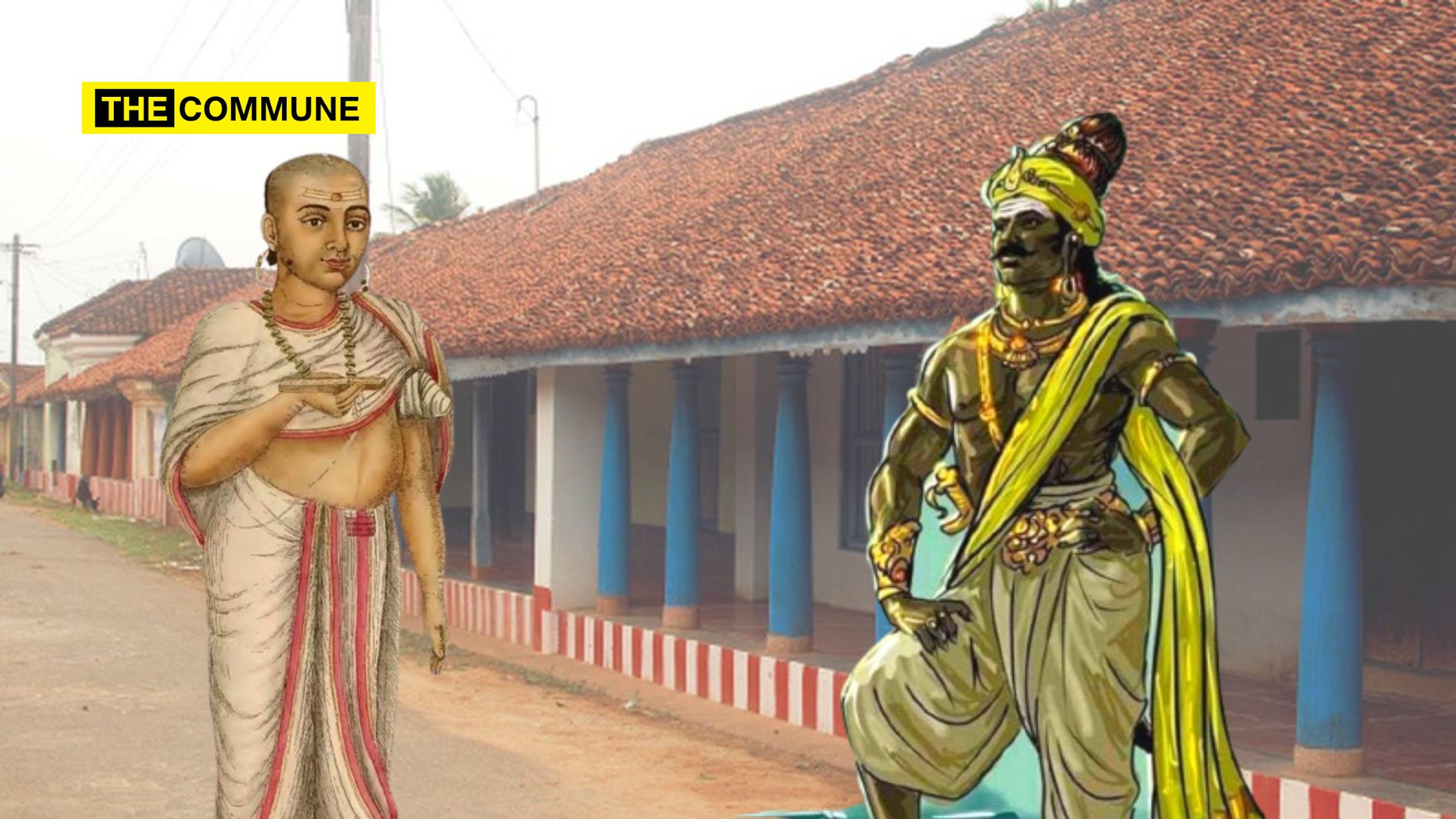
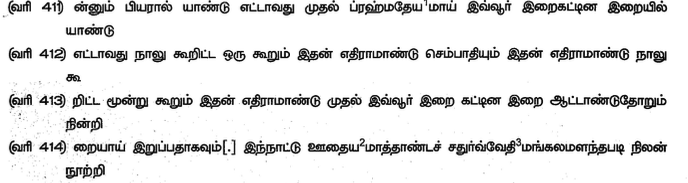
One of the most abused subjects (especially of D stocks) is the granting of Brahmadeya/Chaturvedi Mangalam to Brahmins by Cholas. Cholas were called names because of these grants. The fact is such grants have been in vogue since Sangam times and Pandyas & Cheras were the forerunners for granting the Brahmadeyas. These grants were twisted as if they were given free and the Brahmins enjoyed the privilege without paying any tax. There is also another fake theory that only Brahmins lived in Brahmadeyas. Is this true? What is the way Brahmadeyas are structured? Let us analyse this using one of the large Brahmadeyas given by Cholas which was documented in Karandai copper plates (1020 CE).

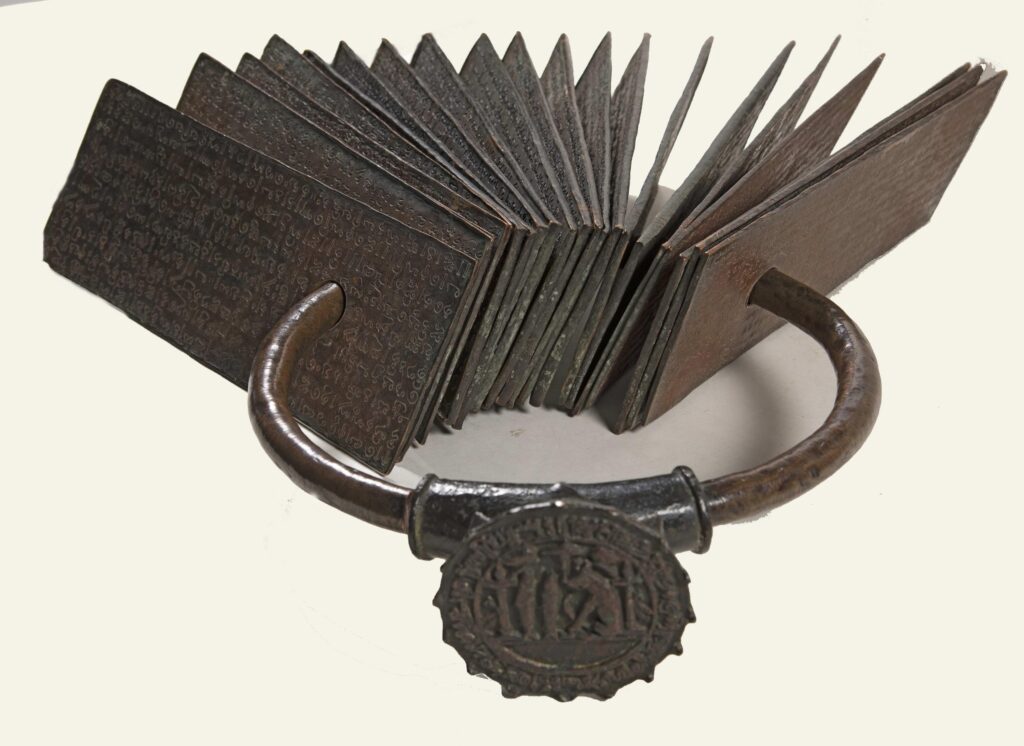
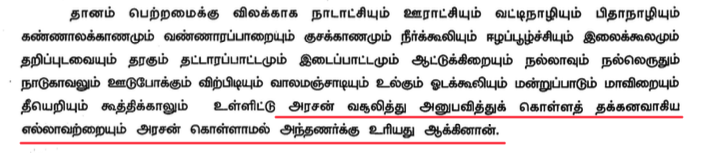
Karandai plates mention creating a Chaturvedi Mangalam called Tribhuvanamadevi Chaturvedi Mangalam by combining 51 villages and the land was given to 1080 Brahmins. This means an average of 21 Brahmins get the land in a village where approximately some thousand people live. The total land measured like this, which belongs to the government (அரசன் அனுபவித்துக் கொள்ளத்தக்கனவாகிய) is 3135 Veli +. Of this, 619 Veli were subtracted as they belong to common land like temples, the centre of the village, etc. Only the remaining land of 2516 Veli is split and given to 1080 Brahmins, approx 2 Veli per person. The revenue from this land will be approximately 100 Kalam Paddy per year. Compare this with the income of those who worked in Thanjavur Brihadeeswarar temple. They range from 200 Kalam – 500 Kalam.

Even this 200 Kalam is not free of tax. The copper plates clearly mention that from the eighth year, they had to pay tax from this revenue proportionately. In the eighth year, 25% is the tax levied needs to be paid, next year 50% of the tax and subsequently complete tax needs to be paid on the revenue earned. It is also important to note that even this staggered tax paying is only available to those Brahmins who are granted land from these copper plates. Those Brahmins who were living in the villages early will continue to pay the tax as before. Hence, let us be clear that the Brahmadeya lands were NOT tax-free, and they were NOT an exclusive place where only Brahmins lived.

The details of the grant can be found in the book ‘Chozhar Seppedugal’ by Pulavar V. Mahadevan & Prof. G. Sankaranarayanan.

TS Krishnan is a Tamil scholar and author.

Subscribe to our channels on TelegramWhatsApp, and Instagram and get the best stories of the day delivered to you personally.
Hindu Munnani Condemns DMK Minister Sekar Babu For Concealing Brutal Assaults By Invaders On Tamil Nadu Temples

The Hindu Munnani has issued a strong condemnation of Hindu Religious and Charitable Endowments Minister Sekar Babu, accusing him of concealing the true history of Tamil Nadu’s temples. In a fiery statement, the organization criticized the Minister for his recent remarks in the Assembly, alleging that his speech displayed a lack of awareness regarding the historical damage inflicted on the state’s temples by various invaders.

In the statement issued by Hindu Munnani, “Minister Sekar Babu stated in the Assembly that Tamil Nadu is abundant with temples because Tamils regard temples not as centers of conflict but as art. He added that to become a minister, one must be a devoted follower of the Chief Minister, implying that no particular qualification is needed. Sekar Babu, unaware of the historical damage inflicted upon Tamil Nadu’s temples by encroachers, Mughals, and the British, spoke without this knowledge. For instance, the Chenna Malleeswarar and Chenna Kesava Perumal temples were demolished by the British to build Fort George, in the same assembly area where he spoke.

It further added, “The Kannika Parameswari temple near the Madras High Court was also demolished by the British, who were met with dignified resistance from Hindus. These local temples are integral to Chennai’s identity. Similarly, the Kapaleeswarar temple, originally located by the sea in Mylapore, Chennai, was demolished to make way for Santhome St. Thomas Church, leading to the construction of the current temple thereafter. History is replete with instances of British and other religious fanatics destroying many such temples. If Minister Sekar Babu was aware of the temples’ histories and their rebuilding by Hindus, he might reconsider his statements.

It also highlighted, “The Jalakandeswarar temple in Vellore suffered under religious fanatics like the Mughals, Tipu Sultan, and Hyder Ali, leaving Vellore without a Shivalinga for 400 years until 1981, when Hindus, led by Hindu Munnani founder Aiya Veerathuravi Ramagopalan, restored it. Similarly, the temple at Gingee fort was reinstalled after years of encroachment.

Hindu Munnani stated, “During Tipu Sultan’s invasion, the idol from the Abirami hill temple in Dindigul was removed by miscreants, and Hindus are still striving to restore it. Minister Sekar Babu may also be unaware of the historical closure of Madurai Meenakshi Amman Temple and Srirangam for 40 years due to Mughal occupation, later recaptured by the armies of Kampanna Wodeyar of the Vijayanagara Empire. The Meenakshi Amman temple still has a desecrated Linga from the Mughal period, among other historical details.

Hindu munnani accused DMK, “The DMK, under whom hundreds of temples have been demolished since coming to power, is accused of hiding many historical facts from Tamils. The party is criticized for not demolishing places of worship of other religions under similar circumstances, reflecting an alleged bias against Hindus. There exists a list of 300 temples demolished by Mughal invaders in Tamil Nadu, which were replaced by mosques or dargahs.

Hindu Munnani urged Minister Sekar Babu and the Chief Minister not to hide these truths. They said, “If temples were truly regarded as art, they would not have been demolished and neglected. The Minister is called to halt temple demolitions, restore the Gods in the Abhirami hill in Dindigul, and take action against those systematically destroying Tamil Nadu’s temples, ensuring justice and deterring anti-social elements.

Hindu Munnani concluded reminding Minister Sekar Babu of the devotion of Tamil kings, Palayakkarars, and others who resisted religious fanatical invaders, preserving Tamil Nadu’s temples and urged him to ensure the protection and sanctity of these temples.

Subscribe to our channels on TelegramWhatsApp, and Instagram and get the best stories of the day delivered to you personally.
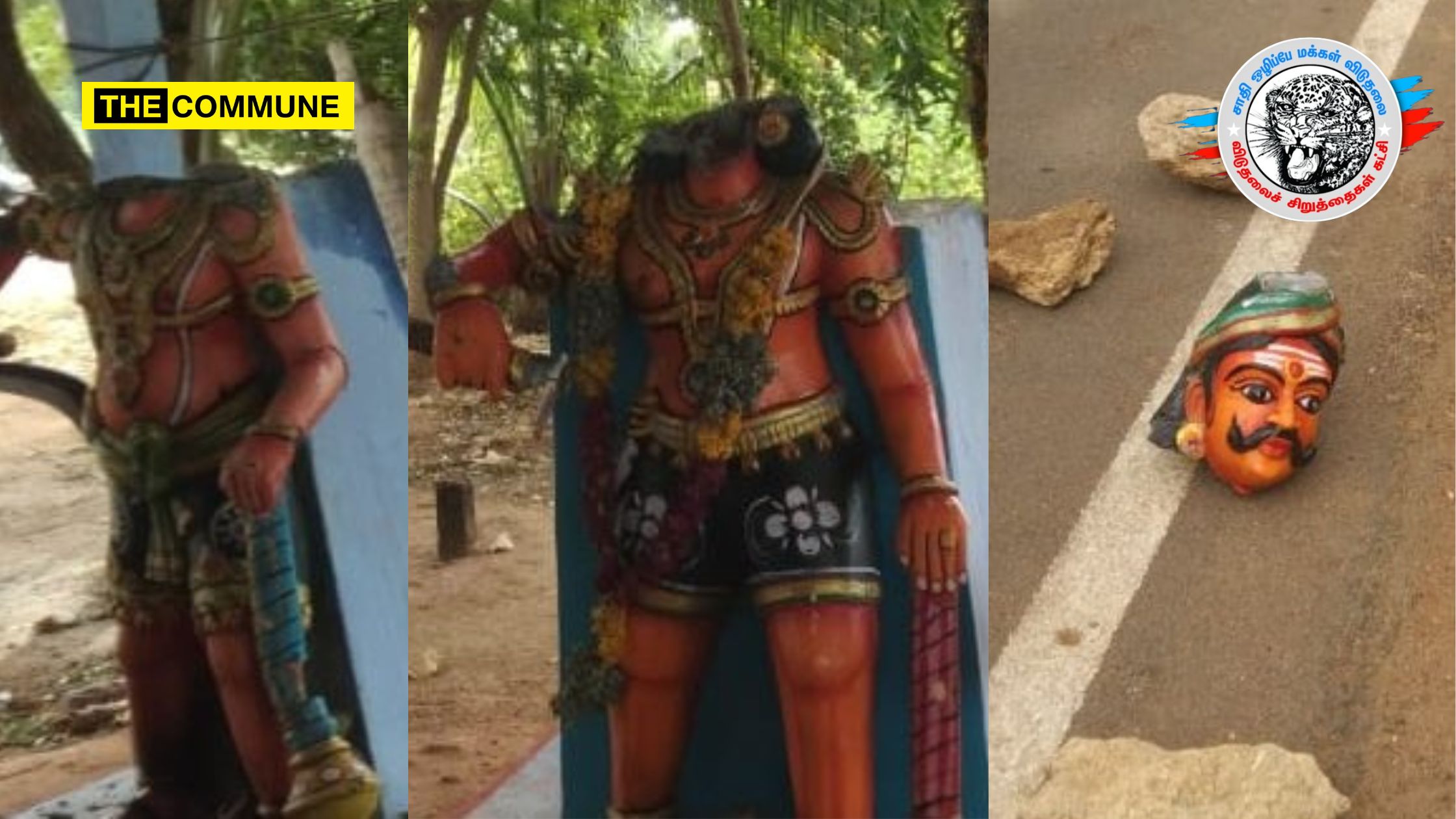
VCK Demands Action Against Vandalism Of Village Deity Statues In Moovirunthali Salaiputhur Village Of Tirunelveli District

On 27 June 2024, M Muthuvalavan the district secretary and the members of Viduthalai Chiruthaigal Katchi (VCK) has filed a petition with District Collector KP Karthikeyan and Superintendent of Police N Silambarasan , urging swift action against those responsible for vandalizing local deity statues at a temple in Moovirunthali Salaiputhur village in Tirunelveli district.

Muthuvalavan criticized the Devarkulam police for their alleged inaction despite receiving a complaint from villagers five days earlier. According to him, Moovirunthali Salaiputhur village is home to 660 members of the SC community who have revered and worshipped statues of Karuppasamy, Sudalaimadan, and Pechiamman deities at a roadside temple for decades. However, on Saturday night, unidentified individuals vandalized the statues of Karuppasamy and Sudalaimadan, along with a statue of a dog.

The petition emphasized the community’s distress over the incident and noted that despite lodging a complaint with the Devarkulam police, no steps had been taken to apprehend the culprits.

In an interview with TNIE, Muthuvalavan highlighted that the vandalism had also exacerbated communal tensions in Manur. He alleged the involvement of individuals from a dominant caste in the act and demanded that they be prosecuted under the Scheduled Caste and Scheduled Tribes (Prevention of Atrocities) Act. Additionally, he called for invoking the Goondas Act against the perpetrators to ensure stringent legal action.

(With Inputs From TNIE)

Subscribe to our channels on TelegramWhatsApp, and Instagram and get the best stories of the day delivered to you personally.
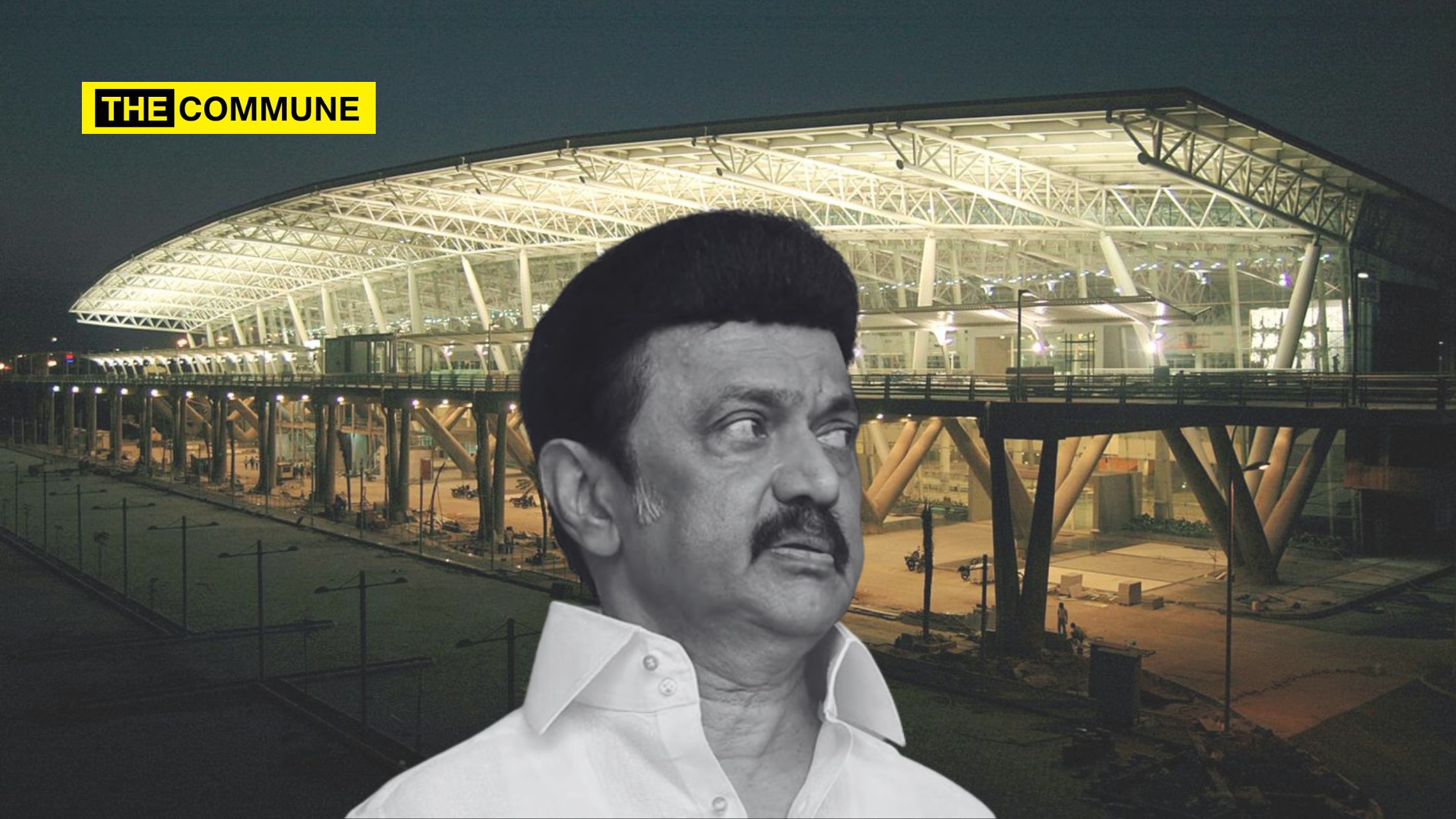
DMK Govt’s Hosur Airport Dream Collides With 2004 Bengaluru Airport Pact: 150km No-Fly Zone Until 2033

Tamil Nadu Chief Minister MK Stalin and proposed greenfield airport
TN has not even send a proposal to the Centre for the Hosur airport

Tamil Nadu Chief Minister M.K. Stalin announced on 27 June 2024 his ambitious plans to establish an international airport in Hosur. This plan can face significant hurdles due to existing guidelines prohibiting the operation of new airports within a 150-kilometer radius of Bengaluru’s Kempegowda International Airport (KIA) until 2033.

It is noteworthy that the TN government is also working on the greenfield Parandur airport away from Chennai.

What Are The Legal Constraints?

The agreement between the Ministry of Civil Aviation and Bangalore International Airport Limited (BIAL), signed on 5 July 2004, explicitly restricts the development, improvement, or upgrading of new or existing airports within an aerial distance of 150 kilometers of KIA. This restriction remains in place until the 25th anniversary of KIA, which began operations in May 2008. The agreement grants BIAL exclusive rights to handle domestic flights, with exceptions made only for Mysuru and Hassan airports.

The agreement states: “No new or existing airport shall be permitted by GoI to be developed as, or improved or upgraded into, an international airport within an aerial distance of 150 kilometers of the airport before the twenty-fifth anniversary of the airport opening date.”

The proposed airport at Hosur, located just 74 kilometers from KIA, clearly falls within the restricted radius. Consequently, any attempt to develop a commercial airport in Hosur would require a No Objection Certificate (NOC) from BIAL, which has a track record of refusing such permissions. BIAL has previously denied permission for commercial flights to operate from HAL Airport on Old Airport Road in Bengaluru, citing the same agreement.

Despite the potential benefits of a new airport in Hosur, including reduced travel time for residents of southern Bengaluru and improved connectivity for the growing industrial town, the legal framework poses a substantial barrier.

Political And Economic Considerations

Chief Minister M.K. Stalin has emphasized the economic and social importance of the Hosur airport project, citing its potential to handle around 3 crore passengers annually and its role in supporting the economic development of Hosur, Krishnagiri, and Dharmapuri. However, the central government’s policy explicitly forbids the development of new airports within the 150-kilometer radius until 2033.

This situation creates a potential conflict between the Tamil Nadu government and the central authorities. Hosur is a significant revenue-generating region for Tamil Nadu, with major manufacturing industries such as Ashok Leyland, Titan, TVS Motors, and Ola’s e-vehicle factory. An airport would greatly enhance the movement of people and goods, boosting the region’s economic growth.

Aviation experts have criticized the viability of the Hosur airport, pointing out that poor infrastructure, in terms of road and rail connectivity, would deter airlines from operating there. It is argued that without proper planning and accountability, investing in such a project would be imprudent.

While the Hosur airport could provide numerous benefits, the current legal restrictions make its development highly improbable before 2033. The Tamil Nadu government faces a formidable challenge in reconciling its ambitious plans with the binding agreement between the Ministry of Civil Aviation and BIAL. The path forward will require careful navigation of legal, political, and economic landscapes, with the existing guidelines serving as a significant impediment to the realization of Hosur’s airport ambitions.

(with inputs from The Hindu)

Subscribe to our channels on TelegramWhatsApp, and Instagram and get the best stories of the day delivered to you personally.
“Say No To Temporary Pleasures, Say No To Drugs”: Actor Vijay’s Msg To Youngsters Amidst Rising Drug Menace In Dravidian Model Tamil Nadu

Actor and leader of the Tamizhaga Vettri Kazhagam (TVK), Vijay, held a special meet-and-greet event on 28 June 2024 to honour students who excelled in the recent 10th and 12th-grade examinations. The event took place at the Ramachandra Convention Center in Thiruvanmiyur, Chennai.

During his speech, Vijay congratulated the students and provided advice on career choices. Some of you might be a bit anxious or confused in making decisions about your career. To all of them, I would like to say that all vocations are good; all that matters to be successful is choosing a field of work and giving your 100% to it. So, choose wisely; understand the options available, and talk to your parents, teachers, and career counselors to help you make the decision, he said.

Vijay emphasized the importance of leadership across various fields, not just politics. Many consider only medicine or engineering as viable professional fields; in Tamil Nadu, we already have world-class doctors, engineers, and lawyers in abundance. What we are currently lacking is good leaders. By that, I don’t just mean political leaders, but also those who can climb the ladder and become a leader in their respective fields,he stated, encouraging students to view politics as a viable career option. Don’t you all want to see good, educated people in politics?”

A major highlight of his speech was his call for students to develop skills in fact-checking news. All you need to do is read newspapers regularly, and you will realize how the same news story gets reported in different ways in different newspapers. Reporting on facts is different from reporting an opinion. At the same time, you can also see how news portals on social media can create an opinion about somebody, and how they can project a good as a bad or a bad as a good, Vijay explained. He added that such skills would help the youth discern the truth and make informed decisions about leaders. You will stop believing in the propaganda and lies that some political parties spread in their campaigns. And only when you do that, you will get the right worldview to choose the leaders. There’s no better contribution to our nation’s growth than this.”


Addressing the issue of drug abuse, Vijay advised students to avoid negative influences and refrain from using drugs. Don’t lose your identity at any cost. Of late in Tamil Nadu, there’s been a big spike in the use of drugs among youngsters. As a father and as a leader of a political party, I am scared of this situation. I am not here to accuse the ruling government of being unable to protect youngsters from drug abuse. I am saying that sometimes we need to take care of our lives first. Develop self-control and self-discipline.”

He concluded by leading the students in affirmations against temporary pleasures and drug use, underscoring his commitment to fostering a drug-free youth. Say no to temporary pleasures, say no to drugs, he urged. It is noteworthy that Vijay visited the victims of the Kallakuruchi hooch tragedy.

Vijay also encouraged those who did not clear the examinations not to be disheartened. Success is never-ending. Failure is never final.”

This event marks the first of two student meets organized by the Tamizhaga Vettri Kazhagam, with the second scheduled for 3 July 2024. This is the second year Vijay has honored top students and the first since founding his political party.

(with inputs from The Hindu)

Subscribe to our channels on TelegramWhatsApp, and Instagram and get the best stories of the day delivered to you personally.
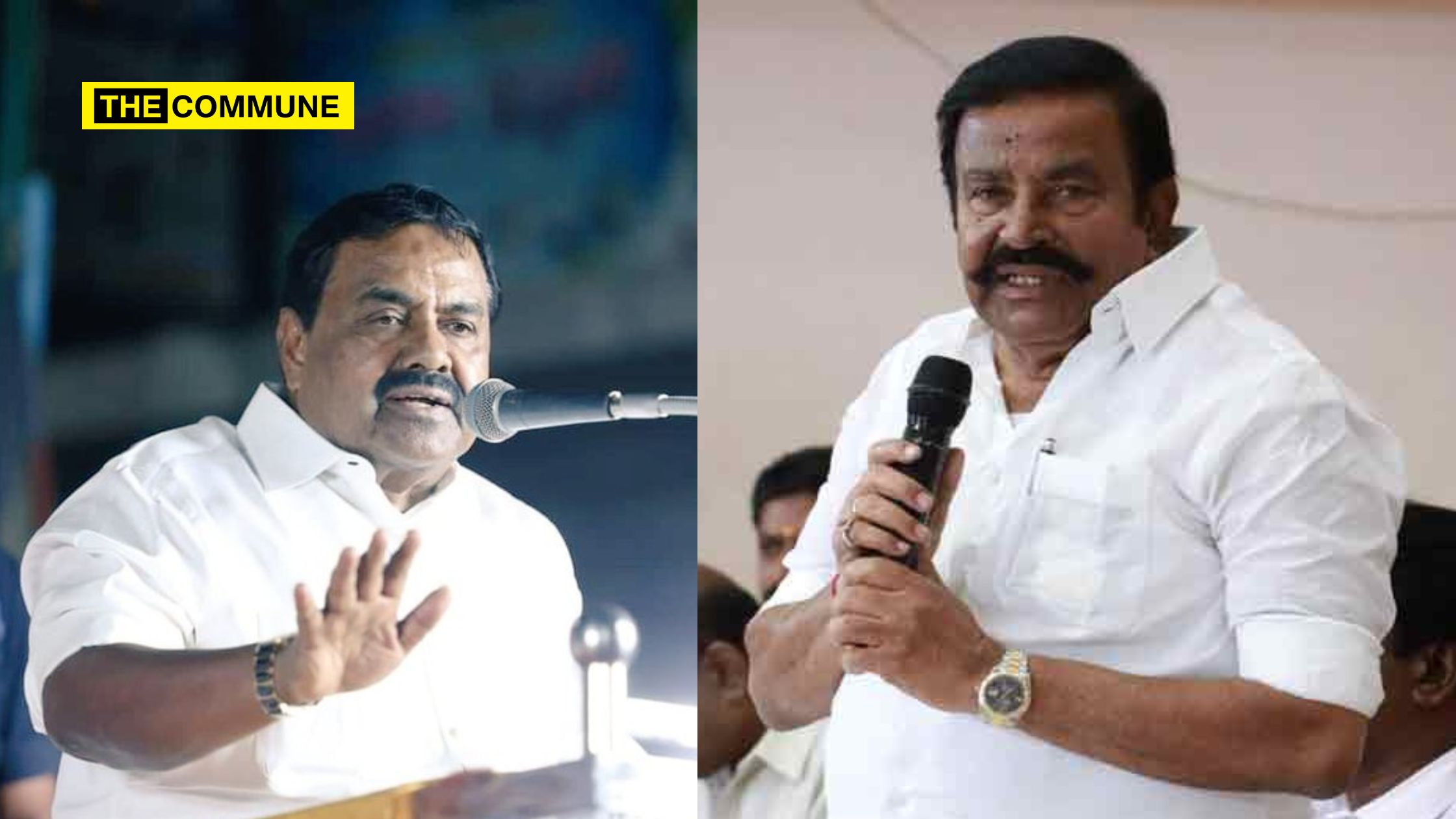
DMK Minister Raja Kannappan Says Reddiyars Don’t Need Reservation As They Own Hotels, Sparks Controversy

Tamil Nadu Speaker Appavu strongly criticized DMK Minister Raja Kannappan ironically in-charge of Backward Classes Welfare, for his remarks during the caste census debate in the Tamil Nadu Assembly. He also cautioned all ministers to exercise care in their statements.

Earlier, PMK MLA G K Mani urged the Tamil Nadu government to conduct a caste-based census. In response, Chief Minister MK Stalin suggested that such a census should first be mandated by the Central government nationwide before it could be implemented in Tamil Nadu. He directed MLA Mani to support a resolution urging the Central government to conduct this census.

In this regard, Minister Raja Kannappan’s remarks on 25 June 2024 about the caste census has sparked considerable controversy during the debate. Speaker Appavu promptly interrupted when Minister Raja Kannappan used a contentious term while discussing reservations for Reddiyar community. The Speaker promptly ordered to expunged those remarks from the assembly record and reminded ministers of the importance of speaking responsibly, given the live broadcast of Assembly proceedings.

Minister Raja Kannappan said, “How much is 30 out of 50 percent? 30 percent, of which 3.5 percent for Muslims…“. At this point, Minister K N Nehru intervened and said, “Change the Reddiars to the Backward Community.” Minister Raja Kannappan sarcastically commented, “We will not change it. Why should we change it for Reddiyars? Everyone in Reddiyars are earning well by running hotels.”

When the DMK minister’s speech was broadcast live, it provoked strong backlash from the Reddiyar community due to what they perceived as a disrespectful remark. Members of the community shared the clip internally via WhatsApp, leading to widespread outrage. Some members recorded audio messages condemning the remark and calling for protests.

Against this backdrop, Thurayur Kamaraj, representing the Reddiyar community, released an audio statement, expressing dismay over Minister Rajakannappan’s comment. He remarked, “He (Raja Kannappan) has spoken about Reddiyars on the go,  finished with such words. It’s disgusting to think whether we should address him as honourable. The mind is angry. We are all downtrodden people, daily labours. There’s no permanent work. We do not have any government recognition. It does not matter even if there is no basic reservation, but speaking about the community with such words and that too in the Assembly, do you know about honor minister?” 

Previously, Minister Rajakannappan faced accusations of making derogatory remarks based on caste towards a BDO officer, which led to his dismissal from his prior department before assuming the current role as Minister of Backward Castes Welfare.

On June 27, 2024, Minister Rajakannappan explained, “During my speech in the Assembly that day, it was mistakenly perceived that I referred specifically to the Reddiyar community. I did not mention any community in particular. There have been requests for inclusion in the backward classes. Further discussions will be held in consultation with the Chief Minister. I want to clarify unequivocally that I did not intend to offend any community, especially the Reddiyar community. The government is committed to addressing social issues constructively. We must recognize that we are all part of one society. Let there be no misunderstanding regarding my remarks about our societal unity. Our policy aims for a caste-free society. I assure you, no one’s sentiments were intended to be hurt.”

(With inputs from Dinamalar)

Subscribe to our channels on TelegramWhatsApp, and Instagram and get the best stories of the day delivered to you personally.
“Bro-Sis Having Sex Not New, Mother-Son, Father-Daughter Having Sex Is Personal Matter If There Is Mutual Consent”: Periyarist And Dravidianist Writer Says, Clarifies After Outrage

Dravidianists and so-called feminists who subscribe to the ideologies of EV Ramasamy Naicker (hailed as ‘Periyar’ by his followers) are known for advocating illicit extramarital affairs and have limitless sexual lives for women to break from the bondage of family and patriarchy.

Afterall, EVR himself had married Maniyammai, a woman way younger than him, whom he considered as his own daughter. EVR had also said that married women go to temples during festivals to get groped by other women. Dravidainists like Suba Veerapandian get dismayed at the term “adultery” and advocate for the usage of “relations outside of marriage”.

So, sexual perversion is not new to Dravidianists who follow the path of EVR.

However, in a new low, a Periyarist woman named Kotravai has seemingly called for normalizing incestual relationships and sexual relationships between mother-son, father-daughter, etc., if there is “mutual consent”.

In an interview to Avalglitz (a sub-channel of Indiaglitz), the Periyarist woman says “Today, people are talking about incest relationships. People are questioning why it is being opposed. Their question is reasonable. Is it right or wrong? With respect to sexual relationships, I will never come to a position of whether it is right or wrong. But, how do we handle this? As a society, what is the answer that we have to this question? Because, brother and sister having sex is not something new. If you look at Greek history, in the ancient times, relationships were based on a clan or a racial community. After a point of time, we’re changing the arrangements. The society is refining itself.

She further goes on to say “The concept of chastity comes in relationships. It’s not a matter of whether it is right or wrong. Every sexual relationship, if it happens through mutual consent, nobody can call it wrong. Only when it is forced, it become a problem. So am I supporting sexual relations between father-daughter or mother-son? We can never go into that. It is their personal matter. Forcing oneself, raping, these are the problems for us. Beyond that whatever they discuss as “chastity” – whether he should be with her or she should be with him – it is not your problem. As long as they’re into it and they’ve given consent to each other, it is not our problem. If the society comes to this mindset, people can satisfy their needs with whomever they want. But if you keep suppressing it, it is getting exploded the other way.

After the clip went viral, she took to her social media to clarify that all she meant was not to “moral police” people for their sexual choices or orientation and that her intention was not to normalize incestual or taboo relationship.

In the above video she says “Who are we to comment based on morality? I am strong in that position of mine. For that, I am not saying that those relationships or right and it is neither my job to promote such relations. I am person who approaches scientifically and respects human rights. Society has many approaches and we shouldn’t judge people. We’ve to approach to psychologically, scientifically, biologically and physiologically. That’s my argument. Only if you watch the full video, you’ll understand the context. The second part of the interview is yet to come. Only if you watch it till end, you’ll know what I am saying.

Subscribe to our channels on TelegramWhatsApp, and Instagram and get the best stories of the day delivered to you personally.