Home Blog Page 71

Supreme Court Orders CBI Probe Into Karur TVK Rally Stampede; Setback For DMK
supreme court dmk

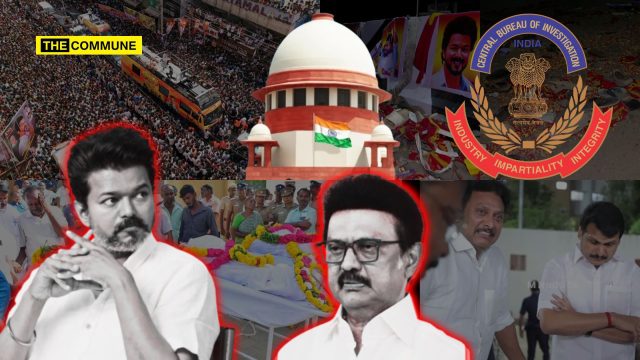
In a significant development, the Supreme Court today set aside the Madras High Court’s order for a Special Investigation Team (SIT) probe into the tragic Karur stampede and directed a Central Bureau of Investigation (CBI) investigation, to be monitored by a three-member committee headed by former Supreme Court Justice Ajay Rastogi.

The decision came on a batch of petitions, including one from actor Vijay’s Tamilaga Vettri Kazhagam (TVK), which challenged the Madras High Court’s direction for an SIT probe into the September 27 incident that claimed 41 lives.

A Bench of Justices J K Maheshwari and N V Anjaria pronounced the orders, expressing serious concerns over the “propriety” of the High Court’s proceedings.

A Supervised Investigation

Outlining the new investigative structure, the Bench stated, “Looking at the facts, the issue has a bearing on the fundamental rights of the citizens. The directions are to handover the investigation to the CBI. In order to allay the concern of parties, we propose to setup a three-member committee. We have requested Justice Ajay Rastogi to head the committee.”

The committee will also include two Indian Police Service officers, not below the rank of Inspector General of Police (IGP), who may be from the Tamil Nadu cadre but must not be natives of the state. These officers will be chosen by Justice Rastogi. The Court directed that the “Committee shall devise its own procedure as per directions of the retired judge,” and the CBI must submit a monthly report of the investigation to the panel.

Supreme Court’s Scrutiny of High Court Orders

The Supreme Court’s ruling was underpinned by strong reservations about how the Madras High Court had handled the case. The Bench pointed out two key issues: jurisdictional overreach and a lack of propriety.

The Court noted that the Karur district falls under the jurisdiction of the Madurai Bench of the Madras High Court. Despite this, a single judge of the Principal Bench in Chennai, Justice N Senthilkumar, entertained the matter.

In its order, the Supreme Court stated, “Karur falls within the jurisdiction of Madurai bench and such being the case, there was no reason for single judge should have entertained.”

The Bench was particularly critical of Justice Senthilkumar’s October 3 order, which had directed the constitution of an SIT. The Supreme Court observed that the single judge took “suo moto cognisance and directed constitution of SIT- judgment completely silent on how the single judge arrived at conclusion….in above two writ petition entertained prayers and extended scope which was not before it.”

Elaborating further, the order read, “the learned single judge did not have any occasion to entertain and take cognisance during pendency of the Madurai bench and ignoring Chief Minister which constituted an one-man single commission…the single judge while dealing with the matter, suo moto referred to SIT without referring to any materials. Such recourse ignores propriety.”

The Supreme Court also sought an explanation from the Madras High Court on a procedural matter, noting that the case before the Principal Judge bench was registered as a criminal writ petition. “Above is a matter of concern and requires to be explained by the High Court on how formation of the SoP for the political parties would fall within criminal jurisdiction,” the order stated. The Court has asked for an explanation from the Registrar General and directed that this order be brought to the notice of the Chief Justice of the High Court.

Background of the Case

The stampede occurred on September 27 during a political rally of the TVK in Karur, where large crowds had gathered to see party founder Vijay. The High Court’s October 3 order had strongly criticized the TVK leadership for its conduct after the stampede and noted that the state police had not registered criminal cases in connection with two accidents involving Vijay’s bus amid the chaos.

TVK, in its appeal to the Supreme Court, argued that the High Court passed extensive observations against the party without hearing them, as the original petition was solely for formulating a Standard Operating Procedure (SOP) for rallies. The Supreme Court has now directed that this plea for an SOP shall be assigned to a Division Bench of the Madras High Court.

The State of Tamil Nadu was represented by Senior Advocates Mukul Rohatgi and P Wilson, while TVK’s legal team was led by Senior Advocates Gopal Subramaniam and Aryama Sundaram.

(With inputs from Bar and Bench)

Subscribe to our channels on TelegramWhatsApp, and Instagram and get the best stories of the day delivered to you personally.

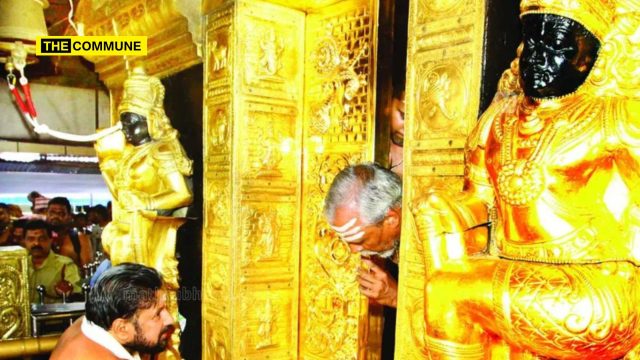
Sabarimala Gold Theft: Vigilance Report Exposes Large-Scale Gold Misappropriation; SIT Ordered To Probe Breach Of Temple Protocol

Sabarimala Gold Theft: Vigilance Report Exposes Large-Scale Gold Misappropriation; SIT Ordered To Probe Breach Of Temple Protocol

A vigilance report submitted before the Kerala High Court has uncovered another instance of gold misappropriation in Sabarimala, this time linked to the gold plating of the side frames and lintel of the sanctum sanctorum. The findings point to a pattern of irregularities similar to the earlier fraud involving the gold-plated Dwarapalaka idols.

The High Court, while reviewing the report filed by the Chief Vigilance and Security Officer (Superintendent of Police), noted that although the initial investigation focused on the Dwarapalakas, the evidence now points to serious malpractice concerning the gold plating of the door frames as well.

According to the vigilance report, a significant quantity of gold, approximately 474.9 grams, was handed over to donor Unnikrishnan Potti for the Dwarapalaka idols. However, official records do not indicate that this gold was ever re-entrusted to the Travancore Devaswom Board (TDB). The report states that the handling of gold-clad items, mischaracterised as “copper plates,” along with the unauthorised extraction and misappropriation of gold from these plates, constitute serious offences under the Bharatiya Nyaya Sanhita, 2023.

The probe further reveals that in August 2019, fourteen pieces of gold-clad copper plates from the Dwarapalaka idols were handed over by Potti to Chennai-based Smart Creations. During inspection, traces of gold were found on the copper sheets. Although Smart Creations informed that it lacked the technical expertise to replate such items, Potti reportedly insisted that the work be carried out, issuing directions to utilise the previously extracted gold and any leftover material from the Dwarapalakas.

After cleaning, the gold plating work was undertaken in the presence of Potti and temple officials. On 4 September 2019, fourteen gold-plated copper plates were returned to Potti, along with a gold certificate showing 394.9 grams.

The investigation also records that a recovery specialist extracted 409 grams of gold from the side frame initially handed over and 577 grams from the Dwarapalakas and other fourteen items amounting to a total of 989 grams, which included three grams supplied by Potti himself.

The Travancore Devaswom Board Vigilance report has highlighted major procedural violations in the handling of gold from the Sabarimala Sreekovil (sanctum sanctorum) in 2019. It specifically noted that sending gold-clad plates outside the temple for replating constituted a serious breach of protocol. The report, which led the Kerala High Court to direct the formation of a Special Investigation Team (SIT) for a detailed probe, stated that it was improbable that the Dwarapalaka idols’ gold-clad plates were sent to Chennai without the knowledge of the then TDB members.

As per the TDB Manual, all work involving temple valuables must be carried out within the temple premises under proper supervision. The manual mandates that Thiruvabharanams (sacred ornaments) should be repaired under the immediate oversight of the Assistant Commissioner. These procedures, the report noted, were completely ignored when the plates were handed over to donor Unnikrishnan Potti on 20 July 2019. The plates were subsequently transported to Smart Creations in Chennai and returned only after 49 days. “It should be investigated whether there was pressure or direction from board members for this illegal act,” the report stated.

The vigilance report also raised questions about Potti’s financial background, noting that he had sponsored multiple gold-cladding works at Sabarimala despite having no permanent source of income. During the preliminary inquiry, investigators examined Potti’s income tax returns from 2017 to 2025 through his chartered accountant. The inquiry found that the gold plating of the temple’s door, which was publicly attributed to Potti, had in fact been funded by a Ballari-based businessman, Govardanan. Similarly, the gold plating of the door frame was financed by another Bengaluru-based businessman, Ajikumar.

The report also detailed Potti’s past contributions to the temple. In January 2025, he sponsored several pujas and decorative works near the 18 holy steps of Sabarimala, funded the construction of a lift at the Annadanamandapam, and donated ₹6 lakh towards Annadanam (the temple’s free meal service). In 2017, he had also donated ₹8.2 lakh, along with 17 tonnes of rice and 30 tonnes of vegetables.

The vigilance findings further identified lapses and accountability failures on the part of nine Devaswom officials who handed over the gold-clad plates of the Dwarapalaka idols to Potti in 2019. Those named in the report include former Administrative Officer Murari Babu, former Executive Officer D. Sudish Kumar, former Secretary S. Jayashree, Assistant Engineer K. Sunil Kumar, Administrative Officer S. Sreekumar, former Thiruvabharanam Commissioners K.S. Baiju and R.J. Radhakrishnan, former Executive Officer V.S. Rajendraprasad, former Administrative Officer K. Rajendran Nair, and then Deputy Devaswom Commissioner (Finance Inspection Wing).

The vigilance report concludes that the unauthorised removal, handling, and reprocessing of temple gold outside the Sabarimala premises reflect serious administrative negligence and possible criminal intent, warranting further investigation by the Special Investigation Team under court supervision.

(With inputs from The Hindu)

Subscribe to our channels on TelegramWhatsApp, and Instagram and get the best stories of the day delivered to you personally.

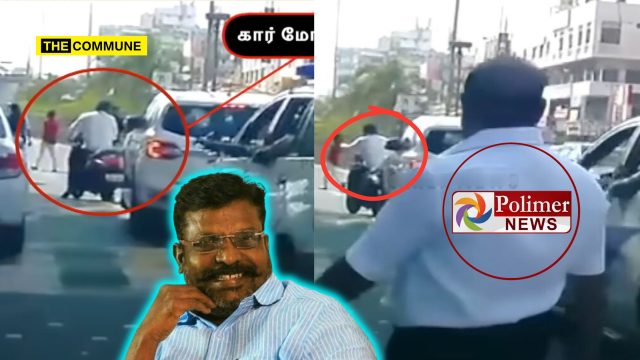
VCK Hit & Run Case: Polimer News Busts Thirumavalavan’s Lies

VCK Hit & Run Case: Polimer News Busts Thirumavalavan's Lies

After calling it a BJP-RSS conspiracy and justifying the thrashing of a motorist by VCK goons, the party chief, Thirumavalavan’s lies have been busted by Polimer News.

New video footage and conflicting statements have cast serious doubts on the version of events presented by Thirumavalavan and his party.

According to reports, the incident occurred when Rajiv Gandhi, travelling on a scooter, allegedly bumped from behind by a car that turned out to be Thirumavalavan’s vehicle causing the motorist to stop the vehicle and question the driving. He was subsequently assaulted by a group of VCK goons. The lawyer’s scooter was also damaged in the scuffle.

Contradictions Begin: From Police Complaint to Public Denial

Initially, a VCK lawyer named Parvendan filed a written complaint at the Esplanade Police Station, claiming that Rajiv Gandhi’s scooter had collided with Thirumavalavan’s car and triggered an argument. However, following this, Thirumavalavan released a video denying that any collision had occurred. In his statement, he said there was no contact between his vehicle and the scooter, calling reports of an accident “blatant false information.”

Contradictions deepened when fresh video footage surfaced showing Rajiv Gandhi stopping his scooter and appearing to speak calmly to the car’s driver – contradicting the VCK’s claim that he acted provocatively. The video also captured a group of VCK supporters chasing and attacking the lawyer moments later.

The Attack: Conflicting Justifications

While the VCK, in its official communications, denied attacking Rajiv Gandhi and claimed they only “pushed him away,” Thirumavalavan’s subsequent public speeches told a different story. Speaking in Thiruporur, the leader shocked observers by justifying the actions of his party members. He stated they “lightly knocked” on the motorist because he “stared” at him, adding that the advocate was “beaten for his misconduct” and for being “arrogant.”

This stands in sharp contrast to video evidence cited by Polimer News, which shows that advocate Gandhi, after stopping his scooter, merely looked back at the car’s driver and said something, without any overtly aggressive physical movement towards the leader’s vehicle.

Polimer News Timeline Debunks “Political Conspiracy” Allegation

In a major revelation, Polimer News presented a detailed timeline that dismantles the VCK’s allegation of a pre-planned political conspiracy. The VCK had filed a complaint pointing out that news of the incident was uploaded on Polimer TV just four minutes after the alleged time of the car-scooter problem (2:34 PM), calling it the “height of lies.”

Polimer’s investigation, however, provides a clear sequence of events.

A lawyer who witnessed the incident captured the footage on his cell phone and posted it on social media. This video was acquired by a Polimer News reporter at 3:14 PM. The reporter verified the authenticity of the incident and sent it to the news office. Polimer TV aired the verified report as breaking news at 3:29 PM.

This timeline demonstrates that the news report was broadcast based on genuine, eyewitness footage acquired and verified through standard journalistic practice, not as part of any orchestrated plot.

Dashboard Camera Evidence and a Conditional Apology

As public scrutiny intensified, a crucial piece of evidence emerged: the dashboard camera footage from a prominent person’s car that was present at the scene. Social media users and various parties have asserted that this video clearly shows Thirumavalavan’s car making contact with Rajiv Gandhi’s scooter.

This visual evidence directly challenges Thirumavalavan’s repeated denials of any collision. Faced with this, during an interview at Trichy Airport, the VCK leader shifted his stance, saying he is “ready to apologize if the car hit him,” while still maintaining that a “false impression” is being spread.

Thirumavalavan’s attempts to downplay the violence have also drawn criticism. He gave a general explanation that his phrase “Don’t hold back” was a political statement and not an incitement to violence.

Critics, including political rivals like Annamalai, have condemned the actions, calling for a full investigation. Furthermore, the Chennai Journalists’ Association and the South Indian Journalists’ Union have condemned Thirumavalavan’s actions following reports that Polimer News journalists were threatened over the phone and a police complaint was filed against them for their reporting.

Subscribe to our channels on Telegram, WhatsApp, and Instagram and get the best stories of the day delivered to you personally.
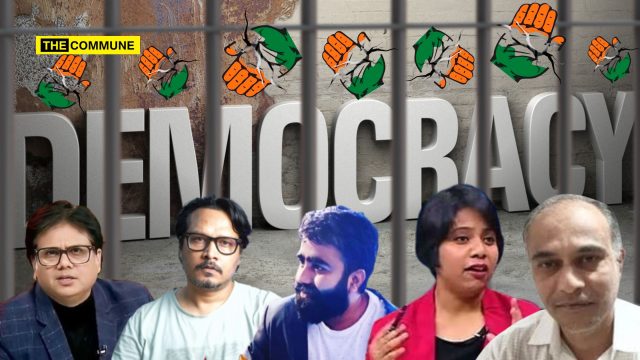
Democracy In Danger: Cases Filed Against Journalists And Influencers In Congress-Controlled States (2020–2025)

A week ago, the Congress-led government in Telangana reportedly initiated a crackdown on free speech by directing the Hyderabad Cyber Crime Police to create Suspect/History Sheets for social media users accused of “cyber offences” and “financial frauds,” regardless of whether they had been convicted. The official memo, citing Standing Order 600-1 of the Telangana Police Manual and Section 111 of the Bharatiya Nyaya Sanhita (BNS), instructs the police to treat such users as “habitual or addicted offenders” and place them under continuous surveillance.

On the one hand, while the Congress governments have withdrawn cases against Islamists/terrorists across the country, the same Congress-ruled establishments have filed cases for exercising free speech.

In this report, we document a series of incidents from 2020 to 2025 where legal actions, including First Information Reports (FIRs) and arrests, were initiated against journalists and social media influencers in states governed by or with significant involvement from the Indian National Congress.

These cases often stem from criticism of party leaders, questioning of government governance, or the dissemination of content deemed offensive or false.

#1 Doordarshan Journalists Targeted

On 9 May 2025, Karnataka Congress leader CM Dhananjaya filed a complaint with Bengaluru’s High Grounds Police Station against Doordarshan journalists Ashok Shrivastava and Prakhar Shrivastava. The leader condemned a program that allegedly portrayed Congress president Mallikarjun Kharge as a “traitor,” particularly during a period of heightened military tensions with Pakistan. The Congress party accused the journalists of making “communal, unverified, and derogatory statements” on social media.

#2 Arrest of Pulse News Journalists

In March 2025, the Telangana Congress’s social media unit filed a complaint against Pulse News journalists Revathi Pogadadanda and Tanvi Yadav for broadcasting allegedly “offensive” content about Chief Minister A. Revanth Reddy. Subsequently, on March 17, Hyderabad police arrested both journalists. However, the court granted them bail, ruling that Section 111 of the Bharatiya Nyaya Sanhita (BNS), which pertains to habitual offenders, could not be applied as there was no element of organized crime or monetary transactions involved in their actions.

#3 Influencer Arrested for Criticism in Karnataka

On 4 December 2024, Belagavi Police in Karnataka arrested 38-year-old social media influencer Mohit Narasimhamurthy. The arrest was based on a complaint from the state Congress unit, which alleged that the influencer used insulting abuses and unparliamentary language against Chief Minister Siddaramaiah, Deputy Chief Minister D.K. Shivakumar, and other ministers in a video he uploaded.

#4 FIR for Criticizing Rahul Gandhi

On 7 July 2024, the Cyber-Crime wing of Hyderabad police registered an FIR against social media influencer Raushan Sinha (@MrSinha_). The complaint was lodged by advocate Eera Venkat Naik, who alleged that Sinha was spreading fake news linked to Congress MP Rahul Gandhi’s speech in Parliament on June 1. The complainant asserted that Gandhi never made derogatory statements against Hindus and accused the influencer of intentionally provoking the community for political gain, leading to legal action for the social media posts.

#5 Journalist Booked for Civic Complaint

On 19 June 2024, journalist Revathi was booked by the Telangana state government after she raised a civic issue regarding a power failure in Hyderabad. An official, M Dileep, filed the FIR, asserting that her complaint was a false allegation that intentionally defamed the state government and the power utility. He requested action against the journalist for spreading “false propaganda” and making the incident viral on social media, illustrating the potential legal repercussions for publicly criticizing basic government services.

#6 YouTuber Ajeet Bharti Booked in Bengaluru

On 16 June 2024, Bengaluru’s High Grounds police booked YouTuber Ajeet Bharti based on a complaint from BK Bopanna, a secretary of the Karnataka Congress’s legal cell. The FIR accused Bharti of “spreading enmity between religious groups through false claims.” The complaint specifically cited a video where Bharti allegedly claimed Rahul Gandhi intended to rebuild the Babri Masjid in place of the Ram Mandir, a statement the complainant denied Gandhi ever made, leading to charges for the social media content.

#7 Arrest of ‘Bhiku Mhatre’ X Handle

On 18 May 2024, Karnataka police registered an FIR against Vinit Naik, who operated the X account ‘Bhiku Mhatre’ (@MumbaichaDon). A Congress party worker complained that Naik posted a message against Chief Minister Siddaramaiah that could create enmity between communities. Naik had shared a video of the CM’s speech, claiming the Congress wanted to redistribute wealth from Hindus to Muslims. The cybercrime police subsequently arrested Vinit Naik from his residence in Goa, highlighting the interstate reach of such cybercrime investigations.

#8 Youth Congress Complaint Against Influencers

On 26 April 2024, leaders of the Indian Youth Congress (IYC) filed a police complaint at a Hyderabad Cyber Crime station against three social media influencers: Rishi Bagree, Arun Pudur, and Ajeet Bharti. They alleged that the influencers morphed and circulated an edited video of Rahul Gandhi’s speech from a rally in Telangana. The complaint stated that following Prime Minister Narendra Modi’s remarks, the edited video of Gandhi was widely shared and was later fact-checked and identified as manipulated content.

#9 Case for Morphed Picture of Karnataka CM

On 12 January 2024, Bengaluru’s High Grounds police registered a case against two Instagram account holders, ‘troll_kannadiga_1’ and Kritika Kriti. The FIR was based on a complaint by Sajay Yadav, secretary of the KPCC Legal Cell, who alleged the accounts posted a morphed picture of Chief Minister Siddaramaiah with abusive comments. The charges included promoting enmity between different groups and circulating false statements with intent to cause social unrest, demonstrating action against perceived personal attacks on a chief minister.

#10 FIR Against TV Anchor Sudhir Chaudhary

On 11 September 2023, Karnataka police registered an FIR against TV anchor Sudhir Chaudhary at Seshadripuram Police Station. The complaint, filed by a Karnataka Minorities Development Corporation official, accused Chaudhary of “conspiring to disrupt communal harmony and spreading misinformation” in a show on Aaj Tak. The show had discussed the state government’s commercial vehicle subsidy scheme for minority communities. He was booked under IPC sections for promoting enmity between groups, showcasing legal action against mainstream media commentary on government policies.

#11 Complaint Against Zee Hindustan Anchor

On 1 July 2022, the Congress party filed a police complaint in Jaipur, Rajasthan, against Zee Hindustan anchor Rohit Ranjan. A Congress activist alleged that Ranjan ran a doctored video of Rahul Gandhi. Although the channel later withdrew the content and issued a public apology, an FIR was filed at the Bani Park police station. The news report had presented Gandhi’s comments on SFI brutality in Kerala as condoning the killers of Kanhaiya Lal in Udaipur, leading to charges under IPC sections 504 and 505.

#12 West Bengal Congress FIR in 2020

On 1 December 2020, the West Bengal Congress filed an FIR in Kolkata against social media influencer Rishi Bagree. The complaint pertained to a Tweet from November 29, 2020, about the ongoing farmer’s protests. Congress accused Bagree of trying to incite the public with a ‘provocative’ Tweet and intentionally insulting Congress President Sonia Gandhi. The FIR stated his actions were intended to break public peace and cause riots and included the charge of intimidation through his social media account.

Subscribe to our channels on TelegramWhatsApp, and Instagram and get the best stories of the day delivered to you personally. 

400 Muslim Candidates Given SI Training In Karnataka: Congress Minorities Welfare Minister Reveals

Karnataka’s Minister for Minorities Welfare, Zameer Ahmed Khan, announced today that his department has provided pre-recruitment training exclusively to 400 Muslim candidates for upcoming Sub-Inspector posts, a move that has immediately ignited a debate on the principles of merit and religion-based initiatives in government recruitment.

The announcement outlines a specific program where the Minority Welfare Department received 2,179 applications, from which it selected 400 eligible candidates—243 boys and 157 girls—for a 90-day residential training camp. The boys were trained in Belgaum, while the girls received accommodation and training in Bengaluru.

Minister Khan expressed strong confidence in the program’s outcomes, stating, “I am confident that out of the 400 candidates who were trained in the camp we organized, at least 160-200 will be selected.” He highlighted that the training was conducted by what he called “the country’s best trainers,” Bhandari and Venkatesh.

A Deeper Policy Focus on Minority Education

The minister positioned this initiative within a broader educational push by his department. “The Minority Welfare Department is giving great emphasis on education. If education is not there, what can a person do?” Khan said. He revealed that out of his department’s total budget of 4,500 crore, a significant portion of 2,900 crore has been allocated for educational activities.

He also noted that a similar pre-recruitment training for elite civil services like IAS, IPS, and KAS held last year at the Haj Bhavan saw 105 candidates successfully selected into various government departments. Plans are underway to utilize the Haj Bhavan facility for such programs throughout the year, beyond the one month it is used for Haj pilgrimages.

Criticism Over Communal Favoritism vs. Argument for Empowerment

While the government frames this as an empowerment measure, the policy has drawn criticism from those who argue that police recruitment must be strictly merit-based and blind to religion. Detractors see the program as a form of blatant communal favoritism, arguing that providing state-sponsored, religion-specific training creates an unlevel playing field.

The core of the criticism hinges on the principle that police forces, as a cornerstone of public trust and security, must be perceived as impartial. Recruitment, critics argue, should be based solely on an individual’s qualifications, physical fitness, and performance in standardized tests open to all, without pre-selection based on religious identity.

This initiative emerges in the context of an expected state government notification for about 1,000 Sub-Inspector posts in the coming months

(Source: Vartha Bharathi)

Subscribe to our channels on TelegramWhatsApp, and Instagram and get the best stories of the day delivered to you personally.

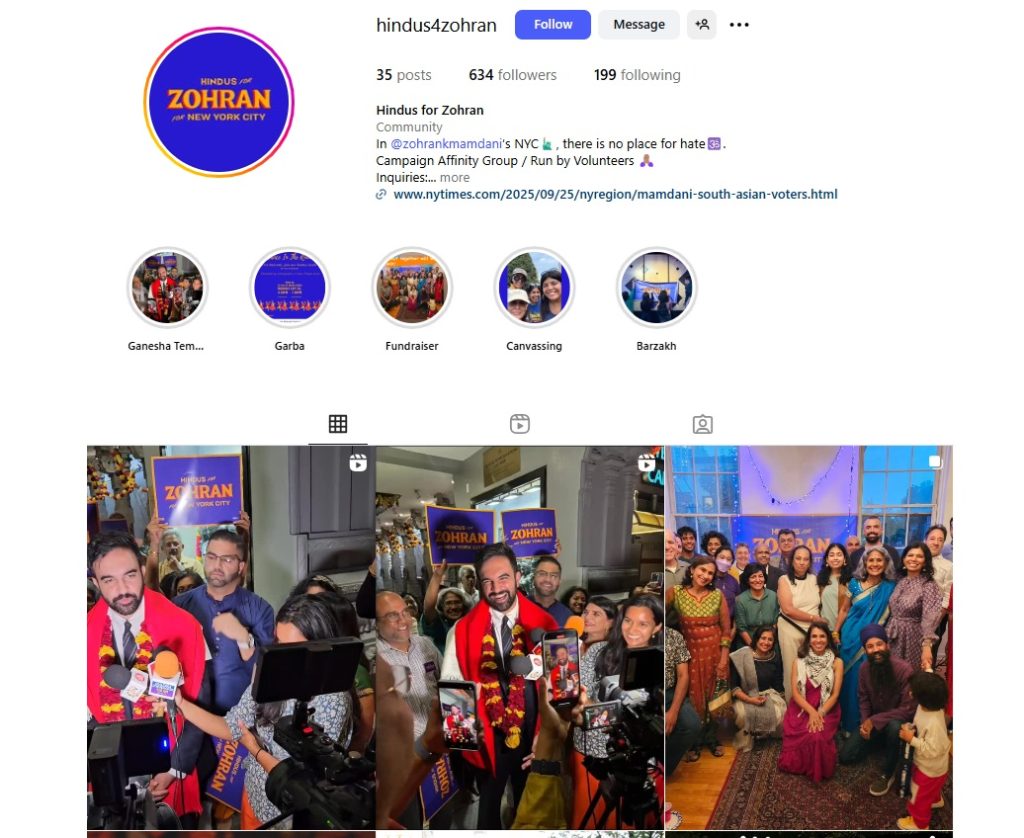
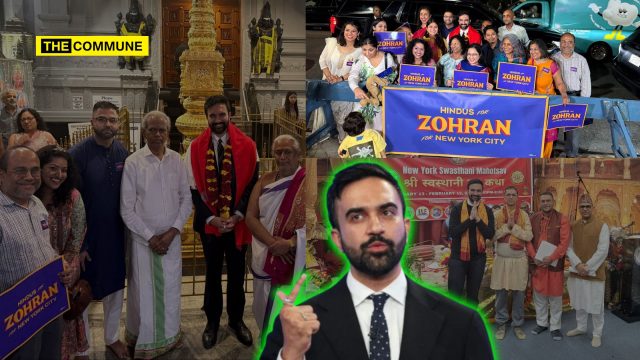
Dear NRI Hindus Of New York, ‘Hindus For Zohran’ Is Akin To Chicken For KFC

In the grand theater of New York City politics, a deeply nauseating spectacle is unfolding. A segment of the city’s Non-Resident Indian (NRI) Hindu community, draped in the vestments of progressive chic, is falling over itself to endorse and campaign for Zohran Mamdani, a ‘democratic socialist’ running for mayor. This political simping is not just a misjudgment; it is a profound act of civilizational betrayal, a display of such staggering political naivete that it threatens to undermine the very community the belong to.

It is clear as crystal who Zohran Mamdani is. He is a politician who has built his brand on a platform that is openly hostile to the interests of law-abiding, tax-paying, small-business-owning Hindus. He champions the defunding of the police in a city where many Hindu-owned shops and temples have been victims of crime. He advocates for radical housing policies (read jizya) that would dismantle the property market, a key source of generational wealth for immigrant families. His entire ideology is a direct assault on your country of origin, your culture and the pluralistic value systems that you share.

He participated in a protest where slogans of “Hindus are bastards” were echoing. He demonized the construction of the Ram Mandir in Ayodhya. He branded one of the most significant spiritual moments for millions of Hindus a “fascist atrocity.” And who were his allies? Not progressive idealists, but Khalistani separatists! Nice company he keeps.

Yet, what is most galling is Mamdani’s recent, transparently cynical “temple run.” Suddenly, the candidate who has spent his career in the company of anti-capitalist agitators and who has been a vocal critic of the Indian government is now showing up at our places of worship, folding his hands in a show of faux reverence and saying he is “proud” of his Hindu and Indian roots? Really? That too he was found wearing his shoes within the temple premises.

Mamdani is just following the well-worn playbook of the left: patronize the Hindus for a photo-op while advancing policies that would cripple them.

This is a man who has publicly labeled India’s Prime Minister, Narendra Modi, a “war criminal.”

This is not a policy disagreement; it is a vicious slander against the elected leader of the world’s largest democracy, a nation that is the homeland and spiritual center for every Hindu in that temple. To then welcome this same man with marigold garlands and seek his blessings is an act of such profound self-abasement it defies belief. It is the political equivalent of inviting a fox into the henhouse and then complimenting him on his manners.

The organizers of groups like “Hindus for Zohran” are not savvy political operators; some are useful idiots, while others are scheming opportunists working to undermine Hindu interests from within.

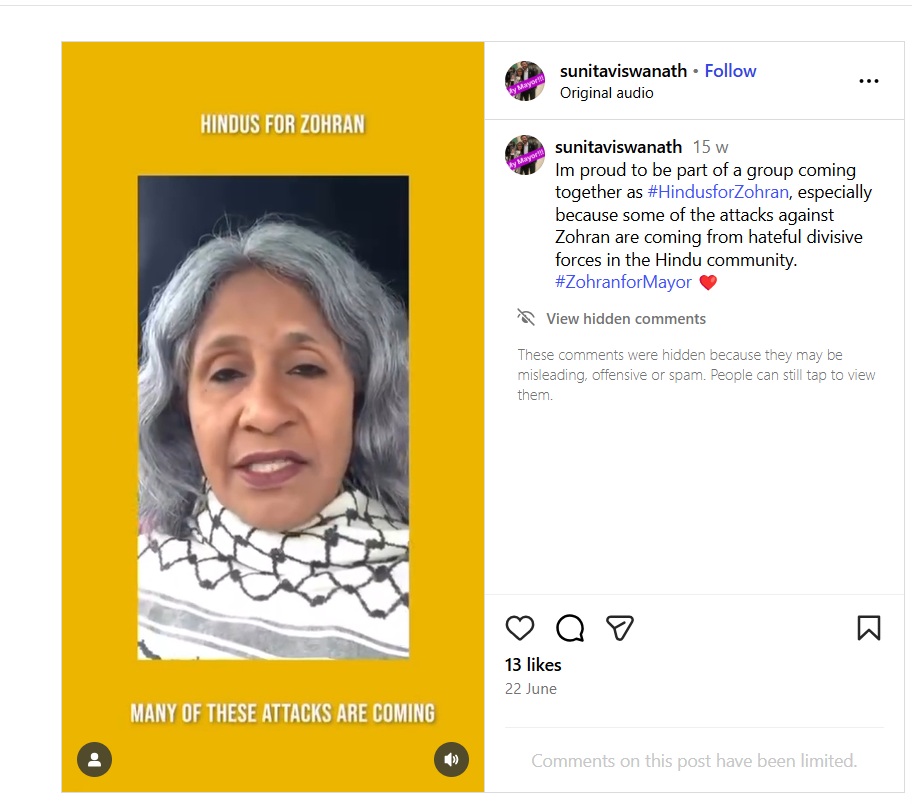
The likes of anti-India, anti-Hindu Sunita Vishwanath have also campaigned for Mamdani. In a video on Instagram, she wrote, “Im proud to be part of a group coming together as #HindusforZohran, especially because some of the attacks against Zohran are coming from hateful divisive forces in the Hindu community.”

They seem to be so desperate for a seat at the progressive table that they are willing to endorse a candidate whose allies routinely dismiss Hindu concerns and whose political movement often views our faith as an inconvenient appendage of “Brahminical patriarchy” or, worse, conflates it with the very nationalism they claim to oppose. They cheer for a man who stands with forces that have consistently undermined India’s standing on the global stage, all for a sliver of recognition from a political machine that sees them as pawns, not partners.

Hindus for Zohran is akin to Chicken for KFC. You get the drift?

This is not about political pragmatism; it is about a crippling cultural cringe. It is the belief that to be accepted in elite New York circles, one must disavow one’s heritage and embrace a politics of self-flagellation. They are so intoxicated by the promise of “representation” that they fail to see the candidate does not represent them; he represents the dismantling of everything their parents and grandparents built through sacrifice and sweat.

The true test of a community’s political maturity is not in how quickly it jumps on a trendy bandwagon, but in its ability to see through hollow symbolism and demand substance. The substance of Mamdani’s platform is a direct threat to their safety, their prosperity, and their cultural dignity.

To see our community’s aunties, uncles, and the next generation – the seniors are the very generation that endured immense hardship to build a future in the USA, being used as props in this cynical political theater is not just disappointing. It is disgusting. It is a betrayal of their struggle. The money raised at those glitzy “Hindus for Zohran” fundraisers in Brooklyn art galleries will be used to fund a political movement that, at its core, holds their values in contempt.

The banners flown by Hindu groups over the Hudson River, urging voters to reject Mamdani, were not an act of bigotry; they were an act of clarity. They understood the stakes. It is a tragedy that a vocal few, blinded by the glow of progressive validation, are so eager to sell out the rest. When Mamdani’s policies lead to more crime on the streets where our temples stand and more economic strain on our community, these “Hindus for Zohran” will have no one to blame but themselves for championing their own demise.

Subscribe to our channels on Telegram, WhatsApp, and Instagram and get the best stories of the day delivered to you personally.
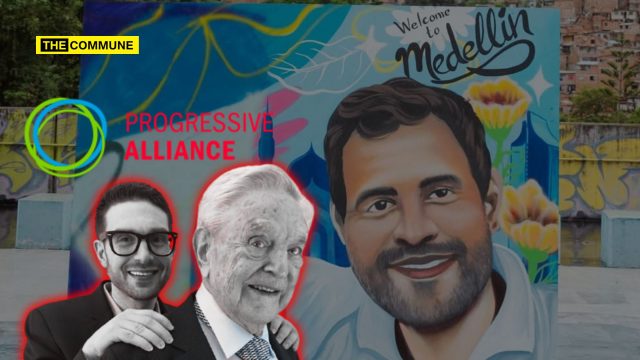
Inside Story Of Rahul Gandhi’s South America Visit: Meetings With Progressive Alliance And George Soros-Backed Entities

India’s engagement with Latin America has historically been limited, though the continent’s intellectual currents – Che Guevara’s revolutionary legacy, magical realism by Gabriel Garcia Marquez, and Liberation Theology blending Marxism with Catholic humanism, have influenced some Indian Left circles. Against this backdrop, Congress leader Rahul Gandhi recently toured South America, visiting Colombia, Peru, and Chile, countries with active leftist movements and Soros-linked organizations. His visit appears aligned with these ideological currents, reflecting interest in observing social movements and political activism abroad. While Latin American ideas often lack practical grounding, Gandhi’s trip highlights the growing curiosity of India’s Left toward the region.

Let us take a deeper look at his visit and the other meetings that took place.

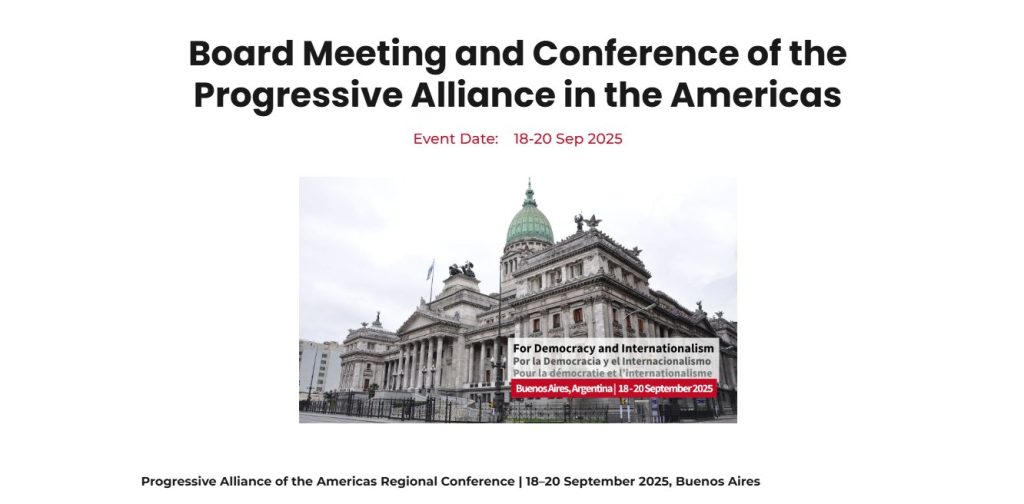
Buenos Aires Conference

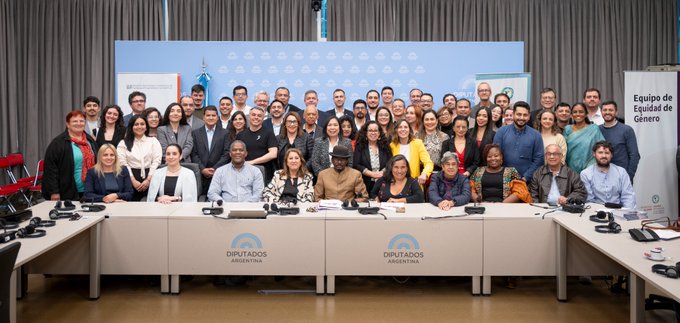
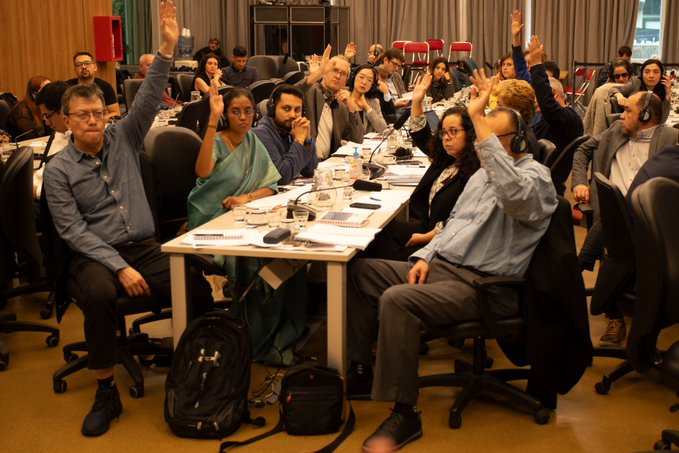
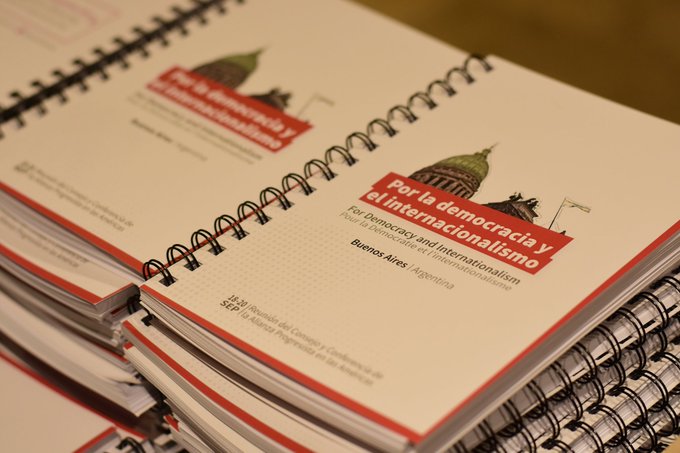
From September 18 to 20, 2025, a conference was held in Buenos Aires, Argentina, organized by the Progressive Alliance (PA), a global coalition of 140 political parties.

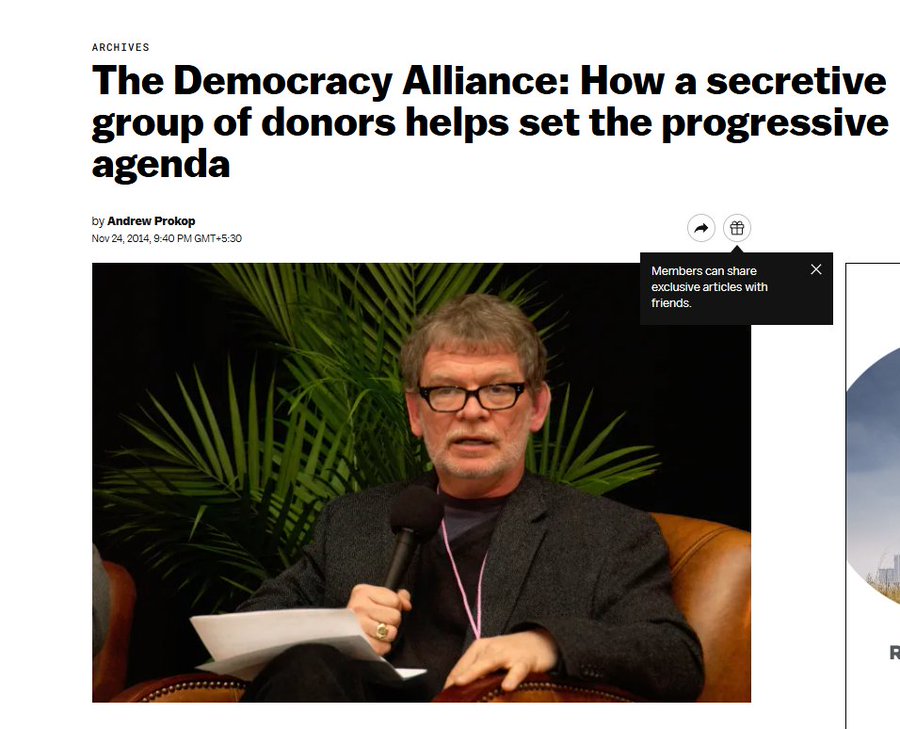
Reports indicate that the PA is backed by billionaire George Soros and aims to promote governments aligned with its member parties worldwide. These include major political parties such as the Democratic Party (USA), the Labour Party (UK), and the Congress Party in India.

Indian Delegation

Three representatives from India reportedly attended the Buenos Aires meeting:

  1. Sam Pitroda
  2. Jothimani Sennimalai, Congress MP from Tamil Nadu
  3. Pushparaj Deshpande, associated with the Samruddha Bharat Foundation (SBF)

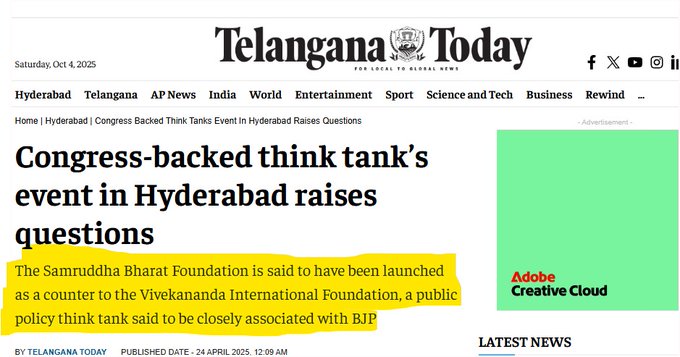
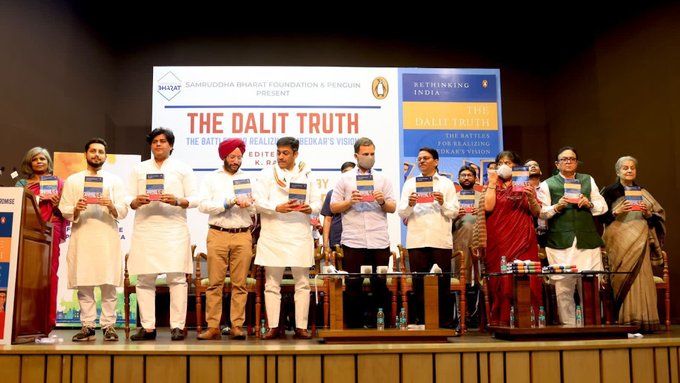
The SBF, launched in 2018 and backed by Congress, was reportedly established to counter the BJP-leaning Vivekananda Foundation. Gurdeep Singh Sappal, former CEO of Rajya Sabha TV and officer on special duty to former Vice-President Hamid Ansari, serves as its executive trustee.

Key individuals associated with SBF include:

  • Amitabh Behar (Amnesty, Oxfam, NFI)
  • Manoj Jha
  • Javed Ali Khan
  • Salil Shetty (OSF)
  • Salman Khurshid
  • Udit Raj
  • Syeda Hameed
  • Mridula Mukherjee
  • KTS Tulsi
  • Shyam Benegal
  • Vinod Sharma
  • Pushpraj Deshpande (Congress advisor)

Pitroda’s Meetings and India Agenda

While Karur Congress MP Jothimani Sennimalai attended the conference sessions, Sam Pitroda reportedly spent much of his time at the Savoy Hotel in Buenos Aires, meeting key figures associated with George Soros.

Reports indicate that Pitroda raised issues concerning the Modi government in India, highlighting one of the PA’s purported objectives: the removal of right-wing governments globally. Pitroda allegedly admitted that, despite efforts, they had been unable to replace the Modi government with a left-leaning administration in India.

Soros’ Influence in South America

George Soros is reported to have a strong presence in South American countries, including Colombia, Peru, Chile, Mexico, and Brazil. His affiliated organizations in these countries include:

  • Brazil: Conectas Direitos Humanos, Fundação Getulio Vargas, Baobá Fund, Fundo Brasil de Direitos Humanos
  • Colombia: Dejusticia, Foro Nacional por Colombia, Symplifica, Afrodes, Buenaventura Chamber of Commerce, Center for Afrodiasporic Studies, Manos Visibles Foundation
  • Peru: Acción Andina
  • Chile: Ciudadanía Inteligente

Soros-backed groups are reportedly executing regime change efforts, including supporting Gen Z-led protests in Chile.

Rahul Gandhi’s South America Tour

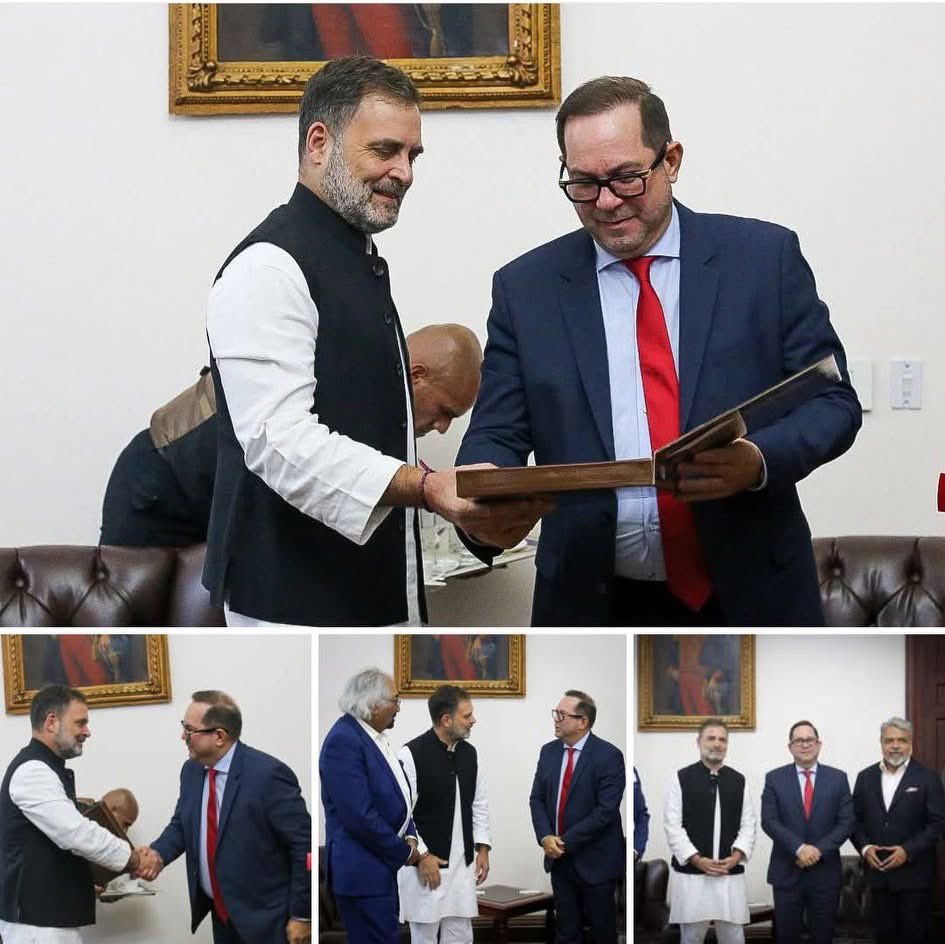
Sources indicate that Rahul Gandhi’s visit to South America was closely aligned with these strategic PA objectives. In Colombia, Gandhi reportedly met with Colombian Senate President Lidios Garcia, accused of election fraud, who is associated with Socialist International – a precursor to the Progressive Alliance. Notably, Congress is also a member of Socialist International.

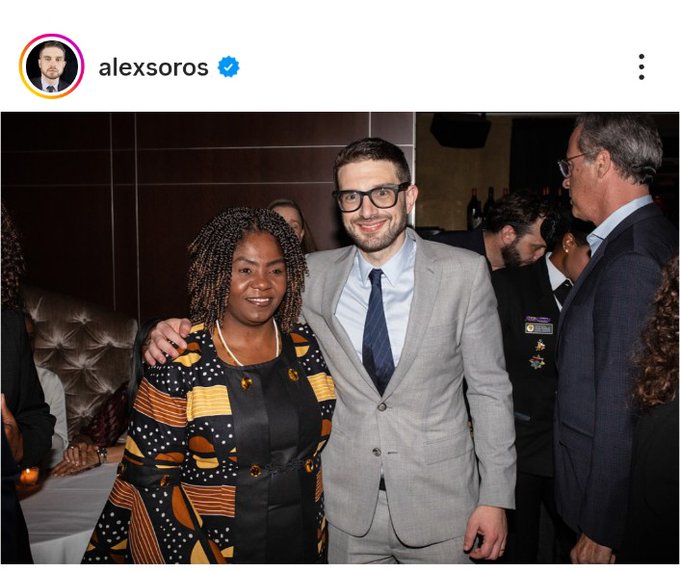
During Gandhi’s visit to Colombia, Alex Soros reportedly met with Colombian Vice President Francis Marquez in New York on 30 September 2025 and former President Juan Manuel Santos on 24 September 2025, raising questions about whether Gandhi and Soros met directly.

Activities in Peru

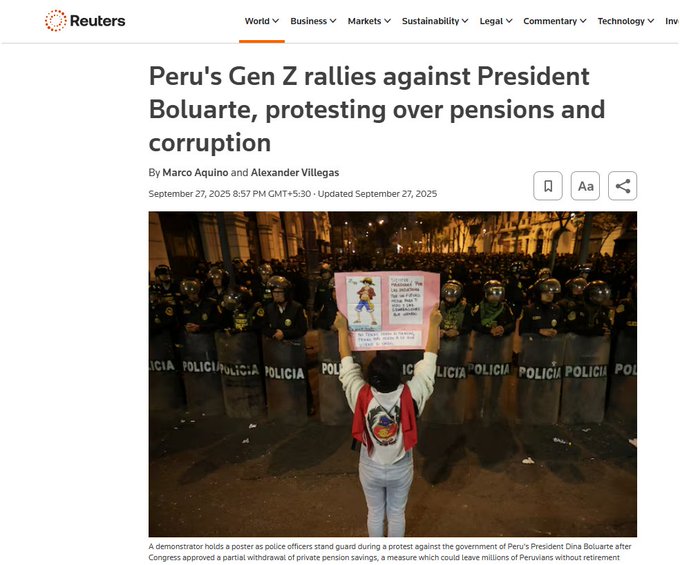
Rahul Gandhi also visited Peru, where Soros-backed Gen Z protests are ongoing against President Dina Boluarte, who leads a center-right alliance government.

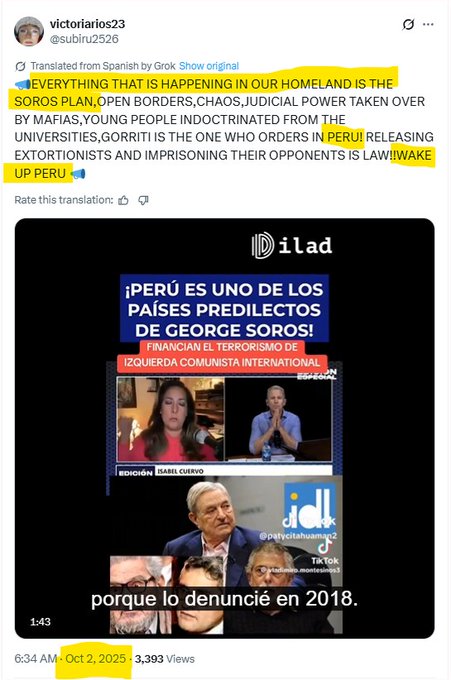
Local reports claim that George Soros is supporting these protests. Gandhi’s presence has been interpreted as an effort to observe or explain the Gen Z protest “toolkit.”

Visit to Chile

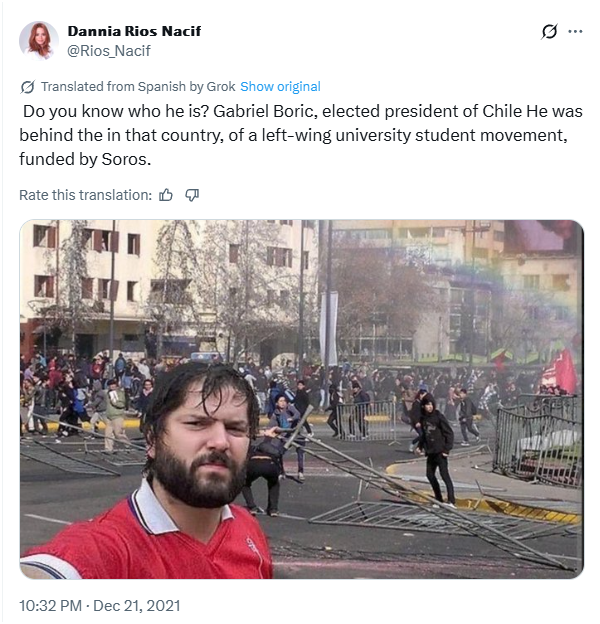
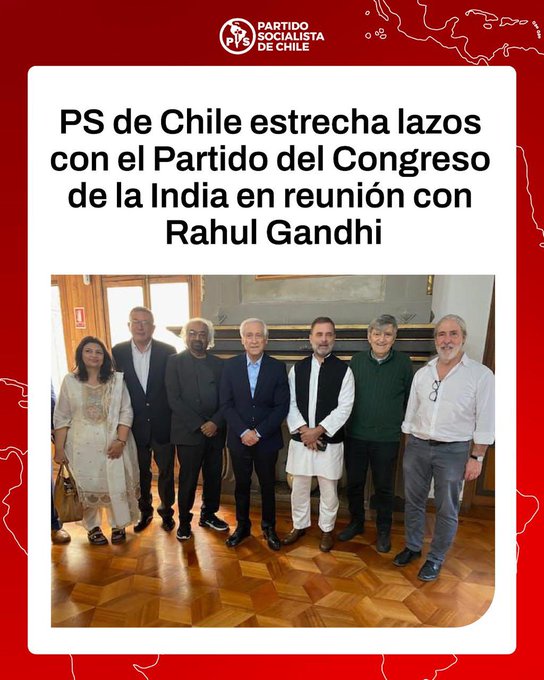
In Chile, Gandhi reportedly met with leaders aligned with President Gabriel Boric Font, the youngest president in Chile’s history and considered a Soros ally.

The Broad Front (Frente Amplio), a member of the Progressive Alliance, was represented at the Buenos Aires meeting, where they also reportedly interacted with Sam Pitroda.

Implications for India

Observers note that Gandhi’s trip appears to follow a clear pattern: visiting countries where Soros-backed organizations exert influence, potentially to study and exchange strategies for political activism and social movements. The visit raises questions about whether Gandhi intends to bring back similar tactics to India.

The full scope and objectives of Rahul Gandhi’s South America visit remain under scrutiny, with analysts monitoring potential implications for Indian politics and the Congress Party’s strategic planning.

(This article is based on an X Thread By The Chronology)

Subscribe to our channels on Telegram, WhatsApp, and Instagram and get the best stories of the day delivered to you personally.
Rome Begins Probe After Don Bosco Alumnus Exposes Chennai Provincial’s Political Collusion With DMK

The Salesian congregation in Tamil Nadu — once known for its discipline, integrity, and service to the young — is now facing an internal crisis that has drawn the attention of the Salesian Curia in Rome.

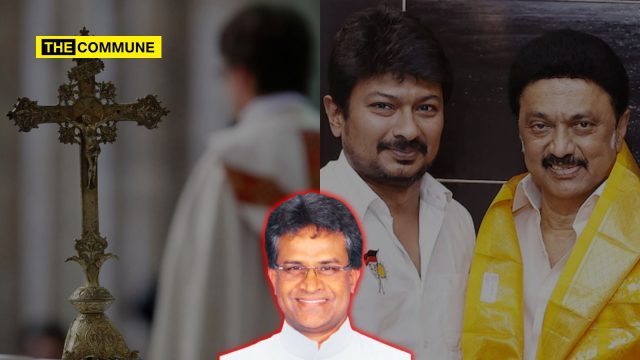
A detailed report filed by R. Joseph D’ Kennedy, a Don Bosco alumnus and India Representative of Ending Clergy Abuse (ECA), has accused Fr. L. Don Bosco, the Provincial of Chennai, of political collusion with the DMK, violating canonical law, and failing to uphold the dignity of the Salesian mission.

Rome has formally acknowledged Kennedy’s complaint and confirmed that it has “proceeded to inform itself of the issues mentioned” signalling that a preliminary internal investigation has begun.

Compromising The Dignity Of The Salesian Congregation

The controversy began when Fr. L. Don Bosco attended the Centenary Valedictory of Loyola College, Chennai, on 15 September 2025 — even as Loyola was under government scrutiny for academic fraud and other illegal and unlawful activities, including money laundering.

Loyola’s controversial partnership with Don Bosco International Media Academy (DBIMA), Paris, had earlier been disowned by the Jesuit institution after coming under the University Grants Commission (UGC) scanner.

The Legal Rights Protection Forum (LRPF) had filed formal complaints with the UGC, the Ministry of Education, and the University of Madras. UGC officials later confirmed that Loyola had indeed been inspected by an expert committee, prompting Loyola to hastily delete references to DBIMA from its website, effectively throwing the Salesians under the bus.

“By attending Loyola’s centenary and lending it legitimacy, the Provincial chose to act as a crowd pleaser sacrificing the Salesian credibility – something a real priest would never do.” Kennedy wrote in his complaint.

The Loyola scandal deepened further when a Canadian priest, Fr. Omala, died under mysterious circumstances on Loyola’s campus — prompting the BJP to demand a CBI probe.

Kennedy accused the Provincial of turning a blind eye to these developments, calling his presence at Loyola “a betrayal of Salesian integrity.”

The Loyola–DBIMA, Paris Scandal: UGC Steps In

It was Kennedy’s RTI intervention that first exposed the illegal Loyola–DBIMA, Paris collaboration. He warned DBIMA, Paris, in advance about the consequences of its unlawful partnership with Loyola — a warning that went unheeded.

“Had DBIMA, Paris cared to take my warnings seriously and wound up their collaboration with Loyola College, they could have averted the serious embarrassment of being branded a partner in crime,” Kennedy said.

Following his RTI and LRPF complaint, the UGC issued a nationwide Public Notice on 27 July 2025, warning all institutions and EdTech platforms against unapproved foreign tie-ups.

Subsequently, a University of Madras inspection report revealed that Loyola College was illegally running its MA Philosophy programme off-campus — effectively functioning as a Bible College to recruit Jesuit candidates — in gross abuse of Minority and Autonomous status.

Canonical Violations And Political Allegiance

The complaint also highlights a direct violation of Canon 285 §3, which prohibits clerics from holding or accepting public offices involving civil power.

Kennedy points to Fr. Don Bosco’s appointment to the Tamil Nadu Minority Commission, allegedly gifted by the ruling DMK during his tenure as Vice Provincial. Despite this, he continued to hold the government-appointed position even after assuming charge as Provincial in February 2023.

A January 2024 report in Tamil magazine Kumudham Reporter noted that Fr. Don Bosco was “included in the Minority Commission as part of a political understanding”

Kennedy questioned the ethics of such dual roles, asking whether the Salesian leadership had the courage to investigate the “true nature of this DMK assignment.

During his Loyola College address, Fr. Don Bosco openly flaunted his proximity to the first family of the DMK.

“Fr. Don Bosco behaves like a politician in cassock rather than a priest in the Salesian tradition,” Kennedy wrote, warning that such conduct erodes public faith and clerical integrity.

Misuse Of Don Bosco Schools For Political Activities

One of the most disturbing charges in the complaint is that Don Bosco school premises were used for political activities of the ruling DMK Government.

In August 2025, over 2,000 Greater Chennai Corporation sanitation workers staged a protest against the city’s push to privatize waste management that threatened their job security and dignity. During that protest — which was itself a response to unfair terminations and crumbling labour rights — several protesting workers alleged that DMK meetings were held inside Don Bosco school campuses, after which they were forced to clean the premises, an order they say came under pressure from civic officials. This allegation, voiced amid the larger labour struggle, has since been captured in viral video clips and figures prominently in the complaint.

“With the State Assembly elections around the corner, such irresponsible misuse of Don Bosco infrastructure must not be allowed under any circumstances,” Kennedy urged.

He warned that such political misuse could permanently damage the Salesian reputation and invite government scrutiny in the future.

Rome’s Response: “We Shall Proceed To Inform Ourselves”

On October 5, 2025, the Salesian Curia in Rome formally acknowledged Kennedy’s complaint:

“Thank you for your mail dated 4 October bringing the mentioned issues to our attention. We shall proceed to inform ourselves of the issues mentioned regarding the Salesians. Thank you very much for your concern as a Past Pupil of Don Bosco, for preserving the good name of Don Bosco.”

Christian activists interpret this as the beginning of an internal review, the first step before any formal canonical investigation.

Subscribe to our channels on TelegramWhatsApp, and Instagram and get the best stories of the day delivered to you personally.
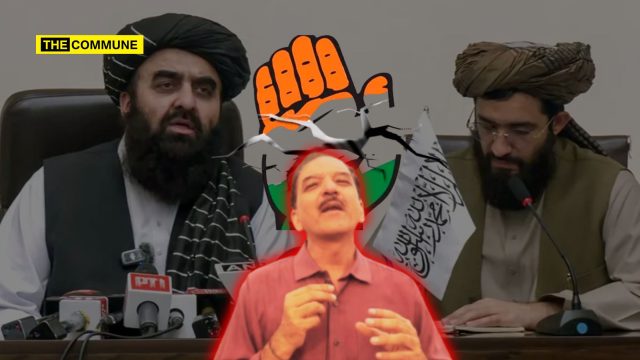
“Women Journalists Excluded”: Self-Styled Expert On Everything Sumanth Raman Amplifies Congress’ Propaganda On Taliban Foreign Minister Press Conference In Afghan Embassy

In his latest outburst on social media, self-styled polymath and X commentator Sumanth Raman has once again grabbed attention — this time by condemning the exclusion of women journalists from a press conference addressed by Taliban Foreign Minister Mawlawi Amir Khan Muttaqi in New Delhi.

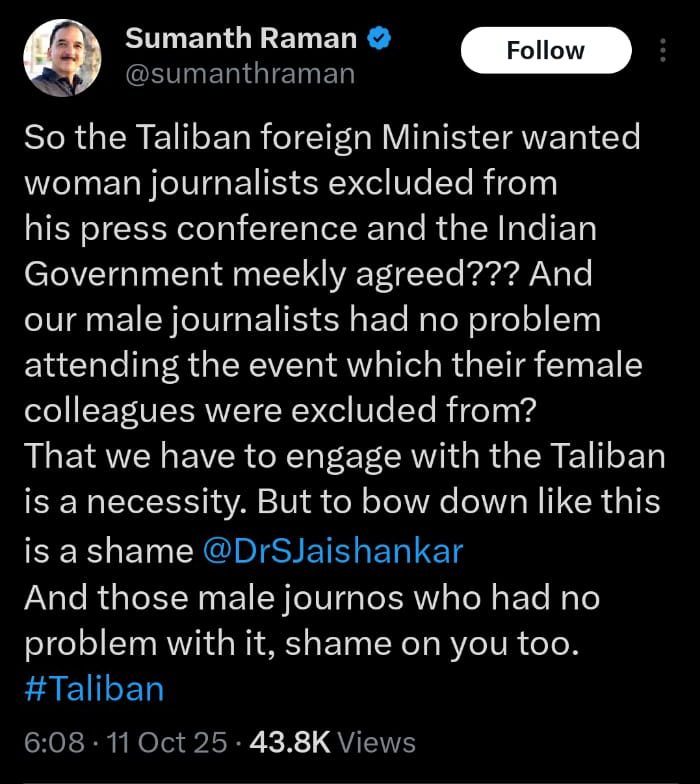
On October 11, 2025, Raman took to X accusing the Indian Government of “meekly agreeing” to the Taliban’s demands, even shaming male journalists who attended the event.

But as with many of his political rants, the outrage rests on selective facts and partisan spin — perfectly aligned with the Congress ecosystem’s attempt to corner the Modi government over yet another manufactured controversy.

Sumanth Raman’s tone was accusatory, painting both the government and the journalists as enablers of gender discrimination. Yet, this narrative collapses upon the simplest scrutiny.

There are two glaring errors in Sumanth’s tweet.

First – The press meet took place inside the Afghan Embassy in New Delhi, a space that, under international diplomatic conventions, is sovereign Afghan territory. India’s Ministry of External Affairs (MEA) clarified that it had no role in organizing or overseeing the event — a fact confirmed by BBC reports quoting an official MEA statement on the same day.

That crucial detail, however, seems to have escaped the Congress propagandist’s attention — or perhaps been conveniently ignored. His narrative seamlessly echoed that of Rahul Gandhi and Priyanka Gandhi Vadra, both of whom rushed to accuse Prime Minister Narendra Modi of being “too weak” to stand up for women. The timing, tone, and talking points point unmistakably to a coordinated political play, and Raman’s amplification of it fits like a glove.

Second – He’s wrong that no male journalists registered their protest. Aditya Raj Kaul of NDTV did ask for women journalists to be included.

Known for his partisan outbursts, Sumanth Raman has previously drawn flak for spreading misinformation — from misrepresenting journalist Palki Sharma to amplifying dubious claims about diplomatic incidents involving Pakistan. His latest attempt to paint the Modi government as complicit in the Taliban’s misogyny reeks of opportunism, not principle.

Yes, the exclusion of women journalists is reprehensible — but it stems from Taliban policy, not Indian governance. The Afghan Embassy’s internal decision reflects the Taliban’s regressive stance, not India’s. By deliberately blurring that distinction, Raman exposes not the government’s weakness, but his own intellectual dishonesty.

In reality, India continues to engage the Taliban strategically — to secure its diplomatic foothold in Kabul, maintain trade routes, and counter Pakistan’s influence in the region, as recent MEA statements and Al Jazeera reports from October 10 confirm. But for Sumanth Raman and his political patrons, nuance has never been as valuable as noise.

Subscribe to our channels on TelegramWhatsApp, and Instagram and get the best stories of the day delivered to you personally.
Courts Urge Tolerance From Hindus: 12 Rulings Where Judiciary Defended Free Speech Over ‘Hurt Hindu Sentiment’ Claims

On 8 October 2025, Noida Police questioned social media influencer Ajeet Bharti over a recent post on ‘X’, following a separate incident in which a lawyer allegedly attempted to throw an object (shoe) at Chief Justice of India BR Gavai. Bharti clarified that he was not arrested and was only summoned for inquiry. He was first taken to Sector 58 police station and later to the DCP office at 12/22 outpost for questioning.

The questioning follows the courtroom incident, where a 71-year-old lawyer attempted to hurl a shoe at CJI Gavai, reportedly upset over remarks regarding the restoration of a Vishnu idol in Khajuraho.

Ajeet Bharti was summoned, detained for questioning, but eventually released – all for questioning the judiciary for his comments on Hindus? Let’s take a look at how the judiciary has given judgements related to Hindus, Hindu Dharma, Hindu festivals in the past.

List of Instances Where Indian Judiciary Upholds ‘Free Speech’, Advises Against Hyper-Sensitivity in Hindu Religious Sentiment Cases

In a series of rulings from 2014 to 2025, various courts across India have consistently dismissed petitions alleging hurt to Hindu religious sentiments, often advising petitioners to cultivate a more tolerant outlook. This report details eight such instances where the judiciary emphasized the importance of free speech and artistic expression, cautioning against the overuse of legal remedies for subjective grievances.

#1 Supreme Court Dismisses Plea To Restore Beheaded Khajuraho Idol – 16 September 2025

The Supreme Court on 16 September 2025, declined to hear a plea seeking restoration of a 7-foot beheaded idol of Lord Vishnu at the Javari Temple in Khajuraho, Madhya Pradesh. A bench led by Chief Justice BR Gavai told petitioner Rakesh Dalal — who claimed the idol was damaged during Mughal invasions — that the issue fell under the Archaeological Survey of India’s jurisdiction. The bench remarked, “Go and pray to Lord Vishnu,” refusing intervention. Dalal had argued that the government’s failure to act violated devotees’ right to worship despite decades of appeals and protests.

#2 Baidyanath Shivling Logo Case Dismissed – 12 September 2025

The Punjab and Haryana High Court dismissed a plea by Meghna Khullar seeking the removal of a Shivling image from Baidyanath Ayurveda’s logo, citing potential disrespect. A division bench comprising Chief Justice Sheel Nagu and Justice Sanjiv Berry questioned the petitioner’s sensitivity, remarking, “Why are you being so sensitive about these things?”. The court noted that existing legal remedies were sufficient and refused to intervene in the matter, allowing the company to retain its established logo without any changes.

#3 Rajasthan HC Upholds Academic Freedom on Ram Janmabhoomi Question – 10 July 2025

The Rajasthan High Court dismissed a petition challenging a university exam question on the Ram Janmabhoomi verdict, ruling that academic discussion or criticism of judicial decisions does not constitute a religious offence under Section 295A IPC without malicious intent. Justice Anoop Kumar Dhand observed that critical analysis is integral to legal education and must not be curbed by subjective sentiments. The petitioner had claimed the question hurt religious feelings, but the court found no deliberate provocation. It emphasised that fair criticism is protected under Article 19(1)(a) when reasoned and not contemptuous, calling the plea “misconceived.”

#4 Court Chides YouTuber Over Holi Remark – 15 July 2025

The Bombay High Court rebuked YouTuber Vikas Pathak (Hindustani Bhau) for his petition against filmmaker Farah Khan. The case concerned Khan’s description of Holi as a “festival of chhapris” on a reality show. Justices Ravindra Ghuge and Gautam Ankhad asked the petitioner why he was “so sensitive” and stressed that the judiciary should not be burdened with such petitions. The court dismissed the plea, underscoring that not every personal dislike or offensive remark warrants legal action, especially in the context of public discourse and entertainment.

#5 Varanasi Court Dismisses Plea Against Rahul Gandhi Over Lord Ram Remark – 27 May 2025

A Varanasi MP-MLA court dismissed a petition against Congress leader Rahul Gandhi for allegedly calling Lord Ram a “mythological and fictional figure” during his speech at Brown University in May 2025. Advocate Harishankar Pandey had sought FIR registration, accusing Gandhi of hurting Hindu sentiments and spreading hate speech. However, Additional Chief Judicial Magistrate Neeraj Kumar Tripathi ruled the plea “non-maintainable,” citing the Bharatiya Nagarik Suraksha Sanhita (BNSS) requirement of prior government or district magistrate sanction. Pandey said he would seek permission and refile the case. The court took no further action against Gandhi.

#6 Allahabad HC Rejects Bid to Ban Book on Gayatri – 12 March 2025

The Allahabad High Court dismissed a Public Interest Litigation (PIL) filed by a religious group seeking a ban on the book “Tathakathit Gayatri Devi Mantra Ki Vastavikta”, which claimed Goddess Gayatri is fictitious. The bench of Chief Justice Arun Bhansali and Justice Kshitij Shailendra noted that an identical petition had been dismissed in 2016. The court ruled that re-filing the same claim was inadmissible, reinforcing the legal precedent that repeated petitions on settled issues cannot be entertained, thereby upholding the publication’s right to circulate.

#7 Kailash Kher’s Song Didn’t Outrage Sentiments Says HC – 12 March 2025

The Bombay High Court quashed a criminal case against singer Kailash Kher, filed by a devotee who alleged that his song “Babam Bam” and its music video, featuring scantily clad dancers, hurt his religious sentiments as a Shiva devotee. Justices Bharati Dangre and Shyam C. Chandak established a key principle, stating that “every action disliked by a class [does not amount to] outrage of religious sentiments.” The ruling protected artistic expression from subjective claims of offence, setting a significant legal standard for similar cases.

#8 Supreme Court Dismisses Plea Seeking FIR Against Udhayanidhi Stalin Over ‘Sanatan Dharma’ Remarks – 27 January 2025

The Supreme Court on 27 January 2025, dismissed a plea seeking FIRs against Tamil Nadu Minister Udhayanidhi Stalin and former Union Minister A. Raja for their remarks calling for the “eradication of Sanatan Dharma.” A bench of Justices Bela M. Trivedi and Prasanna B. Varale declined to entertain the petition, with the counsel withdrawing it to pursue other legal remedies. The Court observed that such pleas were turning it into a “police station.” Similar petitions had earlier been filed nationwide after Stalin’s controversial “Sanatan Dharma Eradication” speech in September 2023.

#9 Supreme Court Shields Adipurush, Warns of Falling Tolerance – 21 July 2023

The Supreme Court rejected pleas to revoke the censor certificate of the film ‘Adipurush’ and stayed proceedings against its makers in the Allahabad High Court. Justice Sudhanshu Dhulia observed that “everyone is touchy about everything now” and warned that societal tolerance for movies and books is steadily declining. The bench stated that a certification cannot be withdrawn lightly, defending the film’s release and highlighting the need for a more resilient public discourse in the face of creative works.

#10 Tolerance is a Hindu Tenet: Madras HC – 3 February 2022

The Madurai Bench of the Madras High Court dismissed a petition challenging the conversion of a house into a church in Kanyakumari, which had raised concerns about noise from loudspeakers. Justice C.V. Karthikeyan emphasized that tolerance is a basic tenet of every Hindu. The court upheld the constitutional right to practice and profess one’s religion, asserting that objections rooted in religious intolerance are unacceptable in a secular nation like India, thereby promoting communal harmony.

#11 “Get a Sense of Humour,” Says Bombay HC – 17 September 2018

The Bombay High Court quashed an FIR filed by petitioners alleging that a social media post hurt Hindu sentiment. Justices TV Nalawade and Vibha Kankanwadi emphasized the need for humour and tolerance in society. The court ruled that the content in question did not violate Section 295A of the Indian Penal Code (outraging religious feelings) and upheld the principles of free speech. It also cautioned against the misuse of such criminal cases to stifle expression and settle personal scores.

#12 SC on PK Movie: “Don’t Watch It If You Dislike” – 14 August 2014

The Supreme Court of India dismissed a PIL seeking a ban on the movie ‘PK’, which alleged that certain scenes and the poster hurt religious sentiments. Chief Justice R.M. Lodha stated that such matters fall under the realm of artistic expression. In a landmark statement, the bench advised, “If you don’t like it, don’t watch it.” The court upheld the freedom of expression in cinema and allowed the film’s release without any restrictions, setting a crucial precedent for handling objections to creative content.

Last Word

For over a decade, the judiciary has lectured Hindus on tolerance, restraint, and humour — but when a Hindu influencer questions that very double standard, the system suddenly forgets its own sermons on free expression. The irony couldn’t be sharper: free speech thrives only until it questions the arbiters of freedom themselves.

Subscribe to our channels on Telegram, WhatsApp, and Instagram and get the best stories of the day delivered to you personally.