Home Blog Page 69

Deepavali Cash Bonanza? DMK Allegedly Distributes Up To ₹5 Lakh To Party Executives Ahead Of Assembly Elections

Deepavali Cash Bonanza? DMK Allegedly Distributes Up To ₹5 Lakh To Party Executives Ahead Of Assembly Elections

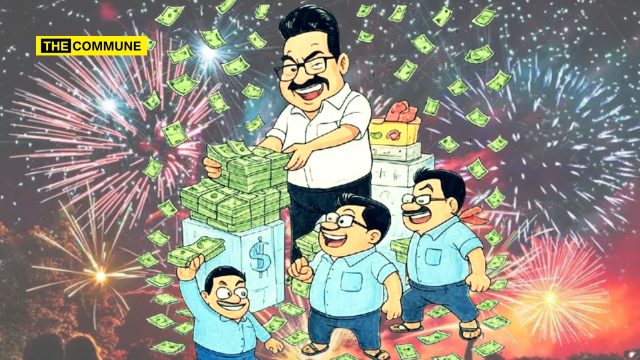
Ahead of the upcoming assembly elections, the Dravida Munnetra Kazhagam (DMK) is reportedly distributing cash and gifts to party executives at various levels as part of Deepavali celebrations, aiming to motivate them for the campaign. Party sources said the initiative targets executives ranging from ward secretaries to district administrators, with amounts varying from ₹10,000 to ₹5 lakh.

According to sources, after ten years, when the DMK returned to power, ministers, MLAs, district secretaries, and local government representatives had not provided significant support to party workers. Party members, who often spent more than Rs. 2,000 on events like weddings to honor these leaders, felt their own contributions were being overlooked.

The distribution strategy was reportedly devised with input from a research institute linked to Chief Minister M.K. Stalin’s family. Party leadership has instructed ministers, district secretaries, and MLAs to monitor the engagement and work of executives at all levels in the run-up to Deepavali.

Details of the distribution indicate that area representatives and deputy secretaries receive ₹10,000 each, while ward secretaries and district representatives are given ₹50,000 each. General and executive committee members receive ₹1 lakh, and area and union secretaries are allotted ₹5 lakh each. Party administrators at Perur, city, and district levels are given ₹1 lakh each.

Additional incentives include cash, gifts, and festive items for booth committee administrators, and rewards ranging from ₹10,000 to ₹1 lakh for youth wing and IT team administrators. Party sources said the distribution aims both to reward executives and encourage sustained effort in election-related activities.

(Source: Dinamalar)

Subscribe to our channels on TelegramWhatsApp, and Instagram and get the best stories of the day delivered to you personally.

Mumbai Police Book TISS Students For Maoist-Linked GN Saibaba Death Anniversary; Rekindles 2017 Incident Of Taking Students To Naxal Training Camps In Forest

Mumbai Police Book TISS Students For Maoist-Linked GN Saibaba Death Anniversary; Rekindles 2017 Maoist Allegations

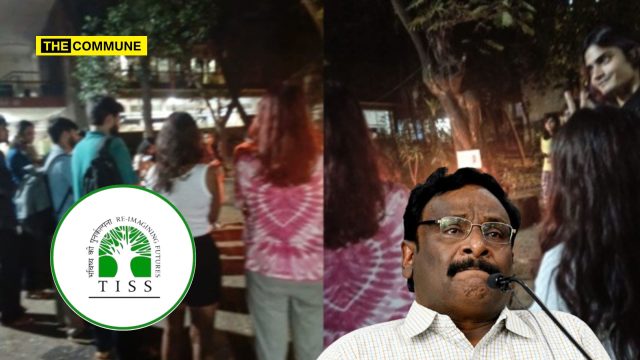
The Mumbai Police on 13 October 2025 registered a First Information Report (FIR) against at least ten students of the Tata Institute of Social Sciences (TISS) for allegedly organizing an event to commemorate the death anniversary of former Delhi University professor GN Saibaba. The event, which took place on the evening of October 12, also reportedly involved raising slogans in support of former Jawaharlal Nehru University (JNU) students Sharjeel Imam and Umar Khalid, who are currently incarcerated in connection with the Delhi riots case.

The police action was initiated based on a formal complaint lodged by the TISS administration. A police officer confirmed the registration of the FIR, stating that the students have been charged under sections related to causing prejudice to the nation, promoting enmity between different groups, and unlawful assembly, among others.

“The students were booked and issued notices accordingly. No permission was taken from the Mumbai police for the event,” the officer stated, emphasizing the unauthorized nature of the gathering.

TISS Administration’s Stance

A senior TISS official, speaking on condition of anonymity, confirmed that disciplinary action was being taken against approximately ten students involved. The official clarified that the event, organized around 9 PM on Sunday, was conducted without the knowledge or approval of the institute’s administration.

“The administration was not aware of the event as the students had not sought any permission. Additionally, it went unnoticed since it was a Sunday. It was brought to our notice on Monday through social media posts sharing photos and videos of the event, which questioned the TISS administration for allowing it. These posts also tagged the Mumbai police and Maharashtra CM Devendra Fadnavis,” the official explained.

The official further confirmed that the institute would be issuing show-cause notices to the students named in the FIR. “This is a regular process when rules and regulations of the institute are violated,” the official noted.

Social media posts from the event showed students standing near a photograph of Saibaba. The former professor, who was arrested under the Unlawful Activities (Prevention) Act (UAPA) for his alleged links with Naxalites, was acquitted after spending nearly a decade in prison. He passed away in Hyderabad on October 12 last year.

Historical Context: Previous Allegations Involving TISS

This incident is not the first time TISS has been linked to allegations involving Naxalite activities. In 2018, as per an India Today report, the Maharashtra Police had claimed that accused activist Mahesh Raut, an alumnus of TISS, had taken students from the institute to meet underground Maoist leaders in forest areas.

According to a senior police officer who spoke to India Today in September 2018, Mahesh Raut had allegedly arranged and accompanied TISS students to forest areas in 2017 to meet absconding Naxalites, including Comrade Milind Teltumbde, Ritu Goswami, Manglu, Dipu, and Kisan alias Prashant Bose. The purpose was allegedly to train these students.

The investigative officer of the case, ACP Shivaji Raut, had cited voluminous electronic data seized from the accused, which was sent to the Forensic Science Laboratory (FSL) in Mumbai for analysis. The police had also alleged that funds amounting to ₹5 lakh with Mahesh Raut and ₹15 lakh with another accused, Surendra Gadling, were meant to be distributed among lower-rung CPI (Maoist) cadres to “spread hatred and instigate enmity in minority groups.”

At that time, all five accused in the case were under house arrest in four different states, and the Supreme Court was set to hear arguments regarding their arrest warrants.

(Source: Indian Express)

Subscribe to our channels on TelegramWhatsApp, and Instagram and get the best stories of the day delivered to you personally.

“Media Comments By TN Police May Create Doubts On Probe,” Supreme Court On Karur Stampede

“Comments By TN Police May Create Doubts On Probe,” Supreme Court On Karur Stampede

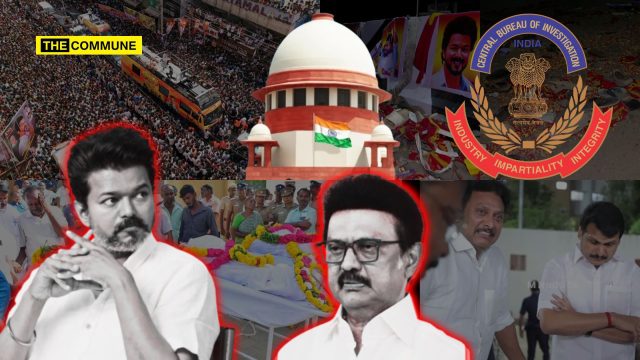
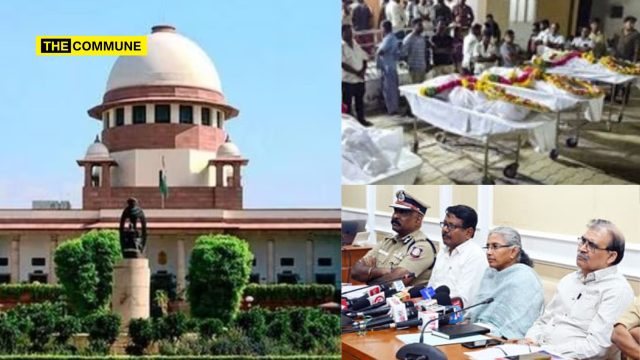
The Supreme Court has transferred the investigation into the Karur stampede, which claimed 41 lives during a TVK rally on 27 September 2025, to the Central Bureau of Investigation (CBI), observing that comments made by senior Tamil Nadu police officers before the media may create doubts about the impartiality of the ongoing probe by the State’s Special Investigation Team (SIT).

“Looking to the political undertone of the case and the fact that, without having regard to the gravity of the incident, the comments made before the media by top officers of the Police Department may create doubt in the minds of the citizenry on impartiality and fair investigation,” the bench comprising Justice JK Maheshwari and Justice NV Anjarao said in its order.

The Court noted that petitioners had raised concerns that an investigation conducted by the same police force, whose top officials had publicly exonerated their subordinates, “would lack the element of fairness and impartiality.” The Bench added, “Prima facie, this fact in itself creates a doubt in the minds of the general public about the independence and impartiality of the investigation.”

Describing the tragedy as one that “has definitely left an imprint in the minds of citizens throughout the country,” the Court said that with 41 people dead and over 100 injured, the incident raises questions regarding the fundamental rights of victims’ families and demands a “fair, independent and credible investigation.” The Bench emphasized, “The faith and trust of the general public in the process of investigation must be restored in the criminal justice system, and one way to instill such trust is by ensuring that the investigation is completely impartial, independent and unbiased.”

Invoking its extraordinary powers to ensure public confidence, the Court issued interim directions transferring the investigation of FIR No. 855/2025, registered at Karur Town Police Station, to the CBI. “The Director, CBI, shall appoint a senior officer to take charge of the case and form a team to assist in the investigation,” the Court said. The Superintendent of Police and SHO of Karur Town PS, along with the SIT constituted by the High Court and the Enquiry Commission set up by the Chief Minister, have been directed to hand over all case records, evidence, and digital material to the CBI immediately.

Additionally, the Supreme Court formed a three-member Supervisory Committee, headed by former Supreme Court judge Justice Ajay Rastogi and two senior IPS officers (to be chosen by Justice Rastogi), to monitor the CBI probe.

Highlighting the constitutional importance of fair investigation, the Court said, “There cannot be any doubt that fair investigation is the right of a citizen.”

The stampede occurred during a TVK rally in Karur, resulting in 41 deaths and injuries to over 100 persons. The Madras High Court (Madurai Bench) had earlier refused to order a CBI investigation, prompting multiple petitions in the Supreme Court. TVK had approached the Court challenging the Madras High Court Chennai Bench’s order constituting an SIT of only Tamil Nadu officers to probe the incident.

(Source: Live Law)

Subscribe to our channels on Telegram, WhatsApp, and Instagram and get the best stories of the day delivered to you personally.

DMK Govt’s Dravidian Model: Madras University Has No Money To Even Print Mark Sheets

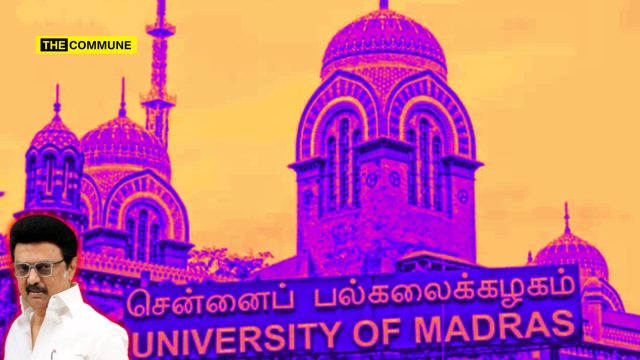
The University of Madras has been grappling with severe financial difficulties over the past few years, leading to a complete halt in the printing and distribution of mark statements and provisional certificates for students graduating from its affiliated colleges. For the last three years, students seeking higher studies or employment had to personally approach the university and provide proof such as admission letters or appointment letters to receive their documents.

Officials, who spoke on condition of anonymity, cited budget cuts and the stoppage of state grants following audit objections as key reasons for the crisis. Earlier this year, the Finance Committee had recommended drastic reductions across several heads to manage the financial shortfall.

The situation has eased slightly following a recent allocation of ₹17.84 crore by the State government, which is now being used to purchase stationery and clear certificate backlogs. Registrar Rita John was quoted saying in The Hindu, “Distributing mark statements to 5.50 lakh students every semester is not an easy task. We have started clearing the backlogs, but it will take time given the 118 affiliated and 37 autonomous colleges under us.” The postgraduate certificates have been printed, and undergraduate certificates are now being processed, said C. Arulvasu, Controller of Examinations.

Reacting to the news, Hindu Munnani criticized the DMK government’s handling of education funding. “Is Dravidam Model a separate world? Chennai University is in a state where it cannot even print mark sheets! The DMK government, which falsely boasts that Tamil Nadu is number one in all sectors, is being questioned about its negligence toward students’ education,” the organization said in a statement.

Hindu Munnani emphasized that mark sheets are essential for students to pursue higher education or job opportunities. “Due to the inefficient administration of the rulers, their future is being adversely affected. Government schools are being closed down, universities lack sufficient funds, and even employees are not being paid. Instead of focusing on students, the government is focused on erasing the names of community leaders from schools,” the statement added. Hindu Munnani urged the DMK government to immediately allocate funds to print and distribute mark sheets to safeguard students’ futures.

(Source: The Hindu)

Subscribe to our channels on TelegramWhatsApp, and Instagram and get the best stories of the day delivered to you personally.

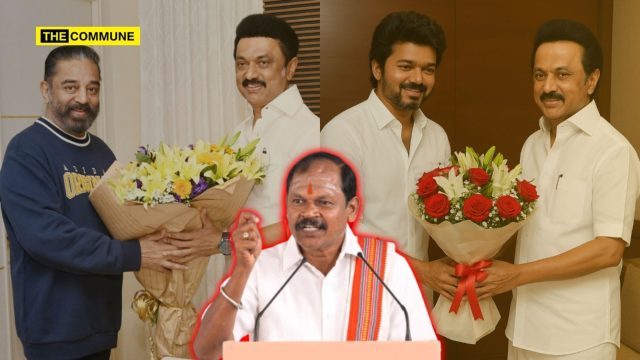
‘Joseph Vijay Is The Future Kamal Haasan’, Says IMK Leader Arjun Sampath

Indu Makkal Katchi leader Arjun Sampath has strongly criticized actor Joseph Vijay and the DMK government, claiming that the recent Karur incident, which led to the deaths of forty fans, reflects negligence and selfish interests. Speaking in Madurai, Sampath said, “Just as they brought Kamal Haasan’s Makkal Needhi Maiam under control, the DMK will bring Vijay under their control using the Karur incident. Joseph Vijay is the future Kamal Haasan; the future Makkal Needhi Maiam is the Tamilaga Vettri Kazhagam.”

Regarding the Thirupparankundram Hill case in Madurai district, Sampath, along with lawyer Ramakrishnan, welcomed the recent verdict. “The victory in the verdict regarding the Thirupparankundram Hill is a victory for Murugan. A victory for Murugan devotees. Muslim elders have said that a religious harmony verdict has been reached in this regard,” they said.

The leaders emphasized that goats and chickens should not be sacrificed on Thirupparankundram Hill. They added that it is inappropriate for individuals to personally criticize Judge Srimathi for the verdict, noting that the entire hill is considered a sacred linga. People traditionally circumambulate the hill. Sampath also noted that the opposing party, even if it appeals, has historical evidence supporting their claims.

Speaking further on the Karur tragedy, Sampath accused Joseph Vijay of failing to take responsibility for the deaths of forty fans. “It is shameful that Vijay made fans protect him in Karur for his own selfish interests. He is the reason for the loss of forty lives. The TMC has a fan club mentality; the crowd gathers and the people wait,” he said. He questioned whether Vijay should feel guilty for the loss of lives and blamed the ruling party for not banning him during his visit.

Sampath also called for accountability from the government. “The DMK government should be dismissed for failing to save people’s lives. Vijay, who was responsible for the Karur tragedy, should be arrested and the TMC party should be banned. The CBI should conduct an investigation and the culprits should be punished,” he said.

He warned the public against being deceived by Vijay, drawing parallels with Kamal Haasan. “The people of Tamil Nadu will ignore Vijay, who is another Kamal deceiving the people. Just as the DMK pulled Kamal Haasan to their side and brought the Makkal Needhi Maiam under control, they will also bring Vijay under their control by using the Karur incident,” Sampath stated.

Finally, he revealed plans to organize a Shiva devotees’ conference in Tiruvannamalai, modeled after the Madurai Muruga devotees’ conference.

(Source: Dinamalar)

Subscribe to our channels on TelegramWhatsApp, and Instagram and get the best stories of the day delivered to you personally.

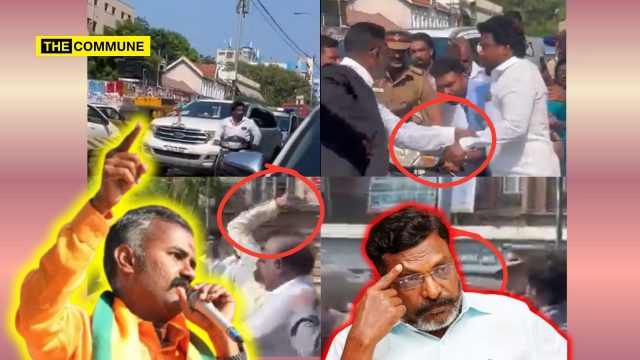
“Is He A Political Leader Or Gang Leader?”: BJP Leader Asuvathaman Slams VCK Chief Thirumavalavan For Justifying Violence Against A Lawyer

VCK Hit & Run Incident: BJP's Asuvathaman Calls For Filing Case Against Thirumavalavan Whose Car Rammed A Motorist Who Was Thrashed By VCK Goons In Front Of Him

In a fiery statement to reporters, Asuvathaman strongly condemned the recent attack on a lawyer allegedly linked to members of the Viduthalai Chiruthaigal Katchi (VCK), calling it a “grievous, terrible assault” and an attempted murder. He criticized VCK leader Thirumavalavan for allegedly inciting violence and guiding members of the Scheduled Communities toward criminal acts, while questioning the role of the Tamil Nadu Police and the Bar Council in ensuring security and justice. Asuvathaman urged the community to elect leaders who prioritize education, employment, and lawful guidance over violence, emphasizing the need for accountability and protective action by legal authorities.

Speaking to reporters, Asuvathaman said, “Where is Tamil Nadu going? Apparently, they didn’t hit him properly. Should they have murdered him? He is still in the hospital; He has been in the hospital for a week and hasn’t recovered or come out yet. It was a grievous, terrible assault, an attempted murder, an attack suitable for filing an attempted murder case. But Thirumavalavan, in turn, says, “They didn’t hit him properly, they just patted him four times”. Is this the speech of a political leader or the speech of a gang leader? Thirumavalavan is perpetrating a cruelty where he is leading a majority community toward crime, preventing them from accessing education and employment, causing them to accumulate many cases, and transforming them into a criminal society. At this time, I make a request to the great people of the Scheduled Communities: You must elect a good leader. You must reject Thirumavalavan. You need a good leader who provides education and guides you to employment, like Ambedkar, a good leader is needed, not a leader who says, “Go get an FIR, if he stares at me, go hit him, throw him down and stomp on him”. The society and the people, the Tamil society people, and the Scheduled Community people must all think about this. The question Tamil Nadu people are asking today is: If a lawyer himself can be attacked by VCK goons in the High Court campus, then which section of the people in Tamil Nadu has security today? What are the Tamil Nadu Police doing? If the DMK comes back to power, which section of the people will have security? So, will the VCK person barge into anyone’s house anywhere? Will they beat anyone they want, and you must remain silent? About two weeks ago, Airport Moorthy was attacked in front of the DGP office. When Airport Moorthy retaliated, the VCK people ran away with their feet hitting their backsides; they fell down and ran, as you might have seen on television. Rajiv Gandhi was alone, if he had 10 people with him, they wouldn’t have attacked him; they would have walked away silently. As soon as they saw he was alone, they hit him because he stared at them. What kind of mindset is this? What bravery is there in 20 people joining together to beat one person? Thirumavalavan is speaking about this in the Chengalpattu meeting as if it were a great act of valor.”

When asked about an FIR not being filed by the police, he said, “A huge question arises: Is the Bar Council an organization for lawyers or an organization for politics? Lawyers are complaining that the Bar Council often acts without properly investigating complaints, even unnecessary ones, filed against lawyers. At this time, when there is an attack on a lawyer, the Bar Council should be a protection for lawyers. Furthermore, regarding your institution, sir, a brawl has taken place there. Should an FIR be filed or not? Your institution should investigate the truth and you, go and complain to the DGP to take action. Officially, your official complaint hasn’t come yet. If the Bar Council hasn’t even filed a single complaint seven days after the incident, then for whom is the Bar Council? Is it for lawyers, or is it acting against lawyers? This question arises, doesn’t it? Therefore, the Bar Council must immediately file a case complaint with the Tamil Nadu Police regarding this and emphasize that action must be taken after filing the complaint. Furthermore, that entire area—the Chennai High Court campus—they wrap it up by calling it the Bar Council campus. Technically, the Bar Council campus is the High Court campus. Administratively, whose control does it come under? The Registrar’s control, right? The Registrar General—they, the High Court, should take serious action in this matter. The High Court should summon the police and question them, asking, “A major brawl has occurred inside my campus, a very grievous assault has taken place. What action have you taken?”. The High Court must ask the DGP of the Police. That is the legal justice, and I emphasize that at this time.”

Subscribe to our channels on Telegram, WhatsApp, and Instagram and get the best stories of the day delivered to you personally.
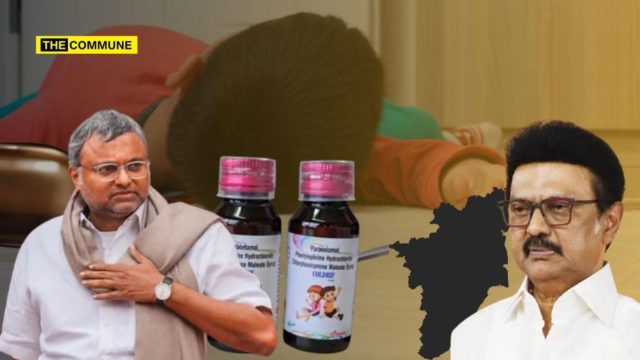
“If The Cough Syrup Came From TN, Govt & Dept Officials Must Answer”, Says Congress MP Karti Chidambaram On MP Cough Syrup Deaths

If The Cough Syrup Came From TN, Govt & Dept Officials Must Answer", Says Congress MP Karti Chidambaram

Sivaganga MP Karthi Chidambaram has said that if the cough syrup linked to the deaths of 22 children originated from Tamil Nadu, the State government and departmental officials must be held accountable.

He made the statement while attending a function at the Sivaganga District Collectorate on Tuesday, where petrol scooters were distributed to differently-abled beneficiaries under the MP Constituency Development Fund of former Union Minister P. Chidambaram.

District Collector Ka. Porkodi presided over the event. MLAs Mangudi and Tamilarasi were present, along with Cooperatives Minister K.R. Periyakaruppan and Karthi Chidambaram, who jointly distributed scooters worth ₹11.19 lakh to 11 differently-abled persons. District Disabled Persons Welfare Officer Balakrishnan and other officials also participated.

Addressing reporters after the event, Karthi Chidambaram referred to the recent reports of 22 child deaths allegedly caused by consumption of contaminated cough syrup. He said the source of the medicine must be traced through investigation. “If it came from Tamil Nadu, the government here and the department officials must definitely answer for it,” he said.

He further questioned how the medicine passed the required quality checks. “How did that quality test come and pass? Did they conduct that quality test? Who conducted it? Or did they pass it without testing? Or did they not do it at all? We need to know everything,” he said, adding that such incidents cannot be taken lightly regardless of where the deaths occurred.

When asked about reports that the company involved had allegedly not conducted mandatory tests for five or six years, the MP said he did not have direct information on the matter. “I don’t know. All that will come from the investigation. I don’t have any first-hand information except what appears in the newspapers. Whatever it is, it will come after a thorough investigation,” he said.

Karthi Chidambaram added that the government should take action based on the investigation findings and release a progress report to ensure transparency in the matter.

(Source: Hindu Tamil)

Subscribe to our channels on TelegramWhatsApp, and Instagram and get the best stories of the day delivered to you personally.
California Governor Gavin Newsom Vetoes Transnational Repression Bill That Can Persecute Indian-origin Hindu Americans

California Governor Gavin Newsom Vetoes Transnational Repression Bill That Can Persecute Indian-origin Hindu Americans

California Governor Gavin Newsom has vetoed Senate Bill 509, a measure that sought to mandate specialized police training to identify and respond to incidents of transnational repression. The bill had passed both houses of the state legislature but faced significant controversy over its implications and perceived targeting of certain diaspora communities.

The proposed legislation, introduced by Senator Anna Caballero and Assemblymember Jasmeet Bains, aimed to direct the Office of Emergency Services (Cal OES), in consultation with the Commission on Peace Officer Standards and Training (POST), to create and implement a curriculum for law enforcement officers. The training would have focused on recognizing and responding to cases where foreign governments attempt to harass, intimidate, or influence individuals living in the United States.

The Federal Bureau of Investigation defines transnational repression as actions by foreign governments that extend beyond their borders to “intimidate, silence, coerce, harass, or harm members of their diaspora and exile communities.” Proponents of the bill, including several Sikh advocacy groups, had argued that such training was essential to protect vulnerable communities from foreign interference and politically motivated violence.

However, the measure drew sharp criticism from other sections of the Indian American community, who claimed that the bill’s language was overly broad and risked unfairly targeting members of the Hindu faith. Critics said that the absence of a clear and unified federal definition of “transnational repression” could lead to misinterpretation and potential bias in enforcement.

In his veto message to the legislature, Governor Newsom acknowledged the bill’s intent but stated that the issue was better handled administratively and in coordination with federal agencies. “While I appreciate the author’s intent to enhance the state’s ability to identify and respond to transnational repression, this issue is best addressed through administrative action in coordination with federal agencies,” the Governor said.

He further explained that codifying specific definitions in state law could reduce flexibility and risk future inconsistencies, especially since no nationwide standard currently exists. “By codifying definitions related to this training, this bill would remove the state’s flexibility and ability to avoid future inconsistencies related to this work,” he wrote.

The Governor also pointed out that Cal OES had already developed a training program designed to help law enforcement officers recognize and respond to cases of transnational repression. Information about this course, called the Transnational Repression Awareness class, is available through the California Specialized Training Institute’s Criminal Justice and Homeland Security division. Newsom emphasized that the existing training was developed collaboratively by Cal OES, POST, and federal partners to ensure alignment with national standards.

“My administration moved quickly to provide local agencies with the necessary tools to protect these impacted communities while maintaining the essential administrative flexibility to adapt to this evolving issue,” the Governor added.

Assemblymember Jasmeet Bains, one of the bill’s co-authors, expressed disappointment but remained optimistic following the veto. In a statement, she said the proposal represented an effort to confront hate and intimidation in all forms. “One bill cannot make or break my community. We stand against hate, racism, and fearmongering,” she said, reaffirming her commitment to the issue.

The bill had passed unanimously in both houses of the legislature, though 21 Assembly members abstained from voting. Despite bipartisan support for the concept, the measure’s specific wording generated unease among some lawmakers and community organizations.

Observers noted that Newsom’s decision reflects a broader preference for handling matters of transnational repression through existing administrative mechanisms rather than through legislation. California’s law enforcement agencies have been receiving updated federal guidance in recent years as concerns have grown about foreign governments allegedly targeting diaspora activists and political dissidents in the United States.

With the veto, SB 509 will not become law. However, Cal OES’s current training modules on the issue remain active, and officials have indicated that ongoing collaboration with federal agencies will continue to ensure that law enforcement personnel are equipped to identify and respond to threats of foreign interference.

(Source: AsAmNews)

Subscribe to our channels on TelegramWhatsApp, and Instagram and get the best stories of the day delivered to you personally.
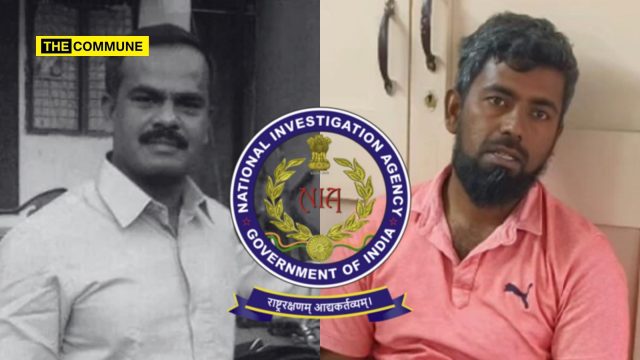
PMK Leader Ramalingam Murder Case: Kodaikanal Biryani Vendor Imtathullah Confesses Being Linked To PFI And Sheltering Culprits In ‘Hidden Room’, NIA Investigation Reveals New Details

ramalingam murder case pmk nia

The National Investigation Agency (NIA), which is probing the 2019 murder of Pattali Makkal Katchi (PMK) functionary Ramalingam, arrested 35-year-old Imtathullah from Dindigul district for allegedly sheltering key suspects in the case in August 2025. During interrogation, Imtathullah is said to have made a detailed confession linking himself to the Popular Front of India (PFI) and to individuals accused of conspiring in the Thirubhuvanam murder.

According to NIA sources, Imtathullah told investigators that he and several others were members of the banned organisation Popular Front of India. He reportedly said the group had been engaged in religious conversion activities in districts such as Thanjavur and Mayiladuthurai. During one such outreach in Thirubhuvanam, Ramalingam had confronted them and, according to the statement, “scolded them harshly,” which allegedly provoked members of the group.

Based on his account, around 18 people are believed to have conspired to murder Ramalingam as retaliation for the confrontation. The conspiracy, Imtathullah told investigators, was allegedly planned at a religious training and research centre called Arivagam, located in Muthudevanpatti in Theni district. The facility, he said, had been functioning as a meeting point for those involved.

He further stated that after Ramalingam’s murder, the conspirators dispersed and went into hiding. Imtathullah also told NIA officials that he was aware of the agency’s earlier announcement offering a reward of ₹5 lakh each for information about five absconding accused in the case.

In his statement, Imtathullah said he was running a restaurant named Ambur Biryani in Kodaikanal, Dindigul district, where he had constructed a hidden room. He admitted that he had used this concealed space to provide shelter to three of the most wanted suspects – Sahul Hameed, Nabil Hassan, and Abdul Majeed, all natives of Thanjavur district and declared fugitives by the NIA.

He reportedly added that he arranged accommodation for them in a place called Poomparai in Kodaikanal and gave them financial support during their stay. The NIA believes this assistance helped the accused evade arrest for a considerable period.

Investigators said the accused has been remanded to five days’ custody for further questioning. The agency is now verifying his claims regarding the role of the Arivagam centre in Theni district and examining financial records connected to his restaurant operations in Kodaikanal.

The NIA took over the probe into the Ramalingam murder case from Tamil Nadu police in 2019, after preliminary investigations indicated possible extremist involvement. Ramalingam, a PMK functionary, was attacked and fatally injured near Thirubhuvanam on 5 February 2019, following a reported altercation with a group engaged in proselytisation activities.

Officials said Imdadullah’s testimony, if corroborated, could help identify the network that provided logistical support to the main accused after the murder. Searches are expected to continue in Dindigul, Thanjavur, and Theni districts in the coming days as the agency traces other potential shelters and financiers linked to the absconding suspects.

(Source: Seithipunal)

Subscribe to our channels on TelegramWhatsApp, and Instagram and get the best stories of the day delivered to you personally.
How Supreme Court Cooked DMK Govt In TVK Karur Stampede Case

supreme court dmk

In an unprecedented and sharply worded order, the Supreme Court of India today delivered a severe indictment of the Tamil Nadu government led by the DMK and the functioning of the Madras High Court in handling the aftermath of the tragic Karur stampede. The court, citing a crisis of confidence, “political undertones,” and a complete systemic failure, not only transferred the investigation to the Central Bureau of Investigation (CBI) but also suspended the state’s own probes and established a high-powered supervisory committee to oversee the case.

The bench of Justices J.K. Maheshwari and N.V. Anjaria, while hearing a cluster of petitions related to the September 27 stampede that killed 41 people, expressed deep dismay at the actions of both the state administration and the judiciary, leading to a “multiplicity of proceedings” and a “lack of sensitivity and propriety.”

Supreme Court Cooks DMK

The Supreme Court’s order points out how the DMK government’s actions have eroded public trust to a point where none of its institutions were deemed fit to handle the investigation.

The court took serious note that top officials of the Tamil Nadu Police “have taken to press conferences to abjure the fault of the sub-ordinate officials.” It observed that these officials mounted a “robust defense” claiming their officers were prompt, even before the investigation could be completed.

The court stated, “Prima facie, this fact in itself creates a doubt in the minds of the general public about the independence and impartiality of the investigation.” The court questioned how a fair probe could be conducted by the same police force whose highest echelons had already publicly exonerated their subordinates.

In a move that seems to be a total vote of no confidence, the Supreme Court explicitly suspended the operations of both the one-man Enquiry Commission appointed by Chief Minister M.K. Stalin and the Special Investigation Team (SIT) formed by the Madras High Court. This signifies that neither the executive (State Government) nor the judiciary (State High Court) of Tamil Nadu was deemed capable of conducting a credible inquiry.

The order points to what can be seen as a discriminatory practice in granting permissions for political rallies. It pointedly mentioned that while the TVK party was granted permission for the fatal rally on a route connecting to a National Highway, “in January, 2025 permission sought by a different political party was refused.” This observation implicitly suggests a possible bias in the state’s administration of permissions, glaringly pointing to the “political undertone” that the Court noted.

The court highlighted that the “ruling dispensation” controls the “immense machinery of the State,” against whom serious allegations have been made for not discharging their functions properly. It lamented that the families of the victims are caught in the “political tussle between the two sides,” with little solace for their loss.

A Stunning Rebuke of the Madras High Court’s “Chaotic” Conduct

The Supreme Court’s harshest language was arguably reserved for the Madras High Court, whose handling of multiple petitions was described as “strange,” creating confusion and overstepping judicial boundaries.

The bench strongly criticized the learned Single Judges of the High Court’s Main Seat in Chennai for “entertaining the writ petition for the prayers which were not made” and “expanding the scope without any foundation in pleadings.”

In the case of WP Crl. No. 1000 of 2025, the court found it “completely strange” that the judge suo moto decided to order an SIT. The Supreme Court noted, “The judgement is completely silent about how learned Single Judge arrived at such a conclusion and what material was perused by the Court.”

The Supreme Court expressed its bewilderment at the “need to increase the multiplicity of proceedings” when petitions concerning the same incident, specifically those demanding a CBI probe or SIT, were already being heard comprehensively by a Division Bench of the Madurai Bench, which has territorial jurisdiction over Karur.

The court stated, “Such recourse prima facie indicates the lack of sensitivity and propriety to deal with such a matter… for the reasons best known to the Hon’ble Judges.” This is an exceptionally rare and direct criticism of the conduct of fellow judges.

The order questioned how a petition concerning the Karur stampede was entertained by the Chennai Main Seat, stating there was “no occasion” for it without the Chief Justice’s order. This chaos culminated in a “stark contradiction”: the Madurai Division Bench found no flaw in the police probe, while the Chennai Single Judge, without citing evidence, expressed dissatisfaction and formed an SIT. This judicial incoherence severely undermined the High Court’s credibility.

The Supreme Court’s Decisive Intervention

Citing the “national ramifications” of the incident and the need to enforce the fundamental rights of the victims’ families, the Supreme Court invoked its extraordinary powers to ensure “complete justice,” effectively creating a parallel investigative structure outside the Tamil Nadu government’s influence.

The investigation of FIR No. 855/2025 has been immediately transferred to the CBI. The state police, the High Court’s SIT, and the Chief Minister’s Enquiry Commission have been directed to hand over all evidence to the central agency.

In a move that highlights its lack of trust in the existing systems, the court has constituted a three-member Supervisory Committee headed by former Supreme Court Justice Ajay Rastogi. The committee, which will include two senior IPS officers from outside Tamil Nadu, is empowered to:

  • Monitor and supervise the CBI investigation.
  • Review evidence and direct the areas of probe.
  • Undertake any ancillary inquiries it deems fit.
    This ensures the investigation is insulated from the “political undertone” and potential local influence.

The Supreme Court also intervened in the pending matter concerning the formulation of Safety Protocols for public rallies. It directed the Chief Justice of the Madras High Court to assign this case to a Division Bench, implicitly criticizing its handling by a Single Judge.

The Unspoken Message: How Court Pointed To Systemic Failure Of Govt Without Saying It

The order systematically shows how the court cooked the DMK government by exposing their incompetence and a crisis of credibility.

The Court methodically established a clear legal basis for its intervention. It first identified a probable administrative failure in crowd management. It then documented specific actions such as public statements by senior police officials pre-emptively defending the force that created a reasonable apprehension of bias. The Court rightly concluded that this combination fundamentally compromised the possibility of a fair and impartial investigation under the state apparatus, thereby justifying the transfer of the probe to the CBI to uphold the integrity of the judicial process.

By ruling that the tragedy had ‘shaken the national conscience,’ the Supreme Court invoked a well-established legal doctrine from its own jurisprudence. This principle allows it to exercise its extraordinary powers under Article 142 of the Constitution to ensure ‘complete justice,’ particularly in cases involving egregious violations of fundamental rights that transcend state boundaries. This legal action was taken solely to restore public confidence in the justice system and to guarantee an unbiased investigation for the victims, not as a commentary on any political entity.

Conclusion: A Comprehensive Indictment

This order is more than a routine transfer; it is a comprehensive judicial indictment. By taking the probe out of the state’s hands and placing it under the dual oversight of the CBI and a retired Supreme Court judge, the apex court has unequivocally signaled that it believes only a fully independent, centrally monitored investigation can deliver justice. The ruling represents a total loss of confidence in the DMK government’s authority and a stinging rebuke of the state’s highest court, leaving the Tamil Nadu administration politically and administratively isolated in one of the gravest tragedies of its tenure.

Subscribe to our channels on Telegram, WhatsApp, and Instagram and get the best stories of the day delivered to you personally.