Home Blog Page 65

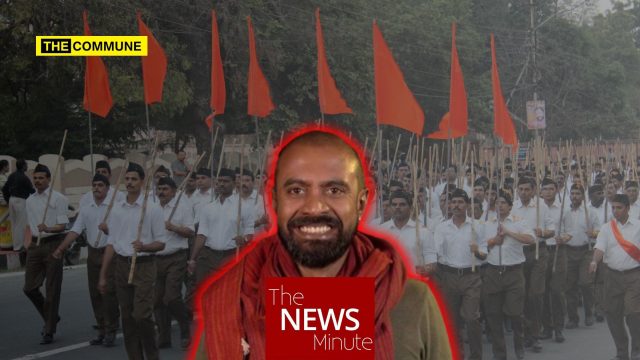
TNM’s Bigot-In-Chief Sudipto Mondal Spews Nazi-Grade Venom Saying “RSS Is Bunch Of Not Very Fit Men, Mostly Brahmins”

A recent episode of The News Minute’s “South Central” podcast, which positioned itself as a nuanced discussion on Hindutva, instead revealed a deep-seated bias and a troubling reliance on stereotypes from its panelists. The conversation, featuring academic V Geeta and ‘journalists’ Dhanya Rajendran, Anisha Sheth, and Sudipto Mondal, was less an analysis and more an exhibition of the very intellectual laziness and prejudice they claim to oppose.

Sudipto’s Bigotry: “A Bunch Of Not Very Fit Men, Mostly Brahmins”

The most jarring moment came from Sudipto, who dismissively referred to the Rashtriya Swayamsevak Sangh (RSS) as “a bunch of not very fit men who are not storm troopers. They are mostly the Brahmins.” This statement is not analysis; it is pure, unadulterated bigotry. What Sudipto does is –

Casteist Stereotyping: To reduce a vast, 100-year-old organization with millions of members from every stratum of Indian society to a “mostly Brahmin” club is factually false and intellectually dishonest. It resurrects a tired, divisive trope designed to delegitimize a group by framing it as a sectarian project of a single community. Would similar generalizations about the caste composition of any other community or organization be tolerated on a mainstream platform?

Ad Hominem Attacks: Instead of engaging with the RSS’s ideology or activities, Sudipto resorts to mocking the physical fitness of its members. This is the lowest form of argument, an ad hominem attack that reveals a complete lack of substantive critique. It is a tactic used when one has run out of logical points to make.

The Silambam Anecdote: An Unwitting Testimonial For RSS’s Peaceful Nature

Sudipto’s story about carrying a Silambam stick onto the Bangalore metro is perhaps the most profound example of the panel’s lack of self-awareness. He boasts about pretending to be a Sangh Karyakarta to bypass security, implying this shows a “common fear” of the RSS.

Let’s hold this story up to the mirror: What does it actually prove? A man carrying a potential weapon (a stick) was allowed to proceed because he claimed affiliation with an organization known for its discipline and non-violent conduct. The metro security’s assumption was clearly that an RSS volunteer would not misuse the lathi. This anecdote, intended to scare, actually serves as a public testimonial to the RSS’s reputation for peace and order. There are no daily headlines about RSS Swayamsevaks using their lathis as weapons in public unrest. The security’s reaction was based on this observed, historical conduct.

If the commentators on “South Central” wish to be taken seriously as critical voices, they must first hold a mirror to their own prejudices and inconsistent logic. The first step out of their “circular banality” is to abandon bigotry and apply their scrutiny equally, rather than weaponizing it only against their political opponents. The public deserves better than venom; it deserves honest, principled debate.

Previous Instances Of Sudipto Mondal’s Hate Speech

In what can be considered as a Nazi-level hatemongering, Sudipto Mondal made a disturbing remark targeting supporters of Prime Minister Narendra Modi.

Prime Minister Modi had shared a video of the grand roadshow heled in Bengaluru on his social media platforms. Reacting to this, Sudipto Mondal posted an offensive comment, suggesting that BJP and Modi supporters do not belong to a civilized society and should be subjected to a “re-education programme” once they are “forgiven” — a statement that many found deeply derogatory and reminiscent of extremist rhetoric.

Subscribe to our channels on Telegram, Instagram and YouTube to get the best stories of the day delivered to you personally.

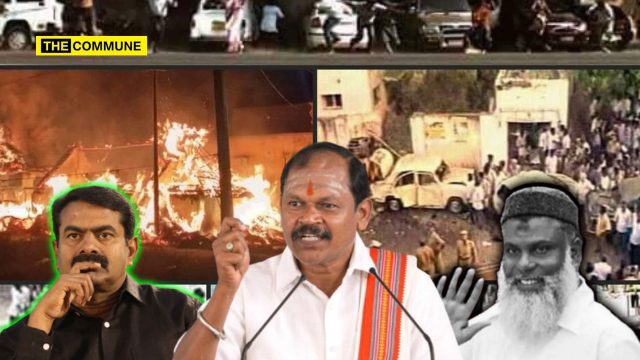
“I See Them As My Relatives”: NTK Seeman Calls For Releasing Jailed Islamist Terrorists, Calls Al Ummah Basha His ‘Appa’ Again; IMK Leader Arjun Sampath Slams

A significant political controversy has erupted after Arjun Sampath, leader of the Indu Makkal Katchi (IMK), released a video targeting Naam Tamilar Katchi chief Seeman, accusing him of supporting “Islamic religious fanatic terrorists” and operating with “ulterior motives” to secure Muslim votes.

The video, which shows Seeman interacting with a Muslim fishing community, has sparked a heated debate about political outreach and judicial advocacy in Tamil Nadu. In the clip, Seeman is seen greeting the community with “Wa Alaikum Assalam” before engaging in a detailed discussion about incarcerated Muslim prisoners.

In his statement, Sampath made severe allegations against Seeman and his party. “When hundreds of Hindu Tamils were brutally murdered by Islamic terrorists who issued fatwas against them, Seeman did not speak up for the welfare of Hindu Tamils,” Sampath claimed. He further alleged that “the Naam Tamilar organization has long since transformed into a Christian organization” and is “currently operating as an organization supportive of Islamic terrorists,” urging Hindu Tamils to “remain vigilant.”

In the shared video, when questioned about his advocacy for Muslim prisoners, Seeman provided an extensive justification framed in personal and humanitarian terms. “I don’t see them merely as Islamic prisoners. I see them as my relatives who are prisoners,” Seeman stated, revealing his personal connections with several inmates.

Seeman reminds the Muslims in the audience that he calls 1998 Coimbatore bomb blast convict SA Basha as “Appa“. He also fondly remembers another terrorist, Palani Baba.

The Naam Tamilar leader detailed his ongoing campaign, claiming he had organized protests across multiple cities until the DMK government banned his Palayamkottai meeting. “They said if we allow Seeman’s meeting for the release of Islamic prisoners, then RSS will also demand permission,” Seeman recounted, adding that he told authorities to “give them permission too! Let both opinions exist.”

Seeman accused both the DMK and BJP of playing politics with the prisoner issue. “When Rajiv Gandhi’s convicts are released, Congress protests. When discussion turns to releasing Muslim prisoners, BJP protests. Both parties use people’s fears to protect votes,” he asserted.

The leader announced concrete future actions, including completing a documentary film about the prisoners’ families and holding a major conference in Chennai. “I will again speak about the release of Islamic prisoners. You will hear not only me but also their mothers, sisters, and children,” he promised.

In a significant disclosure, Seeman claimed that the DMK government had opposed the Supreme Court’s direction to release three ailing Muslim prisoners on humanitarian grounds. “The Supreme Court said, ‘Release them.’ The Tamil Nadu government’s reply was that those men, who went to prison twenty-five years ago, are still in the same mindset,” Seeman revealed, calling this “hypocrisy” from a government that sought Muslim votes by promising prisoner release.

Full transcript:

Seeman said, ” In the 2021 elections, Chief Minister Stalin said, “Vote for me, I will release the Islamic prisoners.” But he deceived us. You had been protesting for the release of the Islamic prisoners too. Why did you stop it? Will no one come forward for the Islamic prisoners? That’s my question. [Seeman]: Brother, please sit down. I’ll answer. I don’t see them merely as Islamic prisoners. I see them as my relatives who are prisoners. I’m saying this as someone who has lived with them in prison and understands their feelings deeply. I stayed with Basha appa for more than 45 days. I know everyone — brother Abu Thahir, the policemen like Fakruddin, all of them. When brother Abu Thahir was released on bail, he spoke to me tearfully and said, “Anna, please arrange for my release.” Later, both his kidneys failed. Nobody went to see him. I went to the hospital and saw him. He couldn’t hear me properly; I had to speak close to his ear. He was very weak, barely alive. They kept him there in the hospital until his death. My father lived beyond 80 years. When he came out on parole, he would always say, “Ayya… Ayya…” I call him “Appa”. He’d say, I am over 80 now — what can we do anymore? Say something and we’ll try to get you released.” In his last days, he said, “I want to see my grandchildren before I go to Allah. Please speak for me.” I did. For the release of the Islamic prisoners, I, your brother, have fought continuously — in Nagapattinam, Chennai, and many other places. But I must tell you a bitter truth. Some Islamic groups did not allow their members to attend my big public rally. The Jamaat leaders said, “If you attend Seeman’s rally, it will delay the release because the ruling government might get angry.” Still, I continued. Finally, when I tried to hold a big meeting in Palayamkottai near Melapalayam, this same DMK government banned my meeting. They said the reason was: “If we allow Seeman’s meeting for the release of Islamic prisoners, then RSS will also demand permission.” I told them: give them permission too! Let them speak against it! Let both the opinions exist. I had no other choice, so I began making a documentary film. Half of it is already shot — songs and all. It includes interviews with families of Muslim prisoners in Coimbatore, some of whom declined to appear because they feared it would affect parole chances. Still, others shared their pain. I intend to complete the film, screen it in Chennai, and hold a large conference demanding the release of Islamic prisoners. Now, listen — the first person who called them “Islamic extremists” in the Tamil Nadu Legislative Assembly was none other than Karunanidhi. Later, in 2021, Mr. Stalin said during elections, “Vote for me, I will release the innocent Islamic prisoners.” Like our brother Pazhani Baba once said, “If a man speaks kindly, people easily believe he is good.” That’s what happened — people voted for him. After coming to power, Stalin said, “The Governor didn’t sign the order.” But the Governor is from the BJP — if he refuses to sign, does that mean you have no power? You should have said at that time that you will rlease if the governor signs the order. You say you will gove 1000 rupees to women and then say that only eligible women can get it. Who are you to decide if my mothers and sisters are eligible? If you’re the Chief Minister, elected by eight crore people, and you have less authority than one unelected appointee — what kind of democracy is that? If I were him, I would have said, “I’ll dissolve my government, hold another election, and the people will choose again.” To rule, you need courage. But look what happens here. When Rajiv Gandhi’s convicts are released, Congress protests. When discussion turns to releasing Muslim prisoners, BJP protests. Both parties use people’s fears to protect votes. A leader who worries about vote banks will never care for the people or the nation. I am not speaking for votes. Even if I don’t get your votes, I will still speak — because this is my duty, my birth responsibility. Soon, in our upcoming Chennai meeting, I will again speak about the release of Islamic prisoners. You will hear not only me but also their mothers, sisters, and children — their pain will make the truth clearer than any politician’s words. If even that doesn’t lead to their release, then I will once more raise my voice to open the doors — and I tell people, don’t vote for DMK anymore. I haven’t stopped fighting — they did. I will continue. Recently, three Muslim prisoners who were ill, appealed to the Supreme Court seeking early release on humanitarian grounds. The court accepted their plea, acknowledging their long imprisonment, and directed Tamil Nadu to release them. But the DMK government filed a counter-petition, arguing that these prisoners still pose a danger, saying, “If they are released, Hindu leaders’ lives will be at risk.” What hypocrisy! The same government that sought votes for freeing them now labels them threats. And yet they call themselves protectors of minorities. When the court said “release them,” the government opposed it and continued to argue. Many people don’t even know this happened because some media and party members won’t dare to speak of it — their only duty is to serve the DMK. So I’m telling you the truth: three Muslim prisoners went to court seeking early release due to failing health — the Supreme Court said, “Release them.” The Tamil Nadu government’s reply was that those men, who went to prison twenty-five years ago, are still in the same mindset and therefore, releasing them would be dangerous. And yet, this government claims to protect Muslims. Think about that.

Subscribe to our channels on Telegram, Instagram and YouTube to get the best stories of the day delivered to you personally.
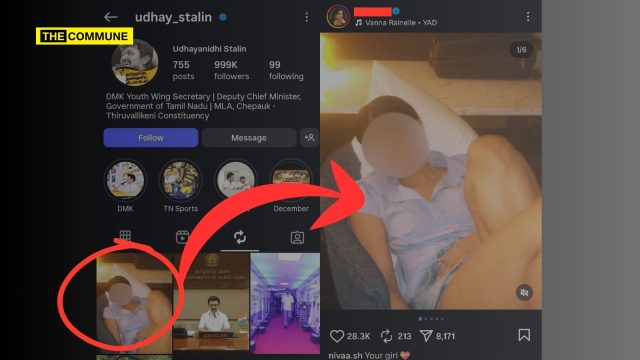
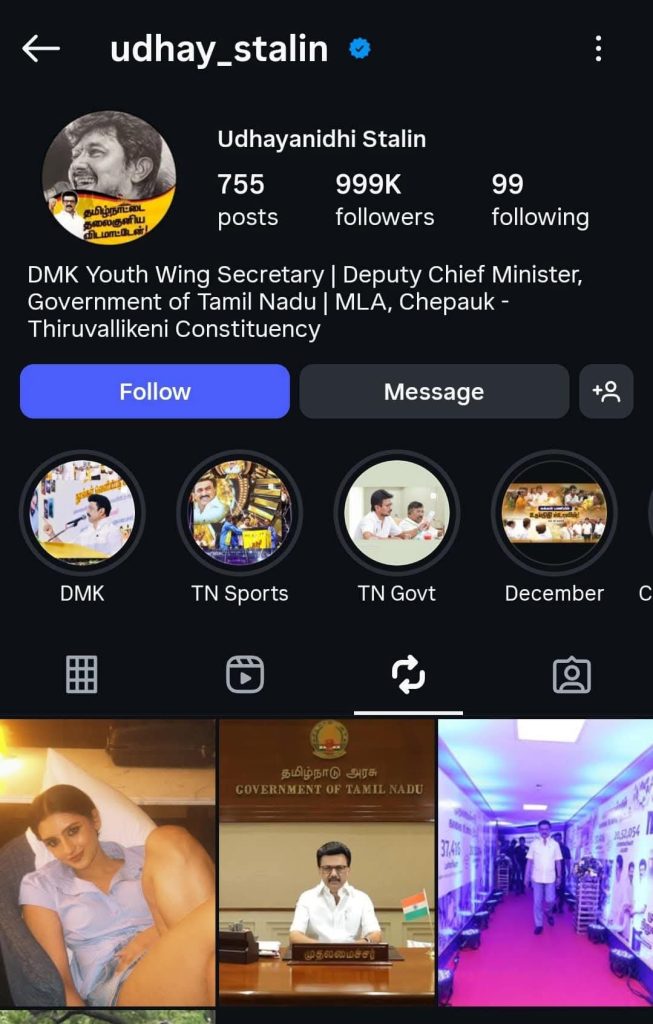
Netizens Roast DMK Scion Udhayanidhi Stalin For Allegedly Resharing Photos Of Actress On His Official Instagram; Deletes It Later

On 21 October 2025, Tamil Nadu Deputy Chief Minister Udhayanidhi Stalin faced widespread social media scrutiny after reposting photos from actress Nivaa’s Instagram account and subsequently deleting them amid criticism.

The incident sparked memes and critiques questioning the minister’s priorities, particularly at a time when the state gears up for the north-east monsoon. While DMK supporters defended the reposts as an attempt to humanize his public image, him resharing photos of actresses has become a political controversy with members of TVK, AIADMK and BJP slamming Udhayanidhi Stalin.

Udhayanidhi Stalin has previously shared personal moments with his pet dog Rowdy on Twitter using the hashtag #RowdyTime.

Following the Instagram repost, many netizens, primarily supporters of the Tamilaga Vettri Kazhagam (TVK), mockingly questioning it.

Who is Nivaashiyni?

Nivaashiyni Krishnan or ‘Bigg Boss’ Nivaa describes herself as a Model, Social Media Influencer, Digital Content Creator, and also an Entrepreneur. She is a Chennai-based actress who made her Tamil film debut with the recent Tamil film “Oho Enthan Baby.”

Subscribe to our channels on TelegramWhatsApp, and Instagram and get the best stories of the day delivered to you personally.

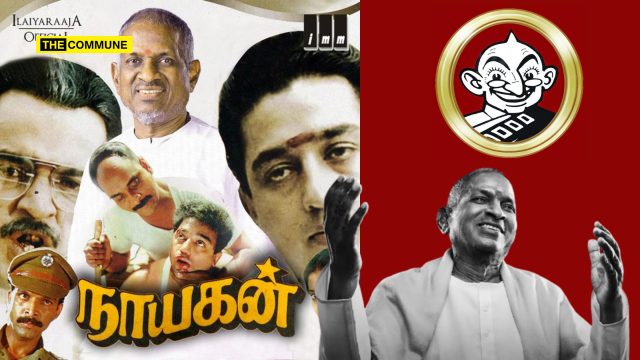
How Vikatan Insulted Ilaiyaraaja And Berated His Music In Its Review Of Nayakan Film

Vikatan's Review Of Nayakan Said Ilaiyaraaja Will Disappear After The Film

It is only today we have many film reviewers who by the instrument of social media, are able to voice out reviews of films they watch.

Back then, the much coveted Ananda Vikatan was the IMDb and Rotten Tomatoes of Tamil cinema.

If a film had crossed even 50/100, it would be hailed as a piece of amazing cinema.

In a review that has since become legendary for its prescience, the Ananda Vikatan review committee delivered a mixed but critique of Mani Ratnam’s 1987 classic “Nayakan,” which insulted composer Ilaiyaraaja’s music saying it would be overshadowed by the film’s other technical achievements.

The review, recently resurfaced, lavished praise on the film as a “powerful brand in Tamil,” commending director Mani Ratnam for his work. It particularly highlighted the cinematography by P.C. Sriram, noting that his camera wonderfully captured a range of moods from “sadness, joy, [to] aggression” and was “catching up with the ranks of international experts.”

The critics reserved significant acclaim for Kamal Haasan’s iconic performance, describing his role as the ‘Godfather’ as a wonderful opportunity for the actor to “underplay” and showcase his “histrionics even through facial movements.”

The review also pointed out specific narrative strengths and flaws, praising the “touching” subplot involving the son of a murdered police officer but criticizing the “poor selection” of an actor who did not resemble the child version of the character.

However, the review offered a critique of the film’s musical score. While acknowledging the milestone of it being Ilaiyaraja’s 400th film, the review starkly declared that amidst the film’s “sets, taking, color, [and] richness,” the maestro’s music “disappears without a trace”.

This is how Vikatan had insulted Ilaiyaraaja in the interview:

This is Ilaiyaraaja’s 400th film it seems! Amidst the film’s set, taking, colour, and richness, Ilaiyaraaja’s music disappears without a trace! Poor thing!”, wrote Vikatan.

Apart from the 60 marks & few good points, such an immature review of #Nayagan by @vikatan -Revealing the entire climax &berating Ilayaraja! pic.twitter.com/wRBEdmUGYY

Yes, these were the words for the Nayakan’s music which still ranks as one of the top works of Ilaiyaraaja with the Thenpaandi Cheemaiyile song and the flute theme standing as evergreen.

This critique stands in dramatic contrast to the maestro’s current moment. Ilaiyaraaja recently made headlines worldwide with his first English classical symphony No 1 “Valiant”, a monumental orchestral work that showcases the very complexity and grandeur of his musical genius.

Far from “disappearing”, the maestro’s music is now being celebrated in concert halls, being dissected and appreciated as standalone art of the highest order, independent of the cinematic visuals it once accompanied.

Subscribe to our channels on Telegram, Instagram and YouTube to get the best stories of the day delivered to you personally.
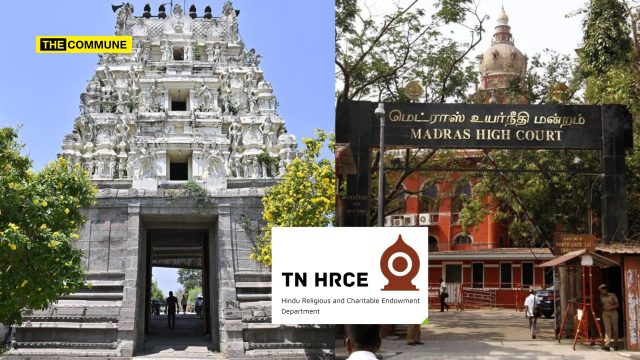
“Duty Bound”: Madras High Court Orders Dravidian Model HR&CE To Upload Temple Tenders, GO, Financial Info; Rejects ‘Secrecy’ Claim

thakkolam temple madras high court restoration hr&ce audit temple

The Madras High Court has issued a significant oral observation, stating that the Hindu Religious and Charitable Endowments (HR&CE) Department is “duty-bound” to proactively upload all government orders, tender notifications, and financial information pertaining to temples on its website, emphasizing that this involves “the amount of the devotees.”

The directive came during a hearing of a writ petition (WP No. 39448 of 2025) filed by temple activist TR Ramesh, who sought a mandamus to compel the HR&CE Department to comply with Section 4(1)(b) of the Right to Information (RTI) Act, which mandates proactive disclosure of information by public authorities.

During the proceedings before Justice V. Lakshminarayanan, the petitioner’s counsel, B Jagannath, presented a screenshot as evidence showing that the last update on the HR&CE website was from 2022. He argued that the department, which claims to be a “vibrant department,” was failing to disclose crucial secular and financial information, including tenders and government orders.

The court noted that it was “nobody’s case that the HR and CE Department has become dysfunctional post 2022,” implicitly questioning the department’s lack of transparency over the past three years. The judge made a key oral observation that the information sought does not fall under the Official Secrets Act and must be uploaded in accordance with the law.

The standing counsel for the HR&CE Department, S. Ravichandran requested time to file a counter-affidavit. The court has adjourned the matter to 29 October 2025, for the respondents to obtain instructions and file their response.

Subscribe to our channels on Telegram, Instagram and YouTube to get the best stories of the day delivered to you personally.
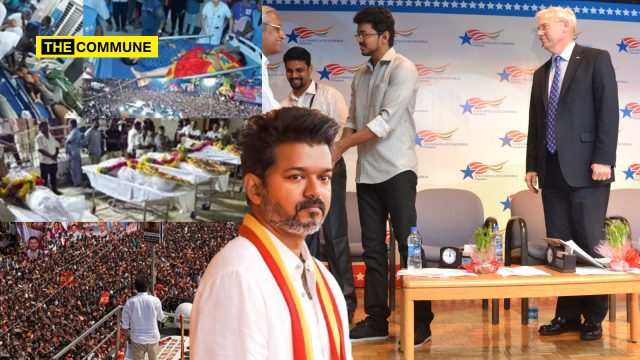
After Karur Tragedy, Foreign Embassies Reportedly Seek to Engage with TVK Chief Vijay, Says Dinamalar Report

After Karur Tragedy, Foreign Embassies Reportedly Seek to Engage with TVK Chief Vijay, Says Dinamalar Report

Following the stampede at a Tamilaga Vettri Kazhagam (TVK) rally in Karur that claimed 41 lives, foreign embassies have reportedly expressed interest in meeting actor and party leader Vijay.

According to sources cited in a recent report by Dinamalar, ambassadors from several countries have written to External Affairs Minister S. Jaishankar seeking permission to hold discussions with the TVK chief. India has around 85 embassies, and many of them routinely send political reports to their respective governments, particularly ahead of major elections.

Officials said foreign envoys are keen to understand the political direction and policies of the newly formed TVK, which has emerged as a significant force in Tamil Nadu politics. Senior diplomats, including those from the United States consulate in Chennai, are said to have already submitted preliminary reports on Vijay’s political activities.

Under protocol, ambassadors and senior embassy officials are required to obtain prior approval from the Ministry of External Affairs before meeting political leaders, ministers, or other prominent public figures. The ministry has reportedly granted permission for such meetings, and diplomatic sources in Delhi indicated that interactions between Vijay and foreign representatives may take place soon.

Subscribe to our channels on Telegram, Instagram and YouTube to get the best stories of the day delivered to you personally.
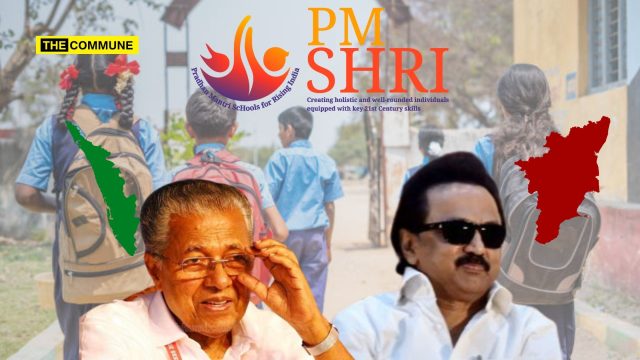
Communist Kerala Govt Drops ‘Saffronisation’ Stance And Joins Centre’s PM SHRI Scheme; TN Wants Funds But Wont Join Scheme

In a significant policy reversal, the CPI(M)-led Kerala government has decided to join the Centre’s Pradhan Mantri Schools for Rising India (PM SHRI) scheme, citing an urgent need for funds to pay teacher salaries and provide student grants. The move ends a prolonged standoff during which the state had denounced the scheme as a tool for the “saffronisation” of education.

The state’s reluctance to sign a Memorandum of Understanding (MoU) with the Union Education Ministry had led the central government to withhold the release of over ₹1,000 crore earmarked for Kerala’s general education sector. This financial pressure ultimately forced the state’s hand.

State Education Minister V. Sivankutty announced the decision on Sunday, framing it as a pragmatic choice compelled by financial necessity. “There are arrears of ₹1,466 crore that we have to receive from the Centre. It is money that must be spent on our children,” Sivankutty stated. “Many expenses, such as grants to students and salaries to teachers, can be met only if we get this fund.”

The minister defended the U-turn by arguing that the Centre’s funds belong to all citizens and that other state departments like Health and Agriculture had already accepted central assistance. He accused the Centre of withholding aid on “silly grounds,” but pledged that Kerala would continue to uphold its own educational policies. “We will adopt a practical approach,” he said.

The government’s decision highlights a stark contrast in how states are responding to the scheme. While Kerala has now pragmatically joined to access crucial funds, states like Tamil Nadu have chosen to continue their ideological opposition, potentially at the cost of their own students’ development and welfare.

Facing withheld funds of nearly ₹2,500 crore tied to the National Education Policy (NEP) 2020, the Tamil Nadu government, led by the DMK, is protesting the Centre’s conditions. Union Minister Dharmendra Pradhan has clarified that Sarva Shiksha Abhiyan (SSA) funds are linked to the implementation of the NEP and the PM SHRI schools scheme, which the state has outright rejected, decrying it as “Hindi imposition.” This has created a contradictory stance: the DMK is publicly protesting to demand the release of funds for a central scheme it officially refuses to join, leading to accusations of political posturing over a policy it has consistently opposed.

The PM SHRI scheme, which aims to upgrade existing schools, requires state governments to bear 40% of the project cost. So far, 12,400 schools across 670 districts in the country have been incorporated under the initiative. The Kerala government, however, maintained that it has already independently implemented many of the scheme’s infrastructure components, including setting up 40,000 smart classrooms with broadband connectivity.

(Source: Indian Express)

Subscribe to our channels on Telegram, Instagram and YouTube to get the best stories of the day delivered to you personally.
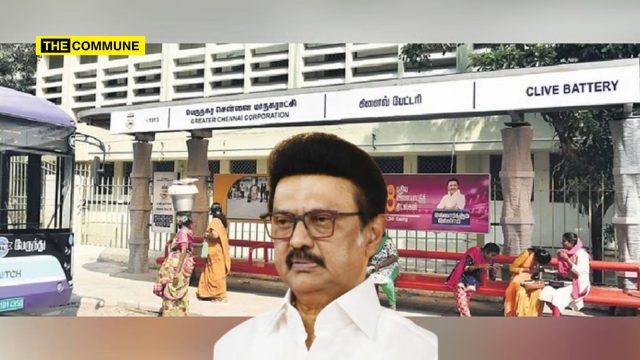
Duplicate Bus Shelters, Ghost Projects, Councillors Unaware – How Chennai’s Bus Stop Project Raises Several Red Flags

Duplicate Bus Shelters, Ghost Projects, Councillors Unaware - How Chennai’s Bus Stop Project Raises Several Red Flags

A plan by the Greater Chennai Corporation (GCC) to construct new bus shelters across 24 locations using councillors’ ward development funds has raised serious questions about financial prudence and administrative oversight, an investigation by The New Indian Express has revealed.

Despite tenders being floated in September for shelters costing ₹10-20 lakh each, a ground visit found at least five proposed locations already have functional bus shelters. Furthermore, several ward councillors claimed ignorance about projects supposedly funded from their own ward development allocations.

At locations including Vivekananda Illam near the MLA office, Rajaji Salai (Clive Battery), Ibrahim Salai, Tharamani 100 Feet Road, and Cathedral Road near Stella Maris College, existing shelters were found to be in adequate condition. Notably, a new 3D-printed shelter has recently been constructed near Stella Maris College.

“I was unaware that a new bus shelter was proposed near Stella Maris College with my ward development funds,” said Ward 118 Councillor Malliga Yuvaraj. “There are already adequate shelters here. Anything beyond that is unnecessary.”

The investigation uncovered multiple inconsistencies in the project:

Councillor Ignorance and Shifting Explanations

Ward 116 Councillor ARPM Kamaraj initially expressed unawareness of the project in his ward, while contractors provided conflicting justifications. One contractor first claimed a replacement was needed due to poor condition, then changed his story to say it was an “addition” based on school requests when the existing shelter was found to be in good shape.

Questionable Locations and “Typographical Errors”

At Clive Battery, where both sides of the stretch already have sufficient stops, Ward 60 Councillor Azad Z claimed the new shelter was needed because “buses often skip the existing stop and park slightly further away from there.” However, a 3D-printed shelter was recently built at the same location.

More strikingly, one tender mentions a proposed shelter in Ward 142 on “CIT Nagar Main Road” – a road that doesn’t exist. Councillors attributed this to a “typo.”

Minimal Damage, Maximum Spending

At Ibrahim Salai, the existing shelter built during the AIADMK regime is slated for replacement. During inspection, only three seats were found missing. When questioned why repairs weren’t sufficient, officials claimed there was “no legal provision for repairs – only for new construction.”

Similarly, in Tharamani, a new shelter is proposed just 50 meters from an existing one, with the justification that the current shelter’s proximity to a traffic signal “obstructs the pedestrian pathway.”

Repeated attempts to contact the superintending engineer of the Bus Route Roads department and Deputy Commissioner (Works) V Sivakrishnamurthy for clarification were unsuccessful.

The revelations have sparked concerns about potential misuse of public funds, particularly given the significant cost variations for shelters with identical specifications and the apparent duplication of infrastructure in already well-served areas.

(Source: The New Indian Express)

Subscribe to our channels on Telegram, Instagram and YouTube to get the best stories of the day delivered to you personally.
When Higher Judiciary Overturned Or Reduced Sentences In Cases Involving Christian Clergy Accused of Rape And Sexual Abuse (2021–2025)

The Supreme Court came under spotlight after it temporarily suspended the life sentence of Father Edwin Pigarez, a Roman Catholic priest convicted of raping a minor girl. The bench, consisting of Chief Justice BR Gavai and Justice K Vinod Chandran, granted bail to Pigarez while his appeals against the High Court’s conviction ruling are still pending.

In this report, we look at ten judicial verdicts from 2021 to 2025 involving individuals associated with Christian institutions in India, who were accused in cases of abuse and murder – instances where higher courts have intervened in the decisions of lower courts, resulting in acquittals, sentence reductions, bail grants, or suspension of sentences.

#1 Supreme Court Suspends Sentence of Priest in Minor Rape Case

On 17 September 2025, the Supreme Court suspended the life sentence and granted bail to Father Edwin Pigarez, a Catholic priest convicted of repeatedly raping a minor girl in Kerala between 2014 and 2015. The Kerala High Court had earlier upheld the conviction but reduced the sentence from life imprisonment to 20 years of rigorous imprisonment. The Supreme Court’s decision to grant bail pending his appeal was based on the fact that the accused had already served nearly ten years in custody, which constituted half of the reduced sentence imposed by the High Court.

#2 Pune Court Discharges Bishop in Sexual Abuse Case

On 8 August 2025, an Additional Sessions Court in Pune discharged Bishop Thomas Dabre in a high-profile sexual abuse case. The case involved the sexual abuse of a 15-year-old boy by Father Vincent Pereira in 2018. The court absolved Bishop Dabre of criminal responsibility, stating that there was no evidence he had failed to report the abuse. The judgment noted that the Bishop had, in fact, advised the victim’s family to approach the police and had reported the matter to the appropriate church authorities, leading to his discharge.

#3 Kerala High Court Acquits Pastor in POCSO Case

On 18 July 2025, the Kerala High Court acquitted Pastor Shibu, who had been convicted by a trial court for the aggravated penetrative sexual assault of a 10-year-old girl in 2014. The trial court had sentenced him to double life imprisonment. However, the High Court set aside the conviction, ruling the victim’s testimony as “highly improbable and unbelievable” due to inconsistencies with the medical evidence presented during the trial. The acquittal overturned the lower court’s verdict entirely.

#4 Allahabad High Court Stays Arrest of Teacher in Conversion Case

On 30 May 2024, the Allahabad High Court stayed the arrest of a schoolteacher, Miss Olive Rohit alias Olive Rose Caleb, accused of forcing a male student to convert to Christianity and pressuring him into a sexual relationship. An FIR was lodged under the UP Prohibition of Unlawful Conversion of Religion Act and the POCSO Act. The court’s decision to grant a stay on arrest followed a school inquiry that suggested the student’s allegations might be fabricated, and it ordered a cyber cell investigation before any coercive action could be taken.

#5 Kerala High Court Reduces Sentence for Priest in Sexual Assault

On 7 February 2024, the Kerala High Court reduced the sentence of Father Edwin Figarez for the sexual assault of a minor girl. The priest was originally sentenced to double life imprisonment by a POCSO court in 2016. The High Court reduced the sentence to 20 years of rigorous imprisonment without remission, deeming it sufficient and proportional. The court also fully acquitted the priest’s brother, Silvester Figarez, who was accused of helping him hide, due to a lack of conclusive evidence.

#6 Supreme Court Grants Bail in Pune Murder Case After 11 Years

On 25 September 2023, the Supreme Court suspended the life sentence and granted bail to Dinesh alias Paul Daniel Khajekar, who was convicted for the 2011 murder of Tanmay Ashok More in Pune. The bench noted that the accused had already spent over eleven years in jail and that his appeal had been pending before the Bombay High Court for six years. The suspension of sentence was granted pending the final hearing of his long-delayed appeal.

#7 Bishop Franco Mulakkal Acquitted in Nun Rape Case

On 14 January 2022, the Kottayam Additional District and Sessions Court acquitted Bishop Franco Mulakkal of charges of repeatedly raping a 46-year-old nun between 2014 and 2016. Despite a extensive investigation involving 89 witnesses, the court found the prosecution’s evidence inconsistent and unreliable. The judgment stated that there were no credible witnesses and that the medical reports were disputed, leading to insufficient proof of guilt beyond a reasonable doubt, resulting in the bishop’s acquittal.

#8 Priest and 18 Others Acquitted in 2002 Factional Murder

On 24 April 2023, a Special CBI Court in Kochi acquitted Father Varghese Thekkekakkara and eighteen others in the brutal 2002 murder of T.M. Varghese. The murder was rooted in a long-standing property dispute between two factions of the Malankara Orthodox Church. After a trial lasting nearly two decades, the court presided over by Judge Anil K. Baskar acquitted all accused due to a lack of sufficient and conclusive evidence to prove their guilt beyond a reasonable doubt.

#9 Kerala HC Suspends Life Terms in Sister Abhaya Murder Case

On 23 June 2022, the Kerala High Court suspended the life sentences of Father Thomas Kottoor and nun Sister Sephy, convicted for the 1992 murder of Sister Abhaya. The division bench granted them interim bail pending their appeal, observing that the conviction by the CBI Special Court was based on insufficient and unreliable evidence. The court specifically pointed to weaknesses in crucial witness testimonies that formed the basis of the lower court’s verdict.

#10 Kerala High Court Reduces Sentence in Kottiyoor Priest Rape Case

On 1 December 2021, the Kerala High Court reduced the sentence of Father Robin Vadakkumcheril, convicted for sexually assaulting a minor girl who subsequently gave birth in 2017. The Special POCSO Court had initially sentenced him to 20 years of rigorous imprisonment. The High Court reduced the sentence to 10 years, ruling that the priest was not in a “position of trust or authority” over the victim, which led to a lesser charge and a consequently reduced sentence.

Subscribe to our channels on Telegram, Instagram and YouTube to get the best stories of the day delivered to you personally.
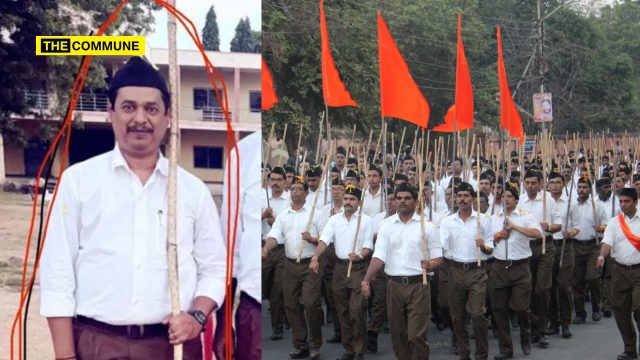
Karnataka Official’s Suspension For Attending RSS Event Contradicts 1966 Court Ruling

Karnataka Official's Suspension For Attending RSS Event Contradicts 1966 Court Ruling

A panchayat development officer in Karnataka was suspended for attending a Rashtriya Swayamsevak Sangh (RSS) centenary event, triggering a political clash between the ruling Congress and the opposition BJP.

The officer, Praveen Kumar K.P., serving in Sirwar taluk of Raichur district, participated in an RSS route march in Lingsugur on 12 October 2025, wearing the organisation’s uniform and carrying a stick. The Rural Development and Panchayat Raj (RDPR) Department suspended him on Friday, citing violations of service conduct rules.

According to the suspension order issued by IAS officer Arundhati Chandrashekar, Kumar’s participation breached Rule 3 of the Karnataka Civil Services (Conduct) Rules, 2021, which requires government employees to maintain political neutrality, integrity, and conduct consistent with the dignity of public service. The order stated that his actions were “inconsistent with the standards expected of a public servant.” Kumar will remain under suspension with subsistence allowance pending a departmental inquiry.

The suspension comes days after the state government introduced rules requiring prior permission for all organisations, including the RSS, to hold public events. The move followed Minister Priyank Kharge’s call to restrict RSS activities in government spaces such as schools and colleges.

It is noteworthy that in July 2024, the central government led by the Bharatiya Janata Party lifted a decades-old ban on government employees participating in activities of the Rashtriya Swayamsevak Sangh (RSS). The order shared by many political leaders from all political parties read“The undersigned is directed to refer to the OM (office memorandum)..dated 30.11.1966, OM No. 7/4/70-Est.(B) dated 25.07.1970 and OM No. 15014/3(S)/80- Estt. (B) dated 28.10.1980 on the above subject. 2. The aforesaid instructions have been reviewed and it has been decided to remove the mention of Rashtriya Swayam Sewak Sangh (R.S.S.S) from the impugned OMs dated 30.11.1966, 25.07.1970, and 28.10.1980.”

Echoes from A 1966 Judicial Verdict

The current suspension stands in stark contrast to a landmark 1966 judgment by the Mysore High Court in Ranganathachar Agnihotri v. State of Mysore. In that case, the court had ruled decisively in favor of a government servant’s right to RSS membership.

The 1966 case involved Mr. Agnihotri, who had secured the 14th rank in the Munsiff’s competitive examination but was denied appointment solely because he was “an active member and organiser of the local RSS unit.” The state government had then argued, much like its current position, that RSS’s tenets were “subversive and secretive and opposed to secularism.”

However, the High Court, after examining the RSS Constitution and various documents, found no evidence to support these allegations. Justice Sadasivayya, in his ruling, noted that the RSS was not a banned organization and its constitution expressly stated it had “no politics” and was devoted to “purely cultural work.”

The court categorically held that “mere membership of the RSS cannot make a person unsuitable for judicial service” and that “suitability must be judged on character and conduct, not on ideological association.” The judges directed the state to appoint Agnihotri as Munsiff, ruling that the government’s decision was based on “irrelevant considerations” and violated constitutional principles.

Contrasting Approaches

The 1966 judgment established several key principles that appear challenged by the current suspension:

Membership vs. Active Participation: While the current case involves active participation in uniform, the 1966 court made no distinction between mere membership and active organization, protecting both.

Evidence Requirement: The historic judgment required concrete evidence that an organization’s activities were unconstitutional, which the government failed to provide then and hasn’t addressed now.

Individual Conduct: The court emphasized that suitability must be determined by individual character and conduct rather than organizational affiliation.

Justice Sadasivayya observed that while the Government had the power to assess suitability, such discretion “cannot be formed arbitrarily but must rest on relevant considerations.” Since no adverse conduct or criminal antecedents were attributed to Agnihotri, the reliance on his alleged RSS association was deemed irrelevant.

The Court directed the State to appoint Agnihotri as Munsiff, placing him above respondents 2–8 in seniority, subject to medical fitness, and awarded costs of ₹200 against the Government.

While upholding the validity of Rule 4(2), the judgment clarified that the Government’s discretion under the rule must be exercised on relevant and objective grounds. The ruling established that association with a non-banned cultural body, without evidence of misconduct or anti-state activity, cannot by itself justify denial of appointment to a judicial office.

(Source: NDTV)

Subscribe to our channels on Telegram, Instagram and YouTube to get the best stories of the day delivered to you personally.