Home Blog Page 64

When Higher Judiciary Overturned Or Reduced Sentences In Cases Involving Christian Clergy Accused of Rape And Sexual Abuse (2021–2025)

The Supreme Court came under spotlight after it temporarily suspended the life sentence of Father Edwin Pigarez, a Roman Catholic priest convicted of raping a minor girl. The bench, consisting of Chief Justice BR Gavai and Justice K Vinod Chandran, granted bail to Pigarez while his appeals against the High Court’s conviction ruling are still pending.

In this report, we look at ten judicial verdicts from 2021 to 2025 involving individuals associated with Christian institutions in India, who were accused in cases of abuse and murder – instances where higher courts have intervened in the decisions of lower courts, resulting in acquittals, sentence reductions, bail grants, or suspension of sentences.

#1 Supreme Court Suspends Sentence of Priest in Minor Rape Case

On 17 September 2025, the Supreme Court suspended the life sentence and granted bail to Father Edwin Pigarez, a Catholic priest convicted of repeatedly raping a minor girl in Kerala between 2014 and 2015. The Kerala High Court had earlier upheld the conviction but reduced the sentence from life imprisonment to 20 years of rigorous imprisonment. The Supreme Court’s decision to grant bail pending his appeal was based on the fact that the accused had already served nearly ten years in custody, which constituted half of the reduced sentence imposed by the High Court.

#2 Pune Court Discharges Bishop in Sexual Abuse Case

On 8 August 2025, an Additional Sessions Court in Pune discharged Bishop Thomas Dabre in a high-profile sexual abuse case. The case involved the sexual abuse of a 15-year-old boy by Father Vincent Pereira in 2018. The court absolved Bishop Dabre of criminal responsibility, stating that there was no evidence he had failed to report the abuse. The judgment noted that the Bishop had, in fact, advised the victim’s family to approach the police and had reported the matter to the appropriate church authorities, leading to his discharge.

#3 Kerala High Court Acquits Pastor in POCSO Case

On 18 July 2025, the Kerala High Court acquitted Pastor Shibu, who had been convicted by a trial court for the aggravated penetrative sexual assault of a 10-year-old girl in 2014. The trial court had sentenced him to double life imprisonment. However, the High Court set aside the conviction, ruling the victim’s testimony as “highly improbable and unbelievable” due to inconsistencies with the medical evidence presented during the trial. The acquittal overturned the lower court’s verdict entirely.

#4 Allahabad High Court Stays Arrest of Teacher in Conversion Case

On 30 May 2024, the Allahabad High Court stayed the arrest of a schoolteacher, Miss Olive Rohit alias Olive Rose Caleb, accused of forcing a male student to convert to Christianity and pressuring him into a sexual relationship. An FIR was lodged under the UP Prohibition of Unlawful Conversion of Religion Act and the POCSO Act. The court’s decision to grant a stay on arrest followed a school inquiry that suggested the student’s allegations might be fabricated, and it ordered a cyber cell investigation before any coercive action could be taken.

#5 Kerala High Court Reduces Sentence for Priest in Sexual Assault

On 7 February 2024, the Kerala High Court reduced the sentence of Father Edwin Figarez for the sexual assault of a minor girl. The priest was originally sentenced to double life imprisonment by a POCSO court in 2016. The High Court reduced the sentence to 20 years of rigorous imprisonment without remission, deeming it sufficient and proportional. The court also fully acquitted the priest’s brother, Silvester Figarez, who was accused of helping him hide, due to a lack of conclusive evidence.

#6 Supreme Court Grants Bail in Pune Murder Case After 11 Years

On 25 September 2023, the Supreme Court suspended the life sentence and granted bail to Dinesh alias Paul Daniel Khajekar, who was convicted for the 2011 murder of Tanmay Ashok More in Pune. The bench noted that the accused had already spent over eleven years in jail and that his appeal had been pending before the Bombay High Court for six years. The suspension of sentence was granted pending the final hearing of his long-delayed appeal.

#7 Bishop Franco Mulakkal Acquitted in Nun Rape Case

On 14 January 2022, the Kottayam Additional District and Sessions Court acquitted Bishop Franco Mulakkal of charges of repeatedly raping a 46-year-old nun between 2014 and 2016. Despite a extensive investigation involving 89 witnesses, the court found the prosecution’s evidence inconsistent and unreliable. The judgment stated that there were no credible witnesses and that the medical reports were disputed, leading to insufficient proof of guilt beyond a reasonable doubt, resulting in the bishop’s acquittal.

#8 Priest and 18 Others Acquitted in 2002 Factional Murder

On 24 April 2023, a Special CBI Court in Kochi acquitted Father Varghese Thekkekakkara and eighteen others in the brutal 2002 murder of T.M. Varghese. The murder was rooted in a long-standing property dispute between two factions of the Malankara Orthodox Church. After a trial lasting nearly two decades, the court presided over by Judge Anil K. Baskar acquitted all accused due to a lack of sufficient and conclusive evidence to prove their guilt beyond a reasonable doubt.

#9 Kerala HC Suspends Life Terms in Sister Abhaya Murder Case

On 23 June 2022, the Kerala High Court suspended the life sentences of Father Thomas Kottoor and nun Sister Sephy, convicted for the 1992 murder of Sister Abhaya. The division bench granted them interim bail pending their appeal, observing that the conviction by the CBI Special Court was based on insufficient and unreliable evidence. The court specifically pointed to weaknesses in crucial witness testimonies that formed the basis of the lower court’s verdict.

#10 Kerala High Court Reduces Sentence in Kottiyoor Priest Rape Case

On 1 December 2021, the Kerala High Court reduced the sentence of Father Robin Vadakkumcheril, convicted for sexually assaulting a minor girl who subsequently gave birth in 2017. The Special POCSO Court had initially sentenced him to 20 years of rigorous imprisonment. The High Court reduced the sentence to 10 years, ruling that the priest was not in a “position of trust or authority” over the victim, which led to a lesser charge and a consequently reduced sentence.

Subscribe to our channels on Telegram, Instagram and YouTube to get the best stories of the day delivered to you personally.
Karnataka Official’s Suspension For Attending RSS Event Contradicts 1966 Court Ruling

Karnataka Official's Suspension For Attending RSS Event Contradicts 1966 Court Ruling

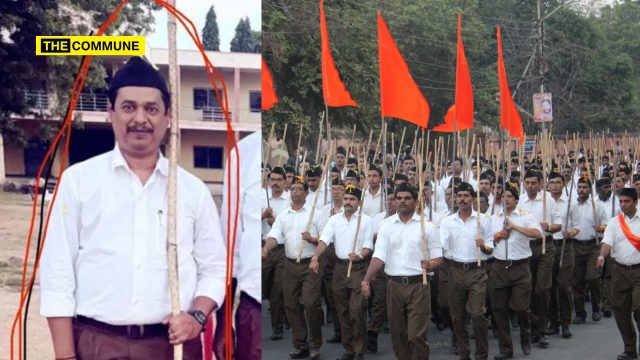
A panchayat development officer in Karnataka was suspended for attending a Rashtriya Swayamsevak Sangh (RSS) centenary event, triggering a political clash between the ruling Congress and the opposition BJP.

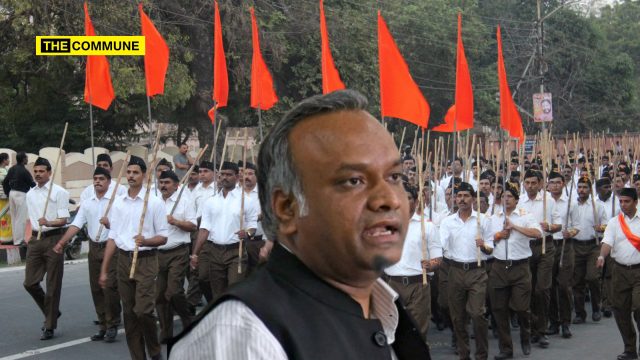
The officer, Praveen Kumar K.P., serving in Sirwar taluk of Raichur district, participated in an RSS route march in Lingsugur on 12 October 2025, wearing the organisation’s uniform and carrying a stick. The Rural Development and Panchayat Raj (RDPR) Department suspended him on Friday, citing violations of service conduct rules.

According to the suspension order issued by IAS officer Arundhati Chandrashekar, Kumar’s participation breached Rule 3 of the Karnataka Civil Services (Conduct) Rules, 2021, which requires government employees to maintain political neutrality, integrity, and conduct consistent with the dignity of public service. The order stated that his actions were “inconsistent with the standards expected of a public servant.” Kumar will remain under suspension with subsistence allowance pending a departmental inquiry.

The suspension comes days after the state government introduced rules requiring prior permission for all organisations, including the RSS, to hold public events. The move followed Minister Priyank Kharge’s call to restrict RSS activities in government spaces such as schools and colleges.

It is noteworthy that in July 2024, the central government led by the Bharatiya Janata Party lifted a decades-old ban on government employees participating in activities of the Rashtriya Swayamsevak Sangh (RSS). The order shared by many political leaders from all political parties read“The undersigned is directed to refer to the OM (office memorandum)..dated 30.11.1966, OM No. 7/4/70-Est.(B) dated 25.07.1970 and OM No. 15014/3(S)/80- Estt. (B) dated 28.10.1980 on the above subject. 2. The aforesaid instructions have been reviewed and it has been decided to remove the mention of Rashtriya Swayam Sewak Sangh (R.S.S.S) from the impugned OMs dated 30.11.1966, 25.07.1970, and 28.10.1980.”

Echoes from A 1966 Judicial Verdict

The current suspension stands in stark contrast to a landmark 1966 judgment by the Mysore High Court in Ranganathachar Agnihotri v. State of Mysore. In that case, the court had ruled decisively in favor of a government servant’s right to RSS membership.

The 1966 case involved Mr. Agnihotri, who had secured the 14th rank in the Munsiff’s competitive examination but was denied appointment solely because he was “an active member and organiser of the local RSS unit.” The state government had then argued, much like its current position, that RSS’s tenets were “subversive and secretive and opposed to secularism.”

However, the High Court, after examining the RSS Constitution and various documents, found no evidence to support these allegations. Justice Sadasivayya, in his ruling, noted that the RSS was not a banned organization and its constitution expressly stated it had “no politics” and was devoted to “purely cultural work.”

The court categorically held that “mere membership of the RSS cannot make a person unsuitable for judicial service” and that “suitability must be judged on character and conduct, not on ideological association.” The judges directed the state to appoint Agnihotri as Munsiff, ruling that the government’s decision was based on “irrelevant considerations” and violated constitutional principles.

Contrasting Approaches

The 1966 judgment established several key principles that appear challenged by the current suspension:

Membership vs. Active Participation: While the current case involves active participation in uniform, the 1966 court made no distinction between mere membership and active organization, protecting both.

Evidence Requirement: The historic judgment required concrete evidence that an organization’s activities were unconstitutional, which the government failed to provide then and hasn’t addressed now.

Individual Conduct: The court emphasized that suitability must be determined by individual character and conduct rather than organizational affiliation.

Justice Sadasivayya observed that while the Government had the power to assess suitability, such discretion “cannot be formed arbitrarily but must rest on relevant considerations.” Since no adverse conduct or criminal antecedents were attributed to Agnihotri, the reliance on his alleged RSS association was deemed irrelevant.

The Court directed the State to appoint Agnihotri as Munsiff, placing him above respondents 2–8 in seniority, subject to medical fitness, and awarded costs of ₹200 against the Government.

While upholding the validity of Rule 4(2), the judgment clarified that the Government’s discretion under the rule must be exercised on relevant and objective grounds. The ruling established that association with a non-banned cultural body, without evidence of misconduct or anti-state activity, cannot by itself justify denial of appointment to a judicial office.

(Source: NDTV)

Subscribe to our channels on Telegram, Instagram and YouTube to get the best stories of the day delivered to you personally.
Inside The Thakur Family Foundation: How A US-Based Foundation Funded Indian Leftist Media To Shape Public Health Discourse

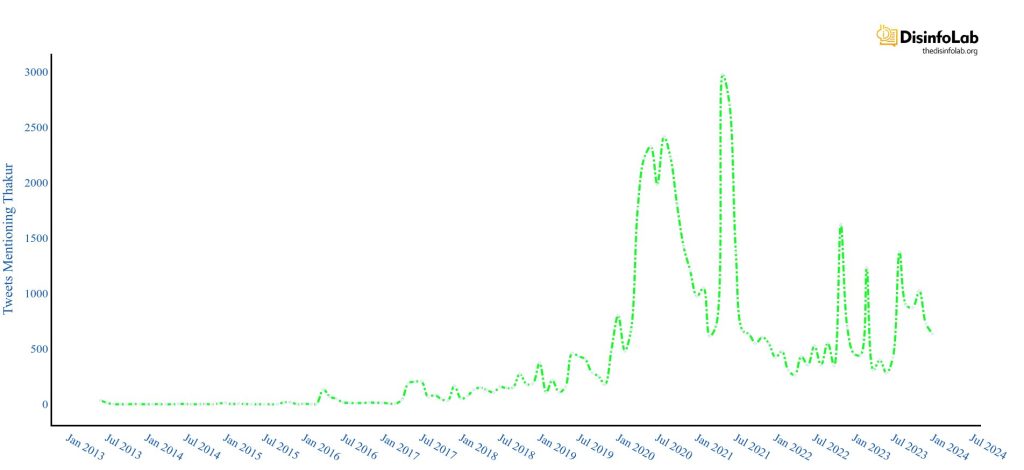
A complex web of foreign funding, pharmaceutical interests, and media manipulation has emerged around the Thakur Family Foundation (TFF), a US-based organization, raising serious questions about its influence on Indian media and public health narratives.

Recent revelations concerning substantial grants from TFF to individuals closely associated with the fact-checking website Alt News have brought these concerns into sharp focus, suggesting potential violations of Indian laws and a coordinated agenda against India’s pharmaceutical and traditional medicine sectors.

The Thakur Family Foundation: Origins And Key Figures

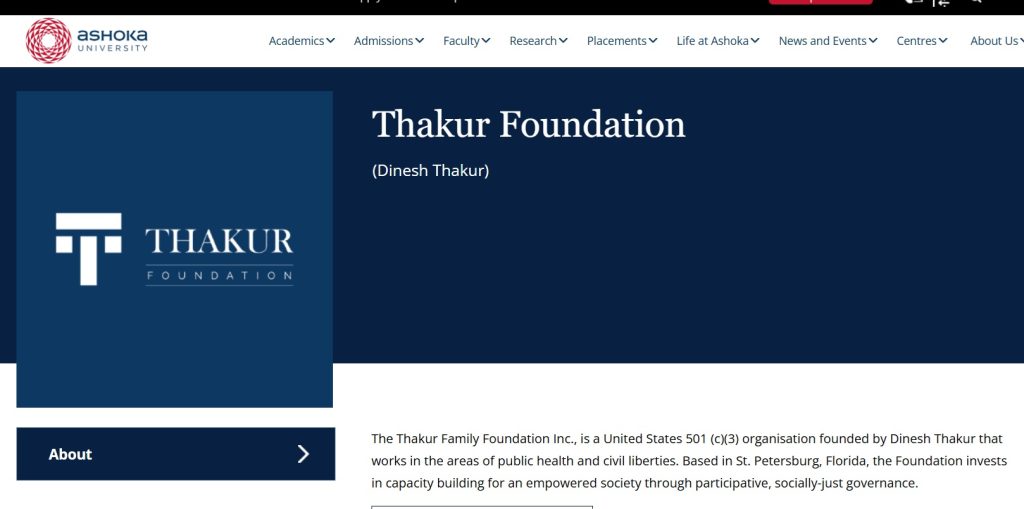
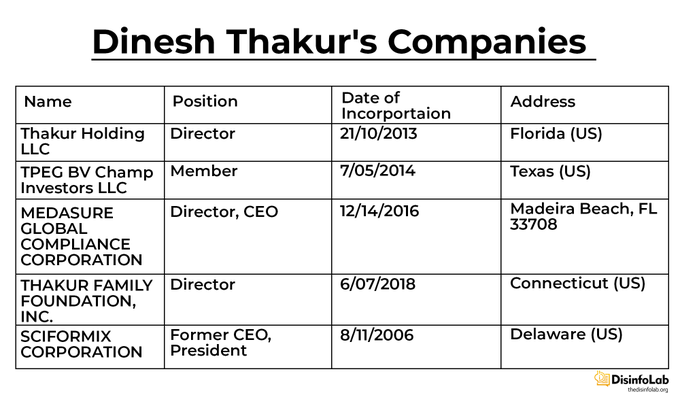
The Thakur Family Foundation Inc. is a United States 501(c)(3) organization founded by Dinesh S. Thakur, based in St. Petersburg, Florida. The foundation describes its mission as working in “public health and civil liberties” and “invests in capacity building for an empowered society through participative, socially-just governance,” according to its profile on Ashoka University.

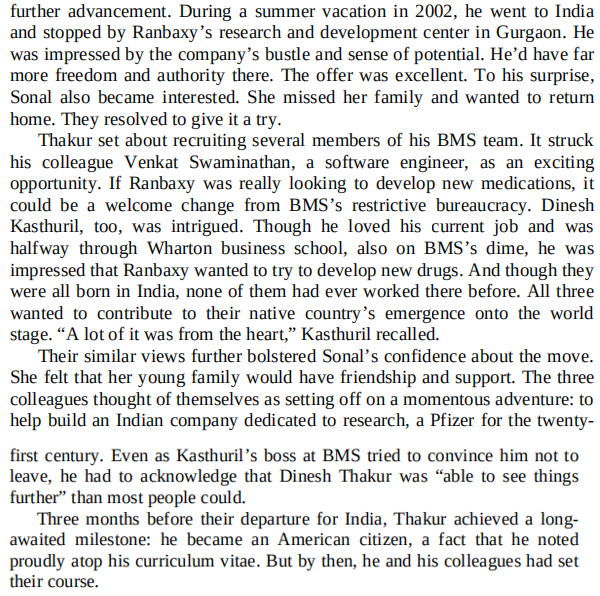
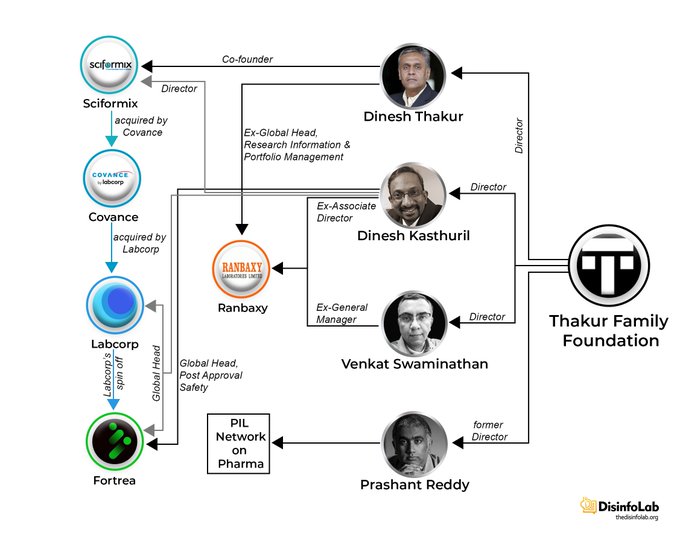
Dinesh Thakur’s history is pivotal to understanding the foundation’s activities. In the early 2000s, after working for a decade in senior positions at US pharmaceutical giant Bristol-Myers Squibb (BMS), Thakur surprisingly quit to “serve India.” He joined Ranbaxy in 2003, coincidentally around the same time that Ranbaxy was engaged in a legal dispute with Pfizer over the generic version of Lipitor, which threatened Pfizer’s billion-dollar market.

During his brief 2–3-year stint at Ranbaxy, two other BMS colleagues – Dinesh Kasthuril and Venkat Swaminathan – also joined the Indian pharmaceutical company in different branches. All three subsequently left Ranbaxy and returned to the US, after which Thakur “exposed” Ranbaxy to the US FDA. This resulted in Ranbaxy being fined USD 500 million, with Thakur receiving a whistleblower reward of USD 48.6 million.

While Ranbaxy was indeed at fault, the narrative that emerged targeted not just one company but extended to “Indian pharma” and “generic medicine” broadly. This pattern of targeting Indian pharmaceutical interests has continued through Thakur’s foundation activities.

The TFF’s leadership includes Thakur’s former BMS and Ranbaxy colleagues. Swaminathan and Dinesh Kasthuril serve as directors of the foundation, recreating their earlier professional alignment. Kasthuril also joined Thakur’s venture Sciformix before moving to LabCorp’s Fortrea.

The Alt News Connection: Foreign Funding And Conflicting Narratives

The controversy intensified with the discovery that TFF provided significant grants to two individuals closely associated with Alt News:

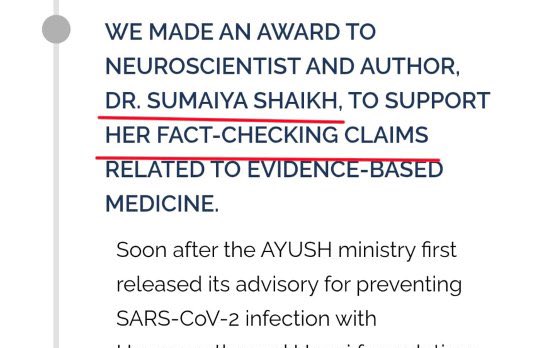
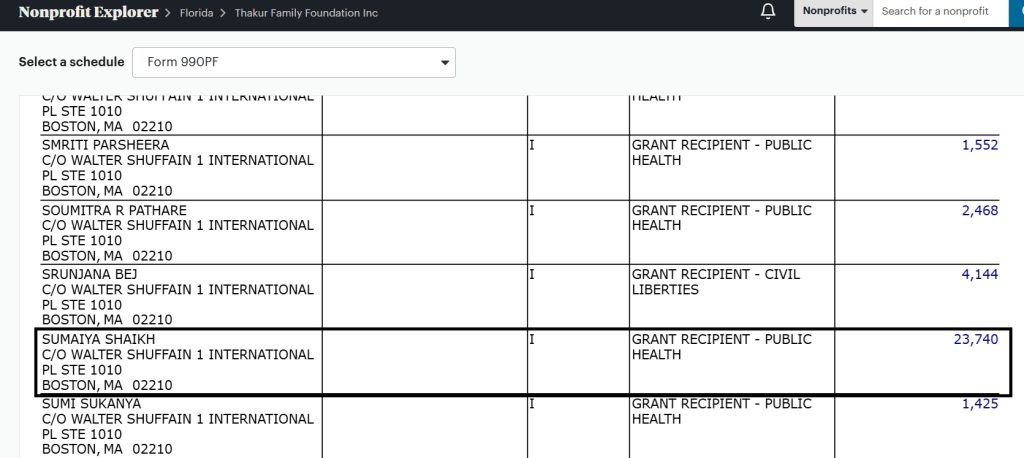
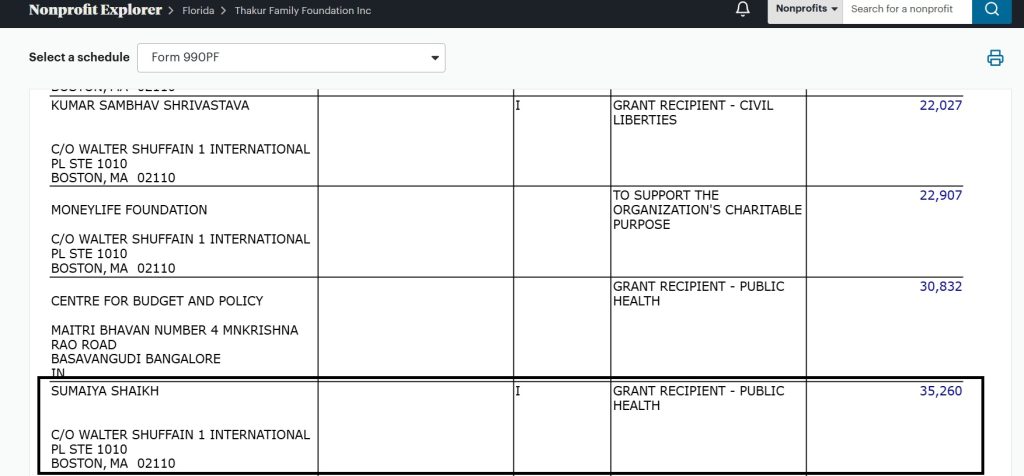
Dr. Sumaiya Shaikh, a neuroscientist and author, received a substantial grant from TFF.

Image Source: Propublica

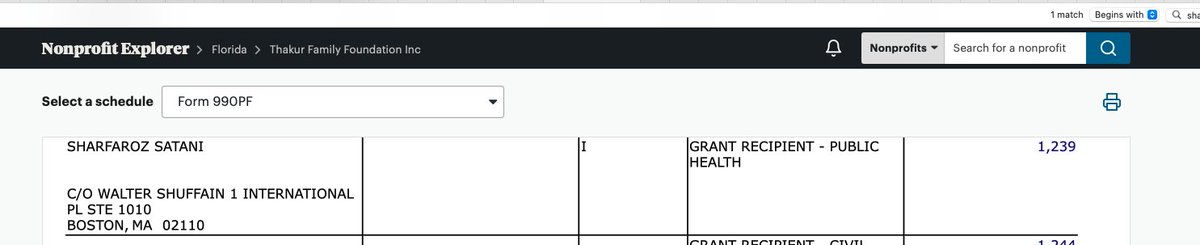
Another Alt News ‘contributor’ Sharfaroz Satani, reportedly received USD 5,907 (approximately ₹4.43 lakh) between 2020 and 2021 from the Thakur Family Foundation. When combined with the grant to Dr. Sumaiya Shaikh, the total amount comes to around ₹50 lakh. Since Alt News does not possess an FCRA licence, it is not permitted to accept foreign contributions directly — yet the funds appear to have reached the platform indirectly through its employees.

The Grant’s Purpose And Propaganda

Documentation from the Thakur Family Foundation’s website explicitly states the purpose of the award: “WE MADE AN AWARD TO NEUROSCIENTIST AND AUTHOR, DR. SUMAIYA SHAIKH, TO SUPPORT HER FACT-CHECKING CLAIMS RELATED TO EVIDENCE-BASED MEDICINE.”


There are also links to the specific articles produced under this grant on Alt News website. These articles, which were published on platforms associated with the individuals, are alleged ‘fact-checking’ pieces that apparently debunked various claims related to COVID-19. The articles include:

Debunking claims that Vitamin C and lemon-infused hot water can protect against coronavirus or cancer.

Addressing exaggerated effects of the “Janta curfew” as a 14-hour period to kill the coronavirus on surfaces.

Countering claims of genetic superiority of Indians in dealing with COVID-19.

Investigating the scientific basis of Patanjali’s Coronil as a cure for COVID-19.

Scrutinizing home remedies promoted by an Ayurvedic practitioner and the AYUSH ministry’s promotion of “immunity boosters” like Arsenicum Album 30 and Ayush Kwath.

The Larger Pattern: TFF’s Media Network In India

The Alt News funding represents just one node in TFF’s extensive network of media influence in India:

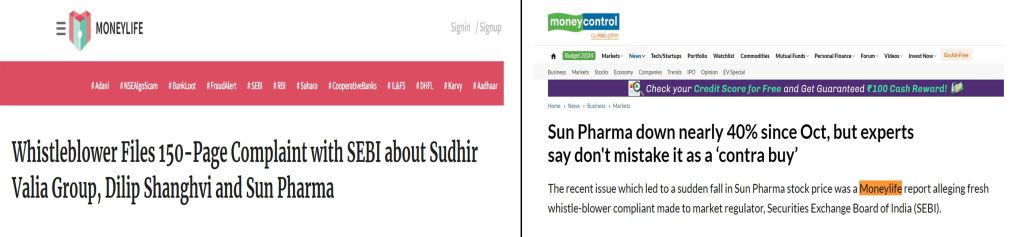
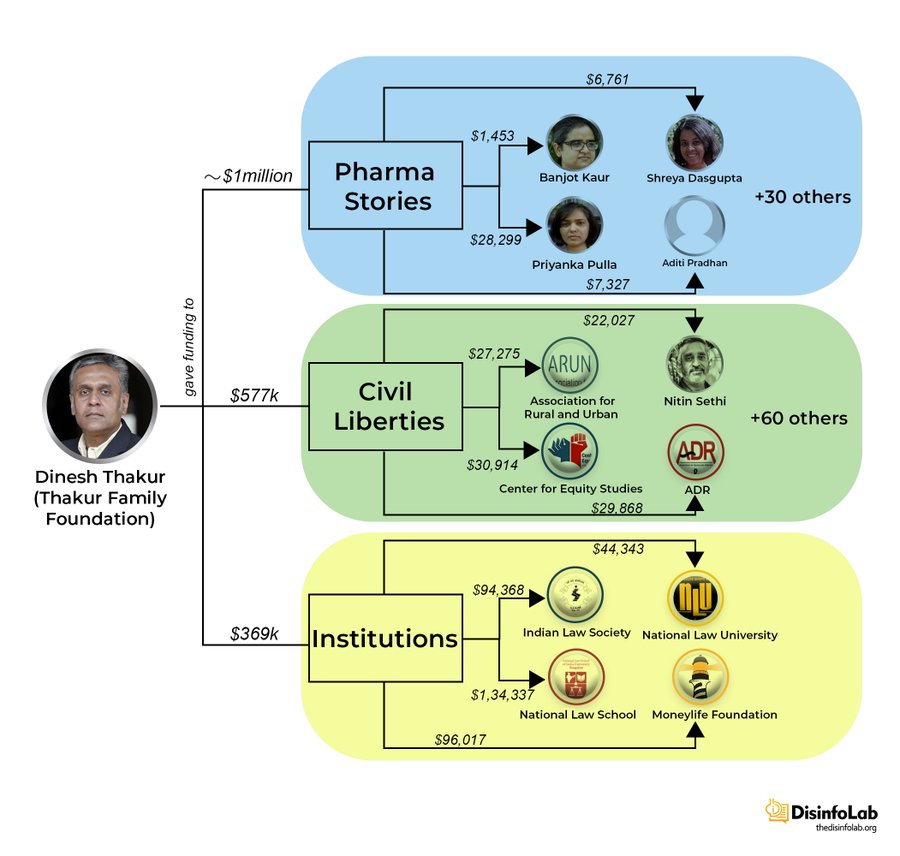
MoneyLife Foundation: Sucheta Dalal’s “startup” received seed funding from Thakur in 2017 and “generous funding” of approximately USD 100,000. Coincidentally, MLF subsequently “exposed” Sun Pharma, which had taken over Ranbaxy in 2015, causing its stock to crash.

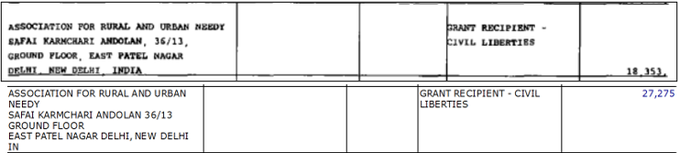
Bezwada Wilson/ARUNK (Safai Karmachari group): A grant (~USD 45,628) is reported in the dossier; critics note Wilson’s institutional links and membership roles (including presence in DIGIPUB forums).

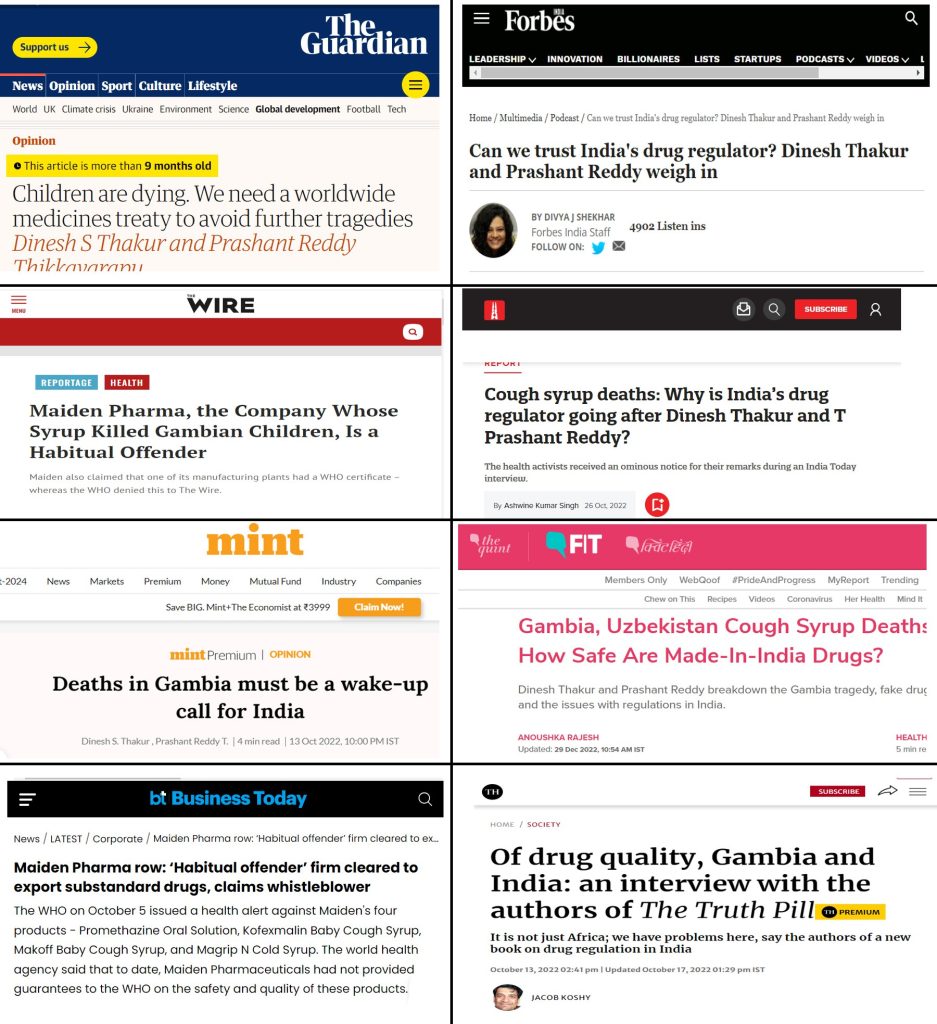
The Wire: Received direct grants from TFF, with four of its journalists receiving approximately $75,000 for COVID-19 coverage. The Wire’s founder, Siddharth Varadarajan, has longstanding ties with Thakur, serving on the advisory board of Thakur-funded “Project 39A.” The Wire’s coverage consistently favored foreign vaccines (Pfizer and Moderna) while criticizing Indian vaccines as “hasty” and “risky.”

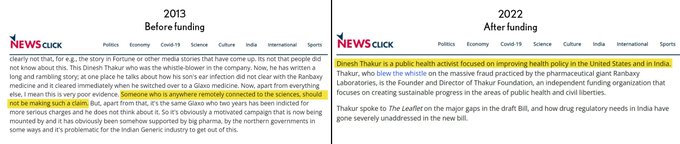
Similarly with Newsclick

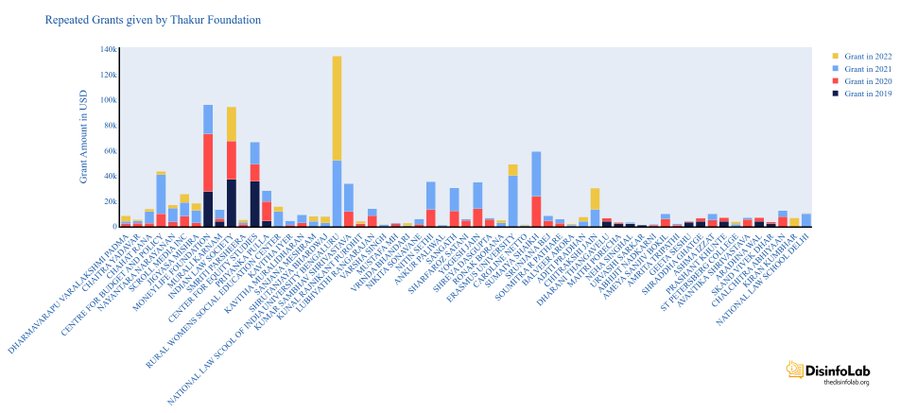
Multiple News Portals: TFF grants to various Indian news portals over three years amounted to INR 16 crore, creating a extensive network of media influence.

The Pharmaceutical Connection and Larger Agenda

The pattern suggests a coordinated effort to undermine confidence in Indian pharmaceuticals and traditional medicine:

Global Narrative Building: A series of reports about “bad Indian medicine” emerged simultaneously across multiple countries (Gambia, Indonesia, Sri Lanka, Iraq), creating a global narrative against Indian pharma.

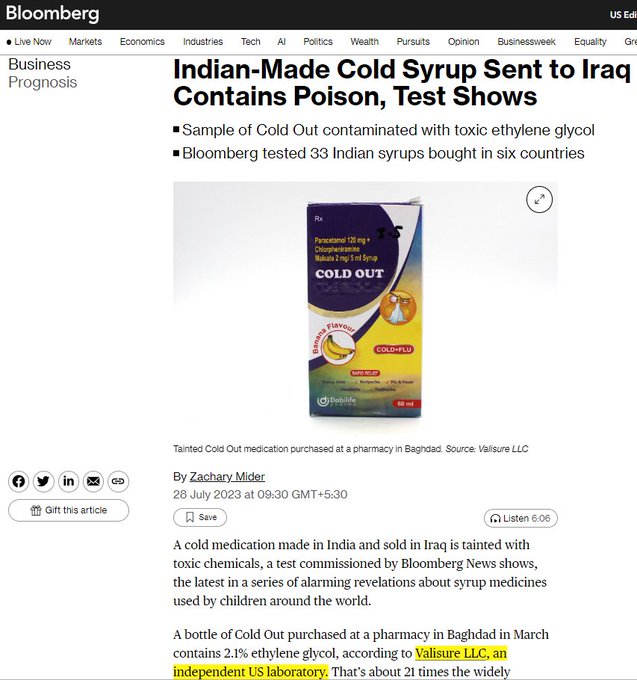
Questionable Testing Methods: The Bloomberg report that found “bad Indian medicine” in Iraq used US firm Valisure for testing, which had previously been admonished by US courts for “utilizing unreliable methods” and received warnings from US authorities in 2022 for “invalid methods & subpar equipment.”

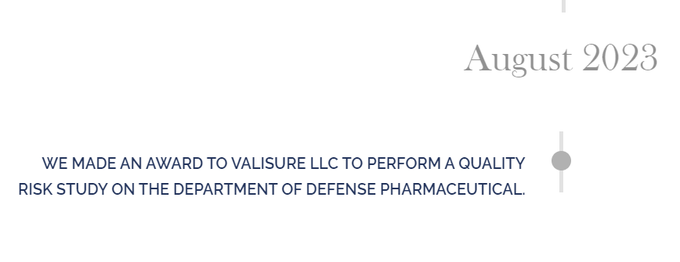
Valisure Connection: Valisure received awards from Thakur’s foundation around the same time it was producing reports critical of Indian medicines.

Strategic Timing: Thakur’s book “Truth Pill,” co-authored with Prashant Reddy, was published precisely when the Gambia case broke, providing the perfect backdrop for its launch.

Last Word

The Thakur Foundation’s activities represent a sophisticated network leveraging foreign funding to influence Indian public discourse, particularly around pharmaceuticals and healthcare. The pattern suggests a coordinated strategy to undermine Indian generic medicine, traditional healthcare systems like Ayurveda, and promote specific corporate interests under the guise of public health advocacy.

The Alt News case exemplifies how foreign funding can potentially bypass Indian laws to influence public narrative, while the larger TFF network demonstrates how multiple media organizations can be leveraged to create an echo chamber supporting specific agendas.

(This article is based on an X thread by Disinfo Lab)

Subscribe to our channels on Telegram, Instagram and YouTube to get the best stories of the day delivered to you personally.
Altercation Erupts At Tenkasi Temple Over Recitation Of Thiruvasagam; Devotees Allege Harassment By HR&CE Officials

Altercation Erupts At Tenkasi Temple Over Recitation Of Thiruvasagam; Devotees Allege Harassment By HR&CE Officials

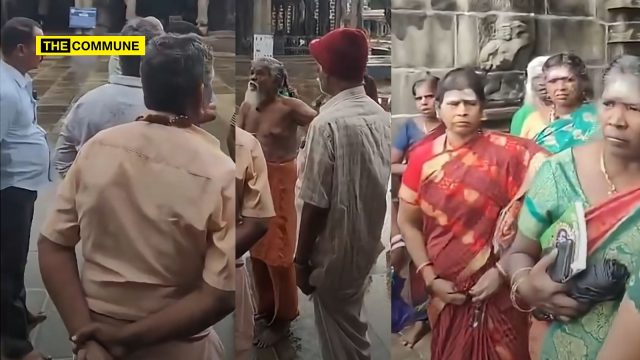
A dispute has broken out at a Shiva temple in Tenkasi, with devotees alleging that officials from the Hindu Religious and Charitable Endowments (HR&CE) Department attempted to stop them from reading Thiruvasagam (holy Tamil Saivite hymns) within the temple premises, leading to a heated confrontation.

The incident, which was captured in a video that has since circulated online, centers on a group of devotees who were reciting the Thiruvasagam, a classic Tamil devotional text, inside the temple. The devotees claim that despite having prior permission for their activities, they were asked to leave and continue their recitation outside.

The video reveals a tense exchange. One devotee can be heard asking the devotees, “You have taken permission for all this and are reading? You have already submitted a letter saying that you are going to read it, right?” And the devotees affirm this. This indicates that the group had obtained formal authorization, which they believe was being unjustly revoked.

It is alleged that the EO had spoken derogatorily to the devotees, especially the guru of the group. Another devotee alleged that the EO nearly came to assault him with an umbrella and spoke disrespectfully. The devotees said, “We consider him as our god, he is our guru.”

Another devotee alleged that the temple authorities questioned who allowed them in and that they would file a police complaint if they didn’t leave.

The devotees seemed very furious and agitated by the behaviour of the temple authorities – it is alleged that the temple is administered by the HR&CE department of the Tamil Nadu government.

Subscribe to our channels on Telegram, Instagram and YouTube to get the best stories of the day delivered to you personally.
After Karnataka Congress Govt Bans Events On Govt Land Without Permit, High Court Allows RSS March In Priyank Kharge’s Chittapur

After Karnataka Congress Govt Bans Events On Govt Land Without Permit, High Court Allows RSS March In Priyank Kharge's Chittapur

The Karnataka Congress government, on 19 October 2025, issued an order making prior permission compulsory for any event held on government property. The directive, issued by the Home Department on Saturday, comes after a state Cabinet decision to regulate the use of public spaces.

The order defines ‘government property’ broadly, encompassing any land, building, structure, road, park, playground, waterbody, or other immovable property owned and managed by a local authority, department, board, or corporation.

This comes amid Karnataka Congress Minister Priyank Kharge’s call to the state government to ban RSS activities in Karnataka.

As per the Government Order (GO), organisations seeking to hold events must apply to jurisdictional revenue and police officials at least three days in advance. The competent authority is required to dispose of the application at least one day before the scheduled event by issuing a written order, provided the applicant meets all requisitions and is given a reasonable opportunity for a hearing.

The order stated that any program or procession held in violation of these rules will be considered unlawful under the provisions of the Bharatiya Nyaya Sanhita, and the local police are empowered to register a suo motu case. The government has noted that detailed guidelines for the use of public spaces will be issued by respective departments.

The implementation of this order came into immediate focus in Chittapur, Kalaburagi district, – Priyank Kharge’s constituency, where permissions for two proposed rallies were denied. The Rashtriya Swayamsevak Sangh (RSS) had planned a route march, and the Bhim Army had scheduled a counter-event for the same day.

The Chittapur tahsildar rejected the RSS’s application, citing that the organisation had not sought prior permission, failed to provide details on the number of attendees, and did not submit registration documents or information about ‘lathis and other weapons’. The rejection letter stated the application would be reviewed only if the sought details were furnished.

A police report highlighted that simultaneous rallies by the RSS, Bhim Army, and another group, the Bharatiya Dalit Panther, could lead to clashes and disturb public peace. The report also noted heightened tensions in Chittapur following a recent incident where an RSS activist allegedly verbally abused and issued a death threat to Karnataka IT/BT Minister Priyank Kharge, who represents the constituency. Earlier, the installation of saffron flags and banners for the RSS event had also sparked tensions, leading authorities to conduct a clearance drive citing lack of permission.

Court Permits RSS Pathasanchalan

In a subsequent legal development, the Karnataka High Court allowed the RSS to hold its route march in Chittapur on 2 November 2025. The court was hearing a petition filed by Ashok Patil, convenor of RSS Kalaburagi, who challenged the authorities’ inaction on the original application for a Sunday event.

During the hearing, Justice MGS Kamal observed that everyone’s sentiments must be respected and questioned the state government on its plans to accommodate the event. The petitioner’s counsel argued that all official queries had been answered and pointed out that similar processions were conducted peacefully elsewhere in the state.

The petitioner agreed to hold the event on the new date. The High Court directed the petitioner to submit a fresh application with all required details to the Deputy Commissioner of Kalaburagi and asked the authorities to consider it and file a report before the next hearing on 24 October 2025. The court also noted that other organisations, including the Bhim Army and Bharatiya Dalit Panther, were similarly denied permission for their rallies.

(Source: NDTV & Indian Express)

Subscribe to our channels on Telegram, Instagram and YouTube to get the best stories of the day delivered to you personally.
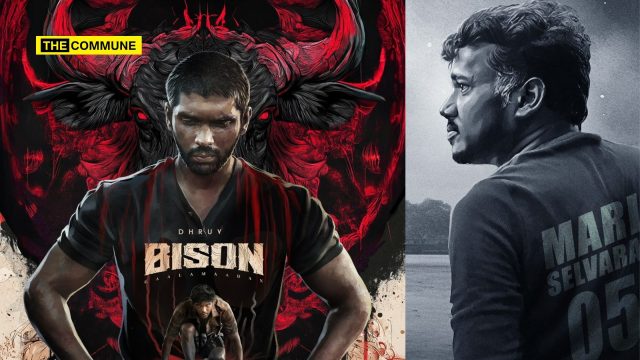
Bison Review: Mari Selvaraj’s Most Mature, Honest, And Fearless ‘Raid’ Of Self-Introspection That Lands As A Masterstroke

In his pre-release interview with Sudhir Srinivasan, Mari Selvaraj spoke of offering the people of his region and community a bird’s-eye view — showing them how he sees them, from the perspective of an outsider who has journeyed far in his evolution as a filmmaker.

And that’s precisely what he does in Bison Kaalamaadan. He lays bare how impulsive rage has kept old flames smoldering, how small grievances are fanned into generations-long conflicts, and how this cycle shapes the lives of those trapped within it.

Mari Selvaraj’s Bison Kaalamaadan isn’t just a film — it’s an act of cinematic courage. Set against the volatile socio-political backdrop of southern Tamil Nadu during the Pasupathi Pandian–Venkatesh Pannaiyar era, Mari blends historical realism with haunting fiction. The result is a deeply rooted, emotionally stirring tale that looks caste, conflict, and identity straight in the eye — without flinching, without sermonizing.

Right from the opening frame, Mari signals that we are in for something audacious. The first shot — a breathtaking bottom-up view of the inside of a cylindrical high-rise, with identical floors circling upward — evokes the horns of a bison stacked behind one another. Something like this:

3d Sphere Modern Tunnel Wall With Gray Circle In Rendering Backgrounds | JPG Free Download - Pikbest

It’s both a literal and symbolic tunnel: the viewer being drawn into the world of the Bison, and a visual metaphor for the odds the protagonist must rise above. As a big fan of Mari’s visual grammar, I was hooked – this is the world of Bison, and we’re being pulled right into its spine.

At its heart, Bison Kaalamaadan tells the story of Kittan (Dhruv Vikram), a young man from a so-called “untouchable” community whose life revolves around kabaddi — a sport built on touch. Mari uses this irony brilliantly, turning the game into both metaphor and battleground. Kittan’s journey is one of discrimination, betrayal, and redemption — but not in the simplistic “oppressor versus oppressed” binary we’ve been fed by recent Dravidianist narratives.

Mari does something far more honest and courageous. He holds up a mirror to his own community, revealing the caste prejudices that thrive even among those who are generalized as “oppressed”. Kittan faces discrimination and violence both from members of his “rival” community but also from within — from an extended family member, a caste zealot who rallies behind the Dalit leader Pandiarajan. And Mari doesn’t resort to token symbolism or virtue signaling. He doesn’t show someone cutting a poonool to make a statement. Instead, he stages a far more powerful image — the PT teacher snipping away the caste-marker threads of red-green, green-blue, yellow-red. The message lands quietly yet firmly: on the kabaddi ground, caste doesn’t speak — talent does. It’s a moment of profound self-introspection and rare honesty, one that few filmmakers in Tamil cinema would dare to attempt.

And yet, it’s people from the so-called “rival” communities who lift him higher. The PT teacher (Madankumar Dakshinamoorthy) who first encourages him, Kandasamy (Lal) — a kabaddi coach from the “dominant” caste who spots his talent and breaks bread with him — and Kaandippan (Azhagam Perumal), whose home proudly displays a portrait of freedom fighter Arthanareesa Varma, all become agents of change in Kittan’s life for the better.

This is where Mari Selvaraj’s brilliance truly shines. He doesn’t villainize. He doesn’t glorify. He humanizes. Even when Kandasamy’s relationship with Kittan fractures under the weight of social violence, Mari refuses to demonize him. Instead, he lets pragmatism and pain coexist — Lal’s Kandasamy isn’t evil, just trapped in a brutal world order. And even in separation, he ensures Kittan’s growth by recommending him to another club. It’s rare empathy in today’s polarizing cinematic landscape.

Cinematically, Bison Kaalamaadan is a masterclass in pace and tension. Despite running close to three hours, the film never drags. The rapid-fire edits, the claustrophobic camera work, and Nivas Prasanna’s tense score create an atmosphere thick with urgency and danger. The qualifying match sequence, intercut with Kittan’s father dancing in a trance before their clan deity, stands as one of Mari’s most powerful visual montages — a scene where religion, sport, and emotion merge into something almost transcendental. The pounding Rajamelam that we heard in Karnan and Dhruv’s fierce energy make it pure goosebump cinema.

Like every Mari Selvaraj film, animals in Bison Kaalamaadan carry deep symbolic weight. From Karuppi the dog in Pariyerum Perumal to the tied donkey in Karnan, the pigs in Maamannan, and the cow that wanders into a banana plantation in Vaazhai, Mari has always used animals as living metaphors — pivots that elevate the story, heighten the tension, and mirror the human condition. In Bison, it is a goat that pisses inside a bus.

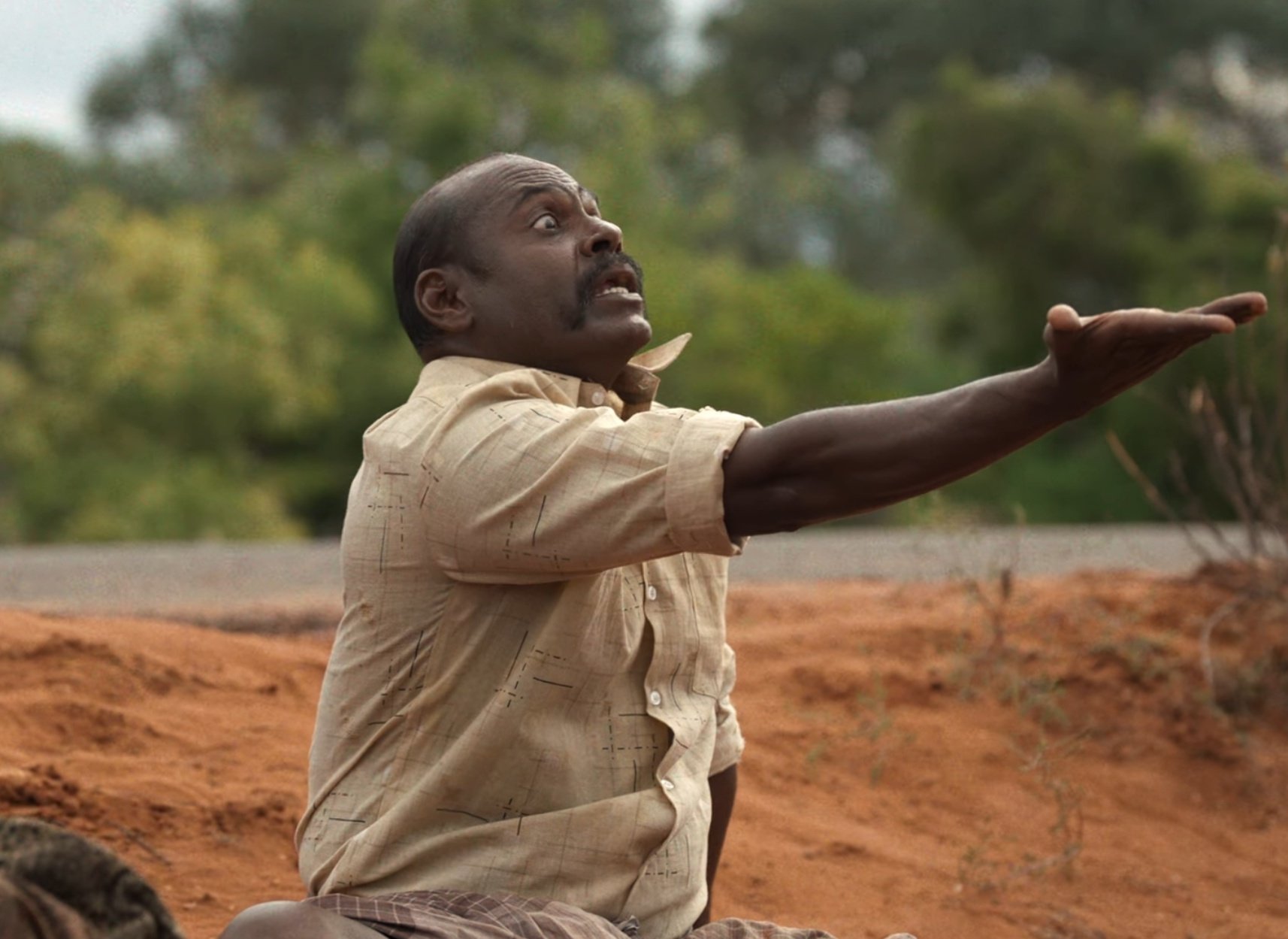
Dhruv Vikram delivers a deeply committed performance, his physical transformation as a kabaddi player evident in every move. But it’s Pasupathi who owns the film. It wouldn’t be unfair to say that he’s the real hero. His portrayal is extraordinary — every flicker of his eyes, every muscle under his cheek tells a story of trauma, endurance, and pride. His performance alone is reason enough to watch Bison Kaalamaadan.

Image

Image

Lal and Ameer have also done their job quite well giving a sense of what the rivalry between Pasupathi Pandian and Venkatesh Pannaiyar would’ve been like.

What’s perhaps most striking about Mari’s evolution is how he rejects the tired Dravidianist clichés that plague modern Tamil cinema. There’s no Brahmin-bashing. No north-versus-south sloganeering. No preachy political inserts. In fact, a Tamil man casually speaking Hindi becomes a quiet but powerful moment — a reminder that embracing another language isn’t betrayal, and that identity and inclusivity can coexist without bitterness.

And then comes the final image — the Indian tricolour flying high. It’s not jingoism, but a visual of triumph and unity. After all the blood, discrimination, and chaos, the flag becomes a symbol of transcendence — of belonging to something larger than caste, creed, or conflict. When was the last time you saw a Tamil film end with the Indian flag shown with such dignity, such purity?

Image

And underpinning it all is Mari’s central message — that anger, when channelled right, can be transformative. For Kittan, anger births achievement; for Mari, it births art. The film stands as a testament to what righteous fury can create when guided by compassion and self-awareness.

“Everything that you speak out loud, let it be spoken from within the seeds”

Those were Mari’s opening words in the video of Naan Yaar song from Pariyerum Perumal — and with Bison Kaalamaadan, he has done exactly that. He has spoken from the roots, from the soil that shaped him.

As noted in my review of Vaazhai, Mari Selvaraj is a gifted filmmaker at the height of his cinematic mastery and storytelling craft — a storyteller who should continue to chronicle his life, his journey, and his community’s struggles through such deeply rooted, resonant tales.

Kaushik is a film buff and political writer. 

Subscribe to our channels on Telegram and Instagram and get the best stories of the day delivered to you personally. 
Tamil Nadu Congress MLA Along With Supporters Attack Traffic Police In Broad Daylight For Doing His Duty

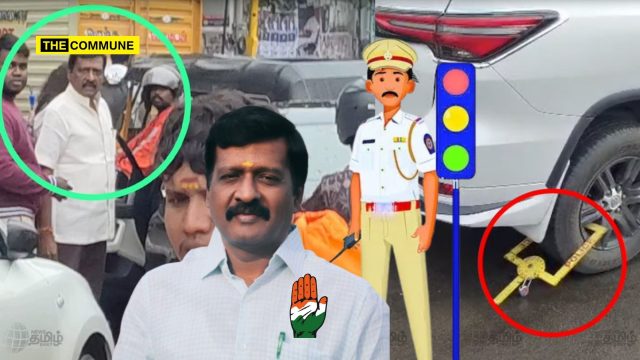
Mayiladuthurai Congress MLA S. Rajakumar slapped a traffic police on duty in broad daylight in Chennai’s arterial Anna Salai.

The traffic police had locked the wheels of the MLA’s car and put a challan as it was parked obstructing traffic.

This led to a brawl between the Congress MLA’s supporters and the traffic police.

MLA Rajkumar, who allegedly beat up traffic policeman Prabhakaran, said, “I can’t take my car, it will be parked here.”

Anna Salai Police, who received the information, have informed the police authorities and an investigation is currently underway.

Subscribe to our channels on Telegram and Instagram and get the best stories of the day delivered to you personally.
Not A Joke, Pakistan Govt Asks X (Twitter) To Ban OpIndia’s Account Worldwide

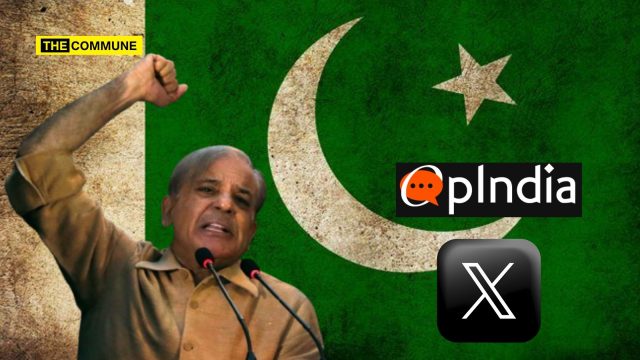
The Pakistan Telecommunication Authority has requested X to withhold the OpIndia account worldwide, citing legal demands related to reported content.

Many other pro-Hindu and pro-BJP accounts have also received the same mail from X (Twitter) saying that the Pakistani government has sought to withhold some of their X posts.

The notice, addressed to OpIndia’s editorial team, asserts that the platform’s content violates Pakistani laws, though specific details remain undisclosed. This move comes as no surprise given Pakistan’s history of internet censorship, including the blocking of social media platforms during the February 2024 national elections, justified by the government as a measure to ensure national security.

OpIndia, which has carved a niche for itself by challenging mainstream narratives and frequently critiquing Islamist ideologies and Pakistan’s policies, has faced criticism in the past.

Recent articles published by OpIndia have further intensified this tension. For instance, a March 4, 2025, report titled “Persecution of Hindus in Pakistan: HRCP Report Exposes Violence and Injustice” detailed the Human Rights Commission of Pakistan’s findings on forced conversions, mob violence, and institutional discrimination against Hindus, particularly in Sindh province, painting a grim picture of religious minorities’ plight. Another article, dated September 28, 2022, “Pakistan Officials Come in Support of Banned Islamist Outfit PFI,” exposed Pakistan’s support for the outlawed Popular Front of India (PFI) and its ties to global terror outfits, accusing Pakistani officials of rallying international backing for the group.

Subscribe to our channels on Telegram and Instagram and get the best stories of the day delivered to you personally.
Karnataka Govt Employee Dies By Suicide Over 27 Months Of Unpaid Wages In Chamarajanagar

In a deeply distressing case from Karnataka, a government employee took his own life allegedly over non-payment of wages for more than two years. The deceased, identified as Chikoosa Nayaka, worked as a waterman at the Honganuru Gram Panchayat in Chamarajanagar district. He ended his life outside the panchayat office after repeated appeals for his salary went unheard.

According to reports, Nayaka left behind a suicide note detailing his struggles. He stated that his salary had been pending for 27 months, despite repeated pleas to officials. “I have been serving as a waterman since 2016. I repeatedly requested the Panchayat Development Officer (PDO) and the Gram Panchayat president to release my dues, but they ignored me. Even my appeal to the Zilla Panchayat CEO went nowhere,” the note reportedly said.

Nayaka mentioned that he had sought permission to resign due to ill health but was constantly denied. He accused PDO Rame Gowda and Mohan Kumar, the husband of the Gram Panchayat president, of subjecting him to continuous mental harassment. “Whenever I asked for leave, they told me to find a replacement before taking time off. They made me stay in the office from 8 AM to 6 PM. I am ending my life because of the harassment by the PDO and Mohan Kumar,” he wrote, urging authorities to take legal action against those responsible.

Following his death, a case was registered under the SC/ST (Prevention of Atrocities) Act against the PDO, the Gram Panchayat president, and her husband. The Zilla Panchayat CEO also suspended Rame Gowda for negligence and violation of service rules.

The incident sparked widespread outrage, with the Karnataka BJP accusing the Siddaramaiah-led Congress government of negligence and failure to ensure timely payment of wages to government employees. The party drew parallels to a similar tragedy involving Bhagyavati Vishweshwaraiah Aggimath, a librarian from Sedam taluk in Kalaburagi district, who also died by suicide over unpaid wages.

State BJP President Vijayendra Yediyurappa condemned the Congress government for its apathy. “Even after the suicide of a librarian, the government should have acted swiftly to fix the salary issues. Instead, this insensitive government continues to ignore the suffering of its employees. How many more lives must be lost before it ensures timely payment of salaries?” he wrote on X on October 17, urging the state to implement mechanisms that guarantee prompt wage disbursal.

Subscribe to our channels on Telegram and Instagram and get the best stories of the day delivered to you personally.
6 Instances Where DMK Opposed NCERT

In this report, we look at statements made by DMK leaders against the policies initiated by the National Council of Educational Research and Training (NCERT). These emerge amidst Chief Minister M.K. Stalin’s recent assertion that teachings of Prophet Muhammad are included in the state syllabus, contrasting with the party’s historical resistance to NCERT content involving Hindu traditions.

#1 DMK MP Thamizhachi Thangapandian Slams Hindi Titles In NCERT Books

In April 2025, DMK MP Thamizhachi Thangapandian criticized NCERT’s decision to use Hindi titles for English-medium textbooks, labeling it an unconstitutional “cultural imposition” that undermines linguistic diversity. The criticism echoed concerns from other southern leaders about “Hindi imposition” and was part of a broader political pushback against the central government’s education policies, which the DMK argues marginalize regional languages like Tamil.

#2 Party-Wide Opposition To NCERT’s Hindi Move

In April 2025, the DMK officially opposed NCERT’s move to rename English-medium textbooks with Hindi titles, reiterating its long-standing stance against what it perceives as “Hindi imposition.” The party’s position was supported by allies in other southern states, with Kerala’s Education Minister terming the move “illogical.” This coordinated opposition highlighted the ongoing political tension between the central government and southern states over language policy in education.

#3 A Sarvanan Argues ‘Ganita’ Ignores Tamil Tradition

In April 2025, DMK leader A Sarvanan opposed NCERT’s renaming of mathematics textbooks to “Ganit Prakash,” arguing that the Sanskrit-derived term ‘Ganita’ does not represent Tamil linguistic traditions. He noted that ‘Kanakku’ is the common term for mathematics in Tamil. This objection was framed as a defense of Tamil heritage against the dominance of Sanskrit-based terminology in national educational materials, a key point in the Dravidian political narrative.

#4 Stalin Rejects NEP as ‘Nagpur Scheme’

In March 2025, Tamil Nadu Chief Minister M.K. Stalin declared he would not implement the National Education Policy (NEP) 2020 even if the central government offered ₹10,000 crore, accusing the policy of undermining state education systems. He labeled the NEP a “devastating Nagpur scheme,” linking it to the RSS headquarters and framing it as an ideological imposition that compromises Tamil Nadu’s autonomy and social justice principles.

#5 TKS Elangovan Slams ‘Bharat’ Move in NCERT Books

In October 2023, DMK leader T.K.S. Elangovan criticized NCERT’s recommendation to replace ‘India’ with ‘Bharat’ in textbooks, calling it a “cheap and illogical” political gimmick stemming from the BJP’s fear of the opposition’s INDIA alliance. He argued that such a change requires a constitutional amendment and reflects the ruling party’s political motivations rather than educational merit, vowing continued resistance.

#6 DMK Opposes NCERT Textbook Deletions

In August 2023, the DMK strongly opposed NCERT’s deletions from textbooks under the NEP’s rationalization exercise, criticizing the removal of portions related to Mughal history, Gandhi’s legacy, and communal harmony. This opposition was part of a broader resistance from southern states, which view the NEP as a centralizing force that compromises state autonomy and imposes a majoritarian narrative on the educational curriculum.

#7 Stalin Opposes CUET, Citing NCERT Bias

In April 2022, Chief Minister M.K. Stalin urged the Prime Minister to withdraw the Common University Entrance Test (CUET), arguing that its reliance on the NCERT syllabus disadvantages students from state boards like Tamil Nadu’s. He stated that the test favors those from CBSE schools and coaching centers, sidelining the diverse and robust state education systems and creating an unequal playing field for higher education admissions.

#8 Karunanidhi Condemns NCERT Cartoon on Anti-Hindi Agitation

In June 2012, DMK president M. Karunanidhi demanded the removal of an NCERT textbook cartoon that lampooned the 1965 anti-Hindi agitation, calling it hurtful to Tamil sentiments. The party argued that cartoons are transient political commentary and unsuitable for history textbooks, as they could distort historical understanding and insult the legacy of the Dravidian movement’s struggle for linguistic rights.

Subscribe to our channels on Telegram, WhatsApp, and Instagram and get the best stories of the day delivered to you personally.