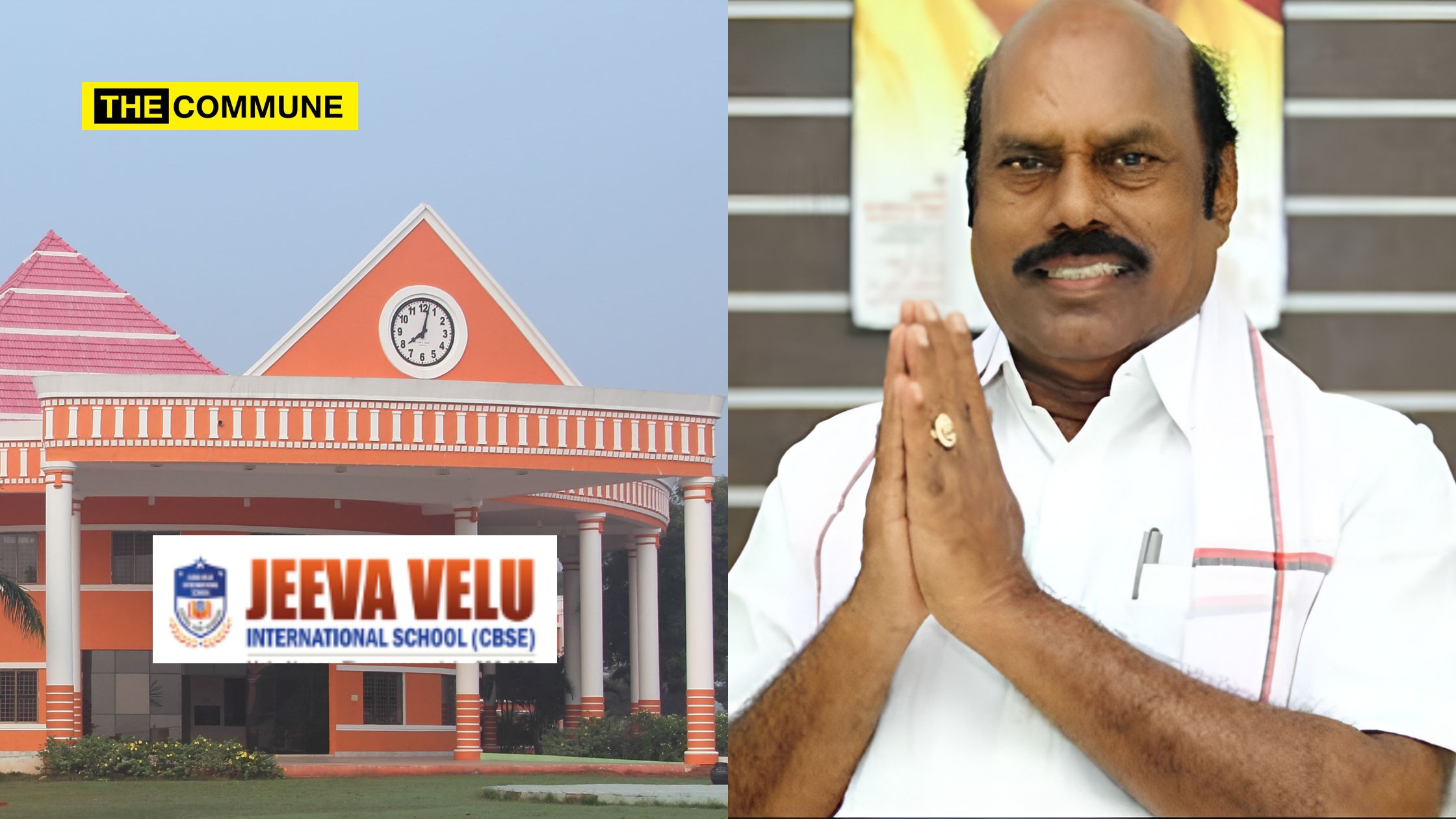
DMK Minister of Public Works E. V. Velu, alias Ethirajalu Vajjaravelu, has recently added to the growing list of contradictions within the DMK’s stance on language politics in Tamil Nadu. While the party opposes the teaching of any third language in Tamil Nadu, Velu’s own school operates CBSE-affiliated institutions where Hindi is a mandatory subject.
Velu’s remarks came during the 32nd Muthamizh Mandram Palsuvai Literary Festival in Vaniyambadi, Tirupattur district. He passionately defended Tamil, questioning whether it was just to allow a 400-year-old language like Hindi to overshadow Tamil, which boasts a history of over 4,000 years. Velu’s rhetoric included harsh criticisms of the idea of Tamil being “threatened” by Hindi, stating, “Why should a language that’s been around for millennia be overrun by a language that’s been around for just a few centuries?” He also stated that the government alone cannot tackle this issue, and that Tamils must come together in unity.
DMK Minister E.V. Velu, who calls on Tamils to unite, is under scrutiny for owning a CBSE school, Jeeva Velu International School in Mathur, Tiruvannamalai, where Hindi is part of the curriculum.
The controversy deepens as Velu, hailing from the Telugu community, seems to appear to have a deep commitment to Tamil culture. This has led to criticism, especially after the DMK’s strong opposition to the central government’s policies, which now seems contradictory. Despite the DMK’s vocal protests against the three-language policy in government schools, all private institutions run by the party and its allies follow the CBSE curriculum, highlighting a clear disconnect between their actions and their political stance.
We had earlier exposed that nearly 30-40 DMK members had a CBSE school attached to them. EV Velu has plenty under his and his wife’s names.
List of 45 private CBSE/Matric schools run by #DMK Top office bearers in Tamil Nadu that teach Hindi. Hi @arivalayam if you hate Hindi so much why your top office bearers run schools teach Hindi? Is it because there’s demand to learn #Hindi here? Shameless #DMK hypocrites! SIGH! pic.twitter.com/4hO08KUE6E
Kathir Anand is already on that list along with DMK allies and Dravidianist parties like the TVK.
DMK MP Kathir Anand’s Kingston School
DMK MP Kathir Anand, son of DMK Minister Duraimurugan, serves as the Chairman of the Kingston Group of Institutions in Vellore, with his wife, Sangeetha Kathir Anand, holding the position of Chairwoman. The institution is a CBSE school that promotes holistic learning. However, despite the DMK’s vocal opposition to the three-language policy and the NEP 2020, the school ironically offers students the option to study Hindi, Tamil, and even Telugu as languages. This contradiction has raised eyebrows, especially given the party’s rhetoric on these issues.
அரசு பள்ளியில் மும்மொழி கல்வி இல்லையா! கவலை வேண்டாம், திமுகவினர் நடத்தும் தனியார் பள்ளியில் சேர்ந்து படிக்கலாம்.
KINGSTON SCHOOLS கிங்ஸ்டன் ஸ்கூல்ஸ் किंग्स्टन स्कूल కింగ్స్టన్ పాఠశాలలు
Now, DMK MLA GV Markandeyan is under the spotlight. He is one of the managing trustees of a CBSE school named Sri Ambal Vidhyalaya in Vilathikulam, Thoothukudi. This is an English-medium CBSE school. It is noteworthy that GV Markandeyan is an MLA from the same constituency – Vilathikulam.
Part-Time Politician Vijay’s Vijay Vidyashram
Part-time politician Vijay was exposed a few days ago for running a CBSE school that promotes learning Hindi. Some videos of the students at the school have been circulating on social media. These are most likely from the school’s Instagram handle. In one such video is a Hindi play performed by Class 3 students. This is from a performance for Hindi Diwas.
விஜய் பள்ளி கூடத்தின் மூன்றாம் வகுப்பு மாணவர்கள் ஹிந்தி பெர்பாமன்ஸ் . ஹிந்தியை இவ்வளவு சின்ன வயசில் சொல்லி கொடுக்கிற விஜய்க்கு பாஜக பாராட்டனும். pic.twitter.com/zVdcBUG5c4
VCK MP Thirumavalavan’s Blue Star Secondary School
Anti-NEP and Anti-Hindi VCK chief Thirumavalavan was also exposed recently by TN BJP President K Annamalai. Thirumavalavan ias associated with Blue Star Secondary School, a CBSE-affiliated school in Velachery, Chennai, which offers trilingual education.
திமுகவுடன் கூட்டணி வைத்துக் கொண்டு, திமுகவினரைப் போலவே இரட்டை வேடம் போடுபவர்கள் வரிசையில், அண்ணன் திரு. திருமாவளவன் இருக்க மாட்டார் என்று நினைத்திருந்தேன். ஏமாற்றம்தான் மிஞ்சுகிறது.
The blatant hypocrisy of the Dravidianist parties and its allies cannot be ignored. While they vocally criticize the three-language policy and present themselves as champions of Tamil, the inconvenient truth is that they all run CBSE schools in Tamil Nadu that directly follows the very policy they claim to oppose. Their attempt to position themselves as saviours of Tamil language rights crumbles in the face of this exposed contradiction.
Subscribe to our channels on Telegram, WhatsApp, and Instagram and get the best stories of the day delivered to you personally.
Kash Patel was sworn in as the ninth director of the Federal Bureau of Investigation (FBI) on Friday, 21 February 2025, taking his oath on the sacred Hindu text, the Bhagavad Gita. The ceremony took place at the Eisenhower Executive Office Building, where Patel was administered the oath by US Attorney General Pam Bondi, following his confirmation by the US Senate. He succeeds Christopher Wray in the role.
Patel’s family and girlfriend were present at the event, marking a historic moment for the Indian American community. He is not the first Indian American to take the oath on the Gita—Congressman Suhas Subramanyam had previously done the same.
Calling his appointment the “greatest honor” of his life, Patel emphasized the significance of the moment. He also reaffirmed his commitment to ensuring accountability within and beyond the FBI, pledging to uphold integrity and transparency in his leadership.
#WATCH | Washington | Kash Patel takes oath on the Bhagavad Gita, as the 9th Director of the Federal Bureau of Investigation (FBI).
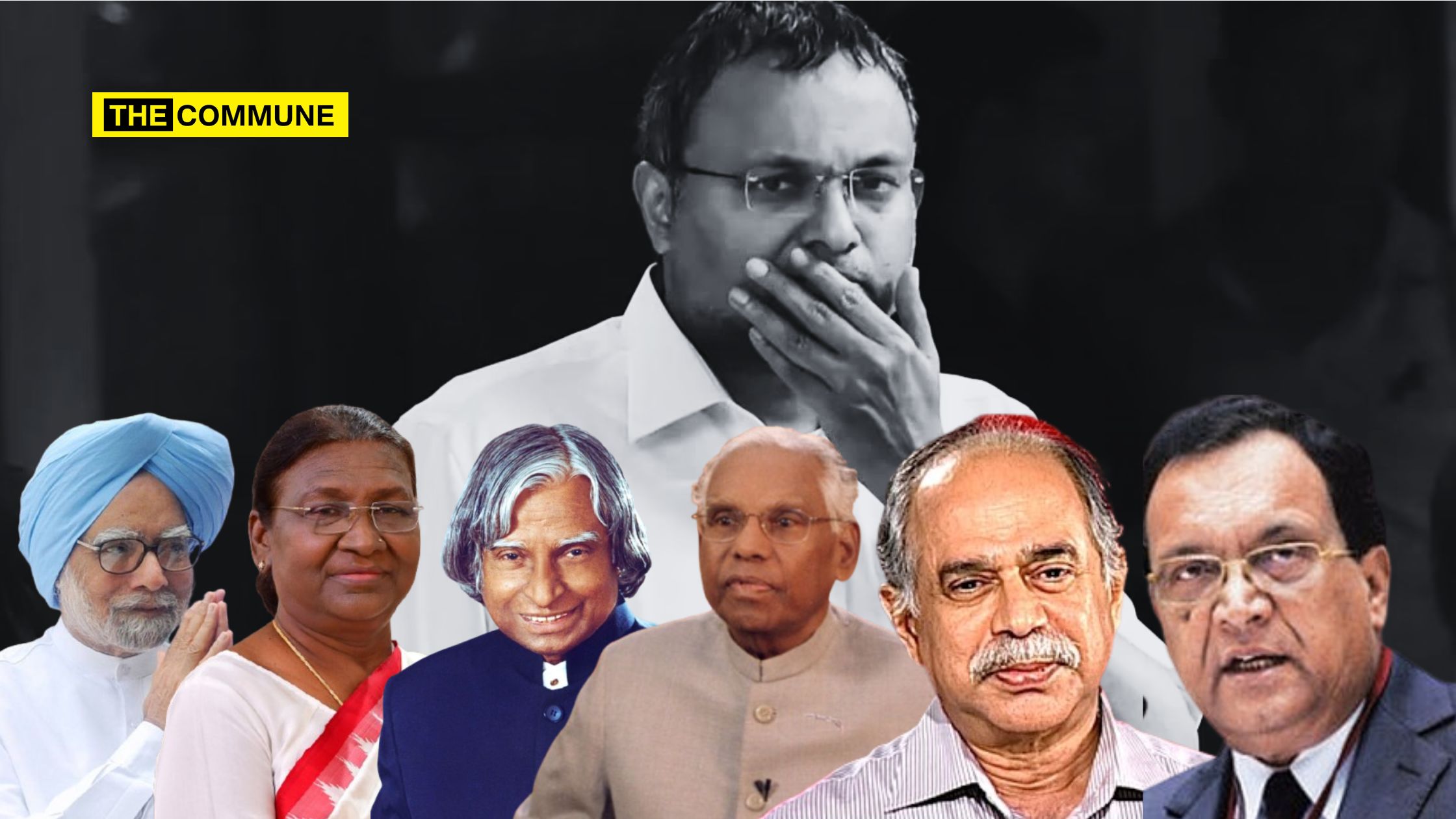
Quoting this development, Congress MP Karti Chidambaram called it “practically unthinkable” in India. On his official X handle, he wrote,“It’s a testimony to the U.S. Constitution that a person belonging to an ethnic & religious minority grouping can become the Director of the @FBI. Practically unthinkable here in India under the present political dispensation.”
It’s a testimony to the U.S. Constitution that a person belonging to an ethnic & religious minority grouping can become the Director of the @FBI. Practically unthinkable here in India under the present political dispensation. https://t.co/r7BwS7IxiY
Well, he isn’t. Let’s go down memory lane and help jog Karti’s memory a bit.
Muslim President
For starters, we’ve had Dr APJ Abdul Kalam as India’s President from the minority Muslim community. Additionally, it wasthe Congress who did not support a second term as President for Kalam.
Dalit President
KR Narayanan was India’s first Dalit vice-president in 1992 and India’s first Dalit Christian presidentin 1997 in independent India’s history.
Ramnath Kovind was India’ssecond Dalit president from 2017 to 2022 under the NDA.
Tribal President
Draupadi Murmu, India’s first tribal president, was backed by the NDA while the Congress, that Karti Chidambaram belongs to and speaks about diversity, had backed a higher caste candidate, Yashwant Sinha! Murmu became the President in 2022 during the NDA 2.0
Sikh PM Guided By Roman Catholic Party Chief
Dr Manmohan Singh, a Sikh, was the Prime Minister of India for 10 long years from 2004-2014. He was ‘guided‘ by a Roman Catholic extra-constitutional authority of Italian origin who was also the chief of the Congress party then.
Christian R&AW Chief
P. K. Hormis Tharakan, a 1968-batch IPS officer from Kerala, served as the chief of India’s external intelligence agency, R&AW, from February 2005 to January 2007, succeeding C. D. Sahay. He was also the Director General of Kerala Police. In 2008, he advised the Karnataka governor during the President’s rule before state elections. Additionally, he was a member of the National Security Council and served as Chief Advisor of Strategic Affairs. His extensive experience in intelligence and security made him a key figure in India’s national security landscape. Tharakan isa title of a Syrian Christian family, said to have been given to Hormis Tharakan’s family by Travancore Maharaja Marthanda Varma.
Muslim IB Chief
Syed Asif Ibrahim was the former Director of the Intelligence Bureau in India. He served in this role from 1 January 2013 to 31 December 2014, becoming the first Muslim to hold the position. A 1977-batch IPS officer from the Madhya Pradesh cadre, he later took on a diplomatic role. In June 2015, he was appointed as the Indian Prime Minister’s special envoy for “Countering Terrorism and Extremism,” tasked with coordinating efforts with governments in West Asia, Afghanistan, and Pakistan on security-related matters.
Cabinet Ministers Of Minority Origin
Under the NDA, two prominent names of Cabinet ministers can be mentioned who held important portfolios.
Najma Heptullah was a member of the Rajya Sabha for six terms between 1980 and 2016 and held the position of Deputy Chairman for 16 years while associated with the Congress party. In 2012, she joined the Bharatiya Janata Party (BJP) as a vice-president and later served as a minister in Narendra Modi’s first government from 2014 to 2016. Heptulla was appointed as the 16th Governor of Manipur, holding office from 2016 to 2021.
George Fernandes served as India’s Defence Minister from 1998 to 2004 under Atal Bihari Vajpayee. A veteran socialist, he was a key figure in multiple parties, including the Samata Party, and was elected to the Lok Sabha nine times between 1967 and 2004. As Defence Minister, he oversaw India’s nuclear tests at Pokhran and the Kargil War. A strong opponent of the Emergency (1975–77), he was jailed in the Baroda dynamite case. Fernandes also held key ministerial portfolios, including industries and railways.
These are just a few examples of minorities in India who have held key positions in the Indian bureaucracy.
Subscribe to our channels on Telegram, WhatsApp, and Instagram and get the best stories of the day delivered to you personally.
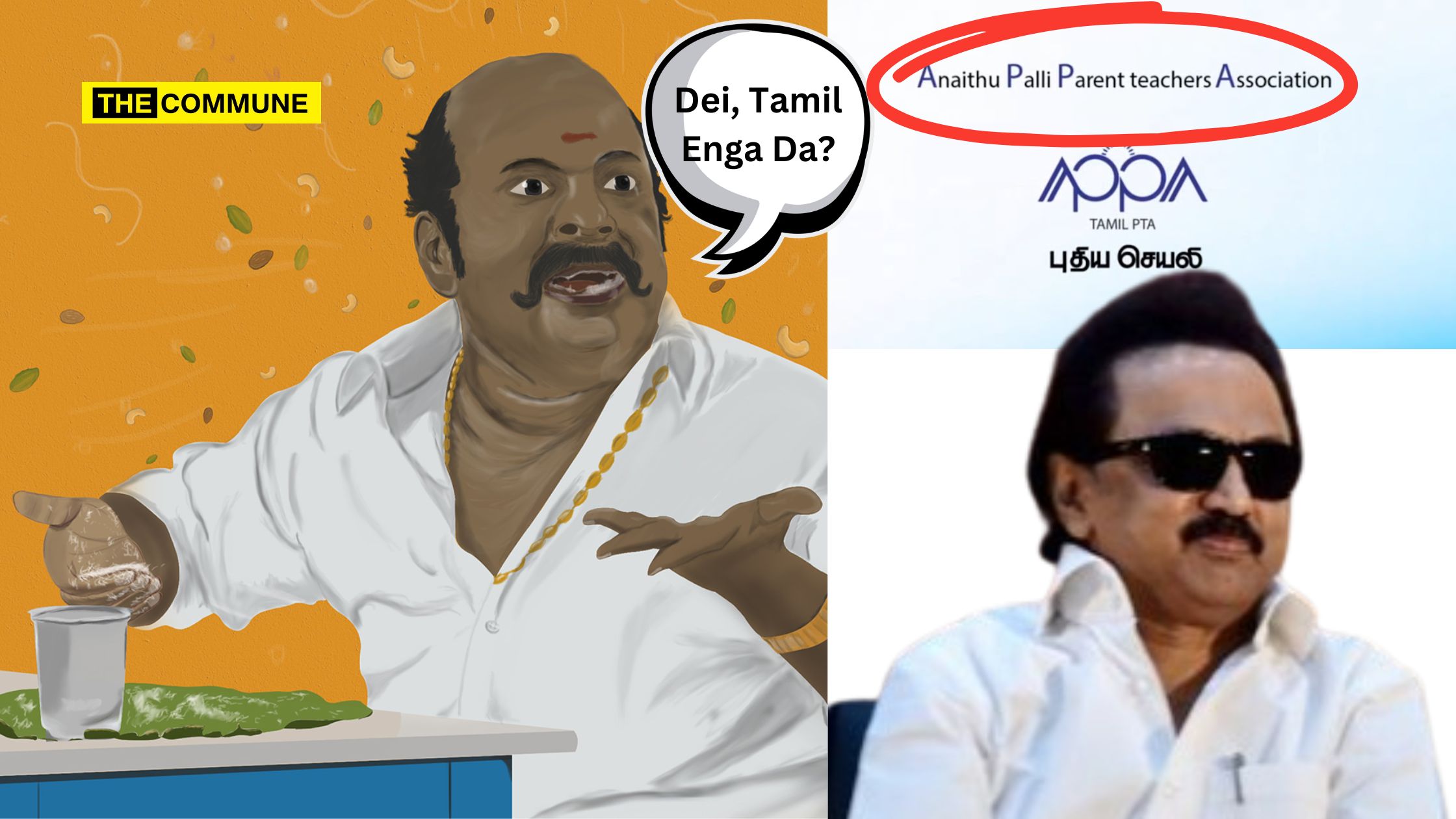
The “APPA App,” launched by Tamil Nadu Chief Minister M.K. Stalin on 22 February 2025, has encountered a significant criticism from netizens. The app, intended to bridge the communication gap between parents, teachers, and the administration to enhance the educational experience, has drawn criticism for its perceived contradiction to the DMK’s stance on preserving the Tamil language. Additionally, the app’s acronym “APPA” has been mocked, as it does not correspond to an actual full phrase.
Developed by the Tamil Nadu Parent-Teacher Association, the Anaithu Palli Parent Teachers Association (APPA) App was unveiled in the presence of School Education Minister Anbil Mahesh Poyyamozhi. The platform is designed to provide updates and share government-related news about the school education department, including access to official government orders. It is expected to benefit approximately 46,000 government schools and around 12,000 private schools across the state.
Following the launch of the app, netizens criticized the DMK for its hypocrisy by pointing out that just a week prior, the party had been protesting to protect the Tamil language from central government interference. Yet, the Chief Minister was now endorsing an app with “Tanglish”—a mix of Tamil and English words. Additionally, the app’s acronym, “APPA” (Anaithu Palli Parent Teachers Association), seemed to be a deliberate alteration of the logical “APPTA,” likely to fit the Chief Minister’s desire to be seen as a father-like figure, but this attempt fell flat and was widely mocked.
Happy to hear Hon’ble Thalaivar’s @mkstalin thoughts in ‘Ungalil Oruvan’!
What distinguishes the Chief Minister is that he serves not only as the Chief Minister and DMK President but also as a father figure to the youth of the state.
The most biting criticism came in response to the recent surge in sexual harassment cases in both government-run and private schools. Critics argued that instead of addressing these pressing issues, the Chief Minister was focusing on launching an app that merely circulates updates and shares government-related news about the school education department, including official orders. Netizens questioned the app’s value, pointing out that the department already publishes such information on its website. Thus, the “APPA” app was seen by many as just another tool to further the DMK’s agenda, without offering any real benefit to teachers, parents, or students.
Here are some netizen reactions.
Anaithu Palli is Tanglish Parent teachers Association is English
They used 200% Pagutharivu to create this acronym APPA that excludes teachers & includes Tanglish.
எந்த கொம்பனும் குறைகூற முடியாத acronym! Fully deserving of an Oxford Mandram award. pic.twitter.com/t0zSriXtyQ
இத்தனை கேவலமாக தமிழை புழக்கத்தில் வைத்து இளைய தலைமுறையினரை பாழாக்க முடியாது APPA…. எல்லாவற்றிலும் விளம்பரம் சுயலாபம் தமிழுக்கு உங்களால் தலை குனிவு @mkstalin@Anbil_Maheshpic.twitter.com/VvgMw47089
— Dr.R.Gayatri Suresh, ரௌத்ரம் பழகு (@r_gayatrisuresh) February 23, 2025
தமிழில் சுருக்கினால் “அ.ப.பெ.ஆ.கூ” என்று வரும், இதில் முதல்வருக்கு எந்த விதமான விளம்பரமும் கிடைக்காது என்றறிந்து, APPA என்று முதல்வரை மக்கள் அழைக்க வேண்டும் என்பதற்காக தாய் தமிழை விட்டுக்கொடுத்து விட்டார்கள் திராவிடர்கள்.
பாதி தமிழ், Half English.. அட half boils… இதுதான் இவனுங்க தமிழ காப்பாத்திர லட்சணம்…
Even by DMK strange logic for this abbreviation it should be 'APPTA'.. எவனோ உங்கள APPA nu Branding பண்றோம் சார்-னு பெரிய Bill-அ போட்டிருக்கான். pic.twitter.com/XJcTa00BZw
டேய் இது #டங்கிலீஷ்-டா All school parents teachers Association-னு தானே வரும் இது என்னடா Anaithu Palli Parent Teachers Association (APPA)😂 Real APPTA தானே ஒன்று தமிழை பயன்படுத்துங்கடா இல்லை-னா இங்கிலீஷ் பயன்படுத்துங்கடா… அது என்னடா ரெண்டும் சேர்த்து அசிங்கமா… pic.twitter.com/yHSgJUnwUJ
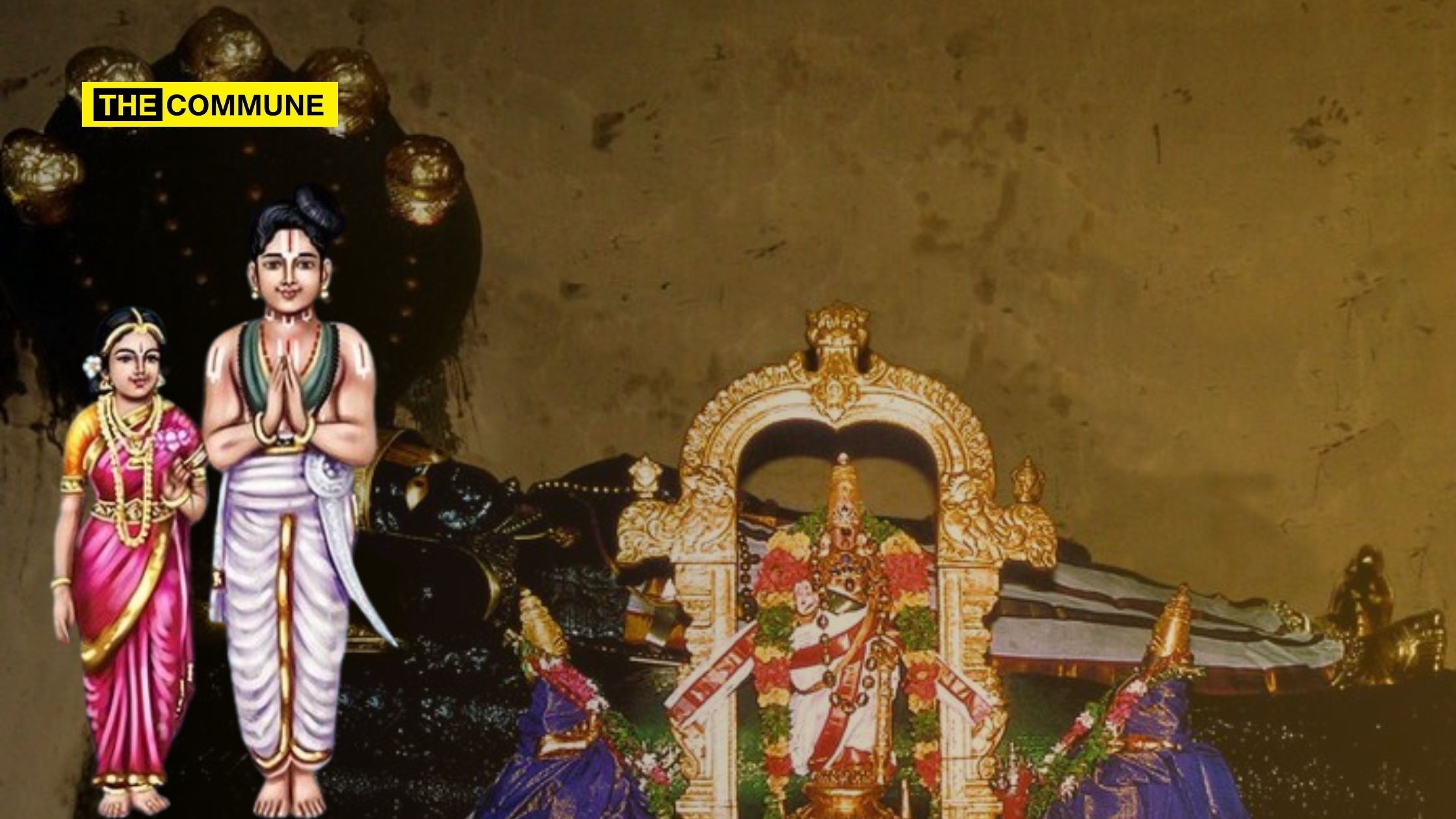
Just as the myth of Jains have been impaled at Madurai, a similar pattern of slander is being spread about Thirumangai Azhwar. A certain group persistently claims that he looted a Buddhist monastery in Nagapattinam, melted down a Buddha statue, and had it restored in Srirangam. They portray this as a wrongdoing. However, these same individuals dismiss all Puranas as myths yet conveniently pick and choose from them to fit their agenda. If questioned whether they accept everything written in the Puranas, they have no answer. Let us, then, examine the historical and scriptural basis of this claim.
Was There Ever A Buddhist Monastery In Ancient Nagapattinam?
There is no historical evidence of a Buddhist monastery in Nagapattinam during ancient times. The renowned Chinese traveler Xuanzang (Hiuen Tsang), who visited Tamil Nadu during the reign of Narasimhavarman I (Pallava), did mention Nagapattinam, but he made no reference to any Buddhist monastery there—despite meticulously documenting Buddhist sites elsewhere in India.
Later Chinese records mention that the Pallava king Rajasimha constructed a Buddhist monastery in Tamil Nadu as a gesture of goodwill towards the Chinese emperors. These records also state that a Chinese inscription, bearing the words Ko-Ho-Se, was placed in front of the monastery. However, Pallava inscriptions do not confirm that Rajasimha built such a structure, nor do they specify its location. It could have been built anywhere, including Mamallapuram, a major Pallava port.
Thirumangai Azhwar’s Era And The Lack Of Evidence
Thirumangai Azhwar lived during the reign of Nandivarman II (Pallava). His original name was Neelan, and he ruled the region of Ali. He fought several wars in support of the Cholas. However, neither his own verses nor any Chola or Pallava inscriptions suggest the existence of a Buddhist monastery in Nagapattinam, let alone any mention of him looting one. Despite the lack of evidence, so-called intellectuals continue to repeat this baseless claim.
What Does Guru Paramparai Say?
According to Guru Paramparai tradition, Thirumangai Azhwar married a deeply pious woman named Kumudhavalli, whose influence transformed him into a devout follower of Vishnu. As part of her conditions for marriage, he pledged to feed 1,008 Vaishnavites daily. He spent his wealth fulfilling this vow and undertaking temple renovations.
When his resources were exhausted, he resorted to robbery—but not for personal gain. The money he acquired was used solely for temple renovations, and the so-called “Nagapattinam robbery” was one such incident. Eventually, Lord Vishnu Himself, disguised as a couple, confronted him. When Thirumangai Azhwar attempted to rob them, the divine encounter led him to receive the sacred Ashtakshara Mantra, which transformed his life.
Thirumangai Azhwar later reflected on his past misdeeds in his own verses:
“I killed many without purpose, I spoke no sweet words,
Yet, O Lord of Venkatam, conquer me as I surrender to You.”
These words clearly show his repentance and ultimate surrender to Lord Vishnu. Even if one were to argue that he looted the Nagapattinam Vihara, the timeline is critical—it would have been before his spiritual transformation. Thus, portraying him as a looter with malicious intent is both misleading and absurd.
The Truth About Choodamani Vihara
If a Buddhist monastery ever existed in Nagapattinam, it would have been Choodamani Vihara, which was built centuries later during the reign of Rajaraja Chola. Yet, those who spread misinformation about Thirumangai Azhwar conveniently ignore the real history of this monastery—especially how it was demolished in later years. In fact, it was Jesuit missionaries who had the Choodamani Vihara demolished by the East India Company! That is a topic that warrants a separate discussion.
No matter how one examines this issue—historically, scripturally, or logically—the accusations against Thirumangai Azhwar are unfounded. His life’s journey was one of transformation, devotion, and service, not plunder. The attempt to tarnish his legacy with baseless claims is not only inaccurate but also a deliberate distortion of history.
TS Krishnan is a Tamil scholar and author.
Subscribe to our channels on Telegram, WhatsApp, and Instagram and get the best stories of the day delivered to you personally.
Ahead of the Tamil Nadu 2025-26 budget presentation, scheduled for 14 March 2025, Chief Minister MK Stalin held in-depth discussions with the Economic Advisory Council (EAC) last week. The CM emphasized the importance of the meeting, describing it as critical in shaping the upcoming financial planning.
During the discussion, Stalin provided an overview of various welfare schemes that have benefited the state’s residents. These included initiatives such as the monthly honorarium for women, the Pudhumai Pen scheme for female students, the Naan Mudhalvan scheme, the Chief Minister’s breakfast program for schoolchildren, free bus rides for women, Makkalai Thedi Maruthuvam, and Illam Thedi Kalvi, among others. He highlighted that over the last four years, approximately 40 lakh people have secured employment through these efforts. The CM added, “Given this context, I look forward to your recommendations for propelling Tamil Nadu’s growth to the next level.” The meeting was attended by experts like Professor Esther Duflo, Dr. Arvind Subramanian, Professor Jean Dreze, Dr. S Narayan, as well as key officials, including Finance Minister Thangam Thennarasu and Chief Secretary N Muruganandam.
While the CM lauded the positive impact of these welfare programs, one could argue that the implementation of such initiatives, aimed at aiding the underprivileged, comes at the cost of an increasing financial burden. Critics might contend that the DMK government has been borrowing heavily to fund these populist schemes, often with an eye on gaining political favor rather than solely addressing the state’s long-term fiscal health.
The debt-to-GDP ratio is a crucial economic indicator, offering insight into a country’s or state’s ability to manage its debt in relation to its overall economic output. For India, the national debt-to-GDP ratio provides a general understanding of the nation’s debt sustainability. However, this figure alone doesn’t fully reflect the financial status of individual states, where distinct fiscal strategies and borrowing patterns exist.
In this context, the debt-to-GDP ratio of Indian states becomes an important measure for assessing financial health, influencing credit ratings, fiscal policies, and budgetary decisions. The ratio is calculated by dividing a state’s total debt by its GDP, then multiplying by 100 to express it as a percentage. For instance, Tamil Nadu’s ratio stands at 26.4%, while Maharashtra and Gujarat have lower ratios of 18.4% and 15.3%, respectively. According to the Fiscal Responsibility and Budget Management (FRBM) Act, states are advised to maintain their debt-to-GDP ratio within a 20% threshold, a target that Tamil Nadu currently exceeds.
Borrowing: AIADMK Vs DMK Regime
Tamil Nadu’s outstanding debt and Debt-to-GDP ratio reflect a decline in financial efficiency under the DMK’s governance. During the 10-year ADMK rule from 2011 to May 2021, the figures remained relatively stable, with an average Debt-to-GDP ratio of 17.86%.
However, in the 4 years since the DMK took power (2021-2025), the debt-to-GDP ratio has risen significantly, from 21.83% to 25.93%. This represents an increase of 82.80% in total debt over this period. The average Debt-to-GDP ratio between 2021 and 2025 alone is 25.18% which is quite alarming.
💡#Tamilnadu's Outstanding Debt and Debt-to-GDP Ratio shows the sagging efficiency under the DMK!
*10-year #ADMK rule: 2011-21 (May) Numbers are steady 📈.
*4-year #DMK rule: 2021-25 From 2021, the debt-to-GDP ratio has 🔺 from 21.83% to 25.93%. Total Debt has 🔺 by 82.80%. pic.twitter.com/7r3llAoMZQ
In 2023, industrialists warned the Tamil Nadu government that its current borrowing practices could lead the state into a debt trap. Experts highlighted that if the government continues to rely on borrowing to repay previous debts, rather than focusing on infrastructure development, attracting real investments in manufacturing, curbing leakages, expanding the tax base, and boosting investor confidence, the state is at risk. “Is Tamil Nadu heading toward a debt trap? The answer is a definite yes,” stated Sriram Seshadri, Founder and Managing Partner of Disha Consulting and former Partner and Managing Director of Accenture India.
Seshadri pointed out that Tamil Nadu is borrowing not only to settle existing debt but also to cover revenue expenditures. The state’s interest payments now account for nearly one-third of its revenue, and the cost of borrowing continues to rise year after year. He criticized the state’s indiscriminate distribution of freebies and subsidies.
Dr. Gowri Ramachandran, Economist and Chairperson of the Expert Committee on Economic Affairs at the Hindustan Chamber of Commerce, echoed concerns, emphasizing that highlighted that Tamil Nadu’s debt burden is among the highest in India, with the state’s outstanding liabilities estimated at Rs 7.54 lakh crore by the end of March 2023. This is primarily due to State Development Loans (SDLs), which account for a large portion of the state’s total debt. By 2026, the outstanding debt is expected to increase to 25.9% of GSDP.
Despite Tamil Nadu’s industrial base, other states are becoming more successful in attracting such investments, and Tamil Nadu’s fluctuating political stance on industrial projects, such as its opposition to the Sterlite Copper plant and the Chennai-Salem Expressway, has led to a loss of investor confidence. In conclusion, experts assert that to avoid falling deeper into the debt trap, Tamil Nadu must prioritize infrastructure investment, target subsidies effectively, and reduce financial leakages.
A high debt-to-GDP ratio indicates that a state’s debt burden is significant in relation to its economic output, signaling financial vulnerability and limited fiscal flexibility. With large debt levels, the state faces higher interest payments, which can limit funding for essential services like healthcare and education. This situation can also raise concerns among investors and credit rating agencies, leading to higher borrowing costs.
States dealing with high debt levels encounter several issues:
Budget limitations: The substantial interest payments on debt reduce available funds for crucial sectors such as education and healthcare.
Decreased fiscal flexibility: Elevated debt levels restrict the state’s ability to respond to economic slowdowns or unforeseen crises.
Investor confidence: A high debt burden undermines investor confidence, driving up borrowing costs and stalling economic growth.
Credit rating impact: Elevated debt levels can trigger credit rating downgrades, which increase perceived financial risk and further strain finances.
To address these challenges, states must adopt measures like austerity policies, fiscal reforms, and strategies to reduce debt.
Subscribe to our channels on Telegram, WhatsApp, and Instagram and get the best stories of the day delivered to you personally.
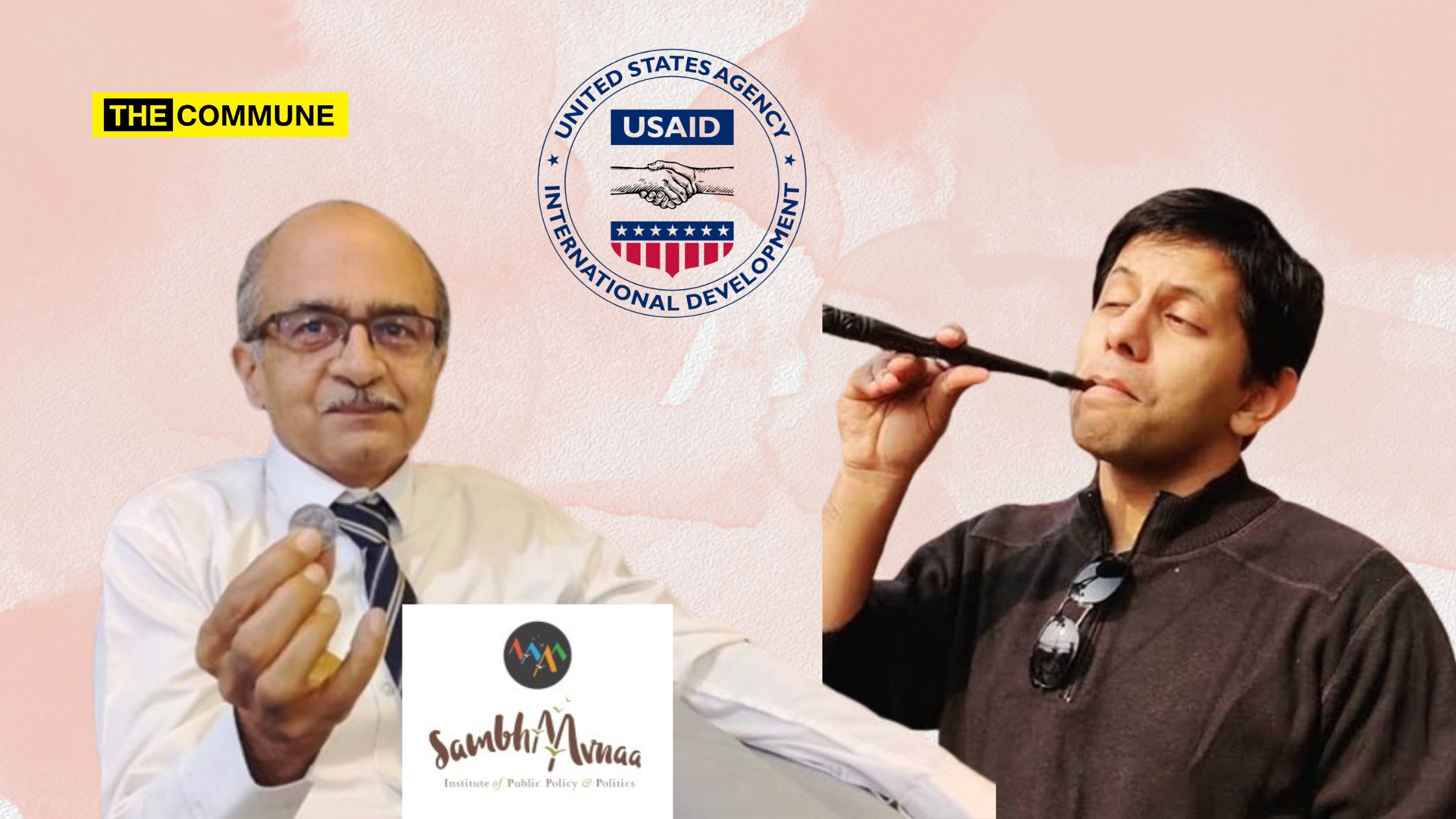
In February 2025, WikiLeaks exposed a massive funding operation by the United States Agency for International Development (USAID), revealing its financial backing of the anti-India ecosystem. This revelation exposed the deep involvement of USAID in shaping narratives critical of the Indian government, particularly through organizations like Internews and its Indian affiliates. One of the most notable connections was Prashant Bhushan’s Sambhaavnaa Institute of Public Policy and Politics, which has long been a hub for left-leaning media figures and activists critical of the Modi government. This exposure raised serious questions about the extent of foreign interference in India’s internal affairs, particularly through media and social influence campaigns.
US Embassy & Association With “Influencers” In India
Let’s jog our memory a bit – In July 2024, the US Embassy in India announced an event for Indian social media influencers and content creators, branded as “Influence to Impact,” scheduled for 25 July 2024. The event aimed to enhance digital engagement on social issues and promote “active citizenship.” However, the selection of YouTuber “DeshBhakt” Akash Banerjee—known for his leftist and anti-BJP propaganda—as the key speaker raised eyebrows. While the initiative appeared neutral on the surface, the embassy’s promotional content suggested subtle political interference in India’s internal discourse. This raised a fundamental question: Why was the US Embassy in India so invested in shaping Indian public opinion on domestic issues? Was it their role to push narratives on “active citizenship,” or was it an attempt to subtly interfere in India’s political landscape, especially given the Modi government’s firm stance against direct foreign intervention?
That was not the first time the US Embassy in India amplified voices known for their leftist and anti-BJP views. In March 2023, the embassy endorsed controversial radio jockey Sayema Rahman for Women’s History Month, sparking outrage due to her history of anti-Hindu and Islamist rhetoric. Despite widespread criticism, the embassy promoted Sayema as a voice for democracy. Similarly, the selection of Akash Banerjee for the “Influence to Impact” event drew backlash, given his controversial content, including trivializing the brutal rape and murder of Nirbhaya. By positioning Banerjee as a mentor to Indian influencers, the embassy’s repeated endorsement of such figures raised concerns about whether the US was genuinely promoting meaningful change or grooming Indian influencers to push narratives aligned with American interests.
Sambhaavnaa Institute & Akash Banerjee
The Sambhaavnaa Institute of Public Policy and Politics, established in 2004 by Prashant Bhushan under the Kumud Bhushan Education Society, claims to address societal injustices but has been accused of fostering a left-leaning media ecosystem in India.
1. The Birth
"Sambhaavnaa Institute of Public Policy and Politics" was established under "Kumud Bhushan Education Society" by the Son of Late Advocate Shahsi Bhushan and Mrs Kumud Bhhushan, Supreme Court Advocate Prashant Bhushan in the year 2004. In the year 2010, Prashant… pic.twitter.com/m3iA7hFrci
Located in Kandbari village, Himachal Pradesh, the institute has become a hub for workshops featuring prominent leftist figures, including Yogendra Yadav, Harsh Mander, Medha Patkar, Pratik Sinha (Alt News), Ravish Kumar, and others. These individuals are known for their anti-BJP and anti-Hindu rhetoric, raising questions about the institute’s true agenda.
2. The Cabal
When you look at the perosns associated with “Sambhaavnaa Institute of Public Policy and Politics” as its resource people for discussions and workshops,
it looks like a soiree of Leftist ecosystem in India!!
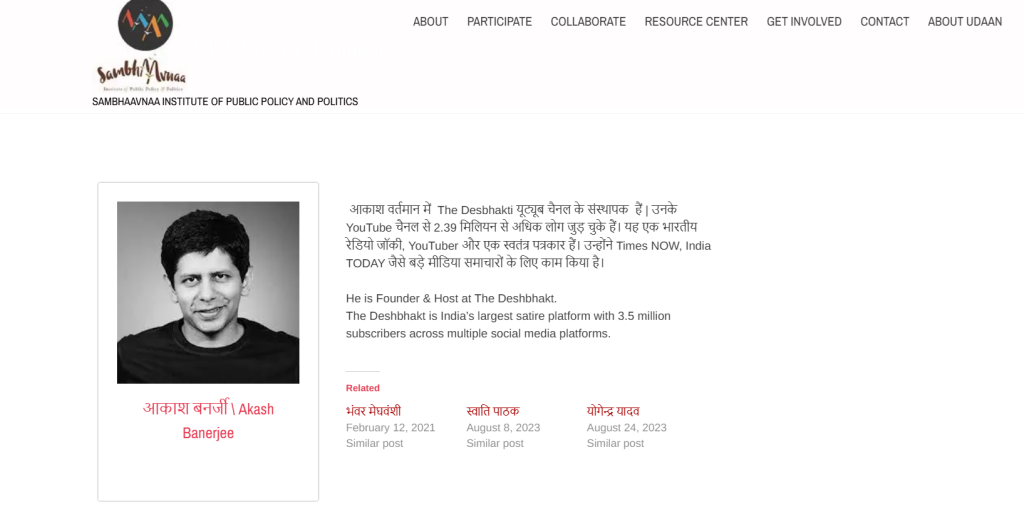
The institute’s network includes journalists and media professionals such as Paranjoy Guha Thakurta, Ravleen Kaur, Atul Chaurasia (Newslaundry), and Akash Banerjee (DeshBhakt), who is listed as one of its “resource people.” Banerjee, a YouTuber known for his anti-BJP propaganda, has been actively involved in shaping narratives critical of the Indian government.
Sambhaavnaa’s activities are further linked to USAID-funded Internews, a global media organization accused of steering narratives in politically sensitive regions. Internews, which has funneled millions into media training and fact-checking initiatives, supports Factshala in India, a program tied to controversial media figures like Shekhar Gupta (The Print) and Ritu Kapur (The Quint). This connection exposes a broader strategy of foreign-funded influence over India’s media landscape, aimed at promoting leftist narratives under the guise of media literacy and social justice. The institute’s ties to USAID and its association with propagandists like Banerjee highlight its role in shaping anti-government discourse in India.
US’ History Of Interfering With Internal Affairs Of Other Countries
The US has a long history of meddling in the internal affairs of other nations, including India. Over the years, Washington has been accused of interfering in the political affairs and elections of India, Bangladesh, and several other countries. US government bodies have routinely targeted the Modi administration through biased reports on human rights, hate speech, and minority rights, often relying on leftist sources. On multiple occasions, the US government has issued unsolicited statements on India’s internal policy matters under the pretext of “deep concerns.” For instance, the US State Department’s statement in support of the 2020–21 farmers’ protests against the Modi government’s agricultural reforms were condemned by New Delhi as unwarranted interference. Similarly, US lawmakers criticized India’s Citizenship Amendment Act (CAA) in 2019, labeling it discriminatory, and the US House of Representatives held hearings on human rights in Kashmir after the abrogation of Article 370.
Eric Garcetti, the US Ambassador to India, has repeatedly made direct remarks on India’s domestic issues. In a recent instance, he commented on the Manipur violence, offering unsolicited opinions on the situation. He even took a veiled jab at Prime Minister Narendra Modi following his visit to Russia, suggesting that India’s strategic autonomy does not exist in times of conflict—implying that the US disapproves of India’s independent foreign policy. It is evident that the US prefers a weak Indian government, one that can be easily influenced, rather than a strong, assertive leadership like Modi’s.
Since direct interventions have failed to shift India’s major policy decisions, the US appears to be exploring subtler means to shape public opinion. One such method is the recruitment and training of “fact-checkers” under the pretense of promoting media literacy. The US Embassy in India has launched the “Empowering Media Savvy Youth” project, allocating a budget of $200,000 to “combat online manipulation” and “reinforce regional security.” This initiative raises concerns about the US’s real intentions—would Washington tolerate similar programs initiated by the Indian Embassy in the US to shape American public opinion?
The US’s Strategy: Influencers, Fact-Checkers, And Media Training
This pattern of influence is not confined to India. The Biden administration itself has adopted a strategy of paying influencers to control narratives and sway public opinion. Reports suggest that ahead of the upcoming US presidential elections, the Democratic National Committee (DNC) has engaged around 150 influencers across platforms like Instagram, TikTok, and YouTube, spending over $1 million on pro-Biden content. By leveraging influencers, the administration aims to reach young voters who increasingly consume news through social media rather than mainstream media. The CIA has also used pop culture and digital platforms to subtly push narratives in both domestic and international arenas, making intelligence agencies less conspicuous while maximizing their influence.
Ultimately, the US’s growing influence over Indian social media, fact-checking networks, and media literacy programs points to a larger strategy of narrative control. Whether through embassy-endorsed influencers, strategic funding of media training programs, or intelligence-backed digital campaigns, the US is actively shaping India’s information landscape while maintaining the illusion of non-interference. This neo-colonial approach undermines India’s sovereignty and the principles of genuine bilateral cooperation. If the US truly values its partnership with India, it must respect the country’s right to independent policymaking, rather than attempting to engineer public opinion through carefully orchestrated influence campaigns.
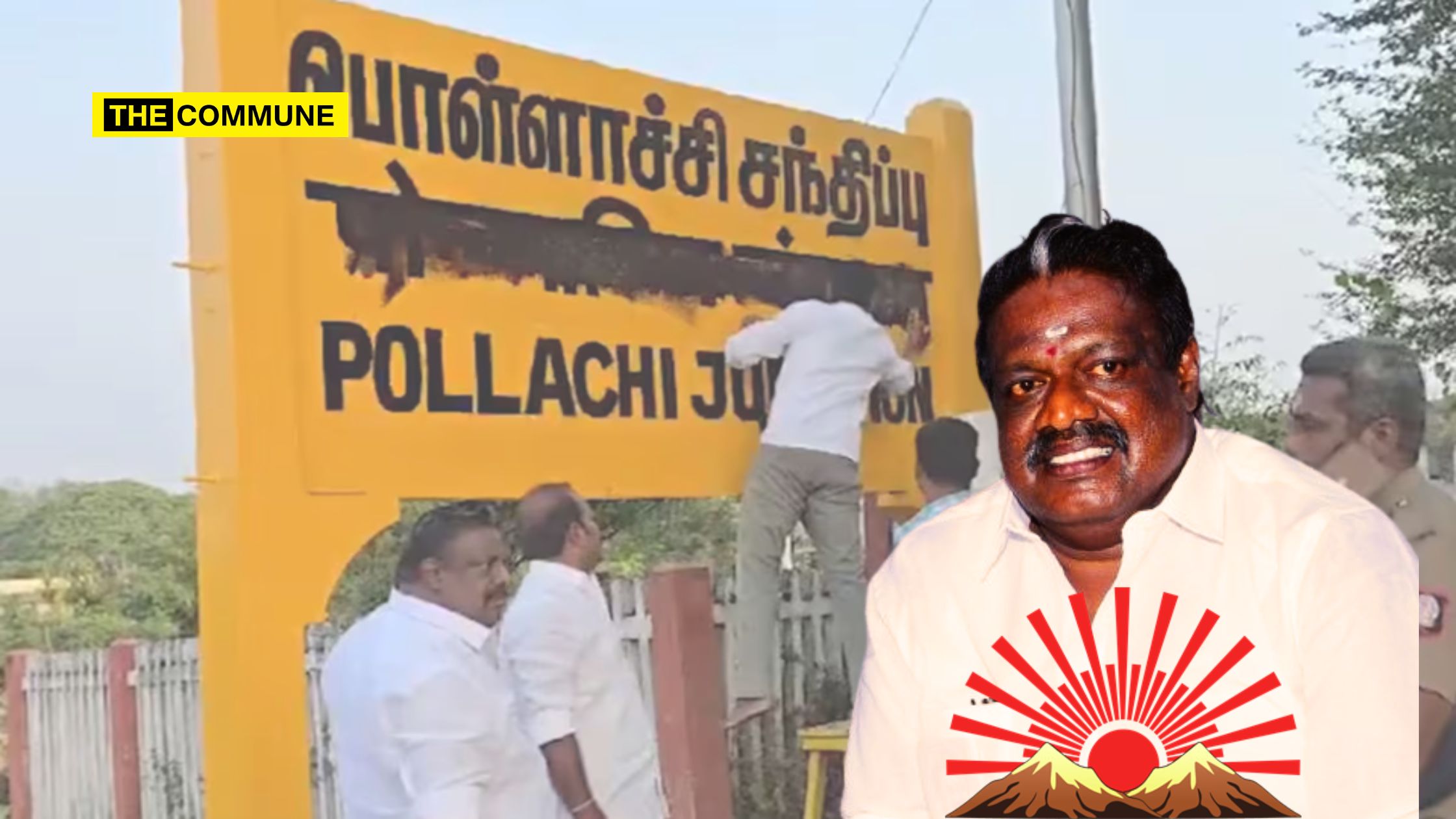
A Coimbatore DMK functionary, ‘Thendral’ Selvaraj, who has been ‘vocal’, like his party, against the Centre’s alleged imposition of Hindi through the National Education Policy (NEP) 2020, was booked on 23 February 2025 for defacing Hindi lettering on a signboard at Pollachi Junction railway station.
However, in a glaring contradiction, it has come to light that his own grandchildren study in private schools that follow the three-language policy, including Hindi, under NEP 2020.
The Railway Protection Force (RPF) registered a case against Selvaraj, who is in charge of DMK’s legal wing for Coimbatore South, along with four others under Sections 166 (defacing public notices), 147 (trespass and refusal to desist from trespass), and 145(b) (committing a nuisance or act of indecency or using abusive or obscene language) of the Railways Act, 1989.
According to the Palakkad Division of the Southern Railway, a group of men entered Pollachi Junction around 7:20 a.m. on Sunday, 23 February 2025, and vandalized the Hindi text on a station signboard using black paint. RPF personnel detained the individuals and restored the defaced board soon after the incident.
A video of the act, which was widely circulated on social media, shows Selvaraj and his supporters blackening the Hindi text while protesting against what they claim is the Centre’s hidden agenda to impose Hindi.
Ironically, while Selvaraj vehemently opposes the three-language policy in public, his own family seems to have embraced it. As posted on X by BJP Coimbatore South District President Vasantharajan, his son, Manimaran Thendral Selvaraj, serves as the deputy organizer of the DMK youth wing in Coimbatore South. Manimaran’s son, Maran, is currently studying at Subhash Vidya Mandir, a private school offering three languages, including Hindi. Similarly, Selvaraj’s daughter, Manimala, who is a member of the Pollachi 13th ward city council, has enrolled her son, Aadhavan, in Shanthi Nikethan Private School, which also follows a three-language curriculum.
இன்று பொள்ளாச்சி ரயில் நிலையத்தில் உள்ள ஹிந்தி எழுத்துக்களை கருப்பு மையினால் அழித்தவர் தென்றல் செல்வராஜ். இவர் கோவை தெற்கு மாவட்ட திமுகவின் முன்னாள் மாவட்ட பொறுப்பாளராக இருந்தவர் தற்போது திமுகழக சட்டதிட்ட திருத்தக் குழு உறுப்பினராக உள்ளார்.
இவருக்கு ஒரு மகன் மற்றும் ஒரு மகள்… pic.twitter.com/xNdWMTx1Zx
The contradiction has sparked a debate on social media, with critics pointing out the apparent double standards of the DMK leader. While he publicly protests against the inclusion of Hindi in Tamil Nadu’s educational framework, his family members seem to have no qualms about following the same policy in private institutions.
DMK leaders, including Chief Minister M.K. Stalin, have long been vocal opponents of Hindi imposition in Tamil Nadu. Speaking recently on the issue, Stalin reiterated that the Centre “cannot impose Hindi as long as the DMK exists.” However, revelations about Selvaraj’s family’s education choices have raised questions about the party’s commitment to its stated principles.
Signboard Restored
It is noteworthy that when the vandalism went viral, DRM Palghat was alerted on X by the RailwaySeva handle.
संबंधित अधिकारियों को सूचित किया जा रहा है। @DRMPalghat
And within about 2 hours, the defaulters were identified, booked, and the signboard was restored with Hindi lettering as before.
RPF Pollachi identified the defaulters and registered case under relevent provisions of Railways Act and will be prosecuted. The same was rectified immediatly. pic.twitter.com/isCcyywQLB
The Dravidianist parties in Tamil Nadu, especially the DMK and its notable allies have been protesting against the alleged imposition of Hindi under the NEP 2020 in the state. While there is no known imposition, the education policy mandates that students study 3 languages as part of their curriculum. Dravidianists faking their love for Tamil allege that such practices will erase Tamil and impose Hindi (when the mandate is that students can learn any other language, not necessarily Hindi).
However, this hypocrisy gets exposed every single day given that political party leaders in Tamil Nadu, the majority of them if not all, run schools as well.
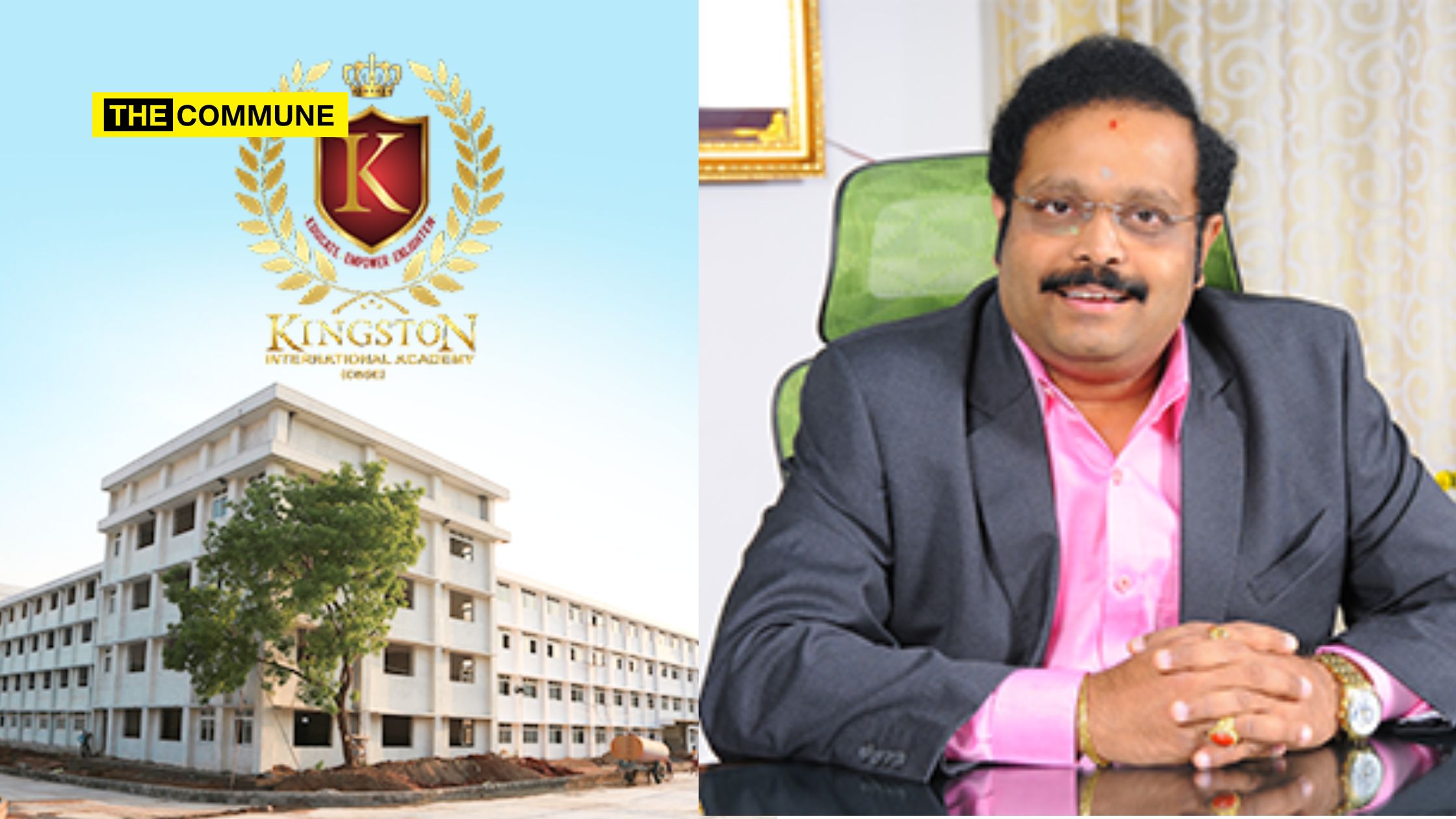
This time it is DMK MP Kathir Anand’s turn. He is the son of DMK Minister Duraimurugan. Kathir Anand is the Chairman of Kingston Group of Institutions, Vellore and his wife Sangeetha Kathir Anand is the Chairwoman.
This school is a CBSE school located in Vellore and they proudly claim that the school offers holistic learning. Ironically, for all the drama the DMK members do about 3-language policy and NEP2020, this school offers Hindi, Tamil, and even Telugu as an option for languages to the students.
அரசு பள்ளியில் மும்மொழி கல்வி இல்லையா! கவலை வேண்டாம், திமுகவினர் நடத்தும் தனியார் பள்ளியில் சேர்ந்து படிக்கலாம்.
KINGSTON SCHOOLS
கிங்ஸ்டன் ஸ்கூல்ஸ்
किंग्स्टन स्कूल
కింగ్స్టన్ పాఠశాలలు
We had earlier exposed that nearly 30-40 DMK members had a CBSE school attached to them.
List of 45 private CBSE/Matric schools run by #DMK Top office bearers in Tamil Nadu that teach Hindi. Hi @arivalayam if you hate Hindi so much why your top office bearers run schools teach Hindi? Is it because there’s demand to learn #Hindi here? Shameless #DMK hypocrites! SIGH! pic.twitter.com/4hO08KUE6E
Kathir Anand is already on that list along with DMK allies and Dravidianist parties like the TVK.
DMK MLA Markandeyan’s Sri Ambal Vidhyalaya
Now, DMK MLA GV Markandeyan is under the spotlight. He is one of the managing trustees of a CBSE school named Sri Ambal Vidhyalaya in Vilathikulam, Thoothukudi. This is an English-medium CBSE school. It is noteworthy that GV Markandeyan is an MLA from the same constituency – Vilathikulam.
Part-time politician Vijay was exposed a few days ago for running a CBSE school that promotes learning Hindi. Some videos of the students at the school have been circulating on social media. These are most likely from the school’s Instagram handle. In one such video is a Hindi play performed by Class 3 students. This is from a performance for Hindi Diwas.
விஜய் பள்ளி கூடத்தின் மூன்றாம் வகுப்பு மாணவர்கள் ஹிந்தி பெர்பாமன்ஸ் . ஹிந்தியை இவ்வளவு சின்ன வயசில் சொல்லி கொடுக்கிற விஜய்க்கு பாஜக பாராட்டனும். pic.twitter.com/zVdcBUG5c4
VCK MP Thirumavalavan’s Blue Star Secondary School
Anti-NEP and Anti-Hindi VCK chief Thirumavalavan was also exposed recently by TN BJP President K Annamalai. Thirumavalavan ias associated with Blue Star Secondary School, a CBSE-affiliated school in Velachery, Chennai, which offers trilingual education.
திமுகவுடன் கூட்டணி வைத்துக் கொண்டு, திமுகவினரைப் போலவே இரட்டை வேடம் போடுபவர்கள் வரிசையில், அண்ணன் திரு. திருமாவளவன் இருக்க மாட்டார் என்று நினைத்திருந்தேன். ஏமாற்றம்தான் மிஞ்சுகிறது.
The blatant hypocrisy of the Dravidianist parties and its allies cannot be ignored. While they vocally criticize the three-language policy and present themselves as champions of Tamil, the inconvenient truth is that they all run CBSE schools in Tamil Nadu that directly follows the very policy they claim to oppose. Their attempt to position themselves as saviours of Tamil language rights crumbles in the face of this exposed contradiction.
Subscribe to our channels on Telegram, WhatsApp, and Instagram and get the best stories of the day delivered to you personally.
The situation in Tamil Nadu is becoming increasingly alarming as more and more cases of sexual harassment involving girl students in government-run schools are being reported daily. Even within a span of 48 hours, 3-4 cases of sexual assault have been reported. Despite this surge in incidents, neither the ruling DMK nor the School Education Department has taken significant measures to address the issue. Here are some recent cases of sexual harassment in Tamil Nadu government schools
Lab Assistant Arrested Under POCSO Act For Sexual Harassment In Salem Government School
Kumaresan (57), a lab assistant at a government school in Salem, was arrested under the POCSO Act for allegedly sexually harassing female students.
The incident occurred a few days ago when Kumaresan reportedly harassed the girls who were in the school lab. The students reported the incident to their class teacher, who then informed the headmaster, Ilango. In response, Ilango notified the district child protection office officials.
Officials from the district child protection office visited the school, personally investigated the students, and confirmed the harassment allegations against Kumaresan. Subsequently, the headmaster filed a complaint at the Ammapettai police station.
Following the complaint, the Ammapettai police conducted an investigation and arrested Kumaresan under the POCSO Act. He was produced in court and has since been sent to Salem Central Jail.
Govt. Teacher In Trichy Arrested For Alleged Sexual Harassment Of Second-Grade Student
A second-grade student at a Podhavur government primary school in Trichy was reportedly subjected to sexual harassment.
The incident took place while the student was cleaning the classroom at a school in the Podhavur area of Trichy district. During this time, a teacher at the school allegedly sexually harassed the student.
The girl’s parents filed a complaint with the police, leading to the arrest of the teacher, Jayaraj Susainathan. Initial police investigations have also uncovered some additional information related to the incident. It has been revealed that there have been sexual harassment complaints against this teacher for the past ten years. It appears he has been threatening the affected students and their parents during this period. Subsequently, a POCSO case has been registered against the teacher, who was produced before a judge and has been sent to jail.
Govt. School Headmaster In Pudukottai Arrested For Alleged Sexual Harassment Of Several Female Students
A 58-year-old assistant headmaster of a government high school in Pudukottai was arrested on 17 February 2025 under the Protection of Children from Sexual Offences (POCSO) Act for allegedly sexually harassing multiple girl students.
The arrest followed a week-long inquiry by the district child protection officer (DCPO) after a student contacted the Childline helpline (1098) on 10 February 2025, reporting the misconduct. Based on the inquiry, the DCPO lodged a formal complaint against the accused for allegedly inappropriately touching female students on the school premises. Following his arrest, the assistant headmaster was produced before the Pudukottai Mahila Court on Tuesday and remanded in judicial custody for 14 days. The Thirumayam all-woman police station has booked him under the POCSO Act and Section 7 of the Juvenile Justice (Protection of Children) Act. Authorities suspect that the accused may have been involved in similar misconduct for several months, though an in-depth investigation is still underway.
புதுக்கோட்டை மாவட்டம் அரசுப் பள்ளியில், மாணவிகள் 7 பேருக்குப் பாலியல் தொல்லை அளித்த பள்ளி உதவித் தலைமையாசிரியர் கைது செய்யப்பட்டிருக்கிறார். தமிழகத்தின் ஒவ்வொரு மாவட்டங்களிலும், தொடர்ந்து பள்ளி மாணவிகள் பாலியல் தொல்லைக்கு உள்ளாக்கப்பட்டு வருகின்றனர்.
Govt. Teacher Commits Suicide Following Allegations Of Sexual Harassment By Student
A government school teacher in Ramanathapuram district died by suicide while under investigation for alleged sexual harassment of female students.
According to sources, the police, school education department officials, and child welfare officers had launched an inquiry into the allegations when the teacher was found dead on Tuesday (18 February 2025) morning. Authorities have not disclosed further details regarding the case.
The body was sent for post-mortem examination, and officials stated that the exact cause of death will be confirmed following the autopsy report. Investigations are ongoing.
Math Teacher Accused Of Sexual Harassment At Tiruppur Corporation School
A math teacher at a corporation school at Noyyal Road in Tiruppur has been accused of sexually harassing multiple students, triggering protests from outraged parents. The accused, identified as Sundara Vadivelu, allegedly targeted seventh-grade students over the past few months.
The issue came to light last Friday (7 February 2025) when parents lodged a complaint with the school principal. Following the allegations, officials, including the Tiruppur District Education Officer, the Assistant Commissioner of Police, and the District Child Protection Officer, launched an investigation. Sources indicate that more than ten children have come forward with complaints so far.
Authorities are also probing whether similar incidents have occurred involving other students, including boys, given that the school has a mixed-gender enrollment of over 700 students.
The accused teacher has been absent from school for the past week, reportedly taking leave before the allegations surfaced. His absence has further fueled tensions, with parents cordoning off the school in protest.
To control the situation, police have been deployed, and officials have urged parents gathered at the school premises to disperse. The investigation is ongoing as authorities work to determine the full extent of the allegations.
Temporary Teacher Arrested For Sexually Harassing Students At Govt School In Yercaud
A shocking incident of sexual harassment has come to light at a government higher secondary school in Yercaud, Salem district, where a temporary graduate teacher has been accused of harassing students. According to reports, Ilayakannu, a 37-year-old teacher from Neyyamali, Bettanayakkanpalayam, Salem district, had been sexually harassing 10th and 11th grade students at the school.
In a swift and decisive move, the Salem District Tribal Welfare Project Officer, Suganthi Parimalam, has ordered the permanent dismissal of the teacher.
The incident came to light when an 11th standard student from Vellimalai, who is a resident of the school hostel, complained to the school principal that Ilayakannu, a 37-year-old temporary graduate teacher, had been sexually harassing her and four of her friends. The principal immediately informed the Salem District Child Protection and Welfare Committee officials, who conducted an investigation and found the allegations to be true.
A complaint was filed at the Kondambatti All Women’s Police Station, and a case was registered against Ilayakannu under the Protection of Children from Sexual Offences (POCSO) Act. The police subsequently arrested him.
The Tribal Welfare Department was informed about the incident, and Officer Suganthi Parimalam conducted an investigation, which led to the dismissal of Ilayakannu from his position as a temporary graduate teacher.
The incident has sent shockwaves through the community in Yercaud, and parents of students at the school are demanding greater safety and security measures to protect their children from such incidents in the future. The swift action taken by the Tribal Welfare Officer has been welcomed by social activists, who are calling for greater accountability and stricter measures to prevent such abuses of power and trust.
The government higher secondary school in Yercaud is run by the Tribal Welfare Department, and the incident has raised concerns about the safety and well-being of students, particularly girls, in educational institutions.
Temporary Physical Education Teacher Arrested For Sexually Harassing Student In Salem
In yet another disturbing incident of teacher misconduct, a temporary physical education teacher at a government model school in Kuppur, Sikkampat panchayat of Salem district, has been accused of sexually harassing an 11th grade female student. The incident comes on the heels of similar cases reported in Krishnagiri and Trichy, where teachers and school administrators were accused of abusing female students.
According to reports, Sivakumar, a 40-year-old temporary physical education teacher, allegedly sexually harassed the 11th grade student and violated her by making inappropriate comments about her appearance. The student reported the incident to the school principal, who immediately informed the District Child Protection Commission.
Following an investigation by the commission, it was confirmed that Sivakumar had indeed sexually harassed the student. The principal then filed a complaint against Sivakumar at the Omalur All Women Police Station, and the police registered a case under the Protection of Children from Sexual Offences (POCSO) Act. Sivakumar was subsequently arrested and is currently being investigated.
3 Govt School Teachers In Krishnagiri Arrested For Gang-Raping Minor Girl
A disturbing incident, came to light where three teachers have been arrested under the POCSO Act for the sexual assault of a female student at a Panchayat Union middle school near Bargur, in Krishnagiri district.
The victim, an 8th grade student, who had not attended school for over a month, revealed to the school headmistress that she had been sexually assaulted by three teachers from the same school—Arumugam (48), Chinnaswamy (57), and Prakash (37). According to the student, the teachers gang-raped her, resulting in pregnancy and an abortion.
The headmistress, upon learning of the assault, filed a complaint with the Child Welfare Protection Center (Child Line), which then conducted an investigation at the student’s home.The Child Welfare Committee immediately informed the Bargur All Women Police Station, leading to an inquiry by local police and DSP Muthukrishnan.
Following the investigation, the teachers were arrested and charged under the POCSO Act. The victim was sent for a medical examination at the Krishnagiri Government Medical College Hospital.The Krishnagiri District Principal Educational Officer (In-charge), Muniraj, has ordered the suspension of the three teachers pending further investigation.
The incident has shocked the local community, prompting public protests. Residents staged a road blockade near the school, demanding strict action against the accused teachers and a thorough investigation into whether other students had been affected. Police intervened and held discussions with the protesters, eventually dispersing the crowd.
Let’s take a look at a few other cases of sexual assault on minors in Tamil Nadu.
Manapparai Minor Sexual Assault
The Trichy District Police arrested five individuals, including the trustee and senior staff members of a private CBSE School near Manapparai, following a complaint of sexual harassment of a fourth-grade student. According to the police statement, a trustee of the school and the husband of the principal, allegedly sexually abused a 9-year-old student inside her classroom after sending the teacher outside on 6 February 2025. The victim’s grandmother lodged a written complaint at 10:00 PM the same day at the Manapparai All Women’s Police Station, leading to the immediate registration of a case and subsequent arrests. Five individuals were arrested.
A 48-year-old government schoolteacher has been booked under the POCSO Act for allegedly misbehaving with a plus-one student in Salem district. The accused, Sivakumar of Sasthri Nagar, Erode, works as a physical education teacher at a government school in Omalur. On 2 February 2025, during a seminar at a polytechnic college, he allegedly acted inappropriately toward the student. The victim later reported the incident to the school headmaster, who conducted an internal inquiry before filing a complaint with the Omalur All Women’s Police Station. Following this, police registered a case and have launched a detailed investigation.
Another Harassment Case: Teacher Arrested for Taking Inappropriate Photos of Student
A Temporary Physical Education teacher at a government school in Salem was arrested under the POCSO Act for taking inappropriate photos of a female student and subjecting her to sexual…
These incidents have sparked widespread outrage and concern among social activists, who are demanding that the government take immediate action to address the growing number of cases of teacher misconduct and sexual harassment in schools.
Within just a week, these incidents highlight the deteriorating law and order situation in Dravidian Model Tamil Nadu under the DMK regime. The state is witnessing a pattern of unchecked violence against women and children. Lawlessness has reached the hilt in the state within just 3.5 years of DMK rule.
Subscribe to our channels on Telegram, WhatsApp, and Instagram and get the best stories of the day delivered to you personally.
First, this movie needed to be made. Chhatrapati Sambhaji Maharaj was a Sanatani hero, a man who did not give up on his faith to save his life. What little I had heard of him earlier made him out, unfairly, to be a wastrel and not a patch on his illustrious father. That needs to be rewritten and disseminated to the upcoming generations.
Vicky Kaushal IS Sambhaji. He exudes that confidence and aura that one would expect from a king.
The man who really does steal the show is Akshaye Khanna, as Aurangzeb. If you didn’t know that he had played the role, you wouldn’t have figured it out. His transformation is stark and that brooding menace, malevolent, yet turning increasingly defeatist, is well done.
The costumes are well made and seem pretty authentic. The sarees worn by the women are gorgeous and, as my wife assures me, are reflective of those likely worn by Marathi women of that day and age with Benaras silks and Paithani sarees predominating.
Now for the bits that bothered me.
Every historical depiction I see on screen in India, I automatically compare to the serial from the 80s, Chanakya. And EVERY single one of them falls short, including this one.
The screenplay is very amateurish. The dialogues are stilted. The fights all appear the same after a while. The repeated screaming by Vicky Kaushal with closeups of his clenched jaws or wide-open mouth can only be appreciated so many times.
The characters all seem to be caricatures, barring Sambhaji and Aurangzeb, maybe. The guy who is seditious, is shown with nervous, shifty eyes. It seems more like theatre with the exaggerated facial contortions than cinema.
Continuity is another problem. The story spans a number of years, but you wouldn’t know it from looking at the actors. Rashmika Mandana looks pretty but never seems to age even as her kids miraculously seem to grow up, with Rajaram growing up to become a 7-8 year old. Even Shambhaji doesn’t seem to age during that time. These are simple issues, and I am not sure why our filmmakers do not pay attention to them.
And the music. Oh God, the music. Loud, jarring, insistent, incessant. Orchestral hits are great for key moments. But if the entirety of the music is a never-ending stream of clashing cymbals and loud brass sections, it gets very annoying. I just looked it up, and am stunned that the music director is AR Rahman. I mean, what????!!!!! It was as amateurish an attempt as me playing on the keyboards with the “orchestral hit” setting.
Actually, if anyone wants to make a historical film, please just give it to Ilaiyaraaja Ayya. He would have done a fabulous job. If you couldn’t him, then give it to Atul-Ajay.
ARR perhaps forgot that pauses are good. EVERY SINGLE scene has music. Whether it is Sambhaji or Aurangzeb or any other character speaking. They all appear unspeakably noble or unspeakably villainish and the music will beat you over the head to make sure that you understand who is depicting what aspect!
Overall, I expected better. I am glad the story has been told, and that people will now dig deeper to understand who Chatrapati Shambhaji was and about his courage and valour. For that I am grateful.
But just as a movie? Disappointed.
Arun Krishnan is the author of Battle of Vathapi: Nandi’s Charge.
Subscribe to our channels on Telegram, WhatsApp, and Instagram and get the best stories of the day delivered to you personally.