Home Blog Page 448

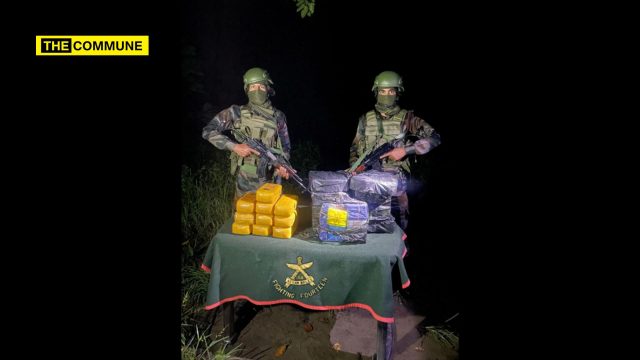
Assam Police Bust Major Drug Hauls In Golaghat And Kokrajhar, Seize ₹3 Crore Worth Of Narcotics

According to CM Sarma, in Golaghat, at least 512.58 gram of narcotics were seized that have a international market value of ₹3 crore. Three persons were taken into custody by the police. Meanwhile, in a separate operation in Kokrajhar, police seized 963.19 kg of ganja, CM Sarma added. He also asserted that the operation against narcotics will continue in Assam. Earlier in the previous week, Assam Police seized drugs valued at ₹9.5 crore and arrested three peddlers, including a woman, in two separate operations.

An Assam Police spokesman said that based on credible intelligence regarding the transportation of contraband from Silchar (southern Assam) to Guwahati via the Silchar-Coimbatore Express train, a team from Panbazar police station was deployed at Guwahati Railway Station. A female suspect was identified and apprehended upon the train’s arrival, he added. Following due legal procedures and in the presence of independent witnesses, the search led to the recovery of 20,000 highly addictive methamphetamine tablets, valued at ₹5 crore, one mobile handset and ₹1,000 in cash.

The accused, identified as Parvina Khatun Bibi (31), has been taken into custody. The detainee is a resident of Sadialer Khuti village in West Bengal’s Cooch Behar district. In another operation, the Assam Police had arrested two drug peddlers at Salchapra in Silchar in the state’s Cachar district, and seized 847 grams of heroin and 4.035 kg of opium from them. The total estimated value of the drugs is ₹4.5 crore. Police suspected that the drugs smuggled from Myanmar through Mizoram entered Assam through a clandestine route.

Myanmar, which shares a 1,643 km unfenced border with four northeastern states Arunachal Pradesh, Manipur, Nagaland, and Mizoram serves as a key transit point for drugs, particularly heroin and methamphetamine tablets, entering India. Myanmar’s Chin State is a hub for smuggling of varied drugs, exotic wildlife animals and many other contraband through six Mizoram districts Champhai, Siaha, Lawngtlai, Hnahthial, Saitual and Serchhip.

-IANS

Subscribe to our channels on TelegramWhatsApp, and Instagram and get the best stories of the day delivered to you personally.
NIA Arrests Two ISIS Sleeper Cell Operatives Involved In Pune IED Bomb Case

NIA Arrests One Person From Purasaiwakkam, Chennai During Raids Linked To ISIS Recruitment Network puducherry

The National Investigation Agency (NIA) has arrested two absconding operatives of the banned terrorist outfit ISIS, who were part of a sleeper module involved in the fabrication and testing of Improvised Explosive Devices (IEDs) in Pune, Maharashtra. The arrests were made in connection with a 2023 terror conspiracy case.

The accused, Abdullah Faiyaz Shaikh alias Diaperwala, and Talha Khan, were intercepted at Mumbai’s Chhatrapati Shivaji Maharaj International Airport Terminal 2 by the Bureau of Immigration. The duo had been hiding in Jakarta, Indonesia, and were taken into custody by the NIA upon arrival in India.

According to the NIA, the two had been on the run for over two years and were wanted in connection with Case RC-05/2023/NIA/MUM. Non-bailable warrants had been issued against them by the NIA Special Court in Mumbai, and a cash reward of Rs 3 lakh each was announced for information leading to their arrest.

The NIA said the case pertains to a larger conspiracy by ten individuals, including the two recently arrested, to carry out terrorist activities and wage war against the Government of India. “They had conspired to commit terrorist acts with the aim to disturb India’s peace and communal harmony by waging a war against the Government of India in furtherance of the ISIS agenda to establish Islamic rule in the country through violence and terror,” the agency stated.

Abdullah Faiyaz Shaikh had rented a house in Kondhwa, Pune, which was used as a hub for assembling IEDs. The NIA said that during 2022 and 2023, the accused not only fabricated IEDs but also conducted training workshops in bomb making and even carried out a controlled explosion to test one of their devices. The investigative agency, which has been actively working to dismantle ISIS-linked networks operating in India, had previously filed a chargesheet against all ten accused under various provisions of the Unlawful Activities (Prevention) Act, Explosive Substances Act, Arms Act, and the Indian Penal Code.

In addition to Abdullah Faiyaz Shaikh and Talha Khan, the other eight accused currently in judicial custody include Mohammed Imran Khan, Mohammed Yunus Saki, Abdul Kadir Pathan, Simab Nasiruddin Kazi, Zulfikar Ali Barodawala, Shamil Nachan, Akif Nachan, and Shahnawaz Alam. The NIA said that investigations in the case are ongoing.

-IANS

Subscribe to our channels on TelegramWhatsApp, and Instagram and get the best stories of the day delivered to you personally.
Minority Ahmadi Doctor Gunned Down In Pakistan Over His Faith

Renowned Pakistani doctor Sheikh Ahmad Mahmood, belonging to the minority Ahmadiyya community, was shot inside Sargodha’s Fatima Hospital in the Punjab province by extremist elements because of his faith, according to local media reports.

The police report stated that the gunman, on Friday, arrived at the hospital dressed in the uniform of “Clean Punjab Program” staff, approached the deceased and shot him two times in the back while saying: “I won’t spare you today, Mahmood,” critically damaging his internal organs. The doctor was taken to the District Headquarters Teaching Hospital, where he succumbed to his injuries. The attacker fled the scene after the fatal shooting with another person who arrived on a motorcycle.

In a press release issued by the Ahmadiyya community, the doctor had been receiving threats for some time from extremist elements because of his faith, and they were forcing him to change the location of his job. “He was a very charitable person and had no enmity with anyone,” the Ahmadiyya community spokesperson said about the deceased, who was killed because of his faith. According to the community, this was the third Ahmadiyya to be targeted in the past month. “The sudden increase in the continuous target killing of Ahmadis due to differences in faith indicates a systematic wave. This is increasing the sense of insecurity among Ahmadis. This requires immediate attention and effective measures from the law enforcement agencies. The continuous increase in hate incidents against Ahmadis is condemnable. The higher authorities should take notice of these incidents and bring the perpetrators to justice according to the law,” the statement read.

The spokesperson alleged that extremist elements were functioning against Ahmadiyya in Sargodha as well as in other areas, with frivolous cases being registered against them, and hate speeches were made to prevent the community from observing their religious rituals. Reports suggested that last month, a 46-year-old businessman was lynched when a few hundred supporters of a religio-political party stormed a place of worship belonging to the Ahmadiyya community in Karachi’s Saddar area to prevent them from performing religious rituals.

In March, the Human Rights Commission of Pakistan, in a report titled ‘Under Siege: Freedom of Religion or Belief in 2023-24‘, revealed that freedom of religion or belief remains under constant threat in Pakistan, with religiously motivated violence and discrimination increasing yearly. The report cited an increasing trend of mob-led attacks on the homes of families belonging to religious minorities, as well as their places of worship.

-IANS

Subscribe to our channels on TelegramWhatsApp, and Instagram and get the best stories of the day delivered to you personally.
34 Instances Of Fake News Peddling By Pro-Congress, Leftist Propaganda Rag ‘The Wire’

31 Instances Of Fake News Peddling By Pro-Congress, Leftist Propaganda Rag The Wire

Since its launch in 2015 by Siddharth Varadarajan, The Wire—widely viewed as an ideologically-driven, far-left media outlet—has faced repeated criticism for promoting anti-India and anti-Hindutva. Over the years, it has developed a reputation not for neutral journalism but for pushing agenda-driven content, often laced with exaggeration, misinformation, or selective reporting that aligns with its ideological stance. Critics argue it behaves more like a propaganda platform than an independent news organization.

Against this backdrop, it becomes essential to expose how The Wire subtly distorts original news stories—tweaking language, omitting facts, or selectively quoting sources—to reshape narratives for international consumption. These manipulations are often picked up by sympathetic global outlets, feeding a broader anti-India media ecosystem abroad that damages India’s reputation on the world stage.

This report compiles 34 documented cases between 2019 and 2025, highlighting how The Wire has either published fake news, misrepresented facts, or defended individuals with controversial or anti-national links. These cases offer clear evidence of a pattern of disinformation targeting Hindus, Indian institutions, and the current government, while often portraying extremist or separatist voices in a favorable light. In several instances, The Wire itself was forced to retract or correct its reporting after being called out.

Fake Propaganda Timeline by The Wire

Fake News #1: False Report on IAF Rafale Jet

On 8 May 2025, The Wire published an article with the sensational headline, “CNN Cites French Intelligence Official Confirming IAF Rafale Was Downed By Pakistan.” The story falsely claimed that a senior French intelligence official had informed CNN that Pakistan had successfully shot down an Indian Air Force (IAF) Rafale jet during recent hostilities.

This claim was completely false. It was swiftly debunked by both independent fact-checkers and the Government of India. The Press Information Bureau’s (PIB) Fact Check unit confirmed that no such incident took place, labeling the report as part of a misinformation campaign. The government clarified that Pakistan’s claims lacked any credible evidence and were purely aimed at discrediting the Indian Air Force.

Fake News #2: Misrepresentation of Eyewitness Account on the Pahalgam Terror Attack

On 22 April 2025, The Wire published a report about the Pahalgam terror attack, authored by journalist Jehangir Ali. In the article, The Wire misquoted an eyewitness, altering the context of her statement in a way that downplayed the targeted nature of the attack against Hindus.

The publication quoted the woman as saying, “I was eating bhelpuri with my husband when a man came and shot him. He said he was perhaps a Muslim and that is why he shot him.” This version implied the victim may have been attacked because he was Muslim.

The original video clip from the scene, which was widely circulated on social media, clearly showed the woman stating the opposite — she frantically mentioned that her husband was likely targeted because he was not a Muslim.

Following widespread backlash online, The Wire later corrected the quote in the article. However, the initial misrepresentation led to accusations that the outlet was attempting to dilute the religious motive behind the terror attack and distort public perception. This case adds to the growing list of incidents where The Wire has been accused of manipulating sensitive narratives through selective or misleading reporting.

Fake News #3: Pushing Propaganda Claiming Only Indian Stock Market Crashed

On 6 March 2025, The Wire published a YouTube video claiming that India’s stock market was collapsing while global markets were reportedly thriving. The video described the situation as a “historic fall,” questioning how India could lose ₹83 lakh crore in market value when international markets were allegedly booming. It posed speculative questions about whether the drop was caused by flaws in government economic policies or profit-taking by foreign investors, citing falling indices like the NSE Nifty 50, SIP closures, and weakening investor confidence as signs of broader economic distress.

 Contrary to The Wire’s narrative, India’s market decline was not an isolated event. A broader analysis of global financial trends showed that stock markets around the world — including the US, Europe, and Asia — were simultaneously experiencing downturns due to shared macroeconomic factors like inflation, tightening monetary policies, and geopolitical tensions. US stock markets alone reported trillions in losses, while Asian and European indices also faced significant drops. Commodities and investor sentiment were broadly affected.

Thus, portraying India’s stock market as uniquely crashing was misleading. The downturn was part of a global market correction, not a reflection of domestic economic failure alone. The Wire’s video omitted this critical context, leading to an imbalanced and alarmist portrayal of the situation.

Fake News #4: Maharashtra Elections Vote Discrepancy

In November 2024, The Wire claimed that 504,313 additional votes were counted in the 2024 Maharashtra Assembly elections, alleging a mismatch between the polled and counted votes. It suggested that the BJP’s victory resulted from manipulation and raised doubts about the constitutional bodies’ credibility.

However, Maharashtra’s Chief Electoral Officer (CEO) clarified that the total votes counted, including postal ballots, amounted to 6,45,92,508, which is consistent with the total votes polled. The valid postal ballots counted in the Ashti and Osmanabad Assembly constituencies were 4,538 and 4,155, respectively, and these do not constitute excess votes.

Fake News #5: Haryana Elections Missing EVM

In October 2024, The Wire journalist M.K. Venu alleged that 19 lakh EVMs went missing during the Haryana Assembly elections and claimed that the Election Commission had not provided a satisfactory response to these allegations. However, this claim by Venu turned out to be false.

The Election Commission had already addressed these allegations in May 2019, explaining that the transportation of EVMs is managed through a secure Electronic Management System (EMS) that tracks EVMs in real-time. Only EVMs that have passed a First-Level Check and are logged into the system are used for polling. Furthermore, the Supreme Court dismissed similar claims regarding missing EVMs during the 2024 general elections, labeling them as baseless.

Fake News #6: Allegations Of Low Voter Turnout 

The Wire misrepresented data in its coverage of voter turnout in the 2024 Lok Sabha elections. It compared the total number of registered voters in constituencies that voted in the first five phases of the 2019 elections with the actual voter turnout in the same phases of 2024. This led to the incorrect claim that there was a significant drop of 19.4 crore voters. In reality, 48.5 crore voters participated in the first five phases of the 2019 elections, not 70 crore as The Wire suggested.

Once this error was exposed, The Wire revised the article, shifting the focus to the first phase of the 2024 elections. It now claimed a dip of 1.8 crore voters, but this conclusion was also flawed. The article was updated with a correction noting the earlier comparison was based on the total number of eligible voters from 2019, not actual turnout. The URL of the article was also changed to reflect this new narrative.

Original Title

Once this error was exposed, The Wire revised the article, shifting the focus to the first phase of the 2024 elections. It now claimed a dip of 1.8 crore voters, but this conclusion was also flawed. The article was updated with a correction noting the earlier comparison was based on the total number of eligible voters from 2019, not actual turnout. The URL of the article was also changed to reflect this new narrative.

Altered Title

Like always, they added a correction note at the bottom very silently but did not announce the changes anywhere.

Fake News #7: Alleges That BJP Used App To Manipulate Trends

On 6 January 2024, The Wire published a report alleging that the BJP was using an app to manipulate trends and automatically generate online content. The report, based on an August 2020 tweet and some unnamed sources, claimed that the party was utilizing software called TekFog, supposedly led by BJP leader Devang Dave.

However, this claim contradicts a previous retraction by The Wire. On 23 October 2022, The Wire suspended its earlier story from January 2022 regarding TekFog, which Ayushman Kaul and Devesh Kumar had authored. In a statement, The Wire admitted that it was unable to verify the alleged capabilities of the app and did not have access to the actual software.

At that time, The Wire acknowledged that it was unclear whether the TekFog allegations would be examined in their internal investigation.

Fake News #8: India First In ‘Fake News’

On 2 March 2024, The Wire falsely claimed that India ranks first globally in “fake news.” In a video posted on The Wire’s YouTube channel, former NDTV anchor Priyanshi Sharma stated, “India is the number one country globally, not in GDP, employment, or health indicators, but in fake information.” She backed this claim by referencing the 19th edition of the Global Risk Report, published by the World Economic Forum (WEF) on 10 January 2024.

However, upon reviewing the source cited, it became clear that the report did not support Sharma’s assertions. The 124-page Global Risk Report 2024 does not claim that India leads in fake information. On page 8, the report highlights misinformation and disinformation as significant challenges for countries like Bangladesh, India, Indonesia, Mexico, Pakistan, the United Kingdom, and the United States, but it does not single out India as the top country in this regard.

Image Source: OpIndia

Fake News #9: Claimed Martyr Not Given Compensation

On 1 September 2023, The Wire published a report claiming that the family of martyred BSF jawan Ranjit Yadav had not received any compensation. The article was written by Yaqut Ali.

However, the Press Information Bureau (PIB) fact-checked and debunked this false claim. PIB clarified that Ranjit Yadav’s family, who was killed in action in Manipur, had already received a compensation of Rs 16 lakh under the ‘Golden Jubilee Seema Prahari Kalyan Kavach Yojana.’

Despite the fact-check by PIB, The Wire continues to let the article stand published and has written, “The Wire stands by its report.” at the end of the article.

Fake News #10: Lies About Alleged Poster By Advocate Reg Selling Houses To Muslims

On 16 January 2023, The Wire published a report claiming that a poster had been put up in Delhi’s Brahmpuri urging Hindus not to sell their houses to Muslims. The article suggested that advocate Pradeep Sharma distributed the posters.

However, Advocate Sharma denied any involvement, stating that he was unaware of the poster’s contents and had no connection to it. He criticized the act of targeting someone on social media in such a manner, emphasizing that The Wire’s claims were not his words and that he had never given an interview for the report.

Fake News #11: The Wire Journo Arfa Sherwani Lies About Hindus

On 1 October 2022, The Wire journalist Arfa Khanum Sherwani posted on her X handle, “Hindutva fascists are mocking, discouraging, threatening, and even beating up Muslims who are/want to participate in celebrations of Hindu festivals. They are destroying the last remnants of India and its composite culture.”

However, Sherwani’s statement misrepresents the situation. The truth is that in Garba pandals across Gujarat, Madhya Pradesh, and Uttar Pradesh, several Muslim youths altered their identities to gain entry into the celebrations, where they reportedly molested Hindu girls. In response, Hindu organizations and local authorities took action to prevent such illegal activities by conducting investigations and stopping the infiltration.

Fake News #12: Lies About Army Killing Civilian In Kashmir

On 1 July 2022, The Wire published a report claiming that a three-year-old child had stated that the police shot his maternal grandfather, despite numerous instances where terrorists have been caught wearing police uniforms.

In reality, 65-year-old Bashir Ahmed Khan was killed by terrorists’ bullets. He was on his way to the market with his three-year-old grandson when the attack occurred. After being shot, Bashir Ahmed’s bloodied body collapsed on the road, with his grandson sitting on his deceased grandfather’s body.

Fake News #13 : Spread Lies That Muslims Were Fleeing A Locality In Delhi Over Police Extortion

On 2 June 2022, The Wire published a report about the violence in Delhi’s Jahangirpuri, citing local sources who claimed that members of the Muslim community were fleeing the area and that the police were harassing innocent Muslims to extort money.

However, a ground investigation by OpIndia revealed that these claims were false. In fact, the area where The Wire reported fear of displacement due to bulldozer activity was busy with the unloading of junk, and there was no indication of any official action or administrative presence. Additionally, activities were ongoing near the mosque, which had been identified by Hindu organizations as the starting point for stone pelting, and all nearby shops were open and functioning as usual.

Fake News #14: Uploads Fake Video & Instigates Violence

On 5 April 2022, The Wire published a video report about violence in Karauli, Rajasthan, which showed a young man hoisting a saffron flag on a mosque. The video suggested that this act triggered the violence in the area. However, it was later revealed that the video was not filmed in Rajasthan.

The District Magistrate (DM) of Karauli issued a statement confirming that the mosque shown in the video was not located in his district, calling the report fake news. The Wire was accused of attempting to incite Muslim sentiments with this false information.

Fake News #15: Blames BJP For “Targeting” Muslims

On 23 February 2022, The Wire shared an image claiming it was created by Hindutva groups in 2020. The image depicted the coronavirus riding on the shoulders of a Muslim man.

To add credibility to this insinuation, The Wire’s Siddharth Varadarajan cited a propaganda piece from Turkish state media, linking to an article by Werleman on TRT World from April 2020, which he referred to as a perspective from “several analysts.”

It is noteworthy that CJ Werleman’s X account is withheld in India.

However, The Wire appeared to align itself with an apologetic stance toward Islamist behavior, having previously spread Taliban propaganda. This seemed to be part of an effort to tarnish the image of Prime Minister Modi, the BJP, and its supporters, while promoting an anti-Hindu narrative.

Fake News #16: Fake News During Corona Pandemic About Covaxin

The Wire published several articles making false allegations against Bharat Biotech and its COVID-19 vaccine, Covaxin, particularly regarding its authorization and approvals, without verifying the facts.

On 23 February 2022, the Ranga Reddy District Court in Telangana ordered The Wire, a left-leaning news outlet, to remove 14 articles it had published against Bharat Biotech and Covaxin.

The court clarified that Covaxin had been approved for the 15 to 18 age group, yet The Wire continued to publish misleading reports, which could contribute to vaccine hesitancy.

Fake News #17: Fake News On Immune Response Data For Covaxin

On 28 December 2021, The Wire published an article claiming that there was no available data on the immune response generated by Covaxin.

However, Bharat Biotech clarified that data on the immune response generated by Covaxin had been published in several reputable international peer-reviewed journals throughout 2020 and 2021.

Additionally, the company stated that the data regarding booster doses had already been submitted to the relevant authorities.

Fake News #18: Alleging That Spl Police Officers Were Joining Terrorist Groups Out Of Fear

On 28 June 2021, The Wire published a report titled “They Have Destroyed My Family,” alleging that in recent years, special police officers were leaving their posts and joining terrorist groups out of fear of terrorists.

In response, the Kashmir Police issued a statement debunking The Wire’s claims, labeling the report as completely false. The police emphasized that such allegations against security forces were being made without any factual basis or data to support them.

The Kashmir Police further accused The Wire of promoting a false agenda and issued a show-cause notice, seeking an explanation as to why a complaint should not be filed against the article with the Press Council of India.

Fake News #19: Lied About Mosque Demolished By Authorities

On 22 and 23 June 2021, The Wire released a video on its YouTube and Twitter platforms, falsely claiming that a mosque in Barabanki, Uttar Pradesh, was destroyed and desecrated by the authorities.

The District Magistrate, Adarsh Singh, responded to the claims, stating that the documentary contained false and unfounded information. He specifically refuted the claim that the administration and police had thrown religious scriptures into a drain and river, calling it completely untrue.

Fake News #20: Spread Fake News About Elderly Muslim Man Being Beaten Up

On 16 June 2021, the Ghaziabad Police in Uttar Pradesh registered an FIR against The Wire for spreading misleading information on social media about an incident involving an elderly man being beaten.

The media outlet had circulated a false report claiming that a Muslim man, Abdul Samad Saifi, was attacked in Ghaziabad’s Loni area and forced to chant “Jai Shri Ram.” The Ghaziabad Police filed an FIR under sections 153, 153-A, 295-A, 505, 120-B, and 34 of the IPC against the PS Loni Border police station in response to the false claims made by The Wire.

Fake News #21: Makes False Claim On Rajnath Singh And Ramcharitmanas, Silently Retracts It

The Wire claimed that Defence Minister Rajnath Singh, during a video conference at a Ram Navami function in Lucknow, stated that the recitation of the Ramcharitmanas, an epic poem by Tulsidas, could cure COVID-19 by boosting positivity in individuals, adding that it could act as a remedy for major diseases.

However, just hours after publishing the article on 24 April 2021, The Wire retracted the report on Twitter. In the tweet, they acknowledged that the story was based on unverified reports from other news sources and stated that the erroneous claim about Rajnath Singh had been withdrawn.

Fake News #22: Falsely Claims Digital Media Guidelines Retracted

The Wire falsely reported that a retired judge, selected by a panel from the Ministry of Information and Broadcasting (MIB), would head a self-regulatory body under the IT (Intermediary Guidelines & Digital Media Ethics Code) Rules. However, the Press Information Bureau’s Fact Check debunked this claim. In reality, the self-regulatory body would be constituted by publishers, not MIB, and could be led by a retired Supreme Court or High Court judge or a person of eminence.

Fake News #23: Omits Accused’s Islamist Identity In Suicide Case

In January 2021, a 25-year-old Dalit youth, Dharampal Diwakar, from Malwan, Uttar Pradesh, died by suicide after being beaten by two individuals, Noor Mohammad and Salman, for allegedly plucking leaves from their mango tree.

While the police arrested the accused, The Wire reported the incident without mentioning their religious identity, intentionally omitting it in the headline. In another report when the perpetrators were allegedly Hindu, they blamed “upper caste men” for the suicide.

The report instead downplayed the religious aspect of the crime committed by the Muslim accused.

Fake News #24: Published Fake Report On Safoora Zargar

Delhi Police criticized The Wire for publishing a misleading report regarding Safoora Zargar, a Delhi riots accused.

The report falsely claimed police and judicial bias against the Muslim community. On 15 May 2020, Delhi Police pointed out that the journalist had combined two separate FIRs with the same number, fabricating a narrative of bias and discrimination.

Fake News #25: Published Fake Report On Muslim Families

The Wire falsely reported that Muslim families living along the Punjab-Himachal border were being forced to live on riverbeds, deprived of food and water, after being beaten and chased from their homes.

In response, Hoshiarpur Police dismissed the allegations, providing evidence to disprove the claims and expose the propaganda.

Fake News #26: Made False Claims On Ram Navami And Tablighi Jamaat

On 31 March 2020, The Wire chief Siddharth Varadarajan tweeted in support of the Tablighi Jamaat, alleging that Chief Minister Yogi Adityanath had approved a fair in Ayodhya on Ram Navami and claimed that Lord Ram would protect everyone from the coronavirus.

In response, Yogi’s media advisor, Mrityunjay Kumar, refuted the claim, stating that the Chief Minister never made such a statement and warned of legal action and defamation for spreading false information.

Fake News #27: Falsely Defended Muslim Rioters, Misidentifies School Ownership

On 5 March 2020, The Wire published misleading information to protect Muslim riot suspects in Delhi’s Shiv Vihar. They claimed that DRP School, which was set on fire during the riots, was a Muslim institution, while in reality, Pankaj Sharma, a Hindu, owned it.

Meanwhile, Rajdhani School, located next door, became a stronghold for rioters, with reports of stone pelting and violence emanating from it.

Fake News #28: Misled With False Claims About CAA

On 20 December 2019, The Wire published a misleading article suggesting that the Citizenship Amendment Act (CAA) would lead to the expulsion of Muslims from India, portraying them as illegal citizens without voting rights, destined for detention centers.

This false narrative claimed that Prime Minister Narendra Modi and Amit Shah were behind these plans. However, Amit Shah clarified in an interview that implementing the National Register of Citizens (NRC) would not be based on religion, and only infiltrators, regardless of their faith, would be removed from the country.

Fake News #29: Misrepresented Kashmir Student Clash as Communal

On 19 November 2019, The Wire published an article titled “Kashmiris called terrorists and thrashed by fellow students,” attempting to give a communal twist to a student clash.

However, a Kashmiri student, speaking anonymously, clarified that the altercation was not due to religious differences but because of resentment over their ability to get passes for outings. The students involved in the clash were also Muslims, contradicting The Wire’s portrayal of the incident as religiously motivated.

Fake News #30: Falsely Claimed No Newspapers In Kashmir Post-Article 370 Abrogation

On 26 August 2019, The Wire falsely claimed that no newspapers had been published in Kashmir since the abrogation of Article 370 on August 5, describing the situation as “worse than the Emergency of 1975-77.” However, journalist Ashok Srivastava from Doordarshan debunked this claim during a TV debate by presenting evidence of newspapers still being published and distributed in Kashmir. He showcased photos and copies of newspapers from the period around 18-19 August 2019, disproving The Wire’s narrative.

Fake News #31: Wire Journo Arfa Sherwani Misled On Gorakhpur Temple’s History

On 27 April 2019, The Wire journalist Arfa Khanum Sherwani tweeted from Gorakhpur, claiming that the Math, led by Yogi Adityanath, was built on land donated by Muslim Nawab Asif-ud-Daula.

However, the Twitter handle True Indology fact-checked this claim, revealing that the temple is actually at least 800 years old, predating Nawab Asif-ud-Daula by 225 years. True Indology refuted Sherwani’s statement using references from historical texts and the Archaeological Survey of India.

Fake News #32: Made False Claim About Kashmir Girls In Dehradun

On 17 February 2019, The Wire reported that a mob had threatened Kashmiri girls studying at a university in Dehradun, demanding they vacate their hostel. The article quoted one girl who allegedly appealed for help, fearing an attack.

However, despite responses from Dehradun Police and CRPF clarifying the situation, The Wire continued to spread the unverified rumor without naming any of the students or providing credible details, turning an unfounded claim into a reported fact.

Fake News #33: Made False Report On Kashmir Students Suspended For Celebrating Pulwama Attack

On 16 February 2019, The Wire published a report claiming that four Kashmiri girls were suspended by NIMS University in Rajasthan for allegedly celebrating the Pulwama attack and raising anti-national slogans. However, the truth reveals that the students gave similar responses to public outrage following the incident, which raised serious concerns about inciting sentiments.

Despite this, no appropriate action was taken to properly address the situation.

Fake News #34: Posts Misleading Report On Kashmiri Students Suspended After Pulwama Attack

On 15 February 2019, The Wire reported that two Kashmiri students were suspended and one was rusticated by colleges in Uttarakhand following the Pulwama attack. One of the students had posted a photo of Shoaib Lone, a Hizbul Mujahideen militant killed in an encounter, with a message glorifying his death: “Allah aapki shahadat qabool kare” (“May Allah accept your martyrdom”).

However, the report overlooks critical details, including the fact that the student’s actions led to significant backlash, and the students later issued apologies for their posts. This raises concerns about selective reporting and context omission.

The Wire has proven itself not as a platform for ‘independent journalism’ as it claims but as a deliberate purveyor of misinformation, repeatedly fabricating stories to fit an anti-Hindu and anti-India narrative. With a shameful track record riddled with retracted articles, baseless allegations, and debunked claims, it is evident that The Wire functions less as a news outlet and more as a propaganda machine for vested ideological interests and probably foreign forces. Its attempts to manipulate public perception by distorting facts are not just irresponsible but dangerous that has the potential to create unrest in the country.

Subscribe to our channels on TelegramWhatsApp, and Instagram and get the best stories of the day delivered to you personally.
Pakistan’s Own Newspaper Fact Checks Deputy PM For Quoting Fake AI-Generated UK News Praising Air Force As ‘Undisputed King Of The Skies’

In an address to the Senate, Pakistan’s Deputy Prime Minister and Foreign Minister Ishaq Dar cited what he believed was praise from the UK-based The Daily Telegraph, claiming the paper had described the Pakistan Air Force (PAF) as the “undisputed king of the skies.” However, the page he quoted from turned out to be fake AI picture widely circulated on social media.

The viral image, which began spreading around 10 May, purportedly showed a front page of The Daily Telegraph celebrating the PAF’s performance amid recent tensions with India. But a thorough investigation by Dawn newspaper’s iVerify Pakistan team debunked the claim. The team used verification tools to search the British publication’s official archives and found no such article existed.

Dawn pointed out several red flags in the supposed newspaper image: spelling mistakes such as “Fyaw” instead of “Force,” “preformance” in place of “performance,” and phrases like “Aur Force” and “advancemend,” none of which align with the editorial standards of a reputable outlet like The Daily Telegraph. Additionally, the page’s layout did not match the typical design used by the British paper.

The image was not only proven fake by Dawn but also widely condemned by Pakistani journalists and fact-checkers. Journalist Imran Mukhtar from The Nation criticized Dar’s use of the false report in Parliament, stating that while the PAF may have had strong moments, the image was clearly fabricated. Another user on X (formerly Twitter), Abdul Wasey Naik, noted that many respected journalists had unknowingly shared the AI-generated image, assuming it to be genuine.

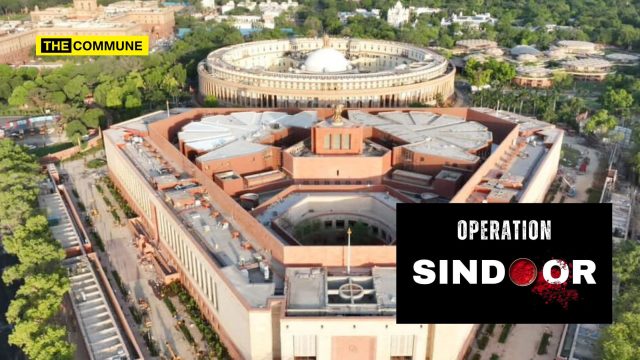
The incident comes in the wake of India’s recent Operation Sindoor, which targeted terrorist sites in Pakistan. In response, Pakistani state-linked accounts have ramped up disinformation efforts, circulating old visuals, doctored videos, and entirely made-up narratives in an apparent attempt to counter the operation’s impact and sway public perception.

This episode reflects a broader tactic in digital information warfare—flooding platforms with misleading or fake content to confuse audiences and manipulate narratives, making it increasingly difficult to discern fact from fiction..

(With Inputs From ANI)

Subscribe to our channels on TelegramWhatsApp, and Instagram and get the best stories of the day delivered to you personally.
Israeli Drone Strikes Kill Hezbollah Member In Lebanon

israel airstrike hezbollah lebanon

Israeli drones carried out multiple airstrikes across southern Lebanon, killing a Hezbollah member and destroying several prefabricated structures, Lebanese security and official sources said. Lebanon’s Ministry of Health said on 15 May in a statement that an Israeli drone strike targeting a vehicle on the Arnoun-Yohmor road killed one person, Xinhua news agency reported. A Lebanese security source identified the victim as Mohammad Ali Marouni, a Hezbollah member from the town of Arnoun in the Nabatieh district, deep in southern Lebanon.

According to Lebanese official sources, three Hezbollah members have been killed and a fourth wounded in separate Israeli strikes on southern Lebanon over the past 48 hours. In a related incident, Lebanon’s state-run National News Agency reported that an Israeli Apache helicopter carried out three consecutive strikes within half an hour on the village of Houla in southeastern Lebanon, targeting a prefabricated structure belonging to the Wataawano Association. The agency added that at dawn, the Israeli army struck another prefabricated building in the village of Adaisseh.

Separately, a drone dropped a stun grenade on a house in Kfar Kila, while another drone dropped a similar device over the ruins of al-Dhahira School in the western sector of southern Lebanon. The cross-border strikes come despite a ceasefire agreement reached on 27 November 2024, intended to halt more than a year of hostilities tied to the war in Gaza. An Israeli drone strike killed a Hezbollah member in southern Lebanon on Wednesday, targetting a vehicle near Qaaqaait al-Jisr in the Wadi al-Hujayr area, Lebanese security and official sources said.

Lebanon’s state-run National News Agency (NNA) reported on Wednesday that “an enemy drone targeted a car at the entrance of Wadi al-Hujayr near Qaaqaait al-Jisr in the Nabatieh district this morning”. The Lebanese Ministry of Health’s Public Health Emergency Operations Center confirmed one fatality in the strike. Civil Defence officials said the vehicle caught fire, and the body was transported to a hospital in Nabatieh. The truce, mediated by the US and France, has largely held, though sporadic flare-ups have continued. Israel has said its strikes are intended to neutralise Hezbollah threats. However, the Lebanese government and several Arab states have accused Israel of repeatedly violating the ceasefire agreement. Despite the truce’s provision requiring a full Israeli withdrawal, Israeli forces continue to hold several strategically important positions in southern Lebanon.

-IANS

Subscribe to our channels on TelegramWhatsApp, and Instagram and get the best stories of the day delivered to you personally.
India Remains Fastest-Growing Major Economy Despite Global Uncertainty: UN

india growth plan domestic

India remains the fastest-growing large economy and is expected to record a 6.3 per cent growth this fiscal year, while the global economy faces a “precarious moment,” according to the UN.

“India remains one of the fastest growing large economies driven by strong private consumption and public investment, even as growth projections have been lowered to 6.3 per cent in 2025” from the 6.6 per cent made in January, Ingo Pitterle, a senior economic affairs officer, said on 15 May 2025.

The UN’s mid-year update of the World Economic Situation and Prospects (WESP) report said India’s economy is projected to grow a tad faster next year at 6.4 per cent, even though it is also 0.3 per cent lower than the January projection. “The world economy is at a precarious moment,” the report warned.

“Heightened trade tensions, along with policy uncertainty, have significantly weakened the global economic outlook for 2025. It’s been a nervous, time for the global economy,” Shantanu Mukherjee, the director of the Economic Analysis and Policy Division, said at the release of the WESP. “In January this year, we were expecting two years of stable, if subpar growth, and since then, prospects have diminished,” he added. Against this picture, the growth of the world’s fifth-largest economy, India, contrasts with the global rate of 2.4 per cent this year, and that of other major economies, according to the WESP.

The projection for China is 4.6 per cent, for the US 1.6 per cent, Germany (negative) -0.1 per cent, Japan 0.7 per cent, and the European Union 1 per cent. “Resilient private consumption and strong public investment, alongside robust services exports, will support economic growth” for India, the report said. On inflation and employment, the WESP saw positive trends for India. “Inflation is projected to slow from 4.9 per cent in 2024 to 4.3 per cent in 2025, staying within the central bank’s target range,” it said. “Unemployment remains largely stable amid steady economic conditions,” it said, but added a note of caution that “persistent gender disparities in employment underscore the need for greater inclusivity in workforce participation“. The WESP drew attention to the risks to the export sector from the US tariff threats. “While looming US tariffs weigh on merchandise exports, currently exempt sectors — such as pharmaceuticals, electronics, semiconductors, energy, and copper — could limit the economic impact, though these exemptions may not be permanent,” it said. The International Monetary Fund last month projected India’s economy to grow by 6.2 per cent this year and 6.3 per cent next year.

-IANS

Subscribe to our channels on TelegramWhatsApp, and Instagram and get the best stories of the day delivered to you personally.
Germany, UK Embark On Joint Effort For Long-Range Precision Strike Capability

German Defence Minister Boris Pistorius and visiting British Defence Secretary John Healey have agreed to start working on a new “Deep Precision Strike Capability” system aimed at a range of more than 2,000 km. Given the current threat situation, there is an urgent need for such long-range weapons and to close the “Deep Precision Strike” capability gap, said a statement issued by the German Defence Ministry on 15 May  after their meeting.

British Ministry of Defence said that the new 2,000-km precision deep strike capability will be among the most advanced systems ever designed by Britain, to safeguard the British public and reinforce NATO deterrence, while boosting British and European defence sectors. Germany’s Boris Pistorius said work on the missiles had begun and would be critical for European security. “The current threat situation makes it absolutely clear that we need to close all capability gaps,” Pistorius said. “And we need to do that as quickly as possible.” Europe’s governments have looked to establish more independence from US military technology amid doubts about Washington’s future commitment to Europe’s security.

Both Germany and Britain also agreed to strengthen cooperation in terms of equipment systems, countering undersea threats, and developing further connectivity between their air forces. The two Ministers also discussed support for Ukraine as well as the upcoming NATO summit in June, where discussions are expected to focus on defence budget sharing among NATO member countries. The new German federal government has promised to step up its spending on national defence and build a strong army.

German Chancellor Friedrich Merz said in February that Europe would have to work to achieve “real independence” from the US, whose leadership now seemed “largely indifferent” to the fate of Europe. The Defence Ministers also pointed to other projects their countries were working on, including joint procurement of torpedoes and the establishment of a new forum bringing together defence firms from each nation.

European nations in NATO must do more and step up to strengthen European security,” Healey said. “The best way to do that is for leading nations like Germany and the UK to do more together.” Germany’s Foreign Minister Johann Wadephul said earlier on Thursday that the country backs proposal to increase defence spending to five per cent of GDP.

-IANS

Subscribe to our channels on TelegramWhatsApp, and Instagram and get the best stories of the day delivered to you personally.

India-EU Partner On Marine Plastic And Waste-to-Hydrogen Tech

India and the European Union (EU) have launched two major research and innovation initiatives that focus on marine plastic litter and waste-to-green-hydrogen solutions. The initiatives were launched under the India-EU Trade and Technology Council (TTC), established in 2022 by Prime Minister Narendra Modi and European Commission President, Ursula von der Leyen to strengthen the bilateral partnership on trade and technology.

With a joint investment of ₹391 crore, the initiatives focus on two coordinated calls in the areas of Marine Plastic Litter (MPL) and Waste to Green Hydrogen (W2GH), co-funded by Horizon Europe — the EU’s research and innovation framework programme — and the Indian government. “Collaborative research is the cornerstone of innovation. These initiatives will harness the strengths of both Indian and European researchers to develop solutions that address our shared environmental challenges”, said Professor Ajay Kumar Sood, Principal Scientific Adviser to the government.

Highlighting the increasing momentum of the EU-India collaboration, Herve Delphin, EU Ambassador to India, remarked, “These research calls under the EU-India Trade and Technology Council demonstrate the dynamism of the EU India partnership, renewed by our leaders in Delhi last February”. “By tackling concrete issues like marine pollution and sustainable energy together, we’re driving innovation, circular economy and energy efficiency. Development of cutting-edge technologies in these areas makes both economic and environmental sense. We are committed to a cleaner, more sustainable future that will benefit both the EU and India,” Delphin mentioned.

Despite global efforts, marine pollution continues to threaten biodiversity, disrupt ecosystems, and impact human health. Dr M. Ravichandran, Secretary, Ministry of Earth Sciences, said “Marine pollution is a global concern that requires collective action. This joint call will enable us to develop advanced tools and strategies to protect our marine ecosystems.”​ The second coordinated call addresses the urgent need for sustainable energy solutions through the development of waste-to-green hydrogen technologies. Santosh Kumar Sarangi, Secretary, Ministry of New and Renewable Energy, said that “Advancing waste-to-hydrogen technologies is crucial for our energy transition goals. This collaboration will accelerate the development of sustainable hydrogen production methods.”

-IANS

Subscribe to our channels on TelegramWhatsApp, and Instagram and get the best stories of the day delivered to you personally.
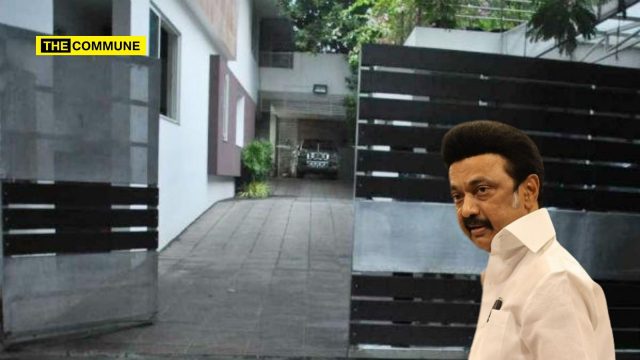
President Murmu Invokes Article 143 To Challenge Supreme Court’s Ruling On President & Governor’s Assent To Bills

Supreme Court Rules Against Fixed Timelines Or 'Deemed Assent' For Governor And President On Bills

In a significant move, President Droupadi Murmu has referred a series of constitutional questions to the Supreme Court under Article 143(1), challenging aspects of the Court’s 8 April judgment regarding the powers and responsibilities of Governors and the President in granting assent to state bills. The judgment in question, delivered by Justices J.B. Pardiwala and R. Mahadevan in the Tamil Nadu government vs. Governor case, had established strict timelines for decision-making under Articles 200 and 201 of the Constitution—provisions which outline the assent process for state legislation.

The President expressed concern over the Court’s interpretation, questioning its legal basis given the absence of any time-bound directives in the Constitution regarding the assent procedure. Noting that the Constitution provides no explicit deadlines for such decisions, she sought the Court’s advisory opinion on 14 critical constitutional issues, invoking Article 143—a rarely used provision allowing the President to consult the apex court on matters of legal complexity or public importance.

Key Constitutional Questions Raised

Among the 14 questions presented to the Court are:

  1. What are the constitutional options before a Governor when a Bill is presented to him under Article 200 of the Constitution of India?
  2. Is the Governor bound by the aid & advice tendered by the Council of Ministers while exercising all the options available with him when a Bill is presented before him under Article 200 of the Constitution of India?
  3. Is the exercise of constitutional discretion by the Governor under Article 200 of the Constitution of India justiciable?
  4. Is Article 361 of the Constitution of India an absolute bar to the judicial review in relation to the actions of a Governor under Article 200 of the Constitution of India?
  5. In the absence of a constitutionally prescribed time limit, and the manner of exercise of powers by the Governor, can timelines be imposed and the manner of exercise be prescribed through judicial orders for the exercise of all powers under Article 200 of the Constitution of India by the Governor
  6. Is the exercise of constitutional discretion by the President under Article 201 of the Constitution of India justiciable?
  7. In the absence of a constitutionally prescribed timeline and the manner of exercise of powers by the President, can timelines be imposed and the manner of exercise be prescribed through judicial orders for the exercise of discretion by the President under Article 201 of the Constitution of India
  8. In light of the constitutional scheme governing the powers of the President, is the President required to seek advice of the Supreme Court by way of a reference under Article 143 of the Constitution of India and take the opinion of the Supreme Court when the Governor reserves a Bill for the President’s assent or otherwise?
  9. Are the decisions of the Governor and the President under Article 200 and Article 201 of the Constitution of India, respectively, justiciable at a stage anterior into the law coming into force? Is it permissible for the Courts to undertake judicial adjudication over the contents of a Bill, in any manner, before it becomes law?
  10. Can the exercise of constitutional powers and the orders of/by the President / Governor be substituted in any manner under Article 142 of the Constitution of India?
  11. Is a law made by the State legislature a law in force without the assent of the Governor granted under Article 200 of the Constitution of India?
  12. In view of the proviso to Article 145(3) of the Constitution of India, is it not mandatory for any bench of this Hon’ble Court to first decide as to whether the question involved in the proceedings before it is of such a nature which involves substantial questions of law as to the interpretation of constitution and to refer it to a bench of minimum five Judges?
  13. Do the powers of the Supreme Court under Article 142 of the Constitution of India limited to matters of procedural law or Article 142 of the Constitution of India extends to issuing directions /passing orders which are contrary to or inconsistent with existing substantive or procedural provisions of the Constitution or law in force?
  14. Does the Constitution bar any other jurisdiction of the Supreme Court to resolve disputes between the Union Government and the State Governments except by way of a suit under Article 131 of the Constitution of India?

President: ‘Deemed Assent’ Undermines Constitutional Balance

The President took strong exception to the concept of “deemed assent”, which the Supreme Court invoked to resolve a prolonged impasse involving ten bills pending with the Tamil Nadu Governor. The Court had held that these bills would be considered assented to if not acted upon within the prescribed timeframes. President Murmu argued that such an interpretation is “alien to the constitutional scheme”, and compromises the intended checks and balances between legislative and executive functions at both the Union and State levels.

She further emphasized that Articles 200 and 201 do not specify any timeframe or procedural guidance, suggesting that any judicially imposed timelines could disrupt the delicate balance of federalism, separation of powers, and executive discretion. The President maintained that decisions under these Articles involve complex policy considerations and should not be strictly constrained by judicial mandates.

Concerns Over Judicial Overreach and Use of Article 142

The Court’s reliance on Article 142, which empowers it to do “complete justice,” was also called into question. The President noted that this provision should not be used to override or alter substantive constitutional or statutory requirements. She called for clarity on whether Article 142 allows the judiciary to issue directions inconsistent with the constitutional framework, particularly concerning executive decisions on legislation.

Moreover, she raised concerns about state governments bypassing Article 131—the appropriate mechanism for adjudicating disputes between the Centre and States—by filing writ petitions under Article 32, which is primarily intended for individual rights enforcement.

Call for Constitutional Clarity

Citing divergent judicial precedents and the serious implications of the April 8 ruling, the President urged the Supreme Court to clarify the extent of its powers in relation to gubernatorial and presidential discretion over legislative assent. The reference seeks to resolve long-standing ambiguities over the justiciability, scope, and limits of constitutional discretion under Articles 200 and 201, and the appropriate judicial mechanisms for addressing inter-governmental disputes.

The Union Government has supported this reference, viewing the Court’s April verdict as a case of judicial overreach that risks upsetting the constitutional equilibrium between the legislature, executive, and judiciary.

(With Inputs From TOI & Bar And Bench)

Subscribe to our channels on TelegramWhatsApp, and Instagram and get the best stories of the day delivered to you personally.