Home Blog Page 429

DMK Ally And Panruti MLA T Velmurugan Slams DMK Over Evictions In Chennai

"Used For Votes, Discarded After Elections", DMK Ally TVK Chief Velmurugan Hits Out At DMK For Disrespecting Alliance Partners, Claims Admin Failures In Cuddalore Flood Management And Aftermath panruti mla velmurugan evictions in chennai

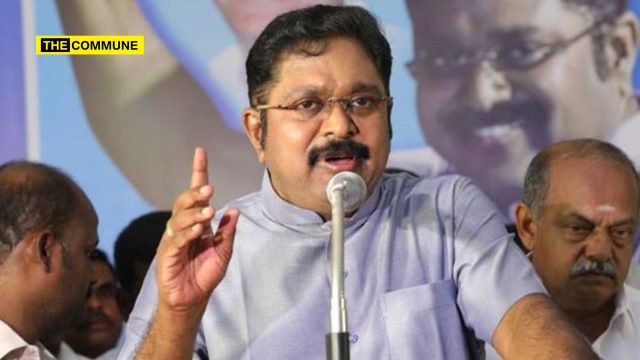
Tamilaga Vazhvumurai Katchi (TVK) president and Panruti MLA T. Velmurugan has slammed the DMK, his party’s ally, over the eviction and demolition of homes in areas like Anakaputhur and Saidapet in Chennai.

Speaking at an event organized by the Tamil Nadu Cauvery Farmers Association, Velmurugan condemned the ruling DMK government for forcibly removing residents from 15 villages, including Eknapuram, allegedly to make way for a private airport project that “doesn’t even have a single flight.

Drawing parallels with demolitions in Delhi, Velmurugan said, “Here, for the sake of a private (entity) Tata that doesn’t even have a single flight, people from 15 villages including Eknapuram are being chased out and thrown away. Today, in Delhi, a thousand homes are being demolished. There is no one to question. Children are crying, schoolboys and girls in uniform, there’s no one to hear them. Fine, in Delhi, it’s at least 2000 miles away. In Delhi, if it’s the BJP government, then in our own Tamil Nadu, it’s our alliance government the DMK government in Chennai that is demolishing and throwing out people from marginalised communities, from coastal regions, from riverside areas poor people displacing daily wage workers. From Kundrathur to Anakaputhur, from Saidapet to all parts of the city, they are being evicted and their homes razed. No one listens. And if questioned, they say the High Court ordered. So, I ask the High Court judges, you who sit on the judgement and deliver justice aren’t you aware that even the Madurai High Court is built on lakes and ponds? They say Valluvar Kottam was also built like that. Many star hotels, commercial complexes, and government buildings in Chennai all those tall towers and massive structures have been built on land that belonged to farmers or on waterbodies. Shouldn’t that be demolished and cleared instead of  clearing the homes of innocent people. One poor Muslim sister, with her two daughters, is falling at the feet of a police officer, begging him, crying — yet no one to listen. They just demolish and move on like nothing.”

What Prompted Velmurugan’s Outburst?

The criticism came in response to widespread evictions and demolitions taking place in Anakaputhur, particularly in areas like Quaid-E-Millath Nagar and Stalin Nagar. The Tambaram Corporation, citing flood mitigation efforts, has begun clearing what it says are unauthorized structures along the Adyar River.

According to officials, nearly 600 concrete homes are marked for demolition, with 593 structures already labeled as illegal encroachments. The operation, now in its third day, has already seen more than 300 homes demolished, following earlier similar efforts in Shanthi Nagar and Moogambi Nagar.

Corporation Commissioner S. Balachander, along with police and revenue officials, is overseeing the process to ensure public order. The government insists that residents are being relocated to newly built homes in Keerapakkam and Thailavaram, with resettlement plans also including Perumbakkam and Navalur.

Why Are Residents Protesting?

While authorities claim the demolitions are legally sanctioned and necessary for public safety, many residents say they’ve lived in these areas for decades—some for over 50 years. Several say they were even promised official land titles (pattas) not long before demolition notices were served.

Locals argue that the areas being cleared have established roads, power lines, and individual electricity meters provided by the government—calling into question the claim that their homes are illegal encroachments.

Furthermore, families report serious issues with the resettlement sites, citing lack of basic amenities and unsuitable living conditions. Many have been relocated far from their original neighborhoods, disrupting livelihoods, children’s education, and long-standing community bonds.

Subscribe to our channels on TelegramWhatsApp, and Instagram and get the best stories of the day delivered to you personally.

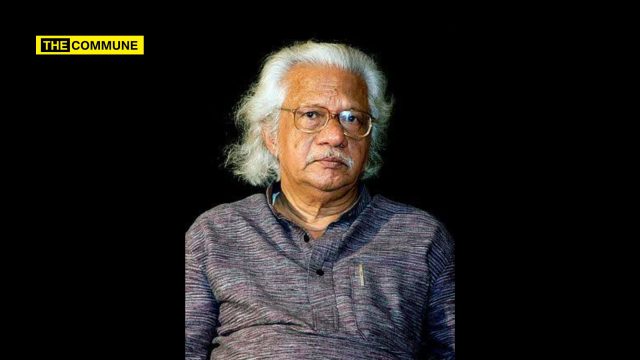
From Opposing CAA & Article 370 Abrogation To Calling For Sterlite Shutdown: Meet ‘Communist’ IIT-Bombay Professor Anupam Guha Who Supports Anti-Israel Pro-Hamas Speech By MIT Student

Anupam Guha, a professor at IIT Bombay, is facing criticism after voicing support for Indian American student Megha Vemuri, who was recently barred from attending her graduation ceremony at the Massachusetts Institute of Technology (MIT). Vemuri, the president of MIT’s Class of 2025, was reportedly prevented from participating after delivering a pro-Palestine speech during an official event on 29 May 2025.

In a post on X, Guha commented, “That MIT student has courage and did an admirable thing. At her age, I might not have gone that far.” His statement quickly gained widespread attention and sparked debate online.

Following this, Guha has come under scrutiny not just for this specific statement, but also for his broader history of political commentary and activism. Critics argue that he frequently uses his academic position to promote leftist political ‘extremist’ ideologies, especially through his focus on humanities and technology policy.

Guha has previously supported several controversial protests, including the 2018 anti-Sterlite agitation in Tamil Nadu. That movement led to the permanent closure of the Sterlite copper plant after violent demonstrations resulted in the deaths of 13 people. The shutdown significantly impacted India’s copper production, turning the country from a net exporter to a net importer.

In his post, he wrote, “Capitalism cannot function without State terrorism. Perfect example of that is the Sterlite protest. My solidarity with the tens of thousands of brave protestors resisting for years that copper smelting plant resulting in nine martyrs. Down with Vedanta!”

In addition, Guha has been vocal in his opposition to the revocation of Article 370 in 2019, which ended Jammu and Kashmir’s special constitutional status. He described the move as “constitutionally illegitimate.”

In his post, he stated, “Read this sharp and detailed explainer by @MaLawdy on why what happened is most probably constitutionally illegitimate firstpost.com/india/understa…”

Guha is also associated with the Kosambi Circle, a Communist group he founded that explores Marxist and revolutionary political thought. The group engages with works by thinkers such as M.N. Roy and M.P.T. Acharya.

His social media activity during the anti-Citizenship Amendment Act (CAA) and National Register of Citizens (NRC) protests in 2020 also drew attention. Guha actively participated in campus demonstrations and encouraged IIT Bombay students to join a march “to save the Constitution.”

He stated, “For the last 8 days the faculty, students, staff and people in IITB have protested in a row, against NRC-CAA-NPR and against the brutality done on various campuses. There were teach ins, songs, and discussions. Today will be the last protest and a march. Come in large numbers.”

Furthermore, Guha has written so much that reflects Marxist and separatist perspectives on the Kashmir issue, including writings by authors like Aatina Nasir Malik and Khadeeja Raina, which explore themes of childhood and violence in conflict zones.

Anupam Guha, a humanities professor at IIT Bombay, also expressed strong opposition to the use of the term ‘tukde tukde gang’, going so far as to label those who use it as akin to terrorists in his view.

Guha wrote, “Not just an enabler. A participant in stochastic terrorism.” In another post he stated, “They are quite adept at destroying data. Everything must be archived. And yes, one day the whole lot will be prosecuted.”

In related threads, Guha’s involvement with The Collective, a communist organization, is also noted. He has been a speaker at their events, including a workshop held on International Working Women’s Day that focused on systemic issues in labor and employment.

The Collective also had a problem with Maoist neutralisation that took place recently. They called it ‘Adivasi genocide’!. On their handle, they wrote, “We will not forget the extrajudicial killing of CPI (Maoist) General Secretary Com. Nambala Keshava Rao (Basavaraj) and 26 martyrs amid call for ceasefire and peace talks! Stop Adivasi genocide for corporate plunder in the name of Operation Kagaar!”

Anupam Guha openly identifies as a communist and is accused of using his academic platform to advocate for radical ideological positions.


Subscribe to our channels on TelegramWhatsApp, and Instagram and get the best stories of the day delivered to you personally.

Anna University Sexual Assault Case: Here’s How DMK Govt Tried To Cover Up And Protect The Culprit Gnanasekaran

annamalai cdr anna university sexual assault case

After the Madras High Court sentenced DMK supporter Gnanasekaran to life imprisonment with a minimum of 30 years without remission the DMK believed the controversy surrounding the case, particularly the infamous question “Who is that sir?”, had finally been laid to rest. However, the matter didn’t end there. The opposition demanded a thorough investigation to uncover who had been protecting Gnanasekaran, pointing fingers at a potentially high-ranking DMK figure.

In line with his earlier commitment, former Tamil Nadu BJP chief K. Annamalai had promised to release call detail records (CDRs) in January 2025 if those behind the scenes were not held accountable. Following the court’s verdict, Annamalai released a video detailing the timeline of Gnanasekaran’s communications. The exposé revealed that Gnanasekaran had been in contact with influential DMK men, senior police officials, and even the DMK Health Minister Ma Subramanian. Most notably, right after committing the act of harassment, he reportedly contacted the Station House Officer (SHO) of the local police station—a significant revelation.

Below is the timeline of events as exposed by BJP leader Annamalai.

23 December 2024

  • 8:52 PM: Gnanasekaran, the accused, switched off flight mode on his phone.
  • 8:55 PM: He made his first call—to a police officer.
  • 9:01 PM: The same officer returned the call.

24 December 2024:

  • Gnanasekaran and Kottupuram DMK leader Kottur Shanmugam had six separate phone conversations.
  • Later that day, Gnanasekaran was taken into custody and brought to the police station.
  • He was released that same day.

After His Release (24 December):

  • Gnanasekaran called Kottur Shanmugam.
  • At 8:30 PM and again at 8:32 PM, Kottur Shanmugam spoke over the phone with Tamil Nadu Minister Ma. Subramanian.
  • Kottur Shanmugam also contacted a police officer at 8:59 PM and again at 9:07 PM.

Between 23 and 26 December, Kottur Shanmugam and a person named Natarajan allegedly in control of the Anna University gates communicated 13 times.

Annamalai, in his video, summarized this communication timeline as a sign of deeper political involvement. He also stated that he would release more information depending on how the DMK government responds.

Subscribe to our channels on TelegramWhatsApp, and Instagram and get the best stories of the day delivered to you personally.

Insult To India’s Pride: RLD Slams Rahul Gandhi Over ‘Surrender’ Remarks

Rashtriya Lok Dal (RLD) leader and former MP Malook Nagar, on Wednesday, hit out strongly at Congress leader Rahul Gandhi over his remarks that Prime Minister Narendra Modi had “surrendered” to US President Donald Trump during Operation Sindoor. Speaking to IANS, Nagar dismissed Rahul Gandhi’s statement as “irresponsible” and “an insult to the nation’s pride”.

He said, “In today’s scenario, when Pakistan was forced to surrender, when it was brought to its knees and had to beg for a ceasefire, how can anyone say that our Prime Minister surrendered?” Rahul Gandhi made the controversial comment during a rally in Bhopal on Tuesday, alleging that PM Modi had “immediately surrendered” after a call from Donald Trump during the India-Pakistan ceasefire agreement announced on May 10.

“Trump gave a signal from the US, picked up the phone and said, ‘Narendra, surrender’, and Narendra Modi ji obeyed Trump’s directions,” Gandhi said. Malook Nagar rejected this claim, asserting that it was Pakistan that faced defeat, not India. “The whole world is witnessing how India struck deep into enemy territory. Our economy has now reached the fourth spot globally. There is applause for India across the world,” he said. He further added, “If you say the Prime Minister surrendered, what do you mean? That he gives up on the country’s interests? That’s absolutely false. No child would believe that Prime Minister Modi surrendered. These are baseless allegations.”

Nagar also accused the Congress of undermining national unity and international standing with such statements. “People around the world will laugh at us if such irresponsible remarks are made by opposition leaders. This is not just about PM Modi; it’s about India’s global image,” he said. Calling Rahul Gandhi’s comments “completely reckless,” Nagar said, “We don’t need mediation from anyone. Our agencies and our armed forces have made everything clear. We’ve already rejected any external interference.” He also criticised the Congress for internal contradictions.

“Some Congress leaders say if Rahul Gandhi were in power, he would’ve taken back Pakistan-occupied Kashmir (PoK). Does that mean Nehru and Indira Gandhi were irresponsible Prime Ministers, and Rahul is more capable than them? Are they now issuing certificates of greatness to Rahul Gandhi by discrediting their own party’s legacy?” he asked. Nagar concluded by urging the Congress to rein in its leadership and maintain national dignity. “Such statements from the opposition weaken the nation. Rahul Gandhi and the Congress leadership should behave more responsibly,” he said.

–IANS

Subscribe to our channels on TelegramWhatsApp, and Instagram and get the best stories of the day delivered to you personally.

PM Modi Congratulates Lee Jae-myung On Being Elected As South Korea’s President

Prime Minister Narendra Modi extended his best wishes to newly-elected South Korean President Lee Jae-myung for winning the top post and expressed his eagerness to strengthen the strategic partnership between the two nations. Democratic Party (DP) candidate Lee Jae-myung was elected President on Wednesday after months of turmoil surrounding the impeachment and ouster of his former opponent over a botched attempt to impose martial law.

Taking to X, PM Modi posted, “Congratulations to Mr Lee Jae-Myung on being elected as the President of the Republic of Korea. Look forward to working together to further expand and strengthen the India-ROK Special Strategic Partnership.” Lee’s win was a remarkable comeback after having lost to former President Yoon Suk Yeol by a razor-thin margin of less than one percentage point in the previous election in 2022. While Yoon’s attempt to impose martial law in December paved the way for Lee’s rise to the presidency, it also deepened the nation’s political divide and increased the challenges posed by everything from the United States’ tariff policies to North Korea’s advancing nuclear weapons programme. With all votes counted, Lee of the liberal DP won 49.42 per cent of the votes, compared with 41.15 per cent for his conservative People Power Party (PPP) rival Kim Moon-soo.

Meanwhile, the bilateral relations between India and South Korea were elevated to ‘Special Strategic Partnership’ in 2015, when PM Narendra Modi paid a State Visit to South Korea. Additionally, on the occasion of the State Visit of then-South Korean President Moon Jae-in to India in July 2018, both countries issued a statement outlining a ‘Vision for People, Prosperity, Peace and our Future’. Later, in 2019, PM Modi visited South Korea and unveiled a bust of Mahatma Gandhi at Yonsei University. During this, he also gifted a Bodhi sapling to Gimhae City and received the Seoul Peace Prize for his contribution to international cooperation and fostering global economic growth.

–IANS

Subscribe to our channels on TelegramWhatsApp, and Instagram and get the best stories of the day delivered to you personally.

Smaller Cities To Drive India’s Quick Commerce Market To $57 Billion By 2030

Riding on a surge in online orders in smaller cities and towns, India is likely to see its quick commerce (QC) total addressable market (TAM) reach $57 billion by 2030, according to a new report. Morgan Stanley has updated its forecast from earlier $42 billion, as quick commerce adoption rises across the country.

The global brokerage has also raised its gross order value (GOV) estimates for the quick commerce segment in India by 9-11 per cent for FY26–28. It also identified key catalysts for the sector in the coming quarters, including sustained growth in quick commerce GOV, continued improvement in food delivery margins, and a stable competitive environment.

Quick commerce operators, including Blinkit, Instamart, Zepto and Flipkart Minutes continue to expand. Eternal’s (earlier Zomato) quick commerce business is “primed for growth” with a profitability profile over the medium term that is expected to mirror its food delivery operations, said the report. By holding leadership positions in both food delivery and quick commerce, Eternal is uniquely positioned to dominate a growing profit pool, the brokerage noted.

According to a recent KPMG Private Enterprise’s Venture Pulse, global VC investment rose from $349.4 billion across 43,320 deals in 2023 to $368.3 billion across 35,684 deals in 2024, as quick-commerce remains a hot sector of investments in India this year. E-commerce and quick commerce have grown 2–3 times faster in value than traditional and modern trade channels, diminishing the need for an extensive traditional trade network to enter the market.

Digital payments are also gaining popularity, with 45 per cent of Internet users adopting them for transactions, said a Bain & Company report in April. According to the RBI, “Private final consumption is the brightening spot in the economy, driven by e-commerce and q-commerce among which it is important to foster competition rather than being restrictive”.

–IANS

Subscribe to our channels on TelegramWhatsApp, and Instagram and get the best stories of the day delivered to you personally.

Pakistan Used Useless Chinese Drone But Its Army General Claims They Used ‘Own Resources’ During Conflict With India

Even as leading warfare experts across the world have exposed Pakistan’s massive strategic failures, at the same time also giving a detailed account of failure of Chinese systems during India’s decisive Operation Sindoor last month, a Pakistani four-star General has claimed that the country fought the recent 96-hour conflict with India using only its own resources.

“Pakistan has purchased some military equipment from other countries, but apart from that, in real time, the country relied solely on its internal capabilities and did not receive any help from any other state,” General Sahir Burkabal Shamshad Mirza, currently serving as the 18th Chairman of the Joint Chiefs of Staff Committee (CJCSC), told a foreign broadcaster in a recent interview, details of which appeared in the Pakistani media on Tuesday.

He also mentioned that the weapons used by Pakistan in the recent conflict were “certainly similar” to those available to India. Mirza was ridiculed over his comments with analysts reiterating that Pakistan has an old habit of spreading lies and even present doctored clips to prove a point.

“Pakistan lies to another State, as well as to its own people with deleterious consequences. The whole world knows now how Osama-bin-Laden was kept in a secured house in the Abbottabad Military Cantonment just 1.3 kms from Pakistan Military Academy in Kakul,” said one expert. Last week, in his extensive analysis titled ‘India’s Operation Sindoor: A Battlefield Verdict on Chinese Weapons — And India’s Victory’, top urban warfare expert John Spencer reckoned that Operation Sindoor wasn’t just a military campaign but a technology demonstration, a market signal, and a strategic blueprint

. “Operation Sindoor pitted India’s indigenously developed weapons systems against Chinese-supplied platforms fielded by Pakistan. And, India didn’t just win on the battlefield — it won the technology referendum. What unfolded was not just retaliation, but the strategic debut of a sovereign arsenal built under the twin doctrines of Make in India and Atmanirbhar Bharat,” Spencer mentioned. According to the Stockholm International Peace Research Institute (SIPRI), Pakistan gets 81 per cent of its weapons from China. Pakistan operates Chinese origin HQ-9 long range and the HQ-16 medium range Air Defence Systems (ADS).

During Operation Sindoor, Spencer wrote, the JF-17 Thunder aircraft – produced in Pakistan but designed and built by China’s AVIC – failed to gain air superiority or contest Indian strikes. Similarly, the LY-80 and FM-90 air defence systems, also Chinese-made, were unable to detect or stop India’s low-flying drones and precision munitions. Several reports indicated that China was providing real-time reconssaiance data to Pakistan during the conflict, thereby putting Chinese arms in a live combat setting.

In recent years, Turkey has emerged as a reliable supplier of defence equipment to Pakistan, sending the MILGEM-class corvettes, T129 ATAK helicopters, Bayraktar TB2 and Akinci drones. Pakistan also imports weapons from countries like South Africa, Germany, Austria, Switzerland, and Belgium. “Reports emerged that Turkish drone operators had to be brought in to manage UAVs — revealing both equipment and personnel dependency… Pakistan’s key airborne early warning platform, Swedish Saab 2000 AEW&C, was destroyed — likely by an S-400 system — crippling Pakistan’s airspace awareness and blinding command and control functions,” said Spencer.

–IANS

Subscribe to our channels on TelegramWhatsApp, and Instagram and get the best stories of the day delivered to you personally.

Indian Astronaut Shubhanshu Shukla To Conduct Key Scientific Experiments In Space

It is a matter of national pride that an Indian astronaut is an active participant with defined scientific responsibilities in an international mission, Union Minister of State for Science and Technology (Independent Charge) Dr Jitendra Singh said on Tuesday, as he announced that Group Captain Shubhanshu Shukla will carry out a series of crucial scientific experiments in space.

The announcement marks a significant milestone in India’s growing presence in global space exploration. Dr Singh, who also holds responsibilities as MoS in the Prime Minister’s Office and of the Space Department, said that Group Captain Shukla’s space research will cover a wide range of scientific domains.

These include studying physical, cognitive, and physiological responses in space, as well as the effects of continuous electronic display use in microgravity — an important consideration for future long-duration missions. The astronaut will also investigate skeletal muscle dysfunction in microgravity and test possible therapeutic strategies to counter its effects.

In addition, he will perform experiments involving extremophiles like Tardigrades, tiny organisms known for surviving extreme conditions. These experiments could expand our understanding of how life might sustain itself beyond Earth. Group Captain Shukla is one of the four astronauts selected for India’s ambitious Gaganyaan human spaceflight mission, scheduled for launch in early 2027.

He is also participating in the upcoming Axiom-4 mission to the International Space Station (ISS), with Group Captain Prasanth Nair named as the designated backup. The minister highlighted that discussions around sending an Indian astronaut to the ISS were part of Prime Minister Narendra Modi’s recent visit to the United States.

He credited the post-2014 policy reforms in the space sector — such as opening Sriharikota to citizens and inviting private sector participation — as pivotal to India’s emergence as a leader in NewSpace initiatives. Speaking about Gaganyaan, Dr Singh said the trial phases are currently underway, and once completed, India will take a major leap forward in becoming truly Atmanirbhar (self-reliant) in the space domain. He called these space experiments ‘game-changers’ that will significantly strengthen the country’s space ecosystem.

Singh also noted that India’s space economy is projected to grow fivefold, from $8 billion to $44 billion, aligning with the government’s long-term vision of Viksit Bharat @2047. He said 2014 was a turning point when PM Modi opened the space sector to private players, foreign direct investment, and global collaborations.

Beyond space, the Minister touched upon the government’s focus on deep ocean exploration, stating that India’s vast coastal resources remain underutilised. The Deep Ocean Mission aims to change that by unlocking the potential of the marine economy. He also emphasised India’s push for clean energy, with increased funding for nuclear energy research and the development of Bharat Small Modular Reactors, key to achieving Net Zero emissions by 2070.

–IANS

Subscribe to our channels on TelegramWhatsApp, and Instagram and get the best stories of the day delivered to you personally.

#HBDFatherOfCorruption Trends On Karunanidhi Birth Anniversary

#HBDFatherOfCorruption Karunanidhi

As has become an annual ritual, the hashtag “#HBDFatherOfCorruption” began trending on social media from the evening of 2 June and surged to the top of the charts on 3 June, coinciding with the birth anniversary of late DMK leader M. Karunanidhi. This year, users went a step further by coining a new moniker, “#HBD_Thirudarkula_Thilagame”, a sarcastic jab that roughly translates to “Crown Jewel of the Thieves’ Clan.”

Netizens once again flooded social media with memes, videos, and old footage alleging corruption and controversies from Karunanidhi’s time in power. Much like in previous years, the day was marked by a flurry of critical posts and satirical content. Several clips purportedly highlighting scams and misgovernance during his regime were widely circulated, as users took to digital platforms to express their dissent in creative and often caustic ways.

Below are some examples of the most widely shared and harshly critical posts that contributed to the trend.


https://twitter.com/Dr_Neela_/status/1929712019995041925

Subscribe to our channels on TelegramWhatsApp, and Instagram and get the best stories of the day delivered to you personally.

DMK Sharpens Caste Strategy Ahead Of 2026 Assembly Elections, Here’s How Its Targeting PMK Vote Bank 

dmk caste strategy 2026 assembly elections

With just about ten months left until the 2026 Tamil Nadu Assembly elections, the DMK appears to be strategically recalibrating its caste equations, playing its cards with calculated precision. Facing a growing anti-incumbency wave and a reorganized opposition under the NDA — including a resurgent AIADMK — the ruling party is now pulling out all stops to secure a decisive mandate.

A key move in this political maneuvering is the appointment of Minister M.R.K. Panneerselvam as the DMK’s zonal in-charge for the Cuddalore, Villupuram, and Kanchipuram districts. This appointment is widely interpreted as a follow-up to the sidelining of former Higher Education Minister K. Ponmudi, who had served as a prominent non-Vanniyar Udayar face for the party in northern Tamil Nadu.

Historically, Ponmudi’s presence served as a caste-balancing counterweight in regions where the Vanniyar community, and by extension the PMK, holds sway. The DMK has long depended on such balancing acts, especially since the PMK’s rise. But now, with shifting voter dynamics and emerging challengers like actor Vijay and Naam Tamilar Katchi’s Seeman, the DMK feels compelled to rethink this strategy ahead of 2026.

There is growing concern within the DMK that its Scheduled Caste support base, which shifted from AIADMK in 2021, may not hold firm. These votes, vulnerable to defection, could align with the NDA or gravitate toward charismatic independents. To counter this, the DMK is now setting its sights on winning over Vanniyar voters traditionally opposed to them.

Interestingly, the DMK was the first to float the idea of a possible PMK-DMK alliance. While this was never formally pursued, many saw it as a strategic ploy to rattle VCK chief Thirumavalavan, whose party forms part of the DMK-led alliance. The move appears to have served its purpose as a psychological tactic rather than an actual electoral realignment.

Visuals of PMK MLAs appearing cordial with Chief Minister Stalin, tensions with Tamil nationalist MLA Velmurugan, and visible cracks within PMK ranks — including internal dissent and confusion are all developments that could play in DMK’s favor come election time.

DMK and PMK have not allied since 2011, with PMK supporters developing strong anti-DMK sentiments. This hostility has been a key reason for PMK’s continued alignment with the NDA. The DMK is now aware that unless it softens this resistance, the Vanniyar vote could consolidate against it, strengthening the NDA’s position in northern districts.

Yet, there’s a deeper dilemma. Even if the DMK manages to consolidate non-Vanniyar votes, widespread dissatisfaction from its four years in power may hinder its ability to unify those blocs again. In such a scenario, a strong anti-incumbency sentiment combined with a united Vanniyar base could result in heavy electoral losses in the north.

Thirumavalavan’s recent comments criticizing the DMK and open to make any alliance read as political signaling an attempt to leverage his position amid a volatile alliance landscape.

Considering all these complexities, the DMK’s current posture appears to be one of tactical neutrality: not explicitly opposing the PMK, but not allying with it either. This middle path is seen as a calculated political investment one that echoes the approach once taken by Jayalalithaa, albeit with more subtlety.

By adopting a “soft-PMK” stance, the DMK is aiming to weaken the forces united against it. Even if internal frictions delay or complicate PMK’s alliance with the NDA, the very possibility could undermine their anti-DMK strength. In that, the ruling party’s political sacrifice may indeed become a crown jewel of its 2026 campaign strategy.

Subscribe to our channels on TelegramWhatsApp, and Instagram and get the best stories of the day delivered to you personally.