Prime Minister Narendra Modi, in a bold Independence Day declaration, announced the formation of a high-level task force to spearhead next-generation reforms across governance, taxation, and public service delivery.
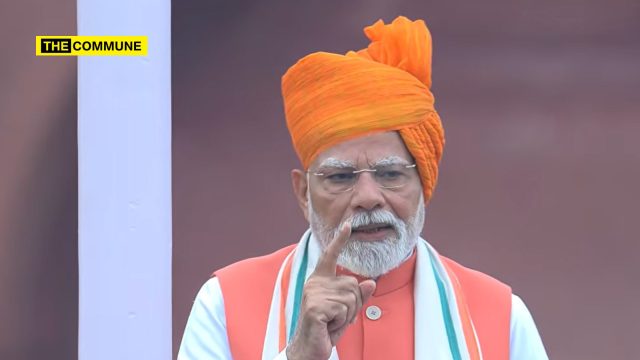
Addressing the nation from the Red Fort, PM Modi said, “We have decided to form a task force for next-generation reform. Our aim now is to bring about all kinds of reforms.”
In a festive note, the Prime Minister promised a “double Diwali” for citizens this year, hinting at a major economic announcement.
“This Diwali, I am going to celebrate a double Diwali for you. The countrymen are going to get a big gift, there will be a drastic cut on GST on common household items,” he said, signalling sweeping changes in the Goods and Services Tax (GST) regime.
PM Modi emphasised the urgency of reviewing GST rates, calling it the “need of the hour”.
He announced that the government is preparing a new-generation GST reform aimed at reducing the tax burden on common citizens.
“GST rates will be reduced drastically. Tax will be reduced for the common people,” he declared.
The announcement comes as GST marks its eighth anniversary, having evolved into one of India’s most significant post-independence tax reforms. Since its launch in 2017, GST has unified the country’s indirect tax structure and significantly improved the ease of doing business, especially for small and medium enterprises.
PM Modi’s remarks align with recent data showing record GST collections and growing support among businesses for further simplification.
The proposed reforms are expected to streamline rate structures, enhance transparency, and make the system more equitable.
The Prime Minister’s dual message — of structural reform and festive optimism — sets the tone for a transformative phase in India’s economic policy.
As the task force begins its work, expectations are high for a GST overhaul that delivers relief to consumers while sustaining revenue growth.
With Diwali approaching, citizens and businesses alike await the “big gift” Modi has promised — a reimagined tax system that could redefine India’s fiscal area.
–IANS
Subscribe to our channels on Telegram, WhatsApp, and Instagram and get the best stories of the day delivered to you personally.
In a significant Independence Day address, Prime Minister Narendra Modi unveiled the Rs one lakh crore Viksit Bharat Rozgar Yojana, a nationwide employment initiative aimed at transforming job opportunities for India’s youth.
“There is big news for the youth of the country,” PM Modi declared from the Red Fort. “On this day, we are starting and implementing a scheme of Rs 1 lakh crore for the youth of my country,” he said.
The scheme, effective from August 15, is designed to incentivise both first-time employees and private sector employers. Under the initiative, any young person securing their first job in the private sector will receive Rs 15,000 directly from the government.
“The son or daughter who gets their first job will be given Rs 15,000 by the government,” PM Modi announced, emphasising the scheme’s role in easing the transition into formal employment.
To further stimulate job creation, companies that generate sustained employment will be rewarded with financial incentives. Employers hiring additional staff will be eligible for up to Rs 3,000 per month per new employee, with extended benefits for the manufacturing sector. The scheme is expected to create approximately 3.5 crore new jobs over the next two years, with 1.92 crore beneficiaries entering the workforce for the first time.
The Ministry of Labour & Employment, in collaboration with the Employees’ Provident Fund Organisation (EPFO), will oversee implementation. PM Modi framed the initiative as a cornerstone of the Viksit Bharat mission, aimed at building a developed and inclusive India by 2047.
“This is my gift to the youth — a double Diwali celebration,” he said, promising economic empowerment and national progress. With its dual focus on youth and enterprise, the Viksit Bharat Rozgar Yojana marks one of the most ambitious employment-linked reforms in recent years. As registration opens, millions of young Indians and businesses are expected to benefit from this transformative push toward job-led development.
-IANS
Subscribe to our channels on Telegram, WhatsApp, and Instagram and get the best stories of the day delivered to you personally.
Punjab Police have foiled a major terror plot being orchestrated by Pakistan’s ISI-backed terrorist Harwinder Rinda with the arrest of two operatives of Babbar Khalsa International (BKI) terror module, said Director General of Police (DGP) Gaurav Yadav here on 14 August.
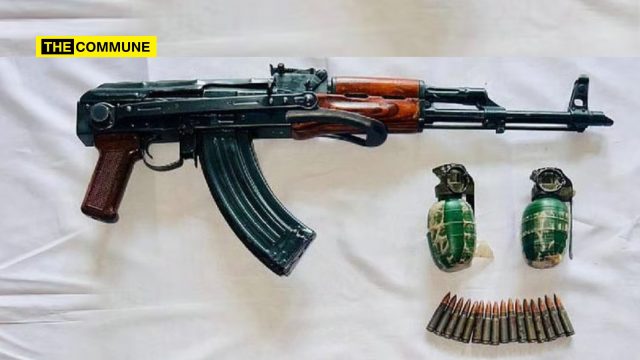
Those arrested have been identified as Harpreet Singh, alias Preet, a resident of Bhullar village in Tarn Taran, and Gulshan Singh, alias Nandu, a resident of Rampura village in Amritsar. Police teams have recovered two 86P hand grenades and one 9MM pistol along with five cartridges from their possession.
The development comes ahead of Independence Day and two days after Punjab Police busted a BKI terror module with the arrest of five operatives, including three juveniles, from Tonk and Jaipur districts of Rajasthan and recovered one 86P hand-grenade and one .30 bore pistol from their possession. DGP Yadav said preliminary investigations have revealed that the accused were working under the directions of their foreign-based handlers sitting in Britain, the US and Europe. Probe has also revealed that the arrested accused were actively conspiring to target government buildings and police establishments using grenades to disturb the peace and harmony of the border state, he said.
The DGP said further investigations are ongoing to establish linkages in this case. Assistant Inspector General (Ferozepur) Gursewak Singh Brar said that following human intelligence, teams from Counter Intelligence launched an operation and arrested suspects, Harpreet Singh and Gulshan Singh from Talwandi Bhai in Ferozepur. He said police have obtained remand of the accused, and further interrogation is expected to reveal more details regarding their contacts within and outside the country and their intended targets. A case under Section 25 of the Arms Act and Sections 3, 4, and 5 of the Explosive Substances Act has been registered at the police station in Fazilka.
-IANS
Subscribe to our channels on Telegram, WhatsApp, and Instagram and get the best stories of the day delivered to you personally.
The recent wave of admiration showered by the Dravidian ecosystem on actor Suriya and his Agaram Foundation, with Sun TV giving it prime coverage and notable Periyarist and anti-Hindu leaning figures like Kamal Haasan participating in the event, had many observers suspecting something strategic was underway. Now, the political intent behind the move appears to be gradually unfolding.
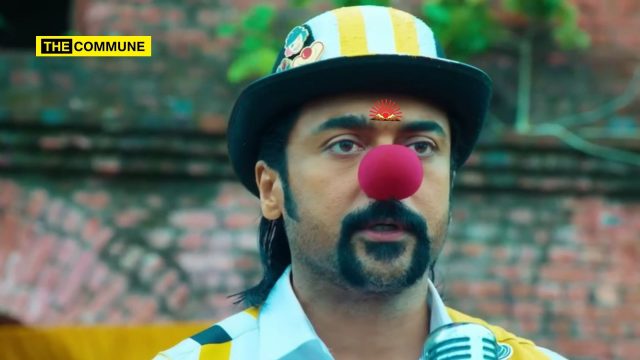
According to emerging reports, the DMK is considering fielding actor Suriya in the 2026 Tamil Nadu Assembly elections, potentially from a constituency in Coimbatore, with the goal of weakening the AIADMK-BJP alliance in the Kongu belt a region traditionally challenging for the DMK, and also to counter part-time politician Vijay’s TVK.
Historically, the DMK has formed the government six times: in 1967, 1971, 1989, 1996, 2006, and most recently in 2021. However, except for the 1967–71 period, the party has never secured back-to-back victories in state elections. Opposition parties frequently use this as a point of criticism, framing the DMK as incapable of sustaining long-term electoral momentum.
To counter this narrative and aim for a second consecutive term, Chief Minister M.K. Stalin is reportedly going all-in for 2026. Though the AIADMK is currently fragmented and lacks a cohesive alliance, the BJP tie-up and rising popularity of actor turned politician Vijay’s Tamilaga Vettri Kazhagam (TVK), especially in western districts, pose a genuine threat. Some surveys even suggest TVK could garner over 10% of the vote share.
In light of this, DMK is targeting a sweeping majority possibly over 200 seats. However, the northern and western regions remain a political hurdle. With PMK’s internal rifts offering a potential opening in the north, DMK is also focused on shoring up support in the Kongu zone, where the party has historically struggled.
Previously, the party inducted Divya Sathyaraj, daughter of actor Sathyaraj to appeal to voters in the Kongu region. Now, attention has turned to actor Suriya, whose family including Sivakumar, Jyothika, and Karthi has a strong public image and wide reach, particularly in the region.
Sources suggest that if Suriya declines to contest, the DMK may consider fielding another member of the Sivakumar family. This should explain the recent Agaram Foundation PR event and also Suriya’s special show in Zee Tamizh where beneficiaries gave emotional testimonies.
Adding to the calculation is the Gounder community background of Sivakumar, which is a dominant caste in the Kongu region. The DMK reportedly believes this caste factor, combined with celebrity appeal, could help counter both the AIADMK-BJP alliance and the rising influence of Vijay’s TVK in districts like Coimbatore, Erode, Tiruppur, Salem, Namakkal, Karur, and Nilgiris.
All signs point to the DMK preparing a major electoral move, and actor Suriya or someone from his family might just be the next political trump card.
The Supreme Court on 14 August expressed caution over an early hearing on a clutch of applications seeking a time-bound restoration of Jammu and Kashmir’s (J&K) statehood.
A Bench comprising Chief Justice of India B.R. Gavai and Justice K. Vinod Chandran pointed to the “ground realities” and the recent Pahalgam terror attack as it acceded to the Centre’s request to list the matter after eight weeks.
“You will also have to take into consideration the ground realities. You cannot ignore what has happened in Pahalgam,” the CJI Gavai-led Bench told the applicants seeking an earlier hearing. The apex court was hearing applications arguing that the continued delay in restoring statehood is “gravely affecting the rights of the citizens of Jammu and Kashmir and also violating the idea of federalism”. The applications contended that the failure to restore statehood within a time-bound framework amounts to a violation of federalism, which forms part of the Basic Structure of the Constitution.
“It has been 21 months since the Article 370 judgment. There has been no movement towards the restoration of statehood,” submitted senior advocate Gopal Sankaranarayanan, adding that the Constitution Bench had trusted the Union government when the Solicitor General assured it that statehood would be restored.
Solicitor General (SG) Tushar Mehta, questioning the maintainability of the applications, urged the apex court to consider the “peculiar position” in J&K and sought that the pleas be listed after eight weeks, saying this was not the “correct stage” to consider the matter. “These applications are not maintainable. We had assured two things: The election would be held, and thereafter, statehood. Your lordships are aware of the peculiar position emerging from this part of our country. There are several considerations,” said SG Mehta.
“I don’t know why, at this stage, this issue is agitated, but list it after 8 weeks. I will take instructions. My prayer is for eight weeks because this particular stage is not the correct stage to muddy the water,” Mehta added. After hearing the submissions, the CJI Gavai-led Bench sought the Union government’s stand on the matter and posted it for hearing after eight weeks.
In the ‘Article 370 of the Constitution’ verdict, a 5-judge Constitution Bench, headed by then CJI D.Y. Chandrachud, had left open the question of whether the Parliament can extinguish the character of statehood by converting a state into one or more Union Territories, relying on an oral statement made on the Centre’s behalf that statehood would be restored to J&K. In the course of the oral hearing, the Solicitor General, the second-highest law officer of the Centre, had submitted that the Union Home Ministry cannot give any exact timeframe and it would take “some time” for the restoration of statehood in J&K.
-IANS
Subscribe to our channels on Telegram, WhatsApp, and Instagram and get the best stories of the day delivered to you personally.
Reiterating that Indus Waters Treaty (IWT) stands in abeyance, India on 14 August rejected the recent award of The Hague-based Permanent Court of Arbitration (PCA) asserting that its rulings are beyond jurisdiction, lack legal basis and hold no significance to India’s rightful use of waters.
“India has never accepted the legality, legitimacy, or competence of the so-called Court of Arbitration. Its pronouncements are therefore without jurisdiction, devoid of legal standing, and have no bearing on India’s rights of utilisation of waters. India also categorically rejects Pakistan’s selective and misleading references to the so-called award,” said the Ministry of External Affairs (MEA) spokesperson Randhir Jaiswal while addressing a regular press briefing in New Delhi on 14 August.
“As reiterated earlier, the Indus Waters Treaty stands in abeyance by a sovereign decision of the Government of India, taken in response to Pakistan’s continued sponsorship of cross-border terrorism, including the barbaric Pahalgam attack,” he added. The MEA had announced that India has never recognised the existence in law of the so-called Court of Arbitration, and the country’s position has all along been that the constitution of this so-called arbitral body is in itself a serious breach of the IWT. Consequently any proceedings before this forum and any award or decision taken by it are also for that reason illegal and per se void, New Delhi has maintained.
Exercising its rights as a sovereign nation under international law, India has placed the IWT in abeyance until Pakistan credibly and irrevocably abjures its support for cross-border terrorism.
According to the MEA, until the treaty is in abeyance, India is no longer bound to perform any of its obligations. It also stressed that no Court of Arbitration, “much less this illegally constituted arbitral body which has no existence in the eyes of law”, has the jurisdiction to examine the legality of India’s actions in the exercise of its rights as a sovereign. “Today, the illegal Court of Arbitration, purportedly constituted under the Indus Waters Treaty 1960, albeit in brazen violation of it, has issued what it characterizes as a ‘supplemental award’ on its competence concerning the Kishenganga and Ratle hydroelectric projects in the Indian Union Territory of Jammu and Kashmir. India, therefore, categorically rejects the so-called supplemental award as it has rejected all prior pronouncements of the body,” the MEA stated after the Court of Arbitration issued a supplementary award in June.
“This latest charade at Pakistan’s behest is yet another desperate attempt by it to escape accountability for its role as the global epicentre of terrorism. Pakistan’s resort to this fabricated arbitration mechanism is consistent with its decades-long pattern of deception and manipulation of international forums,” the Ministry had added.
-IANS
Subscribe to our channels on Telegram, WhatsApp, and Instagram and get the best stories of the day delivered to you personally.
The Akhil Bharatiya Vidyarthi Parishad (ABVP) on 14 August 2025 observed Partition Horrors Remembrance Day across multiple college campuses in Kerala, despite a directive from the CPI-M-led state government prohibiting the commemoration.
The day marks the anniversary of the 1947 division of India and Pakistan along communal lines, which resulted in mass displacement, violence, and suffering. ABVP said the initiative aimed to bring to light the “traumatic and obscured” stories of Partition for the student community, and to raise awareness about what it described as the “vested interests” behind the event.
According to ABVP, the state government’s restrictions were imposed in defiance of Kerala Governor Rajendra Vishwanath Arlekar’s (he is also the Chancellor) instructions to hold commemorative events. The organisation also alleged that its members faced hostility from Left-affiliated student groups, interference from left-leaning teachers’ associations, and opposition from both the state government and the Congress-led UDF.
ABVP Kerala State Secretary E.U. Eswaraprasad called the partition “one of the most horrendous and frightening incidents” in the nation’s history, claiming it was “orchestrated for the vested interests of some political leaders.” He accused the Congress and Left parties of concealing the true history of Partition to serve “appeasement politics”. “The fragmentation of Akhand Bharat led to the persecution of millions and left deep trauma. Despite the Kerala government’s authoritarian directive, we successfully held events across campuses to tell the real stories of partition,” Eswaraprasad said.
ABVP National Secretary Shravan B. Raj said the division of the country was “not merely a partition of land” but left “deep wounds in the hearts of our people”. He alleged that “power-hungry leaders” were responsible for leading the nation into one of its darkest chapters. “Despite opposition from both the ruling dispensation and the UDF, the student community in Kerala engaged with immense interest, eager to learn the precarious history of partition,” Raj said.
Partition Horror Remembrance Day is observed nationwide on 14 August to remember the victims and the human cost of the subcontinent’s division, as well as to foster awareness about its historical significance.
-IANS
Subscribe to our channels on Telegram, WhatsApp, and Instagram and get the best stories of the day delivered to you personally.
Alarming revelations have emerged regarding several colleges in Tamil Nadu allegedly operating without proper university affiliations. These institutions are reportedly offering unapproved courses, effectively jeopardizing students’ futures by wasting their time, money, and effort. Shockingly, despite clear violations, little to no action appears to have been taken.
One such case is that of Maharaja Health Institute, located in Kempatty Colony near Kinathukadavu, Coimbatore district. Reports indicate that the college lacks proper recognition, yet continues to offer courses such as Ayurveda and surgery across four departments, with over 300 students currently enrolled.
Students raised concerns about various irregularities at the institution. Although a government medical team inspected the college two weeks after the complaints, the matter has been kept under wraps. Notably, no major Dravidianist media outlets have reported on this issue, raising further suspicion of a possible cover-up.
The college allegedly claims affiliation with Sunrise University and Singhania University, both based in Rajasthan. However, when students directly contacted Sunrise University, officials there categorically denied having granted any affiliation to institutions in Tamil Nadu, stating they operate only within Rajasthan.
Disturbed by this response, students submitted a petition to the Coimbatore District Collector, demanding clarification on the college’s accreditation status and calling for a thorough investigation.
The students said, “We have come to the Coimbatore District Collector’s office with over 60 students from Maharaja Institution of Medical Science, operating in Kinathukadavu, Coimbatore district. The reason for our visit is that in 2023, students approached Maharaja Institution College to join Allied Health Science courses. When they approached, the college claimed to be affiliated with Singhania University, Rajasthan. Students joined this college because its fees were lower compared to other colleges.
However, within just four months of joining, the college administration stated that they were no longer affiliated with Singhania University, Rajasthan, and had now become affiliated with Sunrise University, Rajasthan. This raised suspicions among the students. The students immediately asked the college administration to show them the approval and recognition documents, but the college firmly refused to show any such documents to the students. This further deepened the students’ suspicions.
Immediately, the students realized that while the college’s name is Maharaja Institution of Medical Science, the ID cards issued to these students stated ‘Sunrise University, Rajasthan’. Due to this, the students contacted Sunrise University, Rajasthan, to inquire, and that university firmly stated that they do not have any branch in South India. Following this, the students contacted the University Grants Commission (UGC). The UGC unequivocally stated that they have not granted recognition to this college. After this, the students discovered that this is a fraudulent college. When students raised questions about this, most of the students present were those who had completed their second year and were about to enter their third year. However, they still have not received the results for the second semester of their first year. In their first semester, they had a total of eight subjects, but the college only conducted exams for just three subjects. Yet, the mark sheets they received fraudulently printed marks for all eight subjects. The future of these students is now uncertain. In addition to these students, over 300 more students are still studying at that college. We do not know with what audacity this college is conducting admissions for the 2025-26 academic year. On behalf of ASF, the demands being put forth to the Government of Tamil Nadu are:
The college fees paid by the over 300 affected students over these years should be refunded.
The students should be transferred to recognized colleges.
To prevent more students from joining such colleges and jeopardizing their lives, the ongoing admissions for this year should be immediately stopped. “
தமிழ்நாட்டில் இப்படி ஒரு போலி கல்லூரி
கல்வி அமைச்சருக்கு தெரியவே தெரியாது
திமுக தொடர்பு இல்லை
இது என்ன எடுத்துக்கொண்டு ஓட லேகிய கடையா, இது மருத்துவ கல்லூரிடா
என்ன ஒரு அருமையான திராவிட விடியல். திருடி ஊழல் செய்து சம்பாதித்து அதை வைத்து பணம் கொடுத்து ஓட்டு வாங்கி மக்களை ஏமாற்றி… pic.twitter.com/SiT6jhJnUJ
— Saravanaprasad Balasubramanian (Modi ka Pariwar) (@BS_Prasad) August 14, 2025
Following the complaint, a team led by Dean Nirmala from Coimbatore Government Hospital conducted an inspection of the Maharaja Health Institute. Dean Nirmala confirmed the visit and stated that a report would be submitted to the District Collector.
As the legitimacy of the Maharaja Health Institute remains in question, so does the academic future of the 300+ students enrolled there, who now find themselves in an uncertain and distressing situation.
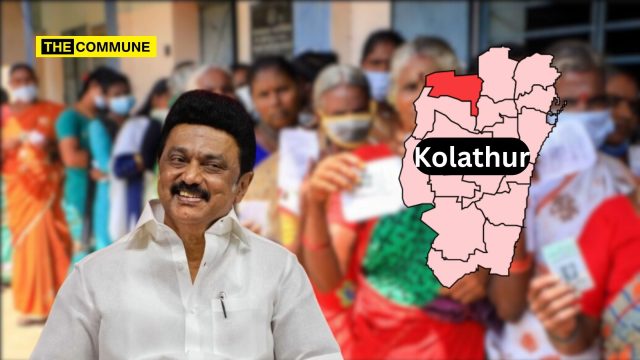
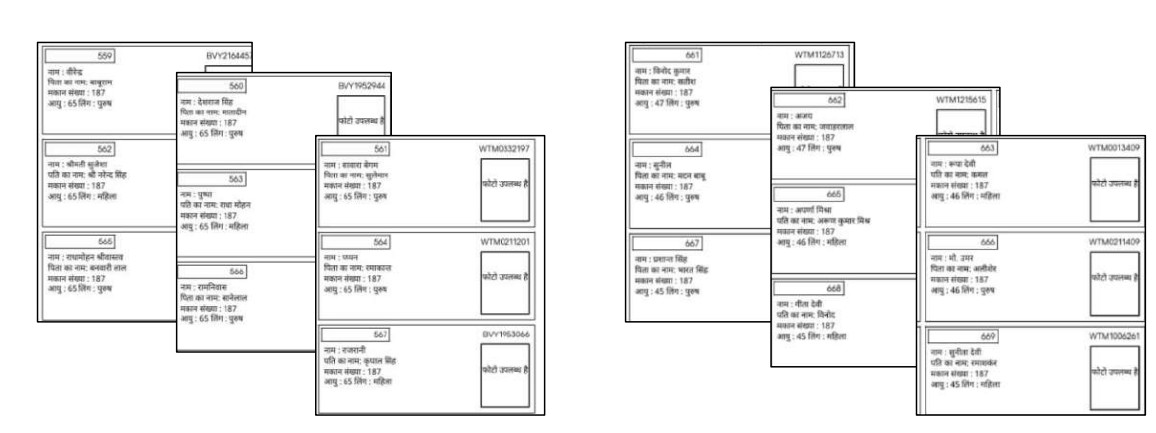
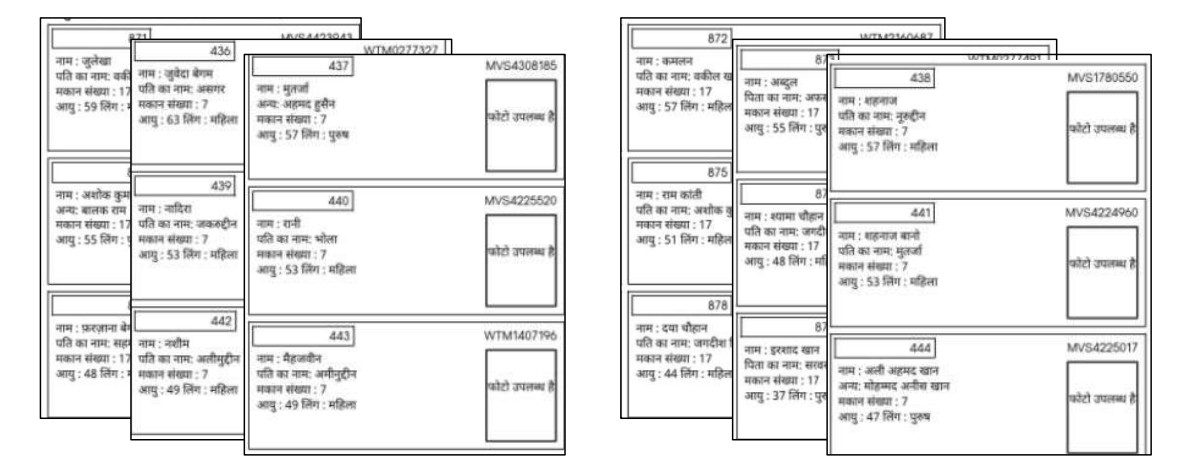
In a fresh twist to Congress’s ongoing ‘Vote Chori’ controversy, new allegations have surfaced targeting Tamil Nadu Chief Minister M.K. Stalin’s constituency. A staggering 19,476 questionable voters have been identified in Kolathur, raising serious concerns. Among them, 9,133 are linked to fake addresses, 4,379 are suspected duplicate entries, and 5,964 belong to mixed-religion households, a revelation that has sparked a significant uproar in the political landscape.
KOLATHUR (MK Stalin) – 19,476 QUESTIONABLE VOTERS
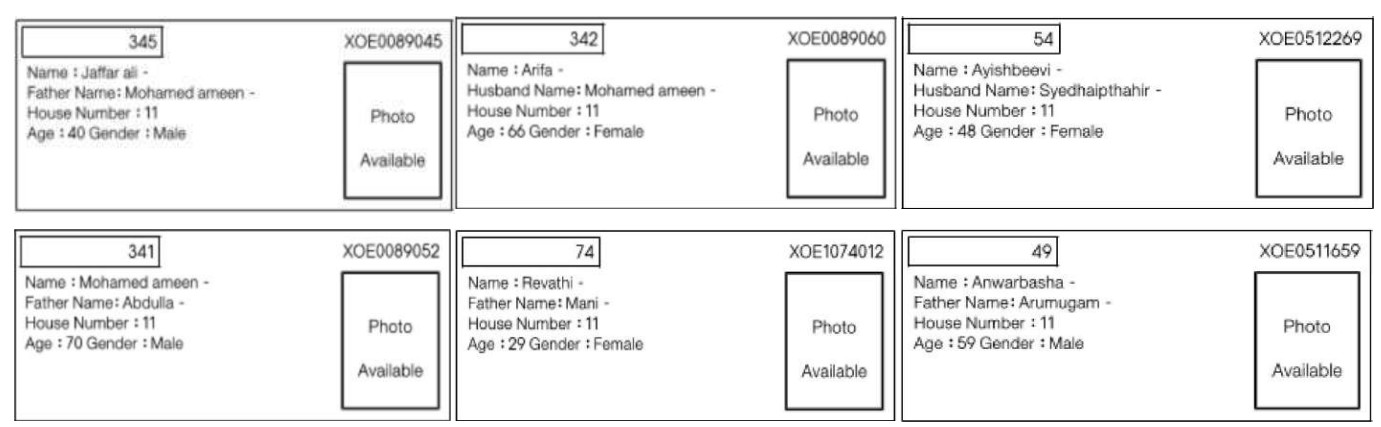
9,133 Voters with Fake Addresses: 30 voter IDs registered at House No 11, booth 84, Kolathur Assembly.
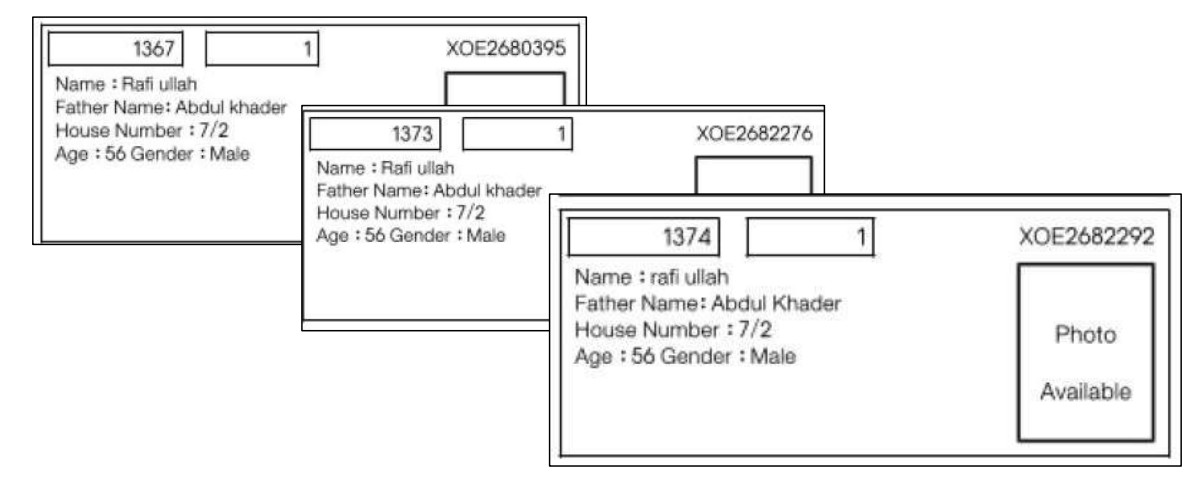
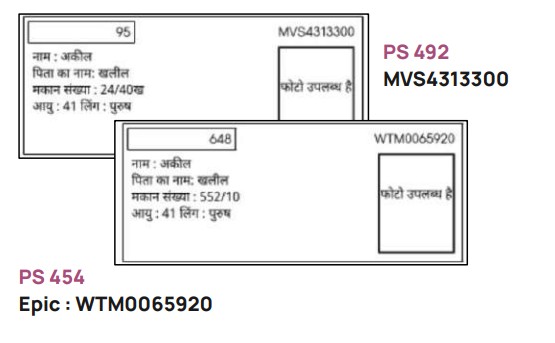
4,379 Duplicate Voters: RAFI ULLAH appears three times with different EPIC numbers in booth 157 of Kolathur.
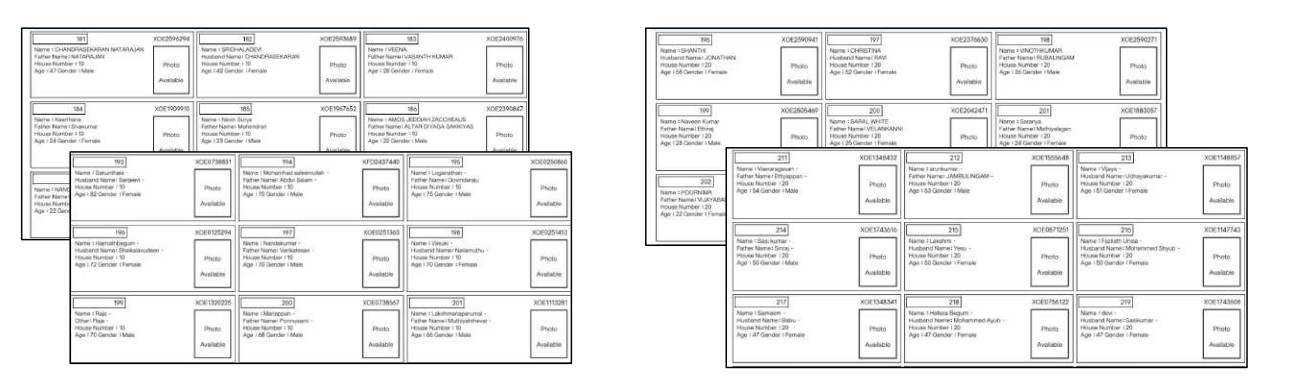
5,964 Voters from Mixed Households: Multiple religions registered in:
House No 10, booth 140, Kolathur (80 voter IDs)
House No 20, booth 187, Kolathur (62 voter IDs)
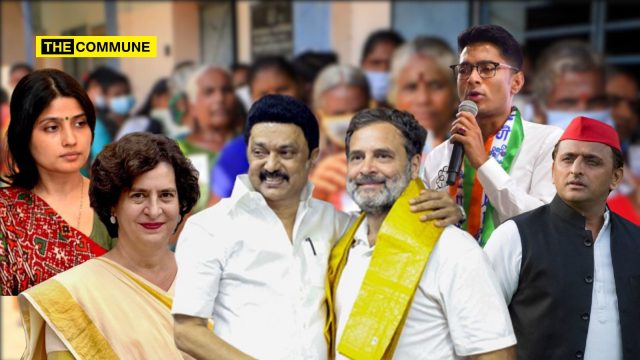
This revelation emerges alongside similar exposes involving other I.N.D.I. Alliance members, pointing to a concealed and controversial vote bank operating across multiple opposition strongholds. Constituencies under the spotlight include Wayanad (Rahul Gandhi and Priyanka Vadra), Raebareli (Rahul Gandhi), Diamond Harbour (Abhishek Banerjee), Kolathur (M.K. Stalin), Kannauj (Akhilesh Yadav), and Mainpuri (Dimple Yadav), where patterns of questionable voter entries have come to light fueling allegations of systematic electoral manipulation.
Subscribe to our channels on Telegram, WhatsApp, and Instagram and get the best stories of the day delivered to you personally.
A shocking turn has emerged in Congress’s “Vote Chori” allegations against the Election Commission of India colluding with the BJP. The latest developments suggest that the party, which accused the Election Commission (ECI) of orchestrating the largest electoral theft may have inadvertently unearthed embarrassing truths about itself and its own leaders since independence. This current issue spans multiple constituencies: in Wayanad (Rahul Gandhi, Priyanka Vadra), Rae Bareli (Rahul Gandhi), Diamond Harbour (Abhishek Banerjee), Kolathur (M.K. Stalin), and Kannauj/Mainpuri (Akhilesh Yadav, Dimple Yadav).
Historically, Congress has repeatedly been implicated in manipulating election outcomes:
1952: Allegedly engineered Dr. Ambedkar’s electoral defeat alongside Communist support.
1957: Accused of orchestrating a booth takeover in Begusarai.
1967: Won 61 seats in Jammu & Kashmir via uncontested wins and disqualifying rival nominations.
1975: Indira Gandhi’s 1971 Rae Bareli victory was overturned due to confirmed electoral fraud—Justice Sinha found her guilty on two counts.
1987: Congress and the National Conference were accused of rigging the elections in Kashmir.
The Nehru–Gandhi family has frequently turned against institutions and voters when electoral outcomes didn’t favor them:
After losing in 1977, Indira Gandhi called the electorate “a bunch of fools.”
Following the 1989 defeat, Rajiv Gandhi blamed the faulty ballot papers.
Rahul Gandhi appears to be following the same playbook: launching unsubstantiated claims to deflect defeat, refusing to back them with evidence or formal declarations, failing to file official complaints despite EC invitations, and undermining democracy with misinformation. For instance, neither the INC nor the RJD lodged any official protest with the Election Commission in Bihar.
Despite repeated invitations from the Election Commission to discuss concerns regarding the voter roll, Rahul Gandhi failed to appear. No formal evidence has been submitted by Congress, nor has any candidate filed an electoral petition under Section 80 of the Representation of the People Act to challenge the results.
Several of his claims have been contradicted by available data:
New Voter Additions in Maharashtra: Historical trends show high voter increases in both 2004 (4.7%) and 2009 (4.1%), which favored the UPA, while the 2024 increase was actually lower (4.4%).
Late Evening Voting Surge: Alleged post-5 PM surges are not supported by data before 5 PM averaged 58 lakh/hr, while after 5 PM dropped to 32.5 lakh/hr. All INC booth agents signed Form 17C without dispute, and no election petitions were filed.
Karnataka Voter Roll: Contradicted by Congress’s own state minister, K.N. Rajanna, who reminded that the voter list was prepared under a Congress-run government—pointing to inconsistency in Rahul Gandhi’s claims.
Rahul also criticized the BJP’s win but remained silent about the Congress’s 2024 Lok Sabha performance in Dhule, Maharashtra:
BJP secured about 5.75 lakh votes across 5 of 6 assembly seats, while INC managed 3.84 lakh.
BJP led by 1.9 lakh votes in those seats.
In Malegaon Central, largely supported by minorities, INC won by a massive margin of 1,94,327 votes (94.52%), with BJP only at 4,542 votes (2.21%).
So why this huge drama around “Vote Chori”? Many believe it is a tactic to divert attention from the more pressing issue: the “ghuspaithiya vote bank” a term coined to describe alleged opposition strategies that involve appeasement politics, engineered infiltrations, and the protection of illegal voters.
Key methods allegedly used in this strategy include:
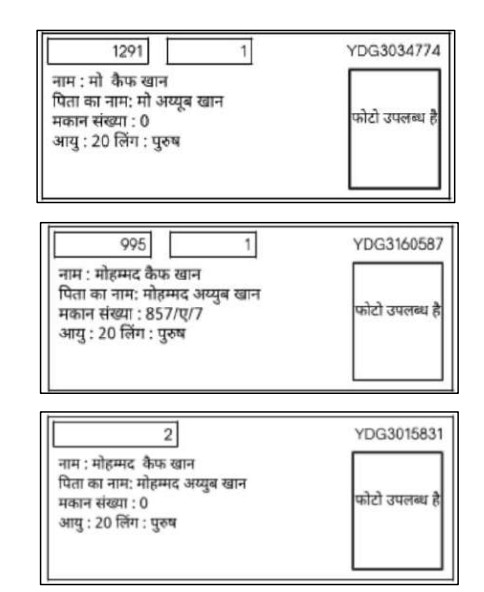
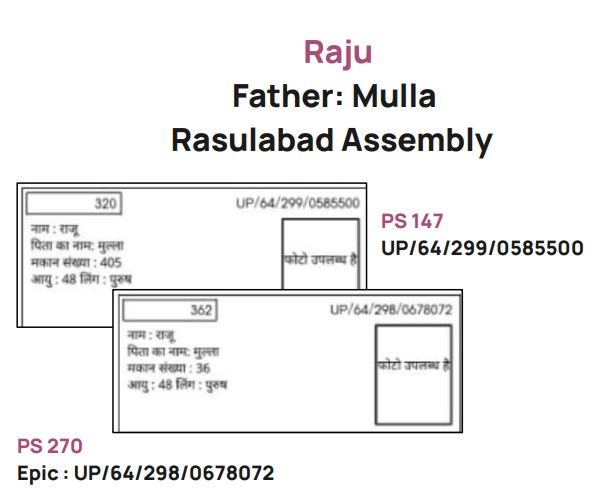
Duplicate Voters – Same people registered across multiple polling booths (e.g., Mohd Kaif Khan in Rae Bareli).
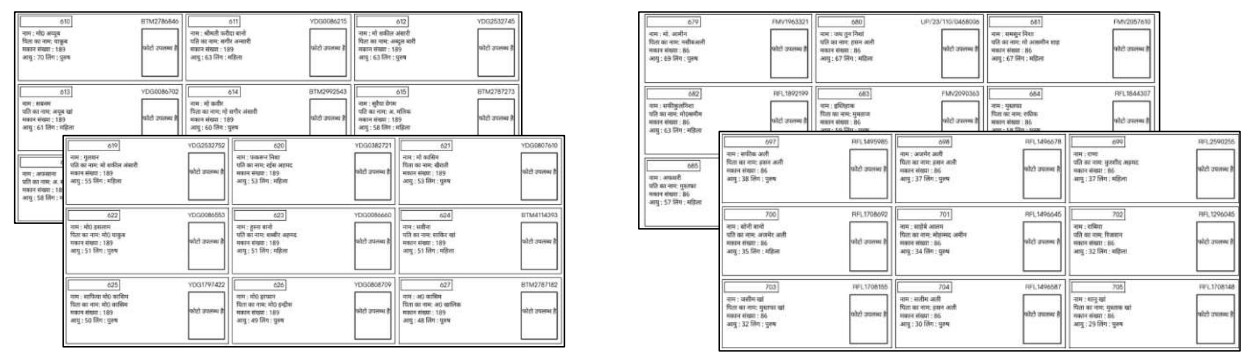
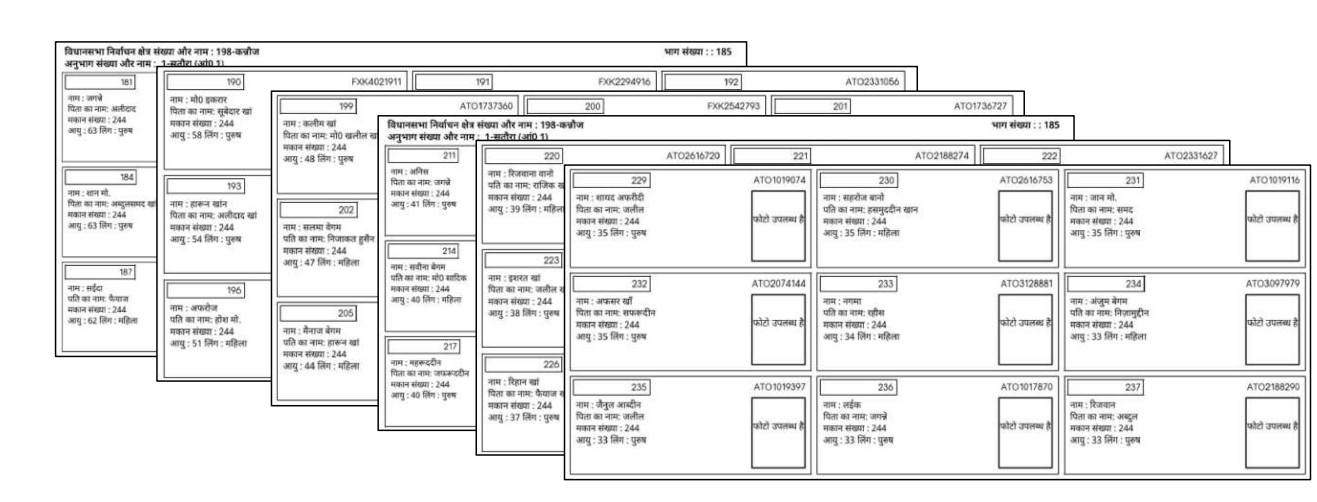
Fake Addresses – Multiple voter IDs tied to a single address (e.g., House No. n0011 in Diamond Harbour or House No. 189 in Rae Bareli).
Fake Relatives – Shifting identity of relatives across years (e.g., Khurshid Alam’s father’s name changing across voter rolls in Diamond Harbour).
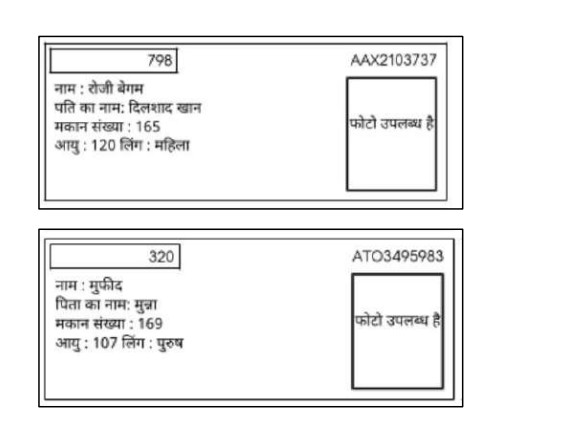
Manipulated Ages – Extremely elderly new voters registering for the first time (e.g., voters aged 102, 101, and 99 in Wayanad’s Nilambur).
Mass Voter Additions – Booths with spiking voter numbers over a short period (in Diamond Harbour, 301 of 1,724 booths saw over 15% growth in four years; TMC strongholds saw gains in the range of 32–92%).
It appears that whenever Congress shouts “Vote Theft,” they are essentially describing their own strategy. The opposition is relying on the “Ghuspaithiya” (infiltrator) vote bank to ensure their political survival. This involves compromising national security and usurping the legitimate mandate of genuine Indian citizens. A detailed analysis of six constituencies governed by the opposition has uncovered this Ghuspaithiya Vote Bank, specifically in Wayanad (Rahul Gandhi and Priyanka Vadra), Raebareli (Rahul Gandhi), Diamond Harbour (Abhishek Banerjee), Kolathur (MK Stalin), Kannauj (Akhilesh Yadav), and Mainpuri (Dimple Yadav).
A Deep Dive into 6 Opposition Strongholds Reveals the Scale:
WAYANAD – 93,499 QUESTIONABLE VOTERS
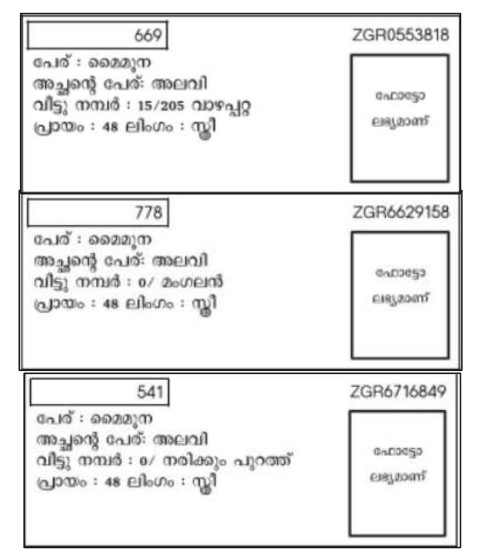
20,438 Duplicate Voters: For example, Maimoona appears multiple times in different booths within the Eranad Assembly:
Booth #135: EPIC ZGR0553818
Booth #115: EPIC ZGR6629158
Booth #152: EPIC ZGR6716849
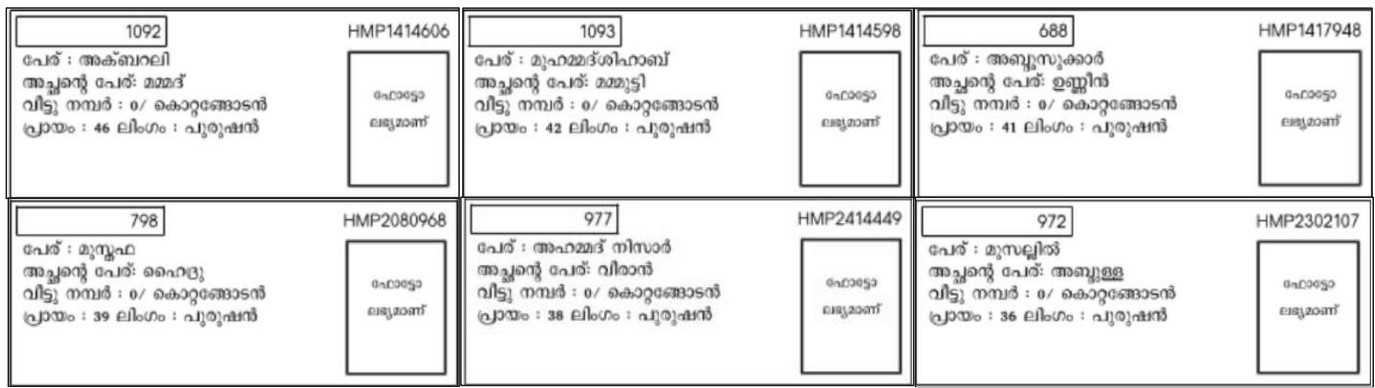
17,450 Voters with Fake Addresses: There are 52 voter IDs registered at House No: o/ Kotangodaan, booth 52, Wandoor Assembly.
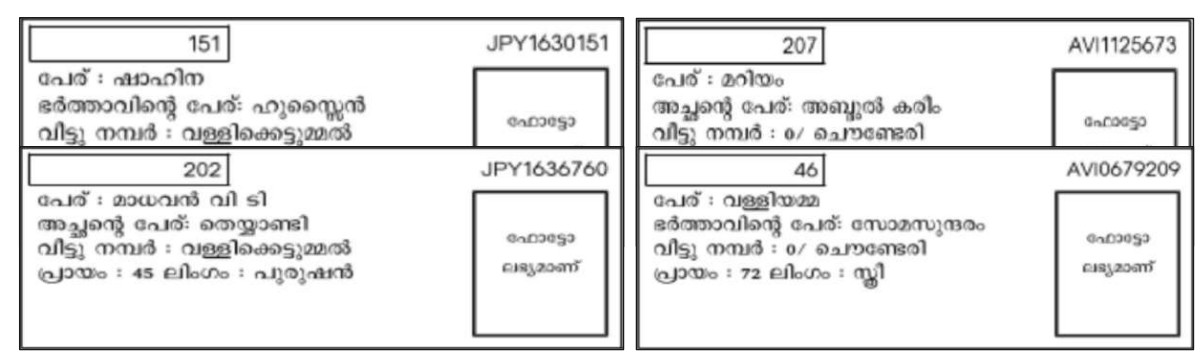
4,246 Voters from Mixed Households: Voters belonging to multiple religions are registered in the same households such as:
House No: Vallikattummal, booth 24, Thiruvambady Assembly
House No: o/Chaunderi, booth 41, Kalpetta Assembly
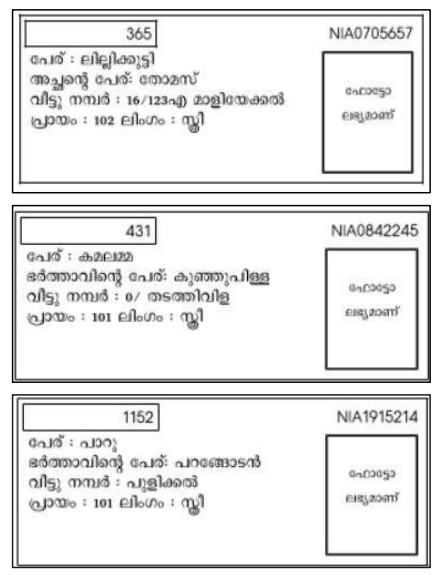
51,365 Voters Added via Mass Addition: Instances of very elderly voters recently added include:
Lillikutty, age 102, booth 25, Nilambur (EPIC: NIA0705657)
Kamalamma, age 101, booth 90, Nilambur (EPIC: NIA0842245)
Paru, age 101, booth 97, Nilambur (EPIC: NIA1915214)
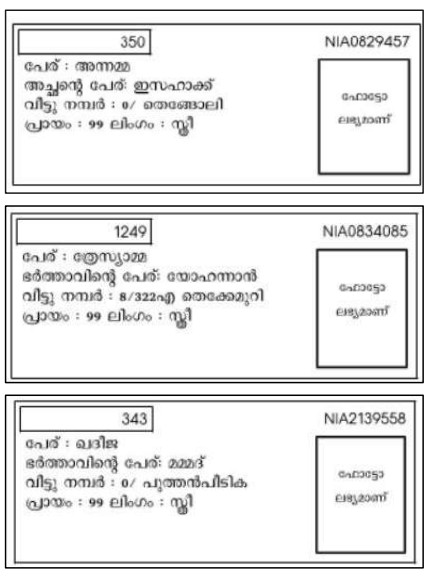
Annamma, age 99, booth 56, Nilambur (EPIC: NIA0829457)
Thresiamma, age 99, booth 56, Nilambur (EPIC: NIA0834085)
Khadeeja, age 99, booth 46, Nilambur (EPIC: NIA2139558)
Following his defeat in Uttar Pradesh, Rahul Gandhi shifted focus to Kerala, aiming to win by depending on votes from a single community. The voter rolls there are plagued with irregularities such as duplicate registrations at identical addresses and bulk entries from one community. Both UDF and LDF have contributed to Islamic radicalization in Kerala. Now, as BJP challenges them, they accuse BJP of voter fraud in response to their losses. Will Priyanka Gandhi step down after allegations of “Vote Chori” (vote theft) in Wayanad?
RAE BARELI – 200,089 QUESTIONABLE VOTERS
19,512 Duplicate Voters: For example, Mohd Kaif Khan appears in multiple booths in Rae Bareli Assembly:
Booth #83: EPIC YDG3034774
Booth #151: EPIC YDG3160587
Booth #218: EPIC YDG3015831
71,977 Voters with Fake Addresses: Examples include:
47 voter IDs at House No 189, booth 131, Rae Bareli Assembly
31 voter IDs at House No 86, booth 32, Harchandpur Assembly
15,853 Voters with Mixed Households: Multiple religions registered at:
House No 7, booth 292, Harchandpur Assembly
House No 4, booth 232, Sareni Assembly
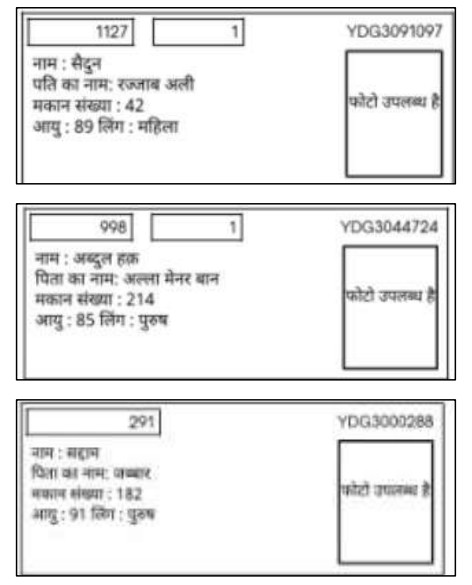
92,747 Voters via Mass Addition: Newly added elderly voters include:
Saidun, age 89 (EPIC: YDG3091097)
Abdul Haq, age 85 (EPIC: YDG3044724)
Saddam, age 91 (EPIC: YDG3000288)
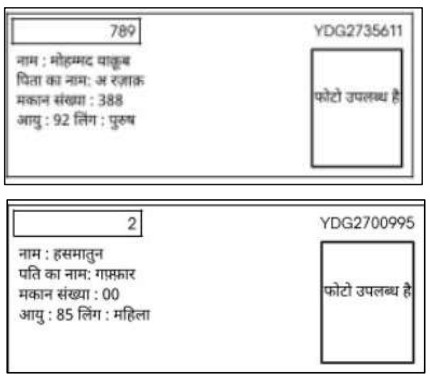
Mohd Yaqub, age 92 (EPIC: YDG2735611)
Hasmatun, age 85 (EPIC: YDG2700995)
The hidden reality behind the Gandhi stronghold reveals strange anomalies in the voter lists: multiple people registered at one house and many with nonexistent addresses. Investigations uncovered over 52,000 fake birth certificates linked to bogus locations. Evidence indicates these fake identities were fabricated to build a loyal voter base for the future. Rae Bareli’s consistent wins may not be solely due to trust or charisma but possibly aided by manipulation of the voter base. This story reflects less about political legacy and more about how power, when held too tightly, can distort the system.
Will Rahul Gandhi resign following accusations of “Vote Chori” in Rae Bareli?
DIAMOND HARBOUR – 259,779 QUESTIONABLE VOTERS
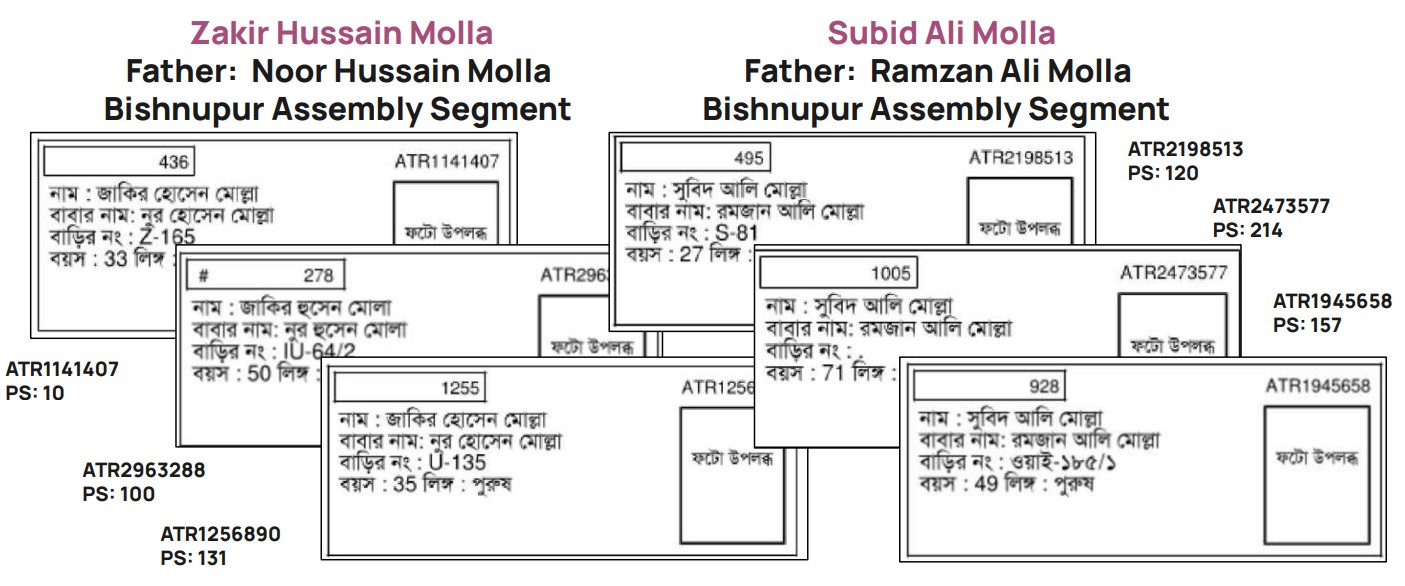
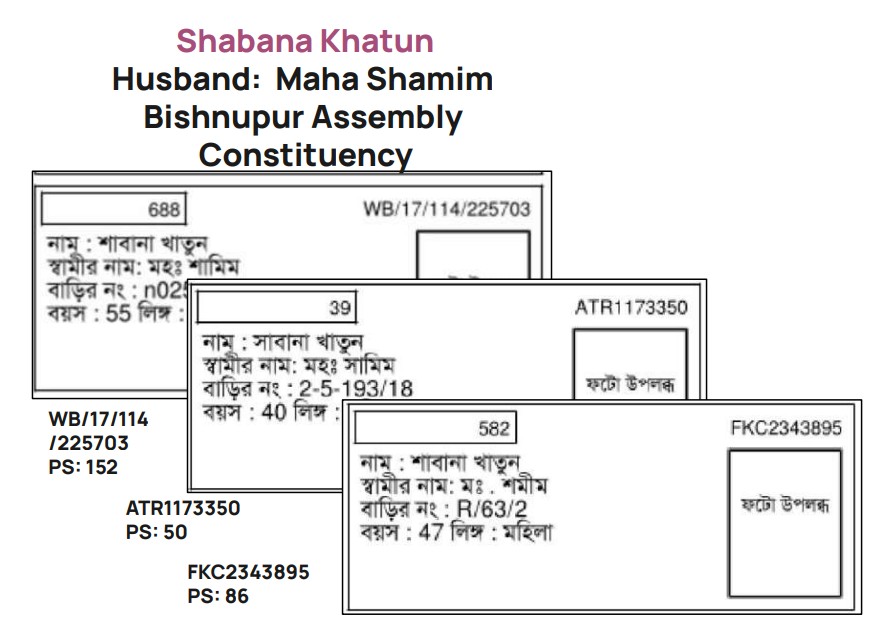
3,613 Duplicate Voters: Examples include:
Zakir Hussain Molla, Bishnupur Assembly
Subid Ali Molla, Bishnupur Assembly
Shabana Khatun, Bishnupur Assembly
155,365 Voters with Fake Addresses: Examples include:
28 voter IDs at House No n001, booth 265, Diamond Harbour Assembly
111 voter IDs at House No n0097, booth 66, Falta Assembly
290 Voters with Fake Relatives: Khurshid Alam’s father’s name changed over the years in Diamond Harbour rolls. Abdul Majeed (unknown year) → Tojdel Laskar (2024), EPIC: FLL3178274. This tactic of using fake or “rented” parents is common for infiltrators to enter electoral rolls.
43,947 Voters from Mixed Households: People from different religions registered at:
House No n0011, booth 103, Falta Assembly
House No n0026, booth 248, Bishnupur Assembly
House No N00, booth 225, Budge Budge Assembly
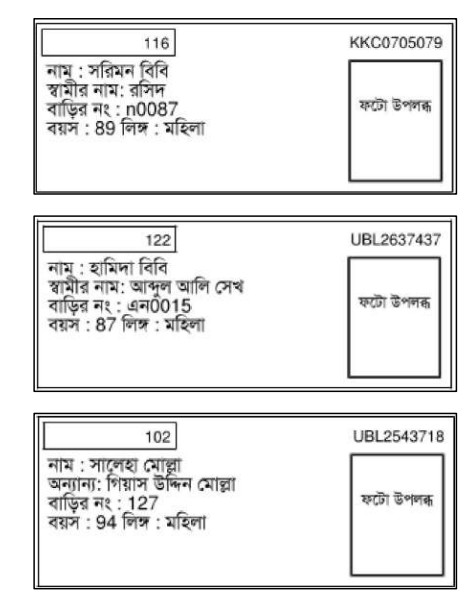
56,564 Voters via Mass Addition: Newly added elderly voters include:
Sariman Bibi, age 89, Satgachia (EPIC: KKC0705079)
Hamida Bibi, age 87, Bishnupur (EPIC: UBL2637437)
Saleha Molla, age 94, Bishnupur (EPIC: UBL2543718)
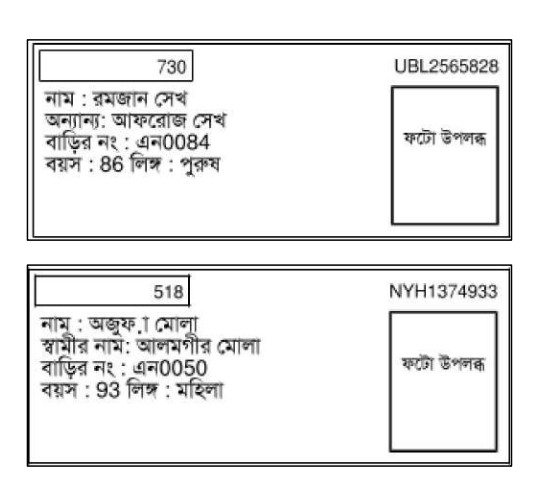
Ramjan Sekh, age 86, Bishnupur (EPIC: UBL2565828)
Ajufa Molla, age 93, Bishnupur (EPIC: NYH1374933)
Out of 1,724 booths, 301 saw more than a 15% increase in voter strength in just 4 years. Constituencies like Bishnupur and Maheshtala have seen significant spikes in voter additions recently. West Bengal is on the brink of demographic invasion as the Left and TMC parties have promoted illegal immigration purely for political benefit. This demographic shift has caused irreversible damage to Bengal’s people and identity. The system has been exploited so deeply that West Bengal risks becoming “West Bangladesh.”
Will Abhishek Banerjee resign after charges of “Vote Chori” in Diamond Harbour?
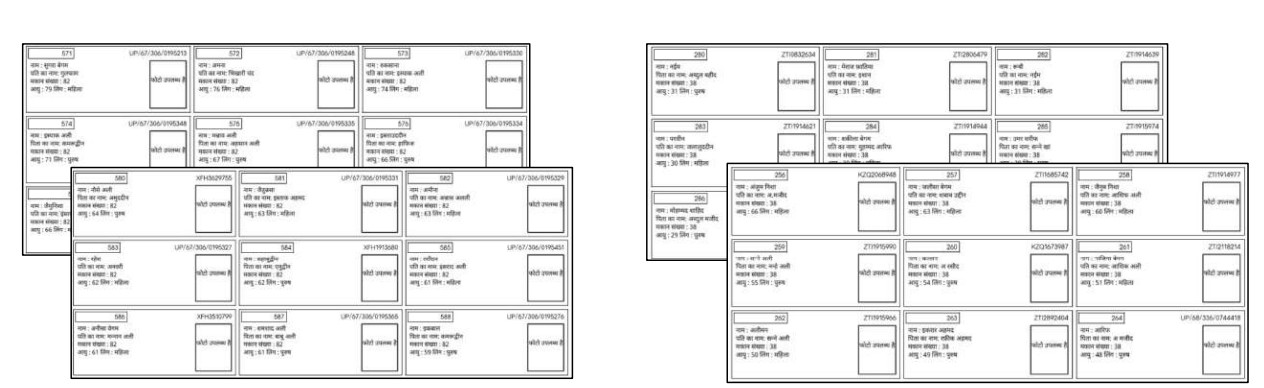
176,078 Voters with Fake Addresses: Examples include:
65 voter IDs at House No 82, booth 330, Jaswant Nagar Assembly
37 voter IDs at House No 38, booth 228, Bhongaon Assembly
16,216 Voters from Mixed Households: Multiple religions registered in:
House No 135, booth 58, Karhal Assembly
House No 1, booth 142, Karhal Assembly
49,532 Voters via Mass Addition: Newly added elderly voters include:
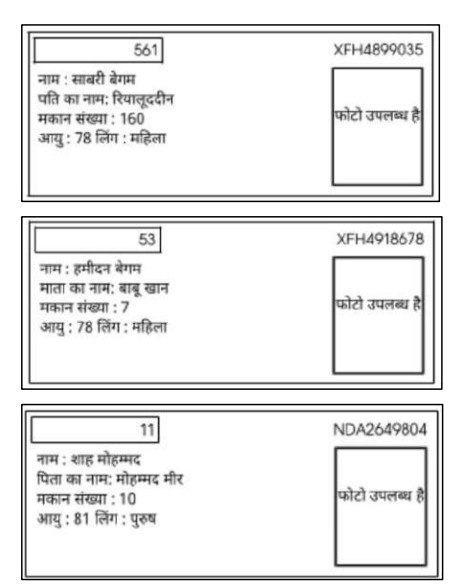
Sabri Begum, age 78, Jaswant Nagar (EPIC: XFH4899035)
Hameedan Begum, age 78, Jaswant Nagar (EPIC: XFH4918678)
Shah Mohammad, age 81, Kishni Assembly (EPIC: NDA2649804)
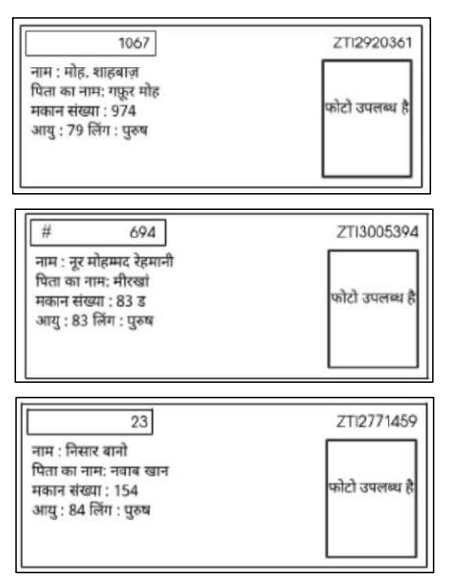
Mohd. Shahbaz, age 79, Bhongaon Assembly (EPIC: ZTI2920361)
Noor Mohammad Rehmani, age 83, Bhongaon (EPIC: ZTI3005394)
Nisaar Bano, age 84, Bhongaon (EPIC: ZTI2771459)
Will Dimple Yadav resign after allegations of “Vote Chori” in Mainpuri?
KOLATHUR (MK Stalin) – 19,476 QUESTIONABLE VOTERS
9,133 Voters with Fake Addresses: 30 voter IDs registered at House No 11, booth 84, Kolathur Assembly.
4,379 Duplicate Voters: RAFI ULLAH appears three times with different EPIC numbers in booth 157 of Kolathur.
5,964 Voters from Mixed Households: Multiple religions registered in:
House No 10, booth 140, Kolathur (80 voter IDs)
House No 20, booth 187, Kolathur (62 voter IDs)
Will MK Stalin resign after accusations of “Vote Chori” in Kolathur?
Why Is Rahul Gandhi Targeting SIR?
The Congress narrative attacks SIR (Special Intensive Revision), a standard Election Commission procedure meant to clean voter rolls by eliminating: Duplicates, Ghost entries, Fake IDs. SIR isn’t new it was accepted during similar exercises in Bengal (2002) and Bihar (2003) without resistance. Today, it’s seen as a threat because it jeopardizes the vote bank politics built over years. By targeting SIR, Rahul Gandhi and others are seen as trying to shield these engineered voter blocks.
In reality, SIR represents an essential effort to restore electoral credibility. So, if the opposition cries “Vote Theft,” perhaps they’re just revealing their own political blueprint.
Subscribe to our channels on Telegram, WhatsApp, and Instagram and get the best stories of the day delivered to you personally.