Home Blog Page 384

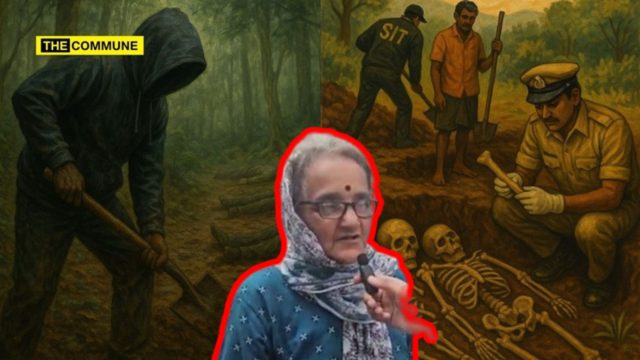
Bizzare Twist In Dharmasthala Case: Sujatha Bhat Admits She Lied And Fabricated Story About Missing Daughter, Makes Another U-Turn Alleging Coercion By Media About Confession
sujatha bhat ananya bhat dharmasthala confession

In a stunning reversal, Sujatha Bhat, the Bengaluru-based woman who had captured public attention with her claims of a missing daughter named Ananya Bhatt, has now confessed that the entire story was a fabrication, allegedly concocted under the influence of others to stake a claim on a family property dispute.

The case, which has sparked widespread debate and a probe by a Special Investigation Team (SIT), took a dramatic turn with Sujatha Bhat’s public confession and subsequent retraction, creating a web of confusion.

The Confession: A Story Fabricated for Property

In an interview with the YouTube channel ‘Insight Rush’, a remorseful Sujatha Bhat admitted to lying. “I lied because Girish Mattannavar and T. Jayant told me to. Please forgive me, I made a mistake,” she stated. “I apologize to Dharmasthala, to the people of Karnataka, and to the people of the country.”

She claimed her motivation was a long-standing dispute over her grandfather’s property in Dharmasthala, which she alleged was donated to a trust without her signature. “I did this for my grandfather’s property… I should have got a share,” she said, pleading to be freed from the controversy.

Throughout her statements, Sujatha Bhat maintained that her grievance was with her family’s decision to donate the property, not with the Dharmasthala temple or its head, Veerendra Hegde.

In her emotional apology, she said, “I have not hurt the feelings of the people of Dharmasthala… They provoked me to do so… Please, enough is enough, I will live my life.”

Family Denial 

Sujatha Bhat’s claims had earlier been vehemently denied by her own family. In an exclusive interview, her brother disowned her, stating they had been out of contact since she left home in 1988-89. He dismissed her story saying, “Everything Sujatha says is a lie. We do not know if she has a daughter. She ran away from home in 1988-89, and we have had no contact with her since. Any claims regarding children or marriage are false. We cannot believe her.” He also clarified that the family had willingly parted with the land in question decades ago and had no ongoing claims. He stated that their grandfather’s land had been legally donated by Shanga Shringaramma to Anantha Padmanabha Upadhya and later handled by their family. “We gave up our desire for it, sold some portions, and built a house with the proceeds. There is no need for Sujatha Bhat to take signatures or claim anything,” he stated.

SIT Investigation

The Special Investigation Team (SIT) probing the alleged mass burials and related issues in Dharmasthala has now issued a notice to Sujatha Bhat. The SIT has directed her to appear at the Belthangady office and submit all documents pertaining to her daughter, Ananya Bhat. Investigators are also collecting relevant records from Shivamogga, Bengaluru, and Udupi to verify the claims.

The SIT had found no evidence of Ananya Bhatt’s existence. No school, college, or medical admission records under that name were found. The only “evidence” ever presented was a single passport-sized photograph, which Sujatha has now declared “fake.”

A Retraction of the Confession

Adding layers of confusion, Sujatha Bhat later told ‘United Media’ that her confession was made under duress. Speaking to Asianet Suvarna News, Sujatha alleged that she was forced to give an interview inside a car and pressured to name certain individuals, saying, “They forced me to do this. I will say that I never gave it; you took it by force.” She expressed frustration that her interview was broadcast before she had returned from appearing before the SIT, stating that the release damaged her reputation.

Sujatha also said, “I had given an interview. Why did they broadcast it on before I went to the SIT and came back? Why did they broadcast the interview on without permission? They threatened me and said that I will have to do it. I will say that they forced me to take the interview.”

She described the circumstances in detail: “They forced me to take a statement in a car, tell me the name of these people, they forced me to do this, I will say that.” Sujatha repeatedly emphasized that the interview was broadcast without her consent and expressed frustration over the way it was handled.

The SIT has issued her a formal notice to appear for questioning and submit any documents related to her daughter. Investigations have expanded to include Bengaluru, Udupi, and Shivamogga.

The News Minute which was “championing the cause” of the women and especially Ananya Bhat, has gone silent. They have not reported about the masked man’s confession, nor have they said anything so far about Sujatha Bhat’s confession.

Subscribe to our channels on Telegram, WhatsApp, and Instagram and get the best stories of the day delivered to you personally.

Stalin ‘Not Qualified’ To Criticise Disqualification Bill, Says Union Home Minister Amit Shah

amit shah stalin dmk

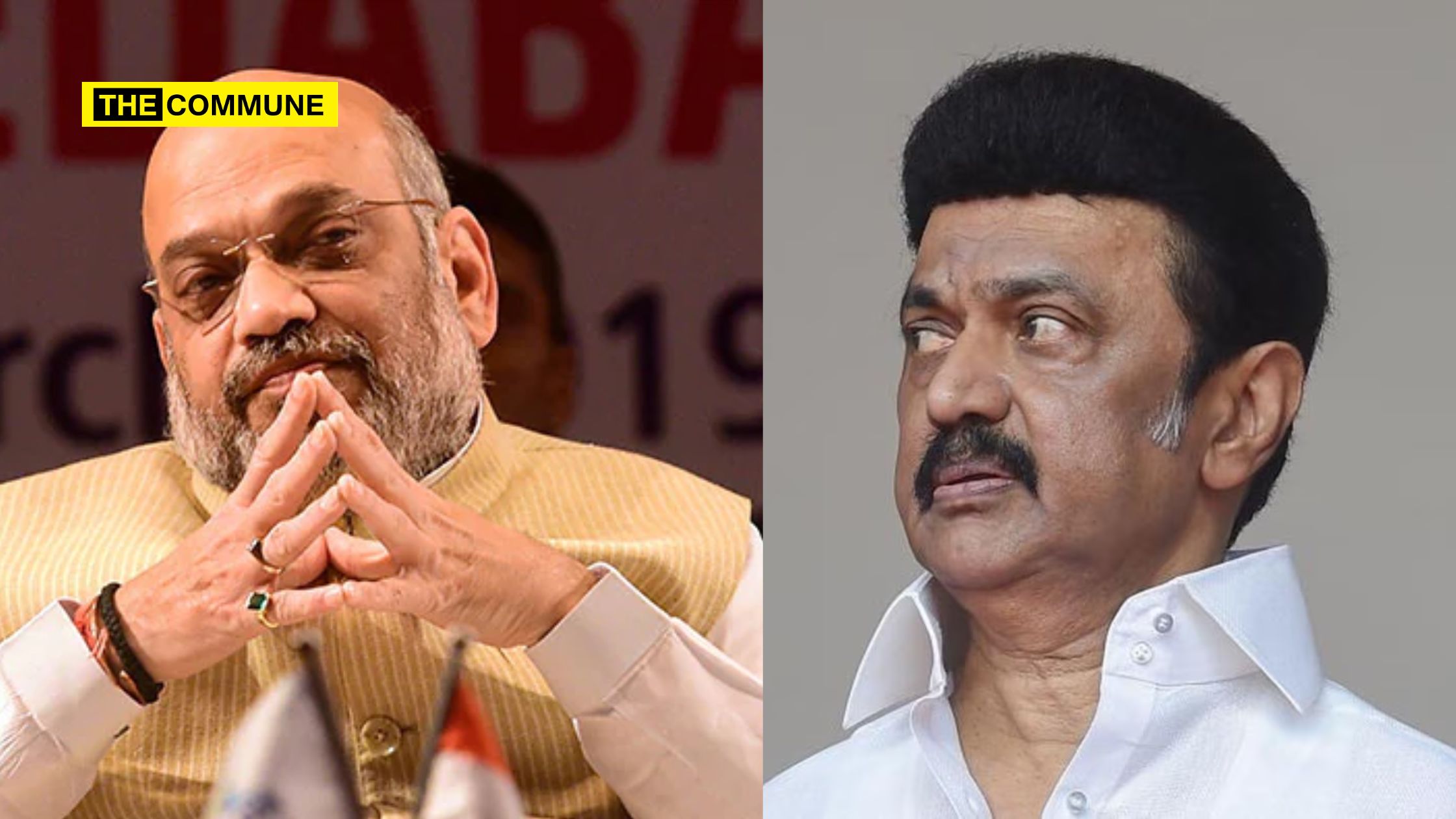
Union Home Minister Amit Shah, on Friday, has hit out at the Tamil Nadu Chief Minister M.K. Stalin, declaring that he was “not qualified” to criticise the Disqualification Bill introduced by the Narendra Modi-led Union government.

Addressing a large gathering of booth committee agents in Tirunelveli, Union Home Minister Shah alleged that Chief Minister Stalin’s political motives were centred on promoting dynastic succession.

“Chief Minister Stalin’s only aim is to make Udhayanidhi Stalin the next Chief Minister, just as Sonia Gandhi dreams of making Rahul Gandhi the Prime Minister of the country. But as long as the BJP exists, such dynastic ambitions will never materialise,” he said amid loud applause from the party cadre.

The meeting was attended by booth in-charges from 28 Assembly constituencies across five Lok Sabha seats — Tirunelveli, Thoothukudi, Kanyakumari, Virudhunagar, and Tenkasi — underscoring the BJP’s focus on strengthening its grassroots base in southern Tamil Nadu.

Commenting on the Disqualification Bill, Union Minister Shah said that the legislation bars individuals convicted and sentenced to jail from continuing to hold public office. He called it a landmark reform aimed at ensuring accountability and ethical governance.

“This Bill is a guarantee that those who face criminal convictions cannot misuse power. Stalin has no qualification to criticise such a law,” Union Minister Shah said.

The Union Home Minister also used the occasion to highlight the BJP’s recognition of Tamil Nadu’s contribution to national politics. He announced that senior BJP leader C.P. Radhakrishnan had been nominated as the NDA candidate for the Vice-President, which is a proud moment for Tamil Nadu.

“In the next Parliament session, C.P. Radhakrishnan will take charge as Vice-President. It reflects Prime Minister Modi’s trust and respect for Tamil Nadu and its people,” Union Home Minister Shah remarked. He said that PM Modi had presided over a historic event at Gangaikonda Cholapuram, demonstrating his reverence for Tamil culture and heritage.

“It was also the NDA that gave India Dr. A.P.J. Abdul Kalam as President, further proving our respect for Tamil Nadu’s legacy,” he added. Union Home Minister Shah praised PM Modi’s leadership in matters of national security, particularly citing “Operation Sindoor”, which he claimed destroyed terrorist camps in Pakistan.

“Prime Minister Modi governs by following the moral path enshrined in Tirukkural — combining strength with righteousness,” he added. Concluding his address, Union Home Minister Shah declared that the BJP-AIADMK alliance was poised to secure 39 per cent of the vote share in Tamil Nadu and form the next government in the state.

“The alliance will sweep the state and bring a people-centric government,” he said.

-IANS

Subscribe to our channels on TelegramWhatsApp, and Instagram and get the best stories of the day delivered to you personally.

Sergio Gor, Trump Ally, Picked As US Ambassador To India

trump sergio gor india ambassador

US President Donald Trump has announced the nomination of longtime aide and trusted political strategist Sergio Gor to serve as the next United States Ambassador to India, as well as Special Envoy for South and Central Asian Affairs.

In a statement posted on Truth Social, Trump praised Gor’s loyalty, organisational talent, and deep involvement in his political and governmental operations. “I am pleased to announce that I am promoting Sergio Gor to be our next United States Ambassador to the Republic of India, and Special Envoy for South and Central Asian Affairs,” Trump wrote.

He continued, “As Director of Presidential Personnel, Sergio and his team have hired nearly 4,000 America First Patriots across every Department of our Federal Government in RECORD time — Our Departments and Agencies are over 95% filled! Sergio will remain in his current role at the White House until his confirmation.”

Trump highlighted Gor’s wide-ranging contributions to his administration and campaign, saying, “Sergio is a great friend who has been at my side for many years. He worked on my Historic Presidential Campaigns, published my Best Selling Books, and ran one of the biggest Super PACs, which supported our Movement.”

“For the most populous Region in the World, it is important that I have someone I can fully trust to deliver on my Agenda and help us, MAKE AMERICA GREAT AGAIN. Sergio will make an incredible Ambassador. Congratulations Sergio!” said Trump.

Gor responded with gratitude in a post on X, writing, “Beyond grateful to @realDonaldTrump for his incredible trust and confidence in nominating me to be his next US Ambassador to India and Special Envoy for South and Central Asian Affairs! Nothing has made me prouder than to serve the American people through the GREAT work of this Administration! Our White House has achieved historic results in MAKING AMERICA GREAT AGAIN! It will be the honor of my life to represent the United States!”

The nomination drew praise from top Trump administration officials. Vice President JD Vance wrote, “Sergio is a great guy and will make a fantastic ambassador for our country to India. So much of our success over the last few months was due to Sergio’s hard work. I’m grateful to POTUS for giving him this new role.”

Secretary of State Marco Rubio also weighed in: “I am excited about the President’s decision to nominate @SergioGor to be our next Ambassador to India. He will be an excellent representative of America in one of the most important relationships our nation has in the world.”

FBI Director Kash Patel added his support, posting simply, “Congrats @SergioGor, outstanding pick for Ambassador to India.” The 38-year-old Gor quickly rose in conservative politics, becoming one of the most powerful, albeit low-profile, aides in the White House. His task was to vet around 4,000 appointees to ensure their utmost loyalty to Trump.

-IANS

Subscribe to our channels on TelegramWhatsApp, and Instagram and get the best stories of the day delivered to you personally.

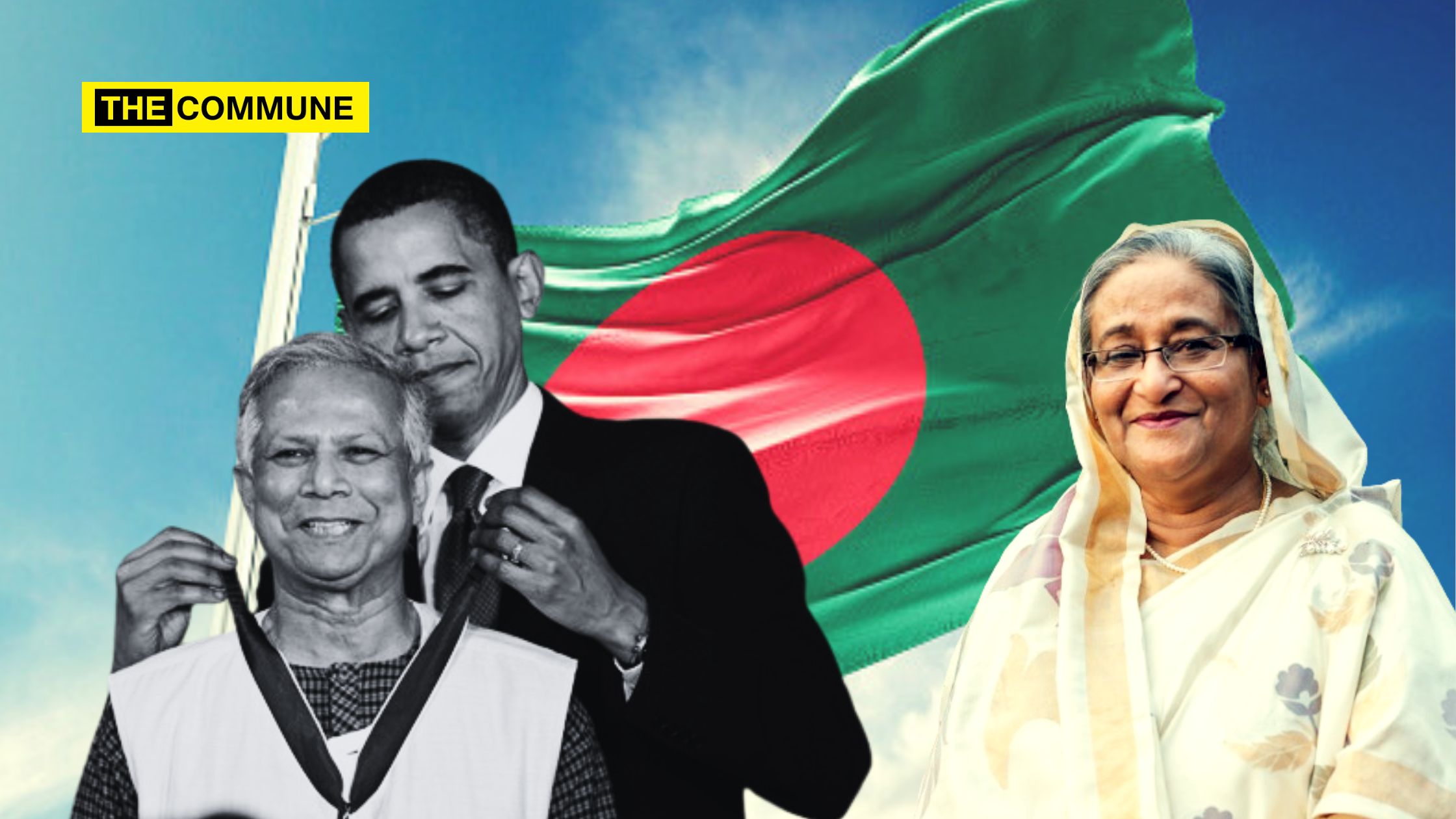
Yunus-Led Interim Government Warns Media In Bangladesh Against Airing Former PM Sheikh Hasina’s Statements

Controversial Nobel Laureate Yunus Poised To Lead Bangladesh after Sheikh Hasina fled.

Bangladesh’s interim government led by Muhammad Yunus has warned the country’s media houses of legal action against any future publication or dissemination of statements from former Prime Minister Sheikh Hasina, local media reported on Friday.

In a statement released on Friday, the Bangladesh government termed airing or promoting Hasina’s remarks on television channels, news platforms or online media a violation of law, considering her conviction for genocide and crimes against humanity, United News of Bangladesh reported.

The statement said, “We are deeply concerned that some media outlets ignored the law and court rulings by broadcasting a speech by the ousted dictator on Thursday. In that speech, she made false and inflammatory claims.”

“We strongly warn media personnel involved in this type of criminal propaganda. From now on, anyone who publishes or promotes Sheikh Hasina’s statements will face immediate legal action,” it added.

According to the statement, Sheikh Hasina’s party Awami League has been banned in Bangladesh and under the Anti-Terrorism Act, any individual or organisation that promotes the activities or statements of its leaders can be prosecuted. In the statement, the Bangladesh interim government warned that any media outlet that shares or re-broadcasts Hasina’s remarks will be held accountable.

The statement said, “Broadcasting Sheikh Hasina’s provocative speeches, which aim to incite violence and create instability, risks damaging the democratic transition. Any outlet that spreads or re-broadcasts her remarks will be held legally accountable under Bangladeshi law.”

The latest decision of the interim government comes amid the ongoing crackdown on Awami League leaders, along with the officials associated with the party, under the Yunus-led interim government.

On August 19, a court in Dhaka announced a travel ban on Hasina’s former military secretary Major General (Retd.) Salahuddin Miaji and three of his family members over corruption allegations. Three of Miaji’s family members who have been placed under travel ban include his wife Nazma Begum and daughters Samiha Sabnam and Raisa Sabnam, Bangladesh’s leading newspaper Daily Star reported. Judge Zakir Hossain Galib of Dhaka Metropolitan Senior Special Judge’s Court announced the decision after ACC Deputy Director Rezaul Karim, who is leading the inquiry team, presented an application in this regard.

On August 5, Sheikh Hasina slammed the current interim regime and hailed the people for standing up in the face of “injustice and repression.”

In an open letter to the people of Bangladesh as the nation marked one year since the fall of the democratically elected Awami League government on August 5, Hasina wrote, “One year ago today, our nation witnessed the violent interruption of our hard-fought democracy, as an unelected regime seized power through unconstitutional means. It was a dark moment in our history, an affront to the will of the people, and a betrayal of the trust between citizens and the state.”

Slamming the Muhammad Yunus-led interim government, Hasina stated, “While they may have taken power, they will never take away our spirit, our resolve, or our destiny. I can assure you of that.” She praised the extraordinary courage of the people of Bangladesh who have refused to be silenced in the face of “injustice and repression.”

“You have stood up for democracy, for freedom, and for the future we all deserve. I am constantly inspired by your courage and your love for our country. Though this past year has tested us, it has also revealed the unbreakable bond between our people and the values of democracy. We have endured hardship, but in that hardship, we have found unity and purpose,” the letter detailed.

Emphasising that “power belongs to the people”, Hasina stated no regime can suppress the will of a nation forever, adding that their struggle for the just cause continues. The former PM urged the people to continue “to stand for justice, for economic opportunity, for education, for peace, and for a nation where no one lives in fear.”

“Together, we will rebuild what has been broken. Together, we will reclaim the institutions that were taken from us. And together, we will write a new chapter, one defined not by oppression, but by hope, progress, and freedom,” she said.

-IANS

Subscribe to our channels on TelegramWhatsApp, and Instagram and get the best stories of the day delivered to you personally.

Andhra Pradesh CM Chandrababu Naidu Calls Opponent’s VP Bid ‘Unnecessary And Certain Defeat’

Nominated Posts Filled After Screening 30,000 Applications: Chandrababu Naidu

Andhra Pradesh Chief Minister and Telugu Desam Party (TDP) President N. Chandrababu Naidu, on Friday, criticised the opposition parties for fielding a candidate for Vice-Presidential election, knowing well that his defeat is certain. He said it was not unfair on part of the Opposition to expect TDP support despite the fact that TDP is a partner in the NDA governments, both at the Centre and in Andhra Pradesh.

Chief Minister Naidu was talking to media persons after calling on NDA candidate for the Vice-Presidential election, C. P. Radhakrishnan, here. Accompanied by Union Ministers belonging to the TDP and some party MPs, Chief Minister Naidu met C.P. Radhakrishnan and extended support to him.

“Why announce a Telugu leader as Vice-Presidential candidate knowing defeat was certain,” he asked while questioning the decision of INDIA bloc to field former Supreme Court judge B. Sudershan Reddy as their candidate.

“Politics not important. TDP was part of the NDA even before the elections. Once NDA fielded its candidate, why did they field a candidate when the defeat is certain,” he asked.

“How can they expect? We are in an alliance with NDA. How can it be expected that we will support another candidate?” the Andhra Pradesh Chief Minister remarked when his reaction was sought to an appeal made by Telangana Chief Minister A. Revanth Reddy to TDP and all other parties from Telugu states to back the candidature of Sudershan Reddy.

Stating that TDP is for Telugu community, the TDP Chief recalled that when former Prime Minister P.V. Narasimha Rao contested Lok Sabha elections, TDP made the sacrifice for the Telugu leader though it was fighting the Congress.

“Telugu Desam Party is for Telugu community. That is a different issue. We are in alliance. Our party is having ethics, credibility. We have built this credibility over a period of five decades. How can you expect all these things,” he asked.

“If anybody compares candidature-wise, he (Radhakrishnan) is the best candidate everybody has to support. If the majority is there, it is a very dignified post,” he said and exuded confidence that the NDA candidate will win with comfortable majority.

-IANS

Subscribe to our channels on TelegramWhatsApp, and Instagram and get the best stories of the day delivered to you personally.

‘Marwadi Go Back’ Campaign Triggers Bandh In Parts Of Telangana

telangana bandh marwadi go back

The “Marwadi go back” campaign launched recently by a section of traders and locals in Telangana gathered momentum with a shutdown observed in parts of the state on Friday on a call given by the Osmania University Joint Action Committee (OUJAC), which was supported by various traders’ associations.

Traders downed their shutters in a few commercial areas in Hyderabad and in various towns, including Yadadri, Gajwel, Dubbaka, Narayanpet, Mahabubabad, Khammam, Jangaon, Amangal, and Nalgonda. Educational institutions were also closed in some towns in response to the bandh call, which was supported by the Arya Vysya, Viswabrahmins, and Viswakarma associations.

The traders and locals took out rallies in various parts of the state. They raised slogans of ‘Marwadi go back’. They alleged that Marwadi businesses were “committing atrocities on locals and snatching away their livelihood”. Owners of kirana shops, mobile phone shops, and associations of traders participated in the protests.

Traders took out a rally in Mahbubabad. Police arrested 50 protestors for taking out a rally without permission amid tight security arrangements to prevent any untoward incident. In Hyderabad, police took OUJAC Chairman K. Tirupathi Reddy and Telangana Kranti Dal President Sangamreddy Prithviraj into preventive custody in view of the bandh call. OUJAC and Adivasi Students Union staged a protest at Habsiguda in Hyderabad.

Wearing back badges, the protestors burnt tyres in front of the jewellery shops of Marwadis. Police arrested the protestors. Tirupathi Reddy had appealed to people to participate in the bandh. He accused Marwadi businessmen of exploiting traders of Telangana through deceptive strategies. He said Telangana state was achieved after fighting the atrocities of rulers from Andhra in the united Andhra Pradesh, but Marwadis from Rajasthan and Gujarat were looting Telangana. The Vaisya Vikas Vedika and other trade associations supported the Telangana bandh.

The ‘Marwadi go back’ movement started recently after an altercation between some Dalit youths and Marwadis over a parking issue at the Monda Market in Secunderabad. A round table organised in Hyderabad passed a resolution demanding that businesses and industries established by people from other states should provide 89 per cent of jobs to locals.

The participants also demanded legislation to protect local businesses and prevent non-Telangana residents from purchasing land in the state. They also urged people to refuse assistance to Gujarati and Rajasthani traders and boycott their goods. Telangana Kranti Dal President Prithviraj had urged Telangana residents to refuse assistance to Gujarati and Rajasthani traders and boycott their goods.

“We are fighting against the exploitation of our resources. The government must ensure that outsiders do not start businesses in towns with less than 5 lakh population,” he said and alleged that outsiders were not even employing locals.

Last week, Union Minister of State for Home Bandi Sanjay Kumar slammed the ‘Marwadi go back’ movement and alleged that the Congress, the BRS, and the MIM were behind the campaign to divide Hindus.

“Marwadis have never fought for political power, nor have they looted Telangana. They have generated wealth through business and contributed significantly to GDP while upholding the Hindu Sanatana Dharma. Why should they leave Telangana?” he asked, alleging that the real threat was from the Rohingyas.

-IANS

Subscribe to our channels on TelegramWhatsApp, and Instagram and get the best stories of the day delivered to you personally.

SEP 2025: DMK’s Political Manifesto, Not An Education Policy

state education policy SEP 2025 dmk Tamil Nadu Sees Sharp Rise In School Dropout Rates, Slips Behind Southern Peers: UDISE+ Report

When the central government unveiled the National Education Policy (NEP) 2020, it promised to reimagine Indian education for the future, a bold restructuring that sought to equip young Indians with 21st century skills, global competitiveness, and multidisciplinary learning. Across the country, even states that had reservations chose to adapt and align with it.

But Tamil Nadu, under the Dravida Munnetra Kazhagam (DMK), has taken a different path. With much fanfare, Chief Minister MK Stalin launched the Tamil Nadu State Education Policy 2025 (SEP) touted as a “people-centric” alternative to the NEP. In reality, it is less a roadmap for students and more a political manifesto disguised as policy.

Behind the glossy language of “equity” and “social justice,” the SEP reeks of Dravidian exceptionalism designed not to uplift students but to score political points against the Centre. Once again, DMK has shown that for them, education is not about preparing children for the world but, it is about preparing votes for elections.

Welfare Politics Over Real Learning

Tamil Nadu has a proud history of welfare in education: from Kamaraj’s midday meal scheme to later expansions under MGR and Jayalalithaa. These initiatives genuinely transformed literacy and access.

But what DMK has done with SEP is something else: populism dressed up as progress.

The policy repeatedly celebrates the Chief Minister’s Breakfast Scheme, the Pudhumai Penn stipend for girls, and Vetri Palligal “Schools of Excellence.” These are not bad in themselves, no one denies the importance of nutrition or financial support. But when an education policy reads like a party election manifesto, the problem is obvious.

Instead of hard reforms in curriculum, teacher accountability, or measurable outcomes, SEP is obsessed with announcing schemes that feed, fund, and flatter but don’t really educate.

The Language Question: Politics Above Students

Perhaps the clearest proof of DMK’s political ego is the language policy.

The NEP 2020 envisions a three-language formula, encouraging multilingualism and ensuring Indian students can compete both nationally and globally. Tamil Nadu, however, clings to its two language formula (Tamil + English), dismissing the third language as “Hindi imposition.”

Let us be honest: this isn’t about protecting Tamil. Students can learn Tamil and another Indian language and English, millions of children across India manage multilingualism effortlessly as section 4.13 of NEP 2020 clearly states that “The three-language formula will continue to be implemented while keeping in mind the Constitutional provisions, aspirations of the people, regions, and the Union, and the need to promote multilingualism as well as promote national unity. However, there will be a greater flexibility in the three-language formula, and no language will be imposed on any State. The three languages learned by children will be the choices of States, regions, and of course the students themselves, so long as at least two of the three languages are native to India. In particular, students who wish to change one or more of the three languages they are studying may do so in Grade 6 or 7, as long as they are able to demonstrate basic proficiency in three languages (including one language of India at the literature level) by the end of secondary school”. This is about DMK’s 60-year-old anti-Hindi obsession.

By refusing to give Tamil Nadu students access to a third Indian language, the DMK is deliberately limiting their mobility and opportunities in a multilingual country. A child in Bihar, Maharashtra or Karnataka will leave school with knowledge of three languages. A child in Tamil Nadu will not. This is not equity. This is deliberate handicapping of Tamil Nadu students for political mileage.

The Dangerous No-Detention Policy

Another glaring flaw is DMK’s reaffirmation of the No-Detention Policy up to Class 8. On paper, this sounds progressive “don’t fail students, give them a chance”. In practice, it has become a disaster.

Teachers across Tamil Nadu whisper the truth: students are being pushed up year after year without mastering basic literacy or numeracy. By Class 9, many cannot even read fluently or solve basic arithmetic. That is the reason why the THIRAN initiative was launched by the state government to bridge the learning gap.

The NEP is clear-eyed on this: it makes foundational literacy and numeracy by Class 3 the top national priority. Tamil Nadu’s SEP talks about literacy too, but buries it under welfare schemes and “equity audits.” The hard truth is that DMK prefers a generation of dependent, under-skilled students who will thank the party for their meals, but will never question the quality of their education.

Digital Divide and Hollow Promises

SEP brags about “21st-century skills” AI, coding, robotics. It announces platforms like TN-SPARK, Kalvi TV, and Manarkeni App. But on the ground, the reality is starkly different.

  • Rural schools lack internet connectivity.
  • Many classrooms still don’t have functional computers.
  • Teacher training in digital pedagogy is almost non-existent.

What good is coding when half the students can’t get a stable internet connection in their village school?

This is classic DMK politics: announce a flashy scheme, hold a press conference, then quietly move on. The gap between promise and delivery is filled with propaganda.

Teachers: The Forgotten Soldiers

While the NEP envisions making teaching a respected, aspirational profession, the SEP tinkers around the edges with apps and “peer mentoring.” The real issues like irregular recruitment, lack of transparency, poor rural postings remain untouched in SEP 2025.

Why? Because teacher appointments in Tamil Nadu are deeply politicised. Union leaders aligned to ruling parties control transfers, promotions, and postings. Every teacher knows that to survive in the system, they need political backing. The SEP does nothing to dismantle this rot.

Once again, students pay the price for DMK’s unwillingness to offend its political ecosystem.

Community Engagement or Party Capture?

The SEP boasts about “community engagement” through the Namma School Namma Ooru Palli initiative through inviting alumni, CSR funds, and parents to support schools.

But let’s be blunt: in Tamil Nadu’s hyper-politicised environment, such initiatives risk becoming DMK-controlled patronage networks. Already, it has been observed that government school functions are used as stages for party propaganda, more often by the DMK regimes. “Community engagement” becomes a euphemism for party control of education spaces.

Equity Without Excellence is a Trap

Tamil Nadu loves to project itself as a pioneer of social justice in education but the “quality crisis” is undeniable.

  • Secondary dropout rates remain at 7–8%.
  • Learning surveys show wide gaps in mathematics and reading, especially post-COVID.
  • Rural and government school students lag far behind private peers in competitive exams.

Instead of addressing these realities, DMK’s SEP hides behind the rhetoric of “equity.” But equity without excellence is not empowerment, it is charity. A well-fed, under-skilled student will not compete in IIT, IIM, or the global job market. They will simply remain dependent on state welfare and loyal to the party that provides it. Which, of course, is exactly what DMK wants.

A Political Document, Not a Policy

The biggest problem with SEP 2025 is its short-termism. It promises to revise the policy every three years, an idea that sounds dynamic but actually reveals the truth that this is not a roadmap to 2040 like the NEP. This seems to be policy written for electoral cycles.

DMK is not planning for Tamil Nadu’s next generation but, it is planning for its next election.

Students Are Pawns To Soothe DMK’s Political Ego

The DMK claims SEP 2025 is a progressive alternative to the Centre’s NEP. In reality, it is a political ego trip and a refusal to align with national reforms simply because they come from Delhi. In the process, Tamil Nadu’s students are the losers.

Instead of giving them global competitiveness, multilingual skills, and rigorous academic standards, the DMK offers free meals, stipends, and slogans. Instead of preparing them for the future, it prepares them for dependency.

It is time to call this what it is “the DMK is playing with the lives of Tamil Nadu’s children for its political ego”

The NEP may not be perfect according to the DMK, but it at least has a vision while the SEP has none. Until Tamil Nadu realises that welfare is not a substitute for excellence, its students will remain trapped in the DMK’s self serving cycle of care without competence.

And the tragedy is that the rest of India will march ahead, while Tamil Nadu’s children will be left behind because one party chose politics over progress.

Karthik HP is an entrepreneur and ABVP activist.

Subscribe to our channels on Telegram, WhatsApp, and Instagram and get the best stories of the day delivered to you personally.
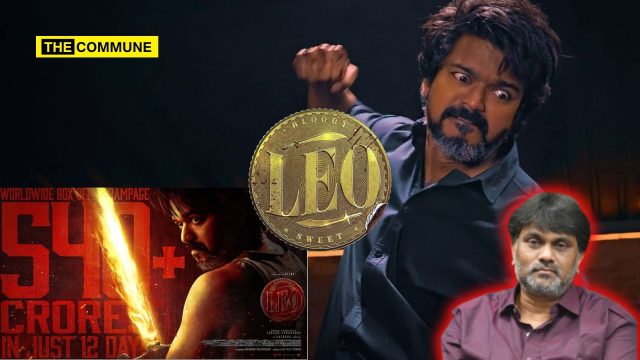
After Hype Of ₹600 Crore Collection, Vijay-Starrer “Leo” Producer Income Tax Report Shows True Theatrical Revenue At Just ₹160.56 Crore

The Tamil film Leo, directed by Lokesh Kanagaraj and starring Vijay, has sparked debate over its box office collections after its producer filed detailed revenue figures with the Income Tax Department.

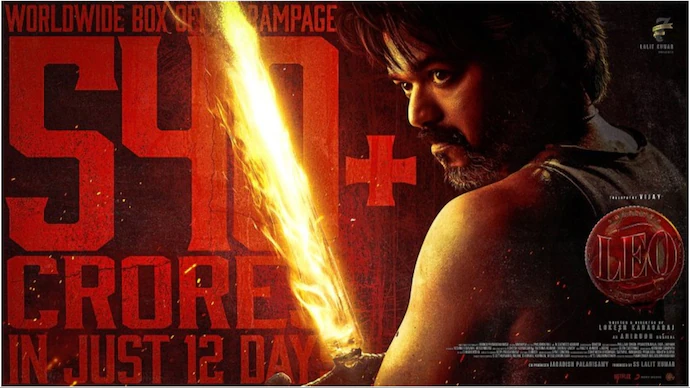
The film, released in 2023, was initially reported to have collected a record ₹148.55 crore on its first day, surpassing Shah Rukh Khan’s Pathaan, which had released in over 4,000 theaters and collected ₹104 crore on its opening day. Over the following days, the production company, led by Lalith Kumar, announced staggering figures: ₹405.5 crore in four days, ₹461 crore in seven days, ₹540 crore in 12 days, and a total of ₹600 crore, prompting widespread discussion among fans and the industry.

However, the producer’s latest filing with the Income Tax Department clarified that the actual theater revenue stood at ₹160.5 crore. The remaining revenue came from other rights sold prior to and after release, including:

  • Digital rights: ₹124 crore
  • Audio rights: ₹24 crore
  • Hindi distribution rights: ₹24 crore
  • South Indian satellite rights: ₹72 crore

This brought the verified total revenue to ₹404.56 crore.

The disclosure has sparked criticism from fans of other actors, who alleged that the film’s earlier promotional campaigns, including a purported “victory ceremony” for achieving ₹600 crore, were misleading. Comparisons were also drawn with Rajinikanth’s Coolie, which is being marketed with exaggerated collection claims. We will probably know the real collection when the producer does his income tax filing next year.

Analysts note that the Leo case highlights the importance of transparency in box office reporting, particularly as digital, satellite, and distribution revenues increasingly supplement theatrical earnings in India.

On the other hand, film producer Dhananjayan has buttressed the numbers saying that revenue is different from gross collections.

“Box office collection is different. If a film has to make ₹100 crore business, it has to collect ₹250 crores as gross. Will he declare gross or actual amount in balance sheet? He won’t say ₹250 crores is gross of which X amount has been paid as tax and to distributor and this is the amount that I’ve received. He won’t say that right?”, Dhananjayan said.

He further went on to say that if only 40-45% of gross collected comes to the producer and said that ₹600 crore of which ₹404 crores is the actual revenue earned by the producer.

Even if we consider what Dhananjayan says is true, and assume that the ₹160 crore reported amount is 50% of total gross collected, then theatrical collection was just ₹320 crore.

Subscribe to our channels on TelegramWhatsApp, and Instagram and get the best stories of the day delivered to you personally.
How India’s Private Space Industry Thrives Amid Policy Push And Chandrayaan-3 Success

Modi Cabinet Approves Chandrayaan-4, ₹1,000 Cr Earmarked For Venture Fund To Indian Space Startups space industry chandrayaan india

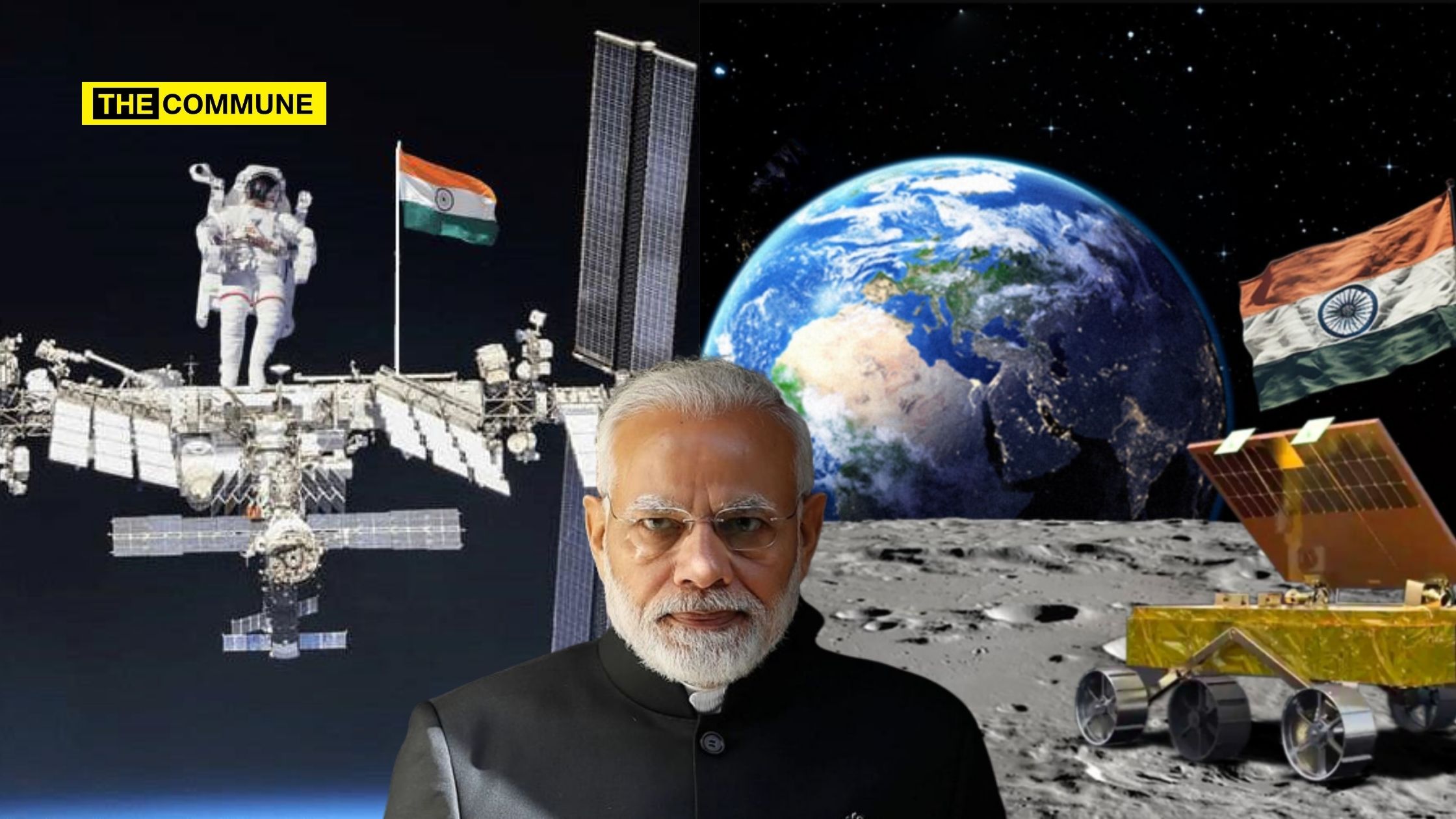
The Government’s proactive policies and strategic support, along with direct guidance from Prime Minister Narendra Modi, have built a strong foundation for India’s private space industry to thrive, industry experts said on Friday.

Indian private space companies are now at the forefront of innovation in launch capabilities, satellite technologies, and downstream applications, driving rapid growth and boosting India’s global competitiveness.

This was the message from industry leaders as India prepares to celebrate its second National Space Day on August 23, marking the historic success of Chandrayaan-3’s soft landing on the Moon’s south pole. Lt. Gen. AK Bhatt (Retd.), Director General of the Indian Space Association (ISpA), said the success of ISRO’s Chandrayaan-3 has opened new possibilities for collaboration between the government and private sector.

He highlighted that over the past five years, the number of space startups in India has crossed 300, attracting about $526 million in funding. This, he said, reflects growing investor confidence in India’s space sector and positions the country to reach a space economy worth $44 billion by 2033.

Bhatt added that private players will also play a critical role in the upcoming Gaganyaan mission, India’s first human spaceflight. Krishanu Acharya, CEO and Co-Founder of Suhora Technologies, said India’s future in space will be defined by how effectively it uses satellite data and connectivity to deliver real-world solutions.

He noted that downstream technologies can support agriculture, infrastructure, disaster preparedness, defence, and governance. “At Suhora Technologies, we see downstream capabilities as the bridge between exploration and national progress and the defining drivers of India’s space revolution in the decade ahead,” he said.

National Space Day 2025 will be celebrated under the theme “Bridging the Past and Future: Honoring Traditional Astronomy and Showcasing Modern Space Achievements.” Students will be at the centre of the celebrations, as the country looks to inspire the next generation of scientists, entrepreneurs, and space explorers.

-IANS

Subscribe to our channels on TelegramWhatsApp, and Instagram and get the best stories of the day delivered to you personally.

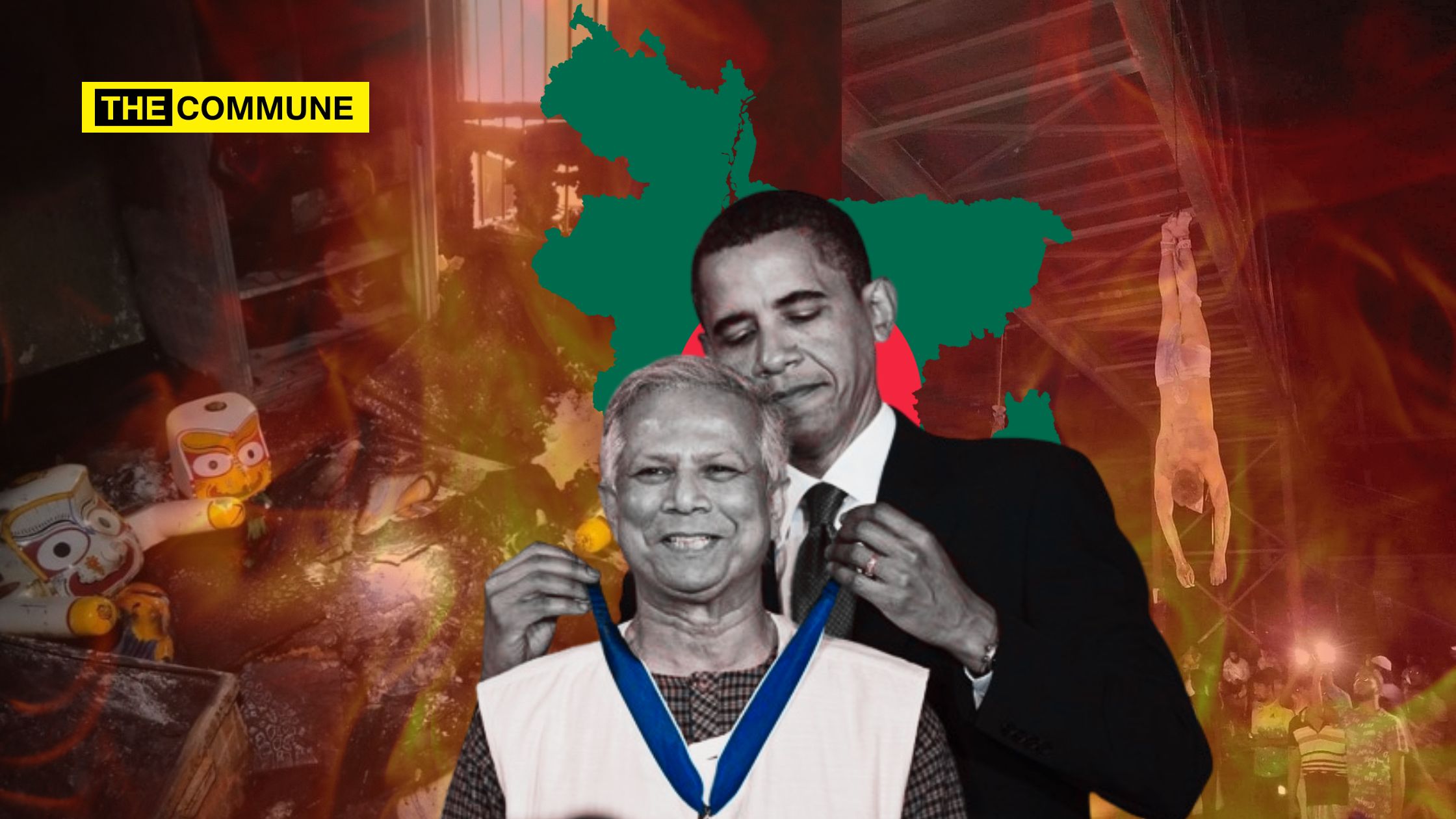
Lynching And Lawlessness Grip Bangladesh Amid Yunus Regime, Rights Report Says

Bangladesh Interim Govt Head Muhammad Yunus' Mask Falls Off, Anti-India & Anti-Hindu Agenda Stands Exposed

Lynching has supplanted trial and vengeance masquerades as justice in Bangladesh which has been gripped with violence since the ouster of former Prime Minister Sheikh Hasina in August 2024, a report cited on Thursday. Highlighting data from several rights groups, the report mentioned that 174 people have been killed in mob violence between August 2024 and May 2025, with victims ranging from political workers to small vendors.

“At Dhaka University, student Tofajjal was killed; at Jahangirnagar, Masud met a similar fate. Shohagh was crushed under a rock as his killers danced on his chest in broad daylight. Court premises themselves were not spared, as mobs stormed judicial complexes, beating accused persons in custody. Judges, fearing for their safety, hesitated to sit. The robe, once a symbol of dignity, became a garment of risk,” the ‘Northeast News’ report mentioned.

“Justice did not merely delay — it deserted. This breakdown of judicial authority naturally engulfed the legal profession. Lawyers aligned with the fallen regime were targetted: chambers torched, bar associations fractured, over 150 practitioners jailed, and dozens remanded. Some fled abroad; others melted into anonymity. A new group styling itself as ‘anti-fascist lawyers’ declared themselves guardians of the revolution, but professional solidarity collapsed,” it added.

The report asserted that under the Yunus regime, opposition activists languished week after week in jail, while those aligned with the new order, including the Bangladesh Nationalist Party, Jamaat-e-Islami, and students associated with the National Citizen Party, secured bail with ease. In a horrific move, it stated, the Muhammad Yunus-led interim government, even granted them indemnity for the crimes committed during last year’s July protests. Moreover, the report stated that Yunus himself was controversially acquitted of labourer exploitation charges soon after taking office as Chief Advisor, which the critics aptly termed “selective justice.”

“The irony was cruel: those who once defended war criminals were now appointed prosecutors, while the country’s longest-serving Prime Minister was arraigned without counsel of her choice, fairness, or due process,” the report stated. According to the report, the Constitution of Bangladesh came under threat after a half-baked document styled the ‘July Charter’ or ‘Declaration’ was brandished as an alternative constitution—a misleading and conceptually flawed manifesto riddled with romantic promises. “The so-called ‘July Revolution’ was sold as emancipation, but many came to see it as misconceived, fraudulent in its promises, and reckless in its haste. To discard a Constitution born of a Liberation War is no mere academic folly; it imperils the very identity of the state,” the report noted.

-IANS

Subscribe to our channels on TelegramWhatsApp, and Instagram and get the best stories of the day delivered to you personally.