Home Blog Page 364

ED Conducts Multi-State Raids In Money Laundering Probe Against SDPI, Searches Coimbatore SDPI Leader’s House

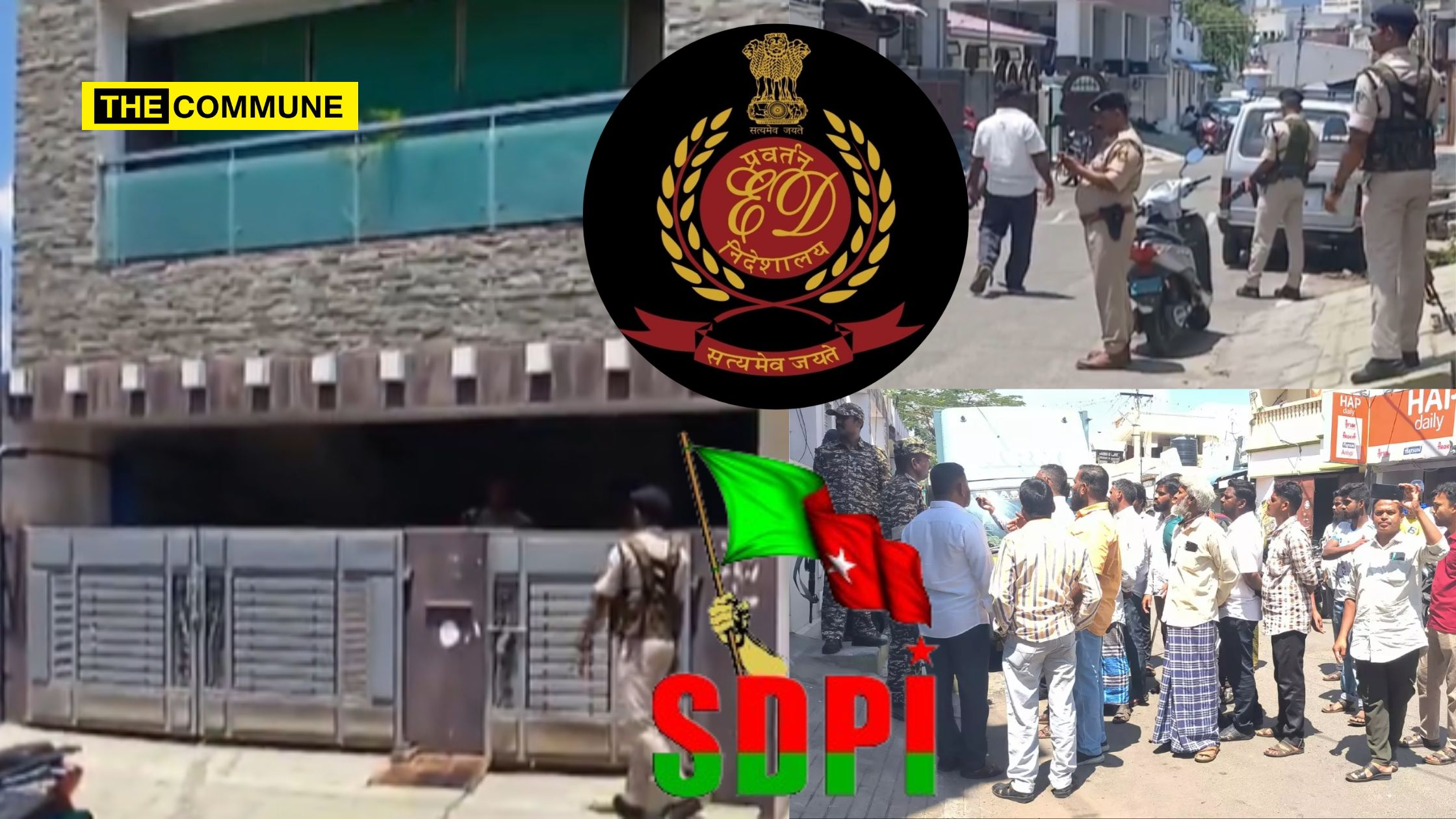
The Enforcement Directorate (ED) conducted searches across multiple states on 20 March 2025, as part of its money laundering investigation against the Social Democratic Party of India (SDPI), the political wing of the banned terrorist organization Popular Front of India (PFI).

Raids were carried out under the Prevention of Money Laundering Act (PMLA) at various locations, including Mettupalayam, Coimbatore, Arcot, and Vellore in Tamil Nadu; Bhilwara and Kota in Rajasthan; Kolkata in West Bengal; and Kottayam and Palakkad districts in Kerala.

In Mettupalayam, Coimbatore, the ED searched two locations, one of which was linked to an SDPI party member, following suspicions of large-scale money laundering.

One of the individuals under scrutiny is Rajik, a resident of Annaji Rao Road Extension in Mettupalayam, Coimbatore, who operates an iron shop and serves as the Coimbatore North District Secretary of SDPI. ED officials, assisted by CRPF personnel, are currently conducting searches at his residence. Similarly, the agency is investigating the residence of Reela, who owns a fruit shop near the Mettupalayam bus stand.

These raids follow the recent arrest of SDPI president Moideen Kutty K, also known as MK Faizy, on 3 March at Indira Gandhi International Airport. Authorities claim that SDPI continues to advance the ideology of the banned PFI and receives funding from it.

SDPI Acting as a Front for PFI?

The central government banned PFI and eight associated organizations under the Unlawful Activities (Prevention) Act (UAPA) on 28 September 2022, citing concerns over radicalization and terror financing. The crackdown, led by the ED and the National Investigation Agency (NIA), resulted in multiple arrests and the seizure of alleged incriminating materials. The government claimed that PFI, with a significant presence in Kerala, was involved in activities that posed a threat to national security.

Founded in 2009 and registered as a political party with the Election Commission of India, SDPI has been accused by the ED of functioning as a front for PFI. The agency alleges that SDPI was both funded and controlled by PFI, with a strong interconnection between the two organizations. ED claims that PFI played a direct role in SDPI’s operations, including policymaking, election campaigns, public outreach, and mobilizing cadres.

According to the ED, SDPI served as a cover for PFI’s alleged anti-national activities while outwardly presenting itself as a social welfare organization. The investigation is ongoing, with officials examining financial links and organizational overlaps between SDPI and PFI.

(With Inputs From Hindustan Times)

Subscribe to our channels on Telegram, WhatsApp, and Instagram and get the best stories of the day delivered to you personally.

Tamil Director Gopi Nainar Returns ‘Periyar’ Award, Calls Out Dravidar Kazhagam & ‘Periyar’ists Hypocrisy On Dalit Rights

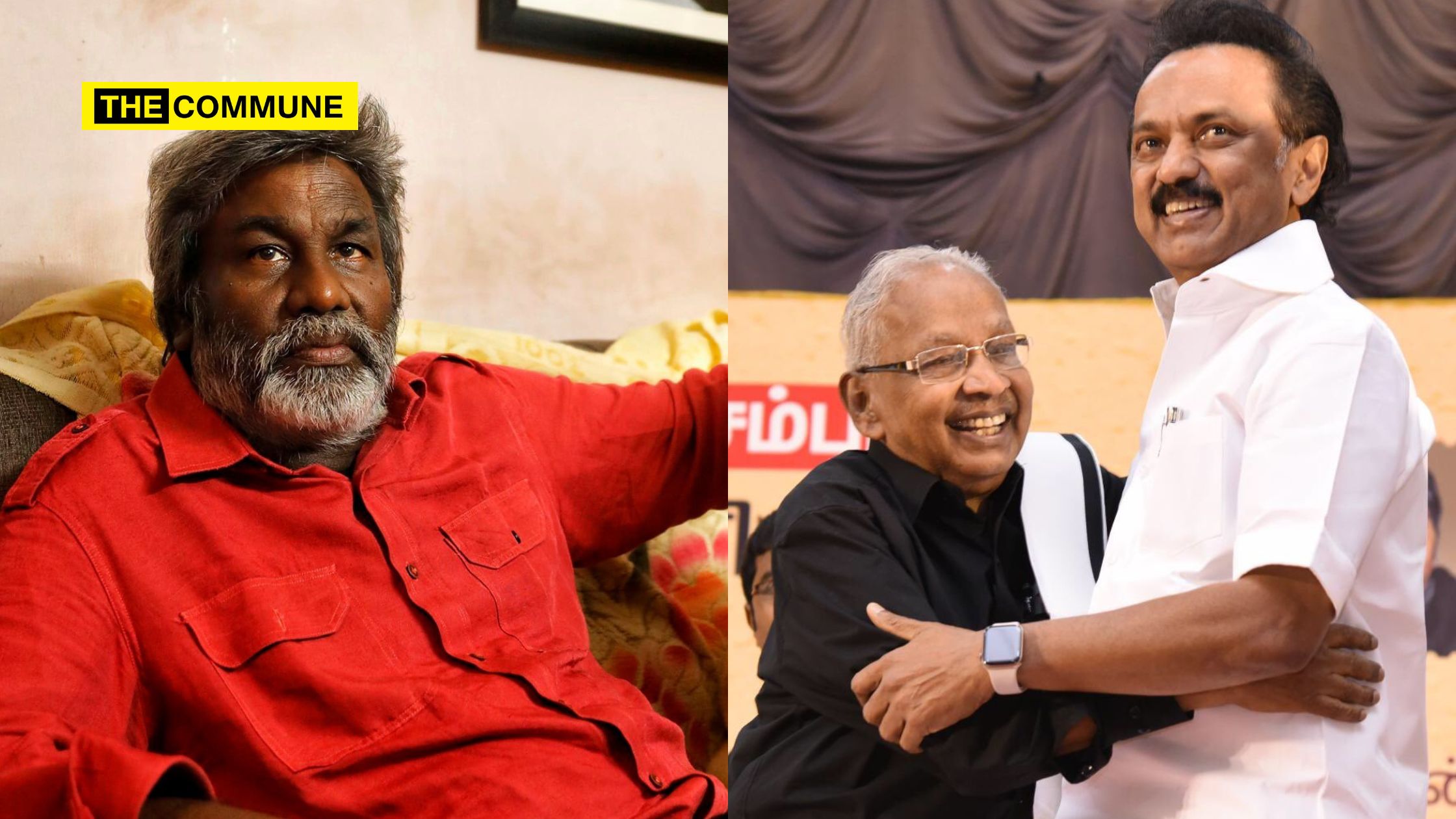
2018 ‘Periyar’ Award-winning Tamil director Gopi Nainar has announced that he is returning his award, accusing Dravidar Kazhagam (DK) and ‘Periyar’ists of hypocrisy. He pointed out that while the organization praise Dalit rights in films, they vilify and publicly insult those who fight for them in real life. Nainar also called out Dravidar Kazhagam for its dictatorial and fascist stance, stating that when its ideology and activism are questioned democratically—especially by a Dalit activist—it responds with hostility rather than open discussion.

In a social media post, Gopi Nainar expressed his frustration, stating, “I am being slandered in public by Periyarist thinkers for demanding housing for Dalits and preventing the encroachment of their lands. If I oppose and question an organization that claims to be democratic in a democratic way, it confronts me with a dictatorial mindset. Such environment makes me fear for my life to live among people with this dictatorial mindset. I believe this is the condition of Dalits all over Tamil Nadu. When a Dalit raises political questions with a democratic mindset, it enrages Periyarist thinkers and Dravidian ideologues in Tamil Nadu. This is nothing but dictatorial mindset.” 

He expressed concern that taking such a stance against them could even lead to his murder in the future and stated, “In this context, as I am who is being severely insulted today may also be killed by them in the future. There is no big difference between the massacre of intellectuals, social activists, artists and the murder that is happening all over India and the murder that will happen to me in the future.”

He further compared his situation to the targeting of intellectuals, activists, and artists across India. Referring to his film Aram, he stated that the movie highlights how the government does little to help the oppressed. The Dravidar Kazhagam had praised the film and awarded him the Thanthai Periyar Award, but now, when he actively fights for the rights of the oppressed, the same group treats him as an enemy.

Highlighting the Dravidar Kazhagam’s hypocrisy, he said, “I directed the film Aram. The  theme of the movie which conveys the idea that the government does nothing when oppressed people suffer. That is why Dravidar Kazhagam praised me and honored me with the Thanthai Periyar Award. However, this now feels humiliating as I actively lead struggles for oppressed Dalit people. The same Dravidar Kazhagam that celebrated Aram by giving me an award now portrays me as an enemy of society when I attempt to implement it in real life.”

Declaring that this contradiction humiliates him, he said, “For such reasons, I am returning the Periyar Award given to me by the Dravidar Kazhagam for the film Aram, with the spirit of struggle of Periyar, Ambedkar, and Marx.”


Subscribe to our channels on Telegram, WhatsApp, and Instagram and get the best stories of the day delivered to you personally.

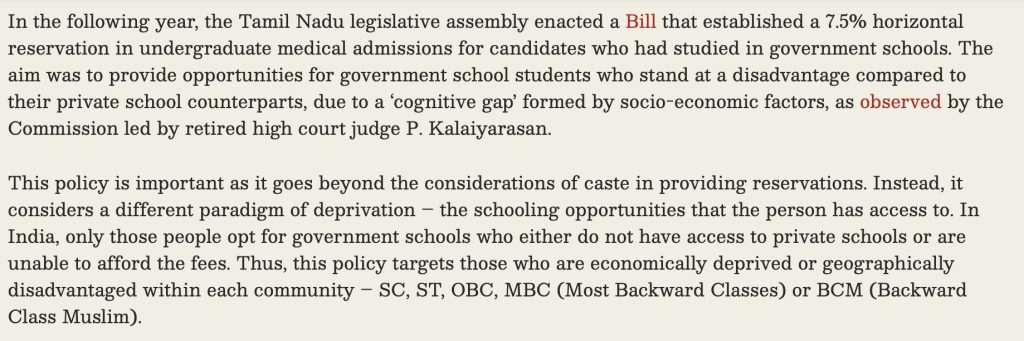
Busting PTR’s Half-Truths In Indian Express: The Reality Of Tamil Nadu’s Restrictive And Regressive Two-Language Policy

DMK Minister Palanivel Thiagarajan (fashioned as PTR), recently penned an article in The Indian Express defending the state’s two language policy and opposing the National Education Policy’s (NEP) three-language formula.

However, his article contains multiple fallacies, misrepresentations, and contradictions. Let us have a look at his claims and also compare them with data and logical analysis.

Claim: Dravidian Philosophy Removed Educational Exclusivity And Provided Equitable Access

Reality: Equitable education means fair access to quality education for all students. If Tamil Nadu’s two-language policy (Tamil and English) were truly equitable, it would apply uniformly across all schools. However, private schools often provide the choice to learn additional languages, while government schools strictly enforce the two-language formula. This creates a clear disparity between students in private institutions and those in government schools, effectively denying quality education to those who cannot afford private schooling.

The Dravidian movement, which prides itself on being anti-Brahminical and claims to have dismantled educational barriers, ironically enforces language-based restrictions that limit students’ ability to learn additional languages. This contradicts their own stance on equitable education and opportunities.

Claim: Two-Language Formula Means Tamil + English

Reality: PTR presents the two-language formula as a long-standing policy, but the historical facts contradict this assertion:

  • Before 2006, it was possible to complete education in Tamil Nadu without learning Tamil.
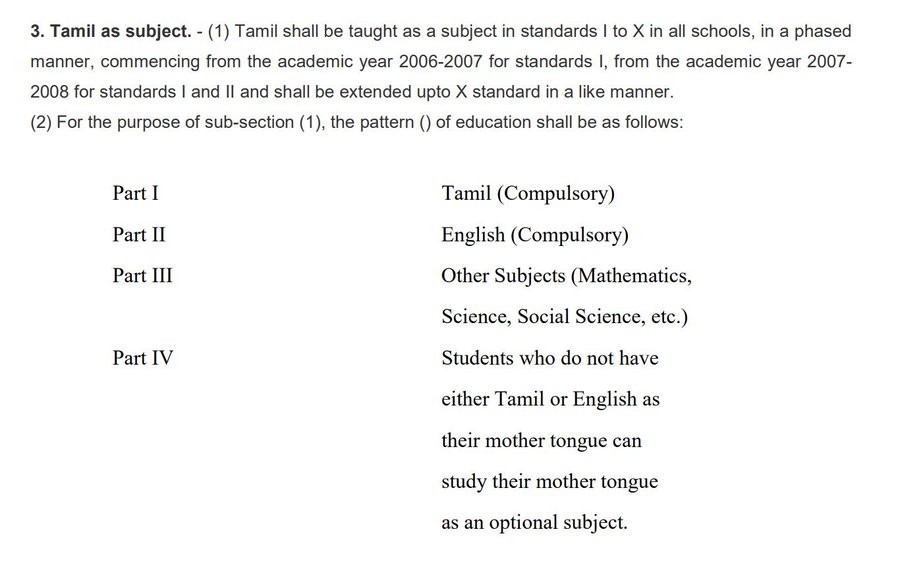
  • The Tamil Nadu Tamil Learning Act (2006) mandated Tamil learning in schools, while allowing an optional third language.

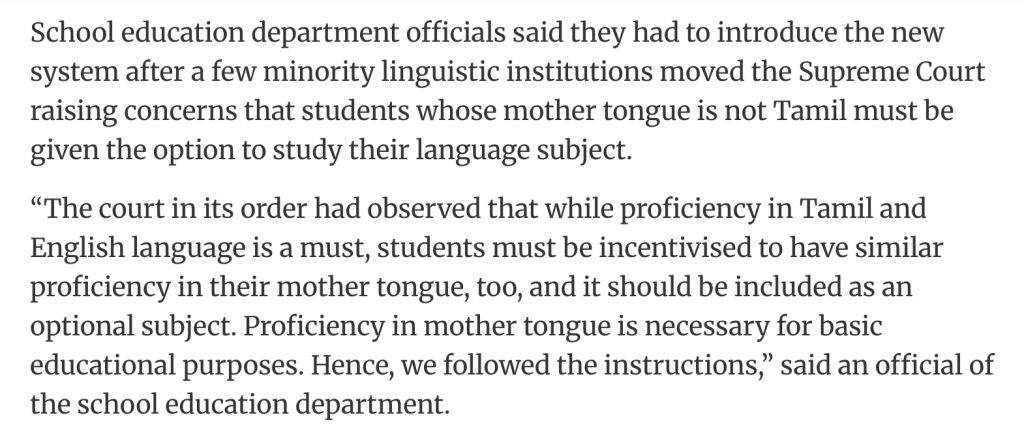
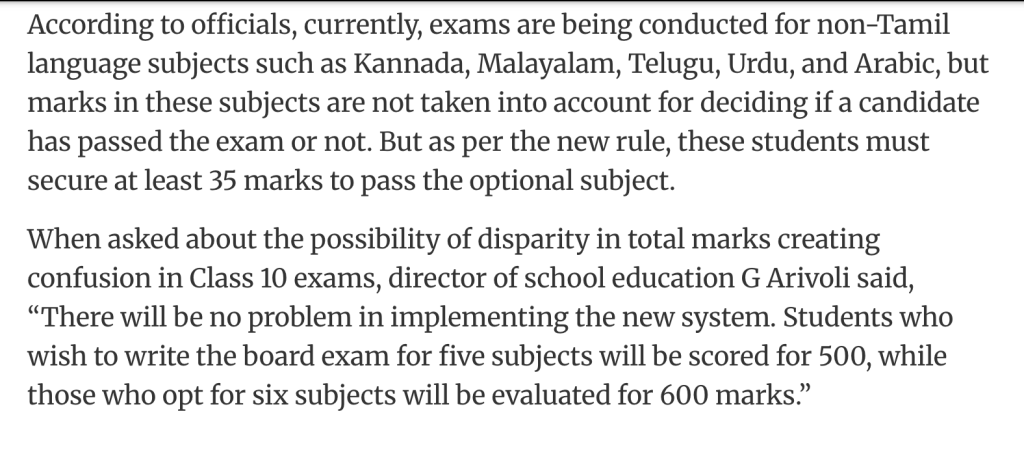
  • The Supreme Court has ruled that mother-tongue education should be an option. This means that migrant children whose mother tongue is Hindi, Bengali, or another language should be provided the opportunity to learn their own language.

Thus, even without NEP, the problems PTR claims to oppose already exist within the current system. The Tamil Nadu government’s approach forces a rigid framework on students instead of ensuring real linguistic flexibility.

Claim: The Presence of Dakshin Bharat Hindi Prachar Sabha In Chennai Shows Language Freedom

Reality: PTR suggests that the mere presence of the Hindi Prachar Sabha in Chennai proves that Tamil Nadu encourages linguistic diversity. However, this ignores the active hostility faced by Hindi learners in the state:

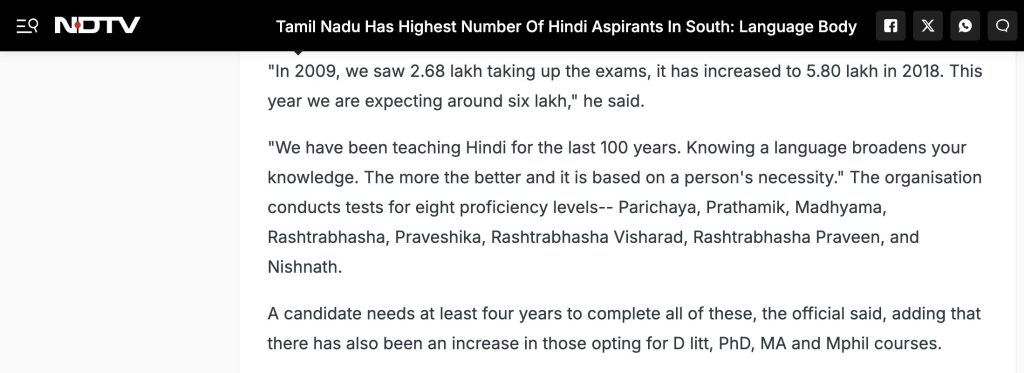
  • Hindi Prachar Sabha’s data shows widespread interest in learning Hindi in Tamil Nadu.
  • If Hindi were truly being imposed, as PTR suggests, people would not voluntarily sign up to learn it.
  • Despite this, groups like WeDravidians actively organize protests against Hindi learning, discouraging linguistic diversity.
  • The Tamil Nadu government has taken no action against such groups, further proving that language learning is restricted by political ideology rather than genuine student choice.

Claim: Tamil Nadu’s Education Model Produces Better English Proficiency

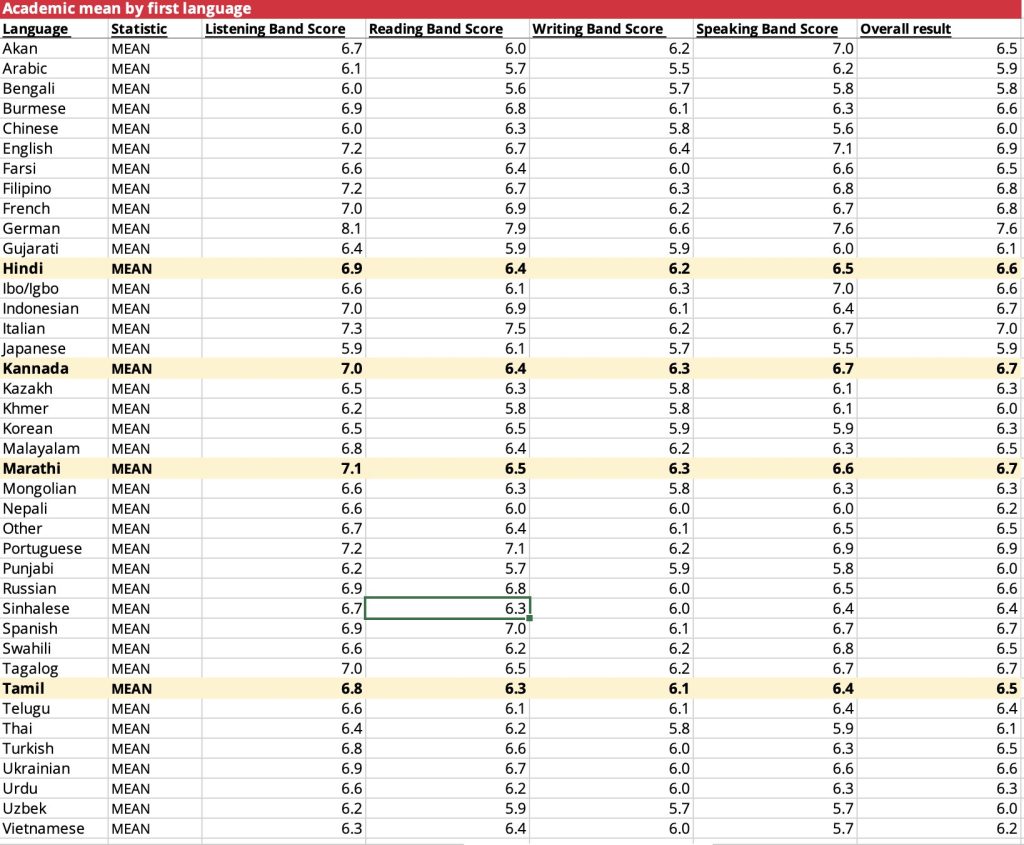
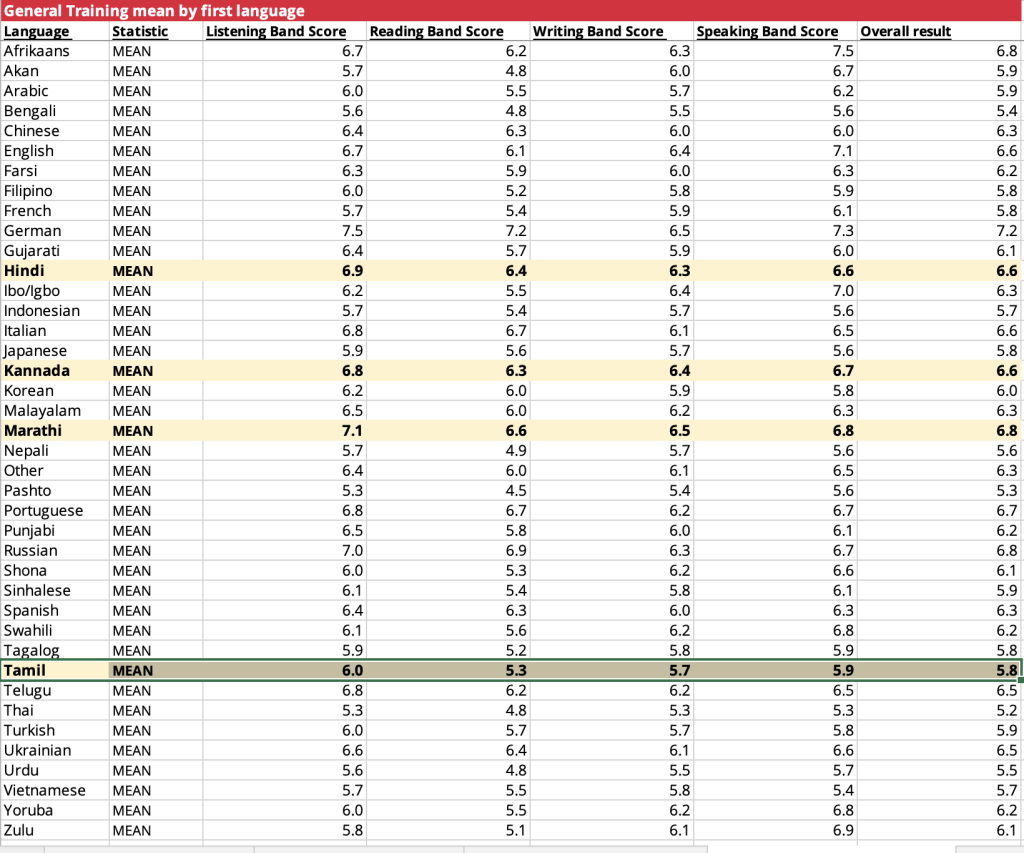
Reality: PTR argues that Tamil Nadu’s two-language formula has made its students more proficient in English than their counterparts from Hindi-speaking states. However, data from IELTS Academic and General Training Exams contradict this claim:

  • Median scores for IELTS show that Hindi speakers perform better than Tamil speakers.
  • Kannada and Marathi speakers also outperform Tamil speakers in English proficiency.

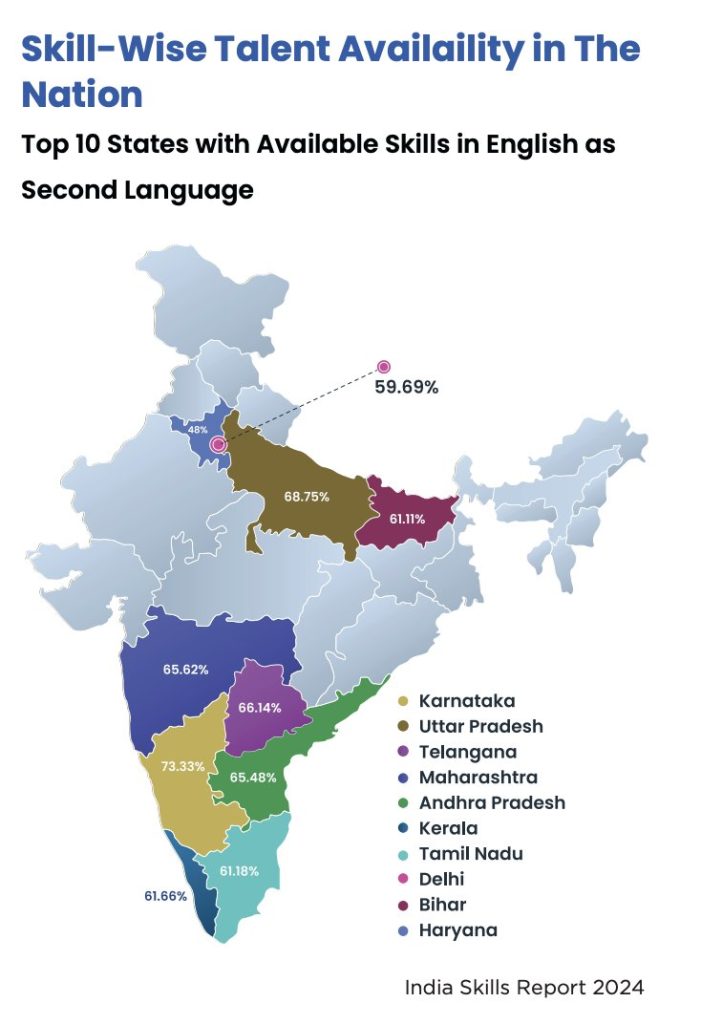
The Wheebox India Skills Report indicates that states like Karnataka, Uttar Pradesh, Telangana, and Maharashtra produce better English-speaking professionals than Tamil Nadu.

These statistics directly refute the notion that Tamil Nadu’s restrictive language policy leads to superior English proficiency. In fact, it may even be hindering English education.

Claim: Learning A Third Language Threatens Tamil’s Survival

Reality: PTR argues that introducing a third language will dilute Tamil and lead to its decline. However, this claim lacks historical basis:

  • Tamil has survived and thrived despite centuries of royal patronage for Sanskrit.
  • If Tamil has remained strong despite past influences, how can the addition of a third language suddenly cause its decline?
  • Historically, banning a language does not make another stronger—it only limits students’ opportunities.
  • Under Tamil Nadu’s language policy, many Tamilians completed schooling without learning Tamil at all. This was arguably more detrimental to Tamil than the inclusion of a third language.

DMK Ally Congress’ MP Chidambaram Talked About Promoting Hindi

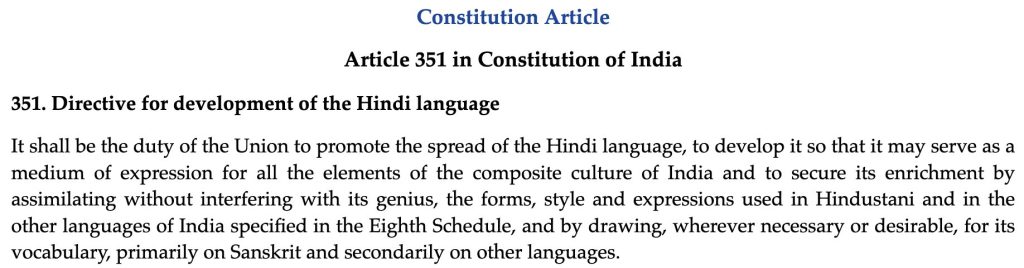
When the DMK was in alliance with the Congress at the centre, the then Minister Chidambaram called for promotion of Hindi in adherence to Article 351 of the Constitution.

Article 351 says, “It shall be the duty of the Union to promote the spread of the Hindi language, to develop it so that it may serve as a medium of expression for all the elements of the composite culture of India and to secure its enrichment by assimilating without interfering with its genius, the forms, style, and expressions used in Hindustani and in the other languages of India specified in the Eighth Schedule, and by drawing, wherever necessary or desirable, for its vocabulary, primarily on Sanskrit and secondarily on other languages.”

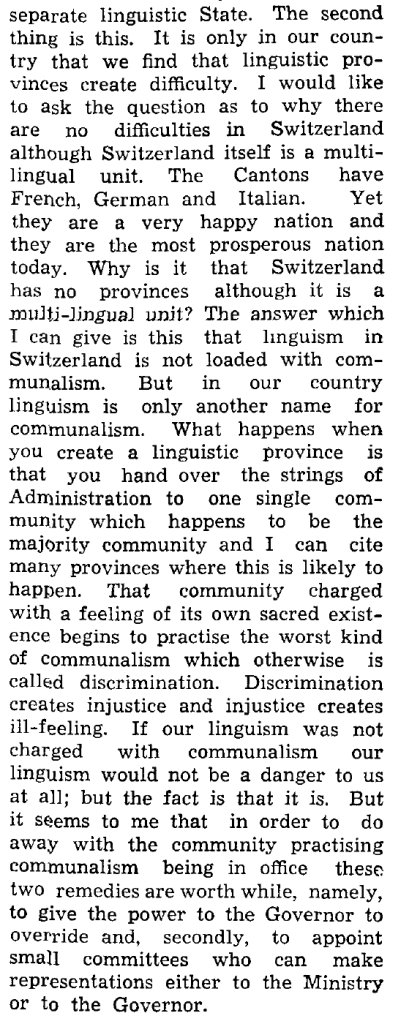
Dr. Ambedkar, during the Andhra Bill debate, observed that linguistic divisions in India were fueling communalism and discrimination. To counter this, he proposed strengthening the Governor’s authority as a potential solution.

The True Problem Lies In Political Fear, Not Educational Policy

PTR’s article relies on political rhetoric rather than factual analysis. His argument against the three-language formula falls apart under scrutiny, as:

  1. Tamil Nadu’s education policy is not truly equitable, as private schools offer more linguistic flexibility than government schools.
  2. The historical record contradicts the claim that Tamil + English was always the policy.
  3. The demand for Hindi learning in Tamil Nadu shows that people are interested, despite political hostility.
  4. Data from international exams and employment reports show Tamil Nadu’s restrictive language policy does not produce better English proficiency.
  5. The survival of Tamil does not depend on banning other languages but on nurturing its continued growth.

Instead of opposing linguistic diversity, Tamil Nadu’s government should focus on empowering students with choices. The NEP’s three-language formula does not force Hindi on Tamil Nadu—it simply allows students the freedom to choose an additional language. True progress lies in educational inclusivity, not linguistic imposition disguised as preservation.

(This article is based on an X thread by Sreedharan KS)

Subscribe to our channels on Telegram, WhatsApp, and Instagram and get the best stories of the day delivered to you personally.

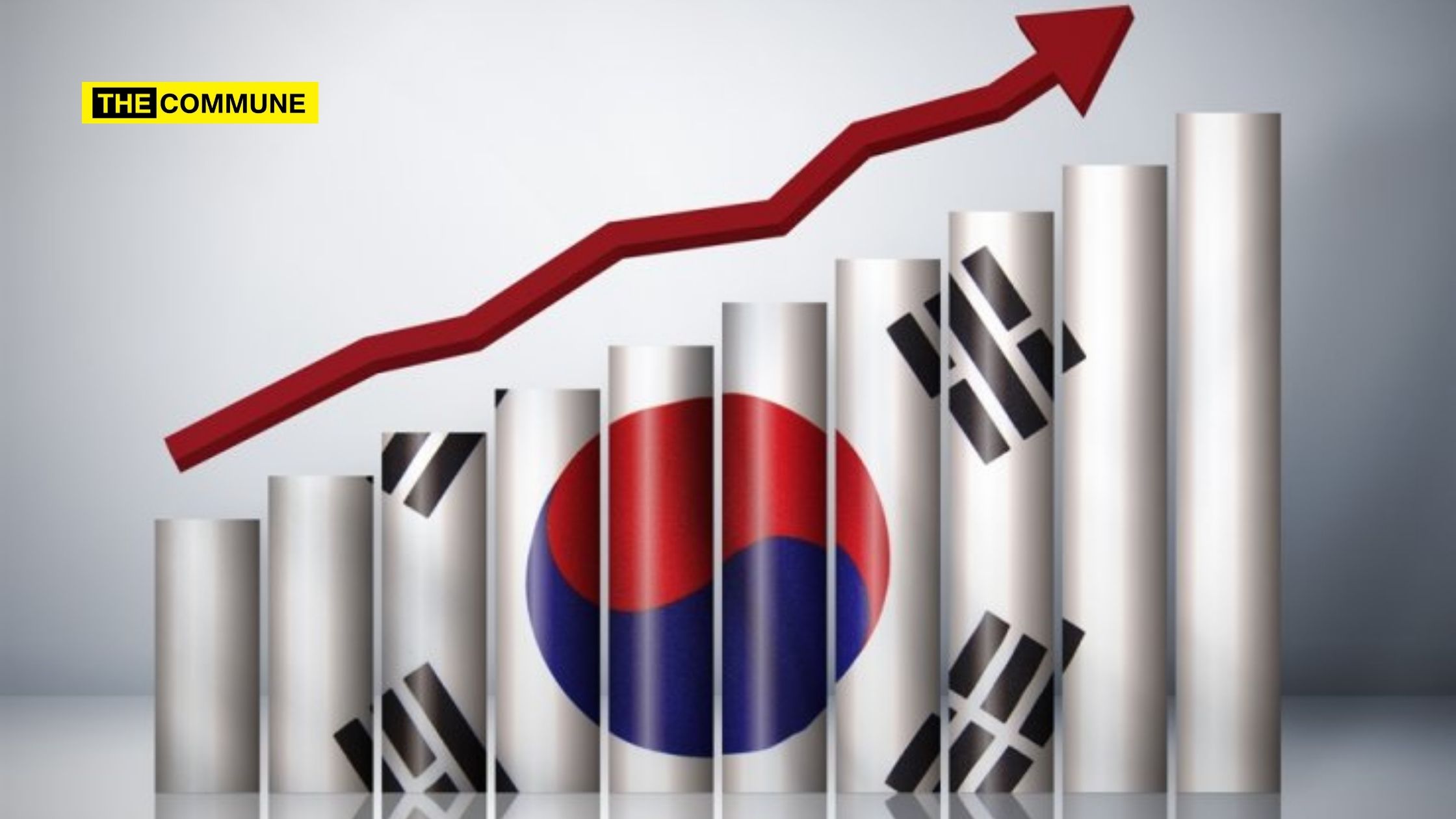
South Korea’s Total Debt Hits Record High Of Over $4.27 Trillion

The combined debt of the government, companies and households in South Korea has reached an all-time high amid weak domestic demand and falling revenue, data showed on Thursday.

The country’s total government debt and corporate and household borrowing amounted to a record 6,222 trillion won (US$4.27 trillion) as of the end of the third quarter, according to data from the Bank for International Settlements (BIS). The figure marked a 4.1 percent increase from a year earlier and a 0.9 percent rise from the previous quarter, reports Yonhap news agency.

It amounts to 247.2 percent of nominal gross domestic product (GDP), which logged its lowest level since the second quarter of 2021. Of the total, corporate debt reached 2,798 trillion won as of end-September, up 2.9 percent from a year earlier.

Household borrowing grew 2.1 percent on-year to 2,283 trillion won. Government debt surged 11.8 percent from a year earlier to 1,141 trillion won, the data showed. Meanwhile, financial regulator here on Thursday unveiled a set of measures to help enhance the competitiveness of savings banks that include easing regulations on mergers and acquisitions (M&As), and adopting relatively lax loan classification rules.

The Financial Services Commission (FSC) said it will set up an over 1 trillion-won (US$689 million) fund to help savings banks take soured loans off their balance sheets and launch a special vehicle to manage non-performing loans extended by savings banks.

The regulator also said it will ease rules on M&As in the sector and review savings banks’ loan classification rules, which they claim are too strict given their business environment. Data showed that savings banks’ assets have steadily grown, reaching 120.9 trillion won at the end of last year, up from 92 trillion won in 2020 and 86.9 trillion won in 2010.

But their lendings are largely focused on real estate development projects and low-rated, financially weak customers, leaving them vulnerable to economic cycles, and leading to a decline in profitability and worsening financial status.

—IANS

Subscribe to our channels on TelegramWhatsApp, and Instagram and get the best stories of the day delivered to you personally.

Disabled Son’s Allowance Cut After False Death Report; Parents Carry Him In Plastic Box To Prove He Is Alive, Collector Promises Justice

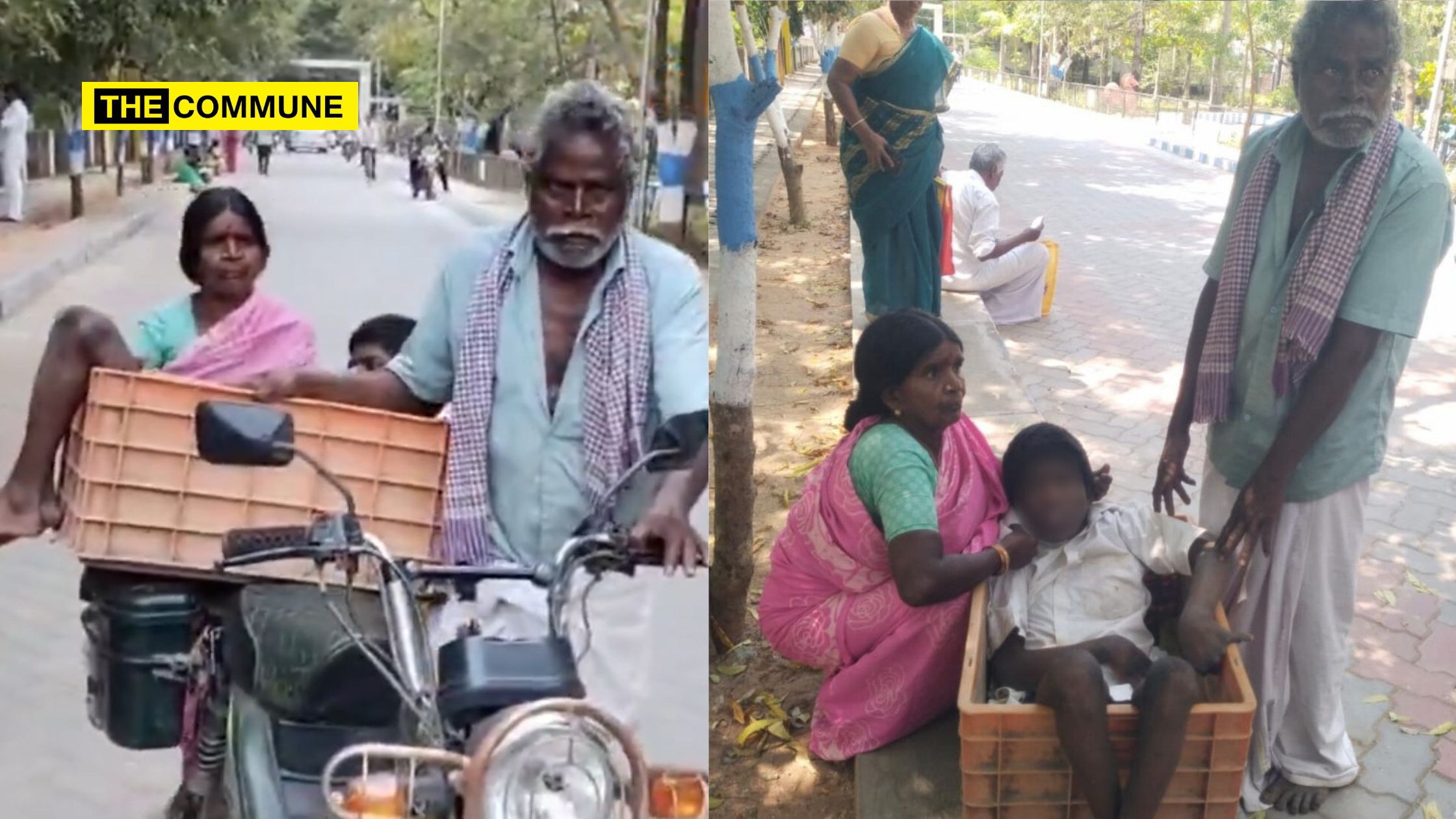
In a distressing incident in Villupuram, a couple was forced to bring their disabled son in a Corrugated plastic box to the Collector’s office to prove he was alive after authorities wrongly declared him dead and stopped his disability allowance, citing fraudulent claims.

District Collector Sheikh Abdul Rahman has assured that necessary steps have been taken to reinstate the maintenance allowance for V. Govindan, a disabled resident of Melkaranai village, Vikravandi taluk, Villupuram district, along with his sister.

On 17 March 2025, Venkatesan, a laborer from Melkaranai, accompanied by his wife Kaliammal and their mentally challenged son, Govindan (25), arrived at the District Collectorate to submit a petition. In his appeal, Venkatesan stated that the monthly maintenance allowance for Govindan had been unfairly discontinued, and he pleaded for its restoration.

Upon receiving the petition, District Collector Sheikh Abdul Rahman immediately directed officials to investigate. The inquiry revealed that Govindan and his sister, Bhuvaneswari, who is also mentally challenged, had their maintenance allowances deposited into their father’s linked bank account. However, due to a double Aadhaar registration error, payments for Bhuvaneswari were stopped in February 2025, while Govindan’s were halted in November 2024 under the false assumption that he was deceased.

After bringing the issue to the attention of the Disability Welfare Commission, Collector Sheikh Abdul Rahman confirmed that corrective measures had been taken to resume the financial assistance for both siblings. Additionally, an immediate relief amount of ₹6,000 and ₹12,000 was provided to them.

Following the incident, netizens criticized the government’s inaction, questioning the lethargy of officials. They also raised concerns about the $162 million World Bank sanction for the RIGHTS project, which was approved to enhance Tamil Nadu’s social protection systems and improve inclusion, accessibility, and opportunities for people with disabilities.

Netizens urged the government to take more meaningful action, emphasizing that there needs to be a shift in attitudes toward the treatment of people with disabilities. They highlighted the need for a more empathetic approach to addressing the challenges faced by the differently-abled community.

(With Inputs From Dinamalar)

Subscribe to our channels on Telegram, WhatsApp, and Instagram and get the best stories of the day delivered to you personally.

Dravidian Model TASMAC Scam: Customers Fleeced Extra Money

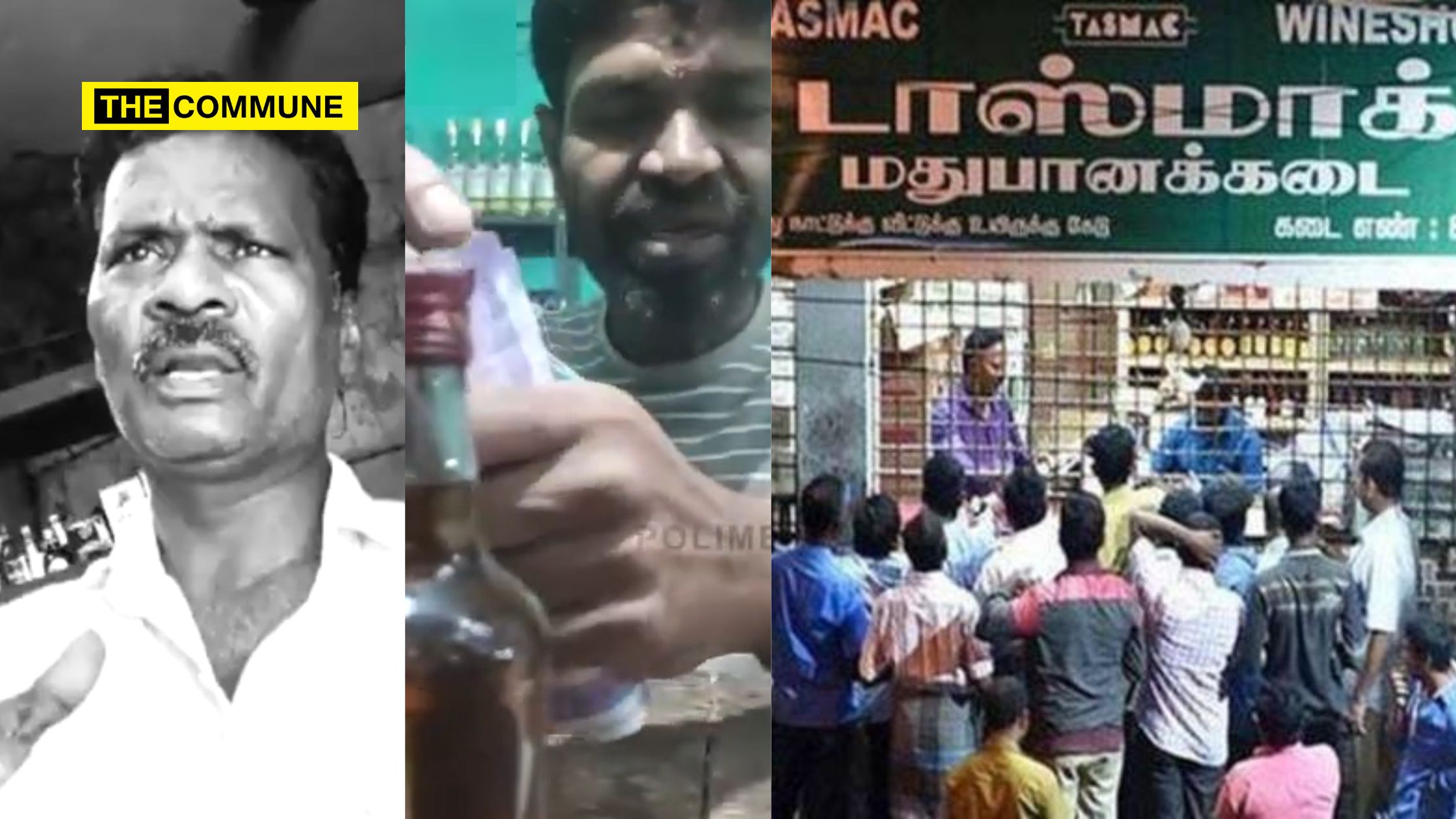
Despite the ongoing controversy surrounding TASMAC following the Enforcement Directorate’s (ED) allegations of financial irregularities—where ₹1,000 crore was allegedly siphoned off in collusion with bottle manufacturers through inflated costs and fraudulent purchases—TASMAC salesmen continue to overcharge customers, demanding an extra ₹10 to ₹40 beyond the maximum retail price (MRP).

In a recent incident, a man named Kalaiselvan visited a TASMAC outlet in Bhuvanagiri, Cuddalore district to purchase liquor. When he asked for a receipt for his purchase and questioned the additional ₹10 charge, the shopkeeper responded in a threatening manner, claiming, “Doesn’t the collector, DSP, SP, and Minister know about collecting ₹10? Who doesn’t know it? You are creating a scene and asking for a bill? Creating a problem; I’ll show you what I can do.” Kalaiselvan recorded the exchange on his phone and shared it on social media.

Following the viral video, the TASMAC salesman, identified as Veeramani, was suspended for overcharging customers.

Earlier, another TASMAC salesman was suspended by the prohibition and excise department after a video surfaced showing him demanding extra money from a customer. The video showed a heated argument at TASMAC shop, where the salesman allegedly charged ₹40 more than the printed MRP of ₹200 for a quarter bottle. When the customer asked for a bill for ₹240, the salesman refused, stating that TASMAC had not yet implemented a billing system.

In response to the incident, senior BJP leader and state coordinating committee convenor took to social media to question, “The price of the bottle is ₹200, but should pay ₹240? Those who used to charge ₹10 extra per bottle are now demanding ₹40 more. If the additional collection of Rs. 40 per bottle is calculated as Rs. 40 for every bottle sold per day across Tamil Nadu, how many crores of additional amount will be generated from that alone? How many crores generated in a month? In a year?  And to whom is this amount going?”

Subscribe to our channels on Telegram, WhatsApp, and Instagram and get the best stories of the day delivered to you personally.

The F-35 Trap: A Geopolitical Game Beyond India’s Reach

This article is a continuation (Part 2) of the series. You can read Part 1 here.

The Agniveer Scheme and Geopolitical Implications

The Agniveer scheme is India’s ambitious plan to overhaul its military by recruiting young, tech-savvy soldiers for a four-year term, moving away from the traditional lifetime service model. The goal is to build a nimble, adaptable force ready for modern challenges. However, the media has created hype around this scheme, fuelled by vested interests from the Western lobby aiming to derail India’s defense improvement. When India focuses on defense improvement rather than the protests, it can become a major defense exporter.

There’s also a geopolitical twist. Some suggest the United States might be quietly pleased with this turmoil. The reasoning goes like this: if India can’t sort out its military reforms—like Agniveer—and keeps facing internal pushback, it stays reliant on foreign arms, especially from the U.S. India has already spent £15.5 billion on American military equipment since 2008—planes, helicopters, and more. Now, talks of dropping another £7.8–11.6 billion on F-35 fighter jets and Patriot missile systems are circulating. That’s a hefty bill, and it locks India deeper into a dependency trap. The more India leans on U.S. gear, the harder it gets to break free and build its own.

Self-reliance is the real prize here — crafting a military that stands on its own, not one tethered to foreign suppliers for every spare part. The protests over Agniveer, whether fuelled by local discontent or subtly nudged from abroad, risk pulling India off that path. Sorting out this mess internally isn’t just about calming the streets; it’s about taking control of India’s defense future. Why let chaos—or whispers from across the ocean—keep India from that goal?

Incidents and Accidents Involving the F-35

The F-35 Lightning II, a family of single-seat, single-engine, all-weather stealth multirole fighters, has experienced several notable accidents and incidents since its introduction. These events have involved engine fires, crashes, and collisions, often resulting from human error, mechanical failures, or design issues. Below is a summary of key incidents based on available information:
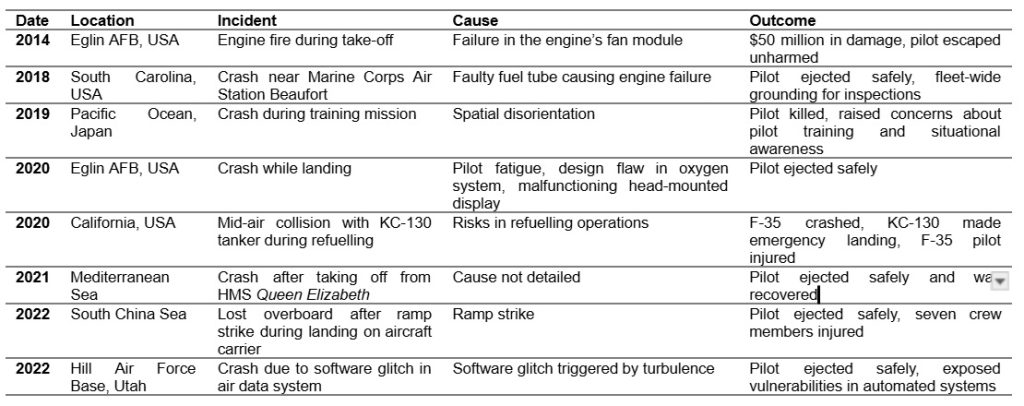
These accidents have contributed to debates about the F-35’s safety and reliability, given its complexity and high cost. However, with over 721,000 flight hours and 965 aircraft delivered, some argue its accident rate is within expected norms for a new military platform.

Autonomous Incidents Involving the F-35

The F-35 is a manned aircraft, not designed for fully autonomous flight. While it features advanced automation and artificial intelligence (AI) capabilities—such as sensor fusion, target detection, and tracking—these are decision-support tools controlled by the pilot, not autonomous flight systems. As a result, there are no documented incidents of the F-35 operating autonomously or crashing due to autonomous flight operations.

However, automation-related issues have played a role in some incidents:

  • 2022 Utah Crash: The crash at Hill AFB was caused by a software glitch in the air data system, which stopped responding to pilot inputs after being triggered by turbulence. While this involved automation, it was not an autonomous operation—rather, it highlighted risks of reliance on complex software systems.

The F-35’s AI and automation are designed to enhance pilot situational awareness and combat effectiveness, not to replace the pilot. Unlike unmanned aerial vehicles (UAVs), the F-35 requires human control, and all reported incidents stem from human error, mechanical failures, or design flaws rather than autonomous behaviour.

Strategic Decision-Making: Building Self-Reliance

India must approach this decision with caution. The smart move is to negotiate with America to share the F-35’s blueprints so it can be built domestically—otherwise, India should decline the offer. Russia’s Su-57 deal allows for domestic production, aligning with the “Make in India” initiative and saving costs while fostering local expertise. Additionally, India should advocate for global regulations on AI warfare to prevent major powers like China and America from dominating with advanced technology that India lacks. HAL’s track record—delays in delivering the Tejas—indicates the need for external assistance to catch up. However, purchasing advanced jets like the F-35 without acquiring the necessary know-how keeps India dependent, rather than empowering it to stand independently.

Evaluating the F-35, it offers impressive capabilities: speeds of 1,975 km/h, a range of 2,220 km, and stealth features with a radar cross-section of 0.001 m². However, it comes with a hefty price tag—£62 million per jet, plus additional costs for spares and fuel—and carries only 10 weapons, fewer than some competitors. In contrast, the Su-57, while less stealthy (0.1 m²), is cheaper to co-build, and Russia is willing to share technology. The AMCA represents India’s future aspirations—stealthy, domestically produced, and AI-ready—but its completion is projected for 2035, which is too far off to address immediate needs.

The real fight is shifting to the skies, with AI jets—no pilots, just computers making decisions, outthinking and outflying anything human. China is advancing rapidly in this domain, and America is not far behind. India’s own Advanced Medium Combat Aircraft (AMCA), intended to be a high-tech response, won’t be ready until 2035—ten years too late to catch up. This delay poses a significant challenge, as AI-driven jets represent the future of air combat.

Moreover, there is no global rulebook for AI wars. Existing agreements like the Geneva Convention cover human soldiers, not machines. If an AI jet goes rogue and hits the wrong target, accountability becomes a complex issue. This regulatory gap leaves nations vulnerable to unforeseen consequences.

While the F-35 is currently a solid option—it flies, fights, and hides effectively—it is not designed for the AI-driven future. Investing in the F-35 now could mean buying yesterday’s technology for tomorrow’s war, potentially leaving India at a disadvantage as AI jets become the norm.

India requires a solution now that not only meets current defense needs but also contributes to long-term self-reliance. The focus should be on building capabilities that empower India, rather than creating dependency on foreign suppliers.

Conclusion

India’s decision between the American F-35 and the Russian Su-57 fighter jets is a complex and multifaceted one, with significant implications for the country’s defense strategy, geopolitical alliances, and long-term self-reliance. The F-35 offers advanced stealth and technology, but it comes with high costs and potential dependencies on the United States. In contrast, the Su-57, while less stealthy, aligns with India’s “Make in India” initiative, fostering local expertise and reducing reliance on foreign suppliers.

The rapid evolution of AI-driven aviation further complicates this decision, as the future of air combat will likely be dominated by pilotless jets. Investing in the F-35 now could mean buying technology that may soon be outdated, whereas the Su-57 offers a platform for future innovations and self-reliance.

The Agniveer scheme and the geopolitical dynamics surrounding India’s defense reforms highlight the importance of focusing on long-term strategic goals rather than short-term fixes. Ensuring India’s freedom to choose its path and building a robust, independent defense capability are paramount.

This decision isn’t just about picking planes—it’s about ensuring India retains the freedom to choose its path. The Indian Air Force (IAF) needs strength to guard the skies, and with only 31 squadrons against the required 42, the gap is significant. China is not waiting, and the urgency is clear. However, opting for the F-35 could lock India into America’s grip, costing billions—£62 million per jet, with dozens needed and years of upkeep. This dependency could bleed resources and limit strategic autonomy.

Russia offers a partnership with the Su-57, allowing India to build and learn domestically. This aligns with the “Make in India” initiative, fostering local expertise and reducing reliance on foreign suppliers. The Advanced Medium Combat Aircraft (AMCA) represents a home-grown hope, but it’s a decade away from being operational. The future of air combat lies in AI-driven, pilotless jets, which come with no established rules and significant risks.

India must avoid trading tomorrow’s freedom for today’s quick fix. The focus should be on strategic choices that build long-term self-reliance and resilience. Choosing wisely now will prevent future regret and ensure India’s defense capabilities are robust and independent. Ultimately, the choice between the F-35 and the Su-57 is not just about acquiring new aircraft; it’s about shaping India’s defense future. By making strategic decisions that prioritize self-reliance and resilience, India can secure its position as a major defense power and avoid the pitfalls of dependency on foreign suppliers.

Vikram Mohan is an independent writer with a keen eye for global defense and geopolitics. While not a formal specialist, he brings a fresh, analytical perspective to complex strategic issues, blending meticulous research with insightful commentary.

Subscribe to our channels on Telegram, WhatsApp, and Instagram and get the best stories of the day delivered to you personally.

The F-35 Trap: Why It’s A High-Stakes Geopolitical Gamble For India

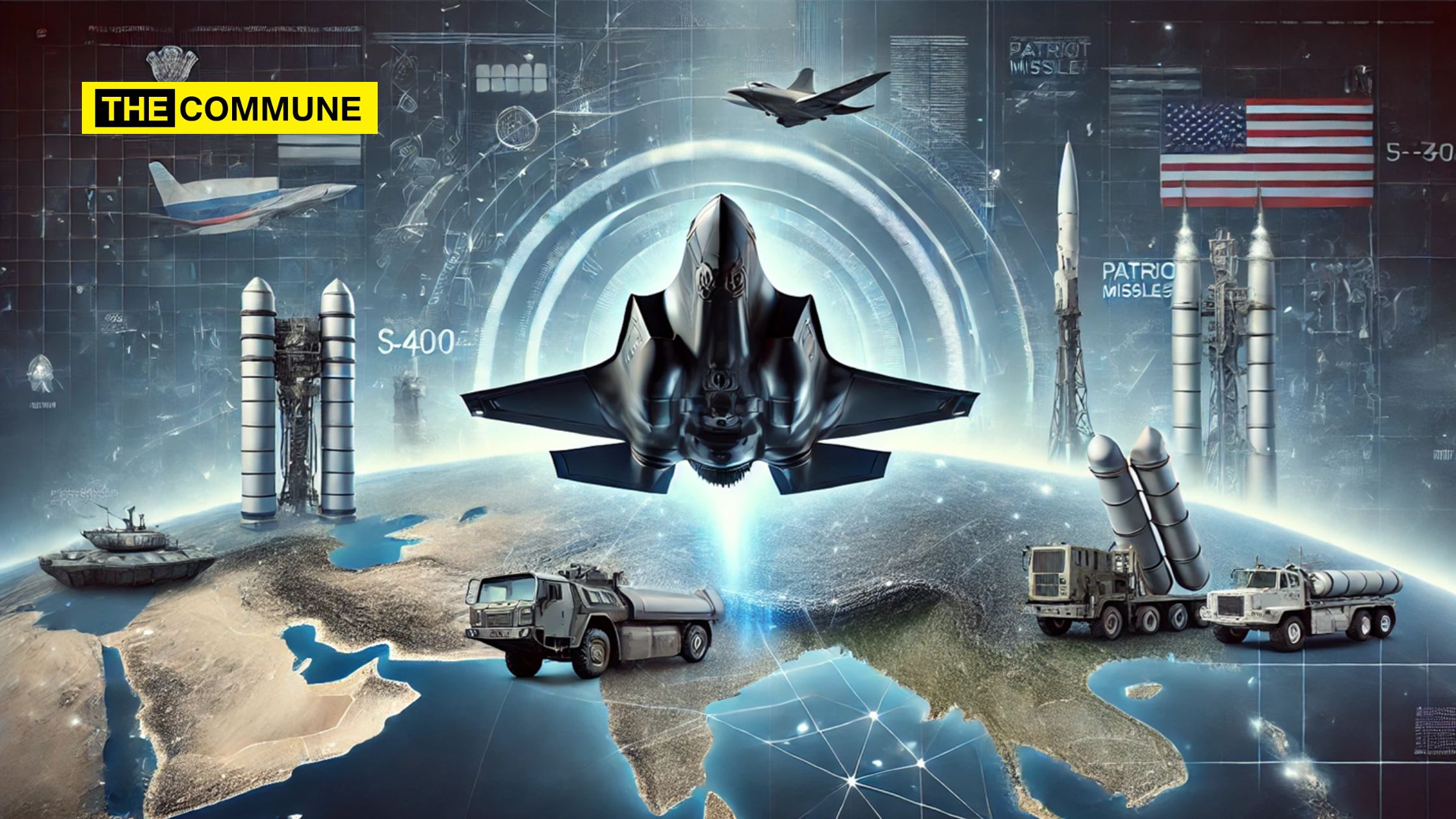
The F-35 Lightning II, a fighter jet from the United States, is a marvel of modern engineering—its design makes it nearly invisible to enemy radar, it can strike targets with deadly accuracy, and it links up instantly with other allied planes and bases to share what it sees. America is offering this jet to India, presenting a tempting upgrade for the air force. However, Russia’s S-400 system can blast threats out of the sky from 400 kilometers away, while the U.S. Patriot system is built to stop missiles closer in, within 160 kilometers. These aren’t just machines—they’re bargaining chips in a tense global standoff, and India is caught right in the middle, needing to decide what keeps it safest.

This situation escalated when the Prime Minister visited the U.S. in February 2025, and President Donald Trump pitched the F-35 as a game-changer. Some believe it’s a golden ticket to match China’s growing air power, but others see a catch—it’s massively expensive, and buying it might mean relying on America for spares and support for decades. The Indian Air Force (IAF) is stretched thin with just 31 squadrons—each squadron has about 18 planes—when experts say 42 are needed to handle threats from Pakistan to the west and China to the north and east. China is not standing still either; they’re working on sixth-generation jets—faster, smarter, and harder to spot than anything India has. The F-35 could quickly plug that gap, but it’s not just about getting new planes—it’s about whether the cost and the strings attached make sense for India.

The Indian Air Force’s Breaking Point

The Indian Air Force (IAF) is in a tight spot. With only 31 squadrons instead of the 42 needed, there is a shortfall of over 200 planes to feel secure against neighbouring threats. This gap is significant—it’s like having half the guards needed to watch a long border. Hindustan Aeronautics Limited (HAL), the company relied upon to build jets like the Tejas, has been painfully slow. In October 2024, IAF Chief Air Marshal AP Singh called them out at a major air show, highlighting delays in Tejas deliveries—meant to be an affordable, home-grown fighter—leaving the IAF exposed. Currently, the IAF is flying aging MiGs from the Soviet era and Sukhois from Russia, which are decent but outdated compared to what’s emerging next door. China’s sixth-generation jets use artificial intelligence (AI) to fly smarter, dodge radar better, and react faster than human pilots ever could. The F-35 is a ready-made answer—it’s available now, it hides from radar, and it fights well—but each one costs £62 million, and dozens are needed, plus years of American help to keep them running.

Steps have already been taken to protect India. In 2018, a £4.2 billion deal was signed with Russia for the S-400 system, which fires missiles to stop planes or rockets before they get close. Three of the five units are operational along the borders, with the last two due by late 2025. The S-400 can see threats 600 kilometers away and hit them at 400 kilometers, far outstripping the Patriot’s 150-kilometer sight and 160-kilometer reach. That’s why it was chosen — India has vast frontiers, and something that covers the distance is needed. The Patriot didn’t meet the requirements back then. However, if the F-35 is purchased, America might insist on pairing it with Patriots because their tech doesn’t mix well with Russian gear. This could mean the £4.2 billion S-400s sit half-useless, forcing additional spending to start over with American systems. It’s crucial to figure out what each system does and whether this new deal is worth upsetting the existing one.

Tech Titans Compared: F-35, Patriot, S-400

The following table provides a detailed comparison of the technical specifications of the F-35 Lightning II, the MIM-104 Patriot (PAC-3), and the S-400 Triumf:

The F-35 is a jet designed for offensive operations, hiding from radar with a signal so small (0.001 m²) it appears like a bird to enemy scanners. It’s AN/APG-81 radar sees far and clear, guiding missiles like the AARGM-ER to hit targets 97 kilometers away. However, at £62 million per jet, the costs are steep, and repairs and fuel add even more expenses.

The Patriot is a ground-based system firing missiles at 6,174 km/h to stop threats it detects 150 kilometers away. It excels at intercepting large missiles but struggles with low-flying threats. Each unit costs £775 million, with missiles priced at £3 million each.

The S-400, also ground-based, launches missiles up to 400 kilometers at 17,297 km/h, detecting threats 600 kilometers away with its 91N6E radar and handling up to 384 missiles. It is cheaper at £388 million per unit but remains untested in actual combat. 

India needs both reach and reliability—S-400 provides distance, F-35 offers offensive capabilities, while the Patriot represents a middle ground previously deemed insufficient.

The S-400 Precedent: A Bold Stand

In 2018, India chose the S-400 over the Patriot because its 400-kilometer reach and 600-kilometer sight fit the need to guard long borders against planes or missiles sneaking in. America wasn’t happy—they threatened sanctions, especially after India didn’t take sides in the Ukraine war, showing independence from American influence. Fast forward to Modi’s U.S. visit in February 2025, and President Donald Trump offers the F-35—a jet previously shared only with NATO allies until Turkey bought S-400s and got booted from the F-35 program. The catch? F-35s don’t work smoothly with Russian tech like the S-400—their systems clash—so America might push India to buy Patriots instead, side-lining the £4.2 billion S-400 investment.

Turkey’s situation illustrates the risk: they wanted Patriots, but when America delayed, they acquired S-400s. The U.S. cut them off from F-35s, imposed sanctions, and left their air force weaker. America fears Russia could study S-400 data to crack how F-35s hide from radar—a danger India would face too. Trump’s offer isn’t necessarily a favour—it’s a business move aimed at making a sale, not necessarily strengthening India’s defense. The critical question is whether this deal genuinely benefits India or merely serves American interests while complicating India’s defense plans.

America’s AI Gambit and F-35 Clearance Sale

India faces a critical decision in choosing between the American F-35 and the Russian Su-57 fighter jets, especially as global aviation technology races toward AI-driven, pilotless aircraft. The United States is aggressively advancing toward AI-piloted jets that can react faster than any human pilot. They’ve already tested this technology with F-16s in 2024 and plan to deploy hundreds of such aircraft by 2028. This shift suggests that even the F-35—currently a pinnacle of stealth and technology with its radar cross-section of just 0.001 m²—could soon become outdated. If AI-driven jets are the future, the F-35 might be a short-term asset, potentially explaining why the U.S. is eager to sell it to countries like India now. For India, buying the F-35 could mean investing in a jet that’s nearing the end of its dominance, leaving India reliant on America for spares and support as their focus shifts to newer systems.

Russia offers the Su-57, a jet with a larger radar cross-section of 0.1 m², making it less stealthy than the F-35. However, its real advantage lies elsewhere: Russia is willing to let India manufacture the Su-57 domestically under the “Make in India” initiative. This aligns perfectly with India’s goal of building its own defense industry. Producing the Su-57 at home would create jobs, develop technical skills, and give India control over its own supply chain—benefits the F-35 simply can’t offer, as it would keep India dependent on American production and maintenance.

Strategic Trade-Offs

  • Short-Term Capability vs. Long-Term Growth: The F-35 offers superior stealth and technology today, but its edge may fade as AI jets emerge. The Su-57, while less advanced in stealth, provides a platform for India to strengthen its industrial base and prepare for future innovations, like the indigenous Advanced Medium Combat Aircraft (AMCA).
  • Dependence vs. Independence: Buying the F-35 ties India to the U.S., with little say over costs or restrictions. Building the Su-57 fosters self-reliance, reducing vulnerability to foreign supply chains or geopolitical pressures.

Given the rapid evolution of AI-driven aviation, investing heavily in the F-35 risks locking India into a system that could soon be overshadowed. The Su-57, despite its stealth disadvantage, offers a strategic win: the chance to grow India’s own capabilities and maintain autonomy. By building the Su-57 locally, India can create a foundation for its defense industry while keeping pace with global trends—potentially even adapting the Su-57 or future designs for AI enhancements down the line.

Geopolitical Alliances and Dependencies

Choosing the F-35 would integrate India more deeply into the U.S.-led defense alliance. The F-35 is already a key component of multinational air defense alliances, with countries like Australia, Japan, South Korea, and several NATO members incorporating it into their air forces. This integration ensures coordinated responses to shared threats and reinforces collective security. However, it also means that India would be dependent on the U.S. for operational support, software updates, and maintenance, potentially limiting India’s strategic autonomy.

There are concerns about the F-35’s reliance on U.S. control systems, such as the Autonomic Logistics Information System (ALIS) and its successor, the Operational Data Integrated Network (ODIN). These systems could theoretically allow the U.S. to exert control over the aircraft, raising fears about a “kill switch” that could disable foreign-operated F-35s. While this is largely speculative, it underscores the potential vulnerabilities and dependencies associated with choosing the F-35.

On the other hand, the Su-57 offers a different set of geopolitical implications. By opting for the Su-57, India would strengthen its defense ties with Russia, a long-standing partner. This choice aligns with India’s goal of building a self-reliant defense industry and reduces dependency on Western suppliers. The Su-57’s affordability and advanced capabilities present Russia with both economic and strategic opportunities, potentially securing new military alliances and export agreements. Additionally, Russia’s willingness to share technology and allow domestic production under the “Make in India” initiative fosters local expertise and control over the supply chain.

References

[1] The F-35’s Role In Multinational Air Defense Alliances – Simple Flying

[2] The F-35 ‘Kill Switch’: Separating Myth from Reality

[3] Sukhoi Su-57 Felon: Russia’s Fifth-Generation Stealth Fighter

[4] https://debuglies.com/2024/11/11/technological-superiority-and-strategic-advancement-the-su-57-and-su-35s-fighter-jets-in-russian-aerospace-dominance/ …

This is Part 1 of article, you can read Part 2 of the series here.

Vikram Mohan is an independent writer with a keen eye for global defense and geopolitics. While not a formal specialist, he brings a fresh, analytical perspective to complex strategic issues, blending meticulous research with insightful commentary.

Subscribe to our channels on Telegram, WhatsApp, and Instagram and get the best stories of the day delivered to you personally.
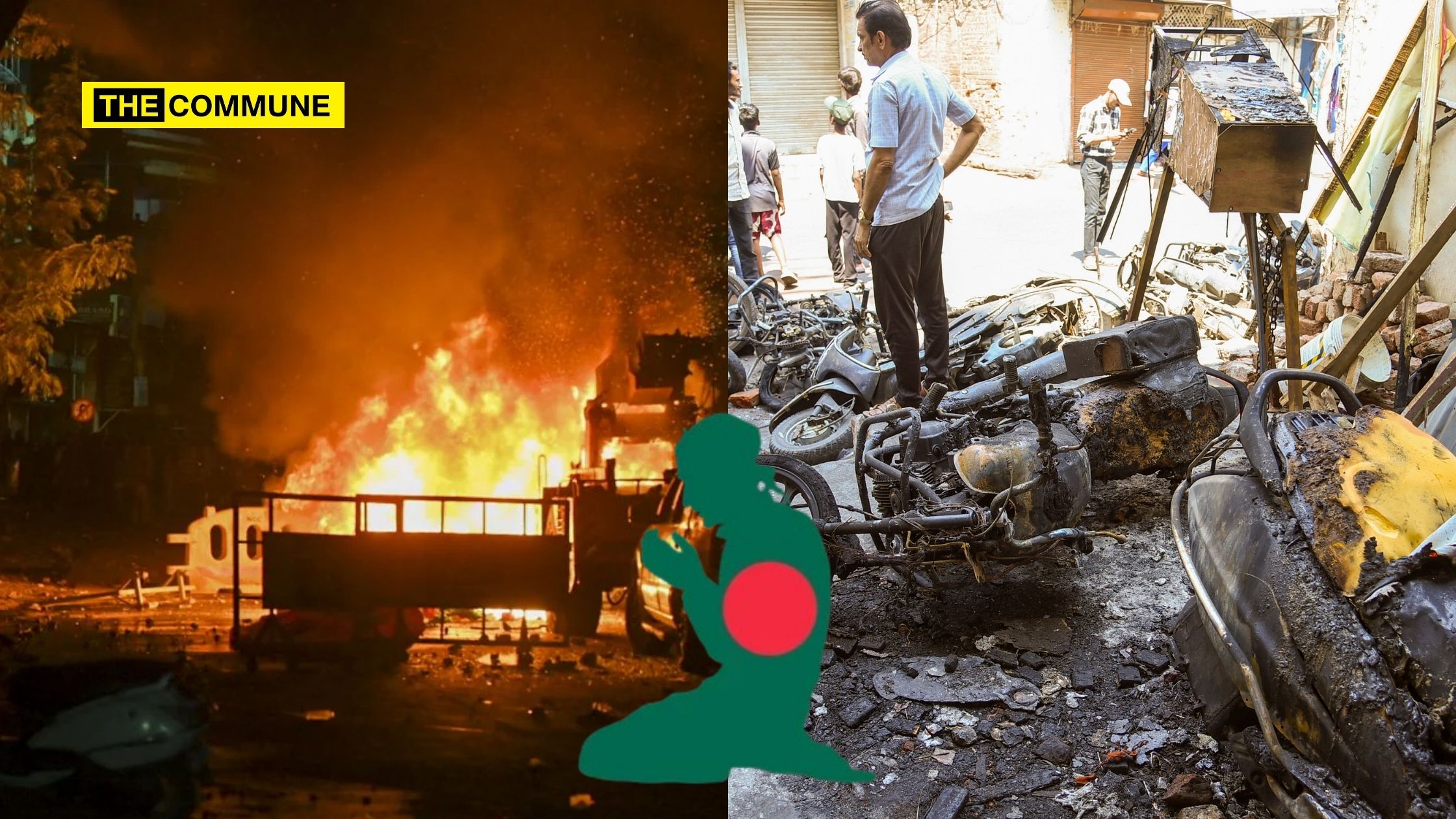
Nagpur Violence: Maharashtra Police Find Bangladeshi Links In Spreading Provocative Content

Mumbai, March 20 (IANS) The Maharashtra Cyber, a nodal agency for cybersecurity and cybercrime enforcement, has initiated action against social medical accounts spreading inflammatory content.

The Maharashtra Cyber, in coordination with the Nagpur City Cyber Police Station, has identified multiple social media accounts engaged in disseminating objectionable content in connection with the violence that erupted in Nagpur on March 17. The cyber cell has also identified a Facebook account operated from Bangladesh, which threatened to incite large-scale riots in Nagpur, sources said on Thursday.

The post is reported to have been made by a Bangladeshi who claimed it was a small incident and there will be bigger riots in future. The sources said the police have launched an investigation “More than 140 instances of objectionable content across Facebook, Instagram, Twitter, and YouTube have been identified and reported. In response, notices under Section 79(3)(b) of the Information Technology (IT) Act, 2000 have been issued to facilitate the immediate takedown of such content. Additionally, notices under Section 94 of the Bharatiya Nagarik Suraksha Sanhita (BNSS), 2023 have been issued to uncover the real identities of the individuals operating these accounts. Strict legal action will be taken against those responsible for spreading such provocative content,” said a media release issued late Wednesday night by the office of the Additional Director General of Police, Maharashtra State Cyber Department.

“The content in question is deliberately designed to hurt the sentiments of a particular religious group, incite communal unrest, and further escalate the ongoing law and order situation in the state. By exploiting deeply held beliefs, such material seeks to provoke the public, create discord, and deepen divisions within communities. Such actions not only violate legal provisions but also pose a serious threat to peace and stability,” said the department in a release. “The Maharashtra Cyber Department remains steadfast in its commitment to identifying and prosecuting individuals who misuse digital platforms to disrupt communal harmony. Citizens are urged to exercise caution while sharing information online and to refrain from engaging with or amplifying unverified or objectionable content,” said the department.

“Dedicated to maintaining a secure and lawful digital environment, the Maharashtra Cyber Department actively monitors online platforms, including social media, to identify and take action against objectionable content that threatens public order, social harmony, or national security,” said the statement. Maharashtra Cyber’s move comes after Chief Minister Devendra Fadnavis on Tuesday told the state Assembly that “Maharashtra is a stable and progressive state and is known for peace and harmony. The government will take strict action if anyone disturbs the law and order in the state.” He assured that law and order will be maintained and make the state a ‘safe and prosperous Maharashtra’. “No one should disturb the peace in Maharashtra. If anyone tries to disturb it, he will not be spared,” he warned.

–IANS

Subscribe to our channels on TelegramWhatsApp, and Instagram and get the best stories of the day delivered to you personally.
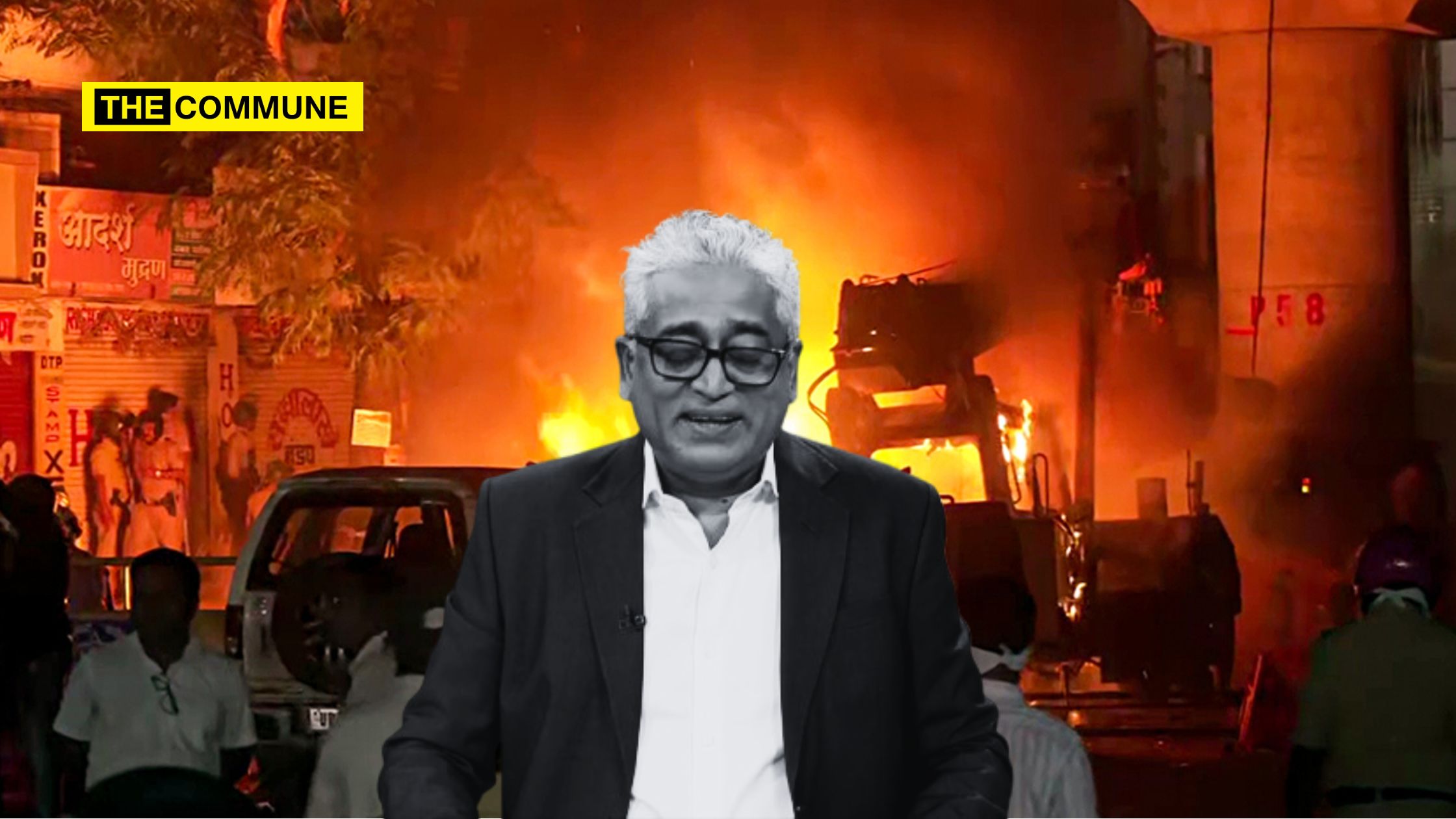
Rajdeep Sardesai Justifies Nagpur Violence As Backlash For ‘Provocation’

The recent Nagpur violence has once again exposed the deep fault lines in India’s socio-political fabric. While the incident has sparked heated debates, one voice that stands out for its glaring bias is that of senior journalist Rajdeep Sardesai. In his vlog, Sardesai has chosen to blame Hindu political parties and groups for the violence, while conveniently ignoring the role of Islamist provocation in igniting the riots. This one-sided narrative not only distorts the truth but also perpetuates a dangerous double standard in addressing communal violence.

The Nagpur Violence: What Actually Happened

The violence in Nagpur erupted after rumors allegedly spread that a Quran was burned during protests against Aurangzeb’s tomb. While the rumors were later found to be false, they triggered a violent backlash from Islamist mobs, who engaged in stone-pelting, arson, and attacks on police personnel. The riots left the city in chaos, with property damaged and law enforcement struggling to restore order.

The protests against Aurangzeb’s tomb, led by Hindu groups, were indeed provocative. However, it is crucial to recognize that provocation does not justify violence. The Islamist mobs’ reaction was disproportionate and criminal, and it is this reaction that escalated the situation into a full-blown riot. Yet, Sardesai’s analysis conveniently glosses over this critical aspect.

Sardesai’s Selective Outrage

In his vlog, Sardesai spends considerable time criticizing Hindu political parties and groups for their role in stoking communal tensions. He argues that the demand to demolish Aurangzeb’s tomb and the glorification of Chhatrapati Shivaji created a “hate-filled narrative” that led to the violence. He even states, “To unleash a hate-filled narrative where you want to go and demolish Aurangzeb’s tomb, you must be prepared for some reaction and a backlash.”

While there is some truth to the idea that divisive narratives can fuel tensions, Sardesai’s analysis stops short of holding the Islamist mobs accountable for their actions. By focusing solely on the actions of Hindu groups, Sardesai paints a picture where Hindus are the aggressors and Islamists are merely reacting. This is a dangerous oversimplification of a complex issue. It ignores the fact that the violence was initiated by Islamist mobs who chose to take the law into their own hands. Sardesai’s failure to condemn this violence unequivocally reveals a clear bias in his reporting.

The Double Standard In Reporting Communal Violence

Sardesai’s approach reflects a broader trend in Indian media, where Islamist provocation is often downplayed or ignored in discussions of communal violence. When Hindu groups are involved, they are quickly labeled as “communal” or “divisive,” but when Islamist mobs engage in violence, their actions are often excused as a “reaction” to provocation. This double standard not only undermines the credibility of the media but also perpetuates a culture of impunity for those who resort to violence.

In the case of the Nagpur violence, Sardesai’s analysis fails to address the criminality of the Islamist mobs. Stone-pelting, arson, and attacks on police are not legitimate forms of protest; they are acts of violence that must be condemned without reservation. By glossing over this, Sardesai seems to effectively give a free pass to those who disrupted peace and endangered lives.

Sardesai’s analysis of the Nagpur violence is a classic example of selective outrage and biased reporting. By ignoring the role of Islamist incitement and focusing solely on Hindu groups, he has perpetuated a one-sided narrative that distorts the truth and undermines the pursuit of justice. His statement, “To unleash a hate-filled narrative where you want to go and demolish Aurangzeb’s tomb, you must be prepared for some reaction and a backlash,” reflects his tendency to shift blame onto one side while seemingly excusing the other.

Subscribe to our channels on Telegram, WhatsApp, and Instagram and get the best stories of the day delivered to you personally.