Home Blog Page 361

DMK-Congress Ally VCK Uses Children In A Skit Mocking Hindu Traditions And Targeting Brahmins, Veiled Digs Made At President Murmu And Union Minister L. Murugan
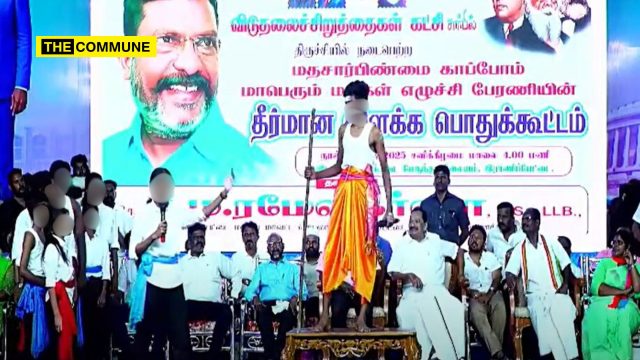
In yet another controversial move targeting the Brahmin community and Hindu religious traditions, the Viduthalai Chiruthaigal Katchi (VCK) has come under fire for featuring children in a politically charged skit at the recent Ranipet Resolution Public Meeting. Critics have condemned the act as a blatant use of minors in political and religious propaganda, raising serious ethical and legal questions.

The skit, presented under the theme “Hindu Religion Is Our Own Religion”, sought to promote a Dravidianist reinterpretation of Hindu deities by portraying them as rebranded forms of the Buddha. It began with children chanting Buddhist mantras such as “Buddham Saranam Gachhami”, followed by Islamic slogans declaring religious and linguistic identity, “My mother and father are not from an Arab country. We are not strangers. Allah is formless to us. Tamil is our mother tongue, and we are Indians. Allahu Akbar.”

The skit then shifted to a dramatized depiction of Hindu caste discrimination. A saffron-clad child, adorned with sacred ash (vibhuti), a janeu (sacred thread), and portraying a Brahmin priest, was shown addressing others with derogatory remarks, “Hey, abhishtu get lost, go away! Come near me only when I call you. Don’t rush forward like a cashew nut!”

Other children were showcased asking, “Saamy! aren’t we Hindus?” claiming to represent the various varna groups Shudra, Vaishya, Kshatriya, and Panchama (Dalits) asserting that they too are Hindus. Then a scene builds a narrative to depict resistance against Brahminical authority, as Dalits. One child portraying a Dalit character challenges the priest’s authority, saying, “Why swamy should we always be at the back? Why should we always stand at back? Test our devotion if you must!”

The priest responds, “What? You want me to test your devotion? Fine, now you’ll understand why I told you to stand at the back. Repeat after me—Om Namo Narayana! Om Namo Narayana! Jai Shri Ram!” All the other varna groups depicted as following his lead and chant as instructed. However, when he turns to the Panchamar girl and asks her to repeat “Om Namo Narayana,” she instead chants, “Namo Tassa Bhagavato Arahato Samma Sambuddhasa,” a Buddhist mantra.

The priest, taken aback, shouts, “Stop! What are you saying? I told you to chant something else. Fine, repeat this instead Jai Shri Ram!” She firmly replies, “Jai Bhim! Jai Bhim!”

The priest then tries to explain that chanting “Namo Narayana” grants one a place in Vaikuntha (the Hindu heavenly abode) and chanting “Jai Shri Ram” grants moksha. But she responds, “Making me stand at the front or back depends on my actions and character, not your permission. Rather than live as a submissive slave just for a place in Vaikuntha, we choose to live freely, even if poor, as the original people of this land as Buddhists! Jai Bhim! Jai Bhim! Jai Bhim! Jai Bhim!”

The skit goes further, making a veiled reference to Union Minister L. Murugan and President Droupadi Murmu, both from marginalized communities, stating that while someone from their background may become a minister or even the president, they can never become a Shankaracharya.

One child asks, “Swamy, we are also Hindus, right? Can we also become Shankaracharyas?” the priest replies, “What a mess! Everyone wants to become a Shankaracharya. Hey, you can even become the President of India, but don’t even dream of becoming a Shankaracharya.” Another asks, “Swamy, what kind of justice is this? Can’t we become Shankaracharyas? Are we not Hindus?” the priest mocks, “Hey Muruga, you can even become a Union Minister, but don’t even think about becoming a Shankaracharya.”

This narrative distorts Hindu traditions. Being born a Brahmin does not automatically grant access to temple sanctums (garbha griha) or ritual authority—such roles are governed by temple Agamas (scriptural codes). Even senior religious figures like Shankaracharyas are not permitted to enter certain temples based on traditional rules.

Observers view the skit as an attempt to reinforce long-debunked Dravidianist propaganda aimed at vilifying Hindu practices and customs, while emotionally manipulating young minds to serve political ends.

Subscribe to our channels on TelegramWhatsApp, and Instagram and get the best stories of the day delivered to you personally.
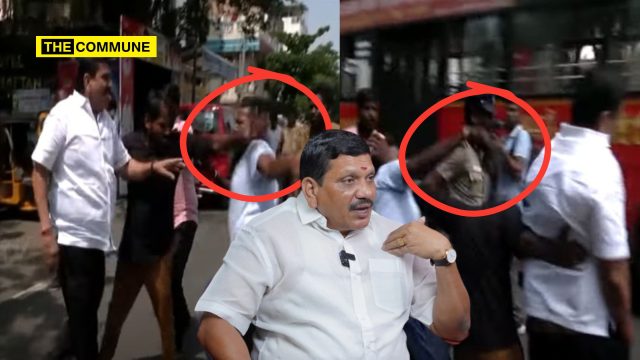
VCK Cadres Attack Puratchi Tamilagam Chief Airport Moorthy Outside DGP Office In Chennai

airport moorthy goondas vck

A dramatic incident outside the Tamil Nadu DGP office in Chennai has sparked outrage, after Puratchi Tamilagam party chief Airport Moorthy was allegedly attacked by four unidentified individuals believed to be associated with the Viduthalai Chiruthaigal Katchi (VCK).

The incident occurred while Moorthy was present at the DGP office to support a group submitting a petition seeking security for PMK founder Dr. S. Ramadoss. As he approached the entrance, a group of men reportedly confronted him and hit him with a slippers an act believed to be in retaliation for Moorthy’s past alleged derogatory remarks about VCK leader Thol. Thirumavalavan.

Eyewitnesses, including several journalists, witnessed the attack, which happened in full public view and in the presence of police officers stationed outside the DGP headquarters. The assailants fled the scene immediately after the confrontation.

Speaking to the media after the incident, Airport Moorthy strongly condemned the attack and accused the police and the state government of being aware of or complicit in the assault, given the high-security nature of the DGP office premises.

The assault has triggered political tensions and renewed debates about law and order in Tamil Nadu, especially concerning the use of violence in political rivalries.

In response to the act several leaders condemned the act of public leader assaulted blatantly. Tamil Nadu BJP president Nainar Nagendran slammed, “Does threatening the safety of opposition parties constitute the Dravidian model? The attack on Mr. Airport Moorthy, leader of the Puratchi Thamizhagam party, by VCK members right on the Chennai Police Headquarters is highly condemnable. Who gave them the courage to attack a party leader in the capital city of Chennai, and that too inside a police office? After an attempt to murder a political party functionary at a town panchayat office yesterday, the attack on another party leader at a police office today clearly shows that law and order in Tamil Nadu is not even on paper. The fact that the attackers are from an allied party of the ruling government, and the police stood by helplessly without preventing it raises the suspicion that leading Tamil Nadu on a path of violence is the DMK government’s plan. Given these continuous attacks on members of opposition parties, the @arivalayam government should at least now come forward to restore law and order. Furthermore, the culprits who attacked brother Mr. Airport Moorthy should be arrested without any political bias.”

Subscribe to our channels on TelegramWhatsApp, and Instagram and get the best stories of the day delivered to you personally.
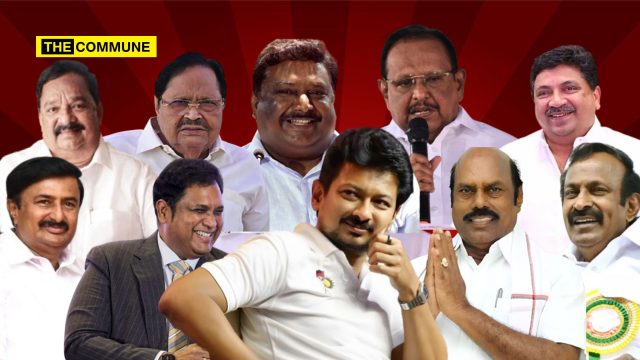
ADR Reveals 87% Of Tamil Nadu Ministers Have Criminal Cases, High Wealth Among Stalin’s Cabinet Members

A recent report released by the Association for Democratic Reforms (ADR) in collaboration with National Election Watch (NEW) has brought to light the criminal and financial profiles of ministers currently serving in various State Assemblies, Union Territories, and the Union Council of Ministers. This analysis is based on self-sworn affidavits (Form 26) submitted by ministers at the time of elections held between 2020 and 2025. Of the 652 ministers, the data of 643 was examined across 27 states, three Union Territories, and the central government.

Criminal Background

According to the findings, 302 ministers, which account for approximately 47 percent of those analysed, have declared criminal cases against themselves. More concerning is that 174 of them, or 27 percent, are facing serious criminal charges, including cases related to murder, attempted murder, kidnapping, and crimes against women. The report notes that the current legal status of these cases may have changed since the affidavits were filed, and could vary depending on each individual case.

A closer look at Tamil Nadu reveals particularly troubling figures. Among the 31 ministers from the DMK party, 27 (or 87 percent) have admitted to having criminal cases, while 14 (45 percent) have been charged with serious criminal offences. This trend mirrors broader national patterns, where several political parties have a significant number of ministers with criminal backgrounds.

When broken down by party, the Bharatiya Janata Party (BJP) has 136 out of 336 ministers (40 percent) with declared criminal cases, while 88 of them (26 percent) face serious charges. The Indian National Congress (INC) shows similar trends with 45 out of 61 ministers (74 percent) having criminal cases, and 18 (30 percent) dealing with serious charges. Other parties such as the All India Trinamool Congress (AITC), Aam Aadmi Party (AAP), Dravida Munnetra Kazhagam (DMK), Telugu Desam Party (TDP), Janata Dal (United), and Shiv Sena also show significant proportions of their ministers facing criminal allegations.

 Financial Background

On the financial front, the report reveals that the average assets held by ministers across states, UTs, and the Union Council amount to ₹37.21 crore. The total combined wealth of the 643 ministers is estimated at ₹23,929 crore. Among them, 36 ministers, or around 6 percent, are classified as billionaires, holding assets exceeding ₹100 crore. Karnataka leads with the highest number of billionaire ministers at eight, followed by Andhra Pradesh with six, and Maharashtra with four. Other states including Arunachal Pradesh, Delhi, Haryana, and Telangana each have two billionaire ministers, while Gujarat, Himachal Pradesh, Madhya Pradesh, and Punjab have one each. The Union Council of Ministers also includes six billionaires out of a total of 72 members.

From a party perspective, the BJP has the highest number of wealthy ministers, with 14 billionaires among its ranks. The INC follows with 11 billionaire ministers out of 61, and the TDP with six out of 23, the latter accounting for the highest proportion of billionaires in any party.

Special Analysis Of Tamil Nadu Cabinet

A special analysis of Tamil Nadu’s cabinet after the 2021 state elections shows the extent of both criminal and financial entanglements among its ministers. R. Gandhi, the Minister for Handlooms and Textiles, tops the list with declared assets worth ₹47.94 crore and three serious criminal cases against him. He holds only a 10th standard education qualification. The second wealthiest is Industries Minister TRB Raja with assets of ₹41.81 crore and two serious cases registered. Finance Minister PTR Palanivel Thiagarajan ranks third, with declared assets of ₹38.89 crore and four criminal cases.

Minister Duraimurugan follows, with wealth amounting to ₹30.80 crore and a total of eight criminal cases, including two serious ones. Deputy Chief Minister Udhayanidhi Stalin ranks fifth, holding assets valued at ₹29.07 crore, while having 22 criminal cases registered against him. Minister E.V. Velu is next with assets worth ₹23.32 crore and seven criminal cases, two of which are serious. Minister Saminathan holds assets of ₹21.07 crore and is involved in three criminal cases, including two serious ones. Minister Raghupathi, with assets totaling ₹15.32 crore, has 23 criminal cases against him.

Minister Muthusamy owns assets worth ₹13.68 crore and is facing nine criminal cases. Minister Sivashankar rounds out the top ten with assets worth ₹13.55 crore but is burdened with 46 criminal cases, including seven serious charges.

Overall, the report highlights that 87 percent of Tamil Nadu’s ministers have declared criminal cases against them, and nearly half are facing serious criminal allegations. The findings paint a sobering picture of the political landscape, raising critical questions about the integrity of public representatives and the need for stronger electoral reforms.

(With Inputs From One India Tamil)

Subscribe to our channels on TelegramWhatsApp, and Instagram and get the best stories of the day delivered to you personally.
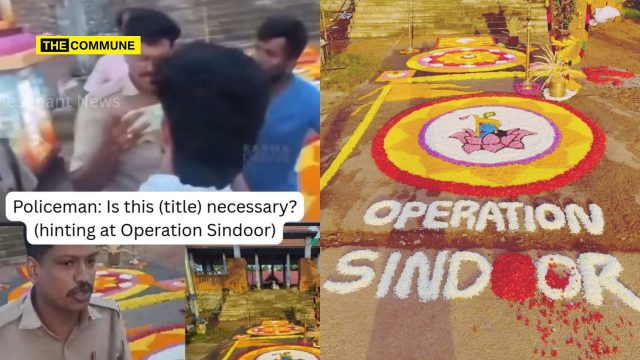
Kerala Police Forces Removal Of ‘Operation Sindoor’ Onam Pookolam, Files FIR Against Against RSS Members

In a controversial incident, police in Kerala’s Kollam district forced the removal of an Onam Pookalam (floral decoration) after it was found carrying the words “Operation Sindoor.”


The Sasthamcotta police have registered a case against 24 RSS members for creating an Athapookalam (Onam floral carpet) that displayed the words “Operation Sindoor” and included a saffron flag resembling RSS insignia at a temple premises in Kollam district. This action followed a complaint lodged by the temple committee, citing authority from a High Court directive that explicitly prohibits political slogans, flags, or party symbols near places of worship.

The action has triggered sharp criticism, with many questioning why a harmless patriotic message should be treated as objectionable. Critics allege that the decision reflects the state government’s appeasement politics, pointing out that while the ruling Left frequently positions itself as a defender of free speech, it has now acted against a cultural expression during Onam.

Observers note that the same government often accuses others of intolerance but has displayed selective application of free speech principles within Kerala.

Subscribe to our channels on TelegramWhatsApp, and Instagram and get the best stories of the day delivered to you personally.
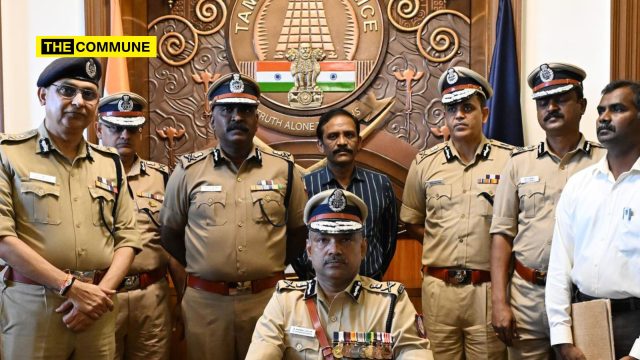
PIL In Madras High Court Challenges Appointment Of Tamil Nadu’s In-Charge DGP G. Venkatraman

A public interest litigation (PIL) has been filed in the Madras High Court challenging the Tamil Nadu government’s decision to appoint G. Venkatraman as the in-charge Director General of Police, despite several other senior officers being eligible for regular appointment to the post.

The petition, filed by R. Varadaraj, 69, a retired police inspector-turned-advocate and President of Nethaji Makkal Katchi, is scheduled to be heard by a division bench of Chief Justice Manindra Mohan Shrivastava and Justice G. Arul Murugan on Monday.

Varadaraj, who served for 25 years in the Fingerprint Bureau before opting for voluntary retirement in 2005, argued that the government had flouted binding directives of the Supreme Court issued in the landmark Prakash Singh case of 2006. The apex court had mandated that states must forward the names of all eligible DGP-rank officers to the Union Public Service Commission (UPSC), which would then prepare a panel of three meritorious officers.

The state government was required to appoint one from the panel, ensuring a fixed tenure of two years. According to the petitioner, Tamil Nadu should have sent the list to the UPSC by May 2025, three months before the retirement of former DGP Shankar Jiwal on 31 August. However, the list was not forwarded on time, resulting in what he termed an “ad-hoc and untenable” appointment. Significantly, the petitioner claimed that Venkatraman, who was serving as DGP, Administration, was himself responsible for preparing and forwarding the list to the Home Secretary and the Chief Secretary, but ended up being chosen for the top post instead.

This, he alleged, reeked of political expediency. The PIL also expressed concern that the ad-hoc appointment, coming ahead of the 2026 Assembly elections, could compromise the impartiality of the police force. The petitioner urged the court to quash the Home Secretary’s notification dated 31 August, appointing Venkatraman and to direct the government to initiate the proper UPSC-led process for appointing a regular DGP. Until then, Varadaraj requested that one among the three senior-most officers in the DGP cadre be allowed to hold charge, and sought an interim order restraining Venkatraman from occupying the post pending the outcome of the case.

-IANS

Subscribe to our channels on TelegramWhatsApp, and Instagram and get the best stories of the day delivered to you personally.
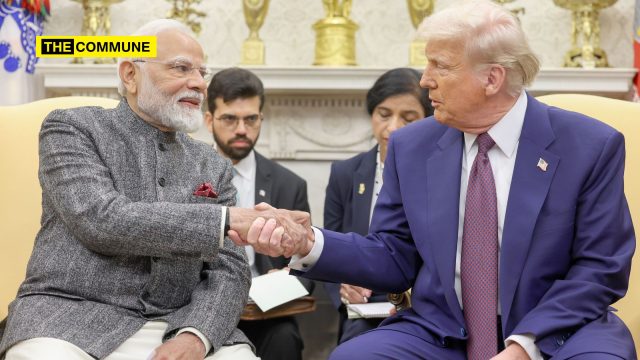
Trump Backtracks On ‘Losing India’ Remark, Calls Indian Prime Minister Narendra Modi A ‘Great PM’; Modi Responds Warmly

US President Donald Trump appeared to backtrack from his previous remark about “losing” India to China. At a White House press conference on 5 September, Trump said, “I’ll always be friends with Prime Minister Modi” and called him a “great Prime Minister.”

Hours after this comment, Indian PM Modi reciprocated on 6 September by saying that he appreciates and fully reciprocates President Trump’s sentiments. “He’s a great Prime Minister. He’s great. I’ll always be friends but I just don’t like what he is doing at this particular moment. But India and the United States have a special relationship. There’s nothing to worry about. We just have moments on occasions,” he added.

Hours after Trump’s remarks, Indian PM Modi reciprocated by posting on his X handle, “Deeply appreciate and fully reciprocate President Trump’s sentiments and positive assessment of our ties. India and the US have a very positive and forward-looking Comprehensive and Global Strategic Partnership.”

PM Modi’s comments came hours after President Trump took a positive view when asked whether he blamed anyone for “losing India to China” and he responded saying, “I don’t think we have.” President Trump added that he gets “along very well” with Prime Minister Modi but was “very disappointed” with India over New Delhi’s purchase of Russian oil. “I’ve been very disappointed that India would be buying so much oil, as you know, from Russia, and let them know that we put a very big tariff on India, 50 per cent tariff, very hot tariff,” he noted.

Earlier in the day, Trump posted a picture of PM Modi along with Chinese President Xi Jinping and Russian President Vladimir Putin, saying that India and Russia seem to have been “lost” to China. “Looks like we’ve lost India and Russia to deepest, darkest, China. May they have a long and prosperous future together!,” he wrote on Truth Social.

The remarks follow a wave of intensified rhetoric against India from his administration and supporters. White House Advisor Peter Navarro also repeated his accusations on Friday, alleging in post on X that India’s “highest tariffs costs US jobs.” Trump’s aide Laura Loomer claimed on X that the administration is “considering blocking US IT companies from outsourcing their work to Indian companies.” Though she did not offer any evidence to support it.

In an interview with Bloomberg on Friday, US Commerce Secretary Howard Lutnick said the “US is always willing to talk,” but appeared to set preconditions for India. “India doesn’t yet want to open their market. Stop buying Russian oil, right? And stop being a part of BRICS, right? They are the vowel between Russia and China. If that’s who you want to be, go, be it. But either, support the dollar, support the United States of America, support your biggest client, who is the American consumer, or I guess you’re going to pay a 50 per cent tariff. And let’s see how long this lasts,” he added.

He also voiced US opposition to India’s rising share of Russian crude in its oil imports, calling it “plain wrong.” On Friday, India’s Finance Minister Nirmala Sitharaman asserted that India will continue to buy Russian oil. “Where we buy our oil from, especially a big-ticket foreign exchange item where we pay so much, highest in terms of import, we will have to take a call on what suits us best. We will undoubtedly be buying,” she said in an interview with News18.

-IANS

Subscribe to our channels on TelegramWhatsApp, and Instagram and get the best stories of the day delivered to you personally.

DMK Govt Issues G.O For ₹3.6 Cr Scholarship Scheme Exclusively For Muslim Students Studying Abroad

On 4 September 2025, the Tamil Nadu government issued a Government Order (G.O.) announcing a new scholarship scheme aimed at supporting Muslim students pursuing higher education abroad.

As part of this initiative, a total of ₹3.60 crore has been earmarked to fund scholarships for 10 eligible students each year, with each recipient receiving up to ₹36 lakh. The scheme, which was previously announced in the Legislative Assembly, is now set to be implemented following this formal allocation of funds.

However, the decision has sparked criticism from some quarters, with opponents alleging that the move is politically motivated and intended to appeal to the Muslim community ahead of the 2026 state elections. Critics have described the announcement as an act of minority appeasement, questioning the timing and exclusivity of the scheme.

Subscribe to our channels on TelegramWhatsApp, and Instagram and get the best stories of the day delivered to you personally.
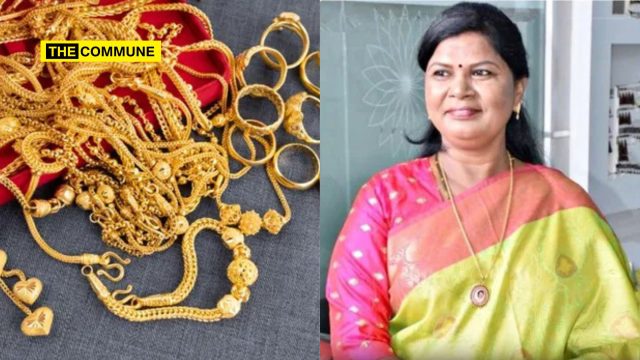
DMK Women’s Panchayat President Arrested For Jewellery Theft At Koyambedu Bus Stand

Police have taken Bharathi, the DMK women’s panchayat president from Tirupattur district, into custody after CCTV footage linked her to a jewellery theft at the Koyambedu bus stand. The incident comes amid rising concerns over a surge in chain snatching and jewelry thefts across Tamil Nadu, prompting authorities to intensify preventive efforts.

As part of these ongoing operations, several offenders have been apprehended and jailed. One such case emerged involving Bharathi, who was caught on camera allegedly stealing jewelry. The incident occurred on 14 July, when a 50-year-old woman named Varalakshmi from the Nerkundram area traveled by bus from Kanchipuram and got off at the Vengaya Mandi bus stand in Koyambedu. Upon reaching home, she discovered that four sovereigns of gold jewelry were missing from her bag.

Despite searching the nearby area, Varalakshmi was unable to locate the missing items and subsequently lodged a complaint at the Koyambedu police station. During the investigation, police reviewed CCTV footage and identified 56-year-old Bharathi as the suspect involved in the theft.

Bharathi was arrested shortly afterward, and further inquiries revealed that she has over 10 pending theft-related cases registered against her in various police stations, including those in Vellore and Ambur. Following her arrest, Bharathi was brought before the court and has since been remanded in judicial custody.

(With Inputs From Asianet News Tamil)

Subscribe to our channels on TelegramWhatsApp, and Instagram and get the best stories of the day delivered to you personally.
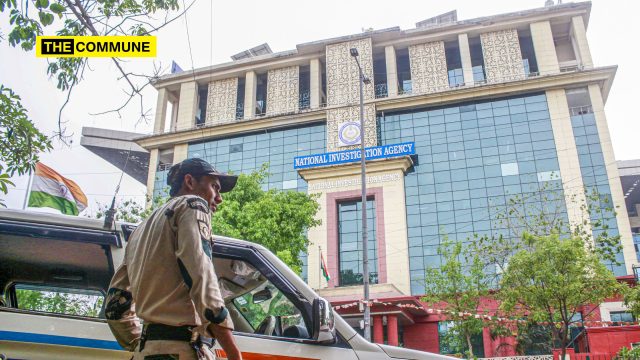
Amritsar Grenade Attack: NIA Nabs Main Accused Sharanjit Kumar In Bihar

The National Investigation Agency (NIA) arrested a key wanted terror accused in connection with the March 2025 Amritsar temple grenade attack, late on 6 September night.

The accused, identified as Sharanjit Kumar alias Sunny, a resident of Bhaini Bangar, Qadian in Batala of Gurdaspur district, Punjab, was nabbed late on 5 September night from Gaya in Bihar.

On 15 March 2025, two bike-borne assailants Gursidak Singh and Vishal Gill carried out the grenade attack under the directions of foreign-based handlers operating from Europe, the US and Canada.

According to NIA investigations, the handlers provided funds, terror hardware, logistical support and target details to operatives in India. Sharanjit played a crucial role by receiving a consignment of four grenades in Batala on 1 March 2025. He handed over one of these grenades to Gursidak and Vishal just two days before the attack. After the attack, Sharanjit absconded from Batala during NIA raids and managed to evade authorities for months. Based on human and technical Intelligence, he was finally traced to Gopalpur village on the Delhi-Kolkata National Highway 2 in the Sherghati block of Gaya district.

The NIA team, with assistance from Sherghati police, conducted a late-night raid, surrounded him, and made the arrest. “Sharanjit was very clever, often disguising himself as a truck driver and using fake identities. He had set up a hideout in a roadside lodge on GT Road and was running operations from there,” said Ajit Kumar, Station Incharge, Sherghati Police Station.

The NIA registered cases under the Explosives Act and the Unlawful Activities (Prevention) Act (UAPA). Sharanjit was immediately taken to Chandigarh for interrogation. Further investigations are underway to unravel the full extent of the transnational terror network involved in the Amritsar attack. NIA and Bihar police have jointly arrested many accused of the Popular Front of India (PFI) from various districts of the state in the past.

-IANS

Subscribe to our channels on TelegramWhatsApp, and Instagram and get the best stories of the day delivered to you personally.

Canada Flags Hezbollah, Hamas As Well-Funded Extremist Groups Exploiting Crypto, Charities, And State Support

Hamas and Hezbollah are “well-established and resourceful organisations” that fall under the ‘Politically Motivated Violent Extremism’ (PMVE) category and sustain their activities through diverse funding channels, according to a report by the Canadian government.

The National Risk Assessment report by the Canadian government defines PMVE as the encouragement of violence to create new political systems or alter existing structures and norms. While it may include religious aspects, the core focus of actors under this category is political self-determination or representation rather than ethnic or racial supremacy.

“Hamas and Hezbollah are established and well-resourced groups that fall under the PMVE category. These groups use diverse funding methods to sustain their operations, including the abuse of the MSB and banking sectors; use of cryptocurrencies; state financing; abuse of the charitable and NPO sector; and criminal activity,” the report stated.

Canadian authorities observed that several terrorist entities listed under the Criminal Code including Hamas, Hezbollah, and Khalistani extremist outfits Babbar Khalsa International and the International Sikh Youth Federation have historically relied on financial support from Canada. The report noted that although once supported by an extensive fundraising network, these groups now operate with smaller clusters of individuals aligned with their causes, without formal organisational ties.

“Both Hamas and Hezbollah are known to use MSBs, especially IVTS, such as hawalas, to move money across borders. Hezbollah, in particular, is known to use Lebanon’s banking sector to maintain their account holdings,” the report said.

Citing the lawsuit Lelchook v. Societe Generale de Banque au Liban SAL in a New York court, the document highlighted how a now-defunct Lebanese bank provided Hezbollah with financial services, including correspondent banking links in the US. “Canada’s financial sector may also be exposed to risks emanating from correspondent banking relationships with institutions known or suspected of servicing Hezbollah in Lebanon,” it warned.

Cryptocurrencies have also emerged as a tool for these organisations, though contributions remain relatively low in value, according to the report. “Both Hamas and Hezbollah use online platforms and social media to solicit donations in the form of cryptocurrencies. Hamas in particular has been an early adapter of cryptocurrencies to raise and move funds, with the group reportedly first beginning to solicit Bitcoin donations in 2019,” it noted.

To liquidate digital assets, Hamas has allegedly turned to exchanges, MSBs, and informal transfer systems in Lebanon, Turkey, and Syria. However, the report admitted that the “full scale and effectiveness” of such crypto fundraising efforts remain unclear.

Another major revenue stream highlighted by the report was state sponsorship, particularly from Iran. “State sponsorship, particularly from Iran, is a significant source of revenue for Hamas and Hezbollah, which enables them to maintain their activities,” the assessment stated.

It cited a May 2024 advisory by the US Financial Crimes Enforcement Network (FinCEN) that outlined methods used by Iran to evade sanctions and funnel funds to its allies, including the sale of oil and weapons, shell companies, correspondent banking ties, and crypto. Canada said it has detected similar “Iranian patterns” aiding Hezbollah and Hamas. The report also pointed out that these groups exploit charitable and non-profit organisations for fundraising.

Despite these observations, it is estimated that revenue generation through NPO abuse represents a relatively small percentage of operational budgets of terrorist groups overall,” it added, referring to the 2024 Egmont Group overview on typologies of NPO abuse and global financial intelligence cooperation.

The report also mentions that criminal activities, especially drug trafficking, play a major role in Hezbollah’s finances. “Criminal activity is also a means of financing for PMVE purposes, particularly for Hezbollah, which has strong partnerships with international and domestic OCGs. Hezbollah remains a highly active global player in the cocaine, heroin, fentanyl, and captagon trades, with trafficking networks spanning Latin America, Canada, and the US,” the report revealed.

It added that Hezbollah has also turned to trade-based money laundering. “FINTRAC has reported that funds suspected of supporting Hezbollah were sent or received related to the used car trade,” the document said. US officials have documented Hezbollah’s involvement in buying used cars in North America and reselling them in countries such as the UAE, South Africa, Angola, Belgium, the UK, Hong Kong, Tanzania, Kenya, and Yemen, with profits ultimately funnelled back to Lebanon through couriers. The report specifically flagged the Port of Montreal as a known hub where luxury vehicles are shipped to Lebanon, financially sustaining Hezbollah.

-IANS

Subscribe to our channels on TelegramWhatsApp, and Instagram and get the best stories of the day delivered to you personally.