Political killings are not new in India. When the world was reeling from the shock of Charlie Kirk’s assassination in the US a few days ago, the reactions from the leftists was extreme – they were rejoicing his death. Back in India, the leftist “liberals” also were hoping something similar would happen to conservative voices from the non-left side of the spectrum.
Far from the truth, one must note that killings caused by the left is much more than what is propagated as “right wing extremism”.
The Commune also did an analysis of how radical Islamist terrorists, and the radical left ‘liberals’ are pretty much similar in many ways, especially when it comes to violence.
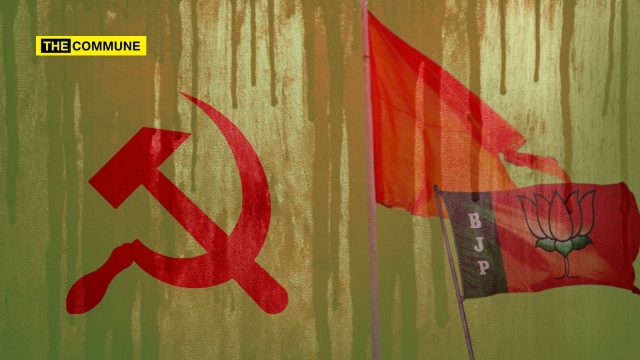
In this article, we will take a look at the political killings carried out by the left – Communists, Maoists against the members of BJP and RSS.
Maoist Insurgency & Related Political Killings
Over the past 75 years India’s Maoist/Naxalite insurgency has sporadically targeted local politicians and party activists, especially in tribal “red corridor” regions.
The Maoist (Naxalite) insurgency in India traces its roots to a 1967 peasant revolt in Naxalbari, West Bengal. Inspired by Chinese Maoism, the Communist Party of India (Marxist–Leninist) (Charu Majumdar faction) waged guerrilla war against landlords and the state.
Over decades this splintered into numerous groups; in 2004 the People’s War Group (Telangana) and Maoist Communist Centre (Bihar) merged to form the CPI (Maoist). The party’s stated goal is to overthrow the Indian state via “protracted people’s
war”.
In its insurgency strategy, the Maoist armed wing (PLGA) deliberately targets symbols of state and “class enemies.” Official Ministry of Home Affairs (MHA) commentary notes that Maoists aim to “create a vacuum at the grassroots level” by killing “lower-level government officials, police personnel, workers of mainstream political parties and the people’s representatives of the Panchayati Raj system.”
In practice, this has meant systematic ambushes of village officials, elected sarpanches, schoolteachers, and local party cadres whom Maoists label as informers or oppressors. For example, the 2013 Darbha attack was explicitly attributed to
the Maoists’ “Tactical Counter Offensive Campaign” against ruling-party leaders.
Regional and socio-economic context play a major role. Maoism remains strongest in India’s impoverished, tribal-majority “Red Corridor” (see hotspots below). Long-standing grievances over land displacement, mining, forest rights and underdevelopment fuel support among the rural poor. Battlegrounds like Bastar
(Chhattisgarh-Odisha-Telangana border) are rich in minerals (bauxite, coal, iron) and have seen fierce fights between tribal communities, insurgents, and security forces.
An Al Jazeera report (May 2025) described the Bastar/Karrigutta hills as a “warzone” with 40,000 security personnel deployed to counter 27,000 Maoist fighters. Official figures cited 11,000+ total deaths of civilians and security forces in Maoist conflicts from 2000–2024 (many tribals among them).
Despite government offensives, new Maoist recruits exploit the region’s gaps. The Maoists frame their struggle as defending Adivasi land from “exploitation” and neglect. For instance, the 2018 Araku killings occurred amid local protests over a proposed bauxite mining lease.
In West Bengal’s jungle tribal districts (Bankura, Purulia), the uprising is remembered in folklore but today is relatively dormant. Kerala and Tamil Nadu have seen only sporadic Maoist cells, with few attacks on mainstream politicians (though Kerala has experienced violent clashes between rival trade-union communists, e.g. the 2012 murder of dissident MPML leader T.P. Chandrasekharan by CPI(M) cadres).
Geographic Hotspots and Patterns
Left-wing militancy has been concentrated in these key states:
Chhattisgarh (Bastar region) – A longstanding Maoist stronghold. Central Bastar (Bijapur, Sukma, Narayanpur, Kanker districts) has seen repeated attacks on village leaders and security forces. The years 2023-2024 showed a spike in assaults on BJP-affiliated sarpanches and district officials. Bastar’s dense forests and poor road networks make it a favorite guerrilla base, and its tribal populace has been deeply affected by both insurgency and counterinsurgency.
Andhra Pradesh/Telangana – Historically the cradle of modern Naxalism (Telangana armed struggle in the late 1940s, and Naxalbari followers from AP). The 1980s–2000s saw heavy Maoist
activity in the Telangana and Gadchiroli (Maharashtra) triangle. High-profile victims include two AP state legislators (above) and numerous local workers. Maoists here frequently target officials seen as collaborators with state security (for example, Madhava Reddy as former state Home Minister). The Araku hills (AP–Odisha border) remain a flashpoint, especially around mining rights, as seen in the 2018 murders.
Jharkhand/Bihar – Dense forests in Jharkhand (e.g. Giridih, Latehar, Gumla) and adjacent Bihar villages have long Maoist presence. Party cadres (often CPI(ML) Liberation or regional leaders) have occasionally been slain. Aside from the 2005 Singh killing, more recent years saw Maoist ambushes on tribal assemblies. The police have recounted dozens of Maoist-planned attacks, often blunting them through intelligence.
Odisha – Malkangiri and Koraput in southwestern Odisha form part of the Bastar belt. Naxal insurgents are active (targeting police camps) but have seldom claimed prominent tribal politicians’ lives. In 2016, the CPI(M) tribal leader Ramachandra Panda was shot dead by alleged Maoists in Koraput, reflecting tensions over mining and political alignment.
West Bengal (Junglemahal) – In the 1970s–90s, Maoists emerged in tribal border areas of West Bengal (e.g. Jhargram, Purulia). However, under long-time left-wing state governments, most insurgency was crushed or co-opted. Since the 2000s, violence has declined; major incidents typically involve security ambushes, not targeted assassinations of party workers.
Kerala/Mizoram/etc. – Left extremism is negligible. Kerala’s violent episodes have been internecine communist feuds rather than Maoist insurgency.
Political Killings by Maoists/Naxalites
Let us now take a look at Maoist/Naxalite attacks on politicians.
7 March 2000 – Ghatkesar (Andhra Pradesh): A. Madhava Reddy (Telugu Desam Party leader and State Panchayat Raj Minister) was killed in a landmine blast by Naxalites of the outlawed People’s War Group near Hyderabad. He was on a campaign tour when the mine detonated; PWG claimed
responsibility as he was known for hardline policing.
29 December 2001 – Maddimadugu, Mahbubnagar (Andhra Pradesh): Ragya Naik (INC MLA, Devarakonda constituency) was ambushed and shot dead by four Naxalites while visiting a temple
festival. Police identified the gunmen as members of the PWG’s Amrabad guerrilla unit. This was the first known Maoist attack on a sitting Tribal MLA.
15 January 2005 – Durgi Dhabaiya, Giridih (Jharkhand): Mahendra Prasad Singh, the lone CPI(Marxist–Leninist) (Liberation) MLA in Jharkhand, was shot and throat‑slit by three CPI (Maoist) cadres after a public meeting. Witnesses reported ~100 Maoists surrounded the venue. The killing shocked the region as Singh had served three terms (since 1990) and was a tribal rights advocate.
25 May 2013 – Darbha Valley, Sukma (Chhattisgarh): In a major ambush on Congress’s “Parivartan Yatra” convoy, 26–27 people died, including veteran Congress leaders Mahendra Karma
(Chhattisgarh LoP and former Home Minister) and Nand Kumar Patel (state Home Minister). The CPI (Maoist) claimed responsibility, citing a “Counter-Offensive” campaign. Vidya Charan Shukla (former Union Minister) died later from injuries. This high-profile attack underscored Maoist hostility
to anti-insurgency politicians.
23 September 2018 – Dumbriguda, Araku (Andhra Pradesh): TDP MLAs Kidari Sarveswara Rao (then-Araku Valley MLA) and ex-MLA S. Siveri Soma were shot dead by a 40–50 member Maoist team. The assassins reportedly ambushed them while they were negotiating over a tribal bauxite mining issue. Both victims were former Congress members turned TDP, the Andhra government later noted Maoist opposition to new mining contracts in the tribal area.
4 January 2022 – West Singhbhum district, Jharkhand
Former BJP MLA Gurucharan Nayak from Manoharpur constituency was attacked on 4 January 2022. Nayak escaped unhurt, but two of his police bodyguards were killed – Shankar Nayak and Thakur Hembrom had their throats slit by Maoists. Around 100 Maoists belonging to the armed squad of commander Mocchu mixed in the crowd at a football prize distribution ceremony and attacked as Nayak was leaving. They also looted AK-47 and INSAS rifles.
BJP Leaders Killed (2023)
According to documented cases, 7 BJP leaders were killed by Maoists in 2023 in Chhattisgarh alone:
- Ratan Dubey – BJP district vice-president, Narayanpur (4 November 2023)
- Birju Taram – BJP worker, Ambagarh Chowki (20 October 2023)
- Kaka Arjun – BJP leader and former sarpanch, Bijapur (21 June 2023)
- Sagar Sahu – BJP district vice-president, Narayanpur (10 February 2023)
- Neelkanth Kakem – BJP mandal president, beheaded in Bijapur (5 February 2023)
- Ramdhar Alami – BJP leader and party vice president of Barsur district was killed by Maoists (11 February 2023)
- Budhram Katram – BJP district leader, was found dead near his home in Jagdalpur, Chhattisgarh (16 January 2025)
5 February 2023 – Paikram village, Bijapur (Chhattisgarh): Neelkanth Kakkem (BJP mandal president, Usoor block) was dragged from his home during a wedding ceremony and hacked to death by Maoists. Over 150 Maoist guerrillas infiltrated the village; Kakkem was attacked with axes and swords in front of family. The CPI(Maoist) was blamed as revenge against local leaders cooperating with security forces.
4 November 2023 – Kaushalnagar, Narayanpur (Chhattisgarh): Ratan Dubey (BJP district vicepresident
and local Panchayat leader) was stabbed and hacked to death during a campaign rally. Police said assailants emerged from the crowd and attacked him; Dubey was the sixth BJP functionary killed by Maoists in Chhattisgarh since early 2022. The incident occurred days before state elections, heightening party and public alarm.
8 March 2024 – Toynar village area, Bijapur (Chhattisgarh): Triupati Katla (BJP Janpad Panchayat
member) was ambushed and fatally hacked on a return journey from a wedding. A “small action team” of Naxals attacked him with sharp weapons, despite heavy police presence. This was noted as the first BJP leader killing in Chhattisgarh in 2024 (and eighth since 2022).
16 April 2024 – Dongargarh area, Narayanpur (Chhattisgarh): Pancham Das Manikpuri (BJP Deputy Sarpanch) was murdered by Maoists near his home. He was returning from evening prayers when insurgents attacked with swords and axes; police say it was retaliation for recent security operations. Manikpuri’s death was widely condemned as the “ninth” BJP cadre killed by Maoists in the past 14 months.
Each event above lists the date, state/district, victim and party, and alleged Maoist/Naxalite perpetrators, as reported in media accounts. (In many cases targets were local functionaries
– Panchayat members or district organizers – rather than senior politicians.)
If we were to look at the cost of human lives to Maoist, the numbers are staggering
The Naxalite-Maoist Insurgency: Left-Wing Extremism’s Deadliest Face
The Communist Party of India (Maoist), formed in 2004 from the merger of People’s War Group and Maoist Communist Centre, represents the most lethal form of left-wing violence in India.
Documented Casualties
Government data reveals the staggering human cost of left-wing extremism:
- Between 2004-2025, 8,895 people killed by Left Wing Extremists
- A conservative estimate of 15,000 lives lost in 25 years of Naxal violence
- Majority of civilian victims are tribals, often labeled as “police informers” before being brutally tortured and killed
- The tribal and economically underprivileged sections whose cause Maoists claim to espouse have been the biggest victims
Major Naxalite Attacks
The Naxalite movement has perpetrated numerous large-scale attacks:
- Dantewada Attack (2010): 76 CRPF personnel killed in ambush
- Dantewada Bus Bombing (2010): 31-44 civilians killed including Special Police Officers
- Jehanabad Jail Break (2005): Over 1,000 Maoist insurgents attacked prison, freeing 300+ inmates
- Sukma Attack (2017): 26 CRPF personnel killed in convoy ambush
- Sukma-Bijapur Attack (2021): 22 security personnel killed in coordinated assault
The Left bastions, i.e., Kerala and West Bengal have a very long running history of such political killings. Here is a list:
Kerala: RSS/BJP Workers Killed by Communists (1947-2025)
The Pioneer Phase (1969-1974): Foundation of Violence
The systematic targeting of RSS workers in Kerala began in 1969, marking the start of what would become decades of political violence.
Vadikkal Ramakrishnan (1969)
Ramakrishnan was an RSS worker and sweets maker in Thalasserry. His murder was the first documented RSS killing in Kerala, allegedly carried out by local CPI(M) workers led by young Pinarayi Vijayan (current Kerala CM) and Kodiyeri Balakrishnan (former state secretary). This set the precedent for systematic targeting of RSS workers. As per records, no prosecutions followed.
Subsequent 1969 Killings
Sreedharan Nair: RSS worker killed in Ponkunnam, Kottayam, one month after Ramakrishnan
Ramakrishnan (Palakkad): Third RSS worker killed in the same year
1970
11 January 1970 – Veliyathunadu Chandran: Chandran was a senior RSS worker and former Pracharak in Parur, Ernakulam District. His murder was significant because it was a targeted killing of senior organizational leader.
Organizational Leaders Targeted (1973-1974)
Sankranarayanan (1973): Mandal Karyavah killed in Nallenkara, Thrissur
Sudheendran (1974): RSS Mandal Karyavah killed in Kochi
The Post-Emergency Escalation (1978 onwards)
The violence intensified after the Emergency period, as documented by regional sources:
Strategic Targeting Pattern: CPI(M) began systematically targeting RSS workers who had gained prominence during Emergency resistance, particularly those who had switched from CPI(M) to RSS.
1980, Kannur, Kerala: ABVP youth district leader Gangadharan was murdered at his office on his first day in a government job. A staff member informed the CPI(M) activists, who attacked and killed him while he was seated.
25 May 1996, Kannur, Kerala: RSS propagandist and BJP district secretary Panniyannoor Chandran was brutally attacked and killed with deadly weapons while returning from Thalassery railway station with his wife. The attack was carried out by CPI(M) activists.
Contemporary Documented Cases (2000-2025)
2002: Meloor Double Murder: The victims, CK Sujeesh and P Sunil (RSS workers), were hacked to death by CPI(M) cadres. Supreme Court upheld life imprisonment for 5 CPI(M) members in January 2025. This is a rare case with successful prosecution to highest court.
August 2005, Kannur, Kerala: BJP worker Elambilayi Sooraj was murdered by nine CPI(M) workers. The assailants first hurled a bomb at him before hacking him to death with axes and machetes. The murder was triggered by political enmity after Sooraj left the CPI(M) to join the BJP. In 2019, the court acquitted all the accused.
October 2005, Kannur, Kerala: BJP-RSS worker Edacholi Preman (27) was attacked by CPI(M) activists while using a PCO booth in Thalassery. He underwent treatment for over a month but succumbed to his injuries on 27 November 2005. A sessions court later acquitted all eight CPI(M) accused.
22 October 2006, Thalassery, Kerala: Mohammed Fazal, a former CPI(M) worker who had joined the National Development Front (NDF), was murdered near Saidarpally. Investigations revealed he was killed for leaving the CPI(M), and a plot was devised to frame an RSS worker by dropping his towel near their house.
1 December 2006: Krishna Kumar (Biju), an RSS activist, was killed in Thiruvananthapuram, allegedly by CPI(M) supporters.
17 December 2006: BJP activist P.S. Sujith was murdered in Engandiyur, Thrissur district, by CPI(M) operatives.
20 January 2007: RSS activist Ravi was killed in Tirur by NDF members.
12 February 2007: BJP/BMS activist Shaju (30) was killed in Kallettumkara, Thrissur district, by CPI(M) operatives.
5 March 2007: PP Valsaraj Kurup (37) was murdered by CPI(M) activists.
16 March 2007: RSS activist Lakshman was killed in Thanur, Malappuram district, by NDF workers.
24 April 2007: RSS Taluk Karivayak G. Chandran was murdered in Vettiyar, near Mavelikkara, by CPI(M) operatives.
16 August 2007: K. Pramod (33), an RSS/BJP activist, was killed in Thalassery, Kannur district, by CPI(M) supporters.
22 October 2007: BJP activist Sunil Kumar was killed in Kodungallur by DYFI operatives.
2 November 2007: RSS activist Vinod Kumar (35) was killed near Manalayam Junction, Chadayamangalam, Thiruvananthapuram, by NDF members.
23 December 2007: RSS Mandal Sareerik Sikshan Pramukh Vinod (25) was killed near his residence by NDF operatives.
March 2008, Kuthuparamba, Kerala: Mahesh (32) was killed by a bomb thrown near a bus stop in Chitriparamba town. The attack, which nearly severed his head, was carried out by 11 CPI(M) workers. The provocation was that Mahesh had left the CPI(M) to join the BJP. In 2018, all 11 convicts were sentenced to life imprisonment.
March 2008, Kannur, Kerala: K.V. Surendran (65), a BJP worker, was brutally murdered in Illathuthazha. The incident was attributed to CPI(M) activists, adding to the long history of political violence in Kannur district.
March 2008: RSS activists Nekhil and Sathyan were killed in Thalassery, Kannur, by CPI(M) supporters.
March 2008: RSS activist Mahesh was killed in Kannur by CPI(M) operatives.
March 2008: RSS activists Suresh Babu and Surendran were killed in Kodiyeri, Kannur, by CPI(M) members.
April 2009, Kannur, Kerala: BJP-RSS worker Sajith Kumar (29) was stabbed to death by a group of 12 assailants near Mattannur while returning from a wedding. His friend, Biju, sustained serious injuries. Police registered cases against 12 CPI(M) workers in connection with the attack.
May 2010, Kannur, Kerala: BJP-RSS volunteers Vijith (30) and K.V. Shinoj (32) were brutally attacked and killed in New Mahe by a five-member CPI(M) group. The assailants first hurled crude bombs and then hacked the victims with swords and axes.
September 2014, Kathiroor, Kannur: Manoj (42, RSS leader) was killed at home. The CBI charged veteran CPI(M) leader P. Jayarajan and others, finding that Manoj was “hacked to death… by a group of CPI‑M workers”.
December 2014, Kannur, Kerala: BJP worker K.K. Rajan (52) suffered a severe head injury when CPI(M) activists pelted stones at his jeep as he returned from a party rally. He underwent treatment for over two months but succumbed to his injuries on 14 February 2015 in a Mangalore hospital.
2016: The Kannur Massacre Year
On 13 February 2016, 27-year-old RSS activist Sujith was murdered, just days after RSS chief Mohan Bhagwat had suggested peace talks to resolve decades of hostility between the RSS and CPM.
On 11 July 2016, BJP worker CK Ramachandran (46) was murdered at his home near Payyanur. Assailants, alleged to be CPI workers, first threw crude bombs to create panic before hacking him to death. Ramachandran, affiliated with the RSS-linked labour union Bharatiya Mazdoor Sangh, died on the way to the hospital.
On 4 September 2016, 26-year-old RSS worker Bineesh was hacked to death in Kannur district, reportedly by CPM supporters. His killing marked the fifth political murder in the district since the Left Front assumed power just three months earlier.
On 12 October 2016, Ramith an RSS supporter and BJP worker, was brutally attacked and killed by a group of eight CPI(M) activists using knives and swords in Pinarayi village. A chargesheet later named 15 local CPI(M) workers. Although nine were arrested, all were eventually released on bail. Notably, Ramith’s father, Uthaman, had also been killed in 2002, allegedly by CPM cadres.
2017: Intensification Under LDF Government
On 19 January 2017, in Kannur’s Dharmadam, a 52-year-old BJP worker named Santhosh was stabbed to death by alleged CPI(M) activists. He was attacked at Andalur and succumbed to his injuries while en route to the hospital. The killing was another addition to the long list of political murders in the politically volatile district of Kannur.
In May 2017, a 33-year-old RSS worker and house painter, K Biju was followed for an hour in Toyota Innova, car crashed into motorcycle, throat slit with sword in Kakkamparai village, Kannur.
In July 2017, a 34-year-old RSS basti karyavah (ward secretary) and mason, SL Rajesh received 83 injuries found on body, hands chopped off after being attacked by 12 people in Kallampally, Thiruvananthapuram. They needed a bedsheet to collect the severed limbs. 8 were arrested including 2 active CPI(M) organization members (CITU/DYFI).
In August 2017, Vipin, an RSS worker in Kodinji, Malappuram accused in conversion-related case, was stabbed to death on roadside after being released on bail.
In November 2017, in Thrissur, Kerala, BJP worker Satheesan (51) died from injuries sustained in an attack by CPI(M) activists at Kaipamangalam. The clash was triggered after a group of 20 Dalits, led by Satheesan, quit the CPI(M) and joined the BJP six months prior.
2018
In May 2018, in Kannur, Kerala, BJP-RSS worker K.P. Shamej, an auto-rickshaw driver, was attacked and later died from his injuries in Mahe. The murder occurred hours after a CPI(M) worker was killed nearby, with authorities suspecting it was a retaliatory act in the ongoing political violence. Three CPI(M) workers were arrested for direct involvement, with five other accused remaining absconding, underscoring the cycle of revenge killings between the factions in Kannur.
2022
February 2022 – Harippad, Alappuzha: Sarath Chandran (26, BJP worker) was stabbed to death after a temple festival. The BJP alleged CPI(M) workers were behind the attack. (Police attributed the murder to a criminal gang, but BJP leaders blamed CPI(M) cadres.)
April 2022 – Palakkad: RSS worker Ranjith Sreenivasan was hacked to death in Palakkad, Kerala, by members of the Popular Front of India (PFI). Police reported that four arrested individuals—Bilal, Rizwan, Sathar, and Riyaz Khan—were involved in the conspiracy, keeping watch over the murder site to avoid detection. Six more suspects remain at large. Srinivasan’s identity and RSS affiliation were confirmed the day after the killing. The murder occurred just one day after the killing of PFI leader Subair in the same district, suggesting a possible retaliatory motive in the cycle of political violence in Palakkad.
Tripura
Political violence has long marred Tripura’s history, but it has received little national attention compared to states like Bengal and Kerala. Successive incidents point to a pattern where dissent, opposition, or even intra-party rivalry has been met with bloodshed and suppression. The carefully cultivated image of a “clean” Left administration under Manik Sarkar collapses under scrutiny of these events.
Major Killings and Incidents in Tripura
2014 onwards – Attacks on BJP workers: With BJP’s rise, political violence escalated.
December 2016: Chand Mohan Tripura, a tribal BJP leader, was brutally murdered.
2017 (Ramzan): BJP district general secretary Ariful Islam’s house was vandalised; women family members abused.
2017: Reports of 25 Muslim families barred from mosques after leaving CPM for BJP.
2017: BJP worker Nanigopal Dey assaulted in Saphijala district by elements allegedly backed by CPM.
3 January 2018 – Rajnagar (Belonia), South Tripura: Amulya Malakar (60, BJP worker) was killed in his house by Gopal Malakar, identified by BJP as a CPI(M) member. BJP leaders called it the seventh BJP member killed by CPI(M) “goons” in recent months.
12 August 2024 – Sonamura (Sepahijala): Asish Paul (BJP worker) was severely beaten by alleged CPI(M) supporters during panchayat vote counting. He suffered grave head injuries and died days later in hospital. BJP officials explicitly accused CPI(M) cadres of the attack.
West Bengal: Communist Political Violence (1947-2025)
The heartland of Communism after Kerala has been under the clutches of Communist regime for several decades. Bengal even saw 34 years of uninterrupted Communist rule – under Jyoti Basu from 1977 till 2000 and then under Buddhadeb Bhattacharjee till 2011. TMC then took over the reins and things are not so different. Some of the documented cases of killings are as below:
Sainbari Murders (March 1970)
Three Sain brothers (Congress supporters) were brutally killed by CPI(M) cadres. Naba Kumar Sain was blinded and had eyes gouged out; brothers Malay and Pranab were hacked to death. Their mother was forced to eat rice smeared with her sons’ blood. The trauma caused the mother to lose her mental balance until her death a decade later.
Marichjhapi Massacre (January 1979)
Bengali Hindu refugees from Bangladesh were killed by Left Front government forces in January 1979. It was estimated that hundreds were killed through police firing, starvation, and drowning. The victims included children, women, and elderly refugees seeking shelter. The bodies dumped in rivers and fed to crocodiles to hide evidence.
Ananda Marg Killings (1982)
In the year 1982, 17 Ananda Marg monks (known as Anand Margis) were burned alive by CPI(M) cadres in Kolkata. The monks were doused in petrol and kerosene at three separate locations. It was a carefully planned execution to eliminate perceived threat to CPI(M)’s growth.
Nanoor Massacre (July 2000)
In July 2000, 11 landless Muslim laborers were killed by CPI(M) cadres for supporting opposition. The victims were agricultural wage workers caught in land dispute. CPI(M) initially labeled them as “dacoits” before admitting they were laborers.
Triple Murder in Murshidabad (October 2019)
In October 2019, Bandhu Prakash Pal (40), a schoolteacher and RSS worker, his pregnant wife Beauty (30), and their five-year-old son Angan were brutally hacked to death in their home in Jiaganj, Murshidabad, West Bengal. The crime, first discovered by a milkman who saw a suspect fleeing, sparked political outrage, with BJP leaders blaming political violence and demanding Mamata Banerjee’s resignation.
Systematic Violence During Left Front Rule
Thousands were killed during the 34-year Left Front rule. An average of 20 political killings occurred annually from 1999-2016. Violence was used as systematic tool to suppress opposition. If we consider the years 2019-2024, there have been atleast 47 political killings between TMC and BJP workers since 2019 Lok Sabha elections. During the 2023 Panchayat elections, at least 11 were killed and over 200 crude bombs recovered.
Systematic Violence Under TMC Rule (2011-2025)
As mentioned above, the Left regime in West Bengal wreaked havoc in terms of law and order. The violence continues under TMC, inheriting Left Front’s violent political culture. Here are a few reported instances.
In June 2019, political violence in West Bengal intensified after two killings in Howrah’s Amta. On 10 June 2019, BJP worker Samatul Dolui was found hanging from a tree, with his family alleging he had faced threats after leading “Jai Sri Ram” rallies. A day earlier, RSS veteran Swadesh Manna was discovered dead in the same manner in Atchata village, also after organizing similar rallies. BJP blamed Trinamool for both murders, while TMC leaders denied involvement, accusing BJP of conspiracy.
In June 2019 inAmdanga, North 24 Parganas, 38-year-old Najibur Karim (alias Akbar), a BJP worker was beaten and killed, sparking local unrest. The BJP alleged Trinamool involvement, while Trinamool MLA Rafiqur Rahman claimed it stemmed from a dispute among local drinkers. Najibur was attacked by Rakesh Piada near Boichgachi’s old market, hospitalized, and later died.
In 2019, three BJP activists were murdered at Sandeshkhali in North 24 Parganas, West Bengal. Despite a complaint being filed at the Sandeshkhali police station naming Trinamool Congress functionary Sheikh Shahjahan and his associates as accused, the police reportedly took no action for years. In January 2024, following Shahjahan’s arrest in a separate case involving an attack on ED officials, petitioners approached the Calcutta High Court seeking justice for the 2019 murders.
In January 2021, in Patashpur, East Midnapore, 80-year-old BJP supporter Amulya Mandal died after allegedly being pushed by Trinamool workers while trying to protect his son Shankar, who had been beaten during a local procession. Shankar had joined BJP three years earlier and led a BJP rally on January 1. Trinamool denies involvement, claiming Amulya was bedridden and his death was natural, accusing BJP of politicizing the incident. Tensions escalated locally, with BJP leaders condemning what they called attempts to terrorize the area.
In May 2021, Abhijit Sarkar, a 35-year-old BJP worker in north Kolkata, was dragged from his home and brutally murdered in broad daylight during post-poll violence in West Bengal. The attack, allegedly carried out by Trinamool Congress supporters, involved over 30 men; Abhijit was strangled with cable wires and his head smashed. The case, originally registered at Narkeldanga police station, was later handed to the CBI.
Before the Tamluk Lok Sabha elections in Nandigram, BJP worker Rathibala Aari was killed on 23 May 2024. She reportedly intervened when miscreants, allegedly linked to the Trinamool Congress, attacked her son Sanjay with sharp weapons. Rathibala was beaten multiple times while protecting him and later declared dead at the hospital; her son survived after medical treatment.
In August 2025, the killing of BJP booth president Rajib Biswas in Baruipur, South 24 Parganas, West Bengal, sparked political controversy, with BJP alleging that Trinamool Congress supporters had assaulted and set him on fire. Police, however, indicated that preliminary investigations suggest a family dispute may have been the motive. Two individuals, the victim’s father and brother, were arrested in connection with the case. Biswas was reportedly attacked with bamboo poles and stabbed multiple times on the night of August 8, and he later died from his injuries at a hospital the following day.
In the book Hindutva for Changing Times, RSS ideologue J. Nandakumar highlighted political and communal violence in Bengal. He alleged that 90 RSS-BJP workers have been killed, including four for chanting “Jai Shri Ram.” Nandakumar also pointed to incidents like the Kaliachak communal riots, accusing the Mamata Banerjee government of denial and appeasement.
Subscribe to our channels on Telegram, WhatsApp, and Instagram and get the best stories of the day delivered to you personally.

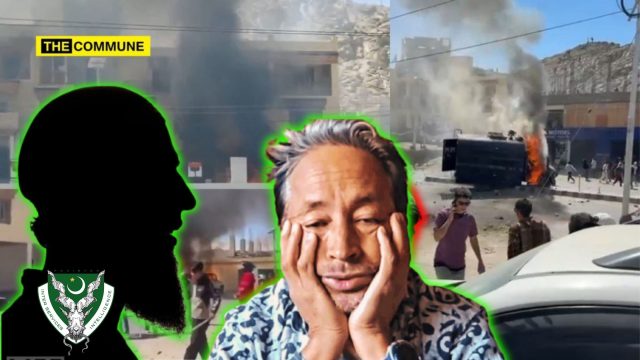
Unpacking The Politics And Geopolitics Behind The Leh Violence Spearheaded By Sonam Wangchuk
The recent violent protests in Ladakh have captured national attention, not just for the unrest itself but for the broader questions they raise about development, governance, and strategic security. What may appear as a local agitation for greater autonomy and protections is, on closer inspection, part of a complex interplay of political, environmental, and geopolitical factors that demand careful analysis.
The Protest and Its Roots
The immediate trigger for the protests is a demand to include Ladakh under the Sixth Schedule of the Indian Constitution, which would grant the Union Territory greater autonomy over local governance, taxation, and judicial powers. Protesters argue that such powers are necessary to preserve the region’s unique culture, language, and fragile environment.
Many observers, however, question the choice of the Sixth Schedule rather than the Fifth Schedule. The Fifth Schedule applies to most tribal areas in Central and Southern India and allows local councils to advise on development planning in coordination with the state governor. The Sixth Schedule, which currently covers tribal regions in the Northeast, provides far greater powers, including the ability to execute development projects independently, collect taxes, and manage judicial functions. Granting Sixth Schedule status to Ladakh would thus represent a significant legal and constitutional shift, requiring an amendment.
This legal nuance is critical. Critics argue that if implemented, Sixth Schedule powers could slow down critical infrastructure projects in the region, such as highways, tunnels, and airstrips—projects vital for both local development and national security in this border-sensitive area.
Selective Protest: Who Is Involved?
It is important to note that not all residents of Ladakh are participating in or supporting these protests. Analysts have described the movement as driven by a select group of activists (you know who they are) who have used environmental and cultural concerns to amplify their visibility. These activists claim that India’s development projects are harming Ladakh’s delicate ecology. Yet, similar or even larger-scale projects by China in neighboring regions such as Aksai Chin, Western Tibet, and Xinjiang have not provoked comparable protests.
Over the past few years, China has developed extensive infrastructure in these areas, including strategic highways, airstrips, and military bases, releasing millions of tons of carbon dioxide into the environment in the process. Local observers note the irony: while Chinese development was largely ignored, Indian development in the same ecologically sensitive region is being framed as environmentally destructive. Was the environment not fragile then?
A Strategic Laboratory?
Some analysts have described Ladakh as a “laboratory” for protest tactics. Observers note parallels with developments in Nepal, where protests were reportedly organized under the guise of legal or judicial issues to engineer a regime change. In Ladakh, the protests are framed as environmental and cultural advocacy, but they may serve broader strategic objectives, including testing protest methodologies that could later be applied elsewhere in India.
These tactics include:
The careful orchestration of these campaigns suggests that the unrest is not entirely spontaneous but part of a wider, planned strategy.
Geopolitical Dimensions
The protests also have significant geopolitical implications. Analysts point to the role of China’s United Front Work Department, a specialized branch of its Ministry of State Security tasked with shaping foreign narratives and obstructing strategic projects abroad.
According to experts, the department employs a two-pronged approach:
Aggressive media posture – using public statements, renaming of places, and symbolic gestures to influence perceptions. For example, China has repeatedly claimed Arunachal Pradesh as part of South Tibet in international discourse.
Obstructionist campaigns – framing Indian development projects in Ladakh and Kashmir as environmentally destructive, thereby creating delays or resistance at local and national levels.
This strategy aligns with China’s broader objective of maintaining a strategic edge in the Himalayan region by slowing India’s infrastructure parity, particularly in border-sensitive areas.
Development vs Ecology
The protests spotlight a deeper tension between development and ecological concerns. ‘Activists’ like Sonam Wangchuk argue that India’s projects in Ladakh threaten fragile ecosystems and tribal cultures. Yet environmental arguments are selectively applied, as similar large-scale Chinese projects in the region received little to no pushback.
Experts note that climate change and environmental degradation are global commons problems. Industrialization in other parts of the world has contributed far more to atmospheric carbon dioxide than localized development in India. Despite this, India’s projects in Ladakh are criticized, demonstrating the selective framing used in the protest narrative.
Political Implications
Domestically, the protests intersect with ongoing political struggles. Analysts note that the Congress party and certain local actors may be using the unrest to challenge the ruling BJP, weaken public perception of Prime Minister Narendra Modi, and create a broader narrative of governmental insensitivity. We already saw that despite the mob being of an older age group, Congress and supporting handles on social media called it “Gen Z protest” after Wangchuk blamed them for the arson and violence.
While the majority of Ladakh’s population is not involved, a small, vocal ‘activist’ group has been able to attract significant attention, making use of national media and social media platforms.
The Ladakh protests can thus be seen as part of a larger pattern: attempts to create street-level unrest, amplify grievances via media, and frame the narrative in ways that slow down government initiatives. This pattern has parallels with previous campaigns, including protests around the Citizenship Amendment Act (CAA) and other socio-political movements in India.
This comes exactly a week after Rahul Gandhi called on the youth, students, and Gen Z to “save the Constitution, protect democracy, and stop vote theft,” effectively encouraging them to mobilize politically against the government. By framing the youth as defenders of democracy, he positions them to take direct action, which can be interpreted as instigating unrest. His remarks echo regional examples like Nepal, where youth-led movements spiraled into protests and chaos, suggesting a potential blueprint for similar disruption in India. Critics argue that his message is less about safeguarding democracy and more about stirring dissent among young people against the current government, with Rahul himself cast as a guiding figure.
Looking Ahead
While the immediate unrest may have calmed, observers warn that the real work of shaping narratives is only beginning. Intellectual discourse, media debates, and online campaigns are expected to continue framing India’s development as ecologically insensitive, potentially creating long-term obstacles for projects in Ladakh and similar regions.
The protests highlight the need for citizens, policymakers, and analysts to critically assess the motivations behind movements. Not every demonstration is purely local; some may be influenced by broader political or geopolitical agendas. Understanding these layers is crucial, especially in regions like Ladakh, which are simultaneously ecologically fragile, strategically vital, and historically marginalized.
Subscribe to our channels on Telegram, WhatsApp, and Instagram and get the best stories of the day delivered to you personally.