Home Blog Page 309

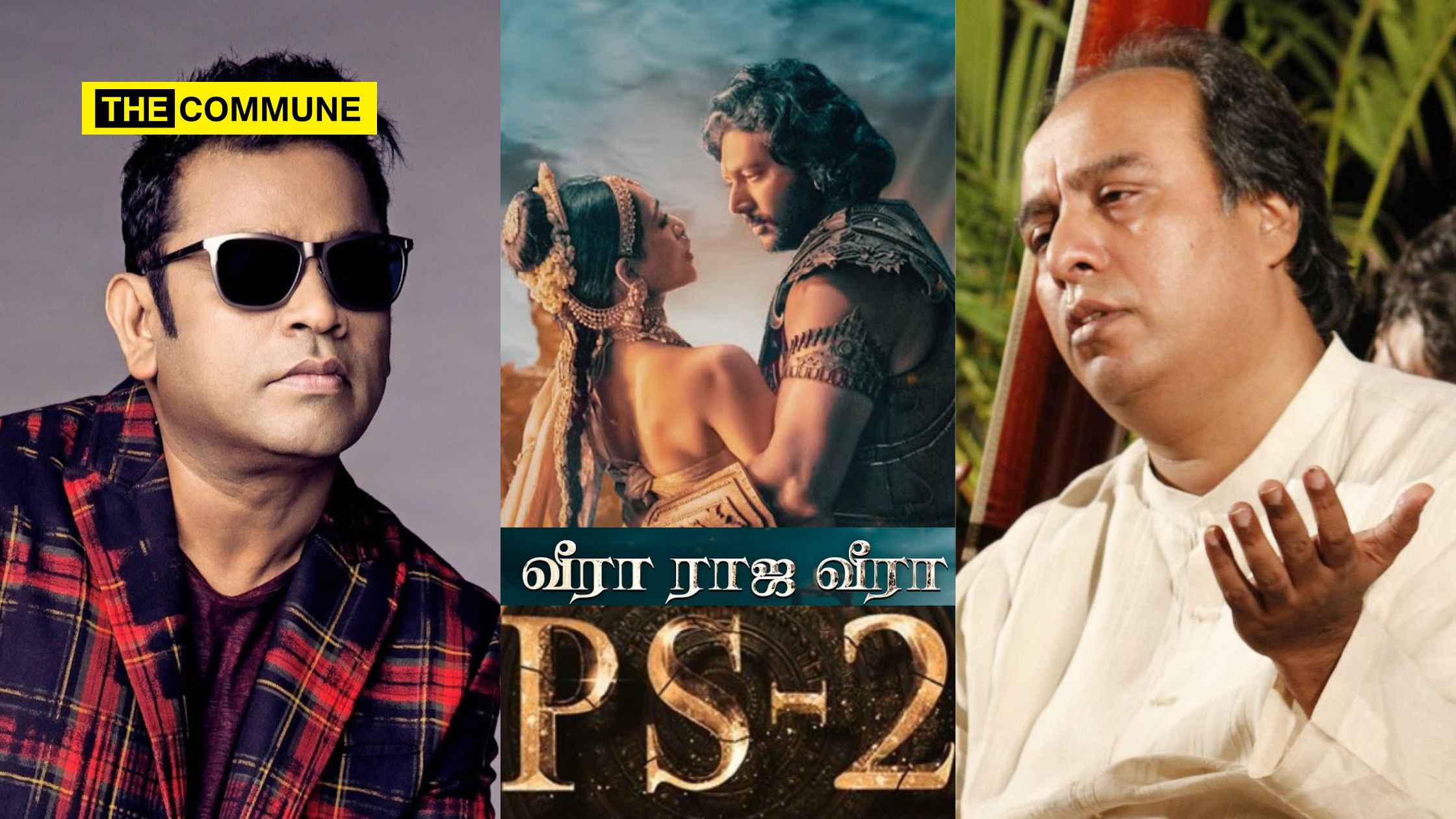
Delhi High Court Stays Copyright Injunction Against AR Rahman In Ponniyin Selvan 2 ‘Veera Raja Veera’ Song Case

ar rahman veera raja veera ponniyin selvan 2 delhi high court

In a significant development, the Delhi High Court on 6 May 2025 stayed an interim injunction issued against renowned music composer AR Rahman in a copyright infringement case linked to the popular song Veera Raja Veera from the 2023 Tamil film Ponniyin Selvan 2 (PS2).

The legal battle was initiated by Indian classical vocalist and Padma Shri awardee Faiyaz Wasifuddin Dagar, who alleged that the composition of Veera Raja Veera was lifted from Shiva Stuti, a musical piece composed by his father Nasir Faiyazuddin Dagar and uncle Zahiruddin Dagar.

On 25 April 2025, a single-judge Bench of Justice Prathiba M Singh had ruled in Dagar’s favour, directing Rahman and the film’s producers to give credit to the Dagar brothers across all digital platforms. The order also imposed ₹2 lakh in costs and directed the appellants to deposit ₹2 crore as security. Rahman appealed against the decision.

The Division Bench comprising Justices C Hari Shankar and Ajay Digpaul on Tuesday granted interim relief to Rahman, staying the injunction until the next date of hearing, 23 May 2025.

“As the subject matter of the copyright in which the injunction has been granted has been in public domain since 2023, without prejudice to the rights and contentions of both sides and without intending the order to be any expression on cases of the parties before us, we stay the operation of the injunction granted by Ld. Single Judge till the next date of hearing,” the Court stated.

The Bench also stayed the ₹2 lakh cost imposed on Rahman and the producers but maintained the direction to deposit ₹2 crore, clarifying that this did not reflect any opinion on the merits of the case.

Dagar had argued that while the lyrics of Veera Raja Veera differ from Shiva Stuti, the “taal, beat and musical structure are identical” to the original composition, which has been performed globally by the Junior Dagar brothers and featured in PAN Records albums.

Rahman, however, strongly refuted the allegations. He maintained that Shiva Stuti is a traditional Dhrupad composition and thus part of the public domain. His legal team further contended that Veera Raja Veera is an original composition rooted in Western musical principles, comprising “227 distinct layers” and diverging significantly from the conventions of Hindustani classical music.

In the initial ruling, Justice Singh had remarked, “In this case, the core of the impugned song Veera Raja Veera is not just inspired but is in fact identical in Swaras (notes), Bhava (emotion) and Aural impact (impact on the ear) of the suit composition Shiva Stuti, from the point of view of a lay listener. Hence the Defendant’s composition infringes the Plaintiff’s rights in Shiva Stuti.”

The outcome of Rahman’s appeal is now awaited, with the matter scheduled for detailed hearing on 23 May 2025.

(With inputs from Bar and Bench)

Subscribe to our channels on Telegram, WhatsApp, and Instagram and get the best stories of the day delivered to you personally.

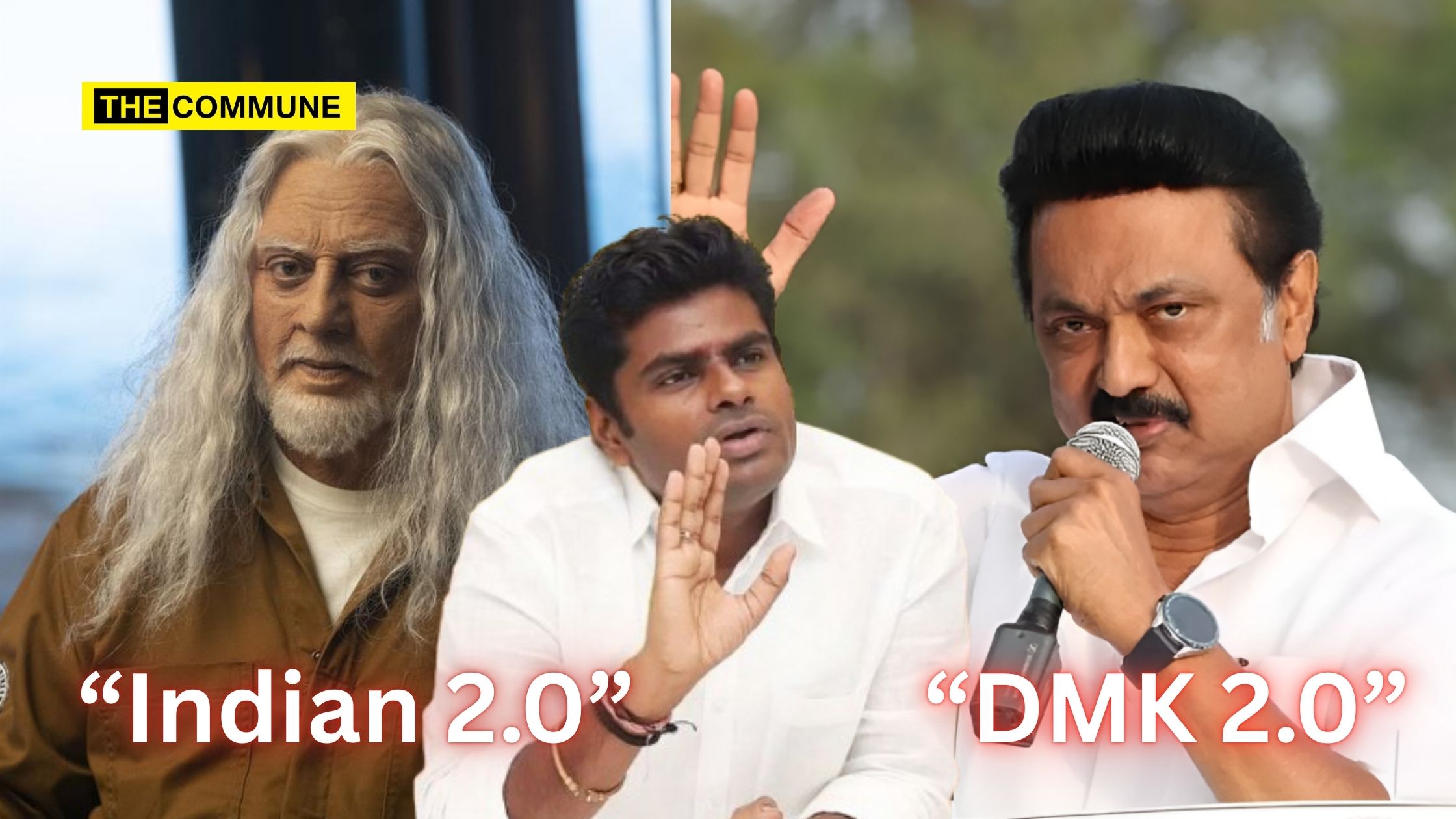
DMK 2.0 Will Become Like Kamal’s Indian 2.0, Annamalai Says

dmk annamalai kamal indian 2.0

Former Tamil Nadu BJP President K. Annamalai has launched a launched a scathing attack on the DMK government, accusing it of failing to maintain law and order in the state. He particularly highlighted a disturbing trend of violent crimes, including a recent spate of robberies and murders targeting elderly individuals in farmhouses across the Kongu region. Despite these incidents, Chief Minister M.K. Stalin has continued to claim that the DMK has delivered good governance and that the party’s return to power in 2026 will mark “DMK 2.0.”

Mocking the Chief Minister’s optimism, Annamalai compared the “DMK 2.0” pitch to Indian 2.0, a sequel to the Kamal Haasan film that was widely panned. Speaking at a protest held in Sivagiri on 5 May 2025, Annamalai ridiculed the comparison, saying, “The Chief Minister says, ‘If they come back to power, we’ll see DMK 2.0.’ But it will end up like the film Indian 2.0. That grandpa is different, and this ‘grandpa’ is different. No matter which 2.0 comes, you all know how it ends. He’s grading himself and claiming a comeback in 2026 like Indian 2.0. Beloveds, we must stand united—beyond party lines. Even if there are DMK cadres among us, I request you to acknowledge that law and order has broken down under this government. You must accept this, because your own families have women and elderly grandparents living in farm lands. This is not a political attack on DMK for the sake of it. It’s a call for everyone to come together.”

The protest was organized to condemn the brutal murder of Ramasamy and Bhakiyammal, an elderly couple living in Megaraiyan estate near Sivagiri in Erode district, who were killed during a robbery on 29 April. Annamalai warned that if the culprits are not apprehended within two weeks, the BJP would launch a continuous hunger strike in Sivagiri starting 20 May.

Citing a pattern of violent crimes in the region, Annamalai listed incidents in Namakkal, Chennimalai, Palladam, and other areas where farmers and elderly individuals were targeted. He expressed concern that the lack of swift arrests in these cases has eroded public confidence in the police force.

Annamalai also revealed alarming statistics that in the past three years, Tamil Nadu has recorded 1,319 sexual assault cases, 4,949 cases of sexual harassment, and 16,518 POCSO cases. “This government lacks the capability to ensure safety. People are waiting for a strong leader who can take decisive action,” he stated.

He demanded that Chief Minister Stalin hand over the investigation into the recent murders in Kongu Mandal to the CBI, criticizing the state government for protecting its image over delivering justice. “Two ministers were forced to resign in a single day. Thirteen are facing corruption cases. This is not governance—it’s chaos,” he added.

Annamalai also criticized the Tamil Nadu government’s silence on national security concerns, such as the central government’s directive to expel Pakistani nationals residing illegally in India, especially in the wake of attacks on Indian tourists in Kashmir.

Earlier in the day, Annamalai visited the bereaved family of the murdered couple and offered his condolences. He was accompanied by BJP leaders, including Modakkurichi MLA Dr. C. Saraswathi.

Subscribe to our channels on TelegramWhatsApp, and Instagram and get the best stories of the day delivered to you personally.

Supreme Court Uploads Judges’ Assets, Appointment Data To Boost Judicial Transparency

supreme court assets constitution

In a landmark move to promote transparency and bolster public confidence in the judiciary, the Supreme Court of India has, for the first time, made the declarations of assets and liabilities of its judges publicly accessible on its official website.

The declarations include those of Chief Justice of India (CJI) Sanjiv Khanna and 20 other sitting judges of the apex court. Among them are the next three judges in line to assume the position of Chief Justice in the near future. This unprecedented decision follows a Full Court meeting held on 1 April 2025, presided over by CJI Khanna, in which all judges unanimously agreed to make their personal asset disclosures public.

Until now, Supreme Court judges were mandated to submit asset statements to the Chief Justice, but these records remained confidential. The recent decision mandates that these statements be uploaded to the Court’s website as a matter of policy and practice going forward.

The initiative comes against the backdrop of controversy following alleged cash recovery from the official premises of Justice Yashwant Varma, a sitting judge of the Delhi High Court, which sparked public debate about accountability within the judiciary.

A press release from the Supreme Court confirmed the move, “The Full Court of the Supreme Court of India has on April 1, 2025, decided that the statements of assets of the judges of this Court shall be placed in the public domain by uploading the same on the website of this Court. Statements of assets of judges already received are being uploaded. Statements of assets of other judges will be uploaded as and when received.”

At present, asset declarations from 22 judges, including CJI Khanna, Justices BR Gavai, Surya Kant, Abhay S. Oka, Vikram Nath, Bela M. Trivedi, and others have been made available online. Declarations from remaining judges are expected to be uploaded as they are submitted.

In addition to the asset disclosures, the Supreme Court has also released detailed information regarding the judicial appointments process. This includes recommendations made by the Supreme Court Collegium for High Court judgeships from 9 November 2022 to 5 May 2025. The publicly available data includes the candidate’s name, High Court, source (Bar or judicial service), date of recommendation and appointment, category (SC/ST/OBC/Minority/Woman), and whether the nominee is related to any sitting or retired judge of a High Court or the Supreme Court.

This new policy marks a turning point in judicial accountability in India. By making such information accessible, the Supreme Court has set a precedent that legal experts and transparency advocates have long demanded.

(With inputs from Live Law)

Subscribe to our channels on Telegram, WhatsApp, and Instagram and get the best stories of the day delivered to you personally.
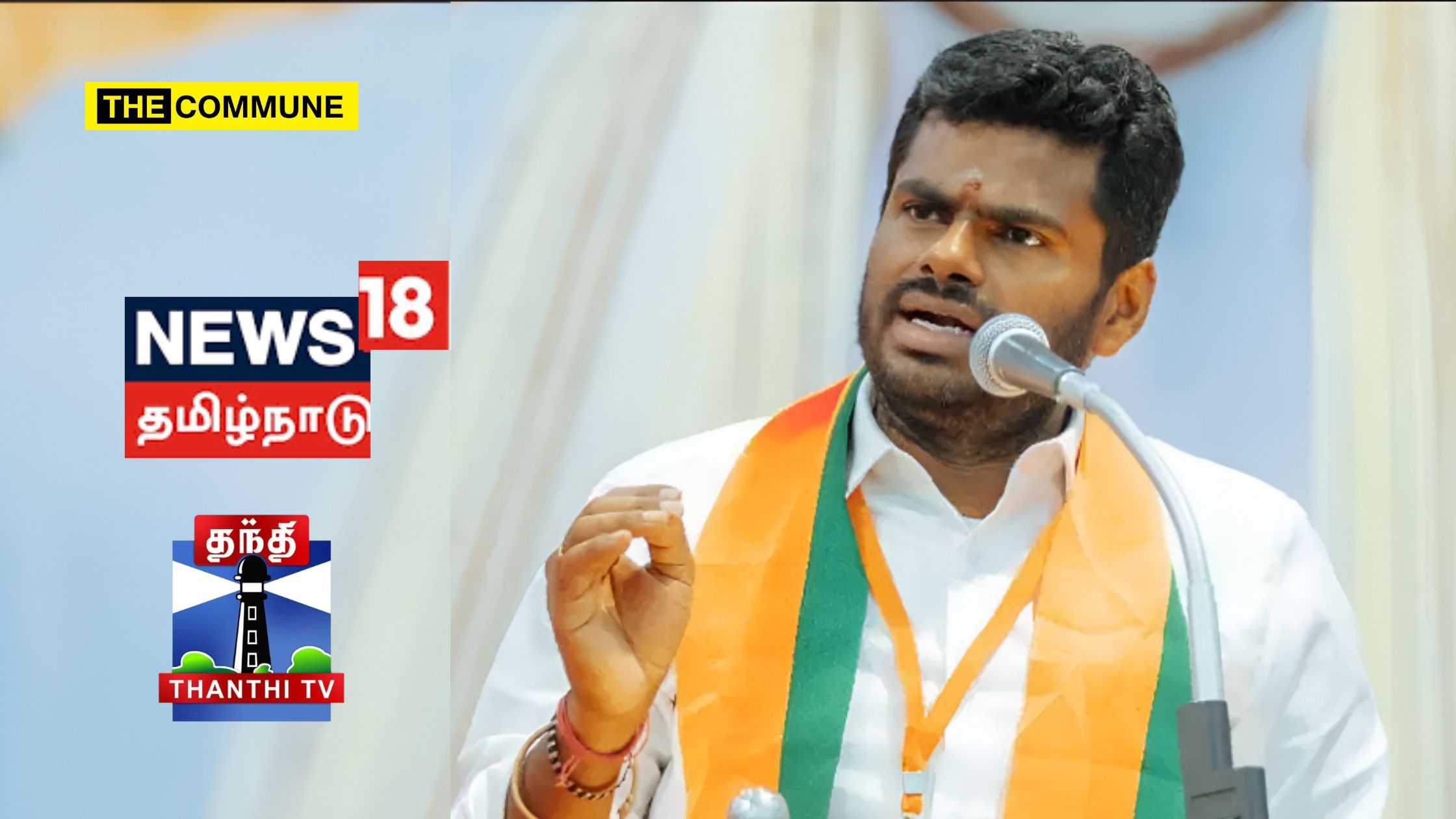
Dravidianist Media News18 TN & Thanthi TV Run Clickbait Headline, Misquote BJP Leader Annamalai, Message On Vision & Governance Reduced To Misleading Line On Alliance

news18 thanthi tv annamalai

Dravidianist media outlets in Tamil Nadu, eager for clickbait, have come together to push a misleading narrative, misquoting former BJP Tamil Nadu president K. Annamalai after his recent press meet. Annamalai had clearly stated that he does not believe in forming a strong alliance based solely on numbers, but rather in offering the people a vision for a better government. However, these media outlets, which often align with the DMK, selectively twisted his words, misleadingly headlining his statement as, “We have not united to defeat the DMK.”

Media outlets like News18 Tamil Nadu and Thanthi TV played a key role in spreading this distorted narrative.

On 5 May 2025, News18 Tamil Nadu posted a video with a misleading headline, alleging that Annamalai had said, “I don’t believe we have united to defeat DMK”. They cherry-picked the first few words of his statement and used it as clickbait, completely ignoring the rest of his remarks.

Similarly, Thanthi TV ran a headline claiming, “Our alliance did not form to defeat DMK”, presenting an out-of-context response that misrepresented Annamalai’s actual message.

Instead, at the press conference, K. Annamalai stated, “Personally, I don’t have much faith in the idea of a strong alliance to defeat the DMK. What makes strength? Is it the numbers? As far as I’m, the question is, what kind of government will we offer after defeating the DMK? People are asking, ‘You want to send the DMK home, but what are you going to do then? How will you address the law and order? The people ask what is the vision?’ They want a vision. If Tamil Nadu is givern for the next five years, what will we do? Today, our brother Edappadi Palaniswami, the opposition leader and political leaders in Tamil Nadu are already talking about what they will do, but for me, the 2026 elections won’t be decided by just numbers. It won’t be about how many parties are on the DMK’s side versus how many are on the opposition side. What matters is, if the people want to remove the DMK, who will offer them a better government? That’s the conversation happening today.”

He continued, “I don’t believe in, ‘Let’s unite to defeat the DMK.’ What I believe in is ‘Let’s unite to defeat the DMK and give a good government.’ That is what the Bharatiya Janata Party believes and I think all parties, including the All India Anna Dravida Munnetra Kazhagam, believes in.”

Subscribe to our channels on TelegramWhatsApp, and Instagram and get the best stories of the day delivered to you personally.
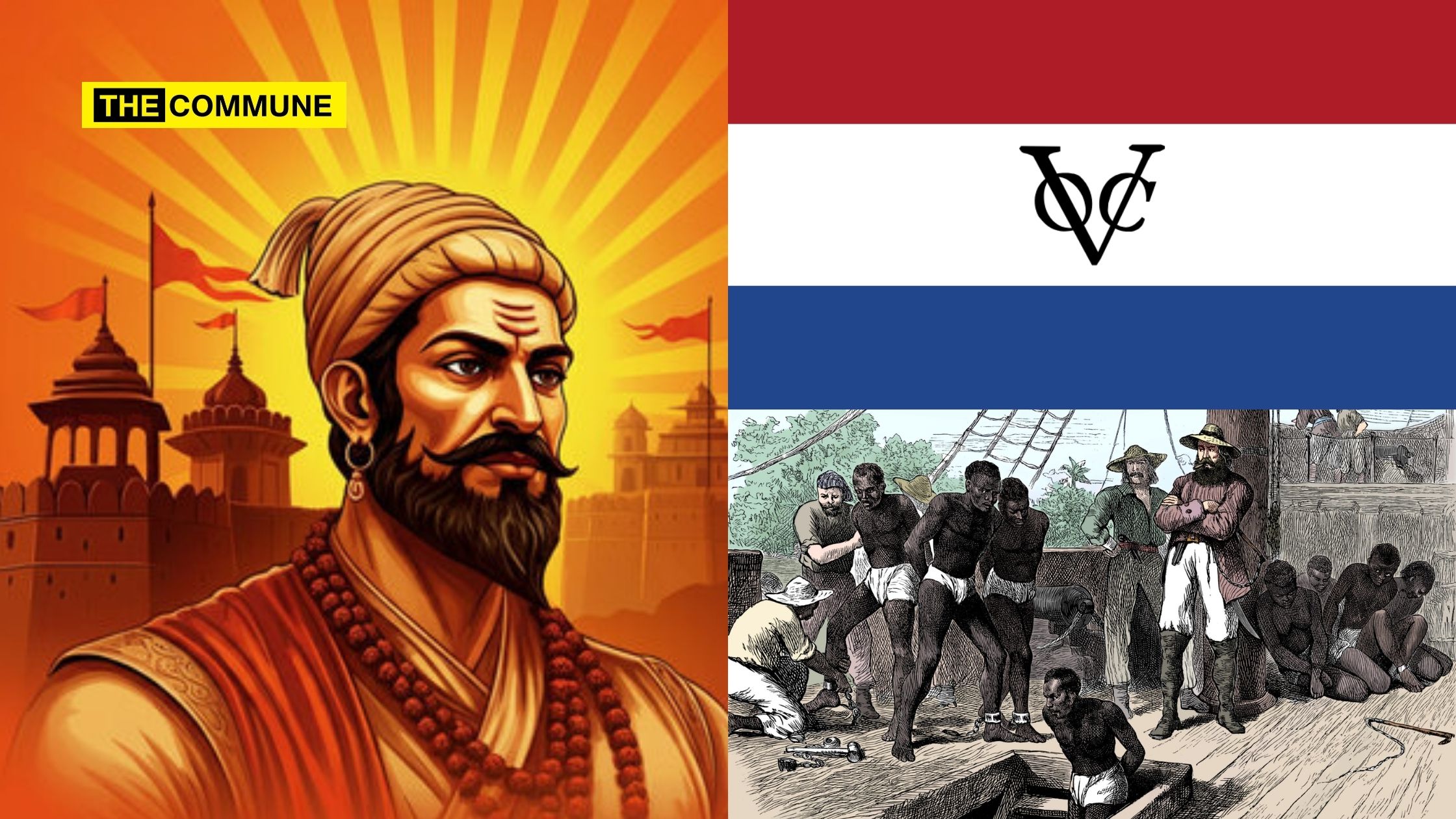
When The Dutch Bowed To The Maratha Superpower: How Chhatrapati Shivaji Maharaj Abolished Slavery In Dutch-Occupied Tamil Nadu

Our nation Bharat was the golden bird of the globe. It was undoubtedly the superpower militarily, economically, culturally, and politically. After the sultanate invasion into Bharat due to the backstabbing of Muhammed Ghori against Samrat Prithviraj Chauhan, the emperor of Delhi, our nation faced considerable upheavals, most importantly religious persecution against Hindus. The onslaught was defended by valiant warriors, who sacrificed their lives and kingdom, refusing to be slaves under these foreign invaders. It was in these circumstances that across Bharat we had multiple uprisings and rebellions against the Islamic Mughal empire. It was Vijayanagara in the east and the south, Ahoms in the northeast, Zamorins and Cheramaperumals in the southwest, and the Sikhs in the northwest. The most important of all of these were the Marathas under Suryatej Chhatrapathi Shivaji Maharaj. After the surrendering of certain forts to Aurangzeb, Kondhana was recaptured by Subedar Tanaji Malusare of Umrat from Udaybhan Rathore (Mughal Vassal).

The Call For Swarajya

The clarion call for Swarajya was given by Maharaja Chhatrapati Shivaji Raje, to break the shackles and smash the chains of religious slavery which was sought to be imposed upon the Hindus by the Islamic Mughal conquerors. Swarajya was not just a word. It was a beacon of hope to the oppressed, a gateway for freedom against Mughal tyranny, and the only force to destroy religious and cultural slavery against the Hindus. This was not an ordinary vision. It was the ultimate goal to be achieved for every self-respecting Bhartiya Hindu and required the full measure of devotion to reclaim the lost glory of this great country called Bharat.

Chhatrapathi Shivaji Maharaj was not an ordinary person; he was the enigma that every Hindu had hoped for against tyrannic Mughal rule. The bhagwa and Talwar was not only a symbol, but a divine ornament gifted to him by Maa Bhavani of Tuljapur. The desire and thirst for swarajya against tyrannic rule was unquenchable, which gave rise to a phoenix in the form of Chhatrapathi Shivaji Maharaj and the Marathas. The victorious Chhatrapathi coronation of Shivaji Raje Maharaj sent shock waves and deep anguish coupled with jealousy not only to the Mughals but across the globe. The British, the Dutch, the French, and the Portuguese were envious as they did not expect this rise in the late seventeenth century post-1645, as the colonial powers were lurking around Bharat trying to have a stronghold in the mainland. For the Hindus of Bharat, this was a pivotal movement in history that demonstrated to the outside world that Hinduism and Bharat cannot be destroyed and will always remain as resurgent as the Sun and the Moon.

During this period, slavery in India was being practiced by the colonial powers in collusion with the Islamic rulers in Bharat—the victims often being the poor, gullible native Hindus. The Hindu rulers at this time wanted to come under the umbrella of either Chhatrapathi Shivaji Maharaj or the Vijayanagara samrajya. In certain areas in the south, the Vijayanagara Samrajya had fallen due to infighting and was not in a position to defend against the continuous Islamic onslaught. This breach in protection had a direct impact on the safety of Hindus in the Deccan (south). Swarajya was founded not for self-enhancement but for a specific purpose: to break the shackles of slavery imposed upon Hindus and the country by Islamic invaders.

The Deccan Digvijayam

When the Mughals started eyeing the Deccan, Chhatrapathi Shivaji Maharaj could not remain a mute spectator as the founder of the Maratha empire. To fulfill the promise he gave to his father of achieving total swaraj of Bharat from Islamic invaders, he set out on a mission rightly named Deccan Digvijayam. This required him to travel deep into south India, including various places in Tamil Nadu along with his brother. He also visited the Kaalikambhal temple in Chennapatnam, present-day Chennai. After various wars that ensued in Tamil Nadu, swarajya was established there to protect Tamilians and Hindus from Islamic onslaught. Thus began the journey of the Bhosle clan rule in Tamil Nadu, a journey that started 350 years ago.

Being the Chhattrapathi, Shivaji Maharaj knew well the deep scar of slavery imposed by the Mughals and Aurangzeb on the Hindus and Bharat. The spectacle of slavery was in full display as the Mughals and the Deccan sultanate were involved in shipping native slaves including prisoners of war abroad at the request of colonists through Firmans. At this point, Chhatrapathi Shivaji Maharaj was encamped in Tamil Nadu with the mission of total swarajya. This was eventually achieved 100 years later when the Swarajya empire extended from Attock in Afghanistan to Tanjore in South India, Pune in the west up to Bengal in the East.

In Tamil Nadu, the colonists wanted to ensure that trade could be facilitated with the establishment of factories on equal terms with Chhatrapathi Shivaji Maharaj. Maratha economic policy was inclusive of better trade relations with colonists provided the European trading partners would treat them as equals. The recognition given by the colonists established the

Marathas as an undeniable military, political, and economic power. Swarajya and the Marathas became the next superpower in Bharat, especially after the decline of the Mughal empire.

The VOC (Dutch East India Company) in Coromandel had fortified settlements and trading centers extensively on the coast. The northernmost was Bimlipatnam (Now Bheemunipatnam in Northern Andhra Pradesh) and the southernmost was Nagapattinam (in Tamil Nadu, captured from the Portuguese in 1658). The capital was Pulicat (30 km North of Chennai). The fort at Pulicat was named Geldria and was built as early as 1613. In 1676, Ekoji, the half-brother of Shivaji, ousted the Nayak of Madurai from Thanjavur. Shivaji started his famous Karnataka campaign in the same year and captured the whole of Adilshahi Karnataka swiftly in 1677.

As soon as he won most of the Adilshahi Karnataka, Shivaji started paying attention to the administration of the province. In this background, treaties known as Kauls were sought with the Marathas. These kauls were both treaties and agreements signed by the Marathas with external powers including Europeans in Tamil Nadu, comparable to the firmans issued by the Mughals. The Dutch had forts at Tarangambadi, Cuddalore, Tanjore, Palaverkadu (Pulicat near Ponneri), and Colachal among other places in Tamil Nadu.

The treachery of Tallikota and the backstabbing by all the sultanates against the Vijayanagara samrajyam was a wake-up call to all Hindu rulers down south. This was another reason for the ascendance of Raghunatha Nayak to the throne of Tanjore. Fresh from his victory against the Golkonda sultanate, he established his kingdom and capital in Tanjore. He allied with the Dutch and wanted to remove all threats against his kingdom. However, the descendants of Raghunatha Nayak were not as formidable, leading to the Dutch extending their influence into the Nayak administration in Tanjore. This weakened the position of the Nayaks and was seen as a threat to the Hindu kingdom. The attempted smuggling of the Murugan idol from Thiruchendhur Murugan temple by the Dutch, though it ultimately failed, gave perfect reason for the establishment of firm Swarajya rule in Tanjore.

In this situation, Chhatrapathi Shivaji Maharaj utilized the opportunity and laid the foundation for swarajya in Tanjore. As a consequence, the Dutch along with the French realized the potential and power of the Marathas and voluntarily came forward to sign a peace treaty with them. This was the first time in the south that European colonial superpowers sought to establish treaty, alliance, and trade relations with Chhatrapathi Shivaji Maharaj and recognized his power in Tamil Nadu, highlighting the success of his Deccan Digvijayam.

Victory At Gingee And The End of Slave Trade

On 26 June 1677, a Maratha vanguard comprising 6000 troops engaged Sher Khan’s army near Thiruvadi. Sher Khan was forced to retreat and was pursued by Maratha cavalry. The next day, he reached the forests of Bhuvanagiri, south of Thiruvadi, and was promptly besieged there. He surrendered on 5 July 1677, and agreed to give up all his territory and pay 20,000 Hons, with his son Ibrahim Khan kept as hostage. Many other smaller fortresses were also captured. In September 1677, after capturing the famous fort of Gingi, Shivaji began reorganizing the administration of the newly won province.

The fort of Gingee, previously administered by the Islamic Adhil Shahji sultanate, suffered a crushing defeat at the hands of Chhatrapathi Shivaji Maharaj, jeopardizing Islamic hegemony in Tamil Nadu and paving the way for Swaraj. The European colonists wanted continuity of trade, while Chhatrapathi Shivaji Maharaj demanded equality, honor, respect, dignity, and freedom from all forms of oppression. The shackles of slavery lingered in the minds of every Maratha soldier, and Shivaji Maharaj was determined to break the chain of Islamic imposition upon native Hindus in Bharat.

To reach a mutual understanding, the French and Dutch submitted to and recognized the dominance of the Marathas in Tamil Nadu. This was the first time European colonists treated a resurgent Hindu empire with equal respect and accepted conditions in a treaty even when against their interests. After reorganizing the administration in Gingee Fort, Chhatrapathi Shivaji Maharaj granted two kauls to the Dutch.

He granted two kauls to the Dutch East India Company (VOC), one to Albert van Weede, head of Tegenapatnam factory, and one to Jacques Caulier, governor of Dutch Coromandel, continuing their trading rights given by the Adilshah except for the purchase of slaves. Herbert de Jager and Nicolas Clement met Shivaji at his camp at Waligondapuram on 6th August. Shivaji, accompanied by Raghunath Pandit and Janardan Pandit, listened to the VOC’s demands and promised to honor previous kauls. He also held a friendly conversation with Nicolas Clement.

The transliteration of these Kauls, especially the one dated 24th of August 1677 signed in Tegenapatnam (Gingee fort), highlights one vital matter: under the insistence of Chhatrapathi Shivaji Maharaj, the issue of slavery was struck down. He made it clear that slavery practiced previously in Islamic rule from Gingee, by transporting various native Hindus as slaves abroad in ships can never be continued as long as Swaraj is in force.”

This Kaul significantly highlights that slavery existed in Tamil Nadu through the Gingee Fort under Muslim Adhil Shahi’s rule. There was an agreement between the Islamic Adhil Shahi rulers and the European colonists to continue slavery, primarily involving native Hindu commoners. Chhatrapati Shivaji Maharaj refused to agree with the Dutch to continue this policy and made it clear that there would be no slavery under Swarajya rule as long as he was Chhatrapathi.

This content in the Kaul symbolizes the Hindu religion and Bhartiya culture, which does not permit or recognize slavery of any kind and represents inherent tolerance and equality. The existence of this kaul has been deliberately kept from public view to suit a Hindu-phobic narrative. The evidence clearly shows that it was the Dutch and Islamic rulers who were responsible for institutionalized slavery in Gingee, while Chhatrapathi Shivaji Maharaj stood firmly against it.

For clarity, the exact words pertaining to the abolition of slavery found in the translated Kaul are: (24.08.1677, Gingee)

“During the Muslim rule, you were allowed to buy slaves (male & female) from here and transport the same (abroad), without being hindered by anybody. But now, as long as I am the master of this country, you can neither buy slaves nor transport them elsewhere. And if you were to do it, and bring slaves on board, my people will oppose it in all ways and not permit that they were reduced to slavery in your house. As such, you must observe and honour the same

  • Credit for Translation & inputs from Nikhil N. Bellarykar
  • Copyright of document & acknowledgement of assistance from National Archives Netherlands, Hague

B Jagannath is an advocate at Madras High Court and has authored the book The First Native Voice of Madras.

Subscribe to our channels on TelegramWhatsApp, and Instagram and get the best stories of the day delivered to you personally.
‘Is The DMK’s Preaching Only For Others, Not For Dravidian Stocks?’ BJP Leader H Raja Slams DMK After Ex-Minister Ponmudi’s Grandson Takes NEET Exam

h raja dmk ponmudy neet

Senior BJP leader and Tamil Nadu BJP Coordination Committee Convenor H Raja has criticized the DMK and its leadership for its blatant hypocrisy regarding the NEET medical entrance exam. While publicly opposing NEET in Tamil Nadu, but its leaders privately ensure their own children prepare for and appear in the same exam.

According to reports, over 1.5 lakh students from Tamil Nadu registered for the National Eligibility cum Entrance Test (NEET) held on 4 May 2025, with approximately 20,000 students appearing from Chennai district alone.

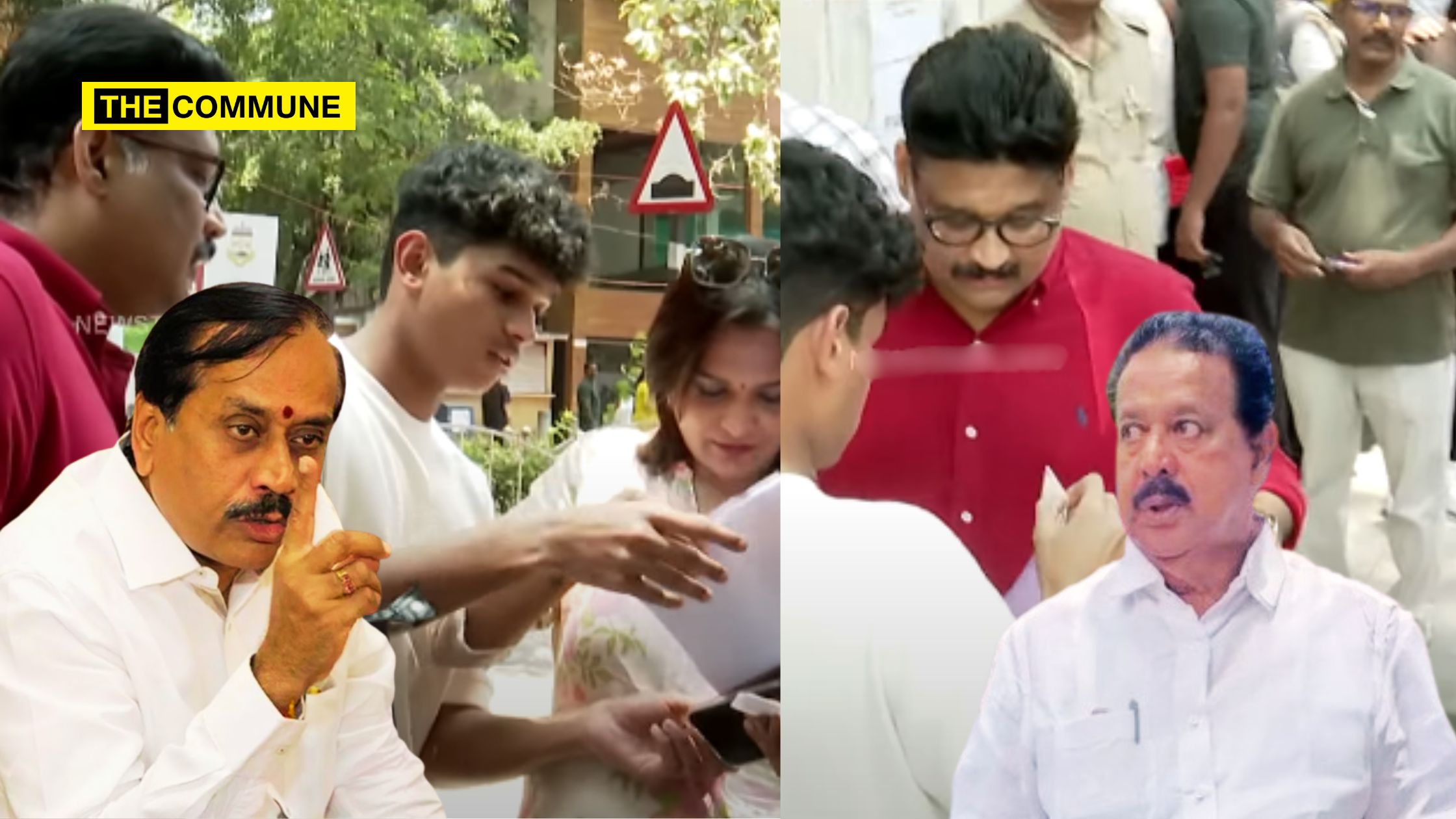
What drew particular public attention was the presence of the grandson of former DMK Forest Minister K. Ponmudi at an exam centre in Chetpet, Chennai accompanied by his father and former DMK MP, Gautham Sigamani.. The incident sparked criticism because, despite the DMK’s ongoing opposition to NEET, their own family members are participating in it. This mirrors similar criticism the party faces over its opposition to Hindi imposition, while simultaneously running CBSE schools that offer Hindi as a language option.

Taking to his official X (formerly Twitter) account, H. Raja mocked the situation, and questioned, “The scene where the grandson of former DMK Minister Mr. Ponmudi goes to write the NEET exam. Is the DMK’s preaching only meant for others? Not for the Dravidian Stocks?” 

This criticism was specifically directed at former DMK Minister K. Ponmudi, who, during his tenure as Tamil Nadu’s Higher Education Minister in 2022, had openly questioned the fairness of NEET. Speaking at the 10th edition of The New Indian Express‘ ThinkEdu Conclave, Ponmudi remarked, “How can you evaluate 12 years of education with just a three-hour exam?”—a statement that underscored the DMK-led government’s firm opposition to the NEET system.

In 2021, the DMK had reaffirmed its unwavering stance against NEET, making it clear that there was no shift in policy. An official statement was issued to counter media speculation, reiterating that the State government supported medical admissions based on students’ performance in their Plus Two board exams, not through centralized entrance tests. During a virtual high-level meeting on educational policy, both Higher Education Minister K. Ponmudi and School Education Minister Anbil Mahesh Poyyamozhi reaffirmed this position, emphasizing the government’s continued resistance to NEET for professional course admissions.

Subscribe to our channels on TelegramWhatsApp, and Instagram and get the best stories of the day delivered to you personally.
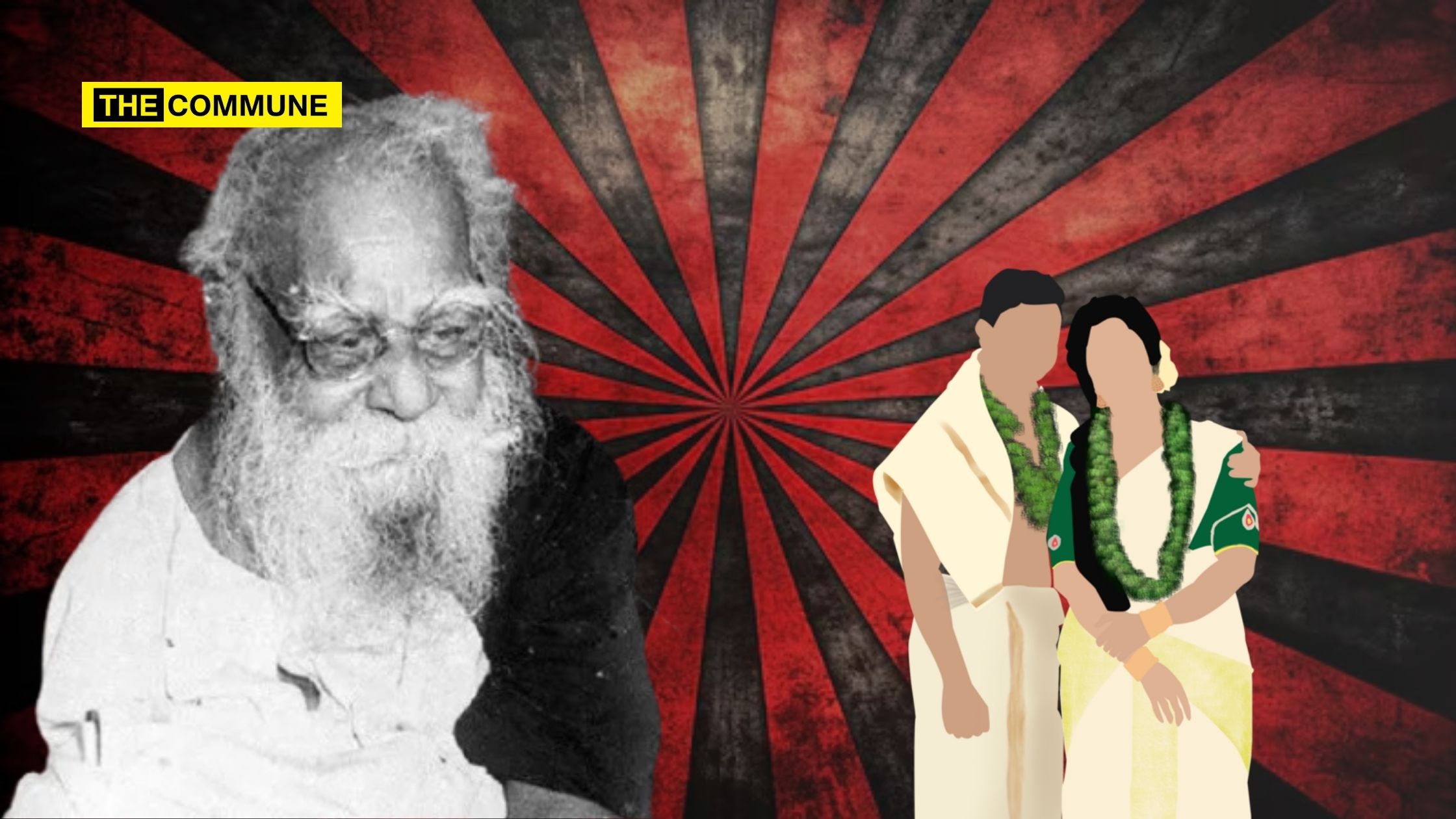
How EVR Fetishized About Kerala’s Sambandham System And Sexual Exploitation Of Women

EVR's Gems On Malayalis Especially Brahmins And Nairs

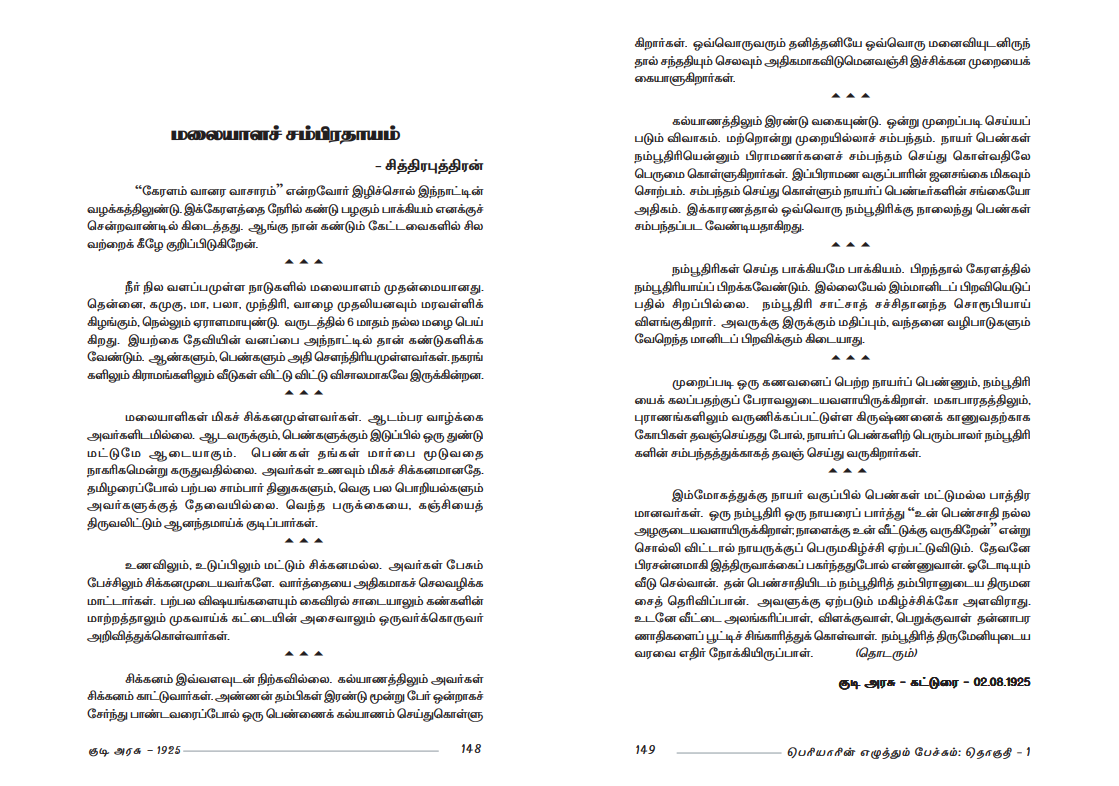
The most disgusting, sadistic and misogynistic ideologues in recent history seem to be the followers of the Dravidianist ideology aka the followers of EV Ramasamy Naicker, whom they hail as ‘Periyar’. Why is that? Because under the pretense of historical critique, they’ve constantly pushed revolting opinions about women—often shaped by their own bizarre fetishes. Their narratives weaken men, strip husbands of dignity, and reduce women to mere flesh to be consumed by men of their ilk. And the worst part? These aren’t accounts backed by real history—they’re made-up tales driven by nothing but their own sick sexual fantasies. And who was the man behind many of these pathetic cucked-up stories? None other than E.V. Ramasamy Naicker himself. He wrote such content under the pseudonym “Chithiraputhiran” in the Kudiyarasu magazine.

In one such article, titled “Malayala Samudhayam” (“Malayalam Tradition”), dated on 2 August 1925, he goes on to paint a grotesque picture of Kerala society. He casually claims that women don’t cover their chests, that men share wives like it’s some economic strategy, and glorifies Nambudiri Brahmins having access to multiple Nair women—comparing the women’s supposed devotion to them with that of Gopis pining for Krishna. He even says families would be overjoyed if a Nambudiri expressed interest in their daughter, treating it like a divine blessing.

Here’s a disturbing glimpse:

“There is a derogatory term in this country called “Keralam Valara Vasaram.” I had the opportunity to see Kerala firsthand last year. I would like to mention some of the things I observed and heard below. Malayalam (Kerala) is among the first in the world in terms of rich water resources. The region is abundant in coconut, kamuku, mango, jackfruit, cashew, and banana, along with cassava tubers and paddy. It experiences significant rainfall for six months of the year. The goddess of nature can be seen only in that country. Both men and women are very beautiful. In both cities and villages, the houses are spacious and have gaps. The Malayalis are very frugal and do not lead a luxurious life. Men and women wear only a piece of clothing around their waists. Women do not consider it fashionable to cover their breasts. Their food is also very frugal; they do not need many sambar dishes or curries like the Tamils do.

They drink hot porridge with joy. Not only are they frugal in food and clothing, but they are also frugal in speech and do not waste words. They communicate many things to each other through finger gestures, eye movements, and the movement of their muzzles. This frugality does not stop there; they also demonstrate frugality in marriage. Two or three brothers marry one woman, similar to the Pandavas. If each man has his own wife, the offspring and expenses will increase, so they resort to this thrifty method. There are two types of marriage. One is a formal marriage. The other is an informal relationship. Nair women take pride in marrying Brahmins known as Namboothiris. The community of this Brahmin class is very small, while the community of Nair women who marry is large. For this reason, four or five women have to be married to each Namboothiri. The Namboothiris are fortunate. If one is to be born, it is best to be born in Kerala as a Namboodiri. Otherwise, one’s rebirth in this human life is not worthy. A Namboothiri embodies Satsat Sachidananda. No other human birth commands the respect and veneration that a Namboothiri does. Additionally, a Nair woman with a legitimate husband is often eager to be with a Namboodiri.

Just as the Gopis performed penance to see Krishna, as described in the Mahabharata and the Puranas, most of the Nair women are performing penance for the sake of the Namboothiris’ samantham (matrimonial alliance confirming marriage). Not only are Nair women attracted to this passion of the Namboothiri class. If a Namboodiri sees a Nair and says, “Your wife is very beautiful. I will come to your house tomorrow,” the Nair will be overjoyed. He will think that God Himself has appeared and spoken this message. He will run home and inform his wife about the marriage wish of Namboothiri Thambiran. The joy that will come to her will be immeasurable. She will immediately decorate the house, light it, clean it, and adorn herself with her jewels. She will eagerly anticipate the arrival of the Namboothiri.

Let’s be absolutely clear—this wasn’t history. It wasn’t anthropology. And it certainly wasn’t satire. What EVR, under the alias Chithiraputhiran, penned in the Kudiyarasu on 2 August 1925, was a disturbing grotesque blend of fetish-laced fantasy and ideological spin, aimed at degrading women under the guise of cultural commentary.

EVR’s fascination with the Sambandham system—where Nambudiri Brahmins had alliances with multiple Nair women—was less about dismantling caste hierarchy and more about reimagining it to suit a Dravidianist reversal. His writings suggest a subconscious desire to replicate that structure, with Dravidian men taking the place of the Nambudiris, wielding similar power over upper-caste women, particularly Brahmins. This wasn’t a vision of egalitarianism, but rather one of revenge re-cast as sexual dominance. Instead of seeking liberation through equality, EVR’s rhetoric hints at a deep yearning to invert the caste pyramid by asserting masculine control in the most intimate domains—female bodies and sexuality—thus reducing social justice to a fantasy of conquest and humiliation.

Subscribe to our channels on TelegramWhatsApp, and Instagram and get the best stories of the day delivered to you personally.
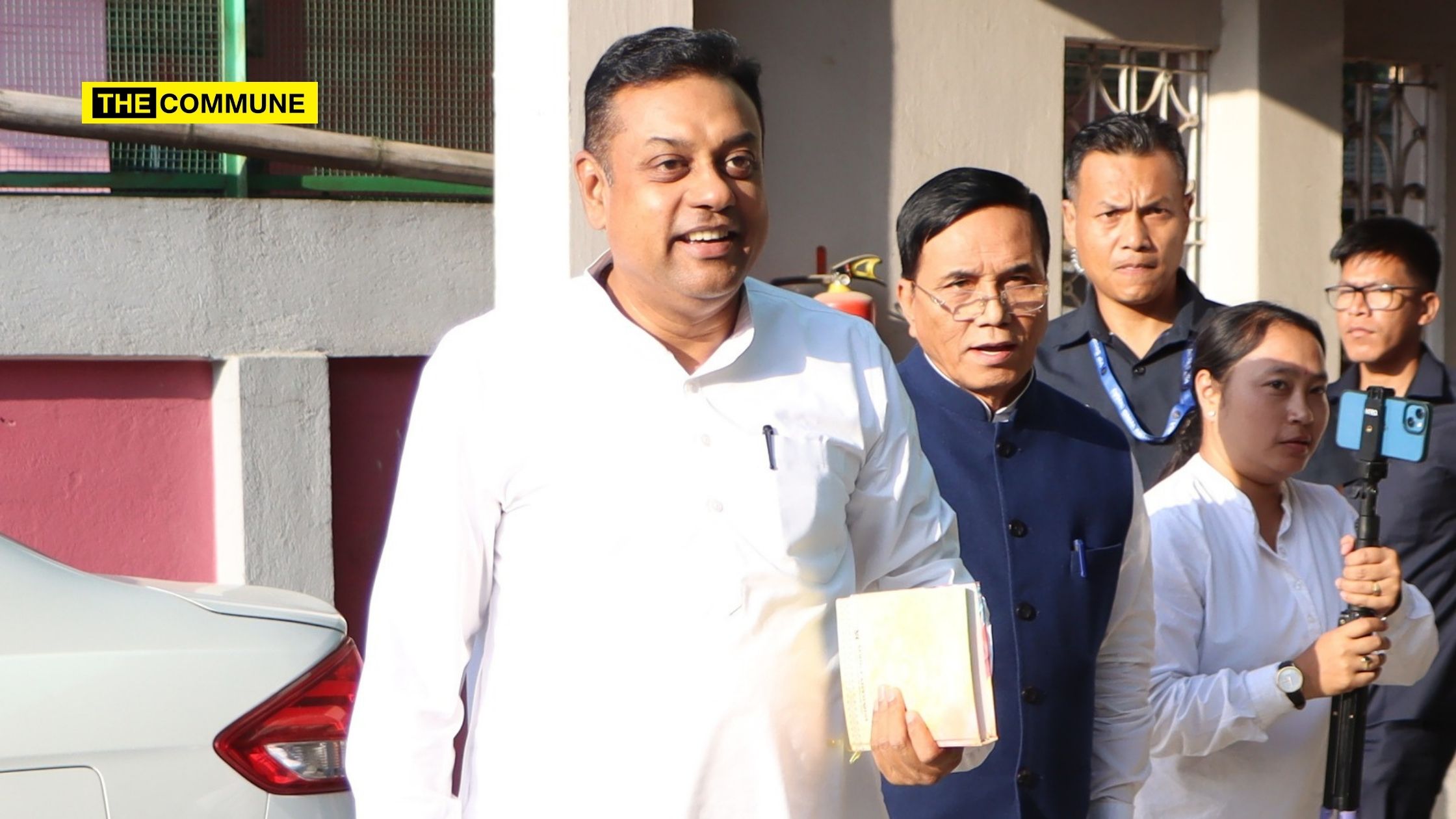
Manipur: BJP Leader Sambit Patra To Hold Meetings With Leaders And Community Heads

A week after 21 MLAs of Manipur urged Prime Minister Narendra Modi and Union Home Minister Amit Shah to reinstate a popular government in the state, BJP’s North East in-charge Sambit Patra arrived in Imphal on Monday and held meetings with some political leaders. A BJP leader said that Patra, during his two-day stay in Manipur, would hold a series of meetings with MLAs and leaders of Meitei and Kuki-Zo communities.

“Soon after his arrival in Imphal, Patra went to Churachandpur, where he met local MLA Vungzagin Valte (who belongs to the Kuki community). Returning to Imphal, he met former Chief Minister N. Biren Singh, Manipur Assembly Speaker Thokchom Satyabrata Singh and other leaders,” the leader said. The BJP’s North East in-charge is likely to meet some MLAs, former ministers, and leaders of various factions. Manipur has been under the President’s Rule since February 13, four days after the resignation of N. Biren Singh from the Chief Minister’s post. The 60-member Manipur Assembly, which, after the promulgation of President’s Rule, has been put under suspended animation, has a tenure till 2027.

Meanwhile, 21 Members of the Manipur Legislative Assembly (MLAs) in a joint letter on April 29 have urged Prime Minister Narendra Modi and Union Home Minister Amit Shah to reinstate a popular government in the state. One of the MLAs confirmed the development and said that out of the 21 lawmakers, most belong to the BJP and the remaining are from the National People’s Party (NPP), Naga People’s Front (NPF) and two independent legislators.

The letter of the MLAs to the Prime Minister and the Union Home Minister said that the people of Manipur welcome the President’s Rule with lots of hope and expectations, but no visible actions to bring peace and normalcy in the state have been seen so far. The MLAs said that the installation of a popular government is the only means to bring peace and normalcy in Manipur. In a bid to resolve the two-year-long ethnic hostilities, the first tripartite meeting between the officials of the Ministry of Home Affairs (MHA) and the representatives of Meitei and Kuki-Zo communities was held in New Delhi on April 5.

–IANS

Subscribe to our channels on TelegramWhatsApp, and Instagram and get the best stories of the day delivered to you personally.
Home Ministry Orders Civil Defence Drill Nationwide As India Prepares For Fierce Response To Pakistan

civil defence drill

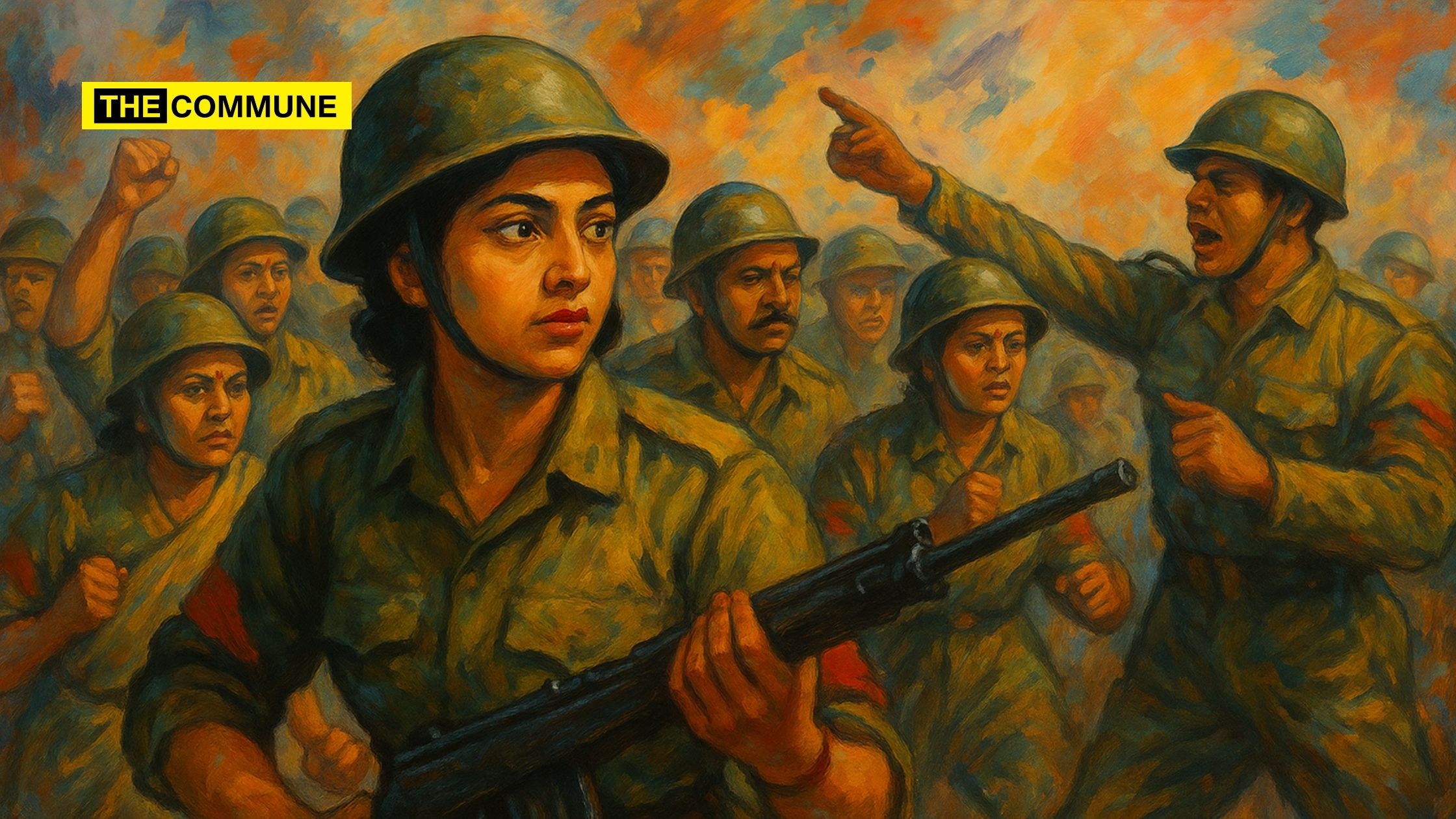
In a significant move amid growing tensions in the wake of the Pahalgam terror attack, the Union Ministry of Home Affairs (MHA) has issued directives to several states to conduct full-scale civil defence mock drills on May 7.

The preparations come as India continues to weigh its response to the brutal attack that killed 26 civilians, including 25 tourists, in Jammu and Kashmir’s Pahalgam on April 22.

According to government sources, the mock drills will include the operationalisation of air raid warning sirens, a rare and telling step, typically associated with heightened threat perception and preparations for hostile engagement.

Among the other key activities listed by the MHA are: Training of civilians and students in key civil defence techniques to protect themselves during potential hostile attacks.

Provision for crash blackouts, an emergency protocol aimed at concealing cityscapes and infrastructure from potential aerial surveillance or strike.

Early camouflaging of vital plants and installations, a standard wartime measure to safeguard critical national assets.

Updation and rehearsal of evacuation plans, ensuring readiness for rapid civilian movement, if needed.

The timing and scale of the MHA issuing the directives on drills have raised eyebrows in defence and strategic circles.

Combined with a flurry of recent high-level security meetings — between PM Narendra Modi, Defence Secretary, and the three service chiefs — the drills have added to speculation that India may be preparing for a fierce retaliatory strike against Pakistan in response to the Pahalgam massacre.

The decision also follows a series of consultations involving top political leaders, including Leader of Opposition Rahul Gandhi, indicating a consensus on the gravity of the situation.

While official statements have remained guarded, the stepped-up civil defence measures strongly suggest that India is entering a phase of elevated alert and operational readiness. The next 48 hours may prove critical as the country watches for the government’s next move.

–IANS

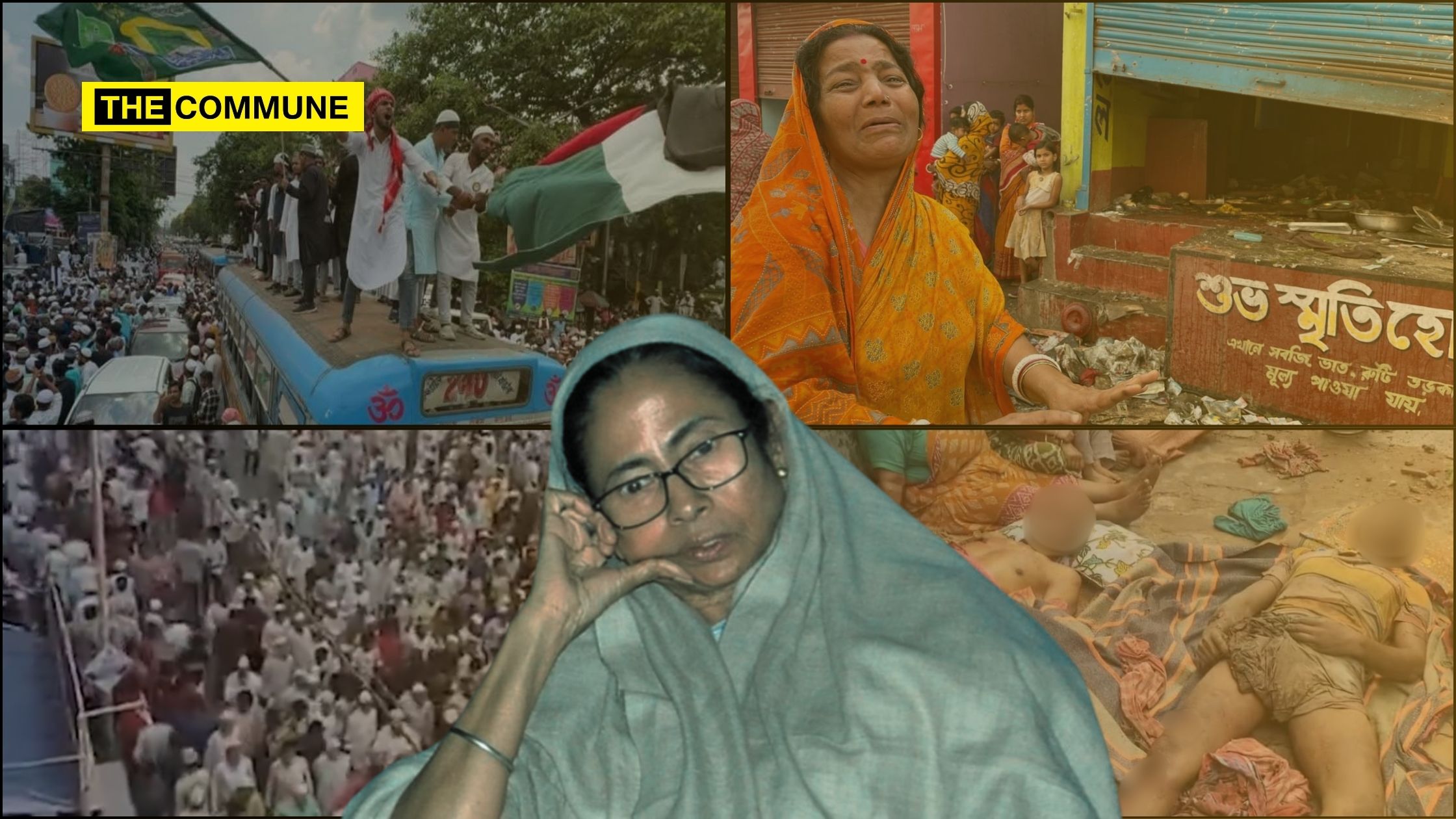
16 Instances Of Persecution Of Hindus In Mamata Banerjee’s West Bengal In April 2025

west bengal mamata banerjee persecution hindus

The month of April 2025 witnessed a sharp rise in violent incidents targeting the Hindu community across multiple districts of West Bengal. The attacks—ranging from targeted killings and sexual violence to desecration of temples and destruction of livelihoods—have raised serious concerns about communal security in the state. Many of the incidents point toward increasing radicalisation and alleged administrative apathy, with victims often citing police inaction or complicity.

Below is a district-wise chronology of the reported incidents:

#1 West Medinipur (1 April 2025)

In Raghunathpur village under the jurisdiction of Daspur Police Station, Hindu sadhu Sri Hiranmay Goswami Maharaj was attacked by unidentified assailants. Devotees rushed him to a hospital for treatment. The motive behind the assault remains unknown.

#2 Jalpaiguri (1 April 2025)

A minor Hindu girl was allegedly murdered by two individuals identified as Maher Sheikh and Rohit Roy in New Jalpaiguri. The girl’s body was later discovered abandoned in a forested area. The nature of the murder has sparked local outrage.

#3 North 24 Parganas (5 April 2025)

A Basanti Puja pandal in the Kachhari Bari area, under Gobardanga Police Station limits, was vandalized by unknown miscreants. The attackers desecrated the deity and then set the idol on fire during the early morning hours.

#4 Kolkata (8 April 2025)

TMC leader Dipak Dhali reportedly assaulted a Hindu youth for installing a Ram Navami banner. Dhali, a member of the Chandpur Panchayat in Arbelia near Rajarhat, allegedly objected to the public display and resorted to violence.

#5 East Medinipur (8 April 2025)

A brutal case of sexual assault was reported from Kolaghat. A 25-year-old man, Mantaj Hossain, allegedly raped a minor Hindu girl and then inserted a fork in her rectum. Hossain fled the scene but was later apprehended by police in New Town, Kolkata.

#6 Kolkata (10 April 2025)

During a protest against the Waqf Amendment Act, a Muslim mob reportedly coerced a Hindu bus driver into removing a saffron flag. Eyewitnesses claim police personnel present at the scene did not intervene.

#7 Hooghly (11 April 2025)

In Chanpadani, a Muslim mob vandalized several Hindu-owned shops during a rally opposing the Waqf Amendment Act. Several shops suffered extensive damage.

#8 Murshidabad (12 April 2025)

A large-scale communal attack was reported in Dhuliyan. Armed Islamist mobs attacked multiple Hindu villages—Betbona, Dighri, and Jafrabad. Homes were looted and burned, temples desecrated, and shops destroyed. Livestock was also taken. In the aftermath, several Hindu families fled across the Ganga river to seek safety in Malda district. The Border Security Force (BSF) and Central Forces were deployed to restore order.

#9 Murshidabad (13 April 2025)

In Jafrabad village under Samserganj Police Station, two Hindu men—Hargovinda Das and his son Chandan Das—were brutally murdered. A formal complaint was lodged by Parul Das, the widow of Hargovinda Das, naming Yusuf Sheikh, Akbar Sheikh, Hazrat Ali, Kalu Nadar, Nurul Sheikh, and Ansar Ali as the accused.

#10 Nadia (15 April 2025)

On Eid night, a married Hindu woman was gang-raped in Nabadwip by five individuals, including four Muslims and one Hindu. Her minor daughter was also physically assaulted. All accused were later arrested by the police.

#11 North Dinajpur (21 April 2025)

In Basudevpur village of Raiganj, a Hindu family was attacked by Islamists. Individuals identified as Rashid and Saddam led the assault, reportedly after the family refused to sell their house despite ongoing pressure. To escape the attackers, Bidhan Majumder and his wife took shelter in a nearby cornfield.

#12 Malda (23 April 2025)

In Sekendarpur village, Hindu villagers protesting the murder of a local youth, Nimai Mondal, were reportedly assaulted by police. Mondal was killed while patrolling his village at night.

#13 West Medinipur (24 April 2025)

Four Islamist assailants mutilated a sacred Nandi Maharaj idol in Kazirhat village under Ghatal Police Station. When villagers gathered to protest, police arrived and allegedly lathi-charged the crowd indiscriminately, injuring at least 10 people, including women and children.

#14 Howrah (24 April 2025)

In the Chatterjee Haat area of Santragachhi, a Hindu family, including two young children, was forced to abandon their ancestral home due to ongoing harassment by Islamist elements. In a video appeal, Dipak Chowdhury and his wife narrated the series of threats and abuses they endured.

#15 North 24 Parganas (26 April 2025)

In Duttapukur, local police stopped a group of Hindu youths from burning a Pakistani flag. In a viral video, officers were heard stating, “You can’t burn the Pakistani flag here. It’s a sensitive area.”

#16 Howrah (27 April 2025)

In Bhagawatipur village under Sankrail Police Station, Islamists attacked a Puja pandal late at night. According to reports, a group of Muslim men harassed Hindu women at the pandal and, when confronted, returned with weapons. At least five individuals—Amar Patra, Debashis Barik, Bishnu Sardar, Bijoy Singh, and Chandu Barik—were injured in the ensuing attack.

April 2025 marked one of the most violent months for Hindus in West Bengal in recent times. With attacks spanning 11 districts and taking various forms—mob violence, sexual assault, religious desecration, and targeted killings—the alarming trend calls for urgent attention from both the state and central authorities. Community leaders and human rights observers have raised concerns about rising radicalisation and alleged state inaction, demanding thorough investigations and protection for vulnerable Hindu populations across West Bengal.

(With inputs from Hindu Voice)

Subscribe to our channels on Telegram, WhatsApp, and Instagram and get the best stories of the day delivered to you personally.