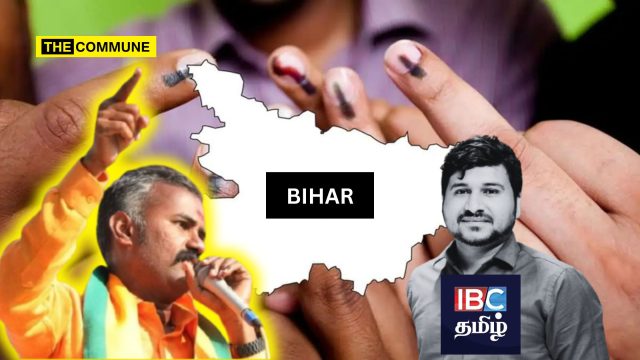
A live discussion on IBC Tamil turned heated on Friday, 14 November 2025, after BJP leader Asuvathaman confronted the channel’s reporter Shankara Sharma over a comment made during the channel’s coverage of the Bihar Assembly election results.
IBC Tamil, one of the several Dravidian-leaning media outlets in the state, was running its analysis as counting trends showed a decisive mandate for the BJP–JDU alliance. During the programme, anchor Shankara Sharma invited BJP’s Asuvathaman to join the discussion. As soon as the interaction began, Sharma remarked: “What sir, it seems like you have stolen a lot of votes and won?”
“Are you running a channel or doing some other business? What kind of language is this?” he asked, interrupting Sharma. “Speak only after you apologise. If you don’t apologise, I will file a case.”
Sharma initially attempted to continue the discussion, saying he was merely referring to the voting trend. But Asuvathaman refused to engage further until the reporter apologised. He reminded Sharma that the channel had reached out repeatedly asking him to participate in the programme.
“It was you who begged me for an hour,” he said. “What language are you using now? Apologise first. If you don’t, things will be different.”
Realising the escalation on air, Sharma withdrew his earlier comment and issued an apology, saying: “I take back what I said, and I apologise.”
சங்கர் சர்மா என்ற உடன்பிறப்பு நெறியாளருக்கு செருப்படி பதில் குடுத்து நேரலையில் மன்னிப்பு கேட்க வைத்தார் அசுவத்தாமன் ஜீ @asuvathaman
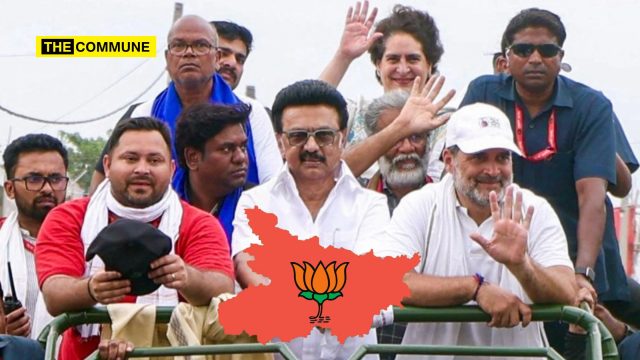
In a dramatic electoral twist, the high-profile intervention of Tamil Nadu Chief Minister MK Stalin in the Bihar assembly elections appears to have had a negative effect for the Congress and RJD.
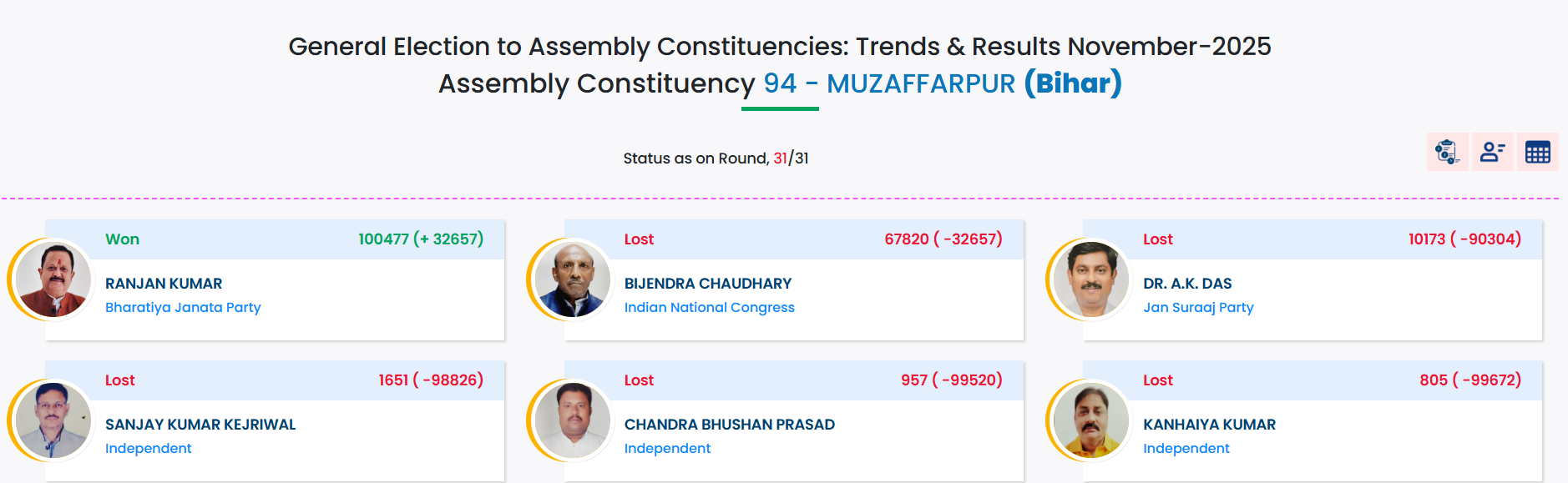
The BJP won Muzaffarpur with 1,00,477 votes with a thumping 32,657-vote margin, the very constituency where MK Stalin canvassed votes.
Just a few months ago, Stalin stood alongside Congress leader Rahul Gandhi and RJD’s Tejashwi Yadav at a massive rally in Muzaffarpur, where he sharply criticized the Election Commission’s Special Intensive Revision (SIR) exercise. His rhetoric, framing the voter list revision as an attempt to disenfranchise opposition supporters, was meant to resonate with Bihar’s voters and showcase his growing stature within the I.N.D.I. bloc.
However, as counting trends solidified, BJP candidate Rakesh Kumar established a commanding lead of over 32000 votes in the same constituency, delivering a significant blow to the opposition alliance.
Did DMK’s Anti-Hindi Politics Cost Votes For Congress-RJD?
For years, the DMK has built its politics on aggressive anti-Hindi posturing, turning language into a battlefield and Hindi speakers into convenient punching bags. Inside Tamil Nadu, this rhetoric may energise the Dravidian base. But outside the state — especially in the Hindi belt — it creates deep resentment, suspicion, and a sense that the DMK views north Indians as culturally inferior or unwelcome.
DMK leaders have repeatedly taken potshots at Hindi-speaking states, mocked Hindi speakers working in Tamil Nadu, and painted the north as intellectually backward or socially regressive. These aren’t harmless quips; they reinforce a perception that the DMK’s worldview stops at the borders of Tamil Nadu. When such remarks circulate nationally, they don’t remain “Tamil Nadu-specific politics” — they become a stain on every party that chooses to ally with the DMK.
This is where the Congress–RJD alliance walks straight into trouble. Their silence on DMK’s anti-Hindi outbursts signals tacit approval and ends up alienating the very voters they desperately need across Bihar and Uttar Pradesh. The BJP doesn’t even need to invent narratives — it simply points to DMK’s own words to claim that the opposition coalition disrespects Hindi speakers. And in the Hindi-speaking heartland, respect and recognition matter far more than clever political theories.
Even worse, the hypocrisy is obvious to voters. While loudly decrying “Hindi imposition,” several DMK leaders privately benefit from Hindi-medium education and CBSE schools. Voters see this for what it is: elitist double-speak. It weakens Congress and RJD further, making them look like partners to a party that mocks the very people whose votes they seek.
Subscribe to our channels on WhatsApp, Telegram,Instagram and YouTube to get the best stories of the day delivered to you personally.
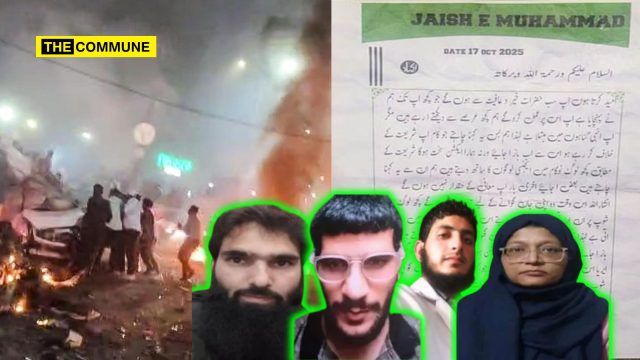
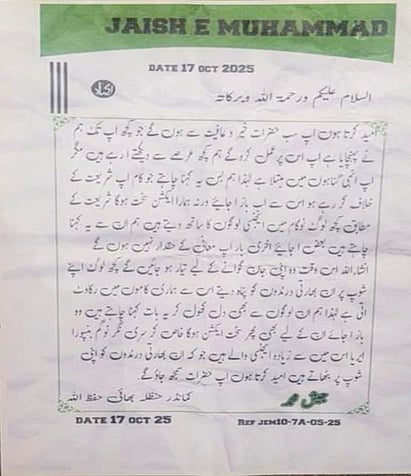
It began with something that rarely prompts a second look in Kashmir: a poster pasted on a wall in a quiet corner of Srinagar. It carried a warning issued in the name of Jaish-e-Mohammed. Most residents walked past it. The message was not unusual, and the paper looked like the countless notices that appear and disappear across the Valley.
But for Dr Chakravarthy, the Senior Superintendent of Police (SSP) of Srinagar, it was a red flag that demanded immediate and thorough investigation.
It appeared after midnight, the paper quality was better than usual, and the way it was fixed to the wall suggested preparation rather than haste. It was enough to raise curiosity, and that curiosity soon turned into a formal inquiry.
A CCTV Trail and an Unexpected Suspect
Cameras close to the spot captured a young man putting up the poster and walking away. He did not try to hide his face. He did not hurry. The absence of anxiety stood out more than anything else.
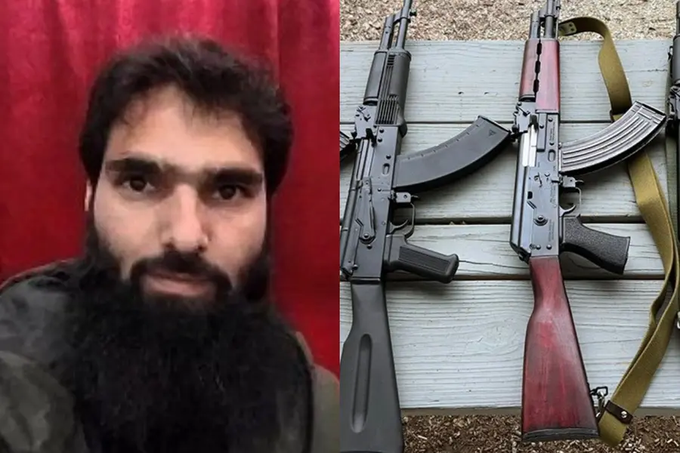
When the police eventually identified him, the finding cut through every stereotype about radicalisation. The man was not a dropout or an unemployed youth. He was Dr Adeel Ahmad Rather, a medical practitioner from Anantnag.
Image Source: Netram Defence Review
The discovery changed the direction of the investigation instantly. Officers realised that the poster may not have been a one-off act, but part of a communication method used by organised cells: small signals meant for those who know how to read them.
The Digital Layer: Where the Real Trail Began
Instead of extensive questioning, investigators opened Adeel’s devices. Deleted messages, fragments of conversations that survived in cache memory, travel details, and contact names disguised under ordinary labels offered a different map of his life.
There were unexplained trips to Saharanpur in Uttar Pradesh, stays at lodges with no documentation, encrypted communication, and periods of sudden digital silence. These gaps and coincidences linked him to places where he had no personal or professional reason to visit.
The pattern pointed outside Kashmir.
A Route Leading Into NCR
Digital triangulation repeatedly brought investigators to one location: a cluster of homes in Dhauj, Faridabad. Nothing about the neighbourhood suggested covert activity. It was the sort of place where families lived quietly, and businesses ran without fuss.
A team was sent for verification. They moved at dawn, when the chances of alerting suspects were lowest.
Inside one of the homes they entered, the officers found a stockpile that is rarely seen outside theatres of conflict: hundreds of kilos of ammonium nitrate, crude triggering devices, batteries, wiring, containers, and two firearms, including an assault rifle.
For investigators, the scale of the material was not just alarming—it was clarifying. It meant that the group was preparing for something far larger than a symbolic strike.
Professionals at the Centre of the Plot
The Faridabad property was occupied by two more medical professionals linked to academic institutions. The discovery indicated that the module had been built around individuals who blended seamlessly into urban life. Their qualifications, travel patterns, and social standing allowed them to operate without drawing suspicion.
With these arrests, a picture began to form: a network extending from Kashmir to Uttar Pradesh to Haryana to Delhi, with evidence suggesting communication with handlers outside India.
Reconnaissance and Planning Material
Recovered digital files showed images of crowded markets, public-transit pinch points, and footfall patterns at Delhi Metro stations. Timelines, routes, and observations on security behaviour suggested that the suspects had conducted systematic reconnaissance.
This was not casual radicalism. It was structured preparation.
The Red Fort Blast and a Broken Chain
On 10 November 2025, an explosion near the Red Fort Metro Station in Delhi killed 13 people. Investigators believe the blast was accidental, possibly caused when a member of the module panicked after sensing that the Faridabad cell was exposed. The premature detonation, tragic as it was, may have prevented something far worse.
By then, large quantities of explosive material had already been seized. Multiple safe houses had been uncovered. The network’s movements had been disrupted.
The public saw the blast. What they did not see were the many blasts that were never allowed to occur.
A Case Built on a Small Detail
The operation that followed was not built on a dramatic tip-off or a single confession. It was built on noticing something that looked slightly out of place, and then refusing to brush it aside. Each piece of information that came afterward – CCTV footage, digital footprints, suspicious travel, unusual purchases made sense only because someone paid attention to the first clue.
What was ultimately prevented may never be fully known. But the evidence suggests that a sequence of coordinated attacks was being prepared, and that the seizure of explosive material in Faridabad alone prevented mass casualties.
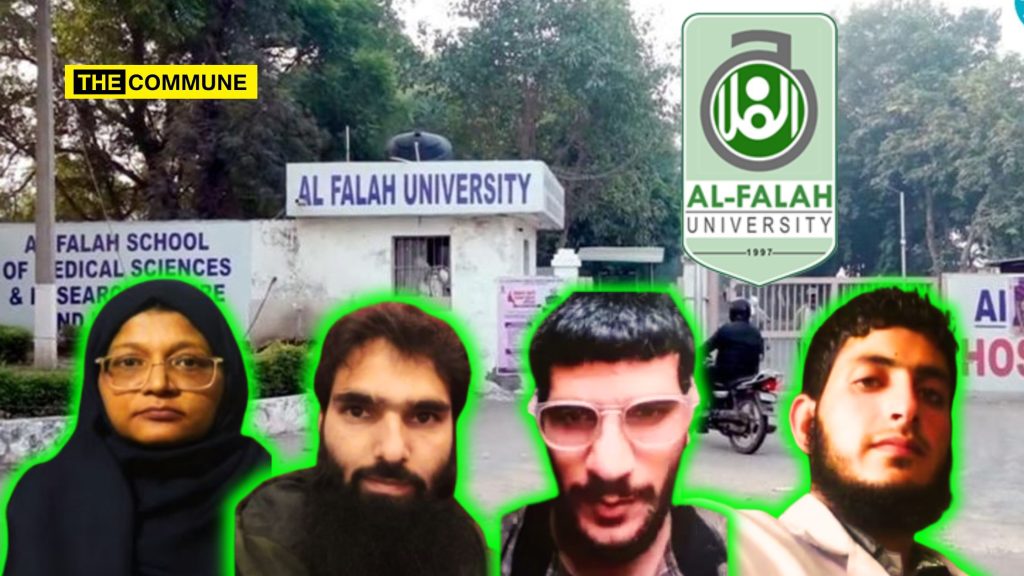
The arrests spanned five states. The suspects included doctors working at the Al-Falah university, an imam, and individuals linked to foreign handlers. The investigation combined old-fashioned instinct with modern forensic work and moved quietly until the network was dismantled.
The Attack That Didn’t Happen
Counter-terrorism successes rarely become visible. The victories lie in tragedies avoided, plans that never reach execution, networks that never surface, bombs that never explode.
This case began with a single poster on a wall in Srinagar. It ended with the unraveling of a network that had crossed state borders and professional boundaries, and with the prevention of an attack whose scale is difficult to imagine.
Sometimes the most important work in policing starts with something almost too small to notice, except to those who are trained to look twice.
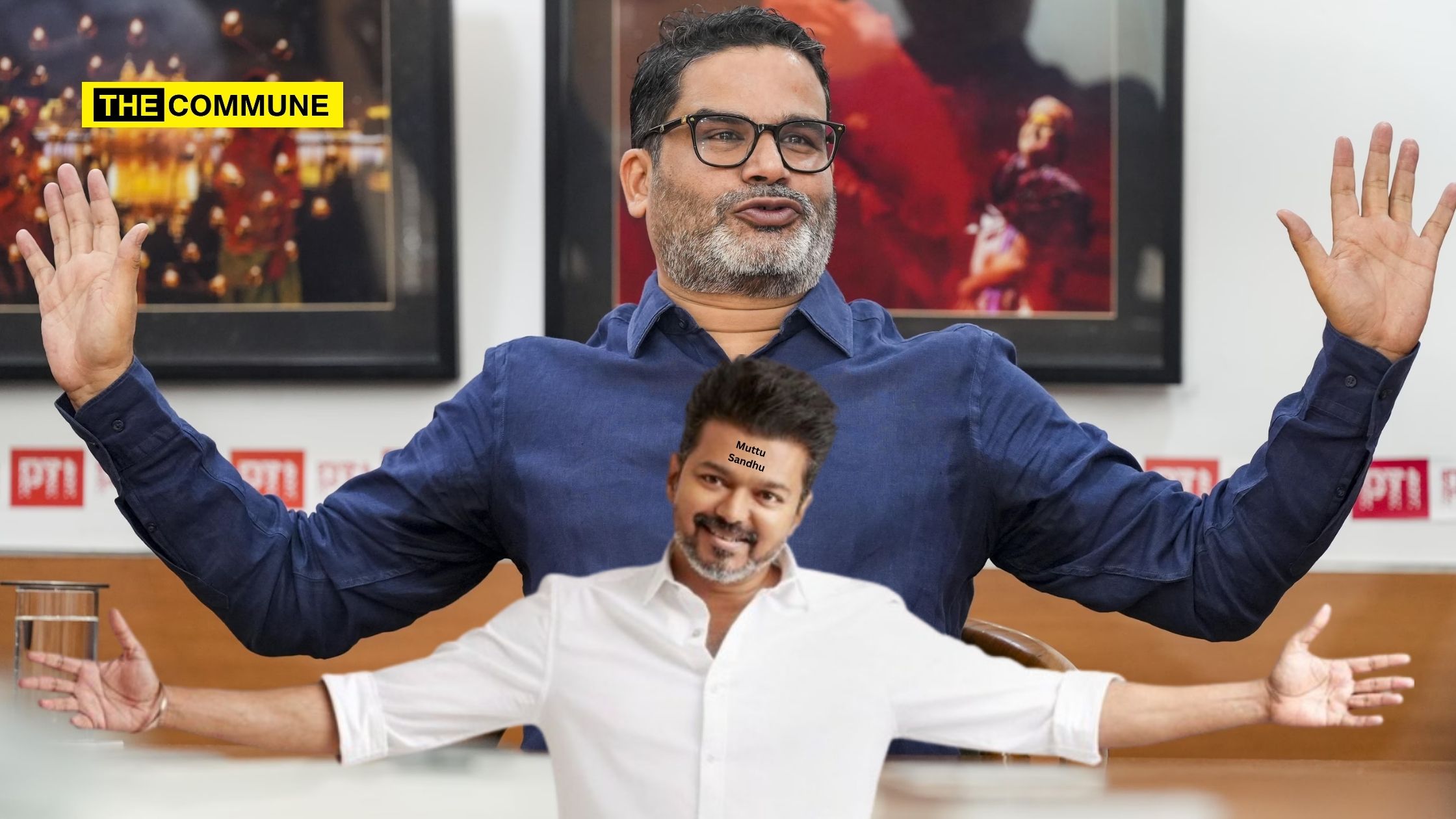
Bihar has delivered its verdict, and it comes with a warning siren that should echo all the way to Tamil Nadu. The NDA has stormed back to power, the Mahagathbandhan has collapsed, and one man who thought he could script a political revolution — Prashant Kishor — has been flattened by the voters he claimed were secretly marching behind him.
PK, the so-called master strategist who once dictated election blueprints to Chief Ministers, finally tested his own political luck. He floated Jan Suraaj, toured the length of Bihar, declared Nitish Kumar finished, and confidently predicted a “silent wave” only he could hear. The crowds cheered, cameras clicked, his volunteers amplified his every word — and PK began believing his own myth.
But voters exposed the mirage.
Jan Suraaj contested everywhere. It led nowhere. By the end of counting, the party sank without a trace, with a vote share so thin it wouldn’t even register on a political ECG. For a strategist who helped others win, his own debut was a spectacular self-goal.
And embedded in this humiliation lies a message Vijay can ignore only at his own peril.
Because Tamil Nadu’s newest political entrant must understand one brutal truth — mass applause, blockbuster dialogues, and lakhs of screaming fans do not translate into votes. Cinema charisma cannot replace booth strength. A blockbuster opening cannot substitute for street-level organisation. Politics is not a Friday release; it is a 365-day grind of booth committees, cadre discipline, voter lists, and tireless ground work.
Which brings us to the biggest red flag standing next to Vijay: his inner circle — especially Aadhav Arjuna.
Here is a man who has hopped from DMK to VCK to TVK, leaving behind confusion, factional fights, and suspicion. He dragged Prashant Kishor onto the TVK stage, created a media flutter about a possible understanding, hinted at coordination, and then — as if struck by lightning — publicly denied any alliance the very next day. It left the entire political class wondering whether TVK even knew what it was doing.
In Tamil Nadu political circles, Aadhav’s name floats with whispers — “DMK’s mole”, “opportunistic broker”, “unpredictable operator”. True or not, the perception exists. And in politics, perception can kill faster than reality.
Yet Vijay, in his naïveté, has placed hefty responsibility on a man many seasoned politicians wouldn’t trust for five minutes.
This is the danger. This is the Bihar lesson.
PK lost not because he wasn’t known — but because he trusted his own hype and surrounded himself with people who amplified that hype instead of grounding him in reality.
Vijay must not make the same mistake.
Fan mobs don’t win elections. Star power doesn’t win elections. Instagram reels don’t win elections. Booth captains win elections. Street workers win elections. Understanding the voter’s pulse wins elections.
And trusting the wrong people can destroy a movement before it even begins.
Tamil Nadu’s political battlefield is ruthless. It has chewed up film stars before. It has sent larger-than-life personalities packing. And it will do the same to Vijay if he keeps letting smooth-talking, loyalty-shifting operators navigate his path.
Vijay still has time to course-correct. But he must choose between two futures:
— one where he becomes a real leader who builds a disciplined ground force, listens to genuine workers, and cuts out freeloaders OR — one where he becomes yet another star who believed applause was equal to votes, trusted the wrong voices, and watched his political story end before it even began.
Bihar has shown what happens when leaders float in their own bubble.
Vijay’s test is simple: Will he burst that bubble now — or let the voters do it later?
Subscribe to our channels on WhatsApp, Telegram,Instagram and YouTube to get the best stories of the day delivered to you personally.
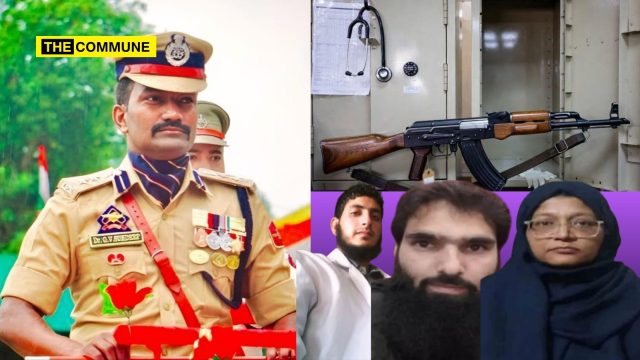
In the high-stakes world of civil services, where aspirants often chase the elusive top 100, an officer who secured rank 786 in the UPSC CSE 2014 is demonstrating that the number on an appointment letter is no measure of one’s impact on the nation’s security. Dr. GV Sundeep Chakravarthy, the IPS officer currently in the spotlight for dismantling a sprawling Jaish-e-Mohammed (JeM) terror module, is a testament to how operational brilliance, not just examination rank, defines a legacy.
The recent terror bust, which led to the seizure of nearly 2,900 kg of explosives and the arrest of several individuals, including Kashmiri doctors, has its origins in a seemingly minor event in mid-October. When Urdu posters signed by JeM ‘Commander Hanzala Bhai’ appeared in Nowgam, Srinagar, many dismissed them as routine militant propaganda. But for Dr. Chakravarthy, the Senior Superintendent of Police (SSP) of Srinagar, it was a red flag that demanded immediate and thorough investigation.
The Doctor-Turned-“Operations Specialist”
Dr. Chakravarthy’s path to the IPS was unconventional. Born in Kurnool, Andhra Pradesh, in 1988 to a family of medical professionals, he seemed destined for a career in medicine. He completed his MBBS from Kurnool Medical College in 2010 and even practiced briefly. However, a call to serve in a different capacity led him to the civil services, where he joined the AGMUT cadre of the IPS.
His medical background, far from being irrelevant, has become a unique asset. Colleagues and subordinates describe him as an “Operations Specialist,” whose methodical, evidence-based approach, honed in medical school, strengthens his forensic and scientific policing techniques.
A Career Forged in the Fire of Jammu & Kashmir
Unlike many of his batchmates who may have taken postings in quieter Union Territories, Dr. Chakravarthy’s career has been almost entirely within the challenging theatre of Jammu and Kashmir. His resume reads like a tour of the region’s most sensitive hotspots. Before taking charge as SSP Srinagar on 21 April 2025, Dr Chakravarthy held several sensitive postings:
SDPO in the insurgency-prone areas of Uri and Sopore
SP Operations in Baramulla
SP South Srinagar
District leadership roles as SP/SSP in Handwara, Kupwara, Kulgam, and Anantnag
AIG (Civil), J&K Police Headquarters
These assignments placed him at the frontlines of counterinsurgency and community policing efforts. His colleagues describe him as an “operations specialist” known for detailed planning, rapid response, and forensic-led policing.
Decorated Officer With Medical Precision
Dr Chakravarthy has won:
President’s Police Medal for Gallantry – six times
J&K Police Medal for Gallantry – four times
Indian Army Chief’s Commendation Disc
Colleagues credit his medical background for strengthening his forensic and scientific approach to policing.
The Poster That Unraveled a Pan-India Plot
The Nowgam posters, which warned locals against “sheltering Indian predators,” were the spark that ignited a major counter-terror operation. Under Dr. Chakravarthy’s leadership, a case was swiftly registered under the UAPA, and CCTV footage was scoured. This led to the identification and detention of three individuals with previous records of stone-pelting.
Their interrogation unlocked the case, pointing to Maulvi Irfan Ahmad from Shopian. The digital trail from Ahmad’s devices revealed a network stretching far beyond Kashmir into Haryana and Uttar Pradesh. A special team was dispatched to Faridabad, leading to the arrest of Dr. Muzammil Ganaie, a doctor from Pulwama working at a medical college there.
This breakthrough exposed what investigators have termed a “white-collar terror module,” leading to further arrests of doctors, including Dr. Adeel Ahmad Rather and Dr. Shaheen Sayeed, and the massive seizure of explosives and AK-series rifles.
Rank is Just a Number, Impact is Everything
Dr. Chakravarthy’s journey underscores a critical, often-overlooked truth in the civil services: the initial rank is merely an entry point. His story is one of relentless dedication, courage, and the application of a unique skill set in one of India’s most demanding postings.
As security agencies continue to connect the dots following the tragic Red Fort blast in Delhi, the swift action led by Dr. Chakravarthy is seen as having potentially averted an even greater catastrophe. From a medical graduate in Kurnool to the SSP of Srinagar with a rank of 786 – very ironical given its correlation to Muslims, his career stands as an inspiring narrative of how purpose-driven service, not a rank number, truly defines a officer’s contribution to the nation.
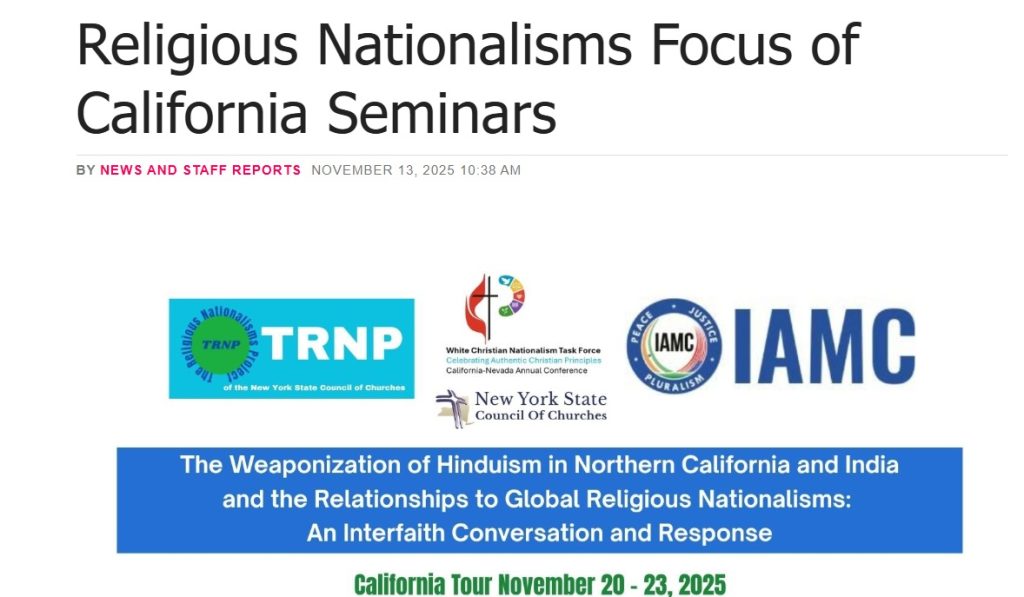
In a move that has alarmed many in the Hindu American community, major Christian denominational bodies are partnering with a controversial Muslim organization IAMC to launch a series of seminars explicitly targeting Hindu political and social ideology, framing it as a primary threat to religious freedom.
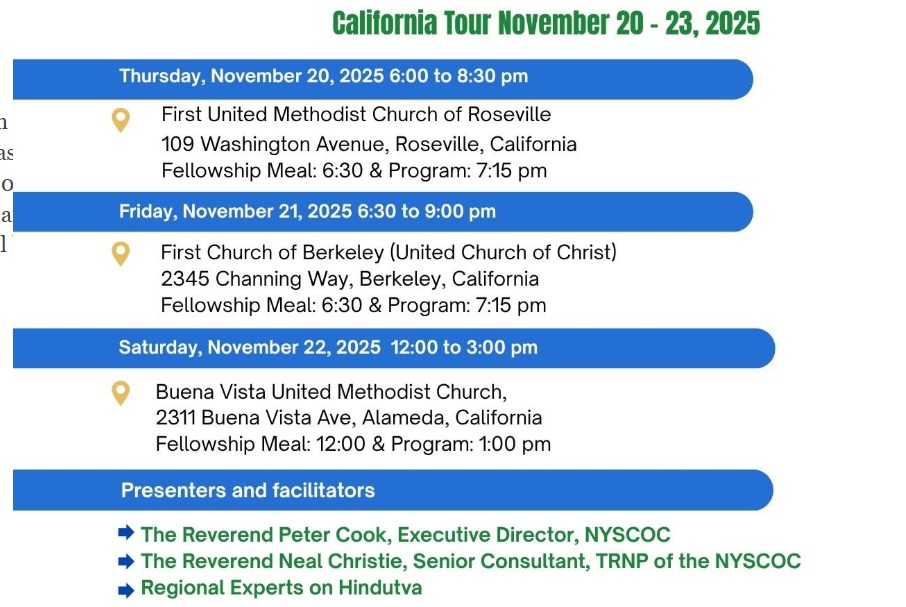
The seminar series, titled “Religious Nationalisms” and supported by the California-Nevada Annual Conference of The United Methodist Church, is being organized by the New York State Council of Churches’ “The Religious Nationalisms Project” (TRNP) in partnership with the Indian American Muslim Council (IAMC). The events, scheduled across Northern California, list “Hindutva as a central case study,” alongside Christian nationalism.
A Targeted Seminar Series
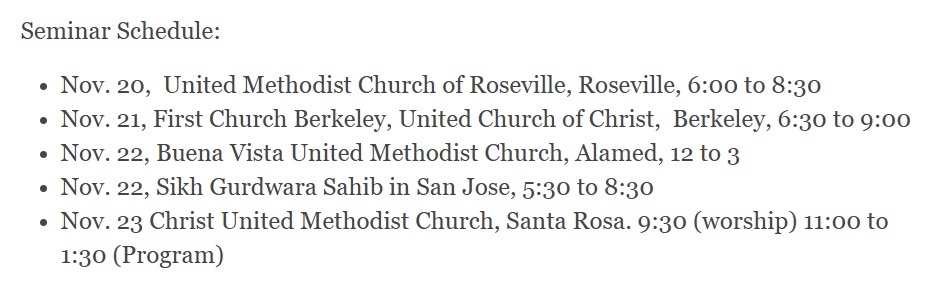
The seminars, scheduled for late November in churches across the Bay Area and a Sikh Gurdwara, are being marketed as educational. However, the framing has been criticized by Hindu advocacy groups as prejudicial and divisive. The events promise to show the “local impact” of Hindu nationalism and provide “concrete action steps” for congregations to address its “harm.”
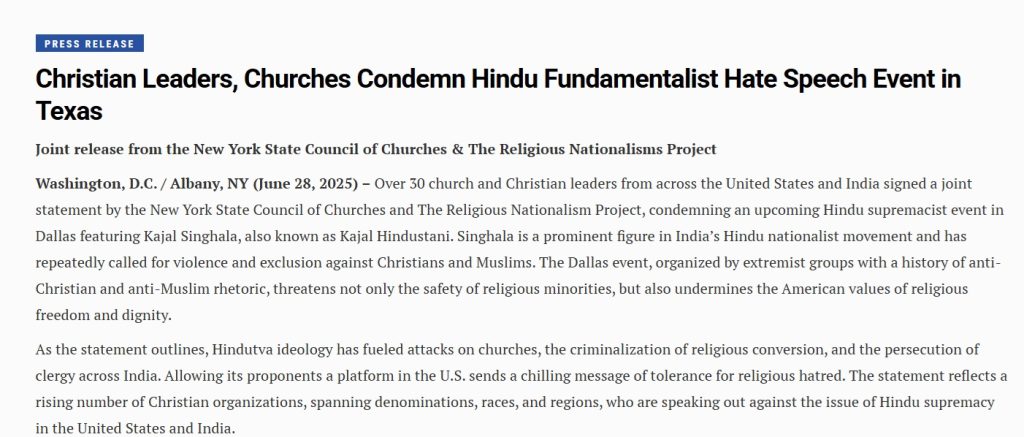
This partnership is not an isolated incident. It follows a joint statement issued in June 2025 by the NYSCC and TRNP, which condemned a Hindu event in Dallas and broadly vilified “Hindu supremacist” groups. The statement, signed by over 30 Christian leaders, used strong language to equate the Hindu political ideology of Hindutva with hate and violence, making sweeping allegations about its role in India.
The IAMC: A Terror-Linked Partner
The choice of partner for these seminars has intensified concerns. The IAMC has a documented history of anti-India activism and has been accused by researchers of having links to groups and ideologies hostile to India’s integrity.
Who Is IAMC?
To jog our readers’ memory, remember who Congress scion Rahul Gandhi met with during his 2023 US visit? Concerns arose when Gandhi was photographedwith Sunita Vishwanath, a US-based activist linked to anti-India initiatives like the “Dismantling Global Hindutva” conference. Vishwanath is associated with groups like ICNA (Islamic Circle of North America), known for ties to Pakistan’s Jamaat-e-Islami and promoting anti-India propaganda.
Reports allege that coordinators of Gandhi’s events, such as Tanzeem Ansari and Mohammed Aslam, are connected to ICNA and its affiliate organizations like the Muslim Brotherhood. ICNA has glorified Hizbul Mujahideen leader Syed Salahuddin, a proponent of Kashmir’s separation from India. Another coordinator, Minhaj Khan, is linked to the Indian American Muslim Council (IAMC), an anti-India lobbying group. IAMC has been accused of spreading fake news to incite communal tensions and lobbying against India in international forums.
IAMC had engaged US lobby firm, paying them USD 55K Dollars for Lobbying the USCIRF against India in 2013-14, during Dr. Manmohan Singh Govt itself.
IAMC’s Executive Director, Rasheed Ahmed, also leads IMANA (Islamic Medical Association of North America), implicated for alleged misuse of funds involving links to Pakistani officials and terrorist organizations like Lashkar-e-Taiba.
IAMC’s Exec Dir Rasheed Ahmed is the Exec Dir of another Jamaat affiliated ‘charity’ front Islamic Medical Association of North America (IMANA), which exploited India’s goodwill & raised millions of $ during peak Covid in name of helping India & siphoned off all the money (7/10) pic.twitter.com/wgfJ4nrTan
The IAMC is a problematic organization with links to Pakistan-based terror groups. It is known for peddling anti-India propaganda in the international arena and also lobbies with US leaders and bodies against Indian interests.
The IAMC had reportedly collected funds for the cause of Rohingya Muslims and used it to pay Fidelis Government Relations (FGR), a US-based lobby firm for getting India blacklisted by the United States Commission on International Religious Freedom (USCIRF).
Awards To Leftist Journalists
In June 2022, the Indian American Muslim Council (IAMC), claiming to be the largest advocacy organization for Indian Muslims in the US, awarded ₹3 lakh in prize money to several Indian journalists and media outlets through its Human Rights and Religious Freedom Journalism (HRRF) Awards. The winners included journalists from Newslaundry, The News Minute, The Caravan, The Wire, Scroll.in, andThe New Issue Magazine (UK), as well as news portals Mooknayak and Article 14. The awards recognized reporting on issues like anti-conversion laws, persecution of Muslims during COVID-19, and human rights in Kashmir.
The IAMC has also been criticizedfor its links to Pakistan-based terror groups and anti-India lobbying efforts, including funding campaigns to blacklist India internationally. The organization has also been accused of violating India’s Foreign Contribution Regulation Act (FCRA), which prohibits foreign funding of media professionals.
Connection With USICRF
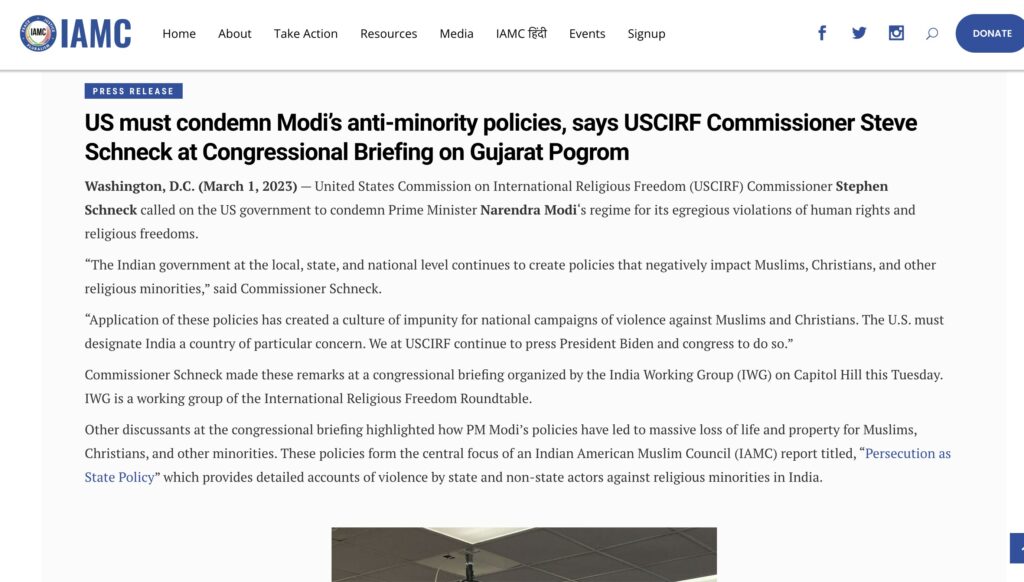
During a February 2023 IAMC event, USICRF Commissioner Stephen Schneck advocated for classifying India as a ‘Country of Particular Concern.’ He asserted, “The Indian government at the local, state, and national level continues to create policies that negatively impact Muslims, Christians, and other religious minorities…Application of these policies has created a culture of impunity for national campaigns of violence against Muslims and Christians. The U.S. must designate India a country of particular concern. We at USCIRF continue to press President Biden and congress to do so.”
Stephen Schneck frequently attends events organized by the Jamat-e-Islami front, IAMC.
Connection With Banned Organisations
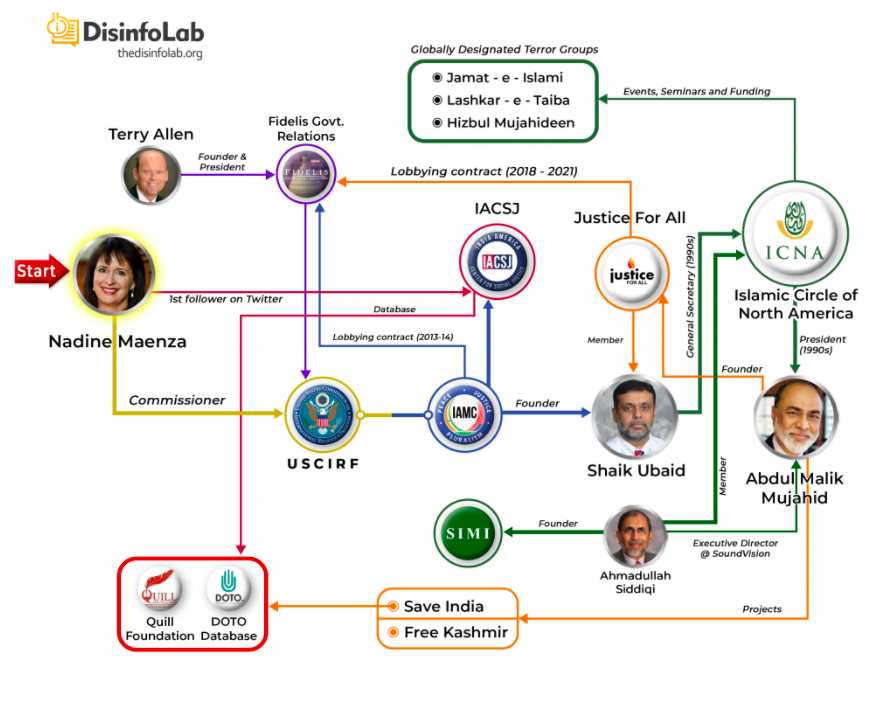
The IAMC is very intricately connected with organizations/Jamaat fronts such as ICNA, Justice For All, SIMI, IACSJ, etc. IAMC’s Sheikh Ubaid is friends with Abdul Malik Mujahid, who headed the Islamic Circle of North America, the US front for Jamaat-e-Islami, Pakistan. It also reportedly has links with the banned Islamist organization Student Islamic Movement of India (SIMI) and Pakistan’s Inter-Services Intelligence (ISI).
Image Source: Disinfo Lab
For many Hindu Americans, the NYSCC’s decision to ally with IAMC signals a move away from genuine interfaith understanding and toward a politically motivated coalition built on a one-sided condemnation of Hinduism’s political expression.
The New York State Council of Churches is joining a Muslim group to tour California—not to promote solidarity & peace—but to target peaceful Hindu Californians.
This alliance appears to be part of a broader pattern where certain segments of the Christian and Muslim leadership, often at odds elsewhere, are finding common cause in opposing the rise of Hindu political consciousness. The seminars represent an institutionalization of this collaboration, bringing the resources and pulpits of mainline Christian churches to an agenda long championed by the IAMC.
Hindu community leaders have expressed dismay, arguing that this partnership unfairly demonizes an entire community and its beliefs while ignoring the persecution faced by Hindus in various regions. They see it not as a pursuit of justice, but as the formation of a selective coalition that singles out Hindus for criticism, potentially fueling prejudice against the millions of peaceful Hindu Americans who simply wish to practice their faith and preserve their culture without being labeled “supremacist.”
Subscribe to our channels on WhatsApp, Telegram,Instagram and YouTube to get the best stories of the day delivered to you personally.
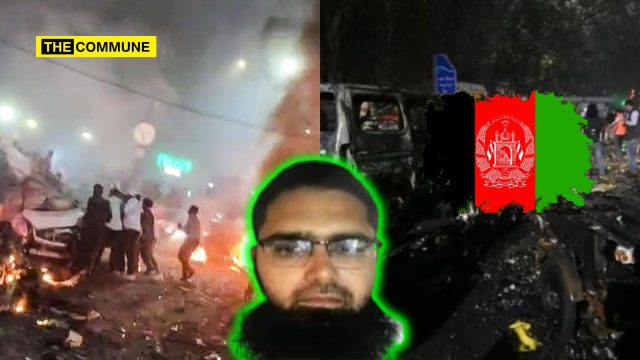
A senior member of the Kashmir-based terror module currently under investigation for the Red Fort blast is believed to have travelled to Afghanistan in mid-August, according to intelligence sources cited by The Print. Agencies suspect the group was preparing what could have been the largest coordinated terrorist attack in India since 1993.
Intelligence officials told the publication that Muzaffar Ahmad Rather, a 33-year-old paediatrician from Srinagar, left India earlier this year and was expected to act as a liaison between the Kashmir group and Afghanistan-based jihadist commanders for guidance on bomb-making and assault tactics. Muzaffar is the elder brother of Adeel Ahmad Rather, the 31-year-old doctor arrested by the Jammu and Kashmir Police from Saharanpur, Uttar Pradesh, as the alleged head of the module.
According to the J&K Police, a Kalashnikov rifle and ammunition were recovered from one of Adeel’s lockers during raids linked to the investigation. The case has also drawn attention to a network of Kashmiri doctors who were working at Al Falah Hospital in Faridabad.
Among them was Dr Umar un Nabi, who died in the 10 November blast near Delhi’s Red Fort metro station. Officials said he was driving a white Hyundai i20 that exploded while he was allegedly attempting to flee with explosives collected by the group.
The Rather family did not respond to The Print’s request for comment regarding Muzaffar’s current location.
Journey to Afghanistan
An intelligence officer told The Print that Muzaffar first travelled to Dubai before departing for Afghanistan. The officer said Muzaffar informed his family that he wished to “serve a truly Islamic society and state.” Intelligence assessments suggest Muzaffar had previously attempted to reach Afghanistan in March 2022 along with two other doctors, Faridabad-based senior resident Muzammil Ahmad Gani and his colleague Umar un Nabi via Turkey. The group reportedly failed in the attempt, which investigators believe may have been a turning point in their radicalisation.
Officials stated that extremist groups have increasingly relied on online platforms to deliver basic training in weapons use, combat tactics and improvised explosive devices.
A second intelligence officer said Muzaffar’s eventual departure to Afghanistan indicated that planning for the attacks had reached a critical phase.
Cleric’s Role and Funding Trail
Intelligence sources also told The Print that Kashmiri cleric Irfan Ahmad, who ran a study circle in Srinagar, introduced the doctors to jihadist commanders operating in the Kunar region of Afghanistan. The cleric is alleged to have facilitated access to assault weapons that had been hidden by Nadeem Muzaffar, a former member of the Al-Qaeda-linked Ansar Ghazwat-ul-Hind who was killed in 2018.
The study group was said to be influenced by a strain of Deobandi ideology associated with Hyderabad cleric Abdul Aleem Islahi, and by Ansar Ghazwat-ul-Hind’s rejection of militant factions tied to state intelligence networks.
Investigators alleged that Lucknow-based doctor Shaheen Saeed largely funded the group’s foreign travel and procurement of chemicals for the planned bombings.
According to the United Nations Security Council, Lashkar-e-Taiba and Jaish-e-Mohammad have operated training camps in southern Afghanistan in recent years, and several Kashmir-linked jihadists have held roles in these networks.
Background of the Suspects
A National Investigation Agency (NIA) official told The Print that investigators have sought to understand why Adeel and his associates established a terror cell after 2021. Adeel, the son of a local tehsildar from Wanpora village, studied at Crescent School and Yar Kushi Pora Government School before earning admission to the Government Medical College, Srinagar, in his first attempt. He completed senior residency in 2024.
Muzaffar, the eldest surviving brother, completed his medical degree two years earlier, while another elder brother, Zakir Ahmad Rather, is a veterinary scientist. Their sister, Gowhar Jan, holds a postgraduate degree in medicine and is married to a pharmaceutical businessman in Kulgam. She said it was “impossible to believe” that her brothers were involved in terrorism, describing them as deeply religious and compassionate.
Adeel married psychiatrist Syed Ruqaya in early October. Guests told The Print that Muzaffar’s absence at the wedding was attributed to employment in Dubai. After the ceremony, the couple took an eight-day trip to Kerala before returning to work.
Plans and Material Prepared
Intelligence officials said the group faced logistical difficulties in advancing its plan. While they managed to acquire timers, they reportedly had only three vehicles and struggled to source detonators. This led them to experiment with acid-based triggering mechanisms.
Investigators believe the group had accumulated several thousand kilograms of ammonium nitrate and other incendiary materials since 2022. Comparisons have been drawn to the 2006 Mumbai train bombings, in which seven IEDs packed with ammonium nitrate killed over 200 people.
The investigation into the Red Fort blast and the wider terror module remains ongoing.
The Rashtriya Swayamsevak Sangh (RSS) on Thursday denied engaging any lobbying firm in the United States, following a report by non-profit newsroom Prism that claimed the organisation had indirectly hired one.
RSS leader Sunil Ambekar said in a post on X that the organisation “works in Bharat” and has “not engaged any lobbying firm in United States of America.”
“Rashtriya Swayamsevak Sangh works in Bharat and has not engaged any lobbying firm in United States of America”
– Sunil Ambekar
Akhil Bharatiya Prachar Pramukh , RSS@editorvskbharat
The clarification came after lobbying disclosure statements, reviewed independently by Hindustan Times, showed that the US firm Squire Patton Boggs received $330,000 this year from One+ Advisers, another lobbying outfit, for work carried out “on behalf of the Rashtriya Swayamsevak Sangh.” The disclosures listed the objective of the contract as efforts to “introduce the Rashtriya Swayamsevak Sangh” to US officials.
The RSS hired law firm Squire Patton Boggs to lobby for it in America
It is, however, unclear from the documents who hired the lobbying firms. Both One+ Advisers and Squire Patton Boggs had not responded to HT’s requests for comment at the time of publication. Squire Patton Boggs is also known to lobby on behalf of Pakistan.
The report prompted a political reaction, with Congress spokesperson Jairam Ramesh alleging that the development marked another instance of the RSS “betraying national interest.”
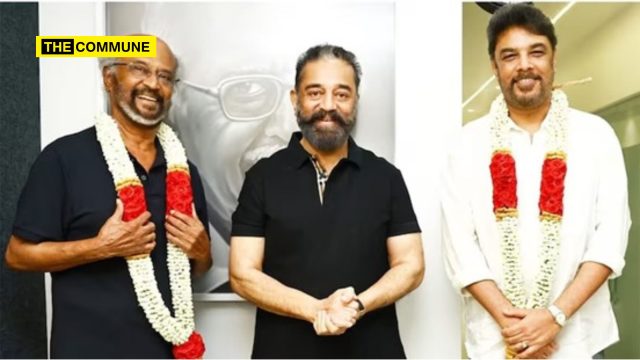
In a move that has sent surprised everyone in the Tamil film industry, director Sundar C has abruptly exited the much-hyped superstar project ‘Thalaivar 173’, just a week after it was officially announced. The film, which was set to star Rajinikanth and be produced by Kamal Haasan, was touted as a historic collaboration between the two icons after 46 years.
While the director cited “unforeseen and unavoidable circumstances” for his decision, industry insiders are speculating that the formidable combination of two strong-willed legends may have been the real reason behind his exit.
A “Dream” Project Cut Short
In an official press release, Sundar C stated he was stepping away from the project with a “heavy heart.” He called it a “dream come true” opportunity but added, “In life, there are moments when we must follow the path laid out for us, even if it diverges from our dreams.”
His statement, while diplomatic, has sparked intense debate. Sources close to the industry suggest that Sundar C, having previously directed Rajinikanth in ‘Arunachalam’ and Kamal Haasan in ‘Anbe Sivam’, is intimately familiar with their distinct and powerful working styles. This insider knowledge may have led him to foresee a potentially untenable situation.
The Clash of Titans: A Director’s Dilemma
According to analysts, the core of the issue lies in the contrasting approaches of the two superstars. Rajinikanth, in today’s market, is said to be extremely particular that a film he commits to must become “his” film, with his image and market demands taking precedence.
On the other hand, Kamal Haasan, a renowned filmmaker himself, is known for his hands-on involvement, a trait that is only amplified when he is also the producer. “If both stars pull in different directions, the director stuck in the middle suffers the most intense struggle,” a source commented.
The Rajini’s Touch
Possible reason being the superstar’s recent run of underwhelming performances at the box office. Though Rajinikanth remains a cultural icon, his last few films have struggled to deliver the massive commercial impact once taken for granted.
Adding to the hesitation is the perception that directors who recently worked with him—TJ Gnanavel, Lokesh Kanagaraj, Aishwarya Rajinikanth, and Siruthai Siva—have all faced setbacks or been labelled “jinxed” after delivering flops with the superstar.
For a director like Sundar C— who is known for giving runaway hits with balanced budgets, expectations, and market realities—signing on to a project already carrying the weight of consecutive flops may have seemed too risky. Industry insiders suggest he may have preferred stepping away rather than being tied to a venture facing heightened scrutiny and unpredictable returns.
A Strategic Exit
Faced with the prospect of navigating these two powerful creative forces, it is suspected that Sundar C made a calculated decision. Rather than risking a messy exit mid-way through production, he is believed to have chosen a clean break at the very outset to preserve his creative integrity and professional dignity.
His exit now leaves a major question mark over who will step into the director’s chair for this film being touted as a magnum opus, which is slated for a Pongal 2027 release.
Subscribe to our channels on WhatsApp, Telegram,Instagram and YouTube to get the best stories of the day delivered to you personally.
Remember the time when the terrorist Burhan Wani was portrayed as a “headmaster’s son” or any other terrorist humanized as “fruit seller’s son”, right after the terror attack or when justice was served?
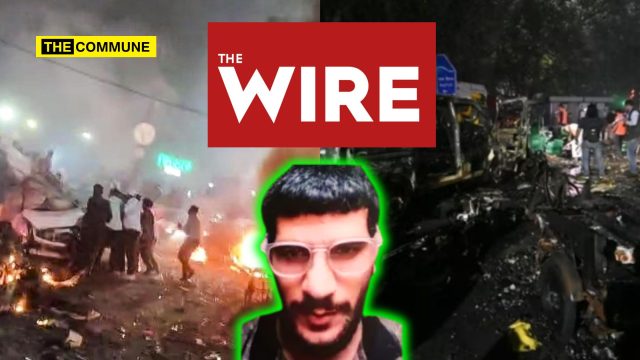
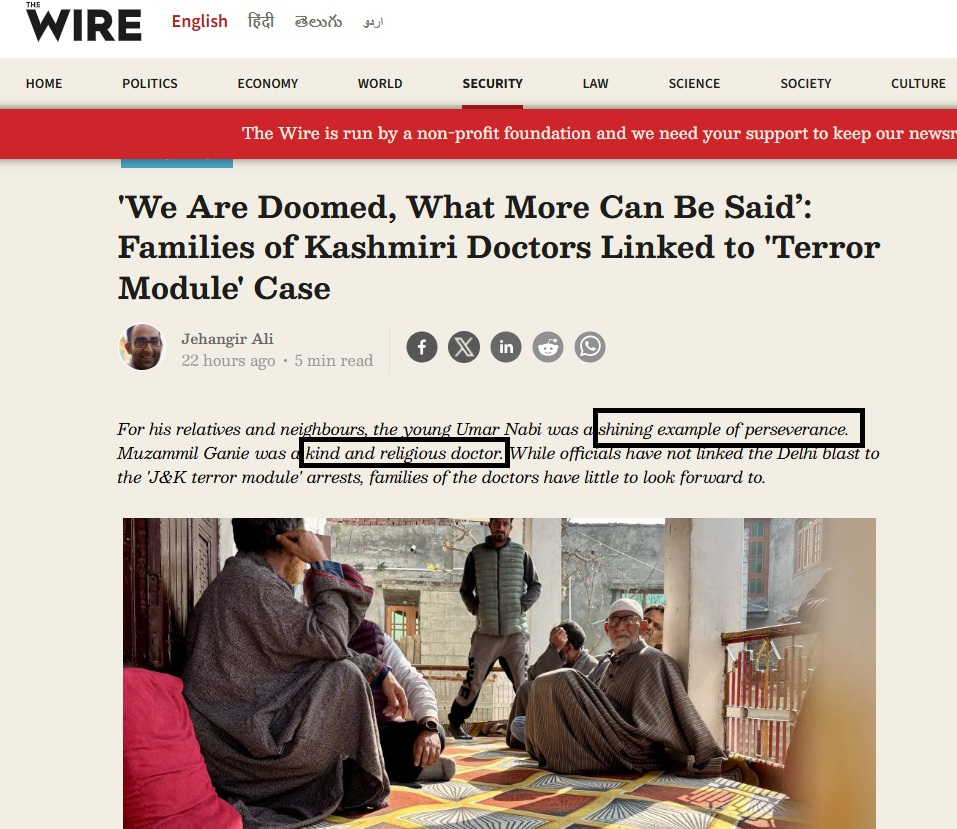
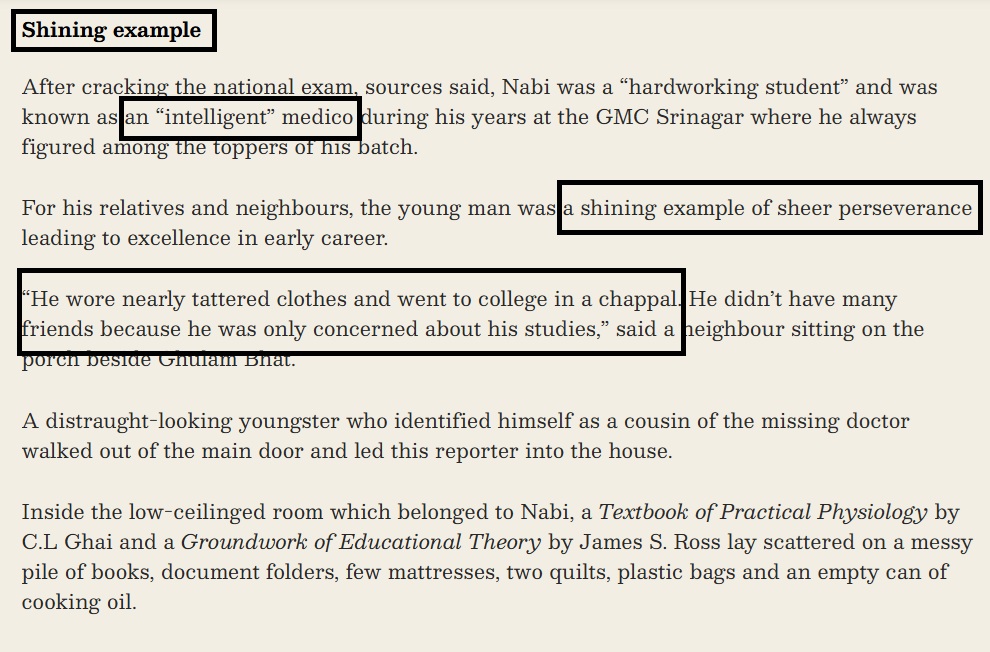
Well, if you had missed that, leftist rag The Wire will help you relive those days – they just added some extra toppings of sentiment to the Delhi Red Fort metro station blast terrorist Dr Umar Nabi – as a “hardworking student”, intelligent medico, – you name it, all the adjectives are there in the piece.
Dr Muzzammil was “kind and religious”! How touching, give them a Nobel Prize already!
Just days after the deadly explosion near Delhi’s Red Fort metro station, a terror incident that killed more than a dozen people and triggered a nationwide investigation, one would expect the media to maintain sobriety, neutrality, and journalistic discipline. But The Wire, in its usual ideological exuberance, has produced something else entirely: a sentimental, tear-jerking homage to the main perpetrator – the one who triggered the blast.
The article reads less like reportage and more like a eulogy delivered at a memorial service, complete with sepia-toned nostalgia, family hardships, moral testimonials, and poverty-porn backdrops constructed to evoke sympathy. At a time when investigators are piecing together facts, The Wire appears to have already chosen its role: emotional defence attorney.
A Narrative of Persecution, Not Terrorism
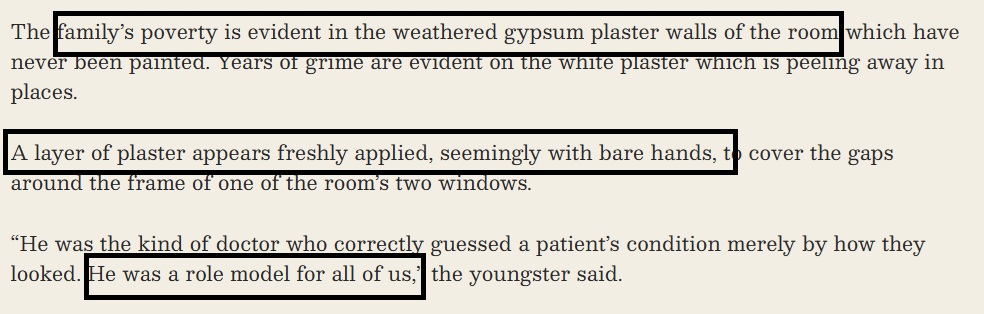
Instead of focusing on the victims of the blast or the national security implications of a medically trained professional turning to terrorism, The Wire chooses to meticulously detail Nabi’s alleged poverty, his “tattered clothes,” and his “sheer perseverance.” The report transforms a suspected mass-murderer into a tragic hero – a “shining example” for his community who “correctly guessed a patient’s condition merely by how they looked.”
The language employed is deliberately emotive and exculpatory. The family’s situation is described as a “dream” turning into a “nightmare,” and their home is painted as a scene of pathetic destitution, with detailed descriptions of peeling plaster and grime. The piece frames the security forces’ investigation not as a necessary response to a deadly terror attack, but as a disruptive raid that left his belongings in “chaos.”
Ignoring the Victims, Center-Stageing the Perpetrator
This approach is a classic tactic of apologist journalism: shift the focus from the crime to the supposed socio-economic grievances of the criminal. The article expresses more outrage over the fact that the suspect’s family was questioned than over the 13 people killed in the blast. It amplifies the family’s unverified claims of innocence without providing a countervailing perspective from investigating agencies, beyond a cursory mention that officials have not confirmed the reports.
They also give a virtual tour of the house and piggyback on poverty porn to humanize him even further.
This man was a role model to the other kids and could diagnose his patients so well – yeah, the same human and kind doctor did not think twice about blowing himself up in a crowded signal in the heart of the national capital.
Similarly, the piece profiles another arrested doctor, Muzzamil Ganie, describing him as “kind and religious,” and unquestioningly parrots his family’s denial of the allegations. The devastating potential of a terror module involving educated professionals is glossed over in favor of a narrative that suggests these individuals are the real victims.
This approach is not accidental – it is the reason rags like The Wire exist. It is their modus operandi – elevate the accused through glowing personal anecdotes, portray families as devastated victims of state action and poverty, and surround the suspect with a moral halo built on poverty, hard work and virtue. In doing so, the publication presents an unambiguous narrative; not that the allegations are unverified, but that the accused are inherently incapable of wrongdoing because they are too intelligent, too kind, too poor, too devout, too “grounded” to ever be involved in violence. It is rehabilitation through rhetoric.
The climax of this sentimental framing arrives in the final scene of the article, when the suspect’s uncle, overwhelmed by grief, declares, “We are doomed. What more can be said?” For The Wire, this becomes the emotional full stop, the natural closure to a story built not around evidence but around empathy, despair and helplessness. It is the perfect final note for an article whose purpose appears not to inform but to influence.
Rather than reporting, the article offers rehabilitation by storytelling. Rather than facts, it offers moral certificates. At a moment of national grief, it chooses ideology over objectivity.
Subscribe to our channels on WhatsApp, Telegram,Instagram and YouTube to get the best stories of the day delivered to you personally.