Home Blog Page 284

Pakistani Travel Agent “Madam N” Ran ISI Sleeper Cell Network Using Indian Pilgrims And Influencers, Say Intel Agencies

madam n pakistani travel agent pakistan influencer isi

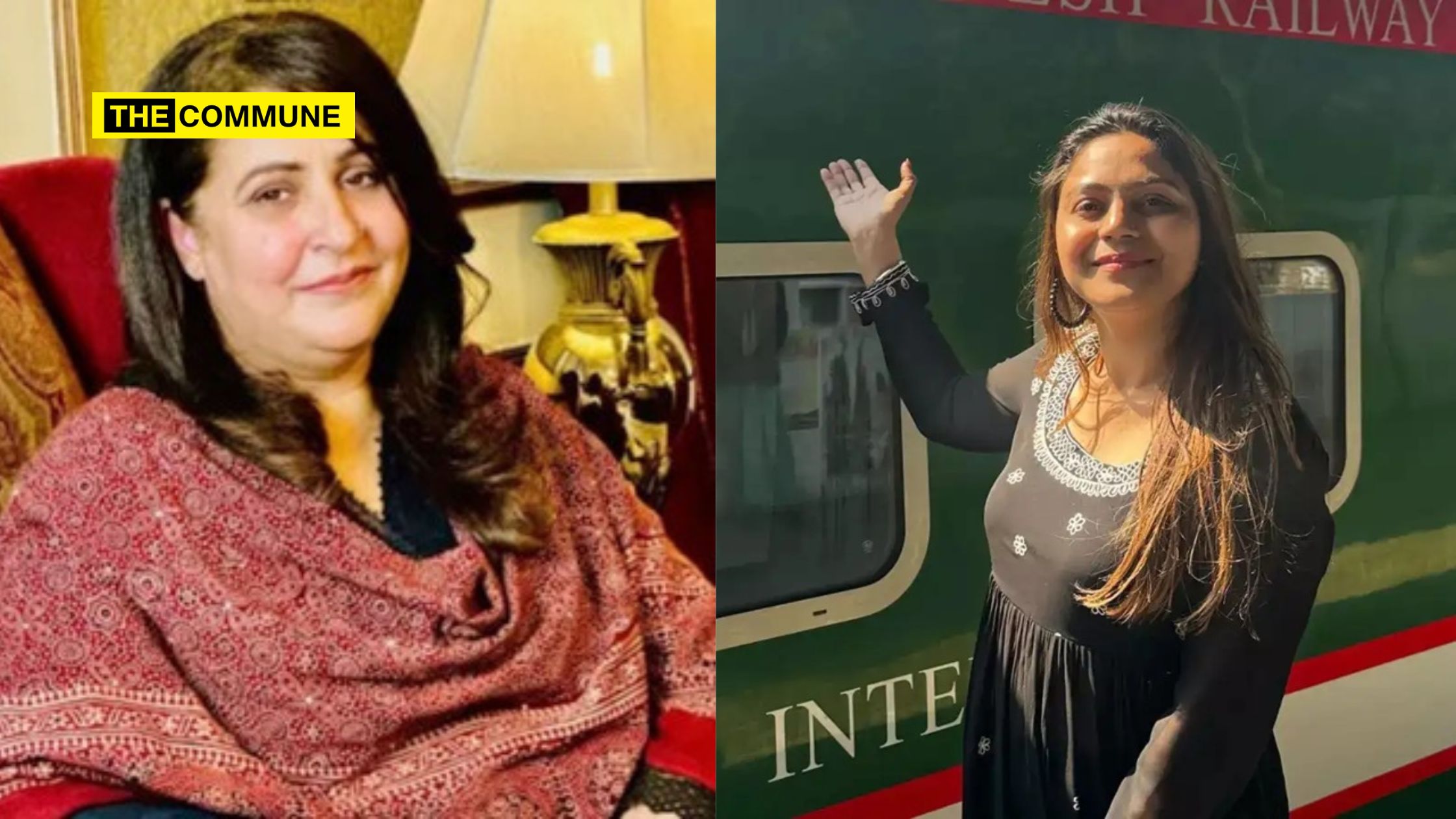
Indian intelligence agencies have identified a Pakistani woman, Noshaba Shehzad Masood — codenamed Madam N — as a central figure in a growing espionage network that allegedly involved recruiting Indian social media influencers and YouTubers as spies for Pakistan’s Inter-Services Intelligence (ISI).

According to official sources, Noshaba Shehzad runs a Lahore-based travel company named Jaiyana Travel and Tourism, which played a key role in facilitating the travel of Indian nationals, particularly Hindu and Sikh influencers and vloggers, into Pakistan. One such individual, Jyoti Malhotra, was among those arrested and interrogated by Indian agencies, during which Madam N’s name surfaced.

Investigators believe that Shehzad was working under direct instructions from the ISI and the Pakistani Army to build a widespread sleeper cell network across India. Intelligence inputs suggest that her goal was to embed at least 500 operatives—posing as common citizens—across the country to collect and transmit sensitive information to Pakistani handlers.

Shehzad’s alleged influence extended into the Pakistani diplomatic mission in New Delhi, where she maintained contact with key embassy officials including First Secretary (Visa) Suhail Qamar and Counsellor (Trade) Umar Sheryar. She was also in touch with a former visa officer, Danish alias Ehsan-ur-Rehman, who was expelled from India following the exposure of Jyoti Malhotra’s espionage activities.

Notably, Jaiyana Travel and Tourism is the only agency permitted to organise Hindu and Sikh pilgrimages to Pakistan, working in collaboration with the Evacuee Trust Property Board. Despite the absence of formal procedures for tourism between India and Pakistan, the Pakistan High Commission in New Delhi is reported to have frequently issued visas based on Madam N’s sponsorship.

In the past six months alone, approximately 3,000 Indian citizens and 1,500 non-resident Indians (NRIs) reportedly traveled to Pakistan under her facilitation. Authorities allege that Shehzad used the pilgrimage as a cover, charging exorbitant amounts from travellers and channeling the funds to support propaganda and covert activities.

Madam N is also accused of deploying several travel agents across major Indian cities—including New Delhi—to promote her services and identify new recruits. These agents, officials believe, were instrumental in expanding her influence and helping trap unsuspecting Indian citizens into the espionage network.

Further investigation is ongoing, and security agencies are working to dismantle what they describe as a “deep and deceptive” infiltration strategy orchestrated by Pakistan’s ISI using religious tourism as a front.

Jyoti Malhotra Espionage Case

In a major national security scare, Hisar-based travel vlogger Jyoti Malhotra was arrested on 17 May 2025, for allegedly spying for Pakistan. Accused of sharing sensitive information via encrypted apps like WhatsApp and Telegram, Malhotra had visited Pakistan multiple times and reportedly maintained contact with Pakistani intelligence officials. She allegedly met ISI operatives during her trips, including a man named Danish (Ahsan-ur-Rahim) and Ali Ahsan, who introduced her to security personnel.

Malhotra, who runs the YouTube channel Desi-Indo-Joe, had been allegedly using her online influence to promote pro-Pakistan narratives. Her connections to the Pakistan High Commission in New Delhi and plans to travel to Bangladesh have deepened suspicions, particularly after the Pahalgam terror attack that killed 26. A viral video showing her in Lahore under tight security and her association with a man spotted at the Pakistan High Commission post-attack have raised serious alarms.

Investigators seized her gadgets and are probing links to recent military operations like Operation Sindoor. She is being interrogated by the NIA and IB. Despite denying wrongdoing, Malhotra faces charges under the Official Secrets Act. Her case highlights rising concerns over digital influence, cross-border propaganda, and espionage.

(With inputs from OpIndia)

Subscribe to our channels on Telegram, WhatsApp, and Instagram and get the best stories of the day delivered to you personally.

“We Cannot Remove Bharat Mata, These Are Idols For Which We Are Living””: Kerala Governor Arlekar Rejects Demand To Take Down Bharat Mata Portrait From Official Stage

kerala governor rajendra arlekar bharat mata communist pinarayi vijayan

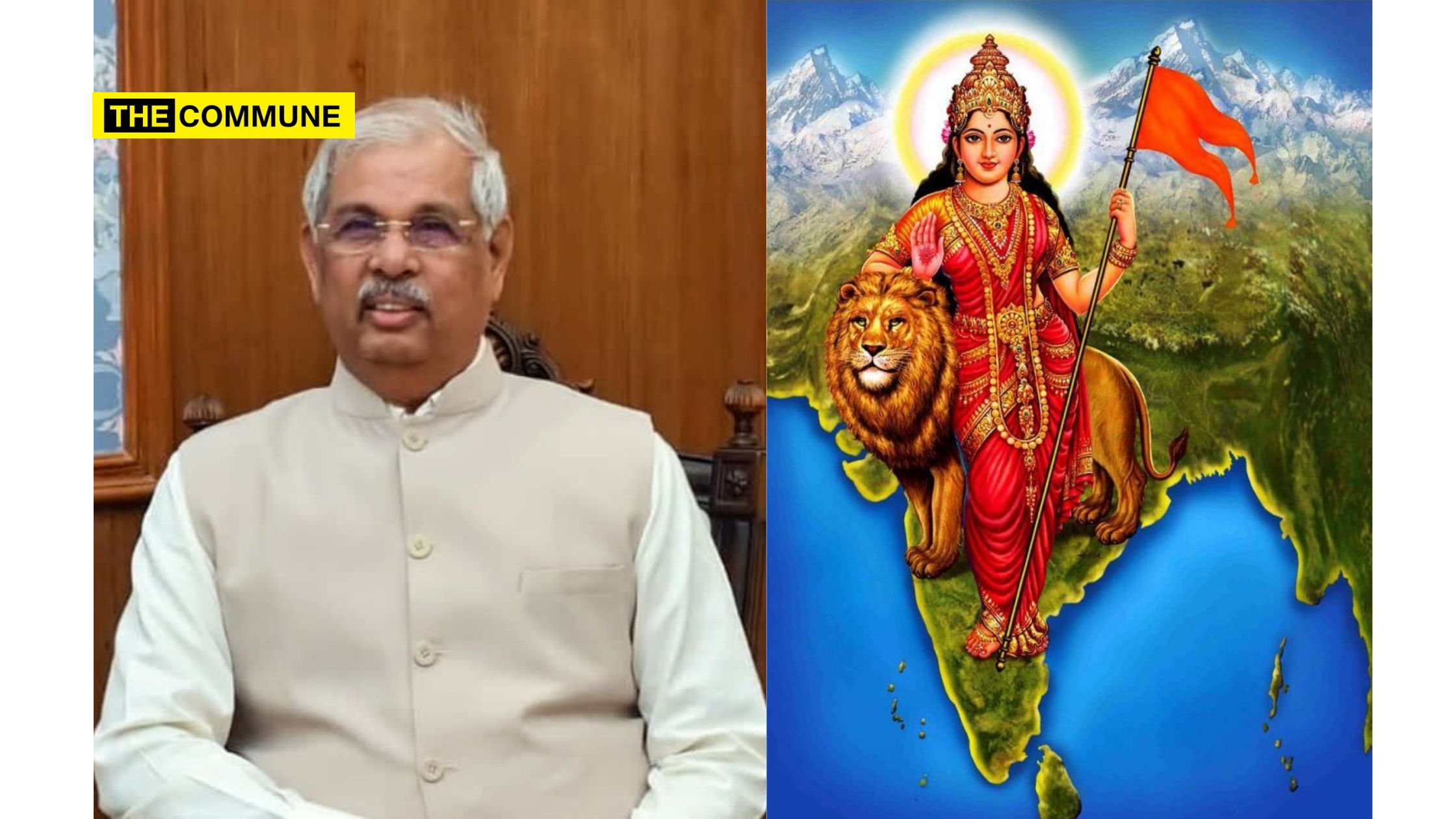
Kerala’s World Environment Day celebrations were overshadowed by a political flashpoint on 5 June 2025 after Kerala Agriculture Minister P. Prasad and another cabinet colleague boycotted an event at the Raj Bhavan, protesting the display of a Bharat Mata portrait on stage.

The controversy erupted after officials from the Governor’s office allegedly insisted on including a prominent image of Bharat Mata on the dais. The image is widely associated with RSS shakhas, prompting objections from the Left-led state government.

Minister Prasad, who had initially requested that the event be held at Raj Bhavan, pulled out after the Governor refused to remove the portrait. In a statement, the Raj Bhavan said, “The Governor had gladly granted permission. However, when the minister insisted that the portrait of Bharat Mata on the stage be removed, the Governor had to turn down the request. Following this, the minister boycotted the event.”

The statement also noted that the minister was expected to attend both the morning and evening sessions at the Raj Bhavan but “unfortunately, he abstained from both.”

Speaking at the event, Governor Rajendra Vishwanath Arlekar stood firm: “I was told that the minister wanted the Bharat Mata photo and image to be removed from the dais. I told them that we will do everything possible, but we cannot remove Bharat Mata, we cannot remove our ‘mathrubhumi’. These are idols for which we are living. We cannot do away with this.”

He emphasized the cultural significance of the image, saying India has a long tradition of worshipping and protecting nature. “Some present day ‘isms’ are demanding the abandonment of this tradition,” the Governor said. “Real environment protection is possible only by upholding our traditions and living a life true to it.”

Minister Prasad responded by asserting that the government respects Bharat Mata, but the specific image used was politically loaded and inappropriate for an official function. “The programme agenda was prepared by Raj Bhavan, and we accepted it. But yesterday evening, they suddenly added a new item—paying floral tributes to the portrait of Bharat Mata. This goes against constitutional norms, and that picture is widely used by the RSS,” he told PTI Videos. “The Raj Bhavan, which hosts a constitutional office, should not have used an image that is used exclusively by a particular organisation.”

Following the disagreement, the Agriculture Department swiftly relocated the official celebration to the Durbar Hall at the Secretariat, where the function was held at 11 AM on Thursday.

It is noteworthy that the concept of Bharat Mata likely emerged from Vande Mataram in Bankim Chandra Chatterjee’s Anandamath in 1882 — a good forty years before the RSS was even founded. Also. Bankim Chandra envisioned Bharat Mata as an embodiment of Durga, Kamala, and Vani — all unmistakably Hindu symbols.

Last month, Chief Minister Pinarayi Vijayan had also expressed his disapproval, albeit belatedly, over the Raj Bhavan’s invitation to RSS ideologue S. Gurumurthy for a lecture on Operation Sindoor. This time, the government’s response was immediate and firm.

Subscribe to our channels on Telegram, WhatsApp, and Instagram and get the best stories of the day delivered to you personally.

India’s UPI Is Now The World’s Payment Superpower

“World-beater in the making: UPI on the cusp of surpassing Visa’s daily transaction volume” – Screamed the title of an article in Moneycontrol. As I started the day with this wonderful news on UPI on the verge of becoming world’s largest digital payment interface, I could not help but marvel at this wonderful digital platform from India for the world, which has not just created another settlement mechanism, but has brought about revolutionary and transformative changes to the way in which people transact, and forcing the world to look at this new jewel from India’s digital prowess.

The Unified Payments Interface (UPI), launched in 2016 by the National Payments Corporation of India (NPCI), has transitioned from a niche digital payment method to the backbone of India’s financial ecosystem. With its unprecedented adoption rates, it has not just streamlined transactions, it has also emerged as a transformative force, driving formalisation, enhancing credit access, revolutionising settlements, democratising digital payments, and significantly contributing to the nation’s economic growth. It is not just a payment system. It is a pinnacle of indigenous innovation, emblematic of India’s ongoing digital revolution.
The Digital Revolution And India’s Technological Prowess

Our country has been undergoing a profound digital transformation, structured around what is known as the “India Stack” i.e. our own unique Digital Public Infrastructure (DPI). With its open-architecture approach, comprising foundational digital identity (Aadhaar), real-time payments (UPI), and secure data-sharing frameworks (DigiLocker, Account Aggregator), the “India Stack” has created a powerful ecosystem for innovation and public service delivery. No country has seen the sheer scale and speed of this transformation, making our Country a global leader in digital governance.

UPI is arguably the crown jewel of India Stack, showcasing the our nation’s capacity for designing and deploying cutting-edge technology at a population scale. It embodies India’s commitment to building public digital goods that are interoperable, inclusive, and cost-effective. Its success has garnered global recognition as a leading example of DPI, with several countries now looking to emulate its model to build their own real-time payment systems. This reflects India’s growing influence as a thought leader in digital governance and financial technology.

Formalisation Of The Economy Across Sectors

Traditionally, a significant portion of transactions, particularly in the informal sector and among Micro, Small, and Medium Enterprises (MSMEs), relied heavily on cash. This cash-based economy often operated outside the tax net, hindering transparency and accurate economic data collection, leading to stunted growth, both at an entrepreneur level and also at the country level. One of UPI’s most profound impacts has been its role in bringing large swathes of the Indian economy into the formal fold.

UPI has fundamentally altered this landscape by enabling seamless digital payments for everything from a street vendor’s tea and snacks to a small business’s supplies. The digital footprint facilitates better record-keeping for businesses, making it easier for them to comply with tax regulations like GST. Studies have shown a significant positive correlation between increased UPI adoption and higher tax revenues, with some research indicating a rise in GST filings among SMEs that adopted UPI. This formalisation improves financial governance, broadens the tax base, and allows for more effective data-driven policymaking.

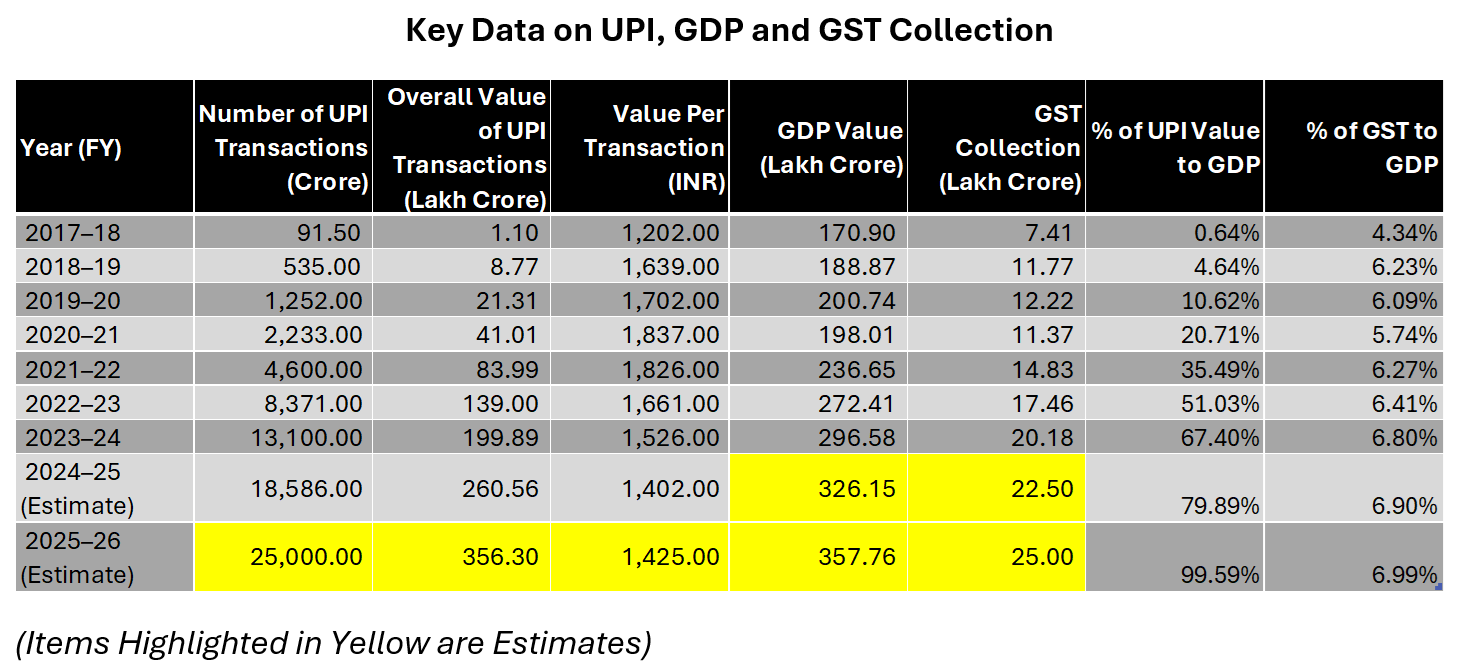
A good example of the formalisation is the ratio of the value of UPI transactions to the country’s GDP. Over the years, this has grown from less than 1% to almost 80% in FY 25, and expected to breach 100% in the years to come.

Enhancing Access To Credit

For millions of Indians, particularly small entrepreneurs, informal workers, and those in rural areas, access to formal credit has long been a significant barrier. The absence of a verifiable transaction history or a credit score often relegated them to high-interest informal lending channels, which comes with its own set of inefficiencies and baggages in the form of high interest cost, exploitative practices and rampant corruption. UPI is now changing this paradigm.

The real-time transaction data generated by UPI offers lenders valuable insights to assess creditworthiness more accurately and offer “sachet-sized” loans or small credit lines directly on UPI. The introduction of “Credit Line on UPI” by NPCI is a game-changer, allowing banks to extend real-time, low-interest credit to underserved segments who may not qualify for traditional credit cards. This innovation is crucial for financial inclusion, empowering individuals and small businesses to access formal credit, manage cash flow, and invest in their growth, ultimately fostering a healthier credit ecosystem.

Quicker And Cheaper Settlement

Prior to UPI, digital payment methods often involved multiple intermediaries, leading to higher transaction costs and delays in settlement. UPI, built on an Immediate Payment Service (IMPS) architecture, offers instant, 24/7, peer-to-peer (P2P) and person-to-merchant (P2M) fund transfers.

For businesses, especially small and medium-sized enterprises, this means immediate access to funds. This quicker settlement significantly improves cash flow management, reducing the need for working capital and enabling faster reinvestment. For consumers, the convenience of instant payments has eliminated waiting times and reduced dependency on physical cash. Moreover, UPI transactions are typically free for consumers and involve minimal or no charges for merchants, making it a highly cost-effective payment solution compared to traditional payment gateways or cash handling costs. This efficiency and cost-effectiveness benefit both individuals and businesses, reducing friction in economic activities.

Digital Transactions Made Size Agnostic

One of UPI’s most remarkable achievements is its ability to facilitate transactions across the spectrum of value, from micro-payments to larger sums, making digital payments truly “size agnostic.” Whether it’s a ₹10 payment for vegetables or a ₹1,00,000 payment for goods, UPI handles it with equal ease and efficiency.

This versatility has democratized digital payments, reaching beyond urban centers and tech-savvy users to embrace street vendors, small kirana stores, and consumers in remote villages. The simple QR code scan has become ubiquitous, transcending literacy and technological barriers. This broad applicability ensures that every transaction, regardless of its value, contributes to the digital economy, fostering a unified payment infrastructure that benefits all participants.

The volume of UPI transactions and its ratio to the Country’s GDP is a testament to the Indian consumer’s preference towards UPI. From just around 1 Lakh crore transactions in FY18 to almost 261 Lakh Crore transactions FY25, we are nudging towards 1 Lakh crore transactions per day. This is unprecedented for any country!

Catalysing Economic Growth

UPI’s multi-faceted benefits directly contribute to India’s overall economic growth. By formalising transactions, it expands the taxable base and improves the accuracy of economic data, leading to better fiscal planning. Enhanced access to credit, particularly for MSMEs, fuels entrepreneurship, investment, and job creation. The efficiency and cost-effectiveness of UPI payments reduce operational overheads for businesses, allowing them to focus on core activities and improve profitability.

The exponential growth in UPI transactions underscores a fundamental shift in consumer behavior towards digital payments, reducing the reliance on cash. RBI’s Annual Report for FY25 highlights that UPI transactions increased by 41.7% in volume and 30.3% in value compared to the previous fiscal, with UPI having the highest share (84%) in total retail payments, affirming its role as a key driver of economic activity. This strong performance contributes to India commanding a significant 48.5% share in global real-time payments by volume.

Conclusion

The Unified Payments Interface has not just facilitated digital payments; it has instigated a quiet revolution in India’s financial landscape. Its impact extends beyond mere transactional convenience, touching upon the very fabric of the Indian economy by formalising economic activities, unlocking access to credit, streamlining settlements, and democratising digital finance. As UPI continues to evolve and expand its global footprint, it remains a powerful testament to India’s digital prowess and a critical enabler of its journey towards a more inclusive, efficient, and robust economy.

G Saimukundhan is a Chartered Accountant.

Subscribe to our channels on TelegramWhatsApp, and Instagram and get the best stories of the day delivered to you personally.

“Can’t See People Gathering For Temple Festivals As Part Of Civilized Society”: DMK Minister Mano Thangaraj Says, Had Earlier Derogated Mahakumbh

In yet another brazen display of Hindu hate, DMK Minister Mano Thangaraj who is a Christian implied that those who visit temple gatherings are uncivilized.

When reporters had asked about his opinion on the recent stampede that occurred during the RCB IPL victory celebrations in Bengaluru, the DMK Minister said “This is my personal opinion. We’re carrying out various forms of rationalist propaganda. We’re trying to build a society based on rationalism. People gathering in large numbers for temple festivals, going to watch sports, I can’t see them as part of a civilized society.

He then went on to say “Don’t be a spectator. Be a participant. I don’t know how many people there would’ve touched a cricket bat. I am not talking about the Karnataka government.

When a reporter asks whether he’s implying that Karnataka people are irrational, Mano Thangaraj deflected the question saying “My humble request to people is while gathering in a public place, they should use their brains and not indulge in pushing-pulling creating a stampede. People should avoid that.

Earlier, the DMK leader had derogated Mahakumbh saying ” While America is flying the flag of knowledge development with ChatGPT, Copilot, MetaAI, Grok, Gemini, and China with Deepseek, India is looking to WhatsApp University for an explanation for the comedy and Kumbh Mela under the Modi regime.

He followed it up with the hashtags #DeepSeekR1 #CowUrine to add on to his derogatory statements.

Mano Thangaraj had also insulted Prime Minister Narendra Modi venerating the sacred ‘Sengol’ saying ““Is he dead? (Is he breathing?), does he have dignity and self-esteem?”

He had also insulted North Indians saying that they are people who roam around in loincloth.

Today, the Tamil community and the Indian community is mired in illusion. In north India, people even today roam around in loincloth. If you get an opportunity, go to Gujarat and see. No need to go anywhere else. Once you land there, they will deceive you showing Ahmedabad, Gandhi Nagar, etc. Don’t even look that side. Ask them to show the rural area. Go see the rural area. If you see the rural areas, you will see those people only wear loincloth.”, DMK Minister Mano Thangaraj said.

The BJP in Tamil Nadu has slammed the DMK Minister for insulting Hindus. BJP Tamil Nadu leader K. Annamalai wrote “In response to a question about the Congress government’s administrative failure at Chinnaswamy Stadium in Bengaluru, Karnataka, which resulted in the deaths of many people in a stampede, Minister Mr. Mano Thangaraj has said that the public should not go to temple festivals. The crowd that is exploiting temple properties and the money donated by devotees, has become so fat that today they’re saying that it is uncivilized to go to temple festivals. Which is more civilized? Smuggling and selling the entire mineral resources of Tamil Nadu or stealing Aavin milk without even leaving behind the fat?

Would Minister Mr. Mano Thangaraj, who says that the public should not go to temple festivals in large numbers to cover up the administrative failure of the INDI Alliance Party, say this to his party leader of slaves? Illegal liquor, ganja, and drugs are running rampant in Tamil Nadu. Law and order has broken down to the point where there is not a single day without a murder. In such a state, rationality is spoken. Onion.“, Annamalai slammed Mano Thangaraj.

Following the outrage, Mano Thangaraj posted on his social media that his statement was not about religion but about people dying in stampedes.

In his social media post he said “In response to a question raised by journalists regarding the issue of 11 people dying in a crowd watching sportspersons in Karnataka, I had posted my opinion that ‘I cannot see excessive crowding at sports events, temple festivals, etc. as a sign of a civilized society’. This is not a religious remark; nor is it a remark that blames anyone. Is the news that more than 3000 human lives have been lost in a stampede in the NCRB data acceptable? Is it not the duty of a civilized society to avoid these things? My question is nothing more than that. I request my friends in the press to realize that they also have a duty in this. This society will not accept the idiots who think that they can use this for political gain.

Subscribe to our channels on TelegramWhatsApp, and Instagram and get the best stories of the day delivered to you personally.

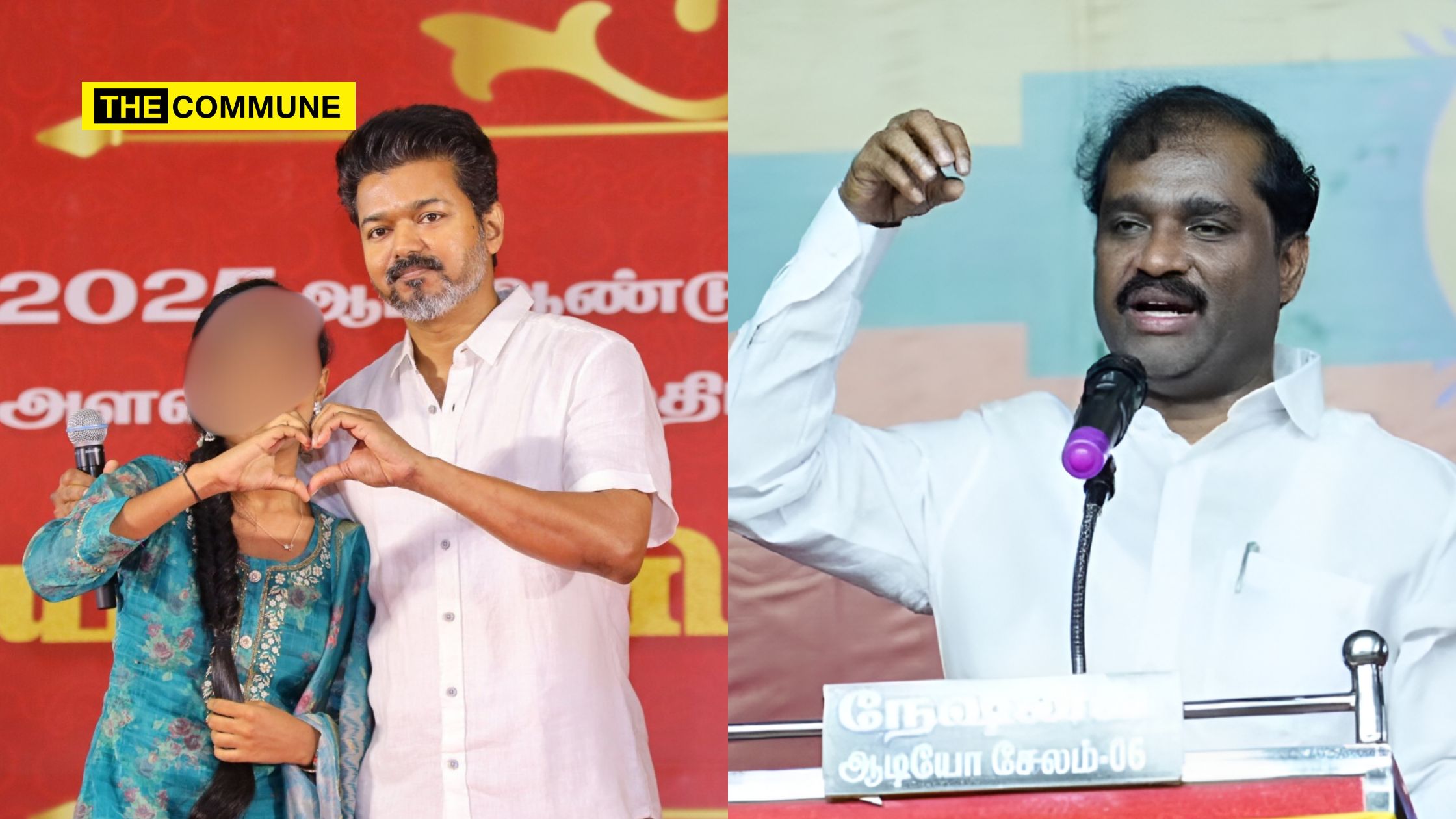
DMK Ally Panruti MLA Velmurugan Reiterates His Demeaning Sexualized Remarks About Female Students Having Fan Moments With TVK Vijay, Threatens TVK Cadres For Asking Him To Apologize

panruti mla velmurugan vijay

Tamilaga Vazhvumurai Katchi (TVK) leader and Panruti MLA T. Velmurugan has issued a warning to Tamilaga Vettri Kazhagam (TVK) president and actor-turned-politician Vijay, urging him not to allow inexperienced party cadres to make public statements without understanding Tamil Nadu’s political landscape. Velmurugan added that if Vijay believes he (Velmurugan) has said anything inappropriate, he should address the media directly through a press meet and Velmurugan would respond accordingly.

The MLA was reacting strongly to the criticism leveled against him by TVK functionaries who demanded that Velmurugan apologize for his recent comments about young women student, which was a moral policing and regressive. His advice to parents regarding their daughters’ behavior had sparked public backlash, prompting TVK cadres to demand an apology.

However, while speaking to reporters in Cuddalore, Velmurugan stood by his earlier statements, clarifying that his words were deliberate and meant as advice to parents not a criticism of Vijay. He stated, “Many young women, many husbands, wives, even women with their parents are often seen in cinema or television shows treating film heroes as their incarnation (ideal men), hugging and kissing them, and indulging in such uncivilized acts right in front of their own parents. When we see such behavior before various media and newspapers, is not acceptable. After saying that, I also listed out several actors’ names and said appreciate their acting, enjoy their performances, I won’t say don’t do that. But as parents, you should not allow your children especially the daughters you have raised and nurtured to fall for such over-glamorized cinema personalities. You must not permit them to behave with actors in such undue advantage. This is not Tamil culture, this is not civilization. We Tamils have a distinct culture, a sense of civilization, and a rich heritage. Based on that foundation, I expressed my views.”

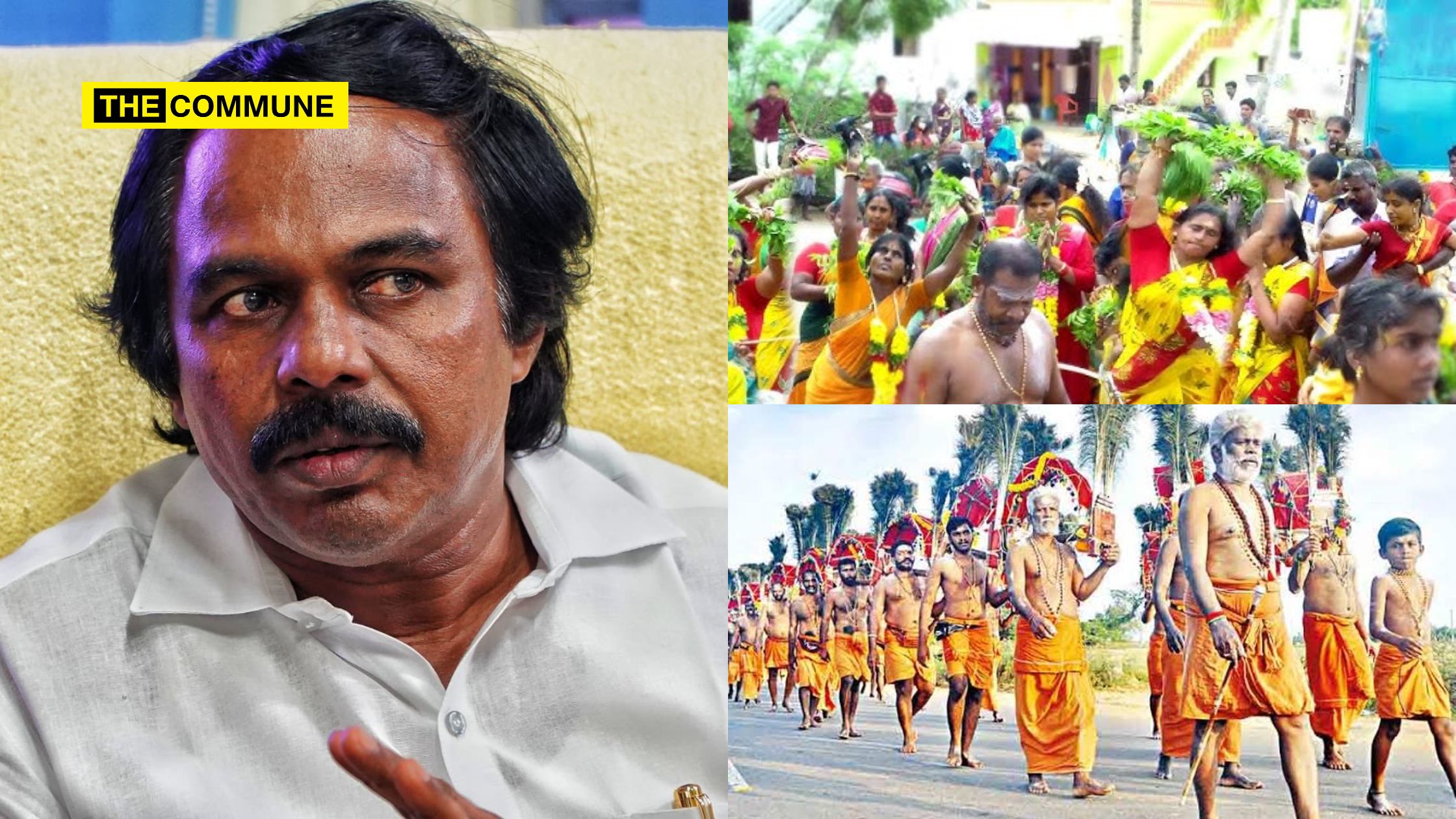
Later added, “We do not need this kind of cut-out culture, eating mansoru, nakedly beating with neem leaves without wearing, going on a pilgrimage to Tirupati just so a film can run for 100 days, and rolling all the way to the Palani Murugan temple. Have you ever, even once, gone and touched the feet of the parents who gave birth and raised to you on your birthday seeking blessings? But why then do you perform paal abhishekam for film stars? Why say things like, “I came here at 3 AM just to see my hero. I’ve been here since yesterday. I’ve been waiting with devotion. If only I could hug him once and give him a kiss, my life’s goal would be complete” These are the kinds of things some women are saying openly in press meets and television debates. Such speech should not be encouraged. This is not our culture or tradition. Parents should never allow this. I strongly condemned such acts and spoke against them. But without even listening to my full one-hour-forty-minute speech, a few half-baked cadres have shouting, “You’ve spoken against our Thalapathy (leader)! You must apologize immediately!” These kinds of outbursts and press statements are completely unnecessary.”

Subscribe to our channels on TelegramWhatsApp, and Instagram and get the best stories of the day delivered to you personally.

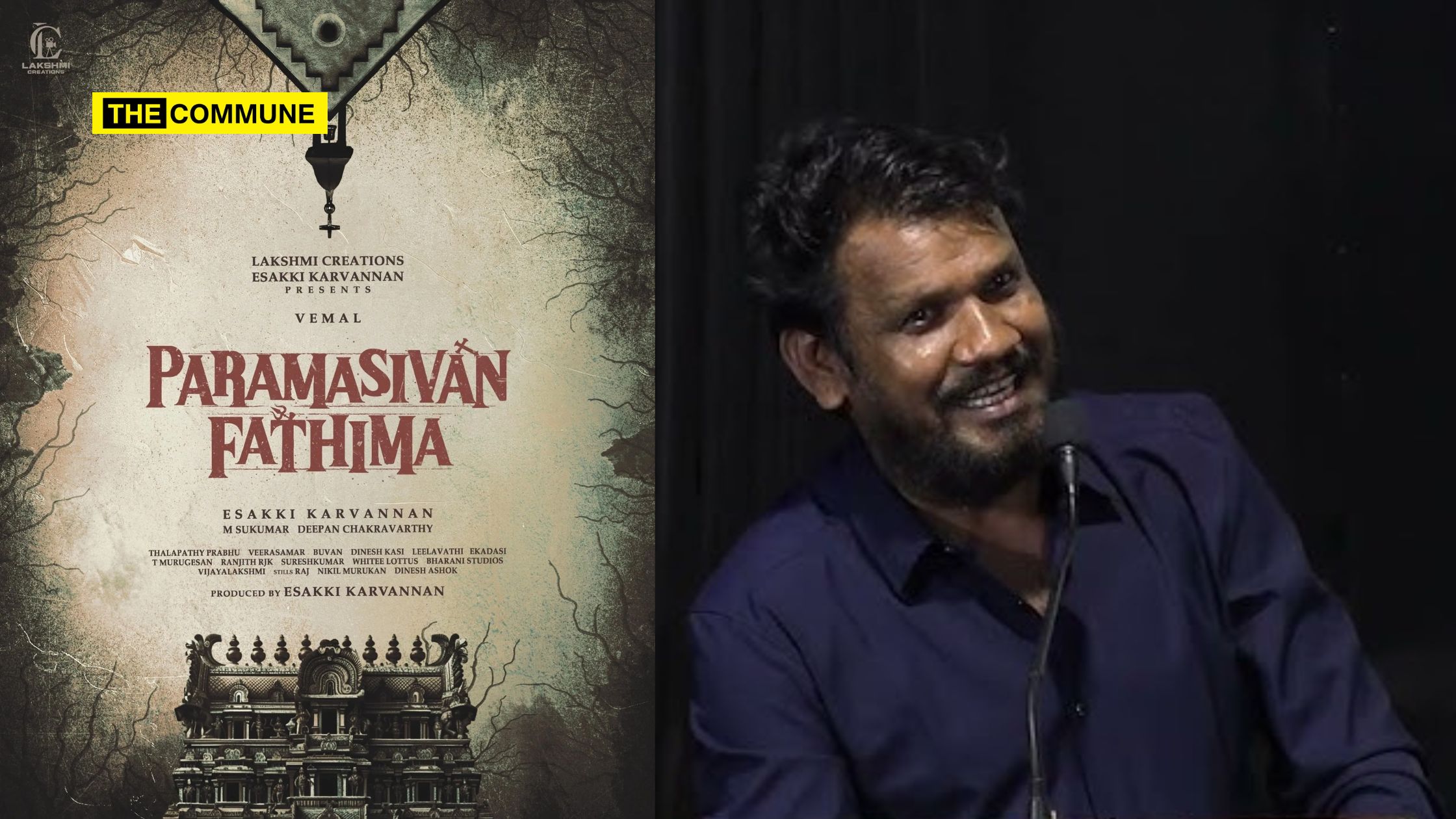
“Don’t Erase Our Identities”: Paramasivan Fathima Director Esakki Karvannan’s Fire Press Meet On Religious Conversions, Asks Why Should They Be Called Christian Schools If They’re Built On Govt Land And Uses Govt Funds

paramasivan fathima esakki karvannan

At a press meet for the controversial Tamil film “Paramasivan Fathima”, director Esakki Karvannan delivered an emotionally charged and impassioned defense of the film, reacting strongly to questions from journalists about the film’s alleged anti-Christian tone and its treatment of religious identity.

Speaking with rising intensity, the director rejected the claim that the film targeted any particular religion. “I’m not talking about religion here. I never mentioned religion. I’m talking about the identity rooted in my land,” the director began, visibly emotional. “You are calling it religion, but when I perform my rituals abroad — the way I live, the customs I follow — you see it as religion. I don’t. I see it as my land’s identity,” he said.

Rejects Religious Framing

Facing repeated questions from reporters, the director emphatically denied that the film had an anti-Christian bias. The filmmaker said, “This film may appear to be anti-Christian, but we never said that. We never said we are against that religion. If I were against Christianity, I should’ve supported Hinduism. Or Islam. But I haven’t. It’s just a story. A story based on my own life, what I lived and experienced.”

Referring to spiritual depictions in the film, he added: “You say ‘Karuppu Saami’ appears in the film. But what is a ‘Saami’? We just use the word to call our ancestors. Even if it’s Jesus, after death, we see him as a ‘Saami.’ So we view all of them as deities in our collective sense. That’s how we see it — with a secular lens. People will definitely accept this. This is my story. I lived this. From my childhood, all these events happened to me. I was affected. My identity was erased. My relationships were broken.”

He elaborated that the narrative depicts his own childhood and the trauma of identity erasure he faced. “My forefathers were turned into saints after death. Even Jesus, after his death, became a saint. That’s how people here see him. So don’t frame this film in religious binaries.”

On Tamil Identity and Indian Law

Responding to questions about whether the film disrespects Indian national symbols, the director flatly denied such allegations. He said, “The Indian tricolor or Tamil Nadu identity isn’t disrespected in any way. I respect this land. My argument is simple: why should anyone have to erase their Tamil identity for a foreign religious label?”

He further said, “There are many parts of our history and law that still need correction. Do you know how many amendments have come since independence? Why were they made if the original law was perfect? Ask the lawmakers — did they not know when they passed the first version? People are now waking up to their native identity. That’s why change is needed.”

Film’s Central Message

The director emphasized the thematic core of the movie: honoring ancestors and reclaiming indigenous identity. “In this film, I simply say that if you don’t worship your ancestors, you’re left calling them ghosts. That’s all. Where exactly are you finding fault?”

When asked about religious conversion, he issued a sharp rebuttal, “So now you’re asking — should people convert or not? I’m saying, don’t erase our identities.”

He elaborated further, “Again, you are seeing rituals as religion. I’m not. I view them as cultural. When I follow an Arab custom or some white man’s tradition, that remains his identity. But I’m a Tamil, I’m an Indian — and I want to retain my native identity. That’s what I’m saying. This film is not made to attack any other religion. It is to ask — why should religion stop two humans from loving and marrying?”

When asked about religious conversion and its portrayal in the film, he said, “You’re asking if converting is wrong. I’m asking why identities must be erased. When I go abroad, my rituals are seen as part of a religion—but I see them as part of my land, my soil.”

Critique Of Missionary Education

He launched into a detailed critique of Christian missionary schools, accusing them of co-opting state resources while propagating their religious identity. The most explosive part of the press meet came when the director turned his ire toward missionary-run schools in Tamil Nadu: “Tell me which school was built by Christians? We all call it Christian schools and that is their intention too. But even Christian schools got government support. I myself studied in one.  Those schools were built on government land. Salaries came from public funds. The British didn’t bring land from London — it was given by our government. And taxes? All from us.” He further added, “Government is paying the salaries. I even put that as a dialogue in the film — that it’s not just for some, everyone’s salaries come from the government.”

He pointed out the irony in praising Christian missionary contributions while forgetting native ones: “Before independence, you say we had no schools? What about Pachaiyappa’s College? Who built it? Why was it built? Go research.”

Calls for Historical Reevaluation

The director also called for a re-examination of India’s educational and legal histories. “Why do we still cling to colonial amendments and laws that were passed without consulting native voices?” he asked.

He emphasized the need for societal introspection, he said, “We must ask ourselves: why were schools in Tamil Nadu lacking Tamil instruction before 1954? Why were missionary schools the norm, while native forms of education like the ‘gurukulam’ were dismissed?”

The fiery press meet ended with the director reiterating that Paramasivan Fathima is neither propaganda nor a religious attack. “This is a story rooted in my experience. It’s about reclaiming identity—not attacking others’. If that’s controversial, so be it,” he said.

Paramasivan Fathima – The Film

Paramasivan Fathima, directed by Esakki Karvannan and starring Vimal, Sayadevi, and MS Bhaskar, is a daring Tamil film that tackles themes of religious conflict, forced conversions, and missionary propaganda. Set in two contrasting villages—Hindu-majority Subramaniapuram and Christian-majority Yakobupuram—the film explores interfaith love, sectarian strife, and the tension triggered by conversion agendas. The trailer features bold dialogues and controversial scenes, including critiques of missionary education and depictions of state-enforced “social harmony.” With sharp exchanges like “The white man came here to beg,” the film positions itself as a rebuttal to narratives that glorify missionary influence. The film is expected to stir debate, challenging the Dravidianist tone prevalent in Tamil cinema. It marks a significant political and cinematic move for lead actor Vimal.

Subscribe to our channels on Telegram, WhatsApp, and Instagram and get the best stories of the day delivered to you personally.

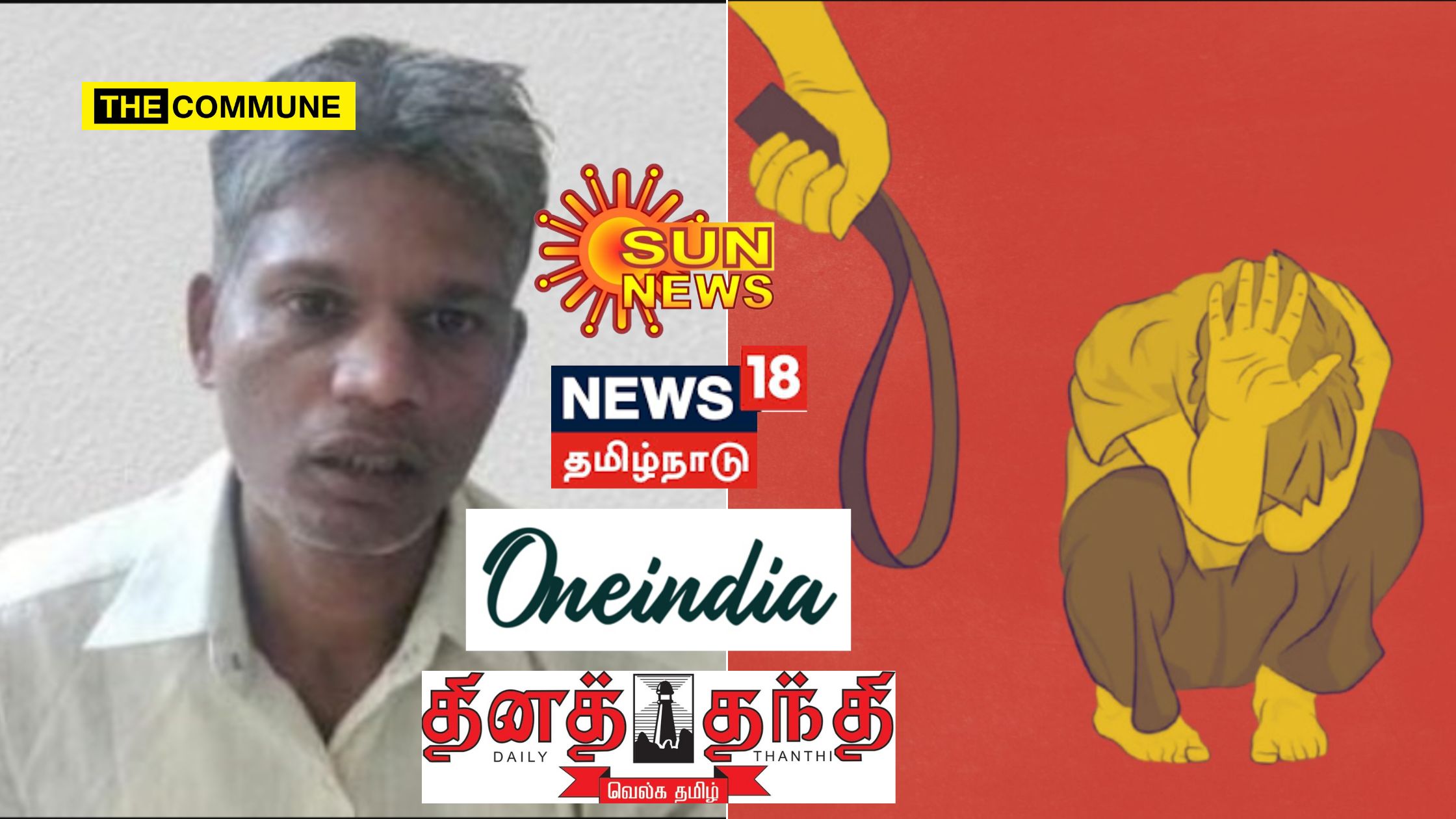
How Dravidianist Media Covered Up Kanyakumari Pastor’s Assault On His Children For Playing With Hindu Neighbours

dravidianist media kanyakumari pastor

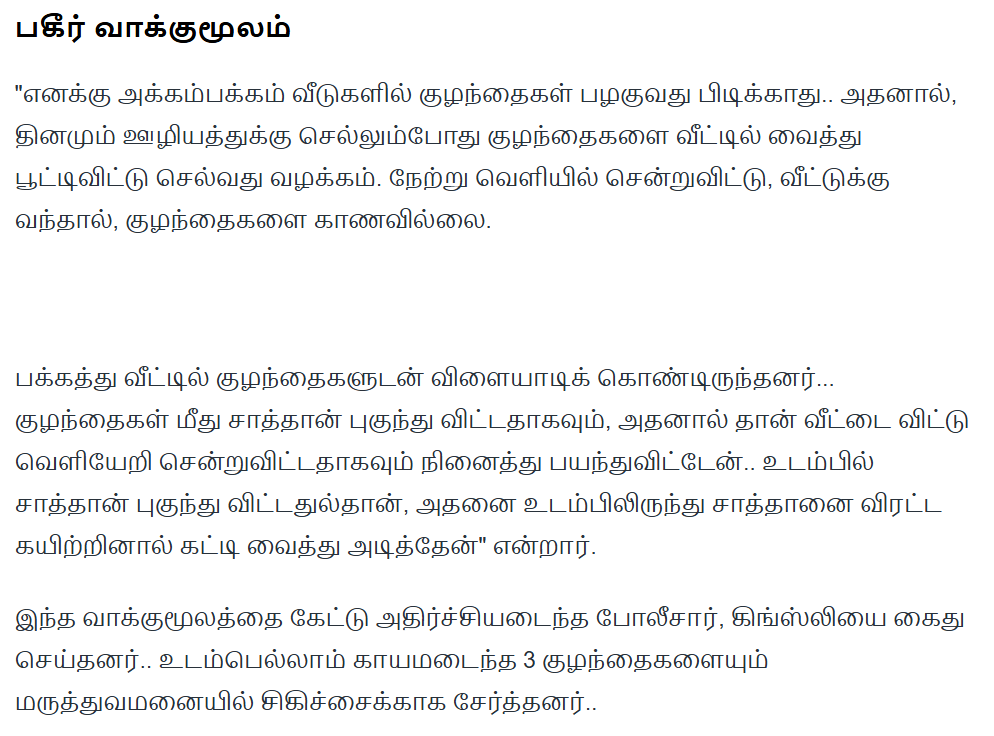
Just a week ago, a shocking case emerged from Tamil Nadu’s Kanyakumari district where Kingsley Gilbert (45), a Christian pastor, was arrested for violently beating his three children. He reportedly believed they were “possessed by Satan” after they had played with children from Hindu families in the neighborhood.

Despite the shocking religious motive behind the assault, Sun News, the unofficial mouthpiece of the ruling DMK and owned by the DMK’s first family, failed to report these key details. Instead, the outlet shared a watered-down version of events, simply labeling it as the arrest of a “father” for assaulting his 8-year-old son. Their news card described Gilbert only as a “priest” and omitted the religious context that had allegedly triggered the abuse.

Even within the news card merely stated, “Priest Kingsley was arrested for repeatedly assaulting his 8-year-old son with a skipping rope in the Karungal area of Kanyakumari district. A video has surfaced showing the injured boy, sitting with visible wounds, being comforted by children from a neighboring house who say, ‘We will take care of you, okay?’ has sparked stir. District child welfare officials rescued the boy, admitted him to a hospital for treatment, and filed a report with the police.”

The crucial detail that the pastor’s violent actions stemmed from religious intolerance toward his children playing with Hindu neighbors was completely omitted.

Another Dravidianist media, One India Tamil, followed a similar pattern by downplaying the incident. Their report merely quoted the pastor as saying, “I don’t like children going and playing with the neighbors,” omitting the crucial context that the neighbors were from a Hindu background.

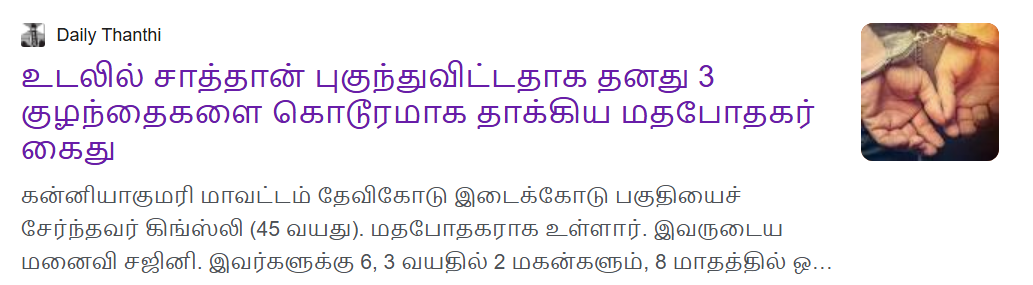
Likewise, Daily Thanthi reported the incident in a similar tone, maintaining the same narrative while omitting a key detail that the pastor assaulted the children specifically because they had played with Hindu neighbors.

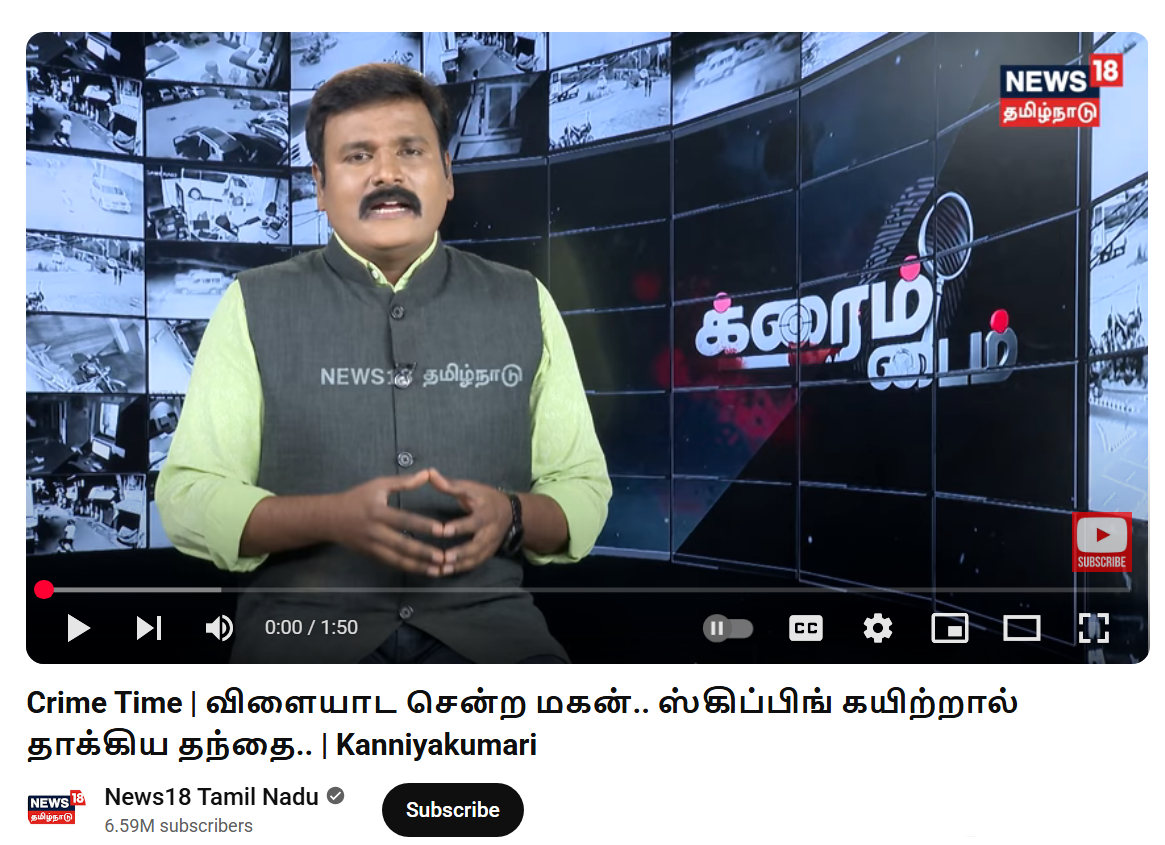
News18 Tamil Nadu went a step further in downplaying the incident during its primetime segment “Crime Time.” The channel aired the story under the mild headline: “Boy goes out to play… father hits him with skipping rope.” In the accompanying description, they summarized the incident as, “A father has been arrested by police for allegedly brutally attacking his son with a skipping rope after he went to play with the neighborhood boys in Kanyakumari district. Is it a crime for a schoolboy to go out and play?”

Notably, the report carefully omitted crucial facts including that the accused is a Christian pastor and failed to mention that the assault occurred because the children had played with Hindu neighbors, thereby sanitizing the communal and religious aspect of the case.

This selective reporting of Dravidianist media has raised serious concerns about media bias and the suppression of facts tied to religious identity in politically sensitive narratives.

However, the full account reveals a far more disturbing reality.

Kingsley Gilbert, who lives in a rented house in Pullathuvilai near Karungal with his wife Sajini, two sons (aged 8 and 6), and an 8-month-old daughter, is known for preaching at local churches. On 29 May, he reportedly became furious after finding his sons had gone to play with neighboring children who were Hindu. According to police, Gilbert dragged his sons inside and beat them severely using skipping ropes.

The neighborhood grew anxious over persistent screams echoing from Gilbert’s home in the dead of night. Despite repeated attempts to knock, no one answered. The District Child Protection Unit and Karungal police were alerted. Upon arrival, officers forced their way inside and uncovered a disturbing sight: the children were bound, with visible severe injuries and clear evidence of physical abuse. They were promptly rescued, and during preliminary questioning, the children allegedly disclosed that their father’s rage stemmed from their playing with Hindu children.

Further investigations revealed that Gilbert had a history of leaving his children locked indoors while he went to preach. On the day of the attack, the children had wandered out to play at a neighbor’s home. Enraged and allegedly convinced that “evil spirits” had taken over his children due to their interaction with Hindu kids, Gilbert carried out the assault in what he claimed was an act of exorcism. He has since been taken into custody, and the investigation is ongoing.

Kingsley has since been charged under Sections 296(b), 115(2), and 351(3) of the Bharatiya Nyaya Sanhita (BNS), in addition to Section 75 of the Juvenile Justice Act. These provisions address obscene acts in public, voluntarily causing hurt, criminal intimidation, and cruelty toward minors, respectively.

Subscribe to our channels on TelegramWhatsApp, and Instagram and get the best stories of the day delivered to you personally.
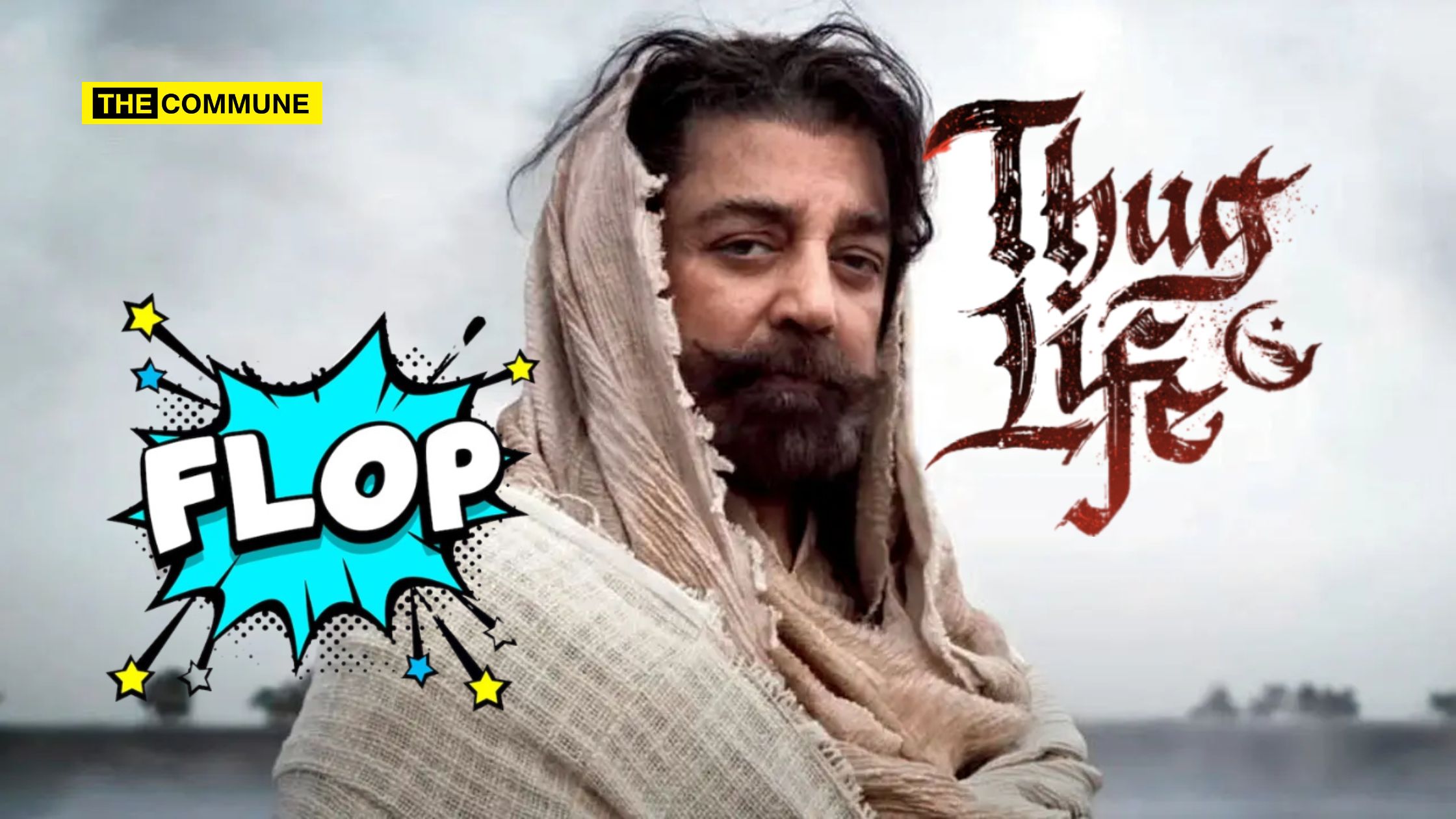
Save Your Life From Thug Life: DMK Stooge Kamal Haasan’s Flop Show Is Torture Max, Not Even Worth An OTT Watch

kamal haasan thug life dmk stooge benami

Thug Life, the overhyped Kamal Haasan-Mani Ratnam reunion, is a cinematic trainwreck so abysmal it makes you question how the duo behind the masterful Nayagan could churn out such an illogical, stupid, and utterly deplorable mess.

Calling this a gangster film is an insult to the genre; it’s a disjointed, soulless slog that fails as drama, romance, or even basic entertainment. This isn’t just a bad movie—it’s a torturous betrayal of everything its creators once stood for.

The story, if you can stomach calling it that, centers on mafia don Rangaraya Sakthivel (Haasan) adopting Amaran (Silambarasan TR) in a tired, predictable father-son betrayal arc that’s as fresh as a stale vada. The script is a chaotic dumpster fire, cobbling together clichés from every gangster flick without a shred of originality or logic. It’s not The Godfather—it’s a wannabe Mirzapur with none of the grit or coherence. The pacing is agonizing, stretching to a near-three-hour runtime that feels like an eternity of punishment. A few scattered dialogues land with wit, but they’re like crumbs in a desert of dreadful writing.

Haasan’s performance is a caricature, all bluster and no depth, with his endless, preachy monologues reeking of DMK propaganda. It’s as if he’s campaigning for votes instead of playing a don. His de-aged flashbacks, while visually slick, are hollow, adding nothing to a narrative that’s already brain-dead. Silambarasan TR is the lone spark, delivering raw intensity that the script doesn’t deserve, but even he’s sidelined in a second half that collapses into a vortex of dumb plot twists and uninspired shootouts. Trisha Krishnan’s role is a pathetic afterthought, a romantic subplot so nonexistent it’s almost cruel to call it that. The ensemble cast—Joju George, Ashok Selvan—wastes away in forgettable roles, victims of a script that cares for no one.

Emotion? Zero. The film lacks the heart to be a drama. Romance? Nonexistent, with not a single meaningful connection to root for. Even the music, typically a Mani Ratnam strength, is a letdown—A.R. Rahman’s score tries hard, but the absence of songs like the promised “Mutha Mazhai” leaves a void. Ravi K. Chandran’s cinematography is the only saving grace, capturing Delhi’s underbelly with flair, but it’s lipstick on a pig.

The Karnataka ban over Haasan’s “Kannada is born out of Tamil” remark only highlights the film’s tone-deaf hubris. Thug Life is a cringe-inducing, self-important disaster that disgraces the Nayagan legacy and insults its audience. Save your sanity—avoid this garbage at all costs and rewatch a real gangster classic instead.

Karnataka people, see if you can ban this film forever so that you are spared from torture.

BR Sreenivasan is a political commentator.

Subscribe to our channels on TelegramWhatsApp, and Instagram and get the best stories of the day delivered to you personally.

ASI Uncovers 2nd Century Tamil-Brahmi Inscription Linking Sangam Literature To Chera Dynasty

tamil-brahmi sangam literature chera dynasty

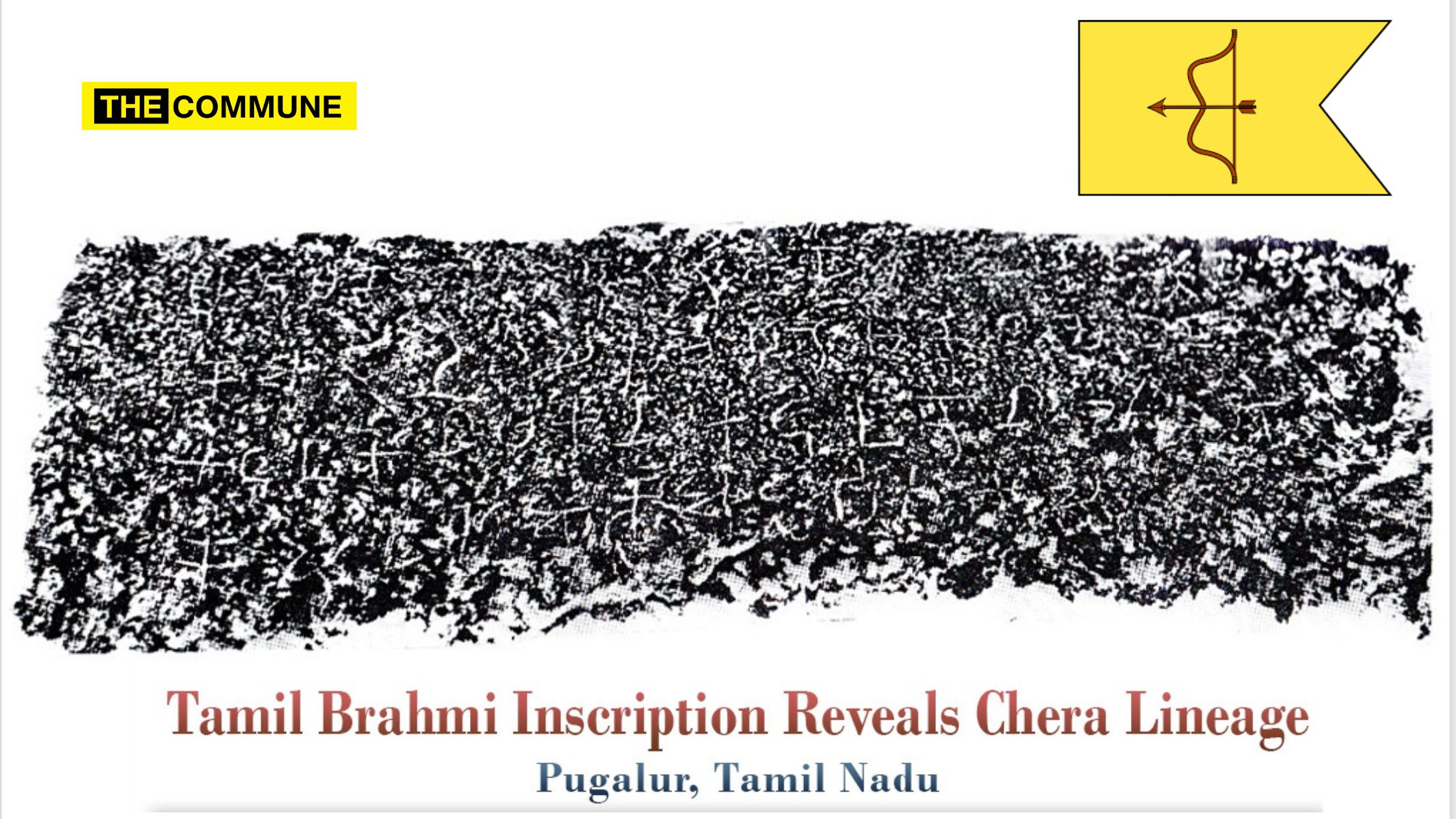
In a significant archaeological breakthrough, the Archaeological Survey of India (ASI) has uncovered a Tamil Brahmi inscription in Pugalur, located in Tamil Nadu’s Karur district, offering fresh insight into the royal lineage of the ancient Sangam-era Chera dynasty.

Dating back to the 2nd century CE, the inscription names Ilankatunkon, son of Perunkatunkon and grandson of Adan-Cel-Irumporai. It records the donation of a rock shelter to a Jain monk named Cenkayapan from Yarur, made on the occasion of Ilankatunkon being declared heir to the throne.

This inscription is particularly important as it aligns with names found in Sangam literature, especially those of three Chera rulers: Selvakatunkon Vazhi Athan (also known as Ko Athan Cellirumporai), Peruncheral Irumporai (Perunkatunkon), and Ilancheral Irumporai (Ilankatunkon). It reinforces the historical credibility of Sangam texts, suggesting they are more than just literary works—they are rooted in actual historical events.

For instance, Pathitrupathu, a classic Sangam anthology, dedicates ten verses in its seventh decade to King Selvakatunkon Vazhi Athan. It describes him as a devout follower of Mahavishnu and a generous patron of Brahmins. The text notes that his repeated donations, often accompanied by the ritual pouring of water, kept his palace courtyard perpetually soaked.

This newly found inscription adds to the growing body of evidence affirming the Sangam age as a historically verifiable era and offers deeper understanding of the Chera dynasty’s spiritual and cultural landscape.

What Is Tamil-Brahmi Script?

Tamil-Brahmi is an ancient script used to write the early form of the Tamil language, dating back to around the 3rd century BCE to the 3rd century CE. It is a regional adaptation of the Brahmi script, which was one of the earliest writing systems of the Indian subcontinent.

While Brahmi was used across India to write Prakrit and Sanskrit, the Tamil-speaking regions adapted it by adding diacritical marks to represent unique Tamil phonemes that weren’t present in Indo-Aryan languages. Tamil-Brahmi was used primarily for inscriptions on caves, potsherds, coins, and rock surfaces. These inscriptions often recorded: Names of donors and kings, Grants to Jain or Buddhist monks, Ownership marks on pottery, and Commercial and trade information

Historical Significance

The discovery of Tamil-Brahmi inscriptions has played a crucial role in confirming the antiquity of the Tamil language and validating the historical content found in Sangam literature. Many of these inscriptions have been found in archaeological sites such as:

  • Adichanallur (Thoothukudi District)
  • Kodumanal (Erode District)
  • Keeladi (Sivagangai District)
  • Pugalur (Karur District)
  • Mangulam (Madurai District)

Some inscriptions date to as early as the 6th century BCE, based on recent stratigraphic and radiocarbon dating, suggesting that Tamil was one of the earliest recorded among Indian languages.

Subscribe to our channels on TelegramWhatsApp, and Instagram and get the best stories of the day delivered to you personally.
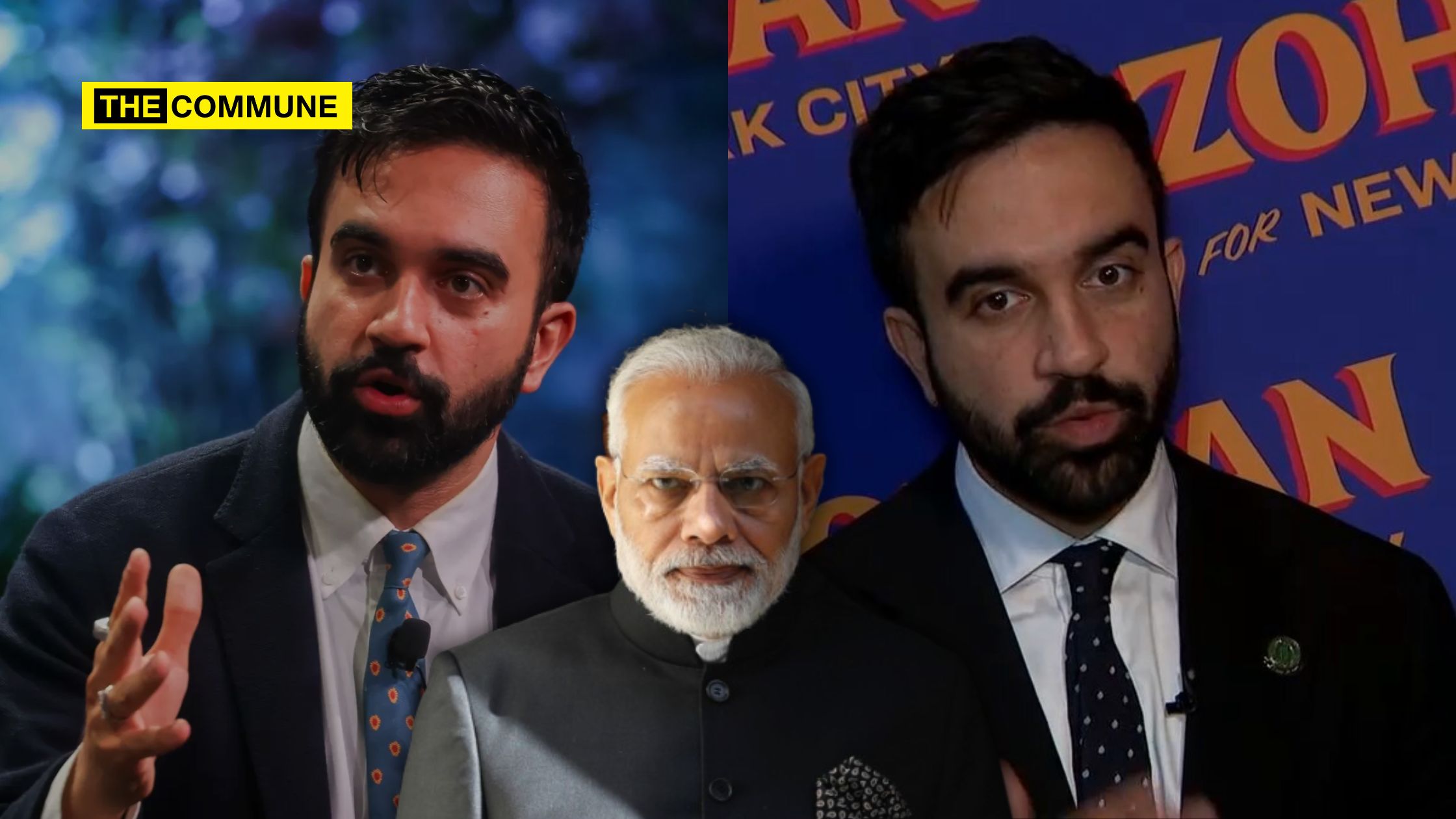
Radical Islamist Zohran Mamdani Is NYC Mayoral Candidate, He Called PM Modi A “War Criminal” And Made Fake Claims Like “No Gujarati Muslims Left”

With the mayoral race heating up in America’s most populous city, one name has emerged as both a rising star and a lightning rod for controversy: Zohran Mamdani. The 33-year-old Democratic Socialist but a concealed radical Islamist and Hinduphobe, currently a member of the New York State Assembly, has gained traction through a slick populist campaign appealing to working-class voters and immigrant communities. But beneath the carefully constructed campaign videos and community outreach lies a disturbing track record of religious divisiveness, inflammatory rhetoric, and open hostility towards India and its Hindu community.

A Populist Pitch With A Polarizing Edge

In his latest campaign video—delivered in fluent Hindi and aimed at Indian-origin voters—Mamdani declared: “Billionaires already have everything. Now, your time has come.” He spoke of rent freezes, free public transport, cheaper groceries, and universal childcare, claiming to have raised $8 million from people-powered donations. Framing the election as a battle between himself and former Governor Andrew Cuomo, Mamdani warned voters that a Cuomo victory would mean “Trump control over New York City,” claiming—without evidence—that Cuomo’s campaign was being funded by Trump-aligned donors.

This video has since gone viral, tapping into populist sentiments among New Yorkers facing skyrocketing rents and economic hardship. But it is also drawing sharp criticism—not for what Mamdani promised, but for what he has long stood for.

Deep Roots, Deeper Divides

Born in Kampala, Uganda to Indian-American filmmaker Mira Nair and Ugandan academic Mahmood Mamdani, Zohran moved to New York at age seven. His cosmopolitan upbringing and elite education placed him on a unique trajectory—one that eventually landed him in New York politics. His mother, Nair, is known for films like Monsoon Wedding, Kama Sutra, and The Reluctant Fundamentalist—works celebrated by some and criticized by others for their contentious portrayal of Indian culture and sexuality.

But Mamdani’s political persona is far more aggressive than artistic. A self-avowed critic of Indian Prime Minister Narendra Modi, Mamdani has repeatedly likened Modi to Israeli PM Benjamin Netanyahu, going so far as to call him a “war criminal” during a recent public forum. He cited the 2002 Gujarat riots as justification—failing to mention that India’s Supreme Court had cleared Modi of any involvement after extensive investigations.

In the video, he responds to the question “Modi is holding a rally in Madison Square Garden. He wants to hold a joint press conference with you afterwards reaffirming the strong bond between India and New York. Do you agree to the event?” with this response –

“No, and I just want to say something here which is that. My father, his family comes from Gujarat in India and his family is Muslim, I am Muslim and Narendra Modi helped to orchestrate what was a mass slaughter of Muslims in Gujarat to the extent that we don’t even believe there are Gujarati Muslims anymore, and when I tell someone that I am, it’s a shock to them that that is even the case. And this is someone who we should view in the same manner that we do Benjamin Netanyahu, this is a war criminal.”

No Gujarati Muslims Left?

At the above event, Mamdani stunned many when he claimed that “we don’t even believe there are Gujarati Muslims anymore,” attempting to present himself as a survivor of ‘erasure’ due to communal violence. His claim was not only inflammatory—it was false. According to the official 2011 Census of India, Gujarat had nearly 58.5 lakh Muslims, comprising 9.67% of the population. Today, that number is likely higher. His suggestion that Gujarati Muslims have been wiped out is both factually incorrect and dangerously provocative.

This prompted widespread outrage from Indian-American community leaders and politicians alike.

A Pattern Of Extremism

The 2025 controversies are not isolated incidents. In 2020, Mamdani led an aggressive protest in Times Square against the construction of the Ram Mandir in Ayodhya. According to videos circulated at the time, slurs like “Hindus are bastards” were shouted during the protest—statements Mamdani has neither disavowed nor clarified. That protest was backed by Khalistani separatists, raising additional concerns about the ideological company Mamdani keeps.

His critics note that Mamdani often conflates Hindus with India’s ruling BJP, turning political dissent into religious animosity. When fellow politicians like Jennifer Rajkumar and Kevin Thomas refused to denounce Modi during his 2023 New York visit, Mamdani labeled them as complicit—again stoking intra-community rifts.

Double Standards And Anti-Semitism

Mamdani’s controversial stance is not limited to India and Hindus. He has been accused of anti-Semitism after refusing to co-sign a resolution condemning the Holocaust and abstaining from a proclamation marking Israel’s 77th Independence Day. Critics argue that his frequent comparisons of Israel to apartheid regimes, and his condemnation of the country’s response to the October 7 Hamas terror attacks, reveal a pattern of selective outrage and ideological extremism.

Assemblyman Sam Berger summed up the dismay: “He condemned Israel the day after October 7th, regularly gives interviews on unapologetic antisemitic platforms and just proudly accepted an endorsement from a disgraced former fire-alarm pulling Congressman who denied October 7th rapes before walking that back,”

(With inputs from Times Of India)

Subscribe to our channels on Telegram, WhatsApp, and Instagram and get the best stories of the day delivered to you personally.