Home Blog Page 279

PM Modi Takes Veiled Dig At Unilateral Trade Policies, Says India Stands For Open Global Economy

Prime Minister Narendra Modi on 2 September highlighted India’s robust GDP growth in the April-June quarter despite the challenges in the global market arising due to “economic selfishness”.

The Prime Minister’s remark comes in the backdrop of the tariff turmoil triggered by US President Donald Trump’s policy, which has led to heightened economic uncertainty in global markets. Addressing the SEMICON 2025 event here, PM Modi said, “On the one hand, many of the world’s economies are facing uncertainty and challenges related to economic selfishness. Yet, in this environment, Bharat has achieved a remarkable growth rate of 7.8 per cent,” he said.

The Prime Minister’s oblique reference to Trump’s tariff policy also comes a day after the joint declaration of the heads of member countries of the Shanghai Cooperation Organisation (SCO) which opposed the “unilateral coercive measures, including those of an economic nature, that contravene the UN Charter and other norms of international law, the rules and principles of the World Trade Organisation, damaging the interests of international security, including its food and energy components, negatively affecting the global economy, undermining fair competition, hindering international cooperation and the achievement of the UN Sustainable Development Goals,” the joint declaration states.

The SCO summit, attended by Prime Minister Narendra Modi, Chinese President Xi Jinping and Russian President Vladimir Putin, adopted a statement on support for the multilateral trading system. The joint declaration agreed to uphold and strengthen an open, transparent, fair, non-discriminatory and multilateral trading system based on universally recognised international principles and rules, which promote the development of an open global economy.

PM Modi said, “The world trusts India. The world believes in India. And the world is ready to build the semiconductor future in India this is the message that Semicon 2025 is sending out to the world,” he said. Affirming that India is moving beyond backend operations and progressing towards becoming a full-stack semiconductor nation, PM Modi reiterated that the day is not far when India’s smallest chip will drive the world’s biggest change. He stated, “Our journey began late… but nothing can stop us now.”

The Prime Minister informed that CG Power’s pilot plant commenced operations on 28 August , just 4-5 days ago. He added that the pilot plant of Kaynes is also about to begin. Test chips from Micron and Tata are already in production. He reiterated that commercial chip production will begin this year, underscoring the rapid progress India is making in the semiconductor sector.

Emphasising that India’s semiconductor success story is not confined to a single vertical or a single technology, PM Modi stated that India is building a comprehensive ecosystem one that encompasses designing, manufacturing, packaging, and high-tech devices, all within the country. He clarified that the Semiconductor Mission is not limited to establishing a single fab or producing a single chip. Rather, India is creating a robust semiconductor ecosystem that will make the nation self-reliant and globally competitive, the Prime Minister added.

PM Modi said that India’s rapid growth is infusing new energy across industries and among every citizen. He affirmed that this trajectory of growth is propelling India swiftly towards becoming the third-largest economy in the world. Emphasising that in the semiconductor sector, speed matters, PM Modi said, “The shorter the time from file to factory, and the lesser the paperwork, the sooner wafer work can begin.” He stressed that the government is working with this very approach. The National Single Window System has been implemented, enabling all approvals from both the Centre and states to be accessed on a single platform. As a result, investors have been freed from extensive paperwork, he further added.

-IANS

Subscribe to our channels on TelegramWhatsApp, and Instagram and get the best stories of the day delivered to you personally.
Wright Research: GST 2.0 And Rural Recovery To Drive FY26 Growth In Consumption Sectors

The combination of the upcoming GST 2.0 reforms, rising rural incomes and easing inflation could set the stage for a major revival in India’s consumption story, a new report said on 2 September 2025.

The data compiled by Wright Research, an investment manager on smallcase, suggests that India’s consumption cycle, which has been sluggish for the past few years, has likely bottomed out and is now on an upward path. If GST 2.0 is finalised in October, just ahead of the festive season, it could bring down consumer prices, boost demand, and encourage stronger household spending. Among the expected changes, goods currently taxed at 12 per cent such as processed foods, affordable footwear, and certain wellness products may be shifted to the 5 per cent slab. This could make everyday essentials cheaper and motivate consumers to switch from unbranded to branded options, the report said. In big-ticket items, GST on products like air conditioners and large televisions may drop from 28 per cent to 18 per cent, translating into nearly 8 per cent lower prices and wider penetration in Tier-2 and Tier-3 cities. A cut in GST on cement, currently taxed at 28 per cent, would reduce costs for both retail home projects and larger construction activities, as per the report.

“GST 2.0 represents one of the most pro-consumption policy moves in recent years. By reducing prices in everyday categories and big-ticket durables alike, the reform could accelerate demand just as rural incomes and inflation trends are turning favourable,” said Sonam Srivastava, Founder of Wright Research and investment manager on smallcase.

The sectoral outlook is also promising. FMCG companies are expected to see revenue growth of nearly 10 per cent in FY26, while consumer durables could grow by more than 21 per cent depending on how fast the reforms are implemented. Cement companies may benefit the most, with EBITDA forecast to rise by over 40 per cent and profit growth close to 80 per cent.

Internet platforms are projected to grow revenues by 35-40 per cent as MSMEs continue to adopt digital solutions, while oil marketing companies are expected to improve cash flows due to falling crude prices. Early signs of revival are already visible. FMCG majors, quick-service restaurants, and paint companies have reported volume recovery in the first quarter (Q1) of FY26, while retailers in smaller towns are seeing faster sales momentum, the report said.

-IANS

Subscribe to our channels on TelegramWhatsApp, and Instagram and get the best stories of the day delivered to you personally.
WBSSC Tainted List ‘Truncated’, True Number Could Exceed 6,000: Legal Experts

The list of tainted candidates released by the West Bengal School Service Commission (WBSSC) in connection with the school jobs case was “truncated“, and many other names may surface in the coming days, according to legal brains. They also feel that the list of just 1,806 tainted candidates, which had already been made public by the commission last week, had been published to “conceal rather than reveal”.

According to the former judge of the Calcutta High Court and the BJP Lok Sabha member from Tamluk constituency in East Midnapore district of West Bengal, Abhijit Gangopadhyay, who had been dealing with the different cases on the multi-crore cash-for-school job matter in West Bengal since the beginning as the-then judge of Calcutta High Court, feel that the number of tainted candidates would be no less than 6,000.

“According to him, the number of tainted candidates, as revealed by WBSSC last week, could not be as low as 1,806, since there were a total of four categories of tainted candidates getting jobs after paying money. According to him, the first category of tainted candidates includes those who got jobs even without appearing for the written examination. The second category of talented candidates, he said, consists of those who got jobs after submitting blank answer sheets in the written examination.

The third category, he added, includes those whose optical mark recognition (OMR) sheets were tampered with to increase their secured marks. And finally, the fourth category of tainted candidates includes those who were recruited from expired panels. Hence, he added, if all the tainted candidates under these four categories are combined, the total number of tainted candidates will be nothing less than 6,000.

Senior advocate and CPI(M) Rajya Sabha member, Bikas Ranjan Bhattacharya, who had long been fighting several legal battles in the matter, also feels that the total of possible tainted candidates as quoted by Gangopadhyay sounded quite accurate. “As far as my experience is concerned, because of my long association with similar cases, the total number of tainted candidates would be nothing less than 6,000, and if not more. In my opinion, the only aim of the state government and the commission is to shield as many tainted candidates as possible, and to do that, they have been adopting different tricks at different times, with the last list of just 1,806 tainted candidates,” said Bhattacharya.

-IANS

Subscribe to our channels on TelegramWhatsApp, and Instagram and get the best stories of the day delivered to you personally.
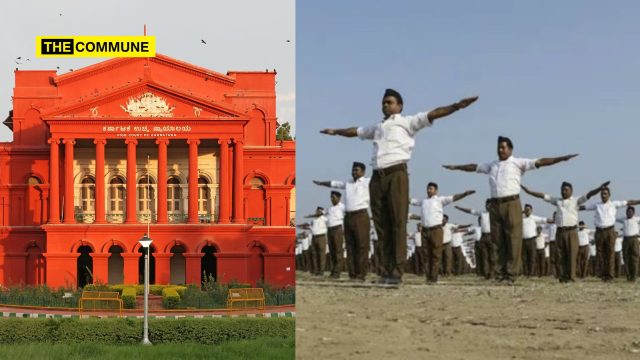
Bombay HC Raps Maharashtra Govt Over Traffic Chaos, Sets 3 PM Deadline To Clear Maratha Quota Protesters

Giving time till 3 p.m. to restore normalcy, the Bombay High Court on 2 September pulled up the Maharashtra government for laxity in removing Maratha quota protesters’ nearly 5,000 vehicles choking Mumbai roads.

A bench of Chief Justice Chandrashekhar and Justice Aarti Sathe told state government counsel Satish Maneshinde, “We should not see any vehicle of the protestors when we leave the court today.” “The roads should be freed of congestion as fast as possible; otherwise, strict action will be taken,” said the bench, directing the government to take whatever urgent measures are needed to restore order in the city.

“We want normalcy. Let the state government give a report by 3 p.m. on what action has been taken. Tell us which vehicles are allowed, and which are banned,” said CJI Chandrashekhar. Seeking data on the number of protestors’ vehicles and their drivers, the court said, “What action have you taken so far. Have you made any video… How many schools have been ordered shut? People are afraid of stepping out of their homes.” Venting its anger on the alleged laxity of the authorities in controlling the unruly protestors and the resultant congestion on Mumbai roads, the bench said, “There is no space for vehicles on the road. There is no space for judges to move around in court.”

Mumbai Police on 2 September served a notice to pro-Maratha quota activist Manoj Jarange-Patil to vacate Azad Maidan as soon as possible, saying that due to repeated violations by his supporters, the protest permission cannot be continued. The police move came a day after the Bombay High Court order asking the state government to maintain law and order during the protest.

Jarange-Patil, who has launched an indefinite fast from 29 August, demanding reservation for the Maratha community from the OBC quota, has declared that he won’t leave Mumbai until the state government implements the reservation. The Mumbai Police, in its notice, said, “The terms and conditions laid down for the protest have been violated. Therefore, Azad Maidan should be vacated as soon as possible.”

The police said that they have taken a serious note of statements made by Jarange-Patil to the print and electronic media. Since 1 September morning, a large number of pro-Maratha reservation activists and Jarange-Patil’s supporters have started arriving at Azad Maidan, causing huge traffic jams on roads connecting south Mumbai from the eastern express highway and Atal Setu.

-IANS

Subscribe to our channels on TelegramWhatsApp, and Instagram and get the best stories of the day delivered to you personally.
Forensic Doctors Assigned To PHCs In Tamil Nadu Despite Vacancies In Medical Colleges

forensic doctor phc

In a shocking revelation, despite being trained to handle medico-legal duties such as autopsies and forensic examinations, eight doctors with postgraduate degrees in forensic medicine are currently stationed at Primary Health Centres (PHCs) across Tamil Nadu. Instead of using their specialized training, they are attending to general outpatient cases, including fevers, coughs, and antenatal care.

This situation arises at a time when government medical colleges in the state are facing a significant shortage more than 70 positions for assistant professors and senior residents in forensic medicine remain vacant, out of 265 sanctioned posts.

Due to the absence of a distinct recruitment channel for specialists in Tamil Nadu’s medical services, many postgraduates with MD or MS degrees have had to apply through the Medical Services Recruitment Board (MRB) exam meant for assistant surgeons a position typically requiring only an MBBS qualification.

Among those affected are doctors who completed an MD in forensic medicine and cleared the 2025 MRB examination. They were subsequently posted to PHCs under the Directorate of Public Health and Preventive Medicine. Their current responsibilities include routine outpatient care, antenatal screenings, and school health checks roles far removed from their core forensic training.

“We are trained to manage medico-legal responsibilities like autopsies, age assessments, and examinations in cases of sexual assault, as well as to serve as expert witnesses in court. But with the specialist MRB exam discontinued years ago, our only option was to enter through the general assistant surgeon recruitment process,” said one of the affected doctors.

Many of them had previously worked in government hospitals as Non-Service Postgraduates (NSPGs) during their bond period, but mechanisms that once allowed for regular absorption of NSPGs into the system have been phased out, further narrowing their career prospects.

Uneven Transfers Raise Concerns

In recent months, other specialists including gynaecologists, paediatricians, anaesthetists, and general medicine doctors who were recruited via MRB and posted to PHCs have been transferred to government hospitals under the Directorate of Medical and Rural Health Services (DMS). Over 350 such transfers have reportedly taken place. However, forensic specialists remain excluded from these relocation opportunities despite repeated representations.

“Just last week, some general surgery and medicine doctors were moved to DMS hospitals through counselling, but our requests to be posted in medical college hospitals have gone unanswered,” another doctor pointed out.

Department Aware, May Initiate Counselling

Sources within the Health Department suggested that counselling sessions may be organized to reassign specialists recruited through the 2025 MRB exam, ensuring that in-service doctors’ seniority and placement rights are preserved while also addressing the high number of vacancies in specialty departments.

Officials confirmed that the department is reviewing batch-wise lists of doctors and noted that another batch of in-service postgraduates is expected to complete their training by October, which may provide an opportunity to fill some of the remaining vacancies.

(With inputs from The Hindu)

Subscribe to our channels on TelegramWhatsApp, and Instagram and get the best stories of the day delivered to you personally.
‘I May Forgive, Bihar Won’t’: PM Modi Gets Emotional Over Abuses Targeting Late Mother

pm modi mother abuse bihar

Prime Minister Narendra Modi on 2 September 2025 turned emotional while sharing his pain and anguish over name-calling of his late mother from the Congress-RJD stage during their recent ‘Voter Adhikar Yatra’ in Bihar. His emotional outburst, during a virtual address to the Jeevika Didis, was, however, marked with a warning “he may forgive the abusers, but the people of Bihar and Bharat won’t”.

It was during the launch of Bihar Rajya Jeevika Nidhi Saakh Sahkari Sangh, a platform that will help Jeevika Didis with funds, that the Prime Minister looked visibly moved while sharing his agony and suffering on his late mother getting abused and humiliated on a political stage. “You all know that my mother is no longer in this world. Some time ago, after completing 100 years of age, she left us all. My mother, who had nothing to do with politics, was subjected to vile abuses from the RJD-Congress platform. This is deeply saddening, painful, and distressing,” PM Modi said.

What was the fault of that mother that she was made to hear such vile abuses?” he asked. Abuses were hurled at the Prime Minister’s mother during the Voter Adhikar Yatra in Bihar’s Darbhanga, from the stage featuring Rahul Gandhi and Tejashwi Yadav’s posters; however, neither of them was present at the venue when the incident happened. Slamming the Congress-RJD alliance, PM Modi said the mentality that abuses mothers, the mentality that abuses sisters looks down upon women as weak human beings. It is this mindset that treats women as objects of exploitation and oppression.

The Prime Minister further said that whenever the dispensations with anti-woman mentality have come to power, “our mothers, sisters, daughters have had to endure the most suffering”. PM Modi further stressed the respect given to mothers, particularly in Bihar, where ‘Chhatti Maiya‘ is worshipped, and stated that people won’t forgive such abusive acts. “I want to tell those who abused my mother in front of the people of Bihar — Modi might forgive you once, but the land of Bihar and India has never tolerated the insult to a mother,” he said.

PM Modi also asked people to demand answers from the RJD and Congress over abusive slogans against mothers during all upcoming public meetings and rallies. Notably, the person who hurled expletives at PM Modi’s mother was arrested days later, but RJD or Congress have yet to express regret or tender an apology over the incident.

-IANS

Subscribe to our channels on TelegramWhatsApp, and Instagram and get the best stories of the day delivered to you personally.
Deletion Requests Outnumber Inclusions 6:1 In Bihar Voter List Update, ECI Tells Supreme Court

eci voter list supreme court

In a recent submission to the Supreme Court, the Election Commission of India (ECI) disclosed that during the Special Intensive Revision (SIR) of electoral rolls in Bihar, requests for the deletion of names far exceeded those seeking inclusion by nearly six times between 22 and 30 August 2025.

This period followed the apex court’s decision on 22 August 2025, which allowed voters to use Aadhaar as a standalone identity document when filing claims or objections under the ongoing revision drive. While this move was expected to ease the process and boost inclusion applications, actual numbers told a different story.

The ECI reported that only 22,723 requests for inclusion were submitted during that week, in contrast to a staggering 1,34,738 objections calling for name deletions from the draft voter list.

Representing the poll body, Senior Advocate Rakesh Dwivedi explained that many of these objections stemmed from voters identifying that their names were duplicated in other constituencies or needed removal due to reasons such as death or relocation.

Following the release of the draft electoral roll on 1 August 2025, approximately 65 lakh voters were removed, reducing Bihar’s voter count from 7.89 crore to 7.24 crore. The ECI noted these removals were largely due to duplication, permanent migration, or death.

Claims Still Open After September 1, Says ECI

During the hearing, petitioners including the Rashtriya Janata Dal (RJD), represented by Senior Advocate Shoaib Alam, and lawyers Prashant Bhushan and Neha Rathi, had sought an extension of the deadline to 15 September 2025, citing ongoing challenges.

However, the Election Commission clarified that while 1 September 2025 marked the formal end of the initial phase, claims and objections will still be accepted beyond this date. Any submissions made after the deadline would be processed post-finalisation of the electoral roll but before the final list is submitted at the time of nominations.

“The process for filing claims, objections, or corrections continues up to the last date for filing nominations. All changes will be reflected in the final roll,” the ECI explained in its note to the bench, led by Justices Surya Kant and Joymalya Bagchi.

Political Parties Criticised for Inaction

The ECI also raised concerns over the lack of involvement from most political parties. Apart from the RJD and the Communist Party of India (Marxist-Leninist) Liberation – CPI(ML-L), the commission stated that none of the other recognized parties had taken steps to assist excluded voters in filing Form 6, the official request for inclusion.

“Other than RJD and CPI(ML-L), no political party not even through their booth-level agents (BLAs) helped any of the nearly 65 lakh excluded individuals file their claims,” the ECI said, pointing out a major lapse despite having 1.6 lakh BLAs on the ground.

Parties named in the court order include: Aam Aadmi Party (AAP), Bahujan Samaj Party (BSP), Bharatiya Janata Party (BJP), Communist Party of India (Marxist) – CPI(M), Indian National Congress, National People’s Party (NPP), Janata Dal (United) – JD(U), Lok Janshakti Party (Ram Vilas) – LJP-RV, Rashtriya Lok Janshakti Party (RLJP), Rashtriya Lok Samta Party (RLSP)

During the claims period, the total forms received from all political parties stood at 128, 103 forms requested deletion and only 25 forms were for inclusion.

In contrast, individual voters were significantly more active, submitting, 33,326 inclusion forms, 2,07,565 deletion forms (Form 7)

Concerned by the apparent disconnect between voters and political parties, Justice Kant observed signs of a “trust deficit.” The bench directed the Chairperson of the Bihar State Legal Services Authority to mobilize paralegal volunteers across all districts. These volunteers are to assist individuals and parties in filing corrections, claims, and objections, and will be required to submit confidential reports to the respective District and Sessions Judges.

The ECI assured the court that 99.5% of the 7.24 crore voters listed in the draft roll had already provided their eligibility documents. The verification process for these submissions is currently underway and is expected to be completed by September 25, 2025, in line with the original SIR order dated June 26.

Additionally, the poll body noted that over 15.3 lakh newly eligible voters had submitted their applications to be added to the electoral roll for the first time.

(With inputs from The Hindu)

Subscribe to our channels on TelegramWhatsApp, and Instagram and get the best stories of the day delivered to you personally.
The Real Reason Trump Throws Tantrums At India

trump india pakistan tantrums

What happens when a 5-year-old child doesn’t get what it wants? First, it cries. When parents don’t relent, it starts throwing tantrums. A child can be forgiven, but what happens when the Head of State behaves that way? I have lost count of how many times the US President Donald Trump has openly expressed his craving for the Nobel Peace Prize.

It all started when he claimed to have stopped the India-Pakistan war in May 2025. This claim has no basis in truth. After being badly hit, Pakistan requested a ceasefire and India agreed. Trump has not succeeded in stopping the Russia-Ukraine war, yet. Iran-Israel war ended after heavy destruction on both sides.

In fact, the USA bombed military facilities in Iran. If at all, Trump stopped any wars, just 2 conflicts, the first between Thailand & Cambodia, and the second one between Rwanda & Congo come to mind. These, too, are not wars but just skirmishes.

It has become more routine for Trump to claim the coveted Nobel Peace Prize. Pakistan, Cambodia, Congo, and Israel have nominated Trump for the big prize, but the largest democracy in the world, India, hasn’t. It has emerged that Modi’s refusal to nominate Trump for the big prize has caused a big upset to POTUS.

India has also refused to acknowledge Trump’s bluff of having stopped the India-Pakistan war.  India has refused to allow the import of US farm produce and dairy products to India. Hence, Trump accused India of buying oil from Russia.  America’s double standard got exposed when Trump showed his helplessness, upon being asked about America’s import of Uranium and fertilizers from Russia. He has spared China, the largest importer of Russian Oil.

Trump called the Indian economy, a dead economy. His trade adviser, Peter Navarro, described the Russia-Ukraine war as Modi’s war, and he continues to make increasingly nonsensical arguments.” So, it is evident that it is not about India buying Russian oil, but it is more about personal ego.

It is clear that Trump tried to poke India by signing deals with Pakistan and also posted about investing in oil exploration in Pakistan. He nonchalantly commented that ‘India might be buying oil from Pakistan in the future’, a comment which invited laughs around the world.

Over the last four decades, Pakistan has announced the discovery of oil basins 10 times, explored 18 wells, but has extracted nothing. This was seen clearly as pressure tactics by the US to make India sign a deal, but Bharat, being Bharat, didn’t budge.

The world has rarely seen politicians who run after awards. No one has the right to demand any Prize; it has to be earned. But why is Trump behaving so indifferently to get nominated for the Nobel? The reason is Barack Obama, the First Black President of the USA, who got the Nobel Peace Prize in 2009.

The entire world knows about the dislike Trump has towards Barack Obama. It is not just political but more personal, if not racial. In 2011, Trump openly accused Barack Obama of being born in Kenya, and he also said, ‘Obama may be a Muslim’. Trump, of course, retracted his statements in 2016 but didn’t apologize for calling Obama an African.

Trump has a sense of discrimination against Black people. There have been so many incidents in the last few decades.

John O’Donnell, a former employee of Trump, in his book ‘Trumped! The Inside Story of the Real Donald Trump—His Cunning Rise and Spectacular Fall, co-authored with James Rutherford, alleges that Trump said, “Laziness is a trait in Blacks” and that Trump had a dislike for Black employees

Trump Management Company, whose head was Donald Trump, was sued by the U.S. Justice Department for showing discrimination towards Black applicants by marking ‘C’, meaning coloured on their applications.

Kip Brown, a former employee at Trump’s Castle, claimed in a 2015 New Yorker article that when Trump and his wife used to visit Casinos, Black employees were hidden from them. He said, “When Donald and Ivana came to the casino, the bosses would order all the Black people off the floor.”

In 2005, Trump pitched the idea of racially segregated teams for his reality show The Apprentice. He suggested having an “assortment” of Black contestants compete against an all-white team of blondes, an idea criticized as promoting racial stereotypes.

Even as recently as during his 2024 campaign, he attacked Diversity, Equity, and Inclusion (DEI) programmes. Indirectly, he highlighted that Blacks and minorities are less capable. A few media houses also have carried articles between 2016 and 2020 on how racist the President was in his private life.

These incidents give us an indication of Trump’s indifference to Black people. A few political commentators opine that Trump has yet to come to terms that Barack Obama, a Black has the Nobel Peace Prize, but he hasn’t. That is the reason he never misses an opportunity to express his craving for the piece of gold. If Bharat backs up his case, then it’s almost certain for Trump to win the Nobel Peace Prize, but Modi hasn’t batted an eyelid.

Experts say that the tariffs on India are not due to the import of Russian Oil but due to 3 other reasons, as mentioned earlier.

  1. India’s refusal to acknowledge Trump’s lie about stopping the India-Pakistan war, Bharat has clearly said No to any third-party mediation.
  2. India’s strong resistance against the farm and milk products of America.
  3. India not backing Trump for the Nobel Peace Prize nomination.

Hence, we get to see these tantrums by Donald Trump and his aides. There could be a fourth reason, too – Deep State elements in the US may have changed camp.

Whatever may come, we will stand tall. This is New Bharat.

Kannappan is a writer.

Subscribe to our channels on TelegramWhatsApp, and Instagram and get the best stories of the day delivered to you personally.
Social Media Influencer Kavya Karnatac Peddles Half-Truths About Mehr To Glorify Islam & Slander Hinduism

kavya karnatac mehr dowry islam hinduism

Over the past few years, social media users would have noticed a trend – the glorification of Islamic practices as inherently feminist and superior, often through a deliberate and sly comparison with distorted versions of Hindu customs.

In a recent video, self-styled influencer Kavya Karnatac who is known by her handle @kk.create, tried to glorify Islamic marriage by presenting Mehr as a woman’s golden ticket to security and independence. She confidently declared that brides receive mandatory payments in the form of cash, gold, or property, and that marriages can only happen if the bride agrees to it.

Sounds empowering… until you scratch beneath the surface. What Kavya is doing is not an objective discussion on women’s rights. It is a sly attempt to project Islam as superior for women while subtly painting Hindu traditions as regressive. But reality paints a very different picture.

While presenting this half-truth, she conveniently omits the grim realities millions of Muslim women face under the very same Personal Law system that governs Mehr.

This woman is a perfect example of Liberal sweet poison.

The Selective Showcase: The “Mehr” Half-Truth

The speaker correctly states that Mehr is a mandatory payment from the groom to the bride, enshrined in the marriage contract. She highlights that it becomes her exclusive property and is a debt upon the husband’s estate.

This is technically true. However, this rosy picture is a fraction of the whole story. What she deliberately omits is far more telling:

The Reality of “Deferred Mehr”

While Mehr can be paid upfront (Mu’ajjal), it is very often “deferred” (Mu’wajjal), meaning it is only payable upon divorce or the husband’s death. In practice, this means a woman may never see this money unless her marriage ends. It is not an empowerment fund she can access during the marriage for her needs or independence; it is often a theoretical safety net that is notoriously difficult to enforce legally without a prolonged court battle.

The Illusion of “Choice”

The speaker claims, “the bride can demand anything.” In reality, the amount is frequently negotiated by male guardians (wali), and societal and familial pressures often lead to women accepting token amounts to not appear “greedy” or to make the marriage easier for the groom. The idea of a woman freely dictating a high price is often a fantasy, not the norm.

A Right Does Not Equal Empowerment

Having a right on paper and having the social, legal, and financial agency to enforce it are two different things. For many women, claiming Mehr from a resistant husband or his family can mean inviting social ostracization and a grueling legal fight.

The Glaring Omissions: The Reality for Muslim Women Under Personal Law That Karnatac Will Not Discuss

While Kavya boasts about Mehr, she conveniently ignores the systemic inequalities that Muslim women face:

  • Polygamy Legal for Muslim Men – Under Muslim Personal Law in India, men are allowed four wives at a time. Hindu men are legally restricted to one wife. Which system respects women more?
  • Triple Talaq and Divorce Insecurity – Though “instant” triple talaq has been banned, Muslim men still hold disproportionate power in divorce. Women have far less autonomy and are often left vulnerable.
  • Halala Exploitation – In cases of divorce, women are sometimes forced into humiliating “Nikah Halala,” where they must marry another man, consummate the marriage, and then divorce again before returning to their first husband. This is sanctioned by certain interpretations of Sharia, not Hinduism. Research reveals that Nikah Halala has become a commercial enterprise where “professional Maulvis” charge between ₹20,000 to ₹1.5 lakh for facilitating what amounts to legalized rape. Women are forced into temporary marriages, sexually exploited, and then divorced; all to satisfy male egos and religious technicalities. A 2022 case exposed how a woman was gang-raped by her former husband and others under the guise of Nikah Halala, while another incident involved a woman being forced into this practice after her husband lost her to a friend in gambling. These aren’t isolated incidents but systematic exploitation enabled by Islamic personal law.
  • Inheritance Inequality – Muslim women inherit only half of what male heirs receive, whereas Hindu daughters now enjoy equal inheritance rights under the Hindu Succession Act.
  • Hijab and Control Over Women’s Bodies – From Iran to India, Muslim women are pressured or forced to wear hijab, niqab, or burqa—often not out of choice but compulsion. Hindu women, despite social pressures, face no such legal impositions.
  • Mehr as Illusion – While marketed as “mandatory security,” Mehr is often set at token amounts in many Muslim marriages (sometimes as little as a few rupees) and deferred indefinitely. Many women never actually see it. In reality, it’s a paper shield, not real empowerment.
  • Custody Rights (Hizanat) – The mother’s right to custody of her children is often limited to a very young age (usually 7 years for boys, puberty for girls), after which custody typically reverts to the father.
  • Legal Battles for Equality – Muslim women’s groups have repeatedly had to go to court (e.g., Shah Bano, Shayara Bano cases) to demand basic rights—alimony, equality, dignity. Hindu women already enjoy such protections under codified Hindu law.

To promote Islamic marriage as the “best thing for a woman” while ignoring these patriarchal pillars is pure dishonesty on Karnatac’s part.

The Sly Dig: The False Equivalence with “Dowry”

The most insidious part of this narrative is the sly, derogatory comparison with Hinduism. The speaker sets up a strawman: “Is dowry only given to the boys? No.” This implies that Hindu marriages are solely defined by the illegal practice of dowry (giving from the bride’s family to the groom’s), while Islamic marriages are defined by the “gift” of Mehr to the bride.

This is a malicious false equivalence. it is a deliberate attempt to make one faith look inherently oppressive and the other inherently progressive.

Furthermore, she completely ignores the concept of Stridhan in Hindu law, which is the woman’s exclusive property – gifts given to her by her parents, relatives, and husband before, during, and after marriage. This, like Mehr, is her absolute right. But acknowledging this would ruin the false narrative.

By glorifying Mehr, Kavya Karnatac indirectly suggests that Hindu traditions shortchange women. This is a distortion and a half-truth:

  • Hinduism does not mandate dowry; it condemns it. Dowry is a social evil, not a religious requirement. Kavya conveniently ignores this.
  • Hindu law ensures equal rights of inheritance, monogamy, alimony, and maintenance – clear legal safeguards that Muslim women are still fighting for.
  • Hindu marriages treat women as equal legal partners, not as dependents subject to religiously sanctioned male control.
Final Word

If Kavya Karnatac truly cared about women’s rights, she would speak about the urgent reforms Muslim women desperately need such as ending polygamy, abolishing halala, ensuring equal inheritance, and enforcing Mehr properly. Instead, she cherry-picks half-truths to romanticize Islam and subtly insult Hinduism. Empowerment is not about covering up oppression with pretty words. It’s about confronting injustice honestly – something Kavya will never do.

Subscribe to our channels on Telegram, WhatsApp, and Instagram and get the best stories of the day delivered to you personally. 

TN-CERT Blocks Over 80,000 Suspicious IP Addresses To Strengthen Cybersecurity

ip address

Tamil Nadu’s Information Technology Minister, Palanivel Thiagarajan, has announced that the state has taken proactive measures to bolster cybersecurity by blocking over 80,000 suspicious IP addresses through the Tamil Nadu Computer Emergency Response Team (TN-CERT).

In a recent statement, the Minister highlighted that the state’s first Cyber Security Policy was introduced in 2020, aimed at safeguarding its digital infrastructure and IT services. Recognizing the evolving nature of cyber threats and the rapid growth of technologies such as cloud computing, the government introduced an updated Cyber Security Policy 2.0 in 2024. This updated framework includes modern security practices tailored to today’s digital landscape.

To implement this policy effectively, the Department of Information Technology and Digital Services established TN-CERT, in partnership with ELCOT and the Advanced Computing Development Centre. This dedicated team functions as an autonomous unit, supporting all government departments in managing and protecting their digital assets.

Currently, TN-CERT is responsible for overseeing the cybersecurity of over 500 government websites and maintaining around 1,200 IT assets across departments. To build cyber awareness and preparedness, the team has conducted 130 specialized training programs, reaching 3,200 government officials.

Furthermore, the state has appointed 36 Chief Information Security Officers (CISOs) and 103 Information Security Officers (ISOs) to various departments to ensure continuous oversight and rapid response to potential threats.

Among the significant achievements highlighted was the identification and blocking of 80,039 potentially harmful IP addresses unique identifiers for devices connected to the internet that posed a threat to the state’s digital ecosystem.

These efforts reflect Tamil Nadu’s growing emphasis on cybersecurity and digital resilience as it continues to expand its digital infrastructure.

(With inputs from Hindu Tamil)

Subscribe to our channels on TelegramWhatsApp, and Instagram and get the best stories of the day delivered to you personally.