A political firestorm over religion, sparked by Vice President JD Vance’s comments about his Hindu wife, has escalated after MAGA commentator and activist, Trump ally Dinesh D’Souza was caught in a stark contradiction about his own family’s history while leaping to Vance’s defense.
The controversy began when Vance, a baptized Catholic, stated in an interview that he hoped his wife, Usha Vance, who comes from a devout Hindu family, would one day convert to Christianity. The remark was widely criticized as dismissive of her faith.
In an attempt to shield the Vice President from the backlash, D’Souza, a prominent MAGA commentator of Indian origin, entered the fray. He argued that it is natural for a Christian to want their spouse to share their faith, calling it an “expression of love.”
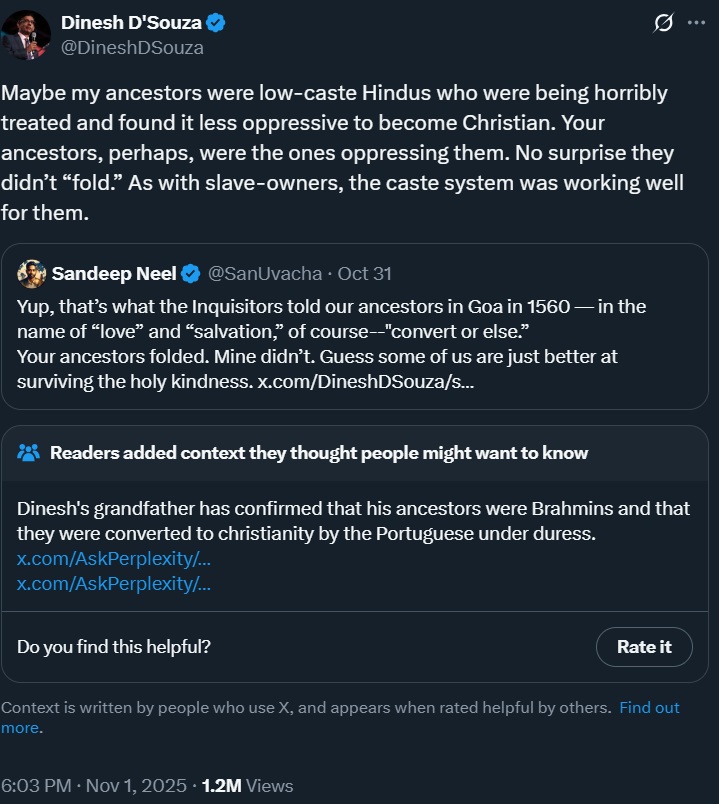
However, his defence took a controversial turn when he invoked India’s caste system. In a social media post, D’Souza wrote, “Maybe my ancestors were low-caste Hindus who were being horribly treated and found it less oppressive to become Christians. Your ancestors, perhaps, were the ones oppressing them.”
This claim was immediately challenged by social media users and critics who pointed to D’Souza’s own prior writings. In his 2007 memoir, What’s So Great About Christianity, he presented a different narrative, explicitly writing that his grandfather had told him their ancestors were Brahmins—a priestly caste at the top of the traditional hierarchy.
Hi Dinesh. This is from your book, “What’s so great about America”. In your book, page 83 to be precise, you mention that your family was a Brahmin family. I understand you need to justify your ancestor’s cowardice (or greed). But at least be factual https://t.co/MdFYhbFwMypic.twitter.com/yHZxe34oRL
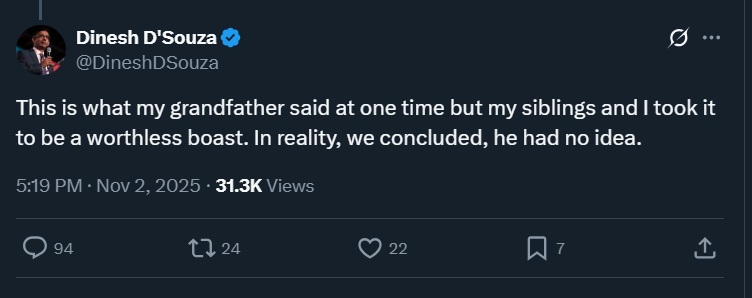
Faced with the direct contradiction, D’Souza performed a public about-face, dismissing his own previously published account as a fabrication saying, “This is what my grandfather said at one time but my siblings and I took it to be a worthless boast. In reality, we concluded, he had no idea.”
The flip-flop has drawn sharp criticism, with observers accusing D’Souza of fabricating a narrative of ancestral oppression to score political points in the Vance debate.
For a guy who prides himself on being good at debating, Dinesh has a hard time being truthful even to himself. https://t.co/FBCzA1ukVc
The so called ‘caste oppression’ must not have existed if the ‘trauma’ was forgotten in couple of generations and he forgot what caste he belonged to. Also good job putting your own grandfather under the bus. This is an exact definition of erasure of identity. And this is how… https://t.co/xUQHqL8dQb
A report published on 24 October 2025, stated that nearly 4,400 people in Italy have suffered sex abuse by Catholic priests since 2020, according to figures released by the victims’ organization Rete l’Abuso. This situation highlights the ongoing italian church sex scandal.
This report compiles 20 documented incidents of sexual abuse committed by Catholic and Evangelical clergy in Italy between 2010 and 2025. The cases involve victims across all demographics – women, children, men, and migrants revealing a pattern of exploitation by religious figures who abused their spiritual authority, contributing to the italian church sex scandal. These incidents, drawn from court records and news reports, highlight systemic issues within Christian institutions, including the shielding of accused clergy and the failure to protect vulnerable communities.
#1 Jesuit Priest Expelled for Abuse of Women
In June 2023, Rev. Marko Ivan Rupnik, a prominent Jesuit priest and artist, was expelled from the Jesuit order following allegations from multiple adult women of sexual, spiritual, and psychological abuse spanning 30 years. The victims reported that Rupnik used his position to manipulate them. Despite a 2020 excommunication for misusing the confessional for a sexual relationship – a penalty quickly lifted, church authorities initially ignored complaints. His expulsion came only after he refused to address the allegations.
#2 Priest Accused of Pimping and Orgies
In January 2017, Father Andrea Contin, a parish priest in Padua, was suspended after allegations emerged that he pimped around 15 women and organized sexual orgies in his rectory. Police found sex toys and homemade pornography, some labeled with papal names. Contin advertised the women’s services online and planned a trip to a swingers’ resort in France. The case exposed how clerical positions were exploited for illicit activities.
#3 Franciscan Priest Rapes Nun
In January 2006, Father Francesco Bisceglia and his deputy, Antonio Gaudio, were arrested in Cosenza for forcing a nun into sexual orgies at a Franciscan monastery. The victim reported being filmed while raped by multiple men. Police collected videotapes as evidence. This case, predating the report’s timeline but included for context, illustrates the extreme vulnerability of even religious insiders to exploitation and the brutal mechanisms of silence and power abuse within monastic settings.
#4 Calabria Priest Abuses Teenage Boy
In July 2025, a parish priest in Calabria was arrested for sexually abusing a 16-year-old boy from 2015 to 2020. The priest exploited the victim’s difficult family situation, assaulting him during Church-organized activities. The arrest followed a complex police investigation, which also implicated another priest in northern Italy for similar crimes.
#5 Brescia Priest Preys on Altar Boys
In April 2025, Don Ciro Panigara, 48, was placed under house arrest for aggravated sexual violence against multiple boys aged 10–12. The abuse occurred during parish activities between 2011–2013 and again in 2024. Panigara resigned in January 2025 when complaints surfaced. His case revealed how perpetrators repeatedly target young boys in trusted roles, with legal action often lagging behind years of predatory behavior.
#6 Elderly Pastor Abuses 7-Year-Old Girl
In August 2024, an 83-year-old former Evangelical pastor was placed under house arrest in Trento on allegations of sexually abusing a seven-year-old girl in December 2022. The case came to light after a volunteer from the Catholic charity Caritas reported the incident to authorities. According to the report, the father of the victim, a family originally from Cameroon residing in a local community, had confided the details of the abuse to the volunteer. The alleged assault took place while the girl and her family were staying in a community within the Trentino region. Following the report, the Trento police moved swiftly to investigate the claims, resulting in the former pastor’s arrest.
#7 Italian Priest Arrested on Charges of Sexually Abusing Minor
Father Andrea Melis, a 60-year-old priest and former director of a Catholic school, was arrested in August 2024, on serious allegations of sexually abusing an adolescent boy over a period of more than three years. The abuse reportedly began when the victim was just 12 years old. According to investigators, Father Melis used his position to groom the boy, offering him gifts in exchange for sexual favors. The gifts included electronic cigarettes, prepaid credit cards, brand-name clothing, dinners, and video games. Father Melis held significant authority within the Catholic community, having served not only as a school director but also as the head of a federation of Catholic schools. Following the allegations, both the Archdiocese of Genoa and his religious order, the Piarist Fathers, had already suspended him from all assignments in accordance with church protocols prior to his arrest.
#8 Priest Sentenced for Abusing 13-Year-Old
In May 2024, Don Livio Graziano was sentenced to eight years for repeatedly abusing a 13-year-old boy entrusted to his care. The abuse was uncovered when the boy’s father noticed behavioral changes and found incriminating messages. Police also recovered €107,000 in the priest’s room. The Court of Cassation upheld the sentence, emphasizing the gravity of breaching pastoral trust for sexual exploitation.
#9 Catholic Priest in Sicily Sentenced to Prison for Sexual Abuse of Minor
A Catholic priest was convicted and sentenced for the sexual abuse of a minor, following a years-long pursuit for justice by the victim. Father Giuseppe Rugolo was found guilty by a court in Enna in March 2024, for crimes of sexual violence committed against Antonio Messina. The abuse occurred over a four-year period, from 2009 to 2013, while Messina was a minor and Rugolo was serving as a priest. The case came to light in 2020 when Messina, then 30 years old, took the extraordinary step of writing a direct letter to Pope Francis to report the abuse and demand justice. He subsequently filed a formal complaint with law enforcement, leading to Rugolo’s arrest in 2021 and his placement under house arrest. After legal proceedings, the court delivered its verdict, sentencing Father Rugolo to four and a half years in prison. In addition to the prison term, the court imposed significant restrictive measures: a permanent ban from teaching and a five-year prohibition from holding any public office.
#10 Vatican’s First On-Site Abuse Conviction
In a historic ruling, an Italian priest was convicted by a Vatican court for sexually abusing a fellow seminarian, marking the first-ever such conviction for a crime committed within the Vatican’s walls. Gabriele Martinelli, 31, was found guilty in January 2024, of molesting an underage student at the Saint Pius X Pre-Seminary, where both were residing in August 2010. The abuse occurred while Martinelli, then a senior student, was serving as a tutor to the younger victim. The Vatican tribunal sentenced Martinelli to two years and six months in prison. This case represents a significant moment for the Holy See’s judicial system, as it was the first time the Vatican has prosecuted and convicted someone for sexual abuse that took place on its own territory.
#11 Italian Priest Arrested After Victim Records Sexual Abuse on Phone
A parish priest was arrested in November 2019 for the sexual abuse of an 11-year-old girl, after the victim took the extraordinary step of recording the assault on her mobile phone when adult parishioners refused to believe her initial reports. Father Michele Mottola, the parish priest of Trentola Ducenta near Naples, was suspended by the Catholic Church in May 2019 following initial allegations. However, his arrest in November came only after the girl’s secretly recorded evidence was broadcast on the national current affairs program Le Iene. The recordings provided damning evidence of the abuse. In one clip, the priest is heard saying, “Do you want a kiss?” and “There is no one here. Are you afraid? Kiss me, hug me.” A second recording captured the sound of heavy breathing and the girl’s clear protests. The victim, hailed as a hero for her courage and presence of mind, had turned to recording the incidents after her initial reports to adult members of the parish were dismissed. Her actions provided the crucial evidence needed for authorities to take immediate action, leading directly to Father Mottola’s arrest.
#12 Florentine Priest Sentenced to Prison for Abuse of 10-Year-Old Girl
Don Paolo Glaentzer, a 70-year-old parish priest from the San Rufignano Church in the Florence diocese, was sentenced to over four years in prison for the abuse of a 10-year-old girl. The case came to light after the priest was discovered naked in a car with the young victim. In March 2019, the court found him guilty and imposed the prison sentence, additionally ordering him to pay €50,000 in damages to the victim. During court proceedings, Glaentzer’s defense claimed that he had believed the girl was 15 years old. The court rejected this justification in delivering the guilty verdict.
#13 Vatican Diplomat Sentenced to Prison in Child Pornography Case
In a significant ruling, a Vatican court sentenced a former diplomat to five years in prison for possessing and distributing child pornography. Carlo Alberto Capella, a 51-year-old Italian priest who served at the Vatican’s embassy in Washington, D.C., pleaded guilty to the charges. The case against Capella was built after authorities discovered more than 40 illicit photos and videos on his mobile phone. The material included depictions of sexual contact between adults and prepubescent children. Capella was taken into custody in April 2018. His conviction on 23 June 2018, represented a direct application of the Vatican’s strengthened legal framework, specifically laws introduced in 2013 to combat child sexual abuse and the circulation of child sexual abuse material.
#14 Italian Bishop’s Spokesman Arrested for Sexual Abuse of Minor
Father Giangiacomo Ruggieri, a 43-year-old Catholic priest who served as the bishop’s spokesman for the Diocese of Fano, was arrested on charges of sexually abusing a 13-year-old girl. The arrest on 4 May 2018, has sent shockwaves through the local community, where Ruggieri was well-known and actively engaged with youth, earning him the nickname “the young people’s priest.” Following the allegations, the Diocese of Fano suspended Ruggieri from all his duties. Italian police launched a formal investigation into the case, which included a raid on the priest’s home and the seizure of his computer as part of their evidence-gathering process.
#15 Italian Priest Arrested for Using ‘Holy Oil Ritual’ to Sexually Abuse Minors
Father Pio Guidolin, a Catholic priest, was taken into custody by the Carabinieri on 1 December 2017, on charges of sexually abusing boys under the age of 14 by manipulating them through a perverted religious ritual. According to a police investigation, the abuse occurred in 2014. Father Guidolin allegedly targeted vulnerable boys who were dealing with family issues. He is accused of religious manipulation, telling his victims that sexual acts were “acts of purification capable of easing their inner suffering.” To legitimize the abuse, he covered the boys in holy oil from his church. The investigation further revealed that Guidolin used threats to silence the boys and prevent them from reporting the abuse.
#16 Italian Priest “Don Mercedes” Convicted for Sexually Abusing Minors
A local court found priest Mauro Inzoli, a 67-year-old cleric widely known by the nicknames “Don Mauro” and “Don Mercedes,” guilty of sexually abusing minors. The verdict, delivered on 18 June 2017, concludes a significant case involving the abuse of children aged 12 to 16. The conviction covers eight separate counts of sexual abuse that took place between 2004 and 2008. During the legal proceedings, it was revealed that Inzoli had paid a total of $28,000 in compensation to five of his victims. The case against Inzoli, which had drawn considerable attention for the priest’s flamboyant nickname and the severity of the charges, concluded with the guilty verdict.
#17 Sicilian Priest Posing as Exorcist Arrested for Sexual Molestation
Salvatore Anello, a 59-year-old Catholic priest, was arrested on charges of sexually molesting five individuals, including a 12-year-old girl, by exploiting his claimed role as a healer and exorcist. The arrest, carried out on 21 October 2016, by the state police’s child protection unit at a Capuchin convent, followed allegations that Anello targeted vulnerable individuals seeking spiritual help. The victims, which included four adult women and the minor, were often in psychologically unstable states or suffering from serious illnesses. Anello allegedly manipulated them by claiming he could free them from demonic possession through “healing prayers,” which he then used as a pretext for sexual assault. In a swift response, the Diocese of Palermo confirmed that Anello was never authorized to perform exorcisms.
#18 Founder of Drug Rehab Centre Charged with Abuse
In June 2010, in Amelia, Umbria, 85-year-old Pierino Gelmini, a former Catholic priest and founder of the “Comunita Incontro” drug rehabilitation network, was charged with sexually abusing 12 young people at his centre. The allegations first emerged in 2008 when nine young men came forward; three more victims reported later. Gelmini, once a prominent figure in Italy’s anti-drug movement, used his position of authority within the treatment facility to prey on vulnerable residents. An official investigation into the widespread abuse at the rehab centres he founded was underway.
#19 Prison Chaplain Arrested for Abusing Inmates
In 2012, Father Alberto Barin, a 51-year-old Roman Catholic chaplain at Milan’s San Vittore prison, was arrested for demanding sexual favors from at least six male inmates. The victims were non-Italian prisoners jailed for minor crimes. Barin exploited his position, offering cigarettes and basic hygiene items like soap and shampoo in exchange for sex. He even demanded sexual acts as “repayment” for helping with early releases. The arrest followed an inmate’s complaint, which led to an investigation where hidden cameras placed in his office confirmed the allegations of systematic exploitation and abuse.
#20 Charity Director Preyed on Migrants for Sex (2014)
Reverend Sergio Librizzi, a Catholic priest and Director of Caritas in Trapani, Sicily, was arrested for exploiting migrants and the poor. Librizzi demanded sexual favors from vulnerable individuals seeking asylum assistance, residency visas, and charity aid from his organization. He was accused of at least 10 episodes of sexual violence since 2009. Authorities arrested him at his parish while he was preparing for Mass. Following the arrest, he was suspended from his duties. Investigators made a further discovery of 10,000 euros in cash in his church.
Subscribe to our channels on WhatsApp, Telegram,Instagram and YouTube to get the best stories of the day delivered to you personally.
General Zia-ul-Haq’s doctrine of “strategic depth” promised Pakistan security against India through control over Afghanistan. Four decades later, it has delivered only chaos, radicalization, and a collapsing state.
When Pakistan’s military ruler General Zia-ul-Haq conceived the doctrine of strategic depth in Afghanistan during the late 1970s, it was hailed within Rawalpindi’s corridors as a stroke of genius, a long-term plan to secure Pakistan’s vulnerable western flank, expand its influence into Central Asia, and neutralize the perennial threat from India. In this vision, Afghanistan would become both Pakistan’s ideological buffer and its geopolitical backyard. But history has a brutal sense of irony. What was once imagined as Pakistan’s path to regional dominance has turned into the very instrument of its undoing. Today, Afghanistan stands not as Pakistan’s strategic depth but as its strategic death, a mirror reflecting Pakistan’s own self-destruction.
The Roots of an Illusion
Pakistan’s fixation with Afghanistan predates Zia’s military regime. The seeds of paranoia were sown in the early years after independence. From 1947 onwards, Afghanistan refused to recognize the Durand Line as a legitimate border and instead supported the concept of Pashtunistan, claiming Pakistan’s North-West Frontier Province (now Khyber Pakhtunkhwa) and parts of Balochistan as its own. These irredentist claims led to repeated diplomatic ruptures, including the severance of relations in 1955 and 1962. For a fragile new state already obsessed with the Indian threat on its eastern frontier, the specter of an unfriendly Afghanistan on its west was intolerable.
By the time the Soviet Union invaded Afghanistan in 1979, Pakistan’s military establishment saw an unprecedented opportunity. General Zia-ul-Haq, a hardline Islamist and master manipulator of Cold War geopolitics, perceived the Afghan jihad not merely as an anti-Soviet campaign but as a vehicle for Pakistan’s grand ambitions. With massive U.S. and Saudi funding, Zia sought to create a pliant, pro-Pakistan regime in Kabul that would forever silence Afghanistan’s territorial claims and extend Islamabad’s influence deep into Central Asia.
Zia’s generals rationalized this policy with strategic logic. They argued that Pakistan’s narrow geography made it vulnerable to India. In the event of a war, a friendly Afghanistan would provide the Pakistani army “space to fall back” and regroup. But beneath this military jargon lay a deeper ideological project to Islamize both Pakistan and Afghanistan under the banner of a shared jihadist identity that could serve as Pakistan’s tool for regional dominance.
The late Pakistani scholar Eqbal Ahmed warned against this dangerous delusion, calling Pakistan “a country caught in an iron web of wrong assumptions, magmatic concepts, failed policies, and increased sectarian violence.” His words now read like prophecy.
The Mirage of Strategic Depth
The entire doctrine was built on a fatal misreading of history and geography. Real security does not come from manipulating neighbors or nurturing militias; it comes from internal cohesion, economic strength, and peaceful diplomacy. Zia’s Pakistan ignored this fundamental truth and instead chose to export instability under the banner of “Islamic solidarity.”
During the 1980s, Pakistan became the primary conduit for U.S. and Saudi aid to the Afghan Mujahideen. The Inter-Services Intelligence (ISI) handpicked militant leaders like Gulbuddin Hekmatyar, funnelling weapons and money to factions that promised loyalty to Islamabad. Yet as soon as the Soviets withdrew and the Afghan factions began fighting each other, Pakistan’s dream of controlling Kabul began to unravel.
Seeking to impose order, the ISI midwifed the rise of the Taliban in the 1990s—a movement of Pashtun seminarians trained in Pakistan’s Deobandi madrassas. Initially, Islamabad viewed the Taliban as obedient protégés who would secure Pakistan’s western border and grant it leverage over India. But this illusion crumbled swiftly. Once in power, the Taliban refused to recognize the Durand Line, rejecting Pakistan’s territorial claims. They also began fostering a radical Pashtun Islamic identity that transcended borders, seeping back into Pakistan’s own Pashtun regions.
Even worse, the Taliban gave ideological and logistical sanctuary to extremist Sunni groups such as Lashkar-e-Jhangvi and Sipah-e-Sahaba, whose sectarian terrorism plunged Pakistan into internal bloodshed. What was meant to be a forward defense became an inward contagion. Instead of exporting jihad, Pakistan imported it.
ISI: A State Within a State
No institution embodies Pakistan’s Afghan misadventure more than the Inter-Services Intelligence. During the Afghan jihad, the ISI evolved from a mere intelligence agency into a parallel state apparatus. Flush with U.S. dollars and Saudi riyals, it acquired unaccountable power and ideological autonomy. Under Zia’s patronage, the ISI fused Islamist zeal with Cold War opportunism, building networks of militants and madrassas that operated outside civilian oversight.
When Zia died in a plane crash in 1988, the ISI had become a monster too large for any civilian government to control. Its Afghan policy splintered into competing fiefdoms, each pursuing its own factional agenda. Many ISI officers, themselves Pashtuns and steeped in jihadist ideology, began to identify more with the Taliban than with Pakistan’s national interest. “These officers became more Taliban than the Taliban,” one ISI veteran admitted to author Ahmed Rashid.
This ideological capture destroyed the agency’s analytical capacity. Strategy gave way to dogma. Instead of recalibrating after 9/11, Pakistan doubled down, playing a duplicitous game of supporting the U.S.-led “War on Terror” while secretly sheltering Taliban elements. The short-term tactical success of keeping Western funds flowing only deepened Pakistan’s long-term strategic disaster.
Talibanization and Internal Collapse
When the Taliban retook Kabul in 2021, Pakistan’s generals once again celebrated, claiming vindication of their decades-long pursuit of “strategic depth.” But within months, the euphoria evaporated. The Taliban refused to recognize the Durand Line, engaged in deadly clashes with Pakistani forces, and allowed the Tehreek-e-Taliban Pakistan (TTP) to operate freely from Afghan soil.
For Islamabad, the nightmare had come full circle. Afghanistan was no longer a buffer; it was a base for Pakistan’s internal enemies. The very militants Pakistan had nurtured now targeted its soldiers, schools, and civilians. The porous frontier became a revolving door for weapons, narcotics, and radical ideology.
The Talibanization of Pakistan is now an undeniable reality. In Khyber Pakhtunkhwa and parts of Balochistan, local Taliban factions openly challenge state authority. Sectarian groups act with impunity, enforcing their version of Sharia and undermining the rule of law. Public sympathy for hardline Islamists runs deep, thanks to decades of state-sponsored radicalization.
Meanwhile, Pakistan’s economy has collapsed under debt and mismanagement, its politics are paralyzed by civil-military tensions, and its once-vaunted army now faces an existential crisis of legitimacy. As inflation soars and governance crumbles, ordinary Pakistanis are left hostage to the chaos their rulers unleashed.
From Failed State to Dying State
Today, Pakistan stands perilously close to implosion, economically bankrupt, politically fractured, and ideologically consumed. The dream of “strategic depth” has degenerated into a nightmare of strategic death.
Far from expanding Pakistan’s influence, Zia’s vision has trapped the country in perpetual instability. To its west lies a hostile Taliban regime; to its east, an assertive India; to its southwest, an alienated Iran; and to its north, a disenchanted China increasingly wary of Pakistan’s internal chaos. Instead of being a regional pivot, Pakistan is now a regional liability.
This collapse is not a sudden accident but the cumulative outcome of decades of hubris. The military’s obsession with controlling Afghanistan, its cynical use of Islam as an instrument of power, and its relentless suppression of civilian politics have hollowed out the Pakistani state. Every attempt to use religious militancy as a tool of strategy has rebounded with deadly force.
As the French scholar Olivier Roy foresaw in 1997, “The de facto absorption of Afghanistan will accentuate centrifugal tendencies within Pakistan.” That centrifugal disintegration is now unfolding before the world’s eyes.
Conclusion: The Death of a Doctrine
The tragedy of Pakistan lies in its refusal to learn. The illusion of strategic depth was built on three fatal assumptions: that Afghanistan could be controlled, that religious extremism could be weaponized without consequence, and that India could be undermined through endless proxy wars. Each of these has proven disastrously false.
Afghanistan remains fiercely independent, its soil now a refuge for anti-Pakistan militants. Islamist extremism has metastasized within Pakistan, eroding the state’s coherence. And India, far from being destabilized, has emerged as a global power while Pakistan sinks deeper into isolation.
General Zia’s doctrine promised security through expansion but delivered insecurity through implosion. In the end, Afghanistan did not become Pakistan’s fortress; it became its graveyard.
The verdict of history is unforgiving: what Pakistan’s generals once hailed as strategic depth has turned out to be strategic death, a slow, self-inflicted unraveling of a nation that mistook fanaticism for foresight and illusion for strategy.
Dr. Prosenjit Nath is a techie, political analyst, and author.
Subscribe to our channels on Telegram,Instagram and YouTube to get the best stories of the day delivered to you personally.
On 8 October 2025, Masood Azhar, chief of Jaish-e-Mohammad, announced the launch of the group’s first women’s wing, Jamaat-ul-Mominaat, to be led by his sister Sadiya Azhar. Her husband, Yusuf Azhar, was killed during Operation Sindoor. The wing is reportedly aimed at expanding the organization’s outreach and recruiting women through social media platforms and madrasas.
From 2001 to 2025, Jaish-e-Mohammed (JeM) chief Masood Azhar has been a central figure in cross-border terrorism against India, with his activities revealing a complex web of support from Pakistan and diplomatic protection from China.
This report details 16 key incidents that illustrate Azhar’s alleged role in major attacks, the backing he received, and India’s multifaceted response, which has ranged from diplomatic campaigns to military strikes.
Masood Azhar’s Actions Against India
#1 JeM Forms First Women’s Wing
On 8 October 2025, Jaish-e-Mohammed chief Masood Azhar announced the formation of the group’s first women’s wing, ‘Jamaat-ul-Mominaat’. Led by his sister, Sadiya Azhar, the unit aims to recruit women through social media and madrasas, marking a significant tactical shift for the previously male-dominated terror outfit. The move is seen as a response to India’s Operation Sindoor, which targeted JeM’s headquarters. The wing was said tofocus on propaganda and targeting wives of members and economically disadvantaged women for recruitment, expanding the group’s operational reach.
#2 Commander Confirms Azhar’s Role in Major Attacks
On 17 September 2025, a JeM commander, Masood Ilyas Kashmiri, admitted in a video confession that Masood Azhar planned major terror attacks in India, including the 2001 Parliament attack and the 2008 Mumbai attacks, from his base in Balakot, Pakistan. The statement directly contradicted Pakistan’s long-standing denials of harbouring terrorists and confirmed Indian intelligence assessments that Azhar operated with the support of Pakistan’s military-security establishment, providing a rare, explicit link between the terrorist and the planning of these high-profile assaults.
#3 Mastermind of the 2019 Pulwama Attack
On 25 August 2020, Indian investigative agencies formally named Jaish-e-Mohammed chief Masood Azhar as the mastermind of the February 2019 Pulwama suicide bombing that killed 40 CRPF personnel. The findings concluded that Azhar, operating from Pakistan, used his network and digital communication to plan and direct the attack. This confirmation solidified India’s longstanding accusation against the terror chief and provided the impetus for subsequent diplomatic and military actions aimed at holding him and his organisation accountable for the devastating attack.
#4 Handlers of the Pathankot Airbase Attack
On 7 January 2016, Indian agencies identified Pakistan-based Jaish-e-Mohammad operatives, including Masood Azhar, as the handlers of the terror attack on the Pathankot Air Force base. Six JeM terrorists had crossed the border, leading to a three-day gun battle that killed seven Indian security personnel. India shared specific evidence with Pakistan, demanding the arrest of the perpetrators. This incident highlighted the continued use of Pakistani soil to launch attacks on critical Indian infrastructure and the challenges in securing meaningful cooperation from Islamabad.
#5 2001 Jammu & Kashmir Assembly Attack
On 1 October 2001, Jaish-e-Mohammad, led by Masood Azhar, carried out a suicide car bomb attack on the Jammu & Kashmir State Legislative Assembly in Srinagar. A vehicle laden with explosives rammed the main gate, killing 38 people, including civilians, while the attackers were killed in the ensuing gunfire. The brazen assault on a democratic institution was one of the deadliest attacks in the region at the time, firmly establishing JeM’s operational presence and Azhar’s role in orchestrating high-casualty terrorism in India.
How Pakistan Helped Masood Azhar
#6 Bilawal Bhutto Exposes Pakistan’s Double Stance
On 7 July 2025, Pakistan’s former Foreign Minister Bilawal Bhutto stated that the extradition of terrorists like Masood Azhar and Hafiz Saeed depended on India’s cooperation. This remark exposed Pakistan’s contradictory stance, suggesting an inability to act despite admitting the presence of UN-designated terrorists on its soil. The statement highlighted Pakistan’s long-standing policy of denial and inaction against individuals linked to major attacks in India, undermining its claims of being a committed partner in the global fight against terrorism.
#7 Pakistan’s Compensation for Azhar’s Family
On 14 May 2025, Pakistan’s Prime Minister announced a compensation of ₹1 crore for each person killed in India’s Operation Sindoor airstrikes in Bahawalpur. Since the strikes killed 14 of JeM chief Masood Azhar’s family members, this policy meant Azhar was in line to receive approximately ₹14 crore from the state. This move was widely condemned as a direct state endorsement of a designated terrorist and his organisation, blurring the lines between victim and perpetrator in the context of counter-terrorism operations.
#8 Azhar’s First Live Speech in 21 Years
On 3 December 2024, Masood Azhar delivered his first live public speech in over two decades, raising serious concerns over Pakistan’s support for terrorism. India promptly demanded that Pakistan abandon its dual policy and take decisive action against the JeM chief. The public appearance exposed the hypocrisy of Pakistan’s repeated denials of his presence and freedom of operation within the country, leading India’s External Affairs Ministry to assert that Azhar must be brought to justice for his role in cross-border terror attacks.
#9 Pakistan Admits Azhar is on its Soil
On 1 March 2019, Pakistan’s Foreign Minister officially acknowledged that Jaish-e-Mohammed leader Masood Azhar was in Pakistan, confirming India’s longstanding claims. The minister stated that Azhar was “very unwell” and mostly confined to his home. The admission came amid intense international scrutiny following the Pulwama attack, which was claimed by JeM. This belated acknowledgement was seen as a tactical move to deflect pressure, but it fundamentally undermined Pakistan’s previous denials about harbouring UN-designated terrorists.
China Helped Masood Azhar
#10 China Blocks UN Designation Post-Pulwama
On 13 March 2019, China blocked a proposal at the UN Security Council to designate Jaish-e-Mohammed chief Masood Azhar as a global terrorist. The move, initiated by France, the UK, and the US in the aftermath of the Pulwama attack, sought to impose a sanctions regime including an asset freeze and travel ban. By placing a “technical hold,” China prevented a consensus, marking the fourth time it had single-handedly shielded the Pakistan-based terrorist from international sanctions, drawing strong criticism from India and its allies.
#11 China Blocks UN Bid for Fourth Time
On 2 November 2017, China again placed a “technical hold” on a United Nations proposal to designate Masood Azhar as a global terrorist, marking the fourth time it blocked such efforts. India expressed deep disappointment, arguing that the move was a direct hindrance to global counterterrorism efforts. China’s repeated use of its UNSC veto power to protect a individual with a well-documented history of orchestrating terror attacks against India raised serious questions about its commitment to a unified international front against terrorism.
#12 India Calls China’s Hold “Counter-Productive”
On 2 August 2017, India labelled China’s decision to extend its hold on the UN listing of Masood Azhar as “short-sighted and counter productive.” China’s technical hold on the proposal, which alleged Azhar was the mastermind of the Pathankot terror attack, effectively stalled his designation as a global terrorist. India argued that such actions undermined the credibility of the UN’s sanctions regime and provided a safe haven for terrorists, thereby perpetuating the threat of cross-border violence and impeding justice for victims of terror.
#13 China Extends Hold on UN Listing
On 1 October 2016, China extended its technical hold on India’s bid to list Jaish-e-Mohammed chief Masood Azhar as a UN-designated terrorist. The six-month extension on the proposal, which was originally set to lapse, allowed for more deliberation within the 1267 Sanctions Committee. China remained the sole Security Council member opposing the move, while the other 14 members supported it, highlighting a significant diplomatic impasse and China’s persistent role as the primary obstacle to international consensus on sanctioning the JeM leader.
India’s Action Against Masood Azhar
#14 India Demands Extradition of Azhar and Saeed
On 30 May 2025, India’s Defence Minister Rajnath Singh demanded that Pakistan extradite terrorists Masood Azhar and Hafiz Saeed. In a speech in New Delhi, he accused Pakistan of continuing its “game of terrorism” and reiterated India’s zero-tolerance policy. Singh cited Operation Sindoor as a “frontal assault” that destroyed terror bases and warned that India would respond decisively to any threats. He urged Pakistan to dismantle its terrorism networks or face further action, signalling a continued hardline stance on state-sponsored cross-border terrorism.
#15 India’s “Operation Sindoor” Strikes JeM
On 7 May 2025, India carried out “Operation Sindoor,” conducting airstrikes on a Jaish-e-Mohammad training centre in Pakistan’s Bahawalpur district. The operation was launched in response to the April 2025 Pahalgam terror attack that killed 26 people. The strikes resulted in the deaths of 10 family members and 4 close aides of JeM chief Masood Azhar. This direct military action demonstrated India’s willingness to conduct counter-terror operations inside Pakistani territory to preempt threats and degrade the capabilities of terror groups targeting it.
#16 Azhar Declared Global Terrorist at UN
On 1 May 2019, in a significant diplomatic victory for India, the UN Security Council designated Masood Azhar, chief of Jaish-e-Mohammed, as a global terrorist. The listing imposed a sanctions regime including an asset freeze, travel ban, and arms embargo. India hailed the decision as a validation of its persistent stance against cross-border terrorism. The breakthrough came after years of diplomatic efforts and followed China’s decision to lift its hold on the proposal, finally bringing a measure of international accountability upon the notorious terror leader.
Subscribe to our channels on Telegram,Instagram and YouTube to get the best stories of the day delivered to you personally.
Imagine sitting down to order your favourite meal at your beloved restaurant. You take in the smells and the sounds, mouth watering while waiting for the arrival of your comfort food.
And then, it finally arrives. Just taking in the aroma of the hot fare makes you feel better already. You slowly savour the exquisite flavours, enjoying the cuisine on offer. By the end of your culinary sojourn, you leave the bistro with a deep sense of satisfaction and fulfillment. After all, what experience is better than that of having one’s fill of good food and drink?
Imagine the shock and sheer horror on your face if someone told you that the lip-smacking meal you just had provided the funds for an insidious organisation that helps terrorists evade the hand of justice and organises violent and illegal protests against the government.
Now, you may think this sounds like a conspiracy theory with no basis in reality. After all, how could a reputed establishment knowingly and willingly fund paralegal activities?
But what if the establishments do not realise the impact of their actions, and how they still directly fund the operations of one of the most sinister Islamic organisations to grace our country?
Read on to uncover how the food industry in India is under the thrall of radical Islamists and how Hindus have unwittingly sponsored their own doom for almost half a century now. Uncover the deepest and darkest secrets of the halal economy in India and around the world, and how it impacts you directly in the comfort of your home.
Exploring the Islamic concept of Halal
Now, a burning question occupying our minds is : What is Halal?
Roughly speaking, halal can be defined as that which is permissible, allowed, sanctioned or legal by Sharia law for Muslims.
Halal is discussed in the Quran most notably in verse 5:3, which states the following :
“Forbidden to you are carrion, blood, and swine; what is slaughtered in the name of any other than Allah; what is killed by strangling, beating, a fall, or by being gored to death; what is partly eaten by a predator unless you slaughter it; and what is sacrificed on altars. You are also forbidden to draw lots for decisions. This is all evil. Today the disbelievers have given up all hope of undermining your faith. So do not fear them; fear Me! Today I have perfected your faith for you, completed My favour upon you, and chosen Islam as your way. But whoever is compelled by extreme hunger—not intending to sin—then surely Allah is All-Forgiving, Most Merciful.”
It is also further discussed in Hadiths like Sahih al Bukhari (2057), and Sahih Muslim (1966).
The above verses provide a broad outlook on what is considered permissible by Muslims for consumption.
Almost all domestic animals are considered halal for Muslims to consume, with the exceptions of pigs and dogs.
Apart from them carnivores, scavengers and omnivores (amongst both birds and mammals) are also considered haram and unfit for consumption.
These are considered haram, which is also the antonym of halal. It can roughly be translated to mean “forbidden”.
But is it enough for an animal to be considered halal and fit for consumption if it ticks the above boxes?
About Halal Slaughter
Another interesting criteria concerning Halal is that it is not enough for an animal to meet the above requests to be considered fit for consumption – it must also be slaughtered in a manner peculiar to Muslims.
What is this criteria?
Firstly, a non-muslim cannot participate in the slaughter of the animal. Doing so disqualifies the meat from consumption by devout Muslims.
Secondly, the ritual Islamic prayer of Zabiha must be recited to the animal before its slaughter.
The slaughter must follow the pattern of a ventral cut with multiple strokes without lifting the knife at the throat, severing the trachea, oesophagus and other vital blood vessels.
Here is the most fascinating part – according to Islamic jurisprudence, once an animal is slaughtered, its blood is termed najis, i.e filthy. Therefore the animal must be completely drained of its blood to be deemed halal and fit for consumption.
Not to mention the spinal cord is to be left completely intact and untouched during the entire process.
In other words, the animal that is to be slaughtered in order to make halal meat is bled out to death – and it can feel every single second of the pain, since its spinal cord is left untouched by the executioner.
If you thought the animal could be stunned to ease its suffering, think again – as the Prophet of Allah clearly mentions that it is haram to partake of that which is beaten to death. This encompasses stunning as well.
Notwithstanding the legal and humanitarian aspects that cloud halal meat – it is required by law in India for an animal that is to be slaughtered to be stunned – there are deeper economic consequences related to the practice of halal, consequences that are in fact deeply tied to certain political machinations grinding away in our nation.
Halal Economy – An Overview
The obvious next question is regarding how Halal as a practice has been commodified, and in turn has given birth to an economy of its own. And how you, as consumer, are unknowingly sponsoring an ecosystem that works to fund paralegal protests and the freedom of known terrorist sympathisers in our own soil.
The major certifier for halal food in India is the Jamiat Ulema i-Hind Halal trust, which is a wing of the Jamiat Ulema i-Hind. For a restaurant to be certified as serving halal meat, they must procure their meat from a facility certified by the trust.
And what are the associated costs for obtaining such a certificate, you may ask?
Above is the fee structure of obtaining halal certification, as per the official website of the Jamiat Ulama i-Hind Halal trust.
From the above table, we can safely say it takes around INR 50,000 for a single unit of a meat processing facility to be deemed halal.
The halal economy in India is estimated to be worth around 285 million USD (and still growing), of which a major chunk is represented by the costs of obtaining this certification.
So where does all this money obtained from certification go to?
How The Halal Economy Funds Extremism
The Jamiat Ulema i-Hind Halal Trust is a wing of the parent organization known as the Jamiat Ulema i-Hind, which represents Muslims belonging to the Deobandi sect of Sunni Muslims. While they style themselves as an organization championing the rights of Indian Muslims, here’s a deeper examination of their actions that reveals more about the nature of the Jamiat.
The 8th of February, 2022. The courts finally give a verdict on the case of the 2008 Ahmedabad bomb blasts that claimed the life of 56 and injured another 200. The death penalty is awarded to 38 of the conspirators.
But within hours after the special court announced the death penalty to them and granted life imprisonment to 11 others for their roles in the tragedy, the Jamiat Ulema-e Hind rejected the verdict saying that the decision of the special court is unbelievable.
To quote Maulana Arshad Madani, the President of Jamiat Ulema-e-Hind, ““the decision of the special court is unbelievable, we will go to the High Court against the punishment and continue the legal battle”.
Maulana Madani stated that the country’s top lawyers would fight tooth and nail to protect the criminals from being hanged. “We are confident that the High Court will deliver complete justice to these individuals,” said the Jamiat Ulema-e-Hind chief.
Now, you might think that this case is a one-off, and the Jamiat truly thought they were saving the lives of innocent men condemned to the gallows by a corrupt court.
Yet this is not the first time this has happened.
The very first cases the Jamiat took up were the 7/11 Mumbai train blasts, the 2006 Malegaon blasts and the Aurangabad arms case.
Not to mention that the Jamiat Ulema-e-Hind had also defended the accused in the 26/11 Mumbai terror attacks case, the 2011 Mumbai triple blasts case, Mulund blast case and Gateway of India blasts case!
In 2013, Jamiat Ulema-e-Hind had provided free legal aid to Indian Mujahedeen terrorist Mirza Himayat Baig, who was accused in the German Bakery bomb blast case. The Indian Mujahideen terrorist was sentenced to death by a Pune court on April 18, 2013, along with co-accused Yasin Bhatkal.
The Jamiat Ulema-e-Hind has actively provided legal assistance in a number of high-profile cases where individuals were accused of involvement in terrorism-related activities. Among the cases in which the organization extended legal or financial aid are the Lashkar-e-Taiba connection case (Abdul Rahman v. State SLP), several ISIS-related conspiracy cases in Kochi, Mumbai, and Rajasthan, the 26/11 Mumbai attacks (Syed Zabiuddin v. State of Maharashtra), the Chinnaswamy Stadium and Jungli Maharaj Road Pune bomb blast cases, multiple Indian Mujahideen and SIMI conspiracy cases, the Zaveri Bazaar serial blasts, the Jama Masjid blast, and the Ahmedabad serial blast case involving Yasin Bhatkal and others.
In addition, the group made headlines for its legal support to the accused in the assassination of Hindu leader Kamlesh Tiwari, with Jamiat’s leadership explicitly stating their willingness to cover all legal expenses and assigning the head of their legal cell to defend those charged in the case. This pattern of assistance demonstrates Jamiat Ulema-e-Hind’s consistent engagement in providing legal services to those accused in major criminal and terrorism cases, often framing their involvement as advocacy for fair trials and the legal rights of the accused.
The above chart is a representation of the legal “services” offered by the Jamiat to the accused in terror cases !
So, if you were wondering where your hard-earned money spent on a well deserved meal went, this is what it sponsored. The legal fees of a terrorist attempting to evade justice.
Other Side Effects Of Halal Economy
While the halal economy in India drives significant growth in food production, exports, and consumer choice, it also raises concerns about economic exclusion and social inequities, particularly for non-Muslim communities traditionally involved in related trades.
The push for halal certification in meat processing and slaughter has been criticized for creating an informal “economic apartheid” by sidelining non-Muslims from key segments of the supply chain. Slaughterhouses and certification processes often prioritize halal-compliant facilities, where religious oversight by Muslim scholars or agencies is mandatory, effectively barring non-Muslim workers or owners from participating in certified operations. This exclusion stems from halal standards requiring adherence to Islamic rituals during slaughter, which can limit job opportunities and business access for others, leading to a segmented market where non-halal or mixed operations face reduced demand from certified buyers. In states like Uttar Pradesh and Maharashtra, where halal certification debates have intensified, regulators have even considered restrictions on non-halal slaughter to align with certification norms, further isolating non-compliant producers.
A contentious aspect is the flow of funds from non-Muslim consumers toward halal-certified products, which indirectly supports Islamic certification bodies and practices. With halal products now comprising a growing share of mainstream retail—estimated at 10-15% of the meat market in urban areas—purchases by Hindus and others contribute to revenues for certifying agencies like Jamiat Ulema-i-Hind Halal Trust, whose annual income exceeds Rs. 2 crore from fees and related services. Critics argue this creates a subsidy for Muslim religious infrastructure, as certification fees (e.g., Rs. 25,000-60,000 per registration plus per-product charges) and logo printing costs are built into product pricing, channeling everyday consumer spending into faith-specific validation processes without reciprocal benefits for other communities. This dynamic is seen as exacerbating inter-community economic divides, especially as non-halal alternatives become less viable in competitive markets.
Hindu communities engaged in butchery, swineherding, and allied animal husbandry, such as the Khatik (butchers), Valmiki (often involved in pig rearing and sanitation), and Vanavasis (tribal forest dwellers with livestock traditions), face disproportionate economic hardship from the halal economy’s expansion. These groups, historically marginalized within the caste system, rely on non-halal meat processing for livelihoods, but the market shift toward certified halal meat—driven by exports worth over USD 4.4 billion annually—has eroded demand for their services and products. In regions like Rajasthan and Bihar, where these communities predominate, reports indicate job losses and income drops of 20-30% for small-scale butchers unable to afford or access halal certification, pushing many into informal or alternative low-wage work. Swineherding, already stigmatized, suffers further as pork is incompatible with halal standards, limiting integration into broader supply chains and perpetuating poverty cycles among Valmiki and Vanavasi groups, who comprise millions across rural India. Advocacy groups have called for inclusive policies to mitigate these effects, highlighting the need for government support in skill diversification for affected communities.
Conclusion
The halal economy is not merely a religious framework governing dietary laws — it has evolved into an elaborate economic and ideological ecosystem that influences supply chains, market access, and even the flow of funds within our nation. What began as a matter of faith has quietly extended its reach into the financial and political spheres, often without the awareness or consent of the very consumers who sustain it.
For decades, ordinary citizens have unknowingly contributed to a parallel economic network that not only excludes non-Muslims from participation but, in some cases, has also been linked to institutions that actively defend individuals accused of anti-national activities. This is not an indictment of any faith or community, but a wake-up call to examine where our money goes, and what larger systems it sustains.
The need of the hour is not reactionary outrage, but informed awareness. Consumers must demand transparency in certification practices, and policymakers must ensure that economic systems remain free from religious monopolies or ideological capture. Only through vigilance and informed choice can we reclaim the economic balance that rightly belongs to all citizens — irrespective of creed.
Ultimately, it is not about boycotts or blame. It is about awakening — awakening to the quiet networks of power that shape our daily lives, and reclaiming the agency to decide what we consume, who benefits from it, and how it shapes the nation we leave behind.
Ramabiran is a college student and a non-vegetarian foodie.
Subscribe to our channels on WhatsApp, Telegram,Instagram and YouTube to get the best stories of the day delivered to you personally.
Come 12 November 2025 and the Supreme Court will hear Indira Jaising’s case on lowering the age of consent from 18 to 16 in India. One would wonder if Indira Jaising has no other job but to waste the Apex court’s time on something that is detrimental to society, but we never know and not our concern.
The narrative is that the Protection of Children from Sexual Offences (POCSO) Act, 2012, is too harsh, unfairly criminalizing “consensual romantic relationships” between older adolescents and thus, the calls for lowering the age of consent from 18 to 16 years.
The Biology of Adolescence
Modern neuroscience is unambiguous. The prefrontal cortex – the brain region governing decision-making, impulse control, and consequence-evaluation does not mature until the mid-20s. At 16, this critical structure remains incompletely developed, with white matter development continuing well into early adulthood. More significantly, there is a neurological mismatch during adolescence: the limbic system (governing emotion and reward-seeking) matures earlier, creating what scientists term “dual-systems imbalance.”
This means that at 16, teenagers experience heightened sexual drive and emotional intensity coupled with underdeveloped executive control. They may intellectually understand that something is risky yet lack the neurological capacity to override impulses or resist manipulation. Consent obtained from a brain in this developmental stage is not informed consent, it is consent extracted from neurological immaturity.
By 18, while brain development continues, the trajectory shifts markedly. Impulse control strengthens, consequence-evaluation improves, and resistance to manipulation becomes substantially more robust. This neurological reality, confirmed by decades of MRI and longitudinal studies, is the biological foundation for why 18 not 16 serves as a coherent threshold across voting, driving, marriage, and employment.
18: The Bedrock of Legal Adulthood and Responsibility
Before delving into the specifics of POCSO, it’s critical to recognize that 18 is not an arbitrary number. It is the universally recognized threshold for legal adulthood in India, a line drawn after due deliberation to mark the transition from childhood to civic and social responsibility.
Consider the rights and responsibilities that vest at 18:
The Right to Vote: At 18, a citizen is deemed mature enough to elect the government of the world’s largest democracy. We trust them with the future of the nation, yet some argue they are not mature enough to understand the consequences of a sexual relationship.
The Right to Drive: Obtaining a driver’s license at 18 acknowledges the requisite judgment, reflexes, and sense of responsibility to operate a vehicle safely. The state recognizes that this level of cognitive maturity is necessary to protect both the individual and public safety.
The Right to Contract: At 18, an individual can enter into legally binding contracts, be it for education loans, rental agreements, or employment. The law holds them accountable for their financial and legal commitments, believing they can comprehend complex, long-term consequences.
The Age of Marriage: The law sets 18 as the minimum age for women to marry (at least for Hindus in India), recognizing that marriage requires the emotional and mental maturity to build a family and navigate a partnership.
It is a profound contradiction to argue that a 16-year-old is mature enough to consent to sexual activity, a decision with immense physical, emotional, and psychological ramifications while simultaneously holding that they are not mature enough to vote, drive, take a loan, or marry. This coherence across laws is deliberate. It creates a clear, consistent bright line that protects young people and provides legal certainty.
Global comparisons: Why “Lower” Is Not Stronger
Across the world, ages of consent differ but lower legal thresholds are not proof of greater protection or youth empowerment. On the contrary, they often correlate with heightened risks.
Many European countries have ages of consent between 14 and 16 years (for example, Austria, Germany, Italy set it at 14).
Globally, adolescent pregnancies remain a serious challenge: in low- and middle-income countries, an estimated 21 million pregnancies occur each year among girls aged 15-19, of which around half are unintended.
Teenage birth-rates in Europe: in 2022, countries such as Bulgaria recorded almost 10.2 % of births to teenage mothers.
These figures show that simply having a lower age of consent does not guarantee better outcome for minors. It provides a legal minimum, but what matters far more are protective systems, social norms, education and enforcement.
Between 2017 and 2022, 41,083 teenage pregnancies were recorded with 35% (14,561) occurring outside wedlock. In the Philippines, where consent was historically set at 12 and then changed to 16 recently, the situation is grimmer still: over 500 girls aged 15 to 19 become mothers every single day.
Parental Trauma and Inter-generational Effects
Beyond statutory ages and birth-rates, there is another layer too often ignored: the trauma borne by parents, and the consequences for children. Research shows that cumulative maternal trauma (exposure to abuse, substance use, PTSD, etc) predicts higher parenting stress, greater potential for harsh discipline, and in turn higher risk for child behavioural and emotional problems.
What does this mean in the context of lowering the age of consent?
Earlier sexual activity and adolescent parenting often coincide with disrupted schooling, financial strain, family instability and emotional stress – all potential sources of trauma for both parent and child.
A minor parent is more likely to experience mental health challenges (depression, anxiety, adverse childhood experiences) which then impact the next generation’s development.
Legal thresholds of 18 inherently reflect a recognition that full emotional and cognitive maturity takes longer and that children need protection not only from external abuse, but from the cascade of inter-generational damage that exploitation, early parenthood and untreated trauma set in motion.
The Illusion of “Consensual” Adolescent Romance in India
Proponents of change in India often cite studies that claim a significant proportion of POCSO cases involve consensual relationships. But this framing is deeply flawed. The fundamental error lies in taking the term “consensual” at face value. We live in times where sexual grooming has unfortunately become common parlance. How can adults in such a society agree that a 16-year-old’s acquiescence to an older partner ever be considered free and informed?
Lowering the age of consent would provide these predators with a ready-made legal defence, making it exponentially harder to prosecute what is, in essence, sexual exploitation. The experiences of the countries where age of consent is 16 such as in Malaysia and Philippines show us the real-world outcome of such a policy: not liberated youth but exploited adolescents and a surge in teenage pregnancies.
The Indian Data Tells its Own Story
The National Crime Records Bureau (NCRB) data for 2022 paints a clear and sobering picture:
Over 1.6 lakh crimes against children were registered.
POCSO cases constituted 56.6% of these, amounting to 91,068 cases in a single year.
The majority of victims are not older adolescents in romantic entanglements.
A significant proportion are children below 14, with many under 12, suffering horrific abuse, often at the hands of family members or neighbours.
The claim that POCSO is primarily used to punish teenage love is a dangerous mischaracterization. The law is overwhelmingly applied to combat severe sexual violence against the most vulnerable. Diluting it based on a debatable subset of cases, while ignoring the clear warning from our regional neighbours, would be a catastrophic misstep.
The Predator’s Playbook
The romanticised image of two slightly-older teenagers in a relationship, oppressive law enforcement overreaching bears no resemblance to actual POCSO case profiles. India’s own child protection research documents systematic predation disguised as relationships. A 16-year-old girl is sexually assaulted by a man who funds her expenses and falsely promises marriage. A teenager is drugged, photographed without consent, then coerced into repeated sexual acts through threat of image publication. A 15-year-old is abducted, confined for days, and raped.
These are not innocent romantic entanglements. They are predatory exploitation at scale. Grooming, the deliberate cultivation of trust followed by exploitation is endemic across documented cases. Adult predators exploit power imbalances, economic vulnerability, and developmental naiveté to systematically violate adolescents.
If the age of consent were 16, perpetrators could simply claim consensuality. Prosecutorial burden would shift dramatically; prosecutors would need to prove coercion rather than defendants proving consent. In circumstances where vulnerable adolescents are often unable or unwilling to testify openly, this represents a massive prosecutorial handicap. Lowering the age of consent does not fine-tune justice; it creates legal loopholes through which predators escape.
The Digital Dimension
The landscape of adolescent vulnerability has dramatically shifted. Teenagers face unprecedented exposure to pornography and hypersexualised digital content. Research links frequent exposure to permissive sexual attitudes, earlier sexual debut, and riskier sexual behaviour. It is also associated with elevated rates of depression and anxiety.
In this environment, where predators use online platforms to systematically groom adolescents and where teenagers are inundated with sexualised messaging, lowering the age of consent would remove a critical legal backstop. It would signal to predators that adolescents are sexually available to teenagers that early sexual activity is developmentally appropriate, and to society that we have abandoned our protective obligation to young people.
Sensitivity without dilution
There is legitimate concern that older adolescents in consensual relationships may be swept into criminal processes that are designed for predatory abuse. That calls for better enforcement: judicial discretion, contextual assessments, training of law-enforcement. The juvenile justice system already allows for screening of 16-18 cases for maturity and intent. But lowering the statutory threshold is not the right fix. It substitutes complexity and risk for clarity and protection.
The Line Must Not Move
The campaign to lower the age of consent may be framed as reform, but it is in fact regression from its hard-won protections for children. However eminent the advocates, their argument collapses before the evidence. Neuroscience, developmental psychology, and global public-health data converge on a single truth: adolescence is a period of heightened vulnerability, not full autonomy.
Legal reform must be informed by science and the lived realities of survivors, not by ideological or rhetorical convenience. To dilute the law is to invite harm that cannot be undone.
India’s legislators and courts must hold their ground. The age of 18 is not a matter of sentiment or culture; it is the product of empirical reasoning, constitutional duty, and moral clarity. To compromise it would be to turn away from the very children the law was created to protect.
Subscribe to our channels on WhatsApp, Telegram,Instagram and YouTube to get the best stories of the day delivered to you personally.
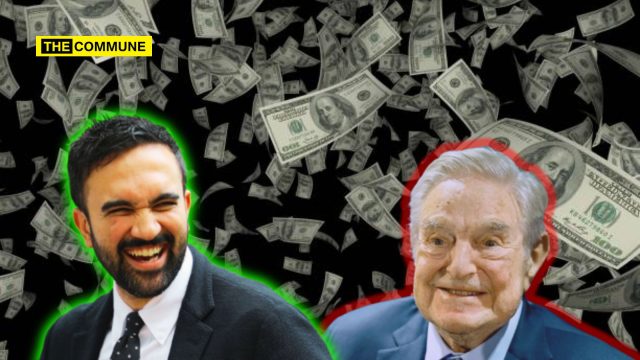
The figure of Zohran Mamdani presents himself as a champion of the downtrodden, railing against “billionaires” and pledging radical redistribution of wealth. Yet fresh forensic reporting reveals a glaring contradiction: millions of dollars from George Soros-linked networks have reportedly flowed into the machine that elevated Mamdani, casting serious doubt on both his authenticity and the transparency of his political apparatus.
A recent investigative report has sparked major controversy, claiming that organizations tied to billionaire George Soros quietly directed a staggering $40 million to promote the political ascent of Zohran Mamdani, a rising figure in American politics.
According to the findings, Soros’s charities orchestrated a sophisticated operation to “launder” charitable dollars through tax-exempt nonprofit organizations, subsequently channeling those funds directly into campaign field efforts, door knocking, and volunteer mobilization—all activities prohibited for 501(c)(3) organizations under U.S. law.
Sam Antar, a convicted felon and fraud investigator who now lectures for government agencies, filed eleven whistleblower complaints with the IRS, presenting a trove of records spotlighting how Soros foundations funded not issue-driven civic engagement, but coordinated efforts explicitly backing Mamdani. In his words, “They weren’t advocating for general issues—they were pushing one candidate. That crosses the line.”
The report dissects how millions were shuffled from tax-exempt 501(c)(3) groups to affiliated 501(c)(4) entities, which enjoy more political leeway, but are still forbidden from direct candidate support. The same leftist nonprofit “partners” listed progressive alliances publicly, then quietly denied any campaign coordination while filling out federal disclosures—a pattern Antar calls not oversight, but “systematic fraud.”
Soros’s Open Society Foundation angrily dismissed the claims as “misinformation,” arguing the referenced grants predated the campaign—yet the documentation, according to Antar, indicates deliberately coordinated ground campaigns and a “machine” mimicking infamous political syndicates like Tammany Hall, now supercharged to produce national-scale candidates.
White Collar Fraud claims this shadow network knocked 100,000 doors for Mamdani, built a mass volunteer base, and intends to replicate this assembly-line approach nationwide for progressives. “We’re seeing just the tip of a much bigger iceberg,” the report warns, calling for federal subpoenas and investigations to expose the entirety of this alleged political enterprise.
Islamist Organizations With Terror Links And China-Linked Entities Funding Zohran
A recent Fox News report uncovers an extensive network powering Zohran Mamdani’s ascent as a leading candidate for New York City mayor. Investigators have labeled this web of groups the “Mamdani Machine”—a vast coalition comprising 110 different organizations, including socialists, advocacy groups for Muslims and South Asians, and Democratic Party affiliates. The network draws financial backing from high-profile philanthropists such as George Soros, the Ford Foundation, and the MacArthur Foundation.
The investigation by journalist Asra Nomani (for Fox News and the Daniel Pearl Project) maps Mamdani’s evolution from activism in college through to his current campaign, alleging that his rise has been strategically driven by a partnership crossing socialist, Islamic, and Democratic circles. Many individuals linked to the network face allegations of anti-Israel and antisemitic sentiments. Nomani reports following these organizations and their actors for over two decades.
At the core of the funding effort are four major socialist-aligned groups, including the Democratic Socialists of America and PACs directly supporting Mamdani. A cluster of thirty Muslim and South Asian organizations—ranging from national lobbying entities to religious centers—are embedded within Mamdani’s campaign infrastructure. These groups manage resources, endorsements, and field efforts, some of which have controversial backgrounds. Notably, some are led by individuals previously implicated or accused of extremist positions or ties.
Additionally, seventy-six Democratic-aligned organizations give the coalition significant muscle, with major unions and influential national progressive entities all contributing logistical and financial resources. DNC affiliates, union groups, and progressive outfits like MoveOn and The Nation are listed as significant players pushing Mamdani’s campaign forward.
Tracing the timeline, Mamdani’s political activity dates back to student activism in 2012. In subsequent years, he became more active in New York’s Muslim political circles, joining boards that bolstered his donor base and organizational reach. Nomani’s reporting highlights how these groups funneled millions in grants, particularly channeled from Soros’s Open Society Foundations, through nonprofits closely associated with Mamdani’s campaign circle.
After winning a seat in the New York State Assembly in 2020 with help from socialist and Muslim advocacy organizations, Mamdani launched his mayoral run powered by the organized efforts of these 110 groups. His campaign slogan, “Defend and Advance,” is also the name of a connected SuperPAC.
The article also points out the involvement of donors linked to controversial figures, including family members of Neville Roy Singham (a billionaire with ties to radical anti-Israel and Marxist groups) and tech leaders who have attracted national security concerns. CAIR (Council on American-Islamic Relations) and ICNA (Islamic Circle of North America), both cited for problematic affiliations, have directed substantial funding to Mamdani’s operations.
Mamdani’s campaign has amassed both large private donations and multimillion-dollar public matching funds. Much of this financial support originates from outside New York City, underlining the national reach of the coalition. City finance authorities are currently conducting audits of all campaigns, including Mamdani’s.
The article concludes by warning about the potent blend of ideological activism, religious group mobilization, and financial engineering represented by the Mamdani Machine. Critics say the coalition has deeply entrenched itself within the Democratic Party and could reshape the power dynamics of urban and national American politics. The investigation is based largely on an X thread by Asra Nomani.
Subscribe to our channels on WhatsApp, Telegram,Instagram and YouTube to get the best stories of the day delivered to you personally.
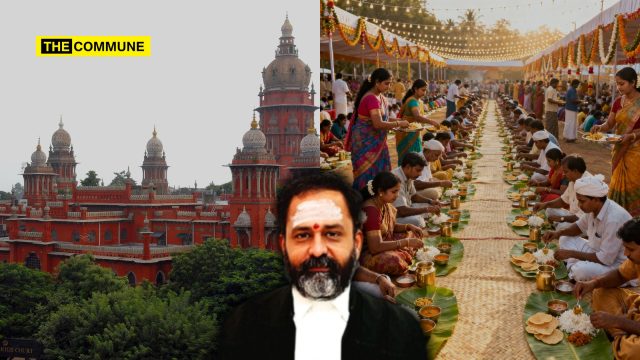
The Madurai Bench of the Madras High Court has delivered a significant ruling on religious freedom and the public’s right to access common land. The court granted permission to a Hindu organization to organize an Annadhanam (community meal) in Dindigul district, despite objections claiming the venue had been exclusively used for Christian Easter events for more than a hundred years. Citing Article 25 of the Indian Constitution, the court affirmed that the freedom to practice and propagate one’s faith is a protected fundamental right.
The bench emphasized that local officials and the police are obligated to safeguard this constitutional right rather than curtail it on the pretext of potential “law and order” problems. It noted that maintaining order is the responsibility of the police, not an excuse to deny citizens their lawful freedoms.
The judgment arose from a petition filed by a devotee who had sought permission to hold an Annadhanam near the Kaliyamman Temple on a public ground. His request was denied by local authorities, who instead suggested conducting the event on a public road. Finding this arbitrary and discriminatory, the petitioner approached the High Court. When questioned, the police justified their refusal by claiming the event might trigger disturbances.
During the proceedings, the court learned that a permanent stage had been constructed on one side of the ground about a century ago, and local Christian groups traditionally used it for Easter festivities. Members of that community argued that Hindus had never been allowed to conduct religious activities on the site. A 2017 peace committee meeting had also recorded an understanding that only “customary events” would continue there.
Justice G.R. Swaminathan, presiding over the case, examined the land’s ownership and found that the open area was classified as gramamatham—public land under panchayat control—and therefore belonged to the state. The judge held that any land owned by the government must remain open for all citizens, irrespective of faith or community.
He reasoned that denying access to a group solely because of its religion would constitute discrimination prohibited under Article 15 of the Constitution. In his words, “A public ground should be available for the use of all communities or none.” The court thus rejected the idea that Christians could use the ground for Easter but Hindus could not use it for Annadhanam.
At the same time, Justice Swaminathan clarified that the Christian community’s exclusive use of the ground during Easter must be respected, and no other event should be permitted during that period.
The judgment also took note of the demographics of the village, which comprises roughly 2,500 Christian families and 400 Hindu families. The court criticized the authorities for citing community opposition as a reason to deny permission, calling it “a very sorry state of affairs.” The judge further stressed the need for interfaith goodwill, remarking that all religious festivals should be occasions for participation, not exclusion.
In a touching personal reflection, he said, “When a Christian friend celebrates Christmas, I should greet him first,” recalling how a Muslim friend once made vegetarian Nonbu Kanji so he could share in the meal. “Such is the beauty of our culture,” he observed, adding that this spirit of mutual respect is essential for communal harmony.
Ultimately, the court overturned the authorities’ rejection order and directed the Tahsildar to grant permission for the Annadhanam at the requested public ground. The petitioner, however, was instructed to handle all logistical arrangements and to restore the venue to its original condition after the event.
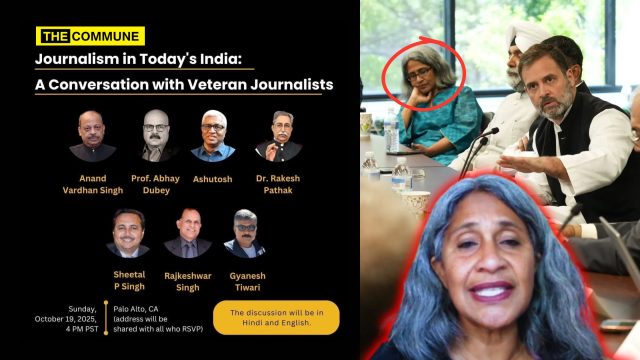
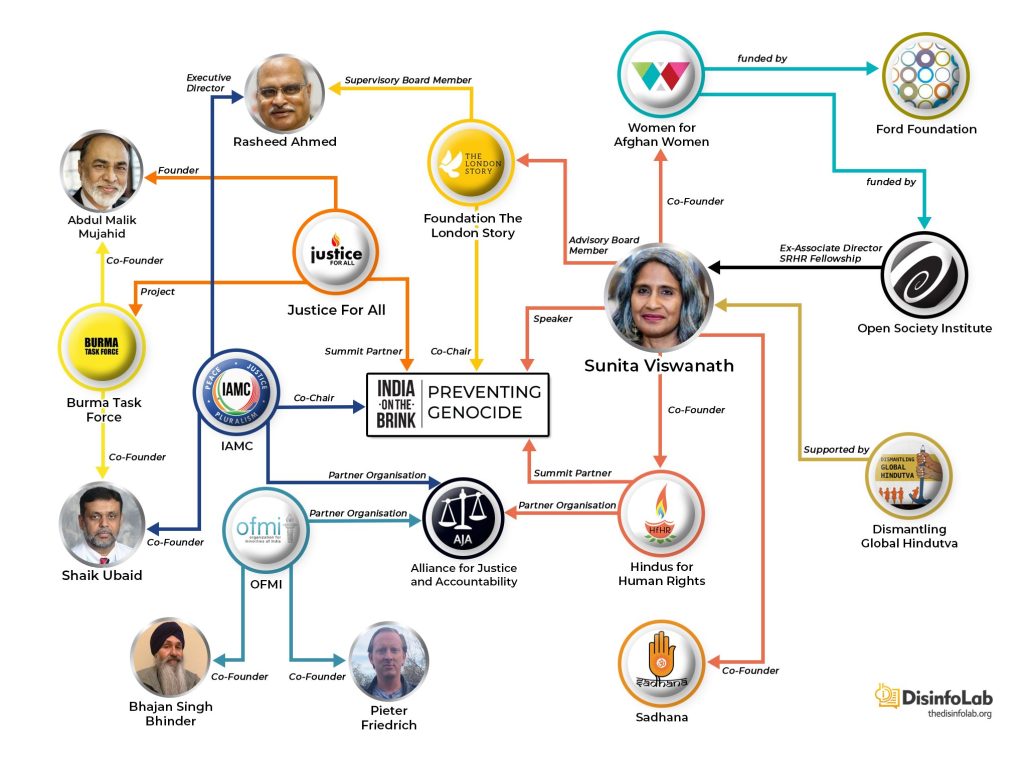
A group of Indian journalists and commentators known for their usual rhetoric against Prime Minister Narendra Modi participated in a recent event in the United States organized by Hindus for Human Rights (HfHR) – an advocacy group co-founded by activist Sunita Vishwanath, who has been associated with George Soros’s Open Society Foundation.
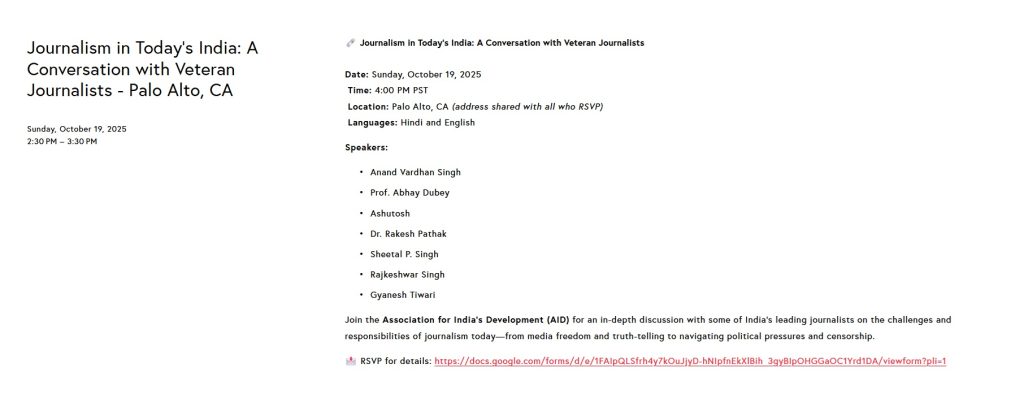
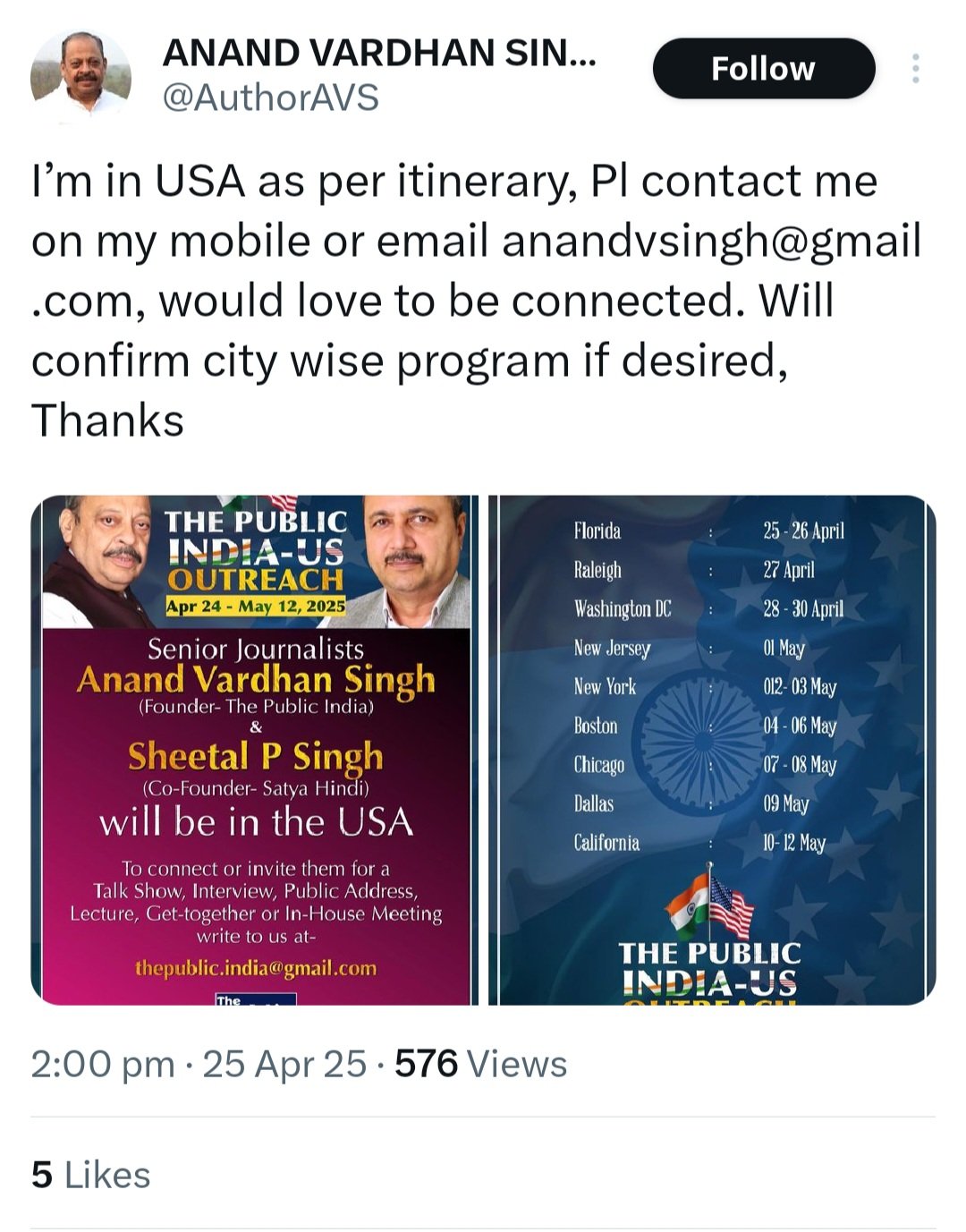
The event, titled “Journalism in Today’s India: A Conversation with Veteran Journalists,” was held on 19 October 2025, in Palo Alto, California. It was jointly organized by the Association for India’s Development (AID) and featured seven speakers: Anand Vardhan Singh, Abhay Dubey, Ashutosh, Rakesh Pathak, Sheetal P. Singh, Rajkeshwar Singh, and Gyanesh Tiwari.
Who’s Funding the Anti-Modi Brigade’s Month-Long US Tour? 🔥 🧵
Seven known anti-Modivoices, including @ashutosh83B & Abhay Dubey, attended a US event by “Hindus for Human Rights”, founded by Sunita Vishwanath, a Soros-funded activist infamous for her anti-India tirades
Promotional material for the event said discussions would focus on “media freedom, truth-telling, and navigating political pressures and censorship.” However, social media users have questioned the timing and funding behind the journalists’ extended foreign stay, several of whom have been touring or stationed in the US for weeks, reportedly for the second time this year.
The participation of Uttar Pradesh–based journalists in particular has drawn attention ahead of the state’s upcoming elections.
HfHR – An Organization With Terror And Soros Links Behind
Sunita Vishwanath, a key figure behind the event, is known for her activism against the Indian government. She co-founded HfHR in 2019 alongside groups like the Indian American Muslim Council (IAMC) and the Organization for Minorities of India (OFMI), both of which have been linked to Islamist advocacy and have actively protested Modi’s international visits.
IAMC is associated with groups like ICNA (Islamic Circle of North America), known for ties to Pakistan’s Jamaat-e-Islami and promoting anti-India propaganda.
IAMC’s Executive Director, Rasheed Ahmed, also leads IMANA (Islamic Medical Association of North America), implicated for alleged misuse of funds involving links to Pakistani officials and terrorist organizations like Lashkar-e-Taiba.
Vishwanath’s NGO, Women for Afghan Women, has received funding from George Soros’s Open Society Foundation, raising concerns about the financial backing of such initiatives.
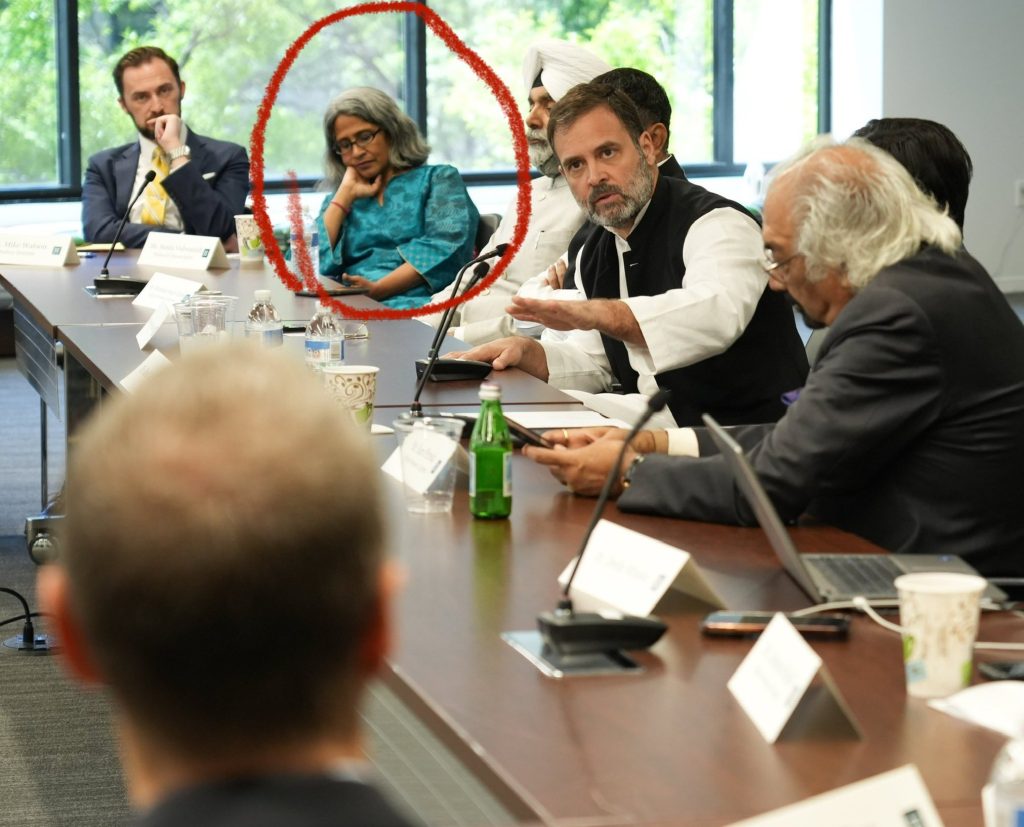
The event also highlighted the political network opposing Modi. Vishwanath previously hosted Rahul Gandhi during his 2023 US visit.
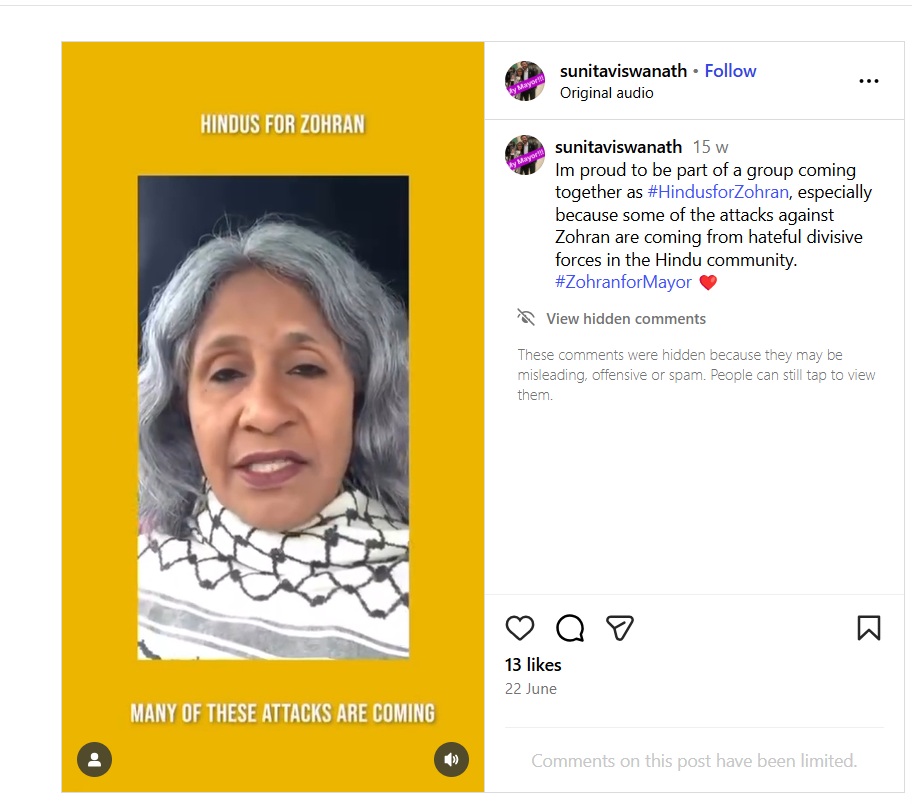
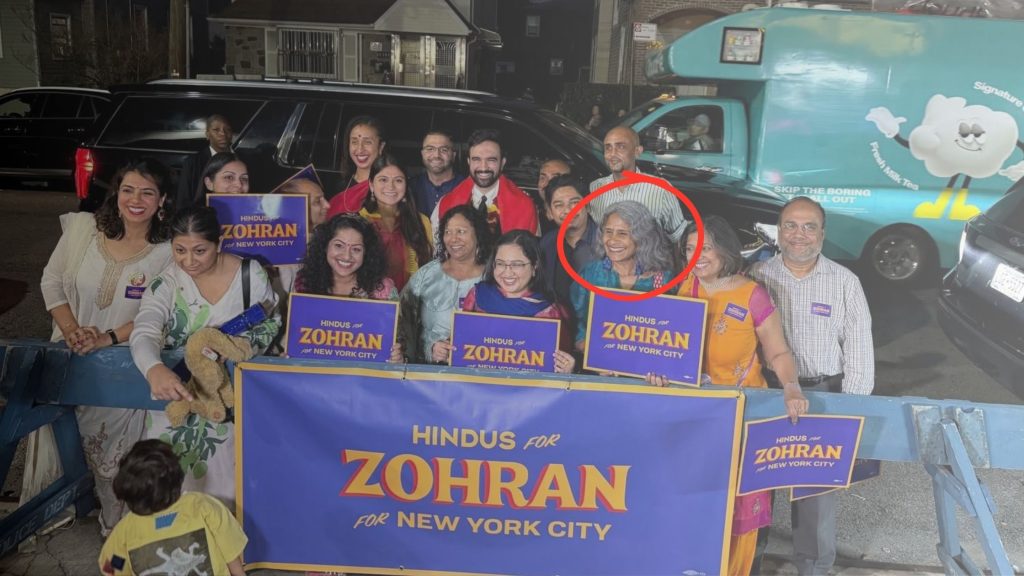
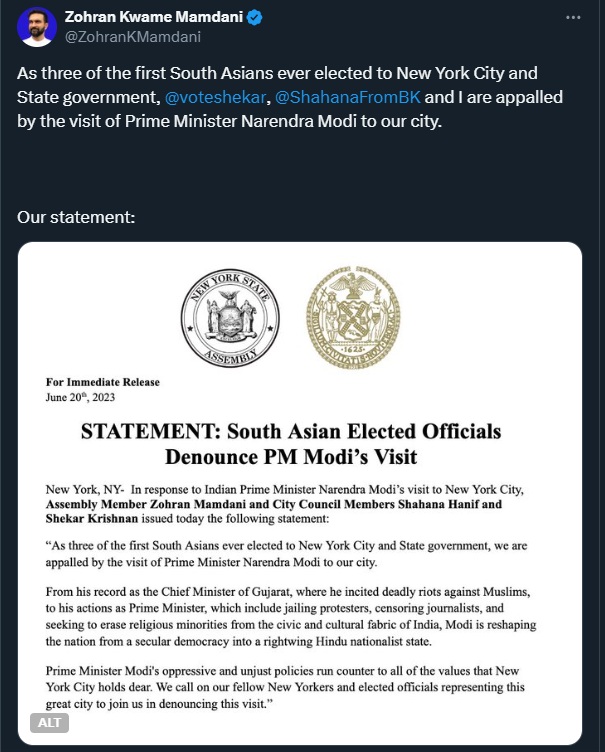
She has also publicly supported Zohran Kwame Mamdani, the New York City mayoral candidate accused of anti-Hindu activism.
Mamdani, who recently attempted to appeal to Hindu voters through temple visits, has a record of leading protests against the Ayodhya Ram Temple, which he labeled a “fascist atrocity,” and aligning with Khalistani separatists.
He participated in a protest where slogans of “Hindus are bastards” were echoing. He demonized the construction of the Ram Mandir in Ayodhya. And who were his allies? Not progressive idealists, but Khalistani separatists! Nice company he keeps.
NYC Candidate for Mayor Zohran Mamdani led a mob of protestors in Times Square calling Hindus as bastards and heaping abuses upon Lord Rama, who is worshipped by Hindus
Mamdani often conflates Hindus with India’s ruling BJP, turning political dissent into religious animosity. When fellow politicians like Jennifer Rajkumar and Kevin Thomas refused to denounce PM Modi during his 2023 New York visit, Mamdani labeled them as complicit, again stoking intra-community rifts.
His hatred for Hindus mirrors his hatred for Jews, both are enemies in the Islamist worldview.
It is this Mamdani that Sunita Vishwanath supports and what does she and her organisation Hindus For Human Rights conduct? An event on journalism in India – that too in American soil! Sunita is an activist linked to anti-India initiatives like the “Dismantling Global Hindutva” conference. Vishwanath is associated with groups like ICNA (Islamic Circle of North America), known for ties to Pakistan’s Jamaat-e-Islami and promoting anti-India propaganda.
Here is a quick look at how Sunita is connected to Jihadi networks such as IAMC and the Soros Foundation.
Image Source: Disinfo Lab
Subscribe to our channels on WhatsApp, Telegram,Instagram and YouTube to get the best stories of the day delivered to you personally.
The period immediately following India’s independence was defined by the monumental task of nation-building, a process guided by two towering figures with profoundly different philosophies: Sardar Vallabhbhai Patel and Jawaharlal Nehru.
As India’s first Deputy Prime Minister and Home Minister, Patel was a pragmatic realist, fiercely focused on national integration, internal security, and a strong, centralized state. In contrast, Prime Minister Nehru was an idealist, championing socialist economics and a foreign policy based on internationalism.
This report details eight major conflicts between them from 1946 to 1950, highlighting how their contrasting visions shaped the nascent republic and how Patel’s more decisive approach was often overruled, with long-term consequences for the nation.
#1 The 1946 Congress Presidential Election
In May 1946, the first major conflict occurred over the election for the Congress President, a post that would lead to becoming the first Prime Minister. Despite 12 out of 15 Pradesh Congress Committees nominating Sardar Patel for the presidency, Mahatma Gandhi expressed his preference for Jawaharlal Nehru. Out of respect for Gandhi’s wishes, Patel voluntarily withdrew his candidacy, clearing the path for Nehru. This decision, while ensuring party unity, established Nehru as the paramount leader and set the stage for their future disagreements, with Patel’s supporters often viewing it as a missed opportunity for a more pragmatic leadership from the very inception of independent India.
#2 The Kashmir Issue
October 1947 onwards, the integration of Jammu & Kashmir became a critical point of contention. While both leaders agreed to send troops after the Maharaja’s accession, Patel advocated for swift, decisive military action to secure the entire state. He strongly disagreed with Nehru’s decision to take the issue to the United Nations in January 1948, arguing it internationalized a domestic matter and weakened India’s position. Patel believed a firm military stance could have resolved the issue more conclusively. His frustration was evident when he later remarked that “Kashmir is insoluble,” highlighting the consequences of what he saw as Nehru’s hesitant and idealistic approach.
#3 Perceptions of the China Threat
In November 1950, following China’s invasion of Tibet, Sardar Patel wrote a comprehensive memo to Nehru in November 1950, warning him of a new threat from the North. Patel expressed deep suspicion of China’s intentions, advocating for a fortified border and a tough, realistic foreign policy. Nehru, however, dismissed these warnings as “unnecessary suspicion,” believing that Communist China could be a peaceful ally. He pursued a policy of appeasement and idealism, famously championing “Hindi-Chini Bhai-Bhai,” which ultimately proved disastrous in the 1962 Sino-Indian War, validating Patel’s foresight.
#4 Administration of the North-East
In 1950, a significant administrative conflict arose over Nehru’s policy to place the North-East Frontier Agency (NEFA) under the purview of the Ministry of External Affairs. Patel vehemently opposed this, arguing that it would psychologically and administratively isolate the region from the rest of India. He warned that treating the region as a foreign entity would have adverse consequences. His fears were later realized as the policy made it easier for secessionist elements and missionaries to propagate that the region was not an integral part of India, creating long-term challenges for national integration.
#5 Internal Party Democracy
Again in 1950, Sardar Patel was a staunch advocate for a disciplined and democratic Congress party. In 1948, he had pushed for a constitutional amendment to prohibit internal party factions with separate membership, which led to the ouster of the Congress Socialist Party (CSP), a group Nehru was close to. The conflict climaxed in the 1950 Congress Presidential election. Patel supported Purushottam Das Tandon, while Nehru backed J.B. Kripalani. When Tandon won despite Nehru’s open opposition and threats to resign, it was a major political victory for Patel, underscoring the deep rift over control of the party’s organization and ideology.
#6 Military Action in Hyderabad
In September 1948, the integration of the princely state of Hyderabad was a critical test of India’s resolve. Patel, describing Hyderabad as an “ulcer in the belly of India,” pushed for immediate military action (Operation Polo) against the Nizam and his brutal Razakar militia to quell violence and secure integration. Nehru, preoccupied with India’s international image and the potential for UN intervention, favored a prolonged diplomatic approach. Patel’s persistence eventually led to a swift military operation in September 1948, which successfully integrated the state, demonstrating the effectiveness of his firm, security-first approach over Nehru’s caution.
#7 Divergent Economic Visions
Between 1947 and 1950, Nehru and Patel held drastically different economic visions. Nehru was a committed socialist who envisioned the “elimination of profit” and established a Soviet-style Planning Commission to control the economy. Patel, however, believed capitalism could be “purged of its hideousness” and denied the inevitability of class struggle. He had faith in Indian industrialists and argued for a balanced approach that encouraged private enterprise alongside social welfare. Patel was instrumental in tempering Nehru’s socialist resolutions within the Congress, advocating for a mixed economy that would not stifle private initiative.
#8 The Socialist Pattern Resolution
Although Sardar Patel passed away in 1950, the ideological conflict over economics continued. In the 1955 Avadi session, Nehru successfully passed a resolution committing the Congress to a “socialist pattern of society.” This was a direct implementation of Nehru’s vision and a move away from Patel’s beliefs. Patel had consistently acted as a brake on Nehru’s socialist agenda during his lifetime, purging such language from official documents. The Avadi resolution marked the culmination of Nehru’s economic philosophy, which came to define India’s policy for decades, ultimately sidelining Patel’s advocacy for a more enterprise-friendly economy.
Subscribe to our channels on WhatsApp, Telegram,Instagram and YouTube to get the best stories of the day delivered to you personally.