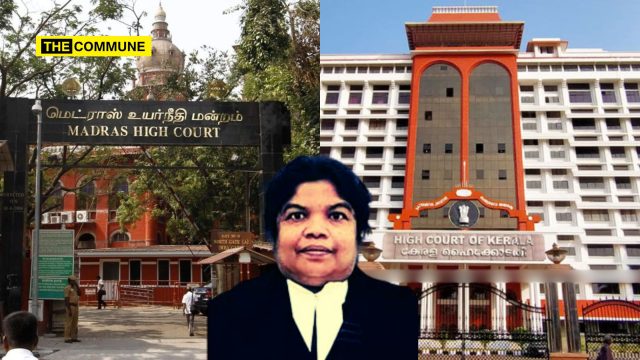
A group of practising advocates from the Madras High Court have submitted a written petition to top constitutional authorities, objecting to Justice Nisha Banu’s continued presence in Chennai despite her transfer to the Kerala High Court being formally notified by the Union Government on 14 October 2025.
The representation, addressed to the President of India, the Chief Justice of India, the Law Minister, and the Chief Justices of both High Courts, termed the situation “unprecedented” and expressed concern that a sitting judge had not yet assumed charge in the transferee court even after more than three weeks of the official notification.
The advocates pointed out that the Supreme Court Collegium had recommended Justice Banu’s transfer from the Madras High Court to the Kerala High Court through a resolution dated 25–26 August 2025, which was subsequently accepted and notified by the Central Government. They claimed that while other judges included in the same transfer list had already taken charge in their respective High Courts, Justice Banu had allegedly neither joined the Kerala High Court nor resumed work in Chennai since 14 October 2025.
Calling the situation “a matter of judicial discipline,” the petitioners urged the Collegium and the President of India to intervene and ensure that the transfer was implemented without delay. They emphasised that their objection was “not personal,” but stemmed from concern that such instances could “undermine the image and majesty of the judiciary.”
Justice Nisha Banu, a native of Nagercoil, was appointed as a judge of the Madras High Court in 2016 after a long career practising in civil, criminal, and service law. She earned her law degree from Madurai Law College and was part of the Madurai Bench of the High Court following its establishment in 2004.
As per the same transfer order dated 14 October 2025, Justice C.S. Sudha of the Kerala High Court was moved to the Delhi High Court, where she has since assumed charge.
Officials at the Madras High Court and the Kerala High Court have not issued any formal comment regarding the matter.
Subscribe to our channels on WhatsApp, Telegram,Instagram and YouTube to get the best stories of the day delivered to you personally.
Congress MP S. Jothimani on Saturday accused the Election Commission of using the Special Revision of Voter List (SIR) exercise to deliberately remove voters from electoral rolls in opposition-ruled states. She alleged that the process, currently underway in 12 states including Tamil Nadu and two Union Territories, was politically motivated and lacked transparency.
Speaking to reporters at her constituency office in Karur on November 2, Jothimani said the India Alliance was united in opposing the SIR initiative. “SIR is being carried out with the intention of removing voters. That is why an all-party meeting was convened to strongly oppose it,” she said.
New Voter Verification Process Raises Concerns
Jothimani said that political parties were recently trained on the new voter list revision process and were given unfamiliar forms that went far beyond the standard update procedures.
“Earlier, voter list revisions meant simply updating existing rolls by adding new voters and removing deceased persons,” she explained. “But this time, the format and information sought are entirely new and confusing.”
She cited reports from Bihar, where around 65 lakh voters were reportedly removed through SIR, leading to a court case.
According to Jothimani, the new voter verification form asks for extensive personal details including the voter’s name, ID number, section and constituency details, date of birth, Aadhaar number (optional), mobile number, and family members’ names and ID numbers. It also seeks information about relatives who were present in the 2002 special revision list, requiring submission of death certificates for those no longer alive.
“This requirement is unreasonable,” she said. “Not everyone has access to death certificates, especially in rural areas. If the form is incomplete or filled incorrectly, it risks being rejected, resulting in voter deletion.”
“Election Commission Exceeding Its Mandate”
Jothimani alleged that the Election Commission (EC) was overstepping its authority by verifying the citizenship of voters – a task she said falls under the Home Ministry’s jurisdiction.
“The EC is acting as a puppet of the BJP,” she claimed. “It is exceeding its powers and attempting to disqualify legitimate voters under the guise of verification. This is nothing but an attempt to tamper with the democratic process.”
She said the India Alliance would continue to challenge the move and defend the voting rights of citizens across the affected states.
“The Election Commission is carrying out the BJP’s agenda of destroying our credibility. The opposition will not stay silent while voters in Tamil Nadu and other states are deliberately removed in the name of special electoral roll revision,” Jothimani said.
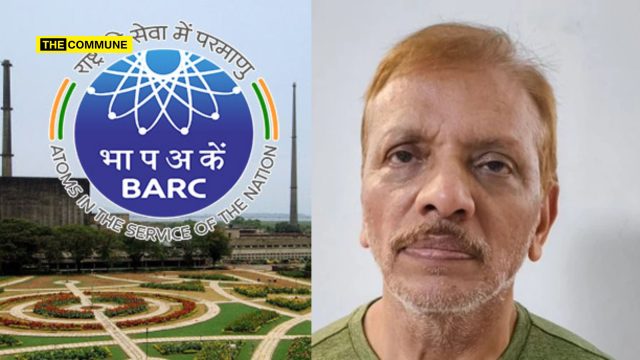
A 60-year-old man arrested for posing as a scientist from the Bhabha Atomic Research Centre (BARC) allegedly received crores of rupees in foreign funds over nearly three decades in exchange for classified nuclear information, according to sources in the Mumbai Police Crime Branch.
The accused, Akhtar Hussaini, a resident of Jamshedpur in Jharkhand, was arrested last month for impersonating a senior BARC scientist and travelling across the country under multiple fake identities. Police said Hussaini’s activities had gone undetected for years, during which he is suspected to have shared sensitive nuclear data and maps with foreign handlers.
Fake IDs, Maps, and Classified Data Seized
Investigators recovered over 10 maps and documents purportedly related to nuclear weapons and atomic plants from Hussaini’s possession. Several fake identity documents were also found, including multiple passports, Aadhaar cards, PAN cards, and a forged BARC identity card.
One of the seized IDs identified him as Ali Raza Hussain, while another listed him as Alexander Palmer.
Hussaini’s brother, Adil, was later arrested in Delhi for assisting him in creating and maintaining these forged identities, police said.
Foreign Funding Trail Since 1995
According to Crime Branch sources, the Hussaini brothers had been receiving foreign funds since 1995. Initially, payments were made in lakhs of rupees, but after the year 2000, the amounts escalated to crores.
Police believe the brothers received the money in exchange for secret blueprints and sensitive data related to BARC and other nuclear installations in India.
Suspicious Bank Transactions and Closed Accounts
During the investigation, officers found a private bank account in Akhtar Hussaini’s name that had shown unusually large deposits and international transfers. The Crime Branch has sought complete transaction details from the concerned bank to determine the source and total volume of funds received.
Police have also discovered that the brothers closed several other accounts after certain transactions, allegedly to cover their financial trail. Old account records are now being re-examined to map the full money flow and identify possible foreign links.
Possible Pakistan Connection
Investigators suspect that Akhtar and Adil may have visited Pakistan and developed links with the Inter-Services Intelligence (ISI). Police believe that their long-running espionage operation involved multiple aliases and foreign trips, which are now under verification through immigration records.
History of Deception and Deportation
According to sources, Akhtar had been changing identities and living under disguise for decades. In 2004, he was deported from Dubai after authorities there discovered he had falsely claimed to be a “scientist possessing classified documents.”
Records show that Akhtar sold his ancestral property in Jharkhand in 1996, but continued to obtain fake documents using his old local contacts. His brother Adil later introduced him to a Jharkhand resident named Munazzil Khan, who allegedly helped the duo procure two fake passports — one in the name of Hussaini Mohammad Adil and another as Nasimuddin Syed Adil Hussaini.
The address used on both passports was that of their former house in Jamshedpur, which had been sold nearly 30 years ago.
International Probe Underway
Police believe the forged documents were used for foreign travel and possible data transfers. Investigators are now working with intelligence agencies to trace their movements abroad and determine whether any classified information was leaked to foreign entities.
The Mumbai Police Crime Branch is expected to share its findings with central intelligence agencies as the case involves potential breach of national security and cross-border espionage.
Both Akhtar and Adil Hussaini remain in police custody as investigations continue into what authorities are calling one of the most elaborate espionage frauds uncovered in recent years.
Minnesota state senator and mayoral frontrunner Omar Fateh has pledged to block all cooperation between the Minneapolis Police Department (MPD) and federal immigration authorities, and to establish systems to warn immigrant communities ahead of any ICE raids/operations within the city.
In an explosive interview on Water Wave TV, Fateh, a Democratic Socialist and the first Somali American in the Minnesota Senate, accused city officials of “strategic failure” and “silence” after ICE and federal agents appeared unannounced in South Minneapolis earlier this year, creating fear and chaos among residents.
“We had ICE and multiple federal agents show up on the scene. And there was a level of anxiety and chaos that was caused by not only having ICE being there, but the lack of communication by the mayor’s office and MPD,” Fateh said. “Multiple elected officials, including myself, didn’t even hear about it from the city. We heard about it from community organizers on the ground.”
The senator said the June 3 incident near Lake and Bloomington in his district exposed a breakdown in communication and a disregard for Minneapolis’s “separation ordinance”, which bars local law enforcement from collaborating with federal immigration agencies.
“We need to strengthen our separation ordinance,” he said. “Whenever something like this happens, city council must be alerted immediately because they’re the connection point to the community.”
“We Will Alert Our Communities, Not ICE”
Fateh said that if elected mayor, his administration would work hand-in-hand with immigrant rights organizations to create early warning systems for undocumented residents whenever ICE activity is detected.
“The city cannot do it alone. We need to lock arms with organizations that are already doing the work – legal counseling, multilingual outreach, know-your-rights training,” he said. “Things are scary, and it’s going to get scarier. We have to protect our people.”
As chair of the Senate Higher Education Committee, Fateh said he has seen “undocumented students getting picked up by ICE in the middle of the night,” calling the practice “unconstitutional” and “terrifying.”
“Families and lawyers don’t even know where they’re being detained,” he said. “We have a president who’s going to do whatever he wants. It’s scary for college presidents who fear losing federal funding just for supporting these students.”
Fateh Declares: “We Cannot Sacrifice Our Values”
Warning of renewed federal pressure under a potential Trump presidency, Fateh said local governments and universities must refuse to trade moral principles for federal funding.
“We’re being forced to choose – sacrifice your values or lose funding,” he said. “Under any circumstance, we cannot throw our most marginalized communities under the bus.”
He also condemned MPD’s past collaboration with ICE, referencing a leaked email that allegedly showed ICE thanking the police chief for escort assistance.
“Under no circumstance should MPD ever collaborate with ICE, not for escorts, not for crowd control, not for anything,” he said firmly.
A Radical Shift for Minneapolis
Fateh’s stance marks one of the strongest anti-ICE positions ever taken by a Minneapolis political leader, signaling a dramatic shift from Mayor Jacob Frey’s moderate policies.
“Minneapolis can have a different kind of politics,” he said. “Five years after George Floyd’s murder, [Mayor Frey] doesn’t have a plan or doesn’t intend to have one.”
If elected, Fateh has promised that Minneapolis will not only refuse to aid ICE but will actively warn residents before federal raids, potentially setting up a legal and political clash with Washington.
Subscribe to our channels on WhatsApp, Telegram,Instagram and YouTube to get the best stories of the day delivered to you personally.
A planned Murugan temple in North Carolina has become the latest target of online Hinduphobic attacks, weeks after similar controversies erupted over Hindu religious symbols and statues in the United States.
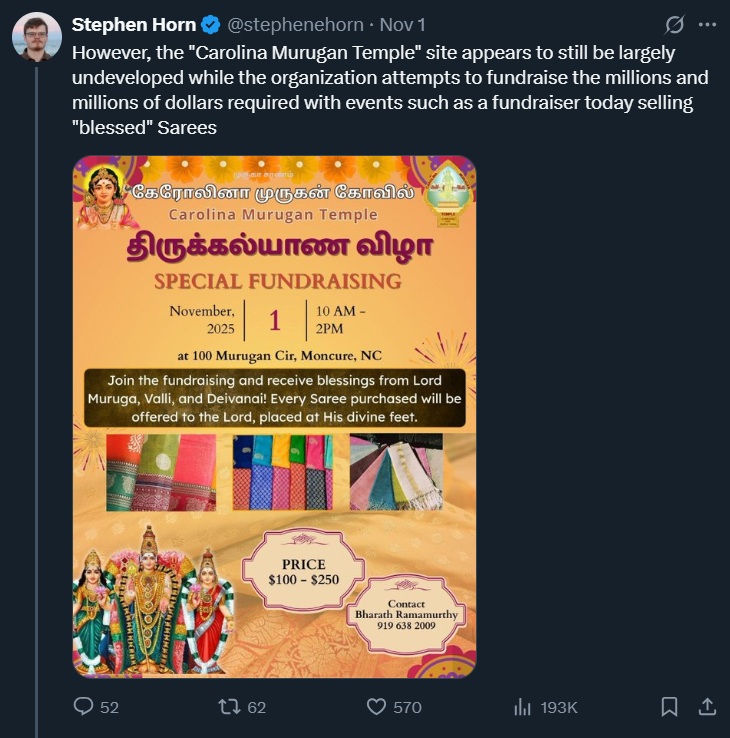
The temple project, initiated in 2018 by a Tamil Hindu community organization, aims to build a sprawling complex in Moncure, North Carolina, featuring the world’s tallest statue of Lord Murugan, along with a Tamil cultural museum, library, and temple. According to the official website, the complex will span more than 130 acres.
Whites Decry Hindu Deity Statues
White journalist who claims to be an “independent” journo Stephen Horn triggered controversy with a viral post on social media, claiming that “Hindus have acquired over a hundred acres for a massive temple complex in the rural town of Moncure, NC The Tamils plan to build the world’s largest statute of their “warrior god” Murugan, which would be taller than the Statue of Liberty”
Hindus have acquired over a hundred acres for a massive temple complex in the rural town of Moncure, NC
The Tamils plan to build the world’s largest statute of their “warrior god” Murugan, which would be taller than the Statue of Liberty pic.twitter.com/WEKGRdRcAd
Horn added,“However, the “Carolina Murugan Temple” site appears to still be largely undeveloped while the organization attempts to fundraise the millions and millions of dollars required with events such as a fundraiser today selling “blessed” Sarees”
His post drew amplified reactions from some conservative Christian zealot circles.
Matt Van Swol, a former nuclear scientist with the U.S. Department of Energy, wrote, “HOLY CRAP!!! Hindus in North Carolina have acquired over 130 acres of residential land and are CURRENTLY building a MASSIVE temple with plans for a 155-foot statue of Lord Murugan, the Hindu god of war. The statue will be taller than the Statue of Liberty… WHAT?!!!!!!!”
Texas Republican leader Alexander Duncan, who had earlier described Lord Hanuman as a “false god”, commented that such temples were “not what the Founding Fathers envisioned when they wrote the First Amendment.” So much for religious freedom in the US!
He even shared a verse from the Bible to underscore his point. He wrote, “Those who worship idols are disgraced—all who brag about their worthless gods—for every god must bow to him.” Psalm 97:7″
Hindus Call Out Hypocrisy
The wave of online criticism follows similar anti-Hindu sentiment expressed last year over the 90-foot Panchaloha Hanuman statue in Texas, which drew protests from church groups that branded the deity “demonic.” The Hanuman statue, built on private property, had faced demonstrations by local Christian groups in 2024.
🚨 HOLY CRAP!
Christians pay zero taxes, yet they own over 7 crore hectares (17.29 crore acres) of land in India.
There are 34,405 churches across the country — and still, no one’s asking questions.
65 feet statue of Jesus in Puthiragoundampalayam, Salem, Tamil Nadu.
Jesus statue at Velankanni Church, Nagapattinam, Tamil Nadu.
You are spreading “love” in India.
We are spreading “love” in North Carolina!
Same to same! https://t.co/lDrxEf66cDpic.twitter.com/WuXv8uIKq7
— Stop Hindu Hate Advocacy Network (SHHAN) (@HinduHate) November 2, 2025
Christian Land Holdings and Humungous Statues in India
Observers have noted the contrast between Western criticism of Hindu religious expressions abroad and the widespread Christian symbolism in India, where the Catholic Church is estimated to be the second-largest landowner after the Indian government, holding over seven crore hectares (17.29 crore acres) valued at roughly ₹20,000 crore.
India is home to over 28,000 churches and numerous Christian statues, several of which are far larger than the Texas Hanuman statue. These include:
Pune, Maharashtra – A bronze statue of Jesus Christ unveiled at the World Peace Dome, MIT World Peace University, in November 2022, alongside 54 other statues within the 263-foot-high dome.
Ambala, Haryana – A 5.5-foot statue at the 1848 Holy Redeemer Catholic Church, one of the oldest in the region.
Ramanagara, Karnataka – A 114-foot-tall Jesus statue under construction in Kanakapura, initiated in 2020 by Congress leader D.K. Shivakumar.
Bengaluru, Karnataka – A 35-foot statue at Mount Olive, Gethsemane Garden, Hennur Bande, made of reinforced cement and fibre, completed for ₹65 lakh.
Mumbai, Maharashtra – The statue near Infant Jesus Chapel in Malad West, which became famous in 2016 for “seeping water.”
Thiruvananthapuram, Kerala – A 10-meter (33-foot) statue made of fibre, wax, and resin, with eyes that glow in the dark.
Velankanni, Tamil Nadu – The Sacred Heart of Jesus statue at the Our Lady of Vailankanni Church, a major Catholic pilgrimage site.
Mumbai, Maharashtra – The Jesus statue at Mount Mary Basilica in Bandra, one of the oldest Catholic churches in India.
Vizhinjam, Tamil Nadu – A 33-foot-tall statue of Jesus with arms spanning 33 feet, totaling 90 feet in height with its base.
Assolna, Goa – The Cristo Rei monument, constructed in 1934, inspired by a similar statue in Karachi.
Altinho, Goa – A statue of Jesus Christ outside the Bishop’s Palace in Panaji.
Hyderabad, Telangana – A statue inside St. Joseph’s Cathedral, dating back to the early 19th century.
Mysore, Karnataka – Saint Philomena’s Cathedral, with twin spires 175 feet tall and a 54-foot statue of the saint.
Kolkata, West Bengal – A bronze statue of Mother Teresa unveiled at the Archbishop House on her 106th birth anniversary.
Thiruvalla, Kerala – The “Healing Christ,” a 368 cm-tall (12 ft) tri-metal sculpture at Believers Church Medical College Hospital, the largest of its kind globally.
In addition to these, Christian icons and statues of Jesus, Mary, and various saints are visible in public spaces and along roadsides across India, where they stand without opposition.
Hindus have pointed out that the backlash against projects such as the planned Murugan temple in North Carolina highlights a clear inconsistency in how religious freedom is perceived in the West. It is noteworthy that Christian communities face no resistance when constructing large monuments in India or other parts of the world, yet similar Hindu initiatives abroad are often met with criticism and mistrust – Christian religious symbols are readily accepted as expressions of faith, while Hindu symbols are frequently portrayed as contentious.
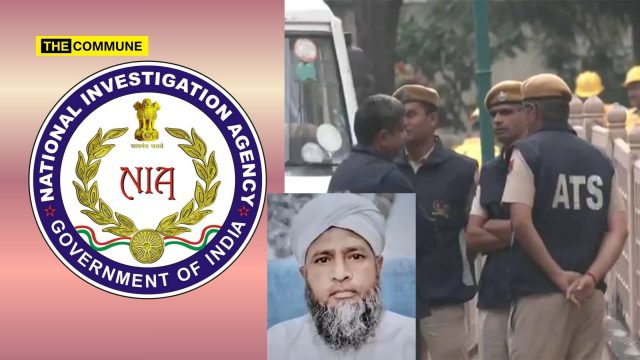
Acting on intelligence inputs, the National Investigation Agency (NIA) and Rajasthan Anti-Terrorist Squad (ATS) carried out coordinated pre-dawn raids across multiple districts of the state on Friday, 31 October 2025, detaining five individuals, including three clerics.
According to sources, simultaneous operations were launched around 5 AM in Jodhpur, Jalore, Karauli, and Jaipur districts. Two clerics, Ayub and Masood, were detained from the Chaukha and Pipar areas of Jodhpur, while Usman was picked up from Sanchore in Jalore district. All three are affiliated with different madrasas, and notably, Usman and Masood are brothers.
In Karauli district, a youth identified as Junaid was detained from Dholikhar, while another suspect was apprehended from Jaipur.
Officials said the raids were based on intelligence suggesting possible links between the detained men and an Islamic organization operating outside India. Although neither the NIA nor the ATS has released an official statement, sources said the Central government had directed the agencies to act on credible inputs indicating cross-border communication and suspected radical activities.
During the searches, investigators seized mobile phones, laptops, and several documents for forensic examination. The detained individuals are being interrogated to verify their alleged links with radical or foreign-based networks.
Officials indicated that the investigation could uncover a wider network involving cross-border radicalization and possible misuse of religious and educational institutions in western Rajasthan.
Security has been tightened in Jodhpur and Jalore following the detentions, and further raids are likely as the probe progresses.
In a shocking incident, a young woman was allegedly gang-raped by three men near the Coimbatore International Airport on Sunday (2 November 2025) night. The victim, an MBA student at a private college near Peelamedu, was abducted after the assailants first attacked her male friend who was with her.
According to police, the horrific crime unfolded around 11 PM on Sunday. The student was speaking with her friend inside a car near the airport when the three-member gang, who had arrived on a stolen motorbike, noticed them.
The men allegedly assaulted the woman’s boyfriend, forced him out of the car, and then kidnapped her. They fled the spot with the victim, taking her to a secluded area behind a private college located about a kilometer from the airport.
There, the trio sexually assaulted her. In a further act of brutality, they abandoned her at the isolated spot without her clothes.
The injured friend immediately alerted the police, who launched a massive search operation. After hours of searching, the woman was found unconscious in the isolated area around 4 AM on Monday. She was rushed to a private hospital near Sitra for medical treatment and care. Her injured friend was admitted to the Coimbatore Medical College Hospital for his injuries.
Police sources revealed that the accused had earlier stolen a motorbike from the Kovilpalayam area on Sunday, 2 November 2025, before traveling to Airport Road and committing the crime.
In response to the heinous crime, the Coimbatore police have constituted seven special teams to trace and apprehend the culprits. The investigation is ongoing.
This case is the latest in a series of serious crimes against women in the state that have raised concerns. In a separate incident from February this year, seven college students were arrested under the Protection of Children from Sexual Offences (POCSO) Act for allegedly sexually assaulting a 17-year-old girl in Kuniyamuthur.
In that case, the students, from a private college, had befriended the minor through a social media app. The girl’s family filed a missing complaint after she failed to return home following a meeting with one of the accused. She was later found and told authorities she had been assaulted by the group. All seven students were arrested and placed in judicial custody.
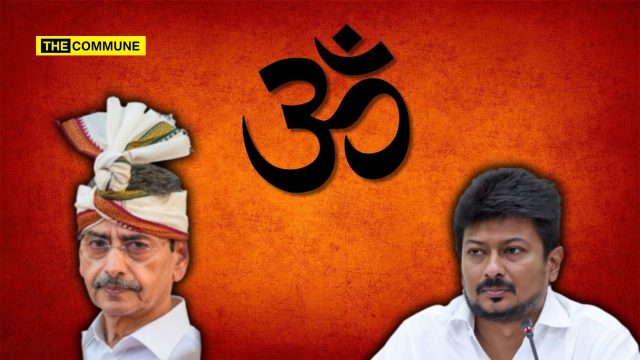
Tamil Nadu Governor R.N. Ravi on Sunday, 2 November 2025, described Sanatana Dharma as the “soul of Bharat” and said it is “all-inclusive,” embracing even those who criticise it. He was speaking at the Mani Vizha, the 60th birth anniversary celebrations of Dharmapuram Adheenam’s 27th pontiff, Srilasri Kailai Masilamani Desiga Gnanasambanda Paramachariya Swamigal held at Dharmapuram Adheenam Arts College in Mayiladuthurai.
“Sanatana means eternal and indestructible. It is all-inclusive. It does not leave out anyone. Even those who do not believe, even those who call Sanatana dengue or malaria, we treat them as ours, because Sanatana cannot exclude them,” the Governor said, referring to a past political comment by Deputy Chief Minister Udhayanidhi Stalin that had drawn nationwide criticism.
Ravi said Sanatana Dharma, which he called “the soul of Bharat,” treats the entire country as one family. He added that India’s civilisational strength lies in its spiritual inclusivity, a value that institutions like the Dharmapuram Adheenam have preserved for centuries.
He praised the Adheenam for its contribution to Tamil heritage, spirituality, and education, noting that it had “served through the worst of times.” Reflecting on the colonial period, Ravi said the British sought to “destroy our culture, our identity, and our language,” but institutions like the Adheenam “preserved and promoted Tamil.”
The Governor recalled how British officials had dismissed Tamil as a “vernacular” or “dialect of the slaves.” Referring to one such episode involving British official J.C. Rollo Eso, who claimed Tamil was unfit for science or philosophy, Ravi said Mahakavi Subramania Bharathi had written a powerful rebuttal in The Hindu, asserting Tamil’s intellectual and scientific depth.
He also praised Prime Minister Narendra Modi for his efforts to promote the Tamil language, recalling the installation of the Sengol presented by Thiruvavaduthurai Adheenam during India’s Independence in the new Parliament building. “The way Narendra Modi has promoted Tamil, I don’t think anyone who claims to serve the language has done even 10% of what he has achieved,” he said, describing Modi as a “great lover of the Tamil language.”
Emphasising the Adheenam’s contribution to education and social welfare, Ravi noted that it runs more than 50 educational institutions and medical centres. “By 2047, Bharat must become a fully developed, self-reliant nation and also a Vishwa Guru and Vishwa Vidya. Aadheenams must play a greater role in this mission,” he said.
During the event, the Governor distributed assistive devices to people with disabilities on behalf of the Adheenam. Other speakers included Kunnakudi Tiruvannamalai Adheenam Seer 27th Gurumaha Sannithanam Kunnakudi Ponnambala Adigalar and former Meghalaya High Court Chief Justice S. Vaidyanathan.
Ravi also presented translated copies of books released by the Adheenam to the guests, concluding his address by commending the Adheenam for continuing to guide society spiritually while strengthening the nation’s cultural fabric.
Subscribe to our channels on WhatsApp, Telegram,Instagram and YouTube to get the best stories of the day delivered to you personally.
A six-member armed gang unleashed a series of brutal attacks across Chennai’s Rajamangalam and Koyambedu areas on Saturday night, leaving six people seriously injured, including a mother and son, police said.
The first incident occurred around 10.30 PM at a residence on Sivasakthi Nagar 1st Street in Kolathur. Six men arrived on two motorbikes and barged into the house of Chandra (52). They assaulted her with sharp weapons, causing severe head injuries, before attacking her son Rajesh, who was watching television in another room. Rajesh suffered deep cuts on his torso and shoulder. Both were taken to a nearby government hospital.
It is alleged that these people were released from prison.
Preliminary investigations revealed that the gang was searching for a man named Akash, and when they did not find him, they turned on Chandra and her son.
The same group later attacked four men – Karthik (35), Tamilselvan (26), Manojkiran (32), and Vishal near Girija Nagar main road. Police said Karthik and Tamilselvan sustained grievous head injuries and were admitted to Periyar Nagar Government Hospital.
Around 3 AM on Sunday, the gang struck again near the Chennai Mofussil Bus Terminus (CMBT) in Koyambedu. The victim, Ganesan (38), an autorickshaw driver and a known history-sheeter from Rajamangalam, was waiting near the bus stand when the assailants cornered him. Sensing danger, Ganesan tried to flee into a nearby eatery, but the gang pursued him and hacked him multiple times with machetes. He was rushed to Kilpauk Medical College Hospital in critical condition.
Based on CCTV footage, police have identified five suspects – Amavasai, Vicky, Chinna Karuppu, Periya Suruppu, and Jeeva and launched a search operation.
Officials said the motive behind the coordinated attacks is under investigation, though early findings suggest that the victims were unrelated, and the assaults may have stemmed from mistaken identity or gang rivalry.
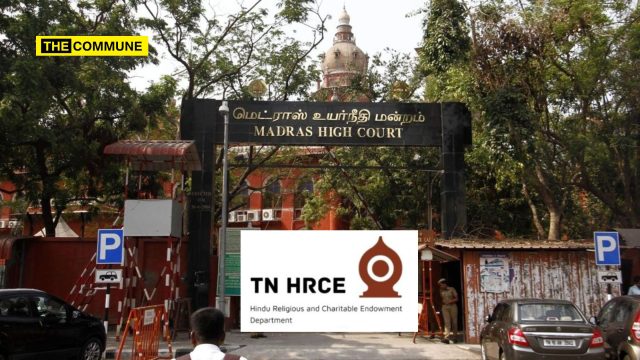
In a significant ruling, the Madras High Court has set aside an order by the Hindu Religious and Charitable Endowments (HR&CE) Department that forcibly took possession of a community building in Salem, directing the department to immediately return the property to the Sri Natarajar Thuluva Vellalar Samudyakudam association.
Justice PB Balaji, in his order pronounced today, strongly criticized the HR&CE department for its “highhanded” actions, noting that it dispossessed the petitioner association despite a pending court-directed enquiry into the very status of the building.
The legal battle centered around a property at 1A, Ezhuthukara Street, Shevapet, Salem. The petitioner association argued that the two-story building, used as a hall and dining space for community functions, was over 100 years old, built on donated land, and housed no idol or formal place of worship. They contended it was a community hall, not a religious institution.
The HR&CE Department, however, claimed the property, listed in its ‘ITMS’ software for temple properties, was a public religious institution. It appointed a “fit person” in 2020 and a trustee in 2023, culminating in an order dated 3 December 2024, that formed a committee to take over the building and hand it to the appointed trustee. The department subsequently used police aid to forcibly take possession.
The court found the department’s actions premature and unsustainable. Justice Balaji highlighted that a previous court order (dated 18 March 2024) had directed the HR&CE Joint Commissioner to first conclusively determine the religious nature of the institution via a pending application (O.A.No.2 of 2024) under Section 63(a) of the HR&CE Act.
“The respondents ought to have awaited final orders… and pending the same, the respondents ought not have arbitrarily and highhandedly proceeded to pass the impugned order and also take physical possession, that too, pending the writ petition,” the judge observed.
The ruling relied on established legal precedent, including the R Shanmugha Sundaram case and a Division Bench judgment in Sri Ram Samaj, which hold that authorities cannot assume jurisdiction or appoint officials like a fit person without first determining an institution’s religious status.
Legal experts have welcomed the decision. Advocate B Jagannath hailed this as a welcome decision, stating, “This judgement has reiterated and followed the dictum as laid down in the Ayodhya Mandapam case.”
The court has now directed the HR&CE Department to redeliver possession of the premises to the association “forthwith” and complete the pending enquiry into the building’s status within three months. The petitioner has been instructed to maintain the property’s status quo until a final decision is reached.
Subscribe to our channels on WhatsApp, Telegram,Instagram and YouTube to get the best stories of the day delivered to you personally.