Home Blog Page 273

Vellore Court Orders Arrest Of DMK Minister Durai Murugan In Disproportionate Assets Case

"Central Govt Has Formed A Committee Full Of Brahmins To Rewrite Indian History, Time For DMK To Show Its Strength", Says DMK Min Durai murugan At DMK's 75th Anniversary Event disproportionate asset

The Vellore Principal Sessions Court has directed police to execute an arrest warrant against senior DMK leader, party general secretary and senior minister Durai Murugan on September 15 in connection with a long-pending disproportionate assets case.

Durai Murugan, currently serving as Water Resources Minister in Chief Minister M.K. Stalin’s cabinet, earlier held the Public Works Department portfolio in the DMK government led by late Chief Minister M. Karunanidhi between 1996 and 2001. During that period, allegations surfaced that he had amassed assets far exceeding his known sources of income.

The Directorate of Vigilance and Anti-Corruption (DVAC) subsequently filed a case during the succeeding AIADMK regime, charging Durai Murugan, his wife, son, daughter-in-law, brother, and others with accumulating illicit wealth worth Rs 3.92 crore. Following investigations and questioning, the trial court in 2007 acquitted the minister and his family members.

In 2013, however, during another AIADMK government, the DVAC filed a revision petition before the Madras High Court challenging the acquittal. After hearing both sides, the High Court set aside the earlier order, reinstated the charges, and directed a special court in Vellore to complete the trial within six months.

The case, now transferred to a special court in Chennai, has been under trial. The court had earlier ordered Durai Murugan and his wife to appear in person. While his wife complied and successfully petitioned to have her arrest warrant recalled, Durai Murugan failed to appear.

His absence prompted the court to re-issue an arrest warrant, instructing the police to execute it if he does not appear by September 15. If the senior DMK leader fails to present himself before the court on the specified date, he will have to face arrest, marking a significant development in the decades-long case that continues to shadow his political career.

-IANS

Subscribe to our channels on Telegram, WhatsApp, and Instagram and get the best stories of the day delivered to you personally.

Hundreds Of Auto Drivers Petition DMK MP Kanimozhi To Support Reopening Sterlite Plant With Green Copper Production

dmk mp kanimozhi sterlite thoothukudi
[Image Credit: Kadivaalam News]

Hundreds of auto rickshaw drivers from Thoothukudi, led by Karuppasamy, Secretary of the Muthunagar Auto Drivers Welfare Association, met DMK MP Kanimozhi at her camp office on 4 September 2025 to submit a formal petition.

In the petition, the drivers urged the MP to initiate a special resolution in the Tamil Nadu Legislative Assembly for the reopening of the Sterlite Copper plant in Thoothukudi under a “green copper” production model.

The petition highlighted that over a thousand families in Thoothukudi depend on auto driving for their livelihood, with many small businesses and informal workers relying on large-scale industries in the region. The Sterlite Copper plant, they said, had once supported the employment of nearly two lakh people both directly and indirectly.

They noted that the closure of the Sterlite plant allegedly without legal justification had caused widespread economic disruption, not only affecting local livelihoods but also impacting Tamil Nadu’s economy and the nation’s copper supply. Since the shutdown, copper demand has increased, leading to adverse effects such as inflation and rising import costs.

The petition referenced expert recommendations from environmental scientists, including Padma Bhushan awardee Dr. Ganapathy D. Yadav and retired environmental professor Dr. R. Nagendran, who have laid out a roadmap for operating the plant under environmentally sustainable conditions.

The auto drivers appealed to MP Kanimozhi to champion their cause by advocating for the plant’s reopening through a special legislative resolution, enabling it to resume operations with a green production approach and restore thousands of lost livelihoods in the region.

Sterlite protest & Shut Down

In 2018, fringe outfits and missionary-backed groups led a campaign against the Sterlite Copper plant, which the DMK leveraged as a political opportunity to push for its closure. However, the situation has since reversed the people of Thoothukudi are now leading calls for the plant’s revival.

The shutdown dealt a major blow to Tamil Nadu’s economy, stripping Thoothukudi of jobs and triggering financial distress. Meanwhile, Gujarat swiftly capitalized on the gap in copper production. What was once hailed as an environmental win has come full circle, with the DMK now facing the fallout of a decision it once championed.

Mounting Protests from the Ground

In July 2025, hundreds of residents staged a protest outside the District Collector’s Office, demanding the reopening of the Sterlite plant they once opposed. Villagers from Pandaram Patti South, Veerapandiapuram, fisherfolk from Threspuram, and members of women’s self-help groups rallied, stating that the plant’s closure had robbed them of jobs and economic security.

Amid heightened tensions, a strong police presence was deployed. Only a few representatives were permitted to meet the Collector and submit a petition on behalf of the demonstrators.

On 16 June 2025, villagers from South Veerapandiapuram, Saminatham, and nearby communities gathered outside the Thoothukudi District Collector’s Office. Their demand was simple: reopen the Sterlite Copper plant and the associated thermal power station. Many of the protesters were former employees, who now struggle to survive as low-paid laborers. According to their statements, over 300 youth from these villages had worked at the plant, and the shutdown pushed them into economic instability.

Surprisingly, the call for reopening the facility has come not just from locals, but also from the Indian National Trade Union Congress (INTUC) a key ally of the ruling DMK in Tamil Nadu. INTUC national secretary Kathirvelu openly questioned the inconsistency in allowing copper smelters to operate in other states while Sterlite remains shut. He pointed out that if pollution was the concern, it should be addressed with uniform regulations across India.

INTUC maintained that the economic cost of closure has been immense. Thousands of jobs were lost—not only within Sterlite itself but across hundreds of ancillary businesses that depended on the plant’s operations.

Wider Impact Across Industries

The plant’s closure didn’t just affect direct employees. On 6 January 2024, members of the Namakkal Lorry Owners’ and Trailer Owners’ Associations staged protests, claiming the shutdown paralyzed the logistics sector in the region. Over 6,500 trucks were impacted, and more than 600 vehicle owners had to seek alternative sources of income. Daily revenue losses were estimated at around ₹10 crore. Protesters proposed restarting the plant under strict environmental guidelines to balance development and sustainability.

In February 2025, the Thoothukudi Contractors’ Association joined the demand, highlighting job losses for 20,000 workers and severe financial strain on 400 SMEs, with income levels dropping by 40%. They have called for a Government Order to restart operations.

On 13 May 2025, representatives from the Thoothukudi People Livelihood Protection Association met with MP Kanimozhi, urging her to support efforts to revive the copper plant. Their appeal noted that the facility had supported 20,000+ families across 50 villages for over two decades. Around 64 contractors had invested in trucks and machinery solely to serve Sterlite’s logistics operations. When the plant was shut, many were left facing crippling debts, having mortgaged personal property to finance their businesses.

Association president S. Thiyagarajan criticized the misleading narrative that labeled Thoothukudi as the “cancer capital” due to the plant’s presence. He pointed to multiple independent environmental assessments that found no such link, yet the perception persisted, fueling protests and ultimately the closure.

Subscribe to our channels on TelegramWhatsApp, and Instagram and get the best stories of the day delivered to you personally.
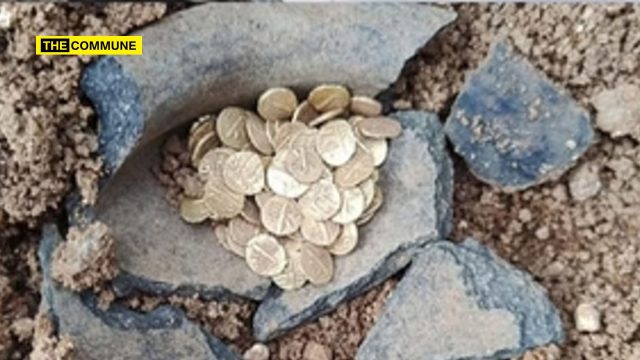
CCTV Footage Shows Kunnamkulam Assaulting Youth Congress Leader Sujith V S; Congress MP Shashi Tharoor Calls for Action

CCTV footage has surfaced showing Youth Congress Chovannur Mandalam president Sujith V S being brutally assaulted inside the Kunnamkulam police station on 6 April 2023. The visuals were obtained following a Right to Information (RTI) application filed by Sujith.

According to the case registered in the Kunnamkulam First Class Judicial Magistrate Court, Sujith suffered hearing loss following alleged custodial violence by Sub-Inspector Nuhman and CPOs Sashindran, Sandeep, and Sajeevan.

The incident reportedly began when Sujith questioned police officers who were allegedly threatening his friends standing by the roadside at Chovannur. Enraged, SI Nuhman allegedly brought Sujith to the station in a police jeep, where he was assaulted in custody. Sujith stated, “Just before reaching the station, the police jeep was stopped on the road. Sajeevan, one of the officers, opened the back door and assaulted me. Once inside the station, the officers together subjected me to brutal thrashing.”

Police later filed a FIR against Sujith, accusing him of public nuisance and obstructing duty under the influence of alcohol. However, a medical report confirmed he had not consumed alcohol, and the Chavakkad Magistrate Court granted him bail.

Following the assault, Sujith filed complaints with senior police officials and the Human Rights Commission. A departmental inquiry retrieved CCTV evidence showing five policemen beating him inside the station. Judicial Magistrate L Jayanth subsequently ordered a case to be registered against the accused officers. Advocate CB Rajeev, also Kunnamkulam Block Congress president, represented Sujith in court.

The Crime Records Bureau (CRB) inquiry, led by Assistant Commissioner Sethu K C, confirmed the assault. The footage reportedly shows officers continuing the assault upstairs in the CCTN room in the presence of Sub-Inspector Nuhman. Officers were also seen removing Sujith’s ring, bracelet, and chain, and one officer carried a stick while escorting him out of the room.

Sujith further alleged that police tried to offer ₹20 lakh through Congress leader Varghese Chovannur to withdraw the case, an offer he refused.

Reacting to the incident, Congress MP Shashi Tharoor condemned the custodial violence, wroteThe custodial violence against Youth Congress leader Sujith by Kunnamkulam Police is deeply disturbing. Assaulting a citizen for questioning police threats is not just unlawful — it is inhuman. Such officers, who violate the very principles of justice and dignity, have no place in the police force. They have forfeited the moral right to continue in service. The CM and Home Department must act. Silence cannot be the shield for such brutality. @CMOKerala @IYCKerala

Disciplinary action is being considered against the police officers involved, and further proceedings are expected to be conducted under the direct supervision of the court.

Subscribe to our channels on Telegram, WhatsApp, and Instagram and get the best stories of the day delivered to you personally.
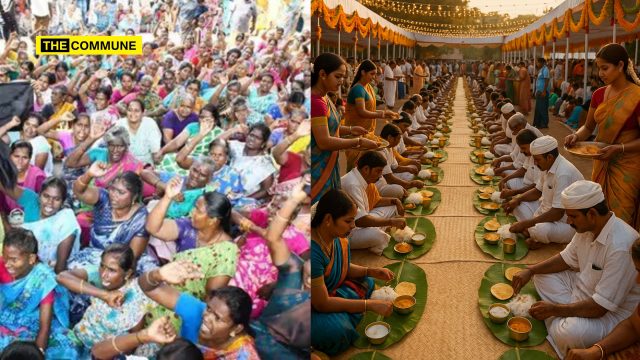
Sri Lankan Tamil Refugees Who Arrived Before 2015 Exempted From Penal Action

sri lankan tamil refugees 2015 penal action
Image Source: India Today

The Ministry of Home Affairs (MHA) has announced exemptions for certain refugees and undocumented migrants from penal provisions under the Immigration and Foreigners Act, 2025.

Under the new Immigration and Foreigners (Exemption) Order, 2025, Sri Lankan Tamil refugees who arrived in India before 9 January 2015 will not be penalised for being without valid passports, travel documents, or visas. India does not formally recognise refugees, and the exemption effectively ensures that registered Sri Lankan Tamils will not be treated as illegal migrants.

The MHA had earlier, in 2015, waived visa fees and overstay penalties for Sri Lankan refugees arriving before the same date who opted to voluntarily return to Sri Lanka. The 2025 Act, which replaced earlier immigration laws, criminalises entry or stay of foreigners without valid documents with fines of up to ₹5 lakh or imprisonment of up to five years, or both.

According to the September 2 notification, the provisions of sub-sections (1), (2), and (3) of Section 3 of the 2025 Act, regarding the requirement of a passport, other travel documents, or visa, shall not apply to registered Sri Lankan Tamil nationals who took shelter in India up to 9 January 2015.

Exemption Extends To Other Minority Communities In Neighbouring Countries

In addition, the exemption extends to undocumented members of six minority communities: Hindus, Sikhs, Buddhists, Jains, Parsis, and Christians, from Afghanistan, Bangladesh, and Pakistan who entered India before 31 December 2024. These measures ensure that these migrants will not face criminal prosecution and can apply for long-term visas (LTVs), a precursor to citizenship.

A senior government official stated that the exemption aims to protect those who were compelled to seek shelter in India due to religious persecution or fear thereof. However, the official clarified that the move does not extend the cut-off date of the Citizenship (Amendment) Act, 2019 (CAA), which remains 31 December 2014.

The CAA allows citizenship for undocumented migrants from the six non-Muslim communities from Afghanistan, Bangladesh, and Pakistan, who entered India on or before 31 December 2014, reducing the residence requirement for naturalisation from 11 years to five years. The LTVs issued under the September 2 order ensure that no criminal action will be taken against these migrants for illegal stay.

The September 2 notification also specifies that provisions under Section 3 and rules 7, 8, and 9 of the Foreigners and Immigration Act, 2025, regarding the requirement of valid passports or visas for entry, stay, and exit, shall not apply to undocumented migrants from the six minority communities who entered India on or before 31 December 2024, including those whose documents have expired.

(With inputs from The Hindu)

Subscribe to our channels on Telegram, WhatsApp, and Instagram and get the best stories of the day delivered to you personally.

13 Heroic Rescue And Relief Operations Carried Out By Indian Army In 2025

indian army rescue operations jammu kashmir himachal uttarakhand punjab

In the wake of devastating flash floods in Jammu and Kashmir, the Indian Army swiftly responded by constructing a Bailey bridge over the Jangalwar stream on National Highway 244, restoring connectivity to the Doda and Kishtwar districts on 2 September 2025.

This report compiles 13 major rescue and relief operations carried out by the Indian Army in 2025, where troops responded swiftly to floods, landslides, cloudbursts, and other disasters across multiple states of Bharat, saving thousands of lives and restoring vital connectivity.

#1 Army Restores Connectivity in Ramban, J&K

In the wake of devastating flash floods in Jammu and Kashmir, the Indian Army swiftly responded by constructing a Bailey bridge over the Jangalwar stream on National Highway 244, restoring connectivity to the Doda and Kishtwar districts on 2 September 2025. The washed-away road portion had cut off strategic national projects and vital highways, severely impacting the movement of essential supplies. Army engineers from the White Knight Corps mobilized bridging equipment and executed the mission under challenging conditions, ensuring remote communities regained access to crucial resources and transportation routes.

#2 Bailey Bridge Constructed In 12 Hrs Over Tawi River

On 29 August 2025, after a section of the ₹147 crore fourth bridge collapsed in Jammu due to heavy rains, the Indian Army demonstrated remarkable efficiency by building a 110-foot Bailey bridge within 12 hours. The soldiers, belonging to the Rising Star Corps, launched multiple concurrent rescue missions with assistance from Army and IAF helicopters, evacuating nearly 1,000 people, including children and paramilitary personnel. These concerted efforts rapidly reestablished key communication links between Jammu and Srinagar at a critical time.

#3 Amphibious Vehicle Rescue in Punjab

Severe flooding in Punjab saw the Indian Army deploying the advanced ATOR N1200 amphibious vehicles on 28 August 2025, to rescue civilians stranded in submerged villages. Manufactured in collaboration between JSW Gecko Motors and Copato, these vehicles enabled access to isolated pockets unreachable by conventional means. Army and NDRF teams used this technology to move villagers to safety, exemplifying effective collaboration between Indian innovation and military efficiency during natural calamities.

#4 Gangotri Highway Reopens After Disaster

After a destructive flood submerged a critical segment of the Gangotri National Highway between Harsil and Dharali, the Indian Army and the Border Roads Organisation worked tirelessly to clear debris and install Hume pipes. Their efforts allowed vehicular movement to Gangotri Dham to resume by 30 August 2025—24 days after the highway became impassable. The reopening reconnected pilgrims and locals, underscoring the army’s pivotal role in restoring mobility in disaster-stricken areas.

#5 Pilgrims Rescued at Machail Mata Temple

Following a deadly cloudburst in Kishtwar, Jammu and Kashmir, on 17 August 2025, Indian Army personnel, alongside disaster response teams, swiftly rescued pilgrims stranded at the Machail Mata temple. The catastrophe claimed at least 55 lives, but the Army’s rapid mobilization led troops to the scene within 45 minutes, enabling them to save lives under hazardous conditions. Timely medical and logistical support were provided to the survivors in this remote location.

#6 Air Operations Evacuate Thousands

On August 16 and 17, 2025, Indian Army aviation undertook over 250 hours of sorties using Mi-17s, a Chinook, and other aircraft to rescue more than 5,000 civilians and 300 paramilitary personnel from flood-affected regions in Punjab, Jammu, and Himachal Pradesh. Forty-seven army columns collaborated closely with civil authorities, NDRF, and SDRF to evacuate the stranded, airdrop 21 tonnes of relief materials, restore communications, and lay a critical Bailey bridge at Jammu Tawi, proving the army’s comprehensive disaster management capabilities.

#7 Army Responds Swiftly in Arunachal Valley

After a catastrophic landslide, triggered by a cloudburst on the night of August 16-17, 2025, Indian Army troops under the Spear Corps teamed with the Civil Administration in Angrim Valley, Arunachal Pradesh. Battling treacherous terrain, the teams conducted immediate rescue and relief operations, delivering essential aid and rekindling hope amidst devastation. Their prompt courage and teamwork minimized casualties and initiated the rebuilding of affected communities.

#8 Uttarkashi Cloudburst: Rapid Army Response

Responding to the severe cloudburst that struck Dharali village in Uttarkashi on 5 August 2025, the Indian Army’s IBEX Brigade launched immediate rescue operations in rugged, debris-laden terrain. The troops successfully rescued more than 550 civilians, providing emergency medical care and evacuation services. Their swift intervention amidst landslides was crucial in safeguarding lives and mitigating the disaster’s impact in the flood-hit region.

#9 Boy Airlifted from Flooded River in Rajouri

In a dramatic operation on 23 July 2025, an Army helicopter rescued a minor boy trapped atop a rock in a flooded Rajouri river in Jammu and Kashmir. The joint mission involved the Indian Army, SDRF, local police, and civilian divers braving adverse weather and dangerous currents. The successful airlift showcased close cooperation among agencies and highlighted the valor of the 662 Army Aviation Squadron deployed from the White Knight Corps.

#10 Operation SHIVA: Safeguarding Amarnath Yatra

Following heavy rain and a landslide along the Baltal route in July 2025, the Indian Army played a vital role in ‘Operation SHIVA’ to ensure the safety of Amarnath Yatra pilgrims in Kashmir. The army responded promptly, providing food, medical assistance, and essential support to hundreds stranded by washed-out roads. Their intervention rescued over 500 pilgrims, emphasizing the military’s commitment to protecting lives during religious events affected by natural disasters.

#11 Vital Himachal Track Cleared for Relief

Between July 6 and 11, 2025, the Indian Army, working alongside SDRF, NDRF, and local authorities, restored crucial access in Mandi district, Himachal Pradesh. Floodwaters had isolated several villages, but army columns delivered relief material, set up medical camps, and distributed rations. Aid reached areas like Degi, Rushad, and Chapad, ensuring essential supplies continued to vulnerable populations despite challenging conditions.

#12 Massive Rescue Across Northeast India

From May 31 to June 3, 2025, Indian Army, Air Force, Assam Rifles, and multiple agencies executed ‘Operation Jal Rahat-II’ across Manipur, Assam, Sikkim, and Arunachal Pradesh after floods and landslides severed communication. Over 1,560 civilians were rescued from isolated communities, with dedicated medical camps, food, and water supplied to relief centers. The army’s well-coordinated efforts ensured the safety and support of affected populations during this widespread humanitarian crisis.

#13 Avalanche Response in Uttarakhand

On February 28, 2025, a massive avalanche struck a Border Roads Organisation camp in Mana, Uttarakhand. Indian Army troops from the IBEX Brigade undertook a dangerous and determined rescue operation, saving 46 people amidst harsh weather and challenging terrain. Despite their best efforts, eight lives were lost. The operation demonstrated the army’s bravery, resilience, and unwavering commitment under the most adverse circumstances.

Subscribe to our channels on Telegram, WhatsApp, and Instagram and get the best stories of the day delivered to you personally.
Kerala Crime Branch Files FIR Against Congress MLA Rahul Mamkootathil Over Alleged Sexual Harassment, Stalking, And Intimidation Of Women

With just less than two weeks left for a fresh Assembly session in Kerala, the Crime Branch Police has filed an FIR against Youth Congress former state president and Palakkad MLA Rahul Mamkootathil in connection with multiple allegations of sexual harassment, stalking, and intimidation of women. The FIR was submitted before the Thiruvananthapuram Judicial First Class Magistrate Court.

According to the FIR, Rahul allegedly harassed women on social media, sent threatening messages, and even pressured one woman to undergo an abortion. He has been booked under BNS Section 78(2), Section 351 of the Police Act, and Section 120. The charges were filed based on complaints received by the State Police Chief. The case stems from complaints filed by five individuals, all of whom are third parties not directly connected to the alleged victims. While the women at the centre of the allegations have not yet lodged formal complaints, the Crime Branch has said their statements will be recorded if evidence is produced.

The agency has already taken the deposition of Advocate Shino, one of the complainants, and indicated that it will also question journalists who posted about the controversy on Facebook. Investigators have reportedly traced one of the alleged abortion incidents to a hospital in Bengaluru, from where information has already been collected.

The Crime Branch is preparing to record the statement of the woman said to have undergone the procedure. There are also indications that a second woman may have had an abortion, allegedly with assistance from a relative of the first. These claims, however, remain under verification. The FIR notes that the police took up the case suo motu, citing repeated harassment of women by Rahul on digital platforms. It also records allegations that he threatened women over the phone and sent coercive messages related to abortion.

With the case now before the court, the Crime Branch maintains that further action will depend on direct testimonies and corroborative evidence from the women allegedly involved. With Mamkootathil now suspended from the Congress party, all eyes are on how the party will re-engage with the issue especially amid growing concerns that the state government is targeting him for political gain. This comes at a time when the Congress-led opposition is gearing up to challenge the Vijayan government over its alleged mismanagement.

-IANS

Subscribe to our channels on TelegramWhatsApp, and Instagram and get the best stories of the day delivered to you personally.
GST 2.0 Reforms: Major Rate Cuts Across Sectors To Boost Economy And Ease Living

gst nirmala sitharaman

The wide-ranging GST reforms are set to improve the lives of citizens and ensure ease of doing business for all, especially small traders, thus strengthening the economy.

The changes in GST rates on services and goods other than cigarettes, chewing tobacco products like zarda, unmanufactured tobacco and beedi will be effective from 22 September, as per recommendations of the GST Council in its 56th meeting.

For the specified goods, namely, cigarettes, chewing tobacco products like zarda, unmanufactured tobacco and beedi, the existing rates of GST and compensation cess will continue to apply, and the new rates will be implemented at a later date to be notified, based on discharge of the entire loan and interest liabilities on account of compensation cess. There is no change in the threshold of registration required for goods under the CGST Act, 2017.

The IGST on imported goods will be the GST rates as notified in the rate notification, except where the IGST rate has been exempted separately, according to the Ministry of Finance. GST is levied on supply. Therefore, on goods supplied on or after the revised GST rates are notified, the new GST rates will be applicable on the outward supplies of goods/services or both.

All dairy milk, other than Ultra High Temperature (UHT) milk, was already exempt from GST. Hence, UHT milk has been exempted to provide the same tax treatment to similar goods. Plant-based milk drinks, except soya milk drinks, attracted 18 per cent GST while soya milk drinks attracted 12 per cent GST. The GST rate on plant-based milk drinks and soya milk drinks has now been reduced to 5 per cent.

The principle behind the recent rate rationalisation exercise is to keep similar goods at the same rate to avoid issues of misclassification and disputes. This has also been applied to ‘other non- alcoholic beverages’. “Food preparations not elsewhere specified will attract a GST rate of 5 per cent. Bread was already exempt, while pizza bread, roti, porotta, paratha, etc., attracted different rates. All Indian breads, by whatever name called, have been exempted even though only a few goods have been mentioned by way of illustrative example,” the ministry said.

The rate hike of carbonated beverages of fruit drink or carbonated beverages with fruit juice is because these goods attracted compensation cess in addition to GST. Since it has been decided to end the compensation cess levy, the tax has been increased to maintain the pre-rate rationalisation level of tax. Prior to rate rationalisation, paneer sold in other than pre-packaged and labelled form already attracted a nil rate. Therefore, the changes have been made only in respect of paneer supplied in pre-packaged and labelled form. Paneer is an Indian cottage cheese. This is mostly produced in the small-scale sector. The measure is intended to promote Indian cottage cheese.

The GST rate on agriculture machinery/equipment such as, sprinklers, drip irrigation system, Agricultural, horticultural or forestry machinery for soil preparation or cultivation; lawn or sports-ground rollers, harvesting or threshing machinery, including straw or fodder balers; grass or hay mowers, other agricultural, horticultural, forestry, poultry-keeping or bee-keeping machinery, composting machines, etc., which earlier attracted 12 per cent GST, has now been reduced to 5 per cent.

“The objective of the rate rationalisation is to maintain a balance between users and producers. While providing relief for the farmers, it is important that the domestic manufacturing does not get adversely impacted. If agriculture machinery is fully exempted, the manufacturers/dealers of these goods would not be able to claim input tax credit on the GST paid on raw materials and will have to reverse the ITC paid on the inputs,” explained the ministry.

This would increase their effective tax incidence and cost of production. This may, in turn, be passed on to farmers in the form of higher prices, which in turn would make the measure counterproductive. All drugs/ medicines have been prescribed a concessional rate of GST of 5 per cent, except those specified at a nil rate. “If drugs/medicines are fully exempted, the manufacturers/dealers would not be able to claim input tax credit on GST paid on raw materials and will have to reverse the ITC paid on the inputs. This would increase their effective tax incidence and cost of production. This may in turn be passed on to consumers/ patients in the form of higher prices, which in turn would make the measure counterproductive,” the ministry noted.

Moreover, the rate of 5 per cent applies to all medical devices, instruments, and apparatus used in medical, surgical, dental and veterinary uses; other than that are exempted specifically. The GST rate on all small cars has been reduced from 28 per cent to 18 per cent. For the purposes of GST, small cars mean petrol, LPG, or CNG cars with engine capacity up to 1200 cc and length up to 4000 mm and diesel cars with engine capacity up to 1500 cc and length up to 4000 mm. The GST rate on three-wheelers has been reduced from 28 per cent to 18 per cent.

All motor vehicles designed to transport ten or more persons, including the driver, and classified under HSN 8702, will attract a GST rate of 18 per cent. It has been reduced from 28 per cent. Motorcycles of engine capacity up to 350 cc attract a GST rate of 18 per cent, while motorcycles of engine capacity exceeding 350 cc attract a GST rate of 40 per cent. The new GST rate on mid-size and big cars will be 40 per cent with no compensation cess. The GST rate has been reduced to 5 per cent on bicycles and their parts from 12 per cent.

The 40 per cent special rate is applicable only on a few select goods, predominantly on sin goods and a few luxury goods and therefore is a special rate. Most of these goods attracted Compensation Cess in addition to GST. Since it has been decided to end the Compensation Cess levy, the Compensation Cess rate is being merged with GST so as to maintain tax incidence on most goods. On other goods and services, the special rate has been applied as these were already attracting the highest GST rate of 28 per cent.

Currently, cotton attracts GST on a reverse charge basis. This means that agriculturists do not have to pay GST when they supply raw cotton. The reason for taxing cotton in GST is to avoid breakage in the input credit chain, and the GST paid on cotton is available as input tax credit for the textile industry. This will ultimately benefit the consumers. The new GST rate on a toilet soap bar is 5 per cent. This is intended to lower the monthly expenditure for the lower middle class and the poorer sections of society.

The reason for reducing GST on face powder and shampoos is that these goods are daily-use items for almost all segments of the population. The GST rate has been reduced to 5 per cent only on certain goods that are daily-use items for most segments of the population. GST Council recommended a reduction in the GST rate to 5 per cent on toothpaste, toothbrush and dental floss, which are the basic dental hygiene goods. The GST rate on renewable energy equipment/devices that were at 12 per cent has been reduced to 5 per cent.

“These goods already faced an inverted duty structure. While reducing the GST rate to 5 per cent will deepen inversion, a mechanism for refund arising out of the inverted duty structure is available. In addition, process reforms will ensure expedited refunds. The objective is to promote renewable energy goods,” said the ministry.

GST on air conditioners and dishwashers has been reduced from 28 per cent to 18 per cent. Earlier TVs and monitors up to 32 inches attracted 18 per cent GST, while larger TVs and monitors attracted 28 per cent GST. Now all TVs and monitors will be uniformly taxed at 18 per cent. “The policies covered under the exemption recommended on life insurance are all individual life insurance policies, including term, ULIP, and endowment plans and reinsurance services thereof. The policies covered under the exemption recommended on health insurance are all individual health insurance policies, including family floater plans and senior citizen policies and the reinsurance services thereof,” the ministry informed.

-IANS

Subscribe to our channels on TelegramWhatsApp, and Instagram and get the best stories of the day delivered to you personally.
GST Council Slashes Taxes On Daily Essentials And Packaged Foods Ahead Of Festive Season

Ahead of the festive season, the GST Council, led by Union Finance Minister Nirmala Sitharaman, has announced significant reduction or tax exemption on several food items, packaged food and daily essentials.

UHT milk, paneer, pizza bread, rotis, and khakhras will now have zero tax after GST 2.0, reduced from 5 per cent. Parathas and parottas, previously taxed at 18 per cent, are now in the nil bracket. GST on key dairy items like butter, ghee, and cheese has decreased from 12 per cent to 5 per cent. Prices for condensed milk and various packaged foods, including jams, sauces, pickles, and fruit juices, will come down.

Dry fruits and nuts, including almonds, cashews, pistachios, and dates, will now be taxed at 5 per cent instead of 12 per cent. Biscuits, cakes, chocolates, cornflakes, soups, and ice cream will also see a tax reduction to 5 per cent from 18 per cent. The move was announced by the GST council even as inflation is cooling, with headline retail inflation dropping to 1.55 per cent in July, the lowest since June 2017.

Food inflation has also slipped into negative territory (–1.76 per cent), the lowest since January 2019. Families are expected to benefit from relief after experiencing volatile household expenses earlier this year due to changes in vegetable prices. Packaged food manufacturers are set to quickly pass on the benefits. Executives announced that grammage in ₹5 and ₹10 packs, which have been reduced in recent years due to rising input costs, will be restored. Analysts predicted that snack makers will benefit significantly, as GST on these products is expected to decrease from 12 per cent to 5 per cent. The move by GST council is expected to boost the consumption sector, which rose 7 per cent in the June quarter due to stronger rural demand.

-IANS

Subscribe to our channels on TelegramWhatsApp, and Instagram and get the best stories of the day delivered to you personally.
Supreme Court Refuses Interim Bail To Separatist Leader Shabir Shah In Terror Funding Case

The Supreme Court on 4 September 2025, declined to order the immediate release of Kashmiri separatist leader Shabir Ahmed Shah on interim bail in an alleged terror funding case. However, a Bench of Justices Vikram Nath and Sandeep Mehta sought the National Investigation Agency (NIA)’s opinion on a special leave petition (SLP) filed by Shah seeking bail.

The Justice Nath-led Bench appeared unconvinced by senior Advocate Colin Gonsalves’s submission that Shah’s “very sick” condition warranted his release on interim bail.

Earlier, the Delhi High Court had rejected Shah’s bail plea, stating that the possibility cannot be ruled out that, as Chairman of an unlawful organisation, he would not indulge in similar unlawful activities and may attempt to tamper with evidence or influence witnesses yet to be examined.

“Although the appellant (Shah) has been in custody for five years, the charges have already been framed, and the trial is underway. There is no delay on the part of the prosecution for not examining its witnesses,” said a Bench of Justices Shalinder Kaur and Navin Chawla, rejecting his plea for release on bail on the ground of delay in the trial.

Further, the Justice Kaur-led Bench said there was no question of considering Shah’s alternative plea for house arrest, given the serious allegations against him and the sensitivity and gravity of the issues involved.

Shah was arrested in June 2019 and is alleged to have played a significant role in establishing a separatist movement in Jammu and Kashmir. He is also accused of ‘honouring’ the families of deceased terrorists, receiving funds through hawala transactions, and raising money via LoC trade to support subversive and militant activities. The NIA has claimed that several individuals accused of conspiring to raise funds to destabilise Kashmir and wage war against the Indian government were involved. Shah’s name was included in the second supplementary charge sheet filed by the NIA on 4 October 2019.

-IANS

Subscribe to our channels on TelegramWhatsApp, and Instagram and get the best stories of the day delivered to you personally.
‘AJEY’ Trailer Charts The Powerful Journey Of A Young Man Turned Spiritual Leader

The makers of “AJEY: The Untold Story of a yogi” unveiled the trailer of the upcoming film and it showcases the extraordinary journey of a young man from humble beginnings to a spiritual seeker.

The film is inspired by Shantanu Gupta’s bestselling book The Monk Who Became Chief Minister. Slated to release on 19 September, the film stars Anantvijay Joshi, Paresh Rawal, Dinesh Lal Yadav and Ajay Mengi.

The trailer begins with shots of Garhwal, glimpses of Ajay’s family, and early friendships, leading up to his life-changing decision to take sanyas. It sparks his spiritual journey in a land ruled by gangsters and bahubali politicians. Peace soon gives way to conflict as he challenges a corrupt system, moving from spiritual rituals to decisive leadership and reform.

The trailer captures both the turbulence of an unruly land and the depth of Ajay Anand’s inner journey. The film traces the personal sacrifices and ideological evolution that shape Ajay’s transformation, blending drama, inspiration, and spiritual essence. Directed by Ravindra Gautam and produced by Ritu Mengi, AJEY is written by Dilip Bachchan Jha & Priyank Dubey and the stirring music is by Meet Bros.

The director of photography is Vishnu Rao, production designer is Udai Prakash Singh and associate producers are (Suuraj Sinngh) B-Live Productions and Itihasa Academy. Ravindra Gautam said: “AJEY is a story of transformation, resilience, and vision, capturing the journey of a simple young man from the hills of Uttarakhand to a life devoted to service and leadership.”

Producer Ritu Mengi shared that the film “explores conviction, sacrifice, and leadership, showing both the public and private life of the protagonist and the choices that shaped his journey.” The Monk Who Became Chief Minister is a biography of Yogi Adityanath, the 22nd Chief Minister of Uttar Pradesh. It is written by Shantanu Gupta, an Indian author and political analyst. The book came out on 25 August 2017.

-IANS

Subscribe to our channels on TelegramWhatsApp, and Instagram and get the best stories of the day delivered to you personally.