Liquor sales in Kerala during this year’s Onam season have touched a record high, with earnings surpassing last year’s figures. According to reports, liquor worth Rs 826.38 crore was sold in the ten days leading up to Uthradam.
This is around Rs 50 crore more than the sales recorded during the same period last year. On Uthradam day alone, liquor sales touched Rs 137 crore, compared to Rs 126 crore on the same day in 2024. The sharp rise highlights the continuing demand for liquor during the state’s biggest festival season.
Among outlets, the Karunagappally store registered the highest sales, clocking Rs 146.08 lakh on Uthradam day. It was followed by the Asramam outlet in Kollam, which recorded sales of Rs 123 lakh, and the Edappal outlet with Rs 110.79 lakh.
Reports said six outlets across Kerala recorded sales of more than Rs one crore each during the season. Liquor sales remain one of the most important sources of revenue for the Kerala government. The state, which consistently records the highest per capita alcohol consumption in the country, depends heavily on the revenue from its state-run liquor outlets.
Officials said the surge in Onam sales has once again ensured strong income for the exchequer. At the same time, health experts and social groups have raised concerns over the steady increase in alcohol consumption during festive periods. They point out that the social and health costs of heavy drinking remain a challenge for the state, even as sales continue to rise year after year.
Liquor is sold through around 325 retail outlets owned by the Corporation and the state-backed cooperative organisation Consumerfed. The profile of liquor users in Kerala reveals that 32.9 lakh people out of the 3.34 crore in the state consume liquor, which includes 29.8 lakh men and 3.1 lakh women. Around five lakh people consume liquor daily.
Out of this, 83,851 people (including 1,043 women) are addicted to alcohol. The latest figures underline a clear pattern as Onam remains the single largest driver of liquor sales in Kerala. With this year’s numbers reaching a new peak, the debate between revenue generation and public health concerns is likely to continue.
-IANS
Subscribe to our channels on Telegram, WhatsApp, and Instagram and get the best stories of the day delivered to you personally.

State Election Commissioner G.S. Sangreshi has said that there was nothing wrong in conducting elections using ballot papers, and the poll body is ready to make preparations in this regard. He said this following the cabinet decision of the Congress-led government in Karnataka to recommend to the State Election Commission (SEC) that all local body elections be conducted using ballot papers instead of Electronic Voting Machines (EVMs).
Speaking to the media on Friday in Bengaluru, Commissioner Sangreshi said, “If the state government brings an enactment legally and guidelines are framed, we will have to implement it. Whether it is justifiable or not has been decided by them. They have considered public opinion and held discussions on the matter. Hence, there will be no hindrance to using ballot papers.”
He further stated, “Instead of EVMs, ballot papers will be used. Voting through EVMs has been in place at all levels except gram panchayats for the last 20 to 25 years. For gram panchayat elections, ballot papers are still used. Hence, at the village and rural level, people are familiar with ballot papers. Therefore, I feel the use of ballot papers will not pose any setback or cause for concern.”
“We need not seek permission from the Central Election Commission for using ballot papers, because the State Election Commission is an independent constitutional body. The SEC has powers equal to those of the Central Election Commission,” he stressed.
“There is no need for us to seek their (ECI) approval. In total, as per the guidelines and law, elections must be conducted — this is the objective,” Commissioner Sangreshi stated. He added that the state government, after taking officials into confidence, must implement the decision, as personnel will be required for the process.
Preparations for the voters’ list will be carried out under the monitoring of the State Election Commission. “The Constitution has provided rights and laid down procedures,” he said. “We will conduct panchayat and local body elections with transparency, reliability, commitment, and in a judicious manner,” he assured.
The Congress-led government in Karnataka has decided to bring an amendment to use ballot papers instead of EVMs in the upcoming local body polls in the state. Minister for Law H.K. Patil made the statement in this regard after the cabinet meeting on Thursday at Vidhana Soudha in Bengaluru. Minister Patil stated, “The state cabinet has resolved to recommend necessary legal amendments and framing of rules to facilitate the conduct of all upcoming local body elections through ballot papers instead of the EVM system. Earlier, the data from the Assembly elections was being used. Now, a decision has been taken to recommend revision, correction, and reconstitution of the voters’ list, so that the State Election Commission can prepare a high-quality electoral roll.”
Coming down heavily on the Congress-led government for deciding to bring an amendment to use ballot papers instead of EVMs in the upcoming local body polls in the state, Karnataka BJP said, “By deciding to replace EVM machines with ballot papers in the upcoming local body elections, the Congress-led government in Karnataka has itself admitted that it came to power in the state through electoral fraud.”
BJP State President and MLA B.Y. Vijayendra took to X, made the statement on Friday. “In this context, the 136 Congress MLAs who were elected in the 2023 state elections through EVMs should first resign. The nine Congress MPs elected to the Lok Sabha from Karnataka should also resign. They should contest again and win using ballot papers. Otherwise, they must admit that they have come to power through election fraud,” Vijayendra stated.
-IANS
Subscribe to our channels on Telegram, WhatsApp, and Instagram and get the best stories of the day delivered to you personally.
Senior AIADMK leader and former minister K.A. Sengottaiyan on 5 September 2025 sent a sharp signal to the party’s leadership, EPS, stressing that electoral victory in Tamil Nadu was impossible unless the AIADMK reunited with leaders who had walked away or been expelled after J. Jayalalithaa’s death.
At a press conference in Gobichettipalayam, Sengottaiyan spoke at length about the party’s past struggles, its present crisis, and the path forward. “A movement should not break up. The reason this movement has survived is because of the millions of volunteers who believe in it. Our responsibility is to protect that faith,” he said, invoking the party’s legacy under M.G. Ramachandran and Jayalalithaa.
“Embrace the one who went out”
Sengottaiyan also urged reconciliation with the ones who have been silent and the ones who have walked out of the party. “We should embrace the one who went out. Those who are silent today should also be brought back. Only then can we achieve victory,” he declared.
He argued that in the absence of unity, the AIADMK would continue to face defeat in elections. Referring to the 2024 Lok Sabha results, he said the BJP alliance did not yield success because the AIADMK house was not in order. “Even a strong national party with us did not bring victory. That is why all sections of this movement must come together,” he explained.
10-day Ultimatum
Sengottaiyan delivered a strong message to the party’s general secretary Edappadi K. Palaniswami (EPS), warning that the AIADMK could not hope for electoral victory without reuniting its divided factions and setting a 10-day deadline for decisive action.
He revealed that a delegation of six senior leaders – himself, S.P. Velumani, Natham Viswanathan, C.V. Shanmugam, Thangamani and Anbazhagan, had earlier urged EPS to begin a reconciliation process: “Six leaders, including Natham R Viswanathan, SP Velumani, P Thangamani, KP Anbalagan, and CV Shanmugam, have met Edappadi K Palaniswami to reunite the expelled leaders, but he did not accept our opinion. The expelled leaders wanted to rejoin the party without any conditions. I am saying this to ensure that the party does not get split. I am ready for any sacrifice. Even when I got opportunities twice, I worked for the party’s unity.”
Sengottaiyan said their appeal was ignored. “If no decision is taken within 10 days, we will all take the lead in implementing it,” he warned, signalling that senior functionaries could bypass EPS if necessary. This also seems to indicate the discontent simmering within the party.
The 77-year-old former minister and nine-time legislator said the decision ultimately lay with general secretary Edappadi K. Palaniswami, but insisted that leaders who had once held key responsibilities must be reinstated. “The general secretary can decide who should return, but leaders who held key responsibilities must be reinstated. If this does not happen, like-minded leaders will unite and do it,” he warned.
Underscoring the importance of unity, Sengottaiyan cited precedents set by party founder M.G. Ramachandran and his successor Jayalalithaa, who had readmitted critics such as S.D. Somasundaram and Kalimuthu to strengthen the party despite past differences.
Not targeting EPS, but “crores of workers”
When asked if his statements were directed against EPS, Sengottaiyan denied hostility but stressed that his stand reflected the mood of the rank-and-file. “My mindset is the mindset of crores of workers. This is the right time for this movement to succeed,” he said, carefully balancing his criticism with loyalty to the leadership structure.
He repeatedly stressed that his position was rooted not in personal ambition but in concern for the movement. “This is not about individuals. The people of Tamil Nadu want a change in government. But that can only happen if the AIADMK comes together as one family,” he said.
“Movement will not survive on splits”
Drawing from history, Sengottaiyan said the AIADMK had faced existential crises in the past but had survived only because it stayed united. “From MGR’s time to Amma’s time, this movement survived because it did not split. When Amma was alive, there were many challenges, but unity was the shield. If we allow cracks today, the people will lose faith,” he cautioned.
He added that the sacrifices of lakhs of cadres over decades could not be wasted by leadership tussles. “A movement is not about one or two people. It is about the lakhs of cadres who have stood in the sun and rain for years,” he said.
Push for reconciliation ahead of 2026 polls
Sengottaiyan’s press conference comes at a crucial moment, with the 2026 Tamil Nadu Assembly elections less than two years away. Within the AIADMK, several leaders fear that without regrouping particularly with OPS and Sasikala’s factions, the party may struggle to mount a serious challenge to the DMK.
Political observers note that Sengottaiyan, a respected senior figure with decades of organisational experience, rarely addresses the press in such direct terms. His intervention is being read as an attempt to nudge EPS towards a course correction, especially after the AIADMK’s recent string of electoral setbacks.
No movement without the people
Throughout his address, Sengottaiyan repeatedly underlined that the AIADMK’s survival was tied to the sentiments of its cadre base. “People want change. People want this movement to succeed. We cannot disappoint them,” he said.
He also highlighted the limitations of alliances and electoral arithmetic in the absence of internal strength. “Alliances alone will not bring victory. Only unity can,” he said.
Sengottaiyan’s intervention is a reminder of the AIADMK’s precarious position: a once-dominant movement now struggling with splits, leadership disputes, and electoral setbacks. His warning that “only unity will bring victory” frames the central dilemma before the party, whether it can put aside personal rivalries and return to collective strength, or risk being sidelined in Tamil Nadu’s political landscape.
Subscribe to our channels on Telegram, WhatsApp, and Instagram and get the best stories of the day delivered to you personally.
The Enforcement Directorate (ED) has begun a preliminary inquiry into allegations of questionable foreign funding possibly being used to incite communal unrest in connection with the ongoing Dharmasthala controversy in Karnataka, official sources confirmed on 4 September 2025.
According to reports, the ED is currently collecting relevant information and documentation involving various individuals and organizations, including certain NGOs, that are suspected of utilizing foreign contributions to inflame tensions.
The agency is conducting the probe under provisions of the Foreign Exchange Management Act (FEMA). Further steps will be taken if evidence surfaces indicating violations related to foreign funding regulations or the misuse of overseas funds, sources told PTI.
The controversy gained political traction on 1 September, when the Karnataka unit of the BJP organized a “Dharmasthala Chalo” protest march. The rally was aimed at denouncing what the party claims is a conspiracy and misinformation campaign targeting the temple town located in the Dakshina Kannada district.
The BJP also called for a National Investigation Agency (NIA) probe into the issue and criticized the Congress-led state government for what it described as a poor and politically biased response to the matter.
The dispute began following allegations made by Chinnaiah, a former sanitation worker employed in Dharmasthala from 1995 to 2014. He alleged that he was coerced into burying multiple bodies including those of women and minors some allegedly bearing signs of sexual violence. His accusations hinted at the possible involvement of temple authorities.
Chinnaiah was later arrested for perjury, casting doubt on the veracity of his claims. In response to the controversy, the state government formed a Special Investigation Team (SIT), which has since launched a thorough probe. The SIT conducted excavations at several forested sites near the Netravathi River, as identified by the complainant. Skeletal remains were reportedly uncovered at two of these locations.
Meanwhile, Karnataka Minister Priyank Kharge on 4 September 2025 accused two activists Girish Mattannavar and Mahesh Shetty Thimarody of having links with the Rashtriya Swayamsevak Sangh (RSS) and the BJP, suggesting a political motive behind their involvement in the case.
Police have registered two separate FIRs against the duo for allegedly producing and sharing videos on social media platforms that are believed to have incited communal tensions and hurt public sentiments.
A township project coming up in Karjat, around 100 km from Mumbai, has sparked a major controversy after promotional videos described it as offering a “Halal lifestyle” exclusively for Muslims.
The project, named Sukoon Empire, drew attention after National Human Rights Commission (NHRC) member Priyank Kanoongo shared one such video on X. The clip featured a woman in a hijab promoting the township as a place for “authentic community living with like-minded families, children growing safely in a Halal environment, elders being respected, prayer spaces within walking distance, and spiritual wellness.”
Posting the video, Kanoongo wrote: “This is not advertisement, it is poison… a township is being built only for people of the Muslim faith, offering a Halal lifestyle. This is nothing less than a ‘Nation within the Nation.’ A notice is being sent to the Maharashtra government.”
यह विज्ञापन नहीं विष व्यापन है। मुंबई के पास करजत इलाके में केवल मुसलमान मज़हब वालों के लिए हलाल लाइफ़ स्टाइल वाली टाउनशिप बनाई जा रही है। यह Nation Within The Nation है,महाराष्ट्र सरकार को नोटिस किया जा रहा है। pic.twitter.com/zYtW4PN4Qt
— प्रियंक कानूनगो Priyank Kanoongo (@KanoongoPriyank) September 1, 2025
The NHRC has since issued a notice to the Maharashtra Chief Secretary, seeking a detailed report within two weeks. The Commission said the matter raises “serious concerns of human rights violations.”
Critics argue the project promotes religious segregation and violates the Constitution. “Houses will be built only for people of one religion. Houses will be sold to people of this religion… This is a challenge to the Constitution of India,” the NHRC stated, warning that such developments could lead to demands for religiously exclusive schools, services, and even separate states. It further described the promotion as “a call for Ghazwa-e-Hind” and demanded strict action against the builders and withdrawal of the advertisements.
Meanwhile, some voices online defended the project, arguing that Muslims face housing discrimination in urban India and are therefore forced to create safe spaces for themselves. Hindutva groups, however, slammed the township as “communal gentrification.”
The Maharashtra government has yet to respond formally, though officials have indicated the matter is under review. The township site at Neral-Karjat remained closed in recent days, with construction expected to begin soon.
Subscribe to our channels on Telegram, WhatsApp, and Instagram and get the best stories of the day delivered to you personally.

The Bombay High Court on 4 September 2025 declined to permit the immersion of eco-friendly Ganpati idols at Banganga Talao, a historic and sacred water tank located in South Mumbai’s Walkeshwar area, during the ongoing Ganesh Chaturthi celebrations.
“When the court is faced with an issue regarding enforcement of an individual right, may be the fundamental right of the citizen and the right of the community, it should always bear in the minds of the court that some hardship to an individual or a mere infraction of a right of a citizen shall not be a ground to entertain the petition where larger issues are involved,” the bench observed while refusing permission.
The division bench of Acting Chief Justice Shree Chandrashekhar and Justice Aarti Sathe dismissed a plea filed by local resident Sanjay Shirke, ruling that questions of public interest and heritage preservation outweighed individual or community rights.
The petition challenged a Maharashtra Pollution Control Board (MPCB) notification dated August 26, which directed that idols under six feet in height be immersed in artificial ponds. Advocate Bhavesh Thakur, appearing for Shirke, argued that the directive contradicted an earlier High Court order mandating only Plaster of Paris idols to be immersed in artificial tanks. He contended that eco-friendly idols should not be subject to the same restrictions.
Opposing the plea, Advocate General Dr Birendra Saraf, representing the state, said the MPCB’s move promoted environmentally safe practices and did not infringe on any absolute right. “Banganga is a protected monument and a heritage structure. The archaeology department has not granted any permission for immersions there. There are several artificial tanks nearby, and citizens are not entitled to insist on immersing idols only at Banganga,” Saraf submitted. He added that alternatives like Girgaon Chowpatty were available for immersion.
The court found the plea to be without merit. “We are not satisfied that this case even requires any notice. The petitioner has provided no data on the number of people involved or the duration for which the immersion tradition has been followed at Banganga,” the bench noted, declining to invoke its powers under Article 226 of the Constitution.
On 5 September 2025, Tamil Nadu Chief Minister M.K. Stalin announced with great fanfare that he had unveiled a portrait of E.V. Ramasamy Naicker (hailed as “Periyar” by his followers) at Oxford University, describing it as the “greatest honour” of his life.
The DMK ecosystem and sympathetic media outlets amplified this claim, portraying it as if Oxford University itself had formally recognised Periyar alongside figures like Gandhi or Mandela.
But a closer look at the facts exposes the exaggeration and propaganda behind this narrative.
What Really Happened At Oxford
The event was not an official Oxford University ceremony. It was a small academic conference titled the London Self-Respect Movement Conference, organised within a department of St. Antony’s College, Oxford – one among 39 autonomous colleges that make up the university. Two professors facilitated the programme.
To put it in perspective: it’s like a department of some college on OMR Road under Anna University unveiling a portrait of EVR. You wouldn’t call that “Anna University unveils Periyar’s photo.”
This was not a university-wide event endorsed by Oxford’s central administration. It was a departmental seminar, of the kind that happens almost daily in Oxford’s sprawling academic ecosystem.
The much-hyped “portrait unveiling” was not a permanent installation sanctioned by the university. Unlike the statues of Gandhi or Mandela, which were donated by alumni and officially approved by Oxford bodies, this was simply a framed picture displayed at a conference. There is no official record of EVR’s portrait being accepted into Oxford’s collections or archives.
No Mention On Oxford Platforms
Oxford maintains a central event-listing portal called Oxford Talks, where seminars and conferences are recorded. Searches of the site show no listing under EVR or so-called Periyar’s name or the supposed unveiling. Neither the official Oxford University website nor St. Antony’s College made any announcement about EVR.
In other words, the “Oxford honours Periyar” line is a creation of DMK’s spin machinery – a departmental event presented as a university-wide recognition.
Recycling A Familiar Playbook
This is not the first time such claims have been manufactured. In the past, similar narratives were floated about – Periyar UNESCO Award & Karunanidhi Austria Stamp. Let’s take a look at these.
EVR UNESCO Mandram Award
The so-called UNESCO award that was given to Dravidian ideologue EVR known as Periyar among followers has been one of the greatest lies peddled by the Dravidianists. For long, it has been said, written, and ingrained in the minds of people that EVR was conferred with the title of “Socrates of South-East Asia” by UNESCO. This had found its place even in school textbooks of Tamil Nadu and was even asked as a question in annual examinations and Tamil Nadu Public Service Commission exams. However, this award has turned out to be a sham. An email response from the UNESCO office in Delhi has confirmed that no such award/title was given to E.V. Ramasamy Naicker.
Even in the award, there exists a conspicuous error. The title of the award says “Socrates of South-East Asia”. India does not fall under the South-East Asia grouping. The Southeast nations include Brunei, Myanmar, Cambodia, Timor-Leste, Indonesia, Laos, Malaysia, the Philippines, Singapore, Thailand and Vietnam. India comes under South Asia and not South-East Asia.
For more than 40 years, this lie has been peddled with several articles and research papers on EVR written based on this lie. None in the media or those belonging to the ‘intellectual’ circle who speak of facts has ever opened their mouths about this blatant lie peddled.
Then who gave the award to EVR? It was none other than late former DMK leader M. Karunanidhi in the presence of Dravida Kazhagam President K. Veeramani.
— Tinku Venkatesh | ಟಿಂಕು ವೆಂಕಟೇಶ್ (@tweets_tinku) July 23, 2020
Austria Stamp For Karunanidhi
In 2013, the Austrian postal service released a limited-edition postage stamp to mark DMK chief M. Karunanidhi’s 90th birthday on 3 June that year. The stamp, priced at 90 euros, features Karunanidhi’s portrait alongside the DMK’s red-and-black party flag and the numeral 90. According to Don Ashok, a businessman with ties to Austria, the initiative was taken by a few individuals who requested the postal service to honour Karunanidhi for his contributions to politics, cinema and literature. He described it as a gesture of affection from party supporters worldwide.
Tribals Praising MK Stalin
In June 2025, a viral video was shared on social media and pushed by Dravidianist mouthpiece Kalaignar Seithigal claiming Tanzanian tribals were “spontaneously” praising Tamil Nadu Chief Minister M.K. Stalin – this was later exposed as a paid PR stunt.
However, upon closer inspection, it emerged that these “greetings” were anything but spontaneous or sincere. A fact-check revealed that for a small fee, roughly ₹4,000 or $40, anyone can pay for a group of individuals in Tanzania or elsewhere in Africa to perform a short video message with a photo or poster of their choosing. A fact check handle exposed the DMK’s propaganda drama.
Furthermore, there was no credible or independent information suggesting that the people in the video were aware of, much less appreciative of, the initiatives implemented by the DMK government in Tamil Nadu. Dr. Sukumar’s supposed role in this production also stands unsubstantiated.
The Oxford portrait story fits neatly into this pattern: creating an illusion of global recognition to bolster Dravidian icons domestically.
Political and Ideological Packaging
The speech Stalin delivered at Oxford was heavy with symbolism, describing himself as Periyar’s “grandson in ideals,” claiming Periyar had “fed self-respect to a whole race,” and presenting the portrait unveiling as proof of Periyar’s global relevance.
But the reality is far less grand: a portrait unveiled at a conference room, without any institutional sanction from Oxford.
The propaganda value, however, lies in the contrast between perception and fact. To a Tamil Nadu audience, “Oxford honours Periyar” sounds like historic validation. To the global academic community, it was just another departmental seminar.
Dravidian Model Lies
Why exaggerate such events? Because the Dravidian establishment thrives on projecting its ideology as globally validated. By inflating departmental seminars into university honours, it seeks to manufacture prestige and legitimacy.
So, in a nutshell:
Oxford University did not honour EVR.
No official portrait was installed.
No record exists in Oxford’s archives or announcements.
What happened was simple: two professors organised a departmental seminar where a framed picture was unveiled. What followed was propaganda – a small academic event blown up into an “Oxford recognition” story to serve political optics back home.
Once again, the Dravidian establishment has shown how it thrives on projection, not reality.
Subscribe to our channels on Telegram, WhatsApp, and Instagram and get the best stories of the day delivered to you personally.
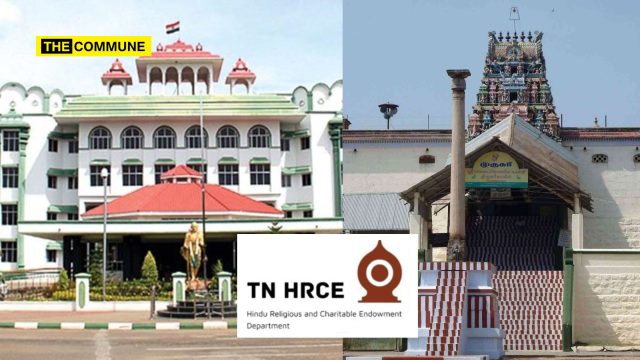
The Kerala High Court on 3 September 2025 admitted a public interest litigation (PIL) challenging the Travancore Devaswom Board’s (TDB) decision to organise the “Global Ayyappa Sangamam” at Sabarimala later this month. The court has sought a detailed explanation from the Board regarding the nature and financing of the event.
A division bench of Justices Devan Ramachandran and Syam Kumar V.M. was hearing the petition filed by Ajeesh Kalathil Gopi, who appeared in person. He argued that the programme was “political” in nature and could not be permitted in the name of Lord Ayyappa. He also urged the court to direct the removal of temporary structures erected in and around the temple and the Pampa riverbank, where the event is scheduled on 20 September 2025, saying it would compromise the sanctity of the shrine.
The bench observed that there was a lack of clarity on the true nature of the event. “What we have been told are peripheral things, which do not really explain the event fully,” it remarked. The judges reminded the TDB that it must act strictly within the mandate of the Travancore-Cochin Hindu Religious Institutions Act, 1950.
Defending the initiative, TDB’s standing counsel G. Biju told the court that the “Global Ayyappa Sangamam” was conceived to highlight Sabarimala as a global pilgrimage centre, spread the universal message of “Thathwamasi,” and promote religious harmony and global unity. He added that the programme coincided with the Platinum Jubilee of the TDB and assured the bench that “no funds from the public exchequer or TDB resources would be spent.” Instead, the event would be “financed entirely through sponsorships.”
The court, however, directed the Board to ensure transparency. It asked the TDB to file on record comprehensive details of the sponsorships, emphasising that the funding must come from “verifiable and credible sources.” The bench underlined that “every step taken by the Board must align with its statutory duties and the trust reposed in it by millions of devotees.”
Appearing for the state, Senior Government Pleader S. Kannan clarified that the government had no role in organising the programme. Its involvement, he said, would be limited to assisting with crowd management, given the large number of devotees expected to participate.
The court also stressed that the Pampa riverbank, chosen as the venue, should be treated with the “highest sanctity,” noting its reverence as the “Dakshina Ganga” for devotees. “Their duties and responsibilities are only to the religious institutions under the Act; bound in full by the trust, beliefs and conscience of the multitude of devotees on the deity,” the bench observed.
Admitting the PIL, the court directed the TDB to submit complete details of the event, including its schedule, structure, and financing, before the next hearing on 9 September 2025.
A video featuring female staff members dancing inside Kuzhithurai Government Hospital in Tamil Nadu’s Kanyakumari district has gone viral on social media, sparking widespread criticism and recommend for disciplinary action. The footage shows nurses celebrating the Onam festival with songs and traditional dances inside a hospital building that houses both the Neonatal Intensive Care Unit (NICU) and the Surgery Department.
The hospital, situated in the Vettumani area, serves a large number of patients from neighboring regions. During the Onam celebration, the staff reportedly used loudspeakers to performed dance. The video of this event, now circulating widely online, has drawn public backlash due to concerns about noise disturbances near critical care units.
Many social media users have condemned the staff for holding a noisy celebration within the hospital premises, pointing out that such festivities could disturb patients in sensitive departments. Several have suggested that the event should have been held in a less disruptive location also recommended for action.
Onam, a major festival in Kerala, is also widely celebrated in bordering regions of Tamil Nadu, including Kanyakumari district, where the culture and traditions are closely intertwined with those of Kerala.
கன்னியாகுமரி: குழித்துறை அரசு மருத்துவமனையில் பச்சிளம் குழந்தைகளுக்கான தீவிர சிகிச்சை பிரிவு மற்றும் அறுவை சிகிச்சை பிரிவு உள்ள தளத்தில், ஓணம் பண்டிகையை ஒட்டி அதிக ஒலியுடன் பாடல் போட்டு நடனமாடிய மருத்துவமனை ஊழியர்களால் அதிர்ச்சி; அவர்கள் மீது உரிய நடவடிக்கை எடுக்க கோரிக்கை… pic.twitter.com/iBYvuPuojr
The Election Commission of India (ECI) on Thursday issued a notice to Congress leader Pawan Khera’s wife, Kota Neelima, and sought a response by September 10 for allegedly holding two active EPICS – one in Delhi and another in Telangana.
The ECI notice, sent to Neelima at her address in Kaka Nagar in Delhi, was issued by the Election Registration Officer (ERO) of the New Delhi Assembly constituency. The notice said, “As you may be aware, being registered in the electoral roll of more than one constituency is a penal offence under the Representation of the People Act, 1950.”
“You are, therefore, directed to show cause as to why action should not be taken against you under the said Act,” it said. The ERO told Neelima, “Your reply should reach this office by 11 a.m. on September 10 (Wednesday).”
Khera’s wife was issued the notice under Form 7/Rule 20 (3) (b) of Registration of Electors Rules, 1960. The ERO, in a post on X, also shared the two separate entries from electoral rolls from the two states showing her separate The poll panel’s notice to Neelima comes close to the BJP its attack on the Congress party on the issue of ‘voter theft campaign’.
After revealing Congress national spokesperson Pawan Khera’s two voter IDs, the BJP on Wednesday targeted his wife, also a Congress leader, for also holding “two active EPICS”.
BJP leader and its IT cell chief Amit Malviya on social media platform X, stated that Pawan Khera’s wife Kota Neelima, who contested from the Khairatabad segment in Telangana, also holds two active EPICs — one in Khairatabad and another in New Delhi.
He also shared the details of the two cards — EPIC Number: TDZ2666014 Assembly: 60-Khairatabad, which was active in 2023 and 2025; EPIC Number: SJE0755975 Assembly: 40-New Delhi. Malviya questioned Rahul Gandhi’s silence over the issue.
“Rahul Gandhi held a press conference and, without adequate due diligence, targeted and tarnished honest voters – even putting them at risk by revealing their identities without consent. He doxxed young, upwardly mobile professionals and poor daily wagers who had moved cities in search of better opportunities,” he said on X.
-IANS
Subscribe to our channels on Telegram, WhatsApp, and Instagram and get the best stories of the day delivered to you personally.