Home Blog Page 261

Madras High Court Slams Delay In Sanction To Prosecute IAS Officers: “Action Against Corruption Gets Last Priority”
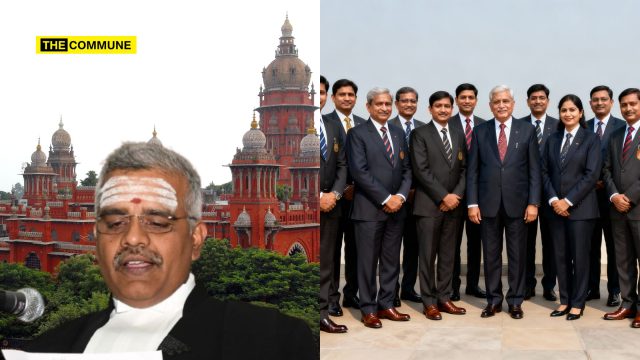
Expressing concern over the prolonged delay in obtaining sanction to prosecute senior bureaucrats, the Madras High Court on Monday questioned why the “wheels of prosecution grind very slowly when it comes to Indian Administrative Service (IAS) officers accused of corruption.”

Justice N Anand Venkatesh, who made the observation while hearing a case related to alleged ₹98.25-crore corporation contract irregularities during the tenure of former AIADMK Minister S.P. Velumani, sought an explanation from the Directorate of Vigilance and Anti-Corruption (DVAC) for not securing sanction against IAS officers K.S. Kandasamy and K. Vijaya Karthikeyan, despite completing its investigation in January 2024.

Delay in Sanction and Translation Costs

The judge agreed with advocate V. Suresh, appearing for Arappor Iyakkam, the anti-corruption organisation that had lodged the complaint in 2021, that the Tamil Nadu government would not have had to spend nearly ₹30 lakh translating 12,000 pages of documents if the DVAC had obtained the required sanctions before October 2024.

He noted that the requirement to submit translated copies was made mandatory by the Centre only from that month.
Hence, the DVAC, he said, was “duty bound to list out the reasons for not having obtained the sanction against the two IAS officers between January and October 2024,” especially since “the sanction to prosecute Mr. Velumani was obtained from the Legislative Assembly Speaker on February 12, 2024.”

‘Courts Have to Prod Investigating Agencies’

Lamenting systemic inertia, Justice Venkatesh remarked that “more often than not, the investigating agencies had to be prodded by the courts to take every other action in corruption cases right from the stage of registration of First Information Report.”

In this case, he observed, the DVAC had submitted its request to the Centre seeking sanction to prosecute the two IAS officers only after Arappor Iyakkam’s Jayaram Venkatesan filed the present contempt of court plea.

The request, made on 30 August 2025, was subsequently returned for want of translated copies of the vernacular documents submitted in support of the request. Following a series of interim orders issued in the contempt proceedings, the DVAC translated the voluminous records, at considerable public expense and re-submitted the request to the Centre on 7 November 2025.

‘The Same Speed Should Apply to Corruption Cases’

During the hearing, Justice Venkatesh also asked what the outer limit was for the Centre to decide on a sanction request. Additional Public Prosecutor E. Raj Thilak informed the court that the prescribed period was three months and assured that he would obtain instructions from all investigating officers who had handled the case since January 2024 to determine the reasons for the delay.

“The State shows speed in doing every thing else. The same speed should be shown when it comes to taking action against corruption too. Otherwise, people will lose faith. In fact, action against corruption should get the first priority. Everything else can wait. Contrarily, what we see is that the action against corruption gets the last priority,” Justice Venkatesh said before adjourning the contempt plea.

The case pertains to allegations of irregularities in awarding Chennai Corporation contracts during S.P. Velumani’s tenure as Minister for Municipal Administration, Rural Development and Implementation of Special Programme. The High Court’s observations come amid repeated judicial concerns over delays in prosecuting senior bureaucrats in corruption cases despite completion of investigations.

(Source: The Hindu)

Subscribe to our channels on WhatsAppTelegram, Instagram and YouTube to get the best stories of the day delivered to you personally.

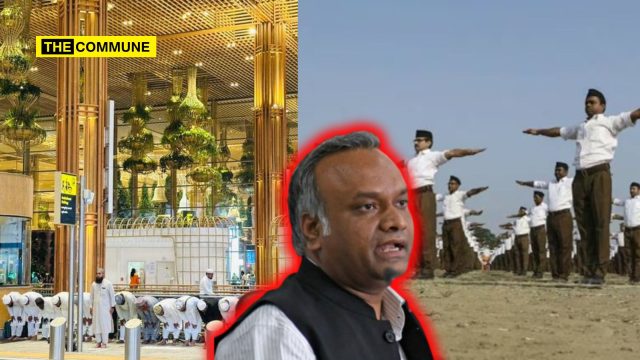
Congress Minister Priyank Kharge’s Selective Logic: Wants Ban On RSS Events In Public Place But Goes Soft On Namaz At Bengaluru Airport

Applying Congress Minister Priyank Kharge’s Own Logic Was Namaz At Bengaluru Airport A Violation Of Public Space Rules

A video of a group of men offering namaz just outside the entrance gate to Terminal 2 at Kempegowda International Airport (KIA) has sparked a debate, putting a spotlight on the Karnataka government’s own guidelines for religious activities in public spaces.

The incident, which occurred near Gate 3 in the terminal’s drop-off area, shows the prayer proceeding with Central Industrial Security Force (CISF) personnel stationed nearby. The visual quickly went viral on social media, drawing public attention to the use of a high-security airport zone for a religious gathering.

Sources at Bangalore International Airport Limited (BIAL) confirmed the authenticity of the video but clarified that the prayers were offered outside the main terminal gate, in a public access area. They also pointed out that the airport already has a multi-faith prayer room inside the terminal, accessible to passengers of all religions. BIAL has so far declined to issue an official comment.

An officer from the KIA Police Station stated that no formal complaint had been received regarding the incident and added that the location technically does not fall under their direct jurisdiction.

A Question of Rules and Consistency

Priyank Kharge had formally urged Chief Minister Siddaramaiah to impose a ban on all activities conducted by the Rashtriya Swayamsevak Sangh (RSS) in government institutions and public premises across the state. In a letter dated 4 October 2025, Kharge contended that such activities go against India’s unity and the constitutional spirit.

Calling for firm government action, Kharge urged that a ban be imposed on all RSS activities, whether under the name of ‘shakha’, ‘sanghik’, or ‘baithak’. He specified that the ban should cover government schools, government-aided schools, public playgrounds, parks, temples under the Muzrai Department, sites under the Archaeology Department, and all other government premises.

The namaz incident has reignited discussion on the state’s own rules for public gatherings – rules which Minister Priyank Kharge himself had recently cited in a separate context. Kharge had emphasized that government guidelines require prior permission for any religious activity or gathering held on public or government property.

However, applying that same logic to the current incident raises several questions:

How did a group of people manage to perform prayers in a restricted airport security zone? Did they have clearance from authorities?

Why were security personnel, tasked with maintaining protocol, merely bystanders during the act?

If the rule of prior permission applies universally, does it extend equally to all religious practices in public or sensitive spaces?

Minister Kharge had earlier said, “Airports already have prayer rooms for all religions. If someone wants to pray, they can do it there.” His own statement exposes the irony of the current situation: when designated spaces already exist, what justifies performing prayers in active public areas, especially under the watch of central security forces?

(Source: Indian Express)

Subscribe to our channels on WhatsAppTelegram, Instagram and YouTube to get the best stories of the day delivered to you personally.

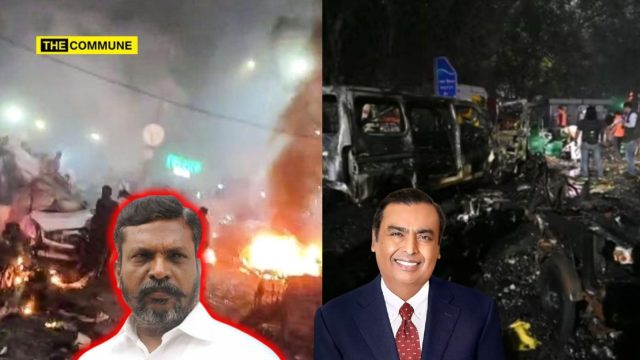
Congress-DMK Ally VCK MP Thirumavalavan Links Ambani To Delhi Red Fort Station Car Blast

Congress-DMK Ally VCK MP Thirumavalavan Links Ambani To Delhi Red Fort Station Car Blast

As investigators probe the Red Fort car explosion that killed at least eight people and injured several others on Sunday evening, a controversial statement by Viduthalai Chiruthaigal Katchi (VCK) chief and Lok Sabha MP Thol. Thirumavalavan has sparked sharp criticism for attempting to politicize the terror attack.

In a post on X, Thirumavalavan whose party is an ally of the Congress-DMK alliance, questioned how such an explosion could occur in one of the country’s most secure zones and suggested that the “Modi-Amit Shah-Ambani alliance” should take responsibility.

He wrote, “The car bomb explosion near Delhi’s Red Fort, which has claimed the lives of more than ten civilians, is utterly shocking. Over twenty others have sustained grievous injuries and are receiving treatment.

In the nation’s capital itself, and that too in a zone under ultra-high security cover, how was it possible for someone to infiltrate by loading explosives into a car? Shouldn’t the ‘Modi-Amit Shah-Ambani’ alliance, which holds control over the Home Ministry and Intelligence agencies, take responsibility for this itself?

With this incident occurring on the first day of the second phase of polling for the Bihar Assembly general elections, a situation has arisen where it can be linked directly to that election. Such terrorist acts have already taken place during election periods in the past.

On behalf of VCK, we convey our deepest condolences to the families of those who lost their lives. VCK strongly condemns such brutal trends against the public. Not a single culprit should escape. All of them must be arrested.”

The Red Fort Blast

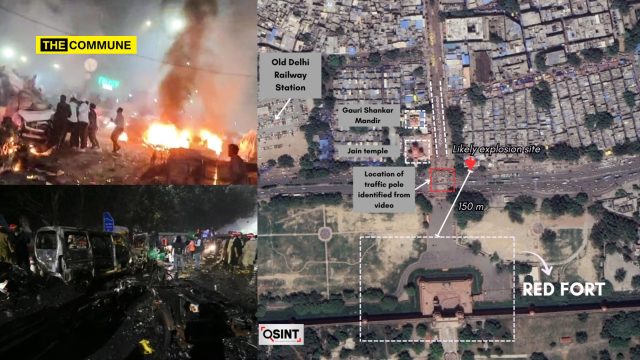
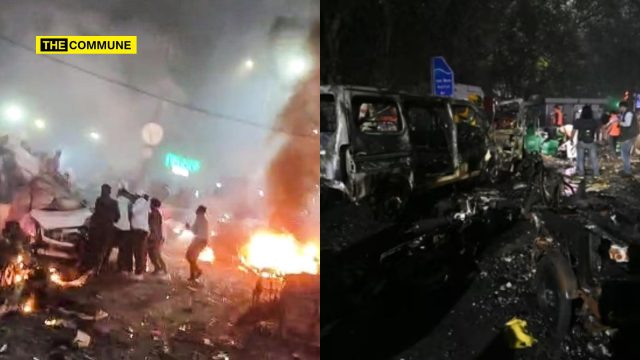
The explosion, which took place around 7:15 p.m. on November 10 near Red Fort Metro Station (Subhash Marg), involved a Hyundai i20 car that detonated with massive force, killing eight and injuring several others. The blast also set nearby vehicles ablaze and caused panic in the heavily patrolled area.

An FIR has been registered under the Unlawful Activities (Prevention) Act (UAPA) and various provisions of the Explosives Act. Multiple agencies including the National Investigation Agency (NIA), National Security Guard (NSG), and Delhi Police Special Cell are jointly investigating the incident.

Suspected Terror Module and Early Findings

Preliminary investigations suggest that the car was linked to a “white-collar” terror module originating from Pulwama. Sources say the suspects have links to the Jaish-e-Mohammed network, with one identified as Dr. Umar Mohammad, allegedly involved in planning and logistics.

Forensic analysis has confirmed the use of ammonium nitrate-based explosives, while CCTV footage reportedly shows the suspect vehicle loitering in the vicinity for several hours before the explosion. Three occupants of the car were killed instantly.

Subsequent raids in Faridabad led to the recovery of explosives and arms from a residence rented by one of the accused. Delhi remains on high alert, with heightened security at transport hubs, government buildings, and major landmarks.

Subscribe to our channels on WhatsAppTelegram, Instagram and YouTube to get the best stories of the day delivered to you personally.

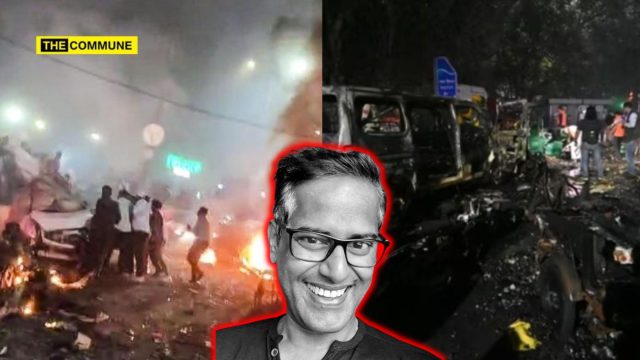
Pro-Congress Propagandist Ravi Nair Links Red Fort Terror Attack To Bihar Elections, Deletes Post After Backlash

Pro-Congress Propagandist Ravi Nair Links Red Fort Terror Attack To Bihar Elections, Deletes Post After Backlash

As the nation reels from a powerful car explosion, that is now being investigated as a terror attack, near Delhi’s Red Fort that killed eight people, pro-Congress propagandist and alleged journalist Ravi Nair was seen exploiting the tragedy to push a political propaganda narrative, linking the incident to the ongoing Bihar Assembly elections.

In a now-deleted post, Nair had written, “Bihar Assembly elections are going on, and Mosha is fighting the election on a weak wicket. We should expect more such explosions from different parts of India.”

The statement made less than an hour after the blast, was widely condemned as reckless and inflammatory, suggesting a political motive behind a terrorist act even as security agencies were conducting intensive rescue and investigation operations at the site.

The Blast and Ongoing Investigation

The powerful explosion occurred in a Hyundai i20 parked near the Red Fort Metro Station (Subhash Marg), killing at least eight people and injuring several others. The blast, which took place around 7:15 p.m., set nearby vehicles ablaze and caused panic in the heavily patrolled zone.

Authorities have since registered a case under the Unlawful Activities (Prevention) Act (UAPA) and multiple sections of the Explosives Act. A joint probe by the National Investigation Agency (NIA), National Security Guard (NSG), and Delhi Police Special Cell is underway.

Preliminary findings suggest the incident may be linked to a Jaish-e-Mohammed module operating out of Pulwama, with one of the suspects, identified as Dr. Umar Mohammad, allegedly involved in planning and logistics. Investigators have traced the vehicle’s movements using CCTV footage, which shows the car circling the area before the explosion. Forensic tests confirmed the use of ammonium nitrate-based explosives, and subsequent raids in Faridabad led to the recovery of additional explosive material and arms.

Propaganda Amid National Security Crisis

Even as the investigation unfolds, Nair’s post has drawn criticism for politicizing a national tragedy and potentially undermining ongoing counterterror efforts. His reference to “more such explosions” can be seen as irresponsible fear-mongering during a time of grief and uncertainty.

After much backlash, he seems to have deleted the post.

Nair’s post reminds one of former CDS Bipin Rawat’s comments on the “0.5 Front” or internal front of hybrid warfare.

The 0.5 Front refers to non-conventional internal threats that work alongside external adversaries including ideological saboteurs, cyber actors, and misinformation agents to weaken national cohesion during crises. These actors exploit tragedies, amplify discord, and erode trust in institutions through coordinated disinformation or politically slanted narratives.

Misinformation of this kind can affect not only public morale but also ongoing operations, particularly in the immediate aftermath of terror incidents when clarity and restraint are crucial.

Ravi Nair’s Pattern of Controversy

This is not the first time Ravi Nair has drawn flak for his statements and writings. Known for his “investigative” articles on corporates such as Adani Group and public institutions like LIC, Nair has been spreading half-baked or misleading narratives that are easily debunked. His recent report alleging irregularities in LIC’s investments in Adani enterprises was widely challenged and discredited.

His latest remark insinuating political motives behind a terror attack during election season seems to be an extension of agenda-driven commentary aimed at discrediting the government even during national crises.

Subscribe to our channels on WhatsAppTelegram, Instagram and YouTube to get the best stories of the day delivered to you personally.

Delhi Red Fort Station Car Blast: Report Says It Was A Terror Attack Using IED, Suspect Believed To Have Possible Links To Jammu & Kashmir

Image Credits: India Today OSINT

A devastating explosion rocked Delhi near the Red Fort Metro Station on Monday evening, confirmed as a probable terror attack under investigation by the National Investigation Agency (NIA) and Delhi Police Special Cell, as per reports. The blast, triggered by a suspected Improvised Explosive Device (IED) inside a slow-moving Hyundai i20 car around 6:52 pm, has claimed at least 13 lives and left over two dozen injured. The explosive impact extended to multiple vehicles and autorickshaws, causing further chaos and damage in one of the capital’s crowded high-security zones.

The suspect detained in connection with the blast reportedly has links to Jammu and Kashmir, with local police from the region present at the scene. Investigators are examining the potential involvement of a broader terror network and have not ruled out the possibility of a larger plot targeting Delhi.

Forensic experts, bomb disposal squads, and national security teams have cordoned off the area, now sealed off for an extensive search. CCTV footage from streets and metro premises is being combed for clues, while Prime Minister Narendra Modi and Home Minister Amit Shah are personally monitoring the situation.

In a related development, police operations in Faridabad, Haryana, led to the arrest of a Kashmiri doctor and the seizure of more than 2,900 kg of ammonium nitrate and bomb-making material from a rented apartment—one of the biggest anti-terror hauls in recent years. Several associates, including doctors from nearby medical institutions, have also been detained. Authorities are investigating links between the Red Fort blast and the Faridabad terror module, as it appears the same network may have intended to target Delhi with coordinated IED attacks.

Eyewitnesses at Red Fort described horrific scenes—bodies strewn on the road, flames, and a level of devastation not seen before. The government and security agencies are on high alert, focusing on tracing the source of explosives and unravelling the conspiracy behind this attack, which comes amid heightened tensions following recent terror crackdowns in the region.

Summary of latest developments:

13 confirmed dead, 24+ injured after high-intensity car blast near Red Fort Metro Station.

Suspect detained, believed to have links to Jammu and Kashmir; wider terror plot suspected.

Massive seizure (2,900 kg bomb-making chemicals) and arrests of doctors in Faridabad may be linked.

NIA, NSG, and forensic teams deployed; government monitoring investigation hour-by-hour.

Security in New Delhi intensified; search for accomplices and origin of explosives underway.

Subscribe to our channels on WhatsAppTelegram, Instagram and YouTube to get the best stories of the day delivered to you personally.

Explosion Near Delhi Red Fort, 8 Feared Dead, Several Injured

delhi blast

A deadly explosion occurred on the evening of November 10, 2025, near Gate No. 1 of the Red Fort Metro Station in New Delhi, resulting in at least eight fatalities and multiple injuries. The blast originated from a car parked near the metro station, setting fire to additional vehicles in the crowded area close to the historic Red Fort landmark.

Incident Details

The explosion took place around 6:52 PM in a heavily populated area near the Red Fort, a 17th-century Mughal fort and popular tourist attraction.

Flames and smoke were seen rising from six vehicles and three autorickshaws, with at least three to four vehicles catching fire due to the blast.

Emergency response included seven fire tenders and teams from Delhi Police Special Cell, forensic experts, and National Security Guard (NSG) commandos rushing to the site to manage the situation and begin an investigation.

The blast caused widespread panic, and eyewitnesses reported the area shaking as if an earthquake had struck, with casualties lying on the road.

Authorities cordoned off the area and restricted entry and exit from Gates No. 1 and 4 of the Lal Quila Metro Station.

The precise cause and nature of the explosion remain under investigation, with security officials refraining from immediate speculation.

Casualties and Response

At least eight people were confirmed dead, with 11 or more injured, some sent to LNJP Hospital for treatment.

The fire was brought under control after intense efforts, though the scene still showed considerable damage, including charred vehicles.

Delhi and other nearby cities like Mumbai and Uttar Pradesh were placed on high alert following the incident.

The explosion near this iconic and historically significant site has raised concerns over urban security in Delhi, especially in areas frequented by both locals and tourists. Investigations are ongoing to determine if this was a terrorist act or a different form of explosion.

This incident remains a developing story with updates expected as authorities gather more information and forensic analysis progresses.

Subscribe to our channels on WhatsAppTelegram, Instagram and YouTube to get the best stories of the day delivered to you personally.

BBC Top Excutives Resign After Leaked Memo Alleges Documentary Misled Viewers By Editing Trump’s Capitol Riot Speech

BBC Top Excutives Resign After Leaked Memo Alleges Documentary Misled Viewers By Editing Trump’s Capitol Riot Speech

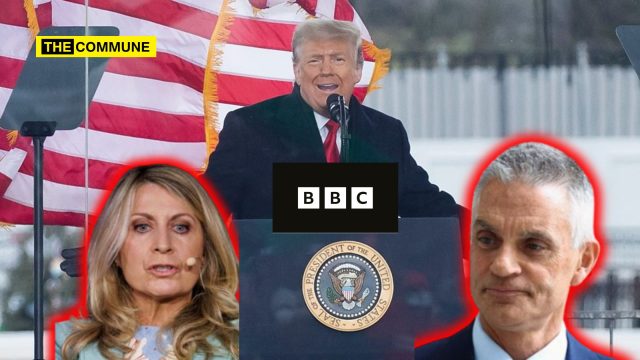
Two of the British Broadcasting Corporation’s (BBC) top executives have stepped down following allegations that the broadcaster’s flagship documentary programme misleadingly edited a speech by former US President Donald Trump delivered before the January 6 Capitol riot.

Director General Tim Davie and BBC News Chief Executive Deborah Turness resigned days after The Daily Telegraph reported on a leaked internal memo suggesting that the BBC’s Panorama documentary, Trump: A Second Chance?, had spliced Trump’s remarks to make it appear that he had explicitly encouraged the attack on the US Capitol on 6 January 2021.

Announcing his resignation, Davie stated that while the BBC continued to perform well overall, recent controversies surrounding BBC News had contributed to his decision to step down. “Like all public organisations, the BBC is not perfect, and we must always be open, transparent and accountable,” he said in a statement posted on the BBC website. “While not being the only reason, the current debate around BBC News has understandably contributed to my decision. Overall, the BBC is delivering well, but there have been some mistakes made, and as director-general I have to take ultimate responsibility.”

The Daily Telegraph Report

According to The Daily Telegraph, concerns were first raised last summer in a memo on editorial impartiality written by Michael Prescott, who had served until June as an independent external adviser to the BBC’s Editorial Standards Committee. The memo, later leaked, alleged that the Panorama documentary broadcast the week before last year’s US election had combined footage from different points in Trump’s speech to suggest that he had urged supporters to march to the Capitol and “fight like hell.”

Prescott said that in reality, the two remarks were made about 50 minutes apart, and that in the original footage, Trump had said supporters should walk to the Capitol to “cheer on our brave senators and congressmen and women.”

At the time of the speech, Trump was still disputing the outcome of the 2020 election, in which he lost to President Joe Biden. Prescott also accused the BBC of avoiding coverage of stories that raised difficult questions about transgender rights and claimed that BBC Arabic had provided a platform to a journalist who had made antisemitic comments.

Reactions and Political Fallout

The Daily Telegraph report prompted strong reactions from both sides of the Atlantic. White House Press Secretary Karoline Leavitt accused the BBC of being “purposefully dishonest” in its depiction of Trump’s speech and the Capitol riot.

Trump also responded, alleging bias among journalists and calling them “very dishonest people who tried to step on the scales of a Presidential Election.”

In the United Kingdom, Culture, Media and Sport Minister Lisa Nandy described the allegations as “incredibly serious.” Speaking to BBC Television, Nandy said that the Panorama edit was one of several concerns about editorial standards at the broadcaster.

“It isn’t just about the Panorama programme, although that is incredibly serious,” she said. “There are a series of very serious allegations made, the most serious of which is that there is systemic bias in the way that difficult issues are reported at the BBC.” Nandy also expressed concern that the BBC’s reporting standards and language varied inconsistently depending on the subject, including issues related to “Israel, Gaza… trans people or on this issue about President Trump.”

Following the resignations, Leavitt posted on X a screenshot of the BBC website announcing the leadership changes, appearing to celebrate the news.

The BBC’s Wider Controversies

The latest resignations add to a series of editorial controversies for the BBC this year. Earlier in 2025, the broadcaster issued multiple apologies for “serious flaws” in the making of its documentary Gaza: How to Survive a Warzone, aired in February.

In October, the BBC accepted a sanction from the UK’s media regulator, Ofcom, for a “materially misleading” programme that had used a child narrator later revealed to be the son of a former Hamas deputy agriculture minister.

With over 21,000 employees, the BBC remains one of the world’s largest public service broadcasters, funded primarily through licence fees paid by UK households and supplemented by commercial revenue. The organisation has faced increasing scrutiny in recent years over its impartiality, editorial independence, and global reputation for trustworthiness.

(Source: NDTV)

Subscribe to our channels on WhatsAppTelegram, Instagram and YouTube to get the best stories of the day delivered to you personally.

J&K Police Busts Transnational Terror Module Linked To JeM And Al-Qaeda Affiliate; 2,900 kg Explosives Recovered From J&K Doctors’ Residences Near Delhi

J&K Police Busts Transnational Terror Module Linked To JeM And Al-Qaeda Affiliate; 2,900 kg Explosives Recovered From J&K Doctors’ Residences Near Delhi

In a major breakthrough, the Jammu and Kashmir Police have uncovered an inter-state and transnational terror module linked to Pakistan-based Jaish-e-Mohammed (JeM) and the Ansar Ghazwat-ul-Hind (AGuH), an al-Qaeda-affiliated group active across Jammu and Kashmir. The investigation has led to the recovery of 2,900 kilograms of bomb-making material, including 350 kilograms of suspected ammonium nitrate, timers, weapons, and ammunition from multiple locations, including a hospital locker near Delhi.

The recoveries were made following coordinated raids across Srinagar, Anantnag, Ganderbal, Shopian, and Faridabad (Haryana) by J&K Police and central intelligence agencies. Investigators say the network represents a growing trend of “white-collar radicalisation,” with several professionals, including doctors, allegedly working under the direction of handlers in Pakistan and other countries.

Explosives and Weapons Found Near Delhi

The investigation began after the arrest of Dr. Adil Ahmad Rather, a doctor from Kulgam, accused of putting up posters supporting Jaish-e-Mohammed in Srinagar on 27 October 2025. CCTV footage from the area led to his arrest in Saharanpur, Uttar Pradesh, in a joint operation by J&K and UP Police.

During questioning, Rather revealed information leading to Faridabad, where police recovered 350 kilograms of ammonium nitrate, 20 electronic timers, a pistol, three magazines, a walkie-talkie set, and an assault rifle. The materials were found at the residence of Dr. Mujammil Shakeel, a Pulwama native employed at Al-Falah Hospital, and inside Rather’s hospital locker at the Government Medical College, Anantnag.

Faridabad Police Commissioner Satender Kumar Gupta confirmed the seizure and said forensic teams were examining the explosive material, believed to be used for manufacturing IEDs. The explosives were initially feared to be RDX before forensic analysis identified them as ammonium nitrate.

Both doctors were arrested and booked under the Unlawful Activities (Prevention) Act (UAPA) and the Arms Act. A woman doctor from the same hospital has also come under scrutiny after police discovered an assault rifle inside her car.

Arrests Across Jammu & Kashmir

According to intelligence sources, at least seven people have been arrested so far. In addition to Dr. Rather and Dr. Shakeel, the others are Arif Nisar Dar, Yasir-ul-Ashraf, and Maqsood Ahmad Dar from Srinagar; Molvi Irfan Ahmad from Shopian; and Zameer Ahmad Ahanger from Ganderbal.

The police said these individuals were part of a broader radicalised network that not only disseminated propaganda such as pro-JeM posters but also participated in logistical operations, including weapons storage and coordination with handlers abroad.

Investigators recovered incriminating documents, booklets on IED assembly, and a large cache of guns and ammunition, including an Italian-made Beretta pistol and a Russian-made Krinkov assault rifle, a compact variant of the AK-74.

2,900 kg of Explosives and Bomb-Making Materials

Officials said that across all linked locations, a total of nearly 2,900 kilograms of IED-making materials were recovered. This includes explosives, chemicals, electronic circuits, remote-control devices, wires, batteries, and timers. More than one-third of this haul – the 350 kg ammonium nitrate was recovered from Faridabad.

Authorities believe this stockpile was part of an ongoing effort to prepare for coordinated terror strikes, though the precise targets and timelines remain under investigation.

Senior police officials said the cache’s proximity to the national capital poses a serious security concern, and agencies are examining how such a large quantity of explosives was transported and stored undetected.

Pakistan-Based Network and Handlers

Sources told NDTV that intelligence inputs point to Pakistani handlers directing these operatives via encrypted communication platforms. These handlers are believed to be coordinating multiple modules within India, providing both ideological guidance and operational instructions.

Recent intelligence assessments have highlighted a renewed mobilisation by Pakistan-backed groups, including Jaish-e-Mohammed and Lashkar-e-Taiba, to intensify infiltration and cross-border logistics in the aftermath of Operation Sindoor, India’s military response to the Pahalgam attack in April 2025.

Reports have also indicated that Pakistan’s Inter-Services Intelligence (ISI) has been engineering a covert alliance between Lashkar-e-Taiba and the Islamic State Khorasan Province (ISKP), particularly within Balochistan, to expand terror operations against India.

White-Collar Radicalisation: A New Threat

Officials said the involvement of medical professionals including doctors, represents a troubling trend of “white-collar terror,” where educated individuals are radicalised online or through ideological indoctrination and then recruited into terror networks.

Authorities are also tracking the flow of funds to and from these operatives and their backers abroad. According to investigators, both doctors were allegedly in touch with ISI-linked intermediaries in Pakistan and Afghanistan, and had been communicating via secure, encrypted messaging applications.

This news comes at the heels of the Gujarat ATS arresting three members including an MBBS doctor for allegedly conspiring to carry out mass-casualty terrorist attacks across India. The suspects were apprehended while supplying sophisticated weapons and were in the advanced stages of producing Ricin, a deadly chemical poison.

(Source: NDTV)

Subscribe to our channels on WhatsApp, Telegram, Instagram and YouTube to get the best stories of the day delivered to you personally.
“Most Passengers Are Christians, Can’t Go Inside Valliyur Just For You,” Bus Conductor Antony Allegedly Insults Hindu Priest In Tirunelveli District

“Most Passengers Are Christians, Can’t Go Inside Valliyur Just For You,” Bus Conductor Antony Allegedly Told Hindu Priest

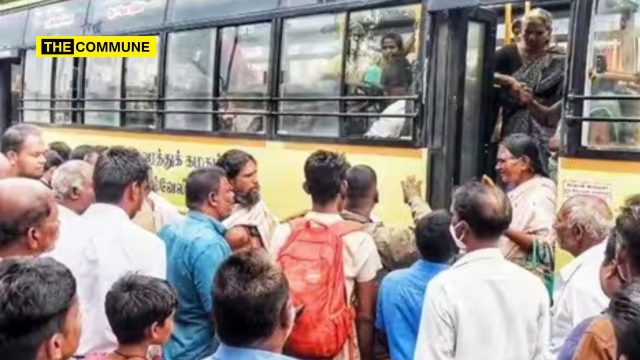
Tension prevailed in Valliyur on Monday morning after a government bus conductor allegedly made religiously biased remarks toward a Hindu temple priest traveling with his family, prompting locals to stage a protest.

According to reports, a government bus (registration TN-74 N-2120) operating from Vivekanandapuram Depot in Kanyakumari district picked up passengers near Naalumavadi Christian Church in Thoothukudi district around 4:50 AM. The bus later reached Tirunelveli’s new bus stand and departed toward Nagercoil at around 5:00 AM.

Among the passengers was Subramanian, a temple priest from Valliyur, who was traveling with his wife and two sons. Witnesses said Subramanian, dressed in traditional attire – without a shirt but wore a Rudraksha mala, was told by the conductor, identified as Antony, who told them that the bus would not enter Valliyur and would stop only at the bypass.

When Subramanian protested, saying the bus regularly entered Valliyur, the conductor allegedly replied that “most passengers were Christians from Naalumavadi” and that the bus would not go through Valliyur “just for him.”

The exchange led to tension among passengers. The priest refused to alight, following which the bus eventually entered Valliyur. On arrival, Subramanian and his family staged a sit-in protest in front of the bus. Residents gathered at the scene and joined the protest.

Police from Valliyur station reached the spot and held talks with the protesters. After about an hour, the bus continued its journey to Nagercoil.

Speaking to local reporters, Subramanian alleged that several passengers sided with the conductor on religious basis and that such incidents had occurred earlier as well.

Subramanian stated, “Most passengers in the bus supported the conductor, behaving in a religiously discriminatory way. The bus was not hired solely for the Christians from Naalumavadi. All of us had bought tickets. The conductor also spoke offensively. I recorded this on video.”

He said a similar issue took place on 31 August 2025, when the same bus skipped Valliyur, leading to the suspension of its driver and conductor at the time.

The incident took place in Radhapuram Assembly constituency, represented by Speaker M Appavu. Local residents claimed that government buses frequently skip Valliyur despite regulations requiring all Tamil Nadu State Transport Corporation (TNSTC) buses, except “one-to-one” express services, to pass through the town.

Residents have urged strict disciplinary action against conductor Antony , accusing him of religious bias and misconduct. Officials from the Nagercoil Transport Department said a departmental inquiry has been ordered and appropriate action will be taken based on the findings.

(Source: Dinamalar)

Subscribe to our channels on WhatsAppTelegram, Instagram and YouTube to get the best stories of the day delivered to you personally.
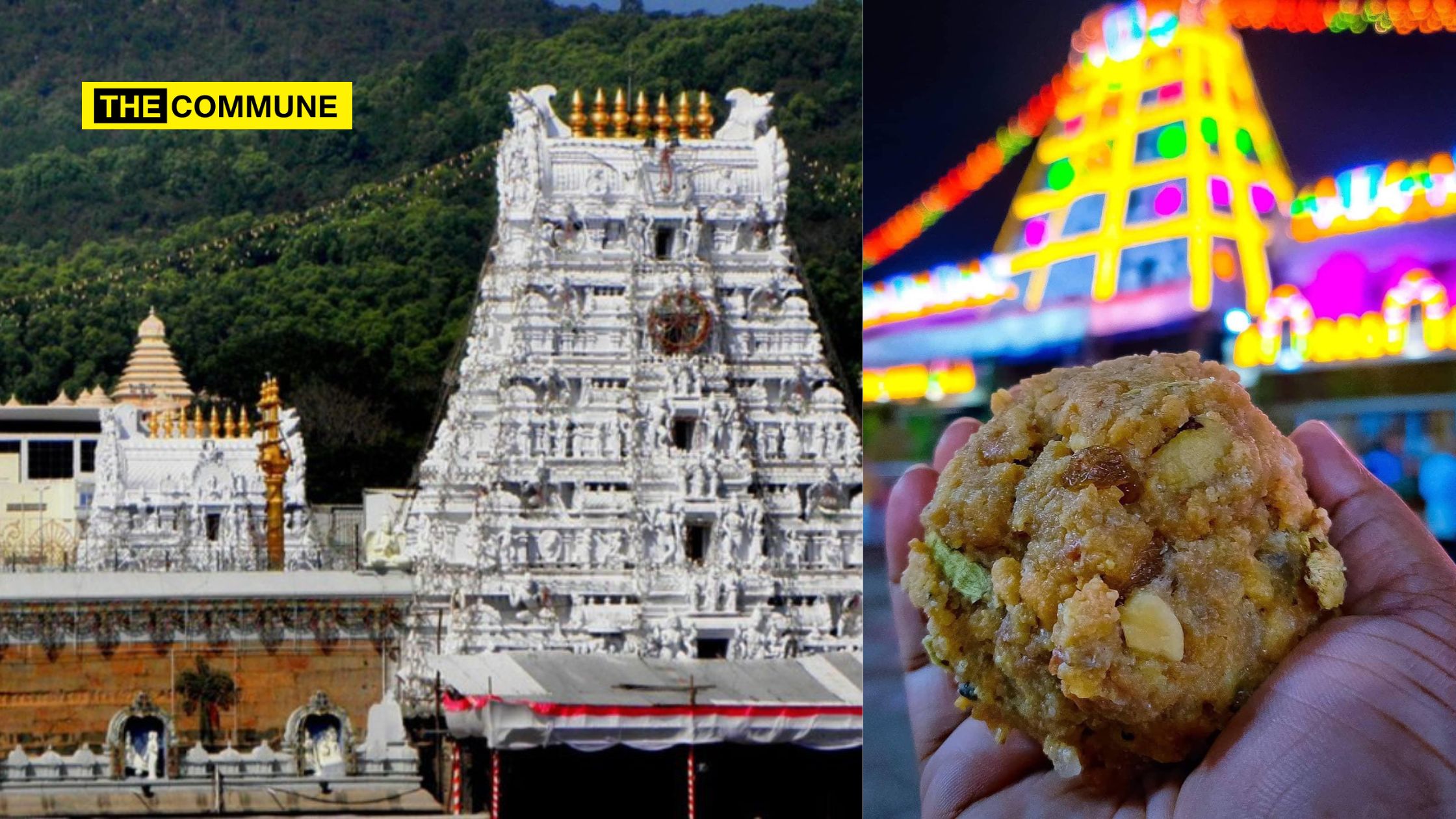
CBI-Led SIT Finds TTD Received Adulterated Ghee From Fake Uttarakhand Dairy Between 2019 & 2024

Ancient Inscriptions Reveal Tirupati Temple's Strict Food Quality Traditions Amid Beef In Tirupati Prasadam Controversy CBI-Led SIT Finds TTD Received Adulterated Ghee From Fake Uttarakhand Dairy Between 2019 & 2024

The Central Bureau of Investigation (CBI)-supervised Special Investigation Team (SIT) probing the Tirumala Tirupati Devasthanams (TTD) ghee adulteration case has uncovered that the temple trust received adulterated ghee for over five years from a fake dairy unit in Uttarakhand.

According to the SIT’s remand report submitted to the ACB Court in Nellore, the supplier, Bhole Baba Organic Dairy, located at Bhagawanpur in Uttarakhand, supplied an estimated 68 lakh kilograms of ghee worth ₹250 crore to the TTD between 2019 and 2024, despite not procuring a single drop of milk or butter during the entire period.

The findings came to light following the arrest of Ajay Kumar Sugandh, listed as A-16 in the case, who allegedly supplied chemicals such as monodiglycerides and acetic acid ester used in the production of adulterated ghee.

Investigators found that Bhole Baba Dairy was operated by Pomil Jain and Vipin Jain, who established a shell manufacturing unit and forged milk procurement and payment records. Local cattle rearers confirmed that they had never supplied milk to the company. The promoters reportedly bought a defunct dairy facility nearby and sourced palm oil and kernel oil under the name Harsh Fresh Dairy from a Delhi-based importer of Malaysian palm oil. These oils were then blended with chemicals to produce spurious ghee intended exclusively for TTD contracts.

The SIT stated that the dairy used acetic acid esters in the final product to manipulate the Reichert-Meissl (RM) value, a key measure used in TTD’s quality control tests for ghee. Between 2022 and 2024, Bhole Baba Dairy purchased acetic acid ester worth ₹7 crore from Ajay Kumar, the chemical supplier based in Delhi.

Despite being blacklisted by the TTD in 2022, Bhole Baba Dairy continued supplying adulterated ghee by routing bids through other dairies, including Vyshnavi Dairy (Tirupati), Mal Ganga Dairy (Uttar Pradesh), and AR Dairy Foods (Tamil Nadu).

The SIT also found that four tankers of ghee adulterated with animal fat, originally supplied by AR Dairy and rejected by the TTD in July 2024, were reintroduced into the TTD supply chain by Bhole Baba Dairy through Vyshnavi Dairy. During inspections by FSSAI officials and SIT teams at AR Dairy’s Dindigul plant, it was discovered that the rejected tankers never returned to the plant. Instead, they were diverted to a local stone crushing unit located near Vyshnavi Dairy.

In August 2024, Vyshnavi Dairy, which remained an approved supplier within the Andhra Pradesh circle category, allegedly changed the labels on the tankers, modified the consistency of the synthetic ghee, and resupplied it to the TTD. Investigators said that this ghee was later used in preparing the Tirupati Laddu prasadams.

The controversy surfaced in September 2024, after Andhra Pradesh Chief Minister N. Chandrababu Naidu alleged that TTD laddus were being made using ghee adulterated with animal fat during the previous administration. Following his remarks, a court-directed SIT investigation began examining procurement records, supply chains, and quality testing protocols.

The probe revealed that Ajay Kumar Sugandh had supplied monoglycerides, acetic acid, and esters for nearly seven years to Bhole Baba Dairy directors Pomil Jain and Vipin Jain. The chemicals were imported from South Korea by a Delhi-based distributor and later purchased and resold by Sugandh under his company’s name.

Investigators also found that over 90 per cent of the ghee used in laddu preparation was blended with palm oil. The SIT collected evidence of financial transactions and chemical supplies linking Sugandh directly to Bhole Baba Dairy’s promoters.

Ajay Kumar was detained in Delhi, brought to Tirupati for interrogation, and produced before the Nellore ACB Court, which remanded him to judicial custody until 21 November 2025. The investigation into the alleged ₹250-crore ghee adulteration racket and its network of shell dairies remains ongoing under the supervision of the CBI.

(Source: Times of India)

Subscribe to our channels on WhatsAppTelegram, Instagram and YouTube to get the best stories of the day delivered to you personally.