Home Blog Page 253

“A Christian Can Be Christian, Muslim Can Be Muslim But Being A Hindu Is Communal”: Andhra Deputy CM Pawan Kalyan Slams DMK & Pseudo-Secularists At Murugan Devotees Conference
andhra pradesh deputy cm pawan kalyan murugan devotees conference

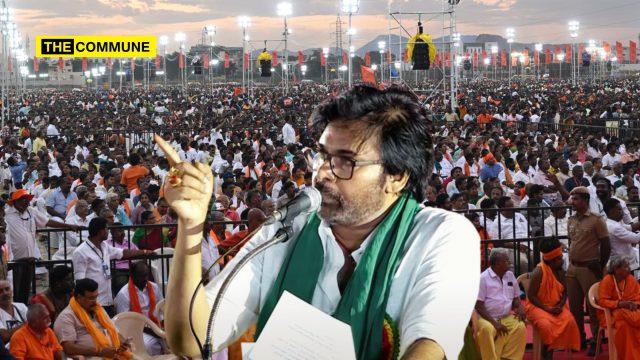
Jana Sena Party chief and Andhra Pradesh Deputy CM Pawan Kalyan issued a strong warning to those who mock or belittle Hindu beliefs under the guise of secularism referring to a Tamil proverb, “Saadhu mirandaal kaadu kolladhu”—meaning “Even the forest cannot withstand the anger of a sage!”, cautioning that the patience and tolerance of devout Hindus should not be mistaken for weakness.

Pawan Kalyan began his address at the Murugan Bakthargal Maanadu (Murugan Devotees Conference) hosted by Hindu Munnani in Madurai by reflecting on a grim chapter in the city’s history. He spoke about the devastating invasion led by Malik Kafur, which plunged Madurai into darkness for nearly 60 years. It wasn’t until the late 14th century, he said, that light returned—when Prince Kumara Kampana of the Vijayanagar Empire rekindled the lamp of hope and revival, restoring peace and cultural pride.

Drawing from this historical episode, Pawan Kalyan emphasized a powerful lesson, “Our national faith is indestructible, no one can destroy it. Our culture is so deep that no one can shake us. From Kanyakumari to Kashmir, our Dharma was deep, it is deep today and will always be deep. This is the strength of this divine land.”

Without explicitly naming the DMK, Kalyan criticized political figures who questioned the rationale behind hosting the Murugan Conference in Tamil Nadu rather than in states like Uttar Pradesh or Gujarat. He said such remarks reflect an intent to stir divisions and discredit cultural events tied to the Tamil Hindu identity.

He slammed such thought are divisive, “Today, they are questioning Murugan; tomorrow, they might question Lord Shiva or the Goddess Amman. This line of thought is extremely dangerous.” Recalling his own religious background, he said, “I went to Sabarimala when I was 14. I’ve seen people go to Thiruthani for Thai Poosam. When I studied in Mylapore, Chennai, I went to school with sacred ash (vibuthi) on my forehead. After a short while, I noticed a change. Then, in the next 10 years, people started questioning applying vibuthi on the forehead. So, even at the age of 14, I faced these kinds of questions. Everyone might have had this experience. We didn’t make a big deal out of it because we Hindus are secularists.”

Then Kalyan called out the selective outrage targeting of Hinduism by pseudo-secularists. he said, “A Christian can be a Christian. A Muslim can be a Muslim. But for them, it’s a problem if a Hindu simply remains a Hindu. If someone is a Hindu, they are labeled a fundamentalist. This is their fake secularism. I have the right to celebrate my faith. Who are you to question that? We don’t question your beliefs; practice the same civility. Even if you don’t show respect for my religion, at least don’t disrespect it. You who question Murugan, can you ask the same questions about the religions that came from Arabia? Do you have the courage for that? That’s why I’m telling you, don’t provoke us! Don’t provoke us! Even a forest cannot withstand the anger of a sage! Even a forest cannot withstand the anger of a sage! (Sadhu Mirandaal Kaadu Kolladhu).”

Describing Lord Murugan as a deity revered not only in Tamil Nadu but across the Indian subcontinent, he said, “Murugan is Karthikeya in the North, Subrahmanya in Andhra and Karnataka. This conference is not about regional politics but about our shared spiritual heritage.”

He expressed deep concern over the trend of religious mockery, especially incidents involving ridicule of sacred hymns like the Kanda Sashti Kavasam. Such actions, he said, amount to direct attacks on the sentiments of Tamil Hindus.

He also reflected on the Kanda Sashti Kavacham controversy in Tamil Nadu and urged everyone to defend their faith and culture. “They ridicule our songs and traditions. Who gave them the right to insult others’ beliefs?” he asked, urging Hindus to stand united in protecting dharma. “Change is inevitable,” he concluded.

Blasting pseudo-secularist once again Pawan Kalyan said, “In our country, secularism is a convenient word for a lot of people, specifically atheists who don’t believe in God. What do atheists say? “They don’t believe in God.” If they say they don’t believe in God then they shouldn’t believe in any god. But in our country, atheists are such that they only don’t believe in Hindu gods. That is the definition of atheist secularism in our country. This is the issue in our country. Secularism is no discrimination against anybody in the name of religion, but our country’s secularists have no discrimination against anybody in the name of religion, except Hinduism, Hindu gods, and Hindu culture. They abuse Hindu culture and abuse Hindu gods; that is secularism for them. They don’t have the guts to point out any other religion except Hindu Dharma. This group of atheists, this group of secularists, has been given a weapon by the constitution: freedom of speech. They have gotten used to speaking whatever they want and abusing our gods. If they abuse our gods, we shouldn’t get angry or worried because it’s freedom of speech. They’ll keep abusing, and we just have to be peaceful because we are Hindus. This has to change. If this doesn’t change, it will be very difficult to sustain our religion and dharma. Anywhere in our country, being a Hindu… “I am not a fanatic Hindu, I am a committed Hindu.” I respect Islam, I respect Christianity, but what I ask is: Don’t disrespect my Hindu dharma. Don’t speak about our ‘aram’ (righteousness/values). This is my pleading.”

Subscribe to our channels on TelegramWhatsApp, and Instagram and get the best stories of the day delivered to you personally.

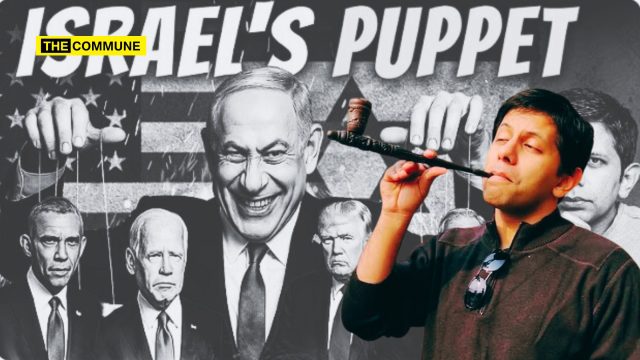
Pro-Congress YouTuber Akash Banerjee’s Anti-Semitic Propaganda Portraying Jews As Villains, Was Earlier Invited By US Embassy As Social Media Influencer

akash banerjee youtuber the deshbhakt israel america usa puppet

Now that Israel is in the news for its war against Iran, propagandists like YouTuber Akash Banerjee have begun peddling lies and narratives that are not only antisemitic but also vilify the Jews.

In his latest video titled “How Israel Came To Control American Politics & Foreign Policy”, Banerjee echoes antisemitic tropes and conspiracy theories that portray Jews and the state of Israel as shadowy manipulators of American politics and global affairs. Throughout the 20-minute video, Banerjee uses provocative language and unverified claims to suggest that Israel — and by extension, Jews — exert sinister and disproportionate influence over the United States government.

What starts as a critique of American foreign policy quickly descends into a textbook case of antisemitic narrative-building, complete with accusations of financial manipulation, political blackmail, and even involvement in the assassination of U.S. President John F. Kennedy. Let’s take a look at his allegations and propaganda statements.

Jews Control American Finance and Politics

Banerjee openly states that major financial institutions in the United States are “under Jewish control,” a classic antisemitic trope historically used to paint Jews as economic puppet masters. He says, “Funding is just one part of Israel’s control over America. Big companies like Goldman Sachs, JPMorgan Chase, BlackRock, DE Shaw, PayPal are the top American firms that are directly or indirectly under Jewish control. They control big money, and they have been accused of pro-Israel lobbying for years but no one has been able to touch them. Their hold is strong. In the end, the money that is coming and suppressing others is a dangerous game that is played.”

He further claims that these firms are complicit in pro-Israel lobbying and systemic corruption, framing this as a well-funded and insidious campaign. “Lobbying is just a whitewashed term for systematic corruption Like we have paisa do, contract lo … similarly there is strategic partnership in America.”

AIPAC And ‘Buying’ Of American Politicians

Banerjee targets the American Israel Public Affairs Committee (AIPAC), accusing it of engineering U.S. elections, “Through AIPAC, Israel injects millions of dollars into the US elections every year to elect Ted Cruz and Tom Cotton.” He goes on to paint American politicians as puppets who prioritize Israeli interests over their own constituents, stating, “You enter American politics to defend another country.”

Banerjee plays up the idea that U.S. lawmakers “worship” Israel and serve foreign interests over national loyalty — another dangerous generalization often found in antisemitic literature. He says, “It is clear that Israel worship is going on in America… What kind of magic is this?”

Blackmail And The Mossad Conspiracy

Banerjee then plunges into dark conspiracy territory, reviving old claims about Mossad — Israel’s intelligence agency — using sexual blackmail to control U.S. leaders. He says, “Mossad’s job is to collect dirt on US officials… and starts blackmailing from the back channel.” 

He links this to Jeffrey Epstein, suggesting — with no evidence — that Epstein may have been working for Mossad. He says, “Conspiracy theorists believe that Epstein was a Mossad spy or at least working for Mossad. His job was to trap big American businessmen and political leaders in a honey trap.” 

Even more egregiously, Banerjee repeats an unsubstantiated theory that Mossad may have played a role in the assassination of U.S. President John F. Kennedy, saying, “One conspiracy theory is that Mossad was involved in the case because Kennedy had found out the secret of Israel’s nuclear weapons.” 

Such accusations of global Jewish conspiracy, manipulation, and assassination echo dangerous rhetoric historically used to incite hatred — straight out of a Nazi propaganda textbook.

Though Banerjee frames his podcast as political critique, the pattern of themes, language, and scapegoating aligns disturbingly with antisemitic propaganda. The accusations of Jewish financial dominance, manipulation of media, foreign loyalty of elected officials, and clandestine intelligence operations all serve to demonize Jews and Israel as global puppet masters, a narrative rejected by mainstream academics and watchdogs as hateful and dangerous.

Banerjee, known for his consistent anti-Hindu/anti-India stance and sympathetic coverage of Congress and Left-leaning coalitions, has often criticized the current Indian government’s relationship with Israel. However, his latest video suggests a shift from legitimate foreign policy critique to outright demonization of an entire ethno-religious group. The reliance on conspiracy theories — many of them long discredited — suggests a willingness to trade factual discourse for virality and ideological appeal.

It is noteworthy that Banerjee was invited to be part of a programme conducted by the US Embassy in India titled “Influence to Impact”.

So, to show his loyalty to the US, is Banerjee doing his bit to portray the US, which has also bombed Iran in the ongoing war, as a naive partner who is being bullied into doing it by Israel?

Subscribe to our channels on Telegram, WhatsApp, and Instagram and get the best stories of the day delivered to you personally.
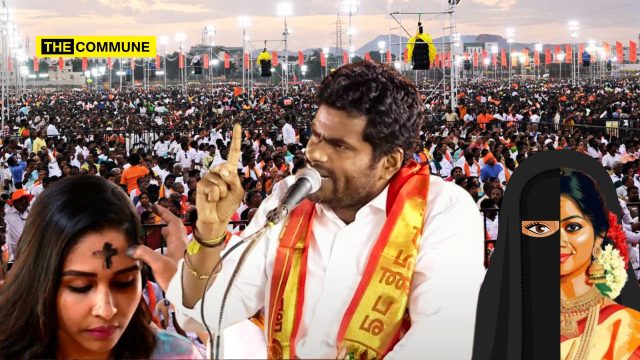
“Christian Population Increased By 10 Crore, Muslim Population By 35 Crore In 10 Years, World Will Become Muslim-Majority By 2050-55”: BJP Leader Annamalai Calls For Demographic Security At Murugan Conference, Says Not A Single Hindu Should Convert

murugan devotees conference annamalai

The Murugan Devotees Conference saw a rousingly massive attendance of devotees, religious leaders, and political leaders from across the state and outside Tamil Nadu.

Former Tamil Nadu BJP president K. Annamalai made a strong appeal to safeguard India’s cultural heritage and religious practices emphasizing that no one should be permitted to dismantle the nation’s cultural symbols, and strongly opposed religious conversions from Hinduism, asserting that those who have already converted should be encouraged to return to the faith.

Speaking at the Murugan Devotees Conference held by Hindu Munnani on 22 June 2025 in Madurai, Annamalai stated, “Our traditional way of life must remain untouched. Children should proudly go to school wearing sacred ash (thiruneer) on their foreheads. From this point forward, we must not allow our cultural identity to be eroded. Religious conversions must stop, and efforts must be made to bring back those who have left our faith.”

Drawing a comparison with global events, he referred to the Jewish community, which constitutes a mere 0.2% of the world’s population, noting that they have stood their ground against external interference. He cited Israel’s measures to defend its way of life, including closing schools and moving hospitals underground during conflict. “Israel boldly states that any threat to its way of life will be met with resistance. We must learn from that determination,” he remarked. He also pointed to the 22 April killings in Jammu and Kashmir, where 26 Hindus were shot dead for their beliefs, and said retaliatory actions were taken. “But even that becomes controversial for some,” he added.

Annamalai said the key purpose of the conference was to awaken and empower Hindus to embrace the traditional path of their forebears. He highlighted that Hinduism remains the majority faith in only two nations globally, underlining the need for unity and preservation.

He also criticized the administration of Tamil Nadu’s temples under the Hindu Religious and Charitable Endowments (HR&CE) Department and explained why the conference is being held. “Approximately 44,000 temples in Tamil Nadu are under the purview of the Tamil Nadu Hindu Religious and Charitable Endowments Department. Do you know when this came into existence? It started as an Endowment Board in 1925. Then, in 1951, it became a law. This government body, managing 5.25 lakh acres of land, administers these 44,000 temples. Out of these, 344 temples are over a thousand years old and are under the HR&CE’s control. Ask around, and you’ll find out if the HR&CE Department functions properly anywhere. They treat one way for the rich, another for the poor. All of this needs to change. This Murugan conference is being held not just for a government that champions spirituality in a new way, but for society itself to guide itself with spirituality as its foundation,” he asserted.

He added, “Everyone who has come here has arrived as a devotee of Murugan, but don’t forget that when we are leaving, we leave also as Veerabahu.”

Addressing the issue of religious conversions, Annamalai warned that such trends are leading to the erosion of cultural identity. He emphasized that the nation’s sacred symbols must be preserved, asserting that no one should be allowed to convert away from Hinduism, and those who have done so should be guided back to their roots.

He said, “I mentioned there are 230 Crore Christians. Over the last 10 years, the global Christian population has increased by 12 Crore. I also mentioned there are 200 Crore Muslims. In the last 10 years, the Muslim population has increased by 35 Crore. If the current trajectory continues, by 2050 or 2055, the world will become Muslim majority. Look at Christians today. There are more Christians in North Africa than in the entirety of Europe. We need to understand all this. Our cultural symbols should not be destroyed by anyone anywhere. Not a single person should convert, and those who have converted should be brought back. Our community, which is the fourth-largest majority community in a world of 120 Crore people, must continue to remain so.”

He also took a jibe at the Dravidian ideology, slamming their distortion, “The reason is, if you look at the political landscape of Tamil Nadu today, they have separated Tamil from spirituality and literature. But in our land, you can’t separate them like that. We have a unique pride that no other language possesses: Tamil, spirituality, and literature are one unified blend in our way of life.”

Subscribe to our channels on Telegram, WhatsApp, and Instagram and get the best stories of the day delivered to you personally.
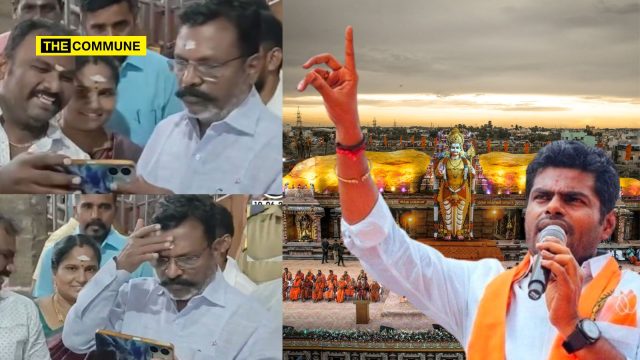
“Wipes Off Vibhuti To Take Selfie, Will Be Back Begging For Votes In 2026”, Annamalai Takes A Dig At VCK Chief Thirumavalavan

annamalai tn bjp thirumavalavan murugan devotees conference vibhuti rub off

A massive gathering of nearly five lakh devotees marked the culmination of the Murugan Devotees’ Conference, organized by the Hindu Munnani, at Amma Thidal near the Madurai Pandi Temple. The event featured cultural performances, devotional recitations, and speeches by prominent political leaders. Replicas of the six sacred abodes of Lord Murugan – the Arupadaiveedu attracted visitors in the days leading up to the conference.

Andhra Pradesh Deputy Chief Minister Pawan Kalyan attended the conference as a special guest, while Uttar Pradesh Chief Minister Yogi Adityanath canceled his scheduled participation due to unavoidable reasons. Senior BJP leaders including Tamil Nadu State President Nainar Nagendran, former party president K. Annamalai, and Tamilisai Soundararajan were present, along with AIADMK leaders R.P. Udayakumar, Sellur Raju, and Kadambur Raju.

Annamalai’s Remarks

Speaking at the conference, former BJP state president K Annamalai characterized the Murugan gathering as more than a religious event — framing it as a cultural assertion. He compared India’s recent military operation, Operation Sindoor, to global actions taken by other nations to defend their cultural identity. He suggested that criticism of such operations stemmed from discomfort with India’s assertion of its own values.

He argued that the Pahalgam attack, which had targeted Hindu pilgrims, exemplified threats to the Hindu way of life and that India was now responding firmly. Annamalai claimed that such threats had persisted over time, and he accused political actors of exploiting religious divisions, assuming Hindus would remain disunited.

Annamalai emphasized the importance of Hindu unity, particularly among the youth. He urged that Hindu children be raised with confidence in their identity, wearing symbols like Rudraksha beads and wearing the sacred vibhuti without hesitation.

Taking a dig at VCK chief Thirumavalavan who recently was seen rubbing off the vibhuti from his forehead after his visit to a temple, Annamalai said, “Such conferences will continue to be conducted. Whenever a problem arises, we will unite and fight it. But more than that, it is important to be aware of why we are uniting. We must be courageous to wear our religious symbols and markings; there is a necessity to do that now. We are not anyone’s enemy. Even though we are a majority in only two countries, we are not anyone’s enemies. Show that (you are a Hindu) bravely. Recently, an MP, a politician was at Thirupparankundram temple. He is the leader of an important party. He can be seen coming out of the temple after having darshan of the deity, just a few days back. A lady requests him to take a selfie with her. He rubs off the vibhuti from his forehead and takes the picture. The same people will come begging for votes to us for the 2026 elections. Even that day, he will go to the temple. He will even speak about us. Hindus must realise this – that we are no one’s enemy and we must have the clarity that those who we do not consider as enemies consider us as their enemies.”

Thirumavalavan’s act of rubbing off the sacred ash drew criticism from various quarters, with many accusing Thirumavalavan of attempting to distance himself from Hindu symbolism for political or ideological gain but while during the same visit to Thirupparankundram, he proceeded to the nearby Sikkandar Hill dargah, where members of the Muslim community warmly received him and placed a skullcap on his head – an act he accepted with a smile.

Critics labelled this as an example of selective secularism and hypocrisy, arguing that true secularism means either staying equidistant from all religions or treating them equally. Appeasing one religious group while dismissing or disrespecting another, they say, amounts to political opportunism that risks alienating the sentiments of the Hindu community.

Subscribe to our channels on TelegramWhatsApp, and Instagram and get the best stories of the day delivered to you personally.

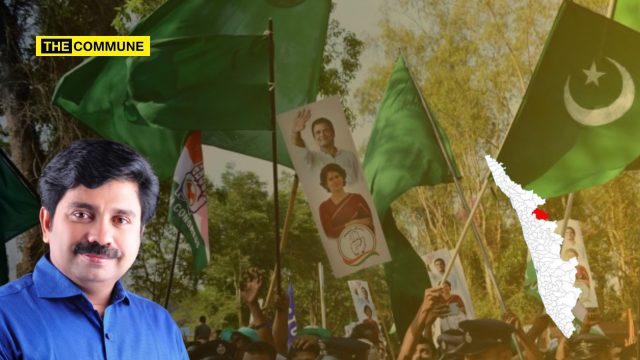
Demography Is Destiny: Congress Candidate Backed By Radical Islamist Outfit Jamaat-E-Islami Leads In Nilambur Bypoll

Within minutes after the counting of votes started for the Nilambur Assembly by-election on Monday morning, Congress candidate Aryadan Shoukath opened with a lead at both the postal votes and at the Electronic Voting Machines.

At the end of the first of 19 rounds, Shoukath has secured 3,614 votes, as per the Election Commission of India data. Shoukath led with around 500 votes after the postal votes were taken up for counting and the first round of EVMs began. Voting took place on June 19 when around 75.25 per cent of the 2.31 lakh total votes were polled.

The Congress has partnered with radical Islamist outfit Jamaat-e-Islami that had mourned for 26/11 Mumbai attack Pakistani terrorist Ajmal Kasab and glorifies Hamas terrorists. The 2008 Bengaluru serial blasts accused Abdul Nasar Madani was also trained by Jamaat-e-Islami.

The CPI(M) fielded former legislator M.Swaraj, who was trailing. The others in the fray include two-time sitting Left independent legislator P.V. Anvar, who quit in January after differences of opinion surfaced with Chief Minister Pinarayi Vijayan. The BJP fielded Mohan George first, and then he took membership in the saffron party.

The more than three-week campaign saw an intense poll battle, especially between the Left camp led by CM Vijayan.

The Left Democratic Front had announced that victory is theirs and this would be the semi-final for the 2026 Assembly polls when CM Vijayan would win a third successive term. But with votes counting gaining momentum, what has been revealed is that Anvar is trailing and has slipped down.

It remains to be seen if he manages to maintain momentum, then one has to wait a bit more to see whose votes he is going to take away. Incidentally, Nilambur has been a citadel of the Congress since its inception in 1965, with Shoukath’s father, Aryadan Mohammed, winning it a record eight times and losing thrice.

Moreover, the CPI(M) all along has banked on supporting independent candidates, and it last won on its party symbol in 1977. After that, it was only in 2006 that the CPI(M) fielded its own candidate. At the end of the first round, Swaraj had polled 3,195, Anvar had 1,588 votes, and the BJP’s George with 400 votes.

Subscribe to our channels on TelegramWhatsApp, and Instagram and get the best stories of the day delivered to you personally.

Six Key Resolutions Passed At Murugan Devotees Conference In Madurai

murugan bakthargal maanadu murugan devotees conference madurai 6 resolutions

A large gathering of devotees, spiritual leaders, political leaders, members of various Hindu organizations, and cultural performers marked the Murugan Devotees Conference, organized by the Hindu Munnani, at Amma Thidal near the historic Pandi Temple in Madurai on 22 June 2025. Held in a fervent spiritual atmosphere, the event saw the participation of leaders including Andhra Pradesh Deputy Chief Minister Pawan Kalyan, Tamil Nadu BJP president Nainar Nagendran, former TN BJP chief K Annamalai, and Union Minister L Murugan, along with AIADMK leaders such as R.P. Udayakumar, Sellur Raju, and Kadambur Raju.

The conference, which showcased Murugan bhakti through the showcase of the six abodes of Lord Muruga – the Arupadaiveedu along with cultural performances, culminated in the passage of six key resolutions reflecting both religious sentiment and political undertones. Hindu Munnani executive Kishore formally presented the resolutions, which were unanimously passed by the assembly.

The six resolutions taken at the conference are as follows:

Karthigai Deepam Lighting On Thiruparankundram Hill
The conference resolved that the sacred Karthigai Deepam festival should be formally celebrated atop the Thirupparankundram Hill, the first of the six abodes of Lord Murugan.

Support & Praise For Prime Minister Modi
The gathering extended its congratulations and support to Prime Minister Narendra Modi for his firm response in the form of Operation Sindoor to the recent dastardly Pahalgam terror attack, recognizing it as a decisive act of national security.

Protection Of Murugan Temples & Hills
The conference demanded protection for Murugan-dedicated hills, affirming that these sacred sites (Kundram) belong to Kumaran – Lord Muruga and should be preserved against encroachments or neglect.

Call To Remove The HR&CE Department
A major resolution called for the removal of the Tamil Nadu government’s Hindu Religious & Charitable Endowments Department from temple administration, asserting that temple management should return to Hindu devotees and traditional custodians.

Hindu Electoral Unity
Emphasizing the need for political influence, the conference urged Hindus to remain united during elections and demonstrate their collective voting power.

Observance of Shashti With Devotional Unity
It was resolved that the hymn Kanda Shashti Kavasam should be sung collectively by devotees across Tamil Nadu on Shashti day every month as an expression of unity and devotion.

The resolutions, framed against a backdrop of ongoing political debates over religious rights and temple governance in Tamil Nadu, come amid sharp criticism from DMK alliance parties. However, the show of strength and cross-party participation highlighted the resonance of Murugan worship and the political significance it continues to carry in Tamil culture.

The programme ended with over 5 lakh attendees chanting the Kanda Shashti Kavasam at the venue and over a crore Hindus virtually joining the event and reciting the hymn – a Guiness record of sorts.

(With inputs from News7 Tamil)

Subscribe to our channels on Telegram, WhatsApp, and Instagram and get the best stories of the day delivered to you personally.
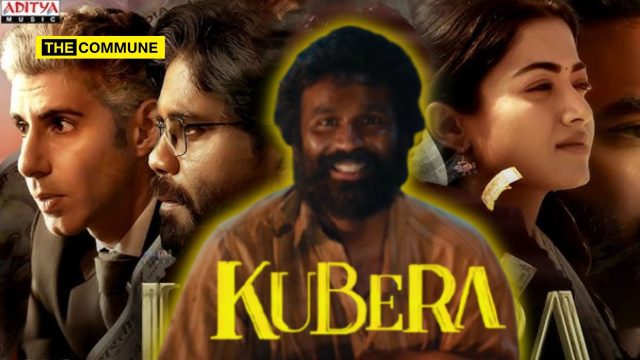
Kubera Review: Dhanush The Performer Shines Like Gold In This Overstretched Tale About Haves And Have Nots

Sekhar Kammula’s Kubera is an ambitious film that swings for the fences with a promising plot and Dhanush’s towering performance, but it stumbles mainly because of the runtime. The film manages to deliver as a family entertainer, but falls short of being a slick power-packed thriller.

Dhanush, as expected, is the heartbeat of Kubera. His portrayal of a beggar is nothing short of extraordinary, reaffirming that he is a ‘Nadippu Asuran’ (the acting demon).

Be it his introduction scene or the scene at the Gateway of India, where he begs with raw intensity, is charming, goosebumps-inducing and worth it. Dhanush’s audacity to dive into any role and emerge shining is on full display.

Nagarjuna’s performance is convincing but generic with limited scope for acting. Jim Sarbh on the other hand has his moments but doesn’t come across as the menacing villain he ought to be.

The film’s core strength lies in its intriguing premise between the haves and have-nots. There’s ample conflict for the director to play around and set the stage for satisfying character arcs. The screenplay, for the most part, keeps you hooked with its engaging twists and turns. But again, it is the same screenplay that wears out thin as the film progresses.

At a bloated three-hour runtime, the film tests the audience’s patience, with a screenplay that could’ve been tighter. Just when you think the plot is wrapping up, it stretches needlessly, diluting the impact of what could’ve been a taut thriller. The cat-and-mouse dynamic, while intriguing, lacks the pace and believability to fully grip viewers.

Emotional disconnect is another sore point—character deaths fail to resonate, and a misplaced death song feels jarring. Sunaina’s role, unfortunately, seems pointless, adding little to the narrative. The climax, rushed and underwhelming, leaves you wanting more resolution.

In the end, Kubera is a mixed bag—a film with a solid foundation, elevated by Dhanush’s brilliance and engaging moments, but bogged down by its length and uneven execution. Trimmed by 30 minutes and with a sharper focus, it could’ve been a knockout. As it stands, it’s a good watch for Dhanush fans but it falls short of being a classic.

Subscribe to our channels on TelegramWhatsApp, and Instagram and get the best stories of the day delivered to you personally.

Cherry-Picking Data For Propaganda: Why The News Minute’s Khelo India Fund Allocation Allegations Don’t Hold Up

In a recent video published by The News Minute (TNM) under the Let Me Explain series, their journalist Pooja Prasanna alleged a pattern of political favouritism in the Union government’s flagship sports development initiative — Khelo India. They claimed that BJP-ruled states such as Gujarat and Uttar Pradesh received disproportionately high funding, while opposition-ruled states like Tamil Nadu and Kerala were allegedly sidelined.

However, a deeper examination of official documents, sports ministry records, and performance data tells a more nuanced story. This report dissects the flaws in TNM’s assertions and reveals how selective data presentation distorts public perception.

Claim 1: BJP-ruled states are favoured in Khelo India allocations.

The News Minute’s video asserted that BJP-ruled states like Gujarat (₹606 crore) and Uttar Pradesh (₹500 crore) received disproportionate Khelo India funds while opposition states were sidelined. While they have mentioned the BJP-ruled states in the video, somehow the narrative is set such that it makes the viewer think the Central government is giving step-motherly treatment to other states.

The video mentions that despite being home to Olympian Rudrankksh Patil who the gold medal in the men’s 10m air rifle shooting event at the ISSF World Cup 2025 Buenos Aires in April 2025, it was allocated only ₹87.43 crore, ranking just above non-BJP Punjab (₹78.02 crore).

The video fails to mention that funds for Gujarat were primarily for building mega-projects like Ahmedabad’s Sports Enclave.

While they did mention the Khel Sahayak issue, why did TNM not consider it as an issue when the coaches protested delayed salaries and 8-month contracts (vs. 11-month promises). Is this favouritism as per TNM’s standards?

Claim 2: Tamil Nadu and other opposition states are penalized.

TNM suggests that Tamil Nadu receives poor funding despite strong performance

It is very easy to cherry pick such facts to suit one’s narrative. But the truth is that:

  • Tamil Nadu has 18 Khelo India Academies, 38 Centres, and 1 State Centre of Excellence.
  • Union Ministry clarified in 2024: There is no pending proposal under consideration from Tamil Nadu for new Khelo India Centres.”
  • The state is already a beneficiary of prior rounds and has alternative funding for new projects via non-Khelo India schemes.

Existing infrastructure density explains lower recent allocations. As clarified by the Union Ministry, the question of active rejection of new proposals does not stand valid.

Understanding The Allocation Mechanism

Contrary to political interpretations, the Ministry of Youth Affairs and Sports follows a defined methodology. A few months ago, DMK Rajya Sabha MP P. Wilson raised ‘concerns’ over the disparity in fund allocation and sports infrastructure development under the Khelo India scheme in Tamil Nadu. In response, the Union Ministry of Youth Affairs and Sports clarified that funds under the Khelo India programme are allocated scheme-wise, not state-wise, and emphasized that the submission and evaluation of proposals is an ongoing process.

This was evidenced by:

  • Andhra Pradesh: ₹237 crore worth of proposals rejected from 2021–2023.
  • Haryana, a BJP-governed sporting powerhouse, received just ₹66 crore due to low proposal volume.

What TNM Didn’t Tell You

Performance vs. Allocation: A Non-Linear Correlation

TNM implies poor-performing states received more funding. But medal tallies don’t tell the whole story.

  • Tamil Nadu fielded 13 athletes at the 2024 Olympics, all supported under the TOPS (Target Olympic Podium Scheme) – independent of state allocations.
  • Bihar, once a low-priority state, surged from 21st to 15th place in Khelo India rankings by investing in niche sports like Rugby 7s – backed by targeted funding.
  • Rajasthan, a Congress-ruled state until 2023, received ₹107 crore but bagged fewer medals than Tamil Nadu, which had only ₹29.5 crore allocated.
  • Athletes from “low-fund” states like Tamil Nadu (13 Olympians) and Manipur (multiple medalists) consistently access elite programs like TOPS, which provides ₹50,000/month stipends, foreign coaching, and training support regardless of home-state funding.

Funding supports infrastructure and institutional building, not just immediate performance.

Gujarat’s ₹606 crore allocation includes high-cost, event-specific investments:

    • FIFA U-17 Women’s World Cup venues
    • Sardar Patel Stadium revamp under Ahmedabad Sports Enclave

And despite high funding, Gujarat’s khel sahayaks (sports teachers) protested for months over delayed salaries and incomplete contracts, undermining claims of privilege, as mentioned above.

Maharashtra’s Olympic medalist Rudrankksh Patil received no state-specific privilege – a BJP-governed state that didn’t make TNM’s cut.

Also, state projects like Coimbatore hockey stadium or Ramanathapuram synthetic track can utilize state budgets or non-Khelo India central schemes (e.g., Urban Infrastructure Development). It is not necessary that the centre keeps spoonfeeding the states for every single project. Had the DMK government repealed the Kalaignar Magalir Urimai Thogai Thittam, those funds nearly about 1000 crores and upwards could be diverted to better projects that will help the state come up further.

TNM’s narrative cherry-picks optics while ignoring other important information. 

Systemic Reforms In Progress

The Sports Ministry has implemented key reforms to address fairness and transparency:

  • Mandatory video recordings of selection trials
  • Anti-age fraud initiatives
  • Integrity Officers posted at national camps
  • All fund approvals require technical feasibility reports and are published on Ministry portals
  • Uniform scholarships of ₹6.28 lakh/year for 2,781 Khelo India Athletes across all states – irrespective of regional allocation

Additionally, the Draft National Sports Governance Bill promises further structural accountability in national sports administration.

The Takeaway: The Real Picture Is More Complex

The Khelo India initiative is not without flaws, but attributing fund distribution to partisan bias oversimplifies a layered reality:

  • States with poor infrastructure receive higher allocations to balance regional inequities
  • States with robust existing frameworks, like Tamil Nadu, require fewer new investments
  • Proposal quality and event-readiness are the primary drivers – not party alignment

Here are some numbers that TNM must consider:

For the financial year 2025-26, the Ministry of Youth Affairs and Sports was allocated a record ₹3,794 crore by the government. Of this, ₹2,191.01 crore is earmarked for Central Sector Schemes, with the flagship Khelo India Programme receiving a substantial ₹1,000 crore. This marks a 130.9% increase from the ministry’s allocation of ₹1,643 crore in 2014–15, reflecting the government’s growing commitment to nurturing sporting talent and infrastructure across the country.

Launched in 2016–17, the Khelo India – National Programme for Development of Sports was launched in 2016-17 under PM Modi. The programme aims to foster both mass participation and excellence in sports, targeting communities in both rural and urban areas.

Key milestones so far include:

  • Approval of 326 new sports infrastructure projects worth ₹3,124.12 crore.
  • Establishment of 1,045 Khelo India Centres (KICs) to support grassroots-level training.
  • Notification of 34 Khelo India State Centres of Excellence (KISCEs) and accreditation of 306 sports academies.
  • Support for 2,845 Khelo India Athletes (KIAs), who receive coaching, equipment, medical support, and a monthly out-of-pocket allowance.

All this was not possible under the previous UPA regime. Maybe TNM would want to do an expose on that era?

Instead of blindly questioning the Modi government just to set a narrative, The News Minute can make use of its journalistic abilities to question the ruling DMK and asking questions that matter – especially when it comes to such issues. Why not use state funds, MP funds, MLA funds to boost sports activities and other infrastructure in Tamil Nadu? Will TNM dare to ask this of its masters?

Subscribe to our channels on Telegram, WhatsApp, and Instagram and get the best stories of the day delivered to you personally.
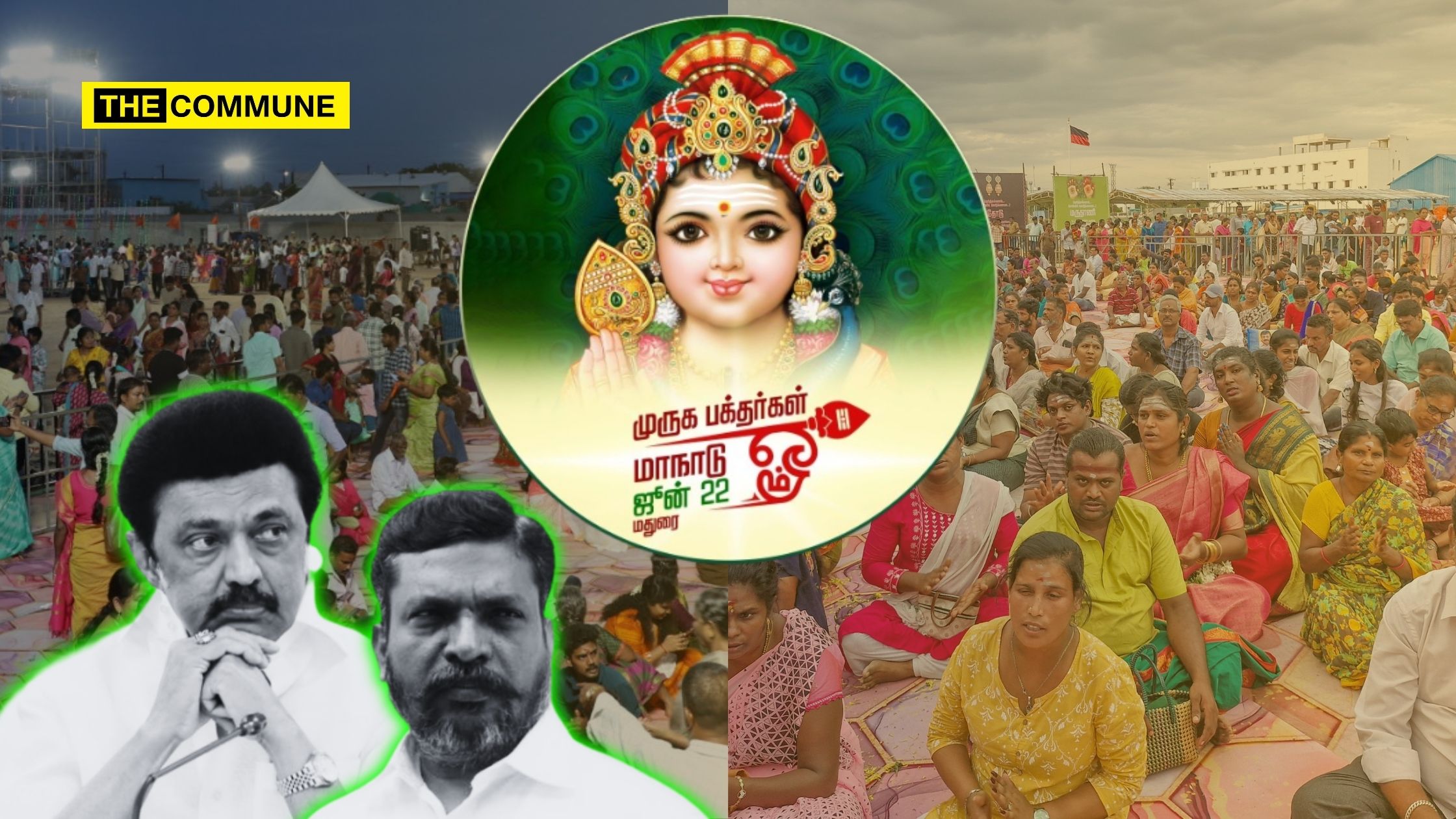
Massive Crowds Thronging Madurai For Murugan Maanaadu Gives Nightmares For DMK And Dravidianists As Hindu Consciousness Awakens In Tamils

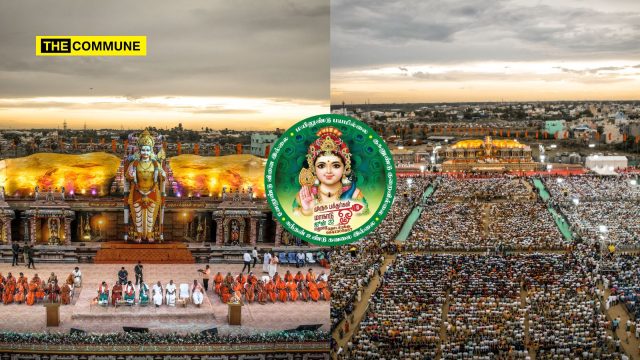
Madurai, Tamil Nadu’s ancient temple city, is ablaze with spiritual fervor as lakhs of Lord Murugan devotees flood the Muruga Bakthargalin Aanmeega Maanadu (Spiritual Conference of Murugan Devotees), a historic 10-day event organized by Hindu Munnani, which kicked off on June 22, 2025. This first-of-its-kind conference, held on an unprecedented scale at Amma Thidal near Pandikovil in Madurai, has drawn an estimated five lakh devotees from across Tamil Nadu and beyond, signaling a powerful wave of Hindu consciousness that has left the ruling Dravida Munnetra Kazhagam (DMK) and its Dravidianist allies visibly unsettled ahead of the 2026 Assembly elections.

A Historic Celebration Of Murugan Devotion

Marking a milestone in Tamil Nadu’s spiritual landscape, the Murugan Conference is the state’s largest-ever gathering dedicated to Lord Murugan, the revered Tamil deity embodying valor, wisdom, and devotion. The event features a stunning replica of Arupadai Veedu—the six sacred abodes of Murugan, which includes Palani, Thiruchendur, Swamimalai, Thiruthani, Pazhamudhircholai and Thiruparankundram—drawing devotees from every corner of Tamil Nadu to offer prayers and immerse themselves in devotion. From rural villages to urban centers, the faithful have thronged Madurai, creating a sea of saffron that underscores Tamil Nadu’s unbreakable bond with its Hindu heritage.

The conference’s inclusivity stands out, with special arrangements made for specially-abled individuals, ensuring they can participate fully in the spiritual experience. Wheelchair-accessible pathways, dedicated assistance counters, and priority access to prayer zones have been lauded by attendees, reflecting the organizers’ commitment to universal devotion.

A Star-Studded Gathering

The event has attracted high-profile guests from across India, amplifying its national significance. Uttar Pradesh Chief Minister Yogi Adityanath, known for his staunch advocacy of Hindu causes, and Andhra Pradesh Deputy Chief Minister Pawan Kalyan, a vocal supporter of Sanatana Dharma, are among the prominent figures joining the conference. Their presence has energized devotees and lent political weight to the gathering. Union Home Minister Amit Shah, during his June 8 visit to Madurai, rallied support for the event, accusing the DMK of disrespecting Hindu traditions by referring to Thiruparankundram Hill as “Sikandar Hill.” The participation of such leaders has framed the conference as a unifying force for Hindus nationwide.

Political Tensions: BJP vs. DMK

The massive turnout and high-profile endorsements have sparked a fierce political showdown between the Bharatiya Janata Party (BJP) and the DMK. The BJP, leveraging Murugan’s cultural resonance, has positioned the conference as a symbol of Hindu unity and a counter to the DMK’s Dravidianist ideology, which has historically questioned religious orthodoxy. The Madras High Court’s recent rulings, striking down restrictive police conditions like mandatory vehicle passes and permitting miniature temple installations for pre-event rituals, have further emboldened organizers, who see these as victories against the DMK’s alleged anti-Hindu stance.

The DMK, visibly disturbed by the thronging crowds, has dismissed the conference as a “Sanghi political stunt” aimed at polarizing voters. Tamil Nadu Hindu Religious and Charitable Endowments Minister PK Sekar Babu downplayed the event, claiming the DMK’s own Murugan conference in Palani in 2024 drew 7–8 lakh devotees from 27 countries without political motives. DMK allies, including the Viduthalai Chiruthaigal Katchi (VCK) and Communist Party of India (CPI), have echoed this, with filmmaker and DMK supporter Ameer Sultan publicly objecting to the conference as a “divisive tactic” that exploits Murugan devotion for political gain.

Rising Hindu Consciousness Disturbs DMK

The conference’s success has visibly disturbed the DMK and its Dravidianist ecosystem, which has long dominated Tamil Nadu’s political narrative. The DMK’s historical anti-Hindu rhetoric, exemplified by Deputy Chief Minister Udhayanidhi Stalin’s remarks against Sanatana Dharma, has alienated many devout Tamils. Hindu Munnani leaders argue that the DMK’s initial opposition to the conference—through police restrictions and public protests—betrays its fear of a united Hindu vote.

In response, the DMK and its allies have mounted a counter-offensive. VCK president Thol. Thirumavalavan and CPI’s R. Mutharasan led protests, including a human chain in Madurai on June 19, to oppose what they call the “Sangh Parivar’s” divisive agenda. Critics argue that the conference, timed strategically before the 2026 elections, risks fracturing Tamil Nadu’s social harmony. DMK supporter Advocate S. Vanchinathan warned of parallels with the Ram Janmabhoomi campaign, urging vigilance against politicized religion. The DMK has also highlighted its own Murugan conference in Palani to deflect anti-Hindu accusations, though its failure to condemn groups like Karuppar Kootam, which insulted Murugan, continues to fuel devotee anger.

A Defining Moment?

As Madurai reverberates with devotion, the Murugan Devotees Conference is more than a spiritual milestone—it’s a potential game-changer in Tamil Nadu’s political arena. The BJP sees it as a golden opportunity to expand its influence in a Dravidian stronghold, while the DMK grapples with the implications of a resurgent Hindu consciousness. With over five lakh devotees defying obstacles to attend, the event underscores a growing assertion of Hindu identity that could reshape the state’s electoral future.

Subscribe to our channels on TelegramWhatsApp, and Instagram and get the best stories of the day delivered to you personally.
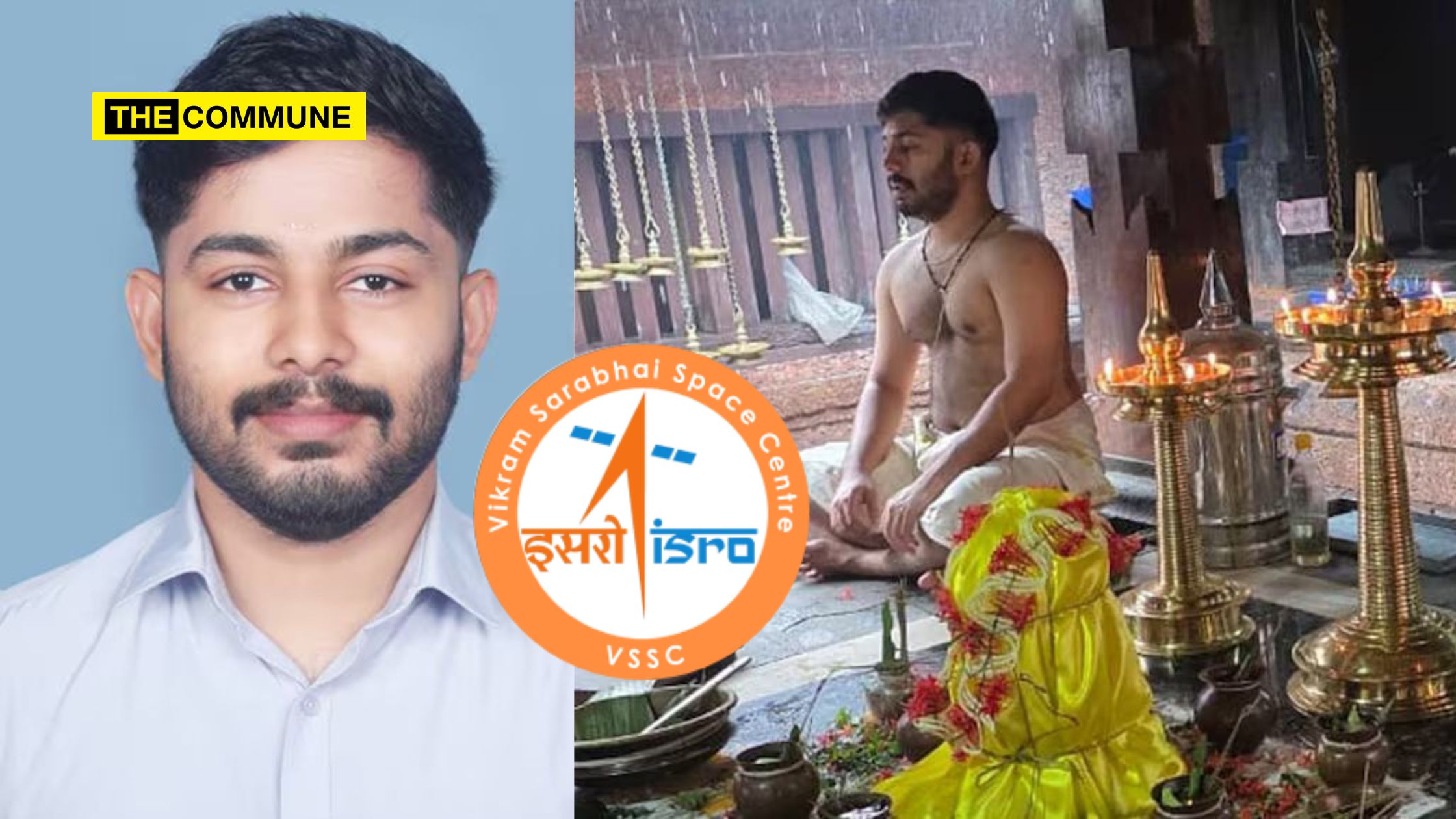
Vedic Gurukulam-Trained Kerala Youth Govind Krishnan Joins ISRO As Scientist

When tradition meets technology, stories like that of Govind Krishnan M emerge, where deep-rooted cultural learning complements cutting-edge science. A native of Kannur, Kerala, Govind is set to join the Vikram Sarabhai Space Centre (VSSC), the premier arm of ISRO based in Thiruvananthapuram. Unlike his peers from the Vedic path who chose priesthood, Govind took a different route—one that merges ancient knowledge with modern space science.

There’s a common belief that Vedic education restricts career growth or doesn’t align with science,” Govind reflects. “But my journey shows that both can coexist. With discipline and balance, it’s possible to embrace both spirituality and science.”

Govind’s educational path defies convention. After completing Grade 4 at Kendriya Vidyalaya, Payyannur, in 2011, he left mainstream schooling to join a gurukula at Bhramaswam Madham, Thrissur. Over four intensive years completing a five-year course in less time he immersed himself in Vedic study.

The decision to pursue Vedic education was influenced by his father, Hareesh Kumar, a former Indian Navy officer who retired voluntarily in 2009. After years of relocating across naval bases in cities like Kochi, Mumbai, and Lonavala, the family returned to their hometown Kaithapram in Kannur. Govind’s sacred thread ceremony (upanayanam) took place while he was still in school, marking the beginning of his spiritual training.

The initial phase was challenging—I was away from home for the first time,” Govind recalls. “There were five of us in my batch, and we studied the Yajurveda. There were no textbooks or visuals—everything was passed down orally from the guru. It was a life of discipline.”

He attended a nearby government school only for exams, focusing primarily on Vedic learning. His day began at 5 a.m., packed with chanting, rituals, and a tightly scheduled routine. It wasn’t until the fifth year that he resumed regular schooling, enrolling in Vivekodayam Boys Higher Secondary School, Nadakkavu, for Grades 8 to 10—all while continuing his gurukula life.

His daily schedule remained intense: Vedic classes until early morning and late evening, followed by academic studies until nearly midnight. Despite this demanding routine, Govind scored top grades in his 10th board exams. He then left the gurukula and joined Alva’s College in Moodbidri, Mangaluru, for his higher secondary education, simultaneously preparing for competitive entrance exams.

Govind succeeded in clearing both JEE Main and Advanced, securing admission to the Indian Institute of Space Science and Technology (IIST) in Valiamala, Thiruvananthapuram. He enrolled in the BTech Electronics and Communication program in 2021.

Even after leaving the gurukula, Govind continued his spiritual routines. “I maintain at least an hour a day for what I’ve learned,” he says. “Just like people go to the gym for physical fitness, I train my mind—for focus, clarity, and memory.”

While his batchmates pursued priesthood due to family traditions, Govind charted a new course. Though he knows basic rituals like Ganapathihomam and Thevaram, he clarifies that temple priesthood requires specific training beyond Vedic study.

Now, selected through ISRO’s Centralised Recruitment Board (ICRB), which includes rigorous testing and interviews, Govind is preparing to start his new role in July. He hopes to continue his spiritual practices even as he steps into his scientific career.

“In the future, I’d love to teach young minds what I’ve learned,” he says. “The Vedas have given me more than knowledge—they’ve given me strength and direction.”

Govind’s family remains rooted in humble aspirations. His father now works at a private bank in Kannur, his mother Suja is pursuing a BA in Music, and his twin sister, Gayathri, is employed as a physiotherapist in Mumbai.

Govind’s story stands as a powerful testament to how ancient Indian wisdom and modern science can not only coexist but thrive together.

(With Inputs From onmanorama)

Subscribe to our channels on TelegramWhatsApp, and Instagram and get the best stories of the day delivered to you personally.