Home Blog Page 236

“Will You Ever Act With Responsibility?”: Annamalai Slams Stalin Govt After Cuddalore School Van Tragedy Over Year-Long Underpass Construction Delay
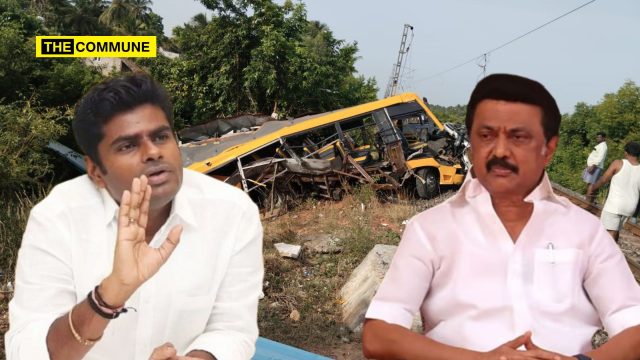
In the aftermath of a tragic accident near Cuddalore on 9 July 2025, where two schoolchildren were killed after a train collided with a school van at a manned railway crossing, former Tamil Nadu BJP president K. Annamalai extended his heartfelt condolences to the grieving families. Expressing solidarity with the victims, Annamalai also raised serious questions about the DMK government’s inaction and delays in critical infrastructure projects.

The collision occurred around 7:45 AM at the Semmankuppam railway level crossing when a private van carrying four students was struck by the Villupuram–Mayiladuthurai passenger train. The vehicle was dragged for nearly 50 meters due to the impact. Two students Charumathi (15) and Venkatesh (10) lost their lives, while the driver and two other students sustained serious injuries and were admitted to the Cuddalore Government General Hospital.

Local residents rushed to the scene before rescue teams could arrive and assisted in transporting the injured. According to eyewitnesses, the gatekeeper at the crossing, Pankaj Sharma, allegedly failed to close the gate and was found asleep. Some villagers reportedly confronted and assaulted him. Sharma, however, claimed the van driver insisted on crossing to avoid school delay.

Southern Railway later suspended Sharma, pending a full inquiry. Cuddalore SP S. Jeyakumar confirmed that an investigation is underway and final conclusions will follow the official report.

A now-deleted Southern Railway press release stated that preliminary findings suggested the gate was closed, but the van driver pressured the gatekeeper to allow passage, which violated safety protocols. The release also revealed that the gatekeeper has been arrested and booked for criminal negligence, and the process for his dismissal is underway.

Crucially, the same press note also revealed that an underpass at this crossing had already been sanctioned a year ago fully funded by the Railways. However, construction has been delayed for over a year due to pending approval from the district administration, specifically the District Collector.

Reacting to this, Annamalai posted a strongly worded message on social media, “Our hearts go out to the children and the parents of today’s most unfortunate accident in Cuddalore, when a school van carrying four children was hit by the Villupuram-Mayiladuthurai passenger train while attempting to cross the railway level crossing gate. What was meant to be an ordinary day turned into an unimaginable nightmare for the bright young minds. We stand in sorrow and solidarity with the grieving parents during this deeply painful time. Two versions of the cause of accident have come to light: one stating that the railway crossing gate was open for vehicles to pass, and the other, put out by Southern Railway, claiming that the van driver insisted on crossing the gate to avoid delay in reaching the school, and the gate was opened upon the van driver’s insistence. Southern Railways has clarified that permitting passage violates the laid-down rules and protocol, and has initiated the process of dismissing the Gatekeeper. An FIR for criminal negligence has been lodged against the gatekeeper, and he has been arrested. We have to wait for investigative agencies to conclude on the cause of the accident.”

He added “According to the statement released by Southern Railway, it has become apparent that an underpass at this railway crossing, with full railway funding, was sanctioned a year ago by our Hon. Railway Minister, Thiru @AshwiniVaishnaw avl, but has been pending commencement due to a delay in obtaining permission from the District Collector. TN CM Thiru @mkstalin should explain to the people of Tamil Nadu why even critical development works, such as permitting the construction of a railway underpass, are also moving at a snail’s pace in your Government in TN. Will you ever act with responsibility?”

Annamalai’s remarks underscore growing public frustration over administrative delays in executing life-saving infrastructure and highlight the need for urgent governance reforms to prevent such tragedies in the future.

Subscribe to our channels on TelegramWhatsApp, and Instagram and get the best stories of the day delivered to you personally.

India’s Defence Exports Surge To ₹23,622 Cr In FY 2024–25: A Decade Of Growth Under ‘Make in India’

akashteer s-400 air defence systems india defence exports

On 1 April 2025, India’s defence exports hit a record high of ₹23,622 crore (approximately US$2.76 billion) for the financial year 2024–25. This marks a significant surge, with Defence Public Sector Undertakings (DPSUs) registering a 42.85% increase in export figures.

This report presents a detailed analysis of India’s defence exports to various countries, explores the key drivers behind the growth, and offers a year-by-year breakdown from 2014 to 2025.

#1 India’s Defence Exports Hit All-Time High in FY 2024–25

On 1 April 2025, India’s defence exports reached a record ₹23,622 crore (approx. US$2.76 billion), marking a 12.04% rise over the previous year. The Defence Public Sector Undertakings (DPSUs) saw a remarkable 42.85% growth, contributing ₹8,389 crore, while the private sector accounted for ₹15,233 crore. India exported arms to 80 countries, with the U.S., France, and Armenia among top buyers. Raksha Mantri Rajnath Singh praised the achievement and reaffirmed India’s goal of reaching ₹50,000 crore in exports by 2029 under PM Modi’s leadership. The growth highlights India’s rising presence in the global defence market.

#2 India’s Defence Manufacturing Soars Under ‘Make in India’ In FY 2023-24

India’s defence production surged to ₹1.27 lakh crore in FY 2023-24 – a 174% rise since 2014-15, driven by the ‘Make in India’ initiative. Exports also jumped 30-fold in a decade to ₹21,083 crore, reaching over 100 countries. Major contributions include ATAGS artillery, Tejas aircraft, and indigenous warships. Schemes like iDEX, ADITI, and SRIJAN boosted private sector and startup participation. India now manufactures 65% of its defence needs, reversing a decade-old import trend. With ambitious targets of ₹3 lakh crore in production and ₹50,000 crore in exports by 2029, India is positioning itself as a global defence manufacturing leader.

#3 India’s Defence Exports Hit ₹16,000 Cr in FY23, Marking 23-Fold Growth

India’s defence exports surged to a record ₹16,000 crore in FY 2022-23, a 23-fold jump from ₹686 crore in 2013-14, reflecting India’s emergence as a global defence exporter. Defence production crossed ₹1 trillion ($12 billion), registering 12% year-on-year growth. Over 100 Indian firms now export to 85+ countries, showcasing capabilities in platforms like Dornier aircraft, BrahMos missiles, and PINAKA systems. Foreign procurement dropped from 46% (2018-19) to 36.7% (2022).

#4 India’s Defence Exports Reach Record ₹13,000 Cr in FY22, Up 54%

India exported defence goods worth ₹13,000 crore in FY 2021-22, marking a 54.1% increase over the previous year and the highest-ever recorded. Exports, primarily to the US, Philippines, Southeast Asia, the Middle East, and Africa, were nearly eight times higher than in 2015-16. Despite COVID-19 setbacks, the sector rebounded strongly. Private firms contributed around 90% of the exports, with public sector undertakings making notable gains at 30%.

#5 India’s Defence Exports Rise to ₹8,434 Cr in FY21, Driven by Policy Reforms

India exported defence equipment worth ₹8,434.84 crore in FY 2020-21, up from ₹1,940.64 crore in 2014-15, reflecting a major policy push under the Modi government. Key reforms included easing SCOMET export restrictions, creating a dedicated export coordination office, empowering DPSUs, and launching an online export clearance portal. The government also promoted indigenisation through the Defence Acquisition Procedure 2020 and two Positive Indigenisation Lists.

#6 India’s Defence Exports Dip Slightly in FY20

In FY 2019-20, India’s defence exports totaled ₹9,115 crore (approx. $1.2 billion), a slight decline from ₹10,745 crore in 2018-19. Despite the dip, the broader trend shows a steady rise, driven by the government’s push for indigenous defence production and export promotion. Exports grew from ₹4,682 crore in 2017-18 to ₹15,920 crore in 2022-23. Defence Minister Rajnath Singh hailed the recent record as a “remarkable achievement.”

#7 India’s Defence Exports Hit ₹10,745 Cr in FY19, Exports to 85 Nations

In FY 2018-19, India’s defence exports touched a record ₹10,745 crore, marking a major step in its emergence as a global defence exporter. The country exported military hardware like missiles, ALHs, patrol vessels, and surveillance systems to 85 countries. Despite a slight dip in later years, exports rebounded, hitting ₹15,920 crore by FY 2022-23—a tenfold jump from 2016-17. Government reforms, indigenisation efforts, and a growing list of banned imports have helped India reduce dependency and boost exports. Major export prospects included Tejas jets, Akash missiles, and artillery systems.

#8 India’s Defence Exports Rise to ₹4,682 Cr in FY18, Total ₹38,500 Cr Since 2014

India exported defence equipment worth ₹4,682.36 crore in 2017-18, marking a sharp rise from ₹1,521.91 crore in 2016-17. Between 2014-15 and 2020-21, total defence exports stood at ₹38,500 crore. Major exports included armoured vehicles, radars, lightweight torpedoes, fire control systems, and tear gas launchers. Defence Minister of State Ajay Bhatt noted that exports are being made to around 75 countries, though names remain undisclosed for strategic reasons. The Ministry of Defence credited improved governance and end-user controls for India’s strengthening global defence position. War Memorial digital upgrades and DRDO tech initiatives were also highlighted.

#9 Defence Exports Cross ₹1,521 Cr in FY 2016-17, Laying Foundation for Export Growth

In the financial year 2016-17, India’s defence exports stood at ₹1,521 crore, marking a crucial starting point in the country’s push toward self-reliance in military manufacturing. This year laid the groundwork for exponential growth in exports under the ‘Aatmanirbhar Bharat’ and ‘Make in India’ initiatives. With streamlined export procedures and enhanced policy support, India began its transition from a major importer to an emerging global exporter of defence equipment.

#10 India’s Defence Exports Rise to ₹1,379 Cr in FY 2015-16 Amid Private Sector Growth

In FY 2015-16, India’s defence exports surged to ₹1,379.42 crore, reflecting strong momentum in military manufacturing, particularly from the private sector. About 12–14 private firms drove much of this growth. Major export destinations included Afghanistan, Israel, the UK, and Vietnam. Key exports ranged from offshore patrol vessels and Cheetal helicopters to protective gear and electronic systems. The government’s reforms—such as easing NoC norms and updating export procedures—boosted industry participation. With 319 industrial licences issued by January 2016, India’s shift toward domestic production and global defence trade gained strategic traction under the ‘Make in India’ initiative.

#11 India’s Defence Exports at ₹670 Cr in FY 2014-15 Amid Push for Indigenous Production

In FY 2014-15, India’s defence exports stood at ₹669.88 crore, slightly down from ₹686.27 crore the previous year. Major export destinations included the US, UK, Russia, and Nepal. Key items exported were aircraft spares, helicopters, and bulletproof gear. Over ₹2,605 crore worth of defence items were exported over five years, with contributions from DPSUs, OFB, and private firms. The Defence Production Policy 2011 and Defence Export Strategy aimed to boost indigenous manufacturing, support SMEs, ease licensing norms, and prioritize Indian procurement categories to reduce import dependence and build a self-reliant defence industry.

Subscribe to our channels on Telegram, WhatsApp, and Instagram and get the best stories of the day delivered to you personally.
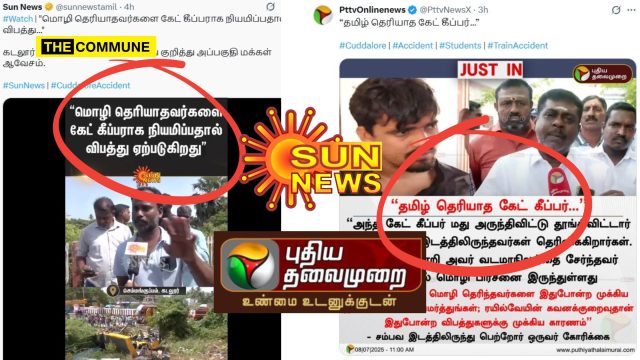
“Gatekeeper Was A North Indian”: Dravidianist Media Puthiya Thalaimurai & Sun News Use Cuddalore Train Accident For Divisive Agenda

cuddalore train accident sun news puthiya thalaimurai

In the wake of a heartbreaking accident near Cuddalore where two schoolchildren lost their lives after a train collided with a van at a manned level crossing, the Dravidianist ecosystem has already begun spinning the narrative with sections of the media firmly backing the DMK’s line.

Shockingly, the focus has shifted from the tragic loss of life to linguistic blame. The gatekeeper, a Hindi-speaking worker, is now being painted as the root cause not based on facts, but seemingly for not speaking Tamil.

Dravidianist media, the Puthiya Thalaimurai, a news channel often seen echoing the ruling party’s stance, ran a news card with the headline, “Gatekeeper who doesn’t know Tamil.”

Not far behind, Sun News widely regarded as the DMK’s unofficial propaganda arm also framed the story around language, running the caption: “Accidents happen because those who don’t speak the language are appointed as gatekeepers…”

These attempts to communalize and linguistically polarize a tragedy have been met with disbelief and criticism. For many, it’s yet another example of how journalism in Tamil Nadu is increasingly becoming a political tool where even moments of mourning are hijacked to reinforce ideological talking points and distract from governance failures.

What Actually Happened?

On the morning of 9 July 2025, a private school van carrying four students attempted to cross a railway level crossing at Semmankuppam in Cuddalore district when it was hit by a fast-moving train traveling from Villupuram to Mayiladuthurai. The impact was devastating the van was dragged for over 50 metres.

Two students, Charumathi (15) and Venkatesh (10), were killed. The van driver, Sankar (45), and two other students were seriously injured and taken to the Cuddalore Government General Hospital.

Local villagers, who reached the scene before emergency services, rescued the injured and helped transport them to the hospital. Eyewitnesses blamed the gatekeeper, alleging that he had failed to close the crossing gate and was asleep at the time of the incident. Some villagers reportedly assaulted the gatekeeper, later identified as Pankaj Sharma. Sharma, in his defense, claimed that the van driver had pressured him to keep the gate open, a claim that has yet to be verified.

In response to the incident, Southern Railway has suspended Sharma pending a full inquiry. Cuddalore Superintendent of Police S. Jeyakumar stated that the cause of the tragedy will only be confirmed after a thorough investigation.

Subscribe to our channels on TelegramWhatsApp, and Instagram and get the best stories of the day delivered to you personally.

DMK Stooge Actor Karthi Says “TN Govt Schools Are Excellent”, While Trichy Govt School Teacher Shows Up Drunk, Collapses In Class

actor karthi govt school

What impeccable timing from Dravidianist supporter and Kollywood actor Karthi. Just days after he heaped praise on Tamil Nadu’s School Education Minister Anbil Mahesh, portraying government schools as thriving under his leadership, disturbing reports have surfaced exposing the harsh ground reality.

While Karthi publicly glorifies government schools to display his political loyalty, he quietly sends his own children to elite international institutions. The contrast is striking and frankly, shameful. Championing public education while opting out of it for his own family reeks of hypocrisy, especially when government schools across the state are struggling with mismanagement, neglect, and incidents that paint a very different picture from the one he’s promoting.

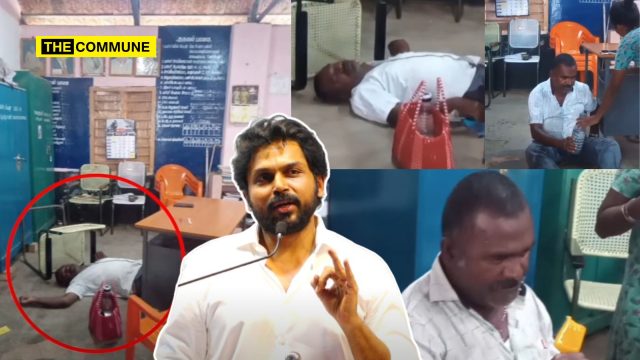
One shocking example of the state of government schools emerged from Vaiyamalaipalayam near Manapparai in Trichy district. At a small government school with only 20 students, a teacher named Arogyaraj, a resident of Avarampatti, reportedly arrived intoxicated on 7 July 2025 morning.

According to reports, the teacher created chaos in the classroom overturning desks and chairs and ultimately collapsing on the floor. Alarmed students called their parents, who, along with other villagers, rushed to the school. They tried to revive the unconscious teacher by splashing water on his face and allegedly even forcing him to drink more alcohol as a reprimand.

Parents expressed deep frustration over the incident. “This is the situation at our school. We don’t have any permanent teachers for our school. This is the state of our school’s teachers. Please observe carefully,” said one student while recording the video.

Another parent remarked, “Is this acceptable to you? Tell me. A teacher meant to conduct classes coming here intoxicated and engage in such behavior – is this acceptable to you? How long will it take for other children to learn from this?”

The student recording the video said, “He cannot even sit (consciously due to the booze).”

In response, District Education Officer Latha and local police were informed of the incident. After a medical examination confirmed the teacher was under the influence, District Primary Education Officer Ravichandran issued an order for Arogyaraj’s immediate suspension.

While the government continues to highlight its educational reforms, incidents like this raise serious concerns about implementation and oversight at the grassroots level especially when public figures appear disconnected from the real state of affairs they publicly endorse.

Subscribe to our channels on TelegramWhatsApp, and Instagram and get the best stories of the day delivered to you personally.

“Nowadays Politicians Feel Sky Is The Limit Under Article 19. Country Is Not For Politician Alone”: Madras High Court Slams DMK Minister Ponmudi In Hate Speech Against Hindus Case

madras high court ponmudi

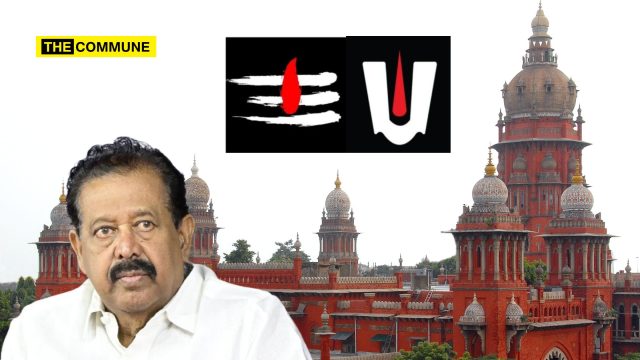
On 8 July 2025, the Madras High Court heard the suo motu case related to controversial comments made by Tamil Nadu Forest Minister and senior DMK leader K. Ponmudi, regarding the religious symbols tilaks worn by Hindu Shaivites and Vaishnavites.

Justice P. Velmurugan, presiding over the case, delivered sharp criticism of the minister’s conduct, stating, “Nowadays these politicians feel that sky is the limit under Article 19. We can’t be mere spectators. We live in a democracy with many communities.”

He further added, “When they’re coming to public, they must realize that they’re living in a country which is meant for every person. It’s not meant for any particular person. Not for the politician alone. Everyone must realize that they’re living among the people.

The case had earlier been flagged in April when Justice N. Anand Venkatesh took serious note of a video clip submitted in court by a lawyer. The footage, played during a hearing in a 2023 suo motu revision petition challenging Ponmudi’s acquittal in a disproportionate assets case, featured the minister making crude references to Hindu religious identities.

In the viral video from a public function, Ponmudi was seen addressing women in the audience, cautioning them not to be offended before recounting a joke involving a man visiting a sex worker, who allegedly asked him whether he was a Shaivite or Vaishnavite equating religious identity with sexual behavior.

What Ponmudi Said

In April 2025, a Ponmudi went viral on social media igniting widespread controversy and condemnation across social media platforms, with many calling out the then-minister for his offensive remarks targeting Shaivite and Vaishnavite communities. The video, which surfaced on X, captured Ponmudi making a crude analogy involving a prostitute to mock the religious practices of these Hindu sects, drawing sharp criticism for its insensitivity and vulgarity. In the video, Ponmudi recounted a supposed interaction between a man and a prostitute, where the woman asks the man if he is a Shaivite or a Vaishnavite. According to Ponmudi, the prostitute explains that Shaivite means “lying down position” (referencing the horizontal tilak worn by Shaivites) while a Vaishnavite means a “standing position” (referencing the vertical tilak worn by Vaishnavites).

The remark sparked widespread outrage. BJP Tamil Nadu president K. Annamalai strongly condemned the speech, calling it a reflection of the DMK’s political culture. “This isn’t just about one minister. The entire DMK setup is steeped in vulgarity and indecency. MK Stalin should be ashamed of leading such a party,” he posted on X.

Even within the DMK, the speech was criticized. MP Kanimozhi distanced herself from Ponmudi’s remarks, stating on X, “Minister Ponmudi’s recent comments are unacceptable. Regardless of the context, such vulgar language is indefensible.”

In the aftermath of the controversy, the DMK stripped Ponmudi of his position as Deputy General Secretary of the party.

Subscribe to our channels on TelegramWhatsApp, and Instagram and get the best stories of the day delivered to you personally.

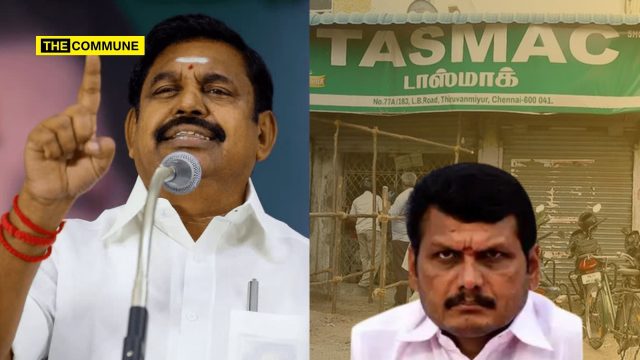
EPS Calls DMK’s Senthil Balaji As ‘Ten Rupees Balaji’ Referring To TASMAC Scam

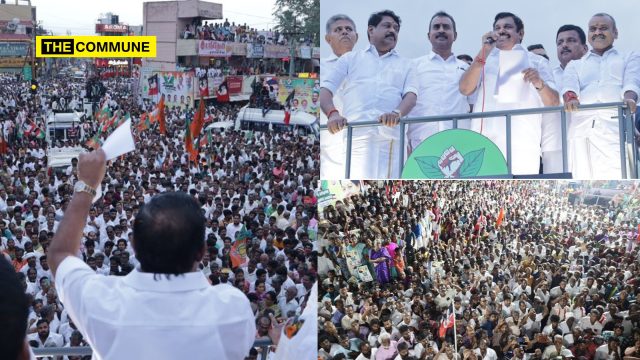
AIADMK General Secretary and Leader of the Opposition, Edappadi K. Palaniswami (EPS), kicked off his statewide campaign on 7 July 2025, ahead of the 2026 Tamil Nadu Assembly elections. Marking the beginning of his tour in Coimbatore, EPS was joined by BJP leaders atop a campaign vehicle signaling a renewed alliance between the AIADMK and the BJP.

In his opening address, EPS launched a sharp critique of the ruling DMK, particularly targeting the party’s decision to appoint former minister Senthil Balaji, who had stepped down following pressure from the Supreme Court. Alluding to Balaji’s legal troubles and potential imprisonment, EPS used the issue to accuse the DMK of shielding tainted leaders.

He also took aim at the DMK’s long-standing tradition of dynastic politics. EPS questioned whether only those born into political families had the right to lead, contrasting that notion with his own rise from humble beginnings.

Speaking at the rally in Coimbatore, EPS said, “They’ve appointed a DMK official here. Who is it? Who is it? Balaji… What name have they given him? ‘Ten Rupee Balaji.’ What name? ‘Ten Rupee Balaji.’ He’s been appointed as the official here today. This appointed election in-charge is someone who committed corruption and went to jail for it. Just think about it, the Supreme Court questioned DMK Minister Senthil Balaji whether he should go to jail or continue as a minister. He tried to appeal multiple times, but the Supreme Court did not relent, and he finally resigned from his ministerial post. Such a person, who committed corruption, has been made your district in-charge. Just think, the AIADMK party is the party that serves the people of this country. In 5 years of DMK rule, bribery and corruption have run rampant. Bribery is present in every department. No work is done without a bribe. ‘Commission, collection, corruption’ is number one under DMK rule. Do you want such a corrupt government again? Do you want a corrupt government? Therefore, the 2026 Assembly election must be an election to remove the corrupt DMK government. Today, many years have passed since monarchy was abolished in India. The DMK family, as previously Stalin said, DMK means the Karunanidhi family, is yearning for monarchy to return to Tamil Nadu. The 2026 Assembly election must be an election to put an end to dynastic rule and family rule.”

Taking a swipe at the DMK’s legacy of dynastic politics, EPS questioned whether only members of one family were entitled to become Chief Minister. Gesturing toward the crowd, he asked, “Can’t someone from the grassroots rise to this position?” He then contrasted his own journey, saying he had once stood among the common people and had worked his way up to where he is today.

Subscribe to our channels on TelegramWhatsApp, and Instagram and get the best stories of the day delivered to you personally.

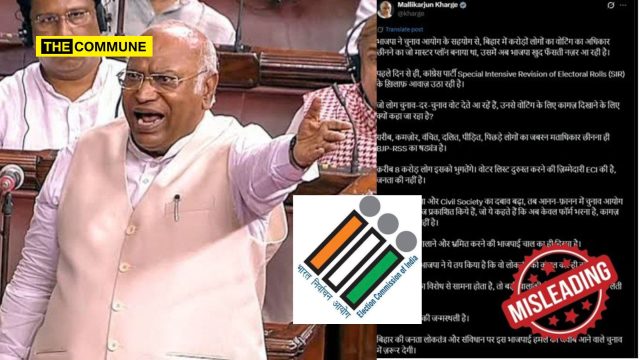
ECI Refutes Congress President Mallikarjun Kharge’s False Claims On Bihar Voter List Revision; No Change In Rules, Documents Still Required

mallikarjun kharge ec election commission eci fake news bihar election congress voter list

The Election Commission of India (ECI) on 7 July 2025 categorically denied claims made by Congress President Mallikarjun Kharge regarding the ongoing Special Intensive Revision (SIR) of electoral rolls in Bihar. The ECI described Kharge’s assertions — including that the rules had been changed to allow voter registration without supporting documents as “misleading”.

Kharge had alleged via a post on social media platform X that the BJP, in coordination with the Election Commission, was executing a “master plan” to deprive crores of voters in Bihar especially from marginalized communities of their franchise rights. He claimed that the process had been diluted under pressure and that “now only a form has to be filled” without the need to show any documents. Kharge further accused the BJP of attempting to “crush democracy” by manipulating voter lists ahead of the 2025 Bihar Assembly elections. He wrote, With the cooperation of the Election Commission, the master plan that BJP had devised to deprive crores of people in Bihar of their voting rights now seems to be ensnaring the BJP itself. From the very first day, the Congress Party has been raising its voice against the Special Intensive Revision of Electoral Rolls (SIR). Why are people who have been voting election after election being asked to show documents for voting? Forcibly depriving the poor, weak, deprived, Dalit, oppressed, and backward people of their voting rights is the very conspiracy of BJP-RSS. Nearly 8 crore people will suffer because of this. The responsibility to correct the voter list lies with the ECI, not the public. When the pressure from the opposition, the public, and Civil Society increased, the Election Commission hurriedly published these advertisements today, which state that now only a form needs to be filled, and showing documents is not necessary. This is part of the BJP’s tactic to mislead and confuse the public. The truth is that the BJP has decided it will crush democracy at all costs. But when faced with public opposition, it cleverly takes a step back. Bihar is the birthplace of democracy. The people of Bihar will surely respond to this BJP attack on democracy and the Constitution in the upcoming elections.”

However, the Election Commission issued a firm rebuttal. “The claim made in this post, that no document is required and only filling the form is sufficient, is misleading,” the ECI stated in a fact-check published on its official X account. There is no change in the instructions. SIR is being conducted as per the orders dated 24.06.2025.”

No Changes to Rules, Documents Still Mandatory

As per the ECI’s official order dated 24 June 2025, voters in Bihar must submit an enumeration form before 25 July 2025, to be included in the draft electoral roll, which is scheduled for publication on 1 August 2025. While supporting documents are not required at the time of form submission, they must still be provided either before 25 July 2025 or during the claims and objections period.

The ECI emphasized that there has been no relaxation of requirements, and the rules remain fully in force. The Commission urged the public to ignore false claims and to rely only on officially published information. “One should be cautious of the statements being made by some people, who are trying to confuse the public with their false and misleading statements, without reading the SIR order,” the Commission stated.

The SIR process, currently underway in Bihar ahead of the state elections, is being carried out with full legal authority. The ECI reported that by the evening of 6 July 2025, over 1.69 crore forms (21.46%) had been collected, and 7.25% had already been uploaded to ECINET. The form distribution phase is nearing completion.

To ensure voter awareness, the EC has deployed over 77,000 Booth Level Officers (BLOs), 4 lakh volunteers, and 1.5 lakh Booth Level Agents (BLAs) nominated by all political parties. The Commission stated that it is constitutionally bound to maintain an accurate and inclusive electoral roll and that the SIR is aimed at identifying both eligible and ineligible voters through proper verification.

(With inputs from News18)

Subscribe to our channels on Telegram, WhatsApp, and Instagram and get the best stories of the day delivered to you personally.
Edappadi K. Palaniswami Begins Statewide Campaign For 2026 Tamil Nadu Assembly Polls With BJP Leaders By His Side

edappadi 2026 tamil nadu assembly

AIADMK General Secretary and Leader of the Opposition, Edappadi K. Palaniswami (EPS), officially launched his statewide election campaign on 7 July 2025, for the upcoming 2026 Tamil Nadu Assembly elections. Notably, BJP leaders stood alongside him atop his campaign vehicle, signaling renewed cooperation between the two parties.

BJP’s Tamil Nadu president Nainar Nagendran and Union Minister of State L. Murugan flanked EPS during the launch event. The public appearance marked the formal re-entry of the AIADMK-BJP alliance, which had split for nearly 19 months before reconciling earlier this year. Calling EPS the “next chief minister,” Nagendran emphasized that the alliance is both strategic and ideologically compatible.

The campaign began with a massive roadshow in Coimbatore, stretching from the iconic Gandhi Statue to the town’s bus stand, drawing significant crowds. Addressing supporters, EPS took a jab at current Chief Minister MK Stalin, suggesting that the success of the event would cause political discomfort for the DMK leadership.

EPS launched the campaign under the slogan “Makkalai Kappom, Tamizhagathai Meetpom” (Let’s protect the people and reclaim Tamil Nadu), starting in AIADMK’s stronghold in the western part of the state. Coimbatore was chosen as the starting point not only for its symbolic value but also because L. Murugan, who previously served as BJP state president is from the region.

Criticizing Stalin’s attacks on the BJP-AIADMK alliance, EPS accused the DMK leader of double standards. He reminded the public that former Chief Minister and DMK patriarch M. Karunanidhi, Stalin’s late father, had allied with the BJP during the 1999 general elections and the 2001 state elections. “If the BJP is acceptable when allied with the DMK, why does it become communal when aligned with the AIADMK?” EPS questioned during his speech.

He defended his tenure as Chief Minister, asserting that his government had a clean record. “There is nothing you can blame us for, so you try to stir up communal fears,” he said, speaking from a specially designed campaign vehicle.

EPS further asserted that the AIADMK-BJP alliance would secure a landslide victory in 2026 and form the next state government by defeating what he termed the “anti-people” DMK administration.

During the first phase of his campaign, EPS is scheduled to visit 38 assembly constituencies across the western, northern, and central districts. Over time, the tour will expand to cover all 234 constituencies in Tamil Nadu.

The AIADMK’s campaign primarily targets the DMK government on issues such as corruption, law and order failures, and unfulfilled electoral promises. This offensive comes shortly after CM Stalin launched a large-scale door-to-door campaign aiming to reach 20 million households to promote the DMK’s welfare initiatives.

Subscribe to our channels on TelegramWhatsApp, and Instagram and get the best stories of the day delivered to you personally.
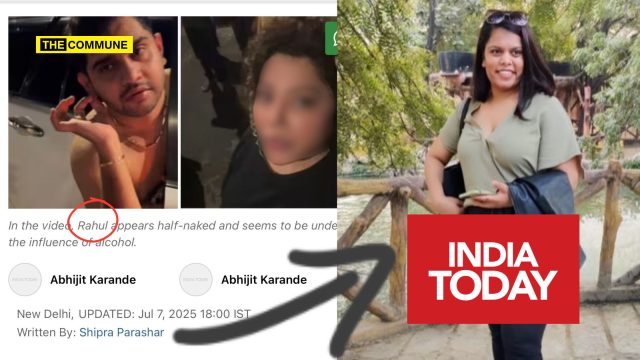
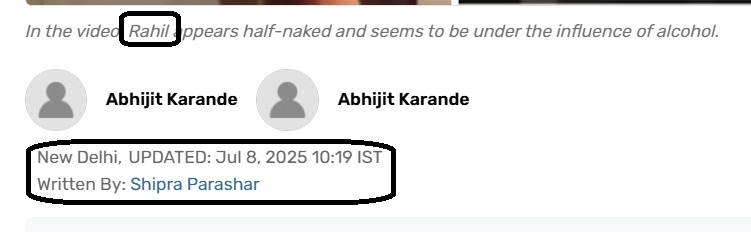
India Today Chief Sub-Editor Shipra Parashar Identifies MNS Leader’s Son As Rahul Instead Of Rahil, Edits It After Backlash

india today shipra parashar rahil rahul edit chief sub editor

India Today chief sub-editor Shipra Parashar has come under fire after she incorrectly identified the person involved in a high-profile abuse incident in Mumbai – whether she did it unknowingly or not is a different question. The article initially misreported the name of the accused, Rahil Javed Shaikh, as “Rahul,” sparking online outrage.

Following the outrage, the name was changed from Rahul to Rahil.

What Is The Issue About?

The controversy centers around Rahil Javed Shaikh, the son of Maharashtra Navnirman Sena (MNS) leader Javed Shaikh, who was captured on video verbally abusing social media influencer Rajshree More on a Mumbai street. The confrontation reportedly followed a collision between their vehicles.

Rajshree More, known for her association with actress Rakhi Sawant, shared footage of the incident on her social media platforms. In the video, Rahil is seen shirtless and appears to be under the influence of alcohol while aggressively arguing with her.

Following the altercation, More filed a formal complaint with the Amboli police, expressing that she felt unsafe and threatened during the encounter. She demanded strict action against Rahil for his behavior.

This incident comes shortly after Rajshree More stirred controversy with a previous video in which she made provocative statements about the Marathi-speaking community in Mumbai. In that clip, she criticized the push to promote the Marathi language, suggesting that local residents should focus more on productivity and warning that the departure of migrant workers could harm the city.

As a result, MNS members from the Versova area lodged a complaint against her at Oshiwara police station. After the backlash, More apologized publicly and deleted the video.

Netizen Reaction Against India Today Writer Shipra Parashar

Here are some netizen reactions against the incorrect reporting by Parashar.


(With inputs from India Today)

Subscribe to our channels on TelegramWhatsApp, and Instagram and get the best stories of the day delivered to you personally.
UP ATS Arrests Jamaluddin, Mastermind Of ₹100-Crore Conversion Racket; Foreign Funding, Fake Identities, Caste-Based Targets Unearthed

chhangur changur baba jamaluddin up ats balrampur conversion racket hindu girls muslim

The Uttar Pradesh Anti-Terrorism Squad (ATS) on 5 July 2025 arrested Jamaluddin alias Chhangur Baba, the alleged mastermind of a large-scale illegal religious conversion racket, along with his wife Neetu alias Nasreen. The duo, residents of Madhpur village in Balrampur district, was taken into custody and produced before a court, following which they were remanded and sent to Lucknow District Jail.

According to an official statement, a non-bailable warrant had been issued against Jamaluddin by a local court, and a reward of ₹50,000 had been declared on his arrest. The arrests are the latest in a continuing investigation into an organised network accused of forcibly or fraudulently converting individuals from Hindu and other non-Muslim communities to Islam.

The case has been registered at Gomtinagar Police Station in Lucknow under various sections of the Indian Penal Code and the Uttar Pradesh Prohibition of Unlawful Religious Conversion Act, 2021. The FIRs allege that poor labourers, women from weaker sections, widows, and minors were targeted and converted using inducements such as financial assistance, marriage promises, or coercion, in violation of prescribed legal procedures.

Fake Identities, A Sufi Persona

Investigators revealed that Jamaluddin, aged 70, along with his wife and daughter, originally hailed from Mumbai and had converted to Islam in Dubai in November 2015. The family, comprising Ghanshyam Rohera, his wife Neetu, and their daughter Samale, adopted the Islamic names Jamaluddin, Nasreen, and Sabiha respectively.

After their return, the trio settled near Chand Auliya Dargah in Balrampur, where Jamaluddin began identifying himself as a Sufi saint under the name “Hazrat Baba Jamaluddin Peer Baba.” Despite having converted to Islam, the family reportedly retained Hindu identities on all official Indian documents, including passports, Aadhaar cards, PAN cards, and property records.

Jamaluddin also published a book titled Shijra-e-Tayyaba to propagate Islam and support his spiritual persona.

Network of Coercion, Romantic Traps, and Financial Incentives

According to the ATS, Jamaluddin ran an organised gang involved in mass religious conversions across multiple districts. The racket allegedly used romantic entrapment, psychological coercion, and monetary inducements to lure individuals, particularly Hindu women, into converting to Islam. In one documented case, a woman from Lucknow was allegedly deceived by a Muslim man who posed as a Hindu and was subsequently coerced by Neetu and others into converting.

The ATS disclosed that the gang had a structured incentive system for conversions based on caste. As per statements made by officers, ₹15–16 lakh was allotted for converting Brahmin, Sikh, or Kshatriya women; ₹10–12 lakh for OBC women; and ₹8–10 lakh for women from other castes. These operations were allegedly funded by foreign sources.

Foreign Funding and Travel Links

A financial audit of the gang’s activities uncovered foreign inflows amounting to over ₹100 crore into 40 different bank accounts. The funds were reportedly used to facilitate conversions, pay agents, and purchase properties and luxury items.

The investigation found that members of the gang had travelled to Islamic countries approximately 40 times, suggesting deep international connections and possible external ideological or financial support.

Prior to Saturday’s arrests, two other accused, Naveen alias Jamaluddin and Mehboob, the son of the main accused, were arrested on 8 April 2025. Both are also from Balrampur and are currently lodged in Lucknow District Jail.

Following a complaint by a local resident, Arvind Kumar of Madhpur village, about suspicious activities, the Special Task Force (STF) initiated a probe. The ATS subsequently took over, registering a case against ten individuals, including Jamaluddin, under charges relating to illegal conversions, cheating, criminal conspiracy, and financial fraud.

Multiple FIRs have been lodged in various districts of Uttar Pradesh in connection with the racket. A diary recovered from Jamaluddin’s residence reportedly contained names of over 100 potential targets for future conversions.

Lavish Lifestyle Funded by Conversion Racket

Officials stated that Jamaluddin had previously sold rings for a living but amassed enormous wealth within a short span through the conversion racket. He allegedly purchased properties worth crores, built showrooms and bungalows, and acquired luxury cars. He had been residing in the Balrampur property for the past 3–4 years, which originally belonged to the Hindu family that later converted and changed their identities.

Multi-Agency Probe Sought

Given the scale, international funding, and communal sensitivity of the case, the Uttar Pradesh Police have sought a multi-agency probe involving the National Investigation Agency (NIA) and the Enforcement Directorate (ED) to investigate both the religious and financial aspects of the racket.

ATS officials indicated that the investigation is ongoing and that further arrests and asset seizures may follow based on the contents of the recovered diary and other electronic and financial records.

(With inputs from OpIndia)