Home Blog Page 233

DMK’s Perambalur-Ariyalur Units Caught In A. Raja Vs S.S Sivasankar Turf War?

A simmering power struggle between Nilgiris MP and DMK Deputy General Secretary A. Raja and Tamil Nadu Transport Minister S.S. Sivasankar has thrown the DMK’s Perambalur and Ariyalur units into disarray. These two backward districts, with just four assembly constituencies combined, have become the epicenter of a deepening internal rift.

The intense competition within the party stems from a long-standing rivalry over control and influence in these constituencies. Minister Sivasankar hails from a political legacy his father, Sivasubramanian, was a towering figure in the DMK’s Perambalur region. Notably, it was Sivasubramanian who mentored A. Raja and helped launch his political career by fielding him in the 1996 elections.

Despite Sivashankar being the biological heir, A. Raja gradually carved out his own political space and, after Perambalur was declared a general constituency, shifted to the Nilgiris. However, Raja continued to wield considerable power over appointments and decisions in Perambalur and Ariyalur, ensuring that key posts were filled by his loyalists.

Things have reportedly shifted in recent years. Sources suggest that A. Raja is now aggressively reasserting his influence in his native district, causing friction with Sivasankar. Party insiders believe that Raja covertly worked against Sivasankar during the 2016 assembly elections in Ariyalur, contributing to his defeat. Although the two leaders have maintained public civility since then, political observers say the rivalry has only intensified.

Sivasankar’s resurgence in 2021 winning from Kunnam and gaining favor with Deputy Chief Minister Udhayanidhi Stalin marked a turning point. Initially entrusted with the Backward Classes Welfare portfolio, he later took over the Transport Department amid the Raja Kannappan controversy, and more recently, assumed control of the Electricity Department. His rising stature is said to have unsettled Raja, who now reportedly sees Sivasankar as a direct political threat.

Insiders claim that Raja has even instructed party functionaries not to feature Sivasankar’s image in DMK events and banners. With Sivasankar’s growing clout, many local DMK office-bearers have started aligning themselves with his camp, leaving Raja increasingly isolated in his own political backyard.

This ongoing turf war has created confusion and discontent among grassroots workers and mid-level party leaders, who are unsure of whom to approach for support or endorsements. Raja, who once had an unchallenged grip on the region, now finds himself sidelined as party cadres defer to Sivasankar.

Despite their apparent camaraderie in public appearances, it is widely believed that both leaders are locked in a silent, high-stakes battle for dominance. The clash, rooted in ego and legacy, is now threatening party cohesion in the Perambalur-Ariyalur belt.

Whether this internal conflict will simmer down or explode further remains uncertain but it is already proving to be a headache for the DMK’s top leadership.

Subscribe to our channels on TelegramWhatsApp, and Instagram and get the best stories of the day delivered to you personally.

Tiruppur Shaken By Shocking Schoolboy Kidnapping And Assault By Intoxicated Youths; Police Launch Manhunt

A deeply disturbing incident has rocked Tiruppur district after a 15-year-old schoolboy was abducted, assaulted, and left severely injured by a group of intoxicated youths. The victim, Sabari, a class 9 student at the Gandhi Government Higher Secondary School, went missing from his classroom on the morning of 11 July. He was later found in the evening, brutally beaten and in critical condition.

Sabari, the elder son of Venkatesh and Indumathi from Ichipatti in Tiruppur district, had reportedly skipped school that morning, upset over being forced to stay in the hostel. While trying to return home, he attempted to hitch a ride near the school. Four young men on two motorcycles offered him a lift, claiming they would drop him off at Samalapuram.

Instead, the group purchased alcohol from an illegal outlet in Somanur, located in the Karumathampatti region, and began drinking. When Sabari refused to join them, they allegedly assaulted him and forcibly made him inhale chemicals using a handkerchief, rendering him unconscious.

Upon regaining consciousness, Sabari found himself in an abandoned building in the Kadambadi VIP Nagar area near Sulur. The attackers continued to pressure him into drinking and, when he resisted, they violently assaulted him again. He was struck with an iron rod on the back of his head and suffered severe injuries to his face, ears, and skull. The room where the assault took place was found with bloodstains, empty liquor bottles, and shattered glass.

A female assistant inspector discovered Sabari and rushed him to a government hospital where he received emergency medical treatment. Preliminary police investigations indicate that the attackers may have attempted to coerce the boy into immoral activities and resorted to violence when he refused.

The Sulur police have inspected the crime scene and launched a special investigation team to track down the four suspects, who reportedly behaved with a brutal and deranged mindset. Sabari’s mother, Indumathi, speaking with anguish, urged authorities to shut down illegal liquor shops to prevent such horrors from happening to other children.

Subscribe to our channels on TelegramWhatsApp, and Instagram and get the best stories of the day delivered to you personally.

DMK Stooge Actor Karthi Says “TN Govt Schools Are Excellent”, But Tiruppur Students Study In Corridors, Terraces, And Makeshift Classrooms

While Kollywood actor and Dravidianist sympathiser Karthi showered praise on Tamil Nadu’s School Education Minister Anbil Mahesh, claiming government schools were thriving under his stewardship, the reality on the ground tells a very different story especially in Tiruppur, just 40 km from the actor’s hometown.

For nearly eight years, students at the Veerapandi Government Higher Secondary School in Tiruppur have been forced to study under severely inadequate conditions. With over 1,200 students enrolled from Classes VI to XII, the school has only 19 classrooms, pushing hundreds of children into makeshift learning spaces on terraces, verandahs, and corridors.

During rains, many of these exposed areas flood, severely disrupting lessons. The lack of space, privacy, and basic facilities has left students and parents frustrated and disillusioned.

This situation has persisted since 2017,” said Sasikumar, a member of the Parent-Teacher Association. “We have written multiple times to the local councillor and the district collector, requesting new classrooms to be built on nearby land just a kilometre away from the school. But nothing has moved. We now have 100 to 150 students squeezed into a single temporary classroom. How can they concentrate or learn in such conditions?”

Lok Priya, a former student, pointed to additional issues plaguing the school, “Despite the large number of students, there are too few classrooms. Sanitary facilities are lacking, there’s no playground, and just two physical education teachers are available for the entire student body. Authorities must take this matter seriously.”

The school’s in-charge Chief Education Officer, Kalimuthu, acknowledged the infrastructure crisis, attributing the rise in student strength to the growing migrant population in Tiruppur. He explained that earlier efforts to expand were stalled due to land constraints, which have now reportedly been resolved. “Revenue officials have inspected the newly identified land. We will take action soon. In the meantime, we’re arranging to use space at a nearby elementary school,” he said.

However, many parents remain sceptical, citing years of administrative inaction and inter-departmental delays. Despite repeated inspections and promises from authorities, the project remains stuck in bureaucratic limbo, with no tangible progress on the ground.

As monsoon rains loom and temporary classrooms remain vulnerable to flooding, parents and teachers are once again urging the government to act swiftly and decisively—not just to build classrooms, but to restore a basic sense of dignity and educational quality for the children of Veerapandi.

(With Inputs From India Today)

Subscribe to our TelegramWhatsApp, and Instagram channels and get the best stories of the day delivered instantly.

Mudhalvan In Name, Mudiyala In Result: DMK Govt’s Skilling Programme Kills Hopes As Data Reveals Deepening Gaps Between Training And Job Placements

The Dravidian model government’s ambitious Naan Mudhalvan skill development program is encountering increasing challenges. Initially launched to make youth “industry-ready” for entry-level employment, the scheme’s performance over the last three years has yielded inconsistent results especially in terms of actual job placements. While training numbers were initially high, a report by Times of India has revealed how poor placement outcomes have led to a decline in enrolments across most sectors, with only logistics, healthcare, and telecom maintaining steady interest.

Sharp Decline In Training Numbers (2023–2025)

  • 2023: 1,35,137 trained
  • 2024: 36,584 trained
  • 2025: 11,865 trained

This drop reflects growing disillusionment with the scheme’s effectiveness. Out of a total 1.83 lakh candidates trained since 2023, only 75,850 secured placements a success rate of around 41%, leaving over 1.07 lakh candidates without jobs.

Training Vs. Employment Disconnect

While the scheme offers 1-to-6 month courses aiming to prepare candidates for blue-collar jobs, a surprising 60% of trainees in 2025 are UG or PG graduates. This reveals a mismatch between the qualifications of the trainees and the kind of jobs available after training.

Some sectors like logistics and geriatric care fared well. According to the report, 90% of logistics trainees were placed in roles like forklift operators, delivery personnel, and gig work. But sectors like beauty and wellness, tailoring, rubber work, aerospace, aviation, and textiles showed dismal results. The ToI report pointed out that in 2023, over 1,000 candidates were trained in aerospace, aviation, and textiles but none were placed. Similarly, only 67 out of 1,776 in the beauty and wellness stream found employment.

2024 Course Corrections

Faced with low placements, the state discontinued several underperforming courses in 2024, including those in gem and jewellery, paint and coating, and banking and financial services. Other sectors like power, handicrafts, and carpet making saw placement rates below 30%, while management training produced only 3 placements out of 1,948 candidates.

The crisis is also reflected in student engagement on 9 July, only 1,000 out of 5,000 active students attended training sessions, indicating just 20% attendance.

Accountability And Structural Issues

According to Naan Mudhalvan CEO M. Jayaprakasan, many initial training partners including small-scale entrepreneurs lacked the required infrastructure but still received government funds. “One tailoring centre had just two machines but admitted large batches,” he was quoted saying in ToI. The state has since begun stricter vetting of training institutes.

K.V. Rajkumar, project director at the Tamil Nadu Skill Development Corporation, acknowledged issues with job offers too. “We withhold 40% of payment to training centres that fail to provide placements,” he said. However, he added that many students reject job offers because the salaries are too low or jobs are located far from home. “The pay is just ₹500 a day. Some trainees are only using this time to prepare for higher education and aren’t serious about placements,” he was quoted saying in the report.

Another problem is the geographical imbalance. Around 30% of all training partners are based in Chennai and its suburbs, limiting opportunities for students from other districts.

Subscribe to our TelegramWhatsApp, and Instagram channels and get the best stories of the day delivered instantly.

Rajinikanth Calls Communist MP Su. Venkatesan As Today’s Kalki At Velpari Book Event

Actor Rajinikanth heaped praises on Dravidian Model Communist MP Su. Venkatesan, calling him a “living Kalki” during an event held to mark the sale of one lakh copies of the historical novel Veera Yuga Nayagan Velpari. The celebration took place at Chennai’s Kalaivanar Arangam and featured notable attendees including filmmaker Shankar, who has secured the film rights to Velpari, actress Rohini, television host Gopinath, and Rajinikanth himself.

Speaking at the event, Rajinikanth admitted with his characteristic humor and humility that he has read only 25% of the novel. “I’ll finish reading Velpari after I retire from acting,” said the actor who is now 74, adding that his reading habit began during his time at the Ramakrishna Ashram. He also emphasized the power of literature, saying that books help one to think, reflect, and feel deeply.

The superstar’s lively speech, which has since gone viral, touched on the influence of authors and the importance of storytelling. “Every street in our country carries a tale. History is truly His Story,” he remarked. Rajinikanth praised Tamil readers, stating that they are second to none in celebrating artistic expression, irrespective of language, caste, or religion.

Referring to the other guests, Rajinikanth joked that people like Sivakumar or Kamal Haasan would’ve been more fitting for such a literary occasion. “I wondered why they invited someone like me, who’s 75 years old and walks in slow motion with sunglasses,” he quipped, drawing laughter from the audience.

Recollecting to meet the Communist MP, Rajinikanth said, “Since ’96, if I found a good book, I’d wish to sit in a place like that and read it after taking a break. That’s why I haven’t read that book; I’ve set it aside. So, even though we couldn’t meet Kalki, I thought we could meet a contemporary Kalki, and with the help of a friend, I met Mr. Venkatesan.”

The actor also recalled impactful books he’s read, including Body, Matter, Spirit, Jayakanthan’s Yarukkaga Azhuthan, Madan’s Who Came and Won and Kannadasan’s Arthamulla Hindu Madham. He shared how ‘Yarukkaga Azhuthan’ book moved him to tears, even though he couldn’t clearly identify which character cried in the story.

He also praised Su Venkatesan over his functioning as an MP.

Rajinikanth concluded his heartfelt speech by saluting the Tamil audience for their deep appreciation of the arts. “You lift art and artists above your heads. I bow down to you at your feet,” he said.


Subscribe to our channels on TelegramWhatsApp, and Instagram and get the best stories of the day delivered to you personally.

Another Suspicious Death Even Before Dust Settles On Ajithkumar Custodial Death Case, EPS Questions MK Stalin

AIADMK General Secretary and Leader of the Opposition, Edappadi K. Palaniswami, has strongly criticized Chief Minister M.K. Stalin and the DMK government following yet another suspected custodial death in Chennai, the case of Naveen Bollineni, a manager at Thirumala Milk Products Pvt. Ltd., who allegedly died by suicide after having interrogated by police without registering a case.

Palaniswami questioned how a Chief Minister, who struggles to effectively manage the police force, could justify such an incident especially when it occurred within the jurisdiction of his own constituency.

He demanded an impartial and transparent probe into Naveen’s death, which has raised numerous concerns. Naveen was reportedly interrogated by police without any formal case being filed, based solely on an internal company complaint accusing him of embezzling ₹45 crore. Following this, he was found hanging under suspicious circumstances.

Significantly, reports indicate that there was no chair in the hut where Naveen was discovered, and that his hands were tied behind his back raising serious doubts about the possibility of suicide.

Palaniswami asked a fundamental question, On what grounds did the police initiate an investigation without registering a case? He also noted that the inquiry was allegedly led by the Deputy Commissioner of Kolathur, adding to the gravity of the situation. Referencing the recent and still-unsettled case of Ajith Kumar’s death, Palaniswami warned that public confidence in the state’s law enforcement is rapidly deteriorating. He questioned how many more suspicious deaths would occur before the DMK government is held accountable.

Edappadi Palaniswami via his official X account stated, “News reports indicate that Naveen Polineni, who was working as a manager at Thirumala Milk in Chennai, was found dead by hanging under mysterious circumstances and this occurred after he was reportedly investigated based on a complaint for allegedly embezzling 45 crore rupees from the company without a First Information Report (FIR) being filed. News reports are coming in regarding Naveen’s death that there was no chair found in the hut where he was hanging, and his hands were reportedly tied behind his back. How someone with bound hands could hang without a chair? A fundamental question arising from this case is – On what legal basis did the police conduct an investigation without registering an FIR? Furthermore, it’s reported that the Kolathur Deputy Commissioner directly investigated this case. The death of Ajith Kumar has not even begun to fade, and yet another death has raises suspicions. What answer @mkstalin has for police investigations becoming increasingly suspicious?

Did Stalin, or his DMK government, demonstrate even once the same dedication to answering questions regarding law and order as they did to fabricating and diverting a question I posed about financial management? What explanation will the puppet Chief Minister, who doesn’t know how to administer the police force, give for this incident that has occurred in the police circle encompassing his own constituency? I urge the Stalin Model DMK government to conduct a fair investigation into Naveen’s mysterious death without any interference; particularly, a thorough inquiry must be conducted into the police investigating without filing an FIR, and appropriate legal action must be taken.”

This criticism surfaces in the wake of the death of 38-year-old Naveen Bollineni, a chartered accountant from Visakhapatnam, Andhra Pradesh. Employed as a treasury manager at LACTALIS India, which owns Thirumala Milk, Naveen was found dead on 9 July in a hut on a vacant property he owned in Puzhal, Chennai. He had been accused of siphoning off ₹40 crore from the company’s funds.

According to police, Naveen had emailed a note to his sister and company officials before his death, where he reportedly admitted to the financial fraud but also claimed that two senior company officials threatened to jail him even if he repaid the money. This message, police say, made no mention of any police misconduct.

The Greater Chennai Police issued a statement confirming that Naveen died by suicide and noted that he had not been formally interrogated or summoned by the police. Although a complaint was filed by the company on 24 and 25 June with the Central Crime Branch and the Kolathur DCP respectively, an FIR had not been registered. Police said Naveen had already repaid ₹5 crore and had requested that the company not escalate the issue legally.

Amid rising public scrutiny and social media allegations linking DCP Pandiarajan to Naveen’s death, West Zone Joint Commissioner Disha Mittal has been tasked with investigating the case and submitting a detailed report.

Police maintained that the ongoing investigation by the firm’s auditors had uncovered irregularities amounting to ₹40 crore, and that Naveen had acknowledged the fraud and sought anticipatory bail, the hearing for which had been postponed twice.

Subscribe to our channels on TelegramWhatsApp, and Instagram and get the best stories of the day delivered to you personally.

In 9 Days, 1.63 Lakh Perform Ongoing Amarnath Yatra

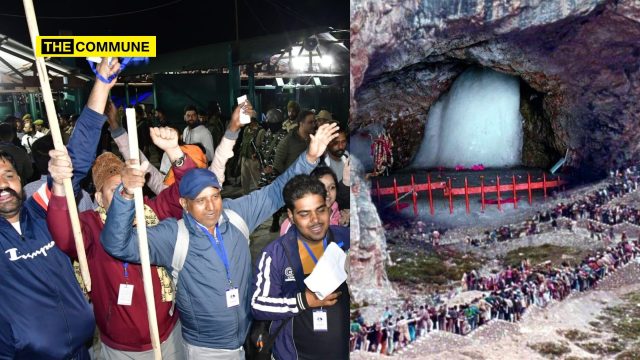
During the 9 days since it started on July 3, so far 1.63 lakh Yatris have performed the Amarnath Yatra, even as another batch of 6,639 pilgrims left for Kashmir from Jammu on Saturday. Officials said that since the Yatra started on July 3, so far 1.63 lakh pilgrims had ‘darshan’ inside the holy cave shrine.

“Another batch of 6,639 Yatris left Bhagwati Nagar Yatri Niwas in two escorted convoys for the Valley today. “First escorted convoy of 116 vehicles carrying 2,337 Yatris left at 2.50 A.M. for Baltal base camp, while the second escorted convoy of 161 vehicles carrying 4,302 Yatris left at 3.55 A.M. for Nunwan (Pahalgam) base camp,” officials said. Bhumi Pujan of ‘Chhari Mubarak’ (Lord Shiva’s Holy Mace) was performed at Pahalgam on Thursday.

The Chhari Mubarak was taken to Pahalgam by a group of sadhus led by the sole custodian of the Chhari Mubarak, Mahant Swami Deependra Giri, from its seat at the Dashnami Akhara Building in Srinagar to Pahalgam.

In Pahalgam, the Chhari Mubarak was taken to the Gauri Shankar temple, where the Bhumi Pujan was held. The Chhari Mubarak will reach the holy cave shrine on August 9, when the Yatra will officially conclude. Authorities have made extensive multi-tier security arrangements for this year’s Amarnath Yatra, as this takes place after the cowardly attack of April 22 in which Pakistan-backed terrorists killed 26 civilians after segregating them on the basis of faith in the Baisaran meadow of Pahalgam.

An additional 180 companies of CAPFs have been brought in to augment the existing strength of the Army, BSF, CRPF, SSB and the local police. Meanwhile, the Army has rolled out ‘Operation SHIVA 2025’, deploying more than 8,500 troops alongside advanced surveillance and combat technology.

The Army said that a large-scale operation, launched in coordination with the civil administration and CAPFs is designed to provide a multi-layered security grid along both the Baltal and Pahalgam routes. The Army said that as part of the extensive deployment, a dedicated counter-UAS (Unmanned Aerial System) grid featuring over 50 C-UAS and EW (Electronic Warfare) systems has been positioned to counter drone-based threats.

“Live surveillance via UAVs (drones) and PTZ camera feeds is actively monitoring yatra convoys and the holy cave. Engineer task forces have been mobilised for infrastructure tasks like bridge laying, track widening, and landslide mitigation.

“The operation also includes over 150 doctors and paramedics, two Advanced Dressing Stations, nine Medical Aid Posts, a 100-bed hospital, and 26 oxygen booths backed by 2 lakh litres of oxygen adding that Signal companies, EME technical detachments, and Bomb Detection & Disposal Squads have also been deployed”.

All the transit camps en route to the two base camps and the entire route from Bhagwati Nagar Yatri Niwas in Jammu to the cave shrine are secured by the security forces. This year, the Yatra started on July 3 and will end after 38 days on August 9, coinciding with Shravan Purnima and Raksha Bandhan.

Yatris approach the holy cave shrine situated 3888 metres above sea level in the Kashmir Himalayas either from the traditional Pahalgam route or the shorter Baltal route. Those using the Pahalgam route pass through Chandanwari, Sheshnag and Panchtarni to reach the cave shrine, covering a distance of 46 km on foot. This trek takes a pilgrim four days to reach the cave shrine.

And, those using the shorter Baltal route have to trek 14 km to reach the cave shrine and return to the base camp the same day after performing the Yatra. No helicopter services are available to Yatris this year due to security reasons.

The cave shrine houses an ice stalagmite structure that wanes and waxes with the phases of the moon. Devotees believe that the ice stalagmite structure symbolises the mythical powers of Lord Shiva.

The Amarnath Yatra is one of the holiest religious pilgrimages for Hindu devotees, as legend says Lord Shiva narrated the secrets of eternal life and immortality to Mata Parvati inside this cave.

–IANS

Subscribe to our channels on TelegramWhatsApp, and Instagram and get the best stories of the day delivered to you personally.

Chennai To Install Inclusive Play Equipment For Children With Special Needs In Five Parks

In a move to promote inclusivity in public spaces, the Greater Chennai Corporation (GCC) has announced the installation of inclusive play equipment for children with special needs in five major city parks during the first phase of a larger initiative.

A sum of Rs 15 lakh has been earmarked for this phase, with tenders floated to engage private consultants for the project. The selected parks include Bougainvillea Park in Anna Nagar East, Natesan Park in T. Nagar, Murasoli Maran Park in Perambur, Vasugi Park in Tondiarpet, and the iconic Anna Nagar Tower Park.

A senior official from the Parks and Playfields wing of the GCC said, “The successful bidder will be responsible for installing play equipment like see-saws, swings, and merry-go-rounds that are designed specifically to cater to children with special needs.”

The official added that the contractor will also ensure the parks are universally accessible by constructing wheelchair ramps and making necessary changes to the park layout.

The initiative, which is part of Mayor R. Priya’s broader vision to improve park infrastructure, aims to create inclusive recreational spaces that are safe, durable, and sensory-friendly. The parks will encourage social interaction and shared play experiences among children of all abilities.

“The idea is to transform these five parks into model spaces that can serve as benchmarks for inclusive design across the city,” the official noted. The role of the private consultant will be critical in assessing each park’s existing infrastructure, evaluating site-specific conditions like safety, accessibility, and space availability, and recommending optimal areas for installation.

The design and construction must also adhere to both national and international accessibility standards, including the Rights of Persons with Disabilities Act, 2016, and universal design principles. This is just the beginning of a larger plan, with GCC already identifying five more parks, MMDA Park, KK Nagar Garden Park, Tiruvalluvar Nagar Park, Jeyachandran Nagar Park, and Sri Sai Nagar Park, for future phases of inclusive redevelopment.

Officials expect the first phase to be completed within three months of awarding the contract, marking a significant step towards making Chennai a more inclusive and accessible city for all its residents.

–IANS

Subscribe to our channels on TelegramWhatsApp, and Instagram and get the best stories of the day delivered to you personally.
India Releases Preliminary Report On Ahmedabad Plane Crash, Western Media Peddles Fake News Blaming Indian Pilots But It’s Not The Case

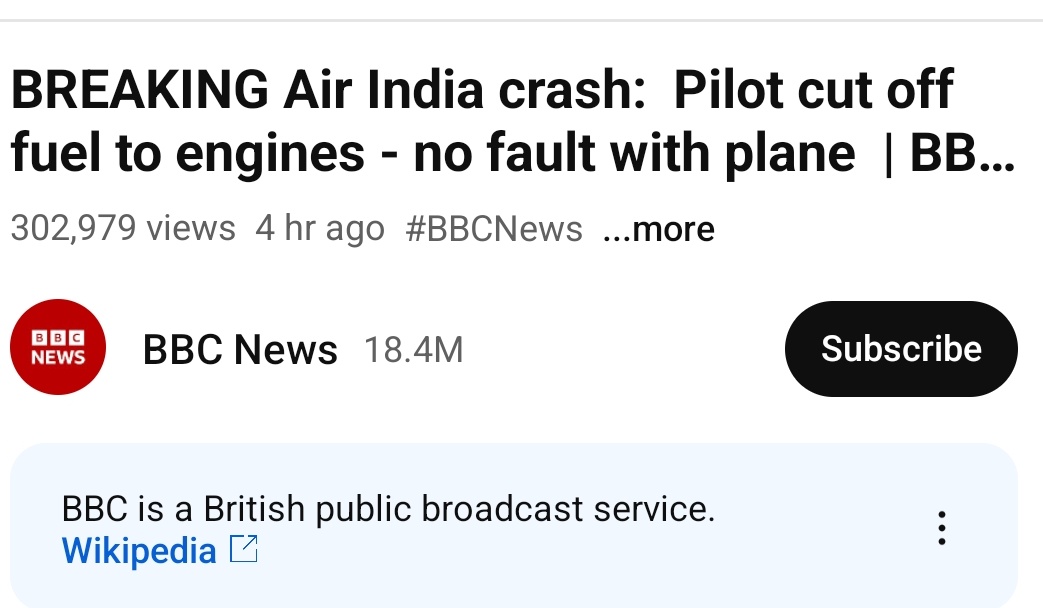
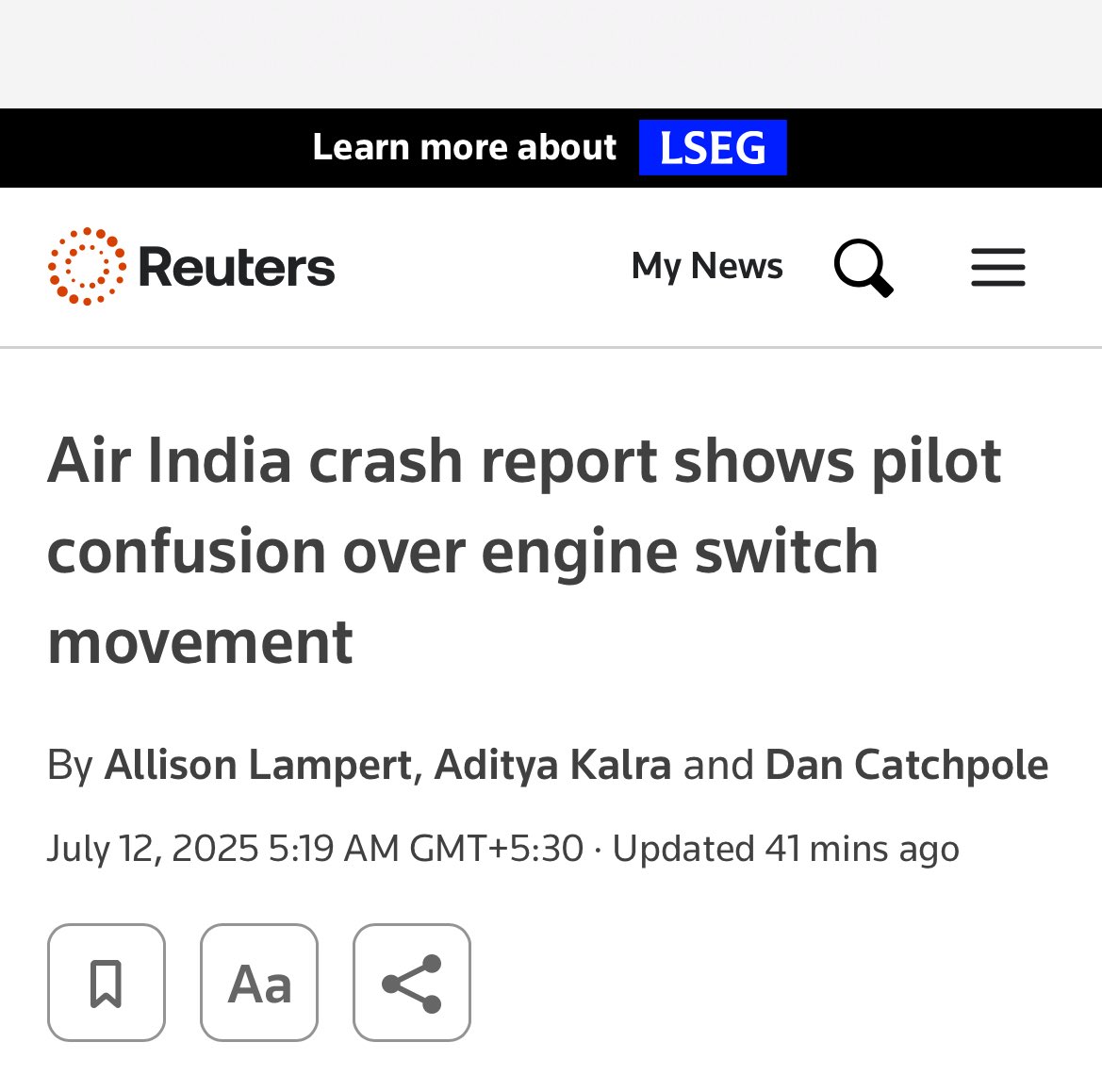
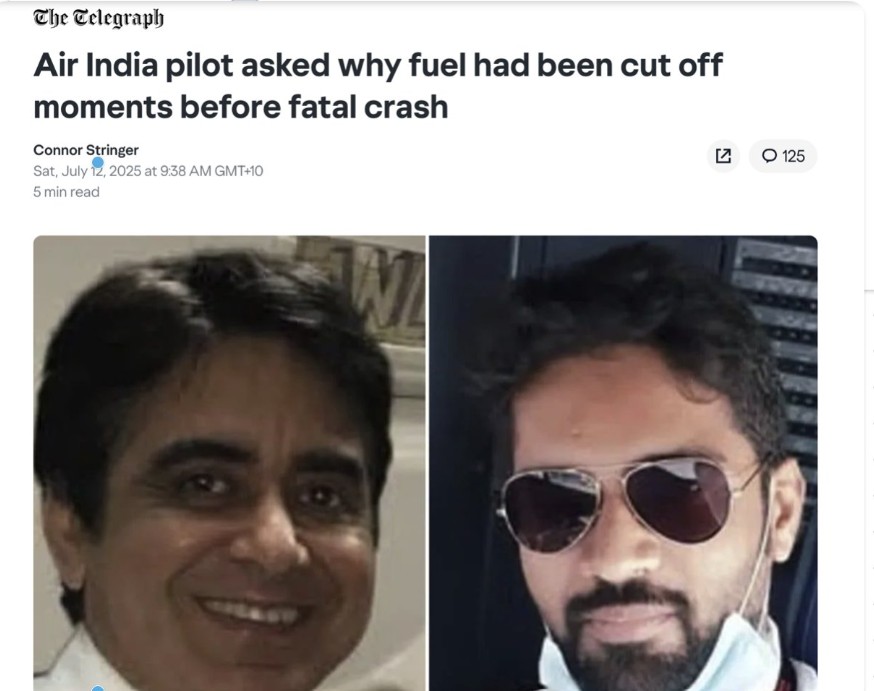
The Western media wasted no time in seizing the opportunity to shape the narrative when it comes to India quickly pointing fingers at the Indian pilots, conveniently shielding Western interests tied to Boeing. As expected, the usual suspects in Western media echoed the same line in unison, “The pilot cut off fuel to the engines nothing wrong with the aircraft.”

For instance, on 12 June 2025, the BBC, through its YouTube channel, published content with the caption, “Air India crash: Pilot cut off fuel to engines – no fault with plane.

Reuters followed suit with a headline reading, “Air India crash report shows pilot confusion over engine switch movement.”

The New York Post ran the story under, “Air India pilots may have made fatal error before crash that killed more than 270 people, probe reveals.”

The Telegraph’s coverage was titled, “Air India pilot asked why fuel had been cut off moments before fatal crash.”

But what does the actual preliminary investigation report say?

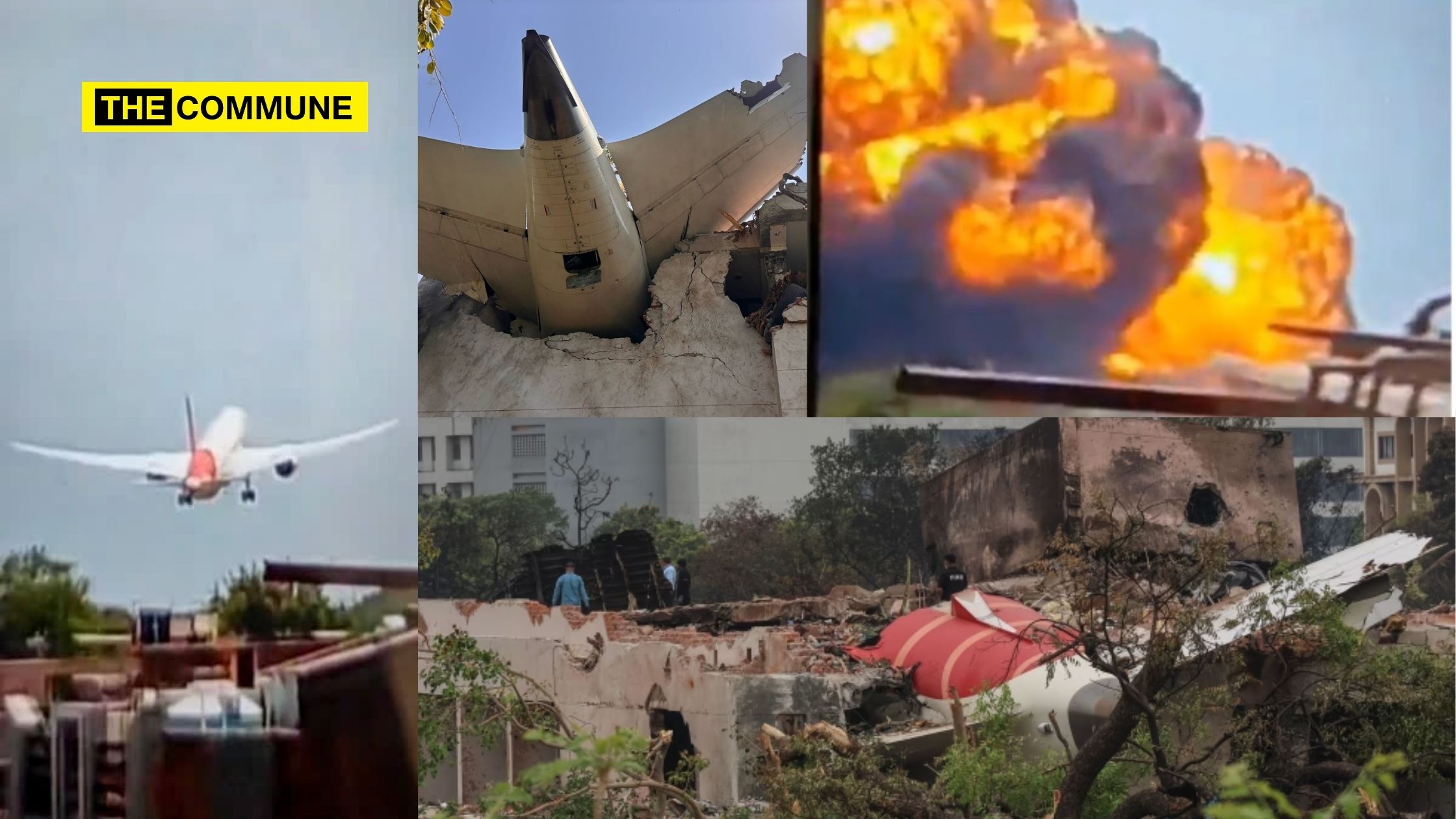
According to findings released by the Aircraft Accident Investigation Bureau on 11 July 2025, both engines of Air India’s Boeing 787-8 lost thrust due to a change in the fuel control switches just three seconds after takeoff from Ahmedabad on 12 June. The crash resulted in the deaths of at least 260 people.

The report specifies that the fuel control switches for both engines moved from the “RUN” to the “CUTOFF” position within a second of each other at exactly 1:38:42 p.m., three seconds after the aircraft became airborne.

Crucially, the report does not clarify whether the switch transition was accidental or intentional. However, it does cite cockpit voice recordings indicating that one pilot questioned the other about the cutoff, the report stated, “In the cockpit voice recording, one of the pilots is heard asking the other why did he cutoff. The other pilot responded that he did not do so.” The report does not specify which of the two, Captain or First Officer, made the remark, and a full transcript of the cockpit audio was not included.

Aviation safety expert and founder of the NGO Safety Matters, Amit Singh, emphasized that questions remain unanswered. “Until the investigation explains how a supposedly secured fuel switch could move to ‘CUTOFF’ and provides a clear sequence of error messages and aircraft behavior, the complete picture is still unclear,” he said.

According to the report, Captain Sumeet Sabharwal, with 8,200 flight hours, was overseeing the flight, while First Officer Clive Kundar, with 1,100 hours of experience, was at the controls.

Roughly thirty seconds after takeoff, a distress call “MAYDAY, MAYDAY, MAYDAY” was transmitted. Although air traffic control responded by asking for the aircraft’s call sign, no reply was received. Seconds later, at 1:39 p.m., the aircraft crashed just outside the airport perimeter.

Subscribe to our channels on TelegramWhatsApp, and Instagram and get the best stories of the day delivered to you personally.

Ahmedabad Boeing Plane Crash: Key findings From AAIB Preliminary Report Reveals Simultaneous Engine Shutdown

While the final report will take about an year, the preliminary findings by the Aircraft Accident Investigation Bureau (AAIB) into the fatal crash of Air India flight AI 171 — a Boeing 787-8 Dreamliner that went down shortly after take-off from Ahmedabad on June 12 — has revealed simultaneous engine shutdown, cockpit voice recordings between the two pilots and further safety advisories.

According to the AAIB report, the aircraft was scheduled to operate flight AI171 from Ahmedabad to London-Gatwick. “On June 12, 2025, Air India’s B787-8 aircraft bearing registration VT-ANB arrived at Ahmedabad airport operating flight AI423 from Delhi. The crew of the previous flight (AI423) had made Pilot Defect Report (PDR) entry for status message “STAB POS XDCR” in the Tech Log. The troubleshooting was carried out as per FIM by Air India’s on duty AME, and the aircraft was released for flight at 0640 UTC,” the report mentioned.

The flight was to be operated by the flight crew comprising an Airline Transport Pilot License (ATPL) holder pilot, a Commercial Pilot License (CPL) holder Co-pilot along with 10 cabin crew. “Both pilots were based at Mumbai and had arrived at Ahmedabad on the previous day. They had adequate rest period prior to operating the said flight. The co-pilot was Pilot Flying (PF), and the PIC was Pilot Monitoring (PM) for the flight,” according to the report.

The crew of flight AI171 arrived at the airport and underwent preflight Breath Analyzer test and were found fit to operate the flight. There were 230 passengers on board, out of which 15 passengers were in business class and 215 passengers were in economy class including two infants. “The take-off weight was within allowable limits for the given conditions. There was no ‘Dangerous Goods’ on the aircraft,” the AAIB report said.

After the takeoff, “the aircraft achieved the maximum recorded airspeed of 180 Knots IAS at about 08:08:42 UTC and immediately thereafter, the Engine 1 and Engine 2 fuel cutoff switches transitioned from RUN to CUTOFF position one after another with a time gap of 01 sec,” the report highlighted. “The Engine N1 and N2 began to decrease from their take-off values as the fuel supply to the engines was cut off,” it added.

The report further stated that in the cockpit voice recording, one of the pilots is heard asking the other why did he cutoff. “The other pilot responded that he did not do so,” it added.

The CCTV footage obtained from the airport showed Ram Air Turbine (RAT) getting deployed during the initial climb immediately after lift-off (fig. 15). No significant bird activity is observed in the vicinity of the flight path. The aircraft started to lose altitude before crossing the airport perimeter wall. The aircraft achieved take-off speed at 13:38 IST and lifted off. Just four seconds later, both engines began shutting down. An emergency “Mayday” was transmitted at 13:39 IST.

Engine 1 showed signs of restarting, but Engine 2 failed to regain core speed despite multiple fuel injections. The aircraft continued to descend rapidly. The report ruled out bird strikes or hazardous materials as contributing factors.

There was no visual evidence of birds on the flight path. The aircraft was deemed airworthy, with its Airworthiness Review Certificate (ARC) valid until May 2026. Both engines had been recently installed in March and May 2025.

According to the report, a 2018 FAA advisory had warned about the potential disengagement of the fuel control switch lock. As per the AAIB report, Air India did not act on it, as it was non-mandatory.

Air India has acknowledged the AAIB’s preliminary report into the AI171 crash and reaffirmed its support for affected families. “Air India stands in solidarity with the families and those affected by the AI171 accident. We continue to mourn the loss and are fully committed to providing support during this difficult time. We acknowledge receipt of the preliminary report released by the Aircraft Accident Investigation Bureau (AAIB) today, 12 July 2025. Air India is working closely with stakeholders, including regulators. We continue to fully cooperate with the AAIB and other authorities as their investigation progresses. Given the active nature of the investigation, we are unable to comment on specific details and refer all such enquiries to the AAIB,” the airline said on X.

Boeing also put out a statement following the AAIB preliminary report. “Our thoughts remain with the loved ones of the passengers and crew on board Air India Flight 171, as well as everyone affected on the ground in Ahmedabad. We continue to support the investigation and our customer. We will defer to the AAIB to provide information about AI171, in adherence with the United Nations International Civil Aviation Organization protocol known as Annex 13,” it said.

The AAIB has said that at this stage of investigation, there are no recommended actions to B787-8 and/or GE GEnx-1B engine operators and manufacturers. “Investigation is continuing and the investigation team will review and examine additional evidence, records and information that is being sought from the stakeholders,” it said, adding that the wreckage and engine components have been moved to a secure facility for further investigation.

–IANS

Subscribe to our channels on TelegramWhatsApp, and Instagram and get the best stories of the day delivered to you personally.