A flood alert has been issued for residents living along the banks of the Lower Bhavani River, as the water level in the Bhavanisagar Dam (Lower Bhavani Dam) in Tamil Nadu’s Erode district is rapidly rising and is likely to reach 100 feet on Sunday.
According to officials from the Water Resources Department (WRD), the dam recorded a water level of 99.06 feet at 11 a.m. on Saturday, with an inflow of 7,383 cusecs. The dam’s full capacity is 32.80 tmcft, which corresponds to a water level of 105 feet. Once the level reaches 100 feet — likely on Sunday morning — the surplus water will be released into the Bhavani River.
A senior WRD official said the inflow has surged due to persistent rainfall in the dam’s catchment areas, which are expected to continue for the next few days. “As per standard operating procedure, surplus water must be released when the water level reaches 100 ft in July. We will maintain the level at 100 ft till July 31. From August 1, it can be held up to 102 ft,” he said.
This marks the first release of surplus water from the Bhavanisagar Dam since October 2022. In the intervening period, water was discharged only for irrigation and drinking purposes. The department warned that the current water discharge of 3,000 cusecs may be increased up to 10,000 cusecs or more, depending on the inflow. “All people residing along the Bhavani River and in low-lying areas should move to safer locations. Precautionary steps must be taken to safeguard lives and property,” the WRD stated. Erode District Collector S. Kandasamy has advised the public to stay away from the river.
“People should refrain from bathing, fishing, taking photographs, or allowing livestock into the river,” he said. Meanwhile, in neighbouring Tiruppur district, water release from the Amaravathi Dam has been increased to 6,950 cusecs. The dam, which has remained at full capacity for over 45 days, recorded a level of 88.16 feet (3,880 mcft) on Saturday, just short of its maximum of 90 feet (4,047 mcft). The inflow stood at 10,961 cusecs, and the outflow at 12,450 cusecs. “With inflow likely to rise further, we plan to reduce the dam’s maintenance level to 87.5 feet soon,” a WRD official said. Authorities continue to closely monitor the situation and urge the public to follow safety instructions.
–IANS
Subscribe to our channels on Telegram, WhatsApp, and Instagram and get the best stories of the day delivered to you personally.
Prime Minister Narendra Modi on Sunday expressed pride over the recent achievements by Indians in space, science, sports, and culture. Addressing the 124th episode of his monthly radio programme ‘Mann Ki Baat’, PM Modi made a special mention of Indian astronaut Shubhanshu Shukla, whose recent space mission created waves of joy and national pride across the country.
“In the past few weeks, a lot has happened that has made every Indian proud — be it sports, science or culture. Recently, Shubhanshu Shukla’s return from space was discussed a lot in the country. The moment Shubhanshu landed safely back on Earth, people jumped with joy. A wave of happiness spread across every heart. The whole country was filled with pride,” said PM Modi. Recalling the excitement and curiosity generated after Chandrayaan-3’s successful moon landing in August 2023, he noted how the mission had sparked a deep interest in science and space among children.
“I still remember when Chandrayaan-3 successfully landed on the moon… Even young kids now say, “We will also go to space, we will also land on the moon and become space scientists.” The Prime Minister highlighted the growing reach of the Inspire-Manak campaign, an initiative to promote innovation among school children. “Five children are selected from every school who bring new ideas. So far, lakhs of children have become part of this initiative, and after Chandrayaan-3, the number has doubled,” he said. PM Modi also spoke about the rapid rise of space-related startups in the country, stating that their numbers have jumped from fewer than 50 five years ago to over 200 today.
In this context, he announced that August 23 will be celebrated as ‘National Space Day’ and invited citizens to share their suggestions on how they plan to mark the occasion. Stressing the new energy with which Indian science is progressing in the 21st century, he proudly spoke of Indian students winning medals at the International Chemistry Olympiad. “Devesh Pankaj, Sandeep Kuchi, Debadatta Priyadarshi and Ujjawal Kesari – these four made India proud,” he said. He also acknowledged India’s achievements in mathematics, noting the students’ performance at the International Mathematical Olympiad, where they brought home three gold, two silver and one bronze medal. Looking ahead, PM Modi said India will host the Astronomy and Astrophysics Olympiad in Mumbai next month, with participants from 60 countries. He noted that this will be the largest such Olympiad held so far and added, “In a way, India is now moving forward in both Olympic and Olympiad.”
–IANS
Subscribe to our channels on Telegram, WhatsApp, and Instagram and get the best stories of the day delivered to you personally.
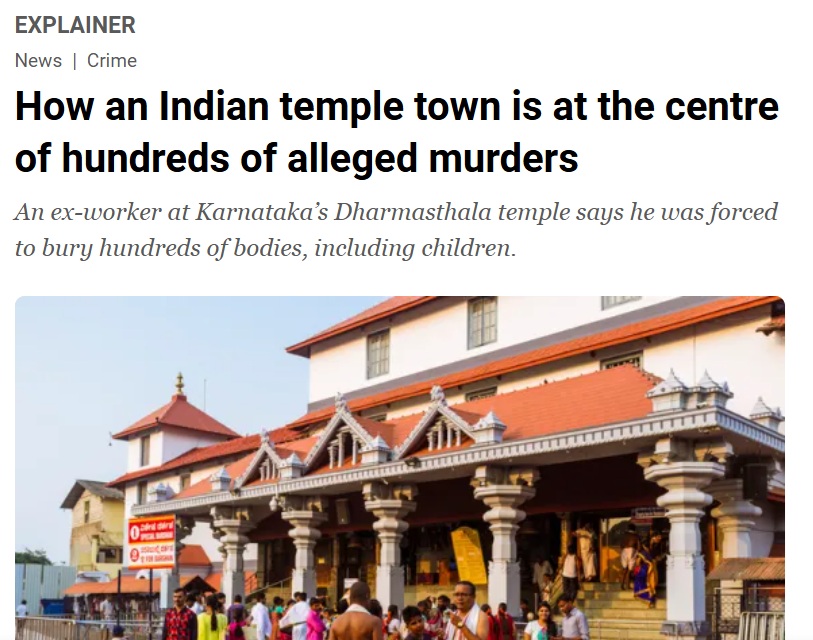
Dharmasthala, formerly known as Kuduma, is a historic temple town located on the banks of the Nethravathi River in Belthangady taluk, Dakshina Kannada district, Karnataka. It is renowned for the Dharmasthala Temple, dedicated to Lord Manjunatha (Shiva), along with shrines to deities like Ammanavaru, Chandranath, and Dharma Daivas such as Kalarahu and Kumaraswamy. Uniquely, the temple is managed by a Jain administration while Vaishnava Hindu priests conduct the rituals. This rare blend of Jain and Hindu traditions draws about 2,000 pilgrims daily, making it a prominent spiritual and cultural destination in southern India.
Over the past few weeks, the temple town and the temple administration have been rocked by allegations following explosive claims by a former sanitation worker. He alleges that, over a span of nearly two decades, he was coerced into burying the bodies of rape and murder victims on behalf of the temple administration. These sensational accusations have been aggressively promoted by left-leaning media outlets such as The News Minute, which have portrayed the claims, despite their anonymous and unverified nature, as evidence of a systemic cover-up.
Their journalists Pooja Prasanna, known for her Keeladi & Auroville propaganda videos, also entered the scene for the Dharmasthala issue.
The Allegations: A Summary
The whistleblower, a former sanitation worker, alleges:
He was forced to bury hundreds of bodies (mostly women and minors) between 1998 and 2014.
The bodies showed signs of sexual assault, strangulation, and acid burns.
He fled Dharmasthala in 2014 after his niece was molested by someone linked to the temple.
He returned in 2025, exhumed one skeleton, and filed an FIR seeking witness protection.
Media outlets, particularly The News Minute, have aggressively pushed this narrative, drawing parallels to the 2012 Sowjanya case (an unresolved rape-murder) and insinuating a systemic cover-up by the Dharmasthala temple administration.
However, no concrete evidence has been presented beyond the whistleblower’s testimony.
Al Jazeera’s Narrative
Jumping on this bandwagon to malign Dharmasthala’s name is Al Jazeera, the Qatar government funded propaganda outlet that is known for peddling anti-Hindu and anti-India narratives.
In their short video report, they make even worse allegations than TNM and other leftist media.
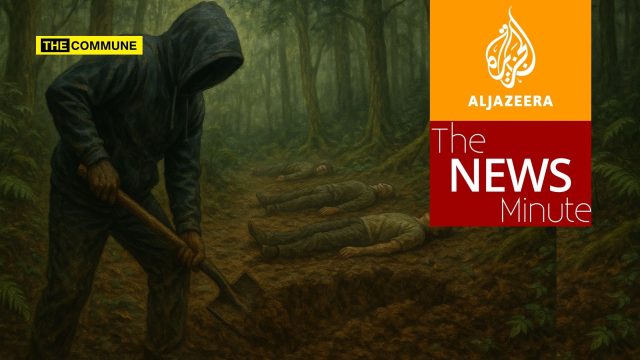
The video starts by framing the issue as “one of the worst serial killings in history.”
Then they shift to the “whistleblower” and identify him as “Dalit”, then they go on to say, “According to Hinduism’s caste system, the Dalits are at the bottom. They’re considered unpure and are often persecuted in India. As per tradition, temple administrators are from a higher caste.”
Critical Flaws In The Allegations
With so many allegations and exaggerated numbers floating around, there seems to be no evidence to prove any of those. However, several questions crop up in the mind owing to the following flaws in the allegations made.
#1 No Physical Evidence Or Independent Verification
The whistleblower claims to have buried hundreds of bodies, yet only one skeleton has been presented. No forensic reports, DNA tests, or autopsy records have corroborated his claims.
The locations of these alleged burials remain undisclosed, despite his offer to guide police.
Here’s what needs to be asked – If hundreds of bodies were buried over 16 years, why has no one else – locals, pilgrims, or workers – ever reported foul smells, suspicious activities, or mass graves?
#2 Contradictions In The Whistleblower’s Account
He claims he was forced to bury bodies secretly, yet Dharmasthala is a highly frequented pilgrimage site with thousands of visitors daily.
He alleges superiors threatened him, but no names have been disclosed, even in his FIR. He fled in 2014 but returned only in 2025 – why the 11-year delay?
Here’s what needs to be asked – If he was truly traumatized, why did he wait so long to speak up? Was he influenced by external forces?
#3 Panchayat Records Dispute The Claims
Dharmasthala Panchayat Vice President Shrinivas Rao stated that all unclaimed bodies are officially documented and disposed of lawfully.
Records of burials (including suicides near the Netravati River) have been maintained since the 1980s, with receipts and official approvals.
The panchayat denies any clandestine burials and challenges the whistleblower to provide proof.
Here’s what needs to be asked – If the panchayat has maintained records, why hasn’t the media scrutinized them instead of relying solely on unverified claims?
#4 The Sowjanya Case: A Separate Tragedy, Not Proof Of A Conspiracy
The 2012 rape and murder of Sowjanya, a 17-year-old student, was a horrific crime that remains unresolved. However, linking it to the current allegations is misleading. Santhosh Rao, the accused, was acquitted in 2023 due to lack of evidence.
The CBI and courts found no proof of involvement by temple officials. Sowjanya’s family’s grief is genuine, but activists are exploiting their pain to push unverified claims.
Here’s what needs to be asked – If the temple was involved in a cover-up, why did the CBI, CID, and Karnataka HC find no evidence in Sowjanya’s case? And if these were connected, why were there no protests at that time? As per the witness, the murder and burials were a decade before Sowjanya’s rape and murder occurred.
#5 Why Did Only One Whistleblower Come Forward After So Long?
The lone witness says he remained silent for over a decade, that is, throughout years of major protests about other tragedies in the same town, only coming forward now, after living “in hiding”. Why didn’t his conscience or fear for his life drive him to speak up during previous waves of scrutiny?
The whistleblower admits to having no identifiable information regarding the deceased – he claims he never knew their names, origins, or details, and cannot explain why no families except one (Ananya Bhatt) have stepped forward even after massive publicity
#6 Why Are There No Missing Persons Records Or Family Testimonies?
The magnitude of “hundreds” and “thousands” of rape, murder, and disappearances would, in any scenario, be expected to provoke multiple missing persons reports, press coverage, or at least numerous families demanding action. Since the claims surfaced, only one family (Ananya Bhatt’s mother) has registered a fresh case supporting the exhumation request. Is it credible that all other families have been silenced, lost, or uninterested?
Panchayat and police protocols mandate notices in newspapers, week-long waits for bodies to be claimed, and official registration of every natural or unnatural death in the area.
Al Jazeera claims “How did anyone not notice so many people were missing? Well, here’s the thing. They did. For years, people in the area have reported the sudden disappearance of girls and women. Families and activist groups say their complaints went nowhere as influential people, even the police, covered up the questions surrounding the town.”
Here’s what must be asked – Are there factual gaps in the audit trails? Where are the records of missing, untracked individuals to support these extraordinary claims?
Is Dharmasthala Being Targeted By Leftist Communal Forces?
Is this a coordinated attack on Dharmasthala’s religious and social influence? If the whistleblower’s claims are true, why has no one else, no grieving families, no co-workers, no local witnesses come forward in 20+ years?
Dharmasthala is located in Dakshin Kannada, a communally sensitive region with Islamist forces trying to gain foothold like they did in Malappuram region of Kerala. Over the past decades, Dakshin Kannada has seen several instances of communal violence and murders linked to religious or community-based issues. There have been cases of ISIS-recruitment in the region as well.
It is possible that Dharmasthala which has deep religious significance for Kannadigas and Hindus in general has been fighting the Islamist jihadi forces and preventing from converting the masses.
While there may be truth to the murders of Sowjanya, Ananya, and other young girls, tying it to the institution, the temple is not right. Investigation is necessary for each of the cases and the perpetrator must be brought to justice. But to malign an entire institution, an entire community just for the sake of the leftist agenda is so not done.
The News Minute’s Credibility Falters, Yet Again
The News Minute, in the past, has been at the forefront of all anti-Hindu/anti-India narratives – be it the Kalakshetra case, the manufactured Keezhadi issue or the more recent hit-job on Auroville peddled by the portal.
All three cases have been shining examples where they unnecessarily created controversy to set a narrative suitable to the leftists and the powers working behind the curtains. The Commune doggedly reported on the truth behind each issue and will continue to do so in the Dharmasthala case as well.
A Coordinated Assault On Dharmasthala?
What we are witnessing in the Dharmasthala controversy appears to be part of a larger, orchestrated information war driven by a nexus of left-leaning media houses, global anti-Hindu platforms, and ideological operatives. Outlets like The News Minute and Al Jazeera have consistently amplified unverified, sensational narratives against Hindu institutions – be it temples, spiritual communities, or cultural symbols, while conveniently ignoring the glaring lack of evidence or contradictory facts. These platforms operate with a clear agenda: to delegitimize Hindu religious spaces, undermine traditional faith systems, and erode public trust in centuries-old cultural institutions. The strategy is always the same—plant a salacious story based on dubious testimonies, repeat it across coordinated media nodes, invoke emotional triggers like caste, gender, and justice, and finally, frame it as a fight against systemic oppression. In doing so, they provide intellectual cover for radical elements that seek to fracture India’s social fabric – from jihadist recruitment hubs in sensitive regions like Dakshina Kannada to global actors interested in destabilizing India’s civilizational confidence. Dharmasthala isn’t just a temple under attack; it is a symbol being targeted in a coordinated ideological assault masquerading as journalism.
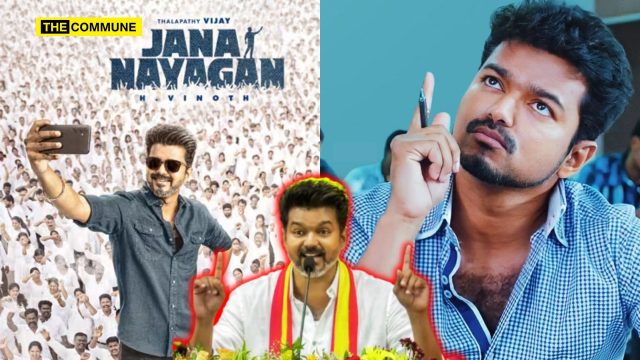
Tamil cinema star Vijay may have finally entered the political arena, but only halfway – he continues to straddle the line between cinema and politics without full commitment. For all the media fanfare surrounding his “political plunge” especially at the “peak of his career”, the actor remains a non-committed, part-time politician whose decisions seem more calibrated for image management than governance or grassroots engagement. This politics-by-abstraction strategy allows him to remain palatable across the spectrum while taking no meaningful risks. It keeps his celebrity aura intact but offers no clarity about what kind of political leader he intends to be, if at all.
With over a year left for the 2026 Tamil Nadu Assembly elections, actor and Tamizhaga Vetri Kazhagam (TVK) leader Vijay has already begun hearing scripts for his next film—an early indication that the actor may not be fully confident of his political prospects.
Sources close to the actor reveal that Vijay has quietly resumed script discussions for a potential post-Jananayagan project, despite earlier public statements suggesting that his continuation in cinema would depend on the outcome of the 2026 elections. This development has raised eyebrows in political circles, where many are beginning to question the depth of Vijay’s commitment to public life.
Preparing For A Political Flop?
According to insiders, Vijay has come to terms with the likelihood that he will not become Chief Minister in 2026, even if his party contests across the state. While TVK is yet to demonstrate significant organisational strength or electoral groundwork, the actor is said to be playing a long game—one that relies less on current momentum and more on future political voids.
Vijay reportedly believes that both the AIADMK and DMK will face internal leadership crises in the near future, especially as the senior-most figures age out of politics. His calculation, sources say, is that a fragmented political landscape after 2031 could give TVK the space to grow.
No Alliance With AIADMK
In a revealing strategic stance, Vijay is said to have ruled out any alliance with the AIADMK, despite speculation in political circles. Rather than helping revive the opposition party, he is reportedly content letting it implode, hoping to absorb its disillusioned voter base in the process.
Critics argue that this passive approach—waiting for rivals to collapse instead of offering a concrete political vision or program—does not inspire confidence among voters looking for an alternative to the Dravidian majors.
Keeping Cinema Within Reach
What has added to the perception of a half-hearted political plunge is Vijay’s decision to keep the film industry within arm’s reach. While the actor has publicly claimed he would make a choice between cinema and politics after 2026, the fact that he has already begun planning his next film suggests a lack of clarity or conviction about the path ahead.
“Vijay said he will decide whether to continue acting in films depending on the 2026 election results.” – #MamithaBaiju
JanaNayagan is NOT Vijay’s last film.😂
This is what we have been saying for a long time. ONE LAST TIME is just a gimmick. Fooling his own fans is a real… pic.twitter.com/wEksjLgR2o
Political observers point out that serious political entrants usually distance themselves from their past careers, at least during the formative stages of their political journeys. Vijay’s dual-track approach—balancing electoral ambition with a possible cinematic return—may send mixed signals to both voters and party workers.
While Vijay undoubtedly enjoys a massive fan following and has age on his side, it remains to be seen whether he is ready to transition from being a crowd-puller to a committed public leader—or whether he is simply keeping the cameras rolling until a political opportunity finally presents itself.
Style Over Substance?
Even in recent public appearances, such as awarding school toppers or party-related events, Vijay has shied away from specifics. No concrete policy proposals. No strong stand on contentious state issues like NEET, caste-based violence, or the Katchatheevu debate. His interventions are often limited to bland platitudes about education, discipline, and honesty – values are important, yes, but they are woefully insufficient for real-world politics.
A Legacy Of Deferrals
If Vijay’s career has shown one thing, it’s an ability to delay decisive entry. Even during the height of the protests against the Anna University sexual assault case or the AIADMK-DMK ideological battles, Vijay’s participation remained symbolic at best. His silence on serious governance failures and his party’s lack of a visible organizational presence underline the absence of political urgency.
Even Seeman, who had a career in films made politics his full-time job, gave press meets and raised issues, made debating points, spoke on political issues and such. Despite being a smaller party, Seeman had given NTK his all and continues to do so.
Vijay, on the other hand, seems more focused on keeping one foot in cinema and the other in the possibility of politics, without fully committing to either.
What Lies Ahead?
With the 2026 Tamil Nadu Assembly elections on the horizon, the real test will be whether Vijay steps into the electoral battlefield or continues his balancing act. Will he allow his party to become another marginal force like Kamal Haasan’s MNM, or will he finally commit to the political seriousness that the state demands?
As of now, Vijay remains what he has always been in politics: a symbol without a stance, a leader without a line, a politician only in potential. His part-time, non-committal approach may preserve his fanbase but in the long run, it might render him politically irrelevant.
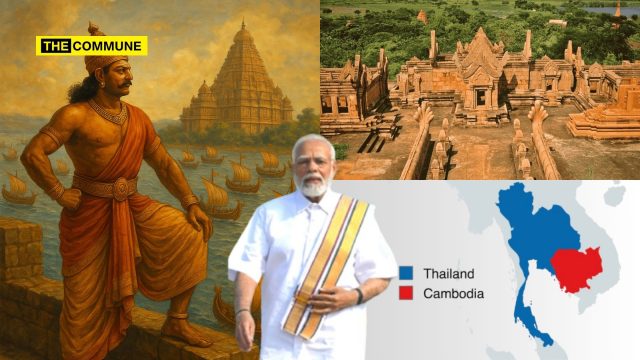
The violent border clash broke out between Cambodia and Thailand on 24 July 2025, marking the most serious escalation in over a decade. The confrontation erupted near the Ta Muen Thom temple, leaving 12 dead, injuring dozens, and forcing mass evacuations in nearby areas.
According to Thai military sources, the fighting began in the early morning hours after Cambodian forces allegedly deployed drones for reconnaissance near Thai positions in Surin Province. Thai troops reportedly attempted to de-escalate, but by 8:20 AM, intense cross-border gunfire had begun.
At the center of this long-running conflict lies not just territorial claims, but ancient heritage sites most notably, the Preah Vihear temple, a revered 900-year-old Hindu shrine perched on a cliff in the Dangrek mountain range. Dedicated to Lord Shiva and built during the height of the Khmer Empire, Preah Vihear is considered sacred by both Cambodians and Thais.
Just 95 kilometers west, the 12th-century Ta Muen Thom temple, also dedicated to Shiva, sits near the current flashpoint. Together, these temples form part of a historical fault line one that has seen centuries of power struggles, now playing out in modern military skirmishes.
History Echoes: From Suryavarman to Rajendra Chola
It’s no coincidence that this flare-up comes as Southeast Asia quietly marks 1,000 years since Rajendra Chola’s naval expedition a campaign that once redrew the power dynamics of the region.
The roots of today’s dispute stretch back to the Khmer King Suryavarman I, under whose reign parts of the Preah Vihear complex were constructed. In the 11th century, Suryavarman faced resistance from the Tambralinga kingdom in what is now southern Thailand. Tambralinga, backed by the Sri Vijaya Empire, became a regional adversary.
At the same time, Rajendra Chola, ruler of the Chola Empire in southern India, had launched a maritime blitz against Sri Vijaya, disrupting its control across maritime Southeast Asia. Recognizing a strategic opportunity, Suryavarman I forged an alliance with Rajendra Chola.
This historic alignment shifted the balance of power. With Chola support, Suryavarman defeated his rivals. In a gesture of gratitude, he is said to have sent Rajendra Chola a magnificent war chariot a moment recorded in the Karandai Copper Plate inscriptions, which include Sanskrit verses praising this diplomatic and military collaboration.
Today, as bullets fly near the same temples those kings once built and fought over, the past and present collide. The Preah Vihear dispute may be framed as a modern territorial issue, but its roots lie deep in the region’s shared history of empire, religion, and power politics a history still unfolding on the border cliffs of Cambodia and Thailand.
(This article is based on an X Thread By TS Krishnan)
Subscribe to our channels on Telegram, WhatsApp, and Instagram and get the best stories of the day delivered to you personally.
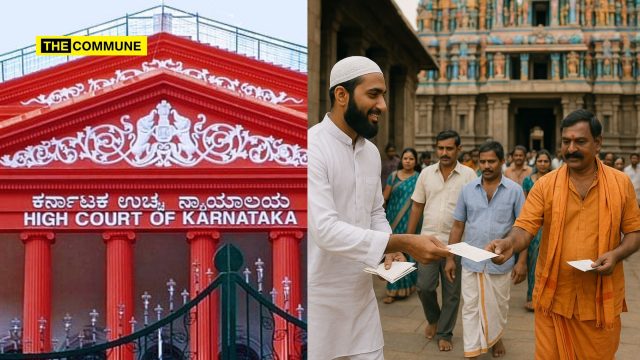
In a controversial verdict, the Karnataka High court acquitted three Muslim men accused of hate speech, predatory proselytization, and desecration of a Hindu temple in Jamkhandi. The accused, Mustafa Murtusaheb Momin, Alisaheb Shabir Alagundi, and Suleman Riyaz Ahemed Galagali, had allegedly entered the Ramatheerth Temple on 4 May 2025, distributed Islamic pamphlets, insulted Hindu deities, and offered inducements for conversion.
Incident Details
Eyewitnesses reported that the men entered the temple premises around 4:30 PM, engaging devotees in religious debates. According to the FIR, they allegedly declared, “If you remain a Hindu, you will never find God. There is no God except Allah, and all other gods are Kafir.” They also reportedly threatened devotees, saying, “We will not spare your lives,” while offering jobs in Dubai and vehicles as incentives for conversion.
The police had registered the case under Section 299 (Offence against religion), Section 351(2) (Insult to religion), Section 3(5) (Conversion by inducement) of Bharatiya Nyaya Sanhita, 2023, abd Section 5 of Karnataka Protection of Right to Freedom of Religion Act, 2022 (banning forced/fraudulent conversions)
Court’s Acquittal: A Mockery of Justice?
Despite witness testimonies and FIR records, the court dismissed the charges, citing “lack of conclusive evidence.” Hindu groups have condemned the verdict, calling it a “judicial betrayal” that emboldens religious aggression against Hindus.
Legal experts point out that the court ignored the following:
Temple Desecration – Distributing non-Hindu religious material inside a sacred Hindu space.
Hate Speech – Openly denigrating Hindu deities as “false” and threatening devotees.
Predatory Proselytization – Offering bribes for conversion, a punishable offence under state law.
Legal analysts say the acquittal may stem from procedural lapses in the police investigation, including delayed witness verification and alleged mishandling of digital evidence. However, critics say the court could have taken into account the pattern of behavior and the religious context of the incident, particularly the temple setting and the use of terms like “kafir” and “no God except Allah”, which carry theological weight that can constitute hate speech under existing law.
The incident had also raised concerns about violations of temple sanctity rules, which prohibit non-devotional or proselytising activity within the premises. According to temple authorities, no permission was sought by the accused, nor was there any interfaith event scheduled on the day in question.
This ruling sets a dangerous precedent, suggesting that Hindu places of worship and sentiments are not legally protected. Critics argue that had the roles been reversed – Hindus entering a mosque to preach and insult Islam – the judicial response would have been, well, no prizes for guessing.
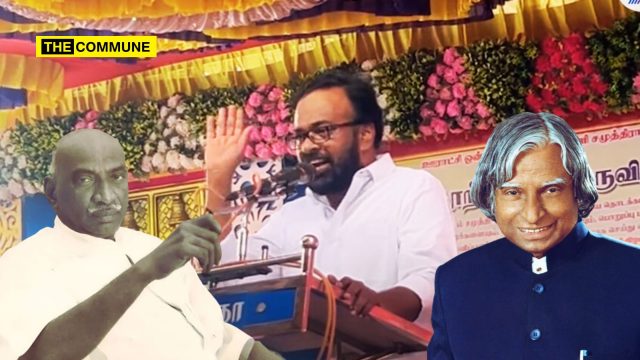
Leftist-Dravidian Director Karu Palaniappan has sparked significant outrage after making controversial remarks about former President of India, Dr. A.P.J. Abdul Kalam, and Tamil Nadu’s former Chief Minister, K. Kamarajar, during a centenary celebration event. His comments have been widely criticized as disrespectful and politically motivated.
The event was held on 25 July 2025, at the Samuthirapatti Government Primary School near Natham in Dindigul district, marking the school’s 100th anniversary. The function was attended by local officials, including the Natham Taluk Officer, the Chief Education Officer, educators, villagers, and Karu Palaniappan as a special guest.
Criticism of Dr. Abdul Kalam
While addressing the audience, Palaniappan took aim at Dr. Kalam, implying that the former president had a bias toward private school students. He stated, “Why do I immediately agree to come to government schools? Do you know why? It’s because I really like Abdul Kalam sir. What did Abdul Kalam do? He went and met students. Which students did he meet? He met young children. No, he met all private school kids. I’d think, ‘Sir didn’t have time to see government school kids,’ so what I’ll do is, ‘Let’s continue from where Abdul Kalam sir left off. We’ll go and see the government school kids.’ What happens if you go to government school kids? It’s not just about going to see them. If we go and participate, it becomes an event. If it’s an event, the District Educational Officer will come. If the District Educational Officer comes, the Tahsildar will come. If the Tahsildar comes, they’ll paint the building. If the Tahsildar comes, they’ll clean the toilets that day.”
Implying Political Motive in Honoring Kamarajar
Palaniappan didn’t stop there. He later targeted the legacy of K. Kamarajar, a leader revered for his contribution to public education in Tamil Nadu. He implied that invoking Kamarajar’s name in official documents or celebrations is a political act.
He pointed out that a commemorative booklet highlighted that a hut-style school building was inaugurated in 1963 by then-minister Kakkan, under Kamarajar’s administration. But Palaniappan seemed bothered that similar credits were not explicitly given to later DMK-led governments.
He lamented, “If you see in the paper, all the special features mentioned about this particular school. These things were done only for this school, not across all of Tamil Nadu, only for this school. But how is it mentioned? It says, ‘The Merur hut building was inaugurated in 1963 by Kakkan, who was a minister during Kamarajar’s rule.’ Just for one school. But then, in the 2024-25 academic year, to bring out the unique talents of students, the Kalai Thiruvizha was started by the Tamil Nadu government across the whole of Tamil Nadu. Right? Here, the hut school building that came up was during Kamarajar’s time. Then again, in 1980, what started as a primary school was upgraded to a middle school. By whom? By the Tamil Nadu government. And then in 2010, it became a higher secondary school with modern facilities. By whom? By the Tamil Nadu government. But in 1963, who built the hut building? It was during Kamarajar’s rule. That’s it. This is the politics. Either you say ‘by the Tamil Nadu government’ for everything, or you say ‘during MGR’s rule,’ ‘Jayalalithaa’s rule,’ ‘Karunanidhi’s rule,’ ‘Stalin’s rule’ for everything. If we understand that, we’ll understand development. It’s a huge political game to mention names only when it’s convenient, and then just say ‘Tamil Nadu government’ when it’s not.”
Palaniappan’s comments have drawn severe criticism from across the political and public spectrum. Many consider his remarks on Dr. Kalam both unfounded and disrespectful, particularly given Kalam’s widespread popularity and his well-documented efforts to engage with students of all backgrounds, including government schools.
Similarly, his criticism of Kamarajar who is widely regarded as a pioneering figure in expanding public education has been perceived as an attempt to downplay a historic legacy to favor Dravidian political narratives. Critics argue that the director’s frustration stems from the DMK not being explicitly credited in event materials, and that his comments expose the politicization of legacy and education.
Subscribe to our channels on Telegram, WhatsApp, and Instagram and get the best stories of the day delivered to you personally.
Religious fundamentalism in India isn’t confined to the uneducated or underprivileged. Even individuals in the highest offices judges, diplomats, and constitutional authorities have, at times, allowed personal religious beliefs to overshadow their official responsibilities.
Ironically, while sections of India’s intelligentsia and political left often urge Hindus to embrace secularism and progressive constitutional values, they don’t always hold themselves to the same standard.
Below are three widely discussed examples of prominent Muslim civil servants who have been accused of prioritizing religion over constitutional or national obligations.
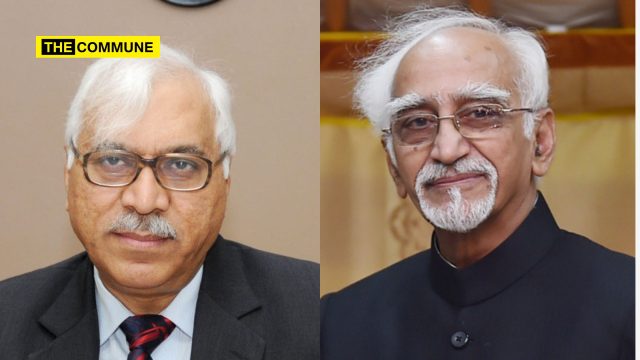
#1 Former Vice President Hamid Ansari
Hamid Ansari’s distinguished diplomatic career included ambassadorships to Iran, Afghanistan, and Saudi Arabia, and culminated in two terms as India’s Vice President. Yet, his career post-retirement has been shadowed by a series of serious allegations and contentious statements that have prompted criticism from political and intelligence circles.
a) Allegations From Former Intelligence Officers
In 2019, former RAW (Research and Analysis Wing) officials accused Hamid Ansari of endangering intelligence operations while serving as India’s ambassador to Iran (1990–1992). They claim Ansari failed to protect Indian intelligence assets and may have even exposed undercover operatives to Iranian agencies.
🚨I think it is time to make a film Titled 'The Ansari Files'
🚨Hamid Ansari helped Pakistani spies !
🚨 He endangered lives of RAW unit members in Iran !
🚨 He supported anti-India & anti-Hindu organisations like PFI !
One officer alleged that Ansari downplayed the abduction of an Indian diplomat, Sandeep Kapoor, by Iranian intelligence agency SAVAK, failing to report SAVAK’s involvement in his official communication to the Ministry of External Affairs. Another incident involved RAW operative D. B. Mathur, who was reportedly kidnapped after Ansari allegedly leaked intelligence details to the Iranian Foreign Ministry.
I was in Tehran, Iran n Hameed Ansari was ambassador in Tehran. Ansari had played a crucial role in exposing RAW set-up in Tehran endangering lives of RAW unit members. But this very man was made vice President for two consecutive terms.
Ratan. Sehgal was Addl. Secretary in IB n he was later found to be working for CIA and held passing on documents to a CIA lady agent in Delhi. He should have been arrested, jailed n dismissed. But was asked to resign n allowed to go. Now he is settled in US.
The RAW officers later submitted a letter to Prime Minister Narendra Modi demanding an investigation into Ansari’s role during his Tehran tenure. They claimed Ansari also collaborated with intelligence officials like Ratan Sehgal to dismantle RAW units in Gulf countries prior to the 1993 Mumbai bomb blasts.
In his book Mission R&AW, former intelligence officer R.K. Yadav reveals how Hamid Ansari, during his tenure as India’s ambassador to Iran, was uncooperative and even obstructive to Indian intelligence efforts. When a R&AW operative was abducted by Iranian agencies, Ansari reportedly showed no urgency, and it took pressure from Atal Bihari Vajpayee to push Prime Minister Narasimha Rao into securing the agent’s release. Yadav also notes that Ansari advised another official, Muhammad Umar, to stay silent after Iranian intelligence tried to recruit him. Umar refused, was abducted and tortured, yet Ansari allegedly told him not to escalate the matter. This period, critical in the formation of global jihadist networks, saw significant intelligence setbacks in Tehran, setbacks Yadav believes gave the Iran-ISI axis leverage and indirectly fueled jihad in Kashmir.
b) Allegations Of Hosting Pakistani Spy
In 2022, Pakistani journalist Nusrat Mirza claimed he visited India on several occasions between 2005 and 2011 to collect intelligence for Pakistan’s ISI, allegedly attending a seminar on terrorism at the invitation of Hamid Ansari. Ansari categorically denied the claims, asserting that invitations to foreign delegates during his tenure were issued based on recommendations from the government, particularly through the Ministry of External Affairs.
While Ansari insisted he neither invited nor interacted with Mirza, the controversy cast a shadow over his tenure, prompting strong reactions from BJP leaders and sections of the media.
c) Wants Sharia Courts
Following his retirement, Ansari made several statements that sparked nationwide backlash. He spoke in favor of establishing Sharia courts across districts in India and claimed to feel “insecure” as a citizen a remark that was widely criticized as divisive.
d) Simping For Jinnah
He also drew attention for attending events hosted by the now-banned Popular Front of India (PFI), a group accused by Indian agencies of fostering radical Islamist ideology and involvement in “love jihad” cases in Kerala. Additionally, Ansari expressed support for students demanding the restoration of Muhammad Ali Jinnah’s portrait at Aligarh Muslim University.
e) Criticizing India To Appease Iran
In 2005, after India voted against Iran’s nuclear program at the International Atomic Energy Agency, Hamid Ansari openly criticized the decision. He remarked that the Indian government had acted based on its own “judgment” a phrase he used to imply bias and argued that the position taken lacked a factual basis.
#2 Former Chief Election Commissioner S.Y. Quraishi
Former Chief Election Commissioner S.Y. Quraishi has also faced allegations of allowing religious identity to influence his public conduct. In April 2025, BJP MP Nishikant Dubey accused Quraishi of facilitating the inclusion of Bangladeshi infiltrators in the voter rolls of Jharkhand’s Santhal Pargana region during his tenure.
In a now deleted post, Quraishi via his X handle, labelled the Waqf Act a “sinister and evil plan to grab Muslim lands.” He wrote, “Wakf Act is undoubtedly a blatantly sinister/evil plan of the govt to grab Muslim lands. I’m sure SC will call it out. Misinformation by the mischievous propaganda machine has done its job well.”
Dubey responded to this sharply, accusing the former CEC of acting with religious bias during his tenure. “You were not an election commissioner, you were a Muslim commissioner,” he posted on X, further alleging that large numbers of Bangladeshi infiltrators were added to voter rolls in Jharkhand’s Santhal Pargana under Quraishi’s watch.
Dubey also invoked historical context to question the legitimacy of expansive Waqf claims, stating that lands before the advent of Islam in India in 712 CE belonged to Hindus, tribals, Jains, and Buddhists. Citing his own village’s destruction by Bakhtiyar Khilji in 1189, and the legacy of the ancient Vikramshila University, he urged citizens to “unite this country” and revisit real Indian history.
आप चुनाव आयुक्त नहीं,मुस्लिम आयुक्त थे,झारखंड के संथालपरगना में बांग्लादेशी घुसपैठिया को वोटर सबसे ज़्यादा आपके कार्यकाल में ही बनाया गया ।पैगंबर मुहम्मद साहब का इस्लाम भारत में 712 में आया,उसके पहले तो यह ज़मीन हिंदुओं की या उस आस्था से जुड़ी आदिवासी,जैन या बौद्ध धर्मावलंबी की… https://t.co/yf8uBjmoYN
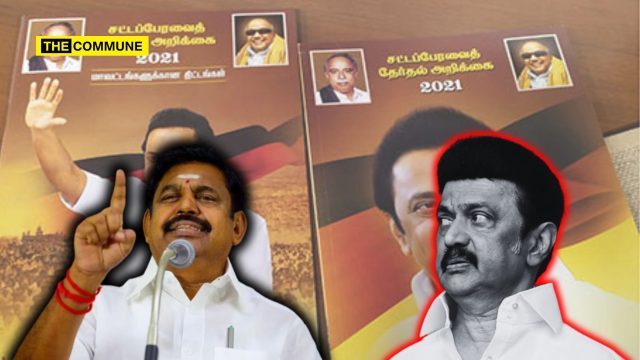
In a brilliant political counterattack, AIADMK leader Edappadi K. Palaniswami (EPS) flipped the script on the ruling DMK by making journalists to confront the harsh reality of the ruling party’s unfulfilled promises.
At a press event in Pudukkottai, EPS’s team distributed “scratch cards” containing DMK’s 2021 election promises and asked reporters to reveal whether the Stalin-led government had delivered on them. The result? A stunning exposé of the DMK’s empty guarantees.
The “Scratch Card” Stunt That Has Left DMK Red-Faced
Using scratch cards and a “wheel of betrayal,” EPS invited reporters to randomly select promises from the DMK manifesto and publicly assess whether those promises had materialized over the past four years.
Whether it was jobs for 5 lakh youth, cancellation of the NEET exam, free tablets for students, or reduced fuel prices, the recurring response from the audience, including local journalists was unanimous: “Varala, sir… nothing has come.” The promises, EPS pointed out, remained ink on paper.
One journalist scratched a card that read “Three LED bulbs at concessional rate for all ration card holders.” Another pulled up “Unmarried women above 35 to get government jobs.” The room erupted in nervous laughter and awkward silence – not one person had seen these promises fulfilled. Even a card that read “Diesel prices will be reduced” was met with scoffs from reporters themselves.
The most damning moment arrived when EPS referenced the DMK’s foundational 2021 pledge: the abolition of the NEET exam. “Has it been cancelled?” he asked, turning to the crowd. The answer was a resounding no.
Key Unkept Promises
“5 Lakh Government Jobs for Youth” – Scratched. Reality: Zero delivered. “4G Connection + 10GB Data + Free Tablets for Students” – Scratched. Reality: Not implemented. “Old Age Pension of ₹1,500” – Scratched. Reality: Still pending. “Gradual Reduction of Alcohol Tax” – Scratched. Reality: Instead, liquor prices increased. “Diesel Price Cut” – Scratched. Reality: Prices skyrocketed under DMK. “NEET Exam Abolition” – Scratched. Reality: NEET still enforced.
DMK’s Wheel of Betrayal: Spin & Lose
EPS and team didn’t stop there. He unveiled a rotating wheel with sectors labeled for farmers, women, youth, students, traders, and other social groups. As the wheel spun and promises were randomly selected, each item served as a quiet indictment of the DMK’s governance.
Farmers:“Loan waivers promised, but suicides continue.”
Women:“Government jobs for unmarried women above 35? Still waiting.”
Traders:“Corporation rent revision? Only on paper.”
Theatrics aside, the message was clear: four years in, many of the promises that secured Stalin’s 2021 victory remain unfulfilled.
Many reporters, who have largely been sympathetic to the DMK, were put on the spot. When asked “Did the DMK fulfill this promise?”, their reluctant answers were unanimous: “No.”
EPS’s Brilliant Strategy: Using DMK’s Own Weapon Against Them
The brilliance of the move lay in its simplicity. Instead of reading out a list of failures, EPS got the media who has largely been pro-DMK over the years, to read the promises aloud and confront their non-delivery themselves. It was political theatre at its sharpest.
This approach also served a second purpose: it exposed the media’s complicity in shielding the government from criticism. Since 2021, much of the Tamil media has projected an overwhelmingly positive image of the DMK regime, often turning a blind eye to broken promises and administrative lapses. EPS’ gambit forced journalists to reckon with that silence.
By using Stalin’s own words against him, EPS transformed a standard public meeting into a masterclass in political messaging. The opposition leader didn’t just speak about broken promises; he made the public and media witness them.
Subscribe to our channels on Telegram, WhatsApp, and Instagram and get the best stories of the day delivered to you personally.
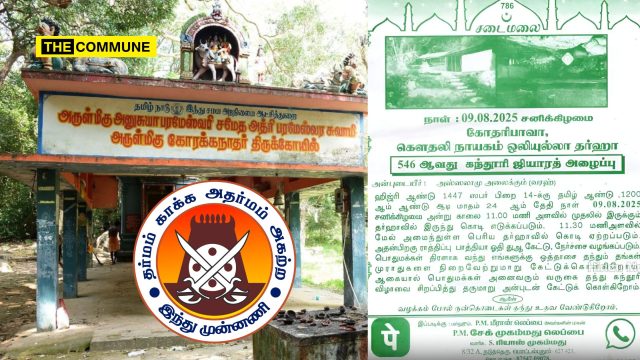
The Hindu Munnani has strongly condemned what it calls another deliberate attempt by Islamist groups to organize a Kandhuri festival on a hill considered sacred in Hindu tradition Athri Hill, situated a Lord Shiva temple. The group has also taken offense to the hill being referred to as “Sadai Hills” in an official notice promoting the event.
This isn’t the first such controversy. In a previous incident, there was an attempt by Islamist groups to hold a similar Kandhuri celebration on the Thiruparankundram Murugan Hills a revered site in Hinduism which included plans to sacrifice goats and hens. They also referred ‘Thiruparankundram‘ as ‘Sikkandar Hills’. That event triggered widespread public outrage and protests. Now, another similar move is reportedly underway.
Historical and Religious Significance of Athri Hill
Athri Hill lies within the Pothigai mountain range, near the village of Alwarkurichi in Tamil Nadu’s Tirunelveli district. According to Hindu belief, the hill holds immense spiritual value. Around 2,500 years ago, the sage Athiri is said to have journeyed to this location with his wife Anusya Devi and disciples to perform intense penance to Lord Shiva. Moved by the sage’s devotion, Lord Shiva is believed to have appeared to him in a divine vision. The site was thereafter known as Athri Maharishi Hill, and a temple dedicated to Lord Shiva in the form of Sage Athiri was later established at the location.
Controversy Over Upcoming Event
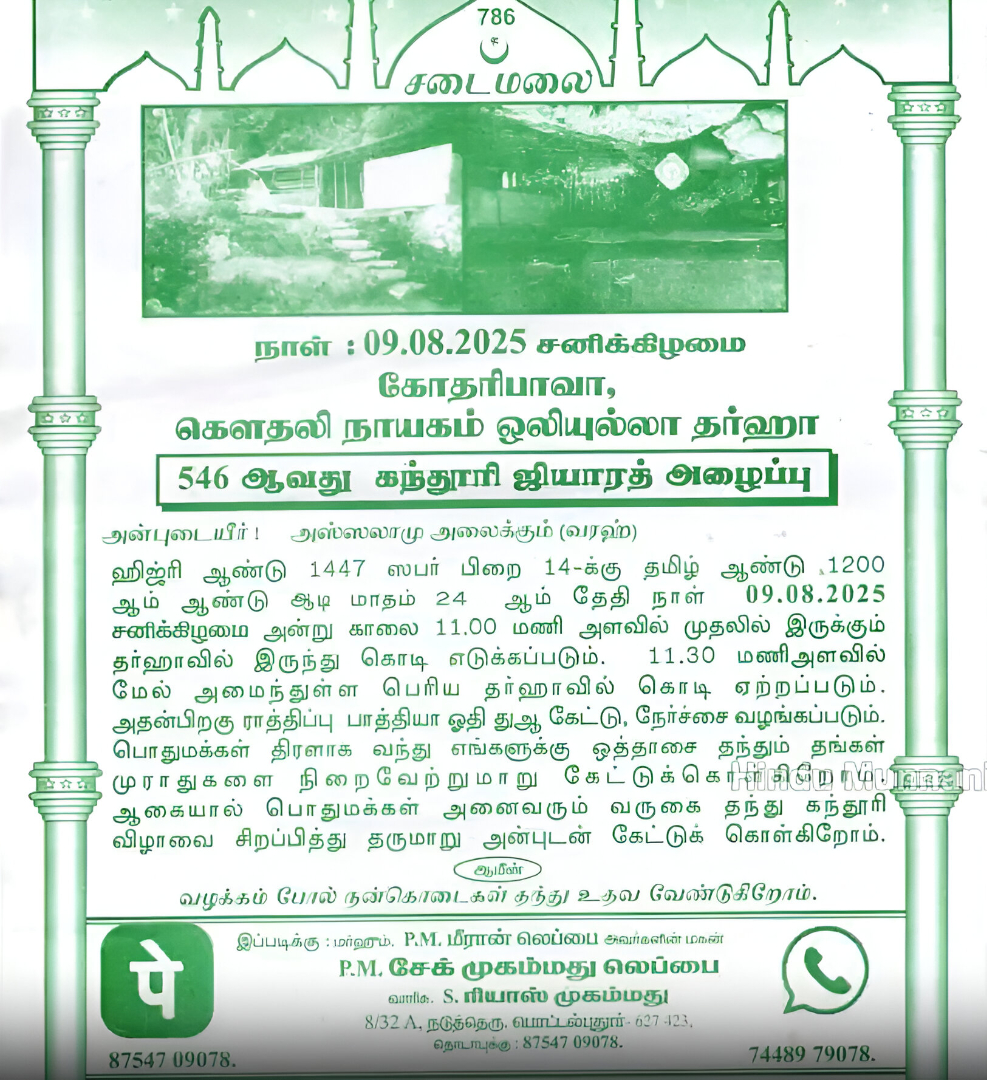
The current dispute emerged after a notice was circulated, announcing plans to hold the 546th Kandhuri Ziyarat at a dargah situated on the hill. The event is scheduled for 9 August 2025, and the notice has left local Hindu devotees shocked and outraged.
The notice, which begins with “786, Sadaimalai,” reads:
“On the 14th day of the month of zafar pirai in the Hijri year 1447, corresponding to the 24th day of the Aadi month Tamil year 1200, Saturday, 09.08.2025, the flag will first be taken out from the Dargah at 11:00 AM. At 11:30 AM, the flag will be hoisted at the larger Dargah located above. Following this, Fatiha will be recited, prayers will be offered, and offerings will be distributed. We kindly request the public to gather in large numbers, extend their support, and fulfill their vows. Therefore, we cordially invite all members of the public to attend and grace the Kandhuri festival. As always, we request your generous donations to help with the festival.”
Hindu Munnani and local Hindu communities view this as yet another encroachment upon a site of deep religious importance and are calling for authorities to intervene to protect the sanctity of Athri Hill.