Home Blog Page 21

12 Cases Of Burqa-Enabled Voter Fraud Across India
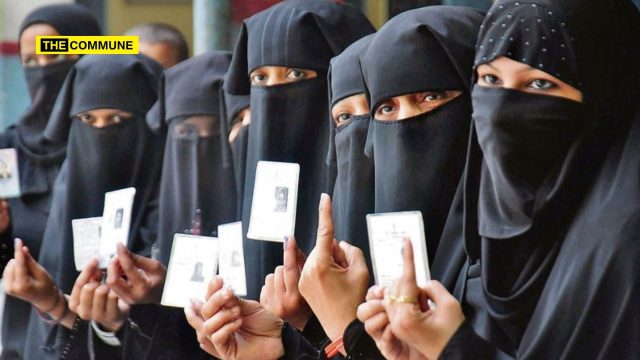
On 6 November 2025, during polling for the Bihar Assembly elections, a video from Siwan went viral on social media. In the clip, a woman identified as Tabassum Khatoon is seen admitting that she wiped off the indelible ink from her finger immediately after voting so that she could attempt to cast another fraudulent vote while remaining covered in a burqa.

This report compiles 12 major incidents from 2022 to 2025 in which individuals identified by election officials or caught on video, allegedly attempted to cast fraudulent votes while concealing their identity under a burqa during elections held across different Indian states.

#1 Burqa Voter Verification Row in Bihar (2025)

A video from Siwan, Bihar, recorded during the 2025 Assembly elections, went viral on social media on 6 November 2025. In the clip, a Muslim woman named Tabassum Khatoon claims that she wiped off the indelible ink from her finger immediately after voting so that she could allegedly cast a fake vote again while covered in a burqa. The incident triggered sharp reactions from opposition parties, who protested over voter verification procedures for burqa-clad voters.

#2 Burqa-Clad Women Allegedly Involved in Fake Voting in Seelampur (2025)

On 5 February 2025, during the Delhi Assembly elections, a controversy erupted in the Seelampur constituency after allegations surfaced that women wearing burqas were being used to cast fake votes. According to claims made at the polling booth, some voters reported that their votes had already been cast before they arrived. Following these accusations, clashes broke out among workers of the BJP, AAP, and Congress. Supporters exchanged blows and engaged in heated arguments, leading to chaos at the booth. The incident drew attention to election-day security lapses and the need for stricter identity verification procedures.

#3 Burqa-Clad Fake Voter Caught During Bihar Bypoll (2024)

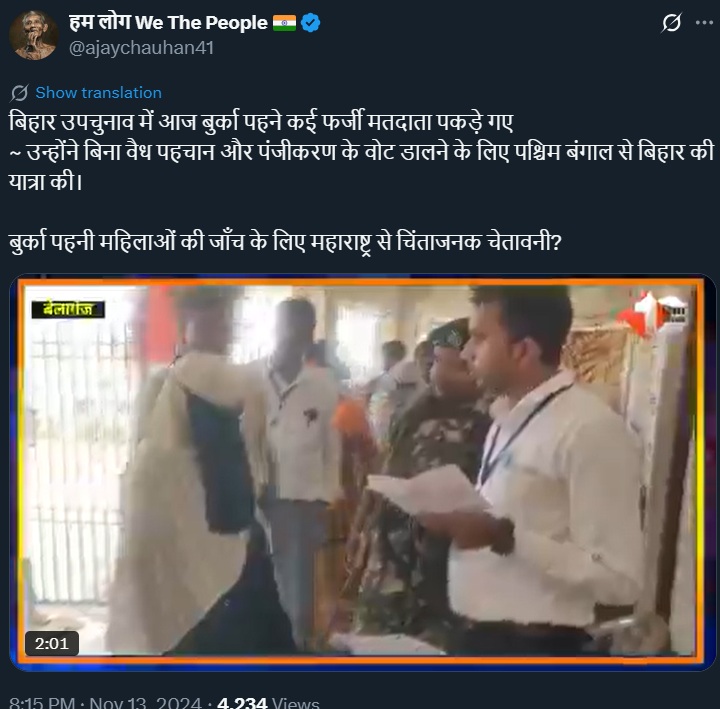
On 13 November 2024, during the Bihar by-election in Gaya, election officials detained a woman wearing a burqa who allegedly attempted to cast a vote without valid identification or registration. According to officials, the woman had travelled from West Bengal to Bihar specifically to participate in fraudulent voting. A video of the incident quickly went viral on social media, showing the woman admitting that she had come to cast a fake vote while hiding her identity under a burqa.
#4 Burqa-Clad Women Seen Defending Illegal Voting During Purnia Polls (2024)

On 27 May 2024, during the Bihar Lok Sabha elections, a video from Purnia went viral on social media showing a Muslim woman defending instances of underage girls allegedly casting fake votes while wearing burqas. In the clip, she complains that some “Muslim girls were caught by the administration for voting in burqas,” and argues that the girls had come “just out of curiosity” and had not committed a major offence.

#5 15 Burqa-Clad Women Arrested for Alleged Fake Voting in Uttar Pradesh (2025)

On 23 May 2025, during the Uttar Pradesh municipal elections, authorities arrested 15 women in the Khirabag area of Mau after they allegedly attempted to cast fake votes while wearing burqas. Election officials detained the women at the polling booth and handed them over to the police. According to officials, the group was found carrying counterfeit Aadhaar cards, and two of the accused were identified as minors. The incident unfolded during voting across 38 districts.

#6 Three Burqa-Clad Women Arrested for Alleged Fake Voting in Madhubani (2024)

On 22 May 2024, during the fifth phase of the Bihar Lok Sabha elections, police arrested three women wearing burqas along with one man at Booth No. 85 located inside the Hakkaniya Madarsa in Devra Bandhauli, Jale Assembly constituency (No. 87) in Madhubani district. According to officials, the four were attempting to cast fraudulent votes using false identities. The man, identified as Mohammad Sanaullah, was allegedly coordinating the fake voting attempt. All four were detained directly from the polling station.

#7 Minor Girl Caught Attempting Fake Vote in Burqa During Sambhal Polling (2024)

On 7 May 2024, during the third phase of the Lok Sabha elections, security personnel in the Kundarki Assembly segment of the Sambhal constituency detained a minor girl who arrived at Booth No. 398 wearing a burqa and allegedly attempted to cast a vote using the voter slip of a 40-year-old woman.

The incident raised immediate concerns about impersonation and booth-level malpractice. The BJP accused the presiding officer, Shamim Ahmad, of facilitating fake voting at the booth.

#8 Burqa-Clad Woman Arrested for Alleged Fake Voting in Rampur (2023)

On 18 November 2023, police in Rampur, Uttar Pradesh, arrested a Muslim woman wearing a burqa for allegedly attempting to cast a fake vote using her sister-in-law’s identity. According to officials, the woman admitted during questioning that she had been sent by her father-in-law and mother-in-law to vote fraudulently on behalf of the relative.

#9 Four Burqa-Clad Women Detained for Alleged Fake Voting Attempt in Sambhal (2023)

On 4 May 2023, during the municipal elections in Chandausi, Sambhal district of Uttar Pradesh, police detained four women who allegedly attempted to cast fake votes while wearing burqas. Authorities reported that the women arrived at polling booths carrying forged identification documents. During verification, officials discovered inconsistencies, leading to their detention. One of the four was identified as a minor.

#10 Two Burqa-Clad Women Caught Attempting Fake Voting in Rampur (2022)

On 14 February 2022, during the second phase of the Uttar Pradesh Assembly elections, two Muslim women, identified as Rani and her daughter Muskan were detained in Rampur for allegedly attempting to cast fake votes while wearing burqas. The incident took place at a polling booth set up inside GRP College in the Rampur City Assembly constituency. According to election officials, one of the women had already managed to cast an illegal vote before being caught. Both were immediately handed over to police.

#11 Video Shows Burqa-Clad Women Allegedly Preparing for Fake Voting in Uttar Pradesh (2022)

In March 2022, during the Uttar Pradesh Assembly elections, a video went viral on social media showing several young Muslim women gathered inside a room with multiple forged Aadhaar cards visible around them. In the clip, voices can be heard accusing the burqa-clad women of planning or attempting to cast fake votes using these counterfeit documents.

The footage triggered widespread debate online, with many users raising concerns about organised impersonation attempts and loopholes in identity verification during elections. Authorities later stated that the video was being examined to determine its authenticity and the individuals involved.

#12 Woman Caught Attempting to Cast Dead Co-Wife’s Vote in Burqa During Amroha Polls (2019)

On 21 April 2019, during the second phase of the Lok Sabha elections, a woman in Amroha’s Hasanpur area was detained for allegedly attempting to cast a vote in the name of her deceased co-wife while wearing a burqa to conceal her identity. Election officials grew suspicious during verification and alerted police, who detained her at the polling booth. A case was subsequently registered, and legal action was initiated.

Subscribe to our channels on WhatsAppTelegram, Instagram and YouTube to get the best stories of the day delivered to you personally. 
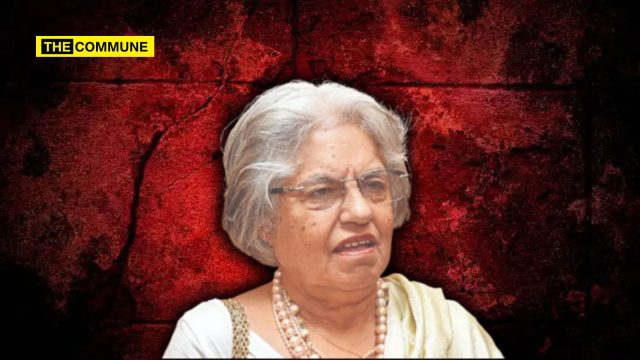
When Justice Sleeps, Indira Jaising Wakes Up: The Lawyer Who Intervenes For Serial Killers, Terrorists, And Rapists

indira jaising

The Supreme Court’s recent decision to acquit Surendra Koli in the last pending Nithari case has not only reopened debate about India’s criminal justice system but also brought renewed focus on one of the case’s most prominent lawyers: senior advocate Indira Jaising.

Jaising, whose midnight intervention in 2014 halted Koli’s execution hours before he was to be hanged, is today being hailed by some as vindicated and criticised by others as part of a broader pattern of intervening in favour of convicts in heinous crimes and terrorism cases. Her legal work, from the Nithari killings and the Yakub Memon hearing to the Nirbhaya controversy and the push to lower the age of consent has become the subject of intense political and ideological contestation.

Nithari: Midnight Stay, and an Acquittal 11 Years Later

On the night of 8 September 2014, as jail authorities in Meerut prepared to hang Surendra Koli, Jaising rushed to the residence of the then Chief Justice–designate H.L. Dattu seeking an urgent stay of execution. A special late-night hearing was convened, and the Supreme Court stayed Koli’s hanging pending a review of his death sentence.

At the time, Koli had been convicted in multiple cases arising out of the Nithari killings in Noida and described as a “serial killer” by the Court itself. Over the next decade, however, the evidentiary foundations of those convictions were gradually dismantled.

In October 2023, the Allahabad High Court acquitted Koli in 12 Nithari cases, finding that his 2007 “confession” was neither voluntary nor reliable and that recoveries of skulls and bones could not be legally linked to him.

On 10 November 2025, ruling on a curative petition in the final case, relating to the murder of a minor girl, the Supreme Court reached a similar conclusion. It held that the same “structural infirmities” infected the confession and recoveries across all Nithari prosecutions and that conflicting outcomes on identical evidence would amount to a “manifest miscarriage of justice”. The Court recalled its own earlier order upholding his conviction and ordered Koli’s acquittal and immediate release.

Reacting to the verdict, Jaising told The Times of India that investigations in the case were “flawed as a whole” and reiterated her long-held position that no execution should take place until every legal remedy, including curative review has been fully exhausted.

Yakub Memon: The 3 AM Hearing

Less than a year after the Koli stay, Jaising appeared again in a dramatic late-night death penalty matter’ this time in the 2015 case of Yakub Memon, convicted in the 1993 Mumbai serial blasts.

On the night of 29-30 July 2015, as Memon’s execution approached, a group of senior lawyers including Indira Jaising, Prashant Bhushan, Anand Grover and Vrinda Grover went to the Chief Justice’s residence seeking an urgent hearing. A three-judge bench of the Supreme Court assembled around 3:20 AM to hear their plea that Memon be granted 14 days after the rejection of his mercy petition before any execution, in line with earlier precedent.

The bench ultimately rejected the plea around dawn, and Memon was hanged later that morning as scheduled. Still, the intervention reinforced Jaising’s public image as one of the country’s most visible and persistent death-penalty opponents.

Nirbhaya: “Forgive the Rapists” Tweet Sparks Outrage

In January 2020, as the four men convicted in the 2012 Delhi gang-rape and murder (the Nirbhaya case) came close to execution, Jaising again courted controversy; this time outside the courtroom.

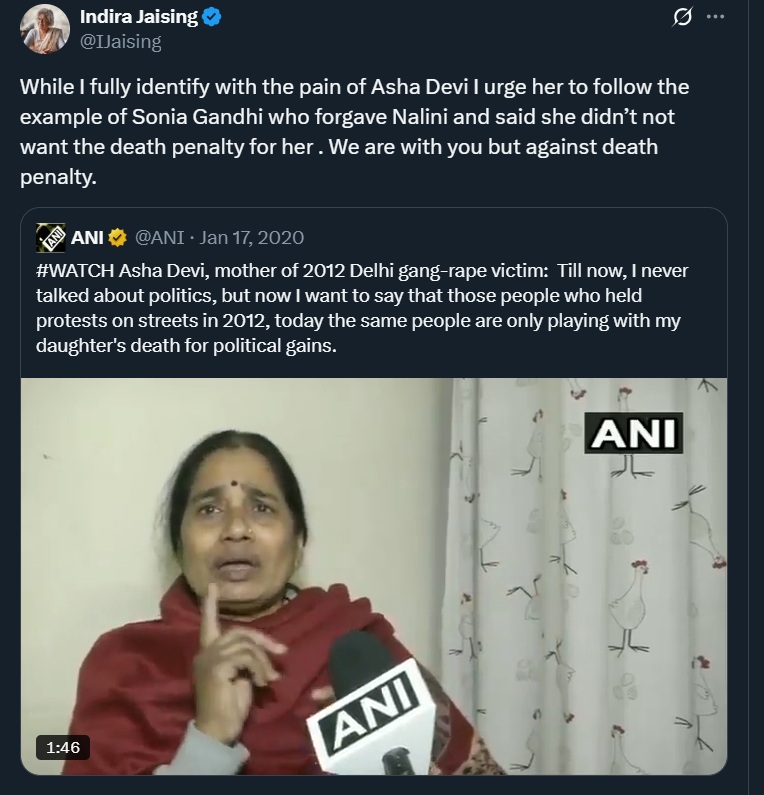
In a publicly shared tweet, she said she fully identified with the pain of Nirbhaya’s mother, Asha Devi, but urged her to “follow the example of Sonia Gandhi who forgave Nalini and said she didn’t want the death penalty for her,” adding that “we are with you but against the death penalty.”

Asha Devi reacted sharply, telling the media she was shocked by the suggestion and asking, “Who is Indira Jaising to give me such a suggestion?” She accused “people like her” of helping rapists and obstructing justice for victims.

The episode again highlighted Jaising’s abolitionist stance and triggered a broader debate on whether public advocacy against capital punishment in such cases is principled or insensitive to victims’ families.

Afzal Guru Case: Questions Over Legal Defence and a Push for Curative Review

Another prominent intervention by Indira Jaising came in the highly sensitive Parliament Attack case, involving Mohammad Afzal Guru, who was convicted for his role in the 2001 terror strike on India’s Parliament and sentenced to death.

Guru’s conviction and sentence were upheld by the Supreme Court in 2005, and his mercy petition was rejected by the President in 2013. However, in the years preceding the execution, a segment of civil-society activists and lawyers, including Jaising, mounted a sustained campaign questioning aspects of his trial.

As per court records and contemporary reporting, Jaising issued a legal certificate allowing Afzal Guru to file a curative petition, the final judicial remedy available after the dismissal of review petitions. She argued that Guru had been denied adequate legal representation at crucial stages of the trial and that there existed a “constitutional error” requiring judicial correction.

Her steps formed part of a wider legal and activist push that claimed procedural deficiencies in the case. Critics, however, viewed the move as an attempt to delay or derail the execution of a convict held guilty by both the trial court and the Supreme Court in a high-profile terror case.

Although the curative petition was ultimately dismissed, the episode added to Jaising’s profile as one of India’s most active lawyers challenging death-penalty cases including those involving individuals convicted of terrorism.

The Age-of-Consent Debate: Redrawing the Line at 16

Most recently, Jaising’s role as amicus curiae in a batch of petitions concerning the Protection of Children from Sexual Offences (POCSO) Act has stirred fresh controversy.

In July 2025, she urged the Supreme Court to effectively lower the statutory age of consent from 18 to 16 in cases of consensual sexual activity between adolescents close in age. She argued that the present framework “criminalises consensual sexual activity between children in the age group of 16–18 years” and violates their right to autonomy and privacy.

The Union government strongly opposed any change, warning that reducing the age of consent would dilute child protection and could be misused by sexual predators. Child-rights groups and several commentators have similarly argued that grooming and exploitation risks are high in this age bracket and that POCSO’s safeguards should not be weakened.

Pattern Or Principle?

Taken together, these episodes have led some political commentators and critics to notice a “pattern” in Jaising’s interventions: they point to her role in securing a midnight stay for Koli, seeking procedural delays for Yakub Memon, publicly appealing for mercy for the Nirbhaya convicts, and pushing to lower the age of consent, and it is noteworthy that her activism tends to benefit convicts in grave crimes or potentially weakens protections for minors.

She seems to be a part of a broader ecosystem of lawyers who frequently challenge death sentences, oppose stringent security laws and advocate reforms that, in their view, favour accused persons over victims.

However, Jaising and her supporters frame the same record very differently. In interviews and written pieces, she has consistently described herself as a human-rights and constitutional lawyer whose opposition is not to victims but to what she sees as irreversible punishments, flawed investigations and laws that criminalise adolescents’ consensual relationships.

In the wake of Koli’s acquittal, she argued that the case exposed “flawed” investigative processes and reinforced the need to ensure that no one is executed before all legal remedies are exhausted—especially where confessions and recoveries are later found unreliable.

On POCSO and the age of consent, she has maintained that her concern is with teenage couples being pulled into the criminal system due to parental or social pressure and has called for a narrow “close-in-age” exception rather than a blanket dilution of child-protection law.

Indira Jaising – A Polarising Figure in India’s Justice Debates

As India continues to grapple with questions of how to balance victims’ rights, due process, child protection and the death penalty, Indira Jaising has become one of the most polarising figures in that debate.

The Supreme Court’s reversal in the final Nithari case has now added a new layer to that story. For some, it strengthens her long-standing argument that the justice system can make catastrophic mistakes. For others, it does little to change their unease over a lawyer whose most visible battles have been fought on behalf of those the public already believes guilty.

Either way, as the country revisits the Nithari case and debates the future of death penalty and child-protection laws, Indira Jaising’s courtroom interventions and the questions they raise will exist as long as the ecosystem that supports her exists.

Subscribe to our channels on WhatsAppTelegram, Instagram and YouTube to get the best stories of the day delivered to you personally.
Dravidian Model: Tamil Nadu’s Debt Per Household Soars 79% Under DMK From 2021 Till Date

Four-and-a-half years after then–Finance Minister Palanivel Thiaga Rajan (PTR) released his high-profile White Paper warning that Tamil Nadu’s finances had been “destroyed” by the previous AIADMK government, fresh budget documents show that the State’s debt burden per household has climbed dramatically under the DMK’s own tenure.

The Promise vs The Reality

In 2021, Finance Minister Palanivel Thiaga Rajan (PTR) released a White Paper painting a grim picture of state finances, blaming the previous AIADMK regime for mismanagement that had pushed debt to ₹2.63 lakh per family. He promised to “set right the present fiscal situation in Tamil Nadu” within five years through “extraordinary reforms” and “dramatic transformation.”

Four years later, the transformation has been dramatic indeed – but in the wrong direction. According to budget documents and Ministry of Finance data, the debt burden has ballooned to ₹4.65 lakh per household – an increase of approximately ₹2.02 lakh for every family in the state.

Year-by-Year Descent into Debt

The numbers reveal a consistent pattern of escalating borrowing, assuming there are 2 crore households for a population of approximately 7-8 crores:

2021: Total debt of ₹5.7 lakh crore (₹5,70,000 crore) that translates to ₹2.63 lakh per household (White Paper baseline)

2022: Total debt of ₹6.67 lakh crore (₹6,67,975 crore) that translates to ₹3.34 lakh per household (27% increase)

2023: Total debt of ₹7.41 lakh crore (₹7,41,497 crore) that translates to ₹3.70 lakh per household (41% cumulative increase)

2024: Total debt of ₹8.34 lakh crore (₹8,34,544 crore) that translates to ₹4.17 lakh per household (59% cumulative increase)

2025: Projected debt of ₹9.29 lakh crore (₹9,29,959 crore) that translates to ₹4.65 lakh per household (79% cumulative increase)

This represents one of the fastest accumulations of sub-national debt in India’s recent history.

The “Dravidian Borrowing Model” Exposed

The DMK government has continued what financial analysts describe as the “Dravidian Borrowing Model” – financing popular welfare schemes and subsidies through massive debt rather than revenue generation or fiscal discipline.

Despite PTR’s 2021 diagnosis of “lax tax administration” and identification of multiple revenue leaks, the current government’s solution has been to borrow unprecedented amounts. The state plans to borrow ₹1.62 lakh crore in 2025-26 alone – more than the entire annual budget of many smaller Indian states.

Empty Promises, Real Consequences

The government’s 2025 budget claims to project a path toward fiscal consolidation, with debt as percentage of GSDP expected to decline from 26.07% in 2025-26 to 24.85% in 2027-28. However, these projections come after four years of explosive debt growth that has fundamentally compromised the state’s financial health.

The situation reveals the fundamental contradiction of Dravidian populism: promising both expansive welfare and fiscal responsibility while delivering neither. The massive borrowing spree has effectively mortgaged the future of Tamil Nadu’s families to fund current expenditures, with each household now bearing nearly double the debt burden they inherited in 2021.

As Tamil Nadu continues to grapple with revenue deficits and struggling public sector undertakings, the DMK’s legacy appears to be not the “model state” PTR envisioned, but rather the perfect case study of how political populism, when divorced from fiscal reality, creates intergenerational financial burdens for ordinary citizens.

Subscribe to our channels on WhatsAppTelegram, Instagram and YouTube to get the best stories of the day delivered to you personally.

‘RSS Hiring US Lobby Firm’ Story Exposed: How Foreign-Funded Networks, Pakistan-Linked Outfits, Leftist Media And Congress Are Engineering A Coordinated Global Attack On RSS

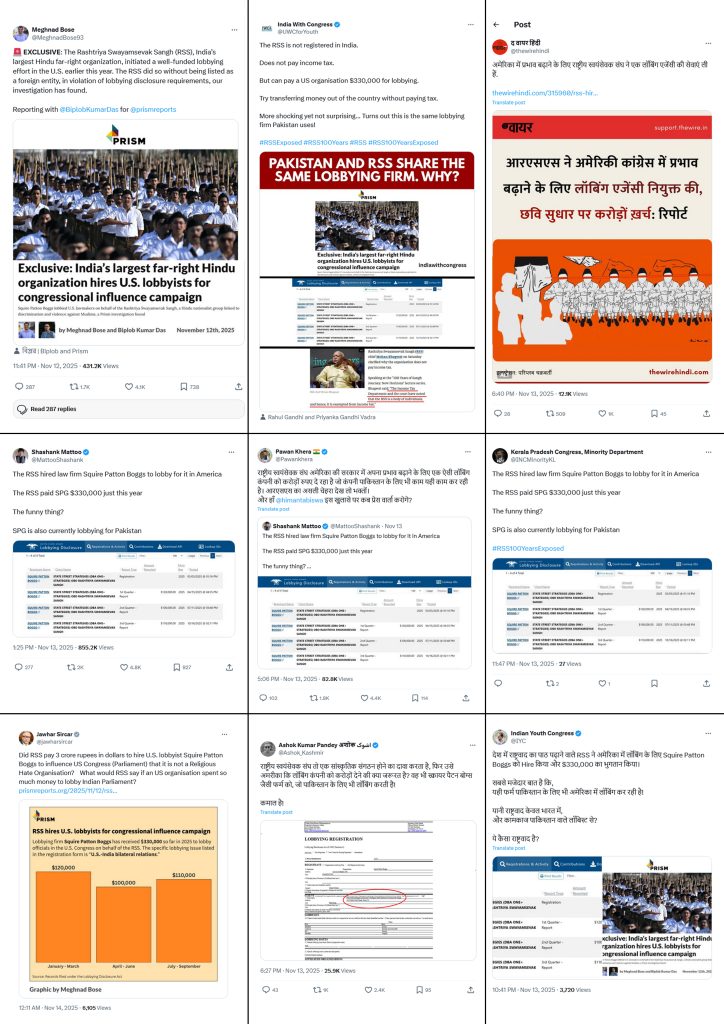
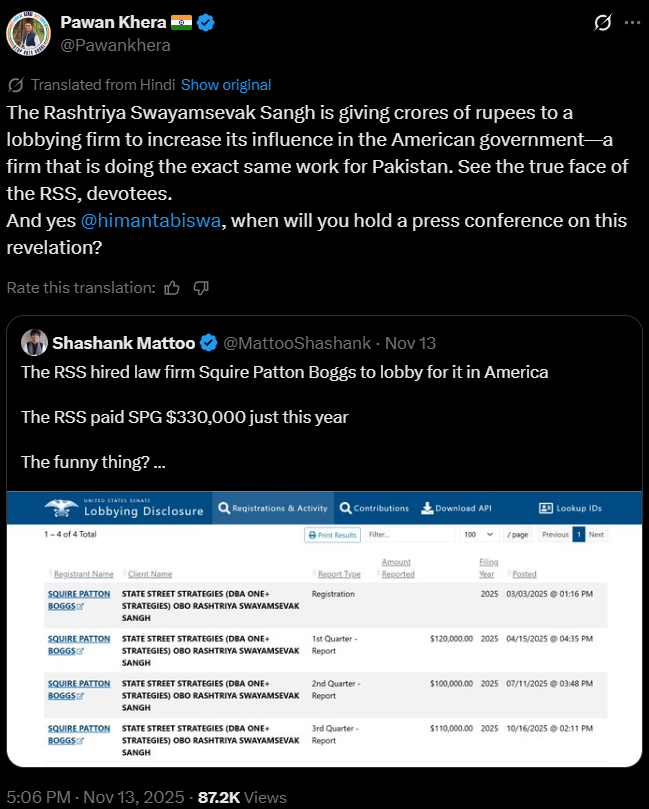
Remember how certain media houses and journalists reported about RSS engaging a lobby firm in the US?

It was amplified by the Congress as well.

The moment leftist rags like The News Minute, The Wire, and their ecosystem started barking in unison, it became obvious that this wasn’t organic outrage.

Inside the RSS US lobbying mystery | Let Me Explain 101 | Pooja Prasanna

What initially appeared to be a sporadic criticism of the Rashtriya Swayamsevak Sangh (RSS) has now been exposed as part of a larger, well-funded international campaign.

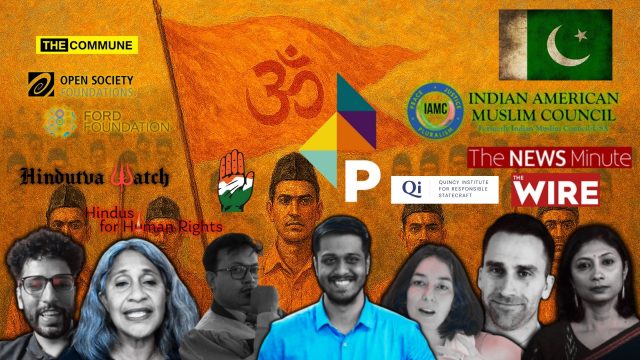
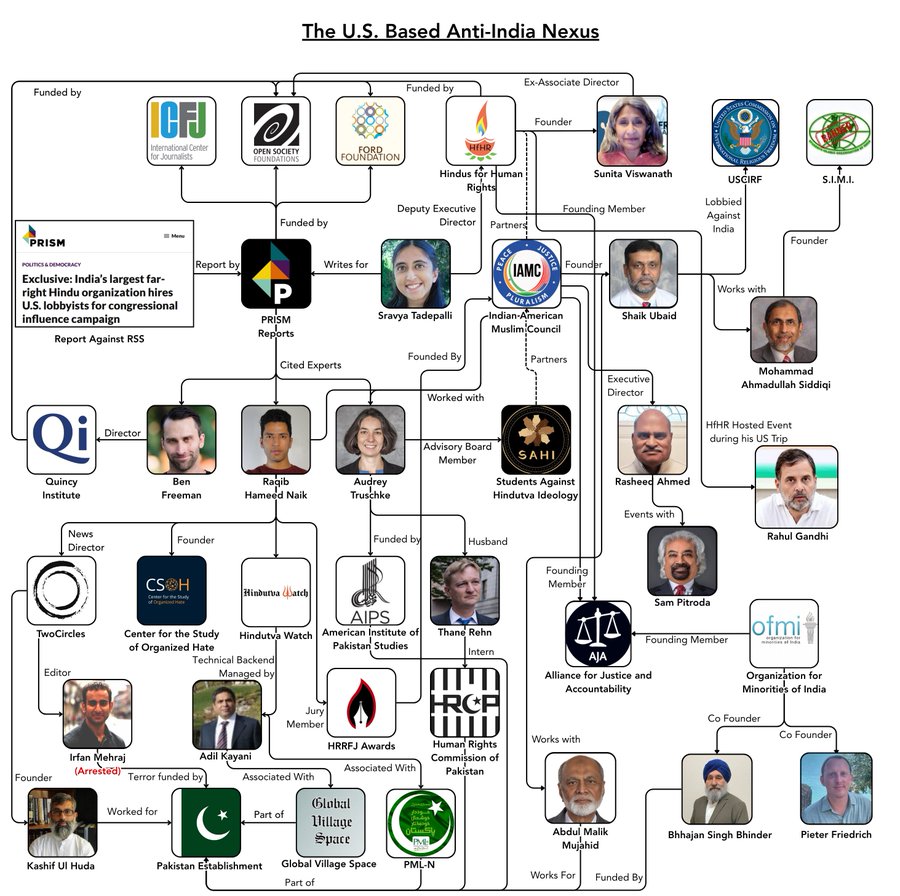
Investigations reveal that, the ongoing narrative targeting the RSS is a coordinated effort involving U.S.-based lobbying outfits, Pakistan-linked propaganda networks, and tacit support from the Indian National Congress.

Foreign-Funded Lobbying Pipeline And Deflection Strategy

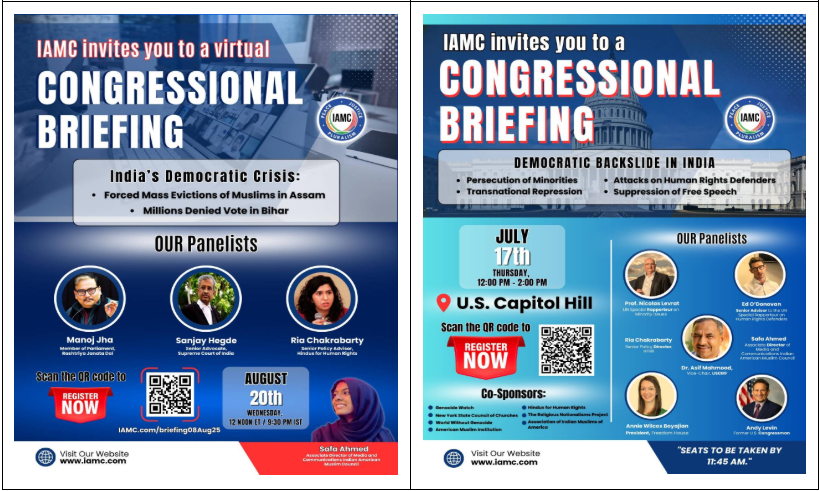
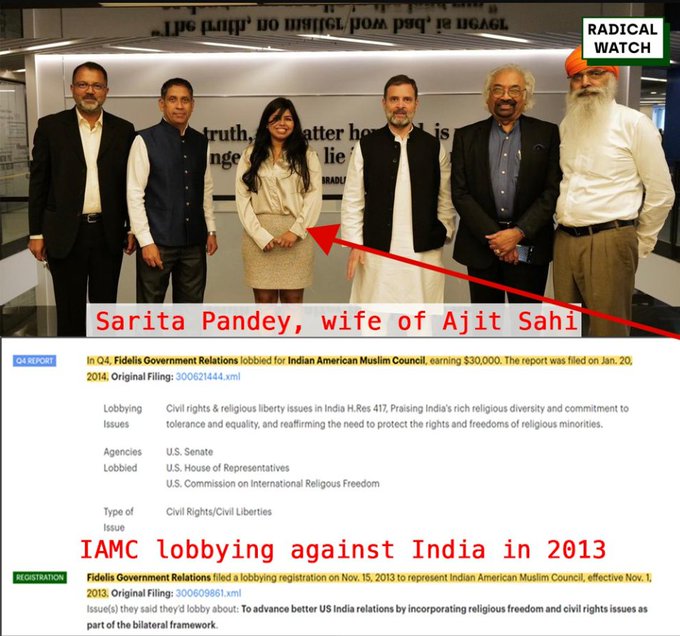
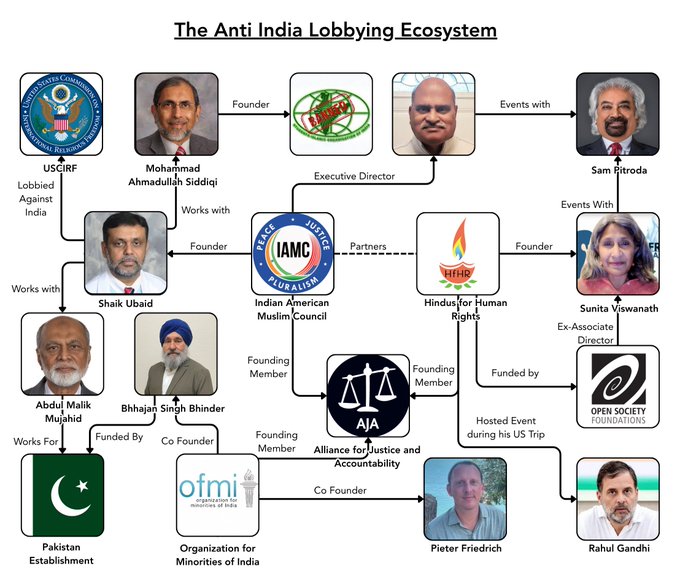
At the center of this network lies the Indian American Muslim Council (IAMC), a U.S.-based organization with historic ties to Jamaat-e-Islami and Pakistan-linked groups. The group has long been under the scanner for lobbying U.S. policymakers against India using selectively curated human rights data and sensationalist narratives.

The recent barrage of attacks on the RSS is reportedly an attempt to preempt investigations into this very lobbying network. By accusing RSS of being a foreign influence and calling for its registration under the Foreign Agents Registration Act (FARA), these actors aim to deflect scrutiny away from their own foreign funding sources and influence operations.

It is noteworthy to mention that IAMC also awards cash prizes to Indian leftist journalists and media outlets under its Human Rights & Religious Freedom Journalism (HRRF) Awards. In June 2022, it awarded ₹ 3 lakh to reporters and portals like Newslaundry, The News Minute, The Wire, The Caravan, Scroll.in, Mooknayak, and Article 14 — all for coverage aligned with IAMC’s anti-India narratives on Muslim persecution and Kashmir.

Now you know why The News Minute has published a video on the same topic.

Further findings show that IAMC and its allied groups had established channels inside U.S. institutions long before the current campaign. Payments made to certain Washington lobbyists were followed by questionable alterations in official U.S. documents, including the removal of Kashmir from India’s map by USCIRF.

It has also emerged that several IAMC-linked fronts were quietly shut down once their foreign funding routes and lobbying activities began attracting scrutiny. The sudden push to target the RSS began only after these linkages started surfacing, suggesting an attempt to shift attention away from their own exposure.

Meet Prism: The Outlet At The Helm

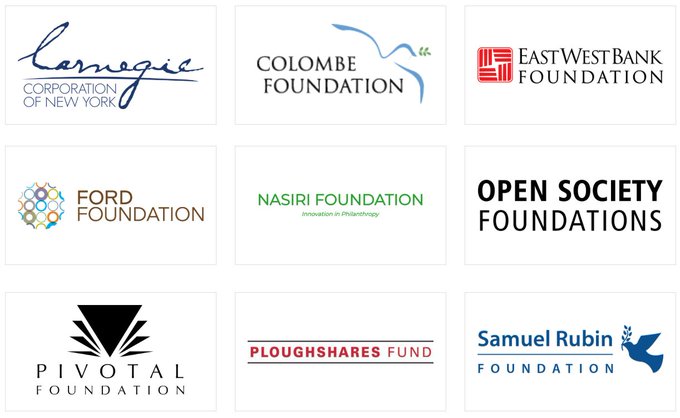
One of the platforms leading this anti-RSS charge is “Prism,” originally launched as the Daily Kos Education Fund. Backed by Open Society Foundations (run by George Soros) and the Ford Foundation, Prism has pushed for RSS to register under FARA, even though such registration is typically reserved for foreign political parties and governments, which the RSS is not.

It has come to light that Prism began as an extension of a partisan U.S. political activist platform and continues to operate within the same ideological ecosystem. Its newsroom includes individuals closely associated with major left-wing campaigns in the U.S., indicating that the outlet is far from neutral. Prism also relies on politically aligned fundraising platforms and donors known for financing activist journalism and ideological campaigns, raising further questions about its motivations.

Prism’s argument collapses when compared to similar cases: the American Israel Public Affairs Committee (AIPAC), the American Hellenic Institute, and the Arab American Institute all operate under the Lobbying Disclosure Act (LDA), not FARA.

Prism’s So-Called “Experts”

An analysis of Prism’s primary sources further reveals significant ideological and financial overlaps.

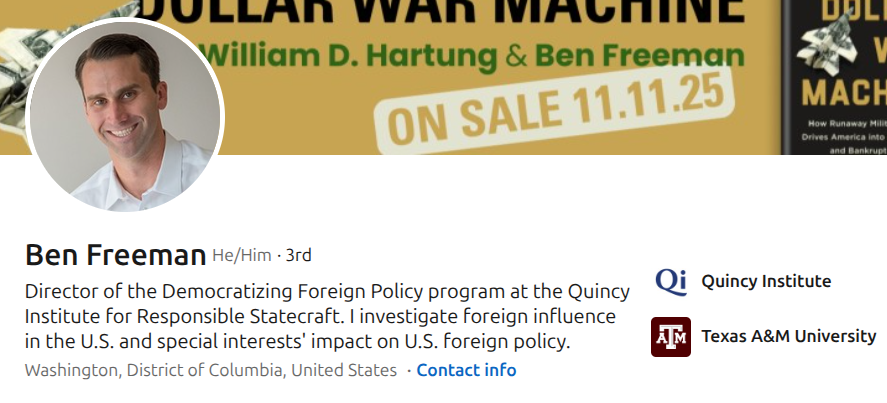
Ben Freeman, Director at the Quincy Institute, is one of the main voices in the campaign.

Additional details indicate that Freeman’s work is funded by the same constellation of foundations that support Prism, creating a circular arrangement where one network validates another.

His organization received a $500,000 founding grant from George Soros’s Open Society Foundations—the same foundation funding Prism.

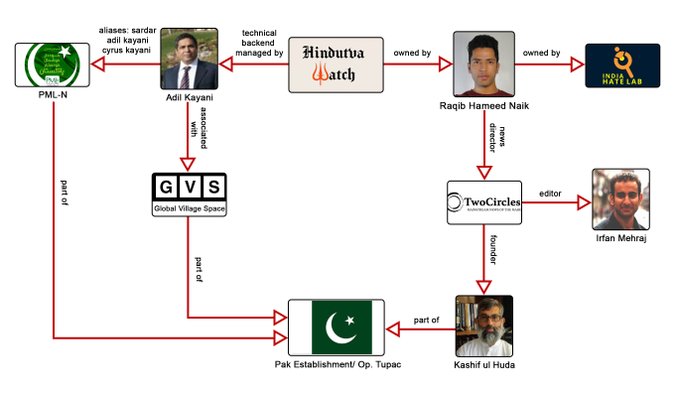
Raqib Hameed Naik, the founder of Hindutva Watch, is another cited expert. His work is indirectly supported by Pakistani propaganda outfits, particularly through map features sponsored by Imran Kayani, who runs the Pakistan-backed Global Village Space.

It has come to light that early iterations of Hindutva Watch were administered from Pakistan and Turkey, and that some of its visual maps and tools were sponsored by individuals behind long-running Pakistani propaganda initiatives. Naik’s collaborations with Pakistani-origin filmmakers and activists further reinforce the pattern of ideological alignment rather than independent reporting.

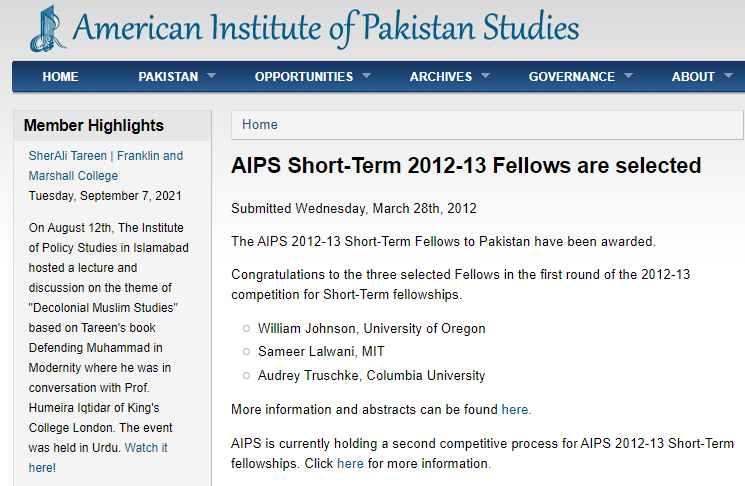
Audrey Truschke, a historian at Rutgers University, has ties to the American Institute of Pakistan Studies.

Further examination reveals her association with Pakistan-focused institutions, missionary-linked networks within India, and engagements with platforms based in Lahore and other Pakistani cities. Her prior statements on Hindu figures and Indian history have also drawn criticism for their overt ideological tilt.

Her familial linkages include individuals involved in Christian missionary activity in India, raising questions about ideological motivations.

The Real Foreign Influence: IAMC’s Decade-Long Anti-India Operation

While Prism targets the RSS’s legal activities, a US-based network of organizations has spent the last decade building a sophisticated anti-India lobbying ecosystem that poses a genuine threat to India’s sovereignty and international standing.

It has emerged that IAMC not only curated misleading datasets but also deleted entire projects once their fabrications were exposed. A database claiming to record atrocities against minorities was revised multiple times before being permanently wiped out in late 2024.

Additional evidence indicates that IAMC’s leadership has longstanding affiliations with organisations rooted in Jamaat-e-Islami Pakistan, including groups historically linked with individuals who have supported extremist movements in Kashmir.

IAMC has also been linked with Islamist organizations such as ICNA (Islamic Circle of North America).

IAMC also runs a project called Hindutva Profiles — a website that targets Hindu public figures and portrays them as “hate mongers,” indicating that the lobby group is not just influencing policy, but also actively shaping narratives against Hindu voices.

The Indian American Muslim Council (IAMC) stands at the center of this network. A US front with linkages to Jamaat-e-Islami Pakistan-linked organizations, IAMC has a history of questionable activities:

Its executive director coordinated with USCIRF Commissioner Maenza. After lobbying funds were directed to Maenza’s associate, the USCIRF remarkably removed Kashmir from India’s map in its reports.

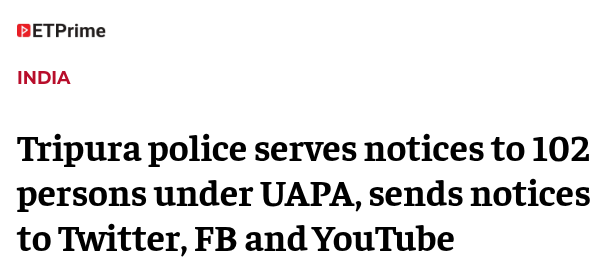
Booked under UAPA in 2021 for spreading fake news, IAMC collaborates extensively with Khalistani networks to push Pakistan’s anti-India, pro-Kashmir narratives to US policymakers.

The organization has influenced every major anti-India congressional hearing in recent years, providing witnesses, testimony, and fabricated databases to support predetermined political conclusions.

IAMC’s lobbying efforts consistently mirrored Pakistan’s official positions on Kashmir, Article 370, and separatist narratives, suggesting strategic alignment rather than genuine civil rights advocacy.

The Role of Congress in Mainstreaming This Network

Perhaps the most concerning revelation is the extent to which the Indian National Congress has engaged with this ecosystem:

Sonia Gandhi sent official congratulatory messages to IAMC.

Former Vice President Hamid Ansari participated in IAMC events.

Congress veteran Mani Shankar Aiyar maintained ties with Pakistani Kashmir lobbyists.

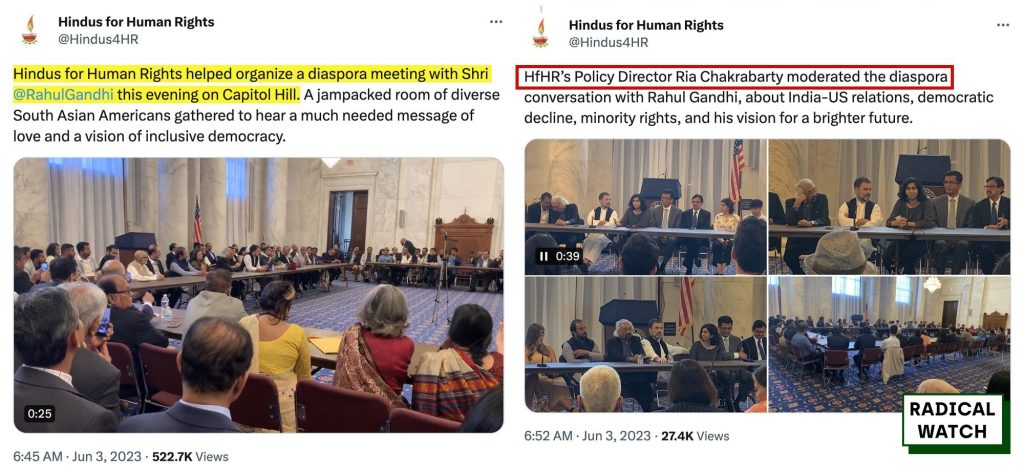
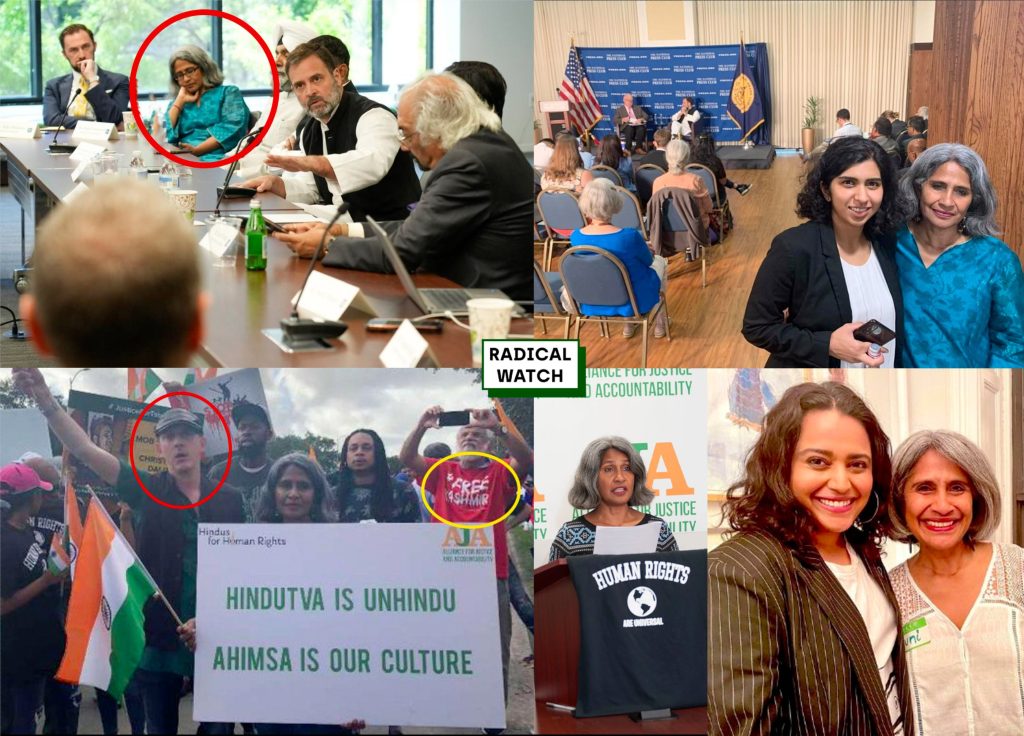
Rahul Gandhi’s 2023 U.S. tour was reportedly coordinated in part by IAMC-affiliated groups.

These associations grant IAMC and its affiliates the democratic legitimacy they need to present themselves as mainstream Indian voices while lobbying against India in foreign capitals.

It has come to light that Sonia Gandhi’s congratulatory message to IAMC’s predecessor was instrumental in giving the group early legitimacy among U.S. policymakers. Further findings reveal that Hamid Ansari appeared on IAMC-linked platforms even as the group coordinated with Pakistan-aligned activists. Mani Shankar Aiyar’s long association with a U.S.-based lobbyist later hired by the Pakistani government to influence Washington on Kashmir adds another layer to this troubling pattern. Rahul Gandhi’s U.S. events in 2023 were facilitated by organisations linked to IAMC and ICNA, several of which have also collaborated with Khalistani separatist elements abroad.

The Bigger Picture: Who’s Really Behind the Curtain?

The goal of these coordinated campaigns, the report suggests, is to apply external pressure to undermine Indian democratic processes and unseat the ruling BJP. With these efforts failing electorally, the narrative has shifted to attacking legally compliant Indian entities like the RSS while obfuscating their own questionable funding channels and influence agendas.

This is not merely about ideological opposition. The pattern reveals a sophisticated ecosystem that:

  • Leverages U.S. institutions for anti-India lobbying
  • Employs AI-generated data and testimonies to create the illusion of grassroots dissent
  • Promotes a narrative of victimhood while maintaining strategic silence on Islamist violence and separatist agendas

It has come to light that the shift toward attacking the RSS began precisely when multiple Washington-based networks, including IAMC and its affiliates, were facing increasing scrutiny over their funding sources, fabricated data, and lobbying links to Pakistan. The timing strongly suggests an attempt to pre-empt accountability by flipping the narrative and portraying a legally compliant Indian organisation as the threat.

What Now?

The investigation poses critical questions: Will Indian commentators and platforms that amplified the anti-RSS campaign acknowledge this foreign-funded network? Or will the focus remain conveniently restricted to targeting domestic entities while ignoring international actors interfering in India’s internal affairs?

As the smokescreen begins to lift, the real foreign influence operation is no longer hidden: it’s anchored in Pakistan-linked networks, funded by foreign foundations, and legitimized by select Indian political actors. The narrative against the RSS, critics argue, is a diversion; a calculated maneuver to shield this troubling ecosystem from scrutiny.

(This article is based on an X Thread By Radical Watch)

Subscribe to our channels on WhatsAppTelegram, Instagram and YouTube to get the best stories of the day delivered to you personally.
Eight Times Congress And Secular Leaders Defended Or Normalised Maoist Problem

Union Home Minister Amit Shah has set a target of March 2026 to achieve a Naxal-Free Bharat. In accordance with that, we see several surrenders, reformed ex-Maoists/Naxals, and more recently the neutralising of most wanted Naxal terrorist Hidma Madvi. But looking back at the UPA years, the situation is completely the opposite.

On 5 May 2010, India’s 28th Home Minister said at JNU – “We are ready for talks; we’re not asking you to lay down your arms. We understand you won’t do that because you believe in armed struggle.”

In this report, we take a look at 8 documented instances (2009-13) where UPA leaders appeared to defend or empathize with certain Maoist concerns, based strictly on credible news and public statements.

#1 AK Antony Rejects Army Deployment in Maoist Zones – Date: 28 October 2009 

Defence Minister A.K. Antony dismissed Mamata Banerjee’s demand to deploy the Indian Army in Maoist-hit regions, asserting that armed forces must remain a “last resort” in internal security matters. Antony ruled out dialogue with Maoists unless they first renounced violence and reiterated that maintaining law and order was primarily a state responsibility. While calling Naxalism one of India’s biggest internal threats, he emphasised that developmental grievances could not justify armed rebellion.

#2 Manmohan Singh Says “Naxalites Are Our Own People” – 26 August 2010

Prime Minister Manmohan Singh reiterated the UPA government’s willingness to hold talks with Maoist groups, saying discussions could begin if they first abandoned violence. Referring to them as “our own people,” Singh stressed that the government remained committed to special development initiatives in Maoist-affected districts. His comments drew criticism for appearing overly conciliatory at a time when Maoist attacks were surging across central India, including high-profile ambushes targeting security forces.

#3 Home Minister P. Chidambaram Invites Maoists for Talks Without Laying Down Arms – 5 May 2010

At JNU, Home Minister P. Chidambaram declared the government was ready for dialogue with Maoists and acknowledged that they were unlikely to lay down arms immediately because of their belief in armed struggle. He challenged the ideological basis of violent revolution, asking for any global example where poverty or injustice was eliminated through violence.

#4 Mamata Banerjee Says Killing of Maoist Leader Azad “Not Right” – 9 August 2010

At a rally in Lalgarh, then a Maoist stronghold, Trinamool Congress chief Mamata Banerjee criticised the killing of Maoist spokesperson Cherukuri Rajkumar (Azad), calling it “not right” and demanding a probe. Her statement was widely interpreted as sympathetic to Maoist leadership and caused friction within the UPA. Critics accused her of legitimising extremist elements, even as West Bengal faced intense Maoist violence.

#5 Pranab Mukherjee Defends Mamata’s Statement on Azad – 29 August 2010

Finance Minister Pranab Mukherjee defended Mamata Banerjee after her remarks questioning the killing of Maoist leader Azad drew political backlash. Asked if her statement was inappropriate for a senior UPA figure, Mukherjee said, “I don’t think so,” adding that she had “every right to make independent statements.” 

#6 Lalu Prasad Says Maoists “Don’t Target Common People” – 21 May 2010

RJD chief Lalu Prasad claimed Maoists do not attack ordinary civilians and only target those “spying” for police. He dismissed allegations that he supported Maoist violence and instead blamed Bihar Chief Minister Nitish Kumar for failing to control the insurgency. Lalu also questioned Chhattisgarh’s BJP government for its inability to curb Maoist activities.

#7 Digvijay Singh Calls Maoists “Misguided, Not Enemies” – 12 May 2010

Congress leader Digvijay Singh argued that Maoists should not be labelled as enemies or terrorists, describing them instead as “misguided ideologues.” While condemning their violent acts, he insisted that their motivations must be understood and addressed. He opposed any use of the Army or Air Force in anti-Maoist operations and maintained that Maoists could not be defeated militarily.

#8 Jairam Ramesh Links Tribal Displacement to Spread of Naxalism – 29 September 2013

Union Rural Development Minister Jairam Ramesh attributed the rise of Naxalism to mass tribal displacement caused by the colonial-era Land Acquisition Act of 1894, which lacked rehabilitation provisions. He argued that forced land acquisition for mining, irrigation and forest projects created fertile ground for Maoist recruitment. Ramesh noted that over 88 districts were heavily affected and emphasised the need for people-centric development policies.

Subscribe to our channels on WhatsAppTelegram, Instagram and YouTube to get the best stories of the day delivered to you personally.
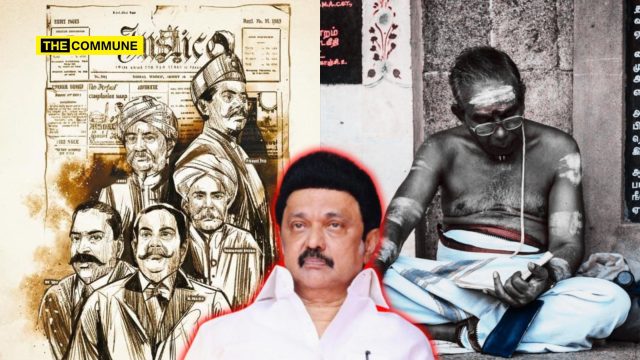
Congress Ally DMK CM MK Stalin Says Dravidian Model Govt Is Based On “Non-Brahmin Manifesto”, The Ideological Blueprint For Anti-Brahmin Hate Politics In Tamil Nadu

When the Non-Brahmin Manifesto was published on December 20, 1916, it was framed as a corrective—an attempt to address the perceived imbalance of Brahmin dominance in government jobs, educational institutions, and political representation in the Madras Presidency. But over the next century, the document mutated far beyond its original context. What began as a political negotiation with the British soon became the foundational myth of Dravidianist politics, providing the intellectual scaffolding for a sustained narrative of Brahmins as oppressors and non-Brahmins as victims. This framework has shaped the rhetoric, policies, cultural attitudes, and political posturing of the Justice Party, EVR’s Self-Respect Movement, the DK, the DMK, and much of Tamil Nadu’s contemporary political ecosystem.

This is the story of how a colonial-era pamphlet—grounded in selective grievance and sweeping generalisations—gradually evolved into the core doctrine of anti-Brahmin mobilisation that continues to influence identity politics in Tamil Nadu today.

A Document Built on Flawed Foundations

The Non-Brahmin Manifesto made one central claim: that Brahmins, despite being a small minority, had disproportionately benefited from English education and held a monopoly on administrative positions. Instead of viewing this phenomenon through the lens of access to early education, urban proximity, or colonial recruitment patterns, the manifesto chose a more emotionally compelling narrative—collective blame.

It flattened the diversity among Brahmins and reduced an entire community into a singular political enemy class. In doing so, the document created a simplistic binary:

Brahmins vs. Everyone Else

This framing was politically convenient but intellectually dishonest. It ignored:

Variation among Brahmin sub-sects (many of whom were poor, rural, and not literate).

The role of British favouritism in employment patterns.

Socioeconomic and geographic factors that influenced access to schools.

The fact that the majority of Brahmins were not elites but middle-class professionals or temple workers.

The manifesto thus began with a misdiagnosis: it treated outcomes as evidence of intentional oppression. This flawed premise would later be weaponised extensively.

The Justice Party: From Representation Demand to Identity Mobilisation

The Justice Party emerged as the political organ built upon the manifesto’s worldview. Its leaders positioned themselves as champions of “non-Brahmin” identity—a catch-all term that lumped together dozens of castes, communities, and social groups with nothing in common except their non-Brahmin status.

This political framing provided extraordinary utility:

It created a permanent villain (Brahmins).

It generated a stable political identity uniting disparate communities.

It allowed leaders to present themselves as liberators from “Brahmin domination.”

Even though the Justice Party struggled to build mass support and often depended on the British for power, it helped institutionalise the vocabulary of Brahmin culpability. Its newspapers, speeches, and propaganda reinforced a single idea: that Brahmins were historically responsible for the backwardness of all non-Brahmin groups.

The political problem was no longer governance; it was a community.

EVR: The Radical Amplification

Anti-Hindu bigot EV Ramasamy Naicker (hailed as ‘Periyar’ by his followers) did not merely inherit the Non-Brahmin Manifesto’s worldview—he amplified it into a full-blown ideological crusade. For EVR, Brahmins were no longer a privileged class needing checks; they became:

“snakes,”

“parasites,”

“thieves,”

“Aryan invaders,”

“enemies of Tamils,”

“the root of all social evil.”

He transformed administrative grievances into a racial theory, portraying Brahmins as outsiders who had colonised Tamil society. This rhetorical escalation had three lasting consequences:

1. It created a moral justification for hostility.

EVR reframed anti-Brahminism from political competition into moral duty. In his narrative, opposing Brahmins was synonymous with fighting injustice.

2. It turned social resentment into a political resource.

Vilifying a small, unorganised community gave him an endless supply of mobilisation energy.

3. It pushed Brahmins into socio-political invisibility.

By delegitimising their cultural role and demonising their identity, he ensured that Brahmins would become marginalised in public institutions for decades.

Importantly, EVR’s language—whether one frames it as “rationalism,” “anti-caste activism” or hatred—embodied the exact spirit of hostility that the Non-Brahmin Manifesto had implicitly planted.

The manifesto lit the spark. EVR created the wildfire.

DMK and the Institutionalisation of Anti-Brahmin Politics

If EVR weaponised anti-Brahminism, the DMK institutionalised it. The party absorbed EVR’s worldview but repackaged it in a more politically palatable form.

1. Cinema as a vehicle of prejudice

DMK scriptwriters—Karunanidhi, Anna, Murasoli Maran—used Tamil cinema to encode anti-Brahmin stereotypes:

the manipulative priest,

the scheming pundit,

the crooked Acharya,

the cowardly, effeminate Brahmin villain.

What EVR said on stage, the DMK broadcast on screen to millions.

2. Cultural narratives were rewritten

The DMK expanded the manifesto’s administrative grievances into cultural resentment. Anything associated with Brahmin identity—Sanskrit, temples, rituals, traditional dress—was reframed as oppressive, “Aryan,” or anti-Tamil.

3. Policies reinforced the narrative

Over decades, DMK governments embedded a system of:

extreme caste-based reservations,

suppression of Sanskrit learning,

exclusion of Brahmins from temple administration,

marginalisation in education and employment.

While these policies were defended as “social justice,” they were rooted in the same foundational narrative:
Brahmins must be kept away from positions of influence.

Thus, the Non-Brahmin Manifesto’s political agenda became the official doctrine of state power.

The Creation of a Permanent Grievance Economy

One of the unintended outcomes of the manifesto was that it created a permanent grievance economy—a political ecosystem that needed a villain to survive. A narrative built on historic injustice cannot self-correct. It must continuously produce:

new grievances,

new enemies,

new proof of oppression.

Even after:

Brahmins lost educational dominance,

lost government representation,

migrated out of the state,

became one of the least empowered castes in Tamil Nadu,
the rhetoric did not change.

Why?

Because the political architecture designed around the manifesto cannot function without a villain. Without the imagery of Brahmin domination, the ideological purpose of Dravidianism collapses.

Thus, anti-Brahminism became not just historical rhetoric but a sustained source of political identity.

Modern Tamil Nadu: Prejudice Normalised

Today, Tamil Nadu exhibits a paradox. It is celebrated as a progressive state with high literacy and social development, yet it harbours some of the most normalised ethnic stereotyping in India—directed almost exclusively at Brahmins.

On social media, Brahmin identity is mockingly reduced to:

“Paapaattis,”

“Parpan,”

“Panju Gandhi,”

“Iyer/Iyengar privilege,”

“Aryan invaders.”

In popular culture, Brahmins are routinely portrayed as:

villains,

hypocrites,

manipulators,

elitists,

anti-Tamil conspirators.

Offline, Brahmin priests have been attacked in temples; Brahmin students face casual harassment in colleges; Brahmin cuisine and rituals are mocked publicly.

All of this is justified under the umbrella of “historic correction,” but the intellectual root of this prejudice lies in that early narrative that:
Brahmins were the cause of everyone else’s suffering.

The Non-Brahmin Manifesto did not explicitly call for hatred. But it laid the foundation for a worldview where Brahmins were not seen as individuals, but as a collective historical wrong.

Once that idea became normalised, prejudice could flourish without guilt.

An Inherited Mythology, Not History

The modern Dravidianist stance on Brahmins is not based on contemporary reality but on a mythology inherited from 1916:

that Brahmins have power (they don’t),

that they dominate administration (they don’t),

that they suppress Tamil culture (they can’t),

that they are Aryan outsiders (a pseudo-anthropological myth).

This manufactured history allows present-day Dravidian parties to justify:

outdated policies,

extreme rhetoric,

divisive identity politics,

and the continued exclusion of a small minority from public platforms.

The manifesto’s original errors—morally ambiguous then—have become damaging now.

A Document that Outlived Its Purpose and Legitimised Prejudice

The Non-Brahmin Manifesto belongs to a time when political discourse was defined by colonial structures and social upheaval. But the tragedy of Tamil Nadu is that instead of outgrowing its rhetoric, the state doubled down on it.

The document transformed from:

a political petition
into

a worldview
and finally

a dogma.

Its legacy is not merely academic. It shaped:

the speeches of EVR,

the films of the DMK,

the policies of successive governments,

the identity politics of the state,

and the cultural hostility that persists today.

If social justice was the intention, the result has too often been social hostility.
If representation was the goal, the outcome has been retribution.
If equality was the aspiration, the legacy has been division.

The Non-Brahmin Manifesto may have sought fairness, but what it ultimately produced was a political apparatus that thrived by keeping a century-old resentment alive and turning a community into a perpetual symbol of villainy.

Until Tamil Nadu finally moves beyond the ghost of 1916, it will remain trapped in the politics of grievance rather than the politics of growth.

Subscribe to our channels on WhatsAppTelegram, Instagram and YouTube to get the best stories of the day delivered to you personally.

Behind The Superpower Mask: 12 Heinous US Human Rights Abuses The World Should Not Forget

As the world observes Human Rights Day on 10 December 2025, the United States continues to present itself as a global champion of liberty and justice. Yet, behind this polished image lies a long and troubling record of actions that have repeatedly violated the very human rights principles it claims to uphold.

We take a look at 12 major incidents of heinous human rights violations by the United States from 1946 to 2025.

#1 Sa’ada Migrant Centre Strike – 28 April 2025 – Sa’ada, Yemen

A US airstrike destroyed a migrant detention centre in northwestern Yemen, killing 61 African migrants and injuring 56 others. Amnesty International’s investigation, based on survivor interviews and satellite evidence, found no military presence at the facility, concluding it was an indiscriminate attack on a known civilian target. Survivors suffered amputated limbs, eye loss, and severe trauma.

#2 Kabul Drone Strike – 29 August 2021 – Kabul, Afghanistan

During the US evacuation from Afghanistan, a drone strike killed ten civilians, including seven children and aid worker Zemari Ahmadi. Initial US claims of targeting an ISIS-K threat were later proven false when investigations revealed the vehicle contained water containers, not explosives. The US military admitted the operation was a “tragic mistake” but no personnel faced punishment. Human Rights Watch described this lack of accountability as a systemic failure in US military justice.

#3 Mosul Airstrike Casualties – 17 March 2017 – Mosul, Iraq

The Pentagon admitted that airstrikes in western Mosul killed at least 105 civilians in one of the deadliest single incidents since the 2003 Iraq invasion. A US jet dropped a 500lb bomb on a house in the Jadidah neighborhood while targeting two ISIS fighters on the roof.

#4 Kunduz Hospital Bombing – 3 October 2015 – Kunduz, Afghanistan

A US AC-130 gunship attacked a Médecins Sans Frontières (Doctors Without Borders) hospital for nearly an hour, killing 42 patients, doctors, and staff. Despite MSF having shared the hospital’s coordinates with US forces, the strike continued relentlessly. MSF condemned the attack as a war crime. The US military blamed “human error” but filed no criminal charges, highlighting what critics call a pattern of impunity for violations of international humanitarian law.

#5 Al-Majalah Village Strike – 17 December 2009 – Al-Majalah, Yemen

A US missile strike using cluster munitions devastated the Yemeni village of al-Majalah, killing 41 civilians including 21 children and 14 women. Missile fragments found at the site were confirmed as US-made. The attack wiped out entire families, yet no public investigation or accountability measures followed.

#6 Farah Province Bombings – 4-5 May 2009 – Farah, Afghanistan

US-led airstrikes on the villages of Geraani and Ganj Abad killed an estimated 100-120 civilians who had taken shelter in homes. The attacks destroyed 17 houses and killed numerous women, children, and elderly residents. Though requested by Afghan forces, coalition aircraft executed the strikes. Multiple investigations confirmed heavy civilian casualties and evidence of indiscriminate harm, marking one of the deadliest civilian casualty incidents in the Afghanistan conflict.

#7 Azizabad Airstrike Investigation – 21-22 August 2008 – Herat, Afghanistan

US-led airstrikes on Azizabad village killed 78-92 civilians, predominantly women and children. Investigations by the UN and Afghan human rights commissions contradicted US claims about the death toll and circumstances. A subsequent Pentagon inquiry reduced the acknowledged death toll to 33, dismissed villager testimony, and exonerated US forces.

#8 Iran Air Flight 655 – 3 July 1988 – Strait of Hormuz

The USS Vincennes shot down Iran Air Flight 655, an Airbus A300 carrying 290 civilians including 66 children. The US Navy misidentified the commercial airliner as a hostile fighter jet despite its civilian transponder and scheduled route. No US personnel faced criminal punishment; instead, the ship’s captain later received a medal.

#9 My Lai Massacre – 16 March 1968 – Quang Ngai, Vietnam

US Army troops killed 504 unarmed Vietnamese civilians in My Lai village, including women, children, and elderly people. Many victims were tortured or sexually assaulted before execution. The military initially covered up the atrocity. Only Lieutenant William Calley was convicted, serving just 3.5 years of house arrest.

#10 Somalia Air Strikes – April 2017 – December 2018 – Lower Shabelle, Somalia

As the US significantly escalated airstrikes in Somalia, Amnesty International documented five incidents in Lower Shabelle that killed at least 14 civilians and injured eight. Investigations found farmers and children were killed where precautions were insufficient or victims were misidentified as combatants. The pattern of civilian casualties raised serious concerns about US targeting procedures and compliance with international humanitarian law in counterterrorism operations.

#11 Haditha Massacre – 19 November 2005 – Haditha, Iraq

Following an IED attack on a US convoy, Marines killed 24 unarmed Iraqi civilians, including women and children. Investigations confirmed the victims were non-combatants executed in their homes during a retaliatory operation. Despite clear evidence, only one Marine received a minor conviction, demonstrating systemic accountability failures. The photographs and evidence suppressed by the military revealed the brutal nature of the killings and the institutional resistance to proper investigation.

#12 Atomic Bombings of Japan – 6 & 9 August 1945 – Hiroshima & Nagasaki, Japan

The United States detonated two atomic bombs over Hiroshima and Nagasaki, killing between 150,000-246,000 people, mostly civilians. The Nagasaki bomb struck the densely populated Urakami Valley, causing instant mass casualties and leaving survivors with severe burns, radiation sickness, and long-term health consequences. The indiscriminate nature of nuclear weapons and their lasting environmental and health impacts make these attacks among the most severe human rights violations of the 20th century, fundamentally breaching principles of civilian protection in warfare.

Subscribe to our channels on WhatsAppTelegram, Instagram and YouTube to get the best stories of the day delivered to you personally.

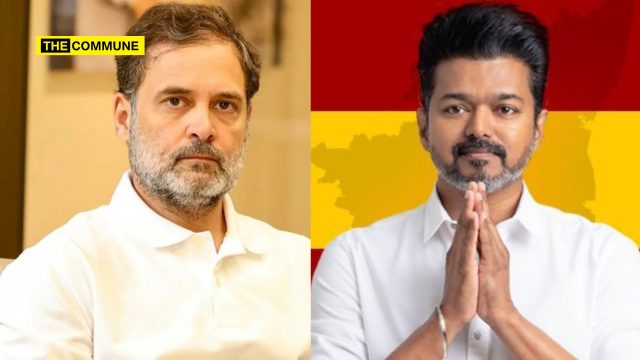
Congress Rules Out Alliance With Vijay’s TVK Ahead Of 2026 Tamil Nadu Elections

Congress Rules Out Alliance With Vijay’s TVK Ahead Of 2026 Elections

With the 2026 Tamil Nadu Assembly elections approaching, alliance equations are rapidly becoming the centre of political attention. Actor Vijay’s political outfit, the Tamilaga Vettri Kazhagam (TVK), remains under intense scrutiny as speculation mounts over its possible partners.

Vijay’s Political Campaign Begins — Then Halted by Stampede Tragedy

Vijay launched the Tamilaga Vettri Kazhagam earlier this year and began his statewide campaign on September 13 in Tiruchirappalli, interacting directly with the public.

However, on September 27, while campaigning in Karur, a stampede claimed 41 lives, triggering widespread shock and criticism across the country. The tragedy forced TVK to suspend all political activities, and both the party and Vijay faced severe public backlash.

The actor later met the families of the victims in Mamallapuram to offer condolences. He then held a general council meeting, where he sharply criticised both the DMK and BJP, stating that the upcoming election would be a direct contest between the DMK and TVK. Around the same time, rumours emerged that TVK was exploring an alliance with the AIADMK.

Alliance Speculation Intensifies as Elections Approach

As Tamil Nadu heads toward the 2026 polls, political observers are closely watching how TVK will position itself. Even before polling dates are announced, speculation has intensified over whether Vijay’s party will join hands with established players like the AIADMK or Congress or contest independently.

TVK Denies Congress Talks

Responding to swirling rumours that Vijay was in discussions with Rahul Gandhi for a possible alliance, TVK joint general secretary CTR Nirmal Kumar dismissed the reports as “completely false.”

“Unnecessary rumours are being spread. If any such talks take place, we will formally announce them,” he said during a statewide protest against alleged irregularities in the Special Intensive Revision (SIR) of voter rolls.

When questioned about the AIADMK, he said TVK saw “no need” to engage in talks with a party currently out of power. He added that TVK follows a principled stand and would not ally with any party associated with the BJP.

Nirmal Kumar further stated that if Congress ever joined a TVK alliance, the party would insist on accepting Vijay as the Chief Ministerial candidate – an unlikely scenario given Congress’ existing commitments.

Congress Reaffirms Its Place In DMK Bloc

Amid the speculation, Congress leaders reiterated that the party would remain in the DMK-led alliance. Senior leaders clarified there was “not even a 1% chance” of aligning with BJP-associated parties or forming a separate front with TVK.

Sources within the Congress confirmed that during a meeting in Delhi on 18 November 2025, party president Mallikarjun Kharge and Rahul Gandhi had categorically instructed the Tamil Nadu unit to continue in the DMK alliance.

With the national leadership affirming its stand, Congress appears to have closed the door on joining forces with TVK. Analysts say this clarity significantly shapes pre-election dynamics, leaving TVK to decide between contesting alone or seeking new allies.

TVK’s Next Move Under Watch

As the state inches toward the 2026 polls, all eyes are now on Vijay’s party. Whether TVK opts for independence or forges new partnerships will play a crucial role in determining Tamil Nadu’s electoral landscape in the months ahead.

(Source: Samayam Tamil)

Subscribe to our channels on WhatsAppTelegram, Instagram and YouTube to get the best stories of the day delivered to you personally.
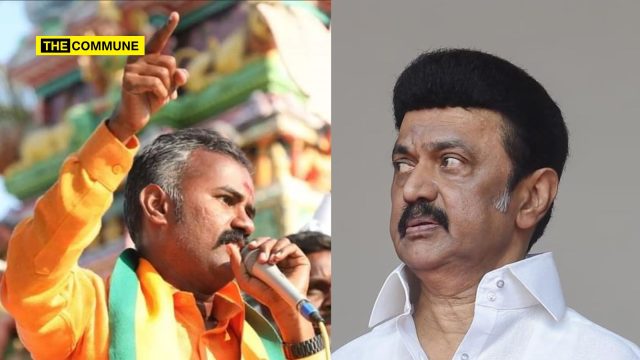
“India Is Quasi-Federal, Not Federal”: BJP Leader Ashvathaman Schools MK Stalin Over His Article 200 Amendment Push

"India Is Quasi-Federal, Not Federal": BJP Leader Ashvathaman Schools MK Stalin Over His Article 200 Amendment Push

A day after the Supreme Court delivered its advisory opinion on the Presidential Reference concerning the powers of Governors and the President over State Bills, Tamil Nadu Chief Minister and DMK president M.K. Stalin on Friday said his government’s fight for “State rights and true federalism” would continue. He declared there would be “no rest” until the Constitution is amended to mandate fixed timelines for Governors to clear Bills.

In a social media post, Mr. Stalin asserted that the Supreme Court’s opinion “will have no impact” on the Court’s earlier judgment dated 8 April 2025, in State of Tamil Nadu v. Governor of Tamil Nadu, which dealt with delays by Governor RN Ravi in acting on State legislation.

Stalin: ‘Governor Has No Fourth Option, No Pocket Veto’

Mr. Stalin said the Constitution Bench had “reaffirmed” that the elected government must remain “in the driver’s seat” and that “there cannot be two executive power centres in the State.”

He highlighted what he called the key reaffirmations in the advisory opinion:

  • A Governor cannot indefinitely delay Bills sent for assent.
  • A Governor has no ‘pocket veto’ and cannot “kill” a Bill by withholding action.
  • The Governor’s options under Article 200 are limited and must be exercised within the constitutional framework.
  • Prolonged and unexplained delays allow States to move Constitutional Courts, which can hold Governors accountable.

Quoting the nine-judge Bench decision in Ahmedabad St. Xavier’s College Society v. State of Gujarat (1974), Mr. Stalin emphasised that an advisory opinion under Article 143 “has no more effect than the opinion of law officers” and cannot overturn past binding judgments.

He added that through its recent legal battles, the Tamil Nadu government had compelled Governors “who are at odds with elected governments” to act in accordance with democratic mandates rather than political interests.

“No Constitutional authority is above the Constitution,” he said, adding that the courts remain the only remedy when a high constitutional authority “breaches the Constitution.”

BJP Leader Ashvathaman Hits Back: ‘India Is Quasi-Federal; Governor Is a Safeguard’

Responding sharply, Tamil Nadu BJP State Secretary Asuvathaman accused the Chief Minister of misrepresenting India’s constitutional structure for political convenience.

In a post on social media, he said, “Before claiming to defend state rights, please understand a basic constitutional truth: India is not a federal system — it is quasi-federal. In such a structure, the Governor’s authority is an essential constitutional safeguard.”

He argued that the Supreme Court’s advisory opinion, delivered by a Constitution Bench, carries “strong persuasive authority,” even if technically non-binding.

Asuvathaman accused the Chief Minister of attempting to “land on his feet” despite the Article 143 opinion going against the DMK’s position, and said Mr. Stalin’s push to reduce the Governor’s powers in appointing Vice-Chancellors stemmed from “political interest” rather than concern for education.

“Tamil Nadu people already know how Vice-Chancellor posts had been auctioned for money, and giving you full control will only ensure this pattern continues,” he alleged.

‘Protect TN From Drugs, Crimes, Not from Governor’

Turning the criticism towards governance issues, Asuvathaman charged that the ruling party was using “state rights” arguments to divert attention from failures on law and order. He said if Mr. Stalin wished to protect Tamil Nadu, he should:

  • Address police excesses and lock-up deaths,
  • Crack down on the drug mafia,
  • Protect women from rising crimes,
  • Tackle cash-for-jobs scams, and
  • Curb alleged state-sponsored human trafficking and kidney rackets.

He concluded, “Stop wearing the mask of a protector of state rights. Everyone knows what you are trying to protect.”

(Source: The Hindu)

Subscribe to our channels on WhatsAppTelegram, Instagram and YouTube to get the best stories of the day delivered to you personally.
As Islamo-Leftist Zohran Mamdani Becomes New York Mayor, Emboldened Islamists Hit The Streets In Michigan

As Mamdani Becomes NY Mayor, Islamists Hit The Streets In Michigan

Just as New York elected its first openly socialist, pro-Palestine, terror sympathizing mayor Zohran Mamdani, the United States witnessed one of its most explosive Islam-versus-Christian street clashes in recent years, this time in Dearborn, Michigan, a city long at the center of debates over “Islamification,” Sharia law, and demographic change.

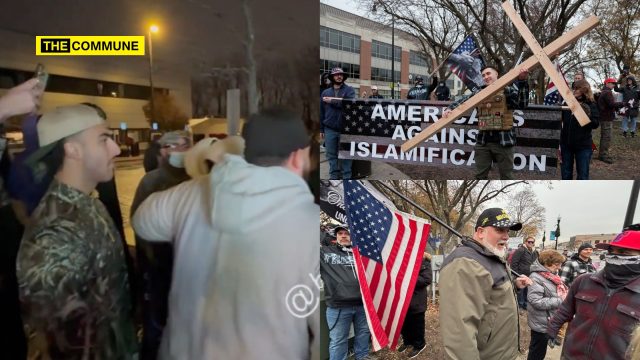
On 18 November 2025, Dearborn’s Michigan Avenue transformed into a riotous battleground after Jake Lang, an anti-Islam activist and alleged January 6 Capitol riot participant, attempted to burn a Quran in public, triggering a massive confrontation with hundreds of Muslim residents and pro-Palestinian counter-protesters.

The timing, coming just days after Mamdani’s victory in New York, has intensified national scrutiny over rising Islamist influence, demographic anxieties, and deepening ideological divisions across the country.

Quran-Burning Attempt Sparks Street Chaos

Lang held a lighter under a Quran before counter-protesters rushed in to knock it out of his hand. Moments later, he escalated by slapping the Quran with bacon, provoking outrage from the crowd.

A Muslim man ultimately snatched the Quran and fled, preventing the burning.

Lang’s group then marched toward City Hall, chanting Christian-nationalist slogans, carrying American flags, and accusing Dearborn of being “under Sharia law.”

Muslim counter-protesters yelled back, some shouting “Allahu Akbar,” with tempers boiling into multiple physical confrontations.

Journalist Pepper-Sprayed, Phone Stolen: “Total Lawlessness”

Independent videographer Cam Higby, who was covering the event, told the Dearborn City Council he was pepper-sprayed, pushed, robbed of $50, and had his phone thrown across the street – all while police allegedly stood by without intervening.

Higby said he tried to file a report on the spot but was told to “go to the station later,” after which he saw an officer on a personal phone call. He left Dearborn without filing a report, calling the situation “total lawlessness” and claiming police were ignoring crimes happening directly in front of them.

Muslims Threaten Violence After Quran Incident

Video footage shows one enraged man jumping out of his car and shouting: “I’ll f*** his life up. I’ll kill him. On my mother’s soul.”

Others called the Quran-burning attempt an act of war, saying God would punish those who desecrate Islam.

Meanwhile, some Muslim residents condemned violence but insisted the attempted burning was an intolerable provocation.

Anti-Islam (Christian) Protesters: “Deport All Muslims”

Lang’s supporters voiced equally extreme views – They called for mass deportation of Muslims, claimed Muslims “refuse to assimilate”, insisted America “must remain a white Christian country”, accused Dearborn of being “another country”, and declared Muslims “terrorists,” “animals,” and “jihadists”.

One protester said, “They want to dominate us. They hate the American way of life.”

Another said Muslims should be banned from America because they “don’t share our language, our culture, or our food.”

Police: Three Arrests, ‘Measured Response’

Dearborn Police said they intervened where necessary and made three arrests for disorderly conduct.

Chief Issa Shahin praised the force’s “measured response,” though both sides accused officers of bias. Anti-Islam protesters claimed police refused to take assault reports. Far-left group BAMN said police “protected fascists.”

City Council Meeting Boils Over

At the city council meeting later that evening. Anti-Islam activists said they were “met with violence.” Left-wing activists demanded police be harsher on the anti-Islam group. Mayor Abdullah Hammoud condemned the “hate” but praised Dearborn residents for showing restraint.

UK Activist Warns: “America Has 3–5 Years Before It’s Europe”

A UK citizen attending the protest said she left her hometown because it “became an Islamic town,” claiming women no longer felt safe, police declared no-go zones, and that immigration policies failed

She warned, “The U.S. has 3–5 years before the same thing happens here.”

A Nation Dividing on Religious Lines – As Mamdani Takes Office

The Dearborn eruption occurred just as Zohran Mamdani, a vocal pro-Palestine and DSA-aligned politician, won the New York mayoralty, symbolizing the sharp ideological realignment underway in America.

To critics, Mamdani’s election represents the mainstreaming of Islamist-aligned, anti-establishment identity politics.

To supporters, it represents the empowerment of minority communities long excluded from national leadership.

But the contrast is stark. On one side: Dearborn streets filled with Quran-burning attempts, Allahu Akbar chants, racial slurs, and open threats.

On the other: A newly elected New York mayor celebrated nationwide as a progressive standard-bearer backed by the same activist networks seen in Dearborn’s counter-protests.

As both events collide in public consciousness, America is being forced to confront a new reality – Islam, identity politics, and demographic anxiety are no longer fringe issues – they are now front and center in American street politics, city halls, and major elections.

(Source: Yahoo)

Subscribe to our channels on WhatsAppTelegram, Instagram and YouTube to get the best stories of the day delivered to you personally.