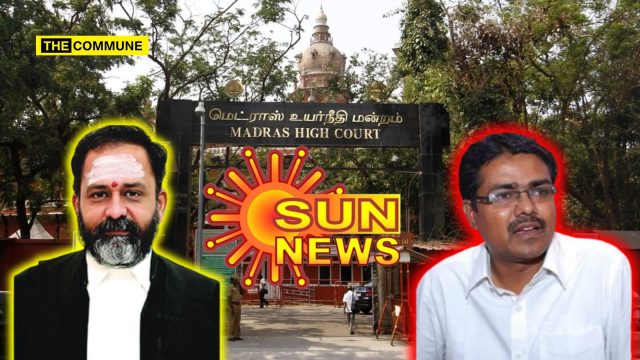
In a significant development at the Madurai Bench of the Madras High Court, Justices GR Swaminathan and K Rajasekar on 28 July 2025 transferred the contempt-related proceedings involving advocate S Vanchinathan to the Chief Justice’s bench, while strongly reprimanding Tamil news channel Sun News for “absurd and false” reporting on the matter.
The case pertains to a pre-cognizance notice issued to advocate S. Vanchinathan, who was directed to clarify whether he stood by his public allegations of caste bias against Justice Swaminathan. Vanchinathan, who had made several such remarks on YouTube and social media, including a video titled “G.R. Swaminathan Jaadhi Paasam” broadcast on Arakalagam Channel, declined to provide a direct response in court, demanding instead that queries be issued in writing.
However, while transferring the matter to the Hon’ble Chief Justice of the Madras High Court for appropriate action, the Division Bench took serious exception to Sun News’ coverage of the case. In its telecast, Sun News reportedly claimed that the transfer order was issued in response to statements made by senior lawyers and retired judges, implying the court acted under public pressure.
Even in their social media post, it stated “In the face of strong opposition from retired judges and senior lawyers, Justice GR Swaminathan announced that he would send the details of the matter to the bench of Chief Justice Srivastava of the Chennai High Court.”
Terming the report “ridiculously false and absurd,” the bench clarified that their decision had no connection to the public statements issued over the weekend, including those by retired Judges D. Hariparanthaman and K. Chandru. “Our course of action cannot be governed by public statements,” the court noted in its official order.
The judges stressed that the decision to place the papers before the Chief Justice was grounded in procedural propriety and judicial norms, not media narratives or external influence. “We are aware of the procedural rules and our order will be in consonance with the same,” they stated, adding that the misleading reportage by Sun News deserved to be ignored “with the contempt which it deserves.”
The court further observed that Vanchinathan had previously been suspended by the Bar Council of India for professional misconduct and criticized his continued campaign against the judiciary through social media. The order cited past Supreme Court and Kerala High Court rulings affirming that baseless allegations of bias and scandalizing remarks against judges can constitute criminal contempt.
The final order directed the Registry to place the matter before the Chief Justice of the Madras High Court, who will now decide the next course of action. The court made it clear that it had not yet initiated contempt proceedings but was compelled to act given the sustained and public nature of the allegations made by Vanchinathan.
In a move to restore ecological balance and expand green cover, the Greater Chennai Corporation (GCC) has invited tenders to plant 1,500 native tree saplings on a reclaimed portion of the Kodungaiyur dump yard. The project, to be executed under two work packages, has been allocated Rs 56 lakh and marks a significant step in repurposing former landfill land into green spaces. The plantation will take place over three acres of land that have been reclaimed through ongoing biomining efforts at the Kodungaiyur yard.
Officials said the aim is to gradually transform the sprawling landfill into a mini urban forest by planting native trees selected by the Parks Department. Unlike the dense Miyawaki method, which uses tightly packed saplings, this project will focus on natural growth patterns suitable for long-term sustainability.
“Around 1,500 saplings will be planted in the first phase across the reclaimed three-acre site. The work will include annual maintenance and will be taken up in two packages by the selected contractor,” a senior GCC official said.
“The idea is to grow a self-sustaining, natural forest with native trees that will improve biodiversity and air quality in the area,” he said. The GCC officials said the tender process has already been floated, and work will begin once the targeted land is fully reclaimed. Engineers from the civic body will oversee the plantation and ensure timely maintenance.
The success of this model will determine its replication on other reclaimed portions of the dump yard as biomining progresses. Of the estimated 67 lakh tonnes of legacy waste at the Kodungaiyur site, the civic body has so far processed about 15 lakh tonnes. As more waste is cleared in the coming months, additional land will become available for green cover initiatives.
“The ultimate goal is to increase vegetation on all reclaimed landfill zones. This is not a one-time effort — as more space is recovered, tree planting will continue,” the official added. The project reflects GCC’s broader commitment to sustainable urban development and environmental restoration, especially in areas long impacted by waste dumping.
-IANS
Subscribe to our channels on Telegram, WhatsApp, and Instagram and get the best stories of the day delivered to you personally.
Five people, including a New York Police Department officer, were killed and several others injured when a gunman opened fire inside a Manhattan office building on Monday evening (local time).
The 27-year-old suspect, identified as Shane Tamura, later died from a self-inflicted gunshot wound on the 33rd floor of the skyscraper, authorities confirmed. The shooting occurred around 6:30 p.m. during the evening rush hour inside a 44-storey building located at 345 Park Avenue, which houses major firms such as Blackstone, KPMG, Deutsche Bank, and the NFL (National Football League) headquarters.
Surveillance footage captured the gunman approaching the building, dressed in sunglasses and carrying a rifle. According to law enforcement, Tamura entered the premises and began shooting indiscriminately. New York Police Commissioner Jessica Disch took to X to announce, “At this time, the scene has been contained, and the lone shooter has been neutralised.” Among those killed was Police Officer Didarul Islam, who died while attempting to protect civilians.
In a statement, the NYPD said, “Police Officer Didarul Islam represented the very best of our department. He was protecting New Yorkers from danger when his life was tragically cut short today. We join in prayer during this time of incomprehensible pain. We will forever honour his legacy.” The building, which also houses the consulate general of Ireland, is owned by Rudin Management, one of New York’s oldest and most prominent real estate companies.
Emergency crews from the New York Fire Department were dispatched immediately after reports of the shooting came in. As a precaution, the NYPD and Mayor Eric Adams advised the public to steer clear of East 52nd Street between Park Avenue and Lexington Avenue, as the area remained under heavy police presence following the incident.
-IANS
Subscribe to our channels on Telegram, WhatsApp, and Instagram and get the best stories of the day delivered to you personally.
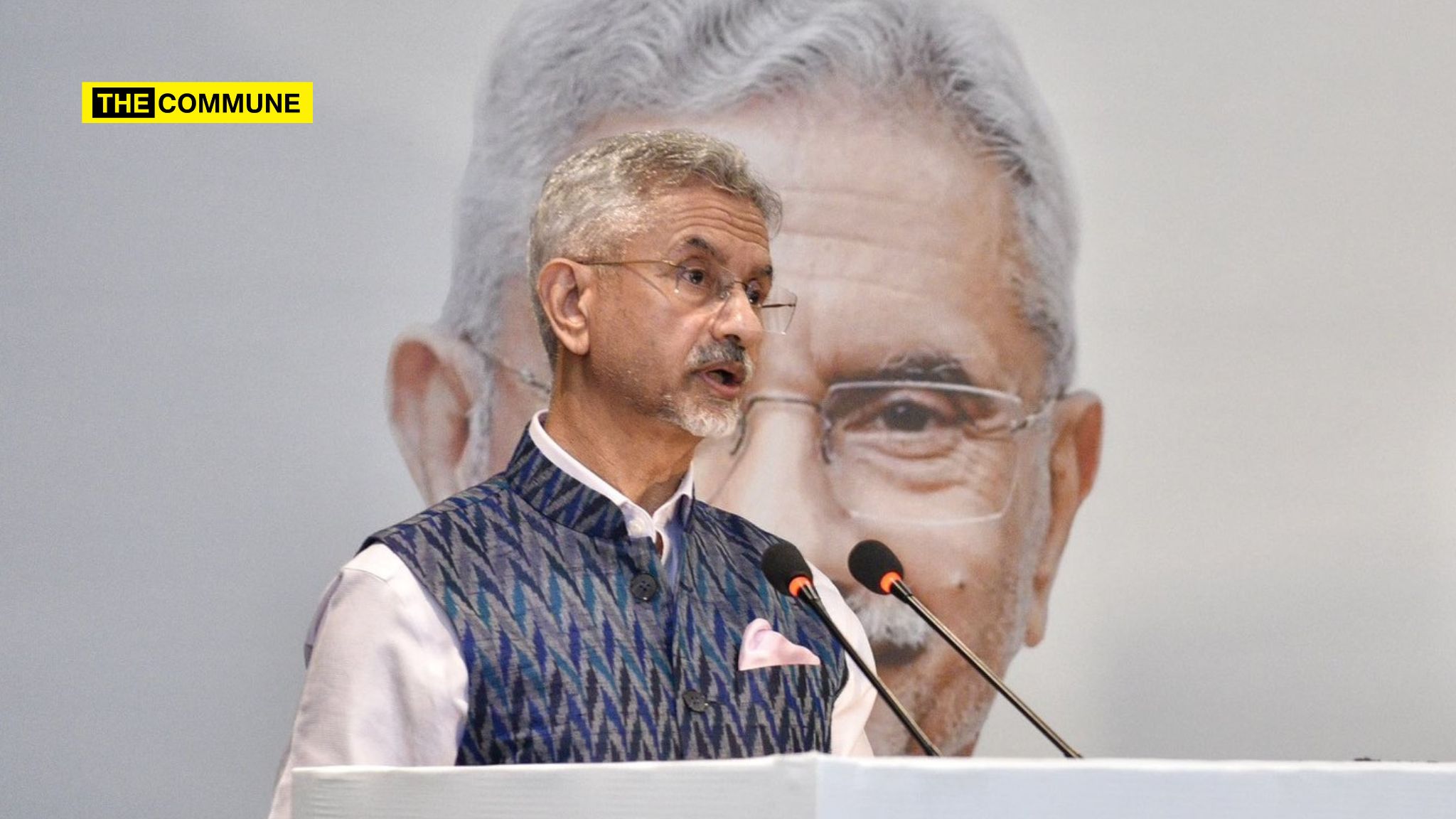
External Affairs Minister S Jaishankar has outlined a decisive shift in India’s response to cross-border terrorism, calling it a “new normal” that leaves no room for compromise on national security. Speaking in the Lok Sabha during a special discussion on Operation Sindoor on 28 July 2025, Jaishankar laid out a five-point doctrine that redefines India’s posture towards Pakistan-sponsored terrorism.
“This is not business as usual anymore,” Jaishankar said. “Operation Sindoor represents a turning point. We are no longer in an era of strategic restraint – we are setting new terms.” He elaborated on this evolving doctrine: Terrorists will not be treated as proxies, cross-border attacks will be met with direct and appropriate response, there will be no dialogue except on terrorism – talks and terror cannot go hand-in-hand, India will not bow to nuclear intimidation, and good neighbourly ties are incompatible with terrorism – blood and water cannot flow together.
Jaishankar made it clear that these principles would guide all future engagement with Pakistan, signalling a toughened national security stance. Amid speculation of external mediation, Jaishankar firmly refuted any claim that the U.S. had played a role in ending tensions between India and Pakistan following the Pahalgam terror attack.
“Let me be absolutely clear – Washington had no part in de-escalating the situation in May,” he asserted. Contrary to rumours of high-level backchannel diplomacy, Jaishankar clarified that Prime Minister Narendra Modi and then-U.S. President Donald Trump spoke only twice during that period: first on April 22, the day of the Pahalgam attack, and again on June 17 while PM Modi was in Canada.
“There was no call in between,” he said, dispelling any notion of American involvement. He also denied that trade discussions were linked to the conflict or factored into any of the India-U.S. exchanges during that time. Jaishankar stressed the need for political unity within India on the issue of terrorism.
“We will only achieve zero tolerance against terrorism if we have a unified voice at home,” he said, urging opposition parties to rise above partisanship. He pointed to the behaviour of Indian parliamentary delegations abroad as a model. “They stood united while engaging with foreign governments during Operation Sindoor. I hope that same spirit is reflected here in this House,” he said.
-IANS
Subscribe to our channels on Telegram, WhatsApp, and Instagram and get the best stories of the day delivered to you personally.
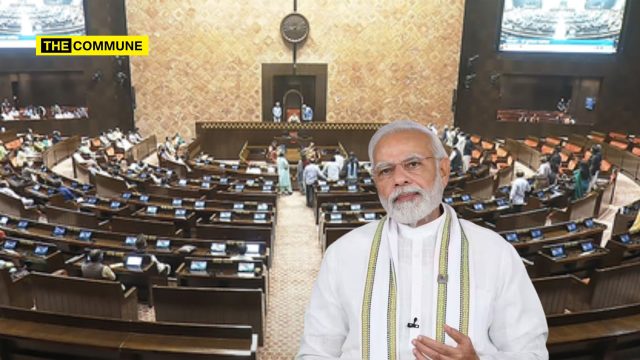
A comprehensive discussion on ‘Operation Sindoor‘ is scheduled to begin in the Rajya Sabha on 29 July 2025 as part of the ongoing Monsoon Session of Parliament. There is also anticipation that Prime Minister Narendra Modi may participate during the course of the discussion, underlining the significance the government places on national security.
Key ministers, including Defence Minister Rajnath Singh and External Affairs Minister S. Jaishankar, are expected to participate in the debate, which aims to highlight the strategic and diplomatic dimensions of India’s recent counter-terror operation.
The debate follows an intense discussion in the Lok Sabha on 28 July 2025, where Defence Minister Rajnath Singh delivered the opening remarks and issued a stern warning to Pakistan. He stated that India would not hesitate to resume strikes if provoked again. “Let this be a clear message to those who support terror. India will respond decisively to any act of aggression,” Singh said, drawing loud applause from the treasury benches. Operation Sindoor, launched on May 7, was India’s military response to the deadly April 22 terror attack in Pahalgam, J&K, which resulted in the loss of 26 lives, including many tourists.
The operation was a joint effort by the Indian Army, Air Force, and intelligence agencies, aimed at dismantling cross-border terror infrastructure. According to Singh’s statement in the Lok Sabha, the Indian armed forces eliminated over 100 terrorists during the operation.
Nine terror infrastructure targets across Pakistan and Pakistan-occupied Kashmir were destroyed through precision strikes. External Affairs Minister S. Jaishankar also addressed the House, highlighting the diplomatic efforts that ensured international support and understanding for India’s actions.
Prime Minister Narendra Modi lauded the speeches of both Singh and Jaishankar, calling them “insightful” and commending the courage and professionalism of the Indian armed forces. “Their remarks reflect the strength and determination of New India,” PM Modi said.
As the Rajya Sabha prepares to take up the issue, the discussion is expected to shed further light on the execution and impact of Operation Sindoor.
-IANS
Subscribe to our channels on Telegram, WhatsApp, and Instagram and get the best stories of the day delivered to you personally.
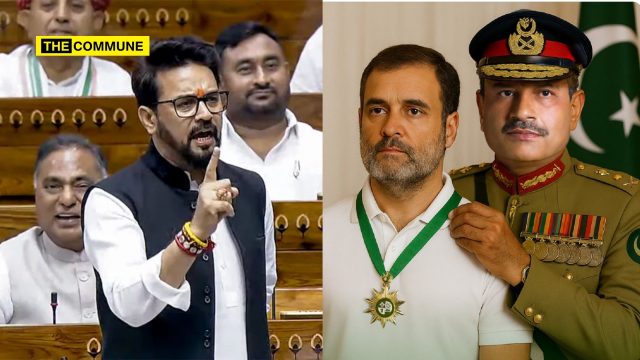
BJP MP Anurag Thakur launched a blistering offensive against Congress leader Rahul Gandhi in the Lok Sabha on 28 July 2025, accusing him of repeatedly targeting India, the armed forces, and Prime Minister Narendra Modi. Thakur dubbed Gandhi the “Leader of Opposing Bharat” – a jab at what he called Gandhi’s relentless criticism of the country and its institutions.
“The leader you speak of – the people of India have twice denied him enough votes to even become Leader of the Opposition. And now, having briefly held that post, he’s transformed from LoP to LoB – Leader of Opposing Bharat,” Thakur remarked.
Taking the rhetoric further, the BJP MP accused Gandhi of echoing anti-India sentiments. “Rahul Gandhi has become the poster boy for Pakistan’s propaganda. Congress leaders seem to be competing to outdo each other in sounding like spokespeople for Islamabad,” he said. Thakur didn’t hold back, coining provocative terms to describe the Congress.
“Today’s Congress isn’t the Indian National Congress – it’s more like the Islamabad National Congress. Their remarks sound like recycled scripts from Pakistan’s narrative machine,” he charged.
Citing Rahul Gandhi’s alleged response to Operation Sindoor – India’s retaliation to the April 22 Pahalgam terror attack – Thakur claimed Gandhi showed little concern for India’s military success.
“He was more curious about how many Indian jets were lost than how many terrorists were neutralised. That says it all,” he said. The BJP leader also invoked past instances of alleged disrespect towards the armed forces.
“This is the same party that called the Army Chief a ‘sadak ka gunda’. And now, during Operation Sindoor, they’ve been busy spreading hate-filled cartoons mocking our forces and the Prime Minister,” Thakur alleged. Calling the party a “Rahul-Occupied Congress”, he said it would be remembered for “betrayal and deceit” during a critical moment of national security. He also accused the Opposition of ignoring the brutal details of the Pahalgam attack.
“Not once did they mention that the terrorists identified the religion of the tourists before murdering them in cold blood,” he said. Thakur further highlighted the impact of Operation Sindoor, asserting that the Indian armed forces inflicted heavy damage on Pakistan’s military infrastructure.
“Ask Pakistan how devastating our response was – Rahim Khan Airbase is still non-functional, two months later,” he told the House. Thakur declared: “Ab Bharat dossier nahi, dose dega” – India will no longer issue dossiers; it will deliver decisive blows.
-IANS
Subscribe to our channels on Telegram, WhatsApp, and Instagram and get the best stories of the day delivered to you personally.
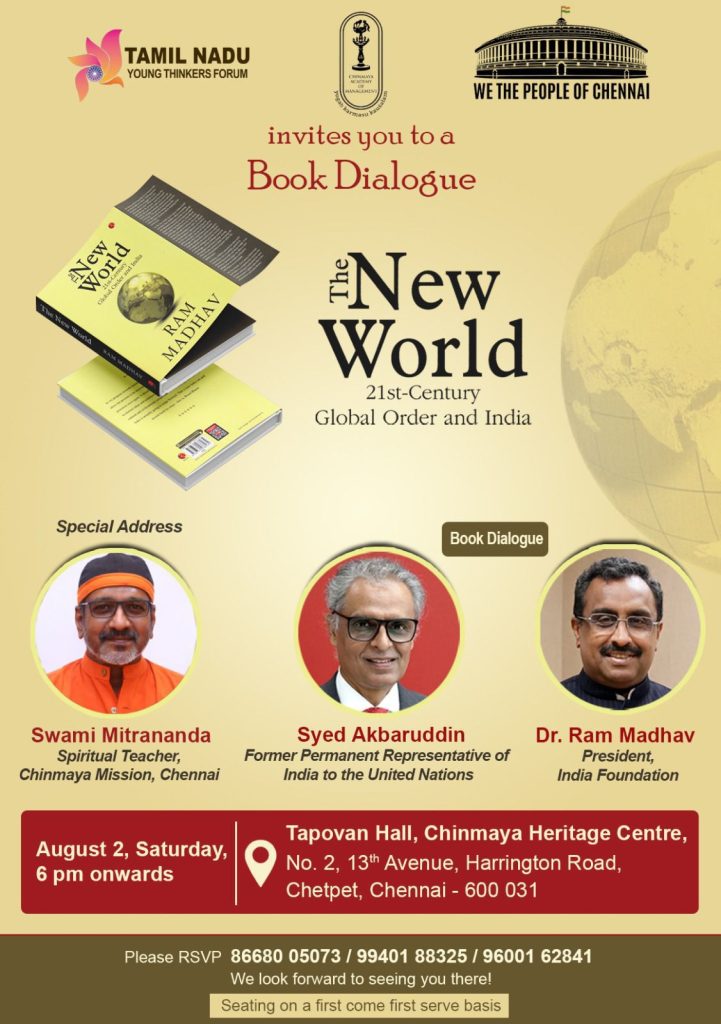
The Tamil Nadu Young Thinkers Forum, in collaboration with Chinmaya Academy of Management and We the People of Chennai, will organize a book dialogue on The New World: 21st Century Global Order and India, authored by Dr. Ram Madhav, President of the India Foundation. The event is scheduled for 2 August 2025 (Saturday) at 6 PM at Tapovan Hall, Chinmaya Heritage Centre, Chetpet.
The discussion will feature Ambassador Syed Akbaruddin, former Permanent Representative of India to the United Nations, and Swami Mitrananda, a spiritual teacher from Chinmaya Mission Chennai, as distinguished guests. Dr. Ram Madhav will engage in a dialogue on his book, which explores India’s evolving role in the contemporary global order.
Interested participants are encouraged to RSVP at 86680 05073, 99401 88325, or 96001 62841, as seating will be on a first-come, first-served basis. The event promises an insightful conversation on geopolitics, India’s strategic positioning, and the challenges of the 21st century.
Subscribe to our channels on Telegram, WhatsApp, and Instagram and get the best stories of the day delivered to you personally.
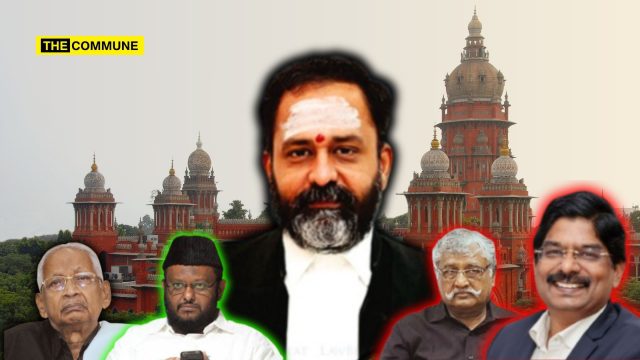
A storm has erupted in Tamil Nadu’s legal and political circles, centered around Justice GR Swaminathan of the Madras High Court. The judge, known for his unbiased, independent and often bold rulings, has found himself at the center of a storm after a controversial contempt case was filed against advocate S Vanchinathan, who had accused Justice Swaminathan of caste bias in a complaint to the Supreme Court.
Now, questions are being raised: is this part of a coordinated assault by the DMK ecosystem against a judge seen as insufficiently compliant?
The Vanchinathan Episode: A Manufactured Controversy?
Advocate Vanchinathan, who once benefitted from Justice GR Swaminathan’s intervention when he was jailed under the National Security Act during the Sterlite protests, has now become a central figure in the anti-judge campaign. He submitted a representation to the Supreme Court accusing the judge of caste and communal bias – a serious charge, but one that lacked evidentiary backing.
Justice Swaminathan, in open court, merely asked whether Vanchinathan stood by these allegations. This was neither contempt proceedings nor a punitive move – it was a fundamental question aimed at clarifying a smear that had been spread in public. Yet, the DMK-friendly ecosystem quickly painted this as judicial overreach and “abuse of power,” with eight retired judges publicly backing Vanchinathan without once engaging with the substance of the accusations.
DMK Ecosystem’s Attack On Justice GR Swaminathan
As the case was heard in court, the DMK ecosystem got activated. We saw condemnations from organizations like Dravidar Kazhagam – the parent organization of the DMK, the DMK ally, MMK (Manithaneya Makkal Katchi) and many others.
K Veeramani, the DK chief, wrote on his X handle, “MadurailawyerVanchinathanhassentacomplaintlettertotheChiefJusticeoftheSupremeCourtagainstChennaiHighCourtJudgeHonorableJusticeG.R.Swaminathan! Inthiscontext,isitappropriatefortheconcernedjudgetocallandthreatenthelawyerwholodgedthecomplaint? Thedignityofthejudiciaryshouldnotloseitsrespectamongthepeople! Itisindeedtruethattheconcernedjudgehasbeencontinuouslyspeakingoncontroversialmatters!I,whoaminthehospital,amwritingthisstatementbasedonthenewsIsawontelevision. ThejudgeissuedasummonstolawyerVanchinathan,whohadwithdrawnfromthecaseDuringacasehearingheldthedaybeforeyesterday(24.7.2025)attheMaduraibenchoftheChennaiHighCourt,itisreportedthatHonorableJusticeG.R.SwaminathansummonedlawyerVanchinathan,whohadwithdrawnfromthecase,andafterthelawyerstatedthathewasnotcurrentlyarguinginthatcase,thejudgeasked,“Answerthisquestion,”andraisedthequestion,“Areyouaccusingmeofdeliveringjudgmentsbasedoncaste?”Inthebackground,itissaidthatlastmonth,lawyerVanchinathansentacomplaintlettertotheChiefJusticeoftheSupremeCourt,pointingoutseveraljudgmentsofHonorableJusticeG.R.Swaminathan. Inademocracy,thejudiciaryisthelasthopeofthepeople!CanHonorableJusticeG.R.SwaminathansummonthelawyerinpersonandissueacontemptofcourtnoticethroughtheHighCourtRegistrar?WasthisissuedwiththepermissionoftheChiefJusticeoftheChennaiHighCourt,whoholdsadministrativeresponsibility?Inademocracy,thejudiciaryisthelasthopeofthepeople.AccordingtotheIndianConstitution,thefundamentalprincipleisthatjudges,upontakingtheiroath,mustperformtheirdutieswithoutpersonalbiasorprejudice. Condemnationshavearisenmultipletimes!However,wehaverepeatedlystatedinpublicforumsthatseveraljudgmentsdeliveredbyHonorableJusticeG.R.SwaminathanattheChennaiHighCourtanditsMaduraibenchreflectabiastowardaparticularideologyandasenseofcasteprotection.Ononeoccasion,heunnecessarilyspokeaboutanddisparagedthemarriageofThanthaiPeriyarandAnnaiManiyammaiyar.Hehasalsomocked rationalists. The unparalleledleaderThanthaiPeriyar!PeriyarisaleaderhonoredbytheIndiangovernmentwiththeTamraPatraawardandcommemoratedwithapostagestamp.HeisregardedasthefatherofTamilNadu.Inthisverycourt,ajudgedescribedhimas,“JustasMahatmaGandhiisthefatherofIndia,ThanthaiPeriyaristoTamilNadu.”HeisanunparalleledleaderwhosecontributionstosocialjusticehavebeenacknowledgedintheIndianParliamentandevenmentionedinSupremeCourtjudgments.Wehavealreadypointedoutandcondemnedthefactthat,inacaseunrelatedtohim,thisjudgedisparagedsuchaleaderreveredbymillionsinhisjudgment.AjudgmentcontrarytohumandignityandscientificthinkingFurthermore,intoday’sscientificage,whenthegovernmentattemptedtomaintainlawandorderbybanninganinhumaneeventinKarurwherenon-BrahminsrollontheleftoverleaveseatenbyBrahmins,howcanwecallthejudgmentdeliveredbyHonorableJusticeG.R.Swaminathanagainstitimpartial?Wehavealreadypointedoutandexplainedthatthisjudgmentiscontrarytothehumandignityandscientifictemperament(51AH)emphasizedbytheIndianConstitution.TheTamilNaduDMKgovernmentpainstakinglyintroducedthelawallowingpeopleofallcastestobecomeprieststoeradicatethemajorsocialevilofcasteanduntouchabilityplaguingIndia.Evenafter50yearsofstruggleinpublicforumsandcourts,andafterobtainingafavorablefinaljudgmentfromtheSupremeCourt,therehavebeenjudgmentsinvariousrelatedcasesthatreflectabiasedstancebytheHonorableJusticeG.R.Swaminathan.AdvocateslikeVanchinathanhavealsoarguedforthiscause.Inanothercaserelatedtosocialjustice,whensenioradvocateandMemberofParliamentP.Wilsonappearedtoargue,theHonorableJusticeG.R.Swaminathanaddressedhiminamannerthatviolatedduedecorum,whichisabehaviorofthejudgethatmustbepointedoutatthisjuncture.Moreover,inadefamationcasefiledforallegedlymakingderogatoryremarksaboutaparticularcommunity,awomanwhoalwaysspeaksproudlyofhercastewasarrestedandsenttoprison.Withinadayortwo,sheapproachestheHighCourtforbail.Themattercomesupforhearing.Atthattime,anewsitemalsoappearsinthemedia.Beforethecasecomesupforhearingbeforeanotherjudge,thewifeoftheHonorableJusticeG.R.Swaminathanissuesastatementonsocialmedia,seekingsympathyforthewomanwhospokewithcastesentiment.Isthisapproachcorrect?Willthecourtsacceptit?TheHonorableJusticehascontinuouslyspokenonvariouspublicplatformsabouthisperspectiveandtheprinciplesheupholds.Wehavepointedoutinpublicforumsthatheshouldchangethisapproach.Aretiredjudgehasalsoexpressedhisviewsonthesameplatform,highlightingsuchtendencies.Thoseappointedasjudgesmayhavepersonalbeliefs,whichistheirright.However,itispertinenttonotethataformerSupremeCourtjudgehaswritteninhisautobiographythat,afterbecomingajudge,thosebeliefsshouldnotbereflectedincourtjudgments.IfanadvocatefilesacomplaintwiththeSupremeCourt,utilizingtheopportunityprovidedundertheConstitutiontoaddressawell-knownpublicissue,isitacceptableforthejudgetopersonallycallandthreatenthecomplainantin court? Is itcorrecttocallandthreatenthepersonwhofiledthecomplaint?Ifacomplaintisfiledagainsthim,theHonorableJusticeG.R.Swaminathanshouldprovideananswerorexplanationintheappropriateforum,ratherthancallingandthreateningthecomplainantincourt.Howisthisjustified?Canajudgeinvestigateanddeliverjusticeinacaseconcerninghimself?Issuchapeculiarjudicialapproachappropriateforcourtroomjustice?Willlegalproceduresandpracticesacceptthis?TheHonorableJudgesoftheHighCourtandSupremeCourtmustclarifythis.WehavepubliclyhighlightedthebehaviorofthespecifiedHonorableJudgeregardingsuchajudicialapproach–withapublicwelfareperspective!Thereisnopersonallikeordisliketowardshim.Shouldasolutionthatoughttoberesolvedwithinthecourt’sboundariesbeforcedtoreachpublicforums?Beyondtheadvocate-judgedynamic,shouldthisleadtoapublicforumstruggle?Wewritethiswiththegeneralobjectivethatthedignityofthecourtsshouldnotloseitsvalueamongthepeople.President,DravidarKazhagam26.7.2025Chennai”
🔹 சென்னை உயர்நீதிமன்ற நீதிபதி மாண்பமை ஜி.ஆர்.சுவாமிநாதன்மீது மதுரை வழக்குரைஞர் வாஞ்சிநாதன் உச்சநீதிமன்றத் தலைமை நீதிபதிக்கு புகார் மனு அனுப்பியுள்ளார்!
🔹 இந்நிலையில், சம்பந்தப்பட்ட நீதிபதியே புகார் கொடுத்த வழக்குரைஞரை அழைத்து மிரட்டுவது சரியா?
Suba Veerapandian of the Dravidar Kazhagam in an interaction with the press launched a scathing attack on Justice GR Swaminathan of the Madras High Court, accusing him of bias and abuse of power in the contempt case against Advocate Vanchinathan. Speaking on behalf of the Tamilar Peravai, Veerapandian questioned the fairness of a judge hearing a contempt case against himself, “If Judge GR Swaminathan thinks it is contempt of court, then the next judge should investigate it. It is strange that the person accused should investigate and give a verdict about himself.”
He slammed attempts to link Vanchinathan’s statements to the DMK, saying, “They say DMK made Vanchinathan speak. If that is incitement, then file a case against those who incited him. What is the evidence?”
Veerapandian also brought up the Savukku Shankar episode: “What happened when two people pressured him in the Savukku case? Why didn’t he name them or have them arrested? Is there any greater contempt of court than telling a judge how to write a verdict?”
He ridiculed the idea that a letter to the Chief Justice constitutes contempt, saying, “Vanchinathan wrote to the Supreme Court. He didn’t shout in the streets. If that’s contempt, then even accountability is criminalized.”
Former Justice Hari Paranthaman spoke to the media focused instead on defending controversial lawyer Vanchinathan, who was recently arrested for defaming Justice Swaminathan online. The event framed the judge’s actions as repressive, completely ignoring the online ecosystem of hate that had vilified him in the days following the judgment. While judicial actions can and should be critiqued, the deliberate attempt to paint Justice Swaminathan as a political operative simply because of his caste or affiliations amounts to a mob campaign to delegitimize an institution.
The Trigger? Stay On DMK Govt’s Amendments
The tipping point came on 21 May 2025, when a vacation bench of the Madras High Court comprising Justices G.R. Swaminathan and V. Lakshminarayanan issued an interim stay on the Tamil Nadu government’s amendments that removed the Governor’s power to appoint Vice-Chancellors of state universities. The Court dismissed the State’s argument that these laws had received “deemed assent” from the Supreme Court under Article 142, calling the claim “outrageous.”
Senior Advocate P. Wilson, appearing for the Higher Education Department, contended that the High Court was interfering with a Supreme Court ruling. The Bench sharply rebuked this, stating, “Mr. Wilson’s claim that we are effectively reviewing a Supreme Court judgment is outrageous.” They further remarked, “We say with utmost sadness and regret that the approach of Shri. P. Wilson was one of obstruction and not assistance.”
The judges emphasized that the Supreme Court had not ruled on the constitutional validity of the amendments and affirmed their authority to assess them. “We are fully aware of our jurisdiction and deeply respect the authority of the Hon’ble Supreme Court. We do not require lectures on this matter,” the Court said.
On the issue of urgency, the Court dismissed objections to hearing the case during vacation, asserting, “While judges may be on vacation, courts cannot afford to be.” Concluding the amendments were “manifestly unconstitutional,” the Bench granted interim relief, warning that ignoring the legal conflict would risk “irreversible harm” and “undermine public interest.”
The ruling, which challenged the DMK-led government’s assertive policy shift, was met not with legal counter-argument but with a barrage of personal, casteist, and defamatory attacks on the judges.
Casteist Abuse Targeted At Justice GRS
What followed was a torrent of abuse from self-described Dravidianists and sympathizers of EV Ramasamy Naicker (hailed as ‘Periyar’ by his followers) – many of whom are ideologically or organizationally linked to the DMK and its affiliates. Justice Swaminathan, who wears traditional Hindu markings like vibhuti and kumkumam, was relentlessly targeted for his Brahmin identity – something irrelevant to the judgment itself, but central to the campaign of delegitimization that unfolded online.
Prominent DMK-linked voices, including student wing functionaries and leaders of Dravidar Kazhagam, invoked Periyarist rhetoric, branding the judges as “Paapans” – a derogatory term for Brahmins and attributing the stay order to caste allegiance rather than constitutional reasoning. One shocking social media post from a Periyarist declared that “the verdict is the right moment to instill anti-Brahmin sentiment among the youth,” while another labelled the judges as “BJP slave Brahmin Sanghi judges.”
Even more disturbingly, some went as far as to accuse the judges of unspeakable crimes, reflecting a complete breakdown of civic discourse and a dangerous normalization of defamatory attacks on the judiciary. These weren’t isolated rants from fringe elements, they included DMK functionaries, influencers, and Periyarist intellectuals with a history of coordinated campaigns.
Abuse & Slander Amplified By Media
Media behavior mirrored this trend. While outlets like Puthiya Thalaimurai, which often avoid naming judges, conspicuously published the names and photos of Justices Swaminathan and Lakshminarayan, further signaling a political or ideological motive behind the coverage. The choice to highlight their identities rather than their legal reasoning betrays a disturbing preference for identity-based attacks over substantive debate.
The DMK’s Playbook: Intimidation Through Public Pressure?
If we analyse the trigger and the events that followed, it seems to be right out of the DMK’s playbook.
Retired Judges & DMK Sympathizers Hold Press Conference
A group of retired judges, including some with known DMK affiliations, held a press meet condemning Justice Swaminathan. Justice KK Sasidharan later denied endorsing the statement, raising questions about the legitimacy of the campaign.
Media & Social Media Blitz
Pro-DMK channels and social media handles amplified the allegations, framing Justice Swaminathan as “biased.” The timing – right after the university case – hints at retaliation.
Justice Swaminathan has delivered pro-Dalit and pro-welfare judgments, including directing funds for sanitation workers. Yet, he is being painted as “casteist” – a narrative that aligns with DMK’s anti-Brahmin rhetoric.
Is DMK MP P. Wilson Behind The Orchestrated Attack?
Wilson, a DMK MP and senior lawyer, had already clashed with Justice Swaminathan in court.
On 21 May 2025, the Madras High Court bench comprising Justice GR Swaminathan and Justice V. Lakshminarayanan while delivering the judgement about the role of Governors in Vice Chancellor appointments, came down heavy on the DMK lawyer for his behaviour and attitude in the court. The judgement noted “We say with utmost sadness and regret that the approach of Shri. P. Wilson was one of obstruction and not assistance. We are fully aware of our jurisdiction and deeply respect the authority of the Hon’ble Supreme Court. We do not require lectures on this matter.”
His continued public statements against the judge suggest a political vendetta.
Targeting Justice GR Swaminathan – Caste Prejudice Or Political Vendetta?
The relentless attacks on Justice GR Swaminathan raise a critical question: Is the DMK ecosystem persecuting him for his Brahmin identity or simply because his judgments defy political expectations? The evidence suggests both factors are at play, revealing a disturbing pattern of using caste as a weapon to undermine judicial independence.
The DMK’s rhetoric exposes a cynical strategy. When legal arguments fail, resort to identity politics. The “paapan judge” slurs and focus on his vibhuti/kumkumam aim to distract from the verdict’s constitutional validity.
They normalize judicial targeting. By framing an independent and unbiased judge like Justice GR Swaminathan as “casteist” or “biased,” the DMK sends a warning: rule in our favor or face character assassination.
They exploit social fissures. The anti-Brahmin vitriol isn’t about social justice – it’s about silencing dissent and keeping the judiciary compliant. Welcome to Dravidian Model Tamil Nadu.
Subscribe to our channels on Telegram, WhatsApp, and Instagram and get the best stories of the day delivered to you personally.
In a deeply disturbing incident, Muzaffarpur police arrested two individuals in connection with the gang rape and abduction of a minor Mahadalit girl, officials confirmed on Monday. The case, which has sparked outrage locally, involves a teenage girl from the Aurai police station area in Muzaffarpur district, who was reported missing on 26 July.
According to the girl’s family, the minor had left home around 11 a.m. on Saturday to get her mobile phone repaired at a nearby shop. However, she did not return home that night. Her father said, “I searched all night but couldn’t find her. On Sunday, around 2 p.m., we were informed she was admitted in critical condition at a hospital in Sitamarhi.” Investigations revealed that the girl was lured by a mobile shopkeeper and his associate. When she resisted their advances, the duo allegedly kidnapped her in a car and forcibly took her to the highway and raped her one by one.
After committing the crime, they went to the Pupri area in the adjoining Sitamarhi district and dumped her in the bushes. She was later found unconscious and severely injured, sustaining serious head trauma. Sitamarhi police recovered her on Sunday and admitted her to Sadar Hospital. Due to the worsening of her condition, she was referred to Sri Krishna Medical College and Hospital (SKMCH), Muzaffarpur, where she remains in critical condition. Doctors have confirmed she suffered major head injuries and given her 10 stitches. A neurosurgeon has been consulted. Following the incident, a case was registered at the Aurai police station on 27 July.
Both accused including the mobile shop owner Ganesh Kumar Shah and his associate Pintu Sharma have been arrested.
Muzaffarpur’s ASP (East), Sahriyar Akhtar, stated: “Due to her unconscious state, the victim could not give a statement. Both accused were detained promptly. Further legal action is underway.” This incident has sent shockwaves through the region, sparking concern over the safety of vulnerable communities, especially minor girls. The police have promised strict action, and legal proceedings are underway to bring the accused to justice.
-IANS
Subscribe to our channels on Telegram, WhatsApp, and Instagram and get the best stories of the day delivered to you personally.
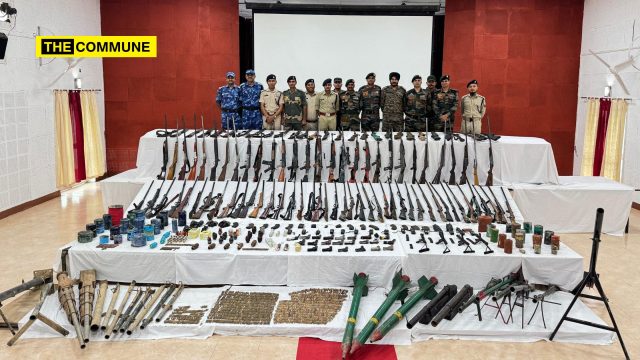
In another significant breakthrough, the security forces in a joint operation have recovered 155 arms and around 1,652 different types of ammunition in restive Manipur, officials said on Monday. Recovery of these arms and ammunition was done within two days.
Around 728 different types of ammunition and 90 arms were recovered from the five Imphal Valley districts Imphal West, Imphal East, Thoubal, Bishnupur, and Kakching. A senior police official said that security forces comprising Manipur Police, Army, Assam Rifles, Army, Border Security Force (BSF), the Central Reserve Police Force (CRPF) and the Indo-Tibetan Border Police (ITBP) conducted extensive joint search operations in the hill districts of Manipur in the last few days.
Acting on specific intelligence reports regarding the presence of a large cache of arms, ammunition, and other warlike materials concealed in various locations, coordinated operations were launched simultaneously at multiple sites in the interior and suspected areas of five hill districts Churachandpur, Pherzawl, Kangpokpi, Chandel, and Tengnoupal. Of the 155 arms recovered, eight are AK series rifles, two are INSAS rifles, four are carbines, one each of Self-Loading Rifles (SLRs), M4 rifle and Sniper rifle (with telescope), two 303 rifles, 14 12-bore rifles, eight 9mm pistols, 14 country-made pistols and the remaining different types of weapons. The recovered ammunition includes 39 Improvised Explosive Devices (IEDs), 13 hand grenades and 1,600 assorted ammunition.
The security forces also recovered 15 communication sets, four binoculars and a telescope. An official statement issued from the police headquarters said that these continued intelligence-led operations in the hill districts represent a major accomplishment for the Manipur Police, Assam Rifles, Army and other Central Armed Police Force (CAPF) in their continued mission to restore peace, uphold public order, and safeguard the lives and property of citizens. The Manipur Police reaffirms its commitment to fostering a peaceful and secure Manipur. Manipur Police urged the people to cooperate with the police authorities, Assam Rifles, Army and other security forces and to promptly report any suspicious activity or information related to illegal arms to the nearest police station or the Central Control Room.
Senior police officials remain in close coordination with all security stakeholders to ensure that such operations continue in a sustained and focused manner, aimed at restoring normalcy, maintaining public order, and safeguarding the lives and property of all citizens, the statement said. The latest arms recovery is the fifth major success of the security forces within one and a half months.
On 26 July, the joint forces recovered 90 arms and around 728 different types of ammunition from the five Imphal Valley districts Imphal West, Imphal East, Thoubal, Bishnupur, and Kakching.
On 15 July, the security forces in a joint operation recovered 86 arms and around 974 different types of ammunition from Manipur’s five Imphal valley districts Imphal West, Imphal East, Thoubal, Bishnupur, and Kakching.
On 4 July, the security forces in joint operations recovered 203 arms, mostly sophisticated and around 160 different types of ammunition from four hill districts Tengnoupal, Kangpokpi, Chandel, and Churachandpur.
Earlier on 14 June, security forces in joint operations recovered 328 arms and around 9,300 different types of ammunition from five Imphal Valley districts Imphal West, Imphal East, Thoubal, Bishnupur, and Kakching.
-IANS
Subscribe to our channels on Telegram, WhatsApp, and Instagram and get the best stories of the day delivered to you personally.