Home Blog Page 196

Assam: RPF & Assam Police Foils Trafficking Attempt, Rescues 26 Girls Bound for Tamil Nadu

In a significant breakthrough, railway authorities in Assam foiled a human trafficking operation at Tinsukia railway station, rescuing 26 minor girls and young women who were reportedly being trafficked to Tamil Nadu using forged documents, officials said on 1 August 2025.

The joint operation, carried out by the Railway Protection Force (RPF) and the Government Railway Police (GRPF), was part of a routine inspection. Five individuals, both men and women, suspected to be part of the trafficking network, were detained at the scene. During initial interrogation, one of the accused, identified as Bidyut Dutta, claimed the victims were being taken to work in a textile factory in Tamil Nadu.

Authorities, however, are treating the claim with caution and are investigating the wider scope of the trafficking ring. Human trafficking remains a persistent concern in Upper Assam, especially in the tea garden regions, where vulnerable families are often targeted with false promises of employment and financial aid. Children and young women are then trafficked to other states for exploitative labour or worse.

The Assam government recently rolled out a comprehensive state policy aimed at tackling human trafficking and witch-hunting, reflecting its commitment to building a society free from exploitation and abuse. The policy envisions a safe and inclusive environment where every individual can access their rights and services without fear. The new policy identifies trafficking and witch-hunting as crimes that disproportionately affect women and girls. While trafficking is flagged as an organised and fast-expanding criminal enterprise, witch-hunting is recognised as a deeply entrenched social evil.

Assam’s strategic location, sharing borders with six northeastern states as well as Bangladesh and Bhutan, adds to the complexity of the trafficking crisis, the policy noted. The state has already enacted the Witch Hunting (Prohibition, Prevention and Protection) Act, 2018, which classifies the offence as cognisable, non-bailable, and non-compoundable. The policy calls for a coordinated, multi-sectoral response focusing on prevention, survivor protection and rehabilitation, and stringent legal action against offenders.

The Department of Women and Child Development has been appointed the nodal agency for implementing the policy, with support from various departments and the formation of committees at the state, district, and gaon panchayat levels to ensure grassroots-level intervention.

-IANS

Subscribe to our channels on TelegramWhatsApp, and Instagram and get the best stories of the day delivered to you personally.

India Strong Enough To Resist Trump’s Tariff Tactics: Former US Official & CSIS Expert

russian oil trump tariffs india

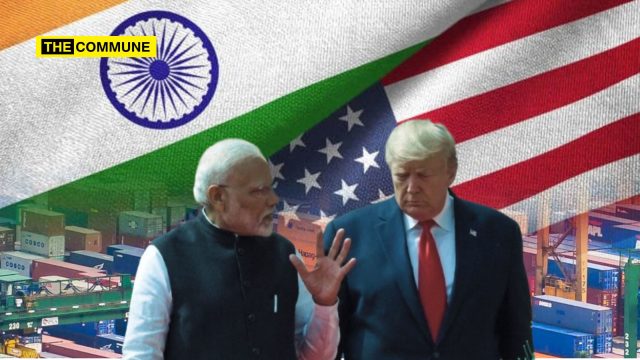
India’s position as the world’s fastest-growing economy gives it the confidence to stand firm against tariff pressures and adopt policies that protect its long-term interests, Raymond Vickery, Senior Associate at the Centre for Strategic and International Studies (CSIS) and former US Assistant Secretary of Commerce said on 1 August 2025.

Speaking exclusive to IANS on the impact of US President Donald Trump’s proposed tariff measures, Vickery stressed that India should not succumb to transactional approaches that focus only on immediate gains, but instead work towards building sustainable, mutually beneficial trade relationships. He pointed out that India’s trade deal with the UK serves as a good example, as it offers stability, lowers tariffs, and addresses the needs of both economies, enabling businesses to plan for the future. This, he said, is in stark contrast to the unpredictable nature of Trump’s trade policies, which make long-term planning difficult.

According to Vickery, Trump’s stance towards India reflects a lack of appreciation for its economic potential and a short-sighted view that fails to recognise the benefits of a medium- or long-term partnership. Highlighting India’s strengths, Vickery noted that the country boasts some of the best technical talent in the world and has a vast consumer market that is still developing. He praised the Prime Minister Narendra Modi government’s emphasis on national interest, but cautioned that true prosperity will come from competing globally. India, he said, has moved far beyond the “license raj” mentality of the past and now has the capacity to be a global economic leader. On the agriculture and dairy front, Vickery said the PM Modi government was right to avoid fully opening these sectors to US companies at present.

However, he argued that reforms such as those attempted earlier should be revisited, with a gradual approach that allows for reasonable competition. Vickery also urged India to take on a leadership role in multilateral trade discussions, particularly at platforms like the WTO, to uphold the rule of law in global commerce. He said that while standing up to tariff “blackmail” will be challenging, India is strong enough to do so and should align with other major economies such as Brazil to resist unfair trade pressures. In his view, India’s future growth lies in balancing national priorities with openness to global markets  on its own terms.

-IANS

Subscribe to our channels on TelegramWhatsApp, and Instagram and get the best stories of the day delivered to you personally.

ED Raids Odisha-Based Biswal Tradelink In ₹68.2 Crore Fake Bank Guarantee Scam

The Enforcement Directorate (ED) on Friday conducted searches at multiple locations linked to Odisha-based firm, M/s Biswal Tradelink Pvt. Ltd., its directors, in Bhubaneswar and Kolkata in connection with a fake bank guarantee scam case.

As per the ED sources, on the basis of a case (0131/2024) registered by the Economic Offence Wing (EOW), Delhi on 11 November 2024, the Central agency has recorded an ECIR and initiated an investigation into the fake bank guarantee racket. The ED sleuths were searching under Section 17 of the Prevention of Money Laundering Act (PMLA) at three premises linked to M/s Biswal Tradelink Private Limited and its directors in Bhubaneswar and one premises of an associate/operator of the Odisha-based firm in Kolkata.

It is pertinent here to mention that the Central agency, during investigations, found M/s Biswal Tradelink Pvt. Ltd., its directors, and associates engaged in the issuance of fake Bank Guarantees against a commission of 8 per cent. The sleuths also ascertained that the accused group had facilitated fake bills for commission. The ED officials also detected suspicious financial transactions of crores of rupees in multiple undisclosed bank accounts of the sham company.

“The company is a mere paper entity its registered office is a residential property belonging to a relative. No statutory company records were found at the address. Suspicious financial transactions with multiple companies have been traced. Key individuals of the group are found using the Telegram application with “disappearing messages” enabled, indicating attempts to conceal communication,” informed ED sources.

In a connected development, during the searches conducted on 24 July in the case of Anil Ambani group companies, the ED sleuths had earlier seized evidence which is directly linked to the current investigation. Notably, a Bank Guarantee of ₹68.2 crore submitted to Solar Energy Corporation of India Limited (SECI) by M/s Biswal Tradelink Pvt. Ltd. on behalf of M/s Reliance NU BESS Limited (formerly known as M/s Maharashtra Energy Generation Limited), a subsidiary of Reliance Power Limited (RPL), has been established as fake. “In an attempt to prove that this fake bank guarantee is genuine, the group used a spoofed email domain. To create a facade of genuineness instead of sbi.co.in, the domain s-bi.co.in was deployed to send forged communication to SECI, impersonating SBI. The ED has sought domain registration details of s-bi.co.in from the National Internet Exchange of India (NIXI),” ED sources further added.

-IANS

Subscribe to our channels on TelegramWhatsApp, and Instagram and get the best stories of the day delivered to you personally.

India’s Export Loss From US Tariffs Capped To Just 0.3–0.4% Of GDP: Report

India import export trump us tariffs

The direct export loss from the higher US tariffs announced on Indian exports could be limited to around 0.3-0.4 per cent of its GDP as the country’s largely domestic-driven economy and its relatively low share of goods exports to the US should provide some cushion, according to a CareEdge Ratings report released on Friday.

“Not only is India’s overall export dependence relatively low, but its merchandise export exposure to the US is also low at around 2 per cent of GDP, offering additional resilience,” the report contends. Moreover, India’s services exports remain outside the scope of these tariffs and should continue to support the external sector, the report states. The report also projects the current account deficit (CAD) to remain manageable at 0.9 per cent of GDP in FY26.

Any diversification in India’s oil imports away from Russia is expected to have a minimal impact on India’s CAD, as the price differential between Russian Ural and the benchmark Brent Crude has significantly narrowed to around $3 per barrel from an average of $20 per barrel in 2023. India’s merchandise exports to the US stood at $87 billion in FY25.

Electronic goods accounted for the largest share of exports at 17.6 per cent. This was followed by pharma products (11.8 per cent) and gems & jewellery (11.5 per cent). The US accounts for 37 per cent of India’s total electronic exports. Select items from this sector have been temporarily exempted from the 25 per cent US tariffs. Additionally, India’s pharma exports to the US (accounting for 35 per cent of India’s total pharma exports) have also been excluded from the tariffs, the report states. However, the overarching risk of sector-specific tariff action remains.

India has one of the highest numbers of US FDA-approved manufacturing facilities catering to the generic medicine requirements of the US. While tariff uncertainties persist, the sector’s fundamental competitive advantages offer some resilience, the report observes. India’s relative tariff advantage for its exports to the US compared to several Asian peers, such as Vietnam, Indonesia, and South Korea, has effectively reversed following the 25 per cent US tariff, along with the possibility of an additional penalty linked to India’s trade ties with Russia, according to the report.

However, India-US trade negotiations are expected to continue and could bring some relief. Still, India is likely to remain cautious about opening sensitive sectors such as agriculture and dairy, suggesting that the talks may take some time to conclude, the report said. Against this backdrop, it is too early to determine the clear winners and losers from the evolving tariff landscape. Volatility in global financial markets is likely to persist, and tariff-related developments will be critical to watch in the coming months, the report added.

-IANS

Subscribe to our channels on TelegramWhatsApp, and Instagram and get the best stories of the day delivered to you personally.

Despite Trump’s 25% Tariffs, India Holds Firm On Market Access And Strategic Trade deals

india growth plan domestic

A lot is being speculated since US President Donald Trump announced levying of 25 per cent tariff on exports from India. Meanwhile, India has withstood pressure to open up its markets, keeping in mind the interests of farmers, MSMEs, and cheap energy needs, a report said on 1 July 2025.

“As the sanctions are stipulated to be implemented from 1 August, India continues to engage with the American counterparts to iron out a trade deal,” Ventura said in its report. Negotiations are expected to resume in mid-August, and the deal is likely to be clinched by October. “In this case, the pain would be relatively short-term with an improved trade trajectory,” the report stated.

Close on the heels of the sanctions on Indo-Russian oil refining and marketing company Nayara, the US’ 25 per cent tariffs and yet unquantified penalties for India’s continuing purchases of Russian crude and military hardware, have the potential to disrupt exports and impact the economy. However, unlike other countries which have yielded to President Trump’s diktats, India has withstood pressure to open its markets, keeping in mind the nationalistic interest of farmers, MSMEs, and cheap energy needs, as per the report. Even with 25 per cent tariffs, India is still competitive considering that peers like Vietnam and China face much higher tariffs of 46 per cent and 54 per cent respectively.

While export volumes are bound to be impacted, India can cushion much of the impact by leveraging the recently-concluded FTAs with Australia, UAE, EFTA, ASEAN, and SAARC countries, the report said. The tariffs exclude pharmaceuticals, energy products, and certain electronic devices, as per the initial April declaration, which is a relief for India while negotiations are going on. Even in the pessimistic scenario, economists do not expect more than a 0.5 per cent impact on India’s GDP, the report said.

During past disruptive events like the sanctions imposed on India for its Pokhran Nuclear tests (May 1998), the Global financial crisis of 2008, and COVID-19, India has always re-emerged as a stronger economy with equity markets achieving record highs. Additionally, after the Russia-Ukraine war, India has diversified its oil imports beyond its traditional suppliers from 27 countries pre-war to 40 countries at present. Likewise, there is no reason why India cannot successfully steer its exports away from the US to the rest of the world. The recently-signed FTAs and India’s strong standing with its geopolitical diplomacy provide it with an opportunity to tap into newer markets, the report said.

-IANS

Subscribe to our channels on TelegramWhatsApp, and Instagram and get the best stories of the day delivered to you personally.

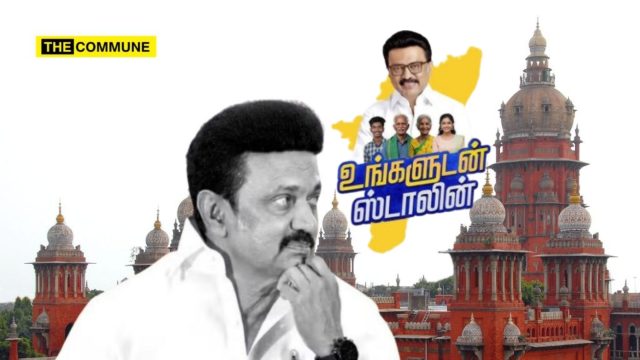
DMK Gets A Knock On The Head: Madras High Court Bars Using Stalin’s Name And Photo For TN Govt Schemes

In a significant interim ruling, the Madras High Court has restrained the Tamil Nadu government from naming new or rebranded public schemes after any living personality and from using the portraits of former Chief Ministers, ideological leaders, or the Dravida Munnetra Kazhagam (DMK) insignia, emblem, or flag in government advertisements promoting those schemes.

The First Division Bench, comprising Chief Justice Manindra Mohan Shrivastava and Justice Sunder Mohan, passed the order on a public interest litigation (PIL) filed by AIADMK Member of Parliament C. Ve. Shanmugam. The petition challenges the use of Chief Minister M.K. Stalin’s name in the state’s flagship public outreach programme, Ungaludan Stalin.

“Therefore, we are inclined to pass an interim order to the effect that while launching and operating government welfare schemes through various advertisements, the name of any living personality, photograph of any former Chief Minister/ideological leaders or party insignia/emblem/flag of Respondent number 4 (DMK) shall not be included,” the Bench said.

The court, however, clarified that its order does not restrain the government from launching or operating any welfare scheme. “We have not passed any order against the launch, implementation, or operation of any welfare scheme of the government,” the judges noted. “Our order is confined only to the nomenclature of such schemes and the publicity materials to be prepared by the government.”

The judges added that the interim order was being passed based on prima facie materials and that the State and the DMK had been issued notices to file counter affidavits. The matter will next be heard on 13 August 2025.

Senior counsel Vijay Narayan, appearing for the petitioner and assisted by advocate K. Gowtham Kumar, argued that the State government was also considering naming other upcoming welfare schemes after living personalities. The Bench observed that such practices appeared prima facie to be impermissible under the Supreme Court’s guidelines in the Common Cause case.

DMK spokespersons responded to the court’s order by questioning the double standards in objections. “If there can be ‘Namo’ and ‘Amma’ schemes, why not ‘Ungaludan Stalin’?” asked a party representative, pointing to similar practices by other political parties.

AIADMK general secretary Edappadi K. Palaniswami welcomed the ruling, stating, “Stalin is using government machinery for political gain.”

The court also clarified that the pendency of this petition does not prevent the Election Commission of India from acting on the AIADMK MP’s representation seeking action against the DMK under Paragraph 16A of the Election Symbols (Reservation and Allotment) Order, 1968.

(With inputs from The Hindu)

Subscribe to our channels on Telegram, WhatsApp, and Instagram and get the best stories of the day delivered to you personally.
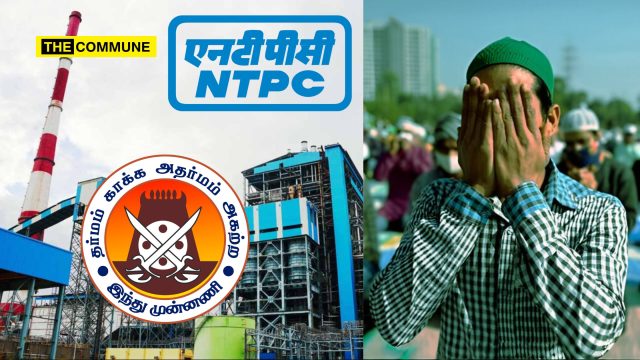
Do Not Yield To Religious Demands In Essential Services, Hindu Munnani Tells NTPC After Muslim Body Demands Friday Break

hindu munnani ntpc

Hindu Munnani has urged the NTPC management in Thoothukudi not to yield to demands from a Muslim organization seeking permission for Muslim employees to leave work every Friday for congregational prayers. The group has argued that such an allowance could disrupt operations at the thermal power station, which is part of the essential services sector.

In a statement posted on its official X account, Hindu Munnani warned that granting regular weekly leave for Friday prayers could set a precedent that may affect productivity and create logistical challenges. “Every week comes a Friday, that would be 52 Fridays in a year. If permission is granted for all Fridays, how will an essential service like a power generation plant operate?” the group asked.

The organization further argued that if such permissions are granted, it may lead to similar requests from workers of other faiths. Citing Hindu observances like Sashti, Ekadashi, Amavasya, and Pradosham, Hindu Munnani questioned whether similar accommodations would be made for all religious practices without disrupting workplace responsibilities.

The statement concluded by urging the NTPC administration to reject the request, cautioning against “communal appeasement” and calling for balanced, non-disruptive workplace policies in essential services.

The Hindu Munnani’s statement read, “Do Not Succumb to Communalism. A Muslim organization has requested that Muslim laborers at the Thoothukudi National Thermal Power Corporation (NTPC) be allowed to attend Friday prayers at a nearby mosque. The thermal power plant management should carefully consider and reject the Muslim organization’s request. Every week comes a Friday, that would be 52 Fridays in a year. If permission is granted for all Fridays, how will an essential service like a power generation plant operate? If these workers leave for midday prayers, who will cover their duties? Hindus also have numerous fasting days like Sashti, Ekadashi, Dwadashi, Krithigai, Amavasya, and Pradosham. These are also mandatory fasts for Hindus. Therefore, if everyone starts asking for permission like they do for Friday prayers, would it be granted? Will the production management be able to function? Therefore, will Islamic leaders abandon Taliban practices and learn to live in harmony with society? The thermal power plant management should consider this and reject the Muslim organization’s request.”

This development follows allegations by Manithaneya Makkal Katchi (MMK) president M.H. Jawahirullah, who criticized the National Thermal Power Corporation (NTPC) officials in Thoothukudi for reportedly restricting Muslim employees from attending Friday prayers.

Jawahirullah pointed out that, for decades, Muslim workers at the NTPC facility have routinely used their lunch breaks to visit a nearby mosque located near the port shop complex to fulfill their religious duties. He emphasized that this practice has been ongoing without causing any disruption to work and has been supported by both central and state government directives that recognize and facilitate religious observance in the workplace.

However, recent reports suggest that NTPC’s higher officials have now instructed Muslim employees not to leave the premises for Friday prayers. Jawahirullah criticized this move as a denial of the fundamental right to worship and called on the plant’s management to reverse the decision. He urged NTPC authorities to ensure that Muslim workers are permitted to attend Friday prayers during their designated lunch break, as has been the norm for decades.

Subscribe to our channels on TelegramWhatsApp, and Instagram and get the best stories of the day delivered to you personally.
Ex-ATS Officer Claims He Was Ordered To Arrest RSS Chief Mohan Bhagwat In 2008 Malegaon Probe

2008 malegaon blast mohan bhagwat

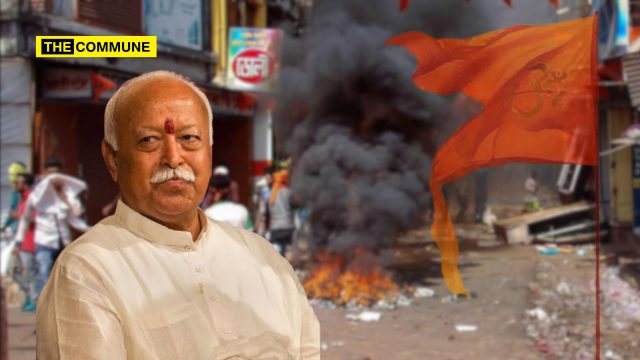
In a startling disclosure suggesting political targeting, a retired police inspector who once served in Maharashtra’s Anti-Terrorism Squad (ATS) has alleged that he was directed to arrest RSS chief Mohan Bhagwat during the early stages of the 2008 Malegaon blast investigation, a move he claims was intended to support a narrative of so-called “saffron terror.”

Speaking publicly in Solapur on Thursday, retired inspector Mehiboob Mujawar claimed that these instructions were part of a broader effort to fabricate a narrative. He was reacting to a recent court ruling that acquitted all seven accused, including BJP MP Pragya Singh Thakur, and stated that the verdict had reversed the alleged manipulations made during the original ATS inquiry.

Mujawar further criticized the legitimacy of the probe, asserting that it was spearheaded by what he described as a “fake officer,” and called the entire investigation a sham. He named a senior officer allegedly involved and said that he was given secret orders to target several individuals, including Ram Kalsangra, Sandip Dange, Dilip Patidar, and Mohan Bhagwat himself. “I was told to arrest Mohan Bhagwat,” he stated.

However, Mujawar claimed he refused to comply, describing the orders as unjustifiable and beyond his professional or ethical limits. “It was inconceivable for me to detain someone of Mohan Bhagwat’s stature,” he said. According to him, his refusal led to false charges being filed against him, which ultimately ruined a 40-year career in law enforcement. He also asserted that he possesses documentary proof to substantiate his allegations.

Commenting on the broader investigation, Mujawar said, “I cannot speak to the motives of the ATS at the time, but those orders were not something any officer should have acted upon.” He also dismissed the concept of “saffron terrorism” altogether, calling it fabricated. “There was no such thing. It was all fake,” he concluded. The Malegaon blast case, which was initially handled by the ATS, was later transferred to the National Investigation Agency (NIA).

(With inputs from News 18)

Subscribe to our channels on TelegramWhatsApp, and Instagram and get the best stories of the day delivered to you personally.
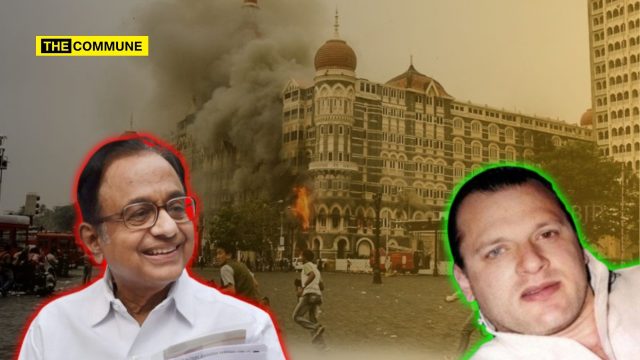
How Congress Leader Chidambaram Laughed Off 26/11 Conspirator David Headley

The Congress party and its allies in Parliament have sharply criticized the Indian government’s successful anti-terror operations be it the swift retaliation to the Pahalgam terror attack through Operation Sindoor, or the crackdown on militants in Jammu & Kashmir under the Operation Mahadev. Despite these significant achievements, Congress has refused to acknowledge or appreciate the success.

Senior Congress leader P. Chidambaram recently cast doubt on the government’s assertion that the terrorists involved in the Pahalgam attack, which killed 26 people (mostly civilians), were from Pakistan and that the assault was orchestrated by the Pakistani deep state.

This criticism came shortly after a combative speech by Rahul Gandhi, in which he pointed to former U.S. President Donald Trump’s claim of having brokered the India-Pakistan ceasefire. Rahul accused the Indian government of surrendering control of its foreign policy to the United States.

Yet, many are pointing to the contrast in Congress’ own record during similar situations especially when P. Chidambaram himself served as Home Minister during the aftermath of the 26/11 Mumbai attacks. A viral video from 2010 shows Chidambaram in an interview with a private TV channel, responding to questions about David Headley, one of the key conspirators behind 26/11.

When asked whether Indian agencies had any knowledge of Headley before the U.S. shared intelligence. Interviewer asked, “let me then take you to Hedley did you have any idea this man even existed before the Americans told us?” Chidambaram candidly said, “No.” The interviewer pressed further, asking, “isn’t that a failure on our part?” Chidambaram insisted it didn’t by saying, “No”.

The journalist pointed out that, “the man comes here he lives here he does reconnaissance he goes back files reports” Chidambaram responded, “All that was before 26/11. He came to India only once after 26/11,” and when asked, “and we still didn’t know who he was?” he replied “He was a white, Caucasian-looking person” puzzled interviewer asked, “which means he must be okay?” he replied with a chuckle, “American name, American passport.”

The contrast is stark, when the Congress was in power and failed to detect a major terror operative, their leaders dismissed it lightly even with laughter. But now, when the BJP government successfully retaliates and gains global support for its counter-terror actions, the same Congress leaders question its legitimacy.

Who is David Coleman Headley?

David Coleman Headley, originally named Daood Sayed Gilani, was born in Washington, D.C. to a Pakistani diplomat and broadcaster, Sayed Salim Gilani, and his American mother, Alice Serrill Headley. He spent part of his childhood in Pakistan, attending a boarding school, before relocating to the United States, where he worked in his family’s bar in Philadelphia.

Over time, Headley developed ties with the Pakistan-based terrorist organization Lashkar-e-Taiba (LeT). In 1998, he was convicted of drug trafficking, specifically for smuggling heroin from Pakistan into the U.S., and served a two-year prison sentence. After his release, he became an informant for the U.S. Drug Enforcement Administration (DEA), conducting undercover operations in Pakistan.

Between 2002 and 2005, Headley reportedly attended five terrorist training camps run by Lashkar-e-Taiba. Acting under LeT’s direction, he traveled to India multiple times to carry out surveillance missions ahead of the 2008 Mumbai terror attacks, as confirmed by the U.S. Department of Justice.

In 2009, U.S. authorities arrested him before he could execute a planned attack in Denmark. He later pleaded guilty to terrorism charges and cooperated extensively with investigators, providing valuable information on LeT’s structure and Pakistan’s involvement.

Headley is currently serving a 35-year prison sentence in the United States. Despite repeated requests from India for his extradition, the U.S. has declined, citing the terms of his plea agreement and cooperation with American intelligence agencies.

Subscribe to our channels on TelegramWhatsApp, and Instagram and get the best stories of the day delivered to you personally.
Chhattisgarh: Mother Teresa School Principal Beats Nursery Student, Tapes Her Mouth Over ‘Radhe Radhe’ Greeting, Arrested

mother teresa school principal arrested nursery girl radhe radhe

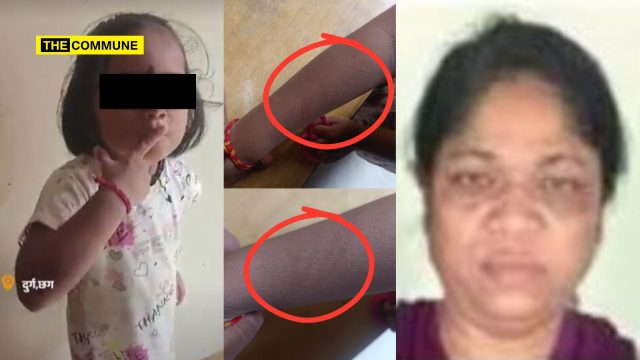
A school principal of Mother Teresa English Medium School in Bagdumar village was arrested on Thursday after allegedly beating a three-and-a-half-year-old nursery student and taping her mouth shut for greeting with the words “Radhe Radhe.”

Police officials said the incident occurred on Wednesday morning when principal Ila Evan Colvin visited the nursery class during an inspection. According to their findings, the student, described as shy and quiet, had greeted the principal with “Radhe-Radhe” instead of “Good Morning.” Colvin allegedly responded by beating the girl’s wrist with a stick and taping her mouth for nearly 15 minutes. The tape was later removed by the class teacher.

The child returned home that afternoon and informed her parents about the incident. Her father, Praveen Yadav, said the girl had visible injury marks and recounted the entire episode. The family initially approached the village head and later filed a complaint at the Nandini Nagar police station.

Confirming the incident, CSP Harish Patil stated that the police had registered a case under sections 115(2) and 299 of the Bharatiya Nyaya Sanhita (BNS), along with Section 75 of the Juvenile Justice Act, which deals with cruelty to children and outraging religious feelings.

Police officer Alexander Kiro added that the principal was produced before a magistrate after her arrest. He said the authorities took the matter seriously, especially given the child’s age and the nature of the punishment.

The incident triggered local outrage, with Bajrang Dal workers reportedly visiting the police station to demand action. Police maintained that the law would take its course.

Subscribe to our channels on Telegram, WhatsApp, and Instagram and get the best stories of the day delivered to you personally.