Home Blog Page 188

MK Stalin Objects PM Modi Calling Out DMK’s Hate Politics Against Biharis

pm modi mk stalin bihari

A political firestorm has erupted between the Bharatiya Janata Party (BJP) and Tamil Nadu’s ruling Dravida Munnetra Kazhagam (DMK) after Prime Minister Narendra Modi accused the DMK government of harassing Bihari migrants, prompting a strong condemnation from Chief Minister M.K. Stalin.

The controversy began during the PM’s campaign speech for the upcoming Bihar elections, where he targeted the DMK’s stance on migrant workers from the state.

“In Tamil Nadu, the DMK people harass the hardworking people of Bihar,” PM Modi stated, exposing what he called the “duplicity” of the state government.

Objecting to this strongly, Chief Minister Stalin took to his X handle to issue a rebuttal. He framed the Prime Minister’s comments as part of a broader pattern of the BJP fomenting regional divisions for electoral gain.

He wrote, “As a Tamil individual, I painfully urge Mr. Narendra Modi, who often seems to forget that he holds the honorable position of Prime Minister for everyone in this country, not to lose the dignity of his responsible position through such speeches. Whether it is Odisha or Bihar, wherever they go, BJP members express their hatred towards Tamils for the sake of election politics. In my capacity as the Chief Minister of the people of Tamil Nadu, I strongly condemn this. I emphasize that the Prime Minister and the BJP must stop these petty political activities, such as fostering enmity between Hindus and Muslims, and behaving in a way that creates enmity between Tamils and the people of Bihar, in a great India that is proud of its diversity and ‘Unity in Diversity’ and focus on the nation’s welfare.

However, the Prime Minister’s remarks align with multiple instances in which DMK leaders have made controversial comments against Hindi speakers and North Indian migrant workers, especially those from Bihar. The ruling DMK has frequently displayed hostility toward the Hindi language and northern communities, often framing linguistic identity as a political tool.

DMK leaders, including ministers and MPs, have been accused of making derogatory remarks equating Hindi speakers with poverty and menial labor. TM Anbarasan compared North Indian population growth to pigs and mocked Hindi speakers as cattle herders and panipuri sellers. A Raja, Dayanidhi Maran, Ponmudy, and Mano Thangaraj have also been recorded making disparaging comments about Hindi and its speakers. Senior leader Duraimurugan called Hindi inauspicious and referred to North Indians as unhygienic and barbaric.

Several comments have specifically targeted Biharis. DMK Minister KN Nehru claimed that “Biharis lack brain as Tamilians have. People from Bihar are not as intelligent as Tamilians,” and accused Lalu Prasad Yadav of filling railway jobs with Biharis through cheating. RS Bharathi compared Tamil Nadu’s Governor to a “Bihari panipuri seller” and said that “Tamil Nadu taxpayers feed people from Bihar and Uttar Pradesh at Amma Unavagam.” The DMK’s IT wing and its affiliates have also in every possible instance used “Bihari” and “Vadakkan” as slurs.

Subscribe to our channels on WhatsAppTelegram, Instagram and YouTube to get the best stories of the day delivered to you personally. 
The Hindu Journo Varghese K George Gives Sermons On How Hindus Should Celebrate Festivals In Christian Nations

It seems the modern Hindu has failed, once again, to grasp the fundamental rules of global citizenship. We have not yet learned that our faith is a private neurosis, to be practiced in whispers, not a civilization to be celebrated in the open. Our recent, unfortunate visibility has drawn the ire of the global liberal priesthood, and their verdict is in: we are too loud, too colorful, and far too unapologetic.

In his latest sermon disguised as an analysis in The Hindu, from the pulpit of post-colonial guilt, Varghese K George has served as a timely reminder of our place. The charges are clear: the immersion of a Ganapati idol in a foreign river is “pollution,” while the same act by a local municipality is “tradition.” The bursting of a firecracker on Deepavali is “cultural exhibitionism,” while the sonic bombardment that rings in every New Year from Sydney to London is “celebration.” The logic is impeccable, if you are blessed with the right kind of eyes – eyes that see a problem only when the skin is brown and the gods are many.

But the most insidious part of this new doctrine is the intellectual sleight of hand that equates festival fervor with “state-sponsored” subversion. According to this gospel, a Hindu celebrating Deepavali is not merely celebrating; he is an “active member of Indian strategy,” a foot soldier in a “cultural nationalist” project. Yet, when George or any other commentator celebrates Easter or Christmas, it is never framed as part of a “Christian nationalist plan to destabilize the country.” No, their faith is personal; ours is political. Their celebrations are benign; ours are a “malign” influence.

There is a palpable nostalgia in these circles for the “good Indian” – the Nehruvian model who knew his place was to be a silent, grateful guest in someone else’s story. This ideal immigrant sent remittances home but left his culture at the border; he contributed to the economy but never to the cultural conversation. He was the perfect subject for a Western fantasy: industrious, docile, and invisible. Today’s Hindu, however, commits the unforgivable sin of existing in the present tense – vibrant, vocal, and visibly different. How dare we?

The great comedy of our time is watching the West, which has built a secular religion out of celebrating every conceivable identity, suddenly develop a case of the vapors when faced with the unassimilated Hindu. Pride parades that take over city centers for weeks are a triumph of diversity. Mardi Gras that transforms entire cities into bacchanals is cherished cultural heritage. But a Hindu procession with drums and deities? That, we are told, is a threat to social harmony. The rainbow flag can fly proudly over town halls, but the bhagwa dhwaj is a provocation. It appears the grand project of multiculturalism has a secret clause: Thou shalt not be proudly, publicly Hindu.

And where, pray tell, is the statistical evidence that our celebrations cause more law and order problems per capita than any other community’s? There is none. We are judged not by data, but by anecdote and the visceral discomfort we provoke. A single firecracker incident in Edmonton becomes a symbol of our “uncivilized” nature, while annual riots after sporting events are written off as “passionate fandom.”

Beneath this anxiety lies a deeper, more visceral fear: the loss of control. For centuries, the non-white world was expected to be the audience to the West’s spectacle. We were the consumers of their culture, the converts to their faith, the subjects of their study. The Hindu who refuses to play this role, who instead declares, “My civilization is ancient, my philosophy is profound, and I will not be ashamed”, is the ultimate disruptor. He cannot be easily categorized as a victim, nor can he be dismissed as a primitive. He is, simply, inconvenient.

The prescription for this disease of pride is simple. We must learn to sanitize our faith for foreign consumption. Our Deepavali must become a “festival of lights” stripped of its spiritual meaning, a quaint ethnic event. Our rituals must be repackaged as “wellness” and “mindfulness.” Our gods must be aestheticized as art, never acknowledged as living deities. We must become brown-skinned vessels for white, secular values – the perfect global citizens, empty of any real cultural baggage.

So, let us be forewarned. The sound they cannot stand is not the crackle of a firework or the beat of a dhol. It is the sound of a billion people, after centuries of silence, finally finding their voice. It is the sound of a civilization, not in decline, but in glorious, noisy renaissance. And no amount of hand-wringing from the commentariat can drown it out.

Subscribe to our channels on WhatsAppTelegram, Instagram and YouTube to get the best stories of the day delivered to you personally. 
Foreign Church Meddling In TN Elections? DMK Govt’s Minority Commission Partners With Missionary Organization With Links To Free Church Of England To Conduct ‘TN Christian Awareness’ Event

With the 2026 Tamil Nadu Assembly elections approaching, the DMK government has come under scrutiny for what appears to be a state-sponsored outreach to Christian voters. A banner displayed at an official “awareness programme” organised by the Tamil Nadu State Minorities Commission prominently featured overt Christian imagery and two controversial logos — one of the Arise and Shine Missionary Diocese and another resembling that of the Free Church of England.

The event, titled “Awareness Camp for Tamil Nadu Christians,” was held in Chennai on 28 October 2025. The programme was jointly presented by the Tamil Nadu State Minorities Commission and the Ezhumbi Prakasi Missionary Archdiocese, with a large image of Chief Minister M.K. Stalin displayed at the centre of the banner.

At the gathering, which was attended by bishops, pastors, and clergy from across the state, Rev. Fr. S. Joe Arun, Chairperson of the Tamil Nadu Minorities Commission, declared that “only the Hon. Chief Minister of Tamil Nadu can provide protection to the religious and linguistic minorities in Tamil Nadu.” Commission Vice-Chairman I. Irai Anban Kuthus was also present.

Rev. Arun outlined the Commission’s ongoing consultation programmes and listed welfare measures extended to minority communities under the DMK government. He also received petitions from attendees, including a proposal to establish a welfare board for pastors similar to the existing one for temple preachers, assuring that the matter would be recommended to the government.

However, what caught attention was the inclusion of missionary organization logos on an official state-sponsored event banner — a move that raises serious questions about the interference of Church in determining electoral outcomes.

The logos on the event banner also appear on the New Anglican Synod website.

One of the featured entities, the Arise and Shine Missionary Diocese, openly identifies itself as an evangelical Christian body that indulges in church planting and conversions.

About Arise And Shine Missionary Diocese

Its founder Rt. Rev. Dr. K. Jayasingh describes his mission as being guided “in the name of our Lord and Saviour Jesus Christ,” adding that his passion for evangelism grew during his theological studies at the Truth Bible Research Institute. The diocese claims to operate over 60 churches across Vellore and Ranipet districts, with activities including orphanage support and pastor training.

The stated objectives of the New Anglican Synod missionary organization include church planting, theological and legal education, training for bishops, youth and women’s ministries, prayer and spiritual support, advocacy for the “suffering church,” and fostering cross-cultural global mission partnerships. These initiatives are presented as part of their broader mission to strengthen and expand Christian communities in India.

Free Church Of England 

The second emblem on the banner — the Free Church of England — is equally contentious. While there is no functioning Free Church of England institution in Tamil Nadu today, the name traces back to the Free Church of Scotland mission that founded the Anderson Church in the 19th century. Located on NSC Bose Road, George Town, the historic church, originally called the College Chapel, is now part of the Church of South India (CSI).

Historically, FCE has engaged in mission and “associated church/connexion” work internationally (including India) — for instance, the UK FCE website reports bishops travelling to Chennai to meet Indian clergy in 2018.

The presence of these explicitly religious insignias on the banner of a government event has prompted questions about the DMK government’s use of public funds for religiously targeted outreach. Critics have called it a thinly veiled attempt to consolidate the Christian vote amid growing political competition — particularly after actor Vijay, a Catholic Christian, announced his political entry ahead of the 2026 polls.

By allowing missionary organizations and even a church historically linked to British-era Protestant missions to appear on a Tamil Nadu government commission’s official banner, observers argue that the DMK has blurred the line between governance and sectarian mobilisation.

Subscribe to our channels on WhatsAppTelegram, Instagram and YouTube to get the best stories of the day delivered to you personally. 
Dravidian Model: Cuddalore Farmer Dies After Snakebite Amid Doctor Shortage At Govt Upgraded PHC

A 35-year-old farmer from Mangalore village near Vepur in Cuddalore died on Wednesday, 29 October 2025, after being bitten by a poisonous snake and failing to receive timely medical treatment due to the absence of doctors at a local government health centre.

The victim, identified as Senthilkumar, was working in his field when the incident occurred. Locals rushed him to the Government Upgraded Primary Health Centre in the village for immediate care. However, according to residents, there were no doctors available at the facility for nearly three hours, during which no treatment or first aid was provided.

Senthilkumar’s condition deteriorated rapidly, and he died before any medical help arrived. His death sparked outrage among villagers and relatives, who accused health authorities of negligence.

In protest, villagers gathered outside the primary health centre, blocked the nearby road, and reportedly broke the hospital’s doors during a heated confrontation with staff. The situation caused tension in the area until police arrived to disperse the crowd and restore order.

Residents demanded that adequate medical staff be posted at the centre and called for accountability over what they described as a preventable death caused by administrative apathy. Local authorities are investigating the incident.

(Source: Top Tamil News)

Subscribe to our channels on WhatsAppTelegram, Instagram and YouTube to get the best stories of the day delivered to you personally. 
Dravidian Model: ₹93-Crore Koyambedu Flyover Shows Cracks And Corrosion Just Four Years After Inauguration

Dravidian Model: ₹93-Crore Koyambedu Flyover Shows Cracks And Corrosion Just Four Years After Inauguration

The 1.15-km Koyambedu flyover, built at a cost of ₹93 crore and inaugurated in November 2021, has deteriorated sharply within four years of opening. The structure, which connects Koyambedu and the SAF Games Village, now shows multiple potholes, exposed expansion joints, and steel reinforcements jutting out dangerously, posing a serious risk to motorists.

Large sections of the concrete surface have peeled off, particularly near the down ramp close to the State Election Commission office. In some stretches, even the patchwork done by the Highways Department has come off again.

Officials have described the visible steel rods and damaged surface as “normal wear and tear” and claimed the flyover’s structural integrity remains unaffected. However, engineering experts have criticised the quality of construction.

“Concrete flyovers are expected to withstand traffic stress for at least ten years, or at worst, five years. If steel rods are already visible, it shows very poor construction standards,” said Sampath Kumar, Professor of Highways and Transportation at Sathyabama University. He attributed the damage to the use of M-sand mixed with quarry dust — a combination that reduces concrete density and causes it to flake off easily.

Parthasarathy, Assistant Engineer with the Chennai Metropolitan Development Plan who worked on the project, said water stagnation had caused parts of the surface to chip away. “We accounted for heavy truck traffic from Koyambedu market, but the actual vehicle load appears higher than expected. This is not a structural issue but a surface-coating problem, which will be repaired,” he said.

He added that the 20-mm gap visible between expansion joints was part of the design, allowing the structure to contract in winter and expand during summer. “It’s normal and not a cause for concern,” Parthasarathy said.

Highways Assistant Engineer Haribabu, who oversees the stretch, confirmed that the flyover will undergo a post-monsoon review. “We conduct periodic inspections and carry out necessary repairs. The Thirumangalam flyover has already been patched, and similar work will be done here after the monsoon,” he said.

The condition of the Koyambedu flyover — a key arterial link in Chennai’s road network — has raised questions about material quality, construction oversight, and maintenance standards, as experts warn that visible corrosion and crumbling surfaces on a recently built structure are indicators of systemic lapses.

(Source: Times of India)

Subscribe to our channels on WhatsAppTelegram, Instagram and YouTube to get the best stories of the day delivered to you personally. 
Karnataka: Man Of Suspected Bangladeshi Origin Enters Venugopalaswamy Temple In Devara Beesanahalli, Allegedly Enters Sanctum, Kicks Idols

Karnataka: Man Of Suspected Bangladeshi Origin Enters Venugopalaswamy Temple In Devara Beesanahalli, Allegedly Enters Sanctum, Kicks Idols
Image Source: PublicTV

Bengaluru witnessed tension earlier this week after a man allegedly vandalised the Venugopalaswamy Temple in Devara Beesanahalli. The incident took place around 8:30 AM on 28 October 2025, when the accused, identified as Kabir, reportedly entered the temple’s sanctum sanctorum wearing slippers and desecrated the idols.

According to preliminary police information, Kabir, who runs a shoe-stitching shop in the area, first struck a photo of Lord Ganesha displayed in front of a nearby medical shop with a stick. When confronted by locals, he allegedly ran toward the Venugopalaswamy Temple, shouting religious slogans. Witnesses said he hurled a stone at the temple’s Garuda Gamba before entering the sanctum, dragging the idol of the deity, and kicking it with his slippers while holding an oil-like substance in his hand.

The act triggered outrage among locals and temple staff, who caught Kabir, tied him to a pole, and assaulted him before handing him over to the Marathahalli police. Officers later visited the site and conducted an inspection. Items allegedly used in the incident including a bottle, slippers, and stones were seized from the spot.

Police officials said Kabir is currently receiving treatment at a private hospital under custody and will be interrogated after discharge. Preliminary investigation suggests that the accused may be of Bangladeshi origin and is suspected to have entered Bengaluru illegally.

The Marathahalli police have registered a case and are conducting further investigation into the motive and background of the accused.

(Source: PublicTV)

Subscribe to our channels on WhatsAppTelegram, Instagram and YouTube to get the best stories of the day delivered to you personally. 
Dravidian Model: Tamil Nadu Sees Sharp Rise In School Dropout Rates, Slips Behind Other Southern States: UDISE+ Report

state education policy SEP 2025 dmk Tamil Nadu Sees Sharp Rise In School Dropout Rates, Slips Behind Southern Peers: UDISE+ Report

Tamil Nadu has recorded a significant rise in school dropout rates across primary (Classes 1–5), upper primary (6–8), and secondary (9–10) levels for the academic year 2024–25, according to the latest Unified District Information System for Education Plus (UDISE+) data released by the Union Ministry of Education.

The state, long regarded as a strong performer in school retention, has seen its primary and upper primary dropout rates increase from 0% last year to 2.7% and 2.8% respectively – the highest levels in five years. The secondary dropout rate has also risen from 7.7% in 2023–24 to 8.5% this year.

At the national level, Tamil Nadu now ranks ninth from the bottom in primary education outcomes. Kerala recorded a dropout rate of 0.8%, while Karnataka and Telangana reported 0%, and Andhra Pradesh 1.4%. The all-India average stands at 0.3% for primary, 3.5% for upper primary, and 11.5% for secondary levels.

Education officials have said they will examine the data before issuing an official response. However, the findings have triggered concern among educators and parents across the state.

The UDISE+ report also points to a shift in enrolment trends, showing a decline in admissions to government and aided schools alongside a rise in private school enrolments. Class 1 enrolment in government schools fell from 2.8 lakh in 2023–24 to 2.7 lakh this year, while aided schools saw numbers drop from 97,692 to 91,694. In contrast, private schools saw admissions rise from 5.17 lakh to 5.62 lakh.

Tamil Nadu currently has 57,935 schools catering to about 1.25 crore students, with 5.49 lakh teachers employed. The pupil–teacher ratio has improved slightly, from 24 to 23, but the number of single-teacher schools has risen sharply from 2,758 last year to 3,671 this year, covering over 95,000 students.

While 98% of government schools have functional toilets, activists say infrastructure alone cannot reduce dropouts. They cite socioeconomic pressures, the lingering impact of the pandemic, child labour, child marriage, and migration as contributing factors forcing students, especially girls, to leave school.

Critics have linked the data to a broader decline in the state’s public education system. They allege that government schools face severe neglect, with incidents of classes being held under trees and poorly constructed buildings collapsing in several districts, including that of the School Education Minister.

They also point out that the number of single-teacher schools has reached alarming levels and that frequent closures for government publicity events disrupt learning. Meanwhile, private schools reportedly offer better facilities and trilingual education options, attracting more parents.

As of 2024–25, 2.39 lakh students enrolled in Class 1 across government schools, compared to nearly 5.26 lakh in private institutions.

This report comes at a time when the state of education, the quality of schools in Dravidian Model Tamil Nadu have hit a rock bottom, pushing it even further below.

Subscribe to our channels on WhatsApp, Telegram, Instagram and YouTube to get the best stories of the day delivered to you personally.
As Leftist Lawyer Indira Jaising Bats For Lowering Marriage Age To 16, A TN Father Laments How His Daughter Was Groomed From 13 And Married A 25-Year-Old Man Just Days After Turning 18

Even as leftist lawyers like Indira Jaising push for reducing the legal marriage age to 16, real stories from the ground tell a far darker tale. In Tamil Nadu, a father is mourning how his teenage daughter — allegedly groomed from the age of 13 — was manipulated into marrying a 25-year-old man just days after turning 18. It’s a chilling reminder of the dangerous consequences of romanticising “early consent.”

What Happened

A dramatic cross-continental saga has unfolded, pitting a grieving father against a determined young couple, after an 18-year-old girl, freshly returned from her studies in London, married a 25-year-old man, sparking allegations of coercion, threats, and violent clashes between the families.

The case, which involves allegations of a long-term grooming campaign and a marriage solemnized just days after the girl became a legal adult, has left both families traumatized and raised complex questions about consent, parental authority, and the law.

This comes in the backdrop of the upcoming case of senior advocate Indira Jaising’s petition on lowering age of consent for children to 16.

“A Small Child, Disgracing Us All”: The Girl’s Father’s Plea

In an emotionally charged statement, the girl’s father recounted the sequence of events that began with his daughter ceasing communication while abroad. “On the Friday she turned 18, we all celebrated heavily over a video call… On Saturday, she didn’t come online,” he said. After frantic searches in London, the family discovered she had flown back to India and, within two days of turning 18, went to a Sub-Registrar Office (SRO) to get married.

According to the father, the groom — whom he says is about 25 and “a lawyer” — had been in contact with his daughter for years and had allegedly “deceived many girls.” He accused the groom’s group of producing intimate material to control the daughter and instil fear. “They made an obscene video, something very bad, that children should never see… That’s why she is scared and controlled, obeying everything he says,” the father said, and added that the family has reported the matter to police.

He alleged that the groom “planned all this” and warned that members of the groom’s circle had been threatening the family. “They took videos and are threatening badly,” he said. The family claims it has lodged complaints and that police were informed, but added they feel powerless in the face of the groom’s alleged influence and the group’s intimidation.

The father described frantic efforts to find his daughter after she stopped responding to the family’s messages. “We sent our daughter to London to study well… We are fools; we didn’t know how to raise her. I gave her away to someone I didn’t know how he was,” he said, urging other parents to monitor their children closely.

The father expressed shock and a sense of betrayal, alleging a calculated plan. “My daughter just finished 18, it was her third day… He deceived many girls… We didn’t know how long he had planned this,” he claimed, revealing the couple had been in a relationship for five years, unbeknownst to the family. “Think about a 13-year-old and what’s going on. I can’t even talk about this.”

He pleaded with other parents to be vigilant, suggesting his daughter was under duress. “I assure you; our daughter has some video with him. That’s why she is scared and controlled, obeying everything he says… They made an obscene video… He keeps threatening us.” His simple request was for his daughter to complete her education. “She’s just 18, a small child… Our request was simple: let her finish college first.”

“They Love Each Other Genuinely”: The Boy’s Father’s Counterpoint

The groom’s father, speaking from Palayamkottai, gave a different account focused on the problems that occurred while trying to register the marriage locally after an earlier attempt in Coimbatore. He said the couple had gone to Coimbatore and that the girl later returned from London and visited the Coimbatore police station, after which both families had met.

“Recently, a couple in love went to get married in Coimbatore. Due to troubles caused by the girl’s family, the marriage could not be registered,” he stated. He added, “With the girl’s consent, and she having come from London, the girl spoke at Coimbatore police station and then sent both the boy’s and girl’s families. Now, to get the marriage registered at Palayamkottai Register Office, the groom, the groom’s family, and others all came and waited near the Palayamkottai bus stand for registration”. He detailed a violent confrontation at the registration office. “About 10 to 60 people from the girl’s family came… Suddenly, fights broke out, and the groom’s father… got hit and injured. Their uncle was beaten badly… Both of them are now admitted in serious condition.”

Describing the atmosphere at the registry office in Palayamkottai, the groom’s father said the two families and supporters were present and a decision was being discussed when an altercation erupted. He said his own family members were injured in the scuffle.

He asserted that the girl’s will is clear. “According to her wishes, she can be sent with the one who tied the thali and married her. The problem is that the bride’s family has plenty of money but the boy’s family has none. The boy is a lawyer, but still only one community is involved. Both are from the same community, but the class and wealth gaps show up. If this were an intercaste marriage, it would have led to honor killings by now. Even though the girl married within the same community, money is the main issue causing friction. They love each other genuinely and chose to marry with mutual consent.”

He further said, “The girl who came from London, told the boy, that he should wait at Bombay and bring the girl to Coimbatore where he got married to her. The girl’s family also went there. The family is distressed and in pain. When it comes to investigation about who came and what, knowing it is same caste, the girl’s family does not want to allow the marriage to proceed. Even now, using money and power, they misuse authority in police and register office. They have been waiting for four hours at the register office, which is just sitting empty. They waited four hours to register but soon after the girl’s family arrived, they registered without her consent.”

He further said, “Even after four hours [of police interrogation], the girl insists she wants to be with the boy. She says she will not go even with her parents.”

He added, “The question we keep asking the girl’s family is whether they support her or not. If they support her, let them live peacefully otherwise if your daughter wishes to leave, please take her with you. We did not force your daughter to come.”

He ended with a plea for safety, alleging intimidation by “gangsters and rowdies” associated with the girl’s family. “My boy’s life is in danger… It is not just him but our whole family that faces danger.”

Investigation & Police Involvement

Police in Palayamkottai and Coimbatore are reported to have been involved in inquiries after the marriage and subsequent clashes. Authorities have detained the couple for questioning and are examining the sequence of events leading up to the registration attempt, witness accounts and allegations of intimidation and assault.

The two families’ statements reflect sharply divergent narratives: one alleging deception of a newly-turned adult and coercion backed by threats and compromising material; the other asserting that the couple freely chose to marry and blaming the girl’s family for violent interventions at the registry.

Local officials said they were reviewing complaints about the purported assault and the registration process. Investigating officers are expected to review CCTV, mobile phone records and the statements of those present to determine whether any offences including assault, coercion, or criminal intimidation were committed and whether the marriage was registered lawfully with informed consent.

Last Word

For every young girl manipulated under the guise of “love,” there’s a parent grieving in silence. When society starts confusing grooming for romance, the system has failed. No law should make it easier for a child to be preyed upon — least of all in the name of freedom.

Subscribe to our channels on WhatsAppTelegram, Instagram and YouTube to get the best stories of the day delivered to you personally. 
ED Dossier Names TN Minister KN Nehru, Brothers And Aides In Cash-For-Job Scam

ED Dossier Names TN Minister KN Nehru, Brothers and Aides in ₹35 Lakh Cash-for-Job Scam

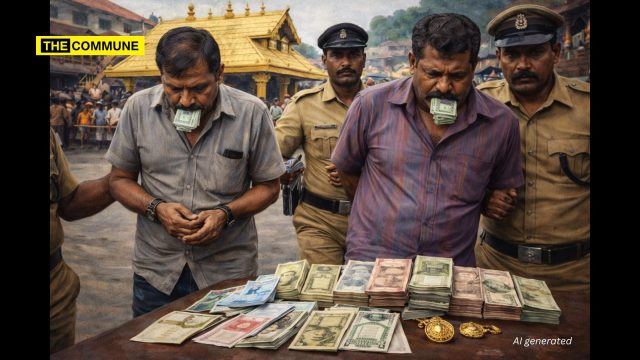
The Enforcement Directorate (ED) has submitted a 232-page dossier to the Tamil Nadu police chief detailing what it describes as a large-scale “cash-for-job” scam in the state’s Municipal Administration and Water Supply (MAWS) Department, allegedly involving Minister KN Nehru, his brothers, and close associates.

The dossier, accompanied by a four-page covering letter dated 27 October 2025, was shared under Section 66(2) of the Prevention of Money Laundering Act (PMLA), urging the Tamil Nadu Police to initiate a formal investigation. The ED’s report alleges that bribes ranging from ₹25 lakh to ₹35 lakh were collected from candidates seeking government posts for engineers, inspectors, and other technical positions.

According to ED sources, the document provides digital, documentary, and witness-based evidence concerning the appointment of 2,538 officers and staff, including about 150 candidates who allegedly secured positions through manipulated selection processes. The posts included assistant engineers, junior engineers, town planning officers, and sanitary inspectors.

Alleged Modus Operandi

The ED claims the recruitment scam was orchestrated by Nehru’s close network — brothers KN Manivanan and Ravichandran, and associates D Ramesh, T Selvamani, and Kavi Prasad — who allegedly acted as intermediaries between job aspirants and political authorities.

As per the dossier, aspiring candidates or their relatives first approached these associates, who then determined the feasibility of securing a job and negotiated the bribe amount. Once payment terms were finalized, the group allegedly ensured the inclusion of the candidate’s name in the final merit list. The ED alleges that Nehru was fully aware of these activities.

Digital evidence recovered during searches in April 2025 — including WhatsApp conversations and shared documents — allegedly reveals coordination among these intermediaries. The ED claims that between August 2024 and February 2025, Ramesh, Selvamani, and Kavi Prasad accepted candidate recommendations from MLAs, senior officials, and brokers, influencing the recruitment outcomes.

The MAWS Department had conducted written examinations in June 2024, declared results on February 17, 2025, and completed counselling in July. The ED says it retrieved application forms and call letters from the phones of intermediaries dated before the official announcement of results — indicating foreknowledge of selections.

One of the WhatsApp lists recovered from Ramesh’s phone allegedly contained candidate names marked with priority codes. Many of those on the list reportedly received appointment orders. The dossier also cites a message from a broker thanking Selvamani for helping secure selections and seeking similar assistance for postings in the Greater Chennai Corporation and Tambaram Corporation.

ED further alleges that Ravichandran facilitated the selection of a joint director’s daughter in the Industries Department, while Kavi Prasad helped a previously unselected candidate make the final cut. Images of ₹10 notes allegedly used in hawala transactions were also found in group chats between these associates, the report claims.

Responses and Political Fallout

When contacted, Minister KN Nehru declined to comment, citing an ongoing meeting. His brother Manivanan and associate Kavi Prasad denied any connection to the case, while Ramesh, Ravichandran, and Selvamani did not respond to calls.

Nehru later dismissed the ED’s claims as “politically motivated,” alleging that the agency was attempting to malign the Dravidian model government. “After failing to blow up an old bank case, this is ED’s latest attempt to malign the Dravidian model government,” he said.

Opposition leaders have demanded an immediate and transparent probe. AIADMK chief Edappadi K. Palaniswami called the alleged scam a “cruel betrayal of Tamil Nadu’s youth,” urging the police to register an FIR and act swiftly. BJP state president Nainar Nagenthran and former state chief K. Annamalai have demanded that the case be transferred to the Central Bureau of Investigation (CBI).

The Tamil Nadu Police is expected to review the dossier and determine the next course of action.

(Source: The New Indian Express)

Subscribe to our channels on WhatsAppTelegram, Instagram and YouTube to get the best stories of the day delivered to you personally. 
INDI Ally VCK MP Thirumavalavan Appreciates Dude Film Made By EVRist That Glorifies And Normalizes Adultery

INDI Ally VCK MP Thirumavalavan Appreciates Dude Film That Glorifies And Normalizes Adultery

Viduthalai Chiruthaigal Katchi (VCK) chief and Lok Sabha MP Thol. Thirumavalavan has publicly praised the Tamil film “Dude,” hailing it as a “slap in the face to the caste society.” However, his endorsement has ignited controversy, with critics accusing the INDI alliance leader of normalizing adultery for the sake of a political message.

In a detailed review of the film, Thirumavalavan said, “Today I got the opportunity to watch the film Dude, which is being successfully run on the screen, produced by Mythri Movie Makers and directed by Keerthiswaran. We saw this film with our left-wing movement’s senior leader Mutharasan. The film has Pradeep Ranganathan and Mamita Baiju in the lead roles. This film, which has made love as its centerpiece, also speaks against honor killing. Love does not need any definition like caste, religion or economy. Keerthiswaran has directed this film with the definition that two minds are enough. There are visuals that attract the viewers from the beginning to the end. The flow of the film creates the expectation of what will happen next. Finally, the expectation of how this will end is increased by the comedy and at the same time, this film is centered on a very important problem that we are facing every day in society.”

He continued, “Keerthiswaran has directed this film magnificently. The fact that he has made this film suitable for this generation reveals his creativity. This film is a testament to the fact that he has also absorbed the psychology of this generation in a good way and has expressed it. He has handled the everyday languages ​​​​that this generation of the 21st century, which can be called Gen Z kids, can handle and the understanding between friendship and love. Although friendship is different, love is different, friendship is the basis of love. I am used to friendship, I have no feeling, I have zero feeling with you, how can I live with you in such a place, he gives the highest respect to friendship.”

He further added, “He records in the following scenes that friendship is the basis of love. That place where he says, “When you like it, I don’t like it, when I like it, you don’t like it,” comes a dialogue about whether honor greater than life greater than life. When he wants to reunite a woman who rejected him with the lover she loves, he fights for her until the last scene of the film, without thinking of revenge if he betrays her. A new approach, one may question whether it is practical or not, but it is noteworthy that director Keerthiswaran has made this a debate or has highlighted this. The struggle he faces to reunite them, the challenges and crises he faces, the dangers he faces, and the fact that he brings all these into the film, while at the same time creating a comical tone in between, is a testament to the director’s talent.”

He continued, “Pradeep Ranganathan and heroine Mamitha Baiju have transformed themselves into those characters. Other artists have also contributed excellently. In the final scene of the film, where Sarathkumar plays the role of a father, he tries to kill the grandson instead of the daughter, and the reason he gives for not killing the daughter is that I want an heir through you, so I will not kill you. I cannot accept that this grandson was born to someone and that he is the heir to my property. We feel anxious about what will happen when he tries to kill the child. Then he has chest pain and is rushed to the hospital. The line spoken by the protagonist at that point is, “How old are you, 63? How many times have you had this attack? This is the second attack. How long will you be alive? Why do you think so arrogantly? If you feel ashamed, go and die.” That line is a whipping for this casteist society. It is a lesson for the casteist gang that justifies honor killing. Whether it is biological, legal or technical, the line where he says, “This grandson is yours, this child is your grandson, accept this.” Then, the scene where Sarathkumar comes to his senses and accepts the couple and accepts his grandson is a comforting and satisfying scene. How can a message be conveyed through film language – that Keerthivasan has beautifully expressed through this film how a message can be conveyed in a way that is understandable to today’s generation. Pradeep Ranganathan’s performance and the performances of all those who supported him are excellent, as per his expectations. I am proud that this film industry is in their hands now. My congratulations to both of them.”

The film’s plot revolves around Agan, a man who willingly gives up his wife to another man and later pretends to be the father of her child. The story, which would anywhere else be called a moral collapse, is being celebrated by a section of Gen-Z Dravidianists and leftists.

A few days ago, Keerthiswaran spoke to the media over its alleged commercial success. He said, “This film is creating debates. What I feel is this is Tamil Nadu. In this state, many ‘elders’ (periyavunga) have lived. One ‘periyavar’ (referring to anti-Hindu bigot EV Ramasamy Naicker) has also lived. They’ve said so many things. We’re just followers of them and talking about it. In Tamil Nadu, these statements are not new. Many have told this before. We as next-gen are carrying it forward and will continue to talk about it. But it will be conveyed entertainingly within cinema that is accepted by audience in large scale, that’s my wish.”

Subscribe to our channels on WhatsAppTelegram, Instagram and YouTube to get the best stories of the day delivered to you personally.