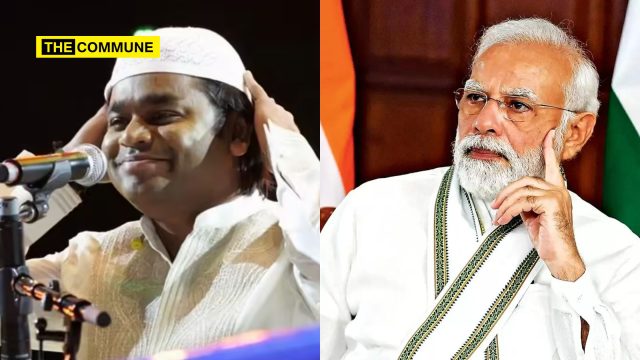
Amid his recent remarks suggesting that he has received less work in Hindi cinema alluding to a “communal environment” under the BJP-led government at the Centre, a look at A R Rahman’s own record of national recognition presents a striking contrast.
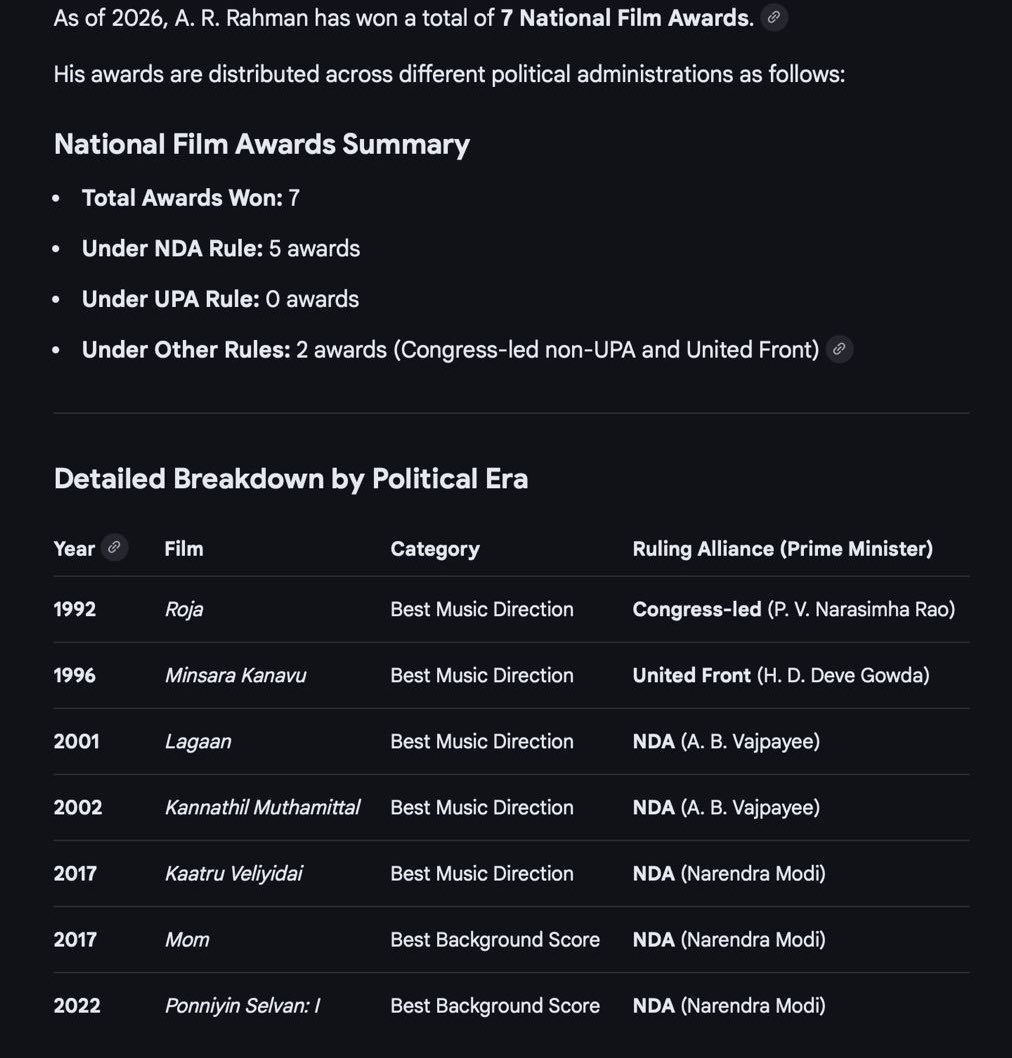
AR Rahman has won seven National Film Awards during his career. Of these, five were conferred during periods when the BJP-led NDA was in power at the Centre. Notably, none of his National Awards were awarded during the decade when the Congress-led UPA government, supported by the DMK, governed India.
AR Rahman has won 7 National awards. 5 of them were given when the BJP was in the Central Government. None during the 10 years when Congress and DMK were in the Centre.
National Film Award winners in India are selected through a jury-driven process administered by the Directorate of Film Festivals under the Ministry of Information & Broadcasting. Independent juries comprising senior filmmakers, composers, writers, critics, and technicians from across regions and languages evaluate films that are formally submitted by producers, as non-submitted works are not considered. The jury assesses entries based on artistic merit, technical excellence, cultural relevance, and originality, and arrives at decisions through collective discussion and voting. Politicians play no role in selecting winners; the government’s involvement is limited to administration, with the awards formally conferred by the President of India, underscoring their status as state honours rather than political favours.
Out-Of-Tune AR Rahman
The contrast is significant given Rahman’s suggestion that the present political climate has adversely affected his opportunities in Hindi cinema. The record shows that his most substantial institutional recognition at the national level came under the very political dispensation he now appears to fault.
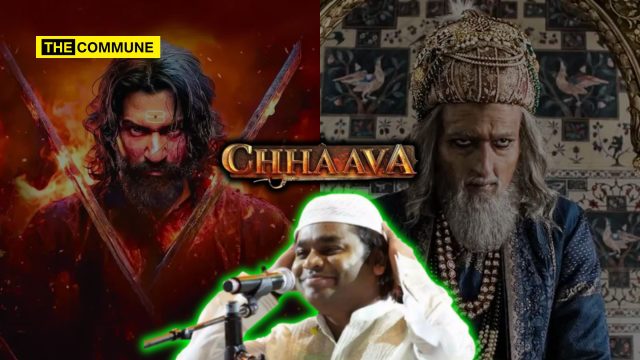
In fact, AR Rahman himself states that the makers of Chhaava were particular about having him in the film as they thought he would only do justice. It is another matter that the music he scored for Chhaava was pathetic. Did he give an underwhelming score because he was offended by portraying Aurangzeb as a ruthless bigot?
Instead of acknowledging that audiences and filmmakers are moving on, he chooses to cloak professional stagnation in insinuations of bias. Dressing up a fading dominance as a consequence of “communal” forces is deflection. No artist, however celebrated, enjoys permanent supremacy. Decline is not persecution, it is inevitability.
Subscribe to our channels on Telegram, WhatsApp, and Instagram and get the best stories of the day delivered to you personally.
Between 1 December 2025 and 14 January 2026, Bangladesh witnessed a spate of serious crimes targeting members of the Hindu minority, including killings, mob lynchings, sexual violence, arson, vandalism, and arrests linked to alleged blasphemy.
Based on police reports and contemporaneous media coverage, the following is a chronological, factual account of 18 major incidents during this period. The cases span multiple districts and reflect a pattern of targeted violence, intimidation, and communal hostility, with investigations and judicial proceedings at various stages.
#1 Hindu Auto-Rickshaw Driver Samir Das Killed in Feni – 11 January 2026
On 11 January 2026, 28-year-old Samir Das, a Hindu auto-rickshaw driver, was found beaten and stabbed to death in a field in Jagatpur village under Daganbhuiyan upazila, Feni district. Police said his body bore multiple stab wounds, indicating a violent assault. After the killing, the perpetrators fled with his auto-rickshaw. Authorities recovered the body, sent it for post-mortem examination, and launched operations to identify suspects and recover the stolen vehicle. The case was registered as murder linked with robbery.
#2 Hindu Youth Mithun Sarkar Drowns While Fleeing Mob In Naugaon – 5 January 2026
On 5 January 2026, 25-year-old Mithun Sarkar drowned in a canal in Bhandarpur village, Mahadevpur upazila, after fleeing a mob that had accused him of theft. Eyewitnesses reported that Mithun was chased by local extremists and, in panic, jumped into the canal near Chakgauri Bazaar. Unable to swim, he cried for help while people stood by on the banks without intervening. Police later recovered his body.
#BREAKING: Yet Another Hindu Killed in Bangladesh. Minority Hindu Youth dies in Bangladesh by jumping into a canal after being chased by a mob. In Mahadebpur of Naogaon, a young man named Mithun Sarkar (25) died after drowning while being chased by locals on suspicion of theft. pic.twitter.com/leXEFgPvCf
The incident was registered as a death following mob intimidation based on unverified allegations.
#3 Hindu Grocery Shop Owner Mani Chakraborty Killed – 6 January 2026 – Narsingdi
On 6 January 2026, 40-year-old Mani Chakraborty, a Hindu grocery shop owner, was attacked with sharp weapons at Charsindur Bazar in Palash upazila, Narsingdi district. He was rushed to hospital but succumbed to his injuries. Police said the killing marked one of several fatal attacks on Hindus reported within weeks across Bangladesh. A case was registered, and investigations were initiated to identify those involved.
#4 Hindu Widow Assaulted and Gang-Raped in Kaliganj – 3 January 2026 – Jhenaidah
On 3 January 2026, a 40-year-old Hindu widow in Kaliganj, Jhenaidah district, was gang-raped and tortured by men identified as Shaheen and Hasan. According to police complaints, the attackers broke into her house, raped her, demanded money, and later dragged her outside, tied her to a tree, cut her hair, and filmed the abuse.
The dispute reportedly stemmed from a property transaction. A case was registered after the video circulated, and authorities began search operations for the accused.
#5 Threats Against Hindu District Commissioner Annapurna Debnath – 5 January 2026 – Kurigram
On 5 January 2026, District Commissioner Annapurna Debnath faced threats and communal abuse after cancelling the nomination of a Jamaat-e-Islami candidate due to dual citizenship. Supporters of the party reportedly stormed her office, hurled slurs, and demanded her resignation, alleging religious bias. Police provided security after slogans were raised questioning her right to hold office. The administration termed the incident an attempt to intimidate a constitutional authority performing statutory duties.
#6 Hindu Editor Rana Pratap Bairagi Shot Dead – 5 January 2026 – Jessore
In January 2026, Hindu businessman and newspaper editor Rana Pratap Bairagi was shot dead in the Keshabpur area of Jessore. Police said he was lured from his workplace before being attacked, indicating a targeted killing. The assailants escaped after the shooting. A murder case was registered, and investigations were launched. Media organisations and minority groups expressed concern over the killing of a journalist belonging to a minority community.
#7 Hindu Businessman Khokan Das Attacked and Set on Fire – 31 December 2025 – Chandpur
On the night of 31 December 2025, Khokan Das, a 50-year-old Hindu businessman, was attacked by a mob while returning home after closing his medicine shop. Police reports stated that he was beaten, stabbed, doused with petrol, and set on fire near Keurbhanga Bazaar. Khokan jumped into a pond to extinguish the flames but sustained severe injuries. A case was registered, and police began searching for the attackers.
#8 Hindu Man Bajendra Biswas Shot Inside Factory – 29 December 2025 – Mymensingh
On 29 December 2025, Bajendra Biswas (42) was shot dead inside a garment factory in Bhaluka, Mymensingh district. Police said the accused fired a shotgun during a confrontation inside the factory premises. The suspect was arrested along with the weapon. Authorities registered the case as murder following a workplace dispute, though local reports noted Bajendra’s role in community protection efforts.
#9 Hindu Youth Joy Sarkar Arrested Over Social Media Post – 27 December 2025 – Faridpur
On 27 December 2025, police in Faridpur arrested 22-year-old Joy Sarkar after a complaint alleged blasphemy over his social media comment stating that Sanatan Dharma is the world’s oldest religion. Following public pressure and fears of unrest, police detained him and produced him before a court, which sent him to jail.
#10 Gobinda Biswas Assaulted for Wearing Sacred Thread – 26 December 2025 – Khulna Division
On 26 December 2025, Hindu rickshaw puller Gobinda Biswas was assaulted by a mob near the Jhenaidah Municipality Gate after being accused of espionage due to a sacred red thread on his wrist. Witnesses said rumours spread rapidly, leading to a crowd attacking him.
Gobinda Biswas—a rickshaw puller. A red thread on his wrist was enough for extremists to brand him an “RAW agent.” He kept saying he was just a rickshaw puller, but no one listened.
The young man from Jhenaidah was brutally assaulted and left critically injured—his survival… pic.twitter.com/9qvDNgl7FA
He sustained serious injuries and was hospitalised. Police registered a case after the incident.
#11 Madhur Canteen Vandalised – 24 December 2025 – Dhaka
On 24 December 2025, Madhur Canteen at Dhaka University was vandalised by a man chanting slogans and damaging property. University authorities and police confirmed the incident after videos circulated online.
A Radical chanting Islamic slogans and quoting Kazi Nazrul Islam vandalised histotical Madhur Canteen in Dhaka 🇧🇩.
Madhur Canteen is not just a café. It is a living memory of the Language Movement, the Mass uprising, and the Liberation War.
The accused identified himself during questioning. A case was registered for vandalism and public disorder.
#12 Hindu Youth Amrit Mandal Lynched – 24 December 2025 – Rajbari
On 24 December 2025, Amrit Mandal (29) was beaten to death by a mob in Rajbari district after being accused of extortion. Police said the mob assaulted him with sticks and rods, leading to fatal injuries. A murder case was registered, and investigations were initiated.
#13 Two Hindu Houses Burnt in Chittagong – 22 December 2025 – Chittagong
In the early hours of 22 December 2025, two Hindu houses in West Sultanpur village were set on fire. The families escaped, but property and livestock were destroyed. Police registered an arson case and began inquiries.
#14 Gobinda Biswas Assaulted Again in Jhenaidah – 20 December 2025 – Jhenaidah
On 20 December 2025, Gobinda Biswas was assaulted in Jhenaidah after rumours accused him of being an Indian agent due to a sacred thread. Police confirmed the assault and registered a case.
#15 House of Hindu Journalist Vandalised – 19 December 2025 – Dhaka
On 19 December 2025, the house of Hindu journalist Sushant Dasgupta was vandalised by a mob in Habiganj following protests linked to an unrelated incident.
Sushanta Dasgupta is a Bangladeshi investigative journalist based in London. He has written on the financial frauds of Yunus and the targetted attacks on Hindus. This is the price his family still in Bangladesh has to pay! https://t.co/LBvAot3ze6
Family members escaped unharmed. Police registered a case and investigated.
#16 Hindu Youth Dipu Chandra Das Lynched – 19 December 2025 – Mymensingh
On 19 December 2025, Dipu Chandra Das was lynched in Bhaluka after allegations of blasphemy. His body was later set on fire. Police opened a murder investigation.
#17 Freedom Fighter Jogesh Chandra Roy and Wife Killed – 6 December 2025 – Rangpur
On 6 December 2025, Jogesh Chandra Roy (75), a Liberation War veteran, and his wife were found murdered in their home in Rangpur district. Police registered a double murder case.
#18 Hindu Trader Utpal Sarkar Murdered – 5 December 2025 – Faridpur
On December 5, 2025, fish trader Utpal Sarkar was stabbed to death during a robbery near Kalitala Bridge, Faridpur. Police registered a homicide case and searched for the attackers.
Subscribe to our channels on Telegram, WhatsApp, and Instagram and get the best stories of the day delivered to you personally.
Uddhav Thackeray, the prodigious son of Hindu Hriday Samrat Bal Thackeray, has been making derogatory statements, using ‘gaumutra’ jibes against Hindus and taking the party his father so painstakingly created to newer lows by the day.
Between 2020 and 2026, multiple statements and actions by former Maharashtra Chief Minister Uddhav Thackeray and leaders of the Shiv Sena (Uddhav Balasaheb Thackeray faction) have sparked controversy and reek of hostility toward Hindu beliefs, practices, and symbols. In this report, we look at 11 such instances involving Uddhav Thackeray and leaders of the UBT-SS.
#1 Makes Gaumutra Jibe Against BJP Workers – 11 January 2026
Speaking at an election rally just before the BMC elections in January 2026, Uddhav Thackeray spewed venom against BJP workers with the ‘gaumutra’ jibe. He said, “Whenever there is a crisis in Mumbai, whether a natural disaster or a terrorist attack, the first people who rush to help, without asking about caste, religion, or identity, are Shiv Sena workers inspired by the Shiv Sena founder. They are the first to stand in line to donate blood. That line is never formed by BJP workers. BJP workers will stand in line for cow urine, but not for blood donation. They will line up to drink cow urine. People are dying there, but BJP supporters won’t line up to donate blood. They believe drinking cow urine will save lives. But this is your Hindutva? Even while donating blood, a Shiv Sainik never asks who will receive it.”
#2 Ramayana Remark by Muslim Leader, Thackeray Remains Silent -7 January 2026
During the 2025–26 Maharashtra civic elections campaign, a video went viral showing a Muslim woman leader from Shiv Sena (UBT) questioning the telecast of the Ramayana on television, stating that the Constitution should be shown instead. The remark was made from the stage in the presence of Uddhav Thackeray, who did not intervene or respond. Critics pointed out that the silence was significant, arguing that a senior leader known for once championing Hindu causes chose not to counter a remark perceived as dismissive of a major Hindu epic.
आप सोचिए यह वीडियो और यह दृश्य देखकर बाला साहब ठाकरे की आत्मा कितनी रो रही होगी
मंच पर उद्धव ठाकरे बैठे हैं और एक मुस्लिम महिला कहती है टीवी पर रामायण दिखाने से अच्छा है संविधान दिखाओ रामायण क्यों दिखाते हो ?
इस महिला की बात सुनकर उद्धव ठाकरे हंसते हुए ताली बजा रहे हैं
#3 ‘Jai Maharashtra, Not Jai Shri Ram’ – Sanjay Raut – 31 December 2025
Ahead of the Brihanmumbai Municipal Corporation elections, Shiv Sena (UBT) leader Sanjay Raut stated that slogans like “Jai Shri Ram” would not dominate Mumbai and that only “Jai Maharashtra” would prevail. The comment was framed as a rebuttal to BJP’s campaign rhetoric but was widely interpreted as dismissive of a popular Hindu religious slogan. Critics argued that opposing “Jai Shri Ram” amounted to rejecting a cultural expression deeply rooted in Hindu faith.
#4 Hindu Organisations Compared to Taliban – 17 March 2025
In another controversy the same day, Sanjay Raut, through editorials and commentary linked to Saamana, compared Hindu organisations and Hindutva activists to the Taliban. The analogy was condemned across political lines, with critics calling it an extreme and inflammatory comparison that equated Hindu religious groups with a globally recognised terror organisation. Detractors said the comparison trivialised terrorism while demonising Hindu civil society groups.
बला साहेब ठाकरे ने कभी सोचा भी नहीं होगा के उनके घर में कैसा कुपुत्र पैदा हुआ है …
बाला साहेब ठाकरे “सामना” और सारी राजनीति भारत में इज़्लामिक कट्टरवाद के ख़िलाफ़ करते रहे।
आज उनका कुपुत्र उद्धव का “सामना” अखबार हिंदू संगठनों को तालिबान बता रहा है।
#5 ‘Why Should I Read the Bhagavad Gita?’ – Uddhav Thackeray 19 November 2024
A video circulated on social media showed Uddhav Thackeray stating that he did not find it appropriate to read “thick books” like the Bhagavad Gita, questioning why he should read it at all. In the same address, he mentioned that he had received a copy of the Quran from Muslims who loved him and the country, and said he was reading it. Critics accused Thackeray of double standards, arguing that dismissing a foundational Hindu scripture while expressing openness toward another religious text sent a politically loaded signal.
#6 ‘Hindu Hriday Samrat’ Removed From Balasaheb’s Name – 19 November 2024
Maharashtra Navnirman Sena chief Raj Thackeray publicly accused Uddhav Thackeray of removing the title “Hindu Hriday Samrat” from banners featuring Balasaheb Thackeray to appeal to Muslim voters. He also alleged that some hoardings referred to Balasaheb as “Janab Balasaheb Thackeray” in Urdu. The accusation intensified internal Thackeray-family political rivalry but also fuelled claims that Shiv Sena (UBT) was consciously rebranding itself away from overt Hindu identity.
#7 Questioning Lord Ram’s Birthplace – Sushma Andhare 11 October 2024
Shiv Sena (UBT) spokesperson Sushma Andhare was recorded questioning whether there was proof that Lord Ram was born in Ayodhya and making a sarcastic reference to kar sevaks. The remark came shortly after the Ram Mandir consecration debate and was seen as directly challenging a core Hindu belief upheld by a Supreme Court verdict. Critics argued that such statements not only hurt religious sentiments but also contradicted the ideological foundations laid by Balasaheb Thackeray.
“क्या सबूत है कि राम अयोध्या में पैदा हुए थे, क्या कारसेवक उनके नामकरण में मौजूद थे”
~ शिव सेना (उद्धव ठाकरे) की प्रवक्ता सुषमा अंधारे
#8 ‘Gaumutradhari Hindutva’ – Uddhav Thackeray – 17 April 2023
Addressing a rally in Nagpur in April 2023, Thackeray questioned what he called the BJP’s “Gaumutra-dhari Hindutva,” asking whether reading the Hanuman Chalisa while attending Qawwali programmes amounted to Hindutva. He said, “On one hand they read Hanuman Chalisa and on other hand, they go to mosques & listen Qawali, is this their Hindutva? They go and have ‘Mann ki Baat in Urdu in UP, is this their Hindutva? Our Hindutva is about sacrificing life for the country”.
He rejected claims that aligning with the Congress meant abandoning Hindu identity, asserting that Hindus exist across parties. Thackeray also criticised Chief Minister Eknath Shinde for visiting Ayodhya while farmers suffered losses due to unseasonal rains.
#9 ‘Did We Gain Independence By Sprinkling Gaumutra?’ – Uddhav Thackeray – 5 March 2023
Thackeray launched an attack on the Bharatiya Janata Party and the Rashtriya Swayamsevak Sangh at a public meeting in Ratnagiri’s Khed in March 2023, mocking the use of cow urine and questioning whether India attained independence by “sprinkling gaumutra.” He said freedom came through sacrifices by freedom fighters, not rituals. Thackeray also targeted the Election Commission of India over its decision to allot the Shiv Sena name and symbol to the Eknath Shinde faction, calling it unacceptable. He alleged democracy was under threat and accused the BJP of rising to power using Balasaheb Thackeray’s legacy, claims critics noted contrasted with his own 2019 alliance with the BJP before joining Congress and the NCP.
#10 Hanuman Chalisa Readers Called ‘Ghantadhari Hindus’ – 25 April 2022
During the controversy surrounding MP Navneet Rana’s announcement to recite the Hanuman Chalisa outside Thackeray’s residence, Uddhav Thackeray referred to those insisting on public recitation as “ghantadhari Hindus.” He suggested that those wishing to recite the Chalisa should do so privately at home and remarked that his party did not need lessons in Hindutva from such individuals. He said, “We follow gada-dhaari hindutva and not ghanta-dhari hindutva,” and and added, “If you want to recite Hanuman Chalisa, do it by coming home. But there is a way. Don’t do dadagiri. If you do that, Balasaheb has taught us how to deal with dadagiri.”
#11 ‘Gomutra-Gobar’ Remark Against Critics – 25 October 2020
In a Dussehra address, Uddhav Thackeray used terms like “gomutra” and “gobar” to describe critics questioning his government, alleging their mouths were filled with these substances. Given the sacred status of cow-related elements in Hindu tradition and their mention in Ayurveda, the remark was criticised as echoing left-wing and anti-Hindu tropes often used to ridicule Hindu practices.
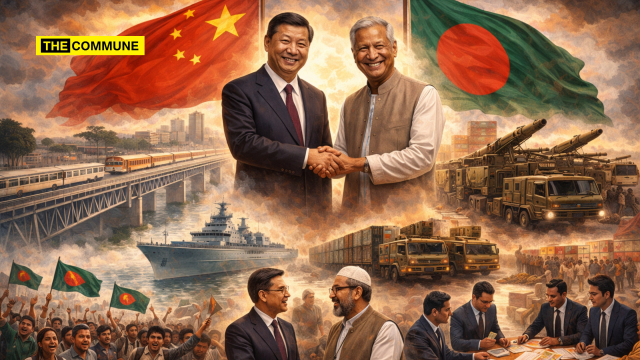
Between October 2024 and January 2026, Bangladesh witnessed a rapid deepening of engagement with China across political, economic, cultural, and military domains.
Following the change of power in Dhaka, a series of high-level meetings, defence procurements, infrastructure projects, cultural initiatives, and political interactions signalled a marked expansion of the China–Bangladesh relationship.
In this report, we take a look at 19 significant incidents that collectively illustrate the breadth and pace of this evolving nexus, based on official statements and media reports.
#1 Chinese Ambassador Meets Jamaat-e-Islami Chief – 12 January 2026
On 12 January 2026, Chinese Ambassador Yao Wen paid a courtesy call on Jamaat-e-Islami Ameer Dr. Shafiqur Rahman at the party’s office in Dhaka’s Bashundhara area. The meeting focused on strengthening party-to-party relations, expanding political exchanges, and enhancing overall China–Bangladesh ties. Accompanied by senior embassy officials, the Ambassador discussed cooperation under the Comprehensive Strategic Cooperative Partnership framework. Both sides reportedly agreed to deepen engagement across multiple sectors, presenting the interaction as cordial and constructive, and signalling Beijing’s growing outreach to influential Islamist political actors in Bangladesh.
#2 Chinese Literature Readers Club Launched in Dhaka – 26 December
On 26 December 2025, the Chinese Literature Readers Club was inaugurated at the Apon Friendship Exchange Center in Baridhara, Dhaka, coinciding with the 50th anniversary of India–Bangladesh diplomatic relations. Officials from the Chinese Embassy and China Media Group jointly launched the initiative to promote Chinese literature in Bangla translation. Writers and publishers highlighted cultural exchange as a tool for long-term influence, with speakers stressing translation, folk narratives, and publishing collaborations as entry points for strengthening people-to-people and cultural ties between China and Bangladesh.
#3 CEAB–BCCCI Dialogue on Trade Disputes – 25 November 2025
A high-level meeting between the Bangladesh China Chamber of Commerce and Industry (BCCCI) and the Chinese Enterprise Association in Bangladesh (CEAB) took place on November 25, 2025. Discussions focused on removing trade barriers, reviving struggling industrial units through joint ventures, and resolving disputes via a proposed Joint Working Group. Bangladeshi representatives emphasised textiles as a priority sector, while both sides underlined legal and institutional mechanisms to smooth Chinese investment operations, reflecting growing economic interdependence.
#4 Bangladesh Approves Purchase of SY-400 Missile System – 2 November 2025
On 2 November 2025, Bangladesh’s Ministry of Defence approved the procurement of China’s SY-400 surface-to-surface missile system under the Forces Goal 2030 programme. The decision marked a significant upgrade in Bangladesh’s strike capability, with the system featuring long-range precision, rapid mobility, and high-speed strike potential. Defence analysts noted that the acquisition underscored Dhaka’s increasing reliance on Chinese military hardware and deepening defence cooperation with Beijing.
#5 China Pledges Support Against U.S. Tariffs – 29 July 2025
Speaking at a discussion organised by the Diplomatic Correspondents Association in Dhaka, Chinese Ambassador Yao Wen stated that China would assist Bangladesh in addressing the impact of U.S. tariffs. He described the tariffs as coercive and contrary to WTO principles. The Ambassador also proposed trilateral cooperation involving China, Bangladesh, and Pakistan to safeguard regional sovereignty and economic development, positioning Beijing as a strategic counterweight to Western trade pressure.
#6 Chinese Investments Create 550,000 Jobs – 4 June 2025
On 4 June 2025, the President of the Chinese Enterprise Association in Bangladesh stated that Chinese firms had invested over $11 billion in Bangladesh since 2016, generating approximately 550,000 jobs. Investments spanned power, transport, water, and digital sectors, with Chinese companies accounting for a majority share of private power generation capacity. The statement reinforced China’s role as Bangladesh’s largest foreign investor and a central driver of its infrastructure-led growth.
#7 Muhammad Yunus Calls China Partnership a ‘Strategic Moment’ – 1 June 2025
At the China–Bangladesh Investment and Trade Conference in Dhaka, Chief Advisor Muhammad Yunus urged Chinese investors to participate in Bangladesh’s transformation at what he termed a strategic moment. He said he had personally requested President Xi Jinping to encourage Chinese investment. Chinese officials reaffirmed support for enhancing export capacity and integrated trade, highlighting the convergence of Bangladesh’s development agenda with Chinese economic outreach.
#8 New MoU Strengthens Textile Cooperation – 1 June 2025
On the same day as the above event, an MoU was signed between Chinese and Bangladeshi textile industry bodies to deepen cooperation in apparel and textile manufacturing. The agreement focused on joint exhibitions, trade promotion, and sustainable innovation. Signed during a high-level Chinese delegation’s visit, the MoU reflected China’s growing role in Bangladesh’s export-oriented textile sector and its efforts to integrate Bangladeshi manufacturing into Chinese-linked supply chains.
#9 Bangladesh Begins Mango Exports to China – 28 May 2025
Bangladesh announced its first-ever mango exports to China, with 50 tons scheduled for shipment in 2025. Officials said discussions with Chinese authorities were finalised to open the market. The initiative was presented as part of a broader push to diversify agricultural exports, with China emerging as a key destination. The move highlighted expanding trade ties beyond infrastructure and industry into agriculture.
#10 Missile and Air Defence Talks With China – 13 May 2025
Senior Bangladeshi army officials met representatives of China Vanguard Co. Ltd to discuss acquiring advanced air defence systems, including HQ-17AE and FK-3 missiles and radar platforms. The talks aimed to modernise Bangladesh’s air defence network, with additional discussions on portable missile systems for naval use. The engagement pointed to deepening military-technical cooperation with China.
#11 Chinese Envoy Promotes Beijing’s Development Model – 11 May 2025
At a readers’ forum on “Xi Jinping: The Governance of China,” Ambassador Yao Wen suggested Bangladesh could draw lessons from China’s modernization model. He argued that modernization need not follow Western pathways and highlighted similarities between Chinese governance ideas and Bangladesh’s development vision. Political leaders from multiple parties attended, reflecting China’s outreach across Bangladesh’s political spectrum.
#12 Reaffirmation of 50-Year Water Management Plan – 20 April 2025
During a meeting at the state guest house Jamuna, Bangladesh and China reaffirmed plans for a long-term water management master plan, including work on the Teesta River. Proposals also included Chinese-backed healthcare projects. The meeting highlighted strategic infrastructure and resource cooperation, positioning China as a long-term development partner.
#13 $2.1 Billion Investment Deal Signed in Beijing – 28 March 2025
Bangladesh secured $2.1 billion in Chinese investment, loans, and grants during an official visit to Beijing. The funds were allocated primarily for infrastructure, energy, and digital projects, with a mix of low-interest loans and direct investment. The agreement provided a significant boost to bilateral economic ties and supported Bangladesh’s foreign exchange position.
#14 China Calls Itself Bangladesh’s ‘Most Trustworthy Partner’ – 10 March 2025
At a dinner hosted by a senior Bangladeshi political leader, Ambassador Yao Wen described China as Bangladesh’s most reliable partner. The event followed a multi-party Bangladeshi delegation’s visit to China. Participants shared experiences of Chinese hospitality, underscoring Beijing’s efforts to build goodwill across political, academic, and media circles.
#15 China Pledges 1,000-Bed Friendship Hospital – 20-24 January 2025
During an official visit to China, Bangladesh’s foreign affairs adviser requested medical cooperation for Bangladeshi patients. China agreed to designate hospitals for Bangladeshi nationals and pledged support for a 1,000-bed Bangladesh–China Friendship Hospital in Dhaka. The commitment marked a significant expansion of bilateral cooperation in healthcare.
#16 China Agrees to Ease BRI Loan Terms – 21 January 2025
China verbally agreed to ease the terms of Belt and Road Initiative loans to Bangladesh by reducing interest rates and extending repayment periods. The assurance came amid discussions on infrastructure financing, healthcare cooperation, and data sharing. Analysts viewed the move as an effort to sustain Chinese projects while addressing debt sustainability concerns.
#17 China-Funded Padma Bridge Rail Link Inaugurated – 24 December 2024
Bangladesh inaugurated the China-funded Padma Bridge Rail Link, the country’s largest railway project. Built under the Belt and Road Initiative, the 170-kilometre line significantly reduced travel time between Dhaka and southwestern regions. The project symbolised China’s central role in Bangladesh’s transport infrastructure development.
#18 Chinese Naval Ships Visit Bangladesh – 12 October 2024
Two Chinese naval vessels arrived at Chattogram port on a goodwill visit, marking the first such visit in four years and the first by a foreign fleet after the interim government assumed power. The visit underscored growing maritime and defence ties between the two countries.
#19 China Backs Bangladesh’s Political Shift – 10 October 2024
China publicly welcomed the student-led protests in Bangladesh that resulted in the collapse of the previous government, signalling its support for the country’s political transition. During a meeting with representatives of the protest movement, Chinese Ambassador to Bangladesh Yao Wen praised the “courage and wisdom” shown by students who spearheaded the unrest. Some of these representatives have since assumed roles in the interim administration headed by Nobel laureate Muhammad Yunus. Beijing’s remarks were viewed as an endorsement of the transitional process in Bangladesh.
Subscribe to our channels on Telegram, WhatsApp, and Instagram and get the best stories of the day delivered to you personally.
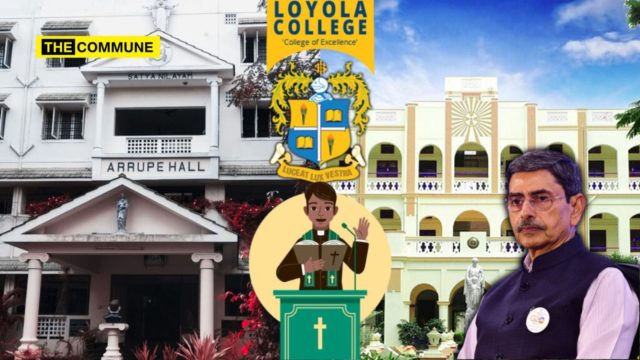
NGO watchdog, the Legal Rights Protection Forum (LRPF) has written to Tamil Nadu Governor RN Ravi, seeking the cancellation of Loyola College’s minority institution status, alleging large-scale irregularities in the conduct of its postgraduate philosophy programme in violation of university norms.
Loyola College, a century-old institution functioning under the University of Madras, offered postgraduate courses in philosophy. Investigations revealed that the MA Philosophy programme was conducted not within the college campus, but at “Sathya Nilayam”, a Jesuit priests’ training centre in Adyar, in violation of university regulations. Following these complaints, the LRPF approached the National Human Rights Commission (NHRC), the University of Madras, and the Governor.
The NHRC subsequently examined the matter and recommended action by the University Grants Commission (UGC). Separately, a committee led by University of Madras professors conducted an inspection and found that Loyola College had no dedicated classrooms, staff rooms, or departmental library for the philosophy department, concluding that the department effectively did not exist on campus.
Based on these findings, the University of Madras barred Loyola College from admitting students to the MA Philosophy programme for three years. However, the LRPF has argued that this action is inadequate.
In its letter to the Governor, the forum alleged that conducting the course at Sathya Nilayam effectively excluded non-Christian students, bypassed reservation norms, and facilitated the enrolment of Bangladeshi priests on student visas. The forum further alleged that student visas and financial aid were misused for missionary activities, amounting to visa fraud. It also claimed that foreign funds were received under FCRA and that educational certificates were fraudulently issued to foreign nationals.
The LRPF has demanded a comprehensive probe, cancellation of the MA Philosophy degree retrospectively from 1998, withdrawal of Loyola College’s autonomous and minority status, suspension of government funding, and blacklisting of the institution by the UGC.
Background
In August 2025, the University of Madras confirmed serious irregularities in the conduct of the MA Philosophy programme by Loyola College, following findings by its Inspection Commission that the course was being run without approval at the off-campus Jesuit centre, Satya Nilayam, in Thiruvanmiyur. The university submitted a detailed report to the National Human Rights Commission after the Commission flagged evasive responses from the university and issued a conditional summons. The action followed complaints filed by the Legal Rights Protection Forum with constitutional authorities, triggered by media reports on the matter. The university’s submission described “gross violations” of affiliation rules in the programme’s conduct.
The inspection found that Loyola’s Philosophy Department lacked basic infrastructure, including dedicated classrooms, faculty rooms, a departmental library, signage, and even the presence of enrolled students during inspection; classes were reportedly held in a common seminar hall. The report also flagged faculty appointment irregularities, including staff who did not meet UGC qualifications and instances of dual counting of faculty across institutions, alongside appointments made without the mandatory university selection process. Further, the university cited non-compliance with Tamil Nadu’s reservation norms, noting the failure to submit category-wise admission data despite repeated reminders, in violation of applicable Government Orders and university circulars.
Timeline Of Events
The inspection report, submitted in August 2025, follows a string of complaints filed since January alleging academic fraud, religious discrimination, and unauthorized operations at Satya Nilayam run by Loyola College. Let’s take a look at when the investigation began and how action was taken.
In January 2025, The Commune reported that Loyola College was allegedly running an unauthorised extension campus at Satya Nilayam for its University of Madras–affiliated M.A. Philosophy programme, purportedly catering mainly to Catholic seminarians. The report also flagged alleged religious discrimination, financial irregularities, misuse of UGC funds, and degrees issued despite students not attending the approved Loyola campus, claims later amplified in a video investigation by YouTuber Maridhas.
In February 2025, the Hyderabad-based Legal Rights Protection Forum filed a complaint with the Tamil Nadu Governor, also the Chancellor of the University of Madras, seeking withdrawal of Loyola College’s autonomy and affiliation. The petition alleged that Satya Nilayam, run under a separate Jesuit entity, illegally conducted courses while Loyola issued degrees, amounting to academic fraud and regulatory deception.
In March 2025, LRPF escalated the matter by petitioning Jesuit Superior General Fr. Arturo Sosa, alleging misuse of FCRA funds and UGC grants, citing disclosures by former Loyola principal Rev. Fr. Albert Muthumalai. The Tamil Nadu Governor R.N. Ravi intervened, directing the University of Madras to probe Satya Nilayam’s unauthorised operations and foreign seminarians.
Following complaints, Satya Nilayam’s website was abruptly altered in March 2025 to erase Loyola-University links, raising suspicions of cover-up. Despite repeated warnings, the University of Madras has failed to act decisively. The case highlights misuse of minority autonomy, systemic double standards, and demands urgent cancellation of affiliations and accountability.
LRPF filed a complaint with the Tamil Nadu Governor in March 2025 against University of Madras Registrar Prof. S. Elumalai, accusing him of enabling large-scale academic fraud involving Loyola College.
In April 2025, the Legal Rights Protection Forum approached the National Human Rights Commission alleging that Loyola College’s University of Madras–affiliated M.A. Philosophy programme was restricted to Christian students, amounting to religious discrimination. The complaint also accused Loyola of illegally running the course at Satya Nilayam, issuing fraudulent degrees, misusing visas, and lacking affiliation records, with no official response from Loyola or the university.
By April 2025, the National Human Rights Commission (NHRC) took cognizance of complaints that non-Christian students were being systematically denied admission to the M.A. Philosophy course. The NHRC issued notices to the UGC and the Registrar of the University of Madras, seeking action taken reports.
Between May and July 2025, the NHRC escalated action after Loyola College and the University of Madras failed to give satisfactory replies. On 24 May 2025, the Commission reprimanded the Madras University Registrar and UGC, and on 24 July 2025 issued conditional summons directing them to appear on 19 August 2025 unless detailed reports were filed earlier.
In August 2025, a UGC committee inspected the University of Madras and Loyola College on August 13–14. Following the inspection, the University of Madras submitted a detailed report to the NHRC on August 16, confirming serious violations by Loyola College in running its M.A. Philosophy programme, including breaches of affiliation rules, UGC norms, and state directives.
And by late August 2025, University of Madras confirmed serious irregularities by the Loyola College in Chennai after the university’s Inspection Commission report.
Finally, in December 2025, the unauthorized programme has been suspended for 3 years.
Bharatiya Janata Party (BJP) candidate Tajinder Singh Tiwana secured a resounding victory in Ward 47, Malad West, with a massive margin of 13,858 votes.
During the campaign for Brihanmumbai Municipal Corporation elections, BJP leader K. Annamalai actively campaigned in several areas including those with Tamil population. He had described Mumbai as an “international city” while campaigning. The remark sparked criticism from Maharashtra Navnirman Sena (MNS) chief Raj Thackeray, who reportedly mocked Annamalai with a “rasmalai” jibe.
Tiwana, who serves as the President of Bharatiya Janata Yuva Morcha’s Mumbai unit, emerged victorious.
As a counter to Rasmalai jibe, the BJP has doubled down by sharing pictures of the sweet, along with memes and videos mocking Raj Thackeray for his comment.
His win is part of BJP’s strong showing in the Malad West area, where the party also secured victories in nearby wards, including Ward 35 (Yogesh Varma) where Annamalai campaigned. The broader BMC elections saw the BJP-led Mahayuti alliance (including Shiv Sena under Eknath Shinde) perform robustly across Mumbai’s 227 wards
No disputes, recounts, or formal challenges to Tiwana’s victory in Ward 47 have been reported as of January 17, 2026.
The BMC elections occurred on January 15, 2026, with results declared on January 16, covering 227 wards. BJP emerged as the single largest party with 89 seats, securing a simple majority alongside its ally Shiv Sena (29 seats), totaling 118 seats for the Maha Yuti alliance.
Subscribe to our channels on Telegram, WhatsApp, and Instagram and get the best stories of the day delivered to you personally.
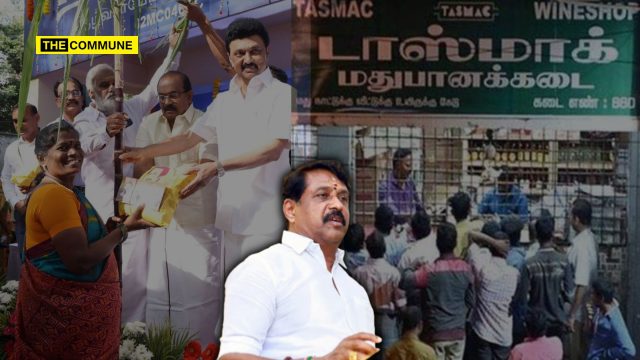
In the run-up to the Tamil Nadu Assembly elections later this year, the ruling DMK government under Chief Minister M.K. Stalin distributed a ₹3,000 cash Pongal gift to over 2.22 crore rice ration card holders, along with traditional hampers including rice, sugar, sugarcane, dhotis, and sarees. The scheme, announced in early January and rolled out through fair price shops, cost the exchequer approximately ₹6,900 crore for the cash component alone, with additional expenses for the hampers pushing the total welfare outlay higher.
However, coinciding with the festive celebrations, Tamil Nadu State Marketing Corporation (TASMAC) outlets reported massive liquor sales. Official figures indicate that in just two days around the Pongal festival period, alcohol worth ₹518 crore was sold across the state’s 4,829 TASMAC shops. This marks a significant revenue spike, with reports noting that sales in those two days alone approached levels seen over four days in the previous year’s Pongal season (₹725 crore over four days).
Leaders from the AIADMK and PMK, have pointed out that while the state provides direct cash assistance to celebrate the harvest festival, a substantial portion of that money may indirectly flow back into government coffers through increased liquor consumption during the festivities.
AIADMK leaders have repeatedly accused the DMK of relying heavily on TASMAC revenues—often described as a key pillar of the state’s finances—to fund populist schemes.
BJP Tamil Nadu President Nainar Nagendran slammed the DMK government saying “It is a grim irony that under Chief Minister MK Stalin, who once released an emotional video declaring, “Let us create a liquor-free Tamil Nadu,” alcohol sales during Pongal alone crossed ₹518 crore.
Since the DMK assumed power, this TASMAC-first model of governance has turned every festival season into a revenue bonanza built on liquor sales. From Pongal to local celebrations, alcohol has become the state’s default cash cow — to the extent that one wonders whether any celebration is now complete without the stench of arrack.”
He said that it wouldn’t be surprising at all if reports emerge that the numbers on the rupee notes handed out for Pongal match exactly those collected at TASMAC.
“After beating the drum across the state promising ₹3000 for Pongal, the DMK government’s intelligence in collecting that money right back through TASMAC outlets brings to mind that classic wisecrack: “Idhuku paruthimoota Godown-liye irundhurkalame!” (a comical reference from a Tamil film).
உழவர் திருநாளன்று கூட உறுத்தாமல் ஊருக்கே ஊற்றிக் கொடுத்துள்ளது @arivalayam அரசு!
“போதையில்லா தமிழகத்தை உருவாக்குவோம்” என உருகி உருகி காணொளி வெளியிட்ட முதல்வர் திரு. @mkstalin அவர்களின் ஆட்சியில், பொங்கல் பண்டிகையையொட்டி தமிழகத்தில் சுமார் ரூ. 518 கோடிக்கும் அதிகமாக மது விற்பனை… pic.twitter.com/2JRYtnQ7AA
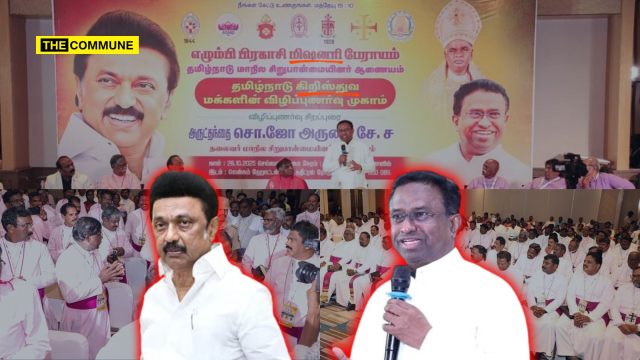
The AIADMK’s Information Technology Wing State President Kovai Sathyan has alleged that priests were given training to campaign in favour of the Dravida Munnetra Kazhagam.
Speaking to the media, Sathyan stated that the Tamil Nadu Minorities Commission had been influenced to take positions favourable to the DMK. He alleged that the Commission’s Chairman Joe Arun was a member of the Loyola College governing body and a close associate of Deputy Chief Minister Udhayanidhi Stalin, resulting in institutional bias.
According to Sathyan, priests from various churches were invited to Chennai a few months ago and provided with a two-day training programme. He alleged that the training focused on using church networks to campaign for the DMK. He further stated that Loyola College and certain missionary organisations were working under pressure from Joe Arun to support the ruling party.
Sathyan also raised concerns over Loyola College’s ongoing centenary fundraising initiative, which aims to collect ₹100 crore to mark 100 years of the institution. He alleged that funds had been received from several countries without proper auditing and called for a detailed investigation into the matter.
The AIADMK leader said a thorough inquiry into these allegations was necessary.
All India Anna Dravida Munnetra Kazhagam (AIADMK) General Secretary and Leader of the Opposition Edappadi K. Palaniswami (EPS) today unveiled the party’s initial set of key election promises for the 2026 Tamil Nadu Assembly elections
Speaking at a public event and through party channels, EPS announced a series of welfare-oriented schemes aimed at women, rural households, and the general public, drawing inspiration from popular initiatives while expanding on them. These represent the first phase of commitments ahead of the full manifesto, which is being finalized following statewide consultations by the party’s manifesto committee.The key promises released today include:
Kulavilakku Thittam (Family Assistance Scheme): ₹2,000 per month to be provided directly to the bank accounts of women heading families covered under ration cards, targeting financial empowerment and support for households.
Free Bus Travel For Men Too: Extension of the free bus travel scheme to include men, in addition to women, for urban and inter-city public transport.
Amma Illam Thittam: Construction of concrete (cement) houses for rural homeless individuals and families, focusing on housing security for the underprivileged.
Extension Of Rural Employment Guarantee: Based on the new rural employment guarantee act law – Viksit Bharat G RAM G – introduced by the Modi government, EPS has promised an increase in the number of workdays from 100 days to 150 days in Tamil Nadu.
Amma Two-Wheeler Scheme: Provision of two-wheelers to 5 lakh women with a subsidy of ₹25,000 each, aimed at enhancing mobility and independence.
These announcements come as the AIADMK ramps up its campaign machinery for the polls expected in April-May 2026. EPS emphasized that the promises build on the party’s legacy of people-centric governance
The party has been actively preparing, with a manifesto committee conducting public inputs across districts earlier this month. EPS has repeatedly expressed confidence in the AIADMK-led alliance securing a strong mandate, predicting a return to power to address issues like law and order, economic hardships, and welfare delivery.
Subscribe to our channels on Telegram, WhatsApp, and Instagram and get the best stories of the day delivered to you personally.
AR Rahman, the ‘celebrated music composer’, an Oscar winner, has been in the news for all the wrong reasons for the past couple of years.
The disastrous Marakkuma Nenjam concert, the rumours of divorce with his wife, playing second fiddle to the Dravidianist regime in Tamil Nadu – these are the news that Rahman was associated with in the recent past.
Unable to command attention through music anymore, he has now resurfaced via a long-winded interview with BBC Asian Network, to peddle Muslim victimhood in India narrative. Across nearly 90 minutes, Rahman abandons introspection in favour of insinuation, repeatedly hinting at bias, “communal” forces, and power shifts – all while carefully avoiding specifics.
What emerges is not a misunderstood genius, but a man desperate to stay relevant, playing the familiar victim card and wrapping professional stagnation in ideological and identity politics language. The interview does not revive Rahman’s legacy; it only exposes how far he has drifted from the music that once spoke for itself.
Less Work Because ‘Communal Environment’
AR Rahman claims less work is coming his way for the past 8 years. He says, “You know people who are not creative have the power now to decide things and this might have been a communal thing also but not in my face but I’ve hear you know like Chinese whispers that this happened and they they booked you and the other company the music company went and funded the movie and got their five composers and I said ‘Oh that’s great! Rest for me I can chill out with my family.'”
He also said, “Any person who has realized religion will never talk about divisive stuff because I think beyond religion is where the real truth is, right, these are just parts where those who are near the destination will never argue and they would find it foolish to even try anything negative.”
Chhaava – A Divisive Film
The interviewer asks him about Chhaava, says AR Rahman was ‘very proud of its soundtrack’. He goes on to say, “It is divisive. I think it cashed in on divisiveness and but I think the core of it is to show the bravery, because the director, I told him like why do you need me for this, he said we need only you for this, so I think had a very and it is a enjoyable finish but definitely I think people are smarter than that whatever do you think people are going to get influenced by movies? They have something called internal conscience which knows what the truth is and what manipulation is.”
Here’s how the music of Chaava really was – deplorable. If Aurangzeb tortured and killed Shambhu Raje in real life, it was “legendary music composer” AR Rahman who killed the film and the majestic hero in reel. AR Rahman was the biggest misfit in the film,and he destroyed what could have been an epic that would have remained in public memory for a long time.
Chhaava: How AR Rahman Reduced A Maratha Epic To Sonic Ruins
Rahman’s music for Chhaava was a shockingly below-average and out-of-tune soundtrack for a period film that deserved so much more. Rahman’s work here isn’t just disappointing; it’s downright pathetic, and it single-handedly kills the soul of what could have been a powerful historical epic.
For a film rooted in the life of Chhatrapati Sambhaji Maharaj, Chhaava demanded music steeped in Marathi ethos, historical weight, and warrior fury. What it received from AR Rahman was the exact opposite, a soundtrack so culturally misplaced that it actively sabotages the film.
There is virtually no Marathi soul in the music. Instead of grounding the score in regional rhythm or folk intensity, Rahman delivers a confused jumble of Arabic motifs, Middle Eastern flourishes, electronic clutter, and ambient fillers that feel ripped from a modern lounge playlist. The result is jarring, distracting, and utterly alien to a 17th-century Maratha setting. One wonders if Rahman was composing for Sambhaji Maharaj or Aurangzeb.
“Aaya Re Toofan,” meant to be a battle anthem, collapses into a lifeless exercise. Rahman singing it himself is baffling, especially when voices like Sukhwinder Singh exist for precisely this kind of raw power. Compared to “Malhari,” the track is anemic and instantly forgettable. “Jaane Tu,” placed in a moment of devotion and longing, sounds like a discarded rom-com song, emotionally hollow and historically absurd. A rap track in a Maratha epic only underlines how disconnected the composer was from the film’s soul.
The background score fares no better. It perks up for Mughal scenes, sinks during Maratha suffering, and remains silent where rage and grief were essential. This was stark negligence.
Composers like Ajay-Atul could have elevated Chhaava into something timeless. Rahman instead delivered lazy, tone-deaf music that disrespects history and memory. For a composer of his stature, this failure is not just disappointing; it is shameful.
Cliche For Muslim Characters, None For Hindus
In the subsequent part of the interview, the interviewer says, “My problem with a film like that is that when every time a negative act is taking place on screen and the character is chanting subhan allah mashallah alhamdulillah…”, Rahman butts in and says, “That’s such a cliche no? I’m just saying I’m not I have great respect for people. People are that foolish to get influenced by false information.”
What Rahman’s comments expose is a staggering double standard. When Islamic invocations on screen are paired with villainy, he instantly spots a “cliché” and feels compelled to correct it, but when a film about a Maratha king who was tortured to death for refusing conversion is dismissed as “divisive,” suddenly concern for sentiment vanishes.
One stereotype troubles him; the other is waved away with lofty platitudes about how “people are not that foolish.” In other words, Muslim portrayal must be handled with infinite sensitivity, while Hindu history asserting itself can be casually reduced to politics. What is repeatedly framed as sacred, civilisational memory for Hindus is treated as an inconvenience, even suspect; what touches Islamic representation is treated as delicate and deserving protection. That imbalance is not subtle, and it is not accidental. It suggests a worldview where one community’s sensitivities are non-negotiable clichés to be challenged, while another’s are inconveniences to be scolded into silence.
Calling audiences “not that foolish” is not reassurance – it is condescension, especially when the same courtesy is never extended to those who feel a historical and emotional stake in a figure like Sambhaji Maharaj.
Faith, Selective Sensitivity, And A Pattern That Can’t Be Ignored
For many longtime admirers of AR Rahman, the discomfort does not begin with interviews or recent controversies alone – it has existed quietly for years. Multiple anecdotes from within the Tamil film industry point to a pattern where Rahman’s personal religious beliefs appear to intrude into professional spaces, often at the expense of others’ faith.
Lyricist Piraisoodan has publicly recalled being asked to remove Hindu religious marks before entering Rahman’s home, a request he refused.
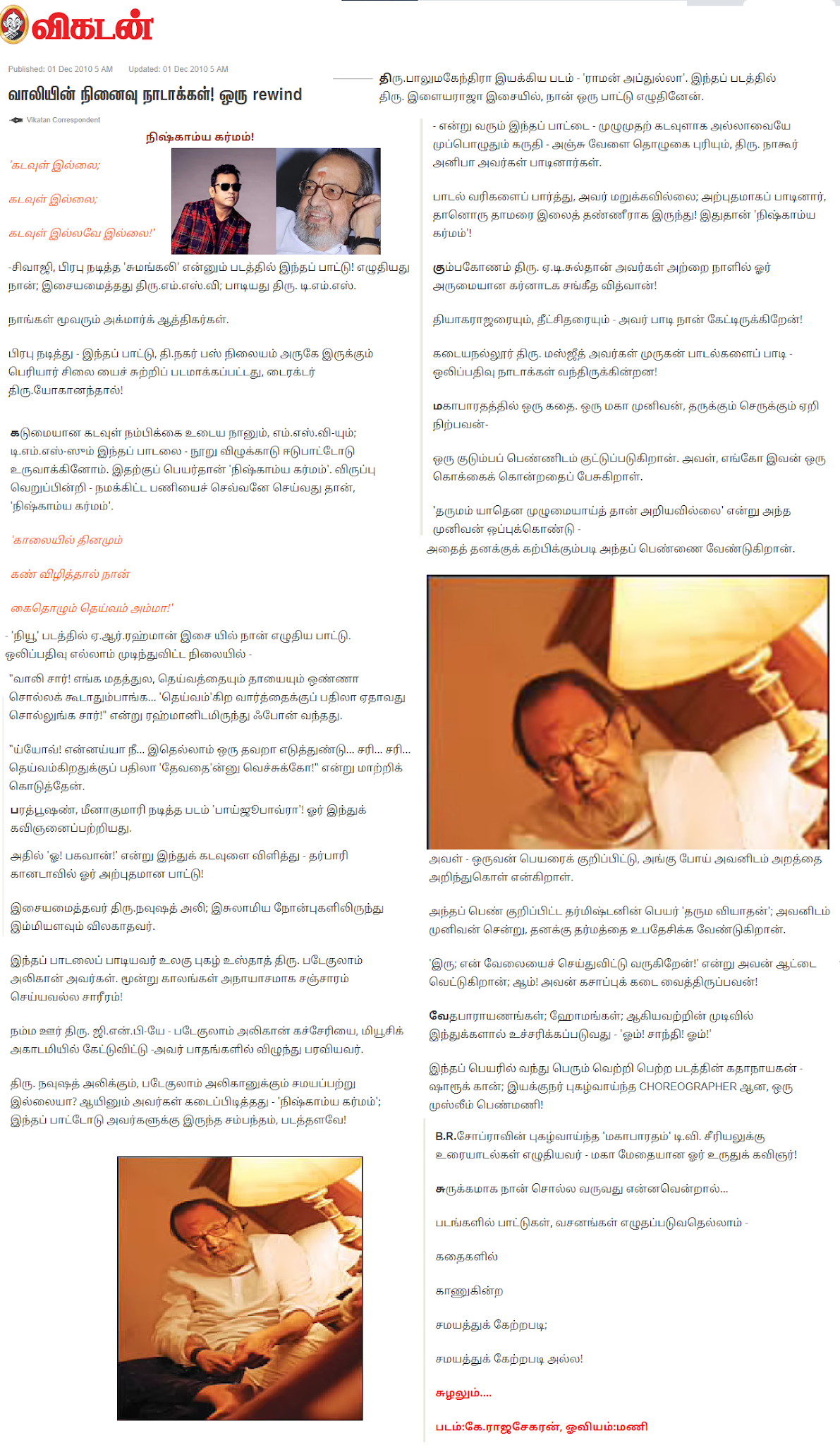
Veteran lyricist Vaali recorded an incident where Rahman objected to equating a mother with God in a song, forcing a lyric change even after filming was completed.
A screenshot from Vaali’s interview to Tamil magazine Vikatan where he records this incident. Source: www.pagadhu.blogspot.com
In another instance, Rahman reportedly distanced himself from composing an Ayyappa devotional song in Boys, while having no such hesitation in composing songs venerating Jesus in earlier films.
Individually, these incidents may be explained away. Taken together, they raise an uncomfortable question: why does religious sensitivity seem selective? Respect for one’s faith is legitimate but repeatedly pushing it onto collaborators, while showing openness to other religious themes, inevitably invites scrutiny.
For fans who once saw Rahman as a unifying cultural force beyond religion and politics, this perceived imbalance is deeply unsettling. It suggests not quiet faith, but a recurring tendency to draw lines where art once dissolved them – a shift that clashes sharply with the inclusive legacy that made Rahman a national icon in the first place.
Given this pattern and his firm belief as a Muslim in “La Ilaha Illallah Muhammadur Rasulullah”, it is only natural for Hindus to feel uneasy about whether a composer with such Islamist outlook can approach an epic like the Ramayan and the reverence it demands.
Rahman, You Are No Victim, Just Out of Tune
AR Rahman, the 59-year-old musician, is unwilling to confront the simple truth: new voices eventually replace old ones. That is exactly how he himself rose – by outpacing and outgrowing the composers before him. The wheel has turned again, and this time, he is on the other side of it.
Instead of acknowledging that audiences and filmmakers are moving on, he chooses to cloak professional stagnation in insinuations of bias. Dressing up a fading dominance as a consequence of “communal” forces is deflection. No artist, however celebrated, enjoys permanent supremacy. Decline is not persecution, it is inevitability.
To hint at discrimination rather than admit loss of relevance reflects bitterness, not bravery. It diminishes the very legacy he claims to defend and makes his grievances sound less like critique and more like sour resentment at being overtaken.
In the end, this is not about censorship, conspiracies, or communal pressure, it is about decline and denial. A.R. Rahman is not being sidelined; he is being outpaced. Audiences have moved on, tastes have changed, and his once-revolutionary sound now feels repetitive and dated. Instead of accepting that reality, he chooses to complain, insinuate bias, and lecture people on how they should respond to history and culture.
What makes this harder to ignore is that this selective sensitivity is not new. When Muslim portrayal needs care, he cries “cliché.” When Hindu history demands respect, he dismisses it as “divisive” and tells audiences they are “not that foolish.”
Legends earn respect by rising above excuses, not by playing victim when the spotlight shifts. Rahman’s problem today isn’t the industry or the times – it’s that the music no longer speaks, and no interview, however long, can tune that out.
Hydra is a political writer.
Subscribe to our channels on Telegram, WhatsApp, and Instagram and get the best stories of the day delivered to you personally.