Home Blog Page 16

Madras High Court Stays TN Govt’s HR&CE Dept’s Use Of Temple Funds For Palani Land Acquisition

Madras High Court Stays HR&CE Dept's Use Of Temple Funds For Palani Land Acquisition

The Madras High Court’s Madurai Bench has imposed an interim stay on the Tamil Nadu government’s Hindu Religious and Charitable Endowments (HR&CE) Department’s proposal to use ₹58.54 crore from its “administrative fund” to purchase 58.77 acres of private land around Palani for creating facilities for devotees.

The order was passed after a petition was filed by temple activist TR Ramesh, challenging Government Order No. 321, which permitted the HR&CE Department to draw ₹58.54 crore from the administrative fund for the land acquisition. The fund consists of annual contributions collected from temples across the State, including the 16% levy imposed on temple revenues.

In his petition, Ramesh argued that the administrative fund can be used only for salaries of HR&CE Commissioner-level officials, executive officers, and staff, and for meeting office expenses. He stated that spending the fund on land acquisition amounted to using temple contributions for a purpose not authorised under the law, effectively imposing a “tax” on Hindus.

Ramesh submitted that the government had initiated steps through the Revenue Department to acquire 58.77 acres around Palani, but the use of the administrative fund for this purpose was impermissible. Senior advocate Niranjan Rajagopal appeared for the petitioner.

When the case was heard by Justices Anitha Sumanth and Kumarappan, the Bench questioned how a government department could deploy the administrative fund, which is legally restricted to departmental salaries and office expenditure, for purchasing land. The judges prohibited any withdrawal or utilisation of the fund for the Palani project.

The Bench also directed that the petition be transferred to a special Bench already dealing with other related matters involving HR&CE funds and land acquisition issues.

(Source: Hindu Tamil)

Subscribe to our channels on WhatsAppTelegram, Instagram and YouTube to get the best stories of the day delivered to you personally.

Delhi Blast Case: Accused Muzammil Claims Co-Accused Shaheen Shahid Is Wife, Not Girlfriend, NIA Examines Her Suspected ₹28 Lakh Contribution to Module

Delhi Blast Case: Accused Muzammil Claims Co-Accused Shaheen Shahid Is Wife, Not Girlfriend, NIA Examines Her Suspected ₹28 Lakh Contribution to Module

In the ongoing investigation into the November 10 Delhi blast, accused Muzammil Ahmad Ganaie has told agencies that co-accused Shaheen Shahid is his legally wedded wife, not his girlfriend. According to a Times of India report, Muzammil claimed that the two were formally married in September 2023, stating that their nikah was performed at a mosque near Al-Falah University with a mehr of ₹5,000–6,000 fixed under Sharia law.

Investigators are examining whether Shaheen’s alleged marital relationship with Muzammil accounts for the substantial funds she is suspected to have routed into the Jaish-e-Mohammad (JeM) module. Agencies told TOI that Shaheen provided Muzammil around ₹6.5 lakh in 2023 for the purchase of weapons, and later lent Umar ₹3 lakh in 2024 to buy a Ford EcoSport that was allegedly used in the blast plot. Shaheen is further suspected of contributing ₹27–28 lakh for procuring weapons and explosives. During questioning, she reportedly told interrogators that the funds were intended as religious donations (zakat), not terror financing.

A second hideout linked to Muzammil has also been traced to Khori Jamalpur village in Faridabad. According to reports, he had rented a house from the former village sarpanch under the pretext of trading Kashmiri fruits. The sarpanch reportedly identified Muzammil when NIA officers brought him to the location. Before shifting the explosives to Fatehpur Taga village, Muzammil is believed to have stored the material for about 12 days in a room situated in fields near Al-Falah University.

Meanwhile, the Special NIA Court at Patiala House on Thursday, 27 November 2025, extended the custody of another accused, Jasir Bilal Wani, for a week. Wani, the second person arrested in the case, is alleged to have provided technical support to the group, modified drones, and attempted to build a rocket.

(Source: MoneyControl)

Subscribe to our channels on WhatsAppTelegram, Instagram and YouTube to get the best stories of the day delivered to you personally.

₹42 Crore Mudichur Omni Bus Terminal Inaugurated By MK Stalin Remains Unused As Private Bus Operators Refuse To Move

A year after chief minister M. K. Stalin inaugurated the ₹42-crore omni bus terminal in Mudichur, the five-acre facility remains largely unused, with long-distance private operators continuing to load and unload passengers from core city locations in violation of Madras high court directions.

Earlier this week, only about 15 buses were parked inside the depot, which has the capacity to hold 150. The terminal, located along the Outer Ring Road (ORR), was declared ready for operations in December 2024. However, operators who run more than 1,000 private buses to southern and western districts have not shifted from Koyambedu.

In February 2024, the high court granted an interim stay favouring operators but limited the relief to those who already had depots in Koyambedu and only until the Mudichur facility became operational. Despite the depot being ready, operators have continued using inner-city pick-up points and have not complied with the court-mandated route via the Chennai Bypass, Perungalathur, and onwards to Kilambakkam. Officials noted that some buses still use the Inner Ring Road in violation of orders.

According to RR Agency co-founder Raghunathan Jayakumar, whose firm manages the depot, the space has a 180-bed dormitory, five restrooms, two restaurants, and toilets within the dormitory. He said the parking charge is ₹150 per bus per day and the dormitory fee is ₹80 per person. He stated that the facility has a dedicated entry and exit connecting directly to the ORR and linking to Kilambakkam, located 8 km away via the Grand Southern Trunk Road. He also said operators had recently demanded exclusive exit bays, which were constructed, but they still refused to shift. He added that the agency was maintaining the depot at a loss and paying staff despite minimal utilisation, as the CMDA had asked them to wait for operators to begin using the space.

All Omni Bus Association president A. Anbalagan said operators were unwilling to relocate because “there is no connectivity to Kilambakkam,” and most bookings originated from inner-city locations rather than the new terminal. He stated that operators typically received around eight bookings from Ambattur, more than ten from central Chennai, and only three to four from Kilambakkam, adding that operators would function only where passenger demand existed.

Transport joint commissioner (enforcement) Pattapasamy said this resistance was similar to the opposition seen when operators were asked to move from Egmore to Koyambedu in the 1990s, adding that authorities were holding discussions to gradually shift them to the Mudichur depot.

(Source: Times of India)

Subscribe to our channels on WhatsApp, Telegram, Instagram and YouTube to get the best stories of the day delivered to you personally.

Vijay May Be A ‘Tharkuri’ But He Must Be Taken Seriously, What Sengottaiyan Joining TVK Means For Tamil Nadu Political Parties

The Karur crowd crush of September 2025 should have been a political funeral. 41 people died including a two‑year‑old, young couples, mothers with their daughters, crushed in three successive waves at a TVK rally where the FIR explicitly names party office‑bearers for reckless over‑mobilisation. In any textbook democracy, the leader at the centre of such a mass‑casualty disaster would face prolonged political exile, if not criminal liability. Instead, Vijay returned to the campaign trail within weeks, rebranded himself as the victim of a DMK conspiracy, and is now being reinforced by one of the most experienced organisation men in Dravidian politics. That trajectory, from culpability to consolidation, is the real story of late 2025.

The Psychology Of Absolution

What makes Karur historically unusual is not the tragedy itself; India has seen stampedes before. It is the public psychology that followed. Grieving families, on camera, said Vijay should not be blamed. Some even spoke of consoling him when he called them. His supporters instead chose to frame it as a disaster deliberately orchestrated by the DMK to curb his rise. The mental gymnastics needed to turn 40 preventable deaths at Vijay’s own rally into a storyboard of someone else’s villainy is astonishing — and, disturbingly, it seems to have worked.

This is not mere “fan loyalty.” It is a new strain of political psychology where emotional investment in a leader becomes so intense that objective culpability cannot penetrate it. The same voters who would demand resignations if a DMK or AIADMK rally killed dozens have decided, almost instinctively, that Vijay is exempt. That exemption is now a political fact, and every other actor in Tamil Nadu must reckon with it. And not every one will get this leeway or advantage.

Vijay’s Transformation: From Screen Image To Political Inevitability

Until TVK’s launch, Vijay’s “politics” was widely read as a combination of three things: his carefully crafted screen persona (the righteous outsider fighting systemic corruption), his late father S.A. Chandrasekhar’s unfulfilled ambitions, and the absence of any visible grassroots organisation or ideological framework. He is not a great orator like a Karunanidhi, Seeman or Annamalai. He doesn’t have the administrative depth, versatility or in-depth knowledge like Jayalalithaa. He has not built a grassroot cadre-based entrenched parties like how MGR or Jayalalithaa did. Vijay is seeing politics as an extension of his cinematic persona. That explains the cringeworthy, scripted and rehearsed speeches on stage and social media bytes. Everybody including this author still feel that Vijay is just all hype and no substance.

But the game changed in Karur. Vijay’s first major post‑tragedy speech was not apologetic but combative. It became an opportunity for him to make it into a DMK–TVK fight. The crowds that once saw him as a superstar now see him as a wronged leader fighting a hostile regime, an underdog – a classic victim‑to‑challenger arc that Karur, perversely, accelerated.

Yet this “inevitability” narrative has limits. TVK’s visible strength is concentrated in urban and peri‑urban belts, among first‑time voters and anti‑establishment middle‑class blocs. There is much less evidence of penetration into Dalit‑marginal constituencies that VCK, Left parties, and smaller outfits still organise at the ground level. Caste‑anchored local leadership, panchayat‑level patronage networks, and trade‑union linkages remain weak points. Treating Vijay as the “third pole that has already replaced AIADMK” is exactly the premature coronation TVK wants the ecosystem to perform.

Sengottaiyan: The Full‑Stack Organisation Man

Into this volatile moment walks K.A. Sengottaiyan, a man who spent roughly half a century inside AIADMK’s machine, from MGR’s early campaigns through Jayalalithaa’s iron rule and the post‑Jaya EPS period. His brand is not charisma but organisation: loyalty to leadership so total that he was called AIADMK’s “rubber stamp,” an iron grip over Kongu region networks, and an instinct for converting crowds, cadres, and caste equations into winnable arithmetic.

That such a man walks out after 50 years, resigns his MLA seat, gets expelled by EPS, and then crosses over to TVK, not DMK, signals several things at once:

  • He believes AIADMK, as currently led, is a sinking or at least stagnating ship, incapable of offering him meaningful authority.
  • He reads TVK as the only vehicle where his experience will translate into real command, not decorative posting.

TVK has validated that reading immediately. Sengottaiyan has been made chief coordinator of the party’s executive committee and organisational secretary for the western region (Erode, Coimbatore, Nilgiris, Tiruppur), posts structurally placed alongside, not below, the general secretary and campaign general secretary. For a party dismissed as a fan club with no clarity, this is fast‑track institutionalisation: a proper chain of command, region‑wise responsibilities, and a 77‑year‑old with an MGR–Jaya pedigree supervising young aspirants.

The Double‑Edged Sword

But Sengottaiyan is not a cost‑free asset. He embodies the old Dravidian style: opaque deal‑making, top‑down discipline, and comfort with caste‑weighted arithmetic. If Vijay truly wants to present TVK as a clean break from 50 years of DMK–AIADMK cynicism, he now has to explain why his first major induction is exactly the sort of back‑room strongman his Gen‑Z supporters said they were done with.

There is also a tactical risk. By placing Sengottaiyan at the executive committee’s apex, Vijay has narrowed his own future room for course‑correction. If TVK underperforms in the Kongu belt, or if there is backlash within AIADMK‑leaning Gounder blocs against this defection, rolling back Sengottaiyan’s influence later will be politically costly and publicly embarrassing.

AIADMK’s Historic Blunder

Losing Sengottaiyan to Vijay is not just an embarrassment for Edappadi Palaniswami; it may prove to be a historic miscalculation for the entire anti‑DMK space. Until now, DMK vs TVK looked like a far-fetched rhetoric. But with Sengottaiyan’s induction it has begun crystallizing. Whether this momentum will continue to bring in other disgruntled leaders like O Paneerselvam, TTV Dhinakaran and others will determine TVK’s weight as a formidable third front. But Edappadi Palaniswami’s attempt to keep an iron grip on the party is having its effect — people are slipping away like sand through a clenched fist

AIADMK has effectively pushed a veteran like Sengottaiyan into TVK’s arms, thereby strengthening the very challenger that could, in time, cannibalise its own base.

In western Tamil Nadu especially, where caste‑driven Kongu arithmetic has long underpinned AIADMK’s strength, Sengottaiyan’s relocation offers TVK ready‑made ground networks that no fan club can build overnight. Even if TVK does not immediately convert this into dozens of seats, it can deny AIADMK easy victories, distort margins, and accelerate the fragmentation of the non‑DMK vote.

BJP’s Silent Loss

A few weeks ago, Sengottaiyan met senior BJP leaders, including Amit Shah and Nirmala Sitharaman, amid discussions that may have included a possible shift to the BJP. However, since the BJP had already finalized its alliance with Palaniswami, any move by Sengottaiyan to join BJP would have been seen as politically inappropriate and akin to poaching. Had he joined BJP before the alliance was sealed, it could have strengthened BJP’s organizational presence significantly.

But now for the BJP, this is almost a strategic dead‑end. Reports indicate that Union ministers and RSS functionaries tried to use Sengottaiyan’s anger to reshape AIADMK into a more pliable partner; those efforts failed, and once his intentions became clear, Delhi quietly backed off. In effect, Sengottaiyan’s jump helps lock BJP into a spectator role in Tamil Nadu, unless it can engineer a fresh realignment closer to polling.

DMK’s Comfort And Blind Spot

DMK’s front, meanwhile, remains numerically solid: Congress, Left, VCK, MDMK, and even Kamal’s MNM are either within or orbiting the alliance space, giving Stalin a broad “secular” shield and a narrative of stability. There are ongoing feelers to PMK, DMDK, and other caste‑based outfits to at least prevent them from becoming spearheads of a rival bloc.

But DMK’s comfort inside this stitched‑together coalition can also be a blind spot. The party’s answer to TVK so far is to sneer at its supposed lack of ideology while downplaying how post‑Karur sympathy, anti‑corruption rhetoric, and a high‑decibel social‑justice plank are reshaping youth perceptions. Each time Vijay calls DMK a “looting syndicate” or “dynasty cartel” and backs it with selective data points, he is not just firing at Stalin; he is offering disillusioned DMK‑haters an option that is neither AIADMK nor BJP. With Sengottaiyan’s entry, that option now has a spine.

The Larger Precedent: Impunity With Fan Consent

The sharper way to read Karur is not just as Vijay’s “baptism in blood” but as the normalisation of impunity with fan consent. International and national coverage emphasises three crush waves, failure of mic and spotlight systems, overcrowding beyond permitted numbers, and even TVK cadres blocking ambulances. When that chain of preventable errors ends without any serious political cost to the central figure, it signals to all future organisers of every party that such risks are survivable so long as blame can be narratively outsourced to the administration.

India still lacks a binding, justiciable framework for maximum density, exit‑to‑entry ratios, or real‑time crowd‑flow monitoring at political events, despite repeated stampedes in temples and rallies across the country. Karur is not only TVK’s sin; it is a symptom of how all parties have normalised unsafe rallies for decades. But the fact that Vijay emerged politically stronger from it, rather than diminished, sets a precedent that will embolden future recklessness across the spectrum.

Where This Trajectory Points

It is still too early to project vote‑shares or seat counts. Karur’s ghosts will follow TVK into 2026; court findings and commission reports can still reshape public memory; and organising a party is not the same as organising a fan club. Yet some trajectories are already visible:

First, Vijay has survived a moment that would have ethically destroyed many leaders and has emerged with an even more hardened, emotionally committed base.

Second, TVK has recruited one of the last “full‑stack” organisation men of Dravidian politics, giving the party a ready‑made manual in booth work, cadre discipline, and alliance negotiation.

Third, the anti‑DMK space is now splitting into 2 with being the apex of a possible third front.

If there is a single line that captures this phase, it is this: Karur did not stop Vijay’s politics; it baptised it in blood, and Sengottaiyan’s jump has now given that baptism an organisational church. Whether Tamil Nadu rewards or punishes that combination will decide not just 2026, but the post‑Dravidian balance of power itself.

Hydra is a political writer. 

Subscribe to our channels on WhatsAppTelegram, Instagram and YouTube to get the best stories of the day delivered to you personally.
Ram Mandir Built, Dharma Dhwaj Hoisted, Next Project Is To Build A Memorial Cum Museum For The Ram Janmabhoomi Movement

The Dhwajarohan ceremony on 25 November 2025 at the Ayodhya temple is a moment of profound fulfilment. It is a testament to centuries of faith and decades of dedication.

The physical temple is complete.

But this temple is more than its pillars and carvings. This temple is more than the home of the presiding deity.

It is a symbol of resurgence and resilience. It is the soul of a civilization. And that soul has a story; a story of immense sacrifice that remains, for now, whispers in the wind, fading memories in the minds of millions.

Yet, as the flag flutters, marking the official completion of the temple’s physical structure, it is time to turn our attention to a project that safeguards its modern soul – a memorial museum for the Ram Janmabhoomi movement. A gentle urgent reminder of a promise yet to be fully redeemed.

A temple, in its highest ideal, is not just a structure of stone but a repository of collective memory. Our ancestors etched their times, their stories and contemporaries in the ancient temples that exist today.

The story of Ayodhya is incomplete without honouring the countless individuals who, for generations, kept the flame of our civilizational memory alive. Their sacrifices are the invisible foundations upon which the visible temple now stands.

The proposed memorial-museum is not a project rooted in grievance, but in gratitude. It is an opportunity to answer a sacred civilizational duty: the duty to remember.

Imagine a space that does more than just chronicle a political or legal battle. Imagine a world-class institution that tells the epic, human story of the movement. It would house the personal effects of a kar sevak, a worn-out jhola, a handwritten letter, alongside the profound intellectual contributions of scholars who fortified the cause with historical and legal research. It would honour the leadership that steered the movement, but, more importantly, it would etch into permanent record the names and faces of the unknown, the unsung, the balidanis who offered their lives.

From the Kothari brothers in Ayodhya to Swami Lakshmanananda in Kandhamal, and the many others who fell defending their faith elsewhere, their stories are not isolated tragedies. They are threads in the larger tapestry of a civilization re-awakening to its identity. To forget them is not just an act of omission; it is a loss of our own moral and historical compass.

Every pilgrim who walks away from the sanctum sanctorum should have the opportunity to understand the immense human cost and unwavering devotion that made their pilgrimage possible. This context does not diminish the spiritual experience; it deepens it, connecting the divine to the earthly struggle that reclaimed its abode.

The call for this memorial is a call to sustain the “sense of history” that brought us here. The Hindu psyche, often rightly celebrated for its philosophical depth, must also cultivate the institutional strength to preserve its contemporary narratives.

Ayodhya, the very ground that witnessed this centuries-long civilizational journey, is the most hallowed ground for such a memorial. Let it be a project undertaken with the same vision and dedication as the temple itself. Let it be a place of quiet reflection, of learning, and of profound gratitude; a permanent, dignified tribute ensuring that the keepers of the memory are never themselves forgotten. The temple is complete, but the sacred duty of remembrance has just begun.

Subscribe to our channels on WhatsAppTelegram, Instagram and YouTube to get the best stories of the day delivered to you personally.
Malappuram School’s Anti-Hindu Play ‘Veerannattyam’ Removed From State Kalotsavam After Protests; School Promises Action Against Teacher

Malappuram Kalolsavam Awards First Prize To ‘Veerannattyam,’ A Play Alleging Hindu Culture Oppresses Women

The school play ‘Veerannattyam’, which sparked controversy for portraying women characters from Hindu epics in a derogatory manner, has been barred from participating in the State School Kalolsavam. The decision follows protests by Hindu Aikya Vedi and other organisations, which accused the performance of insulting Hindu culture.

The play was staged earlier this week at the Malappuram Revenue District School Arts Festival in Wandoor, where it won first prize in the High School drama category. The Kottoor AKM Higher Secondary School management has now announced that action will be taken against the teacher, Shoukath, who directed the performance.

According to Hindu Aikya Vedi State President R.V. Babu, the school has agreed to issue a public apology through a press release. He stated that this decision came after discussions involving leaders of the Hindu Aikya Vedi and RSS with the school management. Officials who participated in the meeting included state secretaries P.V. Muralidharan and V.S. Prasad, district general secretary Pradeep Tavanur, working president Chiroli Chandran, district secretary Arjunan Valanchery and RSS Malappuram Khand Karyawah Suresh Babu.

Content of the Play Draws Strong Criticism

Protesters alleged that Veerannattyam depicted Hindu culture as oppressive towards women, and claimed that characters such as Draupadi, Gandhari, Urmila and others were shown as powerless and marginalised. Video clips circulating online appeared to show dialogues suggesting that the Ramayana and Mahabharata were “anti-women” texts. Some lines reportedly questioned the value of Hindu epics, prompting strong reactions from cultural and religious groups.

Several organisations argued that the performance encouraged schoolchildren to deliver objectionable lines about Hindu traditions. Hindu Aikya Vedi and other groups alleged that the play’s script was deliberately crafted to portray Hindu culture negatively.

Organisers Say Festival Will Continue

Despite the cancellation of the play’s entry to the state event, organisers of the Malappuram district Kalolsavam said the festival will continue as scheduled. They clarified that earlier complaints will be evaluated and decisions taken accordingly, and urged the public not to misinterpret the play or distort the writer’s intentions on social media.

Background and Comparisons to Earlier Controversies

The controversy gained traction after comparisons were drawn to previous cases involving religiously sensitive content in Kerala’s education sector. Critics pointed to the Kithab play which addressed Muslim women’s rights and was removed from a state-level competition following government intervention as evidence of unequal standards in handling such material.

Organisations opposing Veerannattyam also cited past instances where works accused of portraying Hindu beliefs negatively received official recognition, including the novel Meesha and the film Vedane, which won state awards despite criticism from certain groups.

Competing Play Receives Second Prize

Adding to the debate, cultural reviewers noted that another drama based on the life of historical figure Iravi which received positive audience feedback was placed second in the Higher Secondary category. Some protesters have alleged that Veerannattyam won first place because of the themes it presented rather than its artistic merit.

Demand for Accountability

Various Hindu organisations have demanded clarification from the Education Department on how such content was approved for performance by minors at a district-level school festival. Some have also called for an investigation into what they describe as the use of inappropriate or abusive dialogue by underage performers.

The school management said further internal action would follow after a detailed review. The play will not advance to the state-level Kalolsavam.

(Source: Janam)

Subscribe to our channels on WhatsAppTelegram, Instagram and YouTube to get the best stories of the day delivered to you personally.
Founding Editor Of Leftist Rag, The Wire, MK Venu, Spreads Fake News About Rupee Being The ‘Only Weakening Currency’

On 21 November 2025, the Indian rupee slipped to a new all-time low of 89.46 against the US dollar during afternoon trade, amid strong dollar demand and limited intervention from the Reserve Bank of India, currency analysts said. At 3:05 PM, the rupee was trading at 89.46, compared with an opening level of 88.6787 and a previous close of 88.7075.

Following this, MK Venu, founding editor of leftist rag The Wire, made a post on his X handle, claiming the Indian rupee is the “only” major currency weakening against the US dollar, has gone viral. While the rupee’s record-breaking slump is real, a detailed fact-check reveals the claim is economically misleading, omitting key global contexts and India-specific drivers behind the currency’s movement.

He wrote, “Rupee has breached Rs.89 to a dollar (89.40) for the first time & poised to touch Rs.90. Mind you only rupee is weakening whereas all major currencies stronger about 10% against the dollar in 2025. Reminds me of Modi taunting Dr. MMS about the falling rupee in 2013! Nemesis!”


Debunking the “Only Weakening Currency” Myth

The rupee has indeed breached the 89 mark against the dollar for the first time in history. The currency has depreciated roughly 6% over the past 12 months, confirming that the decline is a genuine economic concern.

The core of the viral claim, that the rupee is alone in its decline, is false. Market data from 2025 shows that several major currencies have actually appreciated against the dollar. The Euro has gained about 10%, the British Pound approximately 6%, and the Japanese Yen around 8%.

Image Source: Oanda

This reflects a phase of broad-based dollar softness, not a unique failure of the rupee. While the rupee has underperformed these major currencies, the situation in emerging markets is mixed, with many facing similar pressures from trade shocks and US policy.

Why is the Rupee Actually Weakening? A Multi-Factor Analysis

The rupee’s fall is not due to a single policy failure but a combination of domestic and external shocks:

Trade Deficit & Imports: India’s trade deficit has widened sharply, driven by high imports of crude oil and gold. This structural dependence creates constant dollar demand, pressuring the rupee.

US-India Trade Shock: A key 2025 event was a steep escalation of US tariffs on Indian exports to 50%, linked to diplomatic disputes over Russian oil imports. This has hurt export sentiment and triggered foreign portfolio outflows.

RBI’s Strategic Shift: The Reserve Bank of India has adopted a more flexible approach, intervening less aggressively to defend a specific rupee level. This policy choice, aimed at conserving foreign reserves, allows for more short-term depreciation.

Imported Inflation: A weaker rupee makes imported fuel, electronics, and medicines costlier, feeding into domestic inflation and complicating the RBI’s policy decisions.

False Equivalence: 2025 is Not a Repeat of the 2013 Crisis

The viral post’s attempt to draw a “nemesis” parallel between the current situation and the 2013-rupee crash is an oversimplification. The 2013 crisis was part of a global “taper tantrum,” with India plagued by a large current account deficit, weak growth, and low reserves, earning it a place among the “Fragile Five” economies.

India in 2013

  • Part of the “Fragile Five” economies
  • Large current account deficit
  • High inflation
  • Weak growth
  • Low foreign exchange reserves
  • “Taper tantrum” spooked markets

In contrast, India’s foreign reserves in 2025 are substantial, growth is relatively stronger, and the current pressure stems from specific geopolitical trade conflicts and a deliberate policy recalibration by the RBI, not a sudden loss of macroeconomic credibility.

India in 2025

  • Significantly higher forex reserves
  • Stronger growth fundamentals
  • External shock driven mainly by:
  • US tariff escalation
  • oil import dependence
  • global tensions
  • RBI’s deliberate shift toward flexibility
  • Not a sudden collapse in macro credibility

Thus, the comparison is superficial and politically convenient, not economically valid.

A Mixed Bag for the Indian Economy

The impact of a weaker rupee is dual-edged. It benefits exporters in IT and manufacturing and increases the value of remittances. However, it significantly increases the nation’s oil import bill, worsens the trade deficit, fuels imported inflation, and makes servicing external debt more expensive.

MK Venu – Liar of The Wire

MK Venu’s post on the rupee is a textbook example of how ideological zeal can overpower basic economic understanding. His claim that the rupee is the “only major currency weakening” is not just wrong, it is embarrassingly ignorant for someone who calls himself a founding editor. A simple glance at global currency data would have shown him that multiple advanced-economy currencies have strengthened for region-specific reasons, emerging-market currencies are moving in mixed directions, and India’s depreciation is driven by identifiable trade, tariff, and policy shocks.

Instead of presenting facts, Venu chose to manufacture a political narrative by cherry-picking numbers, exaggerating trends, and invoking a recycled 2013 comparison that has zero economic relevance to 2025.

If Venu genuinely understood macroeconomics, he would know that the rupee’s movement this year has been shaped by so many different factors given the changing geopolitical situation and not by some imagined collapse unique to India. But accuracy has never been his priority; creating a convenient narrative has.

In the end, the data exposes Venu’s claim for what it is: a baseless assertion, pushed without context, and designed to mislead. If this is the standard of economic commentary from a “founding editor,” it says far more about him and the publication he represents than it does about the Indian rupee.

Subscribe to our channels on WhatsAppTelegram, Instagram and YouTube to get the best stories of the day delivered to you personally.
Christian Priest Arrested Under POCSO Act For Alleged Sexual Harassment Of Teenage Student In Thoothukudi

Christian Priest Arrested Under POCSO Act For Alleged Sexual Harassment Of Teenage Student In Thoothukudi

A 43-year-old priest serving at the Ottasai Matha Church in Sayerpuram has been booked under the Protection of Children from Sexual Offences (POCSO) Act for allegedly sexually harassing a 17-year-old girl student.

The accused, identified as Panneerselvam, was involved in providing extracurricular training in keyboard, singing, and dance to children at the church. Although a separate woman teacher is employed for these classes, police said Panneerselvam occasionally conducted the training sessions as well.

According to the complaint, the priest sexually harassed the minor girl during one such session. The victim later informed her mother about the incident, following which they jointly filed a formal complaint at the Srivaikuntam police station.

Law enforcement authorities have registered a case under the POCSO Act and an investigation is currently underway.

(Source: Dinamalar)

Subscribe to our channels on WhatsAppTelegram, Instagram and YouTube to get the best stories of the day delivered to you personally.
Former AIADMK Minister KA Sengottaiyan Joins TVK, Appointed Chief Coordinator Of Party Executive Committee

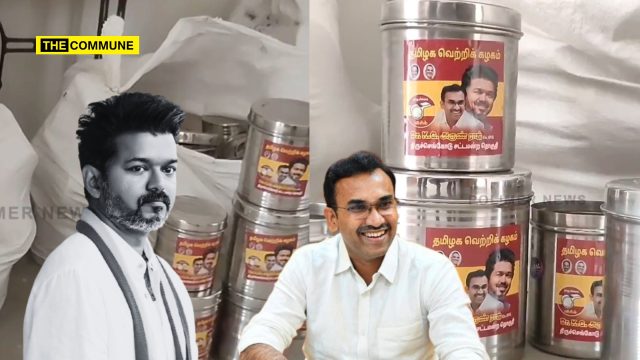
Former Tamil Nadu minister and senior AIADMK leader K.A. Sengottaiyan formally joined Tamizhaga Vettri Kazhagam (TVK) on Thursday, 27 November 2025, after meeting party founder Vijay. His induction marks one of the most significant political crossovers since the launch of the party.

According to party sources, Sengottaiyan has been appointed Chief Coordinator of the TVK Executive Committee, a position that enables him to report directly to the party leader. He has also been made Organisational Secretary for the western region, overseeing Erode, Coimbatore, Nilgiris and Tiruppur districts.

TVK had earlier formed an 18- to 28-member executive committee comprising the general secretary, the election campaign general secretary, joint general secretaries, deputy general secretaries, district secretaries and selected members. Leadership of this key committee has now been entrusted to Sengottaiyan.

Sources said the responsibilities given to him place him on par with senior office-bearers who directly coordinate with the party’s top leadership. It was previously speculated that Sengottaiyan would be given a role equivalent in stature to that of the general secretary. His new assignments indicate that he will work closely with the general secretary on organisational and strategic matters.

Party sources say senior leaders John Arockiaswamy and Aadhav Arjun met Sengottaiyan last weekend to finalise preparations for bringing him into the fold.

Sengottaiyan, who began his political journey alongside M.G. Ramachandran and later held important positions under former Chief Minister J. Jayalalithaa and present AIADMK general secretary Edappadi K. Palaniswami, is regarded as one of the party’s senior-most strategists. TVK sources said the leadership decided to give him major responsibilities considering his long political experience and his role during critical phases in AIADMK’s history.

Following his expulsion from the AIADMK, more than 30 office-bearers who were removed under the party’s internal rules have also moved to join TVK. They arrived in Panaiyur ahead of Sengottaiyan and are expected to be inducted alongside him during the event scheduled later today. Sengottaiyan resigned as Gobichettipalayam MLA on Wednesday, 26 November 2025.


Sharing a video on X, Vijay stated, “I extend a warm welcome to brother Sengottaiyan and all those joining him. I am confident that his long years of political experience and grassroots work will add immense strength to our party.”

Subscribe to our channels on WhatsAppTelegram, Instagram and YouTube to get the best stories of the day delivered to you personally.
Madrasa Teacher In Kerala Arrested For Sexual Assault Of 11-Year-Old Student

madrasa teacher sexual assault rape

A madrasa teacher has been arrested by the Thirunelly police in connection with the sexual assault of an eleven-year-old student, bringing to light another case of child sexual abuse within a religious educational institution in Wayanad, Kerala.

The accused has been identified as Meleppad Thodiyil Muhammed Shafiq (32), a resident of Karakkamala. According to police officials, Shafiq was taken into custody following a detailed investigation and surveillance that lasted nearly a month.

“The police had been receiving confidential complaints about the accused for some time. Our investigation revealed that he had visited the child’s home on multiple occasions and sexually abused the minor,” a police source told Manorama News. The arrest was made based on evidence and witness statements collected during the probe.

This is not the first time Shafiq has faced such serious allegations. Police confirmed that there have been previous complaints of a similar nature against him in other sexual assault cases.

The accused, who previously taught at another local madrasa, was produced before the Mananthavady court and has been remanded into custody. Investigations into other Protection of Children from Sexual Offences (POCSO) Act cases linked to him have also been intensified.

(Source: News18 Malayalam)

Subscribe to our channels on WhatsAppTelegram, Instagram and YouTube to get the best stories of the day delivered to you personally.