Home Blog Page 15

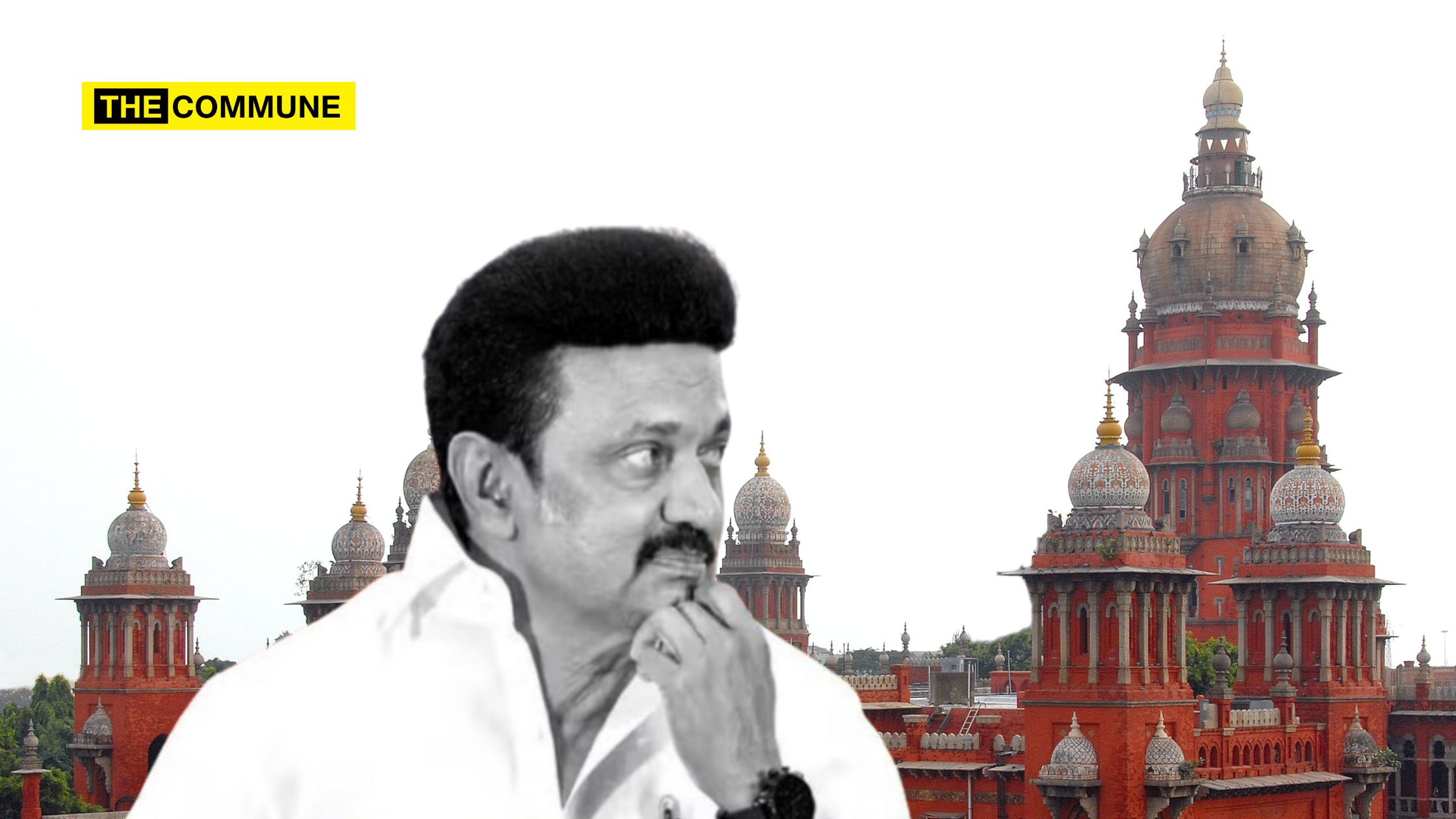
“Man Worships Invisible God, Destroys Visible Nature, Authorities Tried To Give Away God Himself”: Madras High Court Pulls Up DMK Govt, Cancels Sand Dune Allotment To School
dmk madras high court ungaludan stalin

The Madras High Court quashed a DMK government order allotting ecologically sensitive sand dune land to a private school as alternate land after its original property was resumed for temple purposes, holding that the decision was illegal, unconscionable and contrary to the State’s environmental obligations.

Justice D. Bharatha Chakravarthy, allowing a writ petition filed by St. Joseph’s Matriculation Higher Secondary School in Cuddalore district, sharply criticised the government for attempting to assign sand dunes for development and invoked both environmental jurisprudence and spiritual imagery in doing so.

“When this land of the petitioner is taken back for the Temple purposes and instead Sand Dunes is given as alternate land, it is apt to quote Hubert Reeves who said – ‘Man is the most insane species. He worships an invisible God and destroys a visible Nature. Unaware that this Nature he’s destroying is this God he’s worshiping’,” the court said.

As reported in Verdictum, the judge added, “This case is a clear example. Without realising that these Sand Dunes are also the incarnation of Lord Sri Devanatha Swami, who protects its land and people, the authorities deemed it fit to allocate to the petitioner, for development. In their endeavour to protect the sentiments of the devotees of the Temple, they had attempted to give away God himself. Without considering the ecological importance of the sand dunes, the Government acted recklessly, in violation of the public trust doctrine imposed upon it.”

The case arose out of a long-running dispute involving land in Koothapakkam village, Cuddalore, purchased by the school in 1979 from the government through G.O. Ms. No. 404 of the Education Department. The school had been operating on 5.77 acres, but objections were later raised over 3.40 acres on the ground that the land had historically been used for the purposes of Arulmigu Devanatha Swami Temple and had been wrongly auctioned after being taken over by the government.

In earlier litigation challenging the resumption of the land, the school agreed, in the interest of communal harmony, to exchange the disputed property if suitable alternate land was allotted for the institution. Recording that position, the High Court had in 2019 directed the State to allot not less than 4½ acres either in Bhuvanagiri village or any other land in Cuddalore district situated near the town or village with easy access to the main road or abutting the road.

However, instead of allotting comparable land, the State issued G.O. Ms. No. 414 dated July 1, 2025, offering the school 4.5 acres in Survey No. 74/1 of Periyapattu village, Bhuvanagiri Taluk. The land was classified as government poramboke sand dune land, was about 34 km away from Cuddalore town, lacked proper road access and was valued at only ₹2.17 crore, whereas the resumed school land had been valued by the government at ₹8.14 crore. The school challenged the order as violative of the earlier court direction and unsuitable for educational purposes.

The court agreed with the school and held that even on the face of it, the government order was against larger public interest. It observed that sand dunes are natural buffers protecting land from storms, act as sand reservoirs, serve as habitats for flora and fauna, and form an eco-sensitive system of utmost importance.

Referring to the Supreme Court’s decisions in Intellectuals Forum, Tirupathi v. State of Andhra Pradesh and State of Telangana v. Mohammed Qasim, the court reiterated that such environmentally sensitive lands are held by the State in public trust and that ecosystems are not merely objects of protection but subjects with a right to survive and exist. It held that those principles had been completely disregarded in this case.

The court also found the State’s conduct inconsistent with the spirit of the earlier undertaking. It noted that when land worth about ₹8 crore in Cuddalore town was taken back from the school, the alternate land offered was worth only about ₹2 crore, located 34 km away and inaccessible, directly contradicting the purport of the earlier order requiring suitable land for running an educational institution.

During the proceedings, the government indicated that it was examining other possible parcels, including land in Thiruvanthipuram village and Arisi Periyankuppam village. The court noted that one of those alternatives was too small and of lower value, while another appeared agreeable to the school subject to verification of its classification and legal feasibility under revenue records.

Quashing G.O. Ms. No. 414, the court directed the petitioner school to approach the Cuddalore District Collector with a copy of the order. It ordered the Collector, in consultation with other authorities, to make sincere efforts to examine the feasibility of land in Survey No. 146/7 of Thiruvanthipuram village and, if feasible, allot an appropriate extent reflecting equal value to the school. If that land is not feasible, the authorities must identify any other suitable land in and around Cuddalore Corporation.

The court said the alternate land should preferably be inside or adjoining the town, not more than 10 to 12 kilometres away, and must have access suitable for establishing an educational institution. It further directed that identification of such land be completed within four weeks, followed by finalisation and a government decision within six weeks. If no suitable land can be identified within the time prescribed, the State must refund the value of the resumed land to the petitioner school.

Senior counsel Father Xavier Arulraj appeared for the petitioner school, while Additional Advocate General J. Ravindran appeared for the State.

Subscribe to our channels on WhatsAppTelegram, Instagram and YouTube to get the best stories of the day delivered to you personally.
DMK Claims To Protect Tamil, But Thanjavur Tamil University Now On Brink Of Closure

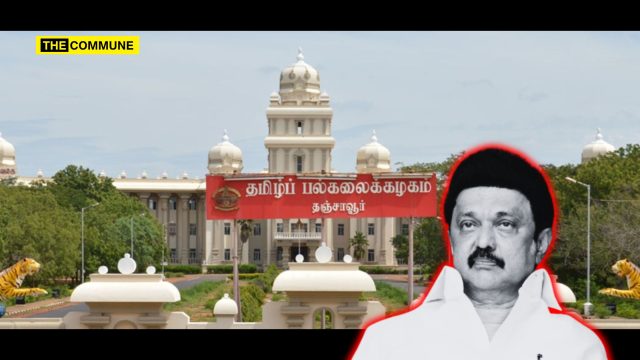
DMK Claims To Protect Tamil, But Thanjavur Tamil University Now On Brink Of Closure

The DMK have time and again branded themselves as custodians of the Tamil language and have often denounced Hindi as a language that would ‘kill’ Tamil. But here is what is happening in Dravidian Model Tamil Nadu.

The Tamil University Protection Movement has raised concerns that Tamil University in Thanjavur is facing a serious risk of closure due to ongoing administrative and financial difficulties.

Addressing reporters, the movement’s coordinator Maniarasan stated that the university, established by former Chief Minister M.G. Ramachandran across 972 acres, was envisioned as a multidisciplinary research institution focusing on language, ethnicity, and anthropology. However, he reported that the institution is currently grappling with a prolonged administrative vacuum, with key positions such as Vice-Chancellor and Registrar remaining unfilled for several years.

As reported in Dinamalar, he further stated that several academic departments are being managed by individuals lacking the required qualifications, resulting in a slowdown of research activities. Units such as the Drama Department and the university’s publishing division, which previously functioned effectively, have witnessed a significant decline. The publishing wing has been shut down, and research output has reduced considerably.

According to the movement, the university’s library and publishing divisions, which earlier had designated staff including a director, deputy director, and assistant librarians, are now functioning without personnel. It also reported that the institution has not been procuring new books or journals.

The movement alleged that a substantial portion of the university’s original 972-acre land has been allocated for other government purposes, including offices for the Forest Department, Collector, and Superintendent of Police. It further noted that 55 acres have been earmarked for the establishment of a Chola Museum, leaving the university with significantly reduced land holdings.

The coordinator also stated that the university, which should fall under the Higher Education Department, is currently under the Tamil Development Department, leading to complications in funding allocation. He warned that these issues have pushed the institution toward a potential shutdown.

The movement has demanded the immediate appointment of a qualified Vice-Chancellor and Registrar, restoration of the university under the Higher Education Department, and the revival of academic recognitions such as the Rajarajan Award.

It also announced plans to submit formal demands to the government starting June and to organise continuous protests to press for corrective measures.

Subscribe to our channels on WhatsAppTelegram, Instagram and YouTube to get the best stories of the day delivered to you personally.
Puducherry: DMK-Congress File Nominations In All 30 Seats Without Deal, Alliance Talks Still Stuck

DMK Stalin Congress Rahul Gandhi

With the nomination process underway for the upcoming Assembly elections, political activity has intensified across Puducherry even as key alliance negotiations remain unresolved.

The Election Commission has announced that polling in Puducherry will be held on 9 April 2026 as part of the first phase, along with Kerala and Assam. The filing of nominations began earlier this week and will continue until 3 PM on 23 March 2026. Candidates can submit their papers at 17 designated government offices across the Union Territory.

Despite the start of the nomination process, no candidate filed papers on the first day, with only a few individuals collecting application forms.

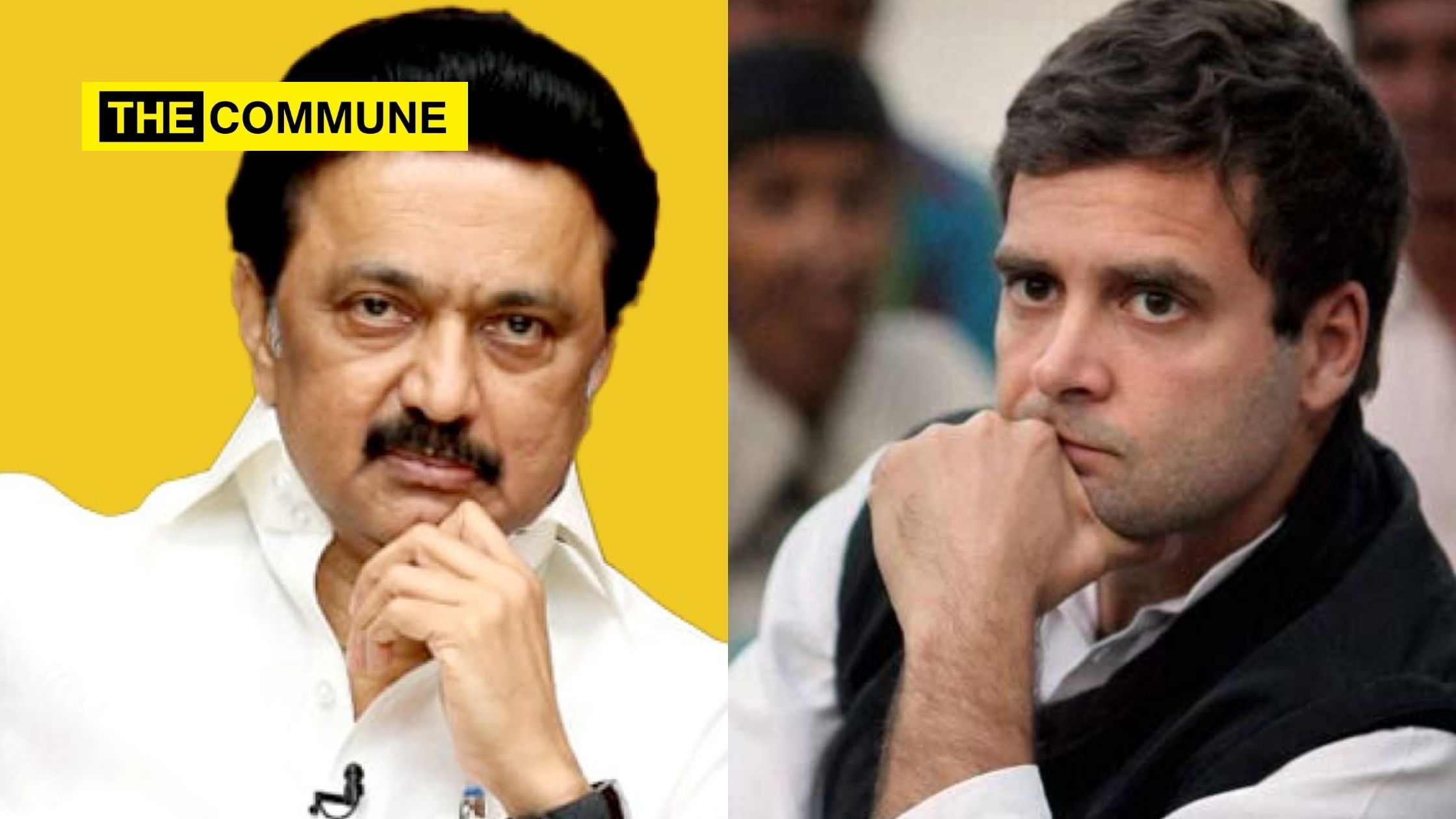
However, in a significant development on Wednesday, 18 March 2026, candidates from the DMK and Congress have begun filing nominations across all 30 constituencies in Puducherry, even though seat-sharing talks between the alliance partners are yet to be finalised, as reported in Daily Thanthi.

Sources indicated that the decision to file nominations today was influenced by Amavasya, which is considered an auspicious day. Both parties are understood to have adopted a tactical approach, whereby candidates will initially file nominations in all constituencies and later withdraw from seats once a final seat-sharing agreement is reached.

On 17 March 2026, DMK leader Jagathrakshakan said seat-sharing talks with Congress for the upcoming Assembly elections were progressing “smoothly,” dismissing reports that Congress sought 20 or 21 seats. He said both parties had only expressed expectations, with DMK maintaining its stance of contesting 30 seats. He added that talks would conclude in a day or two, and candidate nominations could be withdrawn later if needed. The final decision, he said, would be announced by the party leadership.

With only seven days remaining for nomination filing, of which two are government holidays, parties are left with a narrow window of five working days to complete both procedural and political formalities.

Meanwhile, seat-sharing discussions within the I.N.D.I. alliance in Puducherry remain inconclusive, with no clarity yet on the allocation of constituencies among partners. The delay has reportedly created uncertainty among prospective candidates, many of whom are awaiting confirmation of their constituencies before intensifying campaign efforts.

Subscribe to our channels on WhatsAppTelegram, Instagram and YouTube to get the best stories of the day delivered to you personally.
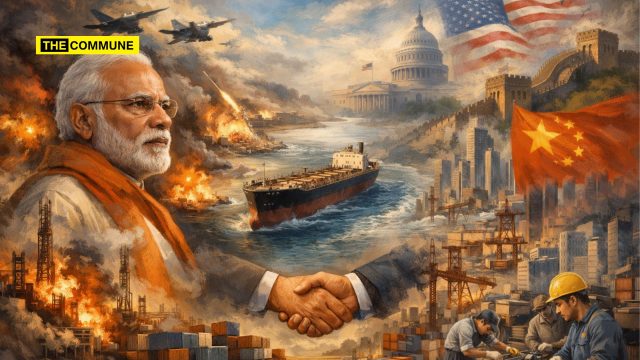
Iran War Forces India’s Pivot: Why Modi Govt Reopened Door To Chinese Investment

Iran War Forces India’s Pivot: Why Modi Govt Reopened Door To Chinese Investment

As the Iran conflict threatens global energy supplies, New Delhi’s recalibration reveals the difficult strategic balancing act confronting the Modi government.

The geopolitical landscape of 2026 has grown increasingly volatile. The war in Iran triggered by the joint military campaign of the United States and Israel has rapidly evolved into a crisis with global consequences. With energy markets rattled, shipping routes under threat, and diplomatic alliances under strain, governments around the world are scrambling to protect their economic interests. Amid this turmoil, India has taken a quietly consequential decision: easing restrictions on investments from neighbouring countries, effectively reopening the door to capital from China.

At first glance, the policy shift may appear technical or bureaucratic. Yet its timing and strategic implications tell a deeper story. It signals that the government led by Narendra Modi finds itself navigating a far more complicated geopolitical environment than anticipated when the Iran conflict erupted on February 28. Facing an impending energy crisis and economic pressures at home, New Delhi has chosen pragmatism over rigid posturing.

A War That Reshaped the Global Energy Equation

The conflict involving Iran has already triggered tremors across global energy markets. Iran sits at the heart of the Persian Gulf energy ecosystem, and any instability in the region threatens the flow of oil and gas through critical maritime corridors such as the Strait of Hormuz. For a country like India one of the world’s largest energy importers this scenario is deeply alarming.

Nearly 85% of India’s crude oil requirements are met through imports, with a significant share originating from West Asia. As the conflict escalated, shipping insurance costs soared, tanker routes were disrupted, and fears of supply shortages intensified. Even the mere perception of instability in the region was enough to send global crude prices upward.

In such a scenario, economic policy cannot remain detached from geopolitical realities. India’s leadership understands that sustained high energy prices could slow economic growth, worsen inflation, and strain public finances. The government therefore appears to have concluded that it must mobilize every available economic lever to maintain stability including revisiting its policy toward Chinese investments.

Revisiting the Legacy of Press Note 3

The restrictions that India has now eased originated during the early months of the COVID-19 pandemic. In April 2020, New Delhi introduced the controversial Press Note 3 (PN3) amendments to its foreign investment policy. The measure required investments from countries sharing land borders with India to undergo additional government scrutiny instead of being processed through the automatic approval route.

Although the policy was framed as a safeguard against opportunistic takeovers of struggling Indian firms during the pandemic, it was widely understood to be directed primarily at China. The move came at a time when geopolitical mistrust between the two Asian giants was rising.

That mistrust soon escalated dramatically following the violent confrontation between Indian and Chinese soldiers in the Galwan Valley in June 2020 – the first deadly border clash between the two countries in 45 years. The incident hardened public opinion in India and reinforced the government’s decision to tighten economic and technological restrictions on Chinese companies.

The impact of PN3 on investment flows was immediate. Between 2016 and 2020, Chinese foreign direct investment into India had reached roughly $886 million. But after the restrictions were introduced, inflows collapsed dramatically, falling to around $68 million between 2021 and early 2025. What had once been a rapidly expanding investment corridor virtually dried up.

Over time, however, concerns began to emerge within India’s policy circles about the unintended economic consequences of the policy. A report published in August 2025 by the Indian Council for Research on International Economic Relations (ICRIER) argued that while security safeguards were necessary, the blanket restrictions had created an excessively hostile investment environment.

The study recommended a calibrated reassessment of PN3, suggesting that India could unlock economic opportunities by permitting Chinese investments in non-sensitive sectors while maintaining strict scrutiny in strategic industries.

The March 10 Decision

Against this backdrop, the Union Cabinet chaired by Prime Minister Modi moved on March 10 to ease the PN3 restrictions. Officially, the policy adjustment was framed as a broader relaxation for investments from “neighbouring countries.” In reality, the decision was widely interpreted as a signal that India is prepared to cautiously reopen its economy to Chinese capital.

The timing is particularly striking. The announcement came as the Iran war entered its second week and global markets were bracing for prolonged instability. At a moment when energy prices threaten to disrupt economic growth, attracting foreign investment becomes an urgent priority.

By allowing Chinese investment flows to resume, New Delhi hopes to stimulate manufacturing, technology development, and infrastructure expansion sectors critical for sustaining economic momentum during a global downturn.

Yet this move is not simply about economics. It also reflects the evolving dynamics of India’s foreign policy.

The West Asia Puzzle

India’s diplomatic posture during the Iran crisis has raised eyebrows in several quarters. New Delhi has signalled tacit support for the American and Israeli position while refraining from backing Iran in international forums.

This stance became especially evident when the United Nations Security Council adopted Resolution 2817 in March 2026 condemning Iranian attacks on Gulf Cooperation Council states. India joined more than 130 countries in supporting the measure.

Simultaneously, New Delhi declined to strongly condemn the assassination of Ali Khamenei, Iran’s long-time Supreme Leader a decision that placed India somewhat at odds with several members of the BRICS grouping.

Such diplomatic choices carry consequences. Relations between India and Iran have already been strained since India halted Iranian oil imports during the sanctions regime imposed by the United States under the administration of Donald Trump.

Further friction arose over the long-delayed development of the Farzad-B gas field, from which India’s state-owned ONGC Videsh Ltd was eventually excluded in 2021. The project was instead awarded to the Iranian firm Petropars Group.

In recent years, Iran has increasingly tilted toward China for economic and strategic partnerships. In this context, maintaining workable relations with Beijing may indirectly help New Delhi rebuild channels of communication with Tehran.

Trade Frictions with Washington

Complicating matters further are the evolving economic tensions between India and the United States. Although Washington remains one of India’s most important strategic partners, trade disputes have intensified under the renewed presidency of Donald Trump.

Tariff hikes and investigations under Section 301 of the US Trade Act have placed pressure on several Indian export sectors, particularly textiles, gems and jewellery, marine products, and chemicals. Even after a February 2026 trade agreement reduced certain tariffs, many small exporters continue to struggle.

For India’s vast network of micro, small, and medium enterprises, these developments represent a serious challenge. With thousands of exporters searching for alternative markets, the government has been forced to provide interest subsidies, credit guarantees, and policy support.

Against this backdrop, the reopening of Chinese investment channels offers another economic lifeline. Capital from Chinese firms could help expand manufacturing capacity, create jobs, and support India’s ambition to become a global production hub.

Strategic Pragmatism in an Uncertain World

India’s decision to ease restrictions on Chinese investments is therefore less a dramatic geopolitical pivot than an act of strategic pragmatism. Faced with a convergence of crises war in West Asia, volatile energy markets, trade tensions with Washington, and strained ties with Tehran New Delhi is attempting to maintain economic stability without abandoning its broader strategic goals.

The Modi government has built much of its diplomatic identity on the principle of “multi-alignment” maintaining constructive relationships with competing global powers while preserving strategic autonomy. The present moment may be the most severe test of that doctrine.

By quietly reopening the door to Chinese capital while simultaneously cooperating with the United States and Israel on the Iran issue, India is attempting to walk a narrow geopolitical tightrope.

Whether this balancing act succeeds remains uncertain. But one thing is clear: the emerging global order is forcing even the most confident governments to rethink their assumptions. In an era defined by wars, sanctions, and supply chain disruptions, economic survival increasingly demands flexibility.

India’s latest policy shift is a reminder that in geopolitics, ideology often yields to necessity.

Dr. Prosenjit Nath is a techie, political analyst, and author.

Subscribe to our channels on WhatsAppTelegram, Instagram and YouTube to get the best stories of the day delivered to you personally.
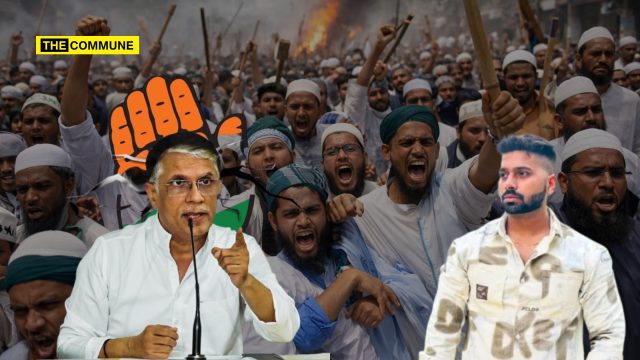
Congress’ Pawan Khera Trivialises Uttam Nagar Lynching Of Hindu Youth Tarun Kumar By Islamists As A ‘Fight Between Two People’, Blames Hindus For Celebrating Festivals Loudly

Earlier this month, a 26-year-old Hindu youth Tarun Kumar was beaten to death in Delhi’s Uttam Nagar area following a dispute triggered by an accidental splash of coloured water during Holi celebrations.

The victim was allegedly attacked by a group of people after a water balloon thrown during Holi festivities led to an argument between two neighbouring families in the JJ Colony area of southwest Delhi.

As reported in Times of India, according to police and accounts from the victim’s family, an 11-year-old girl from Tarun’s family was playing Holi on the terrace of her house and threw a water balloon aimed at her father standing below. The balloon fell on the road instead and splashed coloured water on a woman from a neighbouring Muslim family. The incident reportedly triggered an argument between members of the two households.

Family members said the dispute appeared to have been settled after an apology from Tarun’s family earlier in the day. However, tensions escalated later in the evening.

Police said Tarun was returning home on his motorcycle after celebrating Holi with a friend when he was allegedly stopped by a group of around 15 to 20 people. The group reportedly assaulted him with iron rods, bricks, stones and other objects.

When Tarun’s relatives and others rushed to intervene, they were also attacked during the clash. Eight people were injured in the violence, including Tarun’s father, Memraj, and his uncle Ramesh, police said.

Tarun sustained critical injuries and was taken to a nearby hospital, where he died during treatment the following morning. Police confirmed that his death resulted from injuries sustained in the assault.

But as expected, Congress trivialises the whole issue and removes the communal colour of this murder.

Congress leader Pawan Khera shared a 4-minute monologue on his X handle late evening of 17 March 2026. He referred to the killing as a “fight between two people,” thereby downplaying the seriousness of the incident.

In the video, Khera said, “Friends, whenever a festival comes in this country – be it Holi, Eid, Christmas, Hanuman Jayanti, or Ram Navami, we all want to celebrate it joyfully, with friends, with family, and spread happiness in society. That used to be the purpose of festivals. But over the last 10–12 years, an atmosphere has been created where; if it is Hanuman Jayanti, then one must dance outside a mosque, blast huge DJs, and harass people; if it is Christmas, then one must go to a church, create chaos, and vandalize it. It seems like an entrance test for BJP – whoever uses the most hate speech, harasses those with caps and beards, lynches them, raises disgusting slogans, and speaks in a language of hatred, that person rises higher in the BJP. Just a few days ago it was Holi. In Uttam Nagar, Delhi, a fight broke out between two people – a man named Tarun was murdered, he died. After that, the RSS and BJP inflamed the entire incident so communally that today people are seen marching on Delhi’s streets saying ‘there will be a bloody Eid’ and ‘Muslims will be wiped out’ and Delhi Police is sitting silently as a mute spectator.”

He further said, “Brother, what are you waiting for? Do you want an atmosphere like 2020? Do you want riots again? Why don’t you stop them? Why are you letting this kind of atmosphere grow? In Varanasi, people were arrested for holding an Iftar. In Pune, people doing Iftar were attacked and injured. In Madhubani, Bihar, a fasting woman was forced to drink urine and then beaten so badly that she died. What kind of atmosphere is this? And there is another new trend – new lovers of Israel are roaming around on streets, on social media, in the media. Hey, do you know how old India’s relationship with Iran is and why? Do you have any idea in what circumstances and why India stood with Palestine, and how India gained such a great stature in the world? India gained that stature because it walked on principles. Today, from top to bottom, look at the government, in the party, in BJP, everyone has become a lover of Israel. They are saying ‘Israel is our fatherland.’ Fine, it may be your fatherland, but we have no expectations from the Prime Minister. The seeds of hatred that the RSS has sown for many years have now grown into a huge tree. Narendra Modi’s government is its protector, and it is bearing fruit too. And wherever communal election tension rises, BJP’s graph also climbs. So, we have no expectations from them. As I said, the Prime Minister himself climbed these very stairs to reach where he is,so let him be. But our request to Delhi Police and officials is do not let these walls of hatred grow so tall that our real identity, the identity of this country, the identity of this civilization, gets buried beneath them. This is a test; not just for the police, not just for governments (let them be). This is a great test for you and me, for Hindus. Will we allow our religion to be sold into the hands of these worthless people? Into the hands of people like the Sangh? Have we given them the contract for our religion? Will we save our religion? The whole world is watching this test, and we have to pass it. We must not let this civilization fail. We must not let our heritage fail. We are fully confident, together we will confront these hate gangs, and send them back again to their barracks in Nagpur. Jai Hind.”

Subscribe to our channels on WhatsAppTelegram, Instagram and YouTube to get the best stories of the day delivered to you personally.
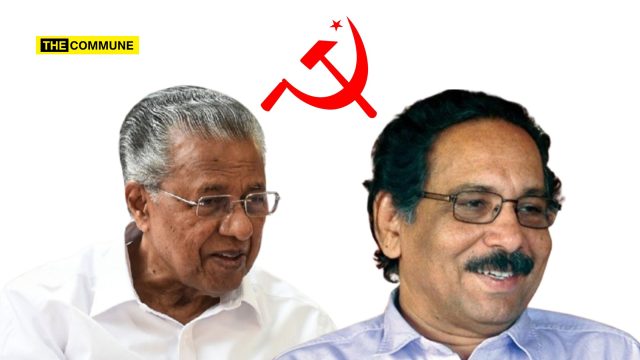
LDF Picks Writer Alankode Leelakrishnan Who Called Bhagavad Gita A ‘Failure’ & Said Quran ‘Opened His Eyes’ As Thrissur Candidate

LDF Picks Writer Alankode Leelakrishnan Who Called Bhagavad Gita A ‘Failure’ & Said Quran 'Opened His Eyes' For Thrissur

The Left Democratic Front (LDF) has fielded writer and journalist Alankode Leelakrishnan as its candidate from Thrissur for the 2026 Kerala Assembly elections, bringing renewed attention to past remarks in which he praised Islamic scripture while criticising Hindu texts.

Anti-Hindu Remarks

Leelakrishnan used to be associated with Bhakthapriya, a publication of the Guruvayur Devaswom, which administers one of Kerala’s most prominent Hindu temples. He had served on the magazine’s editorial board. It was around this time that he made anti-Hindu remarks, prompting criticism from some groups who questioned how an individual associated with a temple institution could make public remarks critical of Hindu scriptures.

Leelakrishnan had courted controversy during a public address at a prize distribution event organised by Dialogue Centre Kerala, affiliated with Jamaat-e-Islami, where he spoke on religious texts. During the event, he described the Bhagavad Gita as a “failure,” referred to Rama and Krishna as “mere characters,” and called the Quran an “eye-opener.”

The remarks drew criticism from several quarters, with detractors alleging that he applied a selective standard by criticising Hindu beliefs while praising Islamic scripture at a religiously affiliated platform.

Praises Islam

Speaking at the book release, in February 2024, of “Manava Calendar: A Comprehensive Study” authored by Dr. T.V. Koyakutty Farooqi, Alankode Leelakrishnan openly praised Islam, asserting that it spread across the world through knowledge rather than violence and dismissing contrary historical claims as propaganda by its enemies. He described the Quran as a text that “opens the eyes” of those who seek inquiry and credited his own understanding to reading its Malayalam translation later in life. He further claimed that scientific systems such as a lunar calendar comparable to the widely followed Christian calendar were rooted in Quranic principles, presenting Islam as a civilizational force grounded in knowledge, rationality, and intellectual awakening.

Leelakrishnan’s selection as the LDF’s candidate for Thrissur has been described as unexpected, with reports indicating that the party’s state leadership overruled district-level recommendations in finalising his nomination.

He is currently campaigning as part of the LDF’s campaign for the upcoming Assembly elections.

Subscribe to our channels on WhatsAppTelegram, Instagram and YouTube to get the best stories of the day delivered to you personally.
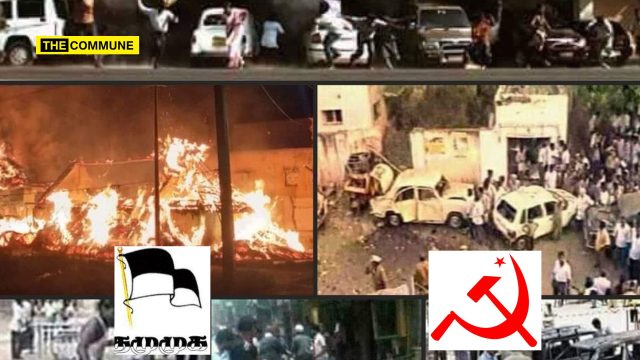
CPI(M) Once Sought Ban On TMMK After 1998 Coimbatore Blasts, Now Part Of Same Alliance

CPI(M) Once Sought Ban On TMMK After 1998 Coimbatore Blasts, Now Part Of Same Alliance dmk

A 28-year-old document from the Justice P.R. Gokulakrishnan Commission of Inquiry into the 1998 Coimbatore serial bomb blasts has resurfaced, exposing a glaring contradiction at the heart of Tamil Nadu’s Left politics – the Communist Party of India (Marxist) once demanded the outright ban of Tamilaga Muslim Munnetra Kazhagam (TMMK), the very organisation whose founder, M.H. Jawahirullah, is today their electoral ally in the DMK-led front ahead of the 2026 Tamil Nadu Assembly elections.

On 25th April 1998, barely months after the devastating serial bomb blasts rocked Coimbatore on February 14, killing 58 people and injuring hundreds, CPI(M)’s Thiru K.C. Karunakaran, District Secretary, appeared before the Gokulakrishnan Commission. In a signed written submission, he explicitly demanded: “Tamizhaga Muslim Munnetra Kazhagam should be banned.”

CPI(M) was, in effect, treating TMMK as a communally dangerous organisation with suspected links to the terror network responsible for the serial bomb blasts that day.

TMMK was founded in 1995 by M.H. Jawahirullah, who led the organisation as its president. In 2009, Jawahirullah launched Manithaneya Makkal Katchi (MMK) as the political wing of TMMK, transitioning into direct electoral politics. He currently serves as MLA from the Papanasam constituency.

Fast-forward to today: CPI(M), TMMK, and Jawahirullah’s MMK are all sitting comfortably inside the DMK-led Secular Progressive Alliance for the 2026 state elections. CPI(M), which once raised its voice before a judicial commission demanding TMMK’s dissolution for allegedly stoking communal fire, is now negotiating seat shares in the same coalition as that organisation’s founder.

The shift does not appear to reflect any clearly articulated ideological evolution, but rather a pragmatic electoral recalibration framed in terms of “secular unity.” CPI(M)’s earlier position, recorded before a judicial commission probing a major terror attack, now stands in contrast to its present alliance choices, raising questions about the consistency and durability of its stated principles.

Subscribe to our channels on WhatsAppTelegram, Instagram and YouTube to get the best stories of the day delivered to you personally.
Bank Manager Booked Under POCSO For Sexually Assaulting 11-Year-Old After Luring Her With Marriage Promise

Bank Manager Booked Under POCSO For Sexually Assaulting 11-Year-Old After Luring Her With Marriage Promise

A 33-year-old bank manager was arrested for allegedly sexually assaulting an 11-year-old girl after luring her with a promise of financial support and marriage, police said.

The accused has been identified as Dinesh, a resident of Pommadimalai in Pudukkottai district. He is employed as a manager at a private bank in Pudukkottai.

According to police sources, Dinesh had developed an acquaintance with a woman from his locality. Taking advantage of the trust, he allegedly took the woman’s 12-year-old daughter away, promising to fund her education and marry her in the future.

As reported in DT Next, according to police, the girl’s mother had taken her to meet the manager. Subsequently, the mother, along with the manager’s parents, allegedly left the minor alone with the accused in a separate house. It was during this period that he is accused of subjecting the minor to sexual harassment.

Neighbours who grew suspicious of the situation alerted the Child Helpline by dialing 1098. District Child Protection Officer Vasanthakumari rushed to the spot and conducted an inquiry with the victim. The child was subsequently rescued and admitted to a hospital for medical examination.

Based on a complaint lodged by the authorities, the Keeranur All-Women Police registered a case and arrested Dinesh under the Protection of Children from Sexual Offences (POCSO) Act. He was later lodged at Pudukkottai prison.

Police have also registered a case against the parents of the accused based on a complaint filed by the girl’s mother. Investigations are ongoing.

Subscribe to our channels on WhatsAppTelegram, Instagram and YouTube to get the best stories of the day delivered to you personally.
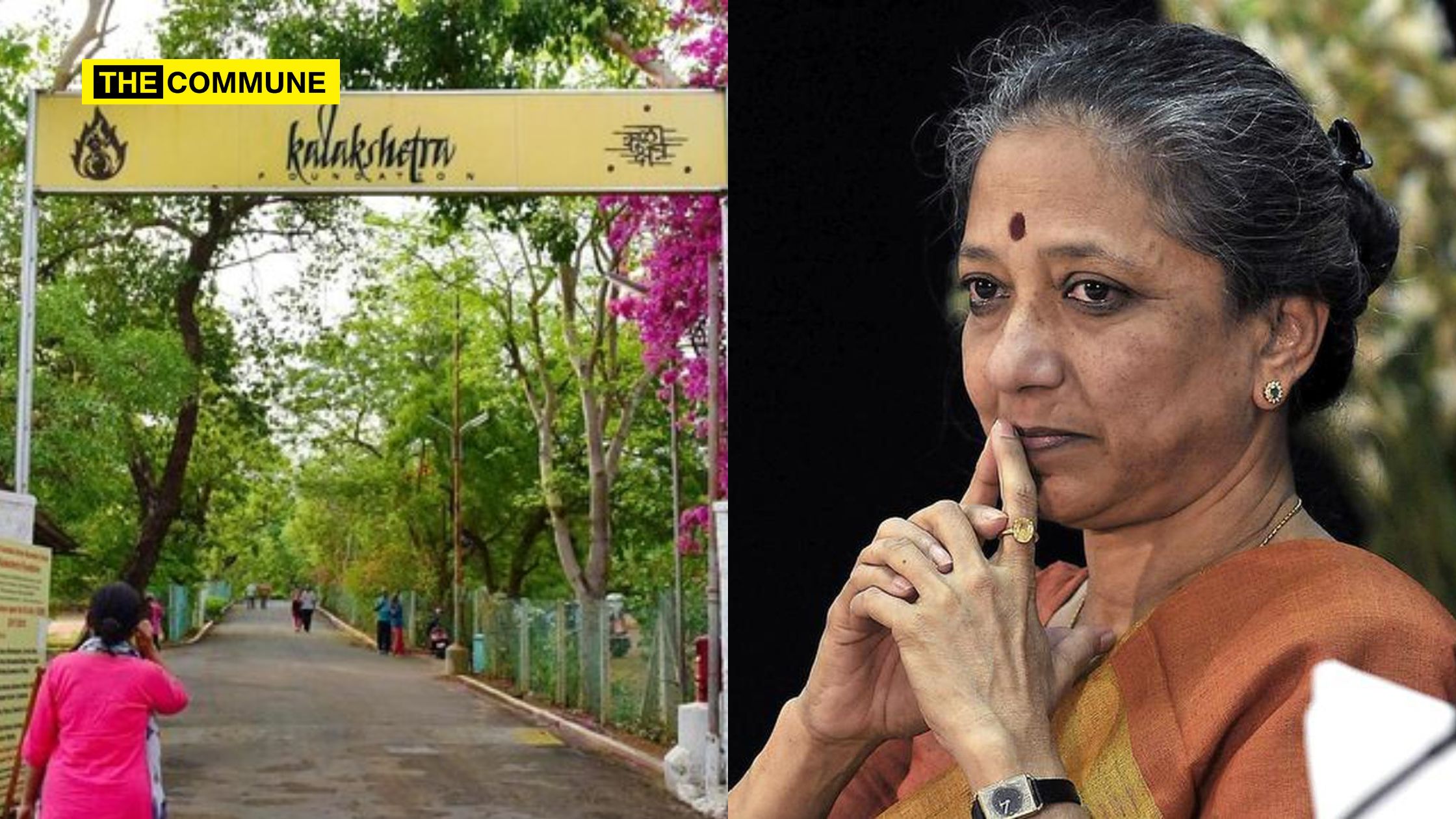
Kalakshetra Controversy: After ₹8 Lakh Settlement And Public ‘Apology’ Madras High Court Quashes Case Against Leela Samson For Defaming A Female Student By Wrongly Linking Her With A Male Teacher

leela samson kalakshetra

The Madras High Court has quashed criminal proceedings against former Kalakshetra Foundation director Leela Samson in a case arising from alleged derogatory social media posts, after noting that the parties had reached an amicable settlement.

The petition, filed under Section 528 of the Bharatiya Nagarik Suraksha Sanhita, 2023, sought to quash proceedings in C.C. No. 3262 of 2023 pending before the Metropolitan Magistrate Court in Saidapet.

Justice M. Nirmal Kumar, in an order dated 17 March 2026, observed that the dispute between the petitioner and the complainant had been resolved through mediation and that the complainant had expressed no objection to quashing the case.

Background of the Case

The case stemmed from a complaint filed by a dance intern associated with Rukmani Devi College of Fine Arts (Kalakshetra), who alleged that a Facebook post made by Samson in December 2022 contained defamatory and derogatory remarks that harmed her reputation and personal dignity.

The post made by Samson alleged that a male staff member indulged in acts of sexual harassment inside the campus. The alleged male staff member mentioned therein is one Mr. Haripadman who happened to be one of the complainant’s mentors and he had trained her for years together. 

In the comments section of the now-deleted Facebook post made on 23 December 2022 by Leela Samson, the complainant says that various comments were made about the alleged misdemeanours committed by Mr. Haripadman and that what was particularly disconcerting was that her name was linked in an uncharitable manner with Mr. Haripadman in one of those comments on the Facebook post. 

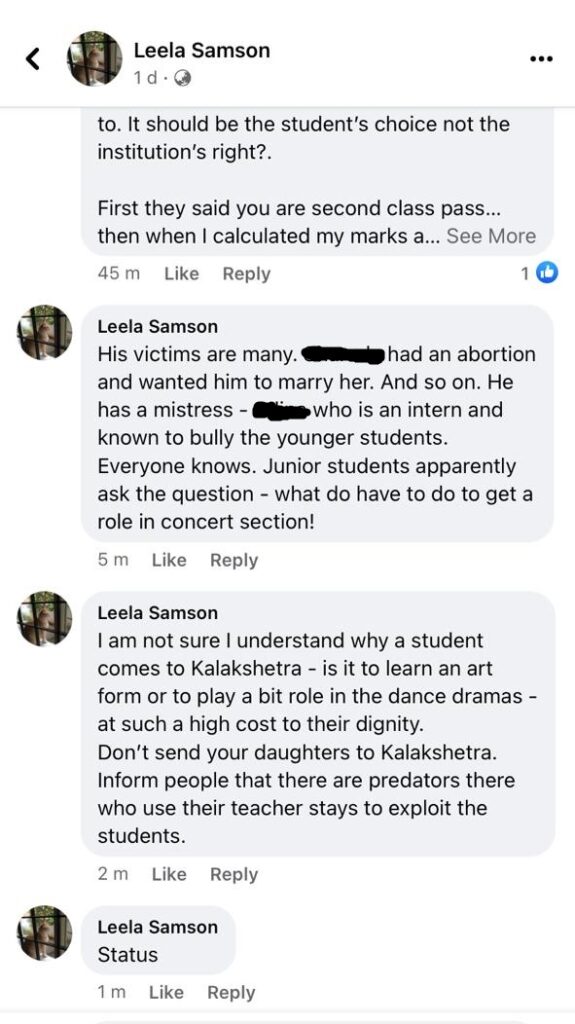
The comments said, “His victims are many. (Name hidden) had an abortion and wanted him to marry her. And so on. He had a mistress who is an intern – (name hidden) known to bully the younger students. Everyone knows. Junior students apparently ask the question – what do have to do to get a role in the concert section!” 

The comment on the Facebook post mentions the complainant’s name (removed for anonymity), although misspelled makes an explicit reference to her and the FIR says that it has given rise to an immense upheaval of her personal and academic life. The contents of the comment, at first glance, besides being false and baseless, are patently derogatory, disparaging, and vituperative, which projects the complainant in an extremely disparaging manner, the FIR said. 

The context, tone and tenor of Leela Samson’s post gives away that she had used the word “mistress” with a sexual connotation.

The reference to the complainant as a “mistress”, the FIR said, was an attack against her dignity and an affront to her modesty and as such attracts the provision of Section 509 of the Indian Penal Code, 1860. 

The police subsequently closed the complaint against Samson. When the complainant asked for the reason, she was informed that Samson claimed “mistress” meant “ejamaani” (in Tamil ejamaani means a feudal landlady) in the context of the intern giving tuitions to Haripadman’s son. As Samson had already removed her post, the police found her explanation “satisfactory” and decided to close the case.

Following the complaint, police registered an FIR under Section 509 of the Indian Penal Code, which pertains to acts intended to insult the modesty of a woman. A charge sheet was subsequently filed, and the matter proceeded to trial.

Settlement Through Mediation

Parallel to the criminal proceedings, the complainant had also initiated a civil suit. The dispute was referred to mediation, during which multiple sessions were held between August 2024 and April 2025. Both parties eventually arrived at a settlement.

As part of the agreement, the complainant consented to withdraw the criminal complaint and expressed no objection to the quashing of proceedings. The petitioner, in turn, expressed regret over the incident and undertook not to make any further comments against the complainant.

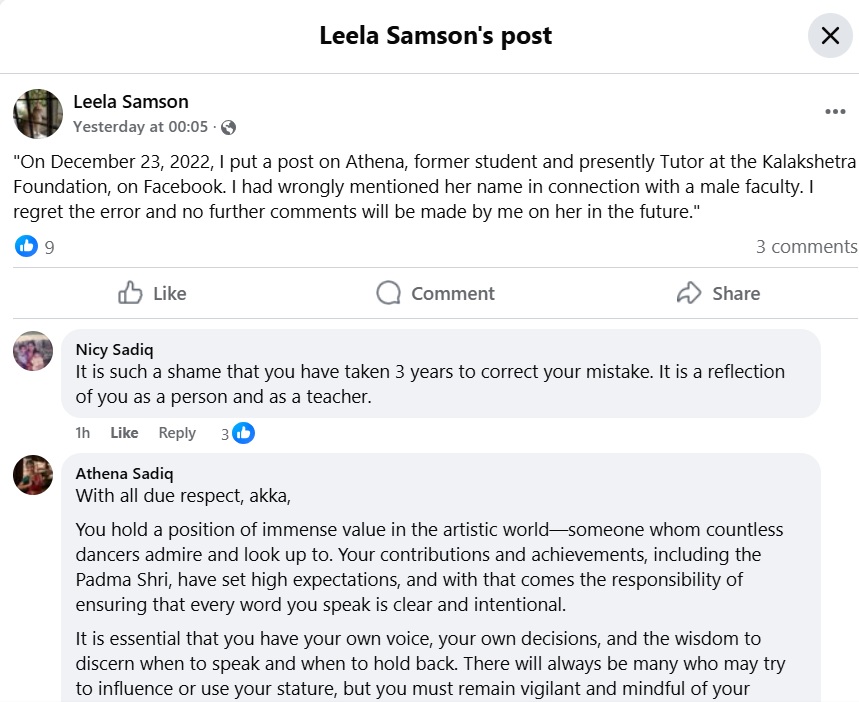
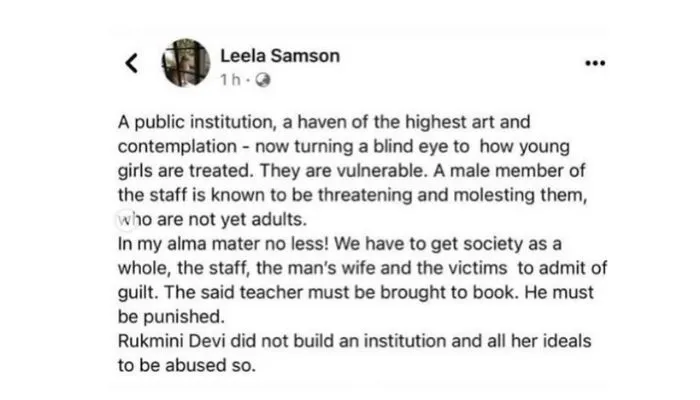
In a brief statement on her Facebook page, Samson wrote this.

Samson’s admission came after nearly two years of controversy stemming from her initial post, which alleged misconduct by a male teacher, Hari Padman and inadvertently drew a student, into a scandal that disrupted her life and career. The student later alleged that the mention of her name, and its subsequent circulation in media reports and social media, had caused immense distress, mental agony, and damage to her reputation.

According to the affidavit reproduced in the court record (pages 7–9), the complainant confirmed that the settlement had been voluntarily reached and that all terms had been complied with.

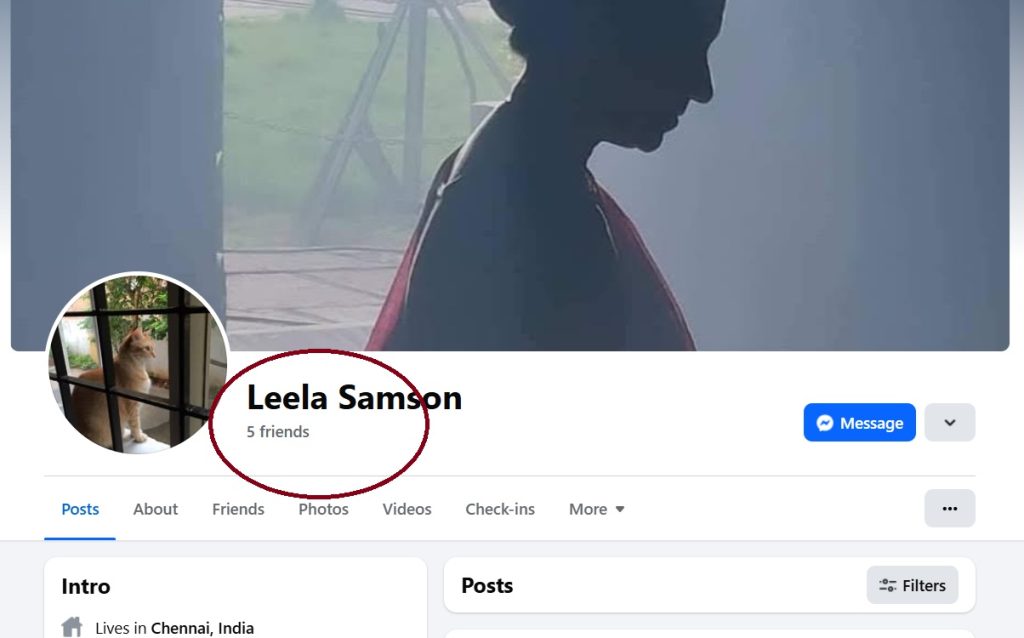
Before making the Facebook post, however, Leela took careful measures to control its visibility. She removed nearly all her friends from her account, reducing their number from approximately 2,000 down to just 5, ensuring that the message would reach a limited and carefully curated viewership. Furthermore, as requested by the complainant, Leela made the post visible to the public while retaining this small number of friends. This tactic meant that the majority of her friends, and even many of her previous social media connections, remained oblivious to its content. In this way, the defendant was able to fulfill the terms of the agreement without broadly disclosing the details or drawing significant attention from her social circle.

Court’s Observations

The court noted that the offence under Section 509 IPC is compoundable in nature and that both parties had willingly resolved their differences. It also recorded the complainant’s statement in court that she did not wish to pursue the case further.

Taking these factors into account, the court exercised its inherent powers to quash the proceedings.

The High Court allowed the petition and quashed the criminal case pending before the XVIII Metropolitan Magistrate Court, Saidapet, effectively bringing the matter to a close.

Subscribe to our channels on WhatsAppTelegram, Instagram and YouTube to get the best stories of the day delivered to you personally.
After Saying Dravidianism Is Christianity, DMK Scion Udhayanidhi Stalin Says “Dravidian Ideology And Islam Are The Same”

After Saying Dravidianism Is Christianity, DMK Scion Udhayanidhi Stalin Says “Dravidian Ideology And Islam Are The Same”

A few months ago, during the season of Christmas, DMK scion and TN deputy chief minister Udhayanidhi Stalin drew parallels between the teachings of Jesus Christ and the principles of the Dravidian movement, while sharply criticising the Union government. He said, “There is no huge difference between Christian principles and the Dravidian movement principles. Both emphasize showing love, humanity, and equality to others at all times,” he said.

Yet again during the season of Ramzan that the DMK appeases all the time, he stated that the principles of the Dravidian ideology and Islam are fundamentally similar, emphasizing that both promote equality, love, and generosity.

Speaking at an Iftar event organised by the DMK Minorities Welfare Rights Wing, Udhayanidhi said, “Yesterday, our Party President participated in an Iftar event and delivered a speech. Islam is a faith that preaches equality, love, and benevolence. Fundamentally, the principles of the Dravidian movement and the principles of Islam are one and the same. To put it even more succinctly, in a single word, our sole, foundational principle is humanity. For this very reason, ever since the inception of the DMK, all of you have stood as a pillar of strength to this movement; even today, you continue to serve as a steadfast support and a source of strength to our Party President. What binds us together is a bond of fraternal affection. No matter how many attempts are made, or how many conspiracies are hatched, no one can ever sever the bond that exists between the DMK and the Muslim community.”

As reported in Times of India, he highlighted the initiatives of Chief Minister MK Stalin and referred to the laying of the foundation stone for the Tamil Nadu Haj House, a project estimated at ₹39 crore, as part of efforts to support the community.

Udhayanidhi also took aim at the Bharatiya Janata Party (BJP), alleging that the party engages in divisive politics targeting minorities. Without naming individuals directly, he referred to instances where BJP leaders have made remarks against Muslims, stating that such actions contribute to the party’s growth through polarisation.

He reiterated that regardless of political pressures or challenges, the DMK would continue to stand firmly with minority communities.

Subscribe to our channels on WhatsAppTelegram, Instagram and YouTube to get the best stories of the day delivered to you personally.