Home Blog Page 14

The Bhasin Files: How The Kashmir Times Promoted Anti-India Agenda For Years

On 20 November 2025, the State Investigation Agency (SIA) of the Jammu & Kashmir Police raided the Kashmir Times office in Jammu for allegedly promoting anti-national activities. During the search, officers recovered around 14 AK-47 cartridges, pistol rounds and three grenade levers. The SIA accused Executive Editor Anuradha Bhasin and the newspaper of participating in a “criminal conspiracy with secessionist and other anti-national entities” operating within and outside Jammu and Kashmir.

This report documents sixteen incidents from 2006–2025 that illustrate how Bhasin and Kashmir Times consistently amplified anti-India narratives, defended ISI-linked actors, legitimised pro-Pakistan positions and normalised Islamist violence, reflecting a long-running pattern of hostile information activity.

#1 SIA Raid on Kashmir Times Office, Ammunition Seized – 20 November 2025

On 20 November 2025, the J&K Police’s State Investigation Agency raided the Kashmir Times office in Jammu for alleged anti-national activity. Officials recovered around 14 AK-47 cartridges, pistol rounds and three grenade levers. An FIR under the Unlawful Activities (Prevention) Act was filed against the organisation, its promoters and Executive Editor Anuradha Bhasin. The SIA alleged a criminal conspiracy between the newspaper and secessionist or anti-national entities operating inside and outside the Union Territory.

#2 Article Downplays Terror, Deflects Pakistan’s Role – 17 November 2025

On 17 November 2025, Anuradha Bhasin published an article titled Inventing an Enemy Within, arguing that criticism of “white-collar terrorism” after the Delhi blast which killed 13 people was being used to promote Islamophobia, particularly because some accused individuals were Muslim doctors.

She also wrote that Pakistan had not been explicitly blamed since India had “learned the hard way” that the world had no appetite for nuclear brinkmanship and Pakistan’s military capability “couldn’t be undermined.” The article shifted focus away from the jihadist nature of the attack.

#3 J&K Government Seizes Banned Book Copies – 5 August 2025

In August 2025, the J&K government banned Anuradha Bhasin’s book A Dismantled State: The Untold Story of Kashmir After Article 370, citing propagation of false, secessionist narratives. The book included claims that the revocation of Article 370 made Kashmir “occupied” and that supporters of “Azadi” viewed the move as confirmation that “the only legal link” with India was broken. Authorities conducted seizures of the book as part of a statewide crackdown on what they described as seditious literature. The episode intensified debate around the political messaging embedded in Bhasin’s writings.

#4. Bhasin Suggests Islamist Attack Was ‘Anticipated Anger’ – 3 May 2025

After the Islamic terror attack in Pahalgam on 22 April 2025, in which Hindus unable to recite the Kalma were executed, Anuradha Bhasin told The Frontline (The Hindu) that the violence was “anticipated” by observers of Kashmir’s situation.

Bhasin said, “For many of us, who have been closely observing Kashmir for years, this is something that could have been easily anticipated. Not exactly in the manner in which it eventually happened, but certainly all of us knew that there could be an explosion of venom.”

She linked the attack to “deepening resentment” post-Article 370. Critics argued that her explanation normalised sectarian killings and framed a targeted jihadi massacre as a predictable “outburst.” The comment was seen as minimising the ideological motivation behind the attack.

#5 Anti-Army Caravan Article Shared; Kashmir Times Uses Pakistan’s PoK Terminology – 4 February 2024

In February 2024, Bhasin shared a Caravan article alleging that the Indian Army tortured and killed civilians. Kashmir Times was simultaneously noted for referring to Pakistan-occupied Jammu & Kashmir as “Pakistan-administered Kashmir” or “PaJK,” and adding qualifiers such as “which India calls PoK.”

Archived link of Caravan article

This terminology mirrored Islamabad’s lexicon. The article was later taken down after government action.

#6 Kashmir Times Publishes Prashant Bhushan’s Article Against SC’s 370 Verdict – 17 December 2023

On 17 December 2023, Kashmir Times carried an article by advocate Prashant Bhushan alleging the Supreme Court had “betrayed” the Constitution by upholding the abrogation of Article 370.

Bhushan publicly linked by critics to narratives around the 2020 Delhi riots attacked the verdict’s reasoning and characterised the court’s stance as enabling central overreach. The newspaper’s decision to publish the article seemed to be part of a pattern of amplifying legal arguments aligned with separatist or anti-government positions on J&K.

#7 Bhasin Calls Article 370 Abrogation a Constitutional Fraud – 9 December 2023

On 9 December 2023, Bhasin published a detailed essay arguing that Article 370 was not a temporary provision and that its abrogation amounted to a political and constitutional “fraud.” She contested the central government’s legal reasoning and dismissed the Supreme Court’s view that Article 370 was transitional.

The essay held that Jammu and Kashmir’s special status should not have been revoked. The piece was another example of using opinion writing to question the legitimacy of India’s constitutional decisions on J&K.

#8 NYT Op-Ed Alleging Repressive Media Climate Under Modi – 8 March 2023

On 8 March 2023, Bhasin wrote a New York Times op-ed titled Modi’s Final Assault on India’s Press Freedom Has Begun.

She accused the government of imposing repressive media controls, intimidating independent outlets and creating an “information vacuum” in J&K. She claimed that Kashmir Times could not survive under the prevailing environment.

The article fully misrepresented the situation by projecting India as suppressing dissent and aligned with foreign commentary echoing Pakistan’s narrative.

#9 Srinagar Office Sealed After Death of Founder Ved Bhasin – 19 October 2020

On 19 October 2020, the J&K administration sealed one of the two government-allotted properties used by Kashmir Times in Srinagar. One property functioned as office space; the other had been allotted as the residence of founder Ved Bhasin, who died in 2015. Authorities stated that the family failed to vacate the property despite notices. Anuradha Bhasin alleged that officials “locked down” the office unlawfully. The dispute highlighted longstanding clashes between the newspaper and the administration over state-allotted accommodations.

#10 Bhasin Moves Supreme Court Against Media Restrictions After 370 Abrogation – 10 August 2019

On 10 August 2019, following the abrogation of Article 370 and the imposition of restrictions in J&K, Anuradha Bhasin approached the Supreme Court challenging curbs on press movement and internet shutdowns.

The case Anuradha Bhasin v. Union of India (2020) led the Court to hold that restrictions must be necessary, proportionate, temporary and publicly notified, with periodic review. The petition became a significant legal test case, though critics argued that her challenge was part of broader anti-abrogation activism.

#11 Ved Bhasin’s Links to ISI Mole Ghulam Nabi Fai – 7 November 2015

After Ved Bhasin’s death in 2015, ISI-linked Kashmiri lobbyist Ghulam Nabi Fai praised him as someone who believed Kashmir should be a separate state.

Fai, later convicted in the U.S. for concealing ISI funding, had longstanding ties with Bhasin, who frequently engaged with his network. Fai described Ved Bhasin as a supporter of positions aligned with Pakistan’s Kashmir narrative.

Image Source: OSINTWa.com X handle

The obituary note revived questions about the newspaper founder’s ideological leanings.

#12 JKLF Remembers Ved Bhasin’s Separatist Positions – 2015

Following Ved Bhasin’s death in 2015, the Jammu and Kashmir Liberation Front (JKLF) and associated networks commemorated him in Pakistan and elsewhere.

The tributes highlighted Ved Bhasin’s sympathy for separatist positions, including support for JKLF founder Maqbool Bhat. These memorial events showed the esteem in which separatist groups held him, reinforcing earlier allegations of his alignment with Pakistan-backed narratives. For critics, this reinforced concerns about the ideological inheritance of Kashmir Times under his daughter Anuradha Bhasin.

#13 Articles Glorifying Afzal Guru and Maqbool Bhat – 14 February 2014

On 10 February 2014, a year after Parliament attack convict Afzal Guru was executed, Anuradha Bhasin wrote in Countercurrents portraying Guru as a victim of Indian injustice and describing him as a “martyr of India’s arrogance.”

She argued that he lacked a fair opportunity to defend himself.

The article also expressed sympathy for separatist leader Maqbool Butt, executed in 1984.

This piece can be seen as overt glorification of convicted terrorists and a continuation of separatist-aligned editorial rhetoric.

#14 Bhasin Defends ISI-Linked Lobbyist Ghulam Nabi Fai – 25 July 2011

On 25 July 2011, after U.S. authorities charged Ghulam Nabi Fai with using ISI funds for anti-India lobbying, Anuradha Bhasin wrote a long article defending him. She downplayed the charges, argued the ISI was “not an outlawed outfit,” and criticised Indian media for exposing his Pakistan-backed operations.

Despite Fai later pleading guilty to concealing ISI funding and being jailed, Bhasin continued associating with his networks.

In 2015 she was featured at the International Kashmir Conference where Fai remained a key figure.

#15 EPW Paper Portraying Security Forces as Oppressors – 10 July 2010

On 10 July 2010, Bhasin published an Economic & Political Weekly paper titled Fuelling Rage in Kashmir. She described Indian security forces as brutal actors responsible for killing Kashmiri youth, referencing the death of a nine-year-old boy. The paper argued that forces responded excessively even to stone-pelting protests and suggested that government “insensitivity” was provoking public anger.

Critics said the article selectively portrayed security responses while ignoring separatist violence.

#16 Participation in ISI-Linked Fai Conferences – 20–21 July 2006

Between 20–21 July 2006, Ved Bhasin and Anuradha Bhasin attended conferences in the U.S. organised by ISI operative Ghulam Nabi Fai and his Kashmir American Council. Attendees included ISI-linked figures such as Ejaz-ul-Haq, along with academics like Angana Chatterji and activist Gautam Navlakha.

Image Source: OSINTWa.com X handle

These events later came under scrutiny after Fai’s conviction for secretly funnelling ISI money into anti-India lobbying. Attendance at these conferences has been cited as early evidence of alignment with Pakistan-backed advocacy networks.

Subscribe to our channels on WhatsApp, Telegram, Instagram and YouTube to get the best stories of the day delivered to you personally.
HR&CE Official Appeals Against Madras High Court Order Permitting Lighting Of Karthigai Deepam At Deepathoon Atop The Thiruparankundram Hill

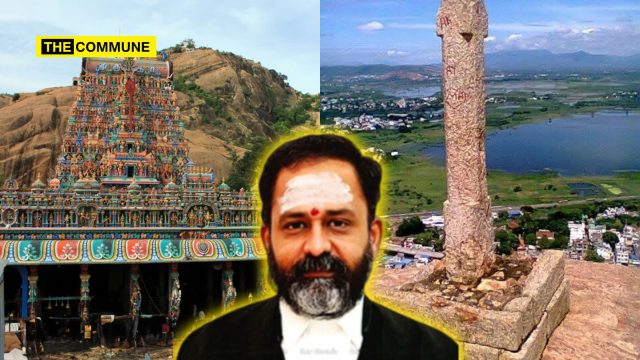
In a fresh twist to the ongoing religious and heritage dispute at the iconic Thiruparankundram hill, the Executive Officer (EO) of the Sri Subramania Swamy Temple has filed an appeal against a recent Madras High Court directive allowing the lighting of the traditional Karthigai Deepam at the ancient Deepathoon atop the hill.

Image

The move has sparked widespread outrage among devotees and heritage activists, who view it as an attempt to undermine a centuries-old Tamil Hindu tradition.The High Court, in a ruling delivered just hours ago, quashed the EO’s earlier administrative order that had redirected the lighting to the temple’s Dheepa Mandapam instead of the hilltop lamp post. Justice G.R. Swaminathan, presiding over the single bench, emphasized that the Deepathoon is unequivocally temple property and that the practice poses no infringement on the rights of the adjacent Muslim dargah community. The judge noted that lighting the lamp atop the hill is a Tamil tradition, and that the dargah management has not demonstrated how they will be affected.

The controversy centers on the shared sacred space of Thiruparankundram hill in Madurai, which houses one of the six abodes of Lord Murugan for Hindus and the revered Malik Durgah for Muslims. The Deepathoon, a stone pillar lamp dating back centuries, has been the site of the Karthigai Deepam ritual—symbolizing the triumph of light over darkness—during the festival in the Tamil month of Karthigai (November-December). Devotees argue that shifting the lighting disrupts this unbroken tradition, while dargah representatives have raised concerns over potential encroachments on their space.

Roots of the Dispute

The flare-up traces back to early 2025, when simmering tensions over religious practices and property rights on the hill reignited public and legal battles.

Petitions before the Madras High Court sought not only permission for the hilltop lighting but also a ban on animal sacrifices at the dargah and retention of the hill’s historic name, rejecting attempts to rename it “Sikkandar Malai.” In October 2025, the court upheld the traditional nomenclature and imposed restrictions on certain dargah rituals, underscoring the need to balance coexisting faiths without altering established customs.

A division bench of the High Court reserved its judgment on November 29 after hearing arguments from both sides, including allegations that the Dheepa Mandapam—proposed as an alternative site—is already used for a separate “Moksha Deepam” ritual, making it unsuitable.

The single-judge order today paves the way for the festival lighting as scheduled, but the EO’s immediate appeal to a division bench threatens to delay proceedings.

Activist T.R. Ramesh asserts that the so-called Executive Officer of the Sri Subramania Swamy Temple holds no legitimate position, functioning merely as an unauthorized agent of the Tamil Nadu Hindu Religious and Charitable Endowments (HR&CE) Department. He argues that this individual lacks any statutory power to lodge the recent writ appeal challenging the Madras High Court’s ruling or to act on behalf of the temple in judicial matters, rendering him legally nonexistent—a “person non-est.” Ramesh grounds his claim in a 2014 Supreme Court ruling (2014 V SCC 75), which invalidated HR&CE commissioners’ appointments of executive officers under Section 45 of the Tamil Nadu HR&CE Act due to the absence of prescribed rules. Furthermore, he contends that the temple’s 1983 bifurcation from the larger Sri Meenakshi Sundareswarar Temple complex in Madurai was procured through deceitful means, including fabricated affidavits and the suppression of critical facts before the Madras High Court, thus tainting the entire foundation of the EO’s role.

Subscribe to our channels on WhatsAppTelegram, Instagram and YouTube to get the best stories of the day delivered to you personally.

“One God For Drinkers, One For Those Who Marry Twice”: Telangana Congress CM Revanth Reddy Makes Offensive Comment Against Hindu Gods

In yet another instances of Congress leaders making objectionable remarks against Hinduism, Telangana Revanth Reddy went on to publicly ridicule the Hindu pantheon by mocking the multiplicity of Gods and their attributes.

“How many gods do Hindus believe in? Are there three crore? Why do so many exist? There is one god for those who are unmarried — Hanuman. There is another god for those who marry twice. And there is yet another god for those who drink alcohol. For hen sacrifice, there is one; for dal and rice, there is one. Each group has its own god,” Reddy said as reported in India Today.

These statements quickly provoked backlash from opposition parties. Bharatiya Janata Party (BJP) and Bharat Rashtra Samithi (BRS) accused him of insulting Hindu beliefs and demanded an immediate apology. The BJP state leadership described the remarks as shameful for millions of Hindus, while BRS leaders called the comments a crude attempt to mock faith — suggesting the remarks might be more than a slip of tongue.

Revanth Reddy had earlier courted controversy saying “Congress means Muslims and Muslim means Congress”. He also sparked controversy by questioning how many Rafale jets were shot down by Pakistan.

Subscribe to our channels on WhatsAppTelegram, Instagram and YouTube to get the best stories of the day delivered to you personally.

13 Cases That Expose Systemic Cover-Up Of Child Sexual Abuse By Church Officials

child Sexual Abuse In Churches: A Global Issue Of Systematic Cover-ups And Silenced Victims, Here Are 26 Instances sex abuse italy

In a case that exposes a deeply troubling pattern of institutional failure, church leaders within the Old Apostolic Lutheran Church (OALC) are accused of knowingly concealing the crimes of a serial child sex abuser for approximately two decades, allowing him to continue preying on victims across two states.

Clint Massie, a member of the OALC community, sexually abused children over a period of about 20 years. A recent report from 20 November 2025, reveals that church leaders, including prominent figure Daryl Bruckelmyer, were aware of Massie’s actions but deliberately chose not to report him to law enforcement.

Instead of involving the police, the leaders orchestrated so-called “forgiveness sessions.” In these meetings, victims were pressured to forgive Massie and were given a devastating ultimatum: they were told that if they spoke of the abuse again, the sin would become their own. This manipulative tactic effectively silenced the victims and created a protective shield for the abuser, enabling Massie to continue his cycle of abuse unchecked.

This case is not an isolated incident. It is part of a broader, global pattern of religious institutions prioritizing their reputation over the safety of children. In this report, we take a look at 13 separate incidents of child sexual abuse from 2016 to 2025 involving pastors, leaders, and members of various churches. In each case, the crimes were not only concealed internally but were also never reported to authorities, in direct violation of mandatory reporting laws designed to protect the most vulnerable.

#1 Church Shielded Abuser, Silenced Victims – November 2025 – Minnesota, USA

Church leaders in Duluth, Minnesota, concealed a serial child sex abuser for two decades. Clint Massie abused children within the Old Apostolic Lutheran Church (OALC). Preacher Daryl Bruckelmyer and other leaders knew but never reported him to police. Instead, they held “forgiveness sessions,” pressuring victims to forgive Massie. They were told speaking out again would make the sin theirs. This manipulation allowed Massie’s abuse to continue. Massie pleaded guilty in 2024 and was sentenced to 7.5 years in prison. While church officials faced no charges, prosecutors stated they should have done more to stop him, highlighting a systemic failure to protect children.

#2 Mississippi Pastor Arrested for Failing to Report Child Sex Abuse – November 2025

In Southaven, Mississippi, Pastor Jonathan Colvin was arrested on 18 November 2025, for allegedly failing to report a child sex crime. Colvin, a 38-year-old youth and family minister at the Goodman Oaks Church of Christ, is accused of violating Mississippi’s mandatory reporting laws. These laws require professionals who work with children to immediately report any known or suspected incidents of abuse to authorities. The charge stems from Colvin’s alleged knowledge of a sexual abuse incident, reported to involve minors, which he did not report to the police.

#3 NSW Church Hid Pedophile Leader – November 2025 – Maitland, Australia

Senior leaders of Maitland Evangelical Church, including Pastor Roger Burgess, were accused in parliament of concealing child sex abuse. They failed to disclose crimes by youth leader Matthew Briggs, a known pedophile. After Briggs’ death, Burgess misled the 500-member congregation, calling the matter “extreme domestic violence.” Additional allegations involved a separate cover-up of abuse against a teenage girl. When former member Phil Bear raised concerns, church leadership discredited him.

#4 Florida Pastor Charged for Silence – September 2025 – Gainesville, Florida

Pastor Mark Vega of Ignite Life Center was charged with willfully failing to report child sexual abuse. Despite receiving allegations starting in 2019, Vega managed cases internally, allowing accused youth leaders to continue working with minors. Church leaders discouraged families from involving police, proposing internal “restoration” plans instead. This failure enabled further abuse by multiple youth leaders, including Vega’s son. The case exposed how internal handling by the Florida Multicultural District of the Assemblies of God created an environment where predators could continue to operate with impunity.

#5 Arizona Pastor Arrested After Cover-Up – June 2025 – Tucson, Arizona

Tucson police arrested Pastor Isaac Noriega for failing to report repeated child sexual abuse allegations against church member Jose Mora. Noriega was informed of multiple incidents where Mora inappropri touched young boys from the congregation. Despite this knowledge and a direct admission from Mora, the pastor did not alert law enforcement. Noriega now faces two counts related to the neglect of a minor.

#6 Archbishop Resigns Over Abuse Scandal – November 2024 – United Kingdom

Archbishop of Canterbury Justin Welby resigned after an independent investigation found he failed to report serial abuse by John Smyth. Welby learned of the physical and sexual violence in 2013 but did not notify authorities, allowing Smyth’s abuse to continue. Smyth’s crimes, spanning decades, victimized over 100 boys and young men in the UK and Africa. Welby acknowledged personal and institutional failure, stating stepping aside was in the church’s best interest.

#7 San Diego Pastor Ignored Reporting Law – June 2024 – San Diego, California

San Diego authorities charged Pastor Eric Manuel Merino of Victory Outreach Church for failing to report the sexual abuse of a teenage girl by choir leader Rafael Valentin Magana. As a mandated reporter, Merino was legally required to notify law enforcement or child services after learning of the crime. Magana was later convicted of a felony lewd act with a minor.

#8 Oklahoma Megachurch Staff Charged – November 2019 – Tulsa, Oklahoma

Five Victory Christian Center employees were charged with failing to report child abuse. The charges followed the arrest of two former employees: Chris Denman, accused of raping a girl under 14, and Israel Castillo, accused of sending explicit messages to a 15-year-old. The five staff members, including pastors’ family members, knew of the allegations but did not report them as required by law. All were booked into jail and released on bond.

#9 Indiana Pastor Knew, Didn’t Report – July 2019 – Jasper, Indiana

Pastor Howard Geck of Jasper Apostolic Church was charged for failing to report child abuse allegations against church member Dexter Hensley. Police discovered that juveniles had disclosed incidents of molestation and sexual battery to Geck two years prior, but he never notified authorities. The failure to report allowed Hensley to remain a potential threat within the community. Geck faced a Class B misdemeanor, a charge critics argue is too lenient for such a grave failure of responsibility.

#10 Alabama Pastor Ignored Girl’s Plea – September 2017 – Huntsville, Alabama

Pastor Michael Walker of Southside Baptist Church was charged with a misdemeanor for failing to report suspected child sexual abuse. The victim, a 12-year-old girl, reported being fondled by former sheriff’s investigator Roland Campos to Walker in March 2017. Despite this direct disclosure, the pastor did not notify law enforcement or child protection services. Campos was arrested months later in August. Walker was released on bond, facing a Class C misdemeanor.

#11 Vatican Officials Probed in France – March 2016 – Lyon, France

Senior officials of the Catholic Diocese of Lyon, including Archbishop Cardinal Philippe Barbarin, were investigated for failing to report clergy sexual abuse. Father Bernard Preynat was indicted for abusing young Scouts between 1986 and 1991. Prosecutors found that senior Vatican officials were aware of Preynat’s crimes but did not report them to police, violating French law. Authorities investigated them for endangering lives and non-reporting of a crime.

#12 Tulsa Megachurch Delayed Reporting Rape – September 2012 – Tulsa, Oklahoma

Leaders at Victory Christian Center faced charges for delaying the report of a 13-year-old girl’s rape. The assault occurred on church property, and the victim disclosed it three days later. However, staff, including the senior pastor’s son and daughter-in-law, waited two weeks before notifying authorities, violating mandatory reporting laws. Two janitors were arrested; one for the rape and another for making a lewd proposal.

#13 Tongan Pastor Failed to Protect Boys – December 2012 – West Valley City, Utah

Former Tongan United Methodist pastor Filimone Havili Mone was charged and removed from his position for failing to report child abuse. Mone learned that an older boy in the congregation had sexually abused several young boys but did not alert authorities. This inaction violated both state law and the United Methodist Church’s mandatory reporting policy. His removal by national church leadership demonstrated an institutional attempt to enforce accountability.

Subscribe to our channels on WhatsAppTelegram, Instagram and YouTube to get the best stories of the day delivered to you personally.

Dravidian Model Aavin: Not Passing GST Cut Benefit To Customers, Discounts Withdrawn, Prices Up Again

Aavin’s decision to withdraw its festival-season discount on ghee from 1 December 2025 has triggered renewed criticism from milk dealers, who allege that the State-run cooperative has still not passed on the GST rate reduction to consumers.

The controversy dates back to the September 3 GST Council meeting, where the Union government announced a GST rate cut from 12% to 5% on ghee, butter and cheese, and from 18% to 5% on ice cream. UHT milk and paneer were fully exempted from GST. The revised rates officially came into effect on 22 September 2025.

According to milk dealers’ associations, cooperatives across the country and major private dairies revised their price charts soon after the GST cut came into force. However, the Tamil Nadu Cooperative Milk Producers’ Federation (Aavin), responsible for marketing milk and dairy products under the Aavin brand “failed to reduce the rate,” alleged the associations.

Instead of implementing the mandated post-GST price reduction, Aavin announced a temporary festival-season discount, keeping market prices unchanged until 30 October 2025. The Tamil Nadu Milk Dealers Employees Welfare Association (TNMDEWA) said the discount was “used as a substitute for the mandatory GST-linked price reduction.”

Tensions escalated following Aavin’s circular dated 28 November 2025, instructing all district unions and channel partners to withdraw the ghee discount from December 1 and adopt a revised price chart. As per the circular, Aavin restored its pre-GST retail prices, effectively increasing ghee prices by:

  • ₹40 per litre
  • ₹20 per 500 ml
  • ₹350 per 5 litres
  • ₹1,155 per 15 kg tin

Condemning this move, association president S.A. Ponnusamy said, “Aavin first avoided implementing the GST reduction, then masked it as a festival discount. Now it has once again placed an unnecessary financial burden on consumers.”

Dealers said Aavin’s refusal to reflect the GST cut “amounted to disguised tax evasion,” and demanded that the cooperative immediately restore the reduced rates, publish a proper post-GST price chart, and ensure that the benefit of the tax reduction reaches consumers directly.

TNMDEWA had also filed a complaint with the GST headquarters in Chennai on 24 September 2025. With the GST Council yet to respond, the association said it would intensify its campaign if corrective action was not taken soon.

(Source: DTNext)

Subscribe to our channels on WhatsAppTelegram, Instagram and YouTube to get the best stories of the day delivered to you personally.

Madras High Court Steps In Ahead Of Deepam: Mandates Strict Crowd Control At Tiruvannamalai

Madras High Court Steps In Ahead Of Deepam: Mandates Strict Crowd Control At Tiruvannamalai

The Madras High Court has recorded comprehensive safety and crowd-management measures promised by various government departments for the peaceful conduct of the Tiruvannamalai Mahadeepam festival, following a writ petition filed by public-spirited advocate Elephant G. Rajendiran.

Justice PB Balaji pronounced the order in W.P. No. 44523 of 2025, which sought extensive directions to the State authorities to ensure safety and convenience for the lakhs of devotees undertaking Girivalam and visiting the Sri Arunachaleswarar Temple for the Deepam festival.

Rajendiran, appearing as party-in-person, highlighted issues faced annually by the “devotees who come not only from other parts of the country, but also from outside India,” and sought preventive steps to avoid hardship or harassment during the massive congregation that crosses 30 lakh pilgrims each year.

Court Took Up Case at Admission Stage

When the petition first came up, the Court directed officials including the Director General of Police, Tiruvannamalai District Collector, HR&CE Department, Municipality and others to file immediate status reports outlining preparations for the festival.

The Inspector General of Police, North Zone, filed a detailed report on 24 November 2025, followed by the District Collector’s report filed through the Additional Advocate General on the next hearing date. The Court noted that these were filed after “serving an advance copy to Mr. Elephant G. Rajendiran.”

Petitioner’s Key Concerns Presented Before Court

Rajendiran told the Court he was satisfied with most safety measures but raised three specific concerns:

  1. Harassment by fake Sadhus and persons belonging to the Aravani (Thirunangai) community, who “harass innocent devotees and go to the extent of even threatening them to part with huge sums of money.”
  2. Archakars allegedly demanding ransom money, especially at the Kubera Lingam.
  3. Mobile vans offering massages and other unrelated services along the Girivalam path.

Authorities Assure Action

The Additional Advocate General, citing the District Collector’s status report, informed the Court that “specific Committees have been formed to monitor such intrusion and excesses” along the Girivalam path and that this grievance “is being seriously addressed and the petitioner need not have any apprehensions.”

On the issue of Archakars, the State submitted that identity cards have been issued to all priests, adding that “this grievance of the petitioner is adequately taken care of.”

Regarding the unauthorized vans, the AAG said “this issue will also be addressed” and that instructions would be issued to police personnel deployed during festival days.

Court Records Reports; Expects Implementation “In True Letter and Spirit”

Justice Balaji noted, “This Court is confident that the various measures set out in the said status reports would not remain just on paper, but would be implemented in true letter and spirit.”

The Court formally recorded the status reports filed by the Inspector General of Police and the District Collector and then disposed of the writ petition, closing the connected miscellaneous petitions.

Subscribe to our channels on WhatsAppTelegram, Instagram and YouTube to get the best stories of the day delivered to you personally.

“Deepathoon Is Temple Property, Dargah Management Hasn’t Demonstrated How They’ll Be Affected, Lighting Lamp Atop Hill Is Tamil Tradition”: What Justice GR Swaminathan Told In His Order On Thiruparankundram Hill Karthigai Deepam Lighting

justice gr swaminathan karthigai deepam

In a significant ruling, the Madurai Bench of the Madras High Court directed the management of the Arulmigu Subramania Swamy Temple in Thirupparankundram to light the Karthigai Deepam (festival lamp) at the ancient stone lamp pillar known as the “Deepathoon,” located on one of the hill’s peaks.

Justice GR. Swaminathan pronounced the common order on Monday, 1 December 2025, allowing four writ petitions that sought the lighting of the lamp at the Deepathoon, while dismissing one petition that opposed it.

Background Of The Dispute

The legal battle stems from a long-standing dispute over religious rights and property on Thirupparankundram Hill, which houses both the Hindu temple and the Muslim shrine, Sikkandar Badhusah Dharga.

The lead writ petition was filed by Rama Ravikumar, who claimed to be a devout Murugan devotee and sought quashing of a November 3, 2025 communication by the temple Executive Officer refusing permission to light the Karthigai Deepam at the Deepathoon and insisting that the lamp would be lit only near Uchi Pillaiyar Temple as per existing custom.​

Several other writ petitions by devotees, including M. Arasupandi, S. Paramasivam, A. Karthikeyan and R. Kanagavel Pandian, either sought directions to light the sacred lamp at the ancient stone lamp pillar atop the hill or opposed any deviation from the present practice of lighting only at the Uchi Pillaiyar location. The State, HR&CE officials, temple management, Sikkandar Badhusha Dharga, the Waqf Board and the Archaeological Survey of India were among the respondents, with multiple parties impleaded on both sides of the dispute.

Key Arguments And Court’s Findings

The court meticulously examined the century-old legal history, including a 1923 civil suit (O.S No.4 of 1920) which was upheld by the Privy Council. The judgment established that the temple holds title to the entire hill except three specific areas granted to the Muslim community: the Nellithope burial ground, the flight of steps leading to the mosque, and the mosque site itself.

“The unoccupied portion of the hill has been in the possession of the temple from time immemorial,” the judgment emphasized. Deepathoon, located on the lower peak, lies outside Muslim-owned portions.

That the Deepathoon is a temple property is proved by the
recent happenings.”, Justice GR Swaminathan said.

The judge also noted that the temple management itself had recently “hurriedly put up a covering” around the Deepathoon, proving it exercises control over the structure: “If the Deepathoon and the adjoining area belonged to the Dargha, the Dargha would not have kept quiet.”

Lighting lamp atop the hill is a Tamil tradition. There is a popular
saying “Kundrin Mel Itta Vilakkai Pola” (Like a lamp lit atop the hill).“, the judge noted.

Justice Swaminathan noted, “The Privy Council had held that other than these three, the devasthanam has title and possession over the rest of the hill.” He emphasized that the Deepathoon is not situated within any of these Muslim-owned areas but on a lower peak, at least 50 meters away from the mosque.

Rejecting the argument of res judicata, the judge clarified that earlier litigation dealt with lighting the lamp at the hilltop where the mosque stands, not at the Deepathoon on the lower peak. “A settled issue cannot be reopened. But the petitioners before me do not insist that on the hilltop, the lamp should be lit. They only want the lighting of the lamp at the Deepathoon,” he observed.

Locus Standi And Custom Vs. Right

The court held that the petitioners, as devotees, are “persons having interest” under the Tamil Nadu HR&CE Act and have the locus standi to seek protection of temple property. Importantly, the judge distinguished between a matter of “custom” and a matter of “right.”

“The contesting respondents have lost sight of a fundamental aspect. The question is not one of custom. The question is one of right. Lighting lamp atop the hill is a Tamil tradition.”

He quoted classical Tamil literature, including Seevaga Chinthamani, to establish the antiquity of hill-top Deepam lighting traditions atop hills during Karthigai month, as seen in Thiruvannamalai and Yanai Malai.

Property Protection and Duty of Temple

Justice Swaminathan underscored the temple management’s duty to assert its property rights to prevent encroachment or loss. “It is therefore necessary that the temple management remains vigilant throughout to foil any attempt to encroach on its property. This can be done only by regular and periodical assertion of title,” he noted.

He also referenced a 1996 court order (W.P.No.18884 of 1994) which permitted lighting the Deepam at any place on the hill with prior HR&CE permission, provided it was at least 15 meters away from the Dargah areas. The Deepathoon, being 50 meters away, complies with this condition.

Criticism Of Temple Management

The order expressed disappointment that the temple management had aligned with the Dargah trustees in opposing the petitioners. “The temple management in the instant case appears to have forgotten the lessons of history… But now the temple management is on the same page as that of the Dargha,” the judge remarked.

He further said, “While amity is to be celebrated, rights of both the parties have to be respected. Rights of one party cannot be sacrificed. When the Dargha management recently asserted that the hill is not Skandar hill (another name of Lord Muruga) but Sikkandar hill (Sikkandar is the name of the Fakir whose body is said to be interred in the Dargha) and attempts were made to offer animal sacrifice in the hill premises, the cause was taken up not by the temple management but by the devotees and
activists. The temple trustees are keeping quiet.” 

He also quashed the Executive Officer’s impugned decision as lacking jurisdiction, noting that such a vital issue should have been decided by the Temple Trust Board.

Peace Committee Resolution Mentioned

The Court held there would be no prejudice to the Dargah, “By lighting the lamp at Deepathoon, the rights of the Dargha or the Muslims will not in any way be affected… Deepathoon is located 50 meters away from the Dargha.”

Justice GR Swaminathan noted that the Dargah management has not demonstrated as to how they will be affected if the lamp is lit at the Deepathoon.

The court noted a 2005 peace committee resolution where the Dargah management had expressed “no objection” to lighting the lamp at Deepathoon, provided it was beyond 15 meters from the Dargah. “Though this is not an enforceable resolution, one can safely conclude that the opposition appears to be more at the instance of certain vested interests,” Justice Swaminathan observed.

Final Directions

The court directed the temple management/devasthanam “to light the Karthigai Deepam at Deepathoon also apart from the usual places” starting from this year, that the Commissioner of Police, Madurai City, had to ensure compliance and prevent any obstruction.

“Lighting a lamp is a sacred act. It cannot offend anybody’s sensibilities,” the judge concluded, dismissing the argument that the Places of Worship Act would be violated.

Subscribe to our channels on WhatsAppTelegram, Instagram and YouTube to get the best stories of the day delivered to you personally.

How DMK’s Anti-Hindi Politics Affected Migrant Labourers In Tamil Nadu, TN Governor RN Ravi Reveals

In a recent interview with Tamil Janam news channel, Tamil Nadu Governor RN Ravi alleged that the DMK government has systematically created a hostile environment for linguistic minorities and migrant workers, claiming this extended even to the denial of opportunities for children to learn their mother tongue in schools. His comments came in the context of a broader discussion on what he described as political attempts to project Hindi-speaking communities as a cultural threat to the state.

The Governor was responding to a question about Prime Minister Narendra Modi’s remarks during the Bihar election campaign, where he had stated that Biharis were being harassed in Tamil Nadu. Asked whether he had received “concrete evidence” of such harassment, he said he had no desire to “reopen a wound, a healing wound,” but went on to describe what he termed a sustained, politically driven atmosphere of intimidation between 2022 and 2023.

According to Ravi, the climate of hostility began when “senior ministers in the state government… had articulated their anti-Hindi position by speaking migrant laborers using the expression like panipuri selllers – “This is a guy who only bihari or the Hindi speaking guys are only fit for selling panipuri.”

He said that in April 2023, posters appeared across various parts of the state, featuring photographs of a political leader “threatening these Hindi speaking migrant laborers setting the deadline for them to leave Tamil Nadu.” He added, “Some of those posters are still with me… I have seen those posters myself.”

Ravi said these threats triggered “massive exodus” among workers in “labor intensive industries, construction, texile, printing,” which he said “heavily suffered” as a result. He described visiting several districts to meet frightened migrant workers: “I tell the people, don’t worry, people are very nice and hospitable.” He said he raised the issue with police officials, asking, “What is this hate campaign?”

Despite assurances from local officials, he stated that “some of the migrant laborers were assaulted, physically assaulted,” prompting him to issue a public message on May 5 to calm fears. “You don’t have to worry about it. People are so nice here they will not trouble you,” he said, recalling the social media appeal.

The Governor argued that the fear among migrants “was not ill-founded because there were evidence of open threat against them and some of them assaulted.” Industrial operators, he said, told him that their workforce had collapsed: “We are trying to get them back. They are not coming.”

He claimed the state government attempted “damage control” only after the economic impact became evident, maintaining that the climate of hostility had been built up which started from the middle of 2022, and it went on till mid 2023.

Governor Ravi repeatedly emphasised that Tamil Nadu’s people were not responsible. “People love them. People of Tamil Nadu who are very affectionate… know the worth of these migrant laborers.” Instead, he blamed “the perverse politics… projecting them as one those who have come to destroy our culture, our language,” which he said created imaginary fears leading to real consequences.

The remarks were made in a broadcast where Ravi also criticised the DMK government for preventing linguistic minorities from studying their own mother tongues in Tamil Nadu’s schools, linking this with what he described as an ideological push to frame non-Tamil linguistic groups as cultural outsiders.

Subscribe to our channels on WhatsApp, Telegram, Instagram and YouTube to get the best stories of the day delivered to you personally.
Dravidian Model Tamil Nadu: 85000 Teachers Fail In Tamil

More than 85,000 postgraduate teacher in Tamil Nadu have failed the mandatory Tamil language eligibility test conducted by the Teachers Recruitment Board (TRB), raising serious alarm over the quality of prospective teachers in a state that prides itself on linguistic identity.

The exam—introduced in 2022 as a compulsory qualifying test for all state competitive exams—required only 20 out of 50 marks and is widely considered equivalent to a Class 10–level Tamil paper. Despite this low bar, an overwhelming number of candidates, including many native Tamil speakers, failed to clear it.

The recruitment drive aimed to fill 1,996 PG teacher posts, with more than 2.2 lakh applicants appearing for the examination. Those who failed the Tamil eligibility paper were disqualified outright, as their primary subject answer sheets were not evaluated.

Educationists have expressed shock, calling the mass failure a reflection of deeper systemic problems in teacher training, linguistic proficiency, and academic standards in the state.

This mass failure is seen as a worrying indicator for Tamil proficiency and has prompted broader questions about the future quality of teaching and learning in government schools across the state, as many candidates had studied Tamil as their mother tongue throughout schooling but still failed to meet the minimum standard required for the teaching profession.

Source: Dinamalar

Subscribe to our channels on WhatsAppTelegram, Instagram and YouTube to get the best stories of the day delivered to you personally.
Madras High Court Madurai Bench Allows Karthigai Deepam To Be Lit At The Original Spot At Thirupparankundram Hill

Madras High Court Madurai Bench Allows Karthigai Deepam To Be Lit At The Original Spot At Thirupparankundram Hill

In a significant ruling, the Madurai Bench of the Madras High Court has permitted the lighting of the Karthigai Deepam at the original summit-lamp pillar atop Thirupparankundram hill on December 3, reviving a tradition that was halted during World War II under British-imposed safety restrictions.

The order was delivered while hearing a batch of petitions filed by Hindu Makkal Katchi members Rama Ravikumar and Solaikannan, who sought revival of the traditional ritual at its historic hilltop location.

For decades, the Deepam has been lit on a lower pillar near the Thirupparankundram temple, even though the historic “Deepa Thoon” at the hill’s summit was the traditional site.

The restriction dates back to 1912, when a legal case led to a prohibition on Hindus lighting the ceremonial lamp at the peak. Since then, the Deepam has been lit at an alternate spot known as the Moksha Deepam, a deviation that has long angered devotees who view it as a violation of their religious rights and an erosion of an ancient custom.

The petitions challenged the Subramaniya Swamy Temple administration’s decision to light the Deepam at the Deepa Mandapam, arguing it violates Agama Shastra principles and lacks historical precedent for that location. Petitioners claimed the summit pillar offers better visibility for devotees and aligns with ancient customs, citing 1862 and 1912 magistrate orders that restricted lighting elsewhere due to non-customary practices and potential law-and-order issues. They emphasized no communal risks, as the site is protected and monitored.

The court’s decision came in response to a petition seeking restoration of the original practice, arguing that no legal prohibition exists and that lighting the Deepam atop the hill carries greater spiritual significance and wider visibility.

The petitioners also highlighted that the summit pillar stands over 15 metres away from the nearby dargah, addressing concerns about religious sensitivities.

Temple authorities, supported by the Hindu Religious & Charitable Endowments Department and the Tamil Nadu Waqf Board, argued in favour of continuing the ritual at the lower pillar, citing logistical challenges and established practice.

After conducting a site inspection and hearing submissions from all sides, the High Court ruled that the centuries-old tradition should be restored. The bench held that there was no legal impediment to lighting the Deepam at the summit pillar and directed that the ritual be carried out there on December 3.

The order marks the reinstatement of a revered custom at one of Tamil Nadu’s oldest and most important Murugan shrines, ending a decades old dispute in the hilltop lighting of the Karthigai Deepam.

In October 2025, the Madras High Court – Madurai Bench issued a landmark order banning the sacrifice of goats and chickens, and prohibiting the cooking or serving of non-vegetarian food on Thiruparankundram Hill. The court also declared that the hill should no longer be referred to as “Sikandar Hill.”

Source: Dinamalar

Subscribe to our channels on WhatsAppTelegram, Instagram and YouTube to get the best stories of the day delivered to you personally.