Home Blog Page 132

The Christianization Of Punjab

Christmas & Christianization Of Sikhs - 10 Incidents From 2016-2025

On 22 December 2025, a video was shared on social media platform X that showed a Santa Claus figure drawing large crowds of Sikhs inside a Punjab mall during Christmas, while a nearby Sahibzaade memorial for Shaheedi Week saw noticeably less attention.

Between 2016 and 2025, 10 publicly documented instances show Sikh individuals actively participating in Christmas processions and rallies in Punjab, Jalandhar, Mumbai, Canada, and online platforms.

#1 Santa Draws Larger Crowd Than Sahibzaade Memorial in Punjab Mall

On 22 December 2025, an X user @TeamHinduUnited shared a video from a shopping mall in Punjab showing a person dressed as Santa Claus attracting significant attention from a predominantly Sikh and Punjabi crowd during Christmas celebrations. The video also showed a Sahibzaade memorial display marking Shaheedi Week, which appeared to receive comparatively less footfall.

#2 Sikh Man Seen Chanting “Hallelujah” During Christmas Procession

On 21 December 2025, a Sikh man wearing a turban was seen chanting “Hallelujah” slogans while participating in a Christmas street procession in Punjab. The video was shared on social media and drew attention for the visible participation of a Sikh individual in Christian religious chants.

#3 Sikh Men Dance Bhangra to Jesus-Themed Punjabi Songs

On the same day, 21 December 2025, another video from Punjab showed Sikh men wearing turbans dancing bhangra to Punjabi songs themed around Jesus during a Christmas procession attended by large crowds.

#4 Sikh Participation at Grand Christmas Rally in Jalandhar

On 19 December 2025, a Grand Christmas Rally organised in Jalandhar by Prophet Bajinder Singh Ministries saw several Sikh men wearing turbans dancing as part of the Christmas celebrations.

#5 “Jesus Chose Me,” Says Sikh Participant at Jalandhar Procession

On 24 December 2024, a Sikh individual from the United States took part in a Christmas procession organised by Khambhran Church in Jalandhar. He described the event as spiritual, stated that there was no pressure involved, and said that “Jesus chose me.”

#6 Sikh Men Join Christmas Rally in Tajpur, Jalandhar

On 15 December 2022, a Grand Christmas Rally led by Prophet Bajinder Singh in Tajpur, Jalandhar, witnessed Sikh men in turbans participating in the procession. Some were also seen performing gidda as part of the celebrations.

#7 Sikh Man Dresses as Santa, Distributes Sweets in Mumbai

On 26 December 2020, in Andheri West, Mumbai, a Sikh man identified as Surjitt Sahani was seen dressed as Santa Claus distributing sweets to the public during Christmas celebrations.

#8 Ludhiana Influencer Portrays Son as “Sikh Santa Claus”

On 25 December 2018, Ludhiana-based Sikh travel creator Harjinder Singh Kukreja shared photographs of his son dressed in Santa Claus attire, referring to him as a “Sikh Santa Claus” and linking Sikh concepts of langar and seva to Santa imagery.

#9 Sikh Santa Performs Bhangra in Canada

On 25 December 2018, a viral video from Canada showed a Sikh man dressed as Santa Claus distributing sweets and performing bhangra in public during Christmas celebrations.

#10 Earliest Viral Video Shows Sikh Christmas Dance (2016)

On 26 December 2016, a video titled “Singh doing Xmas Punjabi,” uploaded on the Rangla Punjab YouTube channel, showed Sikh men wearing turbans performing bhangra-style dance to a Punjabi remix of a Christmas tune.

Last Word

What these incidents reveal is not harmless celebration, but a troubling erosion of cultural memory. When commercialised Christmas spectacles draw more attention than the martyrdom of the Sahibzaade during Shaheedi Week, it points to a deeper shift—marked by visible demographic changes and the steady expansion of organised Christian missionary activity in Punjab.

Subscribe to our channels on WhatsAppTelegram, Instagram and YouTube to get the best stories of the day delivered to you personally.
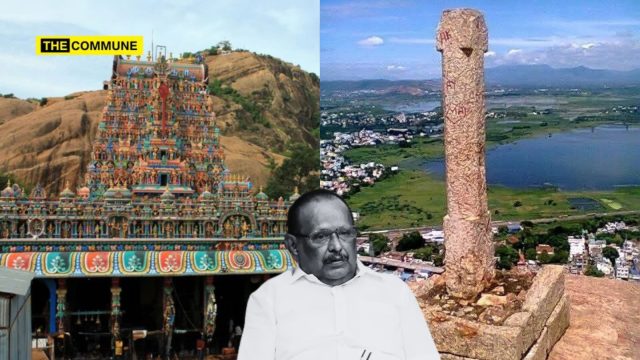
ASI Flags Major Flaws In Keeladi Report By ‘Archaeologist’ Amarnath Ramakrishna, Calls Findings ‘Ambiguous, Incomplete & Underdeveloped’

ASI Flags Major Flaws In Keeladi Report By 'Archaeologist' Amarnath Ramakrishna, Calls Findings 'Ambiguous, Incomplete & Underdeveloped'

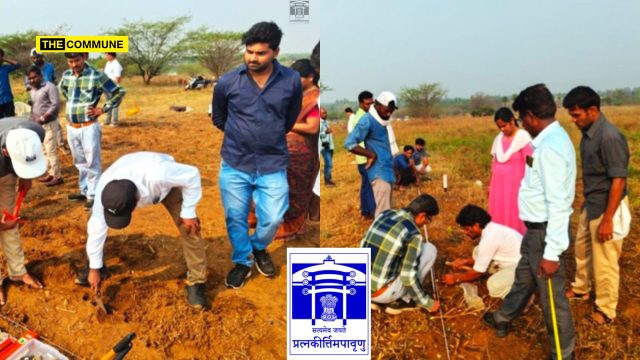
The Archaeological Survey of India (ASI) has issued a detailed and sharply critical evaluation of the Keeladi excavation report submitted by archaeologist K Amarnath Ramakrishna, describing it as “ambiguous, incomplete and underdeveloped.”

In a 114-page internal review prepared by a five-member expert committee, the ASI identified serious shortcomings across all 11 chapters of the report, including structural ambiguity, incomplete citations, weak methodological explanations, and insufficient linkage to broader South Asian archaeological contexts. The review stated that the report blends historical background, literary references and research gaps without clear thematic separation, reducing analytical clarity and scholarly utility.

The evaluation also questioned key claims made by Ramakrishna, particularly his assertion that Keeladi represents a “uni-cultural site” with continuous cultural evolution. The ASI said this interpretation was inconsistent with stratigraphic evidence and variations in material culture documented in the excavation. It flagged the term “uni-cultural” as undefined and criticised over-generalisation and incomplete analysis. The committee recommended revising terminology, integrating stratigraphic and material data more rigorously, and conducting further scientific tests to align conclusions with the archaeological record.

The ASI review comes after DMK MPs raised the delay in publishing the Keeladi report in Parliament. Responding on 19 December 2025, Union Culture Minister Gajendra Singh Shekhawat said the delay stemmed from unresolved academic deficiencies and warned against what he described as the “politicisation of an incomplete scientific document.”

Concerns Earlier Flagged By Ministry

The latest critique follows earlier concerns flagged by the ministry in July 2025, when Shekhawat told Parliament that experts had identified multiple omissions and errors in the report. These included flawed periodisation, inaccuracies in maps and drawings, inadequate stratigraphic representation, and insufficient technical detail. He clarified that the ASI had not sought a revised report from the Tamil Nadu State Archaeology Department and reiterated that all findings must pass established scientific and legal scrutiny.

Shekhawat further stated that experts disputed the dating of Keeladi’s earliest cultural layer to the 8th–5th century BCE, arguing that the chronology was not sufficiently substantiated. He said the ASI had suggested re-examining the timeline using more precise methods such as accelerator mass spectrometry and improving sampling depth and layer marking for comparative analysis. The minister emphasised that neither the excavation nor the report had been rejected, but both remained under expert review.

Beyond official assessments, several independent archaeologists have also raised concerns. Scholars questioned whether Tamil-Brahmi inscriptions found on pottery sherds could be reliably dated to the proposed period, citing unclear stratigraphic documentation. Others cautioned against drawing broad historical conclusions from limited carbon-dating samples, noting that such methods date organic material, not associated artefacts like pottery or inscriptions.

Officials from the Tamil Nadu Archaeology Department have acknowledged that a truncated version of findings was released earlier following judicial concern over delays, potentially leaving out contextual data normally required for expert validation.

ASI Flagged Earlier Report Submitted In 2023 As Well

In May 2025, the Archaeological Survey of India (ASI) returned a 982-page excavation report submitted by archaeologist K. Amarnath Ramakrishna in January 2023, citing the need for technical revisions. The ASI raised concerns over dating estimates (like the proposed 8th–5th century BCE timeline), stratigraphic inconsistencies, mapping, and terminology.

However, instead of addressing these expert critiques and making the necessary clarifications, Ramakrishna stood his ground, defending his methodology based on stratigraphy and radiocarbon dating. This defiance has sparked suspicion. Since his excavation efforts began, Ramakrishna has increasingly aligned himself with the Dravidianist separatist discourse such as Dravidar Kazhagam platforms, often amplifying their narrative through their platforms. Rather than allowing the data to speak through rigorous peer-reviewed publication, he has been seen leveraging this issue to promote a politicized Dravidianist agenda, frequently taking aim at well-established frameworks like the Harappan civilization, and in the process, undermining academic objectivity.

Source: Times of India

Subscribe to our channels on WhatsAppTelegram, Instagram and YouTube to get the best stories of the day delivered to you personally.
Over 300 Youth From Tenkasi Selected Under Agnipath Scheme For Indian Army

Over 300 Youth From Tenkasi Selected Under Agnipath Scheme For Indian Army

As recruitment under the Agnipath scheme continues, the Indian Army had issued a notification a few months ago inviting applications for the selection of soldiers.

Following the notification, an online written examination was conducted in June. Candidates who cleared the written test subsequently underwent physical efficiency and medical fitness tests in September.

After successfully qualifying in all three stages of the selection process, around 1,340 candidates from the southern districts have been selected for induction into the Indian Army under the Agnipath scheme. Of these, more than 300 candidates are from Tenkasi district alone, marking a significant contribution from the region.

The development has drawn widespread appreciation on social media, with netizens congratulating the youth of Tenkasi district for their enthusiasm and commitment to serve the nation through the armed forces.

Source: Tamil Janam

Subscribe to our channels on WhatsAppTelegram, Instagram and YouTube to get the best stories of the day delivered to you personally.

“Even If I Die, I Will Not Leave Without Lighting The Deepam”, Thirupparankundram Residents Continue Fight Against DMK Govt Not Allowing Deepam At Deepathoon

"Even If I Die, I Will Not Leave Without Lighting The Deepam", Residents Vow To Continue Thirupparankundram Deepam Protest

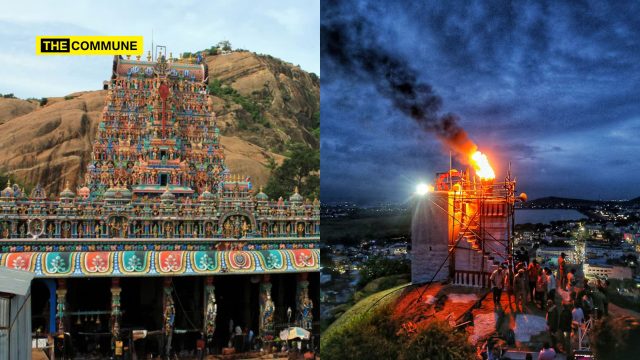
Residents of Thirupparankundram have intensified their protest, demanding that the deepam be lit at the Deepathoon atop the Thirupparankundram hill, after a court order permitting the ritual continues to be ignored by the authorities of the DMK government in Tamil Nadu.

A resident/protester struck a defiant note, stating that the agitation would continue until the lamp was lit at the summit.

“Even if I fall from this hill, even if I die, I will not leave without lighting the lamp. Until the deepam is lit at the very top, this protest will continue. If they allow it, we will withdraw. Otherwise, we will keep protesting.”

She stressed that the movement was not directed against any community.

“We are not opposing Muslims. They are our people too. Let them light their lamps, and let us also light ours. This is not about caste or politics. We are ordinary people standing together for Murugan.”

Drawing a parallel with earlier mass movements in Tamil Nadu, another resident added, “Just as people protested for Jallikattu and won, this struggle for lighting the lamp on this hill will continue. The government and the administration is showing partiality. They must definitely give up this partiality and come forward at least a little for the sake of the Tamil people, for the sake of the Hindu people. All we are asking is permission to light a lamp. If the lamp is lit, what harm will come of it? The deepam must be lit.”


View this post on Instagram


A post shared by Tamil Janam (@tamiljanam)

Other residents continued to intensify the protests by lighting lamps outside their homes, on streets and planting Murugan flags all across the village.

The situation at Thirupparankundram remains tense, with residents maintaining that their protest will not be called off until the hilltop lamp is officially permitted to be lit in accordance with the court’s direction.

Subscribe to our channels on WhatsAppTelegram, Instagram and YouTube to get the best stories of the day delivered to you personally.
Protest Erupts In Theni Over Alleged Caste Discrimination By Church Priest, Locals Demand His Removal

Protest Erupts In Theni Over Alleged Caste Discrimination By Church Priest, Locals Demand His Removal

Residents staged a protest in Chinnamanur, Theni district, on Sunday. 21 December 2025, accusing a church priest of practising caste-based discrimination and demanding his removal.

The protest took place at the Annai Velankanni Church in the Ponnagar area, where Christians from multiple communities are registered members. The church is currently headed by Eddy Francis Dharmanand.

According to local residents, with Christmas celebrations scheduled for December 25, members of the Scheduled Caste Christian community went to the church to carry out decoration work. They alleged that the priest stopped them and spoke to them in a derogatory and discriminatory manner, amounting to caste-based abuse.

Following the incident, residents locked the church premises and launched a protest, demanding that the priest be transferred. Protesters alleged that while nearly 15 parish priests had previously served at the church without controversy, Eddy Francis Dharmanand alone had repeatedly spoken to Scheduled Caste Christians in a demeaning manner.

The protesters further claimed that for the past two years, the priest had barred Scheduled Caste Christian members from participating in activities of the Catholic Mahasabha and systematically excluded them from church-related responsibilities.

Police officials reached the spot to monitor the situation. No official response from the church authorities was available at the time of publication.

Source: Puthiya Thalaimurai

Subscribe to our channels on WhatsAppTelegram, Instagram and YouTube to get the best stories of the day delivered to you personally.
TNPSC Or DMKSC? TNPSC Police Sub-Inspector Exam Question Promotes DMK Propaganda; Here Are More Instances Of Institutional Decay

tnpsc group 1 exam dmk propaganda

A controversy has broken out over an alleged political bias in the Tamil Nadu Public Service Commission (TNPSC) Group-IV Police Sub-Inspector examination held on 23 December 2025, after a question paper reportedly linked the Anti-Hindi Agitation with the Dravida Munnetra Kazhagam (DMK).

According to images circulated on social media, a “match the following” question in the exam asked candidates to pair historical events and political organisations with specific years.

The questions for matching on the left column included – Anti-Hindi Agitation, the year the DMK was founded, the State Reorganisation Act, and the formation of the Justice Party.

The right column gave the options for the years relevant to the ones on the left.


View this post on Instagram


A post shared by Chanakyaa (@chanakyaa_tv)

Critics have alleged that the framing of the question implicitly suggested that the Anti-Hindi Agitations were led by or originated from the DMK, a claim they argue is historically inaccurate. They point out that major anti-Hindi protests in Tamil Nadu occurred in 1937–39 and 1965, under Congress governments at the Centre, predating the formation of the DMK in its present form.

Not The First Time – TNPSC Exam Papers Over The Years Mirror DMK’s Political Narrative

This is not the first time that the TNPSC exams are seemingly promoting the Dravidianist propaganda.

In September 2025, questions in the Junior Assistant Draftsman exam contained alleged erroneous English translations, sparking controversy among candidates and the wider public.

One question concerned Ayya Vaikundar, also known as Mudichoodum Perumal, a revered spiritual figure. In the English translation of the question paper, he was referred to as “the god of hair cutting,” which critics described as careless and disrespectful.

Another question about the People’s Health Care Scheme reportedly mistranslated the scheme’s achievements. A statement originally noting that the scheme received recognition from the United Nations in 2024 was translated as “It begged the United Nations Interagency Task Force Awards in the year 2024,” drawing further criticism.

In August 2025, a controversy stemmed from a question in the Technical Services Examination (Non-Interview Post) held on 17 August 2025, which directly blamed the Union Government for withholding funds from Tamil Nadu under the Samagra Shiksha Scheme (SSS), a politically charged framing that aligns with the DMK’s rhetoric against the Centre. The question in the Reason and Assertion section read:

Assertion [A]: Tamil Nadu has long resisted the imposition of Hindi in government schools and hence refused to join the Prime Minister Schools for Rising India (PMSRI). Therefore, the Union Government has withheld funds under the Samagra Shiksha Scheme (SSS).

Reason [R]: Though the Union government acknowledged Tamil Nadu’s two-language policy, it seeks to influence subjects in the Concurrent List through the New Education Policy (NEP) 2020, which the Tamil Nadu government opposes as an attack on federalism.

Critics argued that the question frames the Centre as the villain while uncritically endorsing the DMK’s stance, raising concerns over whether TNPSC is functioning as an extension of the ruling party’s propaganda machinery.

“Thayumanavar” Controversy (Group 2A Exam, 2025)

A question asked which scheme made people call the Chief Minister “Thayumanavar“, with options listing DMK welfare schemes like Makkaludan Mudhalvar and School Breakfast Program.

Critics slammed it as sycophantic, arguing that exams should test governance knowledge, not propaganda.

Freedom Fighter Vilified (Group 1 Exam, July 2024)

A question labeled Vanchinathan, a Tamil freedom fighter who assassinated British official Robert Ashe, as a “first accused” in a murder case, echoing colonial-era rhetoric rather than honoring his role in the independence struggle.

UNESCO’s “Socrates of South Asia” Myth (Group 1 Exam, 2024)

A question falsely claimed E.V. Ramasamy (Periyar) was certified by UNESCO as the “Socrates of South Asia”, despite UNESCO denying ever giving such a title.

Selective Erasure of Caste Surnames (Group 1 Exam, 2025)

While DMK leaders like Annadurai and Periyar were mentioned without caste surnames, others including Subbarayalu Reddiar, V.O. Chidambaram Pillai, and Dr. Muthulakshmi Reddy were explicitly identified by caste.

This hypocrisy contradicts the DMK’s claim of abolishing caste identities, exposing its political opportunism.

The present controversy has reignited debates over the DMK’s influence on autonomous bodies, with many questioning whether Tamil Nadu’s administrative institutions are now extensions of the ruling party.

Subscribe to our channels on WhatsAppTelegram, Instagram and YouTube to get the best stories of the day delivered to you personally.

“Entire Christian Missionary Working For DMK Under Joe Arun’s Pressure Who Is Close To Udhayanidhi Stalin”: AIADMK’s Kovai Sathyan Makes Stunning Revelation

Senior AIADMK functionary Kovai Sathyan on Tuesday, 23 December 2025, made a series of serious allegations against the ruling Dravida Munnetra Kazhagam (DMK), claiming that Christian missionary institutions in Tamil Nadu were being systematically mobilised for political purposes under pressure from individuals close to Deputy Chief Minister Udhayanidhi Stalin.

Speaking during a televised discussion, Sathyan rejected the suggestion that the controversy playing out in public space was a staged political drama between the DMK and the BJP, asserting instead that what was visible was “only the tip of the iceberg.”

“I do not buy this point; let me tell you what is happening in Tamil Nadu. What you saw in the video is just the tip of the iceberg,” Sathyan said.

He alleged that the Tamil Nadu State Minority Commission had been politically compromised, stating that its chairman Joe Arun was a classmate of Udhayanidhi Stalin and had allegedly aligned the institution with the interests of the ruling party.

“The state minority commission’s head, Joe Arun, is a classmate of Udhayanidhi Stalin. The entire minority commission’s ecosystem has been bent in such a way that they take political stands and sides to favour the DMK,” Sathyan claimed.

The AIADMK leader further alleged that Joe Arun had faced allegations during his tenure as an office-bearer at Loyola Institute and had misused his authority, asserting that such developments were taking place “right under the nose of the Chief Minister.”

Escalating his claims, Sathyan alleged coordinated political mobilisation within church networks. “Last month, pastors across the churches were called to Chennai. They had a two-day meeting. They were trained and briefed to use churches during their sermon to canvass for DMK, and they have already started that,” he said.

Referring to recent public statements by religious figures, Sathyan said such interventions were not isolated incidents. “What you saw on the screen, one pastor trying to take sides for DMK, is nothing new. The entire missionary, particularly the Christian missionary, is working for DMK under the pressure of Joe Arun, who is Udhayanidhi’s classmate,” he alleged.

Sathyan also claimed that the matter had drawn international attention within church structures. “There is already a complaint filed with Rome, and they have constituted a one-member inquiry committee. A Father from Kerala has been deputed to inquire into the mismanagement of funds and the allegations of political links by the churches,” he said.

Sathyan further added, “They are not only using the machinery to canvass for them. They have started establishing alumni networks across the globe as well as in Tamil Nadu for money laundering. This has already taken place. Loyola, which wanted to celebrate its centenary – 100 years of Loyola – started establishing alumni networks across the globe: 100 crores for 100 years. Suddenly they opened one chapter in Dubai; it got closed. Now they are opening these alumni centres left, right and centre across Tamil Nadu purely to launder money for the DMK. And this has been done by Mr Joe Arun, who is now the state minority head. This is the extent to which they arm‑twist the entire churches and machinery.”

The allegations came amid recent controversies involving remarks by the Minority Commission chairman likening Chief Minister MK Stalin to Jesus, and statements by another father and college principal questioning support for actor-turned-politician Vijay.

In October 2025, in what seemed to be a targeted outreach to the DMK’s traditional Christian vote base, a taxpayer-funded “awareness programme” was held in Chennai. The event was organised by the Tamil Nadu State Minorities Commission and featured overt Christian imagery and biblical verses alongside a large photograph of Chief Minister MK Stalin. Addressing bishops and clergy, Commission chairman Rev. Fr. S. Joe Arun asserted that only Stalin could protect religious and linguistic minorities. Critics argue the programme amounted to political campaigning using state machinery, reflecting the DMK’s anxiety over shifting Christian political loyalties towards Vijay’s TVK ahead of 2026.

Subscribe to our channels on WhatsAppTelegram, Instagram and YouTube to get the best stories of the day delivered to you personally.
Sudha Kongara’s Anti-Hindi Agitation Film ‘Parasakthi’: To Help DMK Strong-Arm Congress Or Peddle Propaganda Against BJP?

Parasakthi Trailer: Sudha Kongara's Pro-DMK Film Produced By MK Stalin's Grandson Inban Udhayanidhi Hits Out At Congress For 'Hindi Imposition' Ahead Of 2026 Elections

Filmmaker Sudha Kongara’s upcoming period political drama Parasakthi, headlined by Sivakarthikeyan, has sparked intense political discussion even before its release, with growing focus on whether the film will foreground the historical role of the Indian National Congress in imposing Hindi on non-Hindi-speaking states.

Set against the backdrop of the 1965 anti-Hindi agitations in Tamil Nadu, Parasakthi is nearing completion and is slated for a Pongal 2026 theatrical release. An immersive promotional installation titled World of Parasakthi is currently being held at Valluvar Kottam, featuring recreated 1960s Madras streets, period props, and character exhibits tied to the film.

While early speculation framed Parasakthi as a film targeting contemporary language politics, it is argued that the film’s core theme could point squarely at Congress-era Hindi imposition, particularly under Jawaharlal Nehru and Indira Gandhi.

While the film is believed to talk about the 1965 anti-Hindi agitations, it is making the viewer curious if the film will actually talk about the largely forgotten historical sequence: that the push for Hindi as a unifying national language began under Congress leadership, not the BJP, as is being projected by the Dravidianists.

Mahatma Gandhi is the one who had initiated the Hindi Prachar Sabha, in Madras (now Chennai). The Dakshina Bharat Hindi Prachar Sabha was founded in 1918 specifically at Madras by Mahatma Gandhi to propagate Hindi among non‑Hindi speakers in the southern provinces, and he served as its founding president.

Gandhi personally pushed the Hindi‑prachar campaign in Madras: he sent his son Devdas there as the first pracharak, first Hindi classes were held at Gokhale Hall in George Town, and Gandhi made multiple trips to Madras and other southern centres to promote learning Hindi as part of Congress’s national‑integration vision.

This effort was later carried forward by Nehru and formally institutionalised during the tenure of Indira Gandhi. The Constitution (Article 343(1)) itself envisaged that Hindi would become the sole official language of the Union after a 15‑year transition ending in 1965, with English to be used only during that period; this provision was adopted in 1949, before Indira Gandhi’s tenure as PM. As 1965 approached, the Congress government at the Centre (by then under Lal Bahadur Shastri) initially prepared to let Hindi become the primary Union language, triggering the massive anti‑Hindi agitations in Tamil Nadu.

The widespread belief in Tamil Nadu, that only the BJP imposes Hindi while the Dravida Munnetra Kazhagam resisted it, oversimplifies history. The 1965 agitations were directed primarily against Congress rule at the Centre, not against the BJP, which did not exist in its current form at the time.

The Bengali Language Movement of 1952 in East Bengal and the subsequent 1971 Bangladesh Liberation War are said to have served as an international warning against language imposition, and the experience of East Pakistan was frequently cited by Indian commentators and some political leaders as a “bitter lesson.”

However, contemporary accounts of 1965 indicate that the immediate trigger for New Delhi’s retreat from plans to make Hindi the sole official language was the intensity of the anti-Hindi agitations in Madras State itself. Widespread protests, suicides, arson, riots, and a near-total shutdown of the State compelled Prime Minister Lal Bahadur Shastri to publicly assure the continued use of English alongside Hindi.

While the linguistic conflict in East Pakistan had already demonstrated how enforced language policies could fracture a nation, it was the scale and violence of the 1965 protests in Tamil Nadu that forced the Congress-led government to act decisively. Critics argue that this reassessment of language policy stemmed less from sustained political pressure by the DMK and more from the immediate fear of social unrest and national instability, reinforced by the cautionary precedent of Bangladesh.


View this post on Instagram


A post shared by Tamil Janam (@tamiljanam)

Against this backdrop, will Parasakthi be a film that challenges the dominant political narrative around language politics? Despite the film’s apparent critique of Congress-led Hindi imposition, it is being actively promoted by DMK-aligned entities, including Red Giant Movies.

Whether Parasakthi explicitly reframes the anti-Hindi agitations as a movement against Congress, and not the BJP, remains to be seen. However, the debate surrounding the film has already reopened questions about who imposed Hindi, why it was resisted, and how language politics in Tamil Nadu have been reshaped and retold over decades.

The question to be asked is this – will Sudha Kongara’s Parasakthi unsettle the DMK–Congress alliance by confronting inconvenient history, or will it be repackaged to reinforce a contemporary narrative that shifts blame onto the BJP?

Subscribe to our channels on WhatsAppTelegram, Instagram and YouTube to get the best stories of the day delivered to you personally.
Hindu Munnani Files Complaint Against Evangelist For Alleged Threats To Demolish Temples In Ooty

Hindu Munnani Files Complaint Against Christian Preacher For Alleged Threats To Demolish Temples In Ooty

A controversy has erupted in the Nilgiris district after allegations were made against a Christian preacher for illegally conducting prayer meetings and issuing threats to demolish Hindu temples in a residential locality.

According to local residents, the incident occurred in Kandal, Kasturibai Colony, an area predominantly inhabited by Scheduled Caste Hindus. The residents alleged that a Christian preacher identified as Dinakaran, who is said to be from a different locality, has been conducting Christian prayer meetings illegally in the area and engaging in religious conversion activities.

Residents claimed that despite lodging multiple complaints with the police in the past, no action had been taken. On the latest occasion, when Dinakaran and his associates arrived in the locality to conduct another prayer meeting, local people objected, stating that the area already had two Hindu temples and that such activities should not be permitted there.

It is alleged that Dinakaran and members of his group responded by issuing threats, claiming they would mobilise a large crowd and demolish the two temples to conduct prayers at the site. The alleged threats triggered tension in the locality.

Following the incident, office-bearers of Hindu Munnani, along with local residents, gathered and submitted a formal complaint at the Ooty West Police Station. They demanded immediate action against Dinakaran and his associates for issuing threats and creating communal tension.

Police officials said the complaint had been received and that the matter would be examined in accordance with the law. No official response from the accused preacher or his group was available at the time of reporting.

Subscribe to our channels on WhatsAppTelegram, Instagram and YouTube to get the best stories of the day delivered to you personally.
Vijay Tells Kutty Story From Bible About Betrayal & Victory During Christmas Event But Here’s What The Story Actually About

Vijay Tells Kutty Story from bible about betrayal and endurance During Christmas Event But Here's What The Story Actually About

Actor-turned-politician Vijay has triggered a debate after a speech delivered at a Christmas celebration organised by his party the Tamilaga Vettri Kazhagam on 22 December 2025, in which he referred to a Biblical story of betrayal, endurance, and eventual triumph, widely understood to be the story of Joseph from the Old Testament.

Speaking at the event, Vijay described a figure who was betrayed by his own people, overcame adversity, rose to become the ruler of a country, and later saved not only those who betrayed him but the entire nation. He said such stories in the Bible reflected God’s will, the strength of the people, and the belief that even against powerful enemies, victory was possible. He concluded by reaffirming his commitment to what he described as a “secular ideology,” assuring protection for all, and extended Christmas greetings to the audience.

Political observers and commentators identified the reference as drawing from the Biblical account commonly titled Joseph and the Famine, found in Book of Genesis, particularly Chapter 47. The story recounts Joseph’s rise to power in Egypt during a prolonged famine.

However, critics argue that the speech selectively highlighted only one aspect of the narrative. According to Genesis 47, during the severe famine in Egypt, Joseph, acting on behalf of Pharaoh, first collected all the people’s money in exchange for grain. When their money was exhausted, he took their livestock. When even that was depleted, the Egyptians themselves proposed selling their land and their labour to Pharaoh in return for food. The text states that Joseph subsequently bought all the land for Pharaoh, reduced the people to servitude “from one end of Egypt to the other,” and imposed a permanent tax of one-fifth of agricultural produce, with the people declaring, “You have saved our lives… we will be servants to Pharaoh.”

Critics contend that while Joseph’s actions consolidated state power and ensured food distribution, they also resulted in the loss of land, autonomy, and economic independence for ordinary Egyptians, creating a dependent, taxed peasantry under Pharaoh. They argue that portraying Joseph solely as a benevolent saviour overlooks the coercive economic consequences described in the text.

Some commentators have suggested that Vijay’s reference may have been influenced by the symbolic overlap between his own name and the Biblical figure of Joseph but accused him of presenting only a partial reading of the story. Others contrasted the Biblical narrative with figures from Indian epics, arguing that stories such as that of Karna offered a more just and morally consistent model of sacrifice and righteousness.

Subscribe to our channels on WhatsAppTelegram, Instagram and YouTube to get the best stories of the day delivered to you personally.