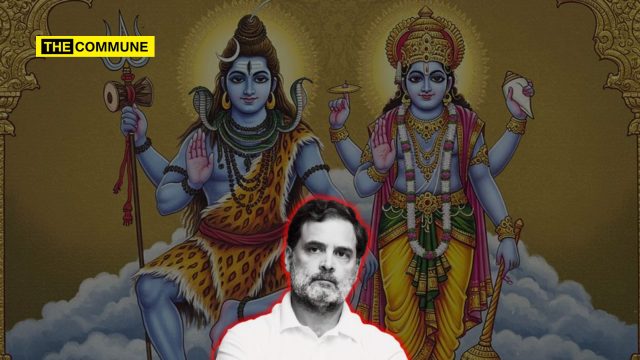
Congress Leader of Opposition Rahul Gandhi sparked a fresh controversy on Sunday, 2 March 2026, after he drew a symbolic comparison between the two major national parties and Hindu deities at a party event in Anantagiri, Telangana, likening Congress to Lord Shiva and the BJP to Lord Vishnu – remarks that are seemingly divisive and anti-Hindu.
As reported in Samayam Telugu, Gandhi made the remarks while addressing District Congress Committee (DCC) presidents at the conclusion of a 10-day training programme. Describing Lord Shiva as embodying “humility, balance, and restraint,” he suggested Congress should reflect similar values. In contrast, he compared the BJP to Lord Vishnu, alleging the party is centred on “power, grandeur, authority and dominance”.
After his failed attempt in trying to instigate the people of this country against one another – Rahul Gandhi has now decided to target… pic.twitter.com/HQTf4TbbMz
This is not the first instance of Gandhi invoking Hindu symbolism in political messaging. In his debut speech as Leader of the Opposition in Parliament in July 2024, Gandhi held up an image of Lord Shiva and claimed those “who call themselves Hindus only talk about violence, hatred and lies” – remarks that drew demands for an apology from Prime Minister Narendra Modi and Home Minister Amit Shah.
In Hinduism, the Trimurti – Brahma, Vishnu, and Shiva, is considered a unified cosmic triad, with each deity equally revered across traditions. It is noteworthy that there is no hierarchical or ideological distinction between Shaivite and Vaishnavite traditions, which have coexisted for centuries.
Gandhi is seemingly attempting to politicise sacred religious symbols for partisan messaging and create a wedge among Hindu devotees along partisan lines.
Subscribe to our channels on Telegram, WhatsApp, and Instagram and get the best stories of the day delivered to you personally.
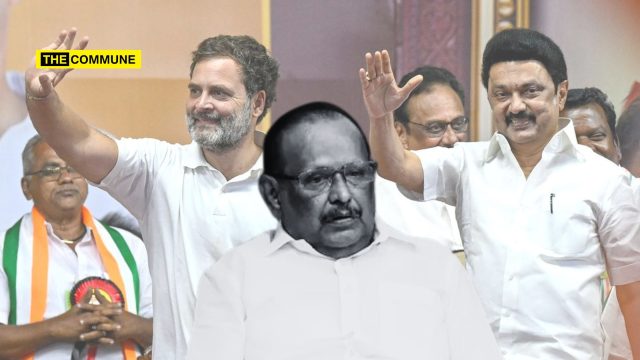
DMK minister S. Regupathy on Tuesday, 3 March 2026, said the Congress leadership knows that its candidates can enter the Tamil Nadu Legislative Assembly only through an alliance with the DMK.
Speaking to reporters in Pudukkottai, he also said seat-sharing talks within the alliance are progressing smoothly and will conclude soon. He added that confusion continues in the AIADMK–BJP alliance regarding leadership.
Addressing reporters, Regupathy said, “Sir, talks are said to be happening through back channels and various things are being said about it. But all of that is just rumours that people are spreading on their own; there is nothing else to it. As far as we are concerned, the situation is very clear. This is a political party, and the Congress leadership knows that it can gain political relevance here. Therefore, they would not want to lose that political relevance. They are well aware that in Tamil Nadu they can enter the Legislative Assembly only if they maintain an alliance with the Dravida Munnetra Kazhagam (DMK).”
Subscribe to our channels on Telegram, WhatsApp, and Instagram and get the best stories of the day delivered to you personally.
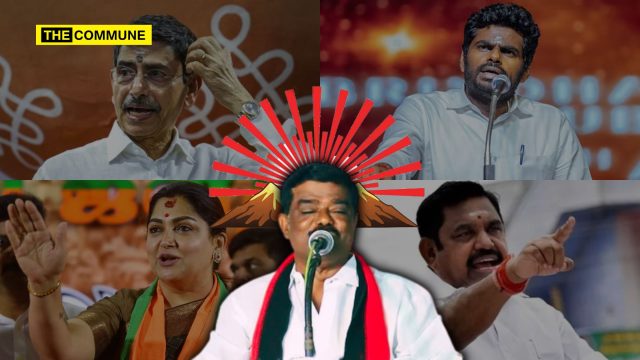
In February 2026, DMK platform speaker Sivaji Krishnamoorthy was sentenced to two years in prison and fined ₹20,000 by the Chennai Egmore Court over remarks made during a public meeting in 2023.
The case relates to a speech delivered at a public meeting in Kodungaiyur, Chennai, where Krishnamoorthy made derogatory and defamatory remarks against Tamil Nadu Governor R.N. Ravi and BJP leader Khushbu Sundar. The controversy was part of a series of speeches in which Krishnamoorthy had used abusive language against several political figures, including the then BJP state president K. Annamalai, AIADMK leader D. Jayakumar, and former Chief Minister Edappadi K. Palaniswami.
On 13 February 2026, Egmore Court Magistrate B. Revathi held that the charges against him had been proved beyond reasonable doubt and imposed the two-year prison sentence along with the fine.
On 4 March 2026, Krishnamoorthy filed an appeal before the Chennai Principal Sessions Court challenging the conviction and sentence.
In the appeal petition, it has been argued that the Egmore court delivered its verdict without properly examining the evidence and witness testimonies on record. The petition also stated that none of the individuals allegedly criticised in the speech had filed a complaint and that the case had been registered by the police.
Krishnamoorthy has sought the quashing of the conviction and sentence imposed by the magistrate court. The appeal is expected to come up for hearing before the sessions court soon.
The Income Tax Department on Tuesday informed the Madras High Court that it would initiate appropriate legal action against Ramanathapuram Member of Parliament K. Navas Kani based on the material available before it regarding allegations of suppression of income and misrepresentation.
The submission was made before the First Bench comprising Chief Justice Manindra Mohan Shrivastava and Justice G. Arul Murugan during the hearing of a petition filed by advocate K. Venkatachalapathy seeking a direction to the Income Tax Department to take action against the MP.
Recording the department’s submission, the bench observed that the pendency of the petition would not in any way hinder the authorities from initiating proceedings in accordance with law.
In his petition, Venkatachalapathy stated that Navas Kani had served as the Member of Parliament from the Ramanathapuram constituency between May 2019 and May 2024 and had subsequently been re-elected to the 18th Lok Sabha for the 2024–2029 term.
The petitioner said the MP had filed affidavits before the Election Commission of India in both the 2019 and 2024 elections disclosing details of his movable and immovable assets, sources of income and family information.
According to the petition, a comparison of the affidavits showed a steep rise in the MP’s assets that was disproportionate to his declared sources of income. The petition stated that the MP’s declared earnings consisted of his parliamentary salary, rental income and salary received as a director of a private company, while his wife’s declared income was limited to rental earnings.
The petitioner further submitted that an analysis of the financial disclosures indicated that the total net surplus available for investment by the MP and his family between 2019 and 2023 amounted to only ₹5.74 lakh after accounting for taxes, personal expenditure and loan repayments.
Despite this, the petition claimed that the MP and his family had acquired movable and immovable assets worth ₹20.84 crore during the same period.
The petitioner argued that the disparity between the declared income and the growth in assets suggested possible misuse of official position, misappropriation of public funds and concealment of actual income, which he said warranted investigation and legal action.
The Income Tax Department informed the court that it would proceed with action based on the available material, following which the bench recorded the submission and disposed of the matter while noting that the petition would not obstruct the department from taking further steps.
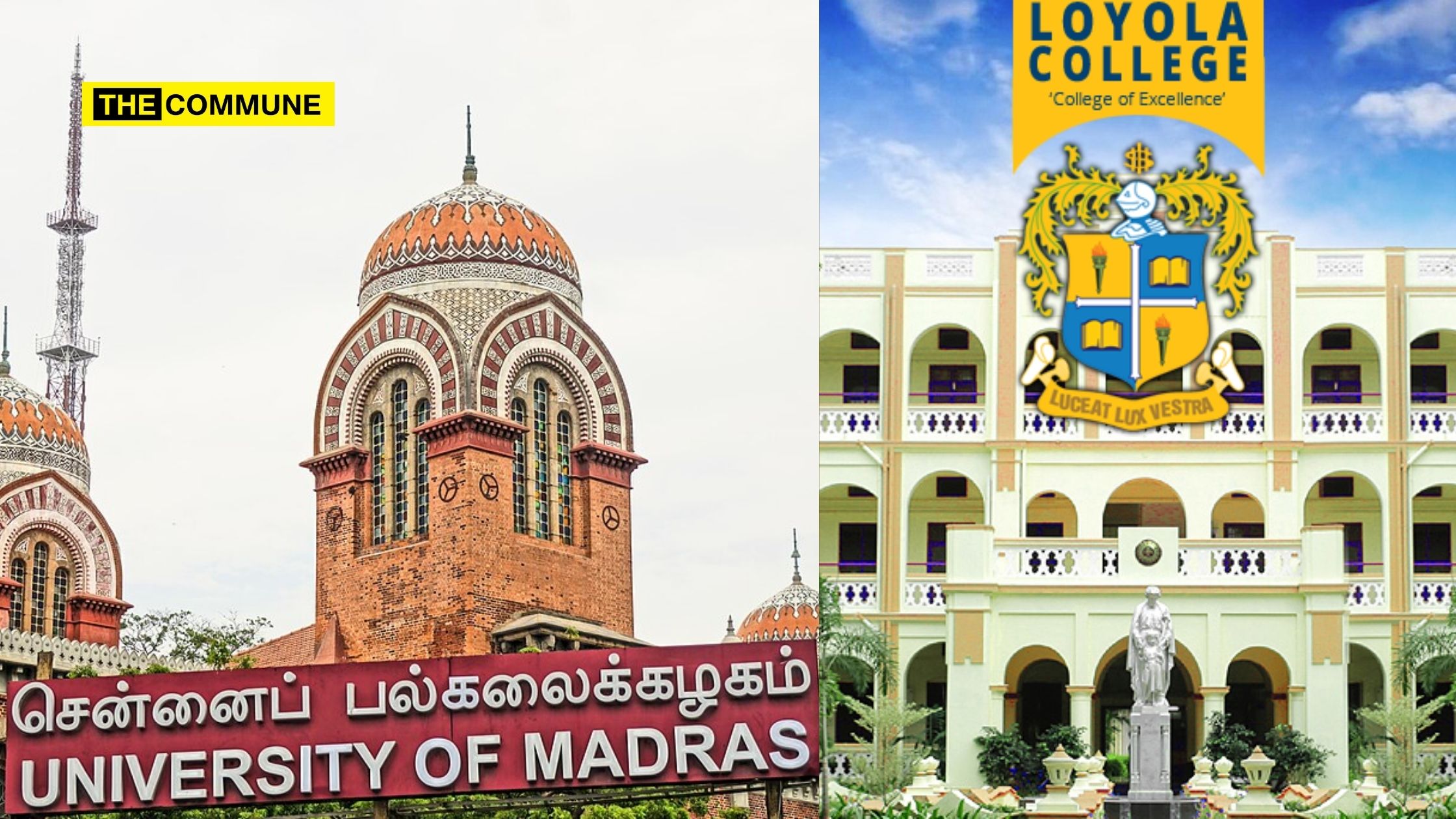
When R. Joseph Kennedy, a proud alumnus of Loyola College itself, filed a Right to Information application seeking details of Memoranda of Understanding (MoUs) signed by his alma mater with foreign universities, he expected a routine response. What he got instead was a nine-month wall of silence, institutional buck-passing, and a startling admission that has raised serious questions about how Tamil Nadu’s premier universities are managing, or failing to manage, foreign academic collaborations.
The story that has unfolded since is a textbook case of institutional opacity, regulatory failure, and the lengths to which public universities will go to avoid accountability.
The RTI That Opened a Can of Worms
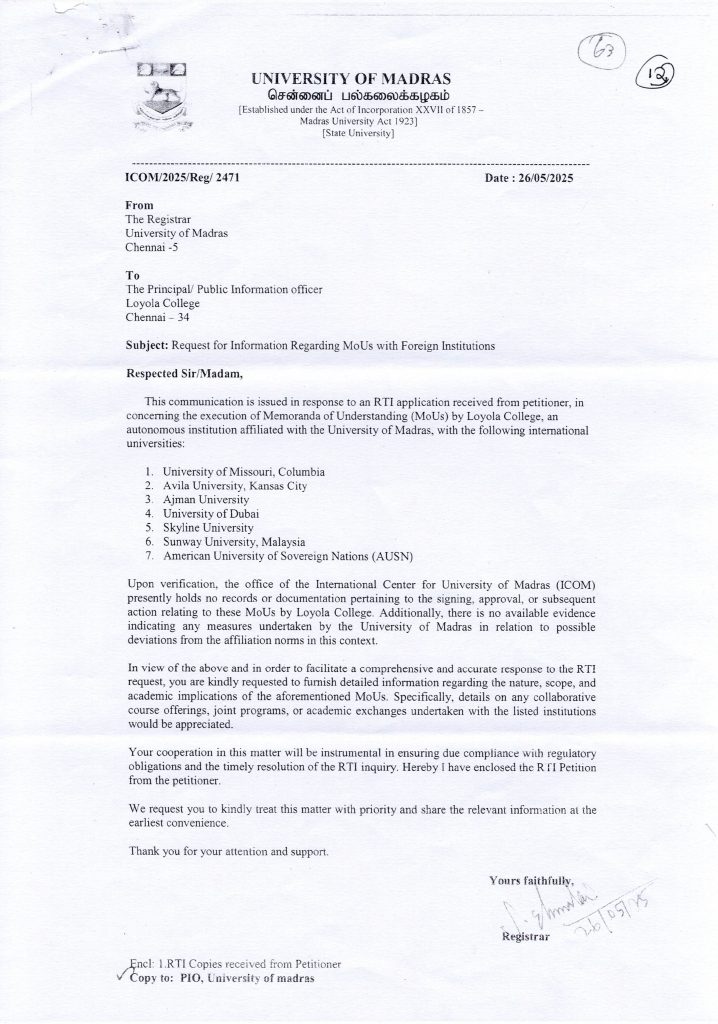
Kennedy’s RTI application, filed with the University of Madras (UoM), the affiliating authority of Loyola College, Chennai, sought information about MoUs signed by the college with seven foreign institutions:
University of Missouri, Columbia
Avila University, Kansas City
Ajman University
University of Dubai
Skyline University
Sunway University, Malaysia
American University of Sovereign Nations (AUSN)
The request was straightforward. Under UGC regulations, affiliated colleges are required to obtain prior approval from their affiliating university before entering into any foreign collaboration. UoM, as the regulatory authority over Loyola College, should have had complete records of each of these MoUs – their terms, their approvals, and their academic outcomes.
What followed was anything but straightforward.
The University That Knew Nothing
On 26th May 2025, UoM’s International Centre (ICOM) responded, not to Kennedy, but to Loyola College itself via letter No. ICOM/2025/Reg/2471. In a stunning admission, the ICOM office stated that it “presently holds no records or documentation pertaining to the signing, approval, or subsequent action relating to these MoUs by Loyola College.”
Read that again. The University of Madras, the very institution responsible for regulating Loyola College, admitted it had absolutely no knowledge of MoUs signed by the college with seven foreign universities.
This raises a critical question: How were these MoUs signed with foreign institutions, some of them questionable, without the knowledge or approval of the affiliating university? Who authorised them? And why has no action been taken?
Adding insult to injury, Kennedy was not even copied in UoM’s communication to Loyola College. The RTI applicant was kept entirely in the dark about what was happening with his own application.
Nine Months of Silence from Loyola College
UoM’s letter to Loyola College, dated 26th May 2025, asked the institution to furnish detailed information about the MoUs. That was nearly nine months ago. Loyola College has not responded – not to UoM, and certainly not to Kennedy.
The silence is not an administrative oversight. Loyola College is an autonomous college receiving substantial government aid, making it a ‘public authority’ under Section 2(h) of the RTI Act, 2005, independently bound by the Act’s obligations. Ignoring the University Registrar’s own letter for nine months is not bureaucratic delay – it is wilful defiance of both its regulatory authority and the citizen’s right to information.
The AUSN Question: A University That Shouldn’t Be
Of all the seven institutions named in Loyola College’s MoUs, one stands out for particularly alarming reasons – the American University of Sovereign Nations (AUSN).
Kennedy’s concerns about AUSN are not those of a casual observer. As India’s representative to ECA Global (Ending Clergy Abuse) – an international organisation fighting institutional abuse by clergy, with members across 23 countries and 5 continents, he brings a uniquely informed and unflinching perspective to this fight. That he is now challenging a Jesuit-run institution’s opacity and regulatory failures is not lost on anyone familiar with his work. And AUSN, he says, does not come close to meeting any recognisable standard.
The facts bear him out. AUSN’s own website openly admits: “AUSN is not regionally or nationally accredited in the United States by traditional accreditation agencies.” This is not an allegation – it is a self-confession.
That Loyola College, a supposedly reputed institution affiliated to one of India’s oldest universities, signed an MoU with such an entity raises serious questions. What academic programs were run under this MoU? How many students participated? Are their credentials internationally valid? Did UGC know?
Neither UoM nor Loyola College has been willing to answer any of these questions.
A Pattern Madras High Court Has Already Flagged
The conduct of UoM in this case is not isolated. In a recent order concerning Madurai Kamaraj University (MKU), the Madurai Bench of the Madras High Court transferred a corruption case to the CBI after observing that the Directorate of Vigilance and Anti-Corruption (DVAC) had acted merely like a “post office” – forwarding complaints without independent inquiry.
The parallel is striking. UoM has done precisely the same thing – forwarded Kennedy’s RTI to Loyola College and then washed its hands of the matter, taking no follow-up action for nine months. When the highest court in the state has already condemned this pattern of behaviour in another Tamil Nadu university, it is deeply troubling to see UoM repeat it.
The TNIC Steps In – But UoM Still Drags Its Feet
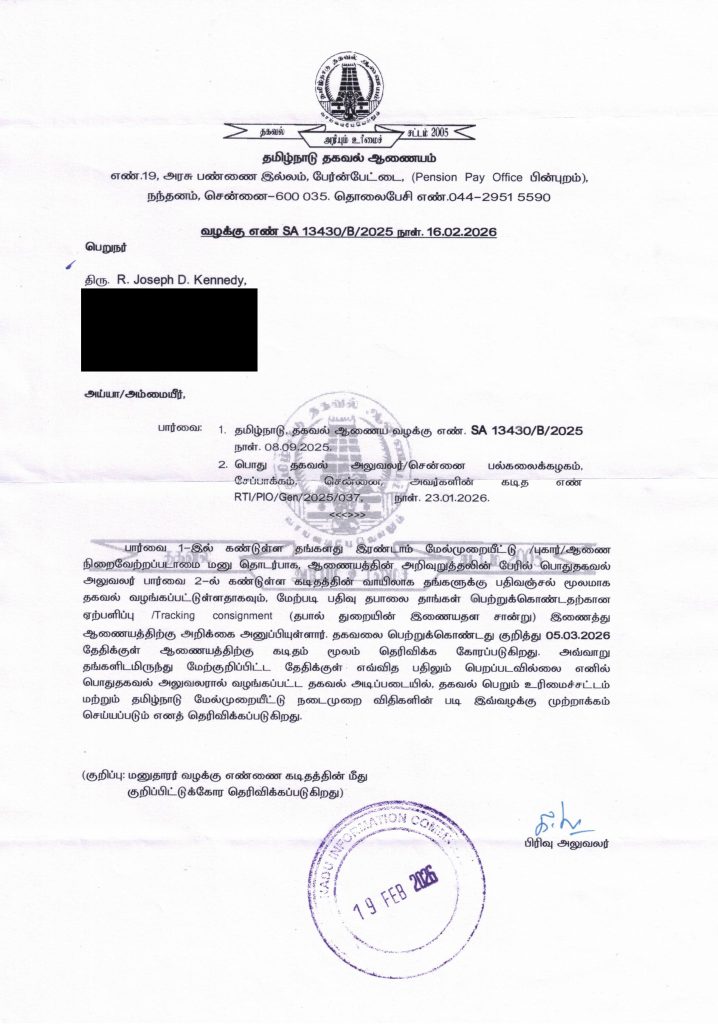
After UoM’s stonewalling, Kennedy escalated the matter to the Tamil Nadu Information Commission (TNIC). In an order dated 16th February 2026, the Commission ruled in Kennedy’s favour in Case No. SA 13430/B/2025, directing UoM to furnish the requested information by 5th March 2026.
Kennedy has now filed a comprehensive complaint with TNIC citing six specific grounds of violation, seeking not just compliance but also:
A maximum penalty of Rs. 25,000/- against the UoM PIO under Section 20(1) of the RTI Act
Disciplinary action against the PIO under Section 20(2) of the RTI Act for persistent and wilful failure to provide information
He has simultaneously filed independent RTI applications directly with both UoM and Loyola College, targeting the specific gaps exposed by UoM’s own admission.
The Larger Question: Who Is Watching Tamil Nadu’s Universities?
This case is not just about one RTI application. It is about a systemic failure of regulatory oversight in Tamil Nadu’s university ecosystem.
UGC has publicly warned institutions against entering into illegal or irregular foreign collaborations. Yet here we have an affiliated college that has signed MoUs with seven foreign institutions, including at least one that has no credible accreditation, apparently without its own affiliating university’s knowledge or approval.
If UoM does not know what its affiliated colleges are doing, who does? If Loyola College can ignore the University Registrar’s letter for nine months without consequence, what does that say about the state of academic governance in Tamil Nadu?
And if it takes a single citizen armed with an RTI application to uncover what institutional oversight has failed to catch, what does that say about the health of our public universities?
Subscribe to our channels on Telegram, WhatsApp, and Instagram and get the best stories of the day delivered to you personally.
Fresh turbulence appears to be brewing within the Tamil Nadu Congress Committee (TNCC), with strong indications that party president Selvaperunthagai could face removal amid mounting internal dissatisfaction and strained alliance dynamics with the DMK.
According to political sources, discontent within the state Congress unit has been simmering since Selvaperunthagai’s appointment, with several functionaries alleging that he has functioned more as a supporter of the DMK than as an independent Congress leader. The situation has now escalated to the point where multiple senior leaders from Tamil Nadu have reportedly camped in Delhi to brief the party high command.
Growing Internal Dissent
Party insiders claim that instead of focusing on strengthening the Congress in Tamil Nadu, Selvaperunthagai’s public positioning during alliance negotiations has triggered unease within the ranks. He is part of the five-member committee headed by Girish Chodankar tasked with holding seat-sharing talks with the DMK.
Following the discussions, Selvaperunthagai repeatedly told the media that negotiations were progressing smoothly and that the Congress expected to receive the desired number of seats. However, Chodankar later publicly stated that the DMK was unwilling to allot the number of seats sought by the Congress and that accepting just 25 seats would not be feasible.
Political observers say this divergence exposed clear differences within the Congress leadership in Tamil Nadu.
Seat-sharing Flashpoint
The immediate flashpoint appears to be the DMK’s firm position that it will not allot more than 25 Assembly seats to the Congress – the same number given in the 2021 election. Several Congress leaders have expressed frustration that the party has been unable to negotiate a higher seat share.
There is also resentment within the state unit that Selvaperunthagai has been overly conciliatory towards the DMK. Critics within the party allege that he has failed to take concrete steps to expand the Congress’s organisational strength in Tamil Nadu and has instead focused on publicly praising Chief Minister M.K. Stalin.
His recent Assembly speech, in which he compared Stalin to historical figures such as Raja Raja Chola and Karna and referred to him as “Thaayumanavar” is said to have further aggravated sections of the Congress cadre.
Complaints Reach High Command
Sources indicate that multiple complaint petitions have now reached the Congress central leadership, including party president Mallikarjun Kharge, Sonia Gandhi, Rahul Gandhi and general secretary K.C. Venugopal.
The leadership is understood to be simultaneously reviewing two key questions – whether the Congress should continue its alliance with the DMK, and whether a leadership change is required in the Tamil Nadu unit.
Parallel Power Centres
The situation has become more complex with parallel political activity unfolding in Delhi and Chennai.
While one faction of Congress leaders is lobbying the high command in Delhi for a tougher stand with the DMK, another group including Selvaperunthagai and senior leader P. Chidambaram has been engaging directly with Chief Minister Stalin in Chennai, strongly favouring continuation of the alliance.
Political sources suggest the meeting between Chidambaram and Stalin at the Chief Minister’s Alwarpet residence is being closely watched within Congress circles.
TVK Emerges as Alternative
Amid the uncertainty, discussions have reportedly begun within sections of the Congress about a potential alignment with actor Vijay’s Tamilaga Vettri Kazhagam (TVK) if talks with the DMK collapse.
Observers note that Congress’s options outside the DMK front are limited, making TVK a possible fallback. At the same time, TVK too has struggled to attract alliance partners despite repeated public invitations from Vijay promising power-sharing arrangements.
However, the move is not without risks. Party leaders are said to be weighing whether allegations currently surrounding TVK and its leadership could impact the Congress electorally.
Grassroots Pressure Builds
Importantly, dissatisfaction is not confined to the top leadership. Grassroots Congress workers and second-rung leaders have reportedly conveyed to the high command that the party is not receiving due respect within the DMK alliance.
Some within the party believe exiting the alliance may be necessary to demonstrate Congress’s independent vote strength in Tamil Nadu.
Rajya Sabha Factor Adds Urgency
The timing of the crisis is significant. The deadline for Rajya Sabha nominations is imminent, and the DMK had earlier indicated it would allot one seat to the Congress. That assurance now appears contingent on the alliance being finalised.
DMK sources maintain the party is firm on its seat-sharing position and has conveyed that it will not exceed the 25-seat formula. The ball, they suggest, is now in the Congress court.
Split Speculation Surfaces
In a further twist, political chatter has emerged that if the Congress high command decides to exit the DMK alliance, some pro-DMK Congress leaders including Selvaperunthagai and Chidambaram could explore alternative political options, including the possibility of a new formation. There is no official confirmation of this scenario.
Crucial Hours Ahead
With simultaneous consultations underway in Delhi and Chennai, political observers say the coming hours could prove decisive. The outcome is expected to determine whether the DMK-Congress alliance continues, whether Congress explores an understanding with TVK, or whether internal divisions within the Tamil Nadu Congress deepen further.
For now, uncertainty hangs over both the alliance arithmetic in Tamil Nadu and the future of Selvaperunthagai’s leadership.
Subscribe to our channels on Telegram, WhatsApp, and Instagram and get the best stories of the day delivered to you personally.
The first instalment of The Kerala Story left people shocked, enraged, aware – of how Hindu girls were being targeted by Islamists in order to achieve their own goals, converting them, making them pregnant as well as brainwashing them to join terrorist groups like ISIS – Kerala Story 2 will take you beyond that. It will give you a hard view of what is happening across the country, to our little girls.
The Kerala Story 2 is yet another hardhitting film that has to be watched by parents, families, especially young girls. We’ll tell you why.
A Brief On What The Film Is About
The Kerala Story 2: Goes Beyond follows three young women, Surekha Nair from Kerala, Neha Sant from Gwalior, and Divya Sinha from Jodhpur, each of whom enters a relationship that ends in coerced religious conversion, abuse, and family rupture.
The film opens with Surekha’s suicide and Neha lying injured after jumping from a building. What follows is three parallel stories cohesively converging around the same pattern: a relationship built on deception, escalating pressure to convert, and parents who are left with no legal recourse and no answers.
The three lead actresses Ulka Gupta as Surekha from Kochi, Aditi Bhatia as Divya from Jodhpur, and Aishwarya Ojha as Neha from Gwalior play their roles to perfection. The film’s real emotional weight falls on the parents and the actors playing them deserve far more credit than any review has so far given them. They show you how it feels to be the parent of a love jihad victim.
Mannan Shah’s music is one of the film’s strongest assets. The BGM does not manipulate the audience at every beat, and the song centred on the mother – O Maayi Ri is genuinely moving without being overexaggerated. The final 15–20 minutes with Shiv Shambho leave a powerful emotional impact, especially if you are a parent. Played at a moment when parents seek justice for their wronged daughters, the song with Manoj Muntashir’s stirring words feels deeply elevating and goosebump-inducing. It ultimately instils hope and the belief that justice will prevail against those who deserve punishment.
Some Words For Those Dissing This Film
Right from the get-go, across the board, leftists and news portals like The News Minute have been dismissing the film, just like they did for the first instalment – they claimed the film was based on WhatsApp University forwards, that it was demonising an entire community, that Namaz tunes were made to sound ominous; The Week called it “Group therapy for saffron-coloured dummies”; the mockery has been repetitive and unfunny.
What these reviews do not tell you, in fact they bury under the ground is that this film is based on real life incidents.
What They Do Not Tell You
Not one of these reviews mentioned Mohammed Umar Gautam. Not one mentioned that in September 2024, a Lucknow court sentenced him, founder of Delhi’s Islamic Da’wah Centre, along with Maulana Kaleem Siddiqui and 10 others to life imprisonment for running an organised conversion racket targeting over 1,000 people. This was an NIA-ATS prosecution that ended in a court conviction. Twelve people are serving life sentences for doing what this film depicts. Not one mainstream review found space to mention it.
They don’t mention Chhangur Baba, arrested by the UP ATS in July 2025, whose network is accused of converting over 1,500 Hindu women – with an actual rate list, categorising women by caste, recovered during the investigation. Pooja Prasanna told her audience those rate cards were a WhatsApp forward from 2010. The ATS recovered one during an arrest in 2025.Well, she is clearly wrong.
They don’t mention Mission Asmita – the July 2025 UP Police operation that dismantled a pan-India conversion and radicalisation syndicate spanning six states, with arrests in Rajasthan, Dehradun, and West Bengal, triggered by the disappearance of two sisters. Not one review mentioned Shekhar Roy and Usama Khan, operators of the Kolkata-Agra conversion corridor, arrested for orchestrating an interstate scheme that systematically targeted women from Bengal and UP. These are police operations with named accused, chargesheets, and arrests.
These reviews dismiss the bulldozer as a caricature lazily linked to UP CM Yogi Adityanath. In the film, however, the bulldozer moment lands as pure catharsis for viewers – much as it did for victims and their families in real life. The same UP government had actually demolished Chhangur Baba’s residence – the man who ran a massive prostitution racket, an important detail the film reflects. Yet outlets like TNM would rather sneer than engage with the facts.
TNM’s Pooja laughs off the “Ghazwa-e-Hind 2047” poster in the film with open mockery. The obvious question is whether she is dismissing the documented ‘2047 vision’ associated with PFI-linked discourse altogether or simply choosing not to engage with its implications. Either way, the flippant tone raises concerns about whether uncomfortable facts are being waved away too casually.
Another highly flawed take, especially from TNM’s Pooja is the “consenting adults” trope. This defence collapses at the first point of contact with the film’s actual content. Divya is under 18, she is not the only one – there are several victims like her who appeared at the promotional event done by the film’s producer/director team.
Divya’s parents try to file a POCSO complaint, but the opposite party proves her to be an adult and the police in connivance with the Islamists’ family sends her off to the perpetrator’s home! Where have you seen/heard this? Let us remind you that this happened very recently in Tamil Nadu too – Read this report.
Dear Pooja & TNM, the feminists that you all are, a minor cannot legally consent and no sophistication changes that – Divya is shown to be under 18 in the film and what was happening to Divya was grooming! Are you denying that?
In what world does staying in a relationship require you to change your religion, abandon your family, and answer to a new name, is this choice or coercion dressed in romantic language – Has anyone ever thought about it?
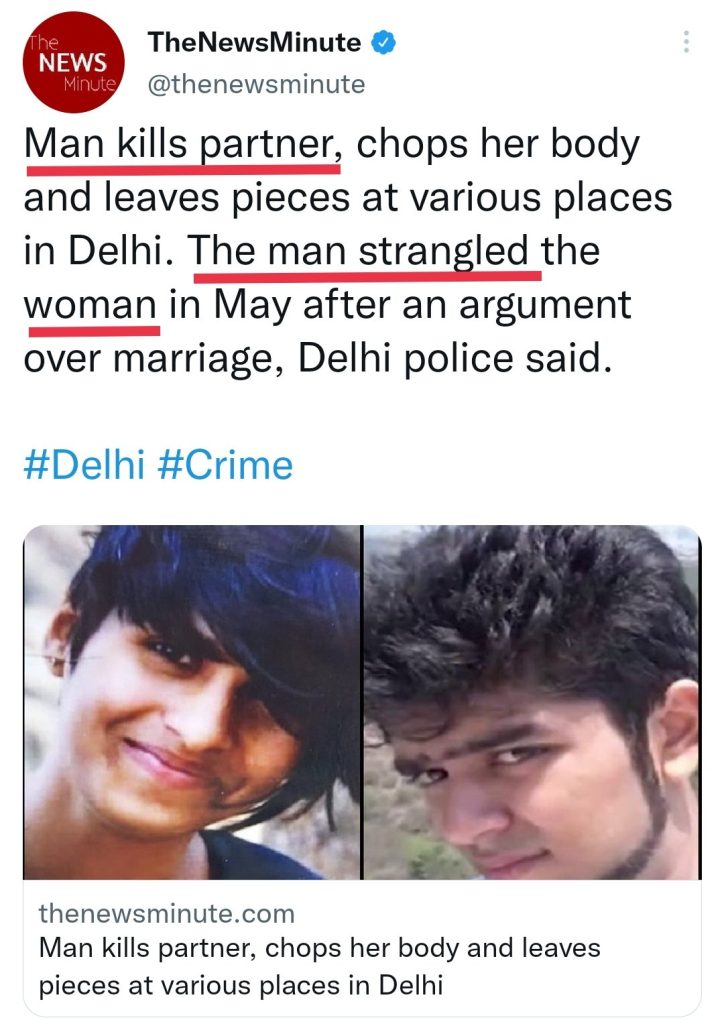
The leftist seculars and their portals who are dismissing the film as ‘WhatsApp University’ and what not are the first ones to give a Hindu name to an Islamist perpetrator. The film shows a Shraddha Walkar like instance – Pooja or other reviews do not talk about that, in fact TNM had secularised the gruesome murder. The portal casually shared the ‘report’ as “Man kills partner, chops her body and leaves pieces at various places in Delhi. The man strangled the woman in May after an argument over marriage, Delhi police said.”
And last but not the least – the most common grouse every single leftist seems to have – the name of the film. It isn’t rocket science to see the film’s title in its entirety – The title is “The Kerala Story 2 – Goes Beyond” – The Kerala Story of love lihad was identified first in Kerala before spotting similar modus operandi across the country. In Kerala, it made women enroll with terror organisations too. In other parts of India, it served the purpose/goal of Ghazwa-e-Hind and continues to do so.
It was not just Hindus who were crying hoarse, it was the Christians too. Can TNM or Pooja or Dhanya Rajendran deny that? Will they diss the stories of other girls who have been rescued by Hindu Seva Kendram or Aarsha Vidya Samajam? Whatever gymnastics they do with numbers to prove forced conversions do not exist, truth always reveals itself. Read more on this here.
The Kerala Story 2 Needs To Be Watched
The Kerala Story 2 is not a perfect film. It is direct to the point of bluntness and makes no effort to appear balanced. But it is documenting something real – confirmed by courts, by the ATS, by NIA chargesheets and it is doing so while keeping the camera on the people who have been most consistently ignored in this conversation: the parents. For that alone, it deserves a more honest engagement than it has received.
Do not pay heed to the negative reviews. Watch it, both parents and young adults need to.
Subscribe to our channels on Telegram, WhatsApp, and Instagram and get the best stories of the day delivered to you personally.
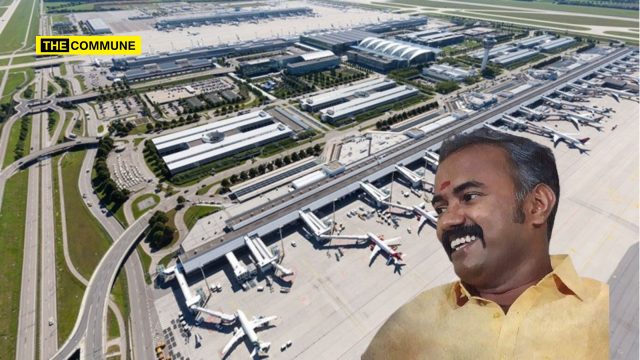
Close to 400 Indian passengers were stranded at Munich Airport in Germany without food and accommodation after flights from San Francisco were diverted due to the prevailing situation in the Middle East, according to officials.
Among those affected were 383 Indians who had departed from San Francisco. They reportedly reached out on 28 February 2026 to Tamil Nadu BJP leader Ashvathaman seeking assistance.
Acting on the request, Ashvathaman said he contacted External Affairs Minister S Jaishankar late that night through official channels, urging urgent intervention to assist the stranded passengers in Munich.
Following the minister’s directions, officials from the Indian mission in Germany extended necessary support to the affected passengers. In the first phase of the relief effort, 242 Indians were sent back to India under special arrangements, sources said.
In a statement, Ashvathaman said timely assistance had been provided to the stranded Indians and expressed gratitude to Jaishankar for the swift response. He added that the government remained committed to assisting Indian nationals facing difficulties anywhere in the world.
When nearly 400 Indians, were stranded in Munich, Germany, after Emirates, Etihad and Qatar Airways flights from San Francisco were diverted due to the Middle East situation, I was approached for assistance.
I immediately conveyed the matter yesterday late night to
Hon’ble…
— Ashvathaman Allimuthu (@asuvathaman) March 1, 2026
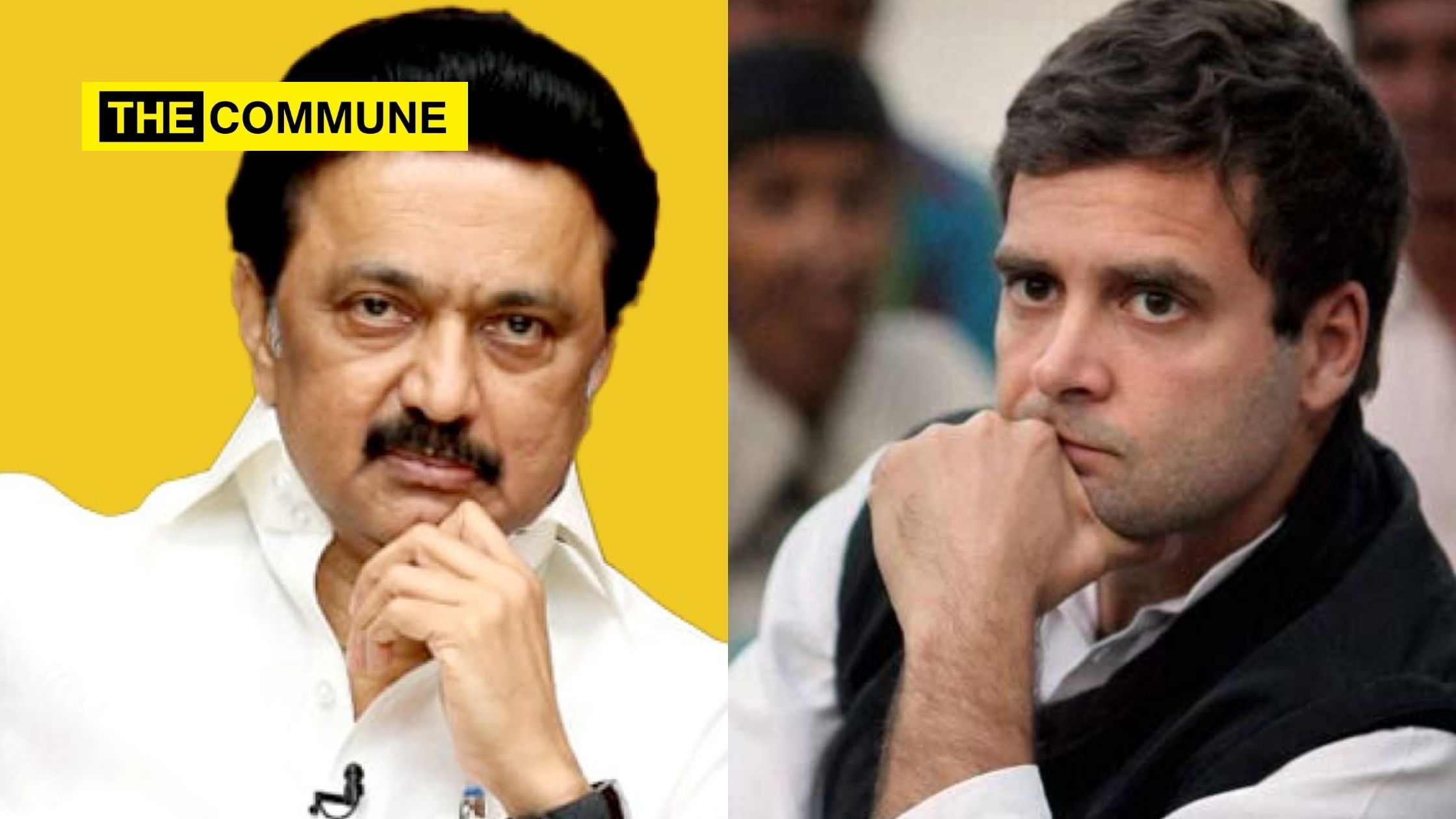
Seat-sharing negotiations between the DMK and Congress ahead of the 2026 Tamil Nadu Assembly elections have entered a critical phase, with both sides holding firm positions and the Congress high command attempting a reset in talks.
The Congress leadership has moved to localise negotiations by shifting responsibility away from AICC in-charge Girish Chodankar to a senior Tamil Nadu Congress leader. The decision followed consultations involving Sonia Gandhi, party president Mallikarjun Kharge and general secretary KC Venugopal, and is seen as an effort to bring greater local sensitivity and momentum to discussions with the DMK.
The deadlock centres on seat allocation. The DMK continues to stand by its “composite” offer of 25 Assembly seats, the same as in 2021, along with one Rajya Sabha berth. Party strategists view the proposal as balanced in light of commitments to other I.N.D.I.A bloc partners such as the DMDK and IUML.
Congress has rejected the offer as insufficient. The party had initially sought around 39 seats, roughly one per Lok Sabha constituency in Tamil Nadu, before moderating its demand to the 33-41 range. It has also been pushing for clearer signals on power-sharing within the alliance and, in some discussions, an additional Rajya Sabha seat.
The talks have gained urgency due to the Rajya Sabha election timeline. The DMK has reportedly set an informal March 3 deadline linked to the March 5 last date for filing nominations to six Rajya Sabha seats from Tamil Nadu.
If an agreement is not reached in time, the DMK could move ahead with its Rajya Sabha candidates independently, a step that may further strain ties within the I.N.D.I.A bloc and intensify speculation about possible alternative alignments ahead of the April–May 2026 Assembly elections.
Within the DMK camp, the view remains that the party must retain a dominant contest share in the Assembly polls. With multiple allies already in the fold, and more potentially seeking accommodation, expanding Congress’s quota significantly would compress the DMK’s own seat space.
Congress, on the other hand, appears keen to leverage its national status and Lok Sabha footprint in Tamil Nadu to negotiate a larger role in the alliance.
Political observers note that while friction is visible, both parties have historically pushed negotiations to the brink before arriving at a compromise. However, the sharper public signalling this time, combined with the Rajya Sabha clock, has heightened uncertainty.
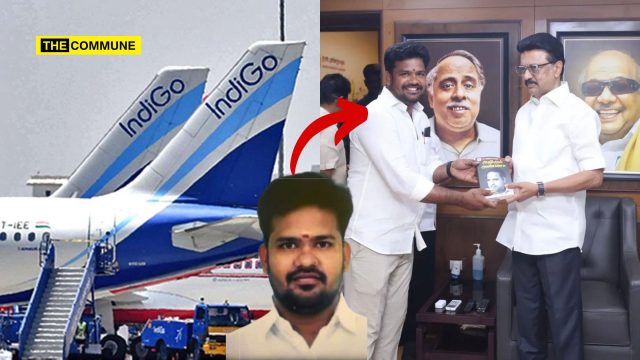
A DMK councillor from Tiruvallur municipality was arrested along with his associate for allegedly sexually harassing an IndiGo air hostess on a Chennai–Delhi flight, police said.
The accused have been identified as Prabhakaran, Ward 6 councillor of Tiruvallur Municipality, and his friend Thiagu, an advocate who is also involved in the real estate business.
According to preliminary information, the incident occurred on February 25 when an IndiGo flight was preparing to depart from Chennai to Delhi. All passengers had boarded and were seated when the alleged misconduct took place.
In her complaint, the 25-year-old cabin crew member stated that the two men, reportedly under the influence of alcohol, addressed her inappropriately as she walked down the aisle performing her duties. They allegedly spoke to her disrespectfully, questioned her about her hometown, teased her and slapped her on the back of her thigh, amounting to sexual harassment.
— News18 Tamil Nadu (@News18TamilNadu) March 3, 2026
The victim lodged a complaint the same day at the Meenambakkam All-Women Police Station. Police initially summoned the duo for inquiry on February 26, but after they failed to cooperate, a case was registered.
The two were later arrested at Chennai airport upon their return from Delhi. Police have booked them under sections relating to sexual harassment and outraging the modesty of a woman.
To the growing roll call of DMK functionaries – Gnanasekaran, Periyanayagam, Praveen, Ekambaram, Kannan, Kathiresan, Hariharan, Junaid, Kavidasan, Pakkirisamy, Kalliappan, Muthusamy, and many others, now joins another name: Prabhakaran.
The accused were produced before a court and remanded to judicial custody. Police said further custodial interrogation may be sought as the investigation continues.
Subscribe to our channels on Telegram, WhatsApp, and Instagram and get the best stories of the day delivered to you personally.