Home Blog Page 1309

Defence Ministry approves Indian Army’s request for a dedicated surveillance satellite to monitor LoC and LAC

The Defence Ministry on Tuesday (March 22) has cleared a Rs 4,000 crore proposal by the Indian Army that has asked for a dedicated surveillance satellite to keep an eye on the borders with China and Pakistan.

“The Defence Acquisition Council meeting on Tuesday cleared the proposal for a made in India dedicated satellite for the Indian Army. The project for the satellite GSAT-7B will be carried out in partnership with the Indian Space Research Organisation (ISRO) and would help the Indian Army enhance its surveillance in border areas,” government sources told ANI.

The Indian Navy and the Indian Air Force (IAF) already have dedicated satellites of their own and this approval will help the Indian Army to achieve situational awareness capability.

Information is power and after the post-military standoff with china starting-May 2020, the Indian Army has been working towards upgrading capabilities along and strengthening its surveillance assets is being viewed as an important part of operations and now it the Army is operating drones along the Line of Actual Control (LAC) with China.

Click here to subscribe to The Commune on Telegram and get the best stories of the day delivered to you personally.

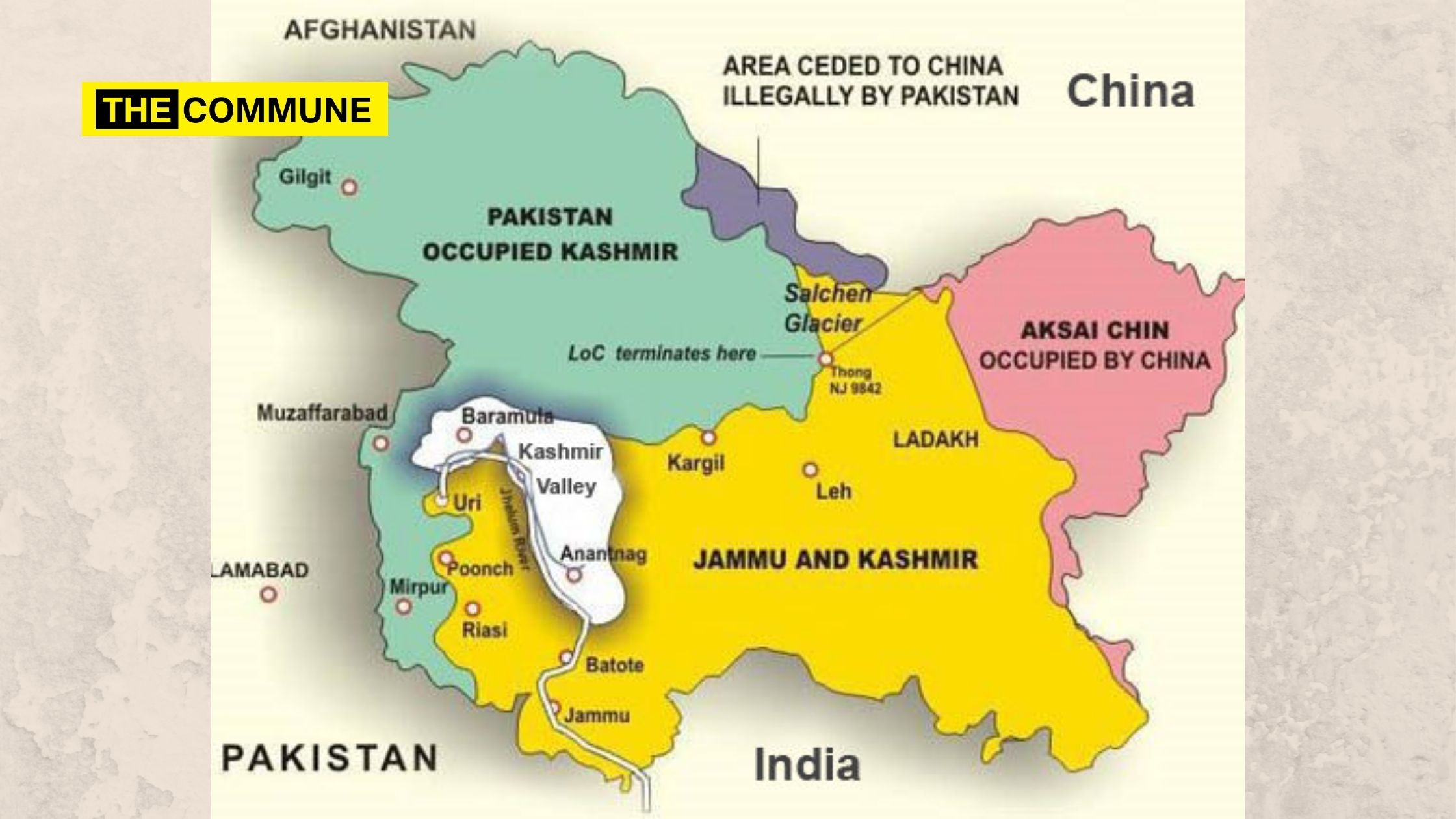
“Islamic terrorists are waiting to infiltrate from launch pads in Pakistan and PoK”: Union Minister Nityanand Rai

The Indian Minister of State for Home Affairs Nityanand Rai said in Lok Sabha on Tuesday (March 21) that a significant number of terrorists are waiting in various launch pads in Pakistan and Pakistan-occupied Kashmir (PoK).

However, there is a decrease in the number of infiltration from across the border to 34 in 2021 as compared to 51 in 2020, 138 in 2019, and 143 in 2018.

Pakistan and India have been observing a ceasefire along the Line of Control (LoC) for over a year now, however, it has still not given up its support for Islamic terrorist organisations like Jaish e Mohammad (JeM) and the Lashkar e Taiban (leT) and that is why it is still in the Financial Action Task Force (FATF) gray list.

As the minister briefed the Parliament, he was asked whether Pakistan has built infrastructure along the LoC and terrorists had tried to infiltrate from the launch pads. To this question, the minister said, “information sought to be a sensitive operational matter concerning national security and cannot be divulged in the interest of national security,”.

In his address in the Parliament Rai made it very clear that the central government regularly reviews the security situation along the LoC and takes all precautionary measures to eliminate threat elements, including terrorists.

Click here to subscribe to The Commune on Telegram and get the best stories of the day delivered to you personally.

DMK functionary arrested under POCSO Act for sexually abusing a 3-year-old girl

Feature Image Credits: News 18 Tamil Nadu

In yet another instance of crime against women and children in Tamil Nadu, a DMK cadre named Sivakumar (50) has been arrested by the police reportedly for sexually abusing a 3-year-old girl.

Sivakumar is a building mason residing in Chinnakarai near Palladam in Tirupur district. He is also a DMK functionary in the area. He had reportedly taken the 3-year-old girl living in his neighbourhood into his house where he sexually abused her.

The traumatized girl went home crying and told her parents about the incident. Subsequently, the girl’s parents lodged a complaint at the Palladam Women’s Police Station.

The Palladam women police who investigated the incident arrested the accused DMK functionary. A case has been filed under the Protection of Children from Sexual Offences (POCSO) Act.

Posting about this incident on social media, AIADMK Spokesperson Kovai Sathyan questioned DMK MP Kanimozhi’s silence who had tweeted about another incident where a 22-year-old Christian Dalit girl was raped by 8 people including two DMK functionaries for several months.

(With inputs from News 18 Tamil Nadu)

Click here to subscribe to The Commune on Telegram and get the best stories of the day delivered to you personally.
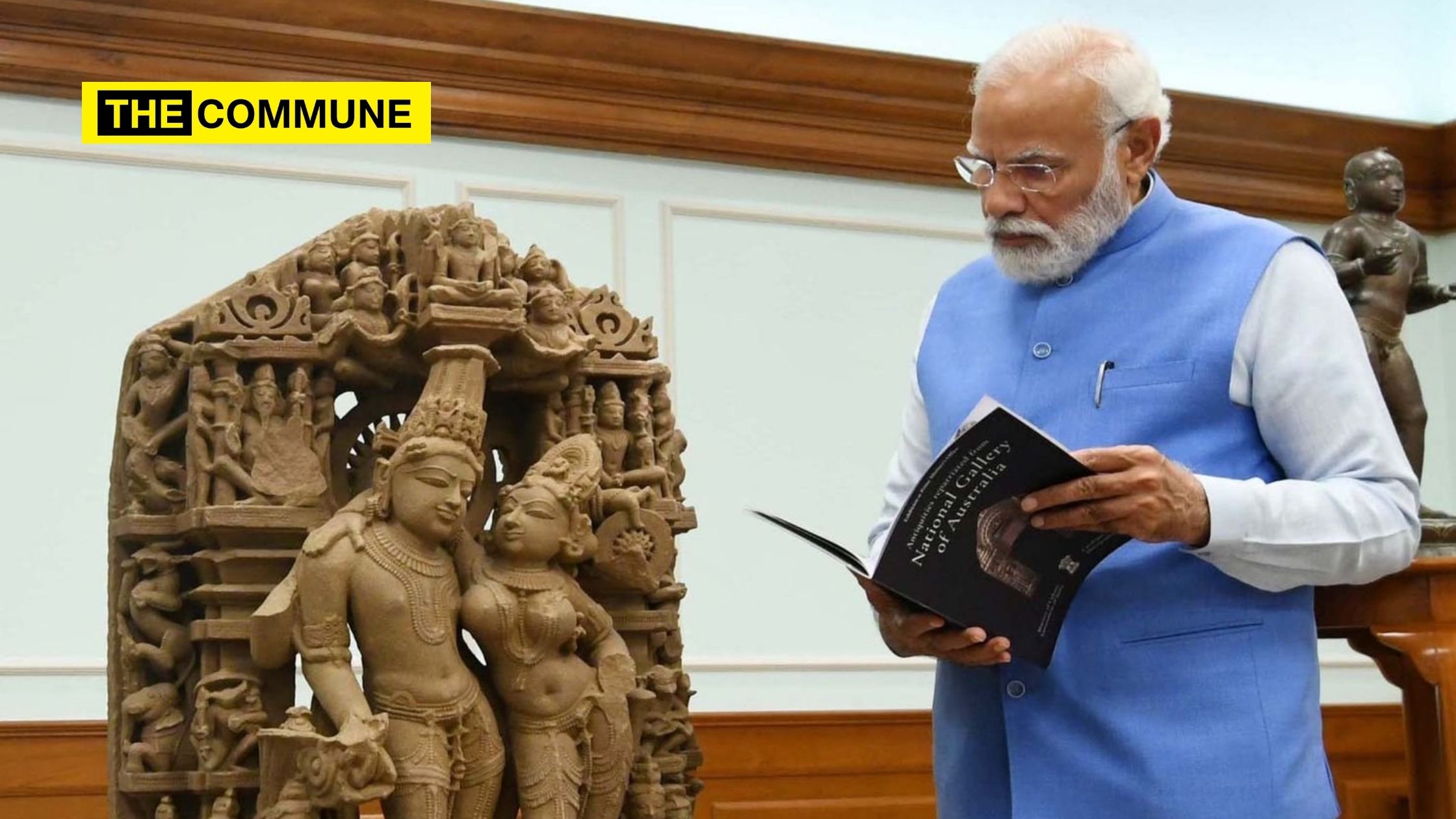
Stolen antiquities returned from Australia to India to be restored to its original temples

After Australia returned 29 stolen Indian antiquities, Union Culture Minister G Kishan Reddy on Monday (March 21) informed that these cultural treasures will now be handed over to the temples of respective states from where they were taken.

Speaking to ANI, Reddy said they have been brought back from Australia as a part of a special drive. He said, “The antiquities primarily sculptures and paintings, which have been brought back from Australia today are part of a special drive… We are working on it actively…Soon, we will hand over those items to respective states, their temples,”.

Ahead of Prime Minister Narendra Modi’s virtual summit with his Australian counterpart Scott Morrison, Australia had handed over 29 antiquities to India because it is part of our civilization and heritage.

As per reports, the antiquities range in six broad categories as per themes – Shiva and his disciples, Worshipping Shakti, Lord Vishnu and his forms, Jain traditions, portraits, and decorative objects. These antiquities come from different time periods, with earlier ones dating to the 9-10 century CE.

These antiquities and paintings are made from a variety of materials – sandstone, marble, bronze, brass, paper and were stolen from across India. The antiquities are from the Indian states of Rajasthan, Gujarat, Madhya Pradesh, Uttar Pradesh, Tamil Nadu, Telangana, and West Bengal.

The repatriated antiquities include Shiva Bhairav, a 9th-10th century CE Rajasthan Sandstone, the child-saint Sambandar from 12th century CE, and seated Jina sculpture from Mount Abu region, Rajasthan.

Other antiquities repatriated include the portrait of Maharaja Sir Kishen Pershad Yamin Lala Deen Dayal, memorial portrait of Hiralal A. Gandhi, and untitled ‘Manorath’ portrait of donor and priests before Shri Nathji, Nathdwara.

Since the advent of the Narendra Modi government some 200 stolen antiquities have been returned to India from across the world.

Click here to subscribe to The Commune on Telegram and get the best stories of the day delivered to you personally.
Christian Dalit woman raped by 8 people including 2 DMK functionaries

In yet another incident of crime against women in Tamil Nadu, a 22-year-old Dalit woman in Virudhunagar district was allegedly raped repeatedly for months by eight people, which includes two DMK functionaries and four school students. All eight members accused of the crime have been arrested by the police.

The survivor is reportedly a Christian Dalit (Pallar) woman.  The arrested persons have been identified as Junaith Ahamed (27), Hariharan (27), Praveen (21), Madasamy (37) and four other minor boys studying in Classes 10, 11 and 12. All of them hail from Virudhunagar.

The arrested Hariharan is a local DMK youth wing functionary who lured the 22-year-old woman into a relationship and took her to a secluded place, where he forced her to have sex with him. He filmed the same and circulated it among his friends. He and his friends reportedly threatened to share the video in internet and continued to exploit the girl sexually by blackmailing her. This Junaith Ahamed who is also a local DMK youth wing functionary and the four minor boys.

The accused had sexually abused the woman for several times over a period of one year.

A case has been registerd on charges of rape under the Scheduled Caste and Scheduled Tribe (Prevention of Atrocities) Act against all the eight people.

Hariharan, Junaith Ahamed, Praveen and Madasamy were produced before the Special Court and remanded in judicial custody. The four minor boys were produced before a magistrate and sent to a juvenile correction home.

The horrific crime bears striking similarity to the case that happened in Pollachi near Coimbatore where women were lured into relationships and sexually exploited by men. The issue gained lot of media traction with the then Opposition leader and DMK chief MK Stalin training his guns on the AIADMK.

While DMK MP Kanimozhi has tweeted condemning the incident, AIADMK spokesperson Kovai Sathyan has questioned why she has refrained from naming the accused who are functionaries of her party.

BJP Tamil Nadu spokesperson SG Suryah has questioned the silence of journalists who are treading lightly on the incident.

With inputs from sources, The Federal and The News Minute

Click here to subscribe to The Commune on Telegram and get the best stories of the day delivered to you personally.
Sadhguru Kicks Off 100-Day Motorcycle Journey From London To Save Soil

 Sadhguru kick started the Save Soil Journey this afternoon from Trafalgar Square amidst a teeming crowd of onlookers. People gathered at the Square to offer him their best wishes and hear his last words before he hit the road on the arduous 100-day motorcycle journey. The Square throbbed to the well-loved tune of the Soil Song as the audience created a wave of swaying arms. A 7-year-old girl flagged off the 30,000 kilometre, 27 nation, 3 continent long-journey. 

In a recent address to UK Parliamentarians, Sadhguru ardently voiced the importance of a girl child in this movement as a way of transcending social divisions of nationality, race, religion and caste, and creed. “When they see a child, a girl child,” he said, “I believe people’s hearts will become little more tender.” He urged women to take up the movement, speaking of the critical role they play because of the greater concern they have for future generations. “If you want to say ‘I love you’ to your child, you must just say ‘Save Soil’ because it is a more committed way of saying ‘I love you.’

To the crowd at the largest public event held in London yesterday at ExCeL, Sadhguru said about the Journey, in a heartfelt address, “In case I don’t make it, you must take it up. Let’s make it happen.” 

Passing through the UK, Europe, the Middle East and India, Sadhguru will visit 27 nations over the next few months, where he will engage with world leaders, the media and leading experts across the globe to emphasize the urgent need for concerted action to Save Soil. 

According to the United Nations Convention to Combat Desertification (UNCCD), over 90% of the earth’s soil could become degraded by 2050 leading to catastrophic crises worldwide including food and water shortages, droughts and famines, adverse climate changes, mass migrations and unprecedented rates of species extinction. This ‘soil extinction’ is the gravest threat to Humanity right now, as our planet is losing the ability to grow food because of rapid soil degradation.

The Save Soil Movement seeks to activate and demonstrate citizen support across nations, and empower governments to initiate policy-driven action to revitalize soil and halt further degradation. To enable this, the Movement will aim to reach 3.5 billion people – 60% of the world’s electorate.

In the past week, six Caribbean nations took the historic first step of signing memorandums of understanding with Conscious Planet, in an expression of impassioned commitment to the Save Soil movement. 

Save Soil is a global movement to inspire a conscious approach to saving our soil and planet. This is, first and foremost, a people’s movement. The aim is to demonstrate the support of over 3.5 billion people (more than 60% of the world’s voting population) around the world and empower governments to initiate policy-driven action to revitalize soil and halt further degradation World leaders, influencers, artists, experts, farmers, spiritual leaders, NGOs and citizens are vocally supporting the movement to re-establish Humanity’s relationship with Soil.

(This is an official press release from Isha Foundation. The Commune was not involved in creating this content.)

Click here to subscribe to The Commune on Telegram and get the best stories of the day delivered to you personally.

Australia returns 29 sacred antiques taken from all over India including Tamil Nadu, PM Modi inspects

Just before the scheduled virtual meeting between the Indian Prime Minister Narendra Modi and the Australian Prime Minister Scott Morrison, 29 antiquities have been repatriated to India by Australia. 

These antiquities which are part of our glorious civilization belong to different themes such as Lord Shiva and his disciples, Worshipping Shakti, Lord Vishnu and his forms, Jain tradition, and other portraits and decorative objects and some of them date back to 9-10th century CE.

These antiquities are mainly sculptures or paintings and the sculptures are carved in sandstone, marble, bronze, and brass and were stolen from different parts of the country, including – West Bengal, Tamil Nadu, Gujarat, Uttar Pradesh, Madhya Pradesh, Telangana and Rajasthan.

Prime Minister Narendra Modi personally looked at these antiquities when they returned from Australia as they are very important to preserve our heritage and there is also a video on youtube uploaded by the PM’s office.

Click here to subscribe to The Commune on Telegram and get the best stories of the day delivered to you personally.

Quad members accept India’s position on the Russia-Ukraine conflict

india quad indo-pacific

As the conflict between Russia and Ukraine continues, in a show of support for India which had abstained from voting against the Russian aggression, Australia which is one of the Quad member countries on Sunday (March 21) said they, accept India’s position on the Russian attack on Ukraine.

“The Quad countries have accepted India’s position. We understand that each country has a bilateral relationship and it is clear from the comments of the MEA (Ministry of External Affairs) and Prime Minister Modi himself that he has used his contacts to call for the end of the conflict and no country will be unhappy with that,” Australian High Commissioner to India Barry O’Farrell told reporters.

The US and the West European countries who are part of NATO for the last few weeks have been putting a lot of pressure on India for its neutral stand even as other Quad partners — the US, Japan, and Australia has condemned the Russian invasion of Ukraine.

However, when the Australian High Commissioner was asked about India’s increasing import of discounted crude oil from Russia, they replied, “No one has ever accused India of supporting what is going on in Ukraine. What India seems to be doing is trying to operate within the policy outlined by Nehru 65 years back,”.

Click here to subscribe to The Commune on Telegram and get the best stories of the day delivered to you personally.
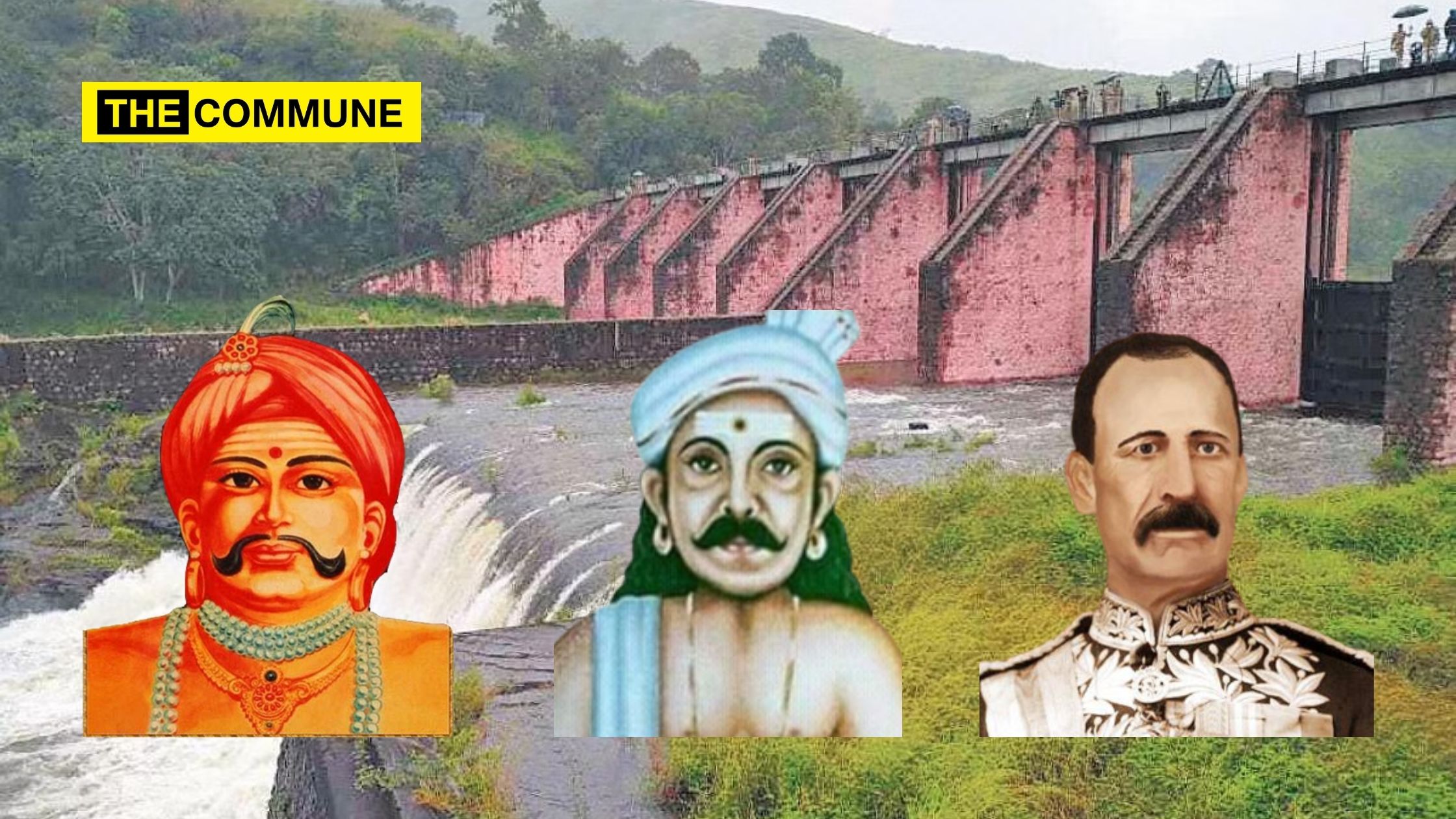
Who really built the Mullai Periar Dam?

Prolegomenon

Quite often we come across a sordid spectacle wherein credit for some major, magnificent achievement is surreptitiously misappropriated. While the prime personality is pushed to the postern or even purged completely, a piddling character who pitches in at the postliminary stage and performs a petty task is prominently projected as though he is the principal player of the project. For instance, we have thousands of majestic temples with magnificent architecture throughout our nation. Seldom can we find the name of the king or the patron who had conceived, created and commissioned them for the common welfare of all. Take the case of the marvellous Brihadeeswara Temple at Thanjavur. Emperor Rajarajan has chosen to engrave the names of all the workers who toiled for its completion but has scrupulously avoided his own name. We learn from the inscription at the temple that the chief sculptor was one Kunjaramallan. Imagine a situation wherein, taking advantage of this fact, the descendants of that sculptor today start claiming that it was Kunjaramallan who built the temple, and not the emperor, how ridiculous will it be?

Now, here is the genesis of Mullai Periar dam with full details from the start. A discerning reader himself can diagnose, determine and derive his own dispassionate assessment as to how much of credit is due to each of the dramatis personae.

Prologue

Our story starts from the 17th century scenario when Velu Nachiar was defeated and Marudu brothers who were ruling Sivaganga principality. One Muthuramalinga Sethupathy was at the helm of Ramanathapuram. The Sethupathis, a native of the Ramanathapuram and Sivaganga district of Tamil Nadu, India, were a courageous and chivalrous clan belonging to Maravar community and were ruling Ramanathapuram since 17th century, under the suzerainty of the British through the agency of Arcot Nawab.

Muthuramalinga Sethupathy [1760-1809] was anointed when he was a child of just 27 days old. His mother acted as the regent during his infancy. They were ably assisted by one diligent and dynamic minister, Thalavai Muthu Irulappa Pillai.  Muthuramalinga Sethupathy, being a strong-willed, daring leader, initially started resisting the dominance of the British and the Arcot Nawab. Sethupathy went to the extent of imposing tax on the goods of the British and of the Nawab. He was labelled as a rebel and was arrested at the early age of twelve along with his mother! Muthuramalinga Sethupathy and his mother were in prison for ten long years. Since there was public revolt against their detention which the rulers could not contain any longer, they were released.

Equipped with miniscule military resources vis-s-vis the monstrous might of the British army, Muthuramalinga Sethupathy adroitly avoided any impulsive confrontation and managed his domain admirably for some time. After keeping quiet for a while, he again attempted to impose tax on the goods of the British and the Nawab, since, as a responsible ruler, he wanted to protect his subjects during a famine and also for meeting the cost of construction of a dam which he had planned to build for the water requirement of his domain. The British got enraged and attacked him in 1795 alleging that he had a “disposition to rebel against the Government”, imprisoned him in Trichy jail and later shifted to Fort St. George, Chennai, where he died in 1809.

The Project

As regards the water resources of his kingdom, during the earlier Pandiya dynasty, the river Vaigai was flowing in full current and was providing abundant water for all their needs. Once the Pandiya dynasty declined, Nayakkars, who were deputies of Krishnadevarayar of Vijayanagaram took over while the Cheras were powerfully reigning in the south. The Cheras craftily and covertly converted the direction of the rivulets that were dispensing water to Vaigai and diverted their flow towards Kerala. As a result, Vaigai dried up and the eastern areas were experiencing a famine-like situation. Unable to endure the agony of his subjects, Muthuramalinga Sethupathy ordered his minister Muthu Irulappa Pillai to proceed to the source of water, explore the reason and take immediate remedial steps at all costs. Thus, the first seed for the dam was laid as early as 1792.

Accordingly, Muthu Irulappa Pillai travelled towards the origin of Vaigai on the mountainous region for investigation and in the process discovered many facts. A river by name Periar was flowing towards the west with five streamlets for 56 kms after which another brook by name Mullai joined the main river. Pillai conceived the idea that the direction of this Mullai can be reversed towards east by constructing a dam to ensure perennial water for Vaigai river. He submitted a detailed proposal with all technical data to the chieftain who instantly agreed and asked Pillai to proceed further for its implementation.

The Pitfall And Progress

But, there were two hurdles. First: The finance. Muthuramalinga Sethupathy insisted that the exaction levy being paid by the dominion to the British ruler should be utilised for the welfare of his people and therefore, the cost should be met from that fund. Second: As there was famine, the British ruthlessly exploited the opportunity by selling their produce to the locals at exorbitant rates. The levy being paid was also steeply enhanced to meet the expenditure for the war with Napoleon in Europe. Muthuramalinga Sethupathy objected to this and threatened that he will not pay the levy and instead, he will tax the goods being sold by the British. He was arrested and he breathed his last in prison at the age of 48. Thus the project had to be shelved temporarily thanks to the non-cooperation of the British.

The British coronated Mangaleshwari Nachiar, the elder sister of Muthuramalinga Sethupathy. A century passed. The grandson of  M.R.Sethupathy, Vijayaraghunatha Bhaskara Sethupathy, ascended the throne in 1888.  He was agile and assiduous, erudite and energetic. He took a resolve to realise the dream of his great grandfather and Muthu Irulappa Pillai. Since his province continued to be under the British dominion, he requested for their permission to go ahead. Initially they refused since inherently they were not interested in the welfare of the people. But, at that period, the clamour for freedom had started and the British could not resist the pressure for long. After some dilly-dallying they gave just the permission alone and not the money. Since the location of the proposed dam was in the princely state of Travancore, the British arranged for an agreement with the Travancore Samasthanam. A lease agreement for 999 years for 8000 acres of land was signed at the rate of ₹5/- per acre. While the British assisted for execution of the agreement, they did not pay a single rupee. The entire amount was paid only by Bhaskara Sethupathy. For further funds, he had to perforce mortgage all the resources of the kingdom for a sum of 20 lacs, with moneylenders, who were then functioning as benamis for the British. The construction commenced and was in progress.

As the cost of construction was colossal and as the British Government did not show any lenience, the loan of 20 lacs taken in 1893 swelled further and since Bhaskara Sethupathy could not repay, he became a bankrupt in 1894. All his properties were auctioned in 1895.  With his dream of the dam decimated into dust, death devoured him at the prime age of 35.

The Completion

The distressing fact that the dam remained unbuilt reached the British Parliament. Disturbing questions were raised and to save their face, the British sent an engineer to complete the dam. His name was Pennycuick. He entered the scene in the typical fashion like the police force entering the climax scene in a film, after the hero had suffered lot of blows from the villains! His initial attempt was also not successful. He then felt that if he failed in the task, he might face insult, indignity and ignominy. Therefore he spent some of his own money, toiled on the project with total commitment and ensured its successful execution. A keen observer can notice lot of similarities between this episode and the Tamil film, ‘Linga’.

Epilogue

Now, let us look at an analogy: In a relay race all the four participants of the winning team are felicitated with the prize cup at the podium, not just the last runner of the team. In fact, the fourth runner could reach the winning post only thanks to the energetic efforts of the previous three who had ensured that the fourth fellow is provided with a comfortable lead for reaching the winning line. Let us look at another example. In cricket, when the morale of the team is at its lowest ebb, when it is losing every match and when the players are completely browbeaten, a strong captain emerges, wears the albatross of leadership, injects confidence, identifies the innate talent in each player and motivates them in such a manner that the team slowly starts performing better and winning matches. The baton of leadership now passes on to a new head when the team is on its top form and he is able to do a spectacular job nonchalantly. People start looking at the statistics alone and erroneously eulogise the new captain in extraordinary terms, completely forgetting the spade work done by the previous leader.

We hasten to add here that we do not dispute nor belittle the role played and the contribution provided by John Pennycuick in the successful culmination of the project. Not at all. Of course, he definitely deserves a part of the credit, but it can be at the most 25% and the balance, distributed among the earlier three, viz., Muthuramalinga Sethupathy, Muthu Irulappa Pillai and Muthu Vijayaraghunatha Bhaskara Sethupathy, is it not? Neglecting the earlier architects in toto, focussing on and extolling only that foreigner who came at the last stage, is deplorable and such a stance betrays our stupidity as well as our sordid and servile mentality. It is a pity that even after seven decades we have still not jettisoned our inferiority complex. Or, is it a deeper conspiracy by the communist chroniclers in camouflaging and completely concealing any credit legitimately due to local native leaders?

Click here to subscribe to The Commune on Telegram and get the best stories of the day delivered to you personally.
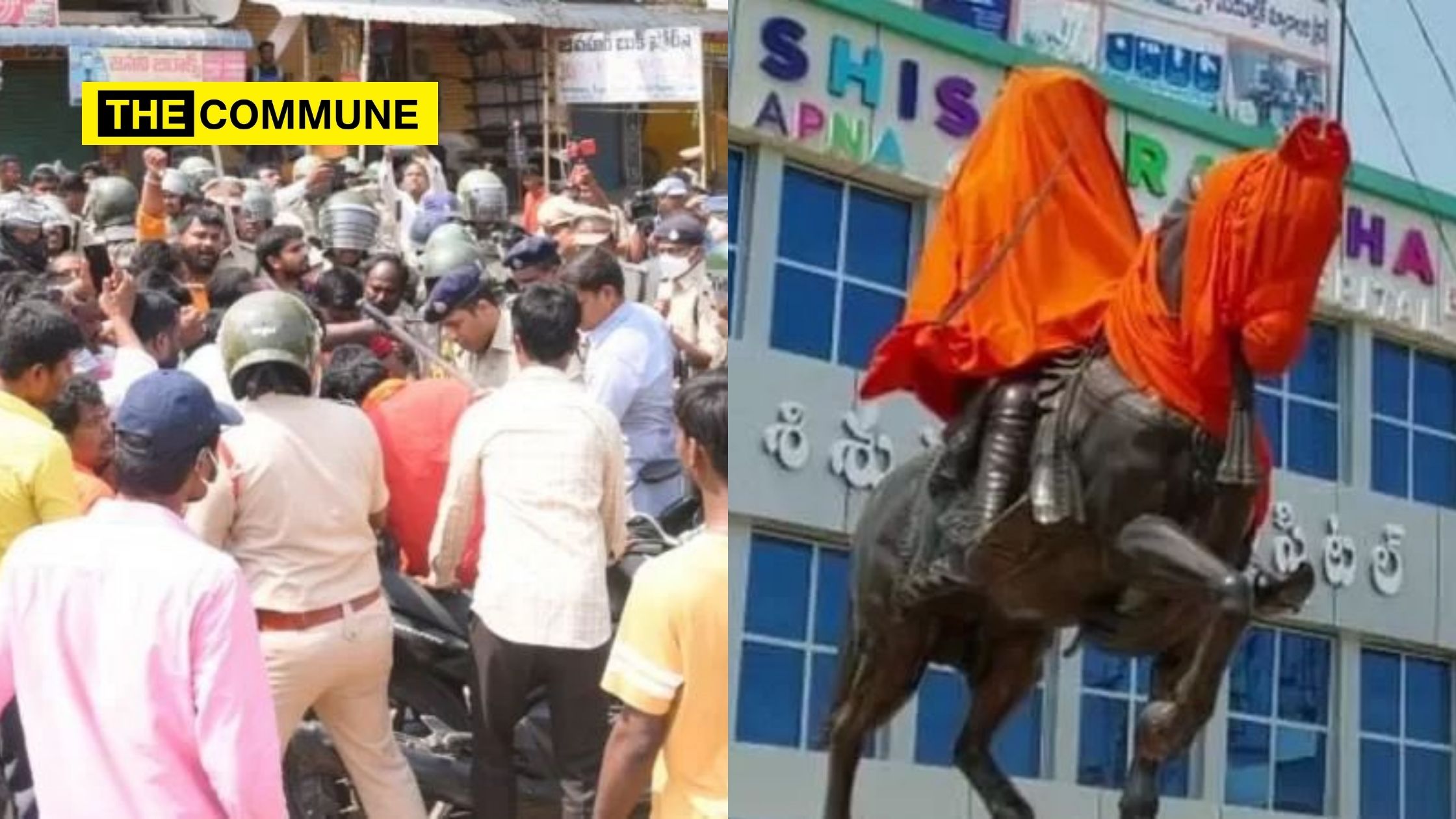
Telangana: AIMIM Razakars and TRS workers clash over unveiling of Chhatrapati Shivaji Maharaj’s statue

Razakars of The All India Majlis-E-Ittehadul Muslimeen (AIMIM) and workers of Telangana Rashtra Samithi (TRS) went on a rampage and violently attacked when the statue of Chhatrapati Shivaji Maharaj was unveiled in Telangana’s Nizamabad district.

To ensure the situation did not get out of hand, Section 144 has been imposed in Bodhan town as Razakars of AIMIM and TRS workers turned violent against Chhatrapati Shivaji Maharaj statue.

Local Bharatiya Janata Party (BJP) Member of Parliament Arvind Dharmapuri from his Twitter handle said, “The same crooked mindset..Demolish ours—Accomplish theirs! MIM & TRS goons trying to thwart the unveiling of the statue of Chatrapati Shivaji Maharaj & destroy the statue set up at Bodhan Ambedkar Chowrasta accepted by a municipal resolution!”.

The BJP MP also shared a video of the incident where one can see a large mob gathered around the statue with the intention of demolishing it.

Arvind Dharmapuri also said that a statue of Chhatrapati Shivaji was planned at the Ambedkar crossroad of Bodhan town, which shares a border with Maharashtra.

Vishnu Varshan Reddy, the State General Secretary of the BJP in Andhra Pradesh said, “The sad state of secularism in Telangana. @aimim_national supporters pelted stones on the people who wanted to install a statue of Chhatrapati Shivaji Maharaj in “their area”. Ruling party @trspartyonline is also indirectly siding with them,”.

Arvind Dharmapuri has also alleged that those who are against the statute Shivaji Maharaj have support from the police and the state administration and said, “the police and the state administration were opposing the installation of a Shivaji Maharaj statue while allowing the construction of illegal structures called “mosques.”.

“Now, the ruling party TRS’ counsellor openly threatening to disrupt law & order of the Bodhan town, if #ShivajiMaharaj’s idol is installed!” he further said posting a video on Twitter.

Click here to subscribe to The Commune on Telegram and get the best stories of the day delivered to you personally.