Home Blog Page 1260

India to build 110 m Mahakali river bridge connecting Uttarakhand and Nepal

In an important development in the relations between India and Nepal, a Memorandum of Understanding (MoU) was signed on Tuesday for the construction of a 110-meter motorable bridge over the Mahakali River connecting Dharchula in Uttarakhand with Darchula in Nepal.

This project is being funded with the Indian grant assistance and Indian Ambassador to Nepal, Vinay Mohan Kwatra, and Nepal’s Secretary, Ministry of Physical Infrastructure and Transport Rabindra Nath Shrestha signed the MoU in presence of Transport Minister Renu Kumari Yadav, statement Indian Embassy, Katmandu.

For years the relationship between India and Nepal had deteriorated which China took full advantage of, however, with the signing of this agreement will go a long way in mending the long and historic connection both nations share.

India will bear all the cost of constructing the bridge as per the agreement and preparation of a detailed project report for the bridge has already been completed and the construction work of the bridge will start soon.

The bridge will enhance cross-border connectivity between the Sudurpaschim province of Nepal and Uttarakhand across the Mahakali river where close people-to-people links exist between communities on both sides of the border.

“This is in line with the priority shared by both the governments to expand cross-border connectivity for streamlining commercial, cultural and people-to-people exchanges,” the statement said.

In January, the Government of India government had approved signing of the MoU between the two countries to build this important bridge and according to Information and Broadcasting Minister Anurag Thakur, the bridge will be completed within three years.

Thakur called the construction of this bridge unique ties of friendship and cooperation characterized by an open border and deep-rooted people-to-people contacts of kinship and culture that India and Nepal share.

Click here to subscribe to The Commune on Telegram and get the best stories of the day delivered to you personally.

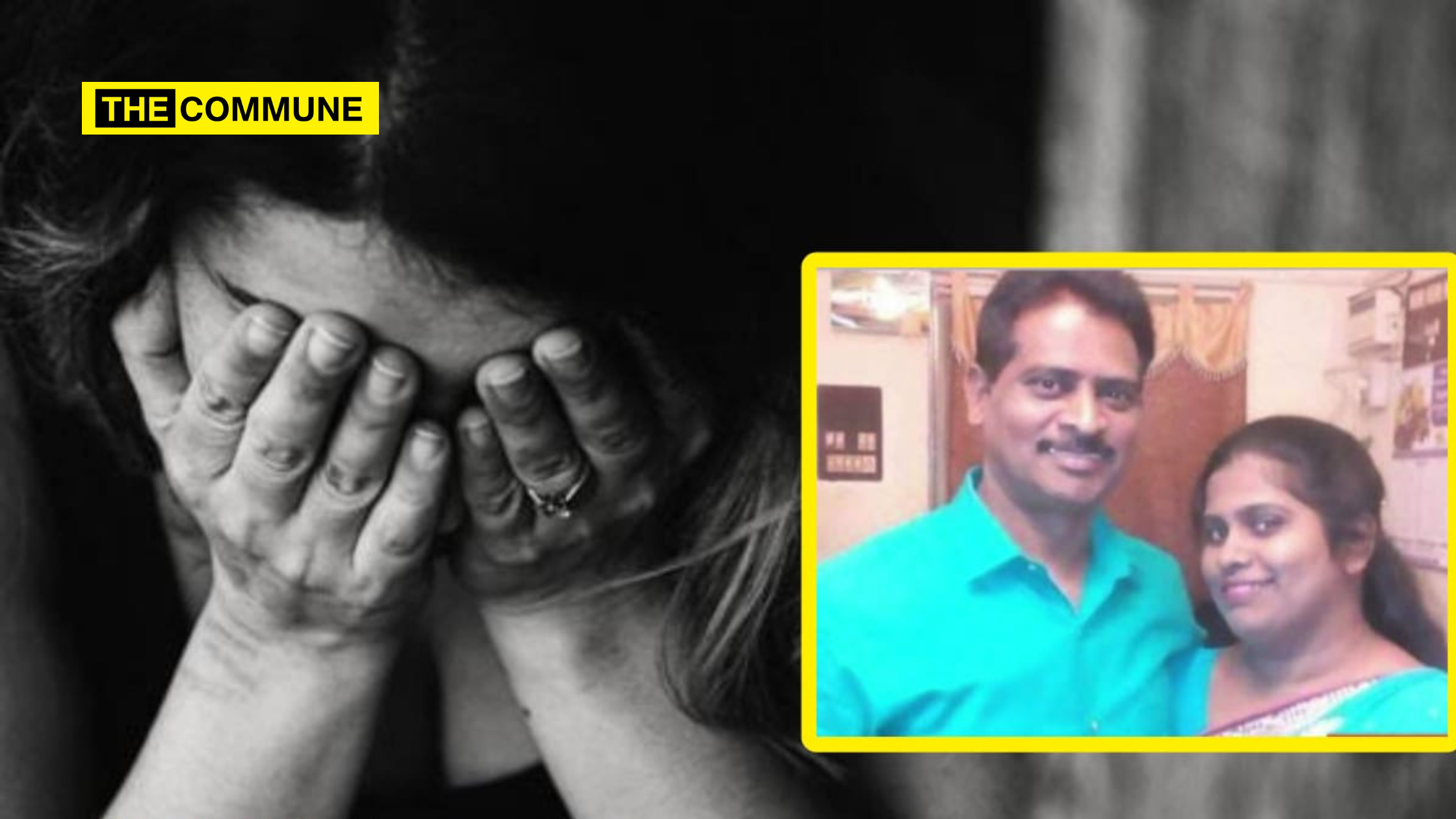
Fourth Scorpene class submarine INS Vela delivered to Indian Navy

The Indian Navy further bolstered its capability when the fourth Scorpene submarine, INS Vela under Project – 75, Yard 11878 was delivered to the Indian Navy on Tuesday.

Under Project – 75, the construction of six submarines was approved for Scorpene design, and the submarines are being constructed at Mazagon Dock Shipbuilders Limited (MDL) Mumbai, under collaboration with Naval Group, France.

At present, three Scorpene-class submarines, INS Kalvari, Khanderi, and Karanj are delivered to the Navy and commissioned.

The latest ship has been named ‘Vela’, and it has completed all major harbour and sea trials including weapon and sensor trials despite COVID restrictions. 

Submarines are force multiplier weapons platforms and can be used as the first or second strike attack in situations of war. With the growing threat of China in the Indian Ocean Region, submarines play a vital role in national security because they act as a deterrence. 

The construction of these submarines in an Indian yard is also an important step towards ‘Aatmanirbhar Bharat’.

A press release statement said, The `Acceptance Document’ was signed by Vice Admiral Narayan Prasad, Chairman, and Managing Director MDL, and Rear Admiral K P Arvindan, Chief Staff Officer (Tech), Western Naval Command in the presence of MDL Directors and Navy personnel at MDL’.

INS `Vagir’ the fifth submarine under Project-75 was launched on November 12, 2020, and has started her harbour trials, MDL said and it will be tested for its maiden surface sortie in December.

The sixth submarine is presently in the advanced stage of outfitting, the press statement added.

Click here to subscribe to The Commune on Telegram and get the best stories of the day delivered to you personally.
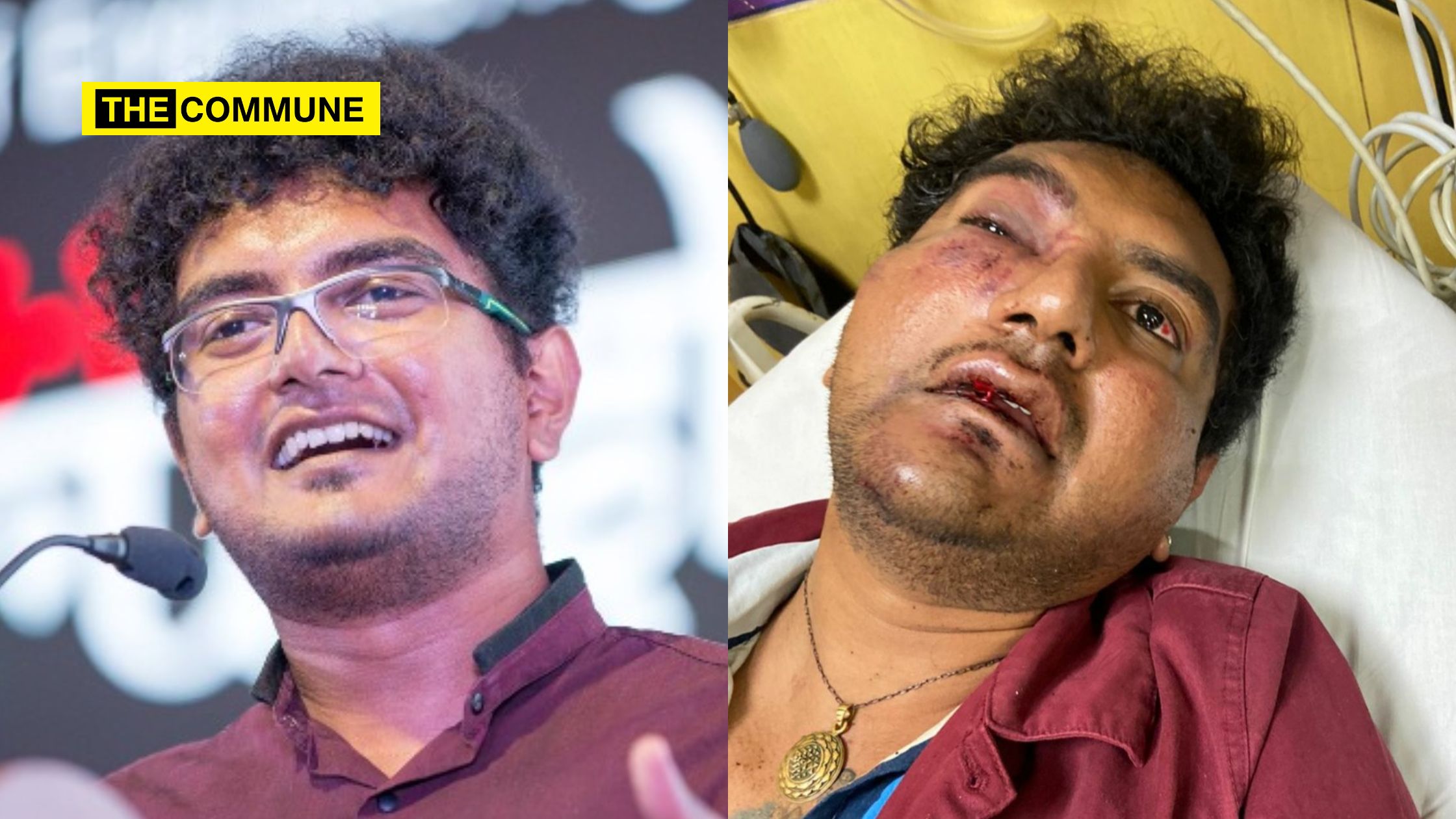
“India is not a kingdom”: 5th gen dynast Rahul Gandhi

rahul gandhi Indian democracy

Congress leader and Member of Parliament from Wayanad, Rahul Gandhi, while speaking in the Lok Sabha on Wednesday (February 2) said that India is not a kingdom but a ‘Union of States’.

In his motion of thanks to the presidential address, Rahul Gandhi said “There are two visions of India. No power has been able to challenge this bouquet of flowers. The idea of a king has come back which Congress removed in 1947. Now there is a shehanshah. Now the instruments of the conversations between our state and people are being attacked by one idea. So, for example, today the idea of Tamil Nadu is excluded from the Indian institution. You are saying get out of here. They don’t have a voice. The farmers of Punjab can stand up but they do not have a voice. They died during the coronavirus pandemic during their protests. But the king didn’t listen.

Rahul Gandhi also challenged the idea of India as a nation saying that India is a union of states which runs on a ‘partnership’ by means negotiations and conversation.

”It is not a kingdom. You will never ever rule over the people of Tamil Nadu…You are not the king.”, he said.

He said that the confused idea of the nation of India is playing havoc with the country.

He also touched on the issue of Pegasus saying “When PM Modi is personally going to Israel and authorising pegasus, he is attacking the people of Tamil Nadu, he is attacking the people of Assam,”.

“You are fiddling with something very very dangerous. I know something about the idea of India because blood has been sacrificed for this country not by me but by my family members. My father was blown into bits,” Rahul Gandhi said.

Click here to subscribe to The Commune on Telegram and get the best stories of the day delivered to you personally.
Dheerar Satyamurti: The Fervid, Fervent, Fiery Freedom Fighter

சொலல்வல்லன் சோர்விலன் அஞ்சான் அவனை

இகல்வெல்லல் யார்க்கும் அரிது.

Tirukkural-647.

[Meaning: An articulate, assiduous, assertive person will always be victorious]

A strange phenomenon in Tamil Nadu politics is that, while the lofty services and selfless sacrifices of Kamaraj are recognised with due reverence, the person whom he respectfully regards as his mentor is disdainfully thrown into Lethe of neglect. His name is S Satyamurti. But for a lone building in Chennai, ‘Satyamurti Bhavan’ and a reservoir at Poondi, he does not find any mention at all by the present set of politicians. Of course, looking into the character and calibre of the present day Congressmen, the very name Satyamurti has become absolutely irrelevant and they may, in fact, be doing a service to him by not sullying his name by misusing it!

It therefore becomes imperative now that the history of such nonpareil heroes are documented in detail for posterity to enable them to understand the efforts and endeavours, services and sacrifices of our earlier generation in all dimensions.

Our nation’s freedom movement was pioneered by many stalwarts, each one, an intellectual giant in his own right with a distinctive approach, as a natural consequence of which, each of them had a different strategy to achieve the desired goal. In the process they themselves found fault with each other and fought for justifying their stand. At one extreme, we had fighting fire-brand frondeurs like Bhagat Singh, Rajguru and Vanchinathan and at the other extreme, moderates with mellowed methods like Gokhale, Ranade and C R Das. Satyamurti, although an outstanding orator, fearless fighter and a dynamic, daring debater, with a facile, fluent tongue and a flair for repartees, advocated a cooperative, conciliatory course with the British rulers for getting freedom. Nevertheless, Satyamurti never hesitated to cross swords even with Goliaths like Gandhiji, Rajaji, Annie Besant to establish his point of view. In fact, his outspokenness and daring differences with sections of the Congress leadership seemed to have worked against him. Although, with his powerful campaign speeches, he played a major role in the Congress’ victory in the 1937 polls to the Madras Legislative Assembly, he was left out of the first ever Congress Government formed by Rajaji. While outwardly being polite to him, the top Congress leaders never took kindly to his courage in speaking his mind and forcefully advocating what he considered to be the right course of action.

Early life

Satyamurti was born on August 19th 1887 at Thirumayam in the former princely state of Pudukkottai. His father Sundara Sastriar was a scholar and a pleader by profession.  After finishing Intermediate in the Pudukottah Maharaja’s College, Satyamurti joined the Madras Christian College for his B.A. (History). After graduation, he became a tutor in the same college before joining the Madras Law College. Upon successful completion of Law, he joined as an apprentice in the Chambers of Mr. V .V. Sreenivasa Iyengar and later with Shri S. Sreenivasa Iyengar, former President of the Indian National Congress.

Political Career

While he was with Shri S. Sreenivasa Iyengar, Lokmanya Tilak and silver tongue Srinivasa Sastri recognised the qualities of leadership, eloquence, dignity and integrity in him, which is indeed, a fitting tribute coming from two eminent luminaries of those times.

His political career started in 1919 when, at the young age of 32, he was made the secretary of the Congress delegation that went to the Joint Parliamentary Committee in UK to protest the Montagu-Chelmsford reforms and the Rowlatt Act.

Later, he became a leading member of the Swaraj Party along with Motilal Nehru and C R Das. He went to England again in 1926, this time on behalf of  the Swaraj Party, to explain to the British public the kind of lives Indian are living and how the British Crown and the British politicians are dodging the question of giving freedom to India. Between 1930-1932, Satyamurti, responding to the clarion call of the Mahatma for non co-operation with British ruler, defied prohibitory orders, courted imprisonment and was sentenced to rigorous imprisonment.

In 1930, he hoisted the Indian flag atop the Parthasarathy Temple at Chennai and was arrested for that act.

He was appointed Mayor of the city of Madras in 1939. When the city faced an acute shortage of water, he urged the British government to build a reservoir for the city. It was across Kotralai River in Tiruvallur district of Tamil Nadu State. With a capacity of 2573 Mcft, it is now an important source of water for Chennai city. It was completed in 1944 and sadly, Satyamurti did not live to see his efforts bear fruition. The reservoir is today named Satyamurti Sagar.

In 1940, he participated in the ‘individual satyagraha’ campaign, defying a prohibitory order and making anti-war speeches that invited a lot of trouble for him. This time his imprisonment lasted eight months and again he was arrested in 1942 upon his arrival from Bombay for having participated in the Congress meeting that adopted ”Quit India’ ‘resolution. He was again detained in Amraoti along with other leaders from the south. He died on 28th March, 1943 in the Madras General Hospital, as a martyr for freedom.

The Man Who Mentored Kamarajar

Satyamurti, during his lifetime, was the mentor of K.Kamaraj. He found in Kamaraj “an efficient, loyal, indefatigable worker and skillful organizer”. The two of them grew fond of each other with each passing day and their bond became stronger and stronger. They complemented each others’ skills. In 1936, when Satyamurti was elected President of the Provincial Congress Committee, he appointed Kamaraj as the General Secretary. Four years later they swapped positions. Both of them strengthened the party base with their relentless effort. Kamaraj’s devotion towards his mentor was such that when India gained independence, he first went to Satyamurti’s house and hoisted the Indian flag there. On his election as Chief Minister of Tamil Nadu, Kamaraj went to Satyamurti’s house and garlanded his photo and paid his respects to the leader’s widow. Additionally, he got the headquarters of the Tamil Nadu Congress Committee named as Satyamurti Bhavan in recognition of his tireless work for the Tamil Nadu Congress and for India’s independence. Also, it was Kamaraj who got the Poondi reservoir named as Satyamurti Sagar.

An Educationist

In the realm of education, Satyamurti played a vital role in the establishment of a private institution promoted by the Rajah of Chettinadu Sir. Annamalai Chettiar named as Annamalai University at Chidambaram. Since mid-twenties, Satyamurti was also an active and eloquent member of the Madras University Senate and Syndicate. He introduced numerous educational reforms.

How Satymurti Leveraged Fine Arts For Election Propaganda

Apart from being an outstanding orator and a dashing debater, Satyamurti excelled in histrionic talents also. In the midst of hectic political activity, he managed to devote ample time for the promotion of Carnatic music and resurgence of classical dance. For some time, he became the Vice-President of Madras Music Vilas Sabha, an amateur theatrical group of great repute that nourished young talents.

Satyamurti was instrumental in the birth of the Music Academy at Madras. As President of the Faculty of Fine Arts, University of Madras, and the Chairman of the Board of Studies in Music, he created a degree course in carnatic music in Annamalai University. Against fierce opposition, he introduced Bharata Natyam in Music Academy.

In earlier years, he had been an accomplished stage actor in classic drama, playing the title role in Manohara, a didactic historical play. Satyamurti was elected President of South Indian Film Chambers in 1937 and 1938, and was invited to preside over the All India Motion Picture Congress at Bombay in 1939.

After the Jallianwala Bagh massacre, press censorship was strict. But, a genius always finds a door when others see only a wall. Being an accomplished actor himself, he roped in stage actors and singers to campaign for the Congress party. “We shall sing our way to freedom.” was his clarion call. While puritans in Congress party resented his move, he went ahead relentlessly. His masterly stroke proved a massive, monumental success. Veterans like TKS Brothers responded with exuberance, energy and enthusiasm. The super singer of those days gifted with a stentorian voice, KB Sundarambal was the star attraction.

A special gramophone record containing the songs of Sundarambal and Musiri Subramania Iyer along with election appeals carried the desired message to the households. As a result Congress emerged with thumping success with 74% seats in the state.

Such was the Congress juggernaut that some opposing candidates opted to withdraw rather than fight the polls. The first unopposed return to the Assembly was announced a month before the election from the Sattur-Aruppukottai rural constituency. The winner’s name was K Kamaraj Nadar!

During the election campaign, shocked that her mentor had ignored his career for the sake of national interests and was living in a rented house, Sundarambal bought him a bungalow in T Nagar which was named by him as “Sundara” as a gesture of gratitude. Coincidentally, the name of his father was also Sundara Sastriar!

As fate would have it, strangely enough, and we can even add unfortunately, this unique technique of involving theatre in politics was copied much later with resounding success by the bete noire of Satyamurti, viz., the then Justice party, rechristened as Dravidian party during their elections.

Last Days

He was tried and deported to Amravathi Jail in Nagpur and was hurt in the spinal cord during the journey. He succumbed to his injuries at General Hospital, Madras on March 28, 1943, four years before India’s Independence. Thus, a hectic life coupled with chronic diabetes soon saw his health breaking down, and his arrest during the Quit India Movement in 1942 effectively finished off a promising life.

The Congress in Tamil Nadu which was once home to such towering leaders fervid towards the nation’s cause is now standing with a begging bowl at the gates of Arivalayam.

Click here to subscribe to The Commune on Telegram and get the best stories of the day delivered to you personally.
Chennai Traffic Police fine elderly couple for not wearing masks inside car

In an incident of police extortion, traffic police in Chennai fined an elderly couple for allegedly not wearing masks while travelling inside their private car.

A tweet posted by a journalist of The New Indian Express said that her parents who were travelling in their own car near Royapuram bridge on January 31 were cornered by the traffice police and fined ₹500 for not wearing masks.

The journalist lashed out at the Chennai Traffic Police asking how a closed private car with two people from the same house be a ‘public’ place?

“Now we know what’s the pathetic reality behind all those 100s of crores of fines collected every day for Covid ‘violations’.”, she mentioned in her tweet.

This has led to a huge outcry on social media with netizens coming down heavy on city’s traffic police for extorting the public under the garb of fine.

Click here to subscribe to The Commune on Telegram and get the best stories of the day delivered to you personally.
 

Two DMK functionaries hacked to death over tickets for local body polls

In two separate incidents, two members of the ruling DMK party were hacked to death reportedly over getting a ticket to run for the urban local body polls scheduled to happen this month.

Incident 1

A man identified as Ponnudas (32) alias ‘Abe’ Mani, was attacked by an armed gang on Saturday night (January 29). He was a circle secretary of the DMK.

He had recently taken a TASMAC liquor bar on tender and was handling its operations. His mother had submitted her application with the party to run for the councillor seat.

Ponnudas reportedly had more influence in the party in his area and had become a target of a faction led by Arun Pravin that was working against him. This faction reportedly hired mercenaries to finish him off.

According to the police, Ponnudas who was returning home in a two wheeler was hit by a speeding car. Immediately, the gang in the car alighted and attacked him with weapons killing him on the spot.

Palayamkottai police rushed to the spot and got hold of the body and was sent for post mortem to the Tirunelveli Government Hospital.

The police have arrested 10 members suspected to have committed the murder. Arun Pravin who had absconded surrendered Tirunelveli 4th magistrate court.

Arun Pravin’s father Muthuselvam who had allegedly paid the gang members have also been taken to custody. However, following health complaints by both father and son, the duo has been admitted to the hospital.

Meanwhile, ‘Abe’ Mani’s mother has been given ticket to run for councillor.

Incident 2

On the night of February 1, a DMK functionary from Chennai’s Madipakkam suburb was hacked to death.

Selvam (38) who runs a real estate business is also the DMK circle secretary in ward number 188 of Madipakkam.

His wife had submitted application to contest for ward councillor in the upcoming local body polls.

On Tuesday around 9 PM, Selvam had parked his car in Bazaar Road in Madipakkam are and was talking with a few of his supporters. Police said a group of six men came in a car and bike surrounded Selvam and attacked him with sickles. Selvam who tried to flee the spot was chased and hacked to death. Locals who saw him bleeding alerted the police and his body was later sent to the Chromepet Government Hospital for post-mortem.

The Chennai police have formed three special teams to hunt down killers of Selvam.

Soon after the news about the murder spread, Selvam’s supporters broke liqour bottles and created ruckus. The police have barricaded the entire street where Selvam’s house is located.

(With inputs from The Hindu and Times of India)

Click here to subscribe to The Commune on Telegram and get the best stories of the day delivered to you personally.
₹1 Idli Paati wants to meet PM Modi

You all must be aware of the ₹1 Idli Paati (grand mother in Tamil) who came to the limelight after industrialist Anand Mahindra tweeted about her.

Kamalathal, an octogenarian hailing from Vadivelampalayam in Coimbatore district has been serving steaming lip smacking Idlies (south Indian delicacy) just for ₹1 for more than 3 decades.

Now in a video, Kamalathal has expressed her desire to meet Prime Minister Narendra Modi.

“Modi is only giving me 2 gas cylinders for the past 2-3 years. I feel so happy. I want to see him and thank him.” Kamalathal says.

She also further states that she wishes to go and meet him in Delhi or if time permits PM Modi can come to her shop and have idlies.

Kamalathal who had been working in wood-burning stove for the past 30 years received a gas connection in 2019.

Click here to subscribe to The Commune on Telegram and get the best stories of the day delivered to you personally.
Highlights of Union Budget 2022-23

Union Finance Minister Nirmala Sitharaman presented the budget for the year 2022-23, laying the blueprint for steering the country’s economy over the next 25 years.

The Union Budget seeks to complement macro-economic level growth with a focus on micro-economic level all inclusive welfare.

Here are the key highlights from this year’s budget.

Digital Rupee

One of the major highlights in this budget has been the announcement of new digital rupee powered by blockchain technology that will be issued by the Reserve Bank of India starting 2022-23.

The digital rupee along with the proposal to tax virtual assets at 30% will pave way for regulating mushrooming private cryptocurrencies which has serious implication on national security.

Gati Shakti Plan

The ₹100 lakh crore PM Gati Shakti Plan received its first ever outlay of ₹20,000 crores in this budget. Under the Gati Shakti Plan, India’s National Highways network will be expanded by 25,000 kms in 2022-23.

Apart from highways, other modes of transport are also being given a boost.

400 new generation Vande Bharat trains will be manufactured in the next 3 years.

100 PM Gati Shakti terminals will be set up in the next three years.

5G 

India is all set to go 5G with commercial services starting from 2022-23. FM Nirmala Sitharaman announced that 5G spectrum auctions would commence later this year.

A scheme for design-led manufacturing in 5G will also be introduced as part of the PLI scheme to boost local manufacturing of 5G phones.

Housing And Tap Water For All

₹48,000 crores has been allocated for construction of 80 lakh houses under PM Awas Yojana in rural and urban areas for the year 2022-23.

₹60,000 crores has been allocated to provide tap water connections to 3.8 crore households in the same year.

Financial Inclusion

All of the 1.5 lakh post offices in the country will be on-boarded to the core banking system. Post Office account holders will thus be able to avail services like net banking, mobile banking, ATMs, etc. This will benefit farmers, senior citizens and those living in rural areas.

Apart from this, 75 digital banks in 75 districts will be set up by scheduled commercial banks to encourage digital payments.

Educating New India

The Modi government plans to establish a digital university which will provide access to world-class education to students across the country.

The ‘One class, One TV channel’ program of PM eVIDYA will be expanded from 12 to 200 TV channels, which will enable all states to provide supplementary education in regional languages for classes 1 to 12.

Cleaner and Greener India

Finance Minister Nirmala Sitharaman announced that the government will bring a battery swapping policy to boost use of electric vehicles in the country.

The Modi Govt will also launch Sovereign Green Bonds in FY 23 to fund green infrastructure.

Funds will also be used for projects that will help reduce carbon intensity of the economy.

Click here to subscribe to The Commune on Telegram and get the best stories of the day delivered to you personally.
 

₹1,38,394 crore gross GST revenue collected for January 2022

gst registration rates pm modi insurance premium

The gross GST revenue collected in the month of January 2022 till 3PM on 31.01.2022 is ₹1,38,394 crore of which CGST is ₹24,674 crore, SGST is ₹32,016 crore, IGST is ₹72,030 crore (including ₹35,181 crore collected on import of goods) and cess is ₹9,674 crore (including ₹517 crore collected on import of goods). The highest monthly GST collection has been ₹1,39,708 crore in the month of April 2021. Total number of GSTR-3B returns filed upto 30th January 2022 is 1.05 crore that includes 36 lakh quarterly returns.

The government has settled ₹29,726 crore to CGST and ₹24,180 crore to SGST from IGST as regular settlement. In addition, Centre has also settled Rs. 35,000 crore of IGST on ad-hoc basis in the ratio of 50:50 between Centre and States/UTs in this month. The total revenue of Centre and the States in the month of January 2022 after regular and ad-hoc settlements is ₹71,900 crore for CGST and ₹73,696 crore for the SGST. Centre also released GST compensation ₹18,000 crore in January’2022 to States/UTs.

The revenues for the month of January 2022 are 15% higher than the GST revenues in the same month last year and 25% higher than the GST revenues in January 2020. During the month, revenues from import of goods was 26% higher and the revenues from domestic transaction (including import of services) are 12% higher than the revenues from these sources during the same month last year.

This is for the fourth time GST collection has crossed Rs 1.30 lakh crore mark. 6.7 crore e-way bills were generated in the month of December 2021 which is 14% higher than 5.8 crore e-way bills generated in the month of November 2021. Coupled with economic recovery, anti-evasion activities, especially action against fake billers have been contributing to the enhanced GST. The improvement in revenue has also been due to various rate rationalization measures undertaken by the Council to correct inverted duty structure. It is expected that the positive trend in the revenues will continue in the coming months as well.

Click here to subscribe to The Commune on Telegram and get the best stories of the day delivered to you personally.
Hoysala Temples of Belur, Halebid and Somnathapura submitted for inclusion in World Heritage List

The Hoysala Temples of Belur, Halebid and Somnathapura in Karnataka have been finalised as India’s nomination for consideration as World Heritage for the year 2022-2023. The ‘Sacred Ensembles of the Hoysala’ are on UNESCO’s Tentative list since 15th April, 2014 and represent one of the highest points of human creative genius and stand testimony to the rich historical and cultural heritage of our country.

The first step is submission of the dossier to the World Heritage Centre which will do the technical scrutiny of the same. Sri Vishal V Sharma, Permanent Representative of India to UNESCO formally submitted the nomination to UNESCO, Director of World Heritage, Mr. Lazare Eloundou today (31st January,2022).

Once the submission is made, UNESCO will communicate back by early March. After that the site evaluation will happen in September /October 2022 and the dossier will be taken up for consideration in July /August 2023.

G Kishan Reddy, Minister of Culture, Tourism and Development of Northeastern Region stated “This is a great moment for India to see the Sacred Ensembles of the Hoysalas temples being submitted for inscription in the World Heritage List”.

“The Government under the leadership of Prime Minister Shri Narendra Modi is committed to both Vikas and Virasat. Our efforts in protecting our Virasat is evident from the work the government has been putting in inscribing both our tangible and intangible heritage and also repatriating the cultural heritage that was stolen or taken away from India”, the Minister added.

“The Government under the leadership of Prime Minister Shri Narendra Modi is committed to both Vikas and Virasat. Our efforts in protecting our Virasat is evident from the work the government has been putting in inscribing both our tangible and intangible heritage and also repatriating the cultural heritage that was stolen or taken away from India”, the Minister added.

All these three Hoysala temples are protected monuments of the Archaeological Survey of India (ASI) and therefore conservation and maintenance will be done by ASI. The state government will ensure the conservation of state protected monuments which are around these three monuments since it would add to the visual integrity of the place. The District Master Plan of the state government will also incorporate the buffers of all monuments and build an integrated management plan. The state government will also look at the traffic management issues to be looked into especially around the designated property.

The sacred ensembles of the Hoysalas, built in the 12th-13th centuries and represented here by the three components of Belur, Halebid and Somnathapura, attest to the creativity and skill of the Hoysala artists and architects who built these masterpieces of a kind never seen before or since. The Hoysala architects used their profound knowledge of temple architecture in different parts of India to their advantage. The Hoysala temples have a basic Darvidian morphology but show strong influences of the Bhumija mode widely used in Central India, the Nagara traditions of northern and western India, and the Karntata Dravida modes favoured by the Kalyani Chalukyas. Therefore, the Hoysala architects made considered and informed eclectic selections of features from other temple typologies which they further modified and then complemented with their own particular innovations. The result was the birth of a completely novel ‘Hoysala Temple’ form.

(Published from PIB)

Click here to subscribe to The Commune on Telegram and get the best stories of the day delivered to you personally.